Molokai
Molokai, United States
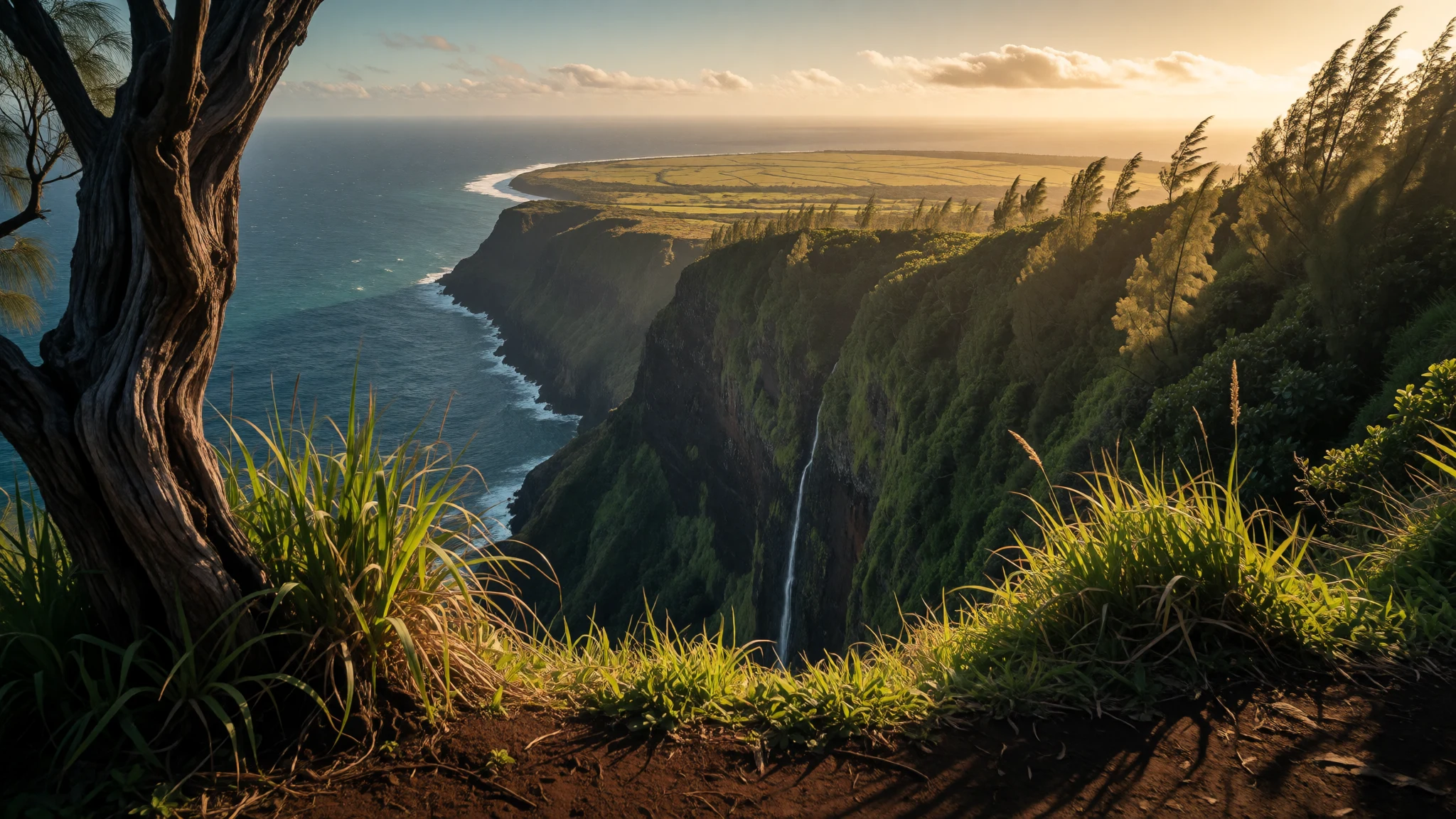
Molokai is a quiet Hawaiian island of towering sea cliffs, a long reef and slow roads, where visitors come for space rather than resorts.
The place
Molokai sits in the middle of the Hawaiian chain, east of Oahu across the Kaʻiwi Channel and north of Lanai, from which the Kalohi Channel divides it. It is long and narrow, and it is made of two volcanoes joined together: a small western one and a much bigger eastern one, whose summit, Kamakou, is the island's high point. On a clear day the neighbouring islands show on the horizon: Oahu from the west shore, Lanai from the south, and Maui from the south and east.
The shape of the land explains a lot. The northern half of the eastern volcano collapsed long ago and slid into the ocean, leaving a wall of sea cliffs along the north coast that people reach by sea, on foot or by air rather than by road. The south shore is gentler, with a shallow fringing reef, old fishponds and the island's main town, Kaunakakai, where the shops are low and the traffic is mostly pickup trucks.
Molokai is not set up like Maui or Oahu. Ranching, farming and small-scale growing have long carried the economy, and tourism is only a small part of it. Much of the visitor infrastructure built by the main landowner was closed when the ranch company pulled back in the early part of this century, so there are few large resorts and fewer ready-made activities. That suits people who want quiet and are happy to plan ahead. It also means services are modest, accommodation is limited, and the island runs on local rhythms rather than a visitor's timetable.
Its story
Molokai was settled by Polynesian voyagers, probably from the Marquesas and later from Tahiti and other islands of the South Pacific. More careful radiocarbon dating has pushed the settlement of eastern Polynesia later than earlier scholars believed, so the first arrivals are now thought to have landed within the last thousand years or so.
Captain James Cook recorded the island from the sea in the late eighteenth century, but the first European to visit was a British naval captain, George Dixon. A Protestant mission followed at Kaluaʻaha on the east end, led by the Reverend Harvey Hitchcock. Later, Rudolph Meyer, an immigrant from Germany, began growing and milling sugar and coffee commercially. His mill, the only one the island ever had, is now a museum.
Ranching grew when King Kamehameha V made a country estate on Molokai, which Meyer managed and which became Molokai Ranch. The king also built a retreat at Kaunakakai and ordered coconut palms planted, and the Kapuaiwa Coconut Grove still stands there.
The island's best-known chapter is Kalaupapa. In 1866 the Hawaiian government began sending people with leprosy to a remote peninsula on the north coast, cut off by cliffs and sea. The settlement stayed in use for just over a century, and the whole area is now Kalaupapa National Historical Park, which preserves its buildings and its stories. Land is still a live question on Molokai: a Malaysian-owned business group holds about a third of the island.
What to see
- Kalaupapa Peninsula — North coast
Kalaupapa National Historical Park covers the flat peninsula below the north-coast cliffs where people with leprosy were once exiled. Access is controlled, usually on a guided visit by sea, on foot or by air. Check the National Park Service's official pages before planning anything, because arrangements change.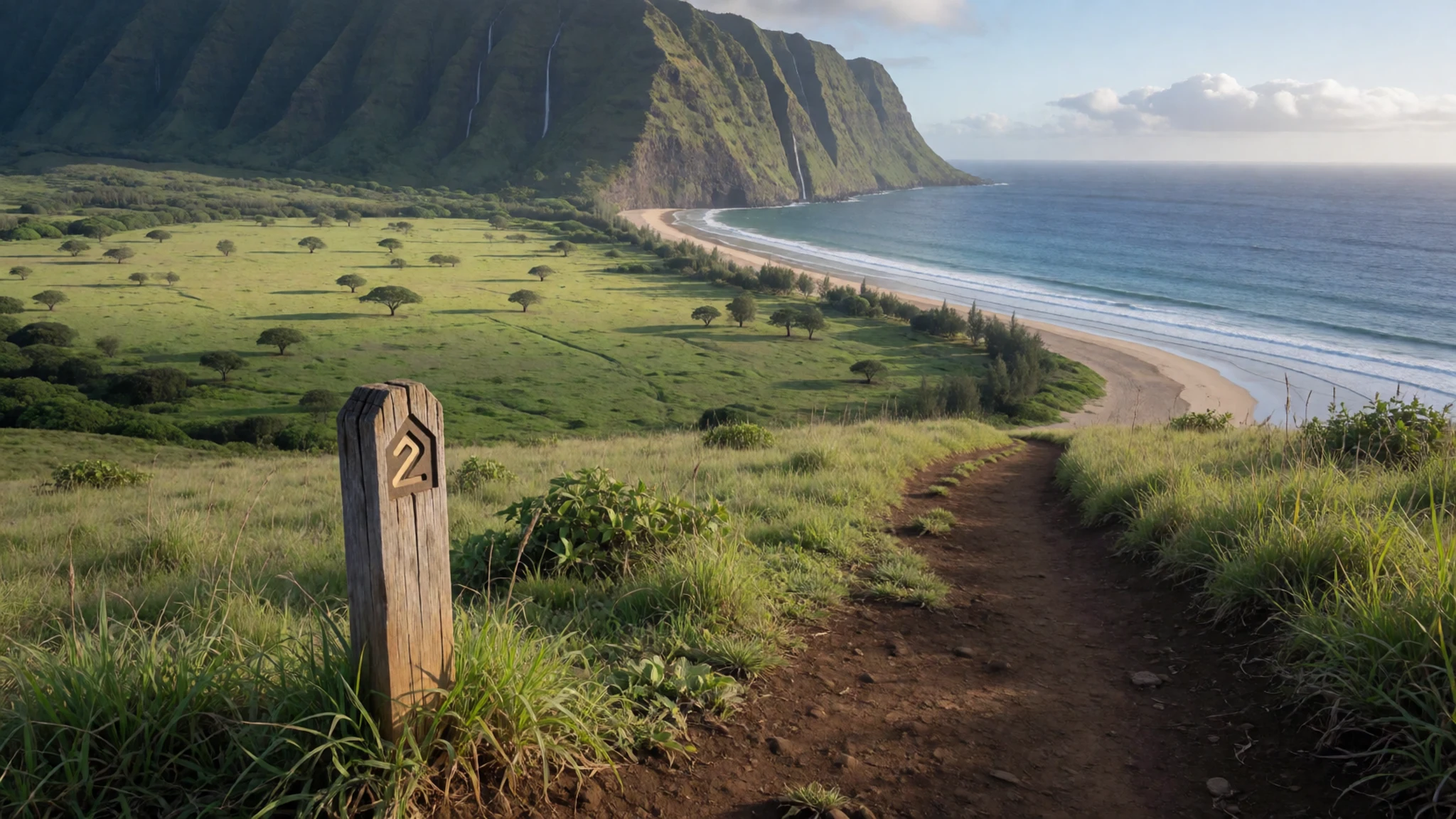
- Kapuaiwa Coconut Grove — Near Kaunakakai, south shore
Near Kaunakakai, this stand of tall coconut palms was planted on the order of King Kamehameha V beside his seaside retreat. It is a short, flat stop with shade and a sense of the island's royal past. Beware of falling coconuts and do not park beneath the trees.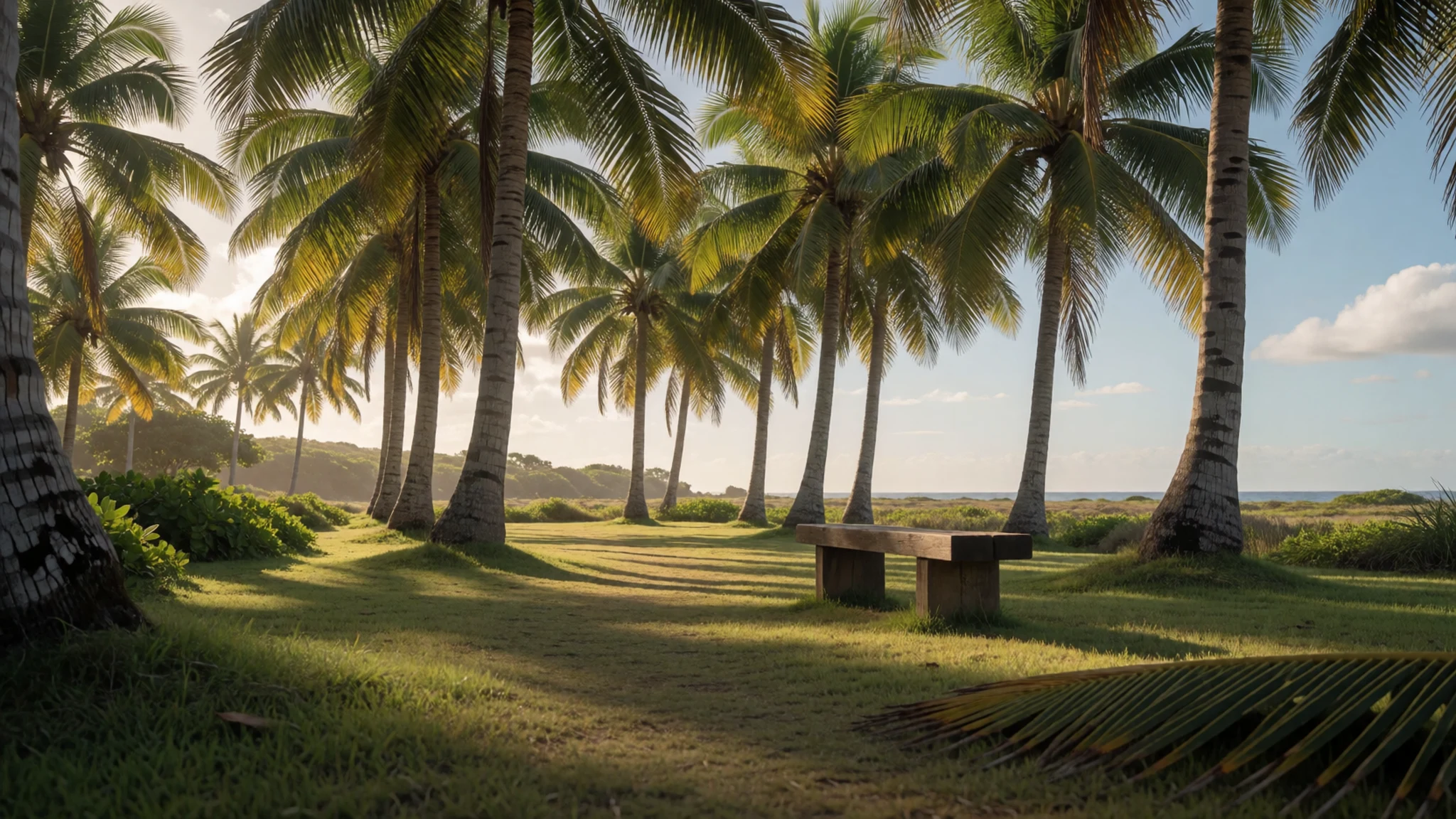
- Molokai Museum and Meyer Sugar Mill — Kalae uplands, central Molokai
The old mill built by Rudolph Meyer now serves as a small museum, with its machinery and tools still in place. It gives a clear picture of the plantation years and the families who worked them. Check the museum's own listing for opening arrangements.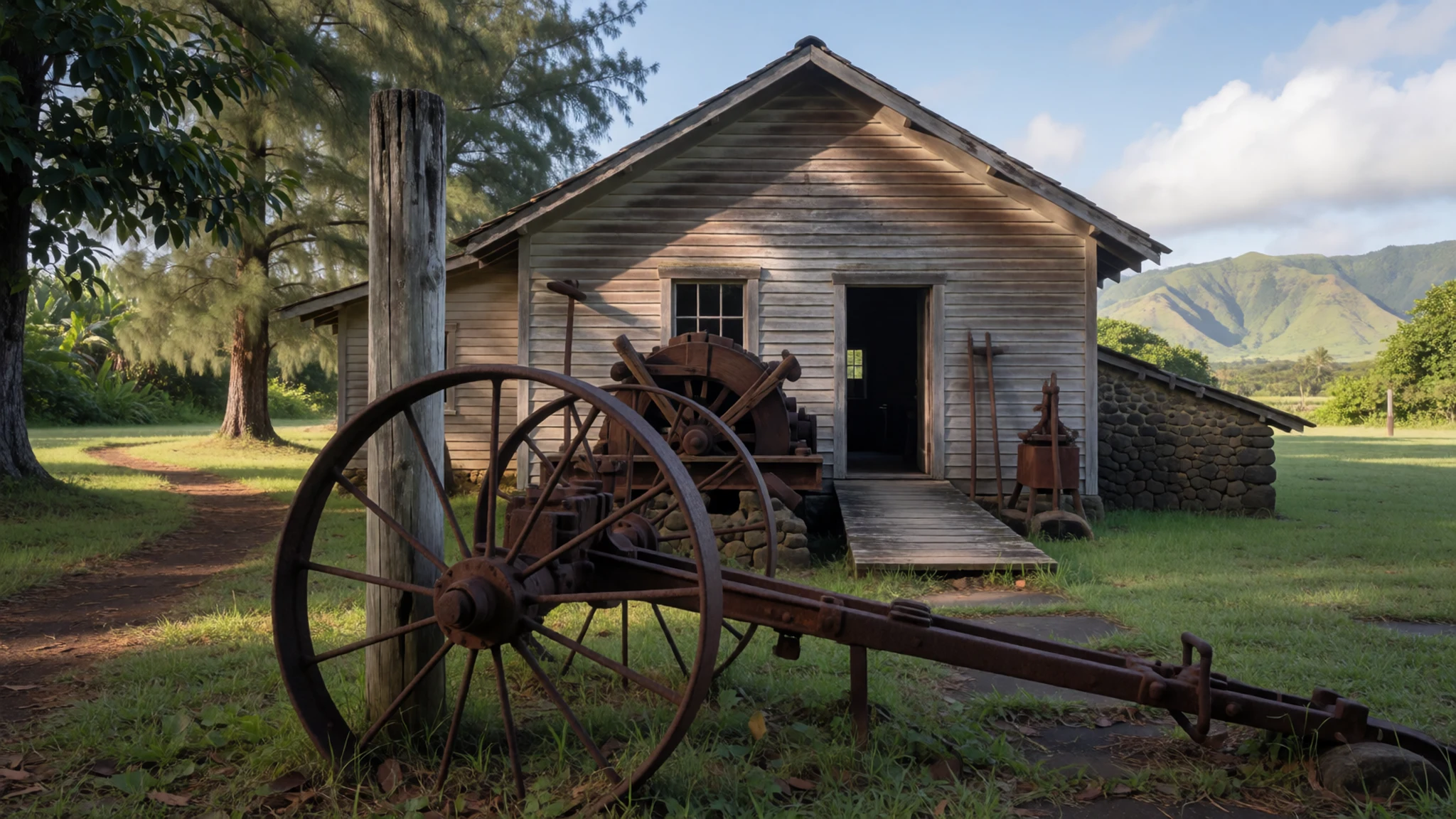
- Papohaku Beach — West Molokai
A long stretch of pale sand on the west shore, wide and usually almost empty, with Oahu showing on the horizon. Winter swells and strong currents make swimming risky at times, so ask locally and respect any warnings. It is better for walking and sunsets than for lounging.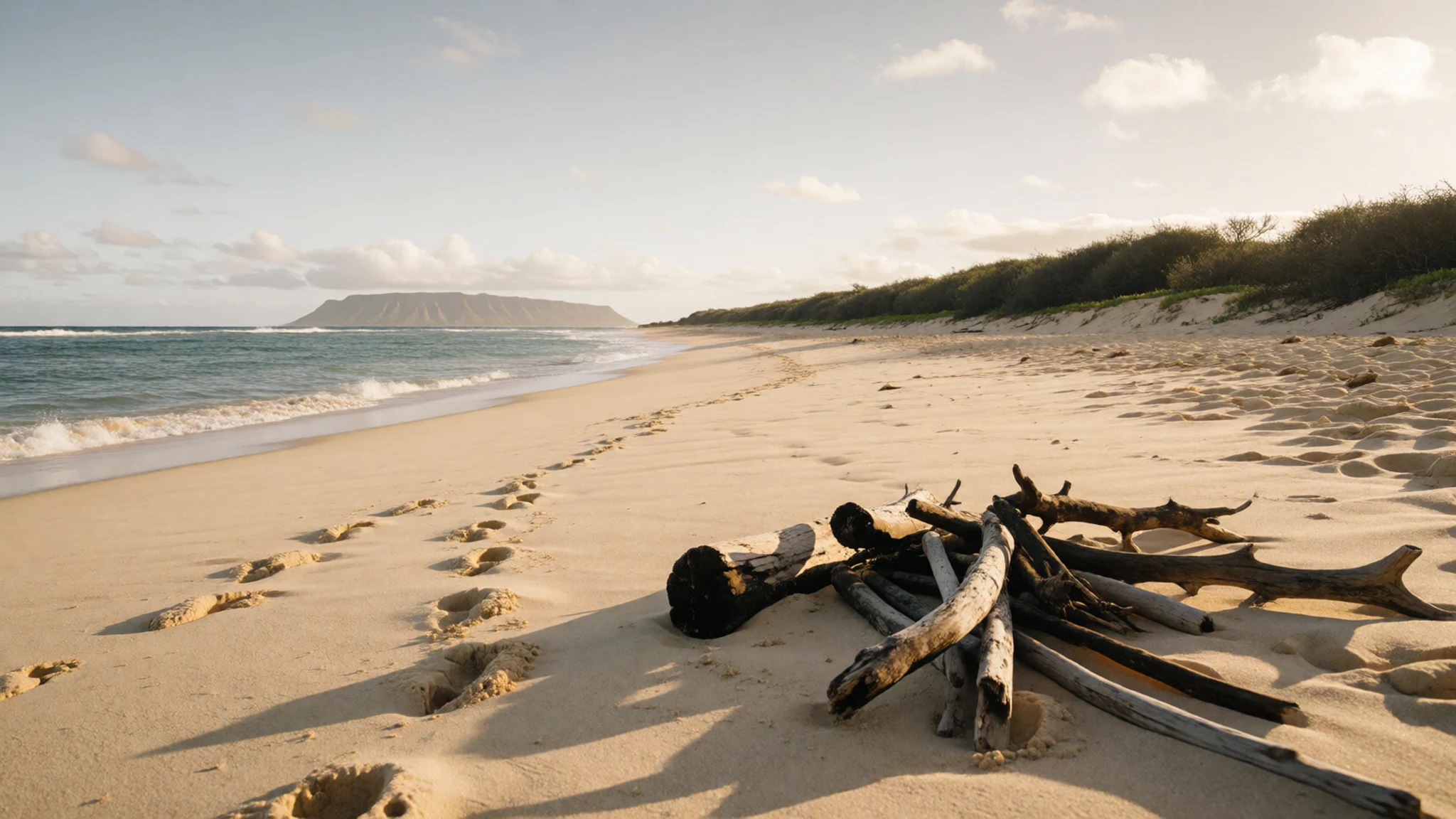
- Halawa Valley — East end
A green valley at the east end, reached by a winding coastal road and traditionally visited with a local guide, since the land is privately and culturally held. Waterfalls and old terraces lie inland. Book ahead through local operators and treat the walk as a visit to someone's home ground.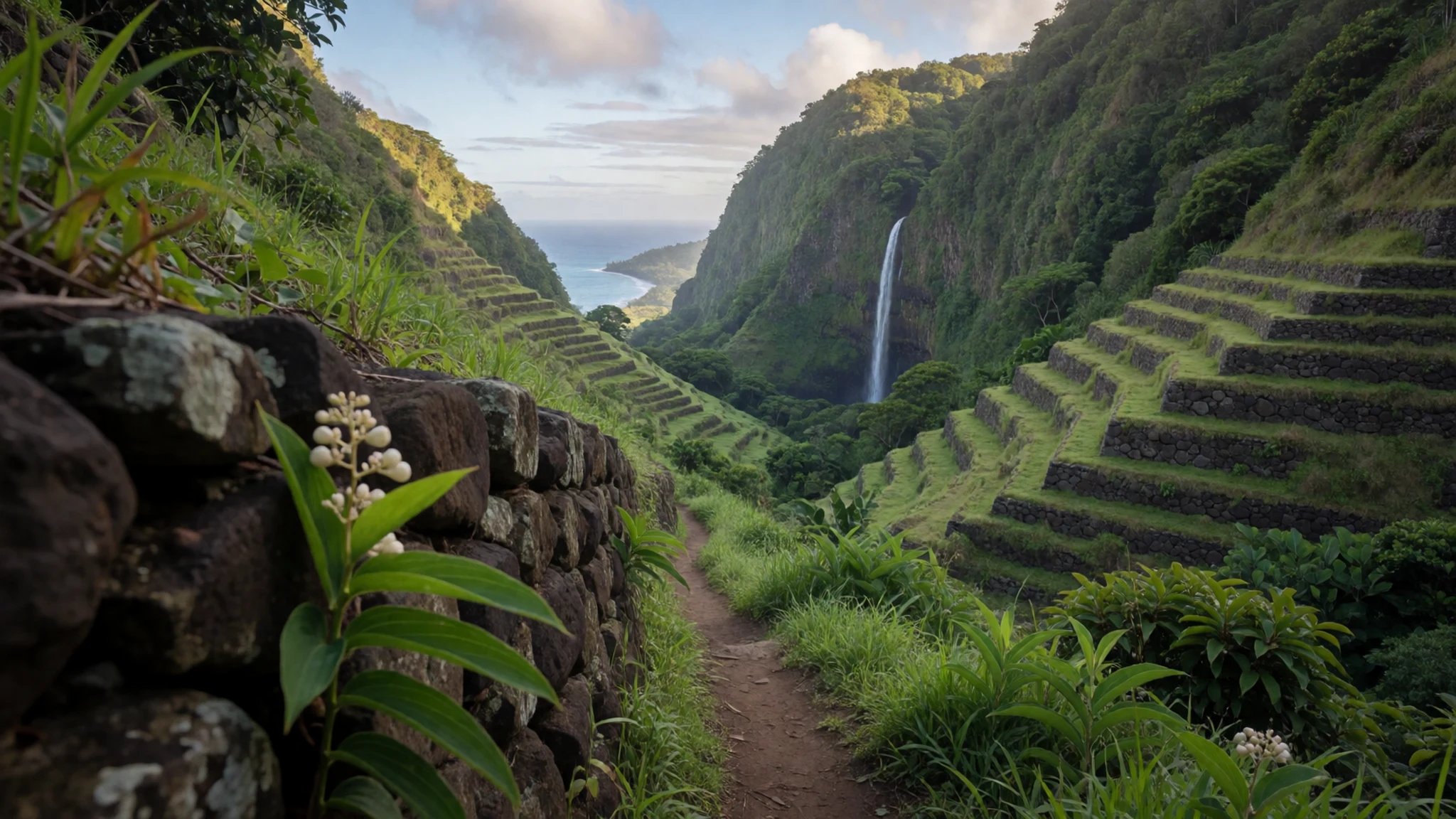
Culture
Molokai's culture is shaped by Native Hawaiian tradition and by the plantation-era mix of Asian, Portuguese and other communities. Many families have been here for generations, and the island has a reputation for guarding its way of life. It shows in small things: people greet each other on the road, plans move at a relaxed pace, and newcomers are expected to listen first. The Hawaiian language lives on in place names, songs and the greeting aloha.
Sacred sites matter here. The island has heiau, the stone platforms and enclosures where the old Hawaiian religion was practised, and visitors should treat them as places of worship rather than backdrops. Kalaupapa carries a different weight: it was a place of exile, grief and endurance for people sent there with leprosy, and access is controlled partly out of respect for their descendants.
Family land and fishing grounds are often private or held by custom, and an empty-looking beach may be someone's food source. Ask before entering, and take only what is allowed. Hospitality at home follows island custom, so if invited indoors, shoes come off at the door.
At heiau and around Kalaupapa, keep to marked paths, leave stones exactly where they lie, and ask before photographing anyone you meet.
What to wear
Molokai's traditional Hawaiian dress was made from kapa, a bark cloth beaten from the wauke plant and printed with natural dyes. Men wore the malo, a loincloth, and women the pāʻū, a wrapped skirt, with a kīhei shawl over one shoulder; feather capes belonged to chiefs. Missionaries introduced the holokū, a long high-necked gown, which became the loose muʻumuʻu, still worn for formal occasions, hula and festivals, often in bright printed cotton.
Everyday dress on Molokai is plainer than on the busier islands: shorts or work trousers, a T-shirt or an aloha shirt, a cap, and rubber sandals that locals call slippers. Farmers and fishers wear practical, sun-faded clothes, while aloha shirts and muʻumuʻu come out for church, weddings and celebrations.
Visitors should pack light cotton or quick-dry clothes, a sun hat, sunglasses and reef-safe sun protection. Bring a light rain jacket and closed shoes with good grip for muddy upland trails, plus reef shoes or sturdy sandals for rocky shores. Swimwear belongs at the beach, not in town. Cover shoulders and knees at a church or memorial, and keep dress modest around Kalaupapa.
What to eat
- Plate lunch — Lunch wagons and counter eateries, Kaunakakai
The island's standard takeaway tray: a grilled or fried main such as chicken, pork or fish, with rice and a creamy pasta salad on the side. Look for lunch wagons and small counter eateries in Kaunakakai. It is filling, cheap by island standards, and eaten at a park bench.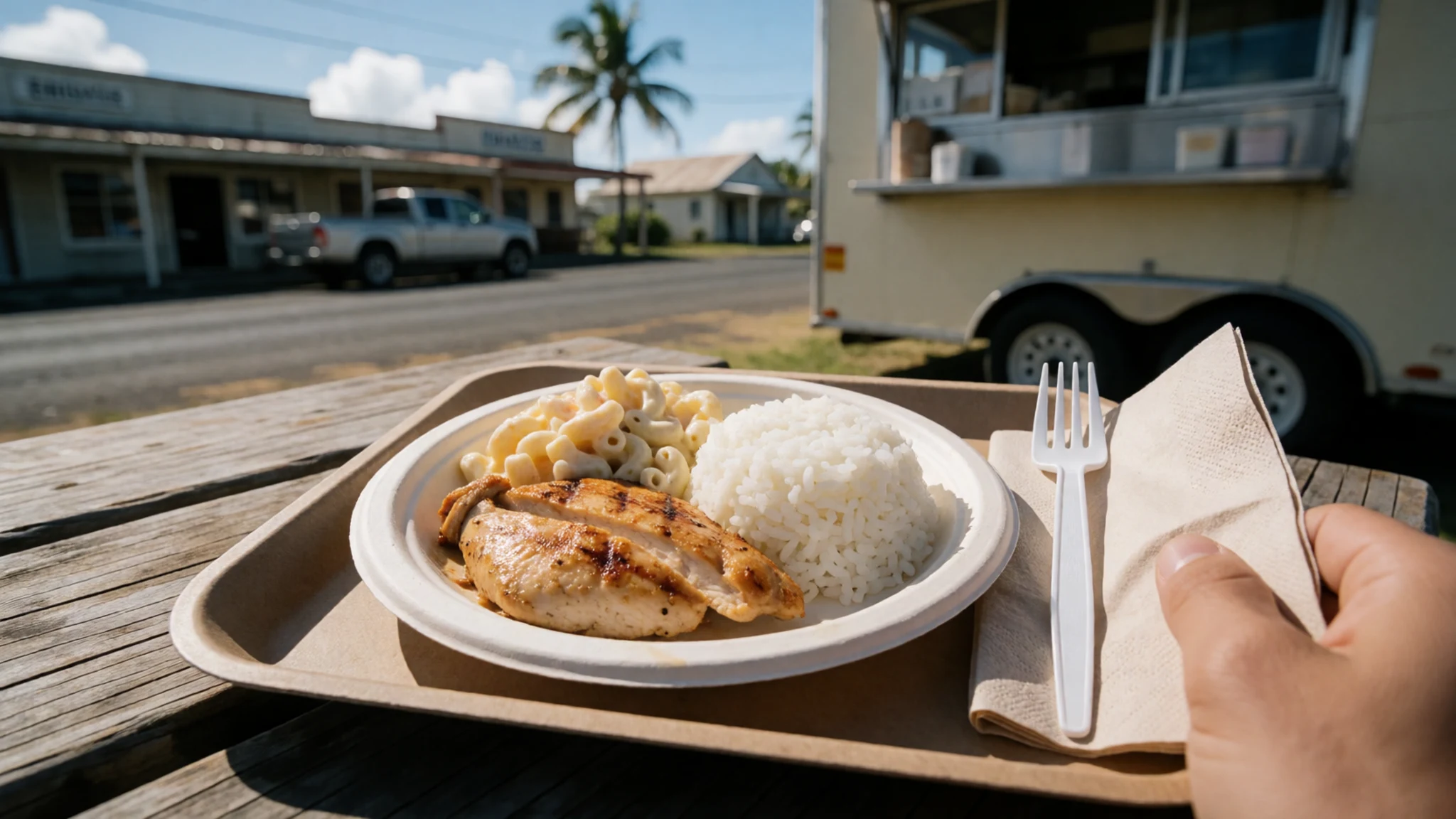
- Poke — Grocery fish counters and small shops
Cubes of raw fish, usually ahi (tuna), dressed with soy, sesame oil, onion and seaweed. Quality depends on the day's catch, so ask what came in that morning. It is eaten cold, often straight from a tub, and is best enjoyed near the water.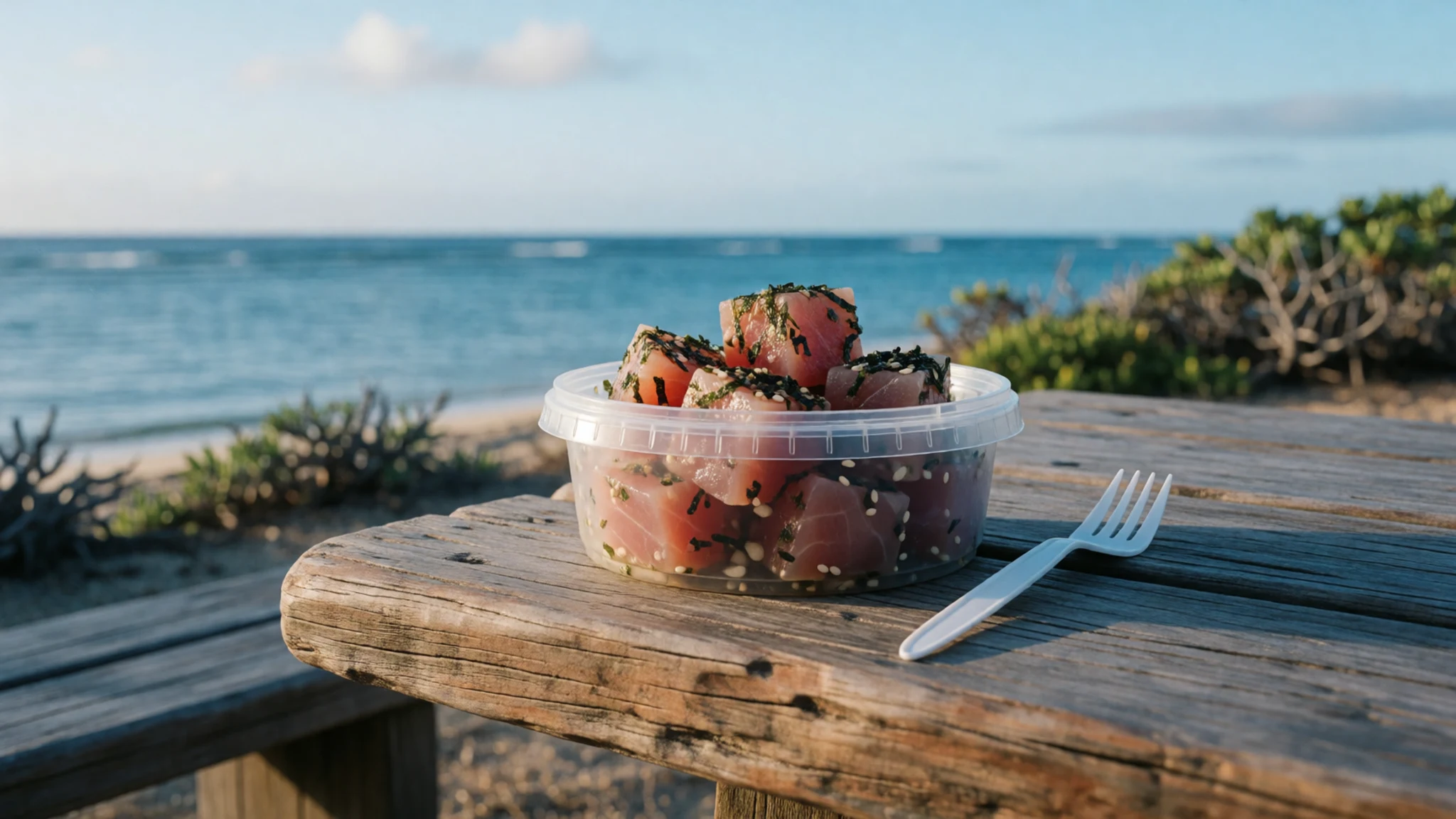
- Poi and kalo — Community events and farm stands
Kalo, or taro, is the traditional Hawaiian staple, pounded into poi, a smooth, slightly sour paste eaten with fish or pork. The flavour takes getting used to. Roadside stands and community events are where it appears, and growers are happy to explain how it is made. - Sweet bread — Small bakeries in Kaunakakai
Molokai is known for soft, sweet bread baked in small batches and eaten fresh, often split and filled with butter, jam or cinnamon sugar. Ask locally which bakery is baking that day. Eat it warm, on the spot, because it does not travel well. - Island fruit — Roadside stands and corner shops
Papaya, mango, banana, guava and pineapple appear at roadside stands and in corner shops, though some of what is sold is imported rather than grown locally. Look for handwritten signs and honesty boxes, and carry small notes. Declare fresh fruit before leaving, because Hawaii runs agricultural checks.
Plan it
Best time. May–June and September–October for drier weather, calmer seas on most shores and fewer rain showers in the uplands; winter brings more rain and heavier surf, especially on exposed coasts.
How long. 2–4
Getting there. Fly into Molokai Airport at Hoolehua, usually on a short inter-island hop from Honolulu or Kahului on Maui, with the last leg by rental car to Kaunakakai. Arrivals from abroad follow United States entry rules, and everyone must complete the Hawaii agricultural declaration before travel.
Budget. mid
Tips
- Book flights, accommodation and a car well ahead, as supply on the island is limited
- Arrange Kalaupapa and Halawa visits in advance through official or local operators, since access is controlled
- Carry cash for stands and small shops, and fill the fuel tank before long drives
- Bring water, sun protection and insect repellent for trails and beaches
- Lock the car and keep valuables out of sight at beaches and trailheads
Etiquette
- Ask before entering private land, fishing grounds or family beaches
- Treat heiau and Kalaupapa as sacred places and follow guide instructions
- Greet people and drive slowly, as the island sets its own pace
Nearby
Sources
- Wikidata Q49659282 (CC0)
- Wikipedia: Molokai (CC BY-SA 4.0)
- Wikivoyage: Hawaii (CC BY-SA 4.0)