Mistaken Point
Mistaken Point, Canada
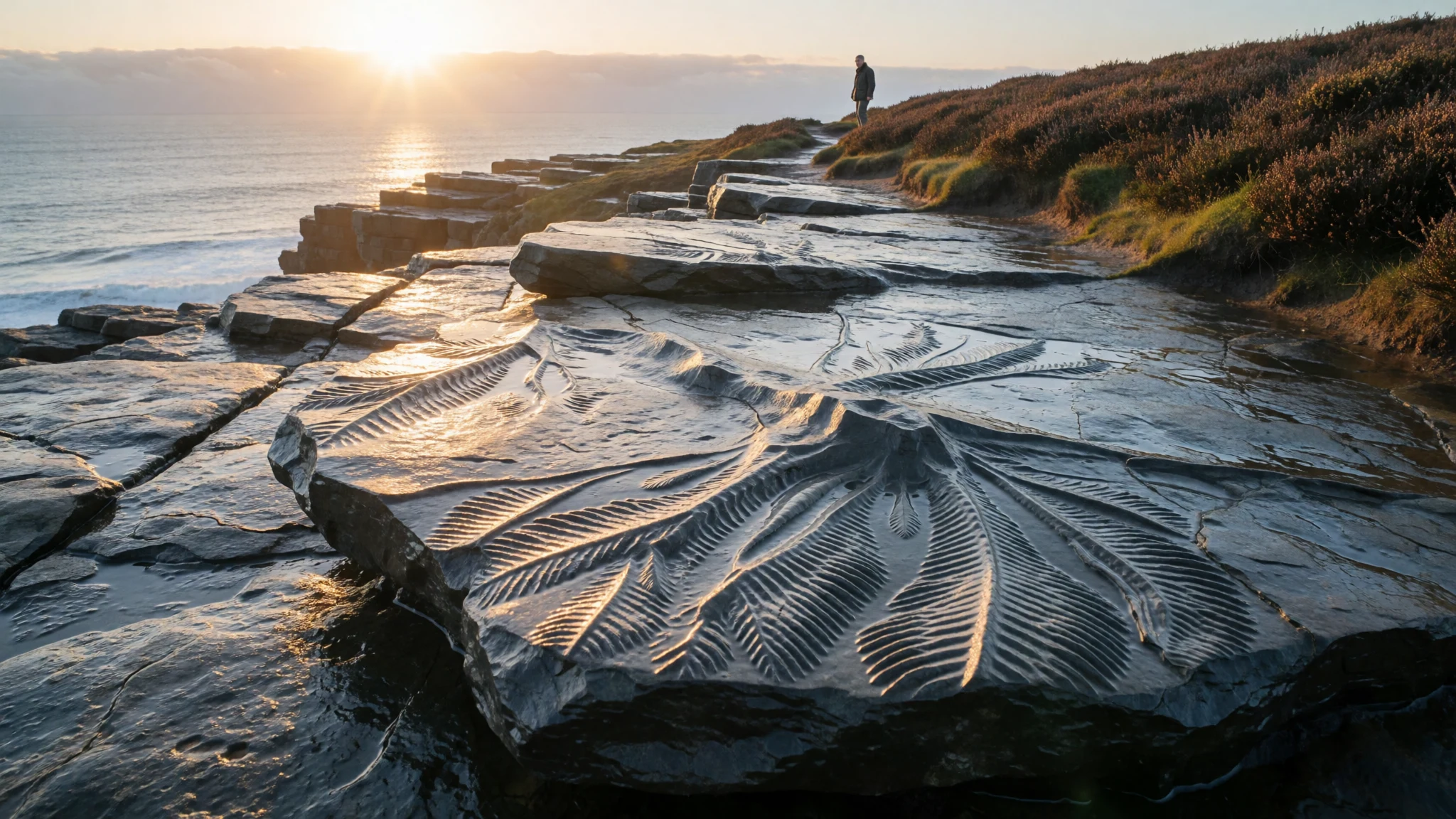
Mistaken Point is a fog-wrapped Newfoundland headland where fossils of some of the earliest complex life lie pressed into bare grey rock.
The place
Mistaken Point sits at the south-eastern tip of the Avalon Peninsula in Newfoundland, Canada, a bare, windswept stretch of coast where the land runs out into the Atlantic. The ecological reserve here protects a rock formation of the same name, and the draw is less the scenery than what is pressed into the stone: Ediacaran fossils, the remains of soft-bodied creatures from the Precambrian, long before animals grew shells or bones. Some look like ferns, spindles and feathers laid flat on grey rock. Scientists value the site as a record of early multicellular life, and it also preserves communities that lived on the deep seafloor.
The setting is wilderness in the plain sense. There are no shops on the headland, the vegetation is low and wind-bent, and fog can close in within minutes even in summer. The reserve protects a five-kilometre stretch of shoreline in its original form, since enlarged. Much of the surrounding province is lightly populated, and the villages along this shore are small fishing communities where people tend to know one another and will happily talk to a stranger.
Newfoundland as a whole is often compared to Patagonia or Scandinavia: rugged, open, with big skies and cold water. St. John's, the capital, is the practical base, since it has the main airport and most of the lodging. From there the coast road south makes a long day trip, or an overnight if the weather is kind to the schedule.
Its story
In June 1967, Shiva Balak Misra, then pursuing a geology degree at Memorial University of Newfoundland, discovered the initial fossils that launch the site’s scientific narrative. It was later named Fractofusus misrai in his honour. For some years the shoreline mattered mainly to specialists, but the site came to be recognised as a place holding possibly some of the earliest animal-like fossils in North America, and deep-water marine fossils of remarkable age.
Protection followed the science. The provincial government first set aside a five-kilometre stretch of coast provisionally in 1984 and made the reserve permanent in 1987. After further fossil discoveries it was enlarged in 2009. The rules are strict because the fossil surfaces are fragile, and wear from boots and hands would erase what the sea has left exposed.
The human history of the island is much shorter than the rock's. Newfoundland was home to the Beothuk people, who are now extinct, while Labrador remains home to the Innu and the Inuit. Vikings settled briefly around 1000 AD and moved on. John Cabot may have reached the island in 1497 and claimed it for England, after which European fishermen and whalers came ashore for supplies and rest. Newfoundland and Labrador joined Canada in 1949.
What to see
- The fossil surfaces of the reserve — Mistaken Point Ecological Reserve
The reason for the journey is a set of bedding planes on the shore where Ediacaran organisms lie preserved as flat impressions. The shapes are subtle and read best in low, raking light or after rain. Go with a guide where one is offered, and expect wind, wet grass and a rough walk.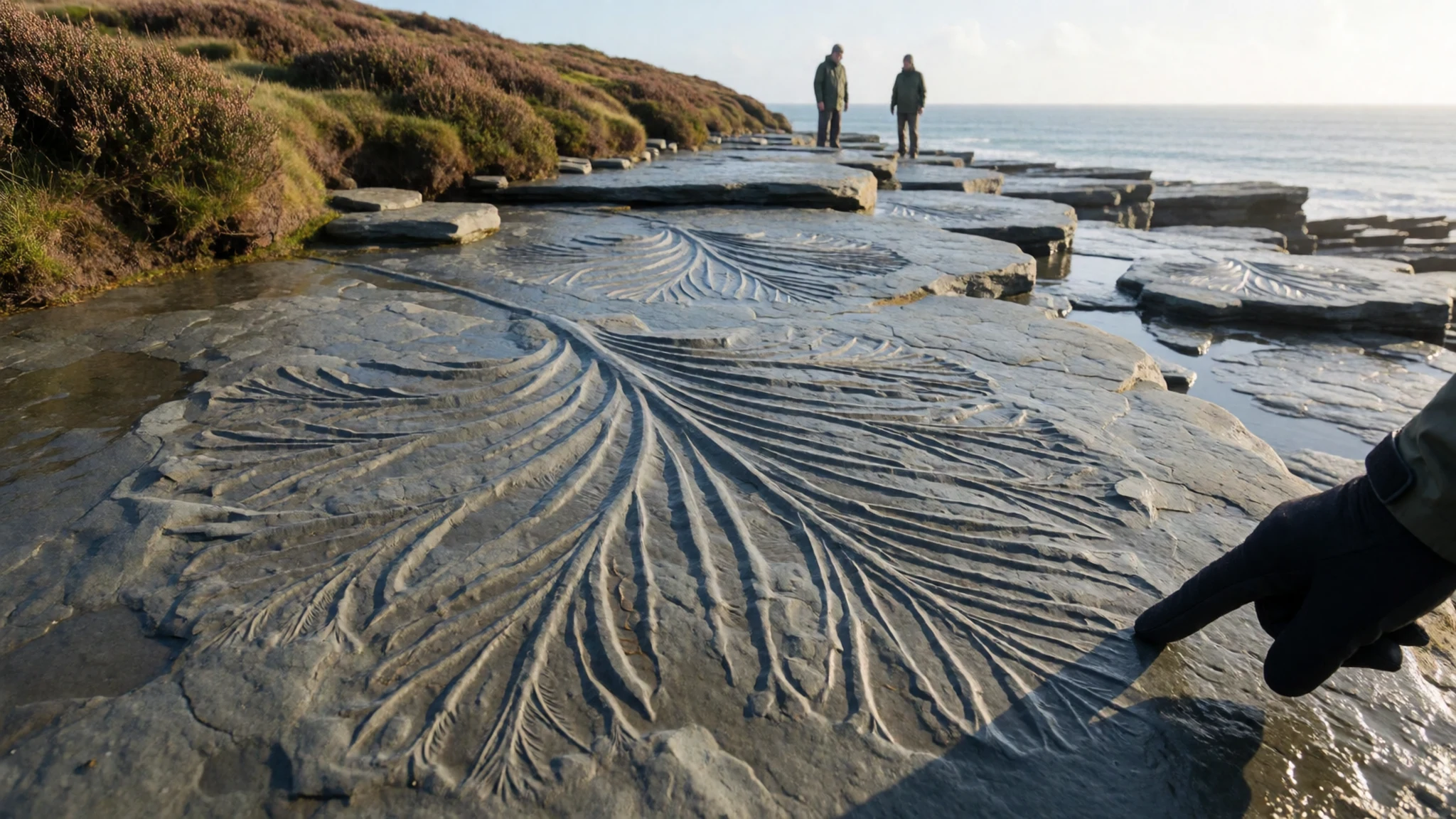
- East Coast Trail — Avalon Peninsula coast
This rugged footpath follows cliffs, coves and patches of forest along the Avalon shore, and can be walked in short sections or over several days with camping. It is a good way to see the coast that surrounds the reserve. Check conditions locally, as fog and slippery ground are common.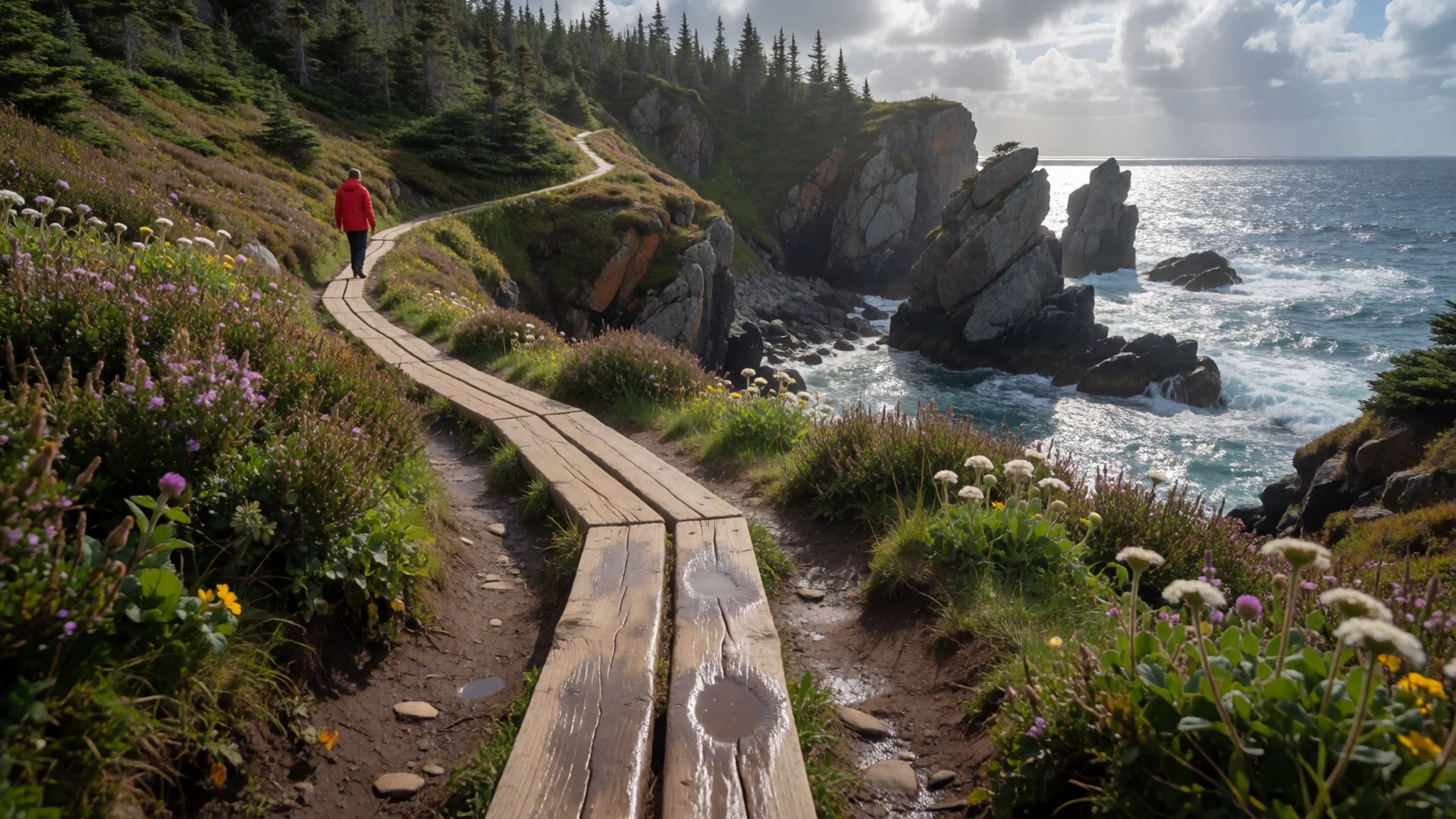
- Cape Spear — Near St. John's
A scenic, windy headland close to the capital, popular for watching the Atlantic roll in. It makes an easy first look at Newfoundland's outer coast before a longer drive south, and it is far easier to reach than the fossil reserve. Bring a windproof layer even on bright days.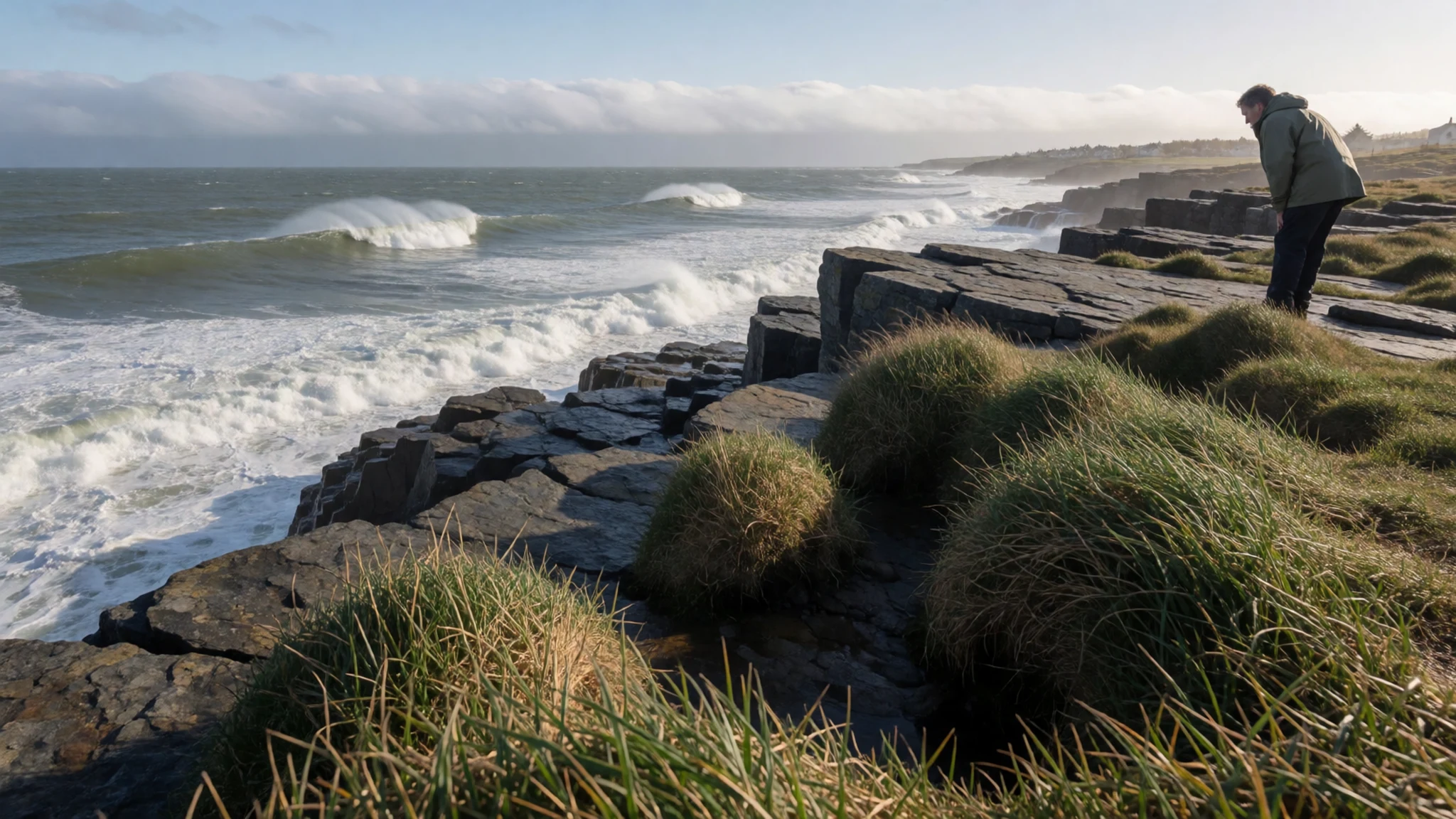
- Signal Hill and the Battery — St. John's
Signal Hill has an old fort and a walking trail, and is a favourite place to watch sunrise over the ocean. Below it, the Battery is the oldest part of St. John's, a huddle of colourful houses above the natural harbour. Both fit comfortably into a half day.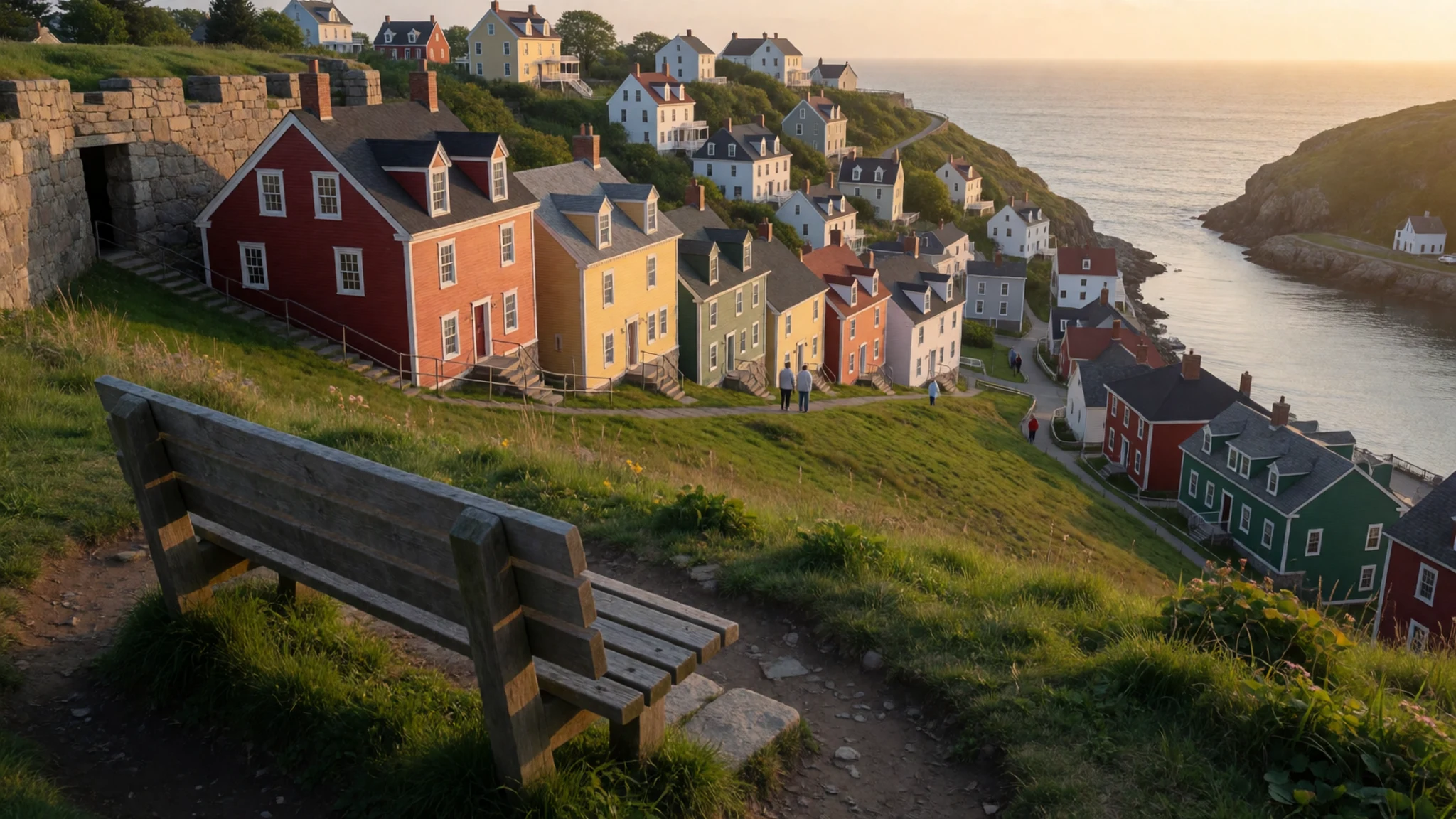
- The Baccalieu Trail — Around the bay and belt, Avalon Peninsula
A signposted driving route through outport communities such as Brigus, Cupids, Harbour Grace and Heart's Content, marketed by the provincial tourism agency with maps on its website. The newer highway bypasses some villages, so take the old shore roads for the scenery and the history.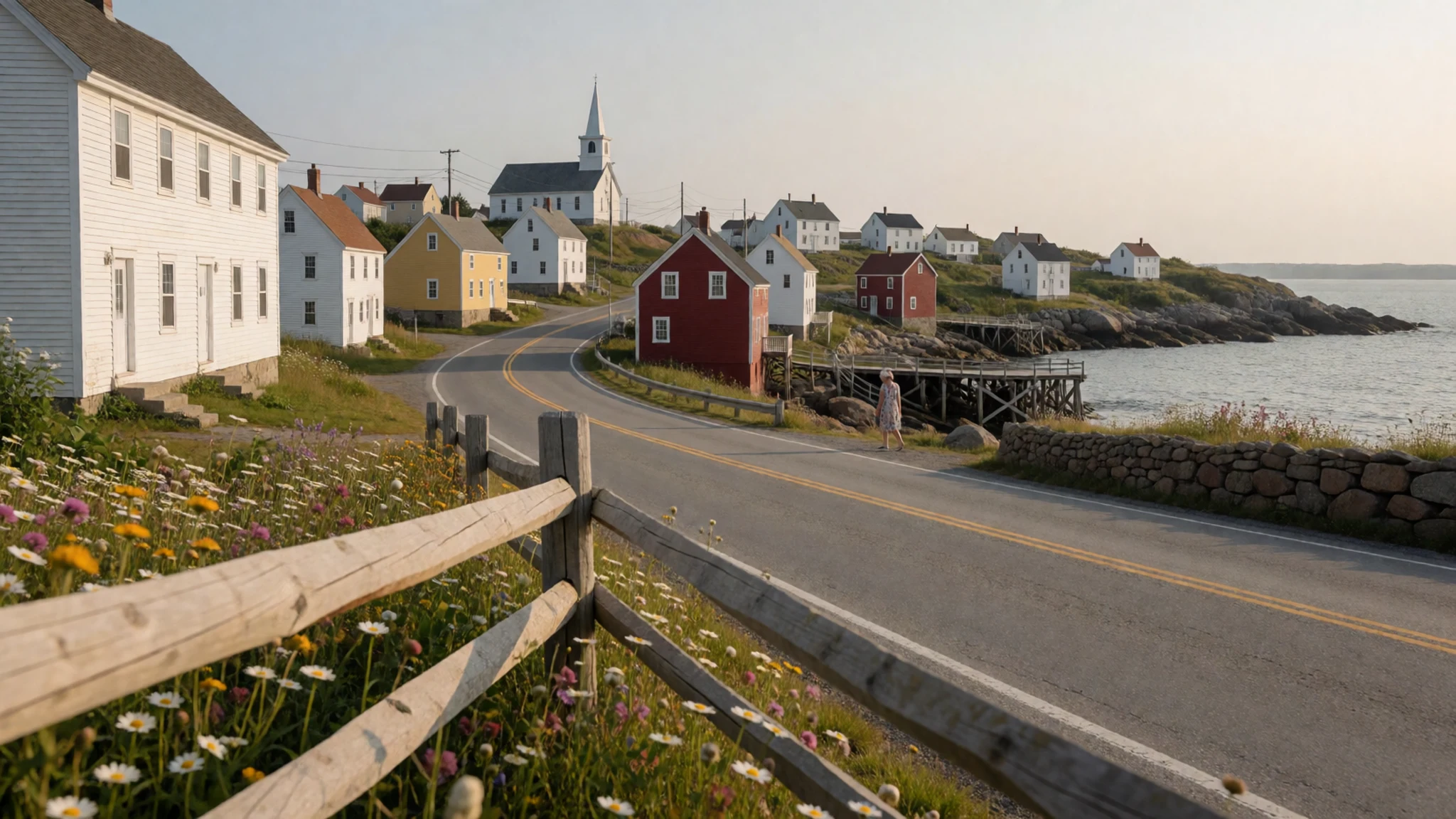
- St. Lawrence shipwreck site — St. Lawrence, southern Newfoundland
The town of St. Lawrence is where the US Navy ships Truxtun and Pollux were wrecked. It is a sombre stop for anyone interested in maritime history, and a reminder of how dangerous this fog-prone coast has been for sailors. Allow extra driving time and check the road first.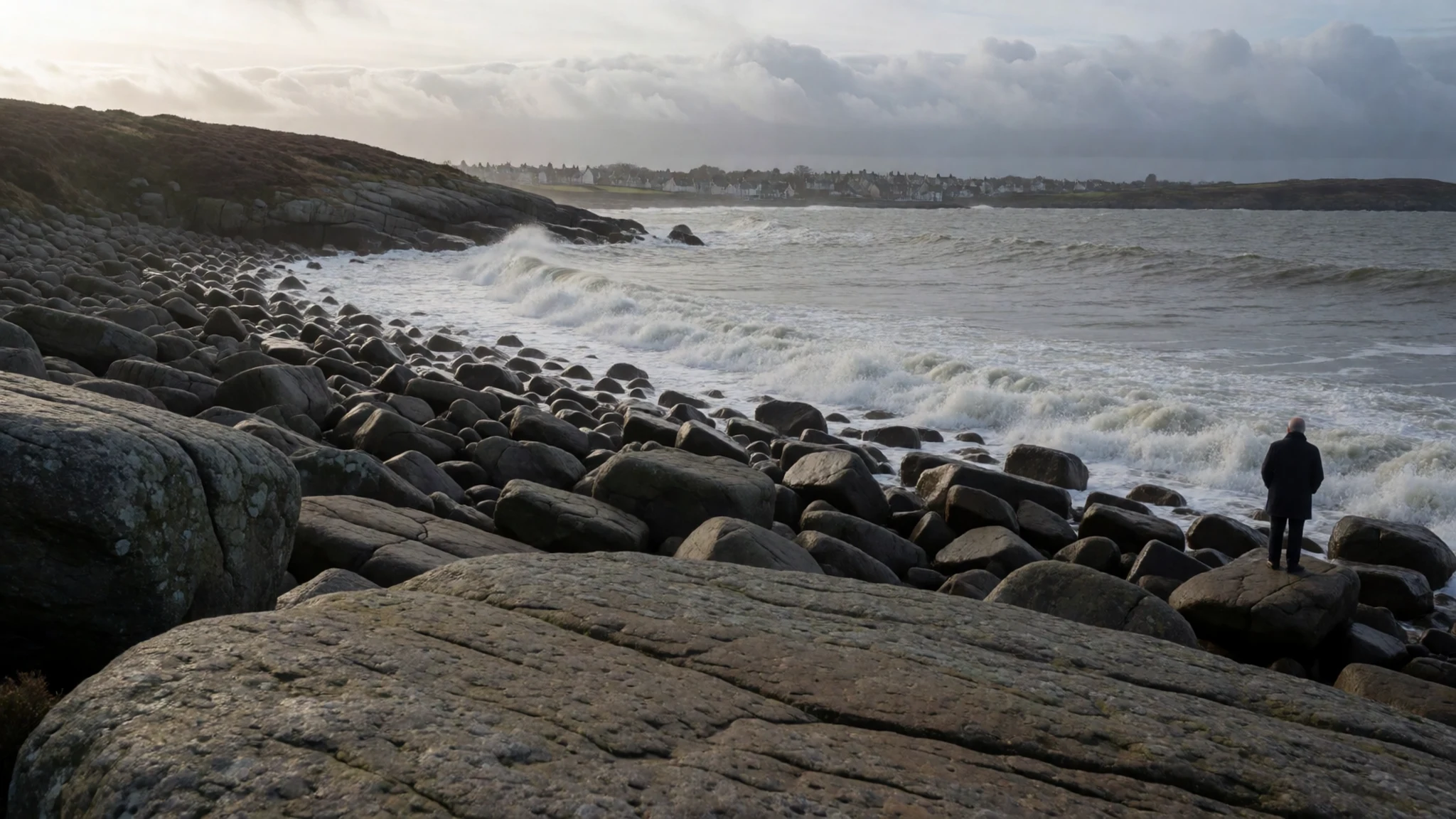
Culture
Mistaken Point lies in a province proud of its humour, its dialect and its distinct traditions. Newfoundlanders pronounce the name with the stress on the last syllable, roughly "newfin-LAND", and visitors who get it right tend to win an easy smile. People are chatty and helpful, and in small communities it is normal to be asked where you are from and to be offered directions, advice or even a cup of tea.
One social custom worth knowing is the "time", an informal gathering with food, music and plenty of cheer. If invited to one, accept warmly. Newfoundlanders are generally easy-going and do not take themselves too seriously, but they do not welcome criticism of their culture from outsiders, and jokes at the province's expense land badly.
The word "Newfie" is a sensitive one. Some locals use it of themselves, but many hear it as a put-down when it comes from a visitor, as it began as a stereotype of rural backwardness. The safe choice is always "Newfoundlander".
The province's long fishing history and its Beothuk, Innu and Inuit heritage are best met with curiosity and respect rather than souvenir-hunting. At the fossil surfaces themselves, stay on the marked route and keep hands, boots and tripod legs off the rock, which can be damaged by touch.
What to wear
Mistaken Point is a place where clothing is about weather first and tradition second. The working dress of Newfoundland's fishing communities grew out of the sea: oilskins and rubber boots for wet work, thick knitted wool for warmth, and hand-knitted mittens and socks made at home through the long winters. These garments were made from wool and waxed or oiled cloth, and were worn daily by fishing families rather than kept for festivals, so they are better thought of as practical heritage than costume.
Today people on the Avalon coast dress much as in any cool, wet northern place: waterproof jackets, fleeces, jeans, work boots and wool hats, with knitwear still common and often made by relatives. Nothing about local dress is formal, and no special modesty rules apply.
Visitors heading to the reserve should dress for wind, damp and uneven ground, even in July or August. Wear layers with a windproof and waterproof shell on top, a hat and light gloves, and trousers that can get wet. Boots with grip and ankle support matter more than anything else, as the rock ledges and grassy paths are slippery. Pack a spare dry pair of socks for the drive home.
What to eat
- Fish and brewis — Rural eateries and community suppers
Salt cod flaked and mixed with softened hard bread, often topped with crisp fried pork scrunchions and sometimes a drizzle of molasses. It is a plain, old-fashioned fisherman's dish and can be an acquired taste for visitors, but it is a good way to meet the local table.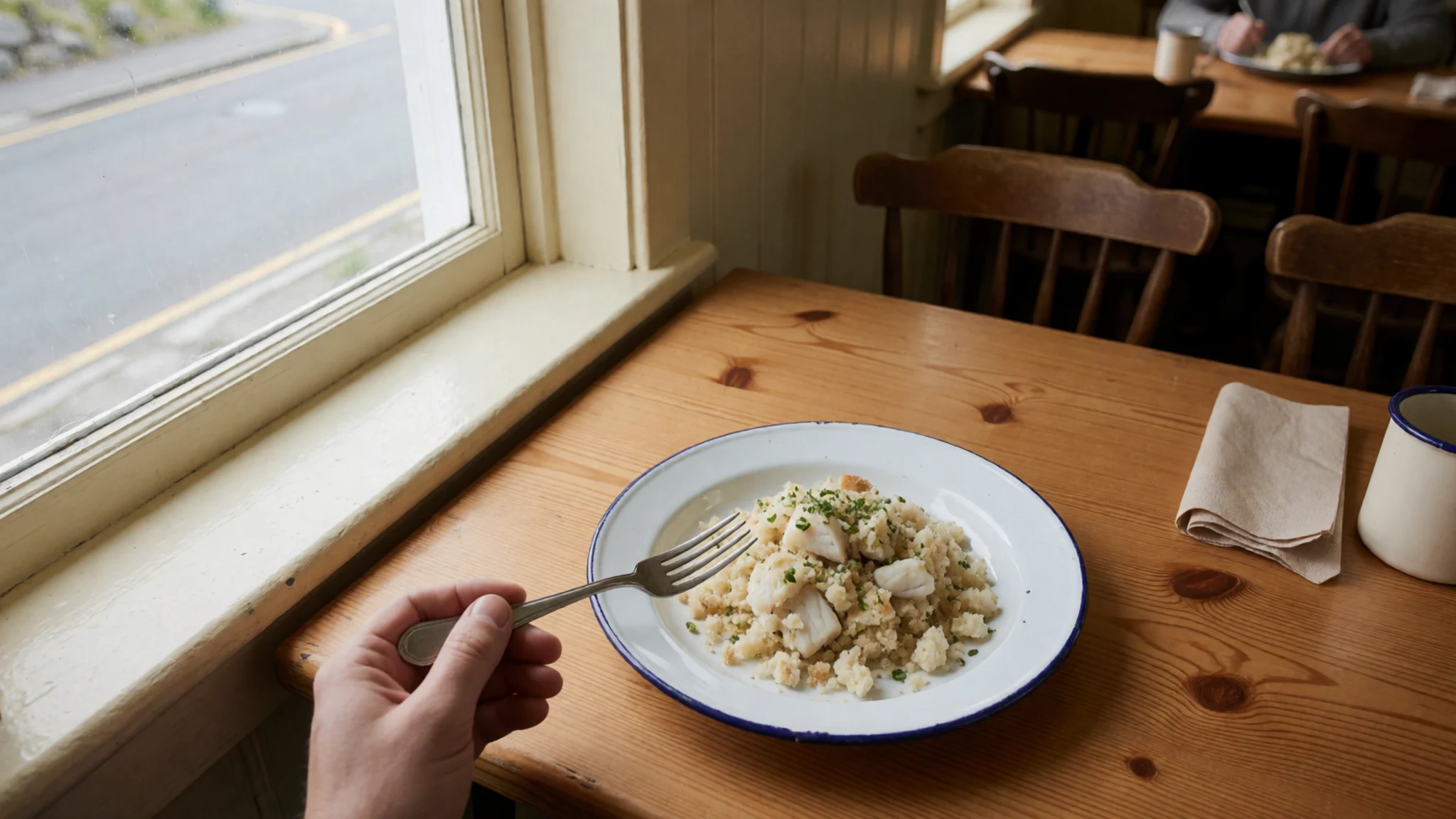
- Jiggs dinner — Home kitchens, community suppers and traditional-menu eateries
A one-pot meal of salt beef boiled with carrot, turnip, parsnip, potato and cabbage, with a bag of yellow split peas cooked alongside to make pease pudding. It is often served on Sundays and is hearty and filling after a cold day on the coast.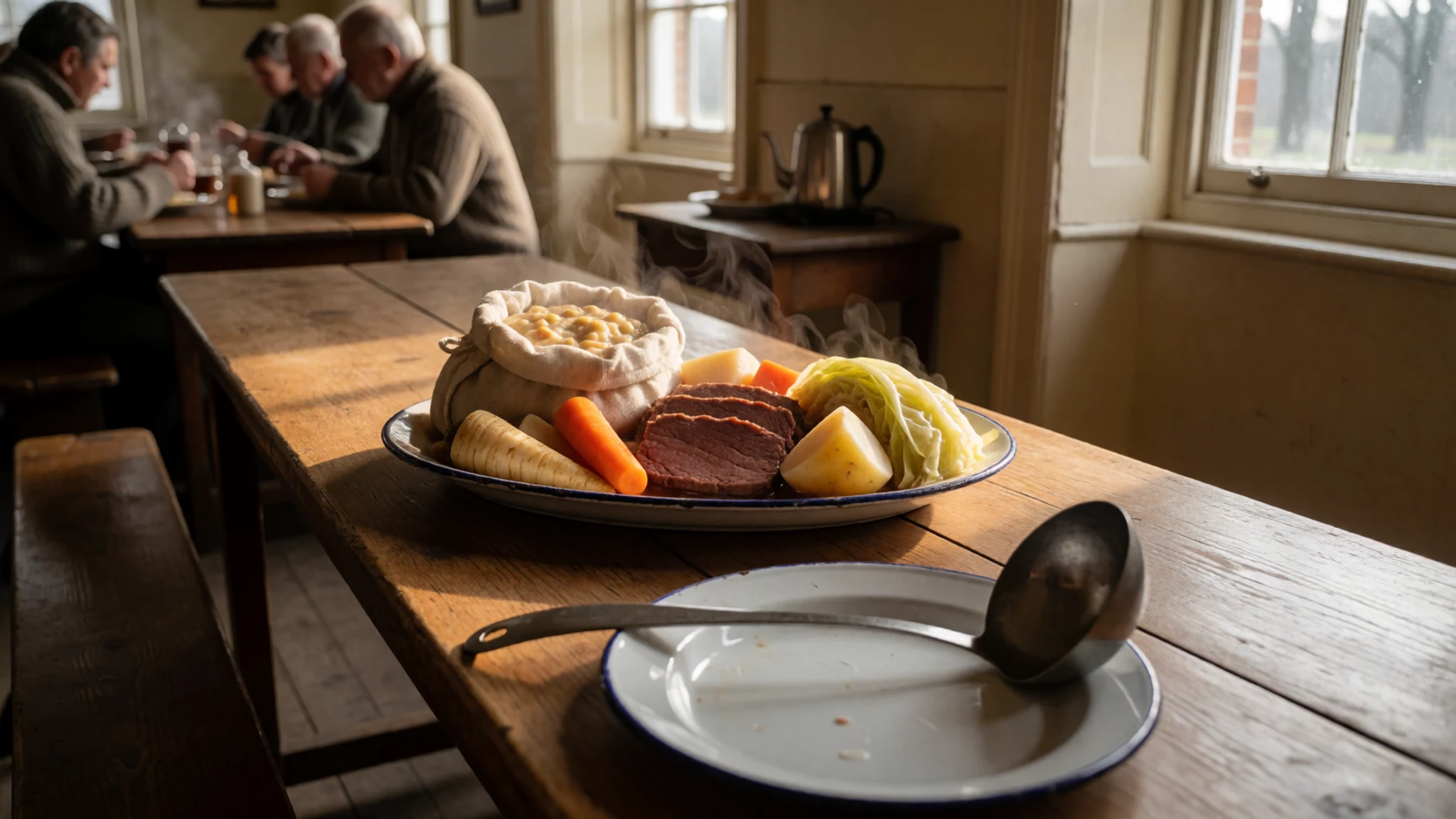
- Battered cod with chips, dressing and gravy — Fish-and-chip counters and roadside eateries
Deep-fried cod is the standard order in rural Newfoundland, often served with chips, gravy and a savoury stuffing known as dressing. Portions are generous and the food is simple, so it suits a long day outdoors. Vegetarians will find choice thin. - Seafood chowder — Cafés and eateries in St. John's and coastal towns
A creamy soup of fish and shellfish, usually served with bread, which is a safer choice for visitors who find the traditional salt-cod dishes too strong. Quality varies from place to place, so ask locally which counter or café is trusted. - Partridgeberry pie and bakeapple jam — Home baking, bakeries and church or community sales
Partridgeberry and bakeapple are wild northern berries, tart and aromatic, used in pies, jams and sauces. A slice of berry pie or home-baked bread with bakeapple jam, offered with a cup of tea, is one of the warmer ways to end a day.
Plan it
Best time. July to September is the practical window for the road, the coastal walking and the reserve, with the mildest weather of the year. Fog, wind and sudden rain are likely in any month, so build in a spare day if the visit matters.
How long. 1–2
Getting there. Fly to St. John's International Airport (YYT), which has several flights a day from Ontario, Quebec and the other Atlantic provinces, and in summer direct flights to London Heathrow and Dublin. From St. John's, drive south along the coast to the reserve; a car is the practical way to do it.
Budget. mid
Tips
- Check the official provincial reserve information before you go to see how access to the fossil surfaces is managed
- Watch for moose on every highway, especially at dawn and dusk, as there is no fencing
- Fill the tank and carry snacks and water, as services thin out quickly beyond the main towns
- Pack waterproofs and warm layers even in midsummer, and allow for fog delaying the walk
- Set aside time on the way to see St. John's and the old outport villages
Etiquette
- Stay on the marked route and never touch, trace or take anything from the fossil surfaces
- Call local people Newfoundlanders, not Newfies
- Accept invitations to a time or a cup of tea warmly, and avoid mocking local culture
Nearby
Sources
- Wikidata Q22525733 (CC0)
- Wikipedia: Mistaken Point (CC BY-SA 4.0)
- Wikivoyage: Newfoundland and Labrador (CC BY-SA 4.0)