Maya Bay
Maya Bay, Thailand
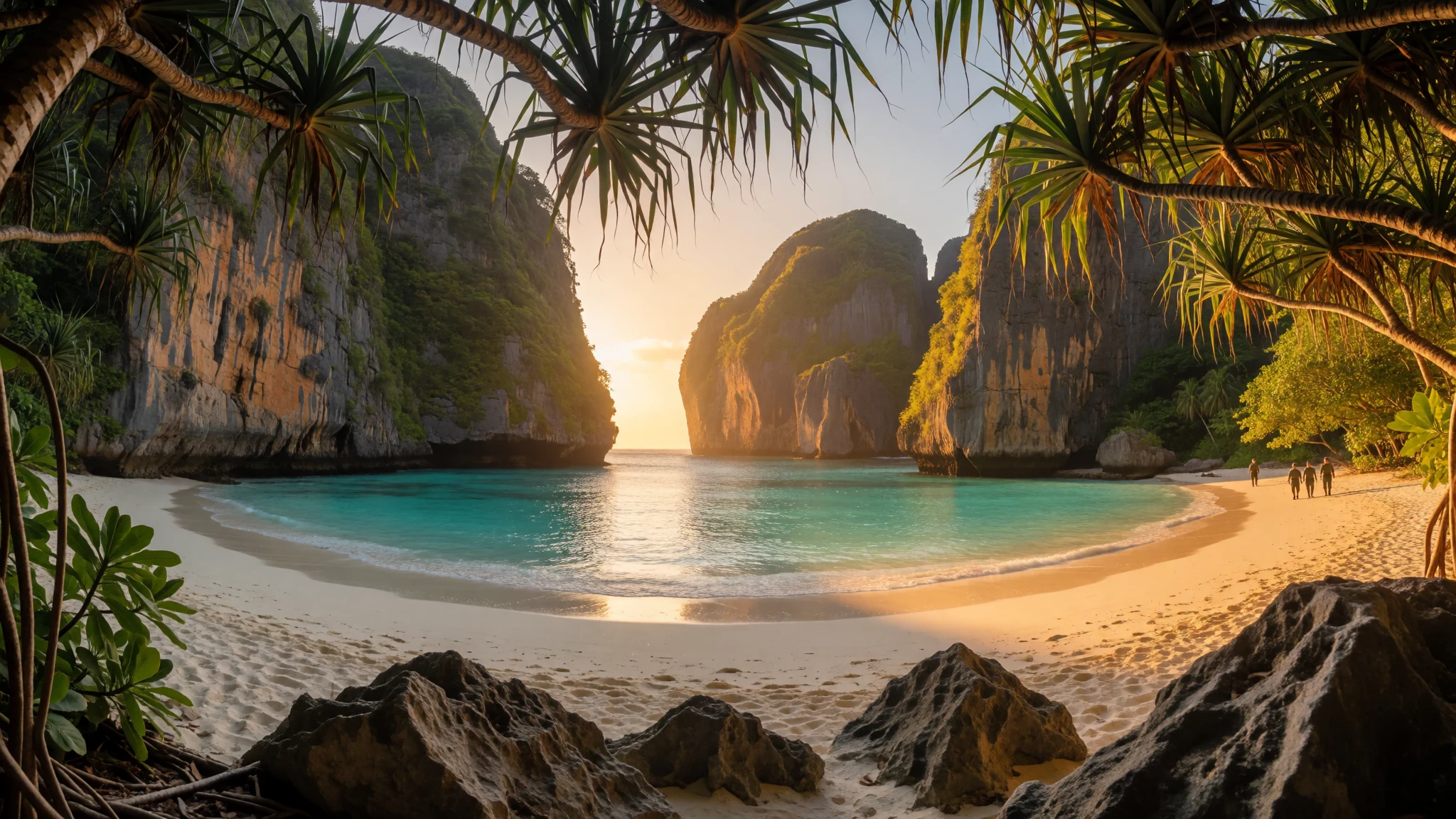
Maya Bay encloses a striking turquoise lagoon framed by tall limestone cliffs on the uninhabited island of Ko Phi Phi Le.
The place
Maya Bay is a sheltered cove enclosed by steep limestone cliffs on Ko Phi Phi Le, an island within the Andaman Sea in southern Thailand. The bay forms part of Hat Noppharat Thara–Mu Ko Phi Phi National Park in Krabi province. Towering karst formations rise directly from the sea, encircling clear turquoise water and a curve of soft white sand. Because the surrounding reef shallowly seals the bay during low tide, boat captains often anchor at neighbouring Loh Samah bay, where visitors cross a wooden boardwalk and short jungle path over the rocks to enter the lagoon from behind.
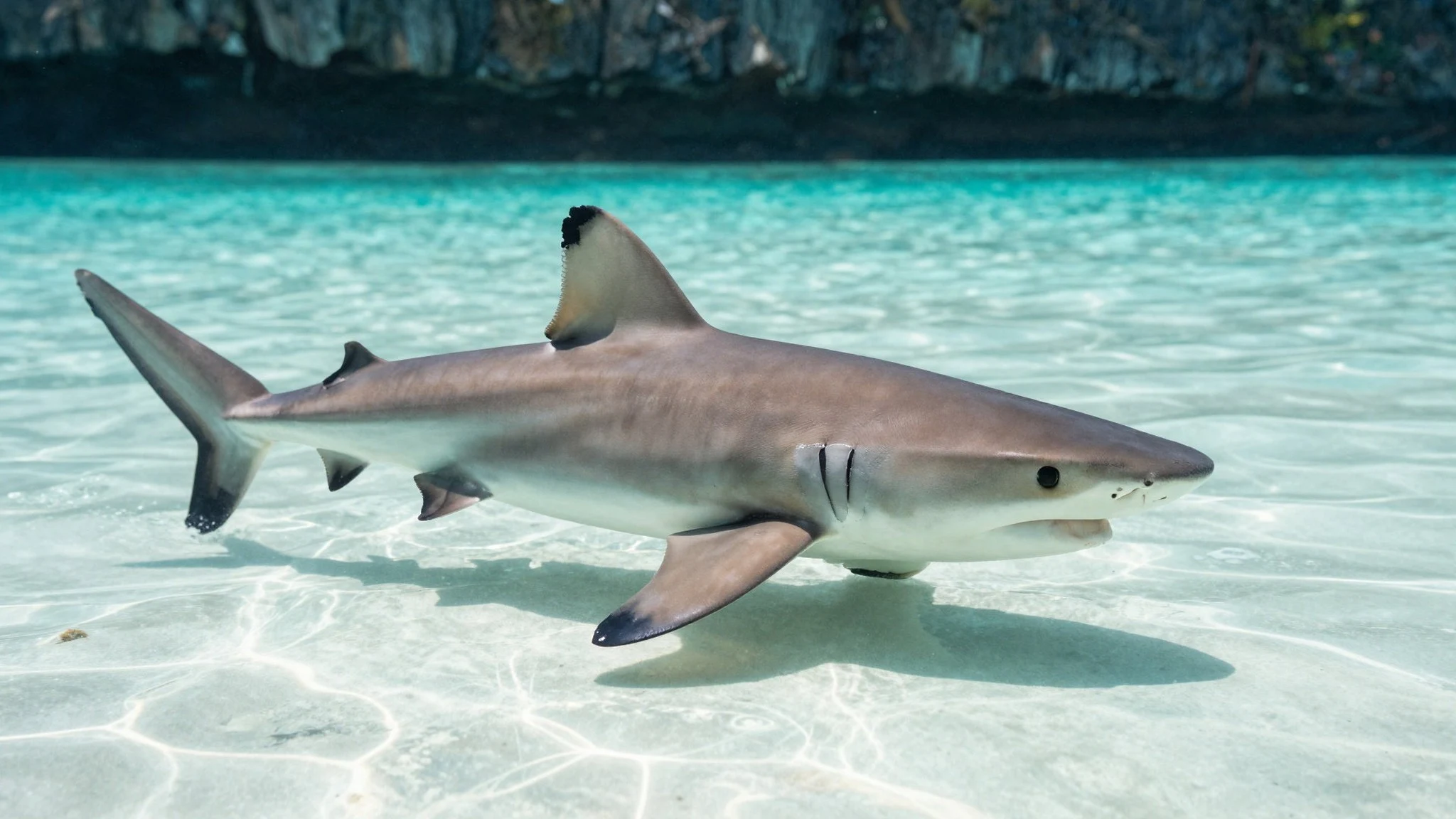
The surrounding marine ecosystem supports shallow coral gardens and diverse sealife, including juvenile blacktip reef sharks that shelter in the shallows and bioluminescent plankton that illuminate the night water. Nearby, Pi Ley cove cuts deep into the limestone cliffs as a narrow inlet bounded by sheer rock faces. Because Ko Phi Phi Le remains an uninhabited natural reserve without permanent housing, almost all visitors reach Maya Bay on day trips using traditional wooden longtail craft or high-speed motorboats departing from neighbouring Ko Phi Phi Don or the coastal mainland resort of Ao Nang. Broad limestone walls cast shifting shadows across the bay throughout the day, creating dramatic light against the emerald water.
Its story
Maya Bay entered global popular culture when it served as the principal location for the 2000 feature film adaptation of Alex Garland's novel The Beach. Before Hollywood film crews arrived, the isolated bay was known primarily to local fishers and early backpackers exploring the Krabi archipelago. The release of the movie transformed the quiet bay into one of the most recognised coastal destinations in Southeast Asia, attracting thousands of daily visitors by longtail boat and speedboat over subsequent decades.
This intense volume of tourism caused severe ecological strain on the bay's fragile environment. Heavy anchor drop, boat propellers, litter, and sunscreen chemicals damaged the shallow coral reefs and drove away native marine species like reef sharks. Recognising the environmental crisis, Thai park authorities closed Maya Bay to all visitors in mid-2018 to allow the ecosystem time to recover. During the closure, marine biologists established coral propagation projects, replanting thousands of coral fragments along the seabed while monitoring the return of wildlife.
When the bay reopened under strict national park management rules, commercial boats were banned from entering the lagoon directly or anchoring inside the bay. Visitors now land at a constructed pier on the opposite side of the island at Loh Samah, walking along raised wooden paths to reach the sands without treading on sensitive coastal flora. Swimming limits and visitor caps help balance human presence with ongoing environmental conservation across the marine reserve.
What to see
- Loh Samah Bay — Ko Phi Phi Le
Loh Samah Bay serves as the secondary entry point for visitors heading to Maya Bay during low tide. Situated on the opposite side of Ko Phi Phi Le, it features deep blue water where longtail boats anchor. Visitors step onto a wooden floating pier and cross a short jungle boardwalk through limestone rocks to reach the main beach.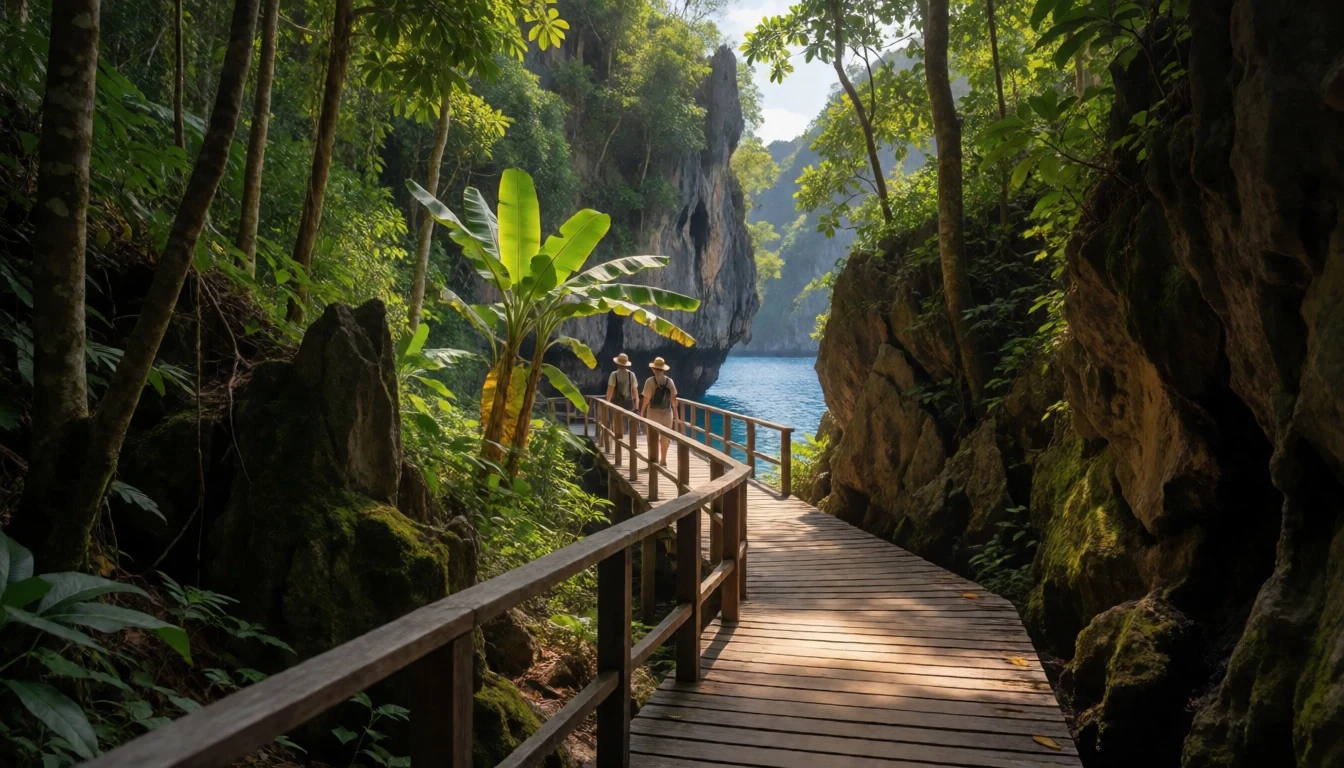
- Pi Ley Lagoon — Ko Phi Phi Le
Pi Ley Lagoon is a long, fjord-like inlet cut into the tall limestone cliffs of Ko Phi Phi Le. A shallow coral reef sits at the entrance, opening into crystal-clear turquoise waters framed by sheer rock faces. It is a favourite spot for swimming and longtail boat rides along the quiet inner waters.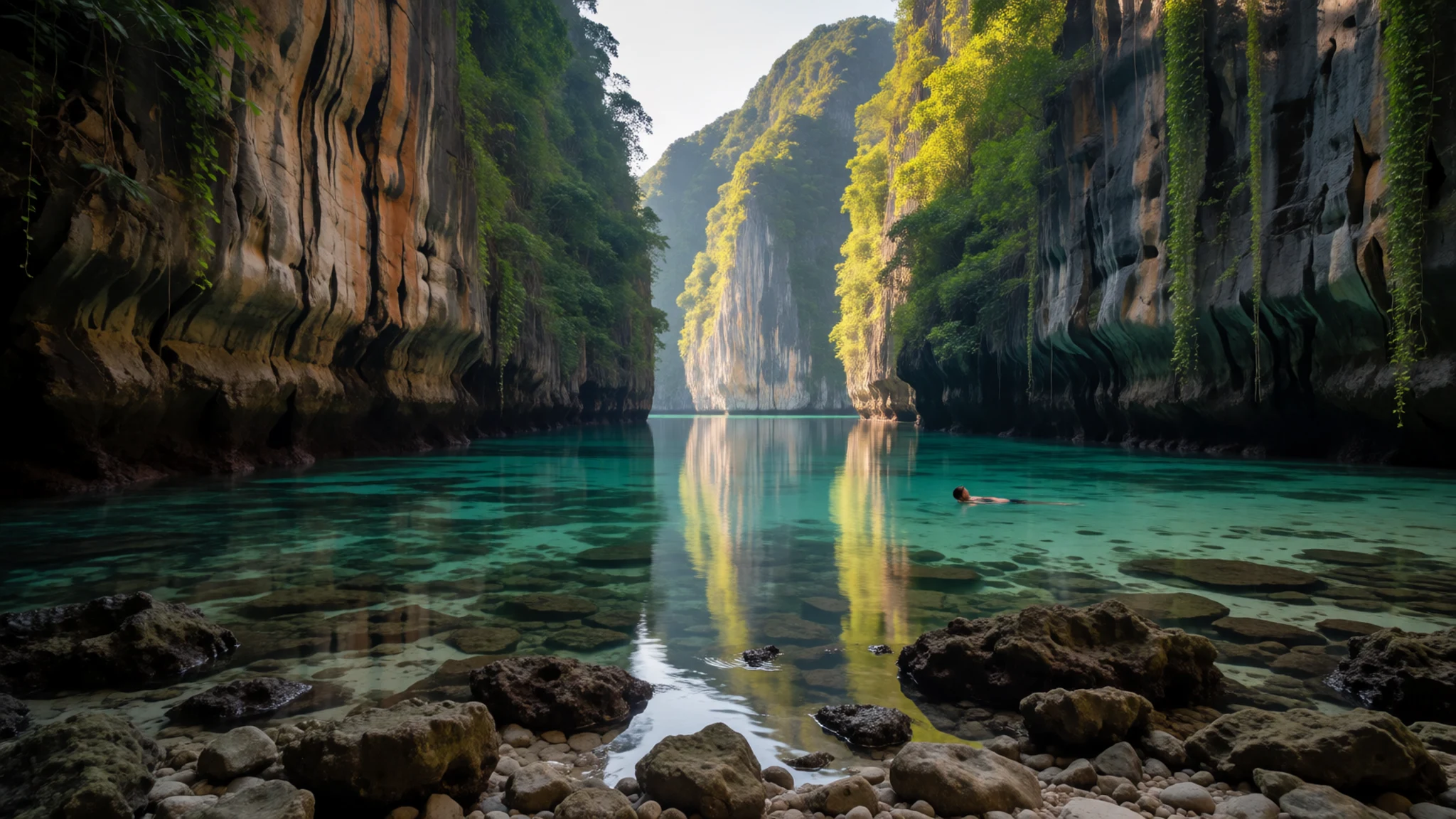
- Ao Nang Beach — Ao Nang mainland
Ao Nang Beach lies on the mainland of Krabi province and acts as the central springboard for boat excursions across the archipelago. The shoreline features long stretches of sand backed by a lively promenade full of tour agencies and eateries. Longtail boats line the water's edge, ready to ferry passengers to outlying islands.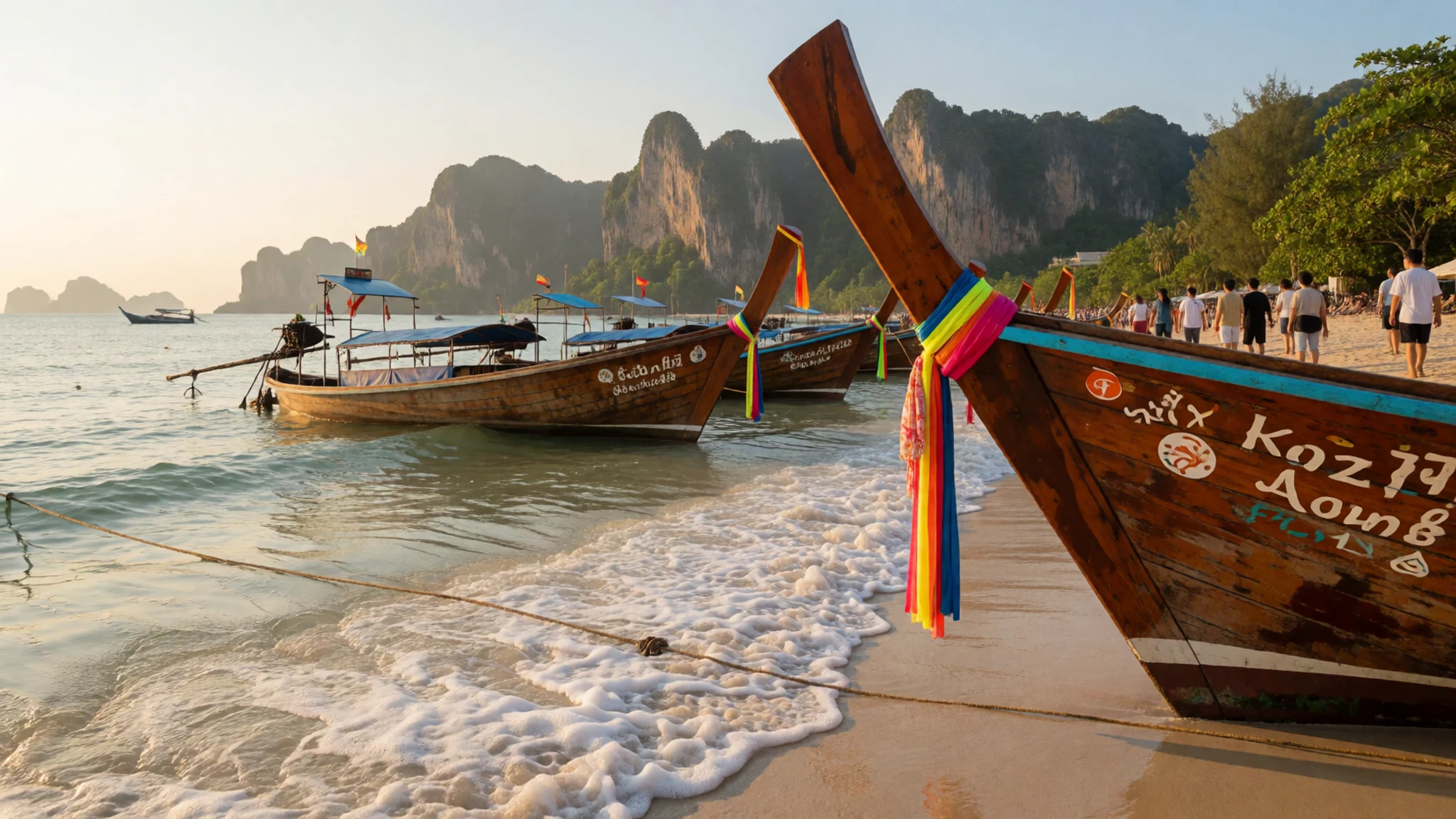
- Nopparat Thara Beach — Ao Nang mainland
Nopparat Thara Beach forms the northern boundary of Ao Nang's main coastal strip and sits within the protected national park. Divided by a river estuary where boat piers operate, this peaceful beach is shaded by casuarina trees and offers calm waters at high tide, ideal for relaxed evening walks away from main tourist crowds.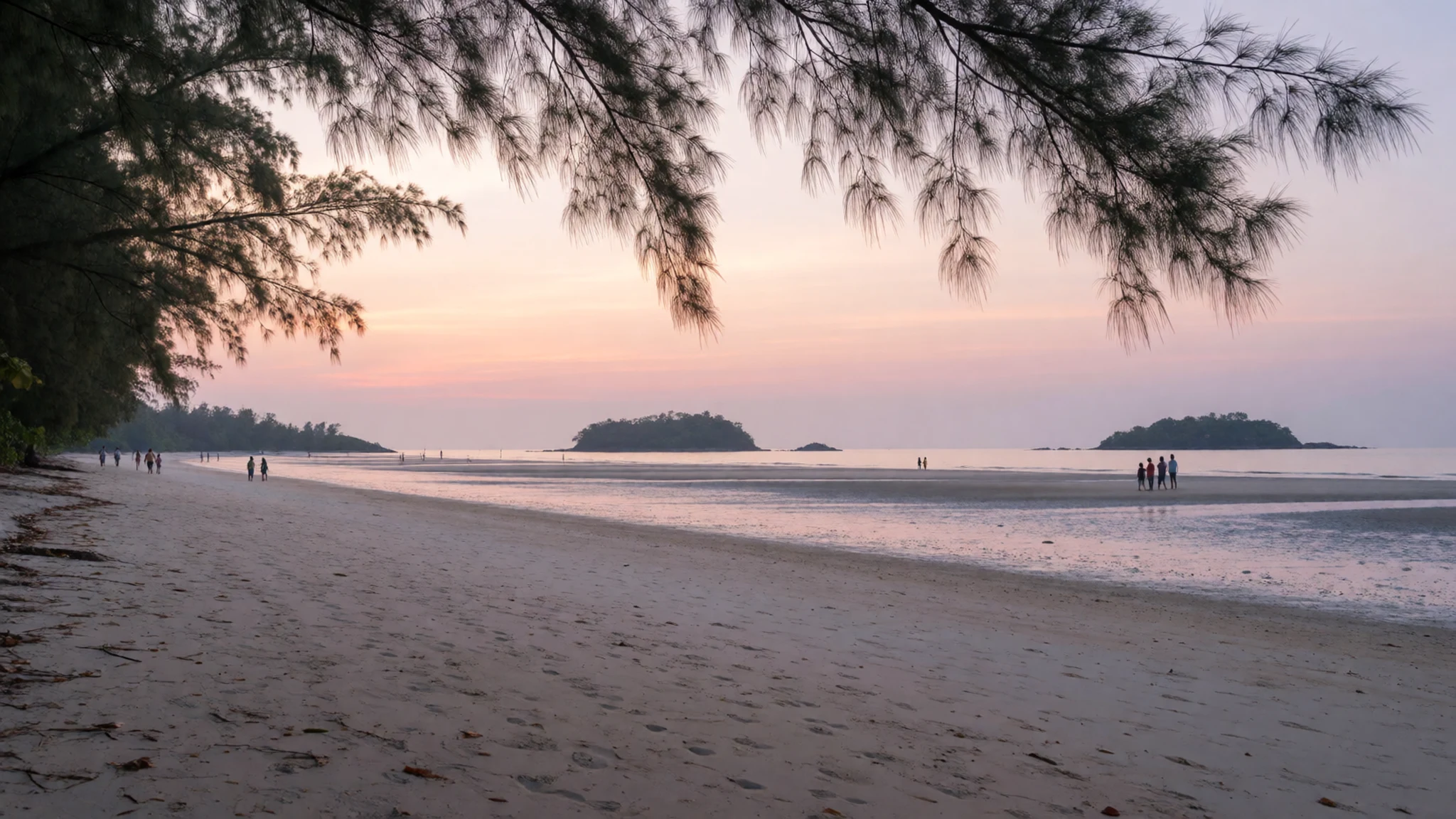
- Rai Leh Peninsula — Krabi coast
Rai Leh Peninsula sits just around the headland from Ao Nang, accessible only by boat due to high limestone cliffs cutting off land access. The peninsula features towering rock faces popular with climbers, white sand beaches, and dramatic sea caves. Day trips here easily combine with boat visits to Maya Bay.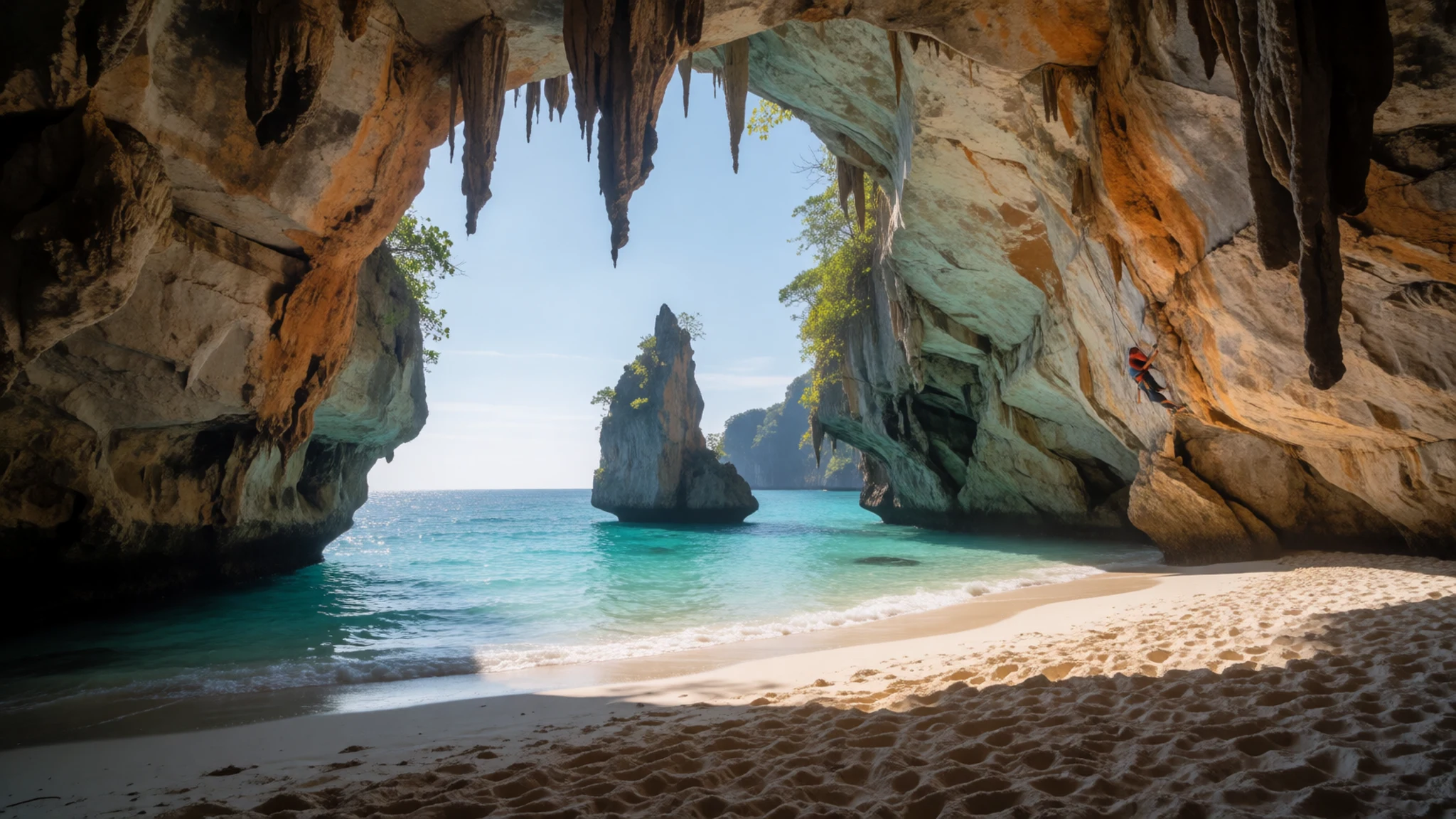
Culture
Maya Bay sits within the cultural landscape of southern Thailand's Andaman coast, where coastal life revolves around maritime traditions and respect for nature. The region's indigenous sea nomads, historically known as the Urak Lawoi, navigated these waters long before modern tourism arrived, leaving a legacy of deep local knowledge regarding tides, fishing grounds, and island spirits. Nearby fishing villages and boat operators still maintain custom-decorated longtail craft, adorning the wooden prow with colourful woven silk scarves (pha chet pha) to invoke protection from Mae Yan Nang, the spiritual guardian of boats.
Southern Thai culture places strong emphasis on community warmth, gentleness, and respect for environmental stewardship. As conservation awareness has grown, local communities along the Krabi coast actively support marine restoration initiatives and reef protection. Visitors will observe a relaxed pace of life paired with modest manners away from the immediate beach strips. Avoid touching the sacred silk scarves tied around longtail boat prows or stepping over boat frames when boarding craft.
What to wear
At Maya Bay and across the Krabi coastline, traditional southern Thai textiles reflect the warm tropical climate and maritime heritage. Handwoven batik fabrics, dyed with intricate floral and ocean-inspired motifs on light cotton or silk, are traditionally worn as sarongs (pha sarong) by both men and women during village gatherings, festivals, and formal occasions. Local women may also wear light embroidered blouses, while fishermen historically favoured loose cotton trousers and hand-dyed scarves to protect against sea spray and sun.
Today, local residents in nearby Ao Nang and island towns wear casual, breathable Western-style clothing such as cotton t-shirts, linen shirts, and shorts. Lightweight batik shirts remain popular among boat captains and market traders.
For visitors travelling to Maya Bay, lightweight, fast-drying swimwear, cover-ups, and loose linen clothing are practical choices for humid boat trips. Because the island path requires walking over wooden boardwalks and damp rocks, secure water shoes or sturdy sandals are much safer than loose flip-flops. Bring a UV-protective sun shirt and wide-brimmed hat. When stepping off the beach into mainland towns, shops, or local restaurants, cover your shoulders and chest out of respect for local customs.
What to eat
- Gaeng Som — Roadside eateries along Ao Nang Beach
Gaeng Som is a fiery southern Thai curry made with fish, green papaya, turmeric, and sour tamarind broth. Spicy and aromatic, it is served hot with steamed jasmine rice at roadside eateries and open-air food stalls along Ao Nang Beach.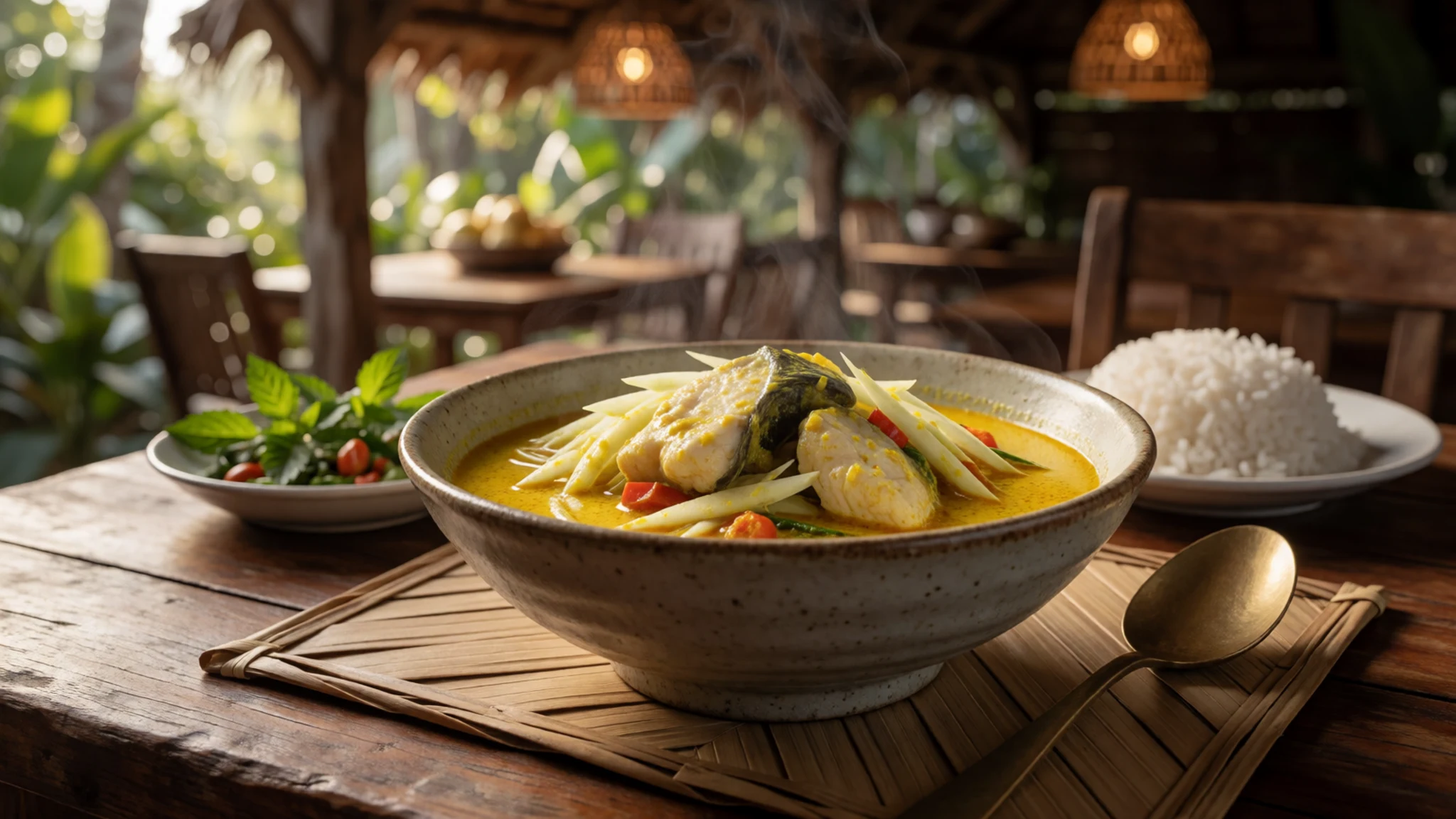
- Khao Yam — Morning markets around Ao Nang Mosque
Khao Yam is a fragrant rice salad tossed with toasted coconut, lemongrass, kaffir lime leaves, dried shrimp, and a tangy fish sauce dressing. It is a refreshing lunch dish available at morning markets around Ao Nang Mosque.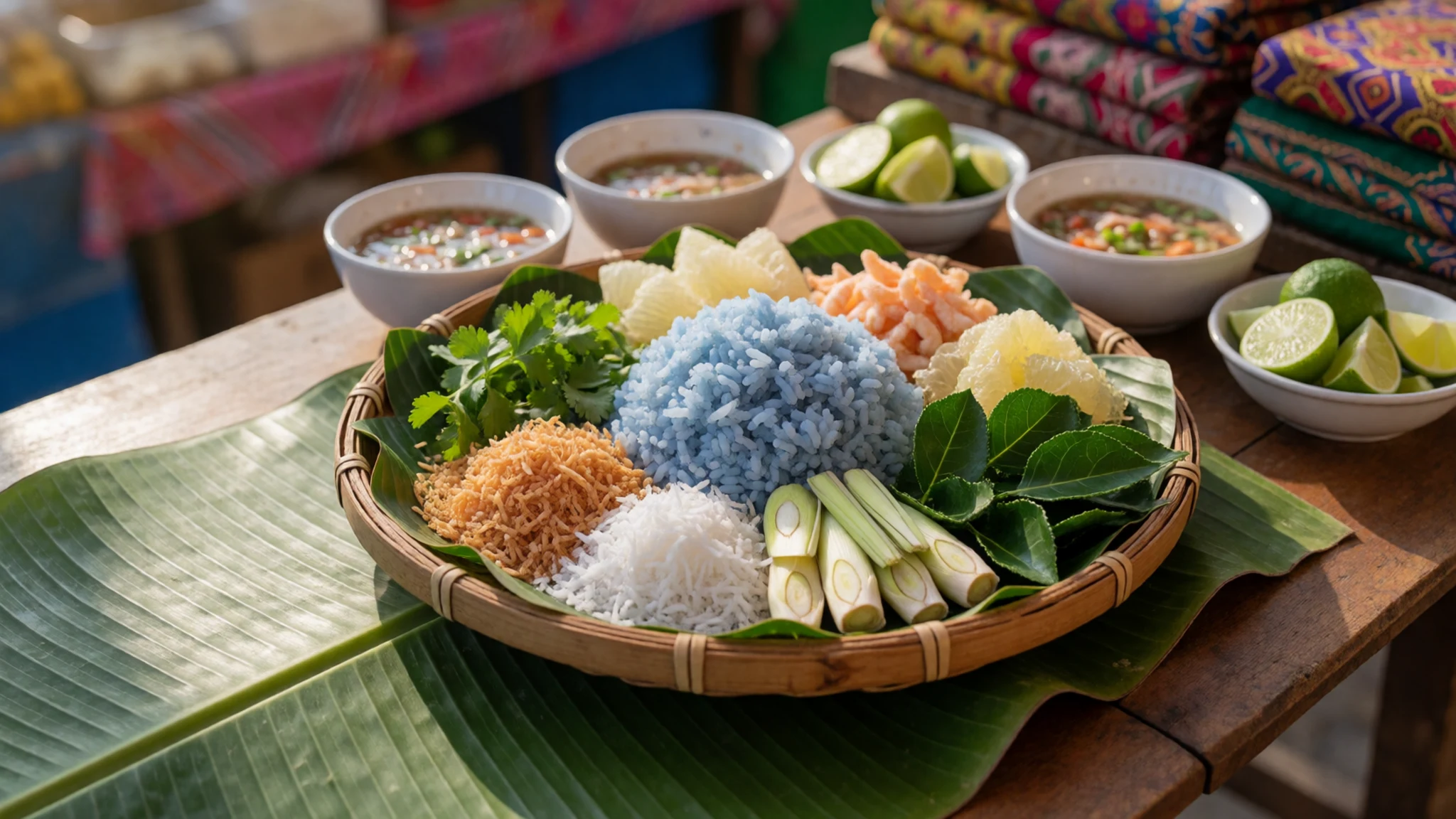
- Bamii Muu Daeng — Street stalls along Ao Nang beach road
Bamii Muu Daeng features egg noodles topped with sliced roasted pork, garlic oil, greens, and a savoury light broth. Look for street stalls marked with yellow noodle signs along the main beach road in Ao Nang. - Roti Kluai — Evening street carts near night markets
Roti Kluai is a popular sweet street snack made of pan-fried flatbread stuffed with sliced banana, drizzled with condensed milk or chocolate syrup. It is freshly cooked at evening street cart clusters near the night markets. - Pad Sate — Ao Nang Landmark Night Market
Pad Sate consists of marinated chicken or pork skewers grilled over charcoal and served with a rich peanut dip and pickled cucumber relish. You can find these sizzling skewers at the Ao Nang Landmark Night Market.
Plan it
Best time. November to April brings dry weather and calmer seas for boat travel; May to October sees high rainfall and rough sea conditions.
How long. 1–2
Getting there. Fly into Krabi International Airport, then take an airport shuttle or songthaew to Ao Nang beach. From Ao Nang or Ko Phi Phi Don, book a longtail boat or speedboat tour to reach the island.
Budget. mid
Tips
- Book early morning boat trips to arrive at the bay before peak crowds
- Wear sturdy water shoes for climbing off boats and walking jungle boardwalks
- Bring reef-safe sunscreen to protect marine life in the park
- Carry cash for national park entrance fees and boat charters
Etiquette
- Observe designated swimming areas and do not step on coral reefs
- Cover swimsuits with clothing when walking through mainland towns and markets
- Do not touch or disturb marine life including reef sharks and fish
Nearby
Sources
- Wikidata Q13024284 (CC0)
- Wikipedia article Maya Bay (CC BY-SA 4.0)
- Wikivoyage article Ao Nang (CC BY-SA 4.0)
- Photo: Maya Bay, Koh Phi Phi, Krabi, Thailand (CC BY 4.0)
- Photo: AcquaBeach cliffs (CC0 1.0)
- Photo: Ao Maya (Ko Phi Phi Lee) (Public domain)
- Photo: Ao Maya (Public domain)
- Photo: Cliffs at Maya Bay (CC BY 3.0)
- Photo: Coral propagation (CC BY-SA 4.0)
- Photo: Emerald water at Maya Bay (CC BY-SA 4.0)
- Photo: Koh Phi Phi Leh (CC BY 3.0)


Wildlife
- Blacktip reef shark (animal)
Picture a shark whose fins have been dipped in black ink, and you have the blacktip reef shark. Young ones shelter in the shallows around Maya Bay, and its fin often shows above the water over reef ledges and sandy flats. I can't tell you which season or hour is best, so ask a local guide when sightings are likeliest. Watch calmly from a respectful distance, keep quiet in the water, and never feed these sharks.