Martha's Vineyard
Martha's Vineyard, United States
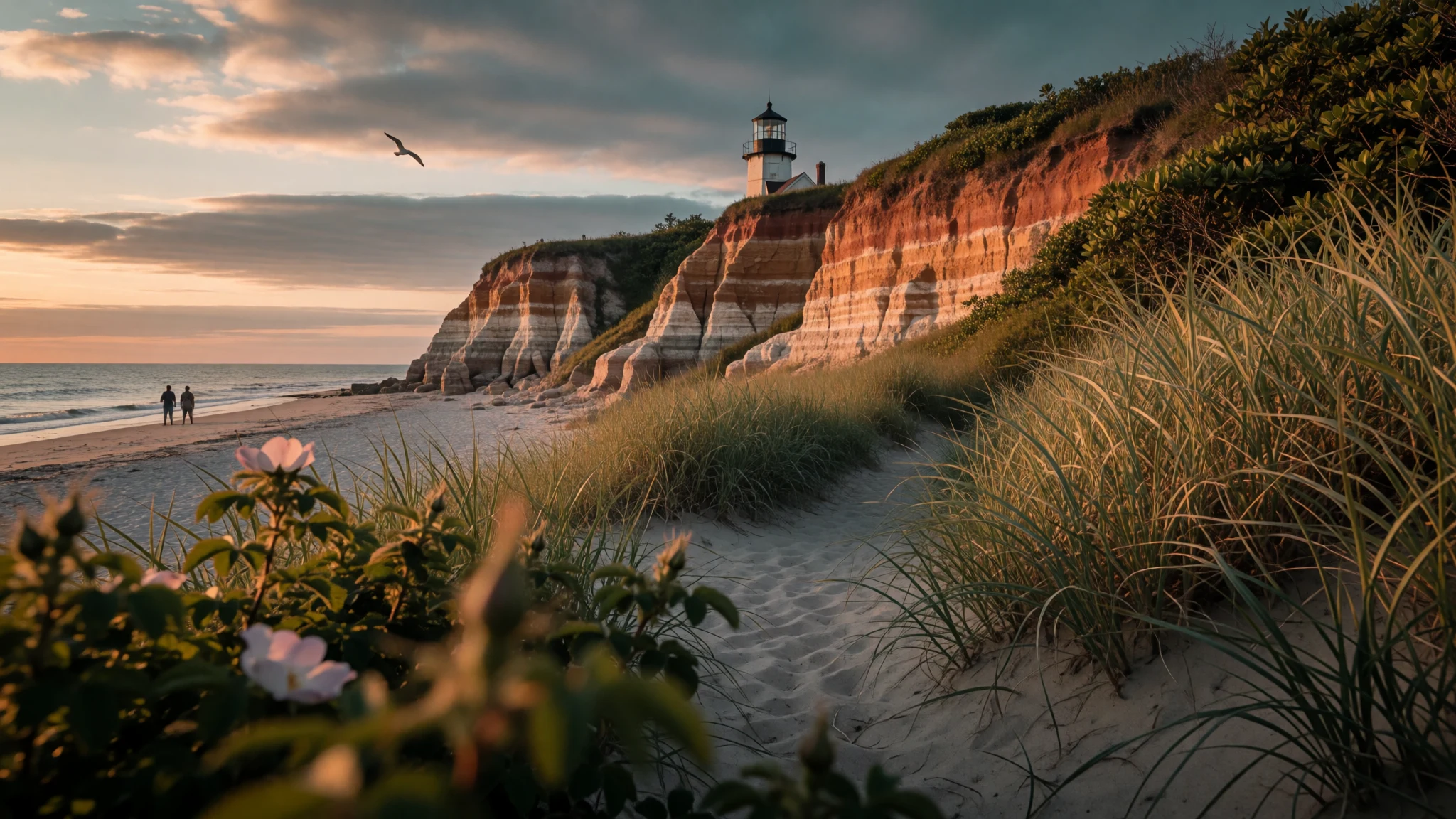
Martha's Vineyard is a low, breezy island of clay cliffs, fishing harbours and painted villages, best enjoyed by bike and by sea.
The place
Martha's Vineyard is an island off the coast of Massachusetts, lying just south of Cape Cod and reached only by sea or air. The Wampanoag name is Noepe, and residents usually say simply "the Vineyard". The facts record a resident population of 14,729 and a highest ground of about 24 metres, so this is a low, open island of ponds, moorland, scrub oak and long beaches rather than anything dramatic in height. Its character changes with the compass. The three "down-island" towns, Vineyard Haven, Edgartown and Oak Bluffs, hold the ferry landings, harbours, shops and most of the bars and restaurants. "Up-island" is quieter and more rural: Chilmark, West Tisbury and Aquinnah have farms, stone walls, fishing sheds and the clay cliffs at the western end. Chappaquiddick, a sandy neighbour reached from Edgartown by a small ferry, feels wilder still. Summer is the island's season. It is a holiday place for wealthy families as well as a home to year-round fishers, farmers and craftspeople, and many houses stand empty through the winter. The population in July and August is many times what it is in January, and that shapes traffic, ferry queues, prices and the mood of every town. Outside high summer the Vineyard is calmer, cheaper and more local, although some shops and eateries close for the cold months. Distances are short but public transport is thin, so working out how to get around matters more than choosing a beach.
Its story
Martha's Vineyard was first the home of the Wampanoag, whose name for the island, Noepe, is usually translated as "land amid the streams". Their numbers on the island were around 3,000 in 1642 and had fallen to 313 by 1764, a collapse that followed the arrival of Europeans. English contact began in 1602, when Bartholomew Gosnold led an expedition to the Cape Cod coast. The island's name probably honours his mother-in-law, Martha Judde Golding, who helped finance the voyage, rather than his daughter as local legend often has it. The name first belonged to a smaller island to the south before it drifted to this one. Permanent settlement followed once Thomas Mayhew acquired the rights to the island and its neighbours. His son, also Thomas, founded the first English settlement in 1642 at Great Harbour, today's Edgartown. The Mayhews dealt carefully with the islanders over who owned which land, and relations stayed steadier than elsewhere in New England; when King Philip's War broke out later in the century, the island's Wampanoag community kept out of the fighting. The younger Mayhew was lost at sea in 1657 on a voyage to England, and his relatives went on running the colony. Whaling later brought money to Edgartown, and the sea captains' houses along its streets still show it. Later again, Oak Bluffs grew from a Methodist summer meeting ground into a town of painted cottages, and the island slowly turned from working port to summer resort.
What to see
- Aquinnah clay cliffs — Aquinnah, western end
The clay cliffs at Aquinnah, formerly called Gay Head, rise at the island's western tip in bands of red, ochre, white and grey, with a lighthouse on top. A path leads down to Moshup Beach beneath them. Climbing the cliffs or taking clay is discouraged, so look from the shore. Late afternoon light suits them best.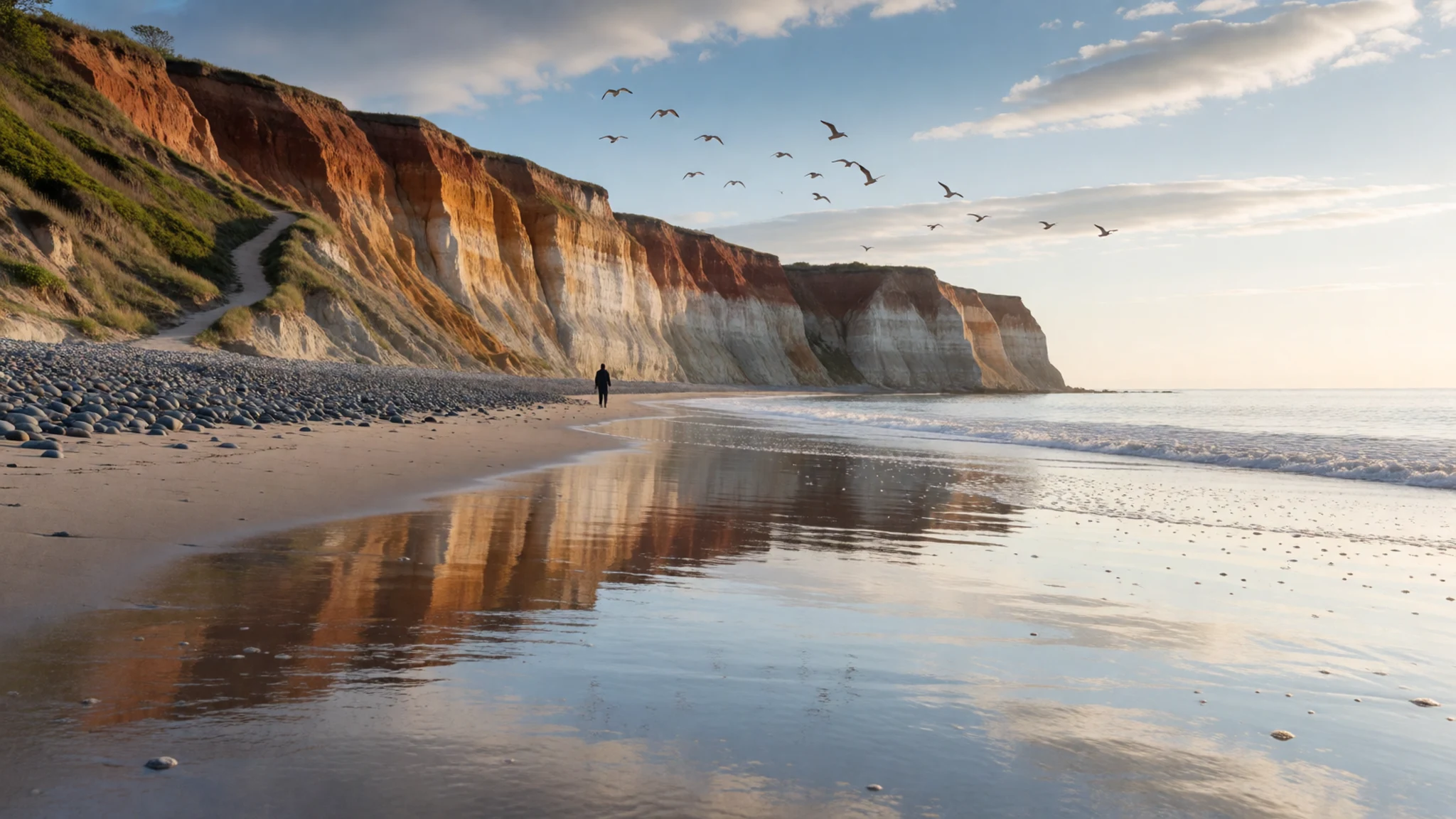
- Menemsha harbour — Chilmark, up-island
Menemsha is a working fishing harbour in Chilmark, with boats, bait sheds and a small beach beside the channel. Its draw is the sunset over open water, a rarity on a coast where most shorelines face the sunrise. Locals gather with takeaway seafood as the sun drops. Come early in summer, because parking fills.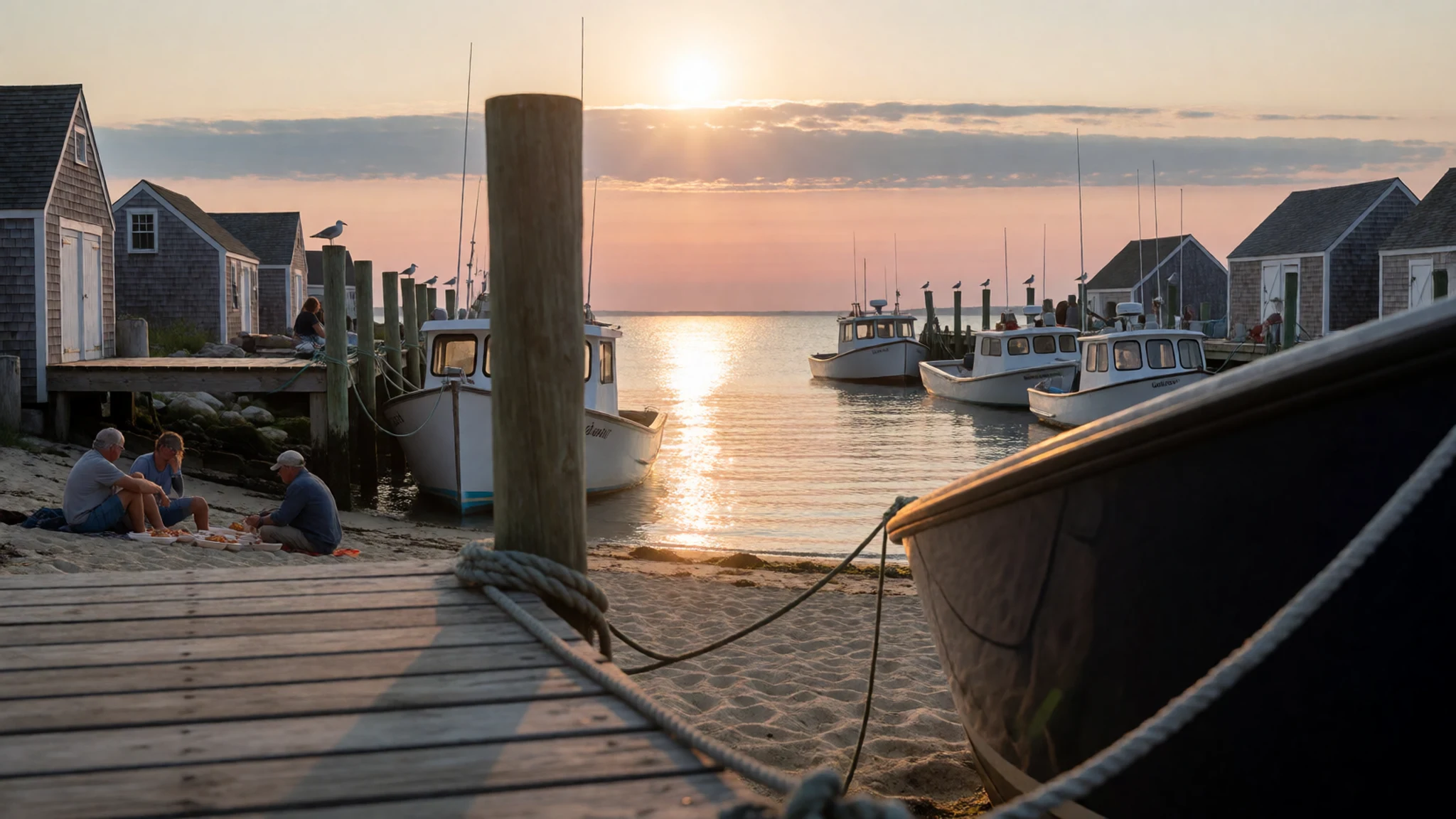
- Edgartown streets and the Old Whaling Church — Edgartown
Edgartown's streets are lined with white-painted sea captains' houses, picket fences and hydrangeas, a legacy of the whaling era. The Old Whaling Church, with its tall columned front, is the landmark at the centre. The lanes can be walked in an hour or two, and the harbour front is pleasant for sitting afterwards. Summer afternoons are busiest.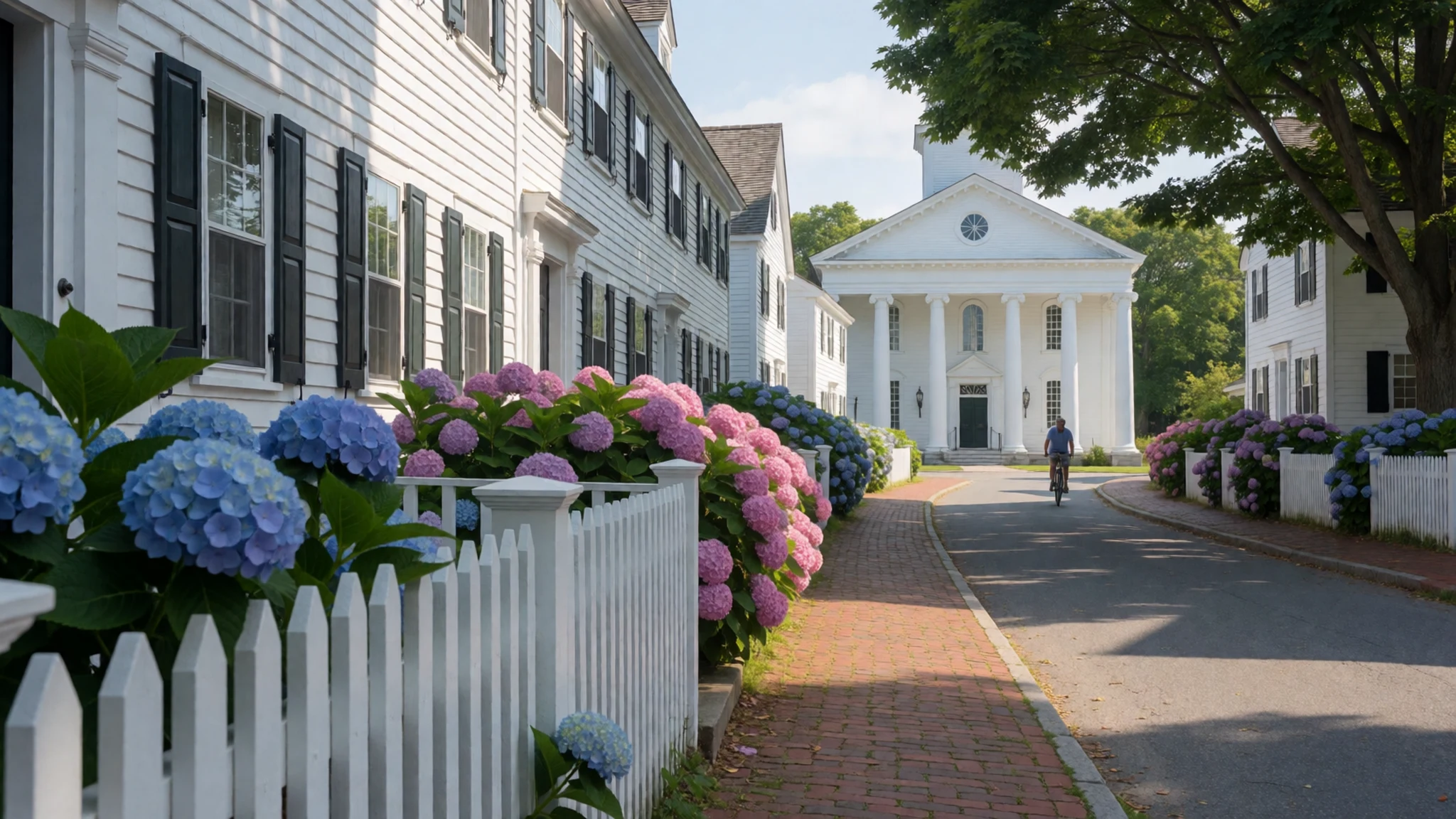
- Oak Bluffs gingerbread cottages — Oak Bluffs
Oak Bluffs is known for its gingerbread cottages, small painted houses with scalloped trim in bright colours, gathered around a leafy green and left over from the town's Methodist camp-meeting origins. Ocean Park nearby has a bandstand and wide lawn facing the water. Summer evenings bring music, ice-cream queues and a lively harbour front.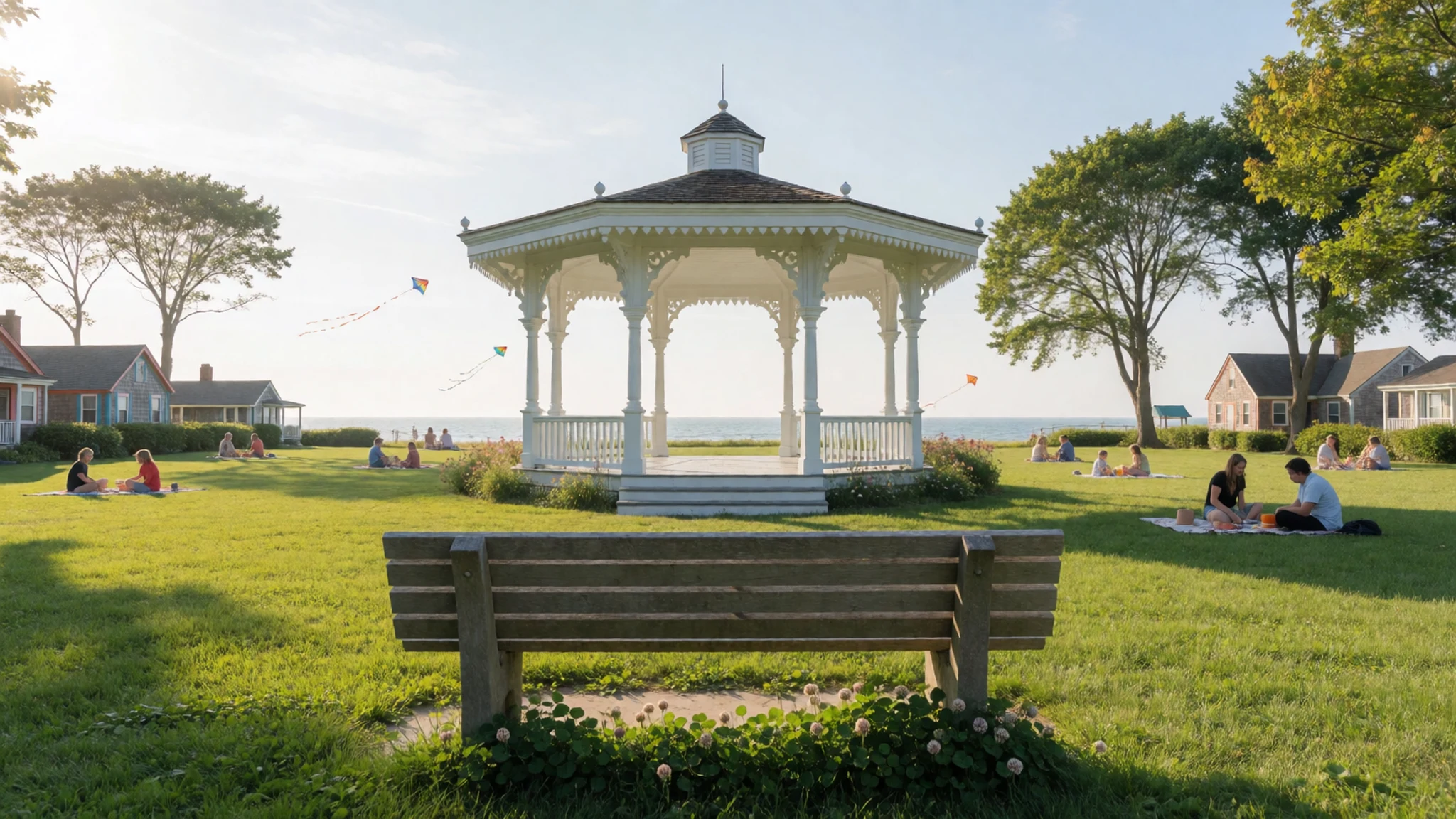
- Island lighthouses — Edgartown and around the island
Edgartown Lighthouse stands at the harbour mouth, reached by a short walk along the shore. The island has other lights too, including Gay Head at Aquinnah, East Chop in Oak Bluffs, West Chop at Vineyard Haven and Cape Poge on Chappaquiddick. Visiting several makes a tidy day by car or bicycle.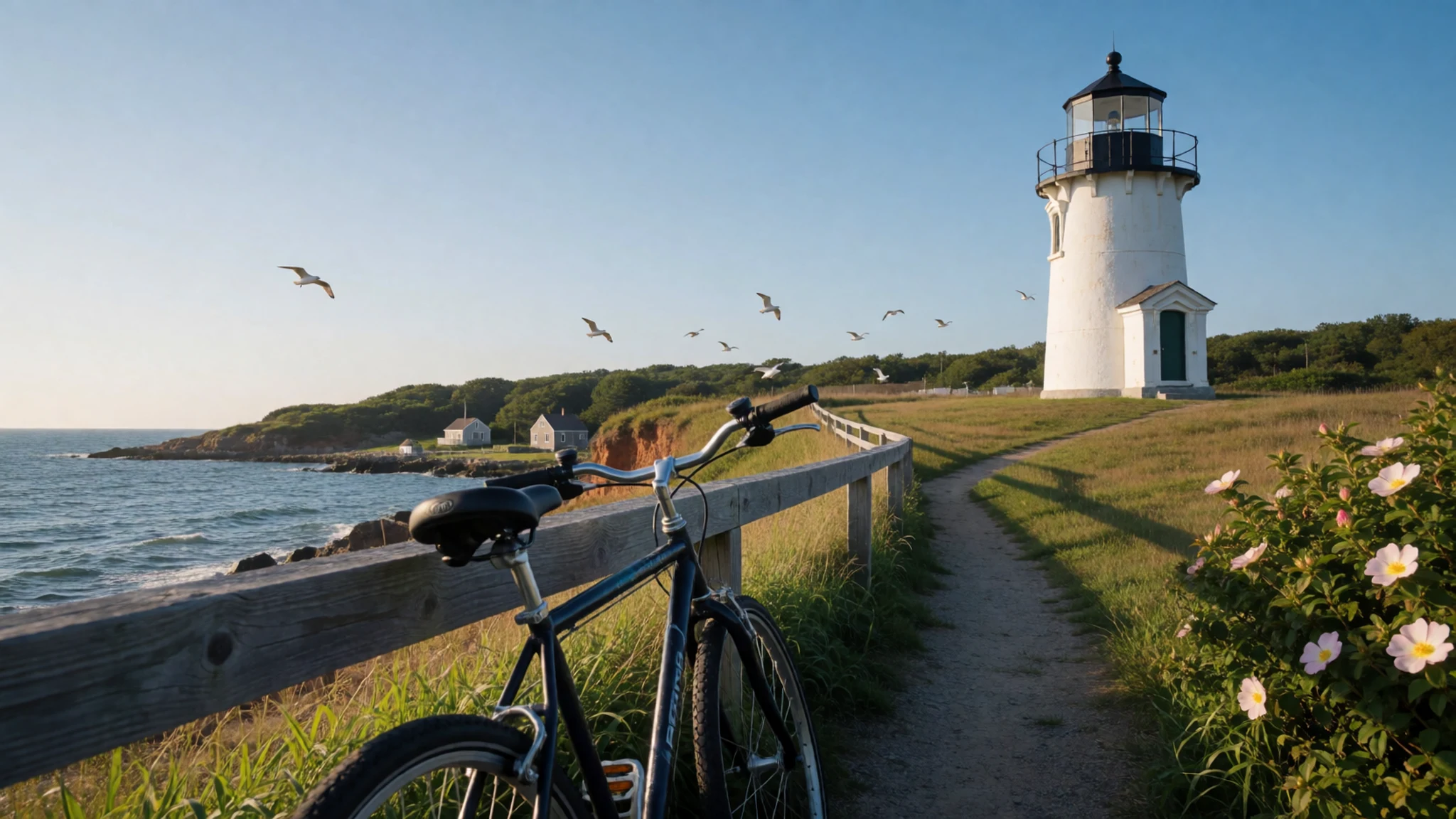
- Martha's Vineyard Museum — Vineyard Haven
The Martha's Vineyard Museum in Vineyard Haven gathers sailing, whaling, island families and Wampanoag history in one place, on a bluff overlooking Lagoon Pond. It is a useful stop on a wet day and gives context for the towns and cliffs seen elsewhere. Check the official site for opening times before going.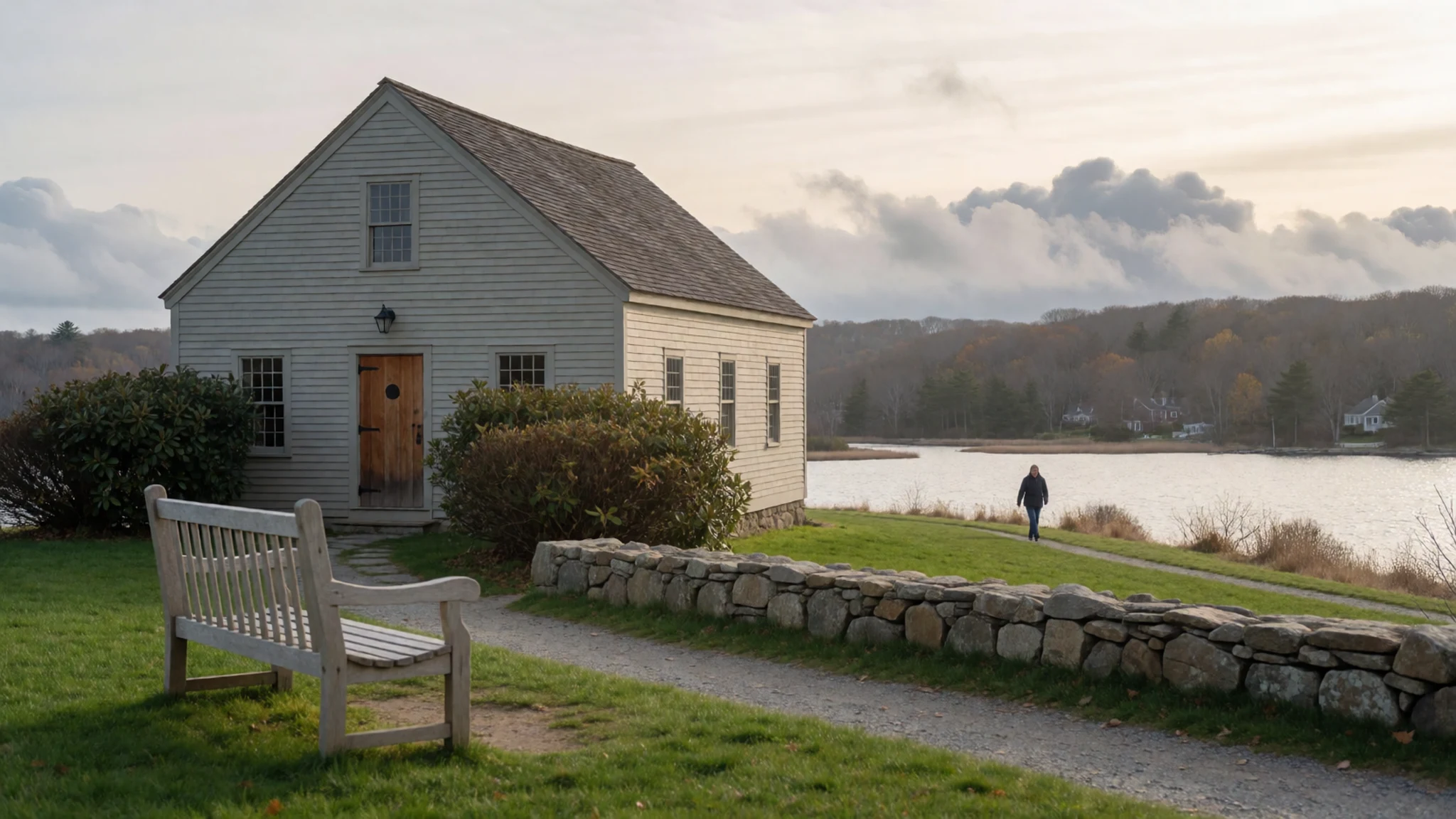
Culture
Martha's Vineyard carries several layers of culture at once. The Wampanoag lived here long before Europeans arrived, and the Aquinnah Wampanoag still have their community at the western end of the island, where the cliffs and surrounding land hold deep meaning. Colonial and whaling history shows in Edgartown's architecture and its churches. Oak Bluffs has long been a summer place for Black families, and that heritage shaped its beaches, churches and social life. Today the island mixes fishers, farmers, artists, retirees and seasonal visitors, and the farmers' markets and agricultural fair are as much social occasions as shopping trips. Islanders are proud of their independence, which sometimes spills into jokes about seceding from the mainland, and they will happily tell you who is a year-rounder and who is a summer person. Rules differ from town to town. The three down-island towns serve all kinds of alcohol, West Tisbury and Aquinnah serve only beer and wine, and Chilmark sells none at all, although its restaurants let diners bring their own. Summer weekends test everyone's patience on the roads and at the ferry docks, and a calm, unhurried attitude is the local norm. Treat the Aquinnah cliffs as a protected and culturally important place for the Wampanoag: stay on the marked paths and never climb them or take clay.
What to wear
On Martha's Vineyard the oldest dress tradition belongs to the Wampanoag. Ceremonial regalia is made from deerskin, woven fibres, feathers and wampum, the polished beads cut from quahog shells, and is worn at gatherings such as powwows and the autumn Cranberry Day in Aquinnah rather than in daily life. Everyday island wear is relaxed, coastal New England: linen shirts, cotton shorts, canvas deck shoes, fisherman-style knitwear and waterproof jackets borrowed from boat culture. Summer residents add pastel polo shirts and well-worn sun hats, while farmers and fishers stick to practical boots and oilskins. Nobody dresses up much, even at good restaurants, where a clean shirt and trousers or a simple dress are plenty. A visitor should plan for changeable weather. The sea breeze cools the evenings even in July, so pack a light jacket or fleece and a windproof layer. Bring sandals for the beach and sturdy closed shoes for cliff paths, farm tracks and bike rides. Long trousers and socks help in tall grass and scrub, where ticks are common. Swimwear belongs on the beach, so cover up in town and in shops. Sunscreen and a hat matter because shade is scarce on the open beaches. Outside summer, add a proper coat, hat and gloves, since winters hover around freezing.
What to eat
- Clam chowder — harbour-side seafood shacks and casual restaurants in Vineyard Haven, Edgartown and Menemsha
New England chowder, thick with potato and clams, is the island's standard comfort bowl. It is served at harbour-side counters, seafood shacks and casual restaurants in every down-island town, and tastes best on a breezy day by the water.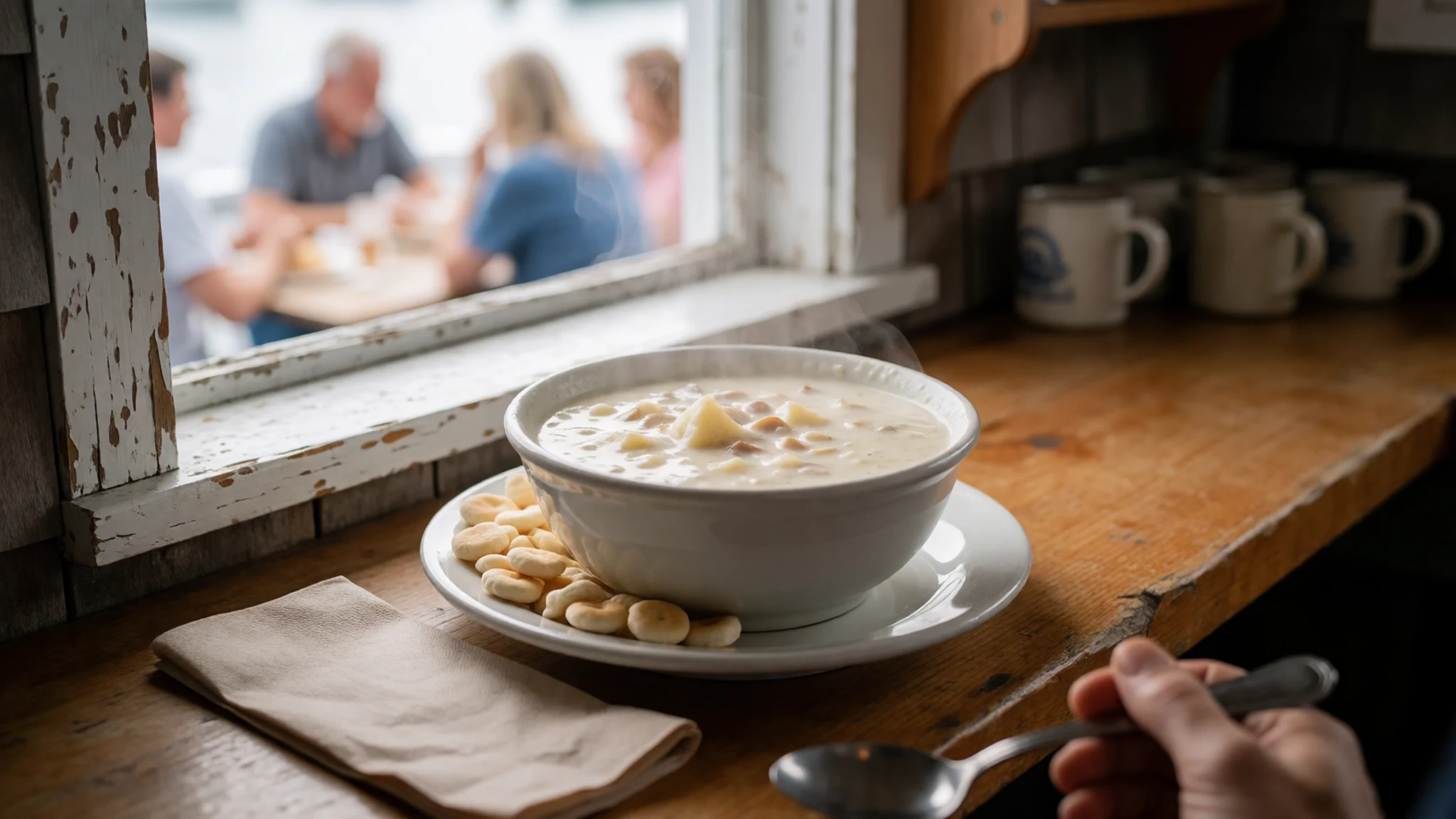
- Fried clams — fish shacks and takeaway counters around Menemsha harbour
Whole clams in a crisp, light coating are eaten with tartar sauce and a slice of lemon. They are a summer beach staple, usually served in paper boats at fish shacks where diners sit outside and watch the boats.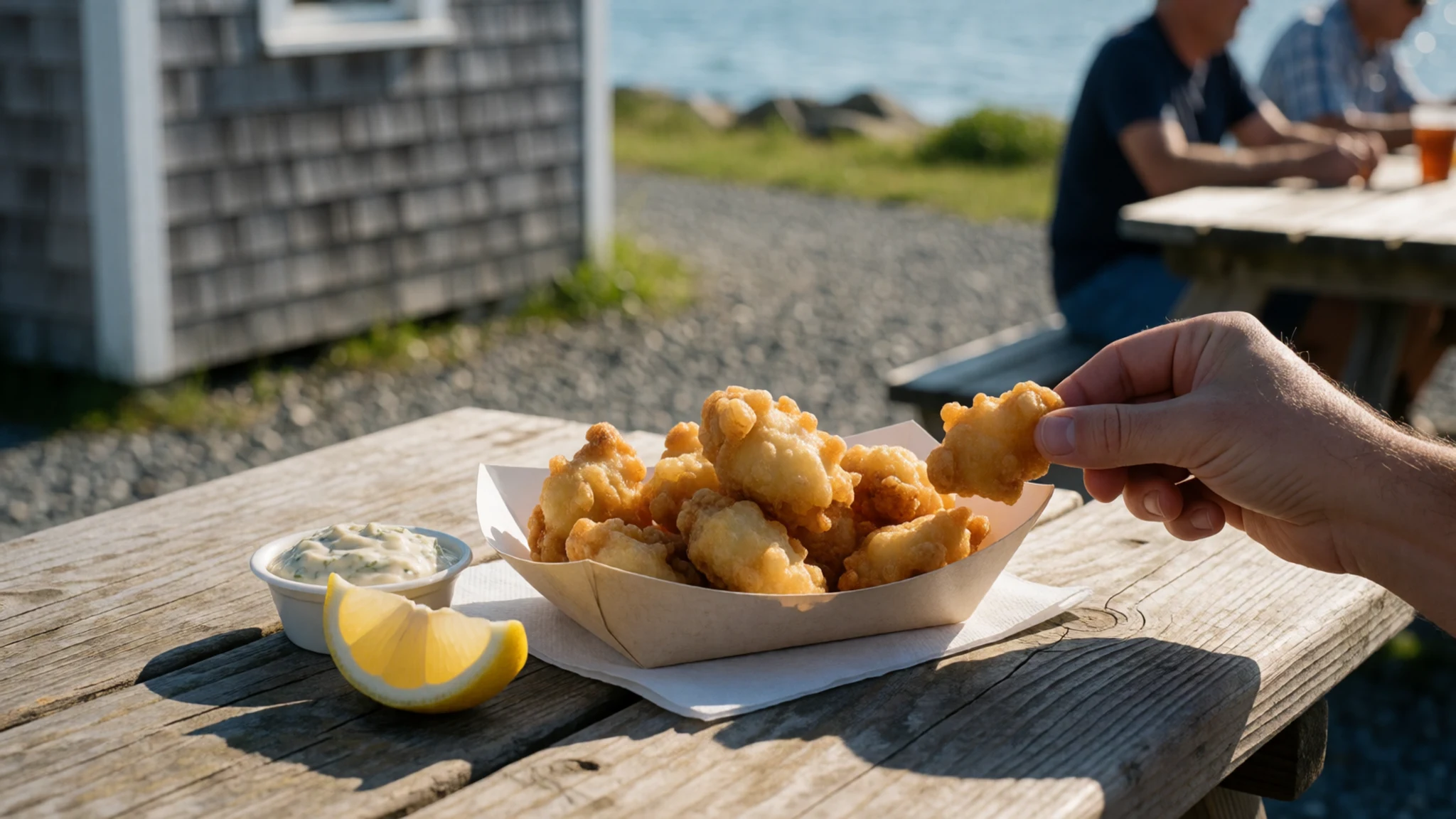
- Lobster — fish markets and takeaway counters at Menemsha
Lobster comes boiled whole with butter or piled into a soft roll with a little mayonnaise. Menemsha's fishing fleet supplies much of it, and eating it on the jetty at sunset is a Vineyard ritual. - Island oysters — raw bars and seafood restaurants in Edgartown and Vineyard Haven
Oysters grown in the island's salt ponds are served raw on ice with lemon and a sharp vinegar sauce. Their taste is clean and briny, and they suit a warm afternoon on a restaurant terrace. - Bay scallops — seafood restaurants and fish markets across the island, in the cooler months
Small, sweet bay scallops are harvested from the shallow ponds in autumn and early winter. They are pan-seared in butter or served lightly fried, and are a good reason to visit once the summer crowds have gone. - Farm produce and sweet corn — the West Tisbury farmers' market and farm stands up-island
Up-island farms grow tomatoes, sweet corn, salad leaves and berries, sold from roadside stands and market tables on trust boxes and small counters. A picnic of local produce, bread and cheese is easy to assemble.
Plan it
Best time. June to September for swimming, full ferry timetables and open shops; July and August are the warmest months, averaging around 22 °C, with only a day or two above 32 °C. June and September bring calmer crowds and still-pleasant weather. Winters are cool to cold, with January averaging just above freezing, and many seasonal businesses close.
How long. 3–4
Getting there. Most visitors take a ferry to Vineyard Haven (also called Tisbury), the main port for the Steamship Authority, with other routes in summer; check the official sites and book vehicle spaces well ahead. Flying is possible with Cape Air from Boston and Cape Cod, and seasonal services run from New York, Washington, Philadelphia and Chicago. The last leg is by island bus, taxi, hire car or bicycle.
Budget. high
Tips
- Book ferries, and any car space, as early as possible for July and August
- Hire a bicycle for the flat paths between Vineyard Haven, Oak Bluffs and Edgartown, but take care on busy roads
- Check clothes and skin for ticks after walking through grass or scrub
- Many beaches have limited or resident-only parking, so check the rules and use the island bus
- Bring a windproof layer and sun protection, since the sea breeze cools evenings and shade is scarce
Etiquette
- Stay off the dunes and keep to marked paths to protect the fragile coast
- Respect private property signs, as many lanes and beaches are not public
- Ask before photographing people, particularly at Wampanoag sites and in private gardens
Nearby
Sources
- Wikidata Q49148 (CC0)
- Wikipedia: Martha's Vineyard (rev 1383941561) (CC BY-SA 4.0)
- Wikivoyage: Martha's Vineyard (rev 5389451) (CC BY-SA 4.0)
- Gay Head cliffs MV.JPG (CC BY 3.0)
- The clay cliffs of Aquinnah and the Gay Head Lighthouse (Alex Wilcox Cheek) (CC BY-SA 4.0)
- Old Whaling Church, Edgartown Massachusetts (John Phelan) (CC BY 3.0)
- Edgartown Village Historic District (C.S. Imming) (CC BY 3.0)
- Gingerbread Cottages, Oak Bluffs (Alex Wilcox Cheek) (CC BY-SA 4.0)
- Martha's Vineyard secession flag (Swiãtopôłk) (CC BY-SA 4.0)
- Lighthouse in Autumn, Edgartown (Alex Wilcox Cheek) (CC BY-SA 4.0)
- Bandstand, Ocean Park, Oak Bluffs (Alex Wilcox Cheek) (CC BY-SA 4.0)


