Mammoth Cave
Mammoth Cave, United States
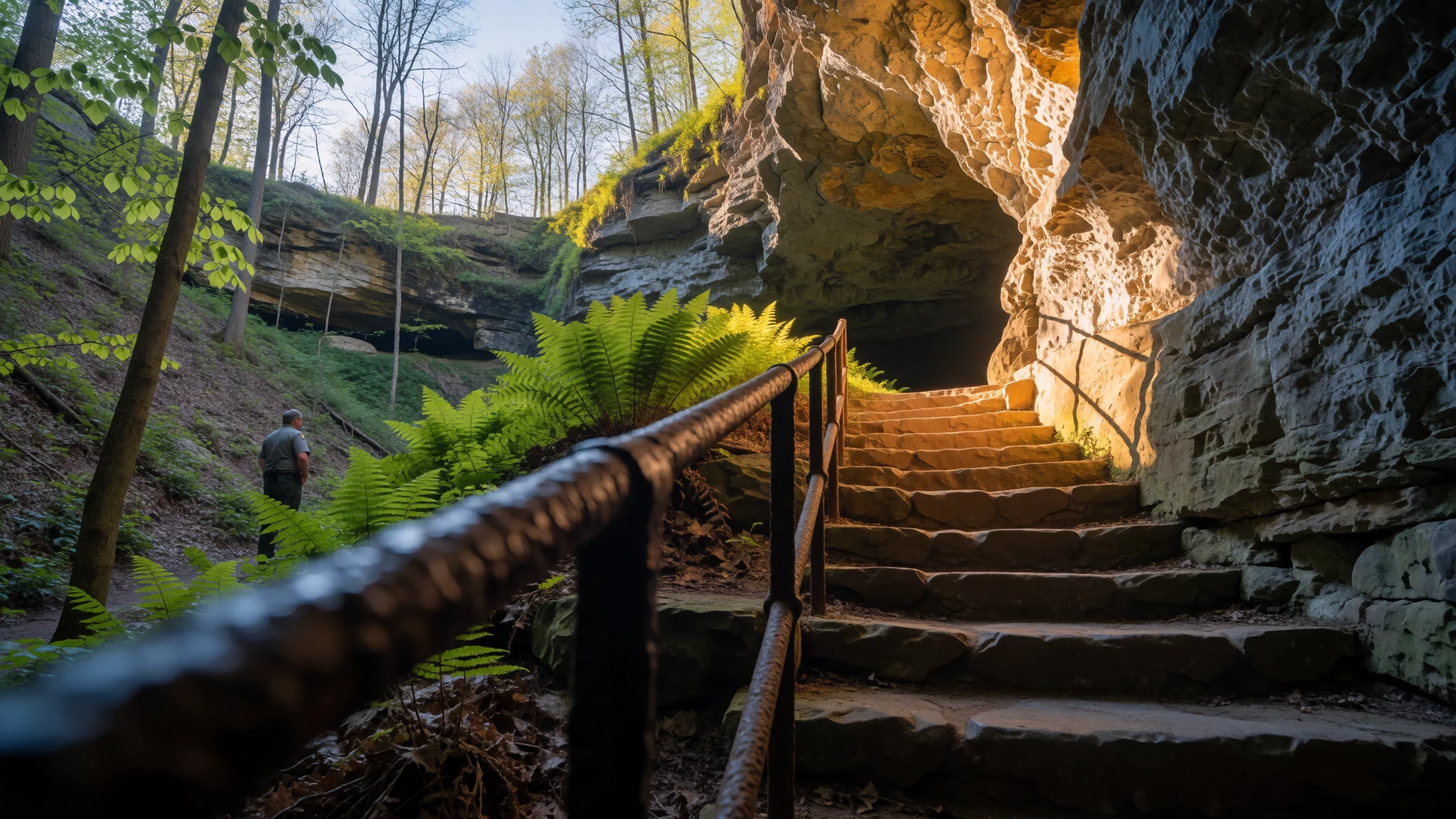
Mammoth Cave offers ranger-led walks through the longest known cave system anywhere, plus quiet river trails and dark night skies above ground.
The place
Mammoth Cave National Park lies in south-central Kentucky, mostly within Edmonson County, with small slivers reaching into Hart and Barren counties. The Green River cuts through the park, and the Nolin River joins it just inside the boundary. Underneath the wooded hills runs the longest cave system known anywhere, mapped over hundreds of kilometres of passage. Explorers keep adding to that total: the main cave and the neighbouring Flint Ridge system turned out to be one network, and the whole is now treated as a single cave. The rock tells an older story. The passages formed about 330 million years ago in thick limestone laid down on the floor of a warm sea, and fossils in the walls confirm that Kentucky was once underwater. A cap of sandstone on top has kept the system unusually stable, which is part of why so much of it survives. The park was established in 1941, after land purchases and evictions that locals still remember with some bitterness. It is also a World Heritage Site, a biosphere reserve and a dark sky park, so the night above ground is worth staying for. The setting is quiet farm and forest country with a humid subtropical climate: hot, sticky summers and mild winters. No public transport reaches it, and the nearest big airports are in Louisville and Nashville, so most visitors arrive by car off the interstate. The cave is the draw; the surface is gentle woodland, river and trail.
Its story
Mammoth Cave National Park holds evidence of human visits going back at least five thousand years. People entered the cave in the late Archaic and early Woodland periods, and several bodies, many of them deliberately buried and preserved by the steady cave air, have been recovered from Mammoth Cave and nearby caves over the nineteenth and twentieth centuries. Together they show funeral customs that predate European contact. One find was different. In 1935 the remains of an adult man turned up beneath a large boulder; he had been mining in the passage, disturbed the rubble holding the rock up, and it settled on him. Named Lost John, he was shown to visitors until the 1970s, when he was reburied at an undisclosed spot in the cave, partly to protect him and partly because attitudes to displaying Native American remains had shifted. Later work changed how the cave is understood. From the late 1950s the archaeologist Patty Jo Watson, of Washington University in St Louis, led research on the people who explored and used these caves. Dry, constant conditions preserved food remains, which allowed carbon dating and showed how much plant food and meat different groups ate across thousands of years. In the early nineteenth century the cave was also mined for saltpetre, and the ruins of that work can still be seen underground, a reminder that the cave was a workplace long before it became a park.
What to see
- Historic Tour — Historic Entrance, near the visitor centre
The Historic Tour begins at the natural entrance, the opening people have used for thousands of years, and follows old passages past former mining areas, Mammoth Dome and the tight squeeze called Fat Man's Misery. It is a good way to feel the scale and the human history together. Book ahead through the official site.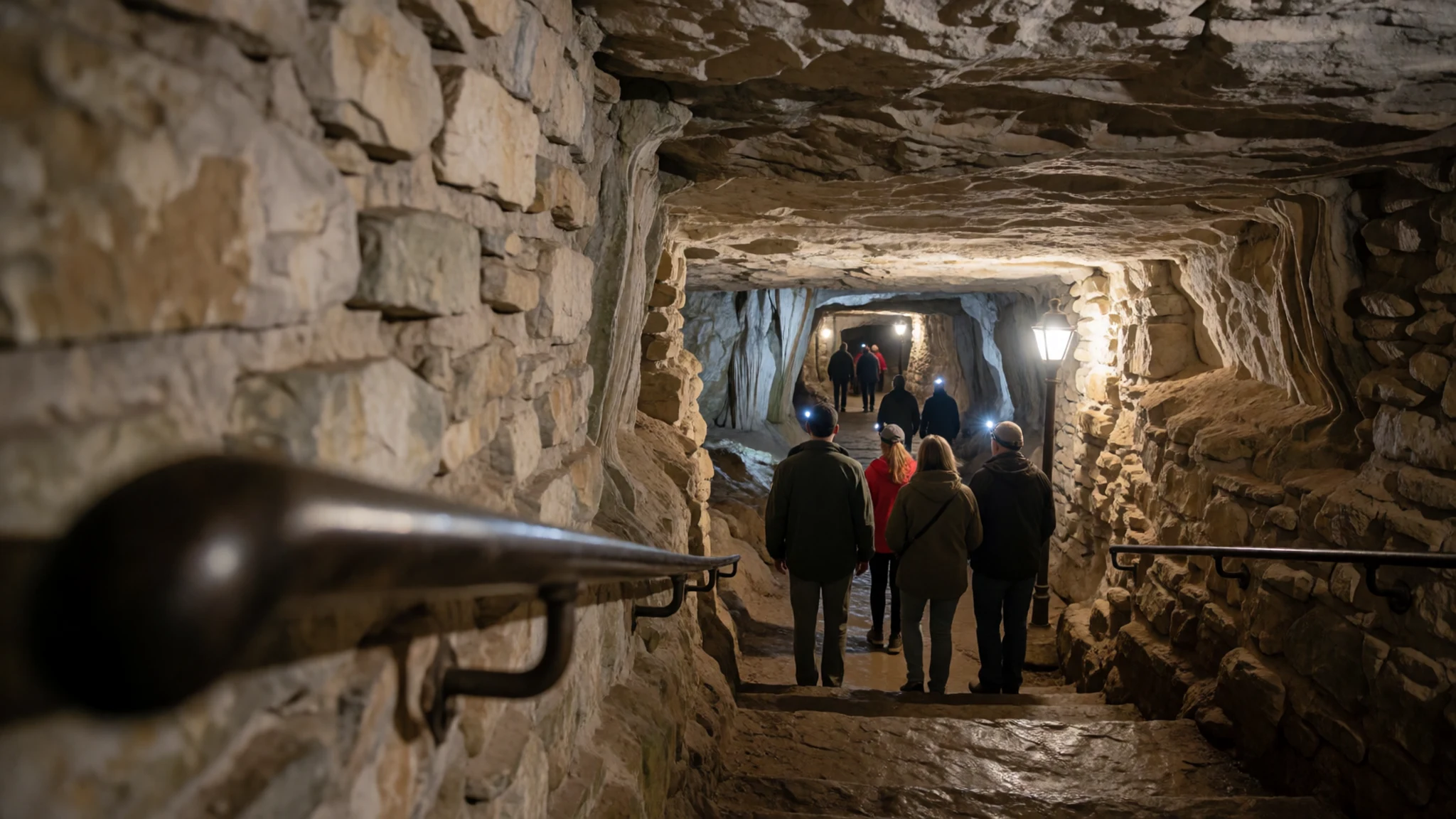
- Frozen Niagara Tour — Underground, reached from the visitor centre
The Frozen Niagara Tour is the short route through a richly decorated section of the cave, where flowstone, stalactites and the huge formation called Frozen Niagara show what slowly dripping water can build. It suits people who want formations rather than a long walk, and it demands less distance than the historic route.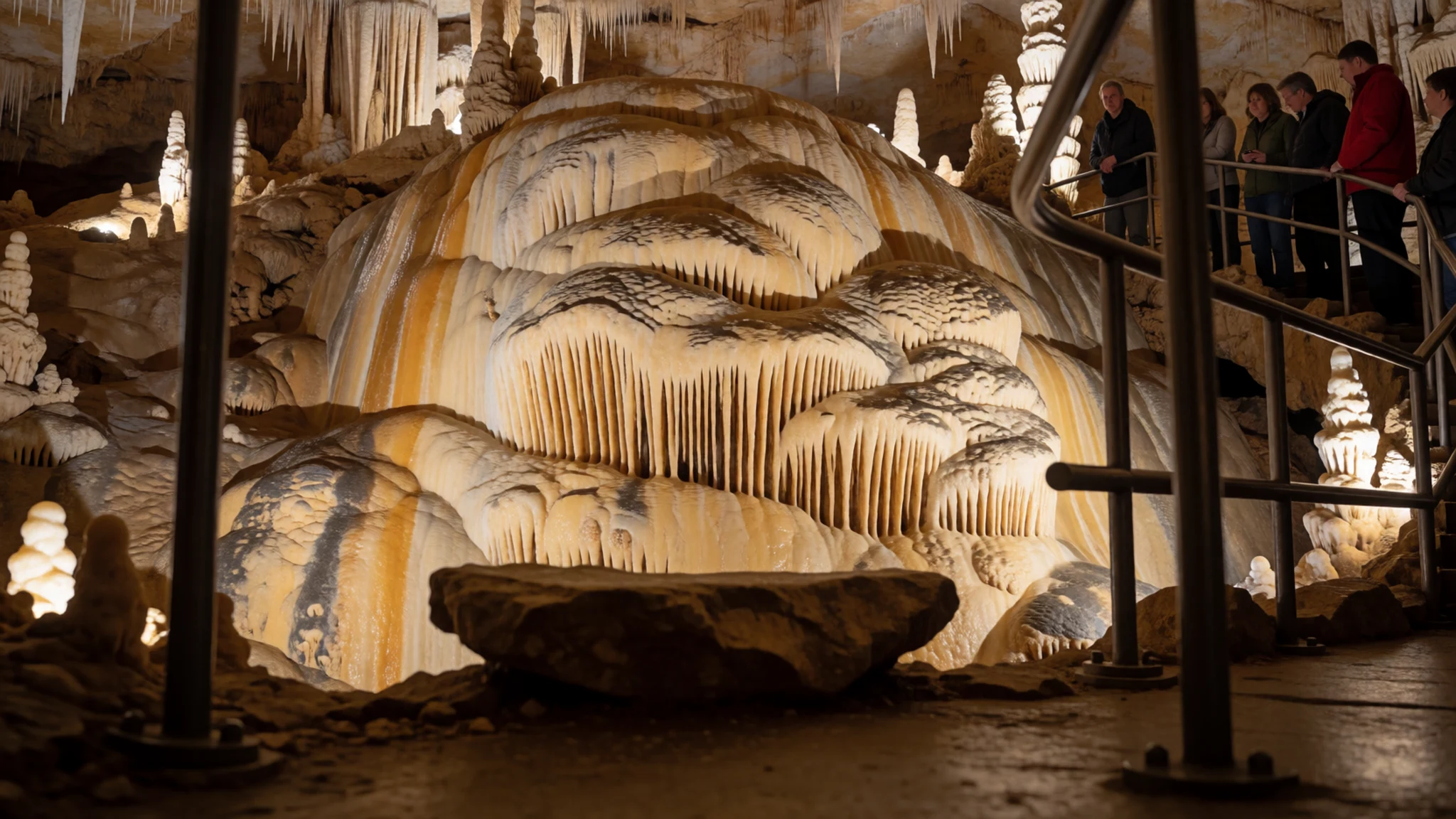
- Domes and Dripstones Tour — Underground, reached from the visitor centre
The Domes and Dripstones Tour covers the same decorated ground as Frozen Niagara and adds a dramatic run of domes and pits, so it feels deeper and more varied. Stairs are part of the experience. Check the official site for tour length, difficulty and current availability before planning the day.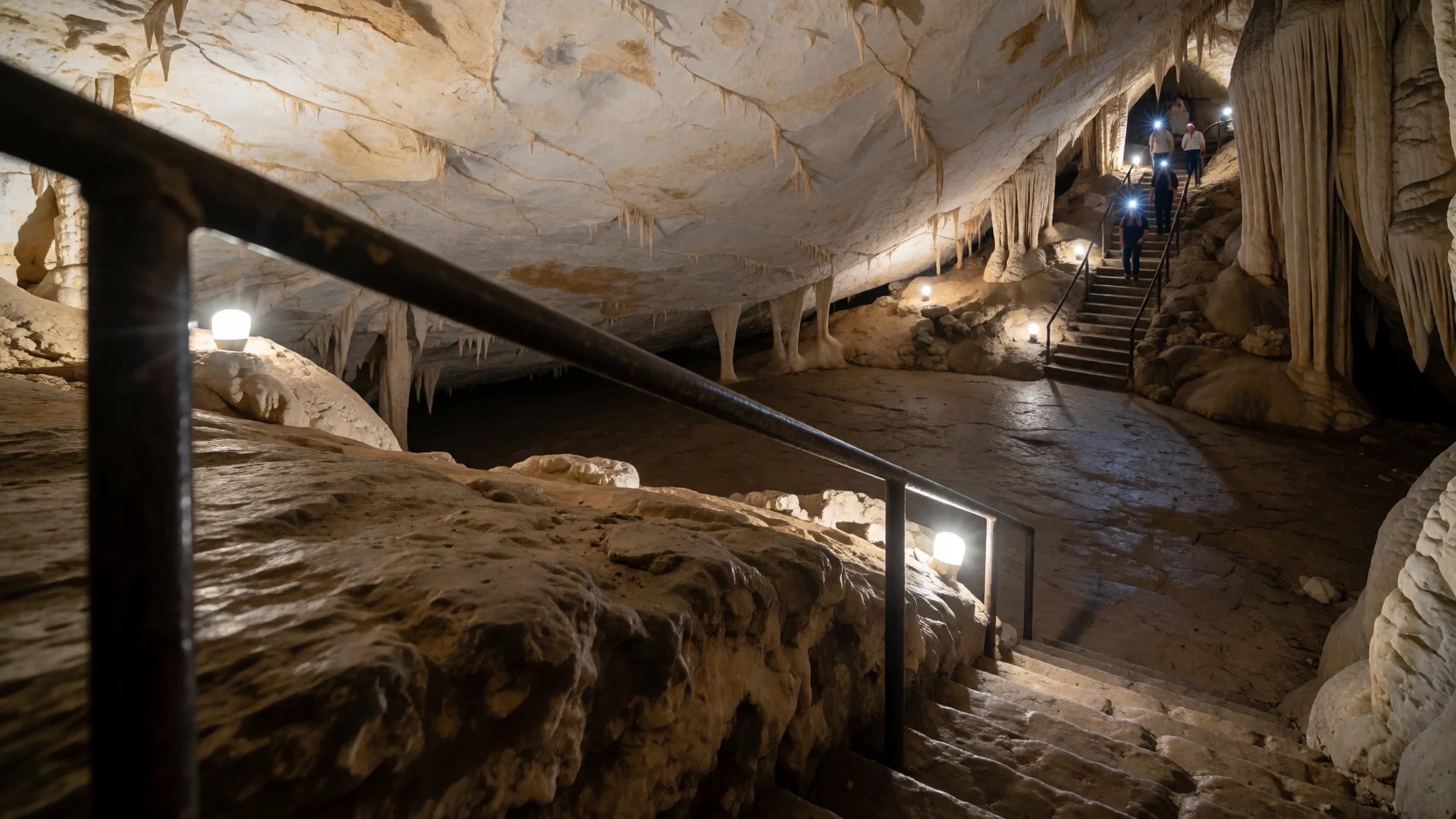
- Cedar Sink — Southern part of the park, on a surface trail
Cedar Sink is a walk on the surface rather than underground. A trail leads to and down into a large sinkhole, where a river disappears into the ground at the bottom. The path is easy at first, but the descent means many steps, and every one has to be climbed back.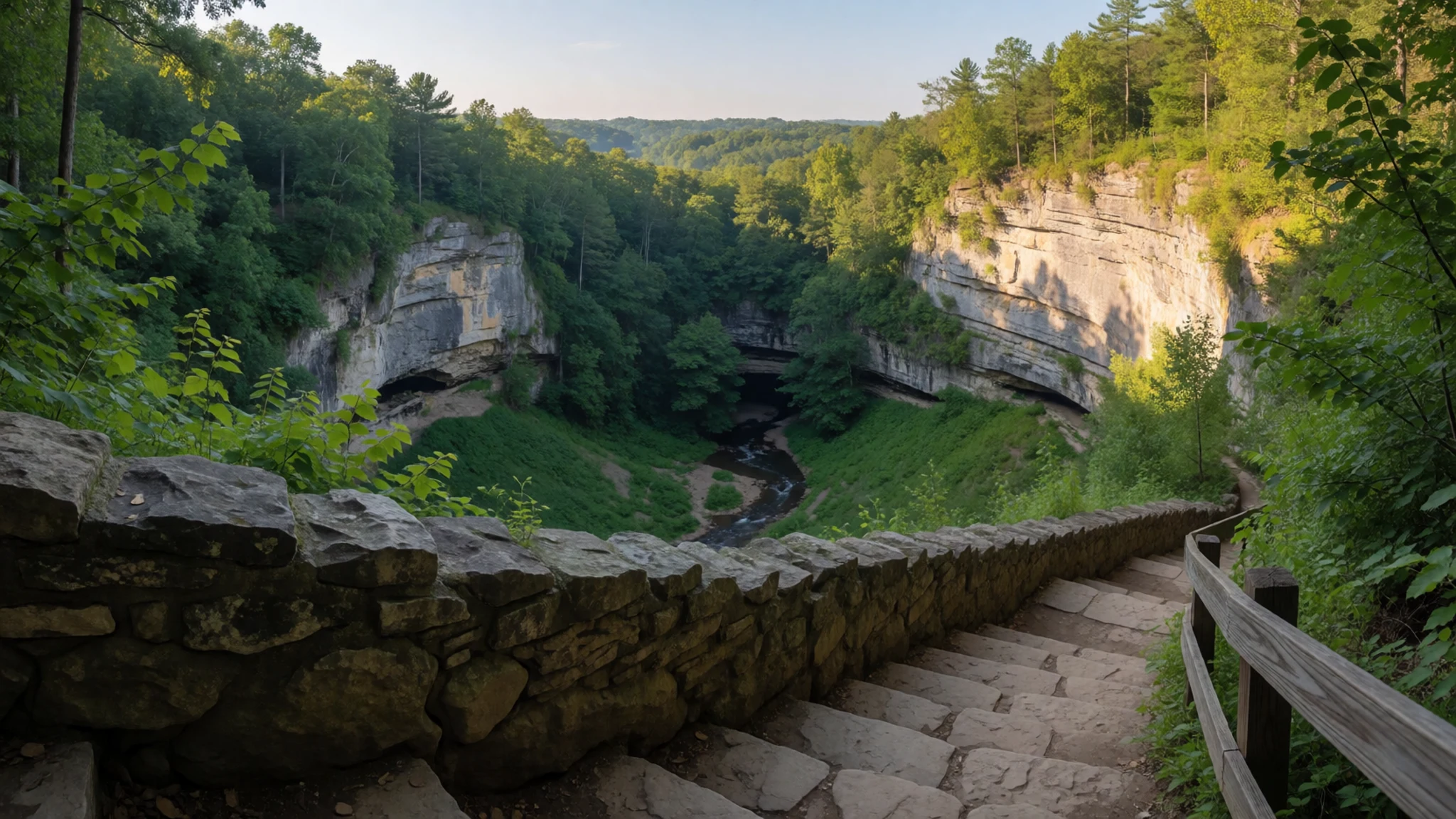
- Mammoth Cave Railroad Bike & Hike Trail — From the park hotel towards Park City
This trail follows the old railway bed that once served the cave, linking the park hotel with Park City. It is gentle, wooded and good for a slow morning, especially when cave tour places have run out. Carry water in summer and check for ticks afterwards.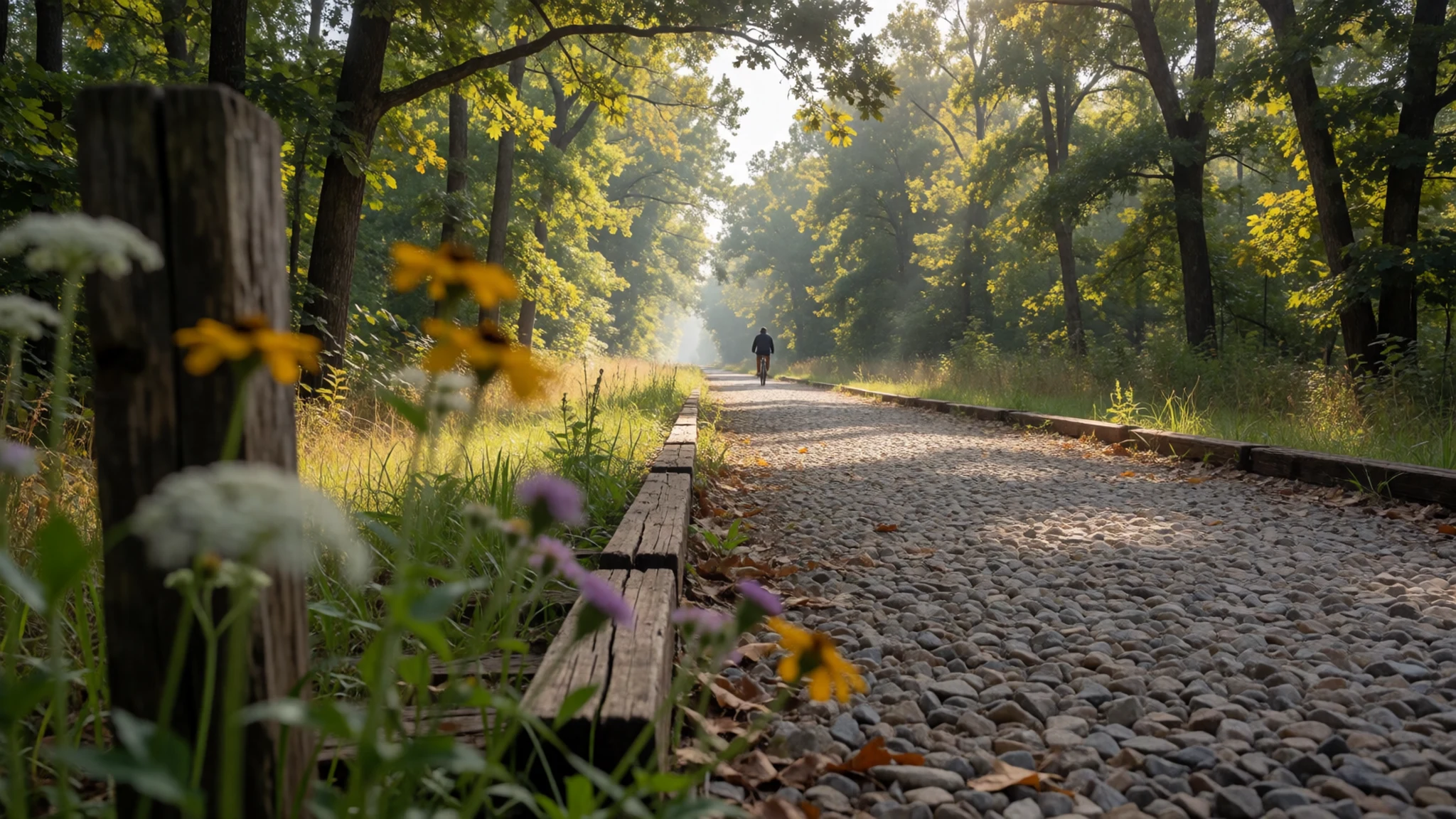
- Sand Cave — Eastern part of the park, a short walk from the road
A short trail leads to Sand Cave, the place where the explorer Floyd Collins became trapped during a famous rescue attempt. The cave itself is modest, but the site gives a sense of how risky early cave exploration was, and the story is still told in the region.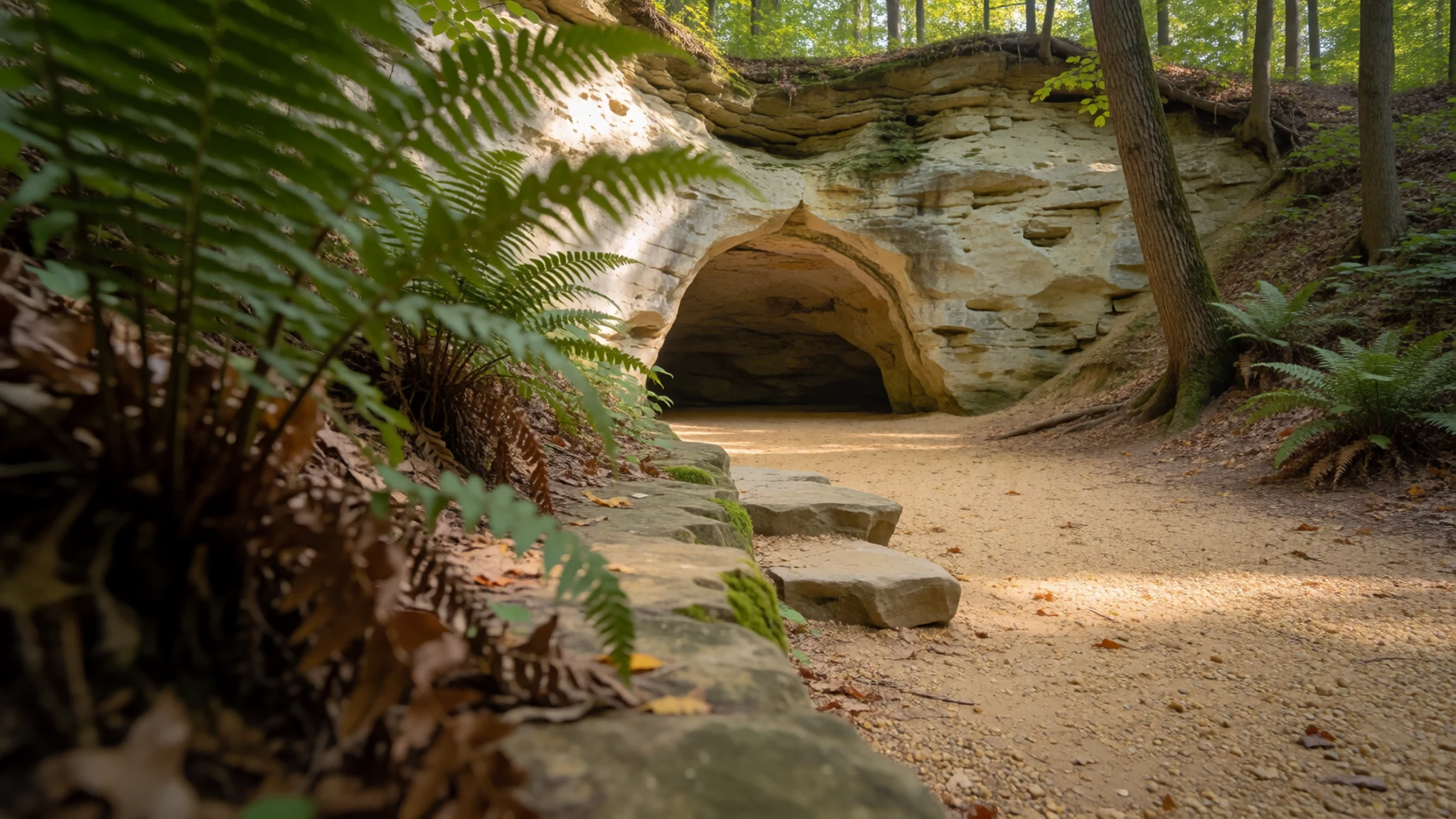
Culture
Mammoth Cave holds several layers of human memory, and visitors meet them in different ways. The oldest is Native American. People used the cave for thousands of years, and the burials found in this region are now handled with care rather than as a spectacle, which is why the remains once shown to the public were reburied in an undisclosed spot. The second layer is working life, from saltpetre diggers in the early nineteenth century to the guides who led tours for generations. Park rangers carry that tradition on, and a good tour is part history lecture, part storytelling, with plenty of dry humour. The third layer is more recent and more painful. The park was created through compulsory land purchases, families lost farms and communities, and the memory still colours how some neighbours talk about it. Cave exploration has its own folklore too, and the story of Floyd Collins trapped at Sand Cave is still retold locally. Day to day, the local manner is polite and unhurried, with small talk in queues and at counters. The surrounding county is dry, so alcohol is sold only in towns such as Cave City and Glasgow, not near the cave itself. Stay on the marked paths, never touch the formations, and follow the rangers' instructions about cleaning footwear and clothing before and after your visit.
What to wear
Mammoth Cave has no single traditional costume, because this is rural Kentucky rather than a place with a formal regional dress. The textile most associated with the state is the patchwork quilt, stitched from cotton scraps and worn-out clothes and made for beds and gifts rather than for wearing. The old working wardrobe of the farming past was hard-wearing denim, cotton and flannel, and that is still the root of local style. Today people around the park dress casually: jeans or shorts, T-shirts, caps against the sun, trainers or walking boots, and a fleece when the weather turns cool. Rangers wear their familiar green and grey uniforms, which makes them easy to spot. Visitors need practical clothes rather than smart ones, and there are no modesty or dress rules at any site. The cave stays cool and damp whatever the weather outside, so bring a light jacket or fleece even in summer. Wear closed shoes with a good grip, since paths can be wet, uneven and stepped; sandals and flip-flops are a poor idea. Above ground, summers are hot and humid, so light breathable layers, a hat and water are sensible. On backcountry trails in warm months, long trousers and insect repellent help against ticks.
What to eat
- Country ham and biscuits — Family-style restaurants and breakfast counters in Cave City and Glasgow
Salt-cured country ham tucked into a soft, split biscuit is a Kentucky breakfast staple. The ham is salty and firm, the biscuit buttery, and together they make a sturdy start before a morning underground.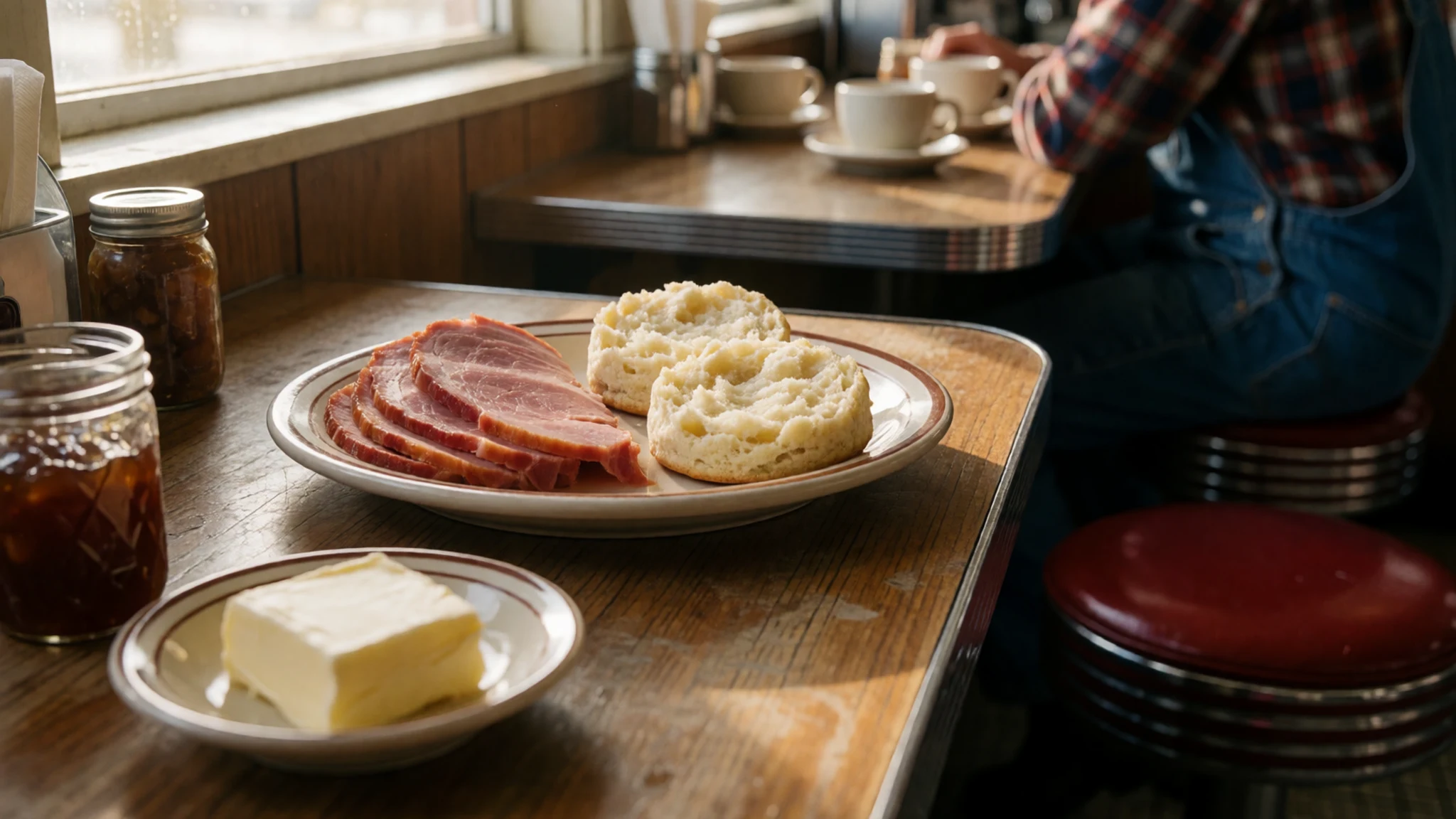
- Fried chicken — Family-style restaurants in Cave City and nearby towns
Crisp, well-seasoned fried chicken is standard family-restaurant fare across Kentucky, usually served with sides such as green beans, mashed potato or coleslaw. It is plain, filling and a dependable choice after a day of walking.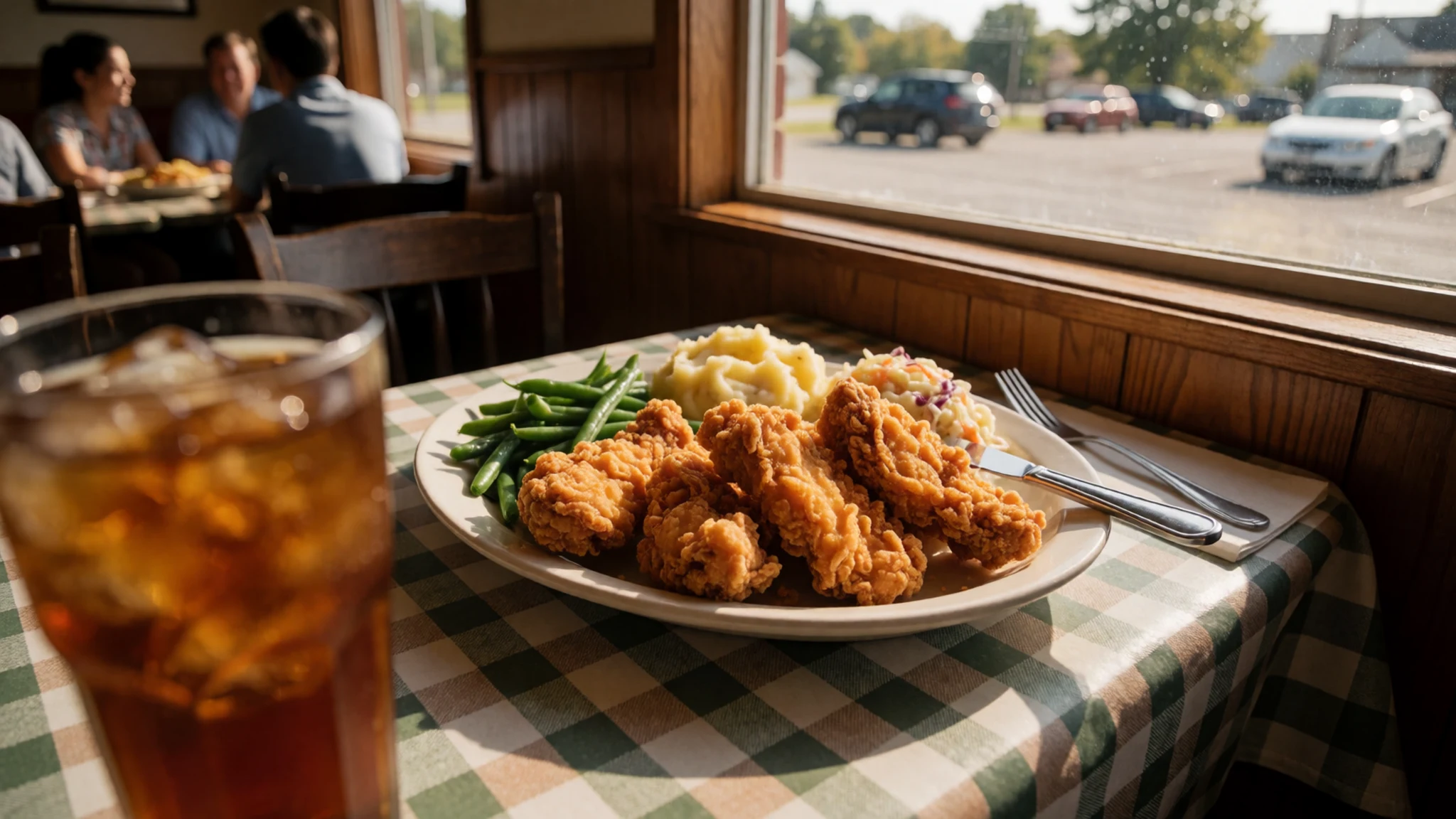
- Burgoo — Community suppers, church fundraisers and local diners across the state
Burgoo is a thick, slow-cooked Kentucky stew of mixed meats and vegetables, traditionally made in large batches for gatherings. It is peppery and hearty, and best eaten where locals are serving it from a big pot. - Kentucky hot brown — Traditional restaurants in Louisville, a long day trip from the park
The hot brown is an open-faced sandwich of roast turkey and bacon under a creamy cheese sauce, grilled until bubbling. It is rich and very filling. It comes from Louisville, so it is a dish for a city stop on the way in or out. - Chess pie — Family-style restaurants and local bakeries in the towns around the park
Chess pie is a southern custard pie with a crisp, sugary top and a smooth, sweet filling made from eggs, butter and sugar. It is simple and very sweet, and a slice with black coffee is a pleasant end to a meal.
Plan it
Best time. April–May and September–October, when the surface is mild and walkable; summers are hot and humid with ticks on backcountry trails, and winters are cool, though the cave stays steady all year.
How long. 2
Getting there. Fly to Louisville or Nashville, the nearest commercial airports, then drive to the park from the interstate exits near Park City or Cave City. No public transport reaches the park, so a hire car is the practical option.
Budget. mid
Tips
- Book cave tours well ahead through the official site (https://www.nps.gov/maca/index.htm), because popular tours sell out in busy seasons.
- No park entrance fee is charged, but check the official site for tour tickets, schedules and any changes.
- Eat before you arrive or bring snacks: the hotel restaurant is the only public food service inside the park.
- Carry a light jacket for the cave and insect repellent for the woods, especially in warm months.
- Stay for after dark, since the park is a certified dark sky site.
Etiquette
- Stay on marked cave paths and never touch the formations
- Follow ranger instructions on cleaning shoes and clothing, which protects the cave's wildlife
- Take litter out with you and keep your voice low underground
Nearby
Sources
- Wikidata Q242681 (CC0)
- Wikipedia: Mammoth Cave National Park (rev 1386073543) (CC BY-SA 4.0)
- Wikivoyage: Mammoth Cave National Park (rev 5241820) (CC BY-SA 4.0)
- Photo: Rotunda Room, Mammoth Cave (Willis Thomas Lee) (Public domain)
- Photo: Relief location map of the USA (Uwe Dedering) (CC BY 3.0)
- Photo: Tourists inside Mammoth Cave (Jud McCranie) (CC BY-SA 4.0)
- Photo: Mammoth Cave tour (Daniel Schwen) (CC BY-SA 4.0)
- Photo: Mammoth Cave WHS plaque (Huwmanbeing) (Public domain)
- Photo: Mammoth Cave Historic Entrance (NPS) (Public domain)
- Photo: Mammoth Cave saltpeter mine (Bpluke01) (CC BY-SA 4.0)
- Photo: R.E. Call (1897) Map of the Mammoth Cave (Public domain)


