Magdalen Islands
Magdalen Islands, Canada
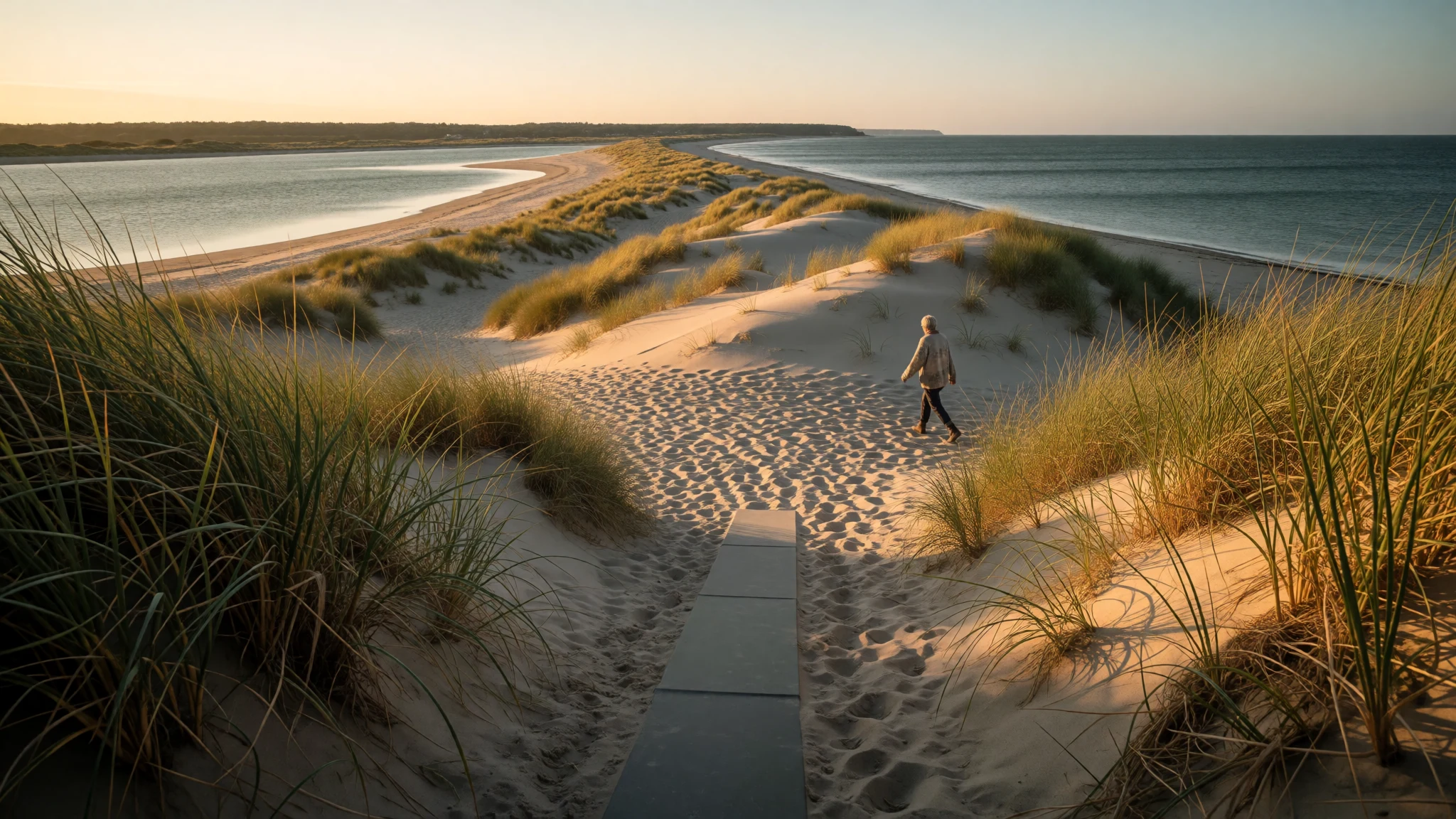
The Magdalen Islands are a wind-scoured Quebec archipelago of red cliffs, long dunes and fishing harbours in the Gulf of St Lawrence.
The place
Red sandstone, pale dunes and a string of fishing harbours make up the Magdalen Islands, a Quebec archipelago set far out in the Gulf of St Lawrence and known locally as Les Îles-de-la-Madeleine. Rocky capes and low hills form the solid ground. Between them, pale sand encloses shallow lagoons that turn green or slate with the light. Seen from the ferry or from a small aircraft, the land looks only just higher than the water, with coloured wooden houses gathered under the cliffs and harbours set into the sheltered coves.
Cap-aux-Meules is the service town, where the ferry lands and where shops and quays sit close together. Northeast along the dune road, Havre-aux-Maisons is quieter and holds the airport. Southward, Havre-Aubert keeps the older shore at La Grave and runs out into the sand of Sandy Hook. Grosse-Île and Grande-Entrée face the open Gulf, and Île d'Entrée stands alone, higher, with no causeway of sand to the rest. Wind belongs to all of them. It flattens the grass, moves the sea through the day, and shifts the red rock through rust, brown and violet.
Lobster boats, smokehouses and small repair yards still shape the week, and the paved road along the dunes is the archipelago's main street. Inner lagoons stay calm enough for a kayak when the outer beaches take a full Gulf sea. Erosion is obvious without a statistic: fresh falls of sandstone, a fence moved inland, a beach narrowed after a storm. The Magdalen Islands suit unhurried travel on foot and by car, with the weather rewriting each day.
Its story
The Magdalen Islands first appear in written records as a place ships used and rarely settled. Indigenous peoples knew the Gulf of St Lawrence long before European hulls, and Basque, Breton and Norman crews later camped on the beaches in the fishing season, salting what they caught and leaving when the weather turned. The French name, Les Îles-de-la-Madeleine, is the one still painted on the ferry and spoken in the villages; the English name follows that dedication. Permanent homes came late. The same shoals that give the archipelago its beaches also broke ships, and winter ice could isolate the shore for a long stretch of the year.
Those who stayed organised life around the catch. Acadian families, many uprooted from other Atlantic coasts, settled beside French-speaking neighbours and smaller communities with roots in Britain and Ireland. Merchants from Jersey, in the Channel Islands, came to run the cod trade, advancing gear and groceries against the next season and keeping a company store that older families still describe plainly. Cod, then smoked herring, then lobster, set the calendar. Houses clustered where a boat could be hauled up, and a church gave each village its skyline.
The Magdalen Islands lie low in a foggy shipping lane, where crews were wrecked often enough that some English-speaking lineages trace themselves to survivors and to settlers from the British Isles. When the cod fishery failed, a salt mine on Grosse-Île and the lobster fleet carried what work they could. Smokehouses grew fewer. What remained was Quebec French with a Gulf cadence, a habit of mutual help, and a practical respect for wind and erosion.
What to see
- Cap-aux-Meules — Cap-aux-Meules
Cap-aux-Meules is the harbour town at the centre of daily life on the Magdalen Islands. The ferry docks beneath red cliffs, the hill above holds the shops and services, and the quay is where working boats come and go. Paths along the cape look across to Havre-aux-Maisons. The cliff edge crumbles, so anyone after the view should stand well back from the lip.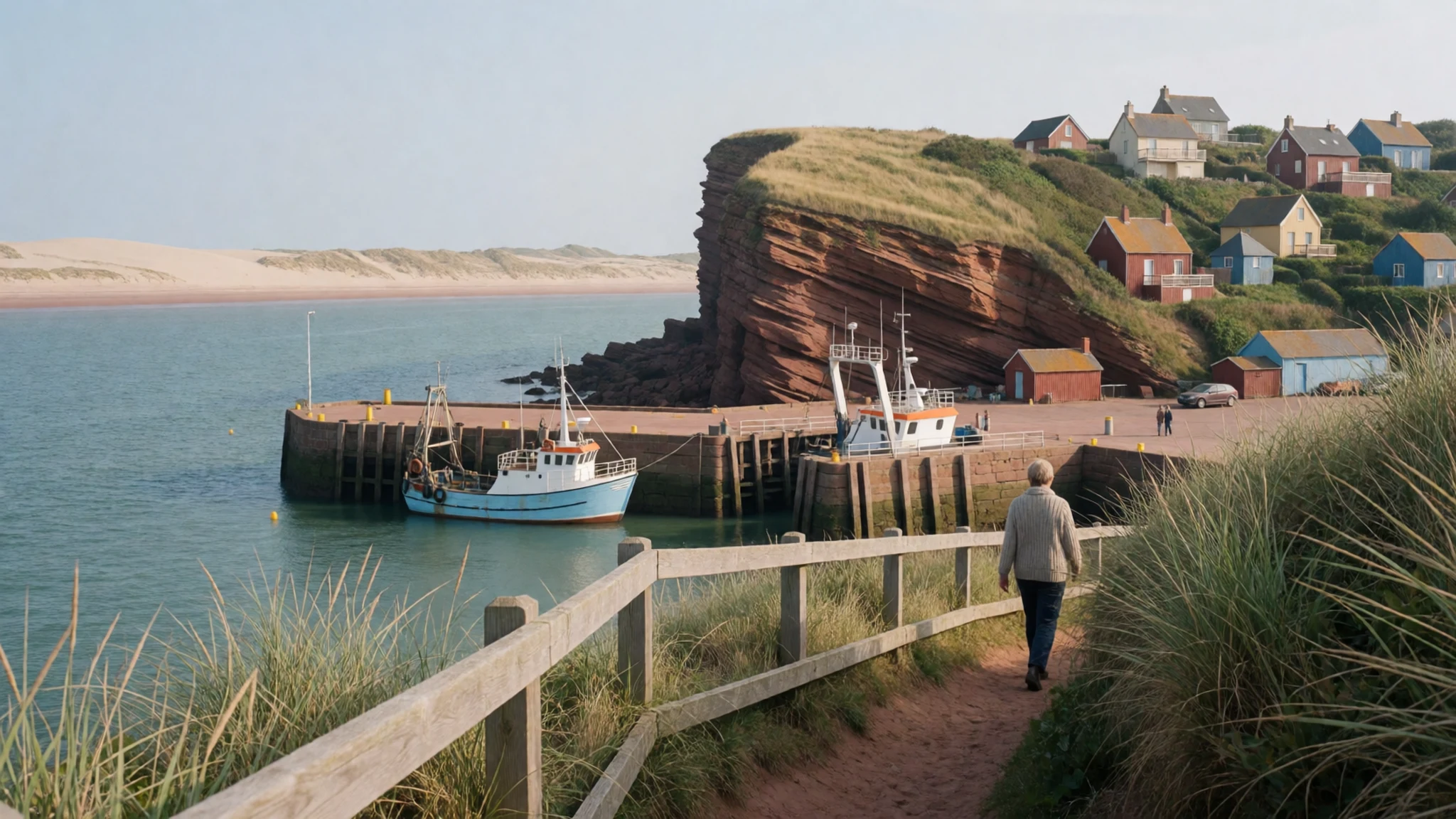
- La Grave — Havre-Aubert
La Grave, on Havre-Aubert, is the old fishing shore of the Magdalen Islands: wooden sheds along a pebble beach once used for gear and salt fish. A number of them now house studios, small eateries and galleries, yet the cove still has the scale of a working landing rather than a built-up front. In a storm the sea reaches the buildings, which keeps the place feeling provisional.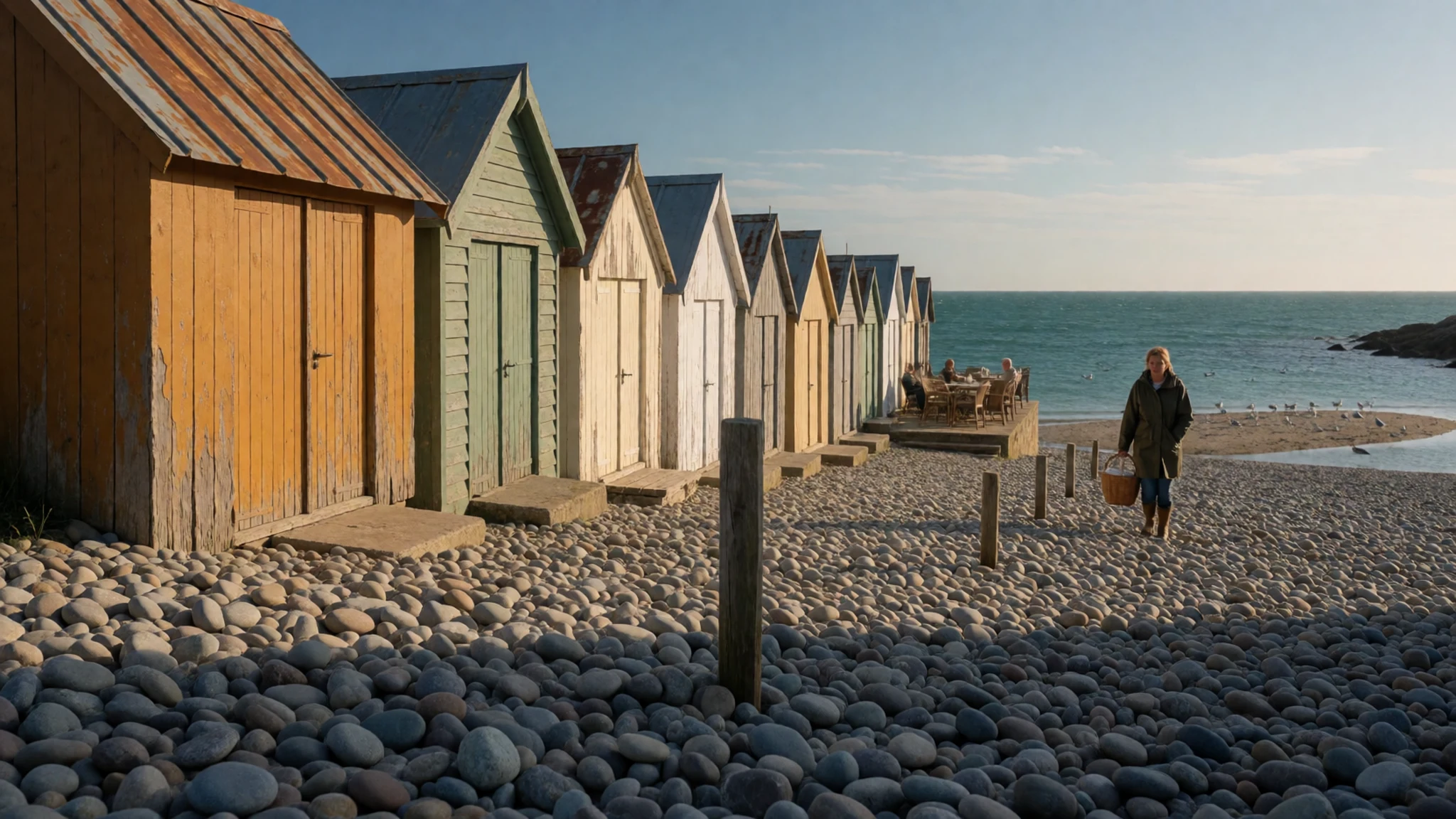
- Sandy Hook — Havre-Aubert
Sandy Hook is the sand spit that trails off Havre-Aubert, a hook of beach and marram grass with lagoon water on the inner side and the Gulf on the outer. On the Magdalen Islands this is the landscape stripped back to wind, pale sand and a moving horizon. The lagoon is the gentler water when the Gulf is rough, and the worn tracks are the ones to follow.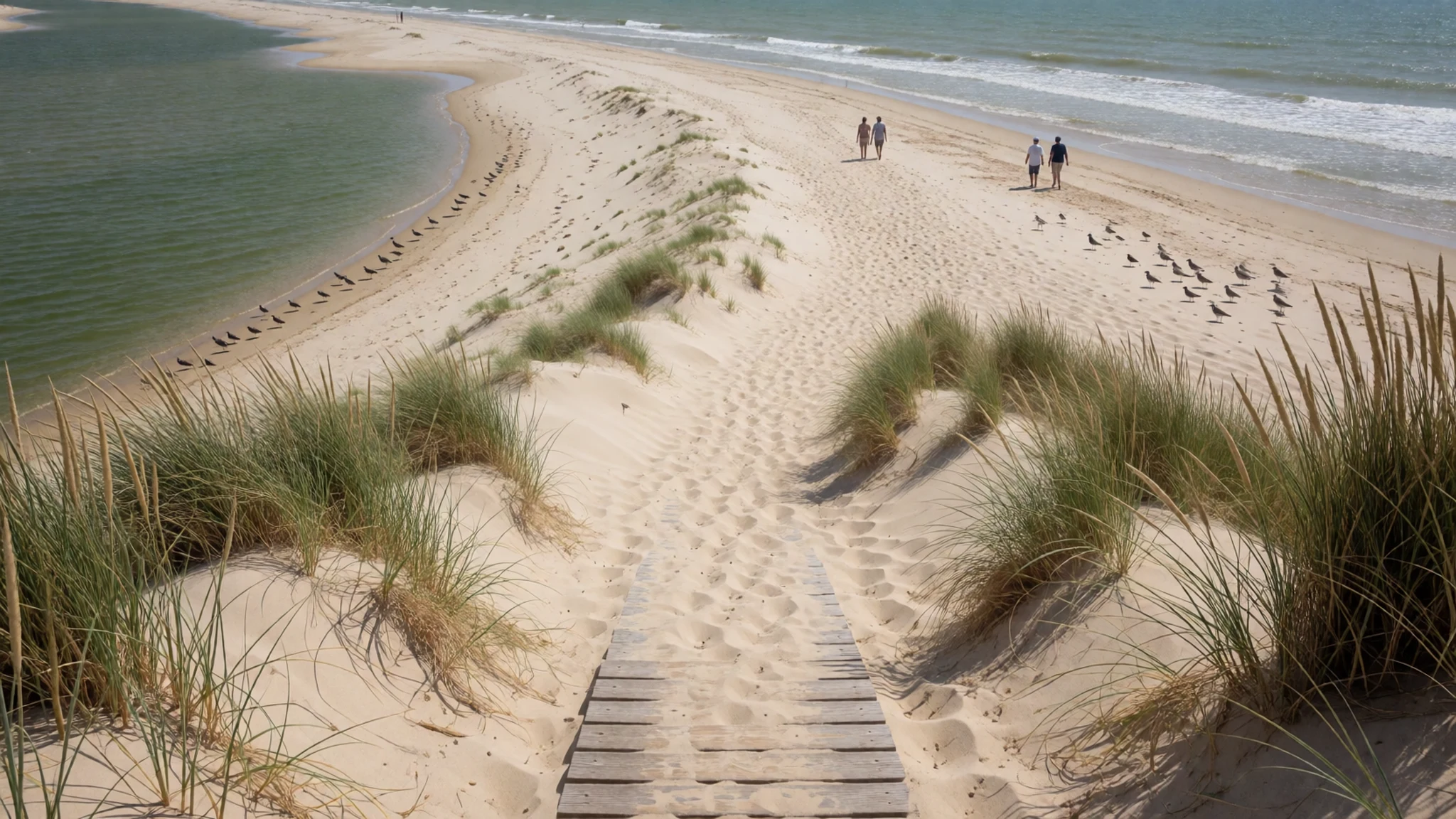
- Étang-du-Nord — Cap aux Meules Island
Étang-du-Nord lies on the western shore of the Magdalen Islands, a village of bright houses set between open beach and a sheltered pond. The pond, the étang of the name, holds calmer water and plenty of birds, while the outer strand takes the weather straight off the Gulf. Together they show the archipelago's double coast: rough outside the dunes, almost mild within.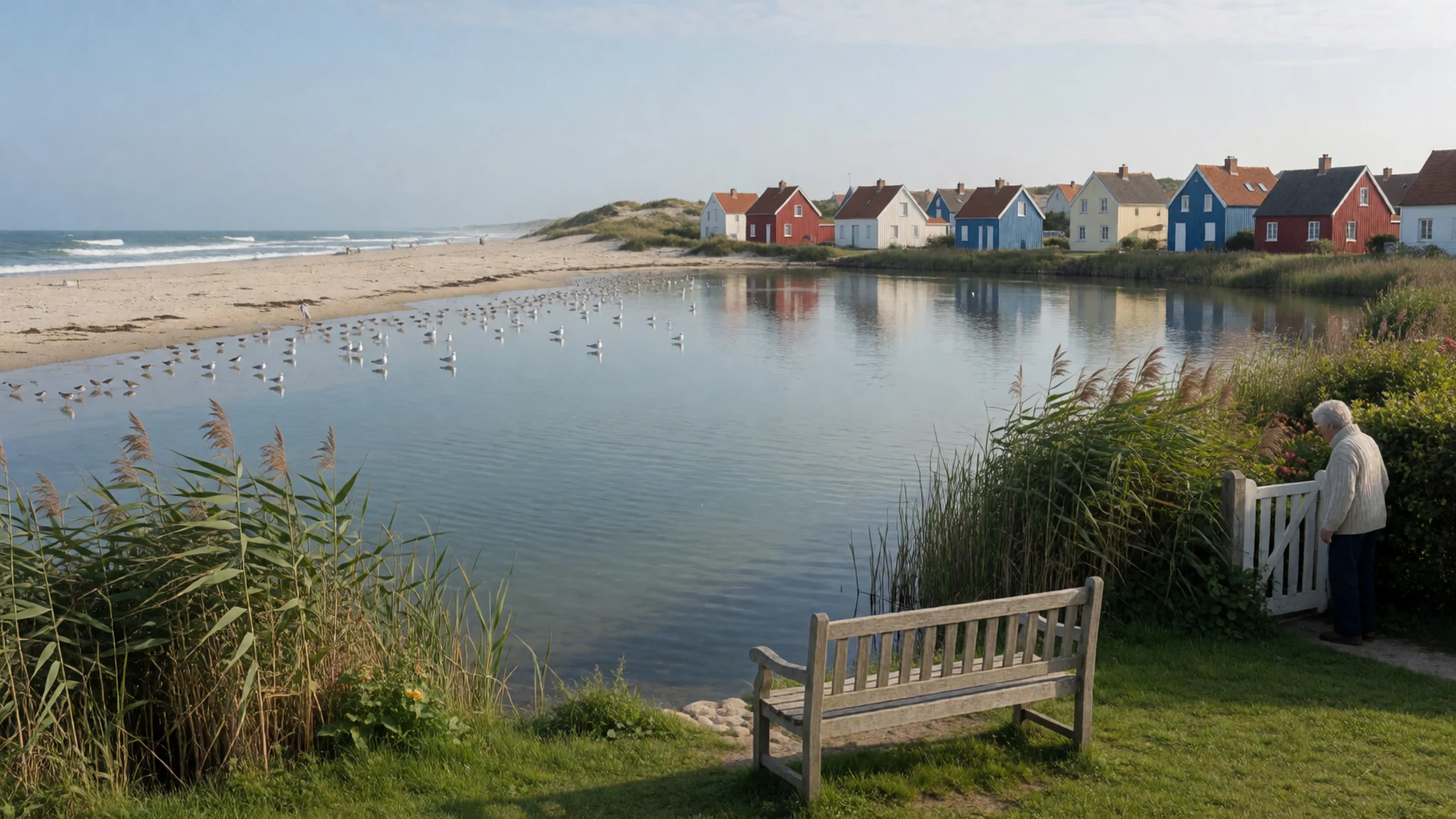
- Île d'Entrée — Île d'Entrée
Île d'Entrée lies apart from the dune-linked Magdalen Islands, higher and more compact, and reached by passenger boat rather than by road. The community is small, English-speaking for generations, with a church, pasture and paths that look back toward Havre-Aubert. Services are few, and that quiet is the reason for the crossing. The boat depends on the weather and should be confirmed before the day is planned.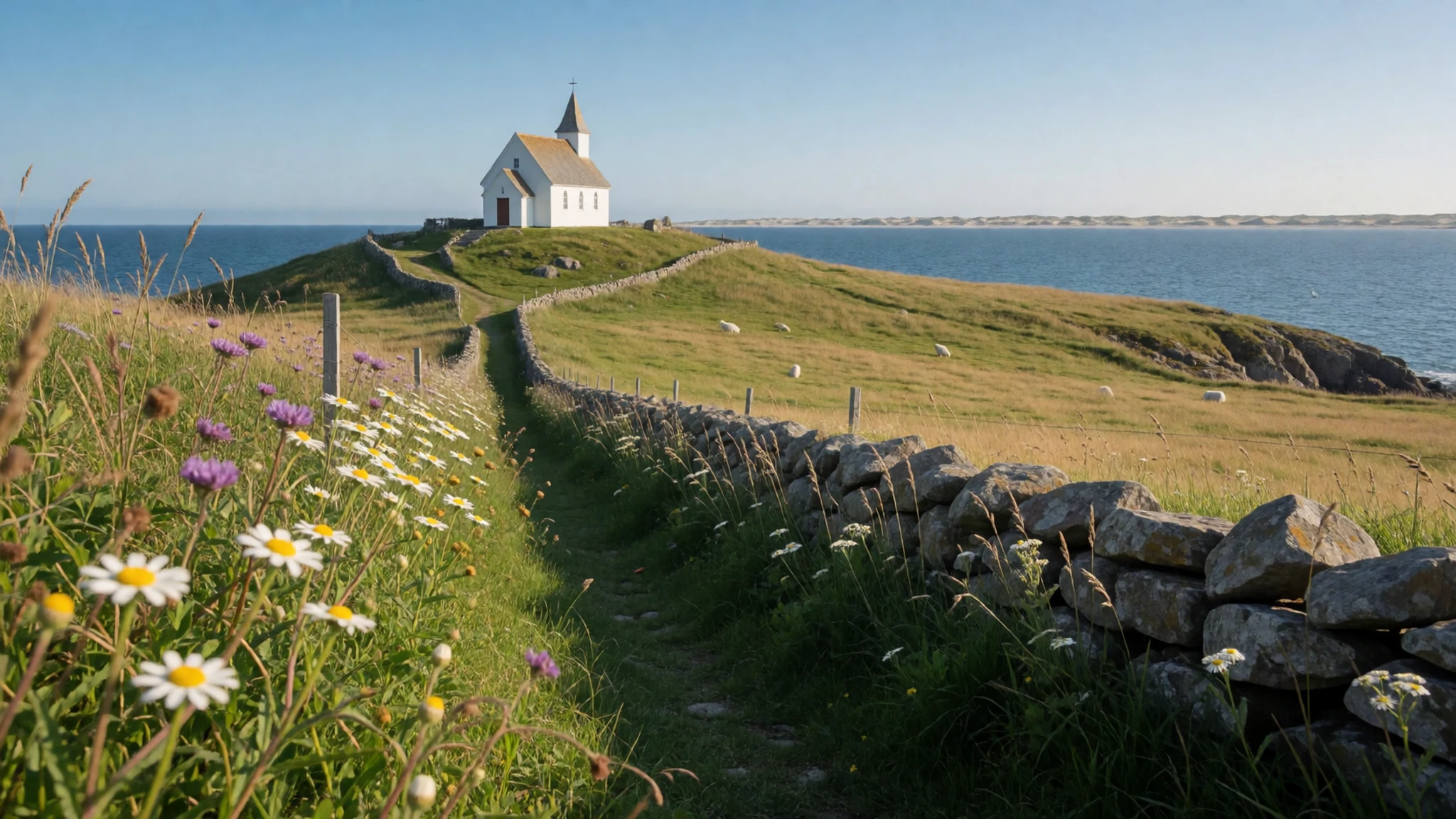
Culture
On the Magdalen Islands, ordinary life still follows boats, weather and family. Most Madelinots speak French with a cadence mainland Quebec recognises at once, marked by Acadian history and by work at sea. On Île d'Entrée and around Grosse-Île and Old Harry, English is the language of the house. The fishing year matters more than the civic calendar. When lobster boats are landing, harbours and conversation fill; in the quiet months people mend gear, gather with family and wait out storms. Wooden churches, painted and well kept, still hold Sundays, weddings and funerals. Summer festivals bring back relatives who have moved to the mainland, and music leans to fiddle, choir and French songs of the Gulf.
Clear colours on the houses, reds and yellows and blues, read easily through fog and against pale sand. Making things is part of earning a living: knitted wool, small woodwork, and objects drawn from what the beaches give up. The seal fishery remains a traditional livelihood and a sensitive subject, not a spectacle for visitors. Hospitality tends to be plain and genuine, often opening with a remark about the wind.
If you visit the Magdalen Islands, offer a French greeting, ask before photographing people at their work, and stay on marked paths across the dunes.
What to wear
Dress on the Magdalen Islands grew out of fishing and Acadian parish life, not out of a court. Oilskin jackets, thick knitted sweaters, caps and tall rubber boots let people work in cold spray, and those boots still stand by porches and fish-shed doors. Wool and cotton that could be patched were everyday wear, with knitting and woven cloth carrying colour indoors. Sunday meant a cleaner version of the same clothes for church. That older wardrobe now turns up in family photographs, small museums and the occasional festival.
Madelinots today dress as other coastal Canadians do, for wind: fleece, a waterproof shell, jeans or work trousers, and rubber boots as soon as the ground is sand or wet concrete. Bright layers sometimes echo the house paint. In the warmer months people dress lightly in the village and add a jacket on the beach road, because the air keeps moving.
Visitors need that same kit whenever the forecast looks mild: a windproof jacket, a warm mid-layer, long trousers for evening, and shoes that can take boardwalks, wet rock and pebble. Swimwear belongs on the beach. In a church or a family eatery, covered shoulders are the respectful choice, and delicate shoes are a mistake on these paths.
What to eat
- Pot-en-pot — Small eateries in Havre-Aubert and Cap-aux-Meules
Pot-en-pot is a dish closely tied to the Magdalen Islands, a deep pie of lobster, scallop and other seafood at hand, sealed under mashed potato. It began as a way to stretch the day's catch and is now served in small eateries in Havre-Aubert and Cap-aux-Meules.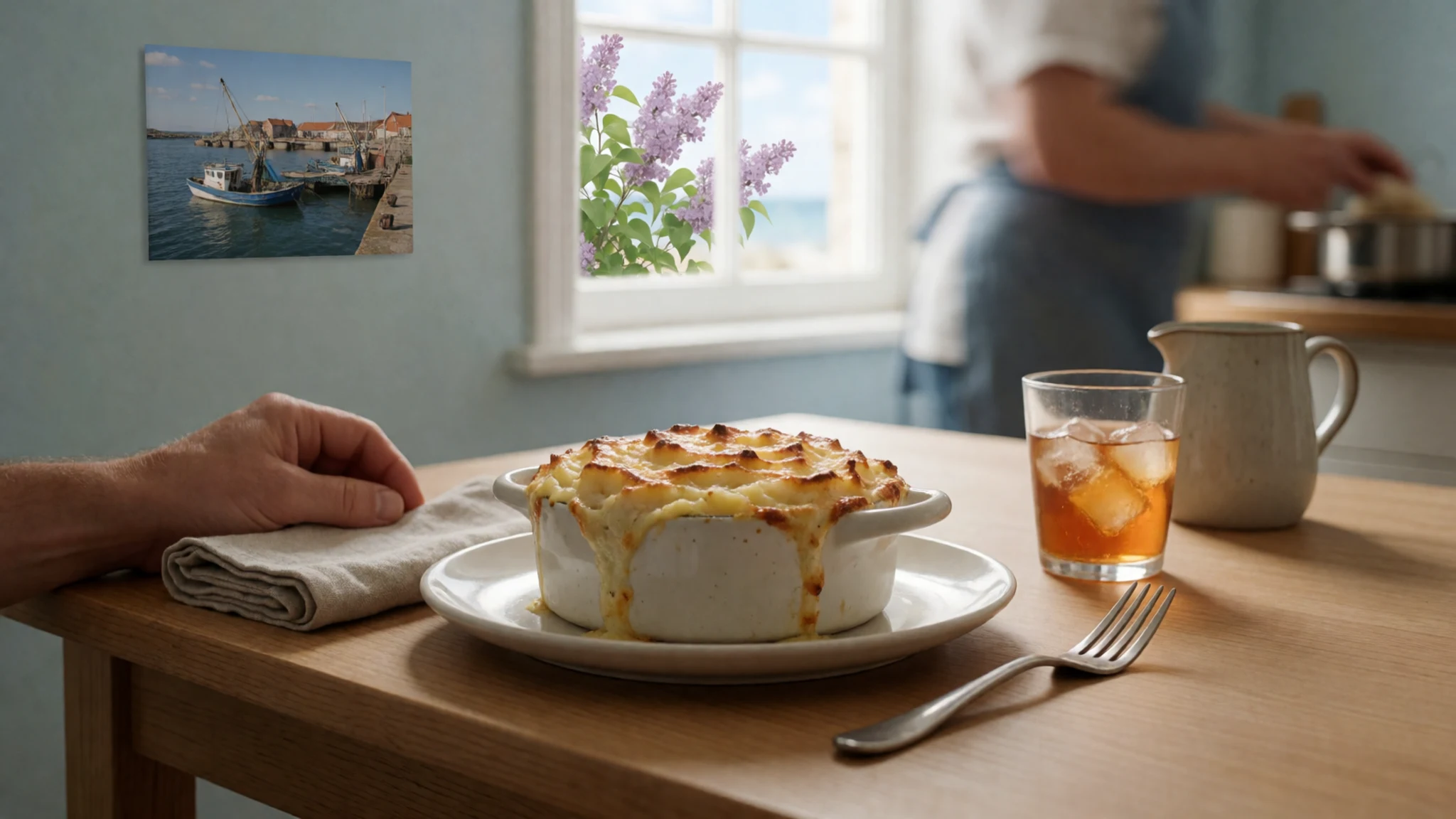
- Lobster — Harbour markets and seasonal stalls in Cap-aux-Meules and Grande-Entrée
Lobster is the catch that now organises work on the Magdalen Islands, eaten in season as plainly as possible: boiled, cracked and served with butter near the quay. Harbour markets and seasonal stalls in Cap-aux-Meules and Grande-Entrée are the straightforward places to find it.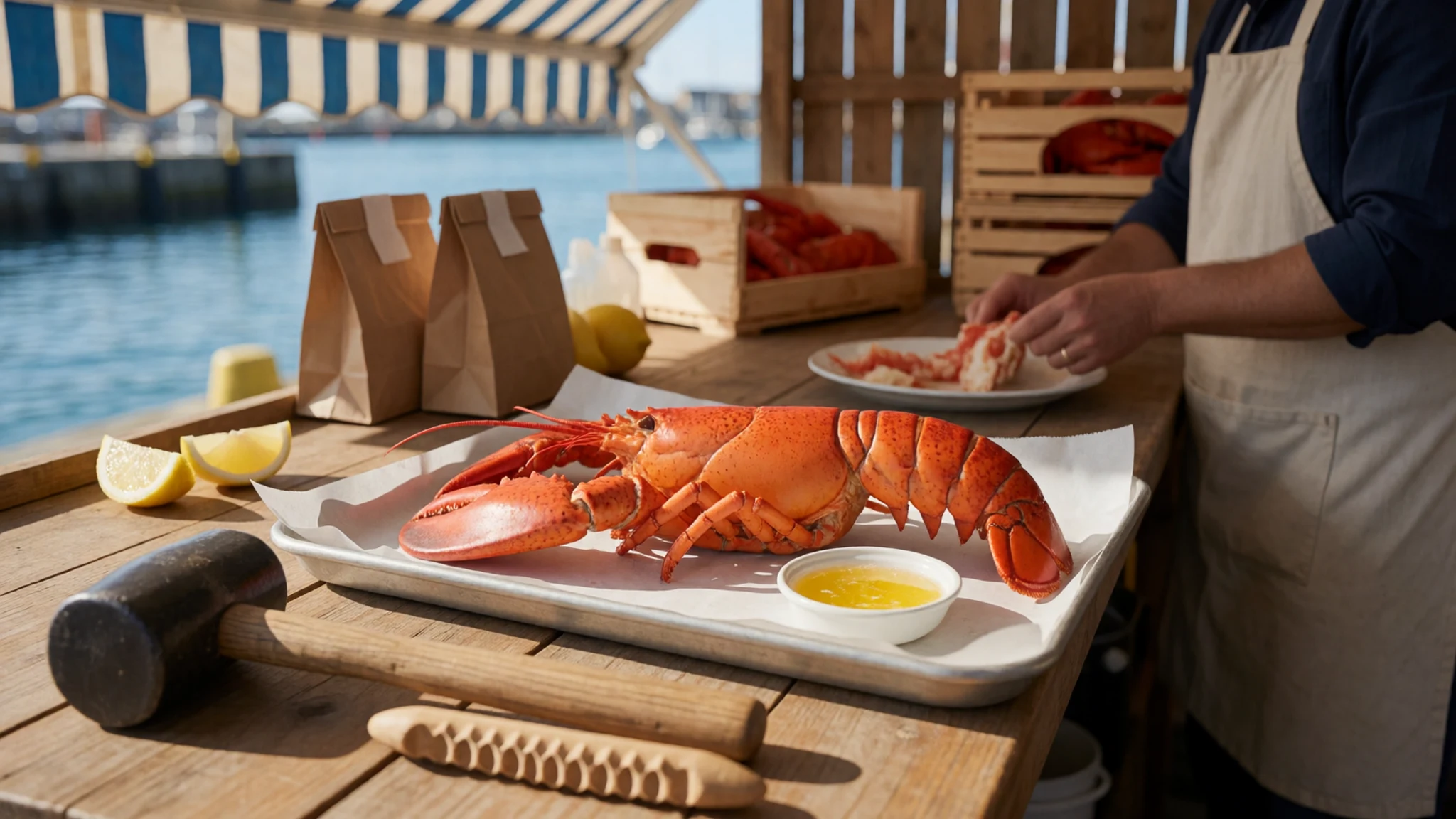
- Smoked herring — Grocery counters and market tables in Havre-aux-Maisons and Havre-Aubert
Smoked herring, hareng boucané, is the old cured fish of the Magdalen Islands, from the years when smokehouses lined the shore. Salty and plainly of woodsmoke, it is sold by the piece at grocery counters and market tables in Havre-aux-Maisons and Havre-Aubert, to eat with bread. - Scallops — Harbours at Grande-Entrée and Cap-aux-Meules
Scallops from the Gulf are a sweet, quick-cooking catch on the Magdalen Islands, pan-seared in small eateries or stirred into chowder and pot-en-pot. The harbours at Grande-Entrée and Cap-aux-Meules are the neighbourhoods to seek them, beside whatever else the boats brought in. - Island cheese — Fromageries and grocery counters in the main villages
Cattle graze the inner meadows of the Magdalen Islands, and the cow's-milk cheeses made from that milk, often with a salty washed rind, are sold at fromageries and grocery counters in the main villages.
Plan it
Best time. July, August and September are when the sea is warmer and the days milder on the Magdalen Islands. June is often foggy and cold, October stays mild, November and December are the wet months, and winter ice can disrupt the ferry and the flights. Lobster boats are busiest earlier in the warm half of the year, which does not always coincide with the easier swimming weeks.
How long. a few days to a week
Getting there. Reach the Magdalen Islands by air through the airport on Havre-aux-Maisons, on flights from mainland Quebec and the Maritimes, or by ferry from Souris on Prince Edward Island into Cap-aux-Meules. Once ashore, the last leg is the dune road between villages, by hire car, bicycle or a locally arranged ride. Patterns change with the season and with ice, so the operator's current word beats any old timetable.
Budget. mid
Tips
- Book the ferry and a bed well before high summer, when returning families and visitors overlap.
- Carry a windproof layer even in months that look mild on a forecast.
- A car makes the string of villages manageable; a headwind turns a short map distance into a long walk.
- Choose lagoon water for swimming when the Gulf shore is rough, and do not turn your back on a rising sea.
- Expect French on signs and menus, and keep a little cash for small stalls.
Etiquette
- Begin with a French greeting before switching to English.
- Ask before photographing fishers, workplaces or children.
- Keep off crumbling cliff edges and off the dunes except on marked paths.
- Dress quietly for church, and leave fishing gear on the beach untouched.
Nearby
Sources
- Wikidata Q726750 (CC0)
- Wikipedia — Magdalen Islands (CC BY-SA 4.0)
- Wikivoyage — Magdalen Islands (CC BY-SA 4.0)
Wildlife
- Harp seal (animal)
The harp seal is a true seal with no ear flaps, a creature of the cold northern Atlantic and Arctic seas; remember it as the ice-lover, since that is what its Greek scientific name means. Sadly, nothing here says where or when to find it around the islands, so ask locally. Seal hunting is an old way of earning a living on these shores and a delicate subject, so please never treat the animals as entertainment, and be thoughtful when you speak of them.