Mae Salong
Mae Salong, Thailand
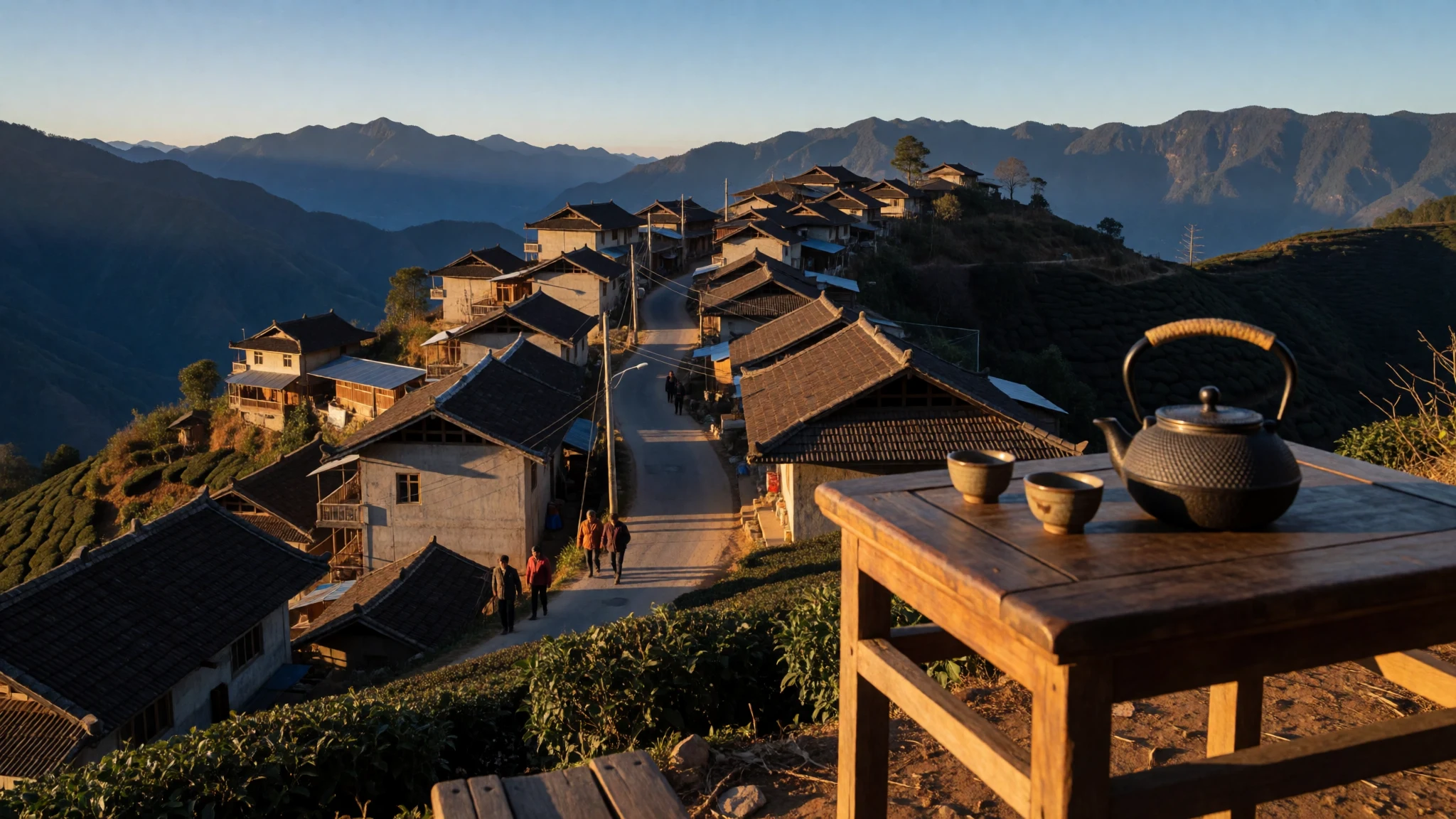
Mae Salong is a cool Thai ridge village of tea terraces, Yunnanese noodles and Kuomintang history, reached by one of the most twisting roads in the north.
The place
Mae Salong, officially called Santikhiri, is a mountain village in Chiang Rai province, the northernmost in Thailand. It sits on Doi Mae Salong in the Daen Lao Range, close to the Myanmar border. The altitude gives it cooler, fresher air than the plains below, which is why tea grows here and why wild cherry blossom is a local attraction in season. The village is strung along a winding road, with tea houses, guesthouses and small shops climbing the hillside and plantations falling away on every side. Shop signs are often written in Thai and Chinese, sometimes with English added, which hints at who settled here. The community is unusual for Thailand. Its core is made up of Chinese-speaking Yunnanese families descended from Kuomintang soldiers, living alongside Akha, Yao and other hill peoples from the surrounding villages. Mandarin, Yunnanese cooking and Chinese festivals sit comfortably next to Thai temples and Buddhist chedis. Days begin at the morning market, where villagers in fleece jackets buy produce and breakfast. Visitors then drift between viewpoints, tea shops and memorials, and the village goes quiet early in the evening, with nothing much beyond a few karaoke bars. Mae Salong suits slow travellers who are happy with bends, mist and long cups of oolong. It is a poor fit for anyone wanting beaches, big monuments or a packed itinerary. The old opium reputation belongs to the past, as that trade moved across the border long ago.
Its story
Mae Salong's story begins with a war that one army refused to accept had ended. When the Chinese Civil War finished in 1949, most Kuomintang forces withdrew to Taiwan, but some units of the 93rd Division would not surrender and kept fighting in Yunnan. After the communists entered Kunming in early 1950, about 12,000 of these soldiers fought their way out and took refuge in the jungles of Burma's Shan State. Burma's army soon discovered a foreign force camped on its land and pressed against it for years. During the Korean War the American CIA wanted intelligence from inside China, and the Kuomintang generals agreed to send men back across the border in return for weapons. Attempts to retake Yunnan between 1950 and 1952 all ended in retreat. Under international pressure many soldiers were evacuated to Taiwan, while those who stayed shifted to northern Thailand. Thai authorities tolerated them because they were willing to help against communist insurgents on the frontier. The group led by General Tuan Shi-wen settled on the ridge at Mae Salong, then a remote spot. In later decades the settlement became entangled in the Golden Triangle's opium economy, a chapter now handled quietly in the local museum and the general's tomb. Today the descendants run tea farms, noodle shops and guesthouses, and the ridge is known for tea rather than for guns.
What to see
- Phra Boromathat Chedi — Hill above Mae Salong village
Phra Boromathat Chedi is a Thai-style stupa on a hill above Mae Salong, built in honour of the late Princess Mother, Srinagarindra. The terrace gives the best outlook over the village's eastern end and the surrounding ridges. Go early, when mist often sits in the valleys and the light is soft.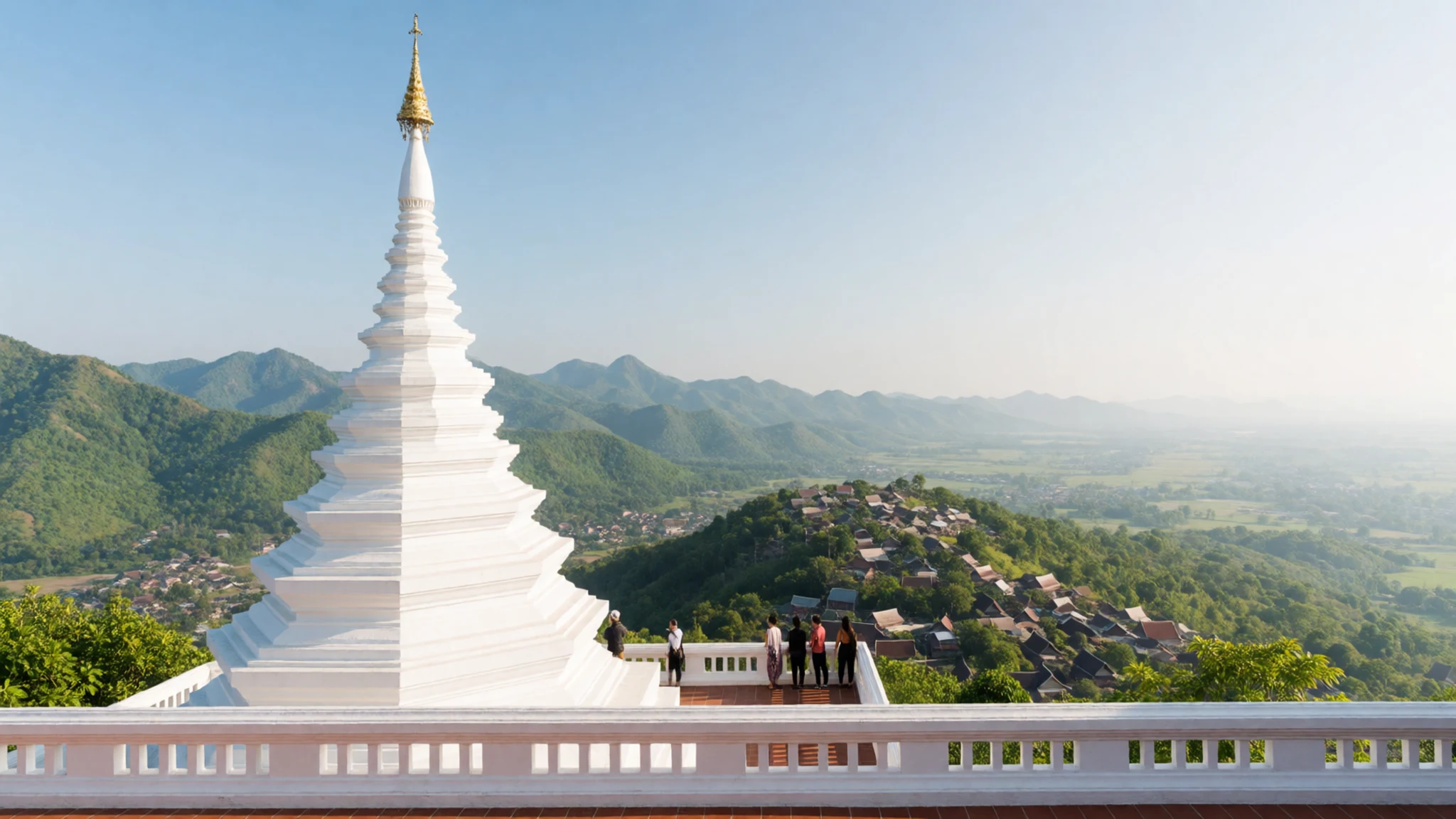
- Chinese Martyrs' Memorial Museum — Mae Salong village
The Chinese Martyrs' Memorial Museum pays tribute to the Kuomintang settlers who fought and died for Thailand. Its displays trace the arrival of the soldiers and the growth of the village. Labels come in Thai, Chinese and rather rough English, so a little patience, or a guide, helps.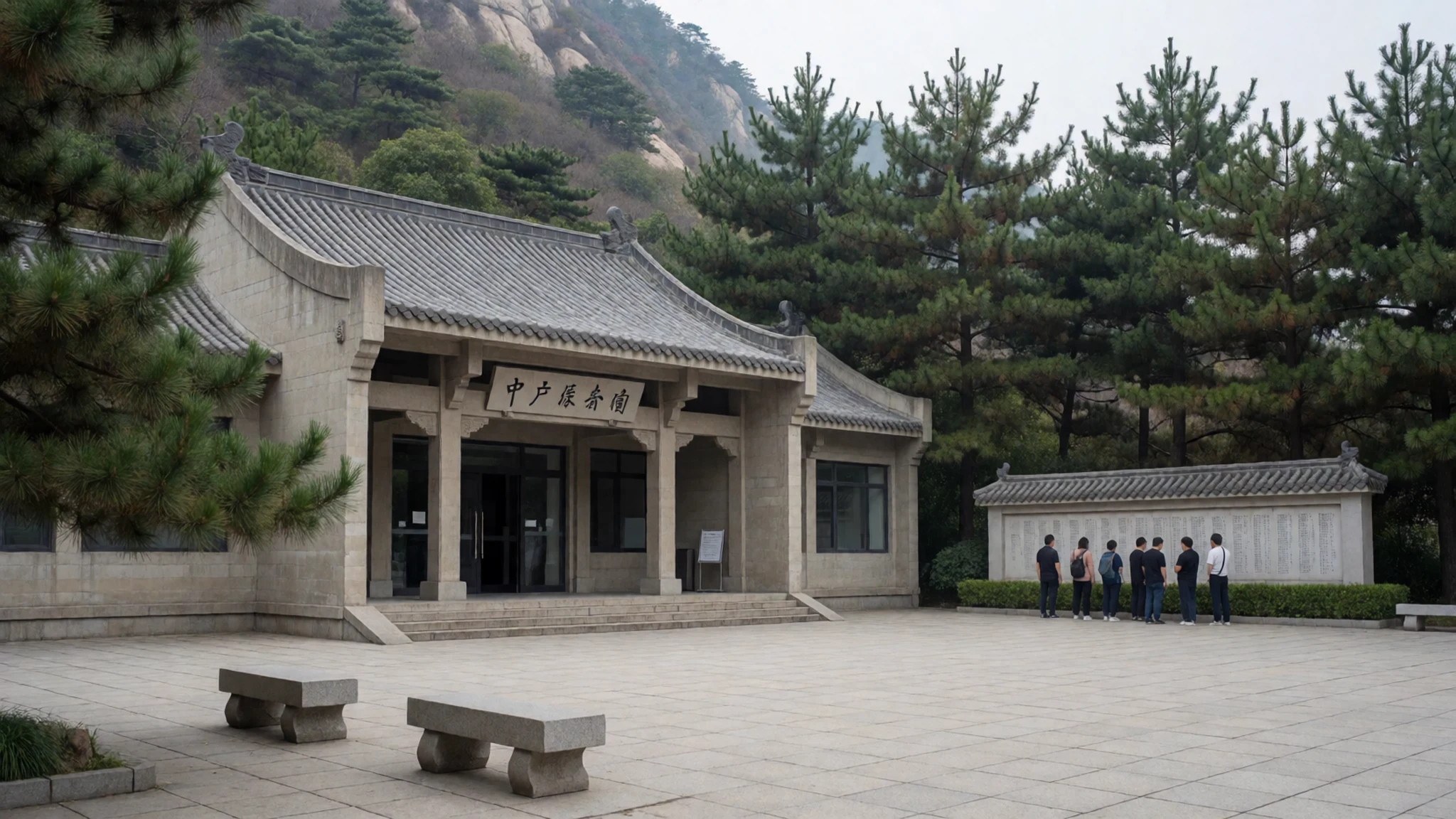
- Tomb of General Tuan — Beside a tea house, Mae Salong village
The tomb of General Tuan Shi-wen, founder of the Mae Salong settlement, lies at the end of a road next to a tea house that carries his name. A steep staircase leads up to the mausoleum. Opinion of him is mixed, as he was both a soldier and a drug-trade warlord.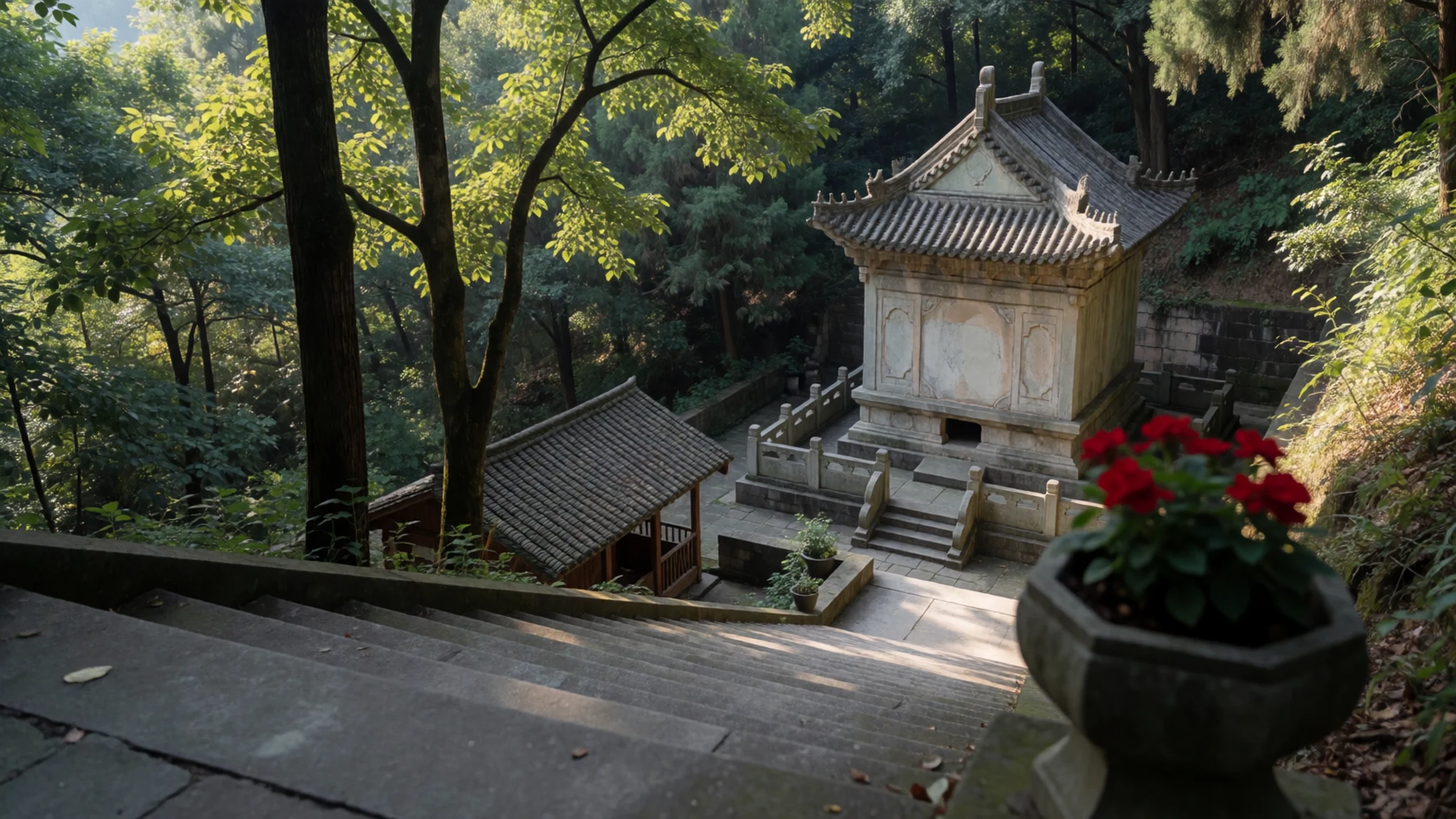
- Wat Santikhiri — Approach to Phra Boromathat Chedi
Wat Santikhiri is a modern Thai temple at the foot of the path to the chedi. The temple itself is fairly standard, but the lanes across the street, towards the resort, feel more local. It makes a sensible first stop before the climb, so dress for a temple.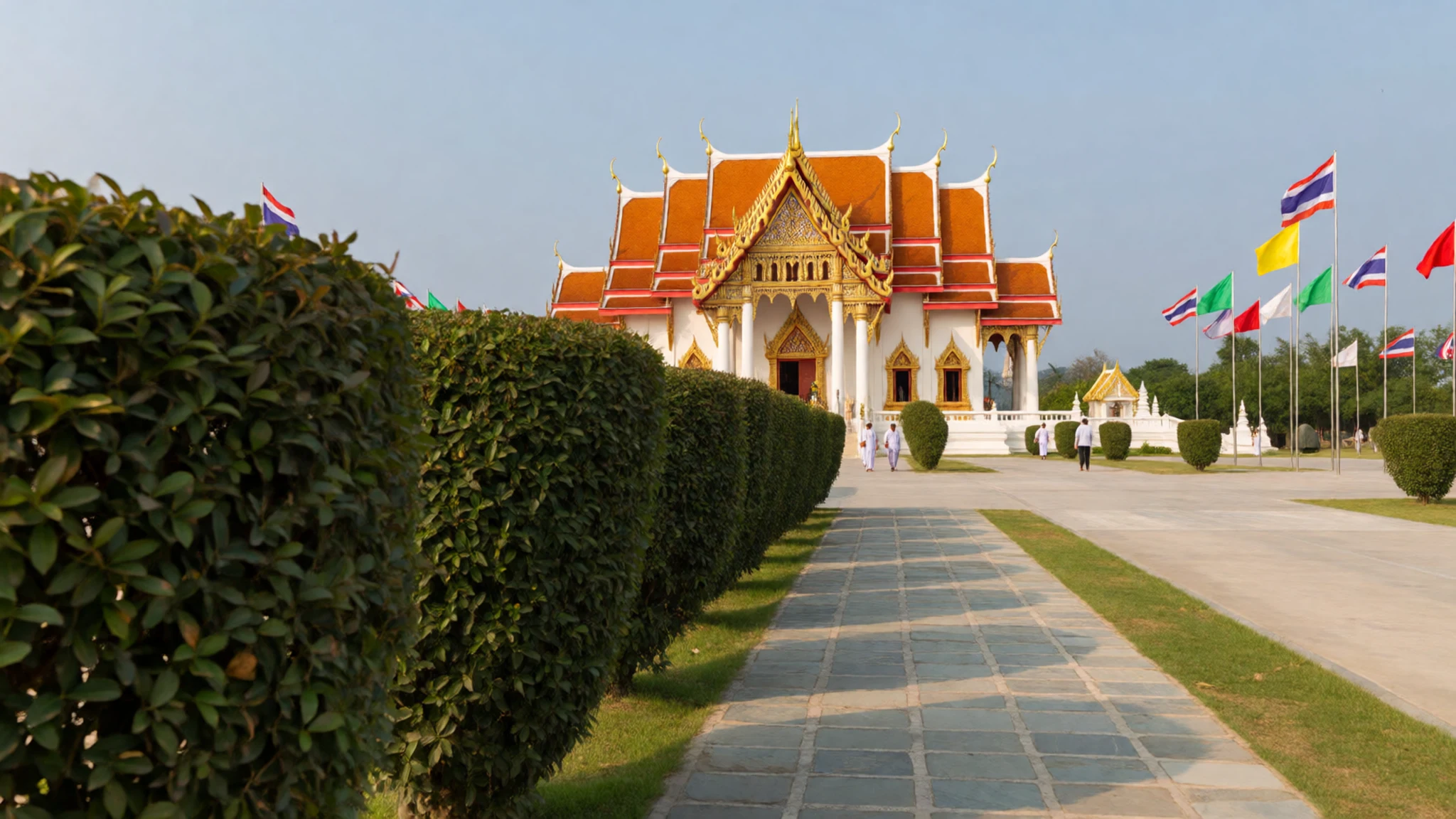
- Tea plantations — Slopes around Mae Salong
Tea plantations cover the slopes around Mae Salong, and many can be seen from the roadside. A small viewing hut near the village carries a map of nearby plantations, though it is often closed. Having your own transport helps for the loop. Tea shops usually offer tastings of oolong.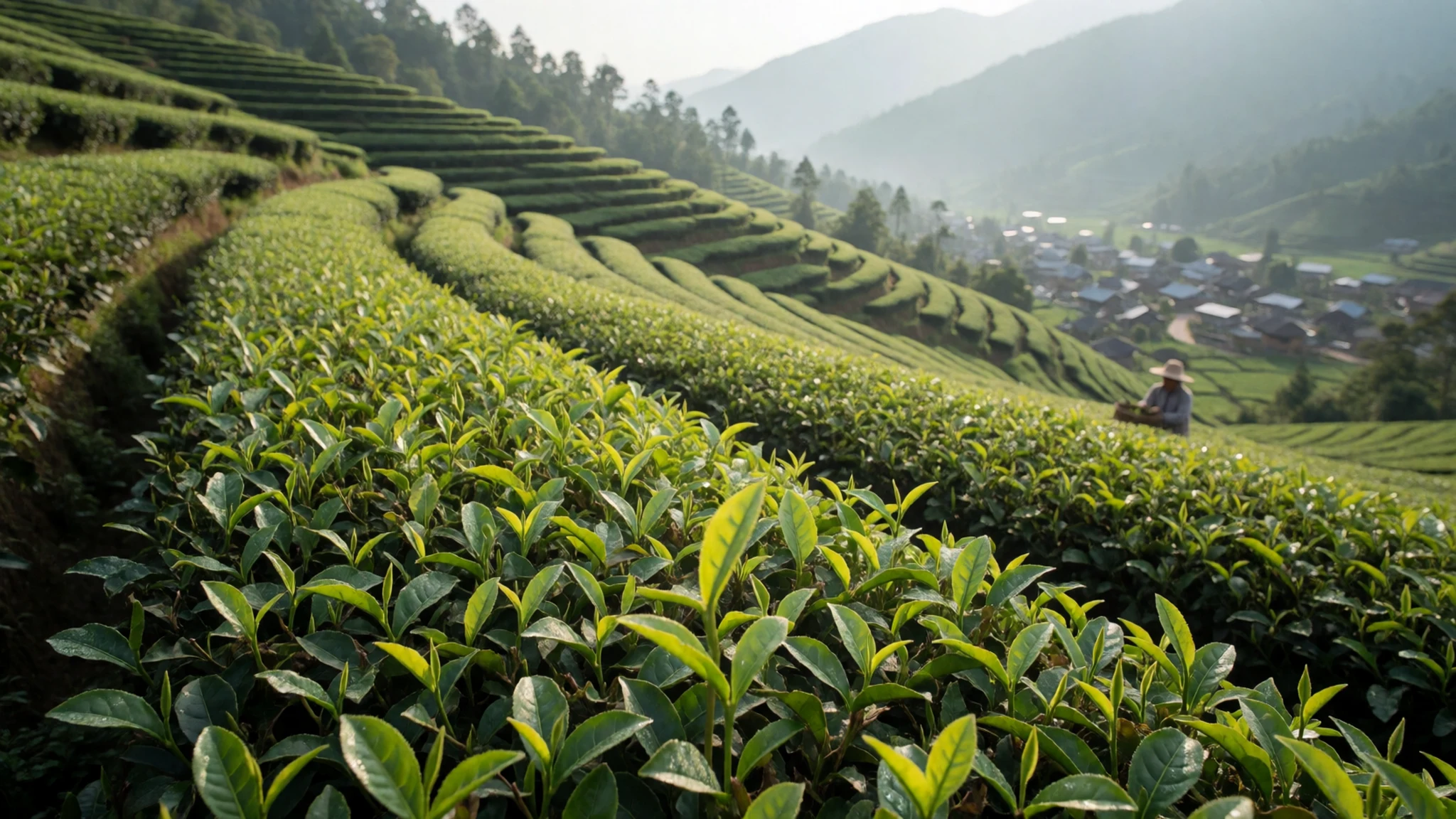
Culture
Mae Salong has a layered culture. The Yunnanese Chinese families who settled after the Kuomintang retreat keep their language, cooking and festivals alive, so Mandarin is heard in shops and homes, and Chinese lettering appears next to Thai on many signs. Thai Buddhism is just as visible, with temples and a chedi built in honour of royalty, and the royal family is respected across the district. Around the village, Akha and Yao communities follow their own traditions, language and dress, and some villages welcome visitors while others are simply homes. Tea is central to daily life, and offering a cup to a guest is a common courtesy in the tea houses. The history of the place is sensitive. For some residents General Tuan and his soldiers are founders and martyrs, while outsiders often recall the opium years, so questions are best asked with curiosity rather than judgement. Festivals follow both the Thai and the Chinese calendars, and Chinese New Year brings the village to life. Evenings are quiet, and residents generally rise early. Visitors who treat the market, the tea houses and the temples as part of a working community, not a stage, tend to be welcomed warmly. Before photographing hill-tribe villagers or their homes, ask permission and accept a refusal, and remove your shoes before entering any temple building.
What to wear
Mae Salong's clothing reflects its mix of peoples. Among the hill communities, traditional dress is still worn on festival days and by some older women. Akha women are known for dark, heavily embroidered jackets and tall headdresses decorated with beads and silver ornaments, while Yao clothing is known for fine cross-stitch embroidery on dark cotton. These are mostly cotton textiles, often dyed and sewn at home, and they are best seen at ceremonies or in the markets. The Yunnanese Chinese families rarely wear distinct costume now, though red and festive clothing appears at Chinese New Year. Everyday dress is practical: fleece, jumpers and woolly hats on cool mornings, with jeans, trousers and sturdy shoes for farm and tea work. In a Thai temple, locals dress neatly, with shoulders and knees covered. Visitors should pack in layers, because mornings and evenings in the cooler months can be chilly, and a light waterproof is useful in the rainy season. Shoes need good grip, as the village has steep staircases and slippery slopes after rain. For the chedi and temple, carry a scarf or light shirt to cover shoulders, and wear trousers or a long skirt. Shorts are fine on the plantation roads but not inside sacred spaces. Do not wear hill-tribe costume for photographs unless you are invited to.
What to eat
- Yunnan noodle soup — Noodle shops along the main road and around the market
Yunnan-style noodle soup is the local staple, served in small family shops dotted around the village. Broths are savoury and filling, often topped with pork or dumplings, and a cup of free oolong frequently comes with it. It makes an inexpensive breakfast or lunch.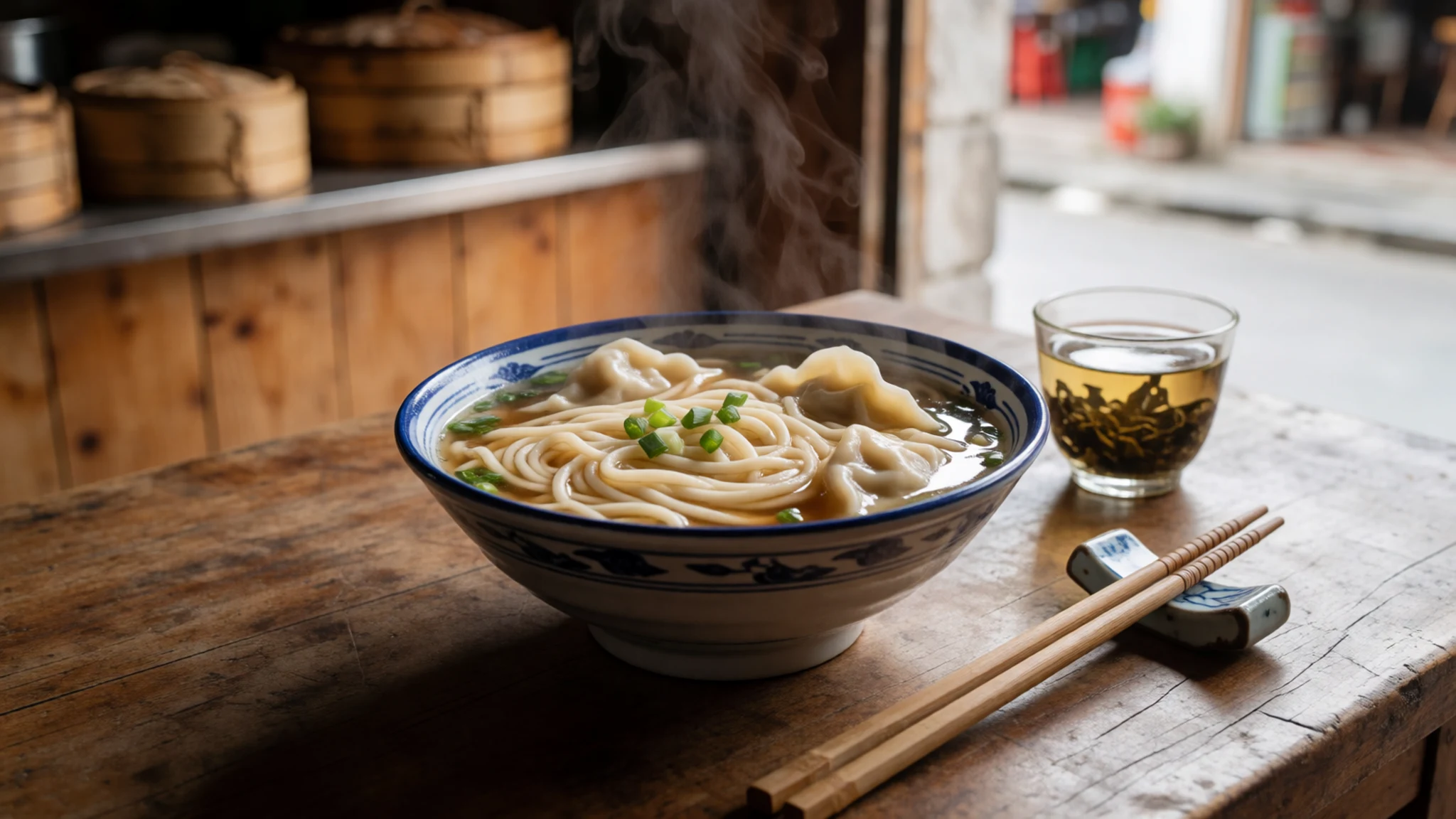
- Papa cake — Stalls outside the morning market
Papa cake is a baked glutinous rice snack, made with either a sweet or a savoury-sour sesame filling. Vendors sell it warm outside the morning market. It is dense and chewy, and one is enough as a snack while you walk.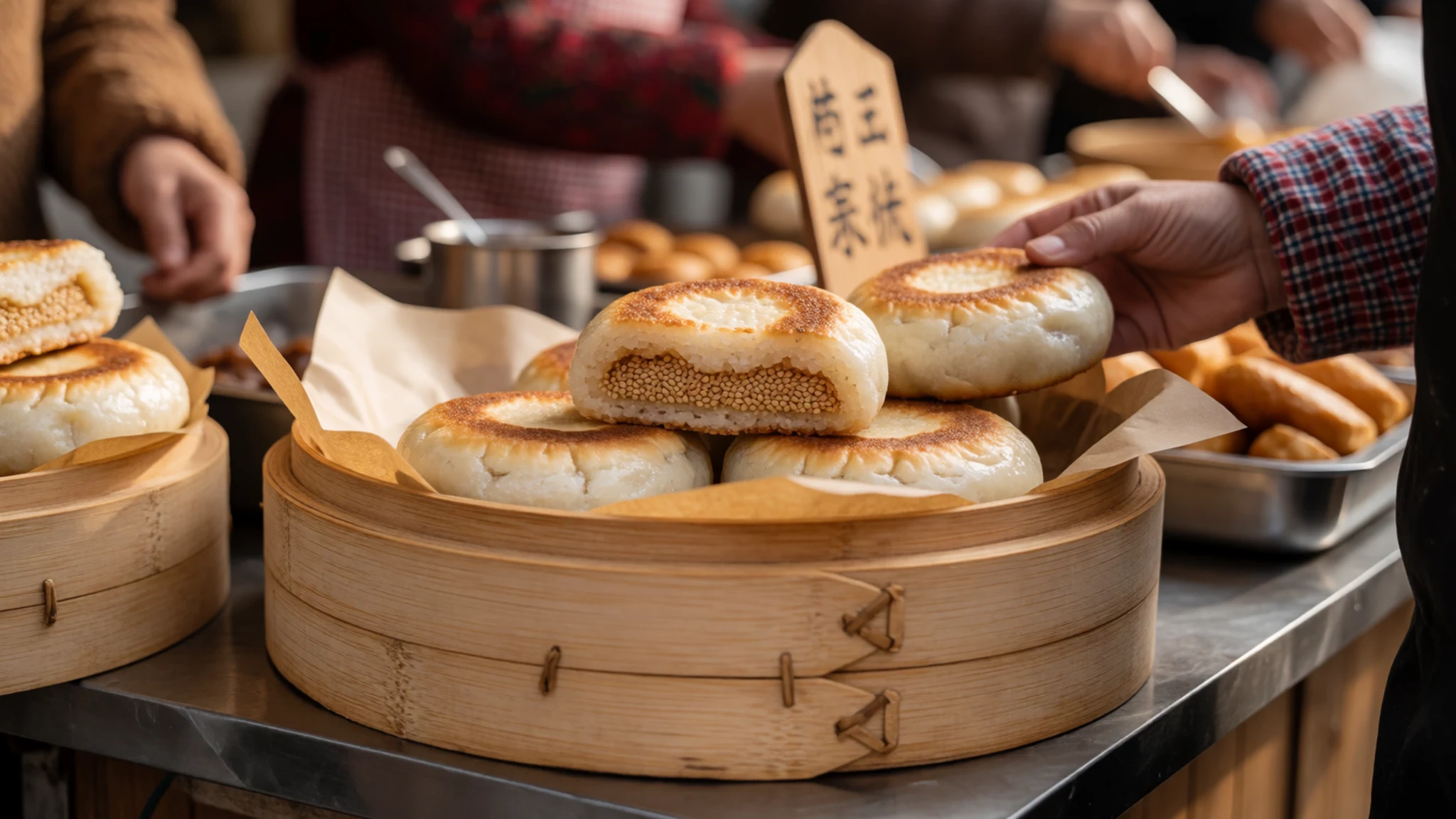
- Hot soy milk with fried dough sticks — Morning market
Hot soy milk with deep-fried dough sticks, known in Chinese as youtiao, is the classic Yunnanese breakfast. Sip the soy milk and dunk the dough in it. Stalls at the morning market serve it early, and it is gone by mid-morning. - Bamboo worms — Market stalls and snack sellers
Bamboo worms are fried and dried, and sold as a snack for the adventurous. The crunch is closer to a crisp biscuit than anything meaty, and the taste is mild and a little nutty. They are a fun thing to try once. - Local oolong tea — Tea houses and tea shops along the main road
Oolong from the surrounding hills is the signature drink of Mae Salong. Tea houses brew it in small pots, pouring tastings before you buy, and some sit with plantation views. A pot is a good reason to spend an afternoon looking at the valley.
Plan it
Best time. November to February is the usual choice, with cooler, clearer weather and the wild cherry blossom season; the rainy season from around June brings green hills but mist, mud and slower roads.
How long. 2–3
Getting there. Fly to Chiang Rai airport or travel by road from Chiang Mai, then head to Mae Chan, the usual gateway town. From there minibuses climb to Mae Salong along very twisty Highway 1130, or you can hire a car or taxi; check the current minibus times locally.
Budget. low
Tips
- Take motion-sickness tablets before the mountain road if you are prone to it.
- Carry cash, as small shops, markets and tea houses may not take cards.
- Pack layers, as mornings and evenings are cool even when the days are warm.
- Go to the morning market early for breakfast and the best atmosphere.
- Having your own transport makes the tea plantation loop and nearby villages much easier.
Etiquette
- Remove shoes before entering temple buildings, and cover shoulders and knees.
- Ask before photographing people in hill-tribe villages, and respect a no.
- Treat the memorial sites and tomb quietly, as they are important to local families.
Nearby
Sources
- Wikidata Q652473 (CC0)
- Wikipedia: Mae Salong (rev 1330409239) (CC BY-SA 4.0)
- Wikivoyage: Mae Salong (rev 5410150) (CC BY-SA 4.0)
- Takeaway, View over the eastern end of Santikhiri (Mae Salong) (CC BY 3.0)
- Calliopejen / Ahoerstemeier, Map of Mae Salong (CC BY 3.0)
- Takeaway, View over the eastern end of Mae Salong (CC BY-SA 4.0)
- Takeaway, Phra Boromathat Chedi (CC BY-SA 4.0)
- Takeaway, Mae Salong tea plantations (CC BY 3.0)
- Tjeerd, Mae Salong signboard (CC BY 2.5)
- Takeaway, Martyrs' Memorial Hall of the KMT, Doi Mae Salong (CC BY-SA 4.0)
- Takeaway, Road upgrade, Doi Mae Salong (CC BY-SA 4.0)


