Madhabkunda
Madhabkunda, Bangladesh
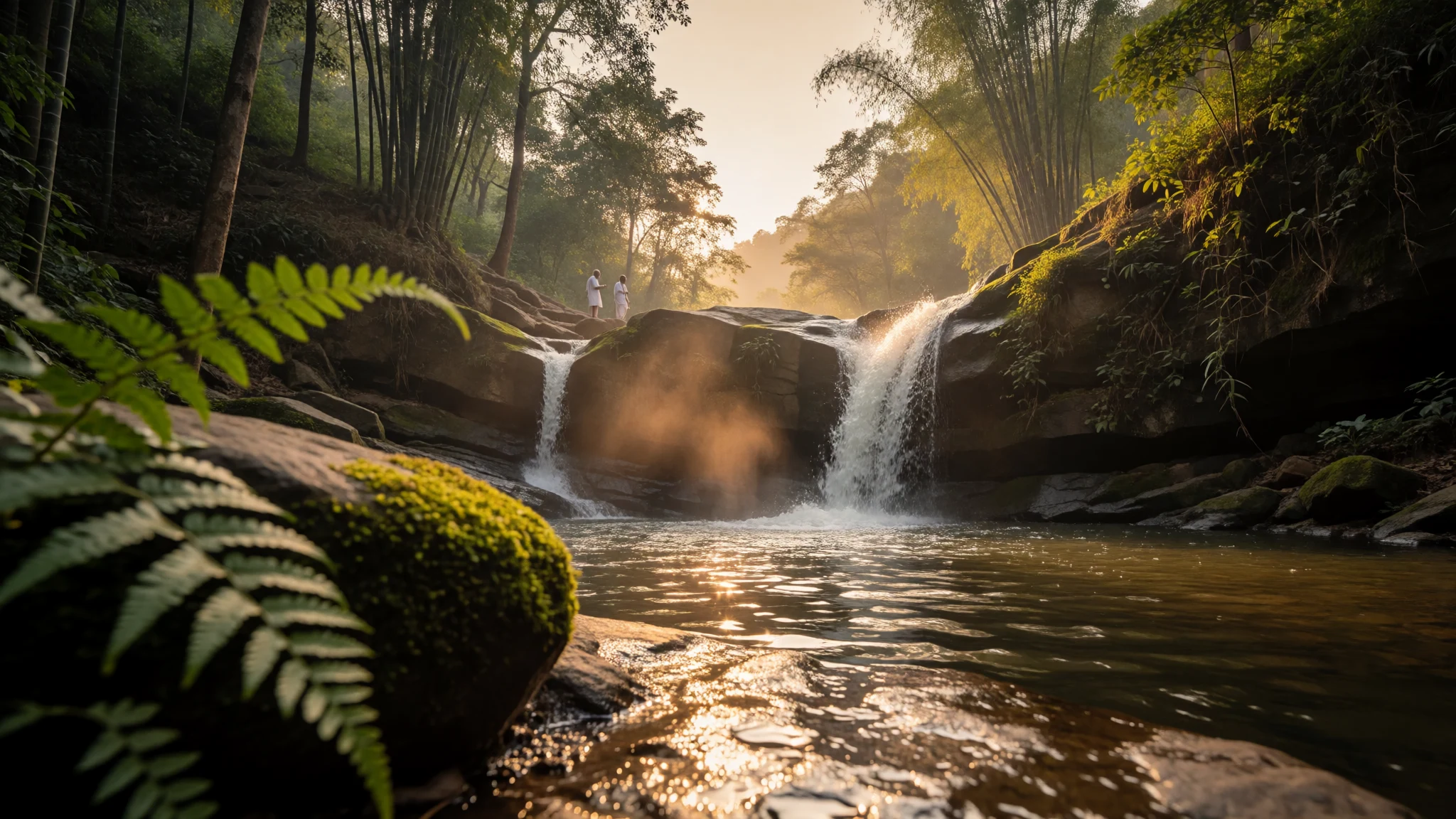
Madhabkunda drops a hill stream into a deep forest pool in north-eastern Bangladesh, with a Hindu temple and cave shrine beside the water.
The place
Madhabkunda lies in Barlekha Upazila, Moulvibazar District, in the hill and tea country of north-eastern Bangladesh. The Gangamara stream runs off the rocky Patharia Hill and drops about 49 m into a pool at the bottom. From there the water carries on as the Madhabchhara stream, which heads west and eventually spreads into Hakaluki Haor, a large wetland.
The setting matters as much as the drop. Forest closes in around the falls, smaller streams run alongside, and an ecological park has been laid out nearby, so the site works as a day out for families and friends. Picnics are a large part of the visit, and weekends bring the biggest crowds.
The flow changes with the seasons. For most of the year a single main stream keeps falling. When the monsoon arrives, a second, thinner stream forms beside it, and as the rains strengthen the two merge into one heavy sheet of water. That water keeps deepening the pool beneath, and the roar and spray grow with it.
That seasonal swing is the most useful thing to know before choosing dates. The drier months give gentler water and easier footing on the paths. The wet months give volume and noise, but also mud and slippery rock. The place also matters to Hindus, with a temple and a cave close to the water, so a festival day looks very different from an ordinary weekend.
Its story
Madhabkunda has little in the way of a documented history, and most of what is firmly known concerns the water and the worship around it. The story begins at the top, where the Gangamara stream crosses Patharia Hill and falls about 49 m in a single drop. The pool at the foot takes the impact, and because water keeps arriving the pool keeps getting deeper. The churn near the base is strong enough that wading close in is unwise, however inviting the shallows at the edge look.
Below the pool the stream changes its name to Madhabchhara and flows westward towards Hakaluki Haor. A visitor at the pool is therefore watching the first stage of a journey that ends in a wetland.
Beside the water sits the religious life of the place. A temple near the falls holds Hindu rituals every year, with a fair alongside them, and a cave next to the right side of the pool is treated as a pilgrimage site. The name itself reads as a devotional one: Madhab is a name of Vishnu, and kunda means a pool or a pond.
So two kinds of visit overlap here. One is devotion, tied to fixed dates and ritual. The other is the everyday habit of picnics and day trips among the trees. They share the same path and the same pool, and the mood changes sharply depending on which crowd is in.
What to see
- The main fall — Barlekha Upazila, Moulvibazar
Madhabkunda's main drop is the reason for the trip: the Gangamara stream pouring down the rock face of Patharia Hill. Stand back at the viewing area first to see the whole height, then move closer for the sound and spray. In the monsoon the water thickens and the mist reaches the paths.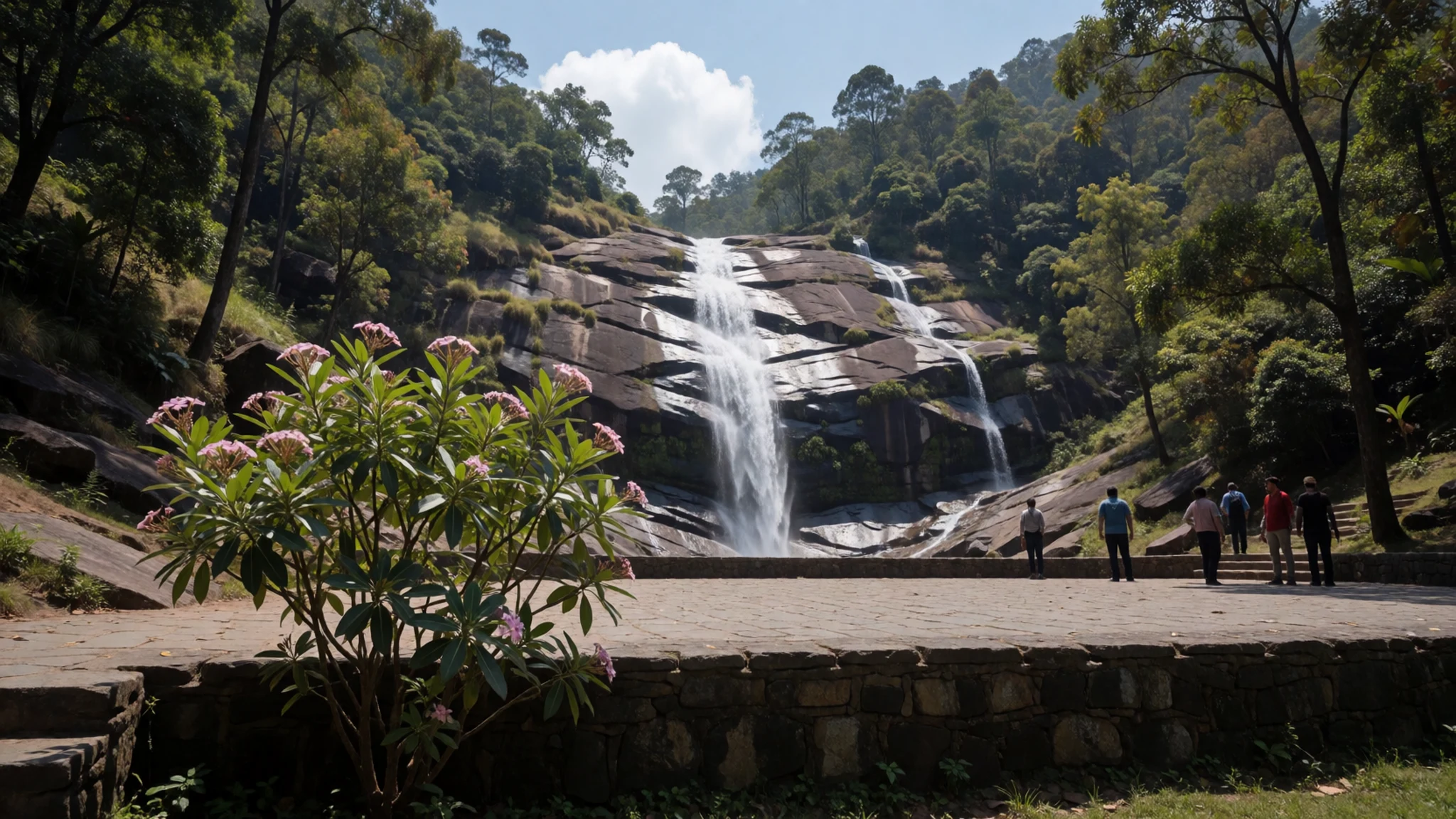
- The side view of the falls — Barlekha Upazila, Moulvibazar
Seen from the side, Madhabkunda shows how the stream breaks over ledges before it lands. This angle also reveals the rock wall and the trees clinging to it, which the front view flattens. It is a good spot for photographs when the water is lower and the rocks are visible.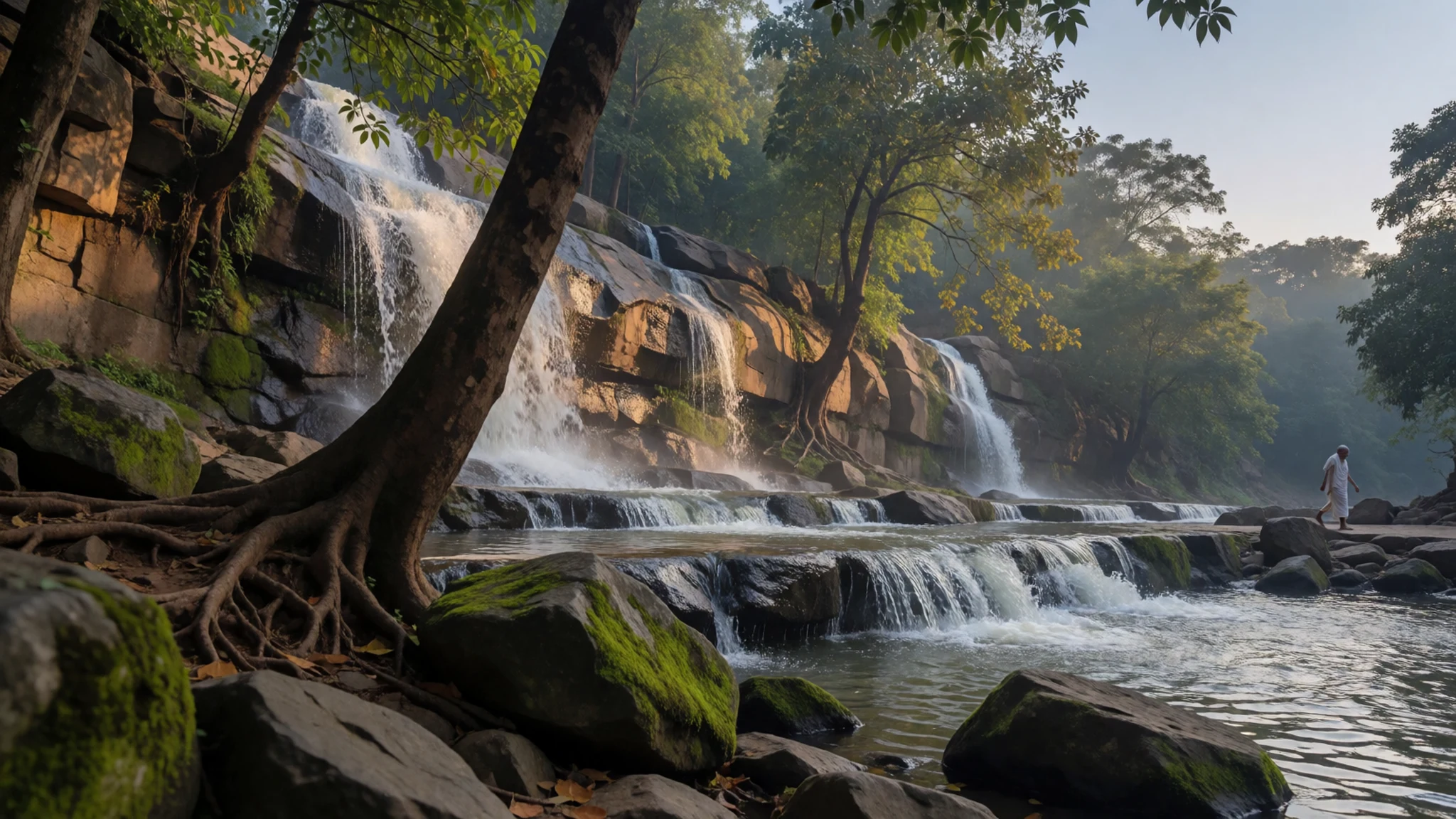
- The plunge pool and cave — Below the falls
At the foot of Madhabkunda the falling water gathers in a deep pool that keeps getting deeper as the flow continues. On the right-hand side of the pool is a cave regarded as a pilgrimage site. Watch the footing on wet stone and keep clear of the churning centre.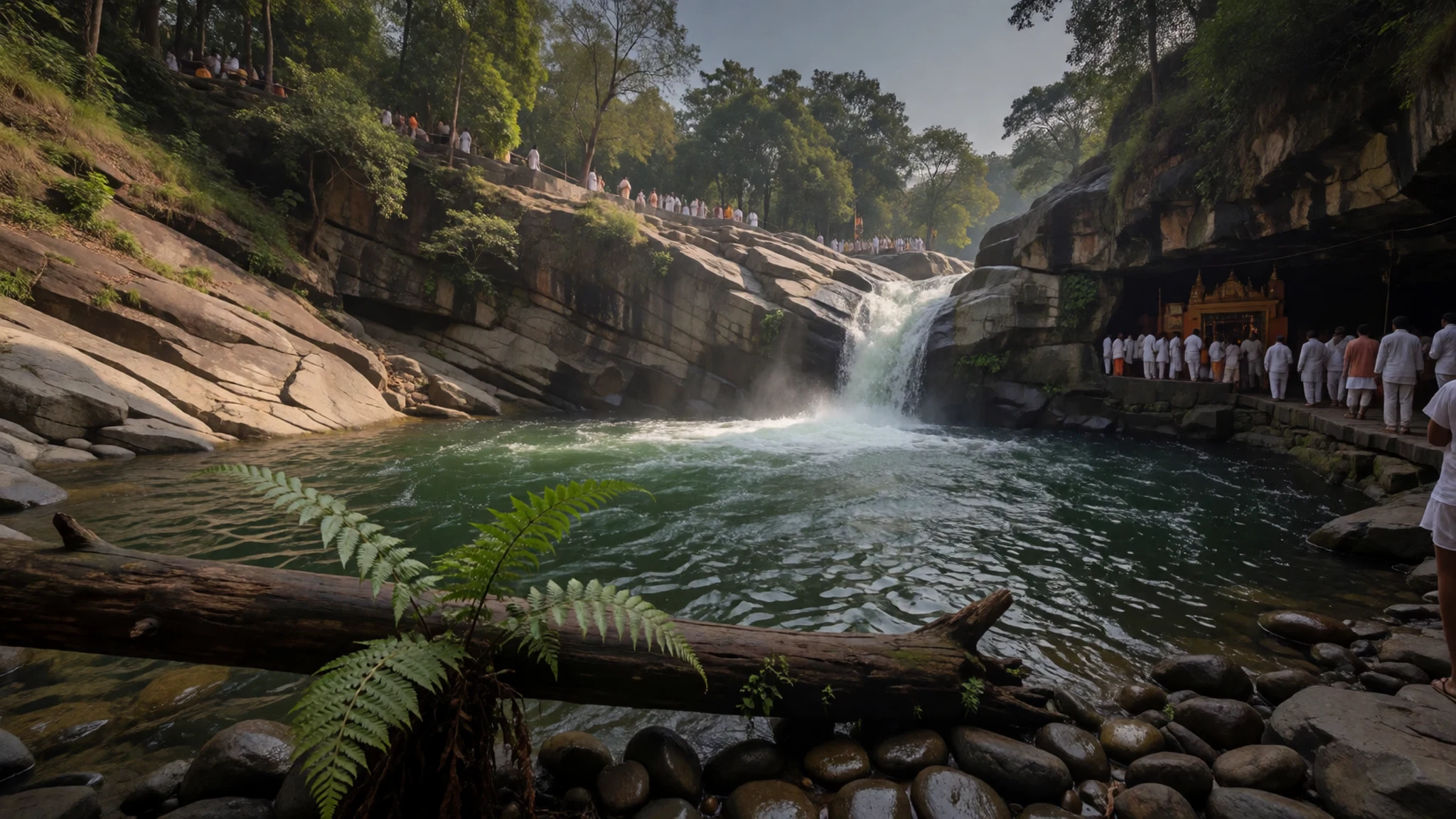
- The forest and ecological park — Around the falls
Around Madhabkunda, the forest, small streams and the ecological park give the visit its picnic character. Shaded paths link the viewpoints, and families settle on the flatter ground to eat. Walking here in the early morning, before the day trippers arrive, is the quietest way to see it.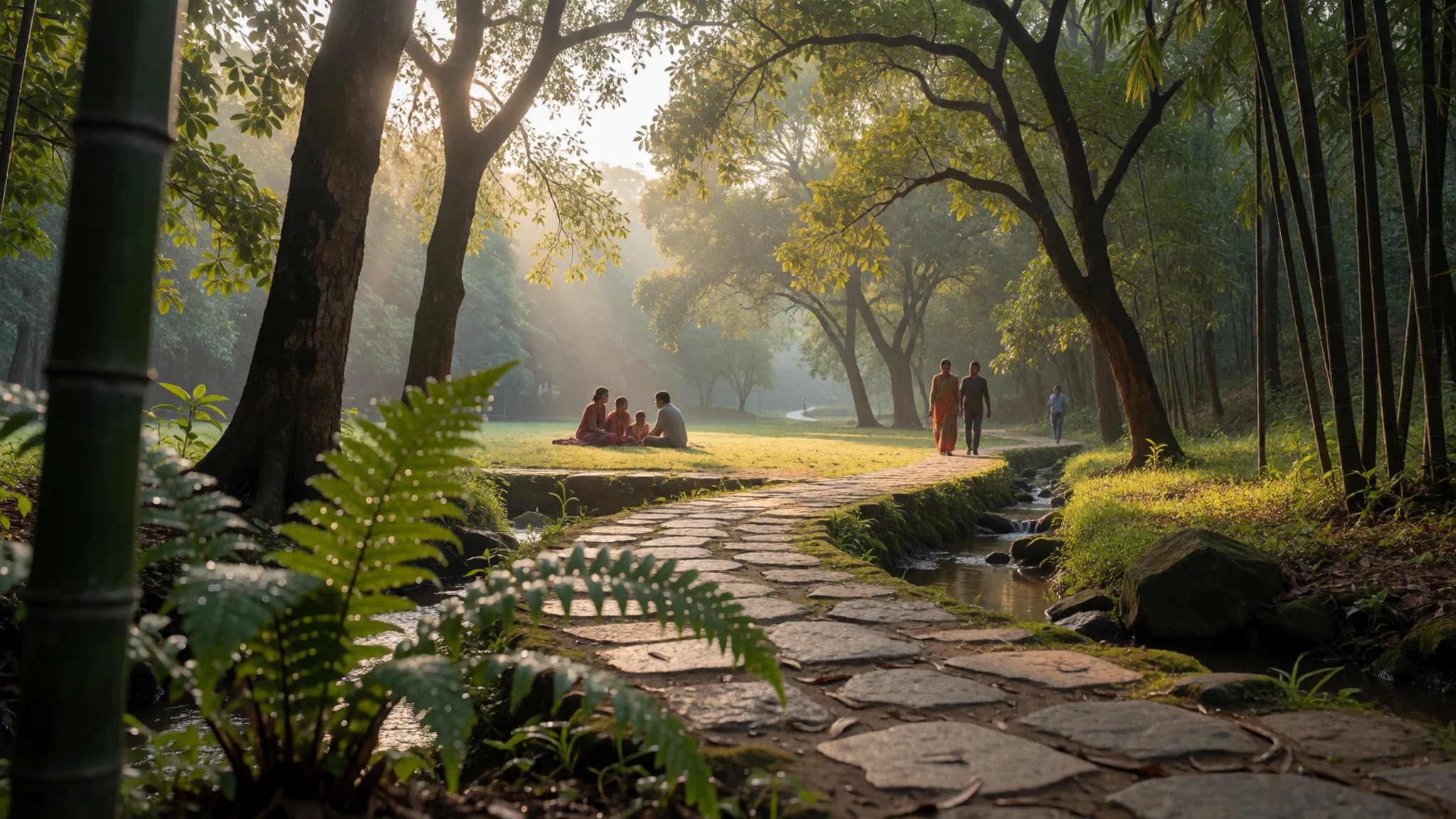
- The Khasi village nearby — Hills near Madhabkunda
Madhabkunda is close to hill settlements of the Khasi community, whose villages are part of the wider landscape of the Sylhet hills. A short visit offers a view of life beyond the waterfall trail. Treat it as a village, not an attraction, and ask before photographing anyone.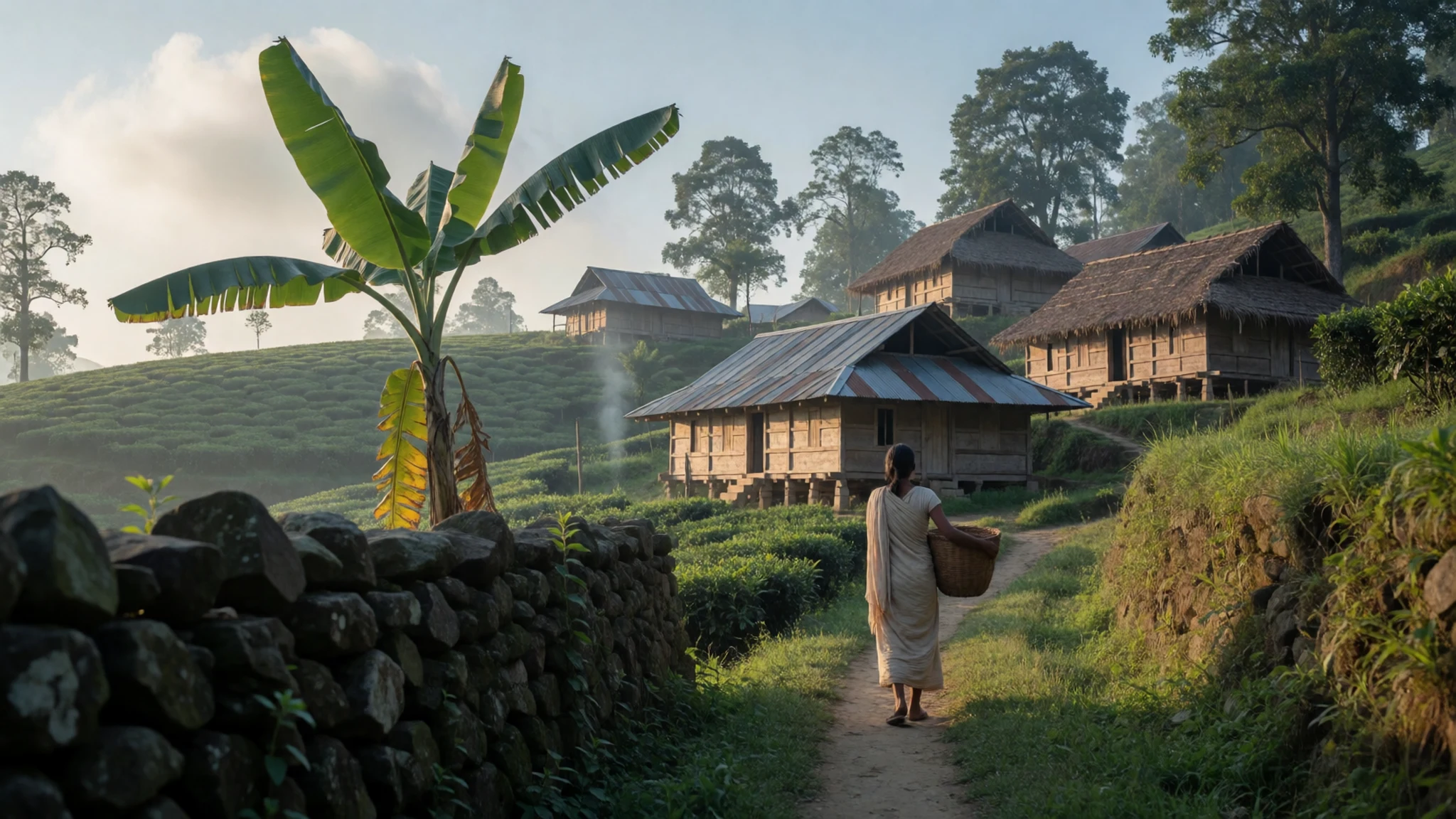
Culture
Madhabkunda is a place where worship and recreation share one path. The Hindu community holds rituals at a temple near the falls every year, with a fair attached, and the cave beside the pool is regarded as a pilgrimage site. On those days the site fills with families who have come as much for devotion as for the view, and the atmosphere is more festive and more crowded than usual.
On ordinary days the mood is different. Bangladeshi visitors come in groups for picnics, bringing food, music and children, and the forest edges turn into small gatherings. The ecological park and the stalls near the entrance cater to this day-out habit, and the culture of the place is largely one of company and shared meals outdoors.
The wider region is also home to the Khasi community, whose hill villages sit in the same forested landscape. Their presence is a reminder that the area is lived in, not only visited, and that the surrounding hills have their own customs and rhythms.
The landscape itself carries meaning. A waterfall that feeds a stream that feeds a wetland is easy to treat as a pilgrimage in miniature, and many visitors walk the whole route from viewpoint to pool to cave in order. Leaving rubbish out of the forest and the water is a form of respect that locals notice and appreciate.
At the temple and cave, remove your shoes where others do, keep your voice low during rituals, and ask before photographing worshippers.
What to wear
Madhabkunda sits in a Bengali-speaking region where traditional dress is still part of everyday and festival wear. Women wear the sari, often in cotton, with silk or finer muslin-style weaves kept for weddings and religious occasions. Men wear the panjabi, a long cotton or silk shirt, over a pyjama or a dhuti for ceremonies. The nearby Khasi communities have their own wrapped garments in woven cloth, worn mainly on festive and community days.
What people actually wear to the falls is simpler. Day trippers arrive in salwar kameez, kurtas, shirts and trousers, and jeans and T-shirts are common among younger visitors. Footwear is mostly sandals and trainers. On temple festival days, more people wear traditional clothes, and the colours in the crowd change noticeably.
A visitor should dress for heat, humidity and wet rock. Light, quick-drying cotton or synthetic layers work better than denim, and a thin waterproof jacket is worth carrying in the monsoon. Shoes need real grip: trainers with a patterned sole or sturdy sandals with straps, not flip-flops, because the steps and rocks near the pool stay slick.
Modesty norms are conservative by most visitors' standards. Shoulders and knees covered is a safe rule for both women and men, and it is essential at the temple and cave. Swimwear is not the norm here, so wading in ordinary clothes that will dry quickly is the sensible choice.
What to eat
- Shatkora beef curry — Local eateries in Moulvibazar town and the roadside near the falls
A Sylhet-region favourite, cooked with shatkora, a sour, aromatic citrus rind that gives the gravy a sharp edge. It is rich and spicy, usually eaten with rice. Look for it at the plain eateries in Moulvibazar town and along the roads towards the falls.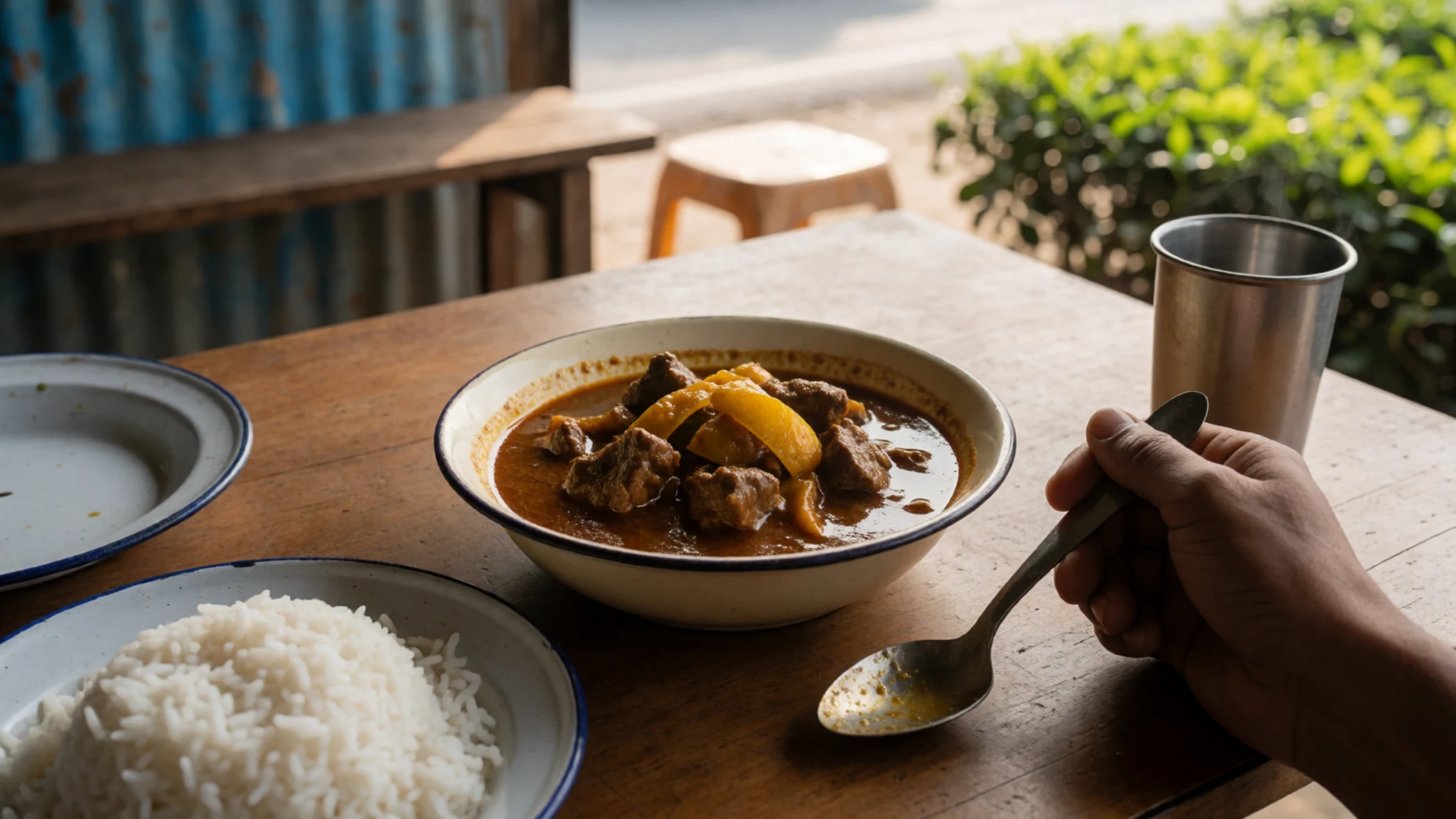
- Seven-layer tea — Tea stalls and tea-garden cafés around Sreemangal and Moulvibazar
This striped tea from the nearby tea country is poured in layers of different colours and strengths, each sip slightly different. It is a good break after the walk. Order it at tea stalls in the Sreemangal and Moulvibazar area, where the tea gardens are close.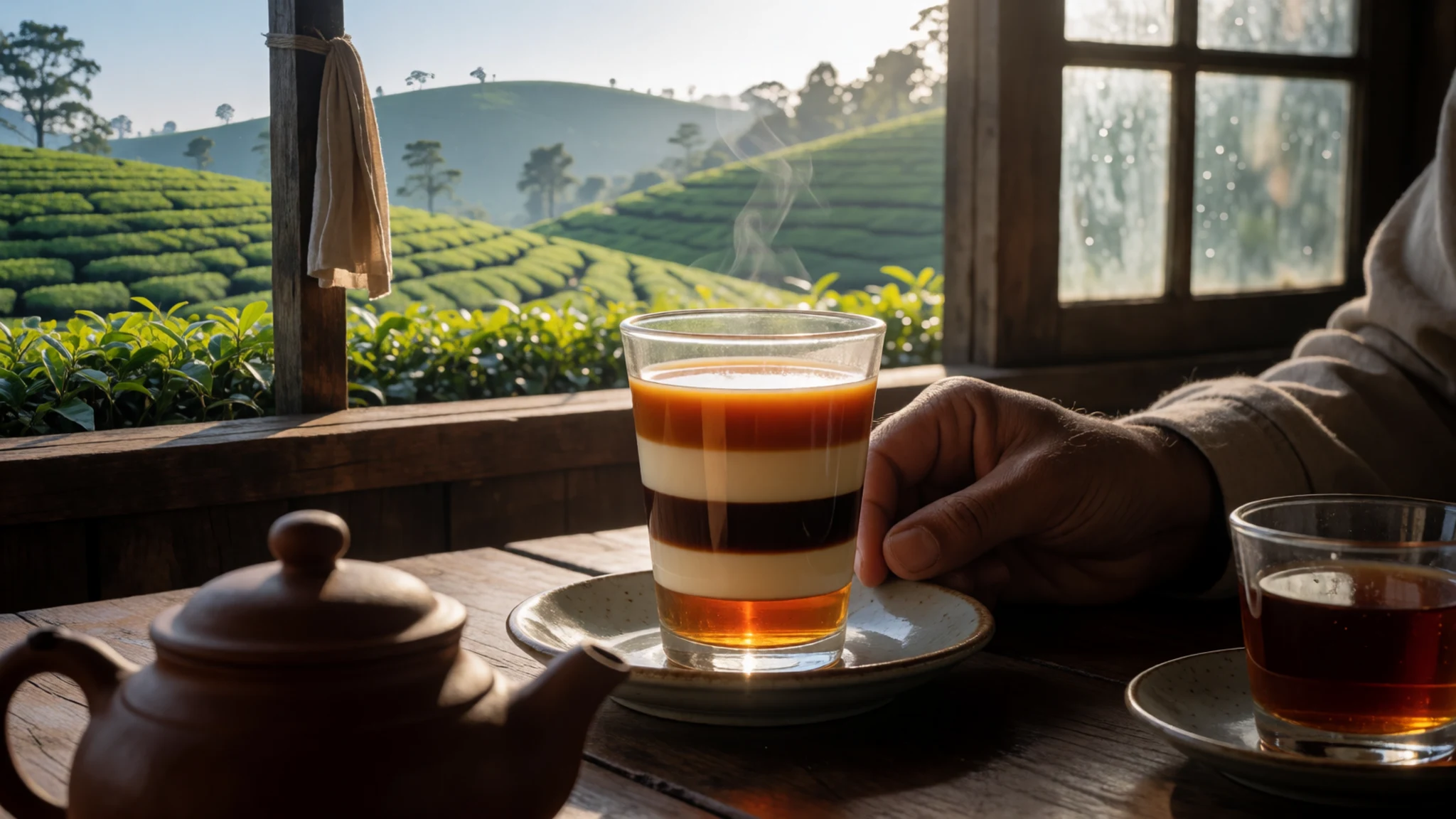
- Khichuri — Simple restaurants and fair stalls near the temple
A one-pot dish of rice and lentils, often spiced and served with fried vegetables, egg or meat. It is the classic comfort meal on a rainy day, and a natural pairing for a monsoon visit. Home-style eateries and festival stalls serve it hot. - Pitha — Fair stalls and village sellers near the falls
Rice-flour cakes and pancakes, steamed or fried, filled with coconut, jaggery or left plain. They are mostly a cool-season treat, sold by village sellers and at fairs. Try them at the stalls that appear around the temple festival. - Fresh pineapple and fruit — Roadside fruit stalls on the road to the falls
The hills of the Sylhet region are known for fruit sold by the roadside, cut and salted or spiced for walkers. It is cheap, cooling and easy to eat on the move. Buy it from roadside sellers on the approach, and peel or cut it in front of you.
Plan it
Best time. October to February for the most comfortable weather and the driest paths. The monsoon months give the fullest, loudest water, but the rock and steps are slippery, the air is humid and the crowds can be dense on weekends.
How long. 1–2
Getting there. Fly to Dhaka (Hazrat Shahjalal International Airport) or to Sylhet, then travel by train or road to Moulvibazar and on to Barlekha, finishing with a local vehicle to the falls. Check current train and bus timetables before travelling.
Budget. low
Tips
- Go early on a weekday to avoid the largest picnic crowds
- Carry cash for stalls, entry points and local transport, as card use is patchy
- Bring drinking water, insect repellent and a rain layer, especially from June to September
- Wear shoes with grip; the steps and rocks near the pool stay wet
- Allow extra time in the monsoon, when roads and paths can be muddy
Etiquette
- Remove your shoes at the temple and cave, and keep your voice low during rituals
- Ask before photographing worshippers or villagers
- Take your rubbish with you and keep food waste out of the forest and the pool
Nearby
Sources
- Wikidata Q3348667 (CC0)
- Wikipedia — Madhabkunda Waterfall (rev 1374416159) (CC BY-SA 4.0)
- Wikivoyage — regional travel notes (CC BY-SA 4.0)
- Photo 01 — Madhabkunda Water-Fall, Maulvibazar, Bangladesh (Rashed-Al-Qayum) (Public domain)
- Photo 02 — Side of Madhabkunda waterfall on 13 August 2022 (Saifulissohel) (CC BY-SA 4.0)
- Photo 03 — Madhabkunda Falls (Muminur Rahman) (CC BY-SA 4.0)
- Photo 04 — Madhabkunda waterfall (Nhasive) (CC BY-SA 4.0)
- Photo 05 — Madhabkunda waterfall in Bangladesh (Balaram Mahalder) (CC BY 3.0)
- Photo 06 — Tribal Village of Khasia Madhobkunda Sylhet Bangladesh 1 (Public domain)
- Photo 07 — Natural heritage site in Bangladesh (Efaz3329) (CC BY-SA 4.0)
- Photo 08 — A photographer loves the sounds and the power of pounding water (Mahfuzulangkon17) (CC BY-SA 4.0)


