Mackinac Island
Mackinac Island, United States
Mackinac Island has banned motor vehicles since 1895, so horse hooves, bicycle bells and lake wind replace engine noise.
The place
Mackinac Island is a small city in Mackinac County, Michigan, where 583 people lived at the 2020 census. The municipality covers the whole island and also Round Island, an uninhabited, federally owned neighbour that belongs to Hiawatha National Forest. A state park takes in much of the main island, so a large share of the land is woodland, bluff and shoreline rather than streets, and the settled part is a compact town around the harbour. The facts record its elevation as 181 m.
What shapes every visit is a local ordinance from 1895 that bans motor vehicles. Ambulances, police cars, fire engines and city service vehicles are exempt, and snowmobiles are allowed in winter, but everyone else moves on foot, by bicycle, on horseback or in a horse-drawn carriage. Roller skates and in-line skates are permitted outside the downtown. The result is a different soundscape: hooves on tarmac, bicycle bells, gulls and wind in the trees. Luggage and supplies travel by cart and dray, so the main street has a working rhythm as well as a holiday one.
A word on crowds: in summer the town fills with day-trippers whenever the ferries land, and the shopping street at midday is slow, loud and heavy with the smell of fudge. Early mornings and evenings, after the last boats leave, are much calmer, and the inland trails and the shore road stay quiet even in July. The water is cool for swimming, even in high summer, so the island suits walking and cycling better than lazy beach days.
Its story
Mackinac Island carries a name older than the French or British presence. Andrew Blackbird, the son of an Ottawa chief who worked as an interpreter for the US government, wrote in 1887 that the island's people were once a small independent group, the Mi-shi-ne-macki naw-go, later tied to the Ottawa. In his account, the Seneca, from the Iroquois Confederacy far to the east, nearly destroyed them in one winter, and only two survived, sheltering in a natural cave. The Ottawa and Ojibwe kept the memory alive in the island's name, which by the 18th century was also given as Michilimackinac and translated as "Great Turtle". It is one man's record of oral history, so it is best read as tradition rather than proven fact.
Europeans came through the fur trade. French Jesuit missionaries noted traders in the region in 1654, and a canoe trip to the island is reported for 1665. Merchants working out of Montreal and Quebec set up posts here and across the Great Lakes, and the business grew very profitable. The facts give 1671 as the settlement's founding date.
For a long time the community was mostly French-speaking, made up of French Canadians and Métis. That shifted after the War of 1812, when US rules limited the role of non-citizens in the fur business and more Anglo-American residents arrived. From 1818 to 1882 the town was the seat of Michilimackinac County; when the county was reorganised as Mackinac County, the seat moved to St. Ignace, and the island turned further towards visitors and summer residents.
What to see
- The harbour town and main street — Downtown, harbour front
Mackinac Island's downtown runs along the harbour, with shopfronts, fudge counters and bike rental yards facing the water. It is the best place to understand the no-motor rule: carriages, drays and cyclists share the road. Visit before the first ferries or after the last for a calmer look.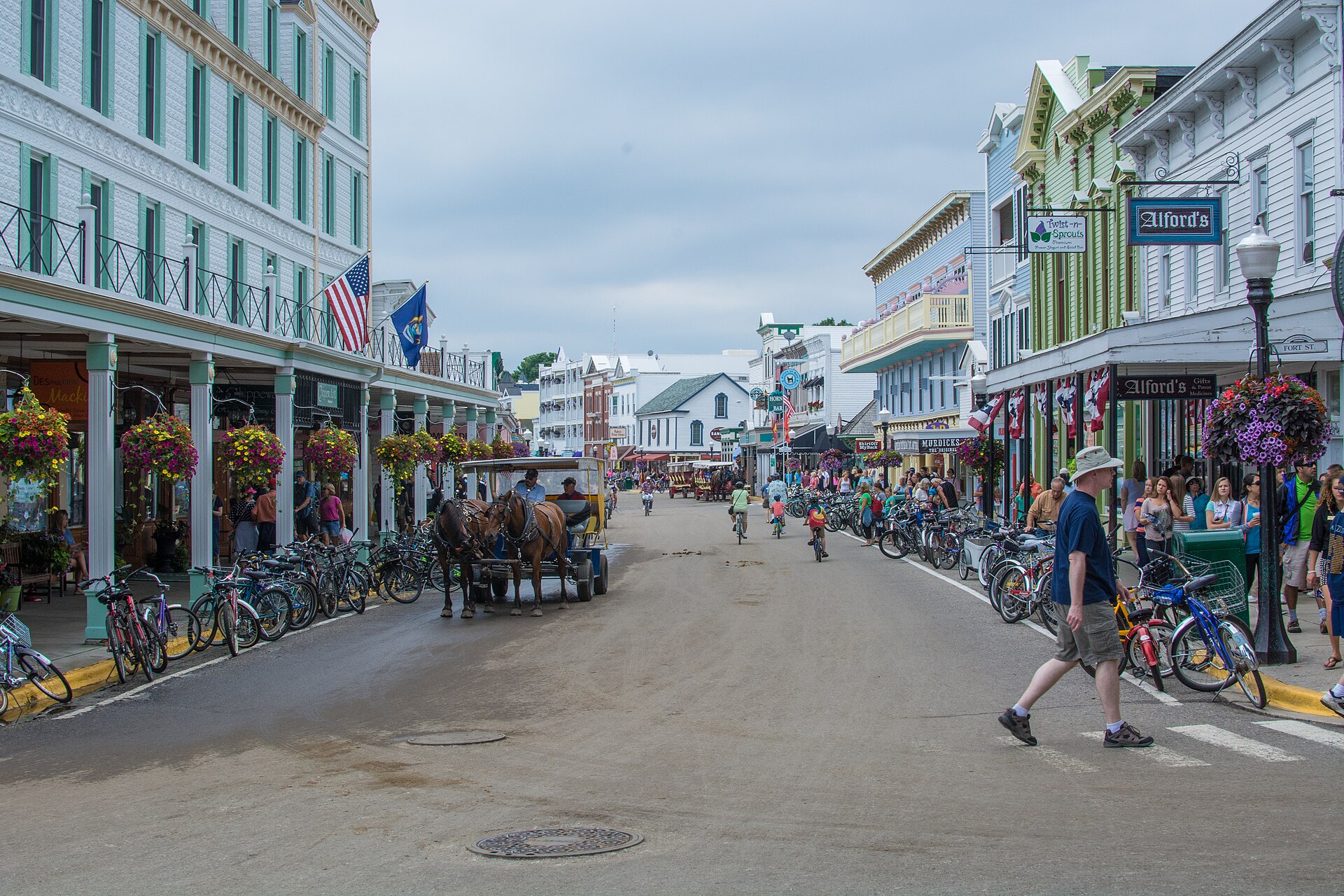
- Arch Rock — Eastern bluff, above the shore road
Arch Rock is a natural limestone span on the island's eastern side, framing a view down to the lake. It sits on a bluff above the shore road and can be reached by bicycle or on foot. Stairs and a viewing point make it an easy stop, though it draws crowds at midday.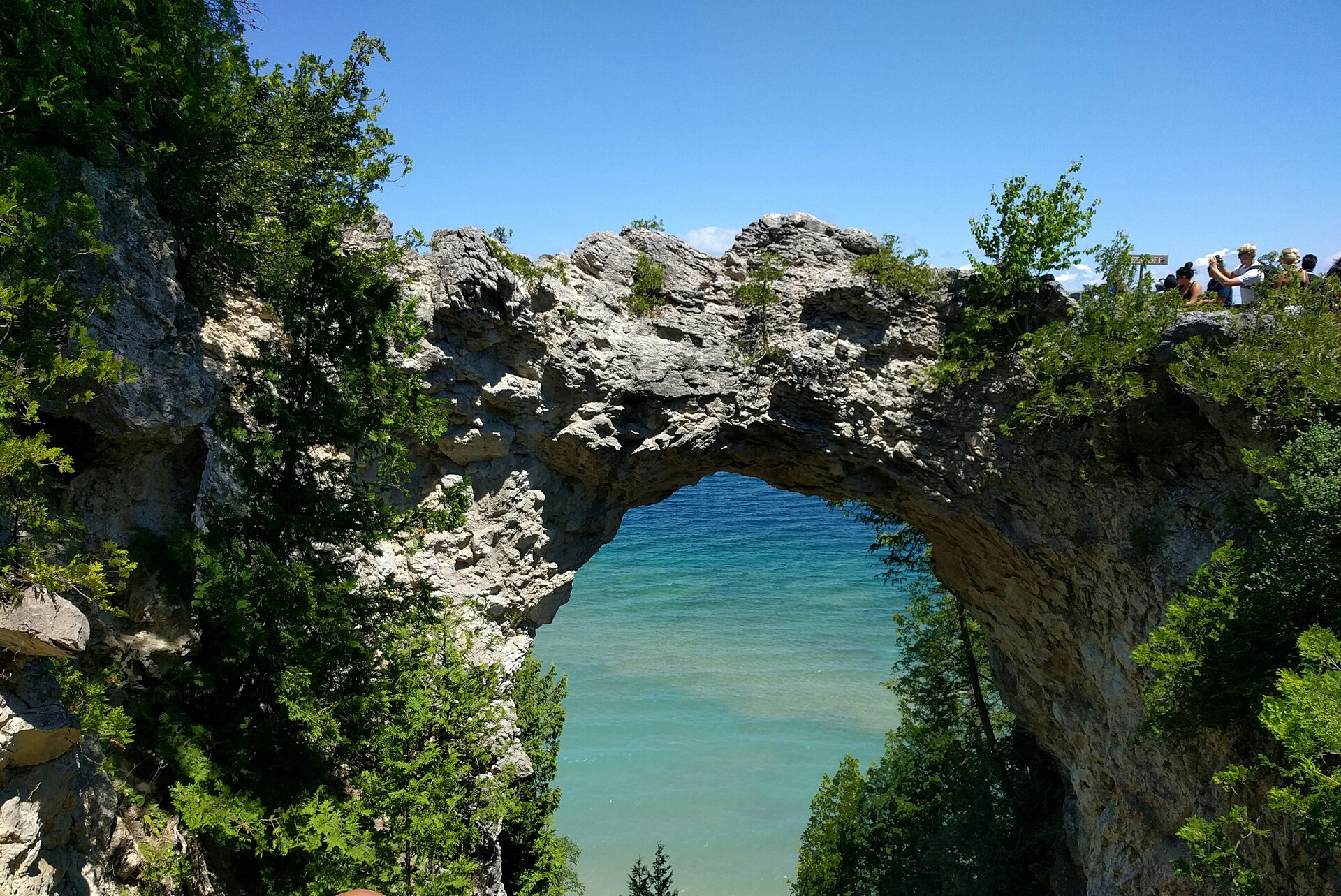
- Fort Mackinac — Bluff above the harbour
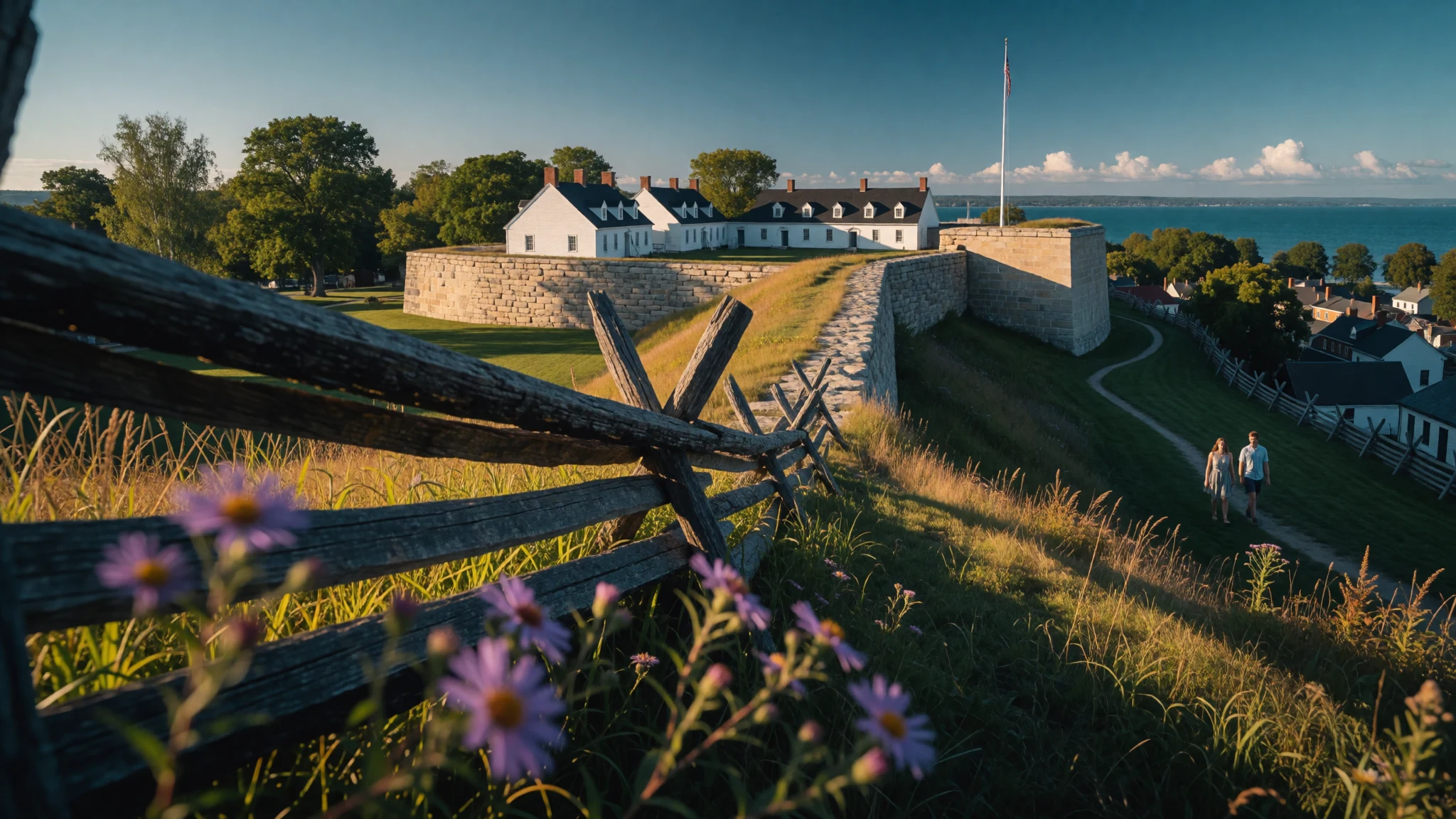
Fort Mackinac stands on the bluff above the harbour and is among the island's listed historic places. Its position explains the island's role in the fur trade and later military history, with views across the town and the water. Opening dates and entry arrangements change, so check the official site before planning around it.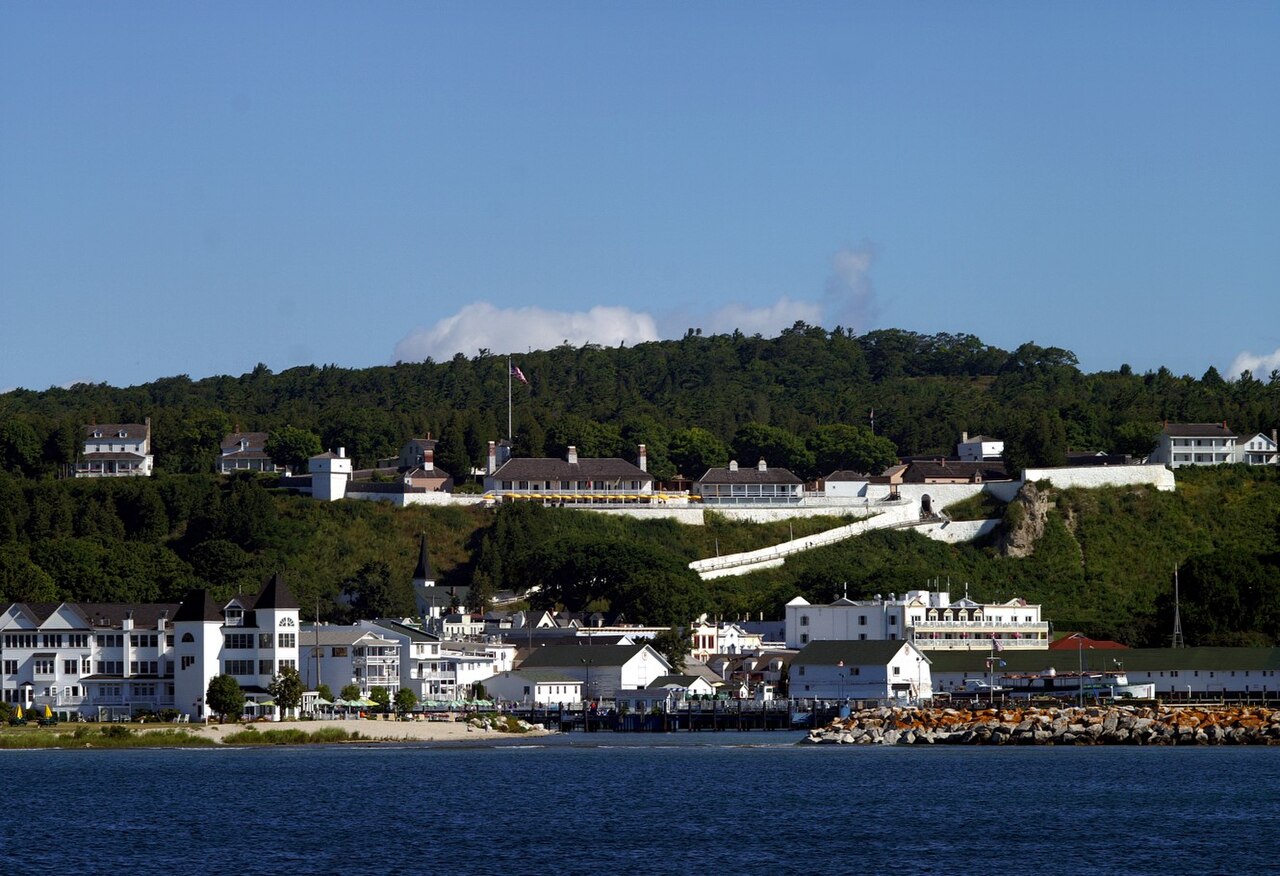
- Grand Hotel — West side of the island
The Grand Hotel is a large historic resort on the west side of the island, recognisable from the water by its long veranda. It is a listed historic place. Access for people who are not guests is controlled, so check the hotel's own site on whether and how day visitors may enter.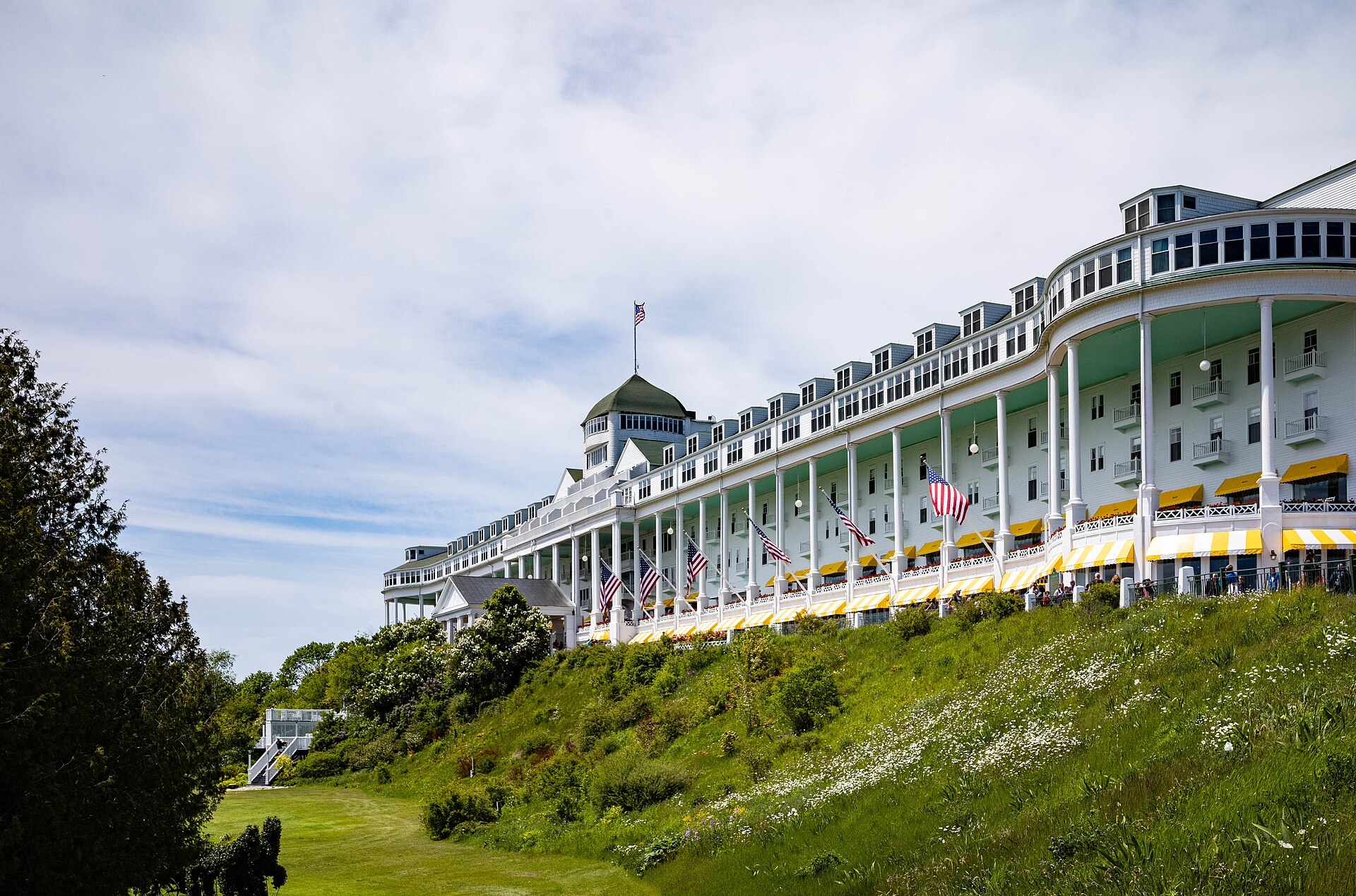
- Round Island and its lighthouse — Offshore, south-east of the town
Round Island lies just off the main island, belongs to Hiawatha National Forest and has no permanent residents. It has two listed historic lights, Round Island Light and Round Island Passage Light, best seen from the water or the main island's southern shore. Ask ferry operators about boat access.
Culture
Mackinac Island's culture is a layered one: Ottawa and Ojibwe heritage, French-Canadian and Métis fur-trade families, later Anglo-American settlers, and a long run as a summer resort. The island's name itself comes from the Anglicised version of an Anishinaabe name, and the older story of the "Great Turtle" still sits behind the place for many people.
The historic buildings reflect those layers. Fort Mackinac, the Mission Church, the Mission House, the Robert Stuart House, the Matthew Geary House and the Indian Dormitory are all listed historic places, as are the Grand Hotel, Round Island Light and the Michigan Governor's Summer Residence. Together they show an island that has served as a trading post, a garrison, a mission, a government centre and a holiday retreat.
The visitor economy has its own traditions. Fudge-making is a local craft, with makers shaping batches on cold marble slabs in shop windows, and the smell and the show are part of the street. Sailing also matters: the island is the finish of two long annual races, the Chicago Yacht Club Race to Mackinac and the Port Huron to Mackinac Boat Race run by the Bayview Yacht Club of Detroit. Each brings crews, families and a festive crowd to the harbour.
When out and about, step aside for horse-drawn drays and carriages, never approach or feed the horses without the driver's say-so, and ring your bicycle bell before passing walkers.
What to wear
Mackinac Island has no single national costume, but its history left clear textile traditions. The Ottawa and Ojibwe made garments and regalia with hide, cloth, ribbonwork and beadwork, and these are still worn at ceremonies and gatherings rather than daily. The fur-trade era added woollen blankets and coats and the woven sash associated with French Canadian and Métis voyageurs, a belt of coloured wool that served as both a tie and a mark of identity.
What people wear now is practical and casual. Residents and seasonal workers dress for bikes, horses and wind: jeans or shorts, sturdy trainers or boots, a fleece or windcheater, and a hat. Many visitors arrive in resort casual, and the grander dining rooms of the big historic resort have their own evening dress expectations, so check the dress code on its website if you plan to dine there.
For a visit, dress in layers. Even in summer the lake breeze can be cool, especially on the water crossing and on exposed bluffs, and the Great Lakes stay cold for swimming. Pack a light waterproof, a sun hat and sunscreen. Wear closed, comfortable shoes with grip: the trails have roots and gravel, the roads carry horse droppings, and the old fort and town have steps and slopes. If cycling, bring trousers or shorts that do not catch in the chain. Modesty is not an issue at the churches and museums; ordinary casual clothes are fine, with a warm layer for cold winter days.
What to eat
- Mackinac fudge — Fudge shops along the main street
Fudge is the island's signature sweet, made in a traditional way by working the hot mixture on cold marble slabs. Chocolate, peanut butter and nut flavours are common. Try the shop counters along the main street, where batches are made in the window. - Upper Peninsula pasty — Casual eateries and pasty shops, island and mainland
The pasty is a crimped pastry parcel of meat, potato and onion, sometimes with rutabaga, brought to Michigan by Cornish miners from south-west England. It is hearty and portable, good before a long bike ride. Look for it at casual eateries and bakeries in town and across the straits. - Maple syrup and maple candy — Sweet shops and breakfast cafés in the downtown
Maple syrup has been made in Michigan for as long as Native American tribes have lived there, and it turns up as syrup, sugar and candy. Buy a small bottle or a bag of candy as a keepsake, or taste it on breakfast pancakes. - Great Lakes whitefish — Harbour-front restaurants and taverns
Whitefish is a freshwater fish from the Great Lakes, usually served pan-fried, broiled or smoked. It is a mild, flaky option if you tire of fudge and pastry. Ask for it at harbour-side restaurants and taverns, where it often appears as a daily special.
Plan it
Best time. June to September for the warmest weather, regular ferries and open shops; September is usually calmer than July and August. Autumn colour tours are popular across northern Michigan in October. Winters are cold and snowy, snowmobiles replace bicycles, and many seasonal businesses close.
How long. 2–3
Getting there. Most international and long-distance visitors fly into Detroit Metro (DTW) or Traverse City's Cherry Capital (TVC), then drive north; I-75 runs to Mackinaw City. The last leg is a passenger ferry from Mackinaw City or St. Ignace, so check the ferry operators' sites for current schedules.
Budget. high
Tips
- Book ferries, accommodation and bike rental well ahead for July and August, and check the island's official site, http://www.cityofmi.org/, for current information
- Arrive early or stay overnight to enjoy the island after the day-trippers leave
- Carry a windproof layer: the lake breeze is cool, even in summer
- Bring a card and some cash, since small shops and carriage tours may differ in what they accept
- Plan your luggage lightly: bags are carried by cart and you will often be walking
Etiquette
- Keep to the right on roads and trails, and give horses and carriages right of way
- Do not feed, touch or approach the horses unless the driver says it is fine
- Take litter back to a bin and stay on marked trails in the state park
Nearby
Sources
- Wikidata Q2355628 (CC0)
- Wikipedia: Mackinac Island, Michigan (rev 1379815130) (CC BY-SA 4.0)
- Wikivoyage: Michigan (rev 5261615) (CC BY-SA 4.0)
- Photo: Mackinac Island's main town, looking west — n8huckins (CC BY-SA 4.0)
- Photo: Arch Rock-Mackinac Island — Viplav Valluri (CC BY-SA 4.0)
- Photo: Grand Hotel (Michigan) — RB Photo (CC BY 2.5)
- Photo: Fort Mackinac on Mackinac Island — Drdpw (CC BY 3.0)
- Photo: Mackinac Island — RB Photo (CC BY 2.5)
- Photo: Mackinac Island (city), MI — Notorious4life (CC0 1.0)
- Photo: Relief map of Michigan, USA — Nzeemin (CC BY 3.0)
- Photo: Relief location map of the USA — Uwe Dedering (CC BY 3.0)


Wildlife
- Gulls (animal)
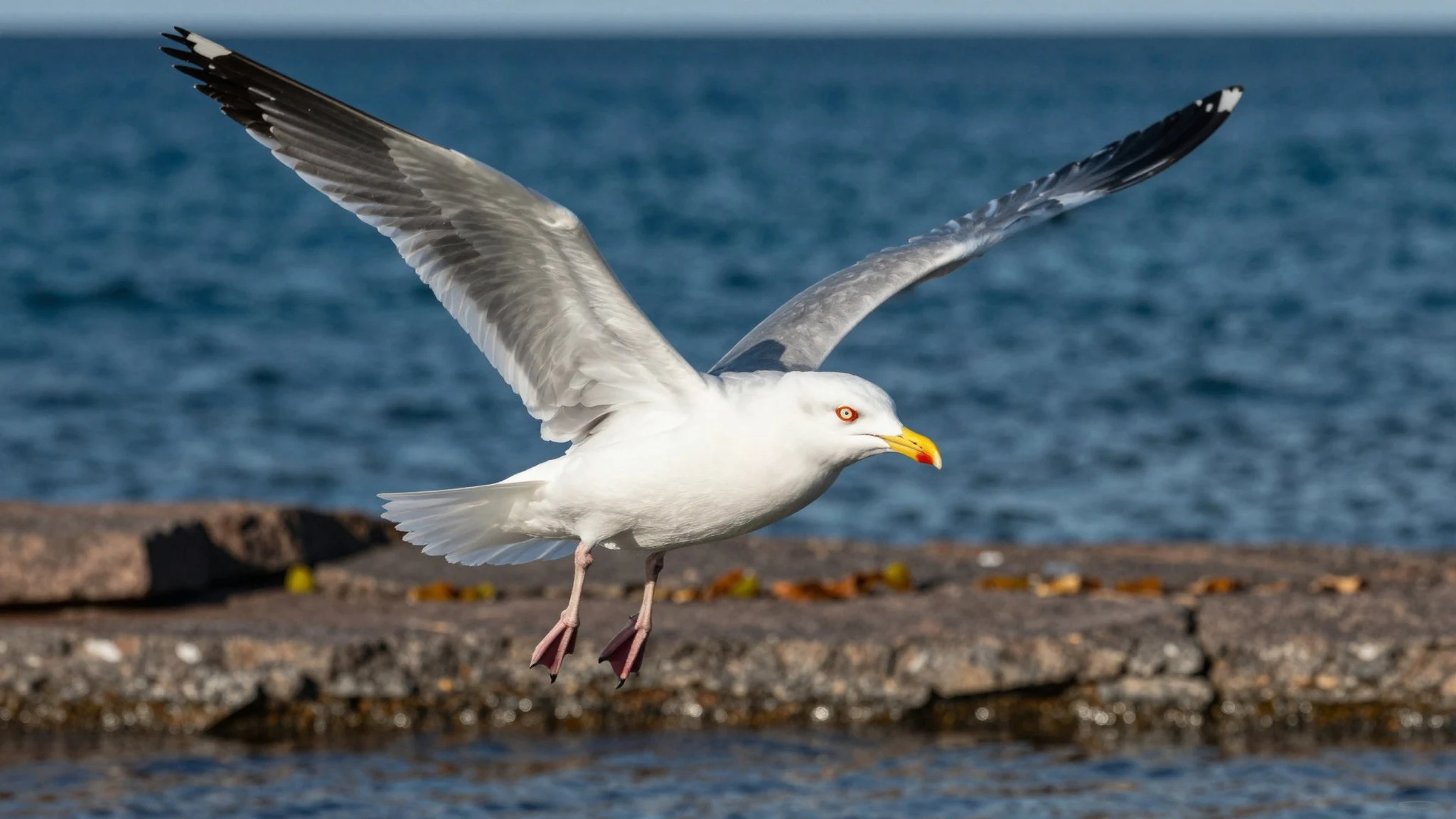
The herring gull is a big seabird whose cry says 'seaside' to everyone who hears it. The name actually covers several close relatives in the Larus group, which scientists once counted as a single kind. On Mackinac Island its calls are part of the gentle soundscape, mingling with clopping hooves, ringing bicycle bells and wind in the trees. Nothing here says when or where it is best seen, so simply listen as you wander. Watch from a respectful distance, keep quiet, and never feed it.