Luba
Luba, Equatorial Guinea
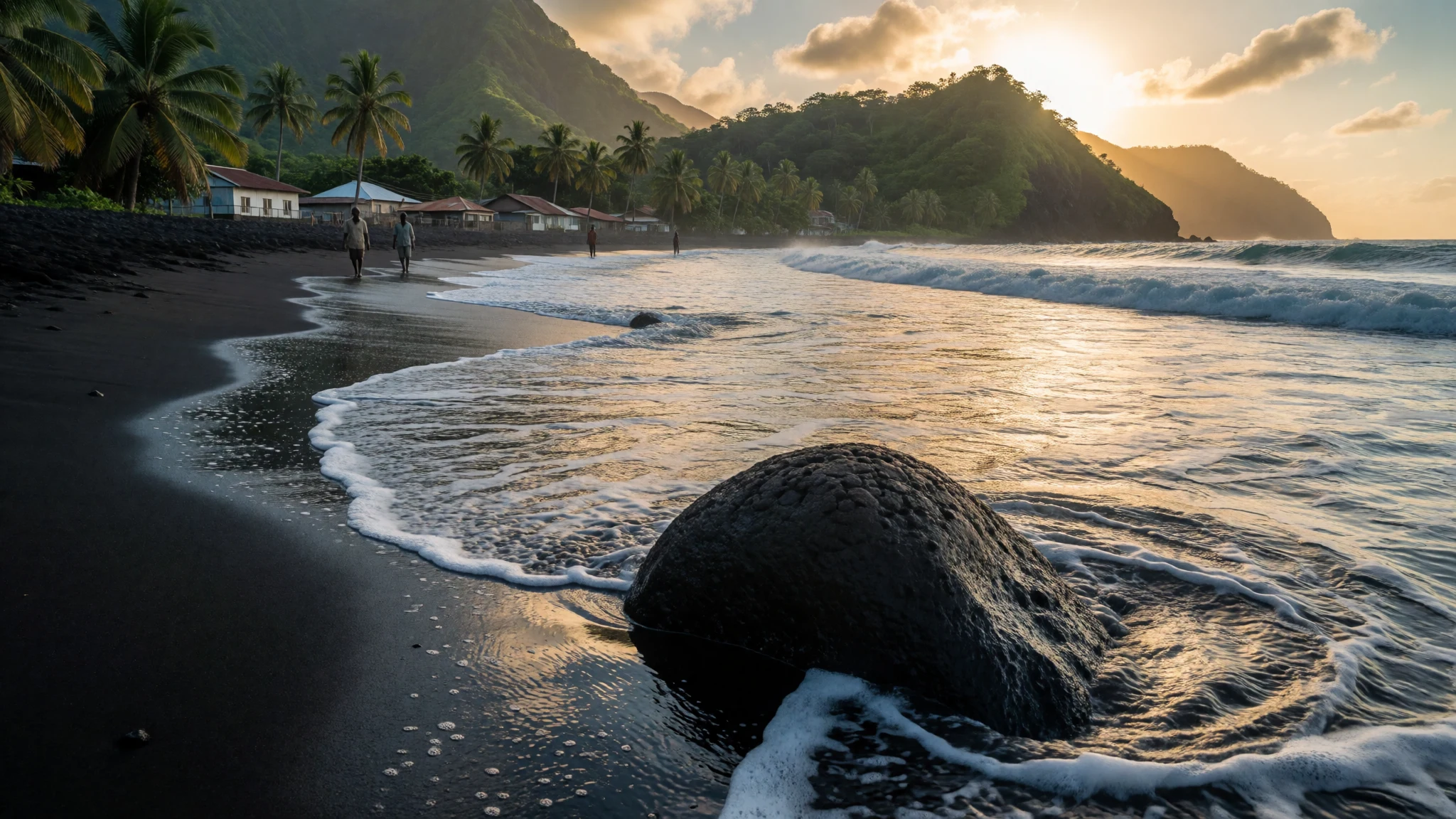
Luba is a working port town on Bioko's west coast, where beaches, forested volcanic slopes and a colonial hospital sit within an hour of Malabo.
The place
Luba is a small port town on the west coast of Bioko, the volcanic island in the Gulf of Guinea that forms part of Equatorial Guinea. About 7,700 people live here, at an elevation of 181 m, with forested volcanic peaks rising behind the bay. It was once called San Carlos, and older maps and some older residents still use that name.
The town is not a resort in the usual sense. Its main business is shipping: timber has long left from this coast, and a modern free port now handles larger vessels and supplies for the offshore oil industry. That gives Luba a practical, slightly industrial edge, with lorries, port workers and fuel traffic sharing the shoreline with fishing boats and the beaches.
The beaches and the colonial hospital are the things travellers are usually pointed to. There is little in the way of a polished visitor scene, so the pleasure here is in the setting itself: warm sea, dark volcanic ground, dense green hillsides and a lived-in town that does not perform for outsiders.
Getting here is simple by local standards. A main road links Luba with the capital, Malabo, and the drive takes about an hour, which makes the town workable as a day trip or a short stay. A newer road project aims to push on across the island's interior towards Ureca on the south coast, passing through the Luba Crater Scientific Reserve, so the wild country behind the town is slowly becoming easier to reach. Expect heat, humidity and sudden rain at most times of year, and expect to plan ahead rather than turn up and improvise.
Its story
Luba's recorded history begins at sea. In 1471 the Portuguese explorer Fernando Po sighted the bay while working along the Gulf of Guinea, and the island later carried his name. For roughly three centuries afterwards the coast was mostly a landmark for passing ships rather than a place anyone settled.
That changed in 1778, when a Spanish expedition under the Count of Argelejos came ashore at Boloko Bay and claimed the territory for the Spanish crown. The settlement founded then was named San Carlos de Luba, and the San Carlos part of the name stayed in use for a long time before the town became simply Luba.
Under Spanish rule the village stayed small. Its sheltered bay made it a convenient point for sending timber and farm produce off the island, and at times it served as a modest local centre for trade and for visitors who came for the tropical setting. The colonial hospital that survives in town is a physical reminder of those years.
The next big shift came in 1999, when a free port opened close to the town. Its deep water takes ships that are too large for comfort elsewhere, and it eases pressure on the busy harbour at Malabo by supplying fuel, water and other materials to vessels working the oil industry. More recently, a planned road over the island's volcanic interior to Ureca, crossing the Luba Crater Scientific Reserve, has been moving from idea to construction.
The town today carries three layers at once: a Portuguese explorer's name on the island, a Spanish founding, and an industrial harbour that links a small west-coast community to global shipping.
What to see
- Luba bay and waterfront — Town centre and shoreline
The bay is the reason the town exists, and the waterfront is the best place to get oriented. Fishing boats, port activity and the green slopes behind give a clear picture of how Luba works. Go early, when it is cooler and the light is soft, and keep cameras away from port installations.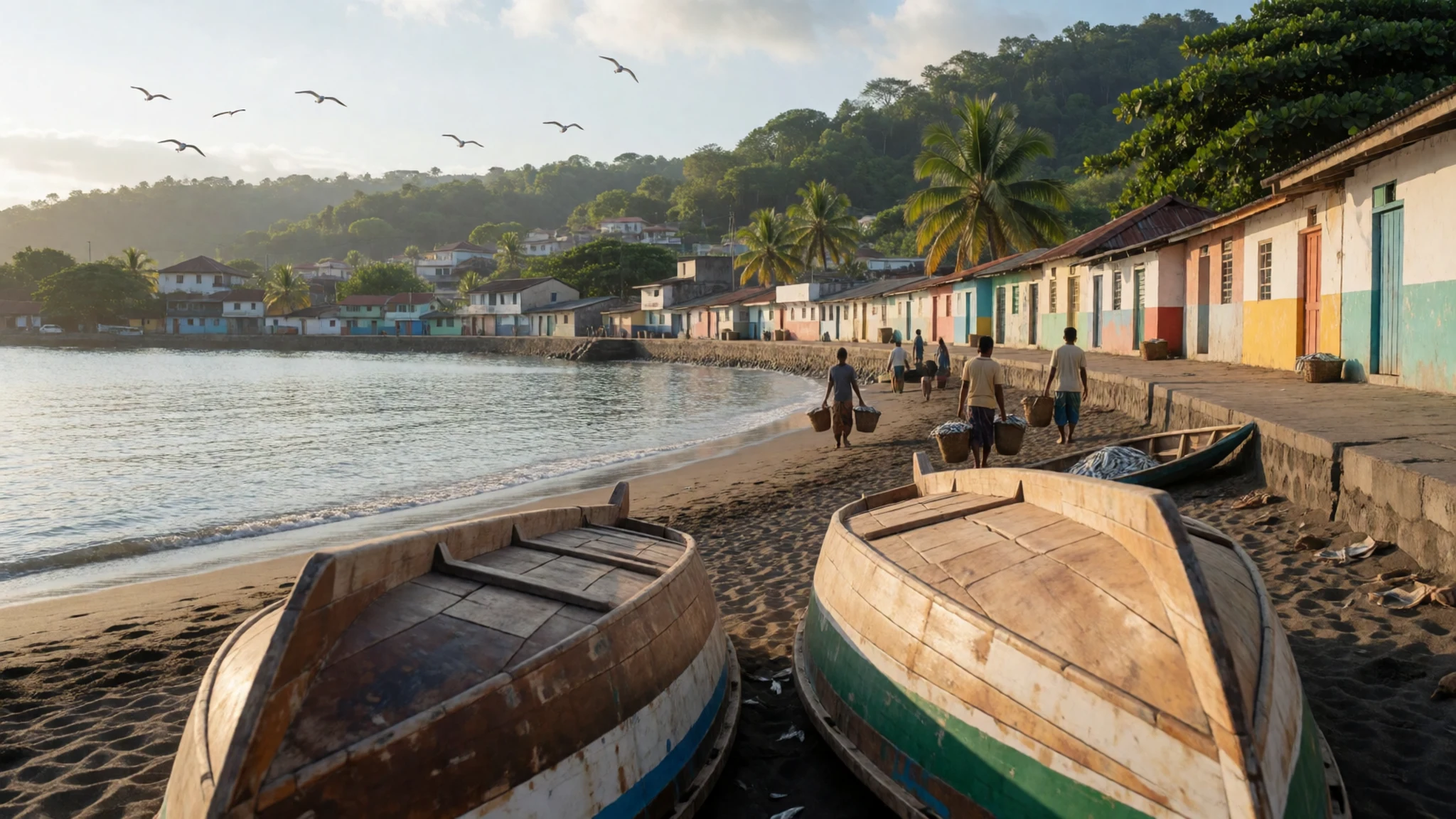
- Luba's beaches — Coast around Luba
Several beaches lie along the coast near the town, with dark volcanic sand and forest close behind. They are quiet compared with resort coasts, and facilities are minimal, so bring water and food. Ask locally about currents before swimming, as Atlantic swell can be strong on this side of the island.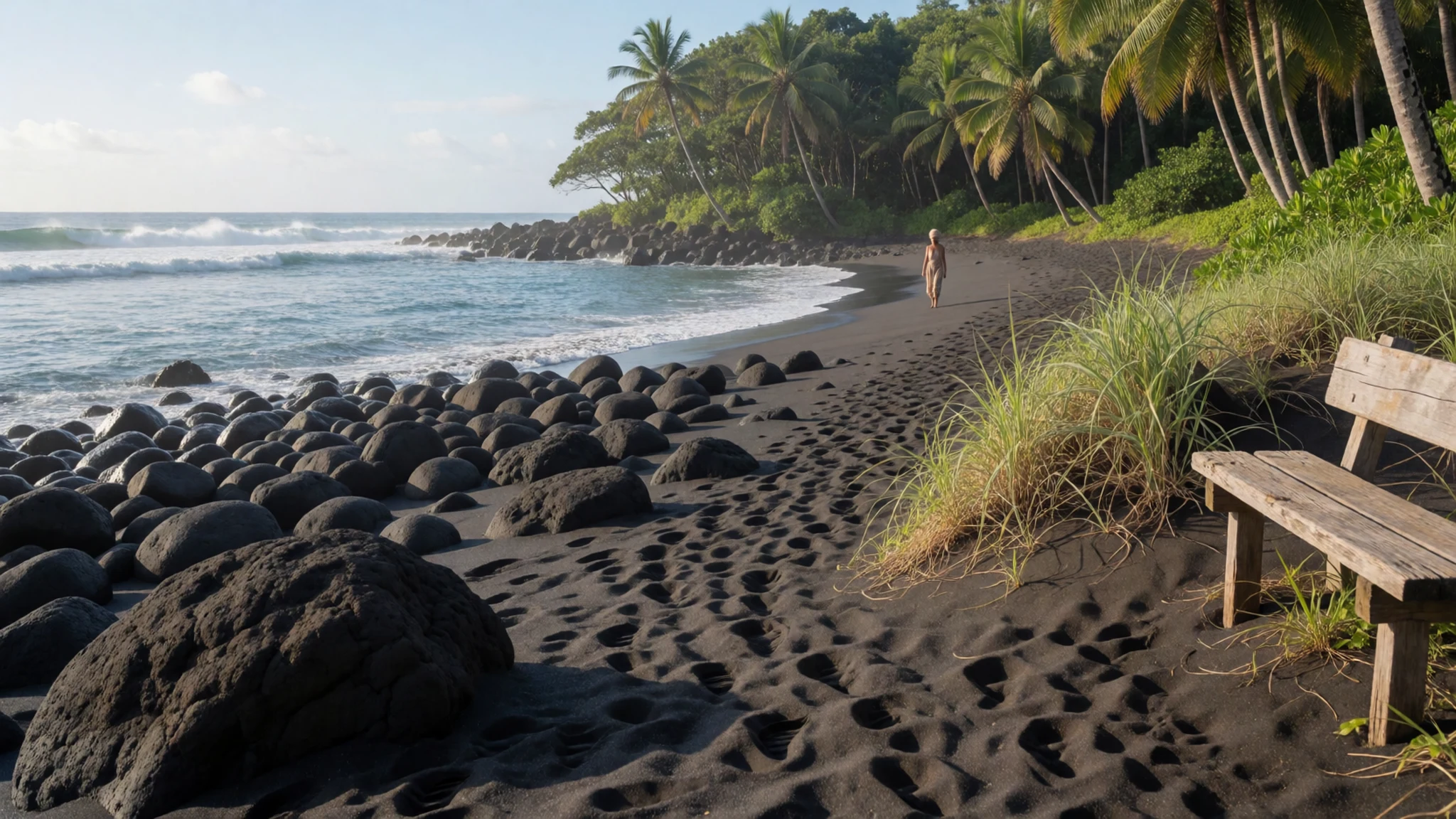
- The colonial hospital — Within the town
A hospital from the Spanish period is one of the few built landmarks travellers are directed to. It is best seen as a piece of architecture and local history rather than a formal attraction. Look from outside, keep respectful distance from patients and staff, and ask before taking any photographs.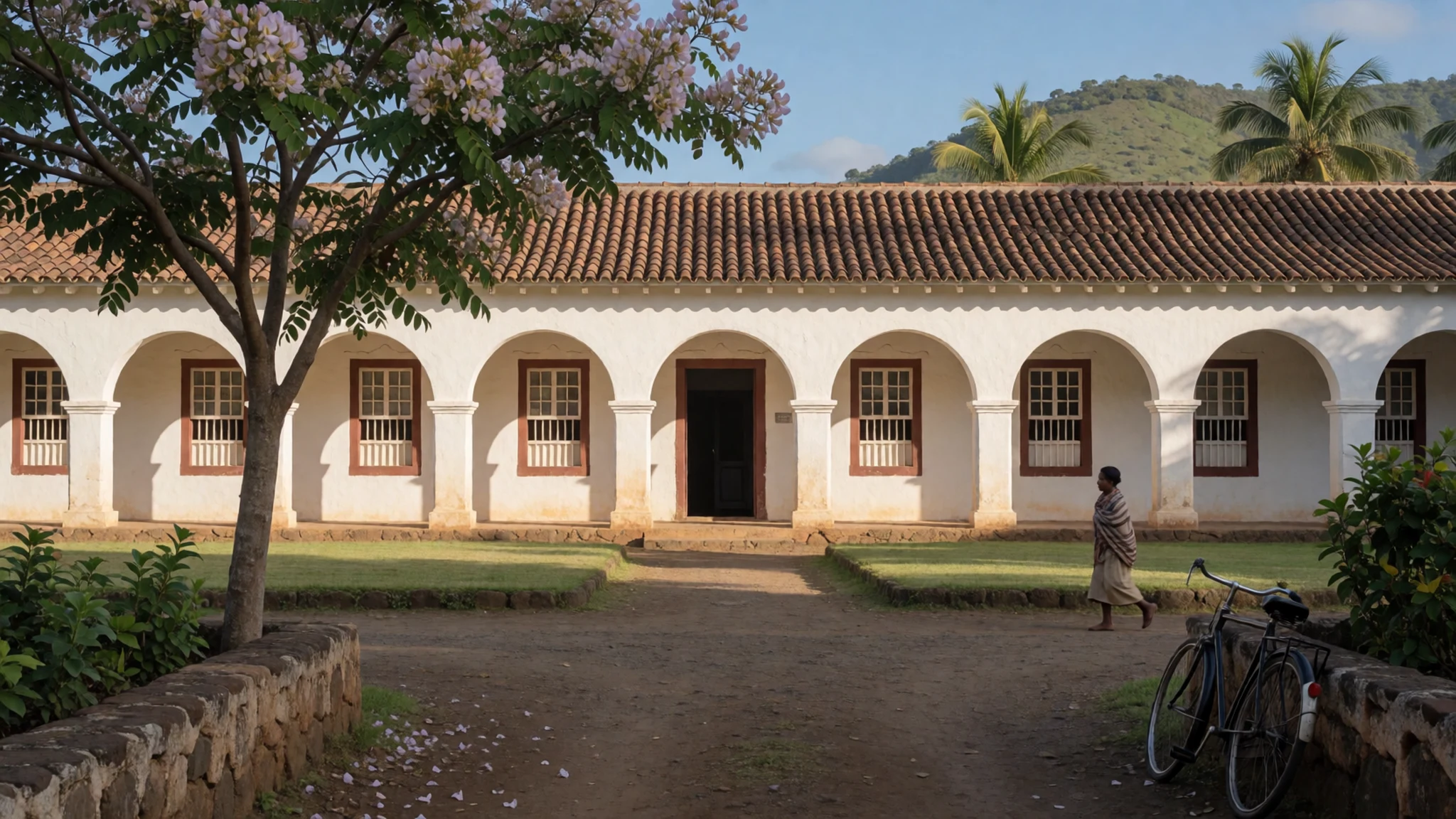
- The free port — Just outside the town
The deepwater port opened near the town in 1999 and now shapes much of Luba's economy. Ships, cranes and supply vessels give a different view of Bioko from the usual island postcard. It is an operating industrial site, so do not assume access or photography is allowed; ask before pointing a camera.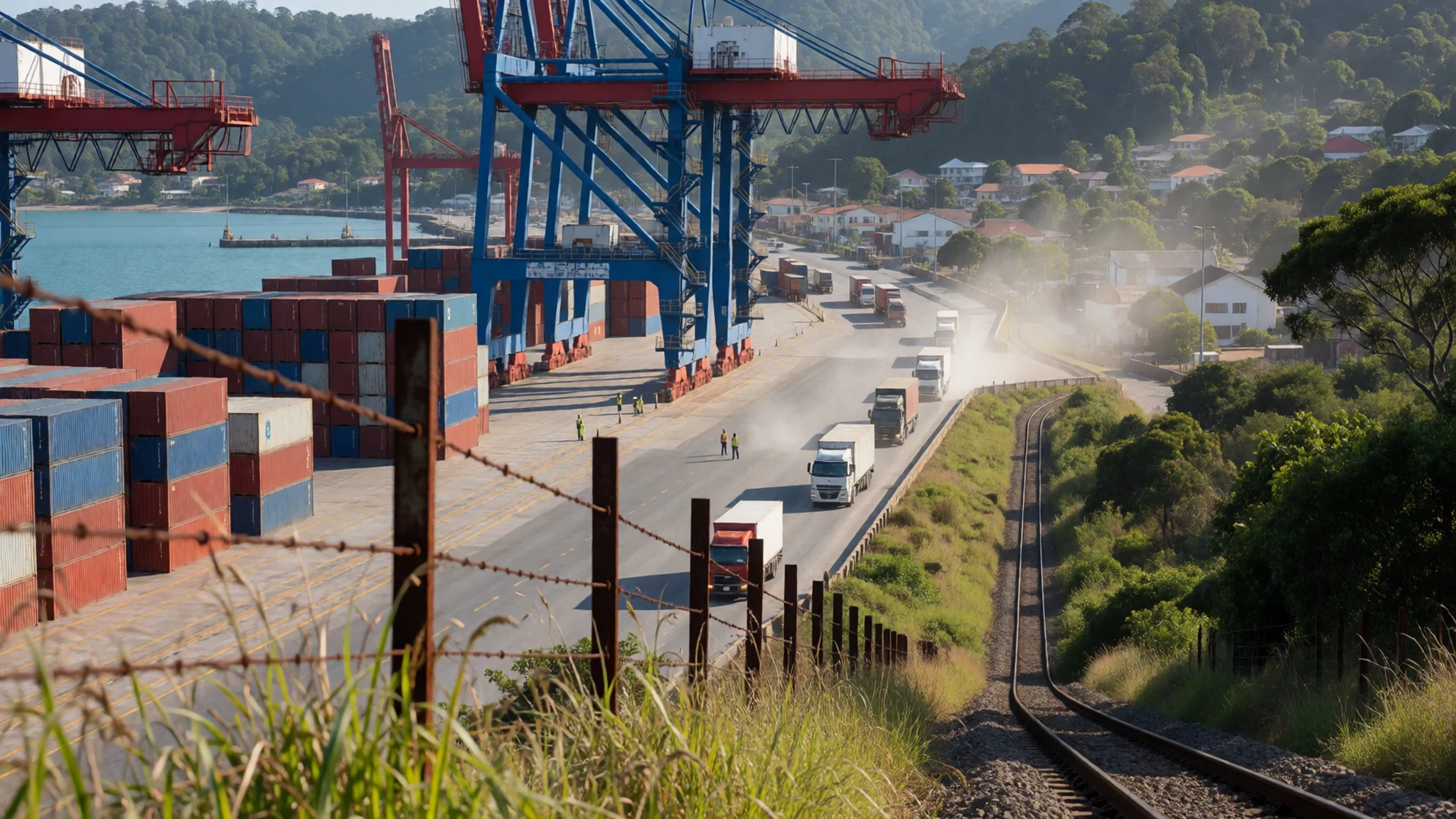
- Luba Crater Scientific Reserve — Inland and south of Luba
Behind the town, volcanic slopes rise into protected forest, and a new road is intended to cross it towards Ureca on the south coast. Conditions and access can change, and this is a scientific reserve rather than a park with facilities. Check ahead with local authorities or an experienced guide before going.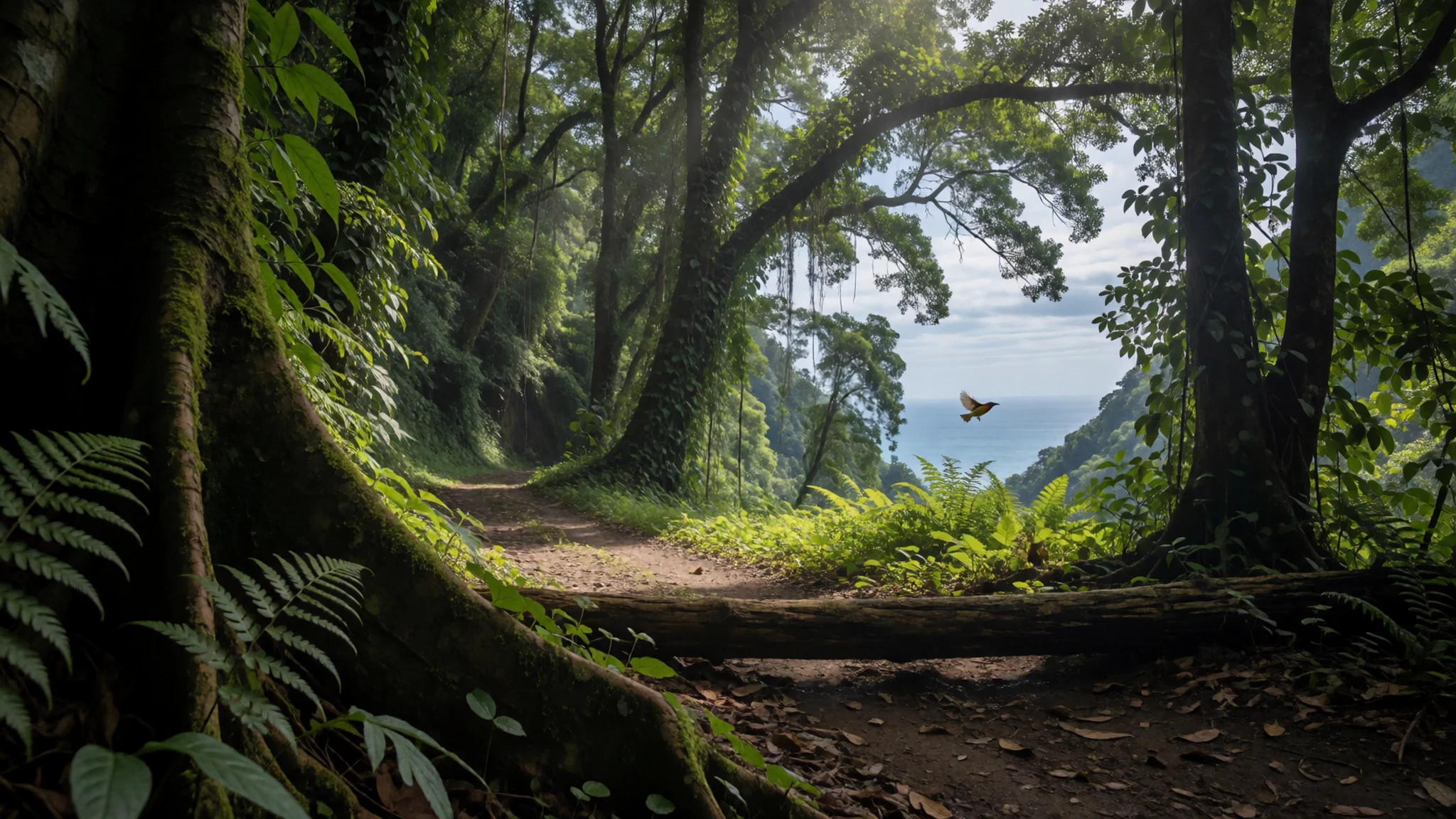
Culture
Luba sits on an island where several histories overlap. Bioko's long-standing Bubi communities, later arrivals from the mainland including Fang people, and a Spanish colonial past all shape daily life. Spanish is an official language of Equatorial Guinea, and French and Portuguese are also used officially, so greetings in Spanish are the easiest way in. Catholic churches are a visible part of towns on the island, and Sunday mornings tend to be quiet and well dressed.
Luba is a working town rather than a stage set, so culture here is mostly everyday. Expect fishing, port work, small shops and neighbours who know each other. Conversation is generally polite and unhurried, and a proper greeting before asking for anything goes a long way. Visitors are few, so people may be curious, and a smile and a few words in Spanish are usually met warmly.
Official attention matters more than in many places. Equatorial Guinea has checkpoints on roads, and officials may ask to see identification, so carrying a copy of your passport and entry papers is sensible. Ports, government buildings, military posts and anything that looks like security infrastructure are sensitive subjects, and photographing them can cause real trouble.
Ask permission before photographing anyone in Luba, and never photograph the port, officials or checkpoints.
What to wear
Dress in Luba reflects a mix of local traditions, Spanish colonial influence and West and Central African textile habits. Traditional dress varies by community. Among Bubi and Fang families, wrapped cloth, tailored shirts and dresses made from printed cotton are common for celebrations, church and family events. Wax-print cotton, brightly patterned and sold by the length, is a typical choice, and many people have outfits made up by a local tailor.
Everyday clothing is simpler and shaped by the heat. Most people wear light cotton shirts, T-shirts, jeans or trousers, and dresses or skirts for women, with sandals or trainers. Port workers wear practical overalls and boots. On Sundays and for formal occasions, smart clothes are the norm: collared shirts and trousers for men, dresses or tailored outfits for women.
Visitors should dress for a hot, humid, rainy climate while staying modest in town. Light, quick-drying cotton or linen works well, with a shirt that covers the shoulders and shorts or skirts that reach the knee when walking through the town rather than on the beach. Carry a light waterproof, since showers can arrive suddenly. Sandals are fine for the shoreline, but closed shoes with a good grip are better for forest tracks and wet volcanic rock. Add a hat, sunscreen and insect repellent. Swimwear belongs on the beach, so cover up when walking back into town or entering a church.
What to eat
- Grilled fish with fried plantain — Small eateries near the waterfront
Fish landed along this coast is often grilled over charcoal and served with slices of fried plantain and a hot pepper sauce. It is simple, filling and usually the freshest thing on offer. Look for it at small eateries near the shore.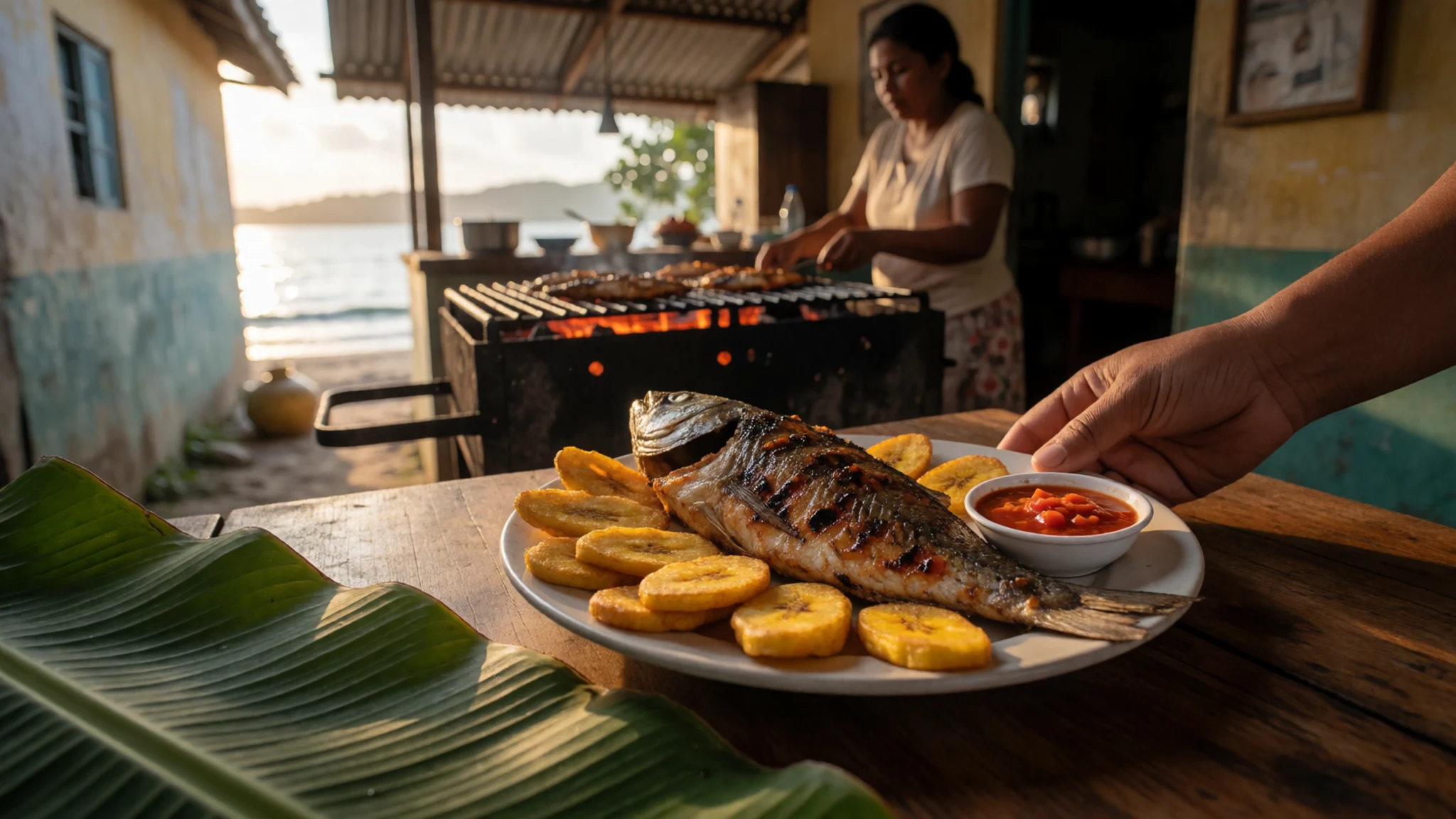
- Pepper soup — Local eateries and family kitchens in town
A thin, fiery broth made with fish or meat and spices, common across the Gulf of Guinea. It suits wet, humid days and is usually eaten slowly with bread or cassava. Ask how hot it is before ordering.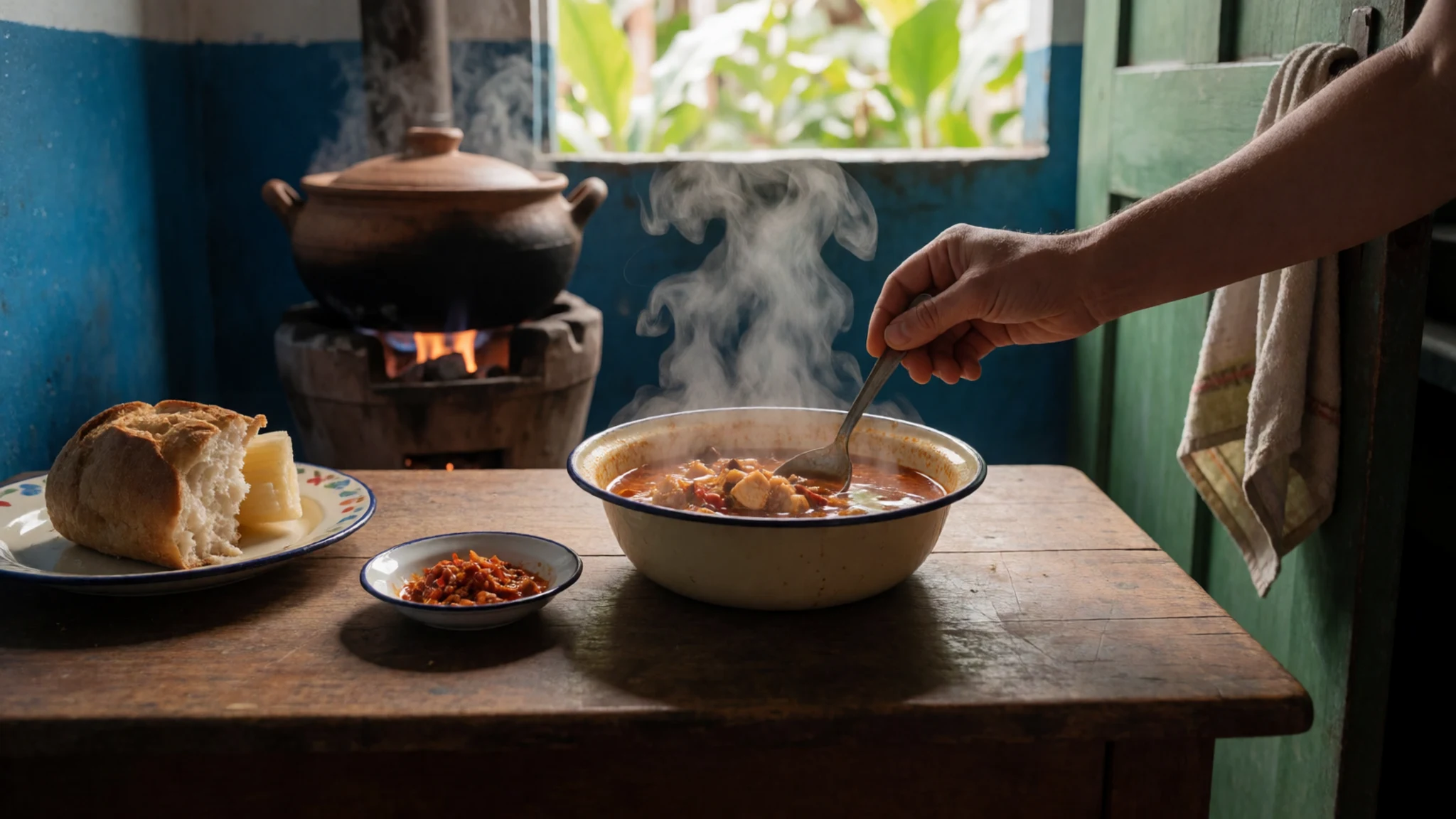
- Cassava — Roadside stalls and market tables
The root is boiled, pounded or fermented into sticks and dough-like portions that go with stews and sauces. It is a staple across Bioko and tastes mild, with a slightly sour edge when fermented. Good for soaking up sauce. - Peanut-based stew — Home-style eateries in town
Groundnuts are ground into a rich, savoury sauce for chicken, fish or vegetables, often served with rice or cassava. It tends to be hearty, so it works as a main meal after a day on the beach. - Tropical fruit — Roadside sellers and the markets in Malabo
Bananas, pineapple, papaya and similar fruit are sold by the roadside and at markets, depending on season. They are cheap, easy to carry and welcome in the heat. Wash or peel anything before eating.
Plan it
Best time. December to February is generally the drier stretch on Bioko and the most comfortable for beaches and forest roads. The rest of the year is hot, humid and often wet, with heavy rain on the volcanic slopes behind the coast.
How long. 1–2
Getting there. Fly to Malabo, the main gateway on Bioko, then travel by road to Luba, which takes about an hour by car. Check current road conditions locally before setting out, and note that the town can also be reached by sea.
Budget. high
Tips
- Arrange entry paperwork well ahead and carry copies of your passport and visa
- Start early to avoid midday heat and afternoon downpours
- Carry cash, as cards may not work in a small port town
- Bring plenty of drinking water, sunscreen and insect repellent
- Ask local contacts or a guide before heading into the crater reserve
Etiquette
- Ask before photographing people, and never photograph the port, officials or checkpoints
- Greet people first, ideally in Spanish, before asking for help
- Dress modestly in town and at church, saving swimwear for the beach
Nearby
Sources
- Wikidata Q985548 (CC0)
- Wikipedia: Luba, Equatorial Guinea (rev 1385874719) (CC BY-SA 4.0)
- Wikivoyage: Luba (rev 5311156) (CC BY-SA 4.0)
- Ansicht von Luba — Denis Barthel (CC BY 3.0)
- A Hight Sit And Looked Away — ---=XEON=--- (CC BY 3.0)
- Air Ocean — ---=XEON=--- (CC BY 3.0)
- Air Sea — ---=XEON=--- (CC BY 3.0)
- All — ---=XEON=--- (CC BY 3.0)
- Alone — ---=XEON=--- (CC BY 3.0)
- And By The Sky Run White Horse — ---=XEON=--- (CC BY 3.0)
- Celebrated — ---=XEON=--- (CC BY 3.0)


