Mbini
Mbini, Equatorial Guinea
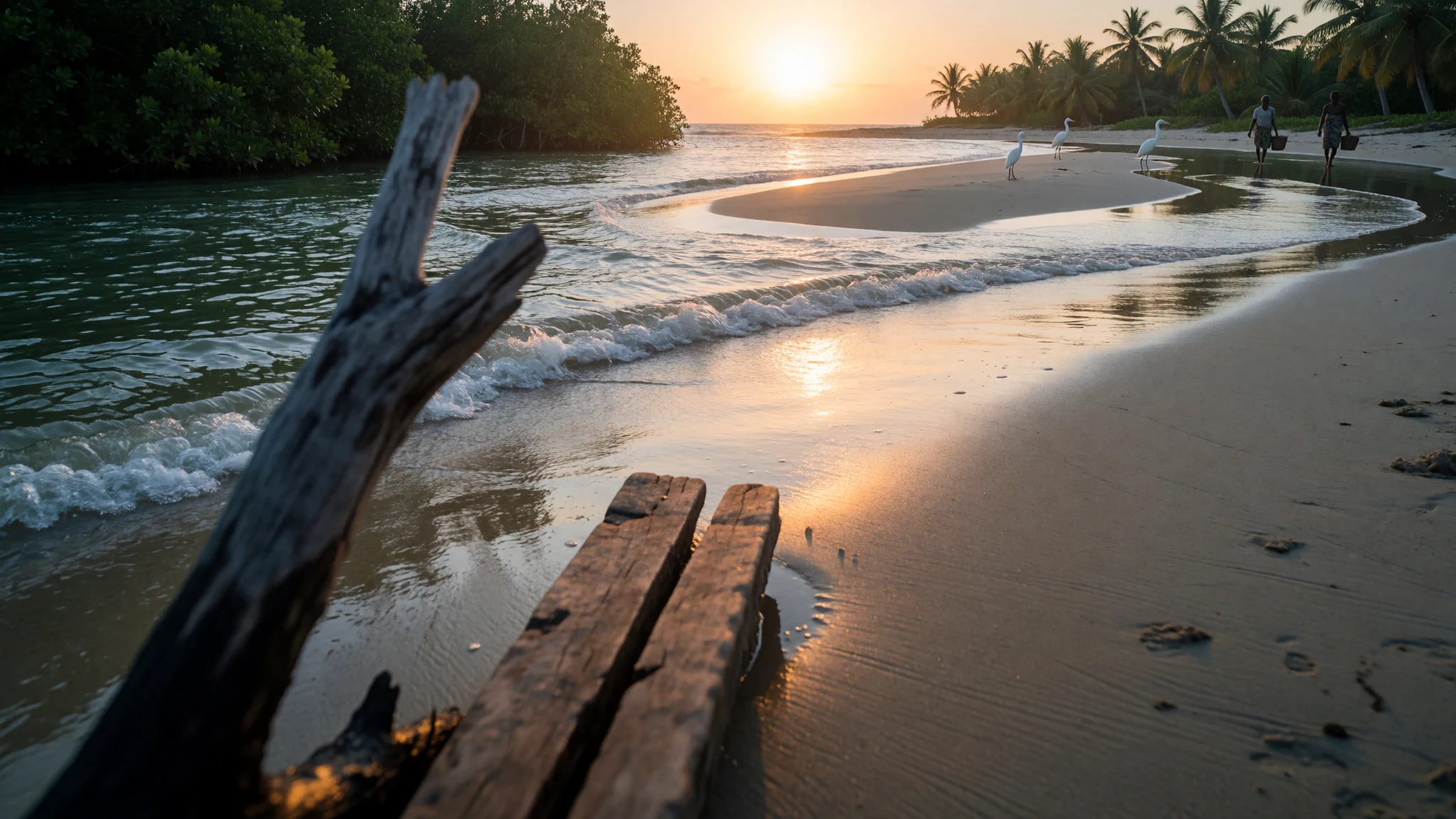
Mbini is a quiet Atlantic river-mouth town for slow days of seafood, nearby beaches and a ferry ride, far from any tourist crowd.
The place
Mbini is a small Atlantic town in Río Muni, the mainland part of Equatorial Guinea, set where the Benito River runs out into the Gulf of Guinea. It has 14,034 residents, which gives it the feel of a place where the ferry crew, the fish sellers and the shopkeepers all know one another. The town lies about 44 km southwest of Bata, the regional hub, and Bata is the practical gateway for flights, cash, supplies and most of the country's limited visitor services.
Mbini is not built around tourism. Dining and sleeping choices are modest, and the appeal is that of a working coastal town: a river mouth, the open sea, fishing activity, a central plaza and the ferry link to Bolondo. Nearby beaches and fresh seafood are what the town is known for.
The climate is hot and humid all year, with heavy rain from April to October. In those months storms can interrupt boats and roads, and the sea is less inviting. The drier months are kinder for beach days, walking and photography.
The name has changed over time. Until 1973 the town was called Benito or Río Benito Town, after the river, and Mbini is the Ndowe name for Río Muni as a whole. Travellers who treat Mbini as a base for unhurried days will get the most from it. Those who need polished infrastructure will be happier sleeping in Bata and making Mbini a day trip.
Its story
Mbini carries its history in its names. For much of its recent past the settlement was known as Benito, or Río Benito Town, taking its label from the river that reaches the Atlantic here. That naming belongs to the Spanish colonial era, when Río Muni was administered as part of a territory whose official language is still Spanish today. In 1973 the town took the name Mbini, which is the Ndowe word for the whole of Río Muni, so the change tied one small coastal place back to a local, wider identity.
The Ndowe are a coastal people, and the Fang are the dominant ethnic group in the country's mainland region. Their villages, languages and customs shape daily life well beyond the town centre. Fishing, river travel and the movement of goods between the shore and the interior have long given a place like Mbini its purpose.
The river mouth also explains why a ferry matters. The crossing to Bolondo links communities that would otherwise depend on slower routes, and the boat remains part of local routine rather than a tourist attraction.
Published detail on Mbini's own past is thin, and this reading sticks to what is well grounded. A visitor with time can learn far more by talking to residents, older fishermen and local teachers than from any guidebook. The plaza at the centre of town, wide and open, is a natural place to begin such conversations.
What to see
- The central plaza — Town centre
Mbini's central plaza is the open heart of the town, wide, low-rise and easy to read in an hour. It suits an unhurried walk, watching daily errands and trading greetings. Go in the cooler part of the morning, before the humidity builds, and ask before photographing people.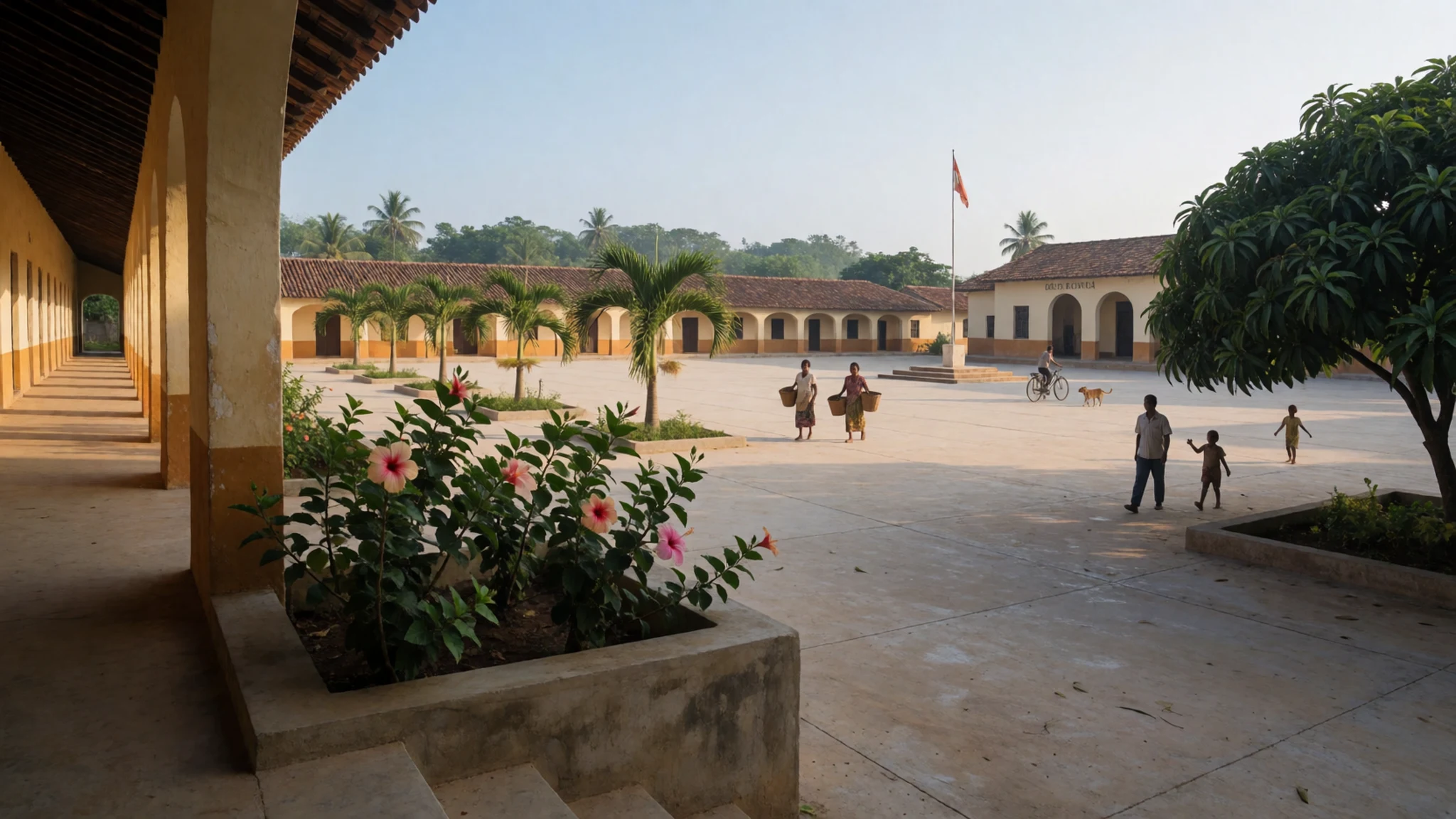
- The Benito River mouth — River mouth, edge of town
The Benito River meets the Gulf of Guinea at Mbini, and the shoreline here is where the town's fishing and river traffic gather. Watching boats come and go is the simplest way to understand the place. In the rainy months the water can be rough and the banks muddy, so choose a dry spell.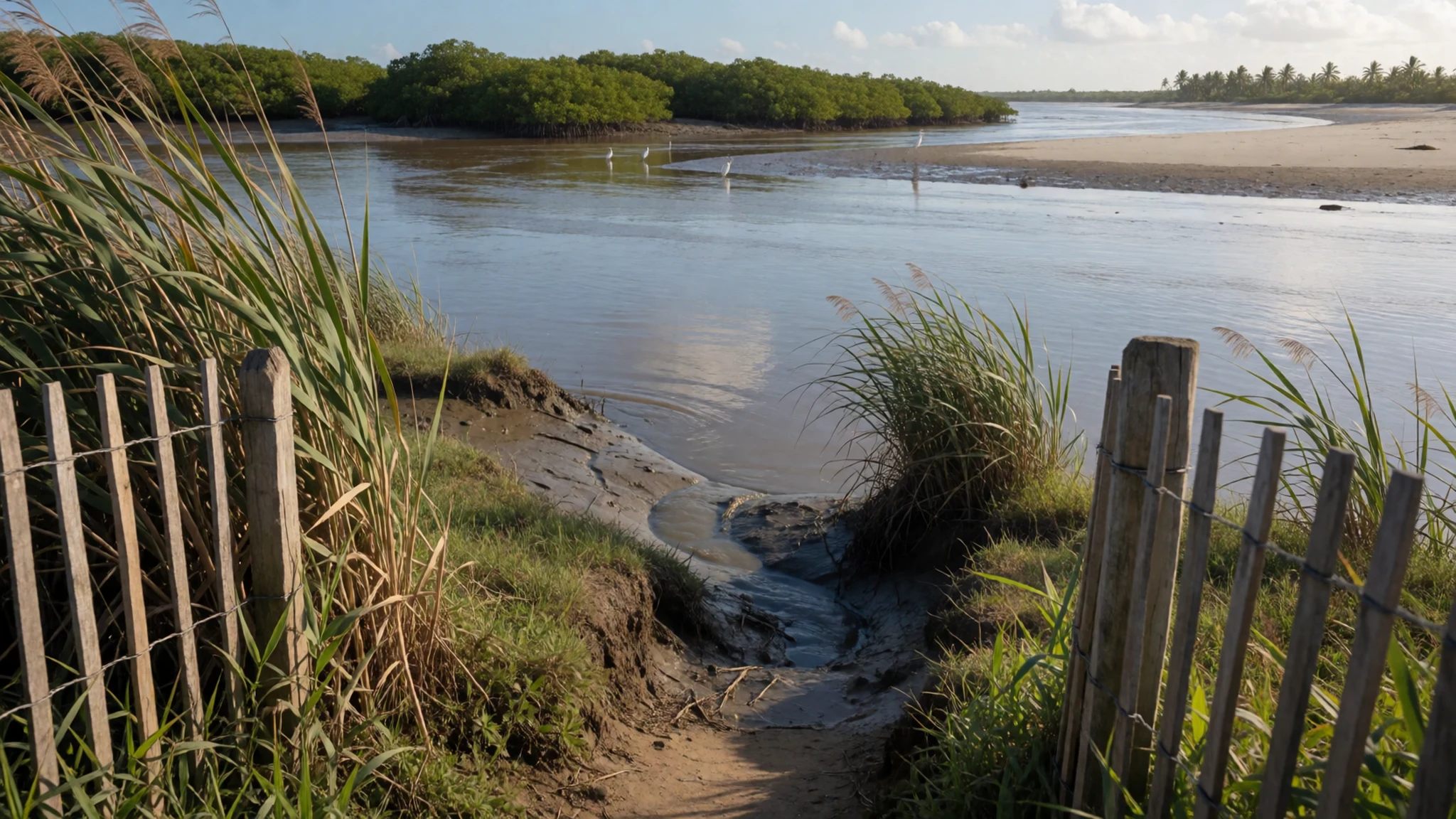
- Beaches near Mbini — Coast around Mbini
Beaches near Mbini are the main reason to linger on this stretch of coast. Expect natural shoreline rather than facilities: little shade, few services, and currents that deserve respect. Ask local people which spots are safe for swimming on the day, and bring water, sun protection and anything else you need.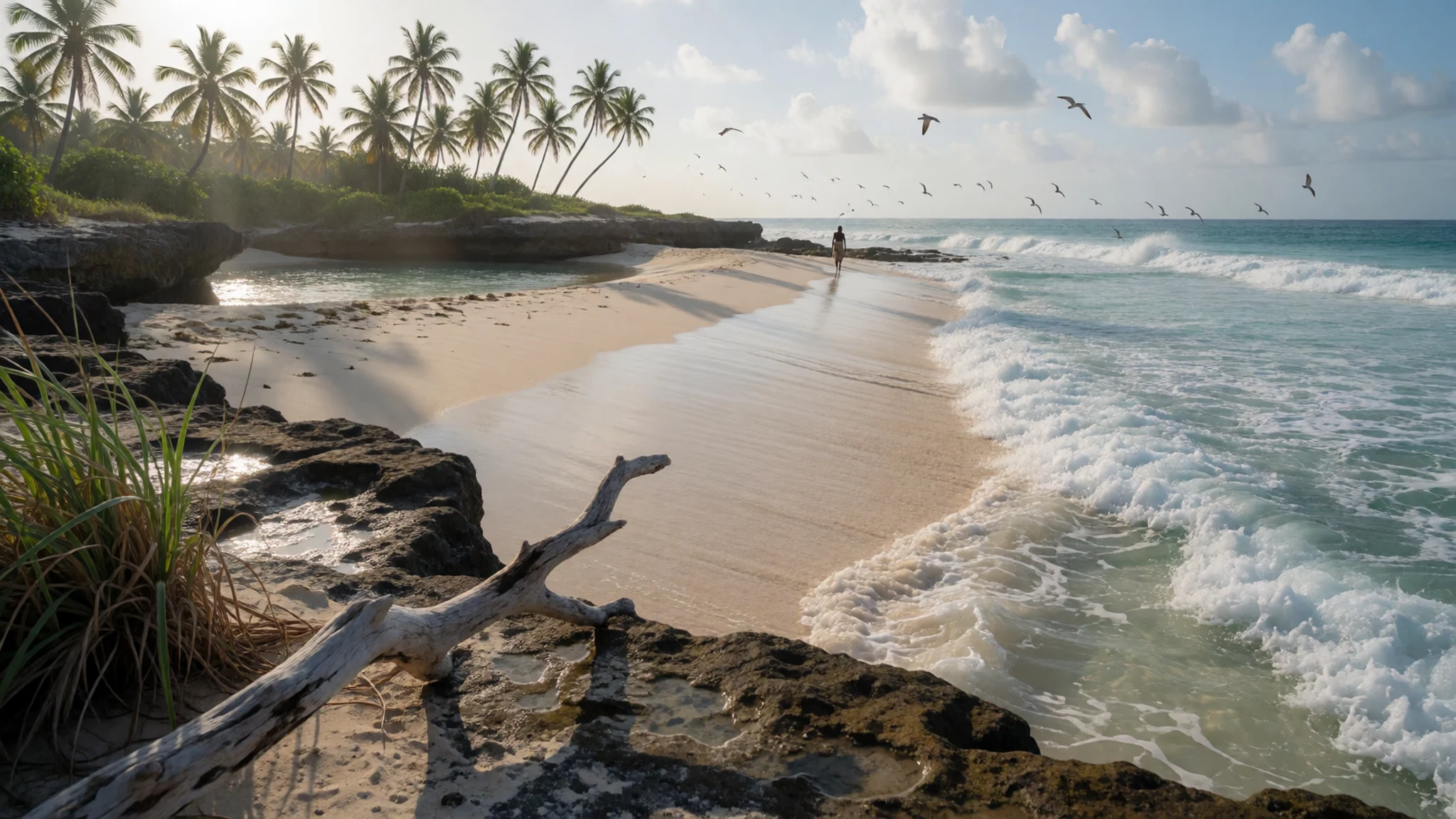
- The ferry to Bolondo — Ferry landing
A ferry connects Mbini with Bolondo, and riding it gives a short, cheap-feeling taste of local transport and river-mouth scenery. Timings are not published reliably, so ask in town on the day and keep plans flexible. It is a practical crossing first and a scenic one second.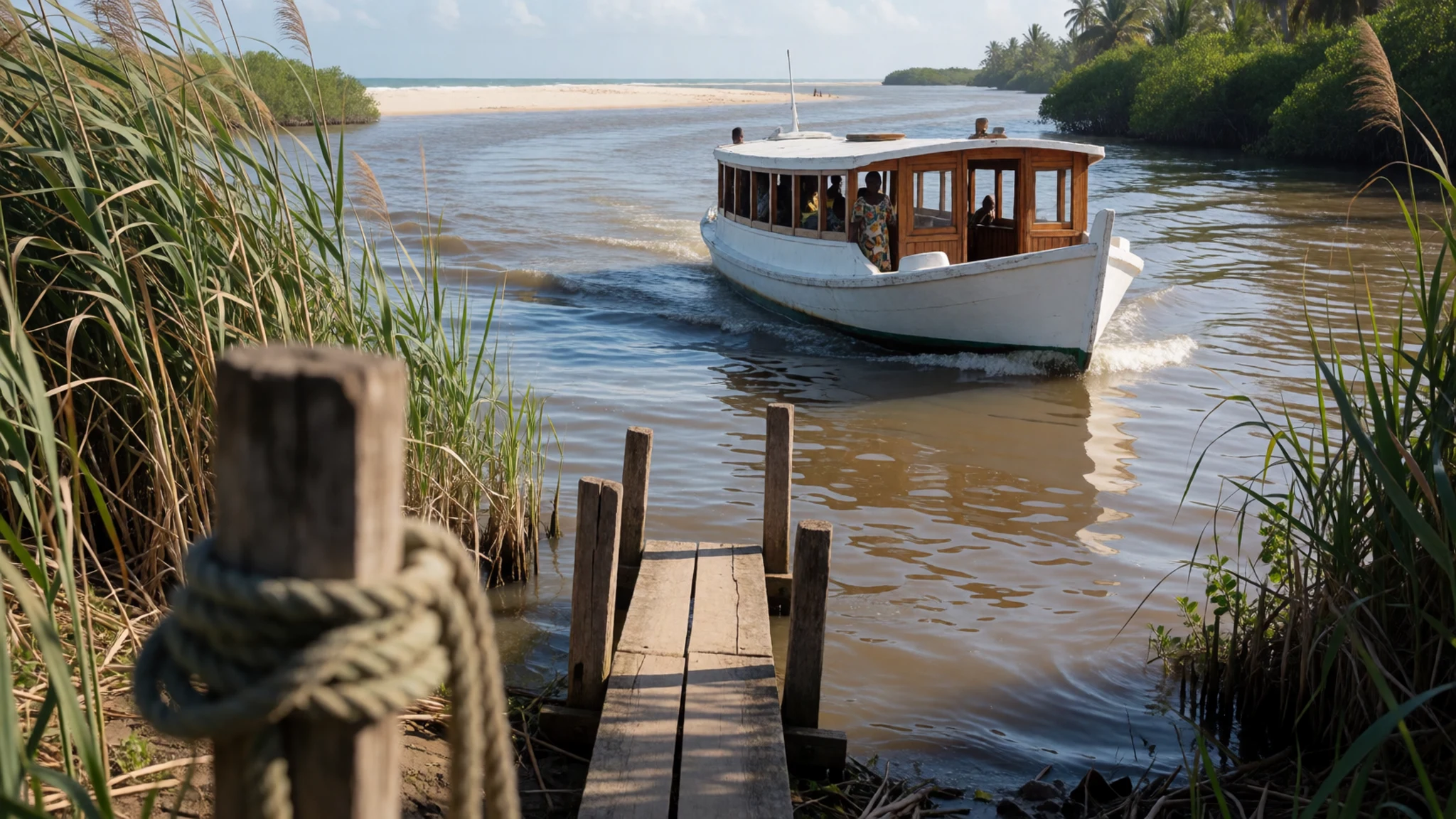
- Bata and its promenade — Bata, northeast of Mbini
Bata, about 44 km northeast, is the nearest larger city and an easy contrast with Mbini. It has colonial-era buildings, markets and a long seafront promenade. Many visitors use it as a base and reach Mbini as a day trip, then return for restaurants and better medical access.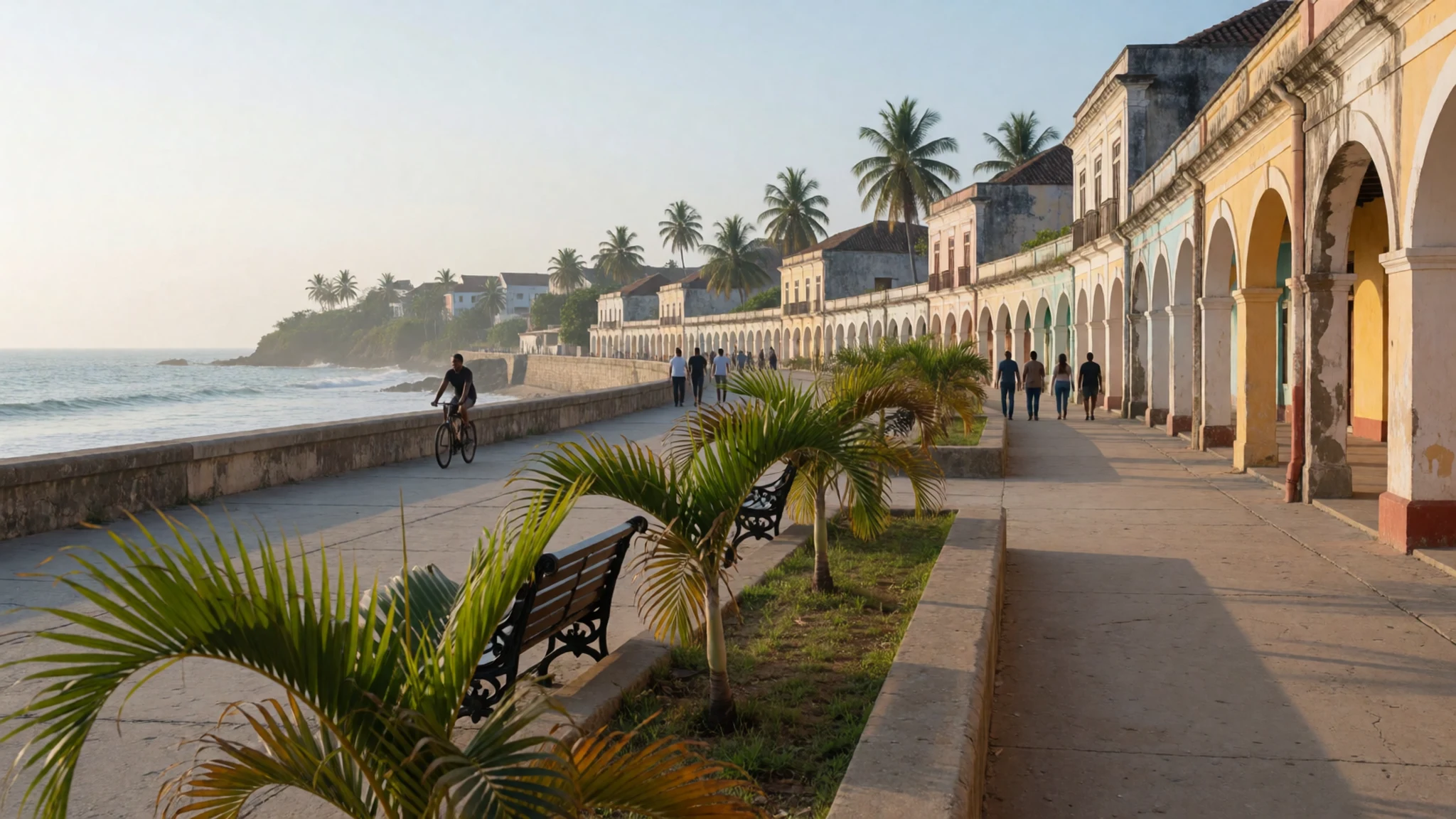
- Fang villages and local traditions — Villages inland and along the coast
The Fang are the dominant ethnic group of the mainland region, and small villages around Mbini offer a way to learn about their customs. Go only with an introduction from someone local, ask before photographing, and expect conversation rather than staged performances. Courtesy and patience matter more than itinerary.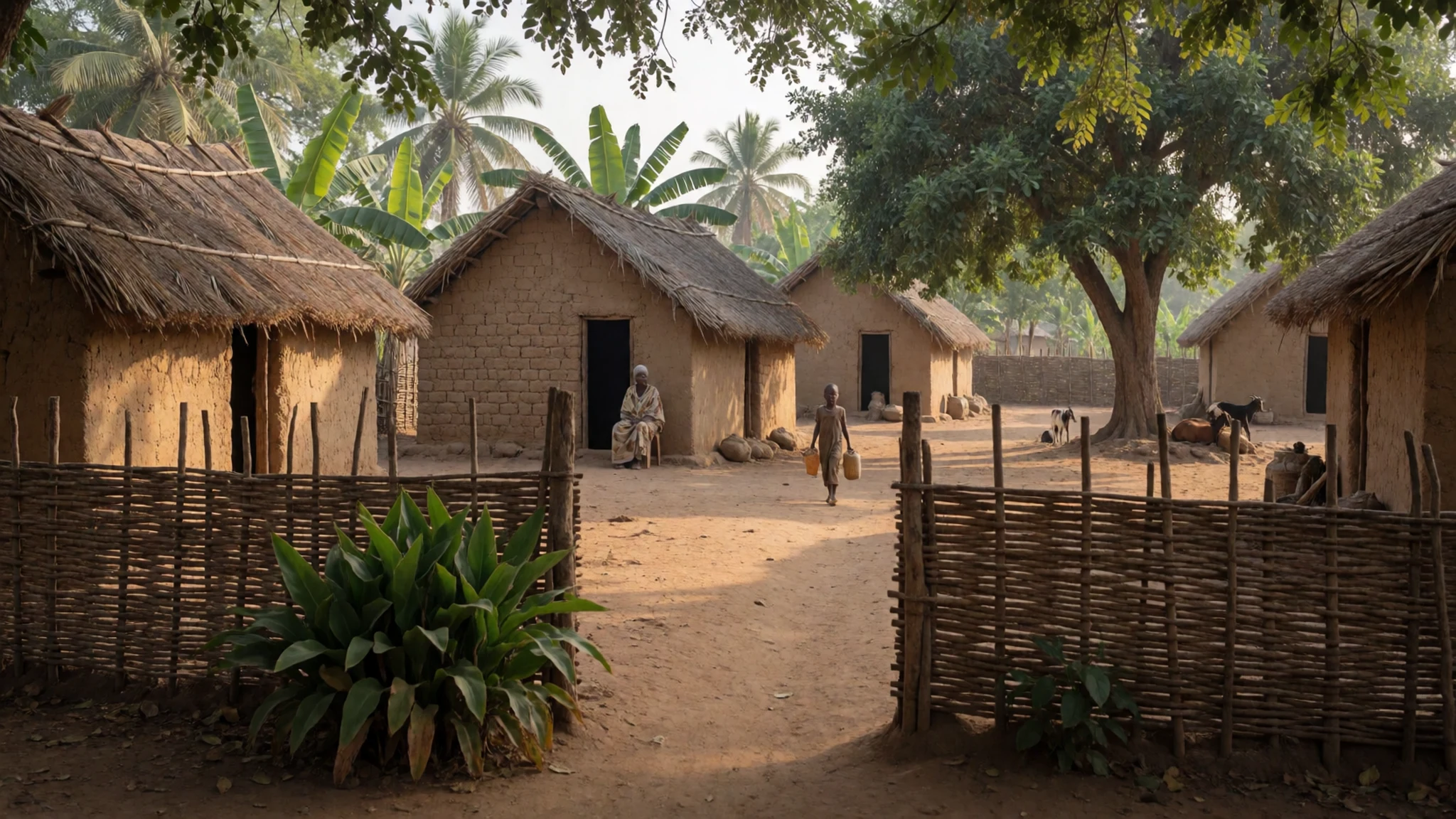
Culture
Mbini sits on the coast of Río Muni, where Ndowe and Fang communities share a country with a Spanish colonial legacy. Spanish is the official language, French and local languages are also heard in the wider region, and greetings carry real weight. Taking a moment to say good morning or good afternoon before asking anything is expected and noticed.
The Fang are the dominant ethnic group on the mainland, and their traditions around family, storytelling, music and community gatherings continue alongside modern life. The Ndowe, a coastal people, have their own language and links to the sea and river. Many families blend these inheritances with Catholic practice, so church services and festivals on the calendar can be as visible as customary events.
Daily life in a town of Mbini's size is community-minded. Fishing, small trade, school and church fill the week, and the plaza is where news travels. Outsiders are few, so visitors are often looked at with curiosity and usually with friendliness. Making slow, polite contact works better than rushing in with a camera.
Authorities in Equatorial Guinea can be sensitive about photography of official buildings, uniformed staff and infrastructure, so it pays to stay cautious around such subjects.
When you want to photograph anyone in Mbini, whether at the plaza, the landing or a village, ask first, accept a refusal without argument, and do not photograph officials, uniforms or government buildings.
What to wear
Mbini has no single costume that visitors will see every day, and the sources for this reading do not describe local dress in detail, so this section keeps to what is broadly reliable for the region. Traditional dress along the coast of Central Africa often involves wrapped cloths and printed cotton, worn with matching headwraps by women, and it comes out for church, weddings, funerals and festivals. Fang and Ndowe communities each have their own customs, so it is better to ask people than assume.
In daily life, people in Mbini generally dress for heat and humidity: light cotton shirts, trousers or skirts, simple dresses and sandals or trainers. Clothing is usually neat and clean, and for church or formal occasions people dress up noticeably, with ironed shirts, bright fabrics and good shoes. Football shirts and casual wear are common among younger people.
For visitors, the sensible choice is light, breathable, quick-drying clothing in cotton or linen. Cover shoulders and knees in town and in villages, as modest dress is read as respect. Add a light rain jacket for the wet season, a hat and sun protection, and long sleeves and trousers at dusk against mosquitoes. Closed shoes or sturdy sandals suit muddy paths and uneven pavements, and swimwear belongs on the beach only.
What to eat
- Grilled fresh fish — Simple eateries near the landing and river mouth
Fish caught off the coast is the town's calling card, usually grilled over charcoal and served simply with salt, chilli and lime or a sauce. Ask what came in that morning and choose whatever looks freshest.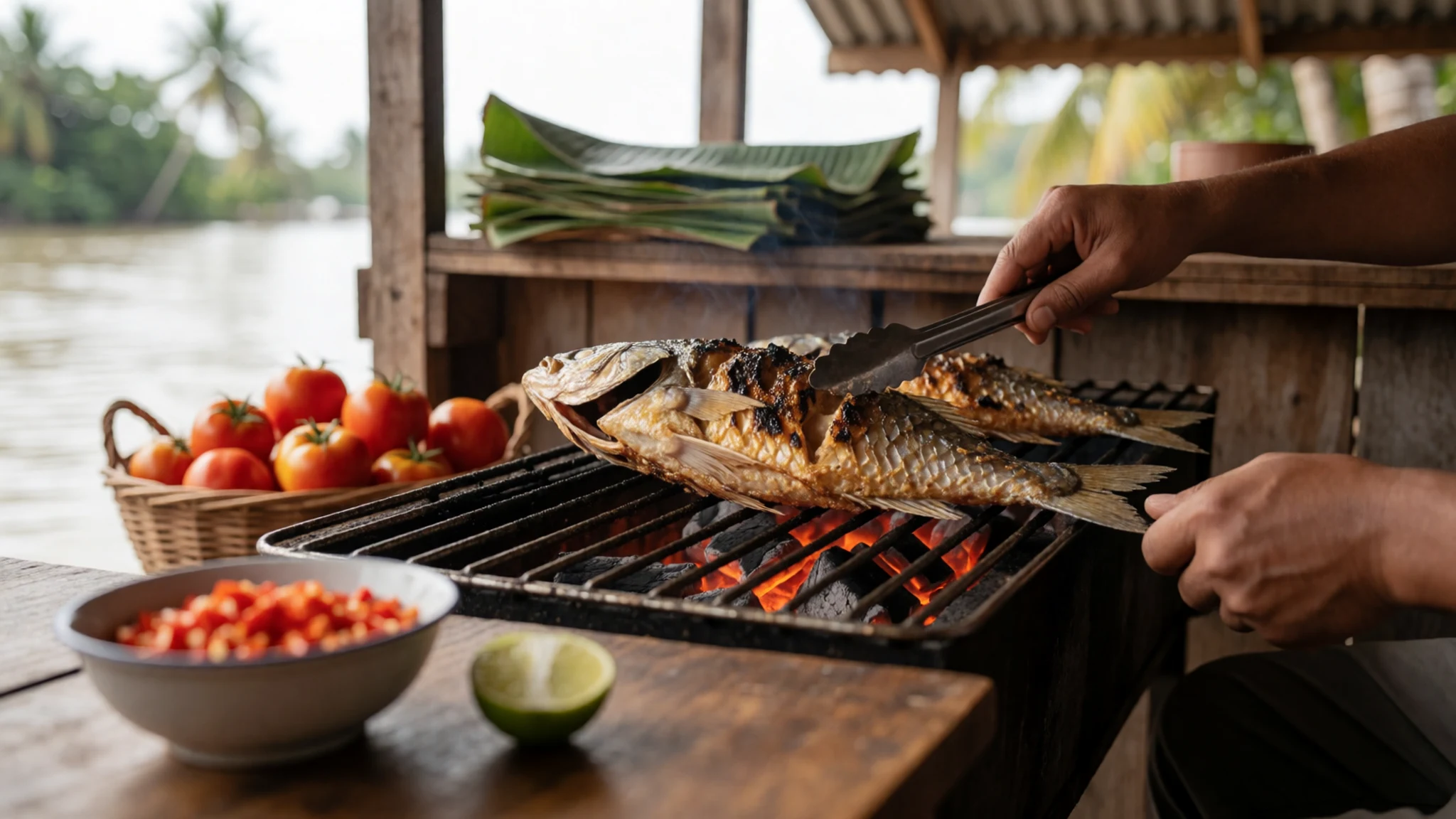
- Prawns and shellfish — Seafood stalls and small restaurants by the shore
Coastal kitchens in this part of the Gulf of Guinea often serve prawns and other shellfish, grilled or stewed with onion, tomato and pepper. Quantities and availability depend on the day's catch, so treat it as a seasonal treat.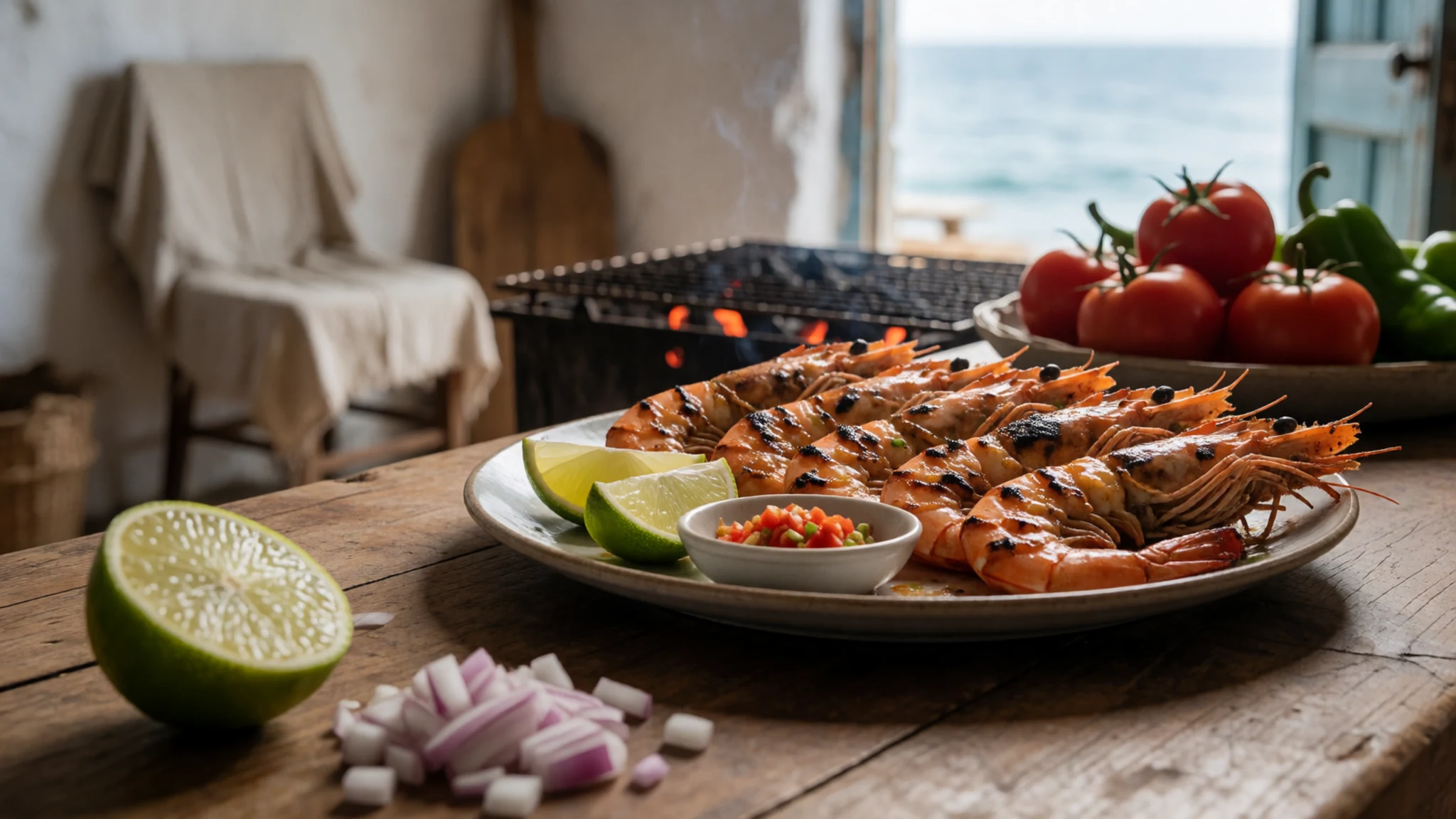
- Fried plantain — Street sellers and everyday eateries in town
Plantain, fried until the edges caramelise, is a common side dish across the region. It turns up beside fish, chicken and stews, and works as a cheap snack when eaten hot from a street seller. - Cassava in its many forms — Local markets and family-run eateries
Cassava is a staple in Central Africa, eaten boiled, pounded or shaped into sticks and wrapped in leaves. Its mild, slightly sour taste works as a base for sauces and grilled fish, and it fills you up for the day. - Fish or chicken in palm-oil sauce — Home-style eateries and market food counters
Stews built on palm oil, tomato, onion and chilli are typical of the wider region, served with rice, cassava or plantain. The sauce is rich and warming, so ask about the chilli level before ordering.
Plan it
Best time. November to February is the most comfortable window, because heavy rain falls from April to October and the sea and roads are easier then. It stays hot and humid year-round, so plan outdoor time for mornings.
How long. 1–2
Getting there. Fly to Bata Airport (BSG), then travel about 44 km southwest by road to Mbini. Flights via Malabo Airport on Bioko island are another route into the country. Check current road and ferry conditions locally, as services here are informal and change.
Budget. mid
Tips
- Talk to a travel clinic before the trip about malaria prevention, and pack repellent and a bed net for the coast.
- Drink only sealed or properly treated water, and choose food that is served freshly cooked and hot.
- Clinics are few, so carry your regular medicines and insurance that covers evacuation by air.
- Carry cash for small purchases, as card payment is not something to rely on outside Bata.
- Start day trips from Bata early, then be back before dusk when travel is harder and mosquitoes are active.
Etiquette
- Greet people before asking for anything, and ask permission before photographing individuals.
- Avoid photographing officials, uniforms and government buildings.
- Dress modestly in town and villages, keeping swimwear for the beach.
Nearby
Sources
- Wikidata Q980895 (CC0)
- Wikipedia — Mbini (rev 1378565697) (CC BY-SA 4.0)
- Wikivoyage — Litoral (rev 5290858) (CC BY-SA 4.0)
- Blitz1980, Plaza del centro de la ciudad de Mbini, Guinea Ecuatorial, via Wikimedia Commons (CC BY-SA 4.0)
