Corisco
Corisco, Equatorial Guinea
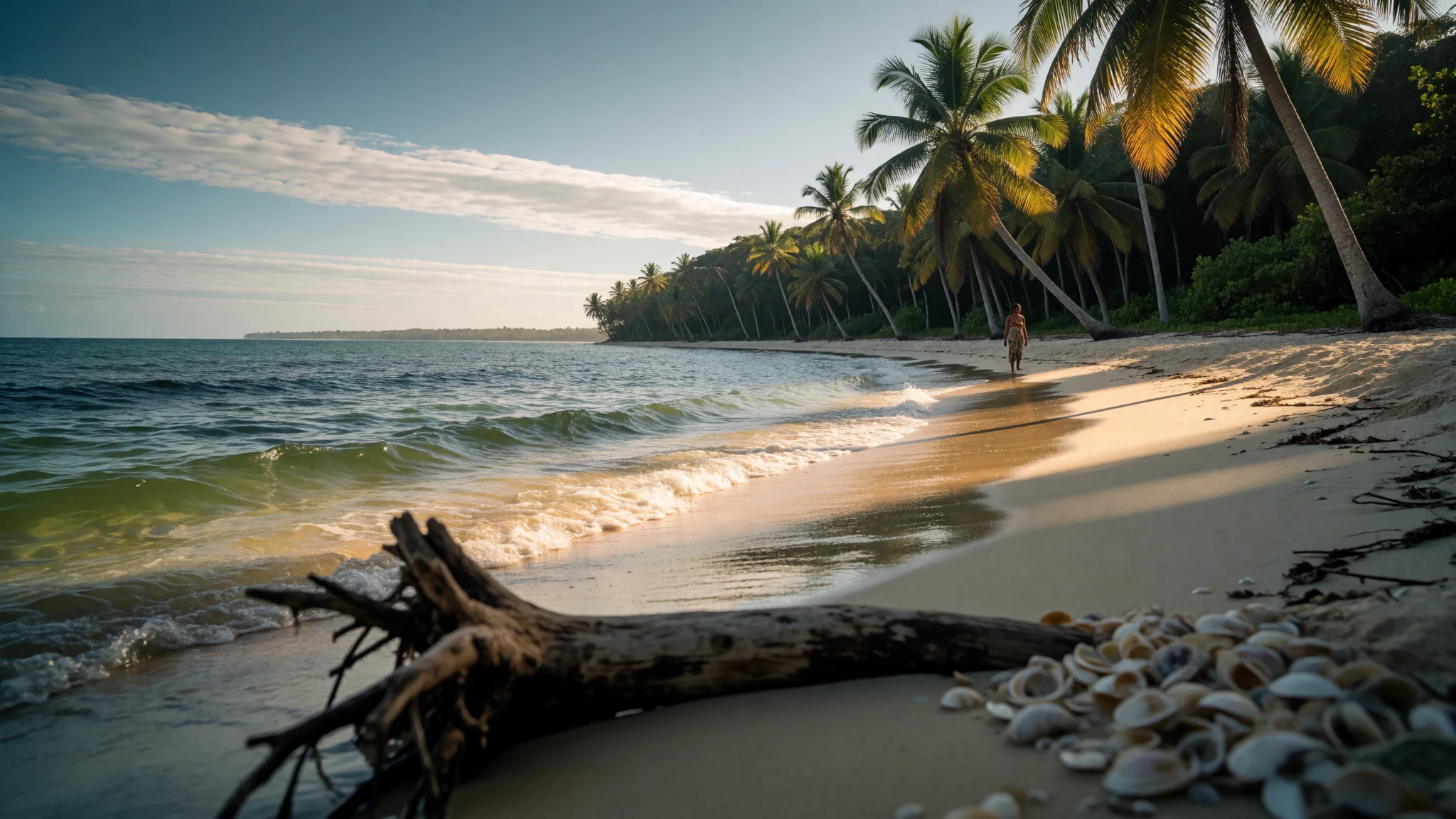
Corisco is a small Benga island of sand, forest and festival cloth, quiet in the Gulf of Guinea and awkward to reach.
The place
Corisco sits just north of the equator in the Gulf of Guinea, a low island of sand, coconut and coastal forest that belongs to Equatorial Guinea and faces the mouth of the Río Muni. On the charts it is Corisco; among the Benga who live there it is Mandj. The island is not a resort strip. Houses, cookfires, churches and fishing canoes share a short stretch of shore, and the interior is green, hot and often wet underfoot. Beaches run pale along the water, the sea shifting from green over the sand to a deeper colour once the bottom drops away. From the higher ground, such as it is, the view runs to the tiny Elobey islets and, on a clear day, towards the mainland coast of Río Muni and the Gabonese shore. Life follows boats and tides more than clocks. Fish come in with the canoes, plantain and cassava come from gardens, and rain arrives in heavy spells that turn paths to mud and then leave the air thick again. Equatorial Guinea's oil economy has remade cities on the mainland; Corisco has stayed small, which is both its pleasure and its limit. There is little built comfort, fresh water and fuel are practical worries, and a visitor is a guest in a living settlement rather than a customer passing through a beach town. The light is strong, the nights are loud with insects and the sea, and the social life of the island gathers wherever the Benga meet, above all when festival cloth comes out for Djombe.
Its story
Corisco's story is the story of the Benga, a coastal people of the Muni estuary who treated the island they call Mandj as both home and harbour. Canoes linked it to the Elobey islets and to villages on the mainland after the Benga settled in the later eighteenth century, drawn by European trade. What the outside world wrote down begins with Portuguese sailors, who left a name still printed on maps, their word for lightning, earned by a sky that breaks into sudden storms. Traders followed. Fish, ivory and forest goods moved through these channels, and so, in the cruel commerce of this coast, did enslaved people, a fact the island does not advertise and should not be smoothed away. As European trade thickened, the Benga dealt with British, American and Spanish interests, and Protestant missions set churches beside older customs of kinship, fishing and feast. Spain eventually folded Corisco into the small colony that became Equatorial Guinea, governing it from a distance and never turning it into a large settlement. Independence transferred the flag and left the island's scale much as it was. Oil later enriched the state and rebuilt mainland cities; Corisco remained a Benga place of gardens, canoes and a single great public celebration, Djombe, when the island dresses and dances. The story a visitor meets is therefore not a ruin with a plaque. It is a community that has absorbed sailors, missionaries and a modern state while keeping its own name, its own language and a festival that still sets the year's social clock.
What to see
- Djombe — Village gathering ground
Djombe is the Benga feast on Corisco, the day patterned cloth and dance take over from fishing and gardens. It is a family and community obligation, not a performance put on for outsiders. The right place for a guest is at the edge of the gathering, following the hosts' lead, with a camera lifted only after a clear yes.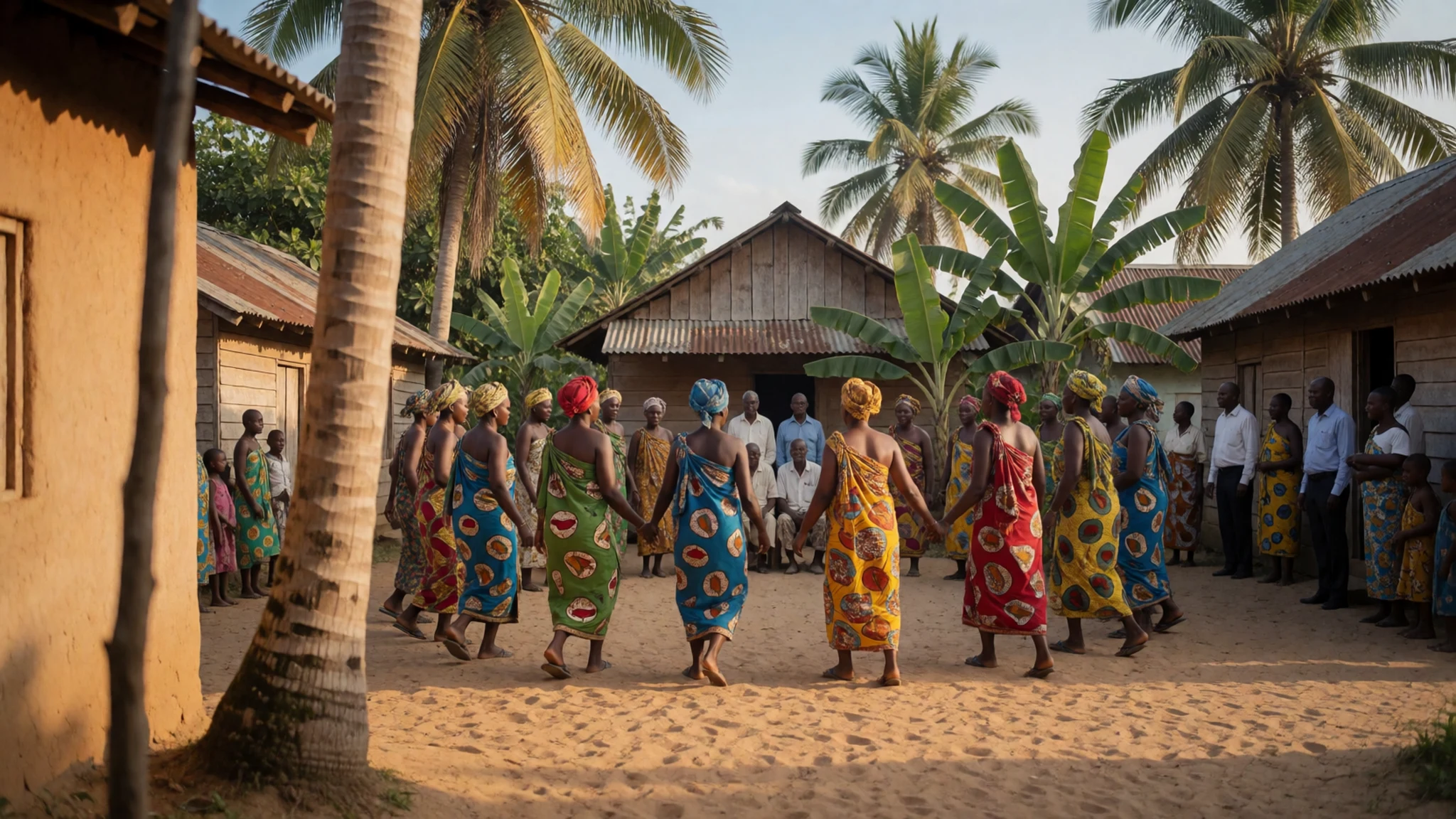
- The island shore — Sandy coast
The shore on Corisco is a working beach as much as a place to swim: canoes, nets and coconut palms share the sand. Water close in is often clear over a pale bottom and deepens quickly, and shade is mostly what a palm or a hull provides. Landings are by boat, so the tideline is the island's pavement and wet footwear is the practical choice.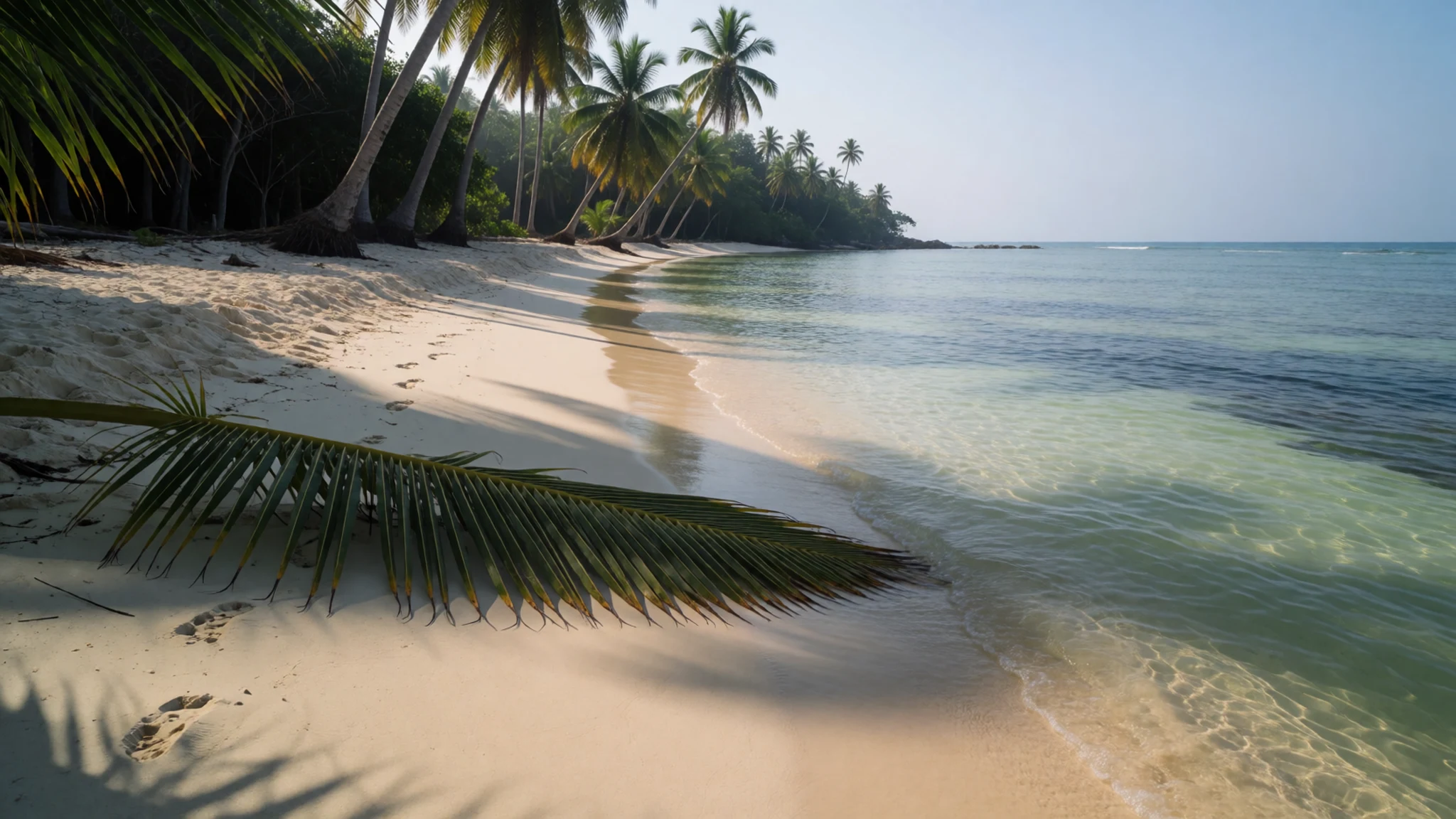
- Benga settlements — Island villages
The settlements on Corisco are clusters of houses, churches and cookfires, not a town with a commercial centre. Paths run from plantain and cassava gardens down to the landing places. Almost everyone is Benga, so a stranger is noticed at once. Fish, laundry, nets and children fill the spaces between houses. They are homes first, and a local introduction is what makes a visit welcome.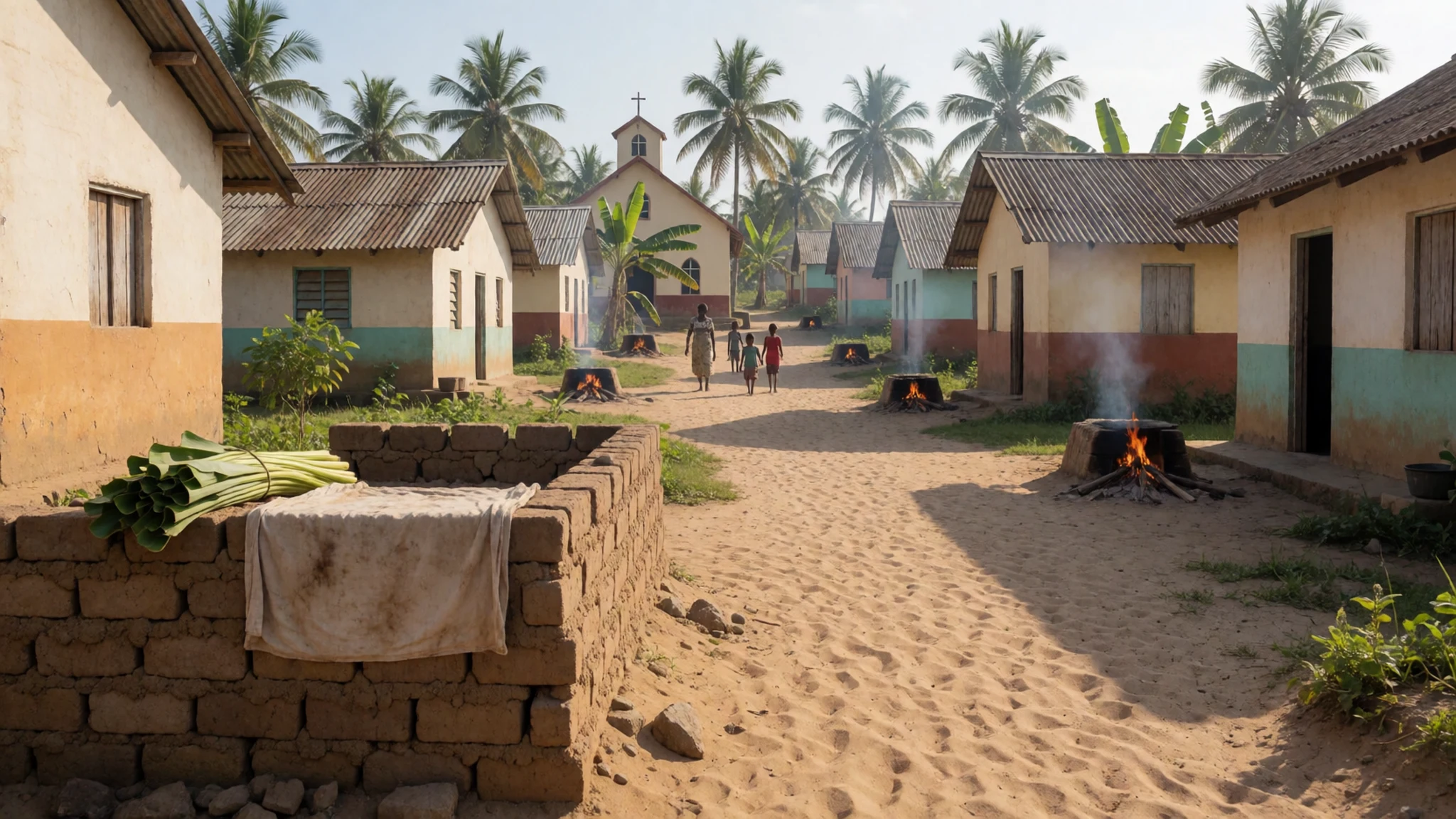
- The channel to the Elobeys — Corisco Bay
The channel off Corisco looks towards the Elobey islets, small neighbours in the same bay, and beyond them towards the Río Muni coast. This water is the island's road: pirogues and small motorboats, with a crossing that depends on weather, fuel and whoever is already going. A calm morning shows how tightly the Benga maritime world is packed. A storm can close it without warning.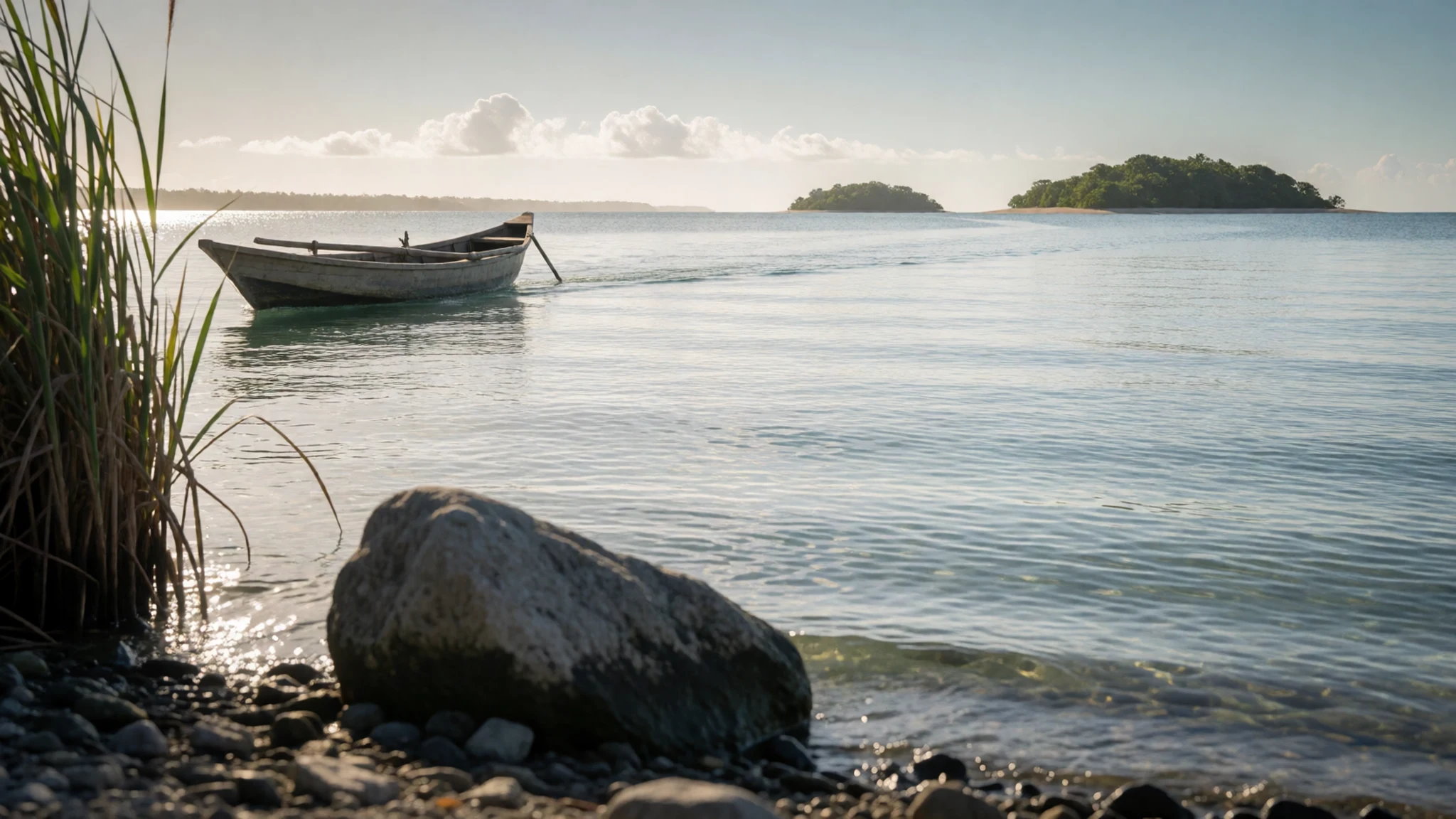
- Gardens inland — Island interior
Inland Corisco is low forest, garden and sandy track, not a scenic circuit with signs. Plantain, cassava and coconut do much of the work a market would do, because the island has little formal trade. The canopy holds humidity, and after rain the ground is slick with standing water. A walk here is a village walk, taken in company, with a clear sense of whose garden is whose.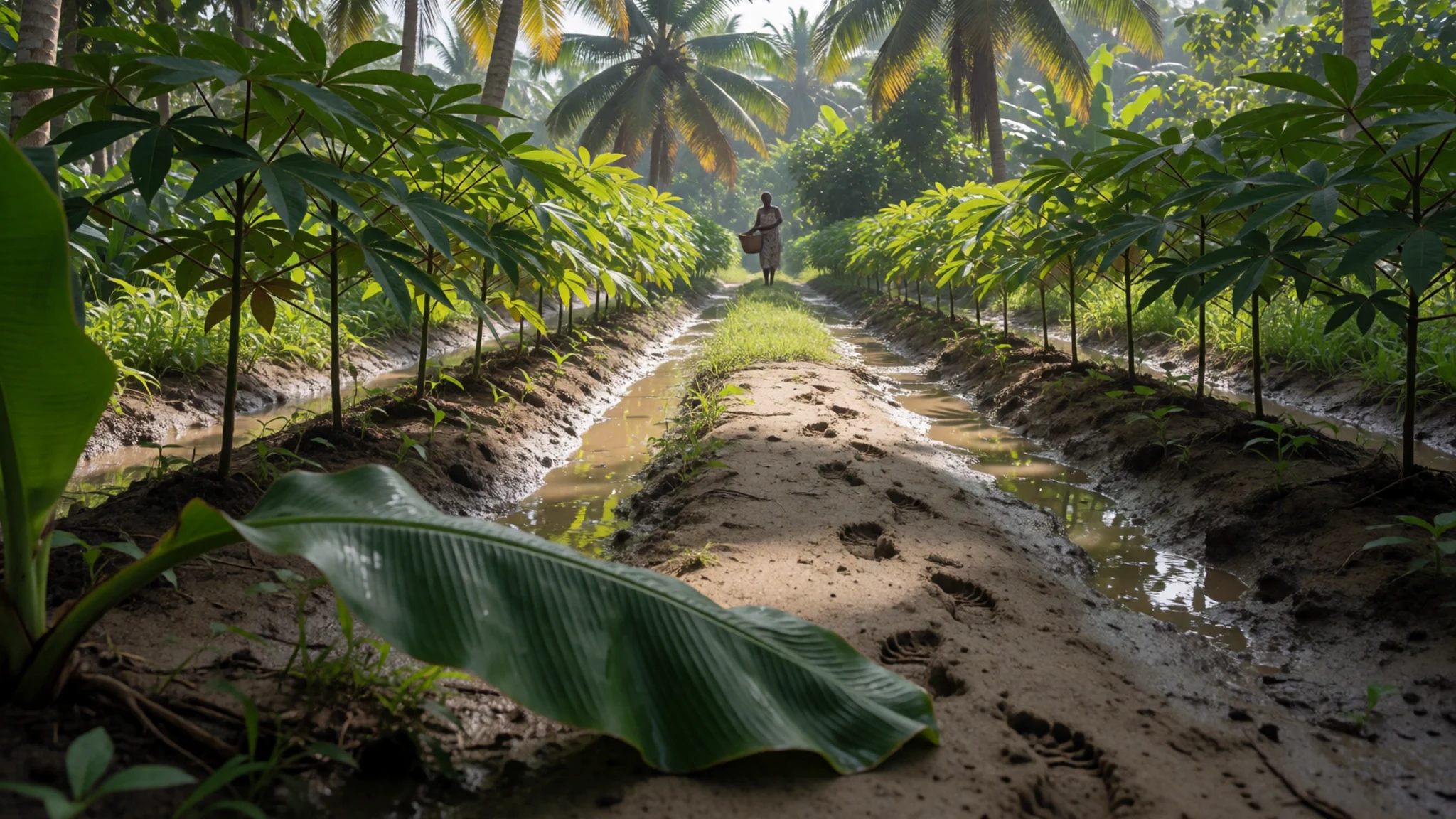
Culture
Corisco's culture is Benga culture: a small coastal people with their own language, a memory of canoe trade, and a social life that still runs through kinship rather than through institutions a visitor can book. Greetings matter, and they move through elders first. Fish, gardens and church shape ordinary weeks; Djombe, the traditional feast, shapes the public year, when dance and formal cloth gather the island in one place. Christianity, planted by Protestant missions and still visible in the churches, sits beside older habits of respect, sharing and ceremony rather than replacing them. Spanish and French are the outside languages of this borderland, Equatorial Guinea's official Spanish on one side, Gabon and Francophone trade on the other, while Benga remains the language of home. Humour is local, gossip travels faster than a boat, and a guest's conduct is discussed. Generosity is real and so is scarcity: fuel, fresh water and imported goods are not casual. The island is not a stage. Ask before photographing people, above all at Djombe, and accept a refusal without argument.
What to wear
Fashion on Corisco splits cleanly between feast days and every other day, and the difference is the point. For Djombe and other formal moments the Benga bring out ceremonial dress: bright printed cottons, wrappers and headties for women, and for men a mix of tailored shirts and cloth that marks the occasion rather than the work. The textiles are the wax and fancy prints of this coast, cotton goods long traded into the Gulf, worn as much for family pride as for display. Cut and pattern signal participation. Someone in ordinary clothes at the feast has simply not dressed for it. Weekdays look different. Fishing, gardens and heat favour shorts, T-shirts, simple dresses and wrappers, with sandals or bare feet and a cap against the sun. Cloth is washed often and dried in the open; mud and salt are part of the wardrobe's job. A visitor does well to copy the practical half and respect the formal half. Lightweight cotton, a sun shirt, a wrap or long skirt for the village and the church, and shoes that can survive a wet landing are enough. Swimwear belongs on the shore, with a cover-up once the path reaches houses. Festival dress is not a costume to borrow; a guest invited to Djombe should ask a host what is appropriate and wear the best modest cotton to hand rather than beach clothes.
What to eat
- Grilled fish — The landing beach when the canoes return
Grilled fish is the everyday centre of eating on Corisco, often a whole catch cooked over wood or charcoal with salt, chilli and oil. The species change with the tide. It is food for the day the canoe lands, because ice is not something to count on.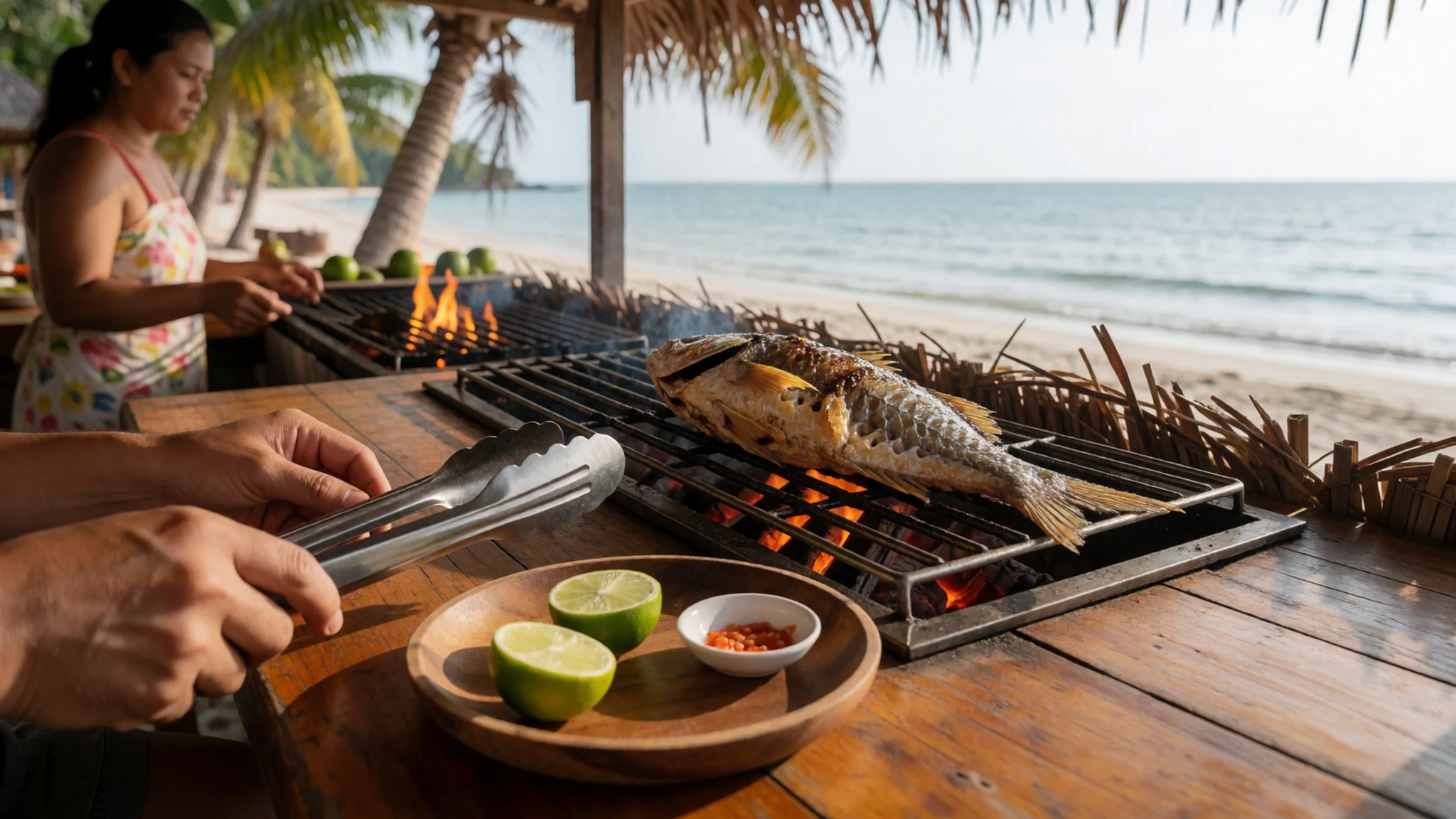
- Peanut sauce — Home kitchens in the villages
Peanut sauce is the cooking that reaches Corisco by family and by boat: groundnuts worked into a thick sauce with fish or chicken, usually beside cassava or plantain. It is a shared-pot dish, heavier than plain grilled fish. It turns up in a household kitchen, not on a printed menu.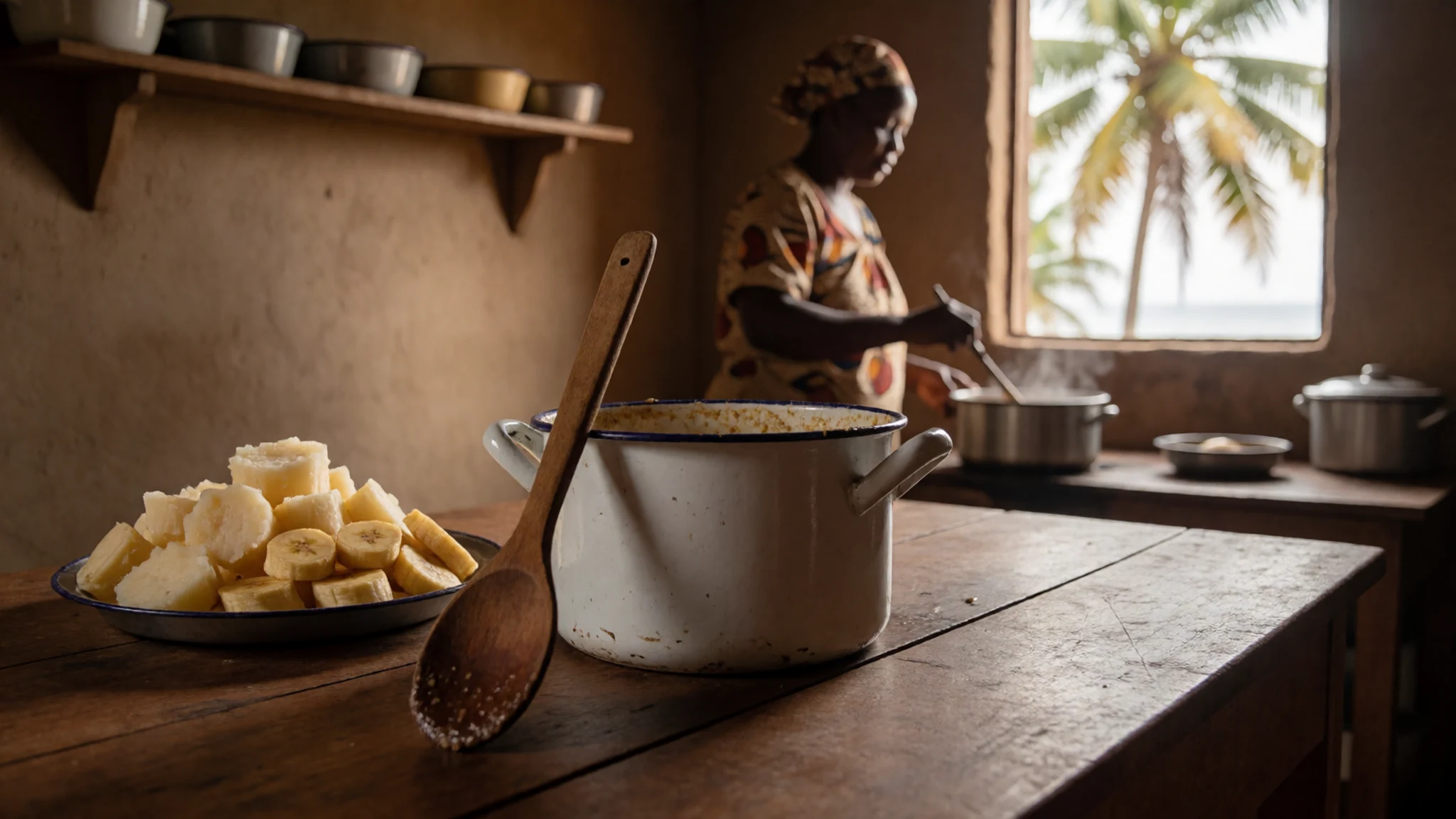
- Cassava and plantain — Village gardens and cookfires
Cassava and plantain are the starch of Corisco, boiled, pounded or fried beside whatever the sea gave that day. They come from gardens a short walk inland, not from a shop. Ripe plantain cooks sweet; cassava is blunt and filling, the food that turns a small catch into supper. - Fish pepper soup — Family pots on wet evenings
Pepper soup on Corisco is a hot, thin broth built on fish and a heavy hand with chilli and spice, eaten when the rain has cooled nothing except people's patience. It is restorative rather than elaborate. The heat of the chilli is the point, and it varies with the cook. - Coconut and garden greens — Household kitchens
Coconut and garden greens fill out meals on Corisco when the catch is small. Grated coconut enriches a sauce, and leaves cooked down in a little oil sit beside the starch. This is garden-and-palm cooking, the way a small catch becomes a full plate.
Plan it
Best time. June to August are the comfortable dry months for paths and crossings; February and March are hottest, and November is the wettest. Other months are hot and often wet: lush, muddy, and less reliable on the water. Rain can arrive at any time, including during a festival, so pack for sun and a downpour.
How long. 2–3
Getting there. Corisco has no airport. Fly into Bata on the Equatorial Guinea mainland, continue by road to a port on the Muni estuary, and cross by small boat. Northern Gabon is another approach and still ends on the water. Confirm fuel, the boat and the way back before leaving the mainland; weather decides the hour.
Budget. high
Tips
- Sort the visa and any provincial permit well ahead; arriving without papers is how a trip to Corisco fails.
- Let the boat set the timetable: weather, fuel and a named person for the return matter more than a fixed hour.
- Bring cash for boats, fish and small kindnesses; card payment is not a realistic plan on the island.
- Carry drinking water, a sun cover and a rain layer, because shops on Corisco will not fill the gaps.
- If the visit includes Djombe, ask a host first and plan to watch from the side rather than to join uninvited.
Etiquette
- Greet elders before starting a conversation or crossing a compound.
- Ask before photographing people, working boats, or any part of Djombe.
- Keep swimwear to the beach and dress modestly in the village and at church.
Nearby
Sources
- Wikidata — Corisco (CC0)
- Wikipedia — Corisco (CC BY-SA 4.0)
- Wikivoyage — Equatorial Guinea (CC BY-SA 4.0)