Malabo
Malabo, Equatorial Guinea
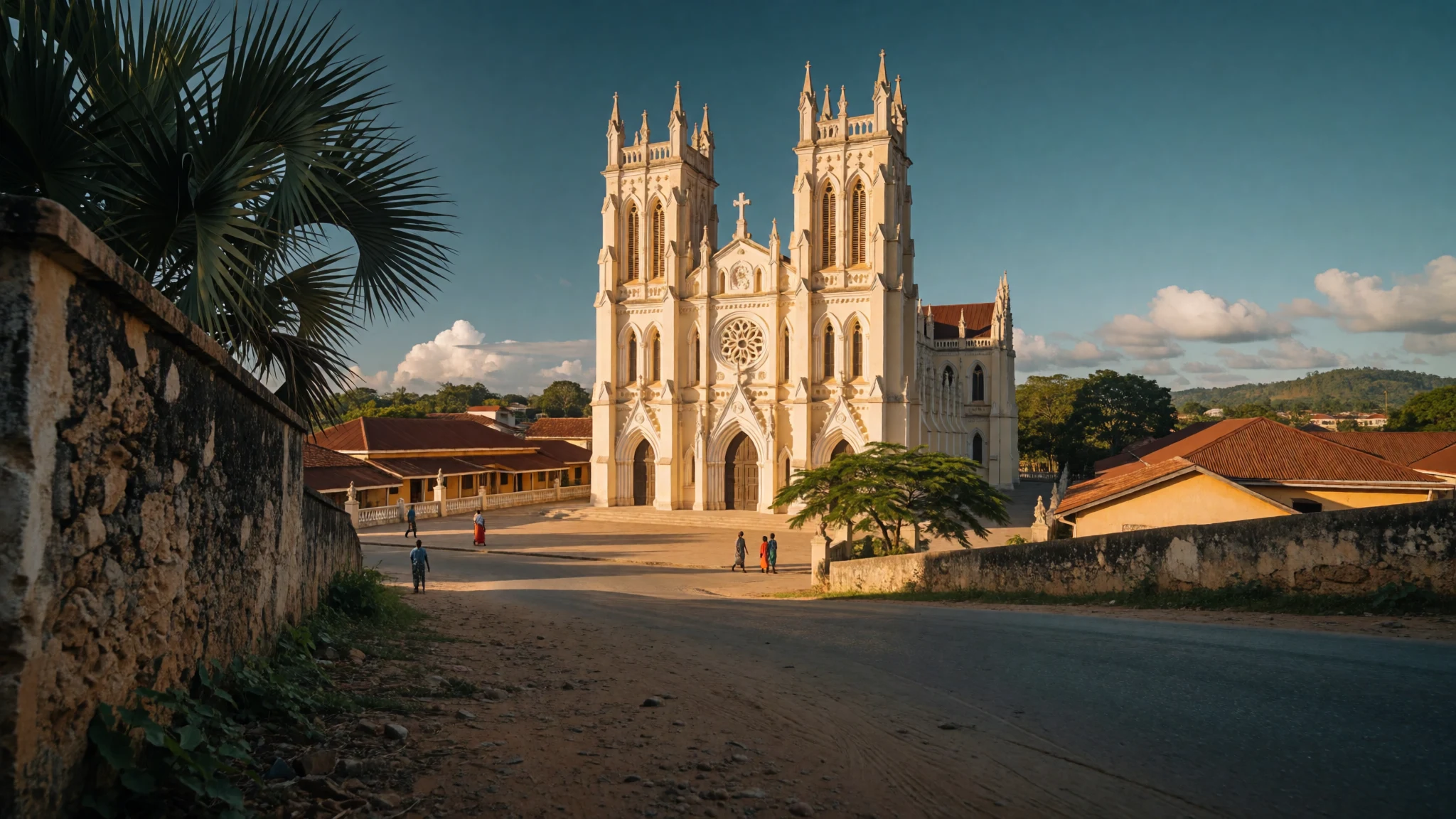
Malabo is a small tropical island capital with Spanish colonial streets, a neo-Gothic cathedral, and rainforest, volcano and turtle beaches within a day's reach.
The place
Malabo sits on the north coast of Bioko, a volcanic island in the Gulf of Guinea, and has about 297,000 residents. It is the former capital of Equatorial Guinea: government institutions have been moving to Ciudad de la Paz, yet Malabo remains the main door into the country for most visitors, with the international airport about 9 km west of the centre. The city curves around a bay with a headland at either end. Punta de la Unidad Africana lies behind the government buildings, and Punta Europa points out beyond the western suburbs towards the airport. The Cónsul River marks the southern edge of town. Behind the streets the land climbs towards Pico Basilé, a volcanic summit above 3,000 metres that can be seen from much of the city when the cloud lifts. Spanish is the official language, while Pichinglis, an English-based creole, works as the everyday common tongue across the island. The climate is tropical monsoon: warm all year, humid, and wet for long stretches, so cloud and sudden downpours are normal rather than exceptional. The old centre has Spanish colonial-style buildings and a church, while newer districts around the stadium show the building boom that followed the discovery of oil. The city is compact and quiet, and it works best as a base for the forests, beaches and mountain slopes of the island around it.
Its story
Malabo's story starts with the island it stands on. The Bube people call Bioko Etulá. Europeans took notice in 1472, when the Portuguese navigator Fernão do Pó, searching for a sea route towards India, came upon the island and named it Formosa, meaning beautiful. The name did not stick, and for centuries the island carried his own name, Fernando Pó. Portugal tried to settle it in 1507, with a trading post and sugarcane plantations at a place now called Riaba, away from the site of today's capital. Later, Portugal handed Fernando Pó, Annobón and trading rights on the neighbouring mainland coast to Spain, in an exchange that gave the Portuguese territory in South America. Spain already held far larger colonies elsewhere and paid its new possession little attention. In 1827 it allowed Britain to use the island as a base for patrols against the slave trade, and the British founded the town that year as Port Clarence, a name Spain replaced with Santa Isabel after regaining control in 1855. The settlement grew into the port and administrative centre of what became Spanish Guinea. Its colonial-era streets, church and harbour views still shape the old centre. The name Santa Isabel was eventually replaced by Malabo, and the city has since passed its capital role to Ciudad de la Paz, though it remains the country's oldest city by origin and its busiest gateway.
What to see
- St Elizabeth's Cathedral — Old Town
A neo-Gothic cathedral finished in 1916, with twin towers about 40 m tall that rise clearly above the low roofs around it. It is the easiest landmark for getting your bearings. Go early, before the heat and humidity build, and check locally whether visiting outside service times is allowed.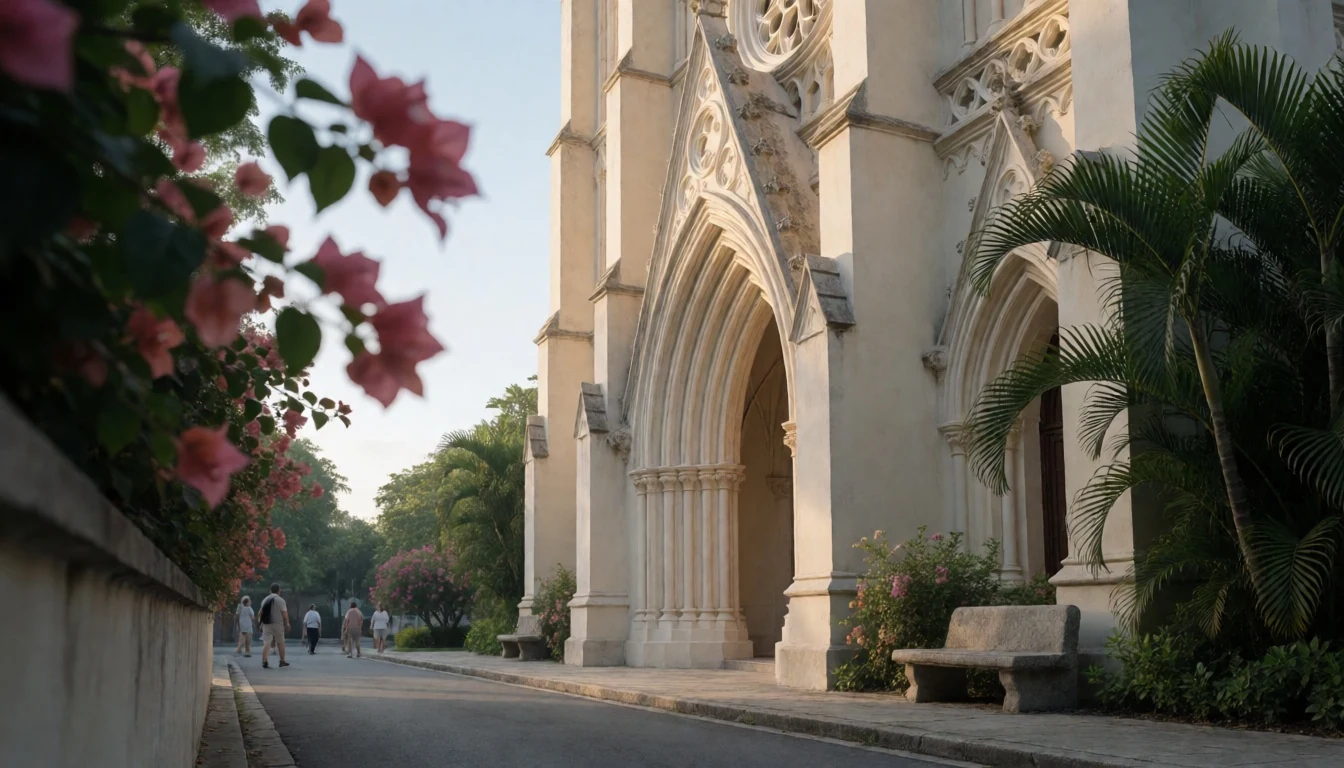
- Old Town — Historic quarter, Malabo
The historic quarter keeps Spanish colonial-style buildings, a Catholic church and views across the harbour. It rewards an unhurried walk rather than a checklist. Stroll in the cooler hours, and compare the streets with the old photograph of Santa Isabel's beach, taken when the town used that name.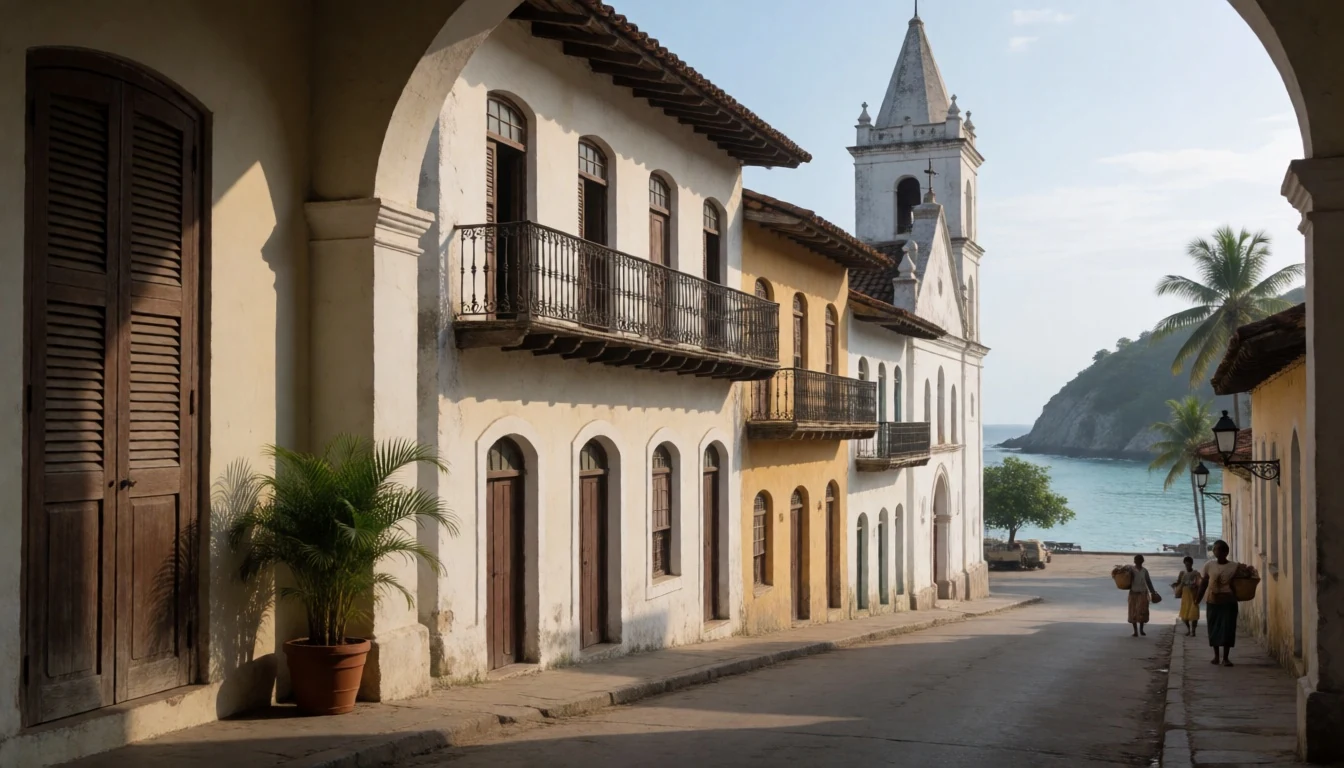
- Ilachi Waterfall — Inland Bioko, near Moka
A drop of more than 250 m, reached on foot through jungle with a few river crossings. The walk from the nearest road takes roughly an hour. Paths turn slippery after rain, so wear shoes with grip, carry water, and arrange a local guide and transport before setting out.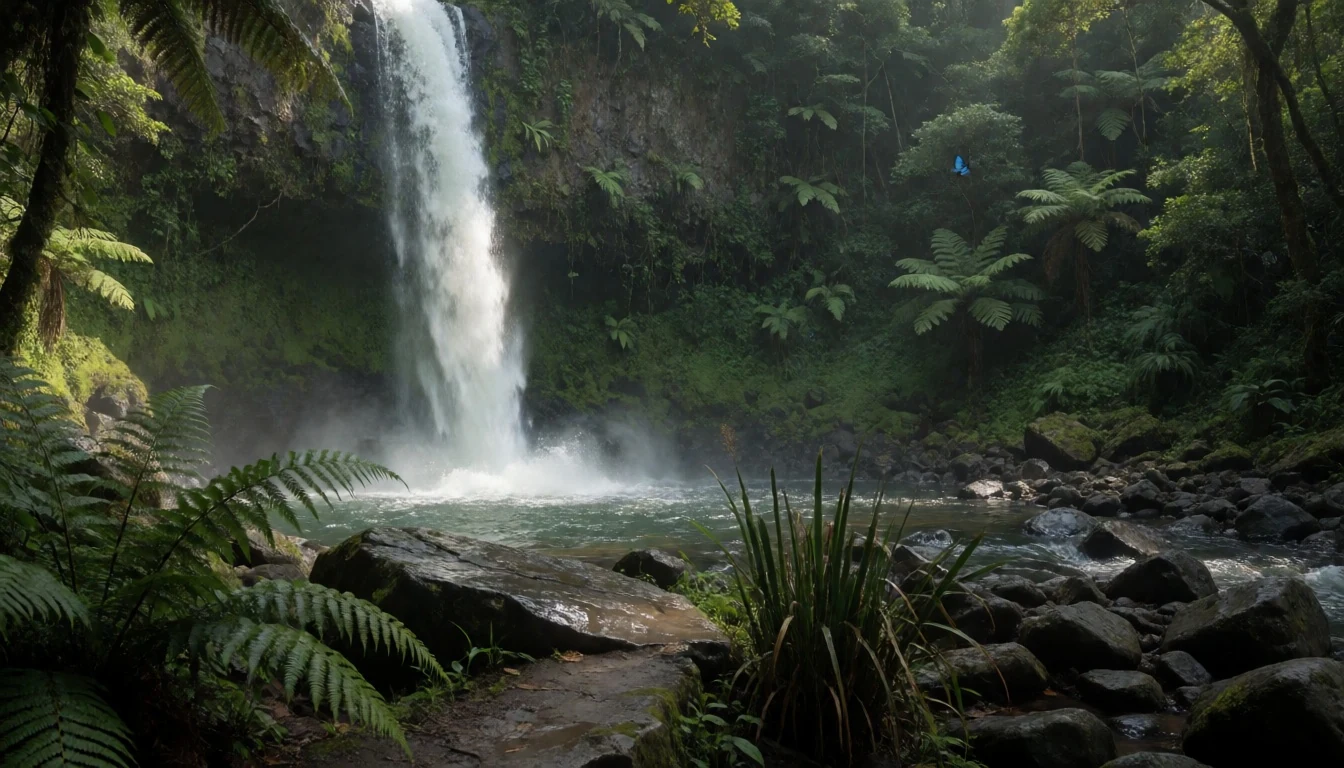
- Pico Basilé — Mountain above Malabo
The highest mountain in Equatorial Guinea, above 3,000 m, part of the same volcanic system as Mount Cameroon. It is visible from across Malabo on clear days. A church and a statue of Mother Bisila stand on the summit. Expect cloud and cooler air at the top, and ask locally about road conditions.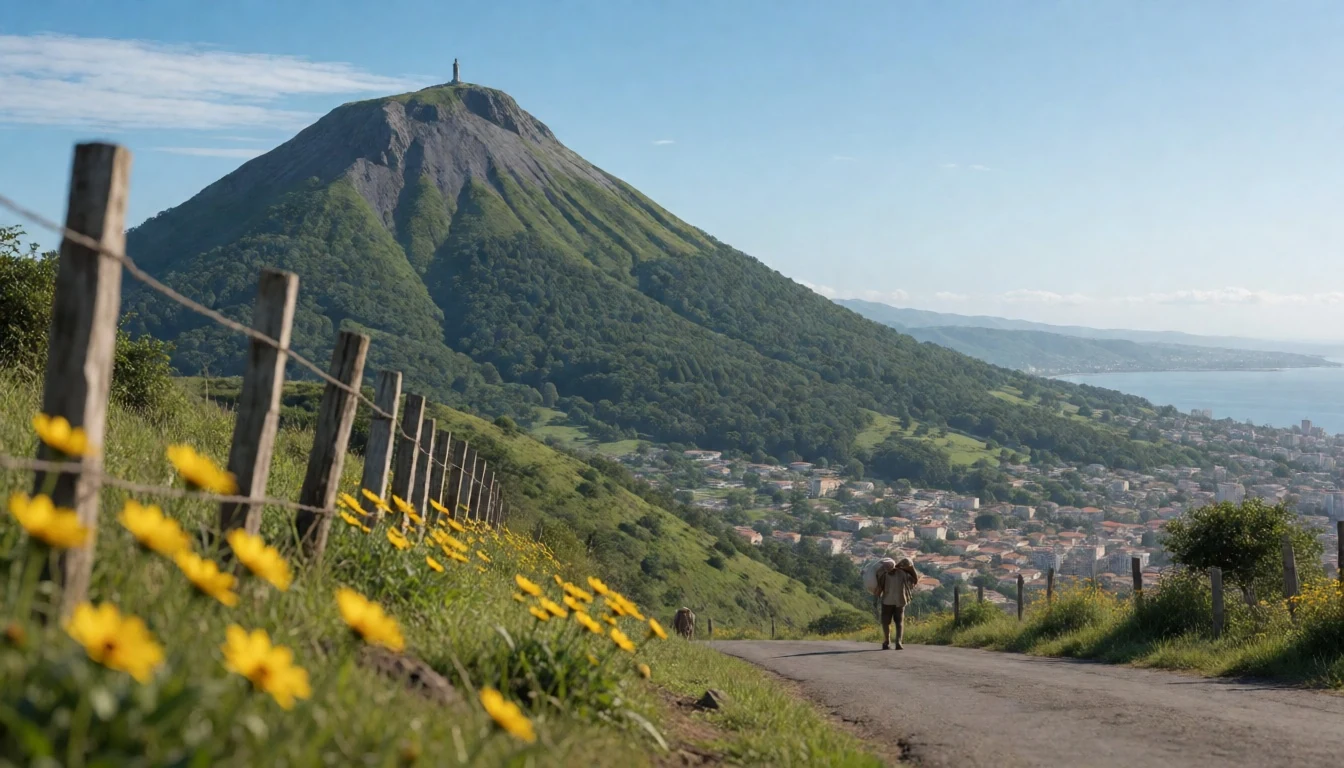
- San Antonio de Ureca — Southern Bioko
A small town in the south of the island, set among primates, birds, beaches and waterfalls. From November to February, leatherback turtles come ashore at night to lay eggs. The journey from Malabo is long and demanding, so plan it as an overnight trip with a guide or organised transport.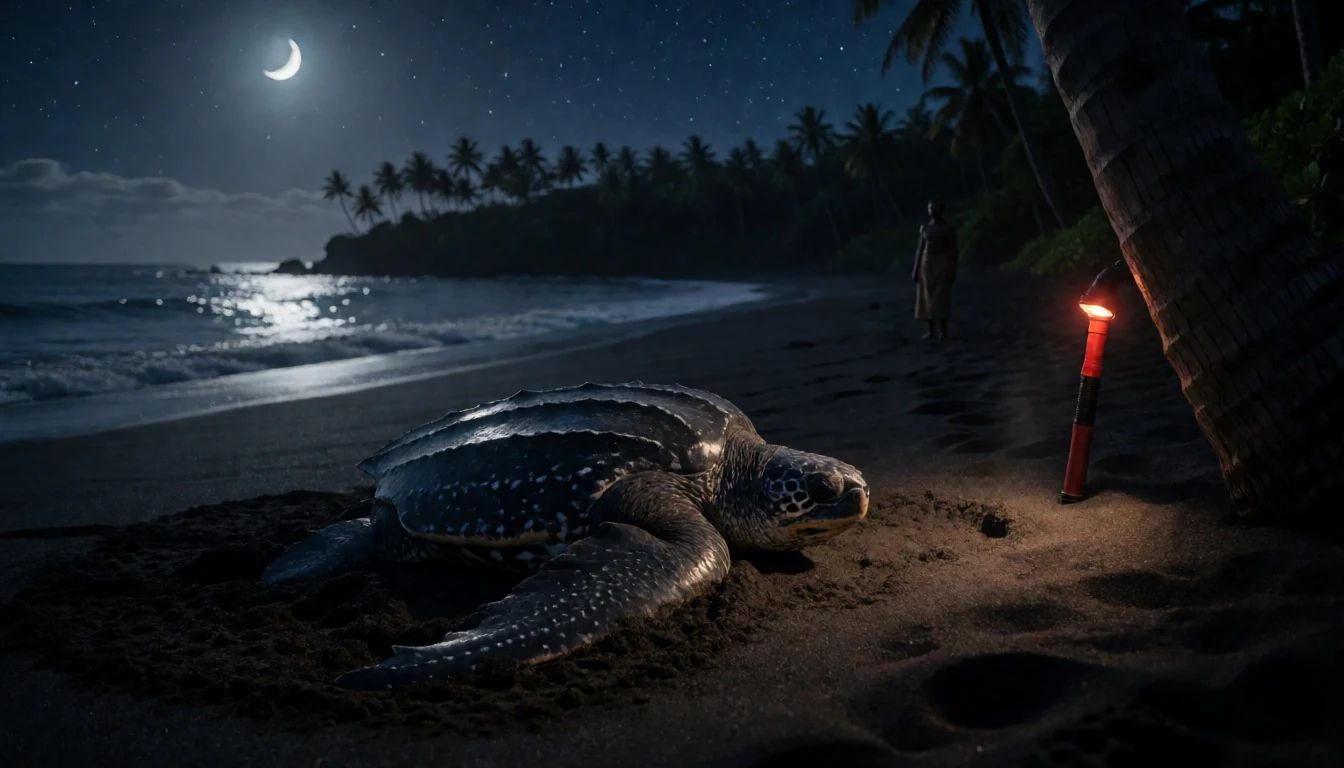
- Bioko Biodiversity Protection Program — Malabo
A conservation programme that welcomes visitors, including school groups, to its educational sessions, which are a good introduction to the island's wildlife before heading to the forest or the southern beaches. Contact the programme ahead of time to confirm opening arrangements, since they are not fixed for casual drop-ins.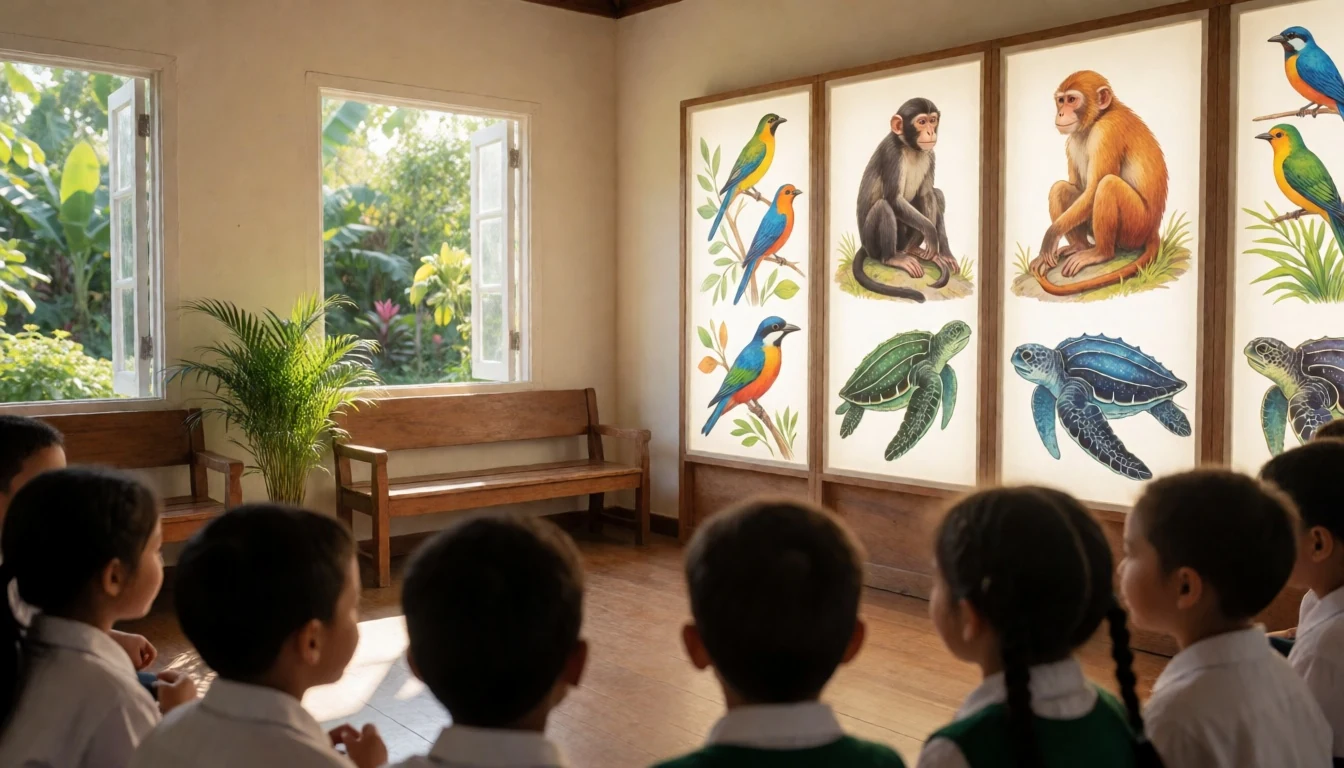
Culture
Malabo's culture is layered. The Bube are the island's original people, and the Spanish left their language, their Catholic churches and a street plan that still shapes the old centre. Pichinglis, spoken alongside Spanish, hints at the island's long contact with English-speaking traders and with neighbouring Cameroon and Nigeria. Daily life is lively in the evenings, when people move to bars, open-air terraces and football screens once the heat eases. Sunday is a day for church, and families dress carefully for it. The Centro Cultural de España in the city, which also hosts a university campus, is a reminder of how strong the Spanish link remains, and it is a useful place to learn about talks, films and exhibitions. Oil income has funded the stadium, the wide boulevards and several large hotel complexes, so the city mixes older colonial architecture with newer, more polished developments. Public life is formal, and greetings matter: say good morning or good afternoon, in Spanish if you can, before asking for anything. Security is taken seriously around official buildings, and the presidential zone has its own rules. Be patient with checkpoints and paperwork, and always carry your passport copy. Ask permission before photographing people, and do not photograph government buildings, soldiers, police or the presidential area, as it can lead to your camera being checked or your being detained.
What to wear
Malabo's traditional clothing is rooted in the cloth culture of West and Central Africa. Printed cotton wrappers, tied at the waist or worn as dresses and headwraps, appear at weddings, funerals, church festivals and family celebrations, and tailors sew bright fabrics into fitted tops and long dresses. Men wear tailored shirts or tunics in the same cloths for formal occasions. Specific garments differ between the Bube, Fang and other communities, so ask locally before assuming a pattern's meaning. In daily life, most people wear Western-style clothes: jeans, shirts, office wear in the government and oil districts, and football shirts on match days. Sunday church clothes are noticeably smarter than weekday dress. For a visitor, the climate matters most. It is hot, humid and often wet, so pack lightweight, quick-drying cotton or linen, a compact rain jacket and a hat. Cover shoulders and knees for churches and for any official building. Wear closed shoes with real grip for forest paths and waterfall walks, because mud and river crossings are common, and keep sandals for the city and the beach. A long-sleeved shirt helps with sun and insects on hikes. Dress modestly away from the hotels and beaches, and avoid anything that looks military, such as camouflage patterns.
What to eat
- Grilled fish and prawns — Seafront eateries around the harbour
Fresh fish and prawns are the natural order of the day on an island capital, usually grilled and served with rice, plantain or cassava. Choose a busy place where the catch has clearly just come in, and ask what is fresh that day.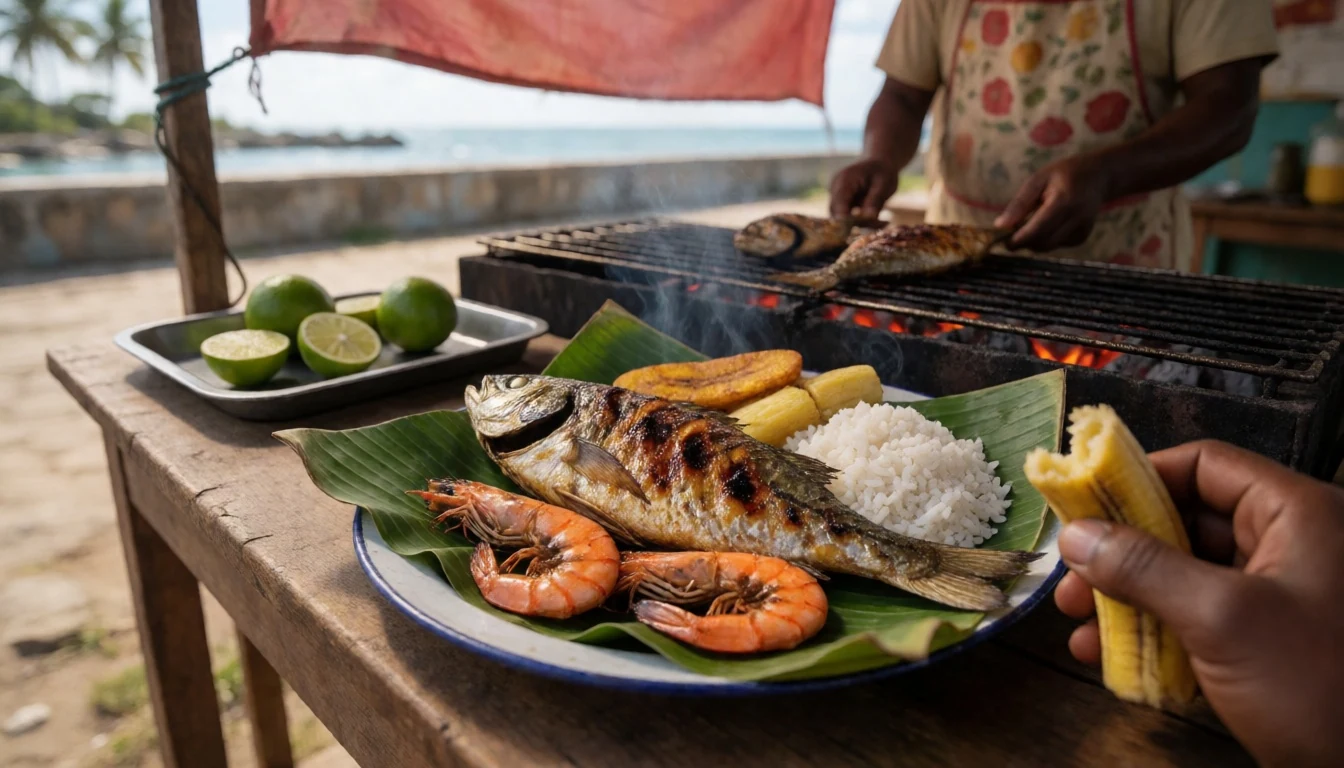
- Pepper soup — Local family-run eateries
A hot, peppery broth made with fish or meat, common along this stretch of the Gulf of Guinea coast. It is typically eaten slowly and is welcome on a wet, humid evening. Ask for it mild if you are not used to chilli.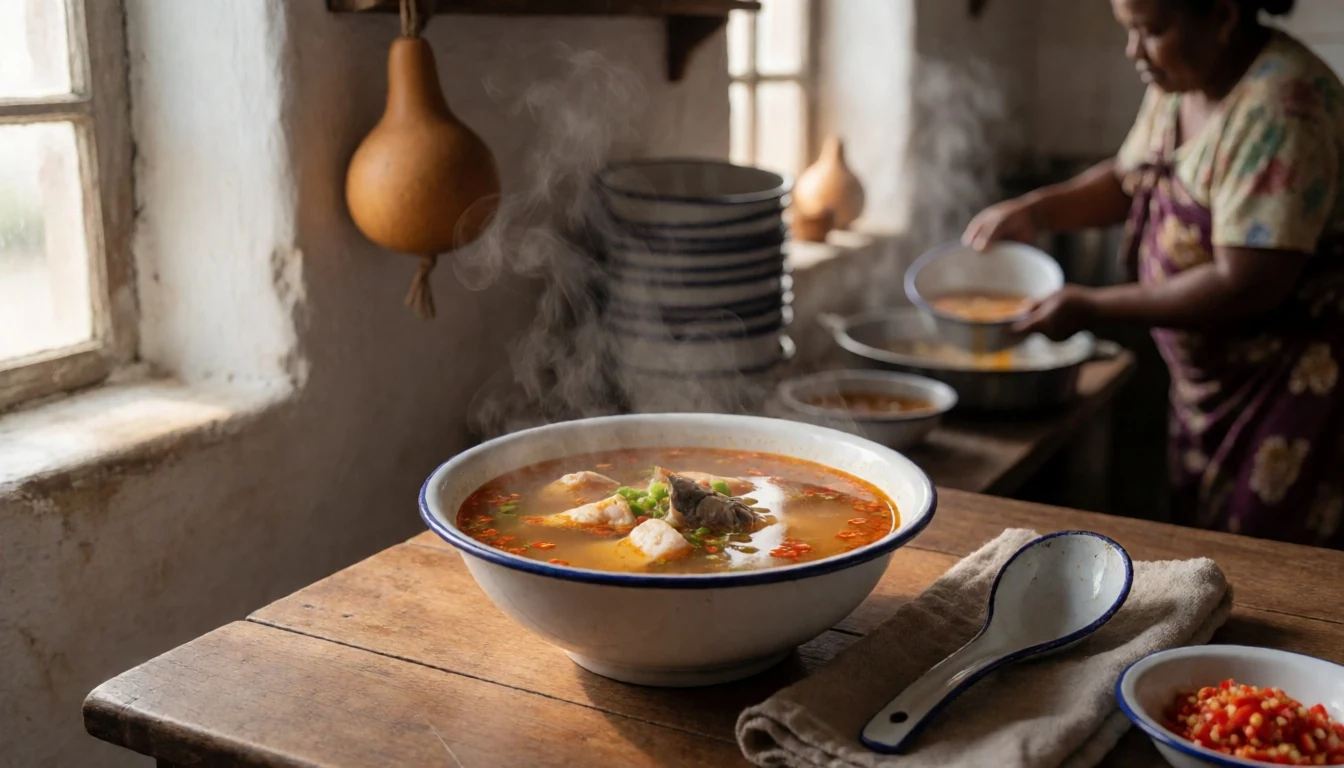
- Fried plantain and cassava — Street stalls and the central market
Plantain and cassava are staples across the island, fried or boiled as an accompaniment to nearly every meal. They make a filling, inexpensive snack when you are walking around the old town between sights. - Palm-oil stew with chicken or fish — Home-style local restaurants and eateries
Slow-cooked stews in red palm oil, often served with rice, cassava or plantain, are the everyday dish in many households. Look for places where locals eat at lunchtime, and ask what the stew is made with before ordering. - Fresh tropical fruit and juice — Market stalls and roadside sellers
The warm, wet climate supports an abundance of fruit, and sellers press juice or cut it to order. Choose whole fruit you can peel yourself, and check with your accommodation if you are unsure about ice or water.
Plan it
Best time. December and January are generally the drier months, which makes forest walks and mountain views easier, though Malabo's tropical monsoon climate means humidity and some rain at any time of year. November to February is also when leatherback turtles nest at night on the southern beaches.
How long. 3–4
Getting there. Fly into Malabo International Airport, about 9 km west of the centre, then take a taxi into town. Airlines serving Malabo have included Air France, Ethiopian, Lufthansa, Ceiba Intercontinental, Air Maroc and Turkish Airlines, so check current schedules. Ferries also run to Malabo port from Douala and Bata.
Budget. high
Tips
- Check visa and entry rules well before travelling, and see the city website, http://www.ayuntamientodemalabo.com/, for local information
- Carry some cash as well as cards, and confirm with your accommodation what it accepts
- Start hikes and waterfall trips early, and arrange a local guide and transport in advance
- Pack a light rain jacket, repellent and a refillable bottle, and ask locally about safe drinking water
- Keep a copy of your passport with you, and expect checkpoints and formal procedures
Etiquette
- Greet people before asking for anything, in Spanish if you can
- Do not photograph government buildings, officials or the presidential area, and ask before photographing people
- Cover shoulders and knees when entering a church
Nearby
Sources
- Wikidata Q3818 (CC0)
- Wikipedia: Malabo (rev 1383654265) (CC BY-SA 4.0)
- Wikivoyage: Malabo (rev 5410253) (CC BY-SA 4.0)
- Photo: Malabo a 13-oct-01 (Ipisking) (CC BY 3.0)
- Photo: Hotel de Federaciones 02 (Jmhi) (CC BY-SA 4.0)
- Photo: Katedrala, Malabo (Quahadi Añtó) (CC BY 3.0)
- Photo: Sofitel Malabo President Palace (Denis Barthel) (CC BY 3.0)
- Photo: Centro Cultural de España en Malabo (Contribuidora wiki) (CC BY-SA 4.0)
- Photo: Malabo 16511256061 (Ben Sutherland) (CC BY 2.5)
- Photo: Seal of Malabo (ITryToEditHere) (CC0 1.0)
- Photo: Isla de Fernando Poo, vista de la playa y ciudad de Santa Isabel (Federico Ruiz / Bernardo Rico) (Public domain)


