Bata
Bata, Equatorial Guinea
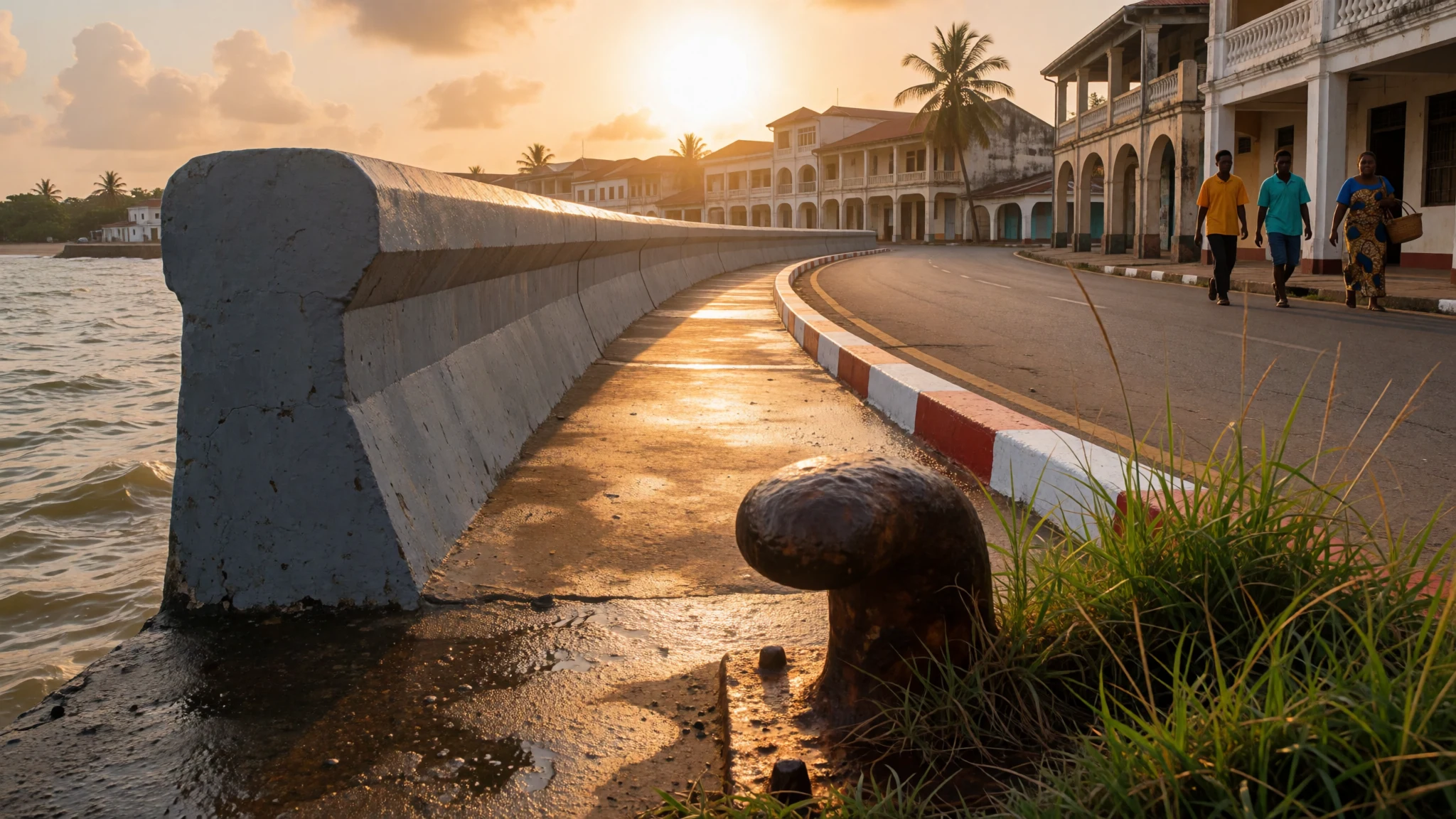
Bata is Equatorial Guinea's mainland port, a humid Atlantic city of markets, Spanish street life and oil-era concrete.
The place
Bata stands on the Atlantic shore of mainland Equatorial Guinea, in the coastal province that faces the Gulf of Guinea. The city spreads along a deep seaport with no natural harbour: a jetty for offshore cargo, harbour works and a seafront road on the water side, and a loose grid of streets climbing gently inland toward forest and red dirt. Mornings can open bright, then a wall of rain shuts the market and floods the gutters; between the downpours the heat sits heavy and clothes never quite dry. The built fabric mixes colonial and later building without a clean line between them. Low colonial blocks, churches and arcaded shops remain from the Spanish administration, while the oil decades added broader avenues, new housing, government compounds and a stadium large enough for international football. Much of the newer building is plain concrete, painted in strong colours, with yards and walls rather than public squares. Daily Bata is a trading city. Canoes and small boats still matter beside the commercial port; trucks leave for the interior and for the borders with Gabon and Cameroon; street sellers set plantain, smoked fish, phone credit and printed cloth on tables that can be folded in minutes when the sky turns. Spanish names the official city — schools, clinics, police, shop signs — while Fang is widely heard, and coastal languages persist among families who were here before the colonial grid. French is useful with drivers and traders who work the neighbouring states. People are occupied with work, church, football and family events, and a stranger is noticeable without being fussed over. At night the seafront can feel open and poorly lit, and residential streets go quiet early.
Its story
Bata's name belongs to this coast, not to a European map-maker's label pasted on an empty shore. Fishing and trading communities, among them Ndowe families, used the bay long before Spanish officials decided the landing was worth a town. Iberian ships had been in the Gulf for generations, but the settlement that became Bata took shape when Spain turned Río Muni from a claimed coastline into a governed colony, with Bata as the mainland headquarters. The colonial town was a port first. Timber from the interior, coffee, and supplies for inland posts moved across the wharf; a small grid of offices, missions and shops grew behind it, and Catholic parishes organised much of public life. Francisco Macías Nguema's presidency descended into a closed, violent rule that scattered people, stalled trade and left the mainland town thin and fearful. A coup led by Teodoro Obiang Nguema Mbasogo ended that terror and opened a different bargain: political stillness in exchange for oil money. When petroleum receipts began to flow, construction reached Bata as well as the island capital. Roads widened, housing blocks rose, a hospital complex gained new wings, and a football stadium was raised so the country could stand on an international tournament stage it co-hosted with its southern neighbour. The boom was real and uneven. Quarters of the city look recently built and already weathered; work is easier to find than it was in the hardest years. Through all of this the port habit never left. Bata's story is a coastal town that Spain made into an administrative centre, that dictatorship thinned, and that oil rebuilt in concrete, while the market and the fishing shore carried on underneath.
What to see
- Estadio de Bata — the open avenues away from the harbour
Estadio de Bata is the city's main football ground, built so Equatorial Guinea could co-host a continental tournament, and it still draws crowds for local matches and national fixtures. The bowl stands in an open district of wide roads, away from the older streets by the harbour. Outside match times it works as a landmark; public entry is not something to count on.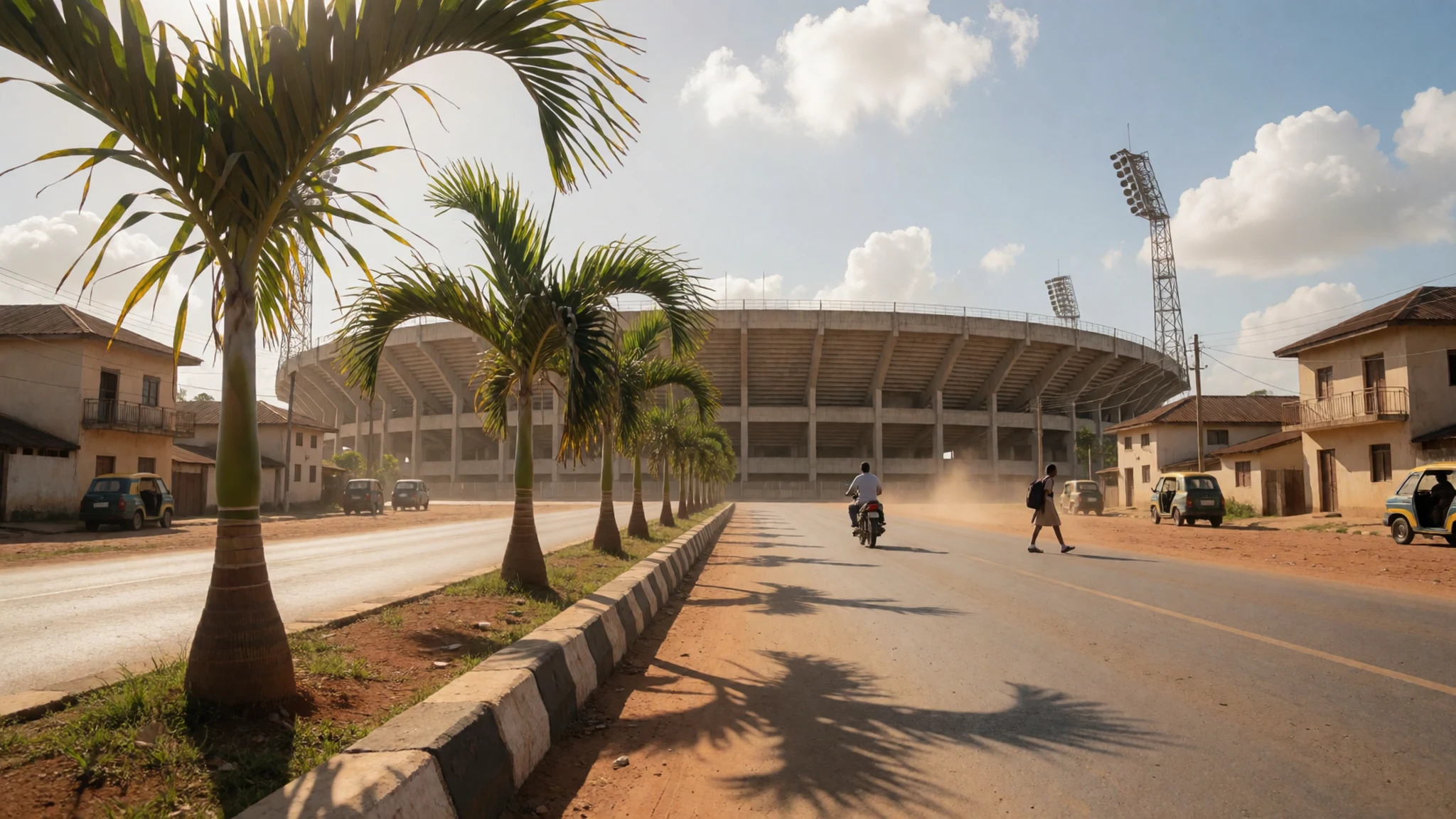
- Bata street market — central market streets
Bata's street market is the city's daily theatre: plantain, smoked and fresh fish, greens, printed cloth, plastic ware and phone credit stacked on tables that vanish when rain hits. Sellers call out in Spanish and Fang, porters thread between shared taxis, and the smell is charcoal, palm oil and wet concrete. Morning is the full version; by early afternoon many stalls have sold through or closed for heat and weather.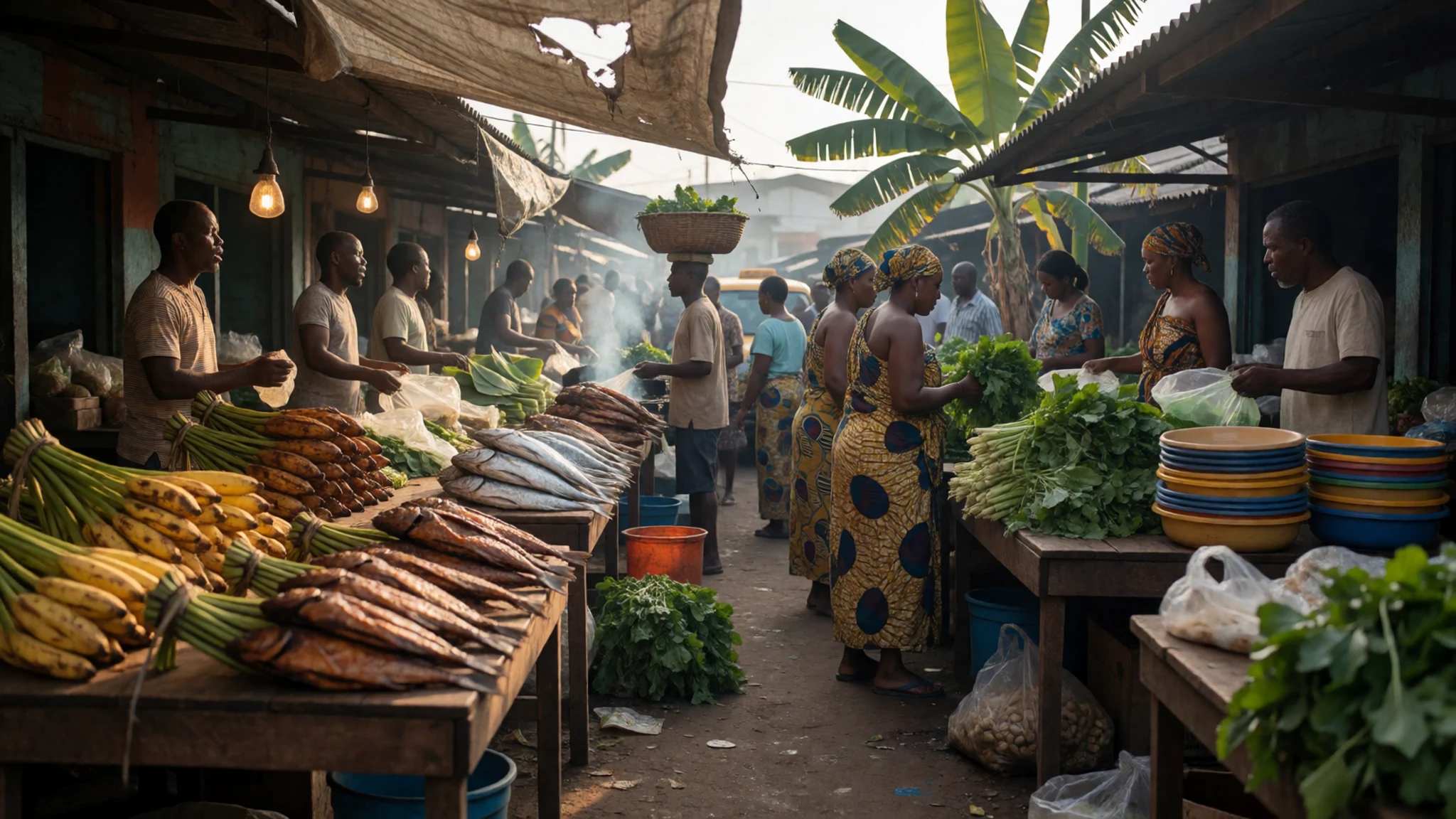
- The port — the harbour
The port is why Bata exists as a city, and it still sets the waterfront's rhythm. Commercial quays handle timber, fuel and general cargo, while smaller boats work the edges with fish and local freight. The harbour road belongs to trucks as much as to anyone on foot. Photography of installations, uniformed staff or ships can bring a sharp question from security.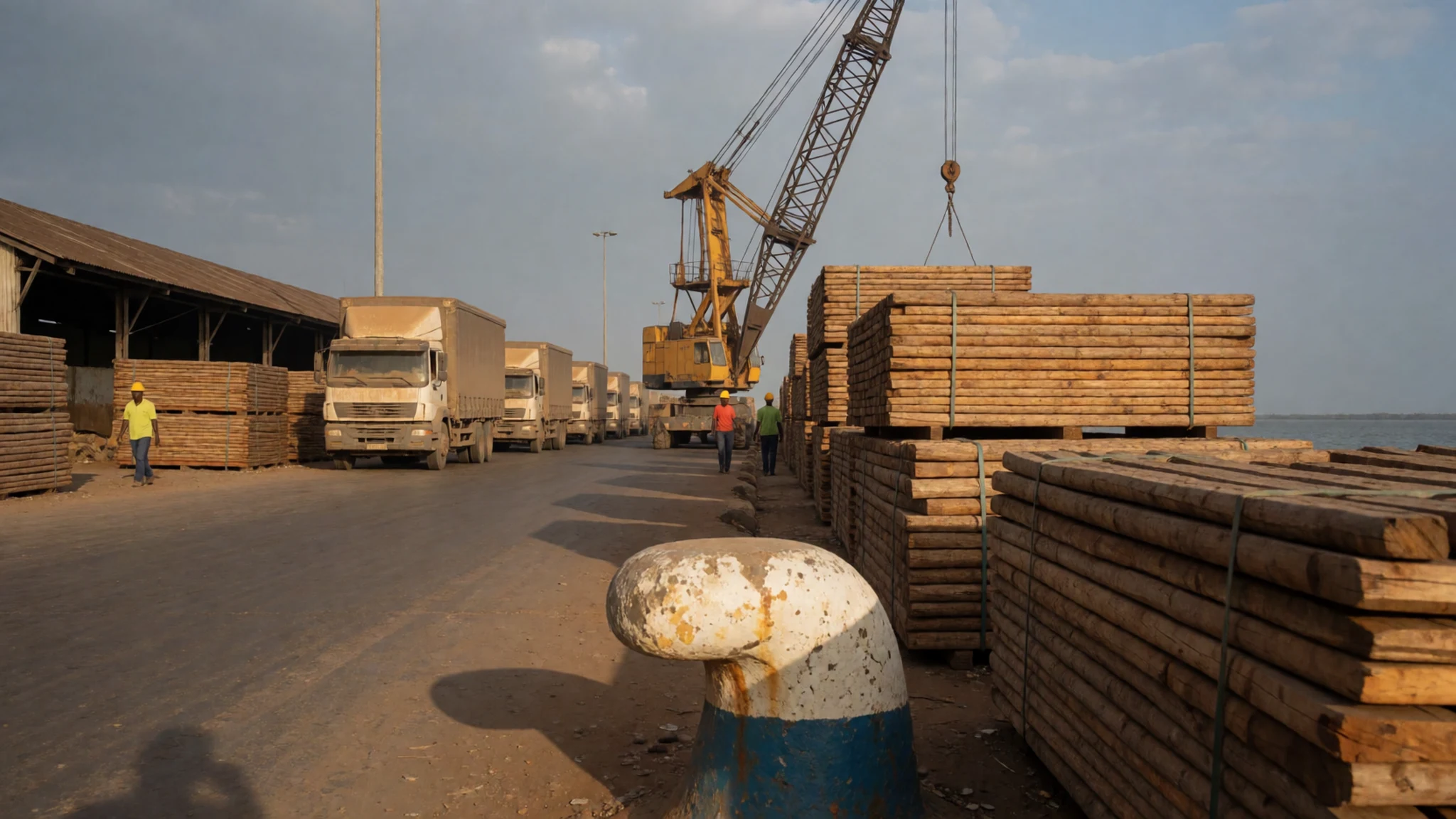
- The seafront — along the bay
Bata's seafront is a working bay rather than a planted promenade, though people do walk it in the cooler ends of the day. The water is the Gulf of Guinea: warm, often brown-green near shore after rain, with a horizon of humid sky. Bars and small eateries appear in stretches, then give way to walls, lots and port fencing. Lighting after dark is patchy.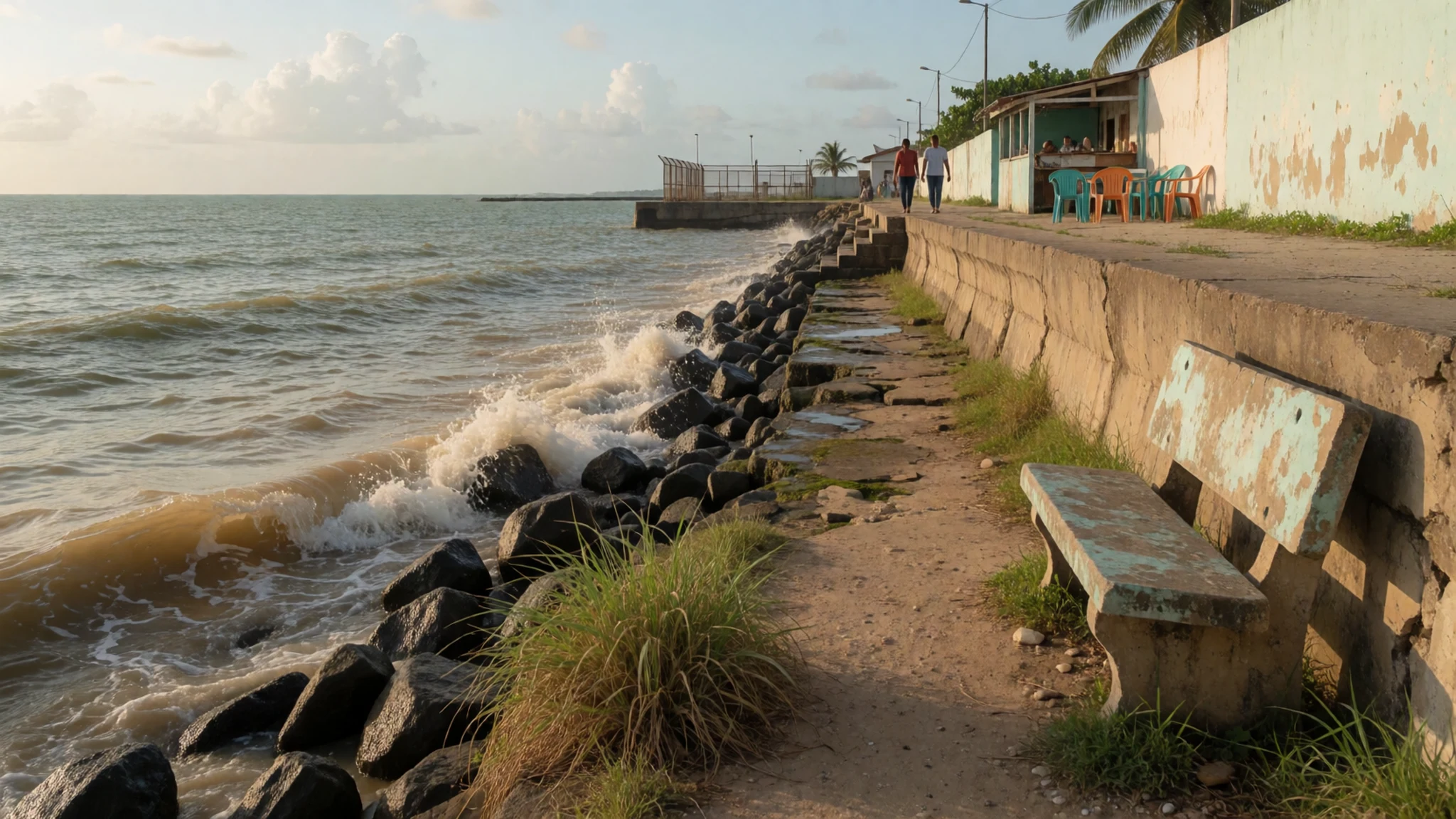
- The older centre — the older centre inland of the harbour
Inland of the harbour, Bata's older centre is a Spanish colonial grid of low blocks, parish churches and shuttered shops, now patched with newer concrete. Sunday brings a density the weekdays lack: families in their better clothes, choirs, and the street outside filling before and after mass. The architecture is modest — bell towers, plain naves, painted plaster — and it matters because it still organises the week.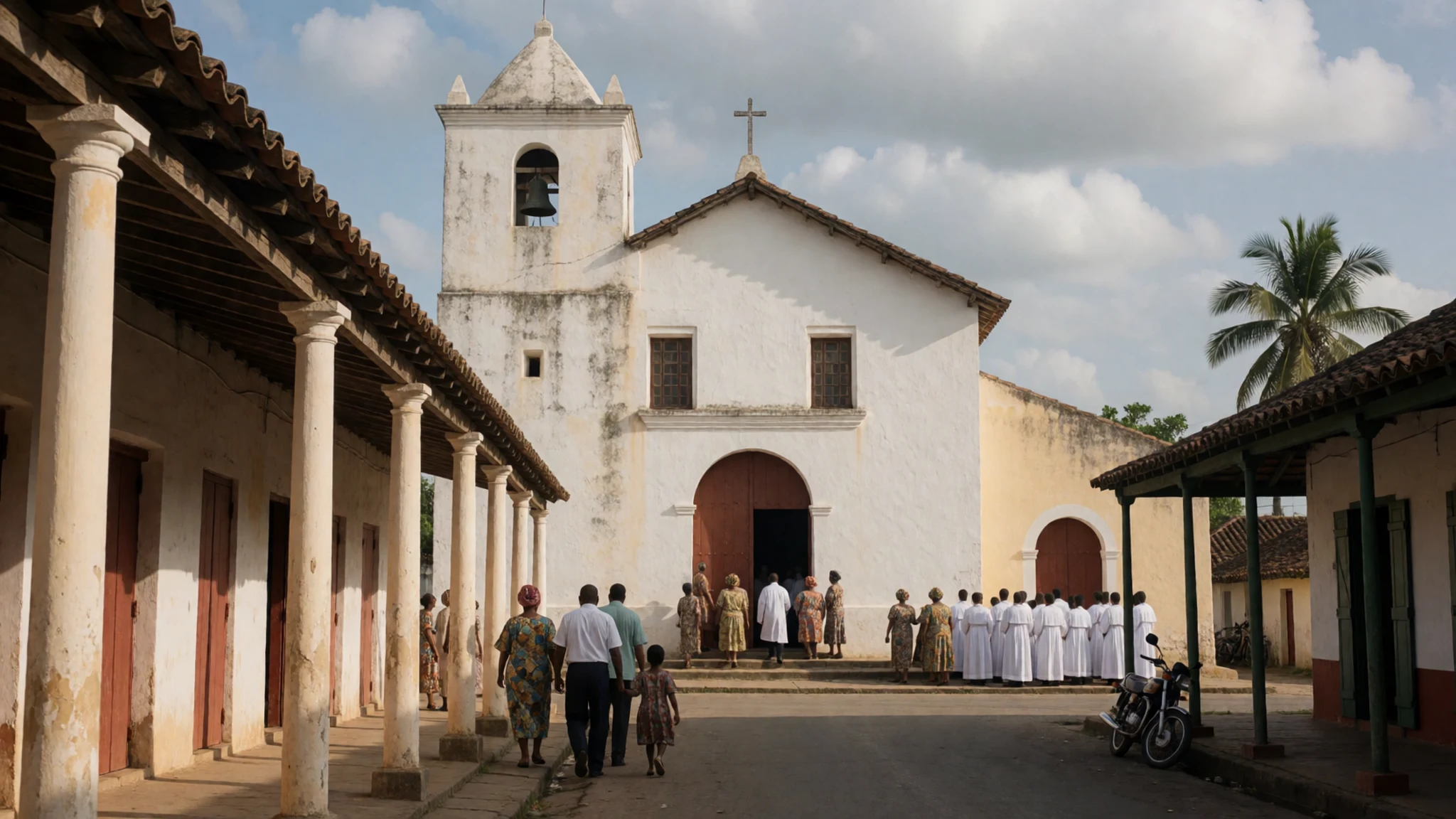
Culture
Bata's culture is a coastal Equatoguinean mix: Ndowe and other shore communities, a large Fang population from the forested interior, and a Spanish-speaking public life shaped by Catholic parishes and the colonial school. The week turns on church as much as on the market. Baptisms, funerals and feast days pull extended families into the older centre in formal clothes, with music that runs from choir hymns to dance rhythms people know from Fang and coastal tradition. Respect for age is practical, not decorative. Greetings come before business, an elder is offered the better seat, and interrupting a conversation is poor form. Spanish carries official and commercial talk; starting in Spanish, even briefly, is read as manners, after which Fang or French may take over depending on the person. Football is the shared secular passion, and a match day at the stadium is one of the few moments the whole city looks in one direction. Oil wealth has added a layer of display — new cars, elaborate weddings, tailored outfits at government occasions — beside households that still measure a good week by market takings. Authority is visible: checkpoints, uniforms and official compounds are part of the streetscape, and people lower their voices around them. Ask before photographing anyone in Bata, and never point a camera at soldiers, police, the port or government buildings.
What to wear
Bata dresses for heat, rain and a formal streak that surprises visitors who expect only beachwear. Traditional cloth still appears at weddings, funerals, national holidays and some church feasts. Women wear wax-print wraps — a pagne of cotton, often in bright Dutch-style or West African prints — as a skirt with a tailored blouse, and a second piece as a headwrap when the occasion is solemn. Men may wear an embroidered West African robe over trousers for ceremonies, or a dark suit when the event is official, a habit reinforced by Spanish Catholic formality. Day to day the city is more ordinary: football shirts, jeans, simple dresses, sandals, headscarves against the sun, and rubber sandals that survive flooded gutters. Office workers and civil servants keep a sharper line — pressed shirts, closed shoes, modest dresses — especially near government buildings. Cloth sellers in the street market are the place to see what is actually worn, piled by pattern and price band, with tailors nearby who can sew a wrap outfit quickly. A visitor is comfortable in light cotton that covers shoulders and knees for churches and official offices, with a light rain jacket and sandals that can get wet, plus a pair of closed shoes if the plan includes a meeting or a Sunday service. Flashy jewellery and military-looking clothing are a bad idea in a city with a heavy security presence. Beach shorts belong in a private compound, not in the market or on the cathedral steps.
What to eat
- Grilled fish — harbour-side stalls and the street market
Grilled fish is Bata's everyday dish, usually a whole coastal catch split and cooked over charcoal. Vendors season it with salt, chilli and a little oil, and serve plantain or cassava alongside. Harbour-side stalls and the street market have it from late morning, once the boats are in.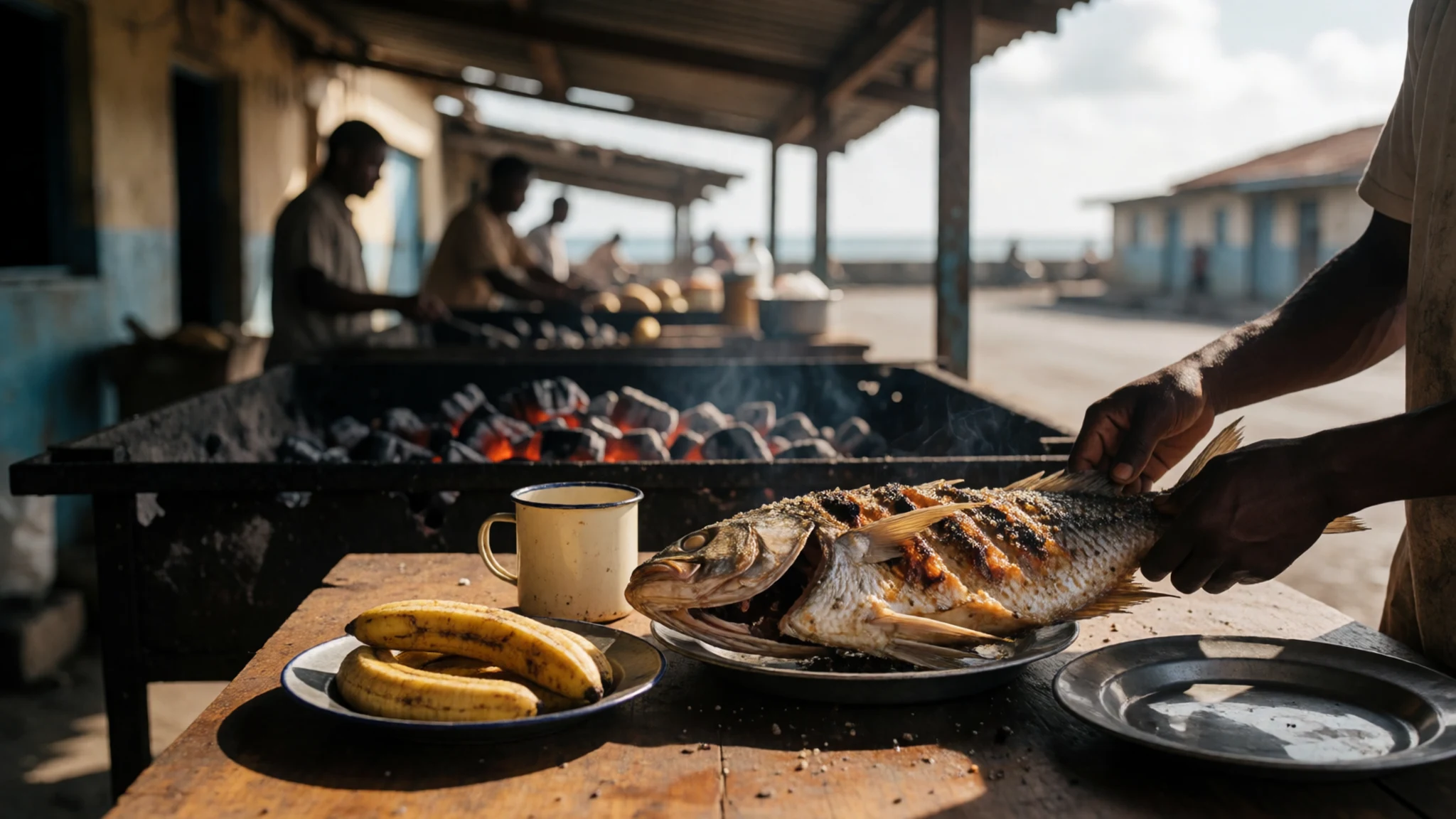
- Peanut sauce — neighbourhood cook-shops
Chicken or meat in peanut sauce is the inland-influenced plate that home-style eateries around Bata do well. Groundnuts are pounded into a thick sauce with palm oil and chilli, and the dish arrives with rice, yuca or plantain. Neighbourhood cook-shops serve it at midday.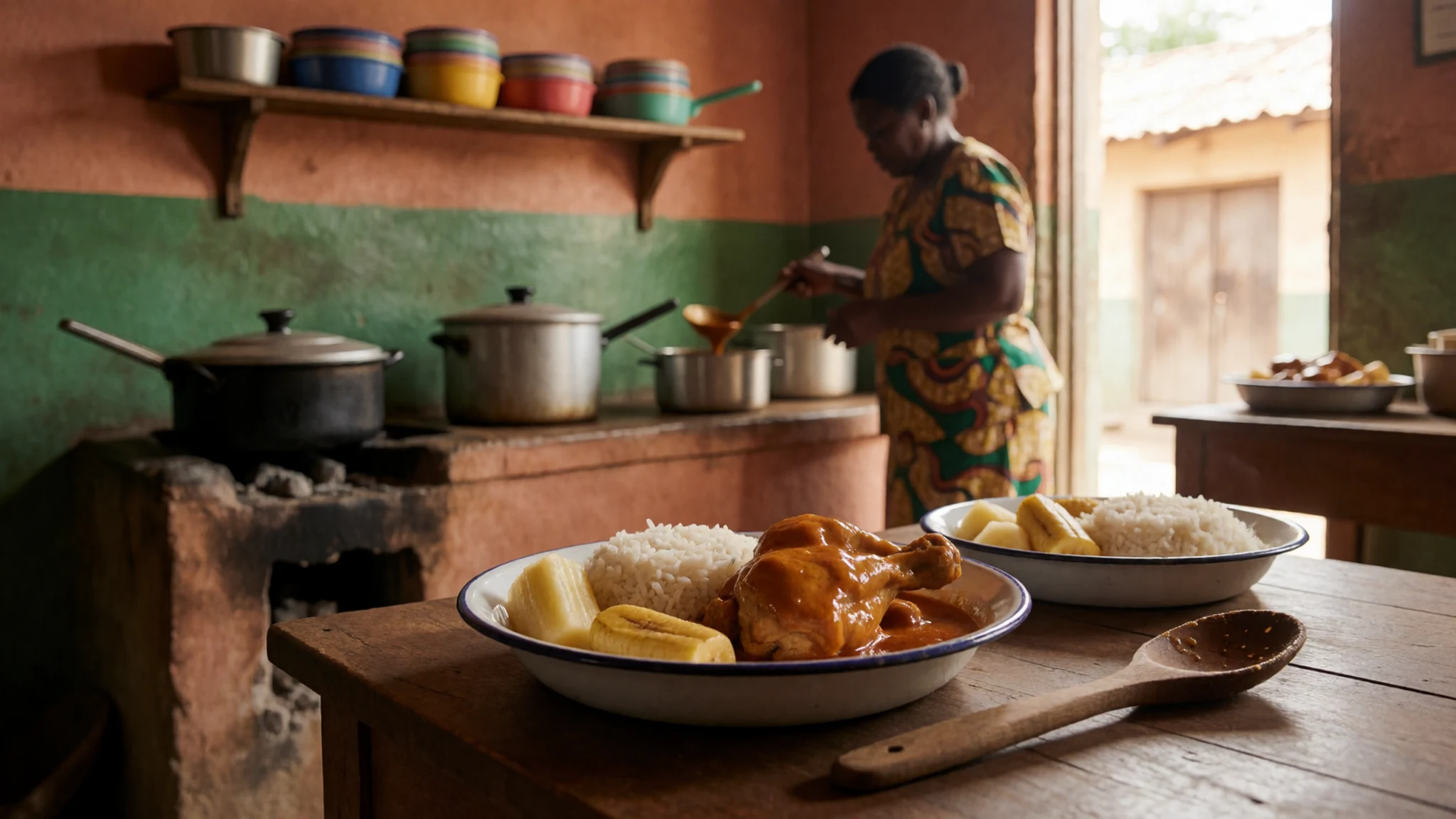
- Fried plantain — market streets
Fried plantain is the staple side, and sometimes the whole meal, in Bata's market streets. Vendors fry it green and savoury or ripe and sweet, slice to order and wrap the pieces in paper for eating on foot. Market stalls sell it beside fish or stew. - Greens in palm oil — market cook-shops
Leafy greens cooked down in palm oil are the vegetable heart of a Bata plate, often with smoked fish or dried shrimp in the pot. The result is rich, salty and red-orange, meant to be eaten with cassava, yuca or rice. Market cook-shops serve it at lunch. - Peppery fish broth — harbour-side cook-shops
A peppery fish broth is what many Bata eateries offer when the rain has killed any appetite for heavy sauce. Bones, chilli, tomato and a little oil make a thin, hot bowl, sometimes with plantain on the side. Harbour-side cook-shops serve it late morning.
Plan it
Best time. July–August brings Bata's driest and most comfortable spell, and October–November is the wettest; February–March runs hottest, while the other months stay hot and often wet, with downpours that can stop the market for an hour. There is no cool season.
How long. 2–3
Getting there. Bata has its own airport, with flights from Malabo and some regional links; the last leg is the road in from the airfield. Overland, the city is reached by the roads from Gabon and Cameroon. Confirm flights and border rules with official sources before travelling.
Budget. high
Tips
- Carry cash, because cards often fail away from the larger hotels and market stalls expect notes.
- Keep a photocopy of your passport separate from the original; checkpoints are a normal part of moving around Bata.
- Begin outdoor plans early in the day, because heat builds quickly and rain often arrives before afternoon outside the drier months.
- Sort yellow-fever paperwork before travel; entry checks for a certificate are common, and the current rule should be confirmed officially.
Etiquette
- Greet people in Spanish before asking for help or a price; the conversation may then shift into Fang or French.
- Cover shoulders and knees in churches and near official buildings.
- Ask before photographing anyone, and do not photograph soldiers, police, checkpoints, the port or government buildings.
Nearby
Sources
- Wikidata Q194115 (CC0)
- Wikipedia — Bata, Equatorial Guinea (CC BY-SA 4.0)
- Wikivoyage — Bata (CC BY-SA 4.0)