Annobón
Annobón, Equatorial Guinea
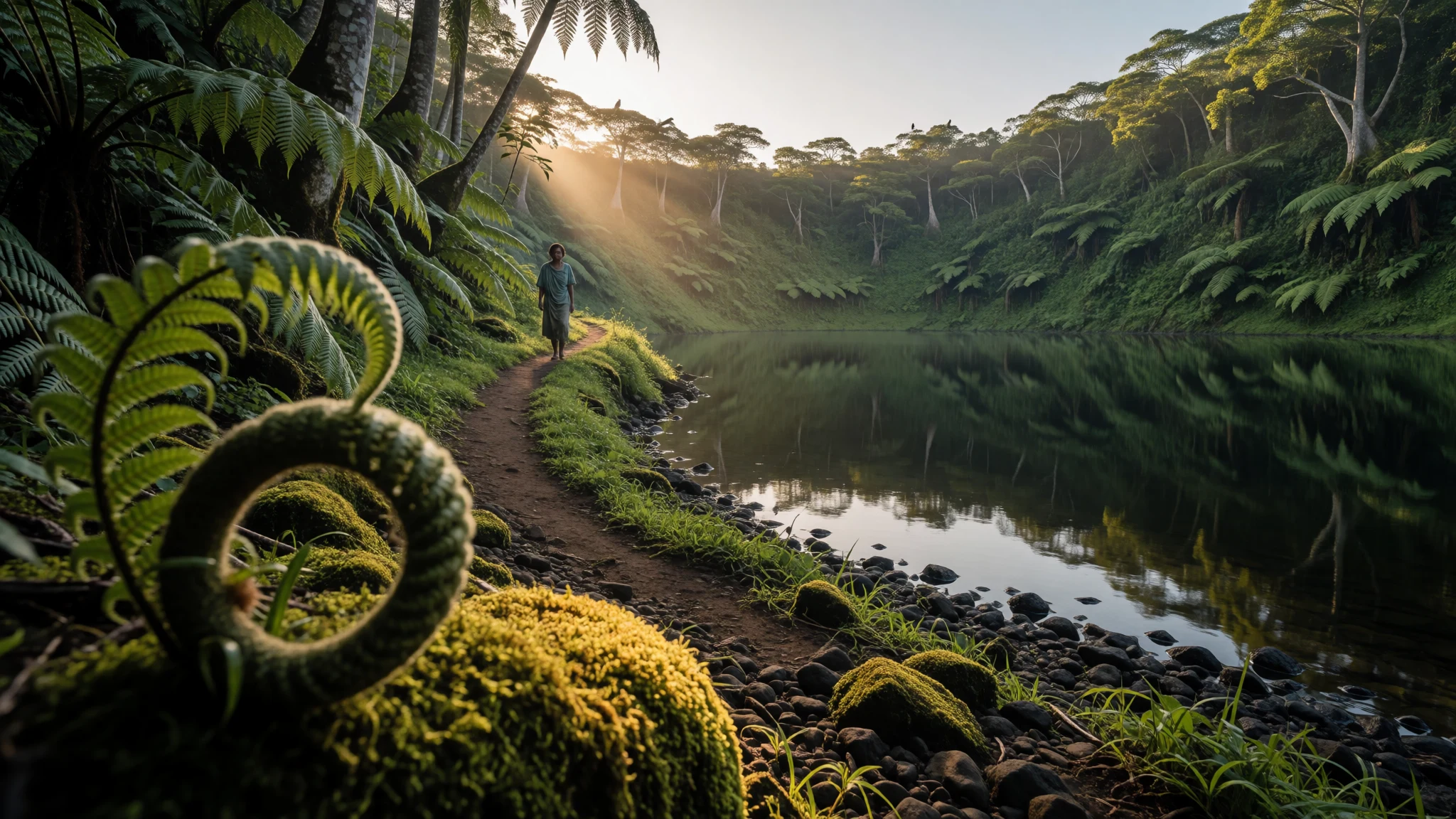
Annobón is a remote volcanic island in the Gulf of Guinea, with a crater lake, rare birds and a Portuguese-creole culture.
The place
Annobón is the southernmost piece of Equatorial Guinea and the only part of the country lying below the equator in the Atlantic. It is a province in its own right, made up of one volcanic island and a scatter of rocky islets, among them Santarém to the south. Facts list a population of 5,232, and the 2015 census gave a figure close to that, which makes it the country's smallest province by both people and area.
The main island is an extinct volcano, roughly 6.4 km long and 3.3 km wide, with about 20.9 square kilometres of land. A crater lake, Lago A Pot, sits near the middle, and the highest point, Quioveo, rises 598 metres. Forest covers much of the interior.
The capital, San Antonio de Palé, lies on the north side. Three smaller villages, Mabana, San Pedro and Aual, share the rest of the coast. Spanish is the official language, but most islanders speak a Portuguese-based creole at home. Fishing and forestry carry the local economy.
Isolation defines the place. The island lies about 350 km off the Gabon coast and about 180 km south-west of São Tomé, and Malabo, the national hub, is far to the north. Ships have historically called only every few months, so visitors should treat Annobón as an expedition rather than a casual beach stop: slow logistics, little infrastructure, and a community that is used to managing on its own.
Its story
Portuguese navigators reached Annobón on 1 January 1473, and the island's name, from "Ano Bom", means New Year. A Spanish explorer is said to have sighted it a few years earlier and called it San Antonio, but it was the Portuguese date that stuck. The island seems to have been empty until settlement began in the following year, mostly with enslaved Africans brought from Angola by way of São Tomé. They are regarded as the first generation of Annobonese society.
In the early sixteenth century, children born to enslaved women and European men grew up as forros, people on the way to freedom. Over time the forros built their own identity and some economic weight, and this was also when the Annobonese creole language took shape.
Spain acquired the island under the 1778 Treaty of El Pardo, which swapped Annobón, Fernando Po (now Bioko) and a stretch of the Guinea coast for Spanish acceptance of Portuguese expansion in Brazil. The islanders did not welcome the change. When the Spanish flag went up, they took offence at what they read as dogs on it, though the design showed lions. They drove the newcomers out, following a custom of casting witches into the sea.
That sense of separateness has lasted. Two island flags, produced by local movements, appear among the staged reference images, and the island's position far south of the mainland still gives it importance in claims over a wide area of ocean.
What to see
- San Antonio de Palé church — San Antonio de Palé, north coast
The capital's colonial church has a wooden gabled roof and stained-glass windows, a reminder of the Portuguese and Spanish centuries. It makes a sensible first stop, since the town is where boats, officials and daily life come together and where visitors can ask about walking routes.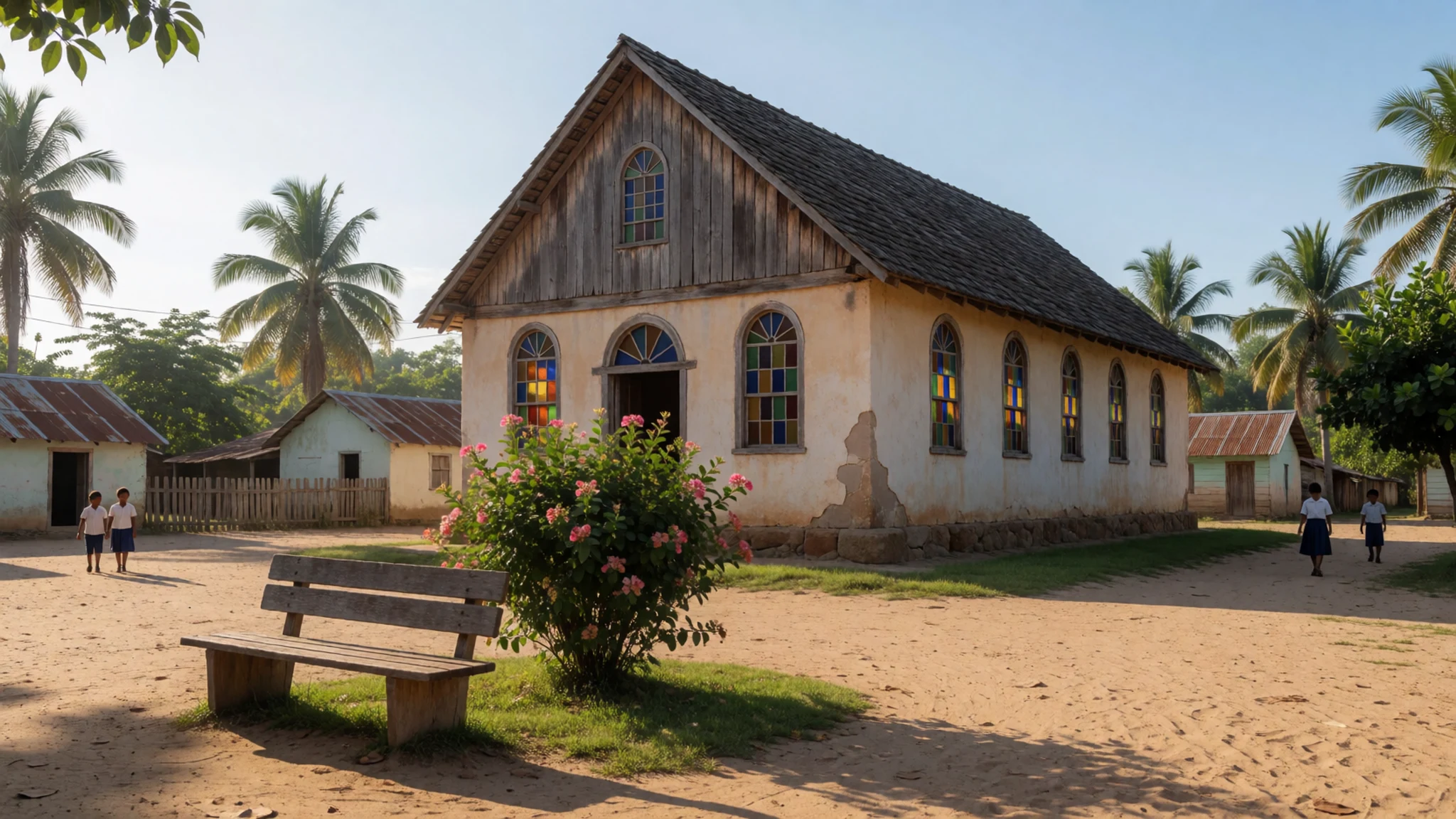
- Lago A Pot — Island interior
This crater lake near the centre of the island is reached on foot through a valley of ceiba trees, big ferns and thick moss. Expect mud, humidity and slow going. A local guide is worth arranging in the capital, as paths are not signed in any way a visitor can rely on.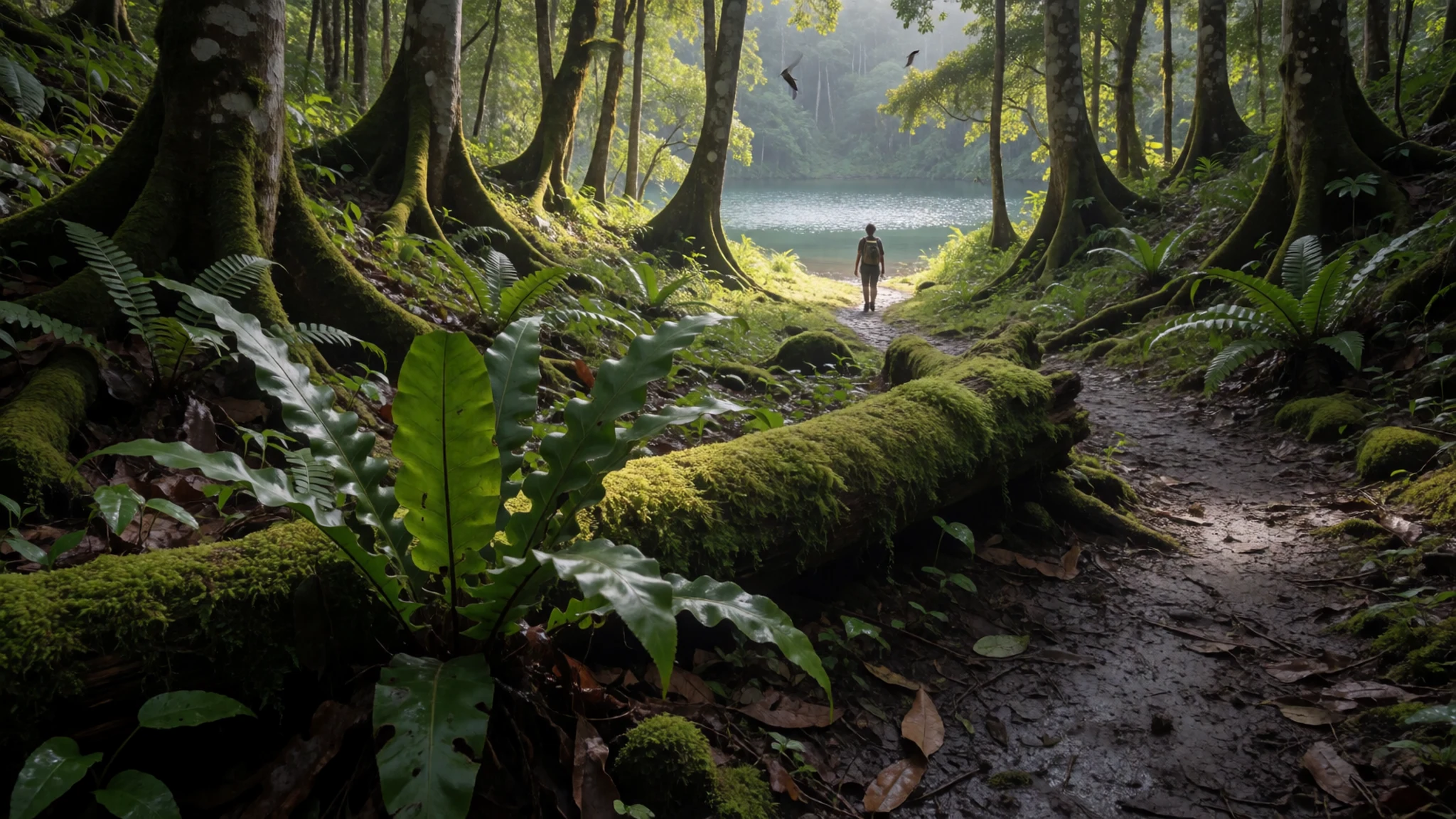
- Quioveo and the Natural Reserve — Annobón Natural Reserve
Quioveo is the island's high point at 598 metres, an extinct volcano inside the Annobón Natural Reserve. The climb goes through dense, damp forest, so start early and carry plenty of water. Views over the Atlantic depend on cloud, which often gathers around the summit.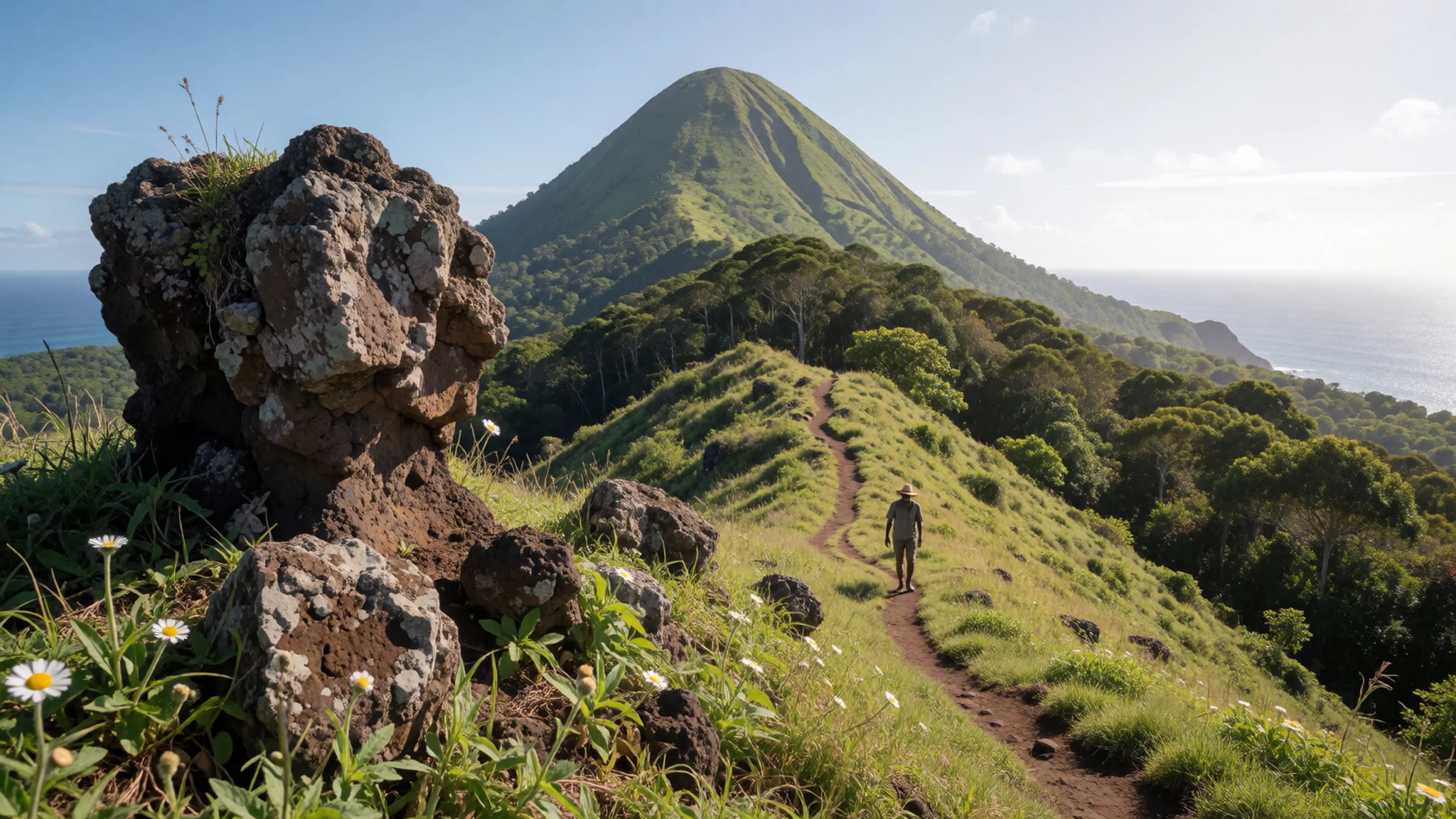
- Endemic birds — Forest and reserve edges
Three birds found here are the Annobón paradise flycatcher, the Annobón white-eye and the Annobón scops owl. Birdwatchers come for them. Go quietly along forest edges in the early morning, bring binoculars, and ask islanders where the birds have been seen recently.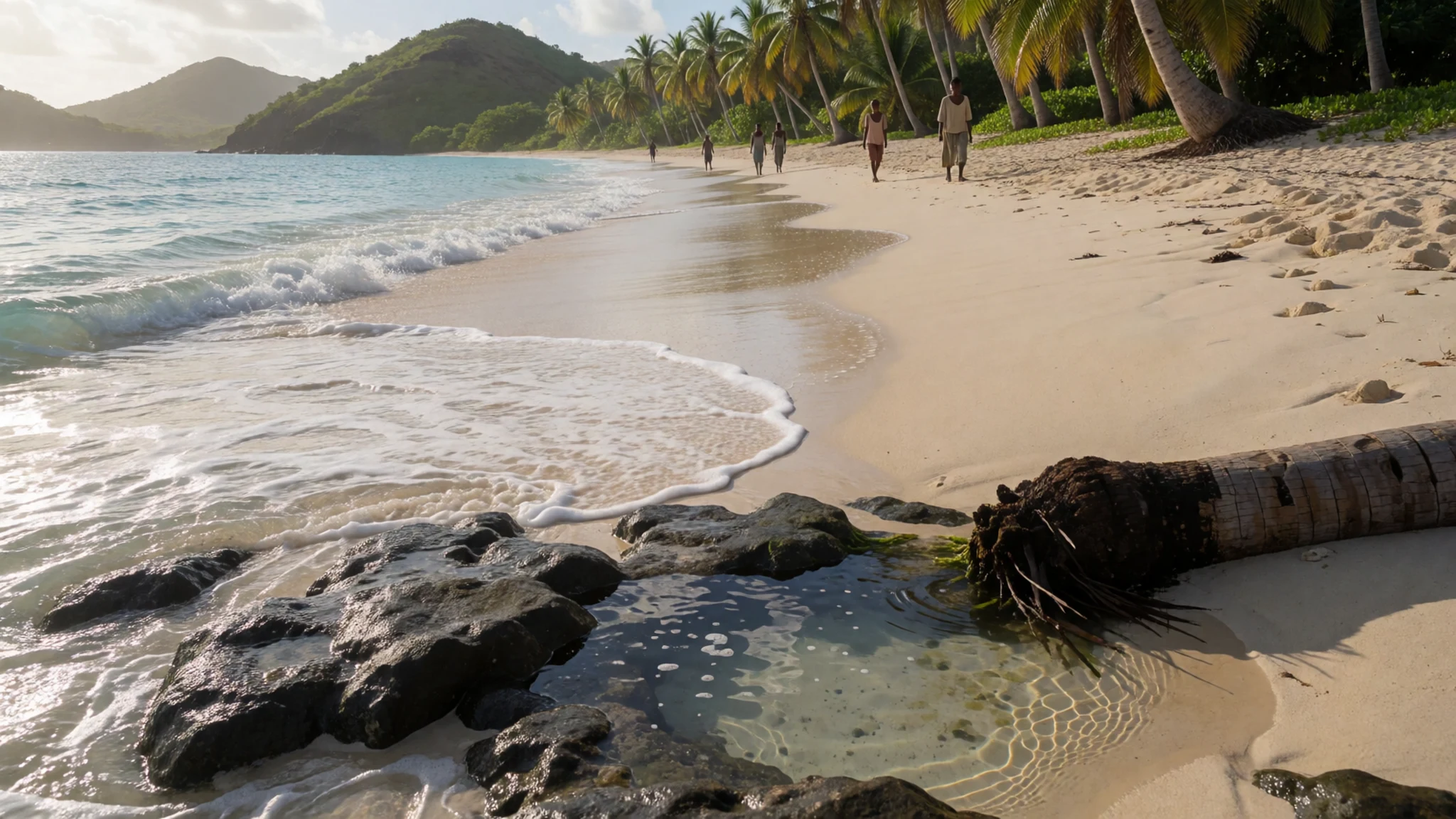
- Playa del Palmar — Coast near the settlements
A beach used for swimming and informal leisure, with island life going on around it. Sea conditions in the open Atlantic can be strong, so ask locally before swimming. The small football ground in the settlements is another good place to watch evening village life.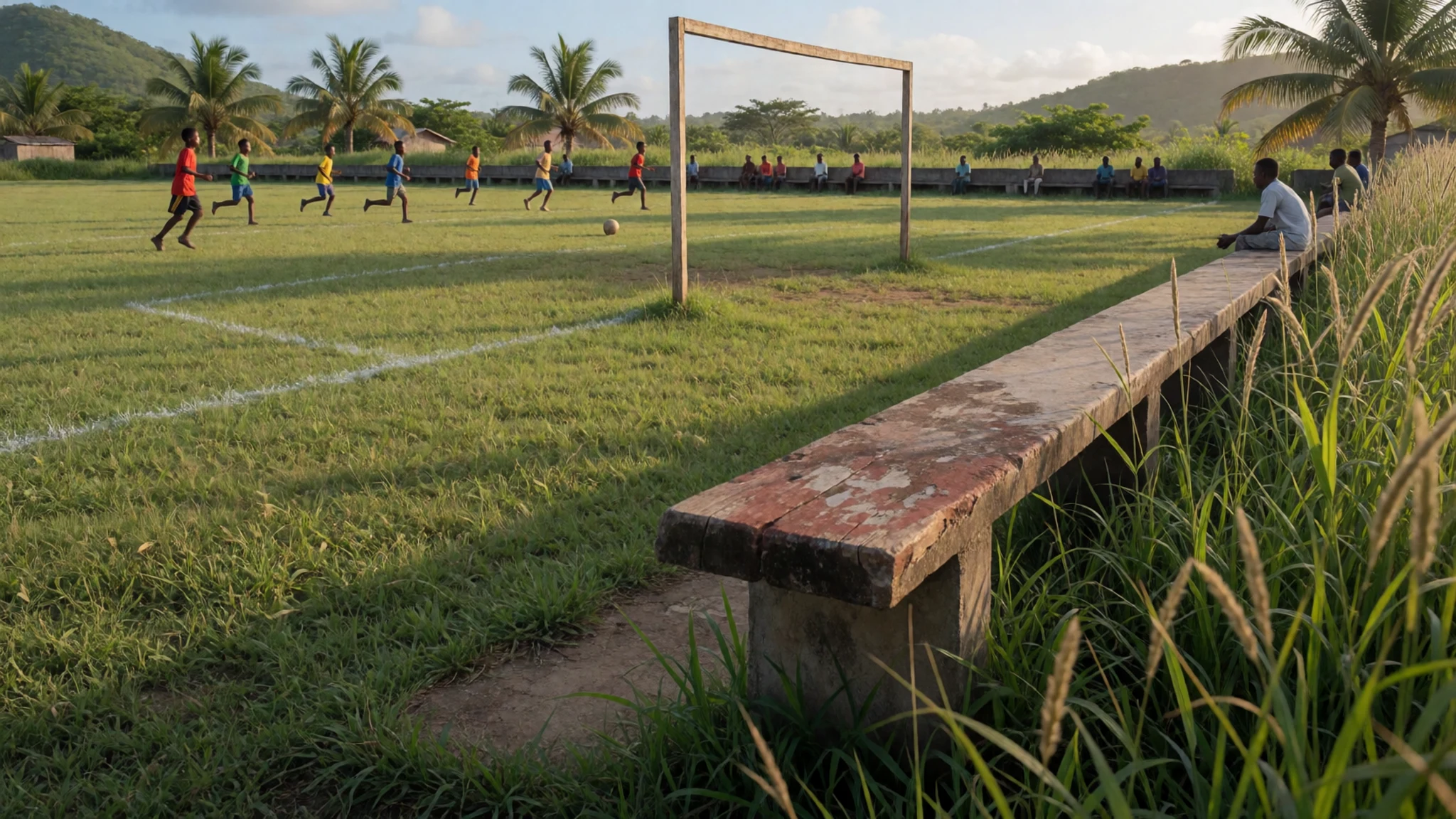
Culture
Annobón's culture comes from the mix of Portuguese, African and, later, Spanish influence. Most people speak the island's creole, a Portuguese-based language, even though Spanish is official and used in offices and schools. Hearing the two side by side is part of the experience.
The community is small, with only about five thousand people spread across four settlements, so everyone knows everyone and visitors are noticed at once. Church life matters, and the colonial church in the capital is a gathering point as well as a landmark. Fishing shapes the working day, with boats going out and returning according to weather and tide, and the catch feeding the island.
The islanders' history of resisting outsiders, including the expulsion of the Spanish in the eighteenth century, still colours how they see authority from the mainland. Expect courtesy, but also expect that arrangements are made through people rather than through signs and brochures. Talk with patience, and accept that plans change when a boat is late.
A greeting in Spanish, even a simple one, goes a long way. Ask before photographing people, their boats or their homes, and respect a refusal without argument.
What to wear
No distinctive traditional costume or textile for Annobón appears in the sources used here, so this section describes everyday practice rather than a named dress. Island life is hot, humid and often wet, and clothing reflects that: lightweight cotton shirts, wrappers and dresses, and shorts or trousers for men, often bought on the mainland or brought in by ship. Colourful printed cloth of the sort common in West and Central Africa is widely worn.
For church and formal occasions, people dress more carefully, with clean shirts, long skirts or dresses, and closed neat shoes. Fishermen and farmers wear whatever suits wet, practical work, often with sandals or bare feet.
Visitors should pack for heat and rain together. Take quick-drying shirts, light long trousers for forest walks, and a proper rain jacket. Sturdy shoes with good grip matter more than style, because trails to the crater lake and Quioveo are muddy and steep. Bring sandals for the beach, a hat, and sun protection. Dress modestly in villages and the church, covering shoulders and knees, and keep swimwear for the beach itself. Insect repellent and a thin long-sleeved layer help in the forest in the evenings.
What to eat
- Fresh grilled fish — Fishing landings and village kitchens
Fishing is a main industry, so the daily catch is the island's staple. It is usually grilled or stewed and served simply with a starch. Ask at the landing places in the morning to see what has come in.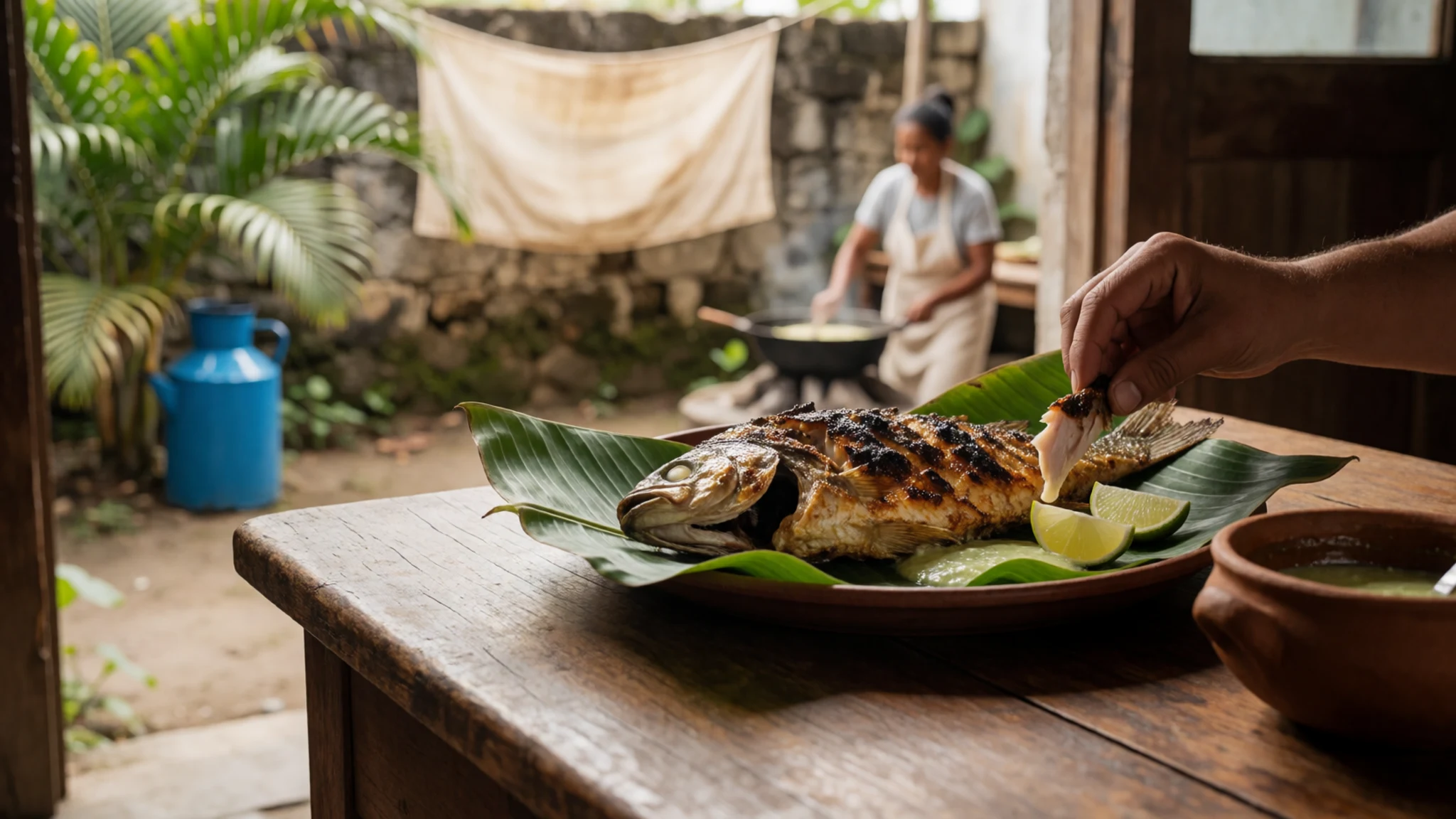
- Cassava — Village homes and small eateries
Cassava, boiled, pounded or fried, is a common starchy accompaniment across the Gulf of Guinea. It suits the island's soils and humid climate, and often appears next to fish or stew in simple home meals.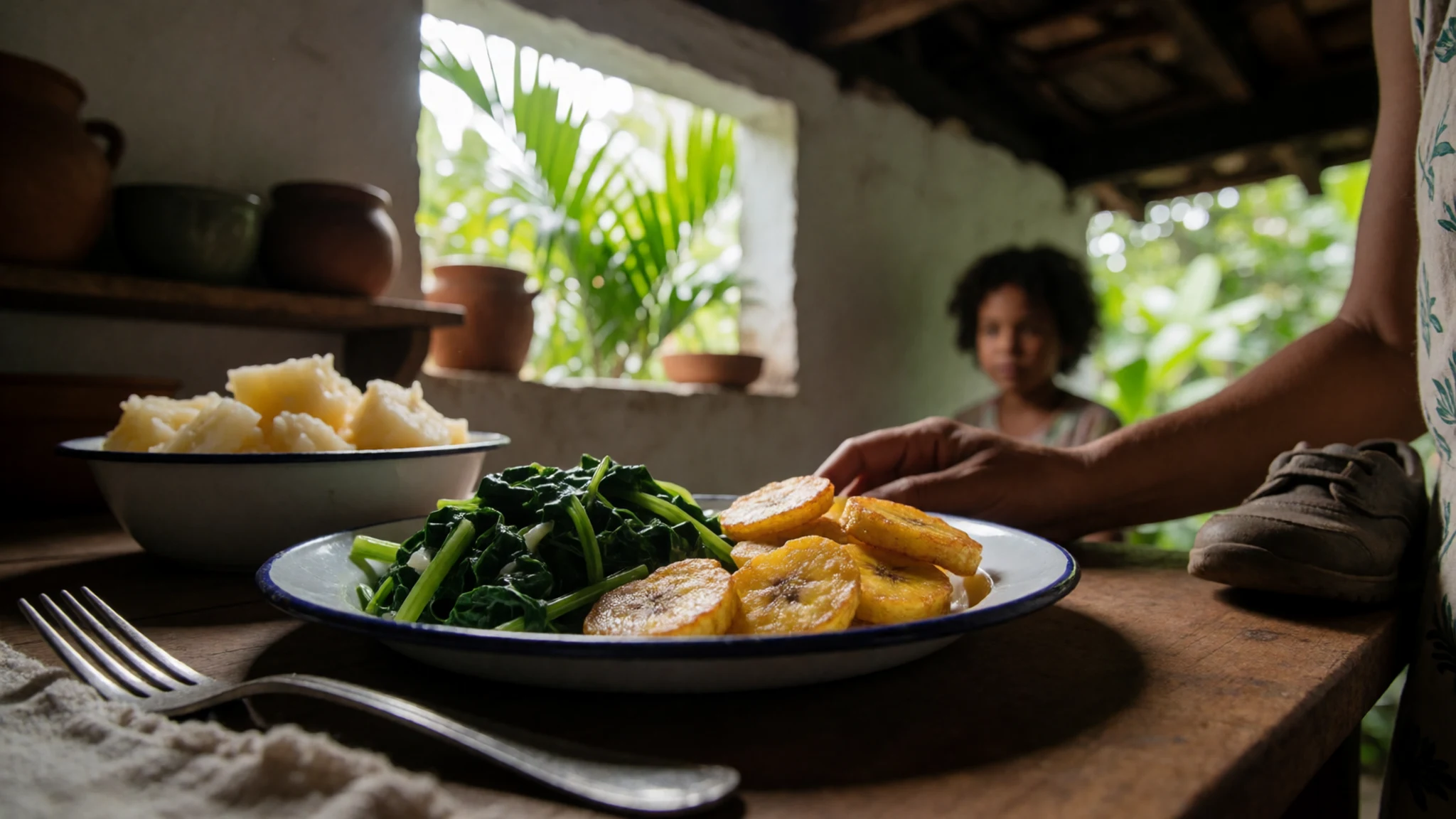
- Palm oil stew — Home cooking, by invitation or at small eateries
Palm oil gives many regional stews their orange colour and rich flavour. On Annobón it would typically be cooked with fish and local vegetables. Expect plenty of spice, and ask how hot a dish is before eating. - Plantain — Village kitchens and roadside sellers
Plantain is eaten boiled, fried or roasted as a filling side. Sweet ripe slices are fried until caramelised, while unripe ones are firmer and savoury. It is cheap, filling and found across the region. - Tropical fruit — Small village stalls and household gardens
Bananas, papaya and coconut grow well in the wet tropical climate here. Fruit is best bought where it is sold fresh and eaten the same day. Peel it yourself and avoid anything washed in untreated water.
Plan it
Best time. June to September is the better choice, as it is the drier spell for the southern Atlantic. The island is hot and humid year-round, with heavy rain possible at other times, so check current weather and boat schedules with the people arranging your trip.
How long. 3–5
Getting there. Fly to Malabo, Equatorial Guinea's main hub, then arrange onward travel to Annobón. Regular shipping is not reliable, and ships have called only every few months, so confirm boat or flight options well ahead. One tour operator has offered a ten-day Equatorial Guinea tour including two days on the island.
Budget. high
Tips
- Arrange transport and permissions well before travelling, and keep plenty of spare days
- Stay at the island's 55-room hotel, and confirm availability in advance
- Carry cash, as cards are unlikely to work on the island
- Bring drinking water, medicines and insect repellent, since supplies are limited
- Hire a local guide for Lago A Pot and Quioveo
Etiquette
- Greet people before asking for help or directions
- Ask before photographing people, boats or homes
- Dress modestly in villages and at church
Nearby
Sources
- Wikidata Q728665 (CC0)
- Wikipedia: Annobón Island (rev 1381374663) (CC BY-SA 4.0)
- Wikivoyage: Annobón (rev 5244521) (CC BY-SA 4.0)
- Photo: Annobón and Bioko map (Public domain)
- Photo: Gulf of Guinea (English) (CC BY 3.0)
- Photo: Bandera de la República de Annobon (CC0 1.0)
- Photo: Historia de la Marina Real Española (Public domain)
- Photo: Views of Princen Island, St. Thomé and Annobon (Public domain)
- Photo: Hotel Memu Madze (CC BY-SA 4.0)
- Photo: Bandera de Annobon (CC0 1.0)
- Photo: Compagnie des Indes orientales (CC BY-SA 4.0)


