Lānaʻi
Lānaʻi, United States
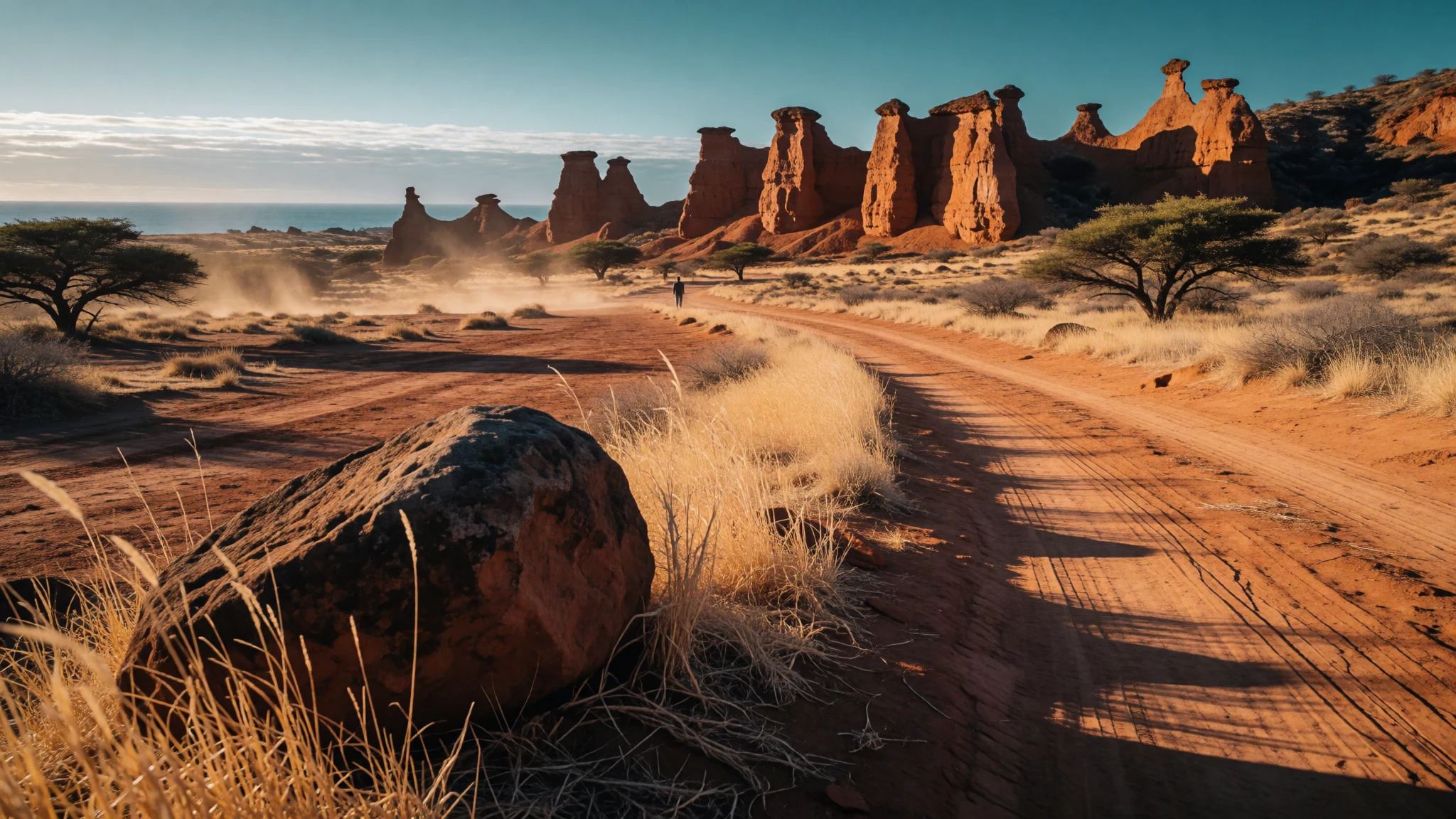
Lānaʻi is a quiet volcanic island of red dirt tracks, empty beaches and stargazing, where the pace is slow and there are no traffic lights.
The place
Lānaʻi sits in the lee of Maui across the Auʻau Channel, with Molokaʻi to the north over the Kalohi Channel. It is a volcanic island, and the old crater country around Mount Lānaʻihale forms its quiet spine. Most of its 3,102 residents live in Lānaʻi City, a tidy grid of plantation-era cottages set among tall pines on the high ground. The rest of the island is mostly red earth, scrub, ridgeline and coast. Nearly all of the land belongs to a single private owner, with the remainder held by the state or by homeowners, and that shapes everything from where visitors stay to which tracks are open. The island has one school for all ages, one small hospital and no traffic lights. Many of the best-known places sit at the end of dirt roads that need a four-wheel-drive vehicle, so a day out depends more on the vehicle and the weather than on the distance covered. Visitor numbers are modest compared with Maui or Oʻahu, and the mood is more rural than resort: pickup trucks, a single green park at the centre of town and a handful of places to eat. The island carries the nickname Pineapple Island, a leftover from its plantation past, though the fields are long gone. Expect wind on the plateau, heat on the coast, red dust on everything, and a pace that suits people who like doing very little.
Its story
Lānaʻi's early history is thinly recorded. Settlers probably came across from Maui and Molokaʻi, built fishing villages along the shore, and later moved inland to grow taro in the volcanic soil. Maui's rulers held the island but mostly left its people alone, and when George Vancouver sailed past in 1792 he skipped it, judging it almost empty of people. Tradition calls the island Lānaʻi o Kauluāʻau, after a Maui prince exiled for his pranks at his father's court in Lāhainā. The island was said to be haunted by ghosts and goblins, the akua-ino; Kauluāʻau drove them out and was welcomed home. Kamehameha I is remembered as fond of fishing these waters. Sugar has an odd early footnote here: a Chinese farmer, Wong Tse Chun, is said to have made a small batch in 1802 using a stone mill he had carried with him. Later, a group of Latter-day Saints took a lease at Pālāwai, and Walter Gibson arrived in 1862 to reorganise the settlement. The twentieth century belonged to pineapple, when one company ran the island as a single plantation and Lānaʻi City housed its workers. As that industry faded, tourism grew, though it stays small. Today the story is partly about ownership: almost the whole island sits in one private hand, which decides what can be built, farmed or visited.
What to see
- Dole Park, Lānaʻi City — Lānaʻi City
Dole Park is the green heart of Lānaʻi City, ringed by low timber buildings and shaded by tall pines. Families use the pavilion and picnic tables, and memorials honour local people who served in the Second World War. After dark, with few streetlights around, the sky above the park fills with stars.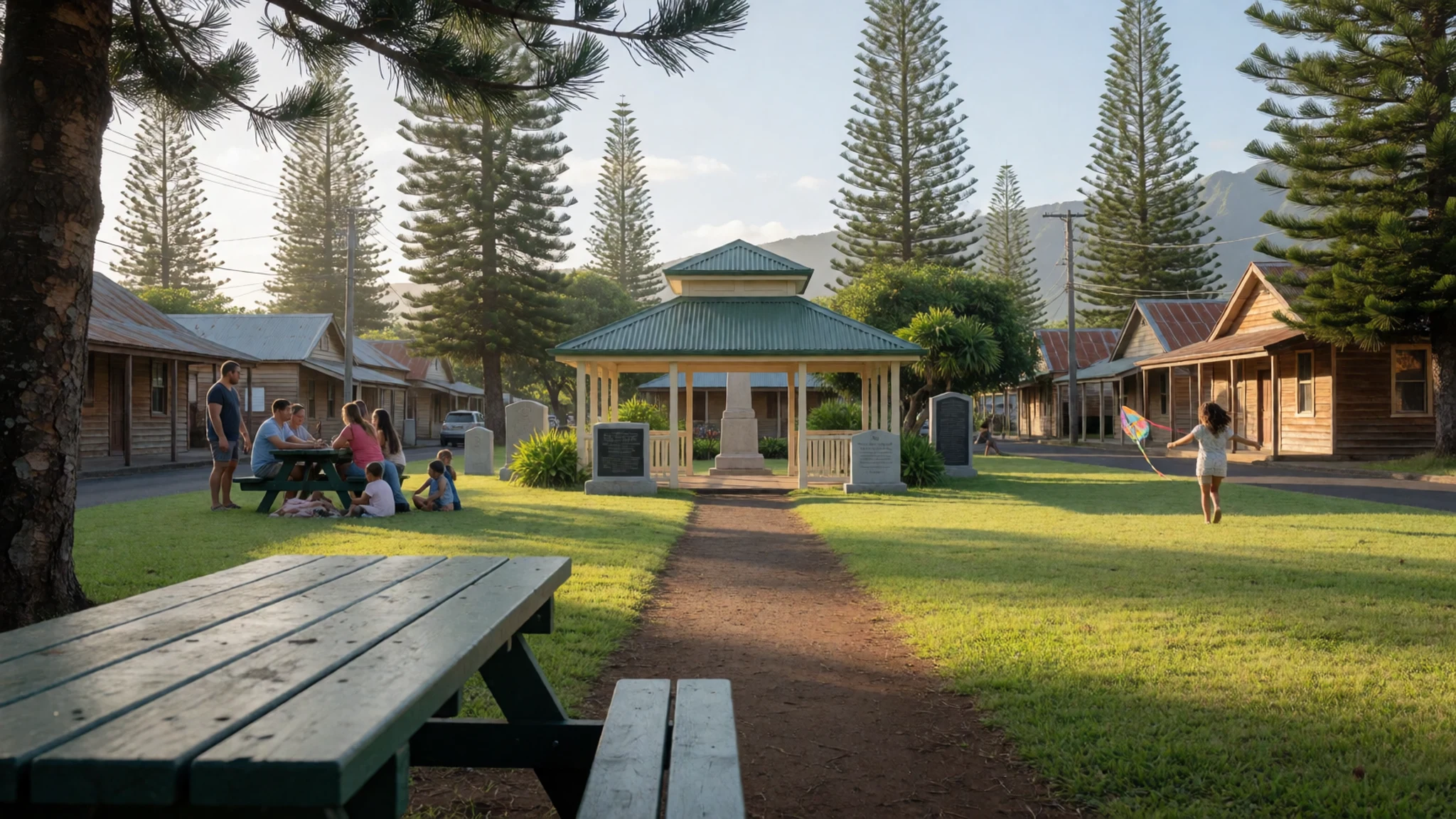
- Kaiolohia (Shipwreck Beach) — North coast
Kaiolohia, usually called Shipwreck Beach, lies on the windward north coast, where a rusting concrete-hulled Second World War oiler sits stranded on the reef offshore. The beach is long, windy and strewn with driftwood, better for walking and looking than swimming. The rough access track makes a four-wheel-drive vehicle the sensible choice.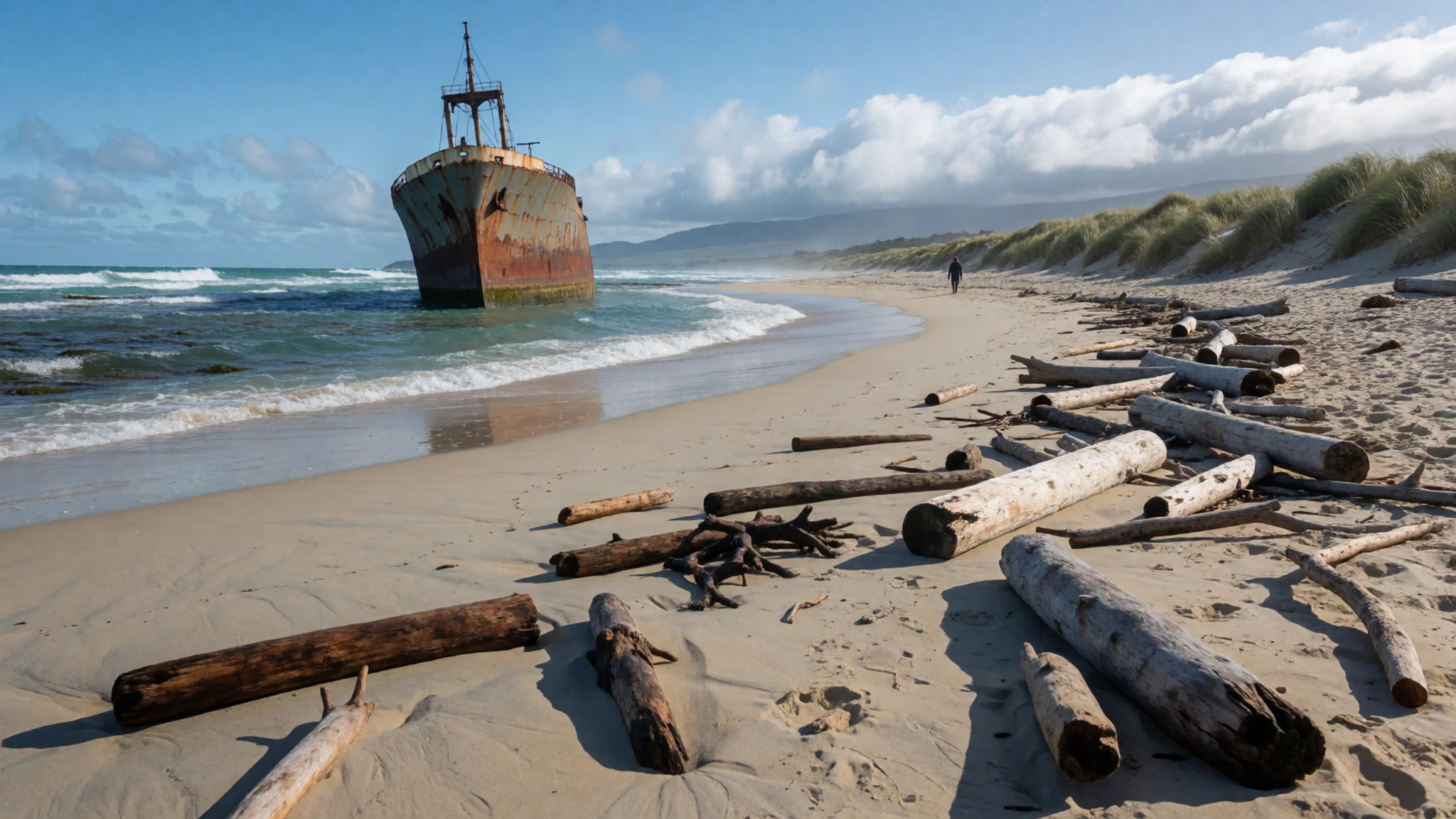
- Puʻu Pehe (Sweetheart Rock) — South coast, above Hulopoʻe Bay
A short trail leads from Hulopoʻe Beach over tidepools and past a sea arch to a clifftop view of Puʻu Pehe, a sea stack standing just off the shore. Go in the cooler part of the day, wear sturdy shoes, and keep well back from the edge, since the rock is crumbly and the swell can run heavy.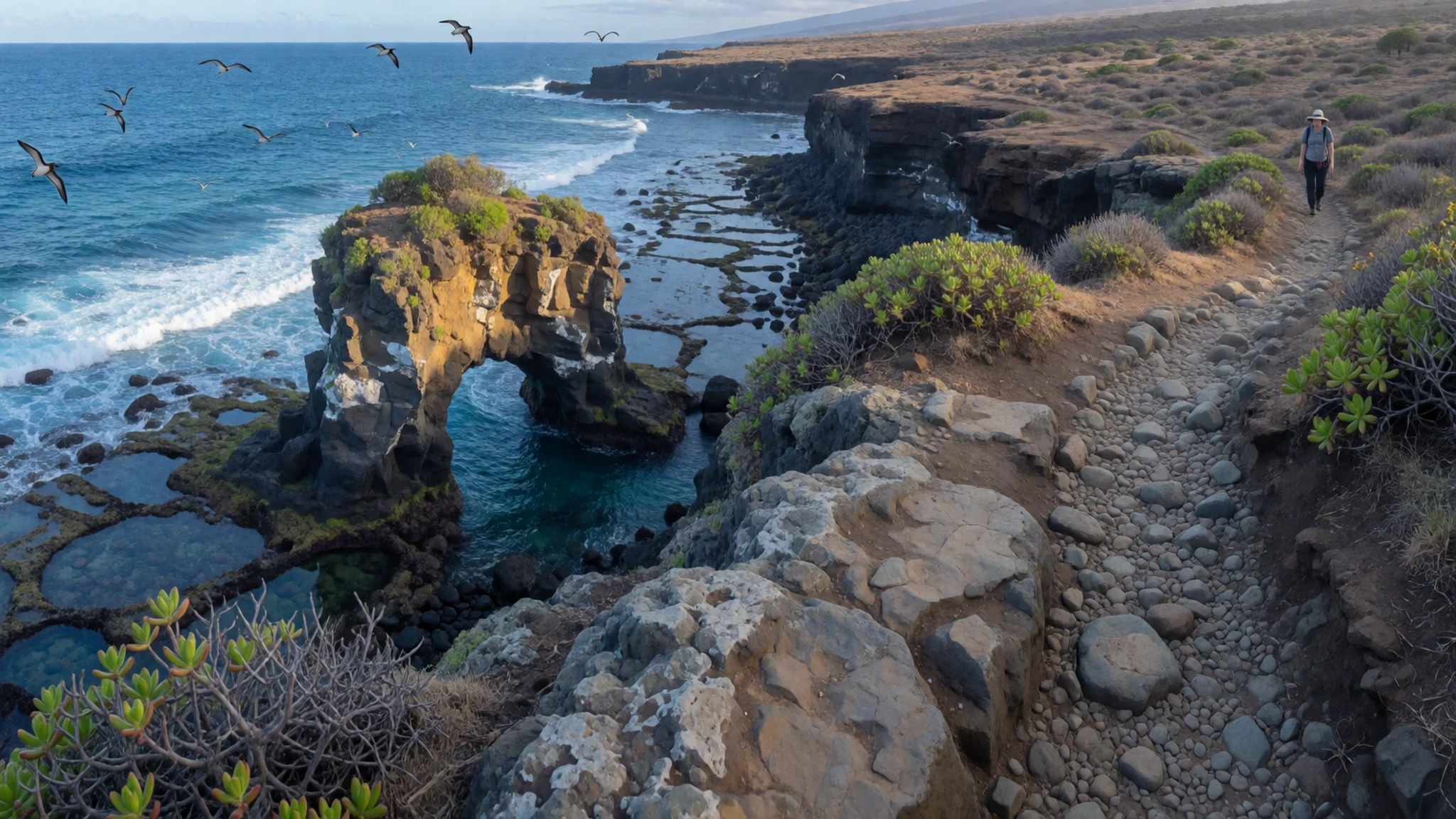
- Keahiakawelo (Garden of the Gods) — Northwest plateau
Keahiakawelo is a dry plateau of red soil studded with pinnacles, boulders and buttes shaped by long erosion. The light is best near sunrise and sunset, when the colours deepen. The track from town needs a four-wheel-drive vehicle, and wind and dust are constant, so bring a hat, water and patience.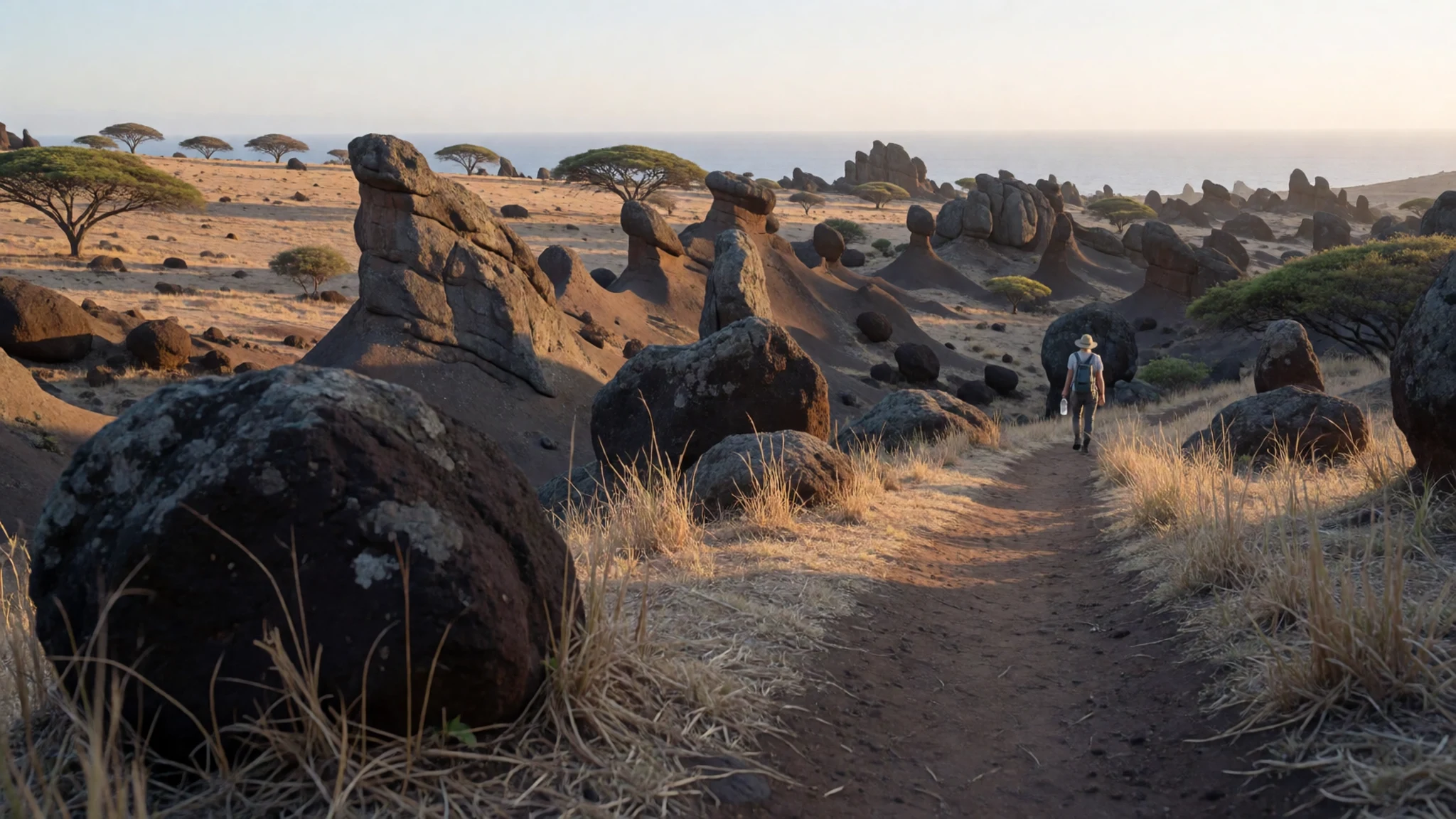
- Hulopoʻe Beach Park — South coast
Hulopoʻe Bay is a crescent of sand on the south coast, protected as a Marine Life Conservation Area. It is a good place on the island to swim and snorkel, with tidepools at one end. Fish are plentiful, so look rather than touch, and use reef-friendly sun cream.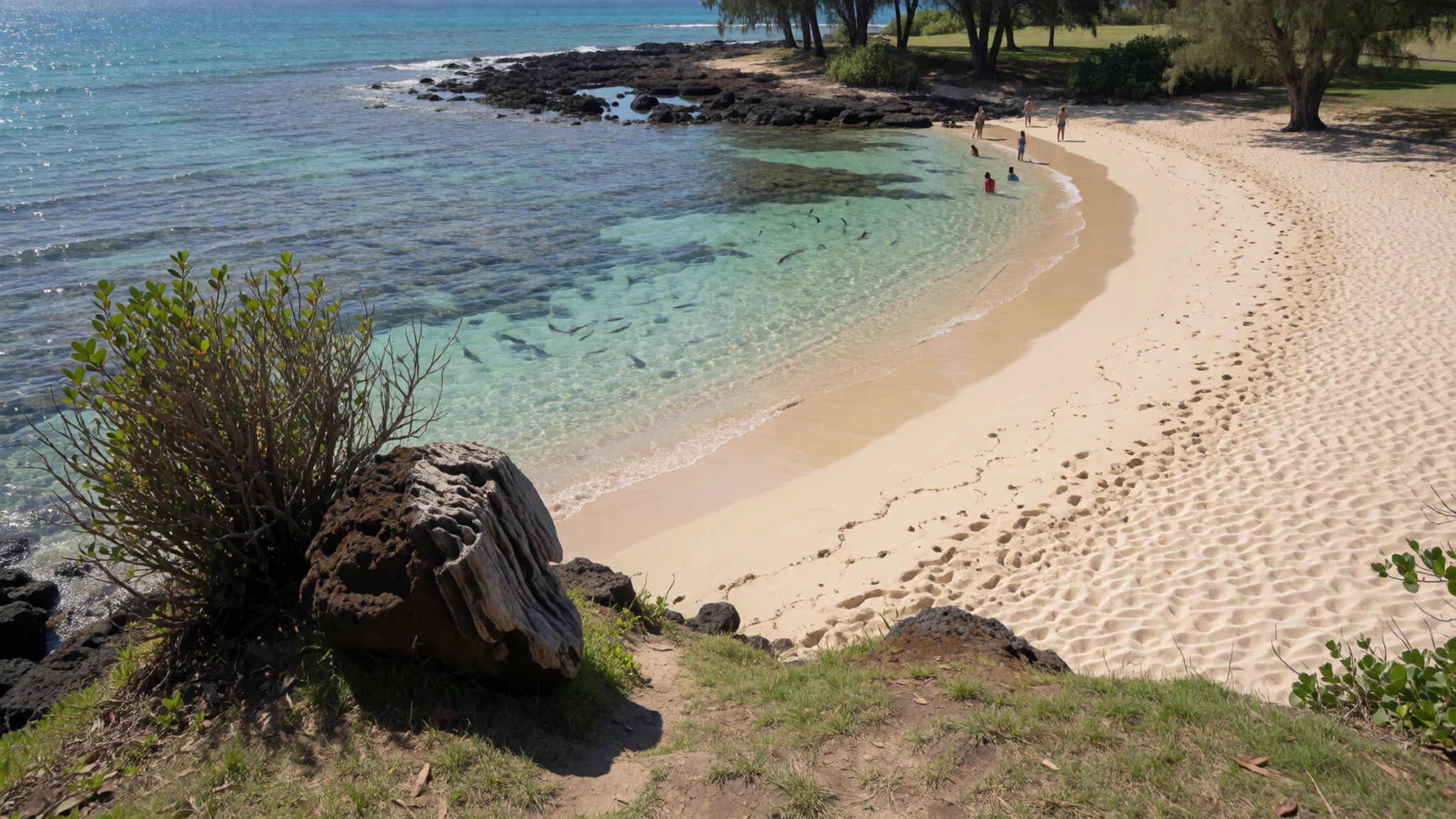
- Kaunolu and Halulu Heiau — Southwest coast
Kaunolu is a former fishing village on the southwest coast, where the stone walls of Halulu Heiau still stand above the sea. It is a quiet site with little signage, reached by a rough track. Treat the walls as sacred, stay on the paths and never move or stack stones.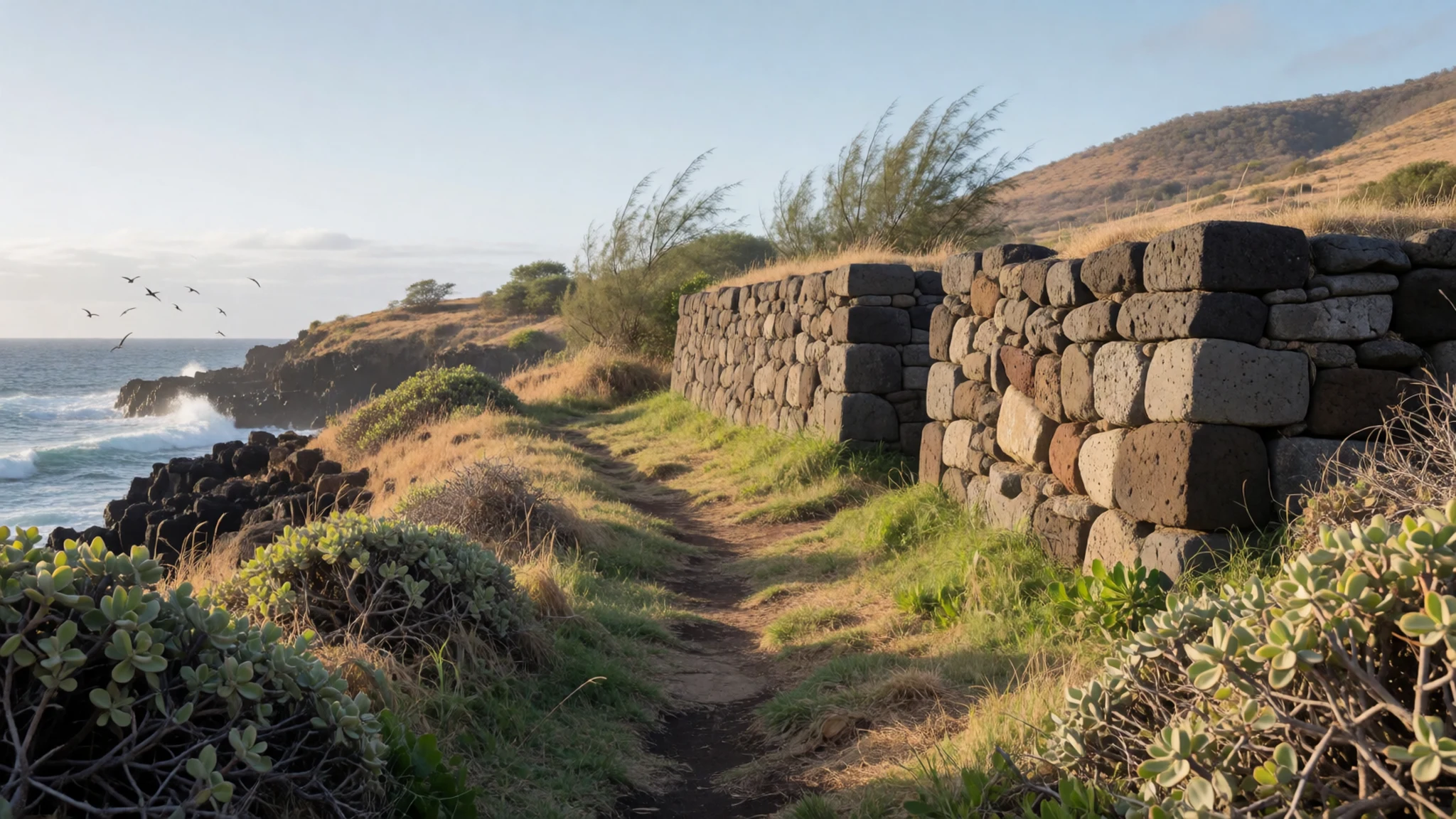
Culture
Lānaʻi's culture is Hawaiian at the root and plantation-made on top. The older layer shows in place names, in the ruined stone temples called heiau, and in the legend of the prince Kauluāʻau who cleared the island of spirits. The newer layer came with the pineapple years, when workers from Japan, China, the Philippines, Portugal and elsewhere settled in Lānaʻi City and left their mark on its food, its festivals and its family names. Life is small-scale: neighbours know each other, the one school is a community hub, and the park in the middle of town is where people gather. Hawaiian values such as caring for the land and the sea, known as mālama ʻāina, are part of everyday talk, and they matter in practice on an island where so much is fragile and remote. Many sites that look like empty ground, such as the old fishing village at Kaunolu, are places of ancestral importance. Visitors are guests in a community of only a few thousand people, and a friendly greeting, patience at the single shop counter and a light footprint go a long way. Because the island has limited water, services and medical care, locals notice who treats it carefully. When you visit a heiau or any ancient stone structure, stay on the marked path, leave every stone and offering exactly where you found it, and do not climb on the walls.
What to wear
Traditional Hawaiian dress on Lānaʻi followed the pattern of the wider islands. Kapa, a cloth beaten from the inner bark of the wauke plant, was made into the malo, a loincloth for men, and the pāʻū, a wrapped skirt for women. Leis of flowers, leaves, shells and feathers marked celebrations and honoured guests, and they are still given at graduations, weddings and farewells. Later, the loose muʻumuʻu dress and the printed aloha shirt, usually in cotton or rayon, became everyday local clothing and are still worn for parties and church. Day to day, people on Lānaʻi dress for practicality: shorts, T-shirts, rubber slippers, work boots for farm and trail work, and a fleece or jacket for the cool, windy uplands around Lānaʻi City. Visitors should pack light cotton or linen, a wide-brimmed hat, sunglasses and plenty of sun protection, as the coast is hot and the plateau is exposed. Sturdy closed shoes or trail sandals suit the rocky paths and dusty tracks, while reef-friendly swimwear is enough for the beaches. Cover up with a shirt or wrap when walking through town, and bring a light layer for evenings and for stargazing, when the air cools quickly.
What to eat
- Plate lunch — Casual counters and lunch wagons around Dole Park, Lānaʻi City
A generous takeaway meal of rice, macaroni salad and a hot main such as chicken katsu, teriyaki beef or kalua pork. It is the island's everyday working lunch, a mix of Hawaiian, Japanese and other plantation-era cooking.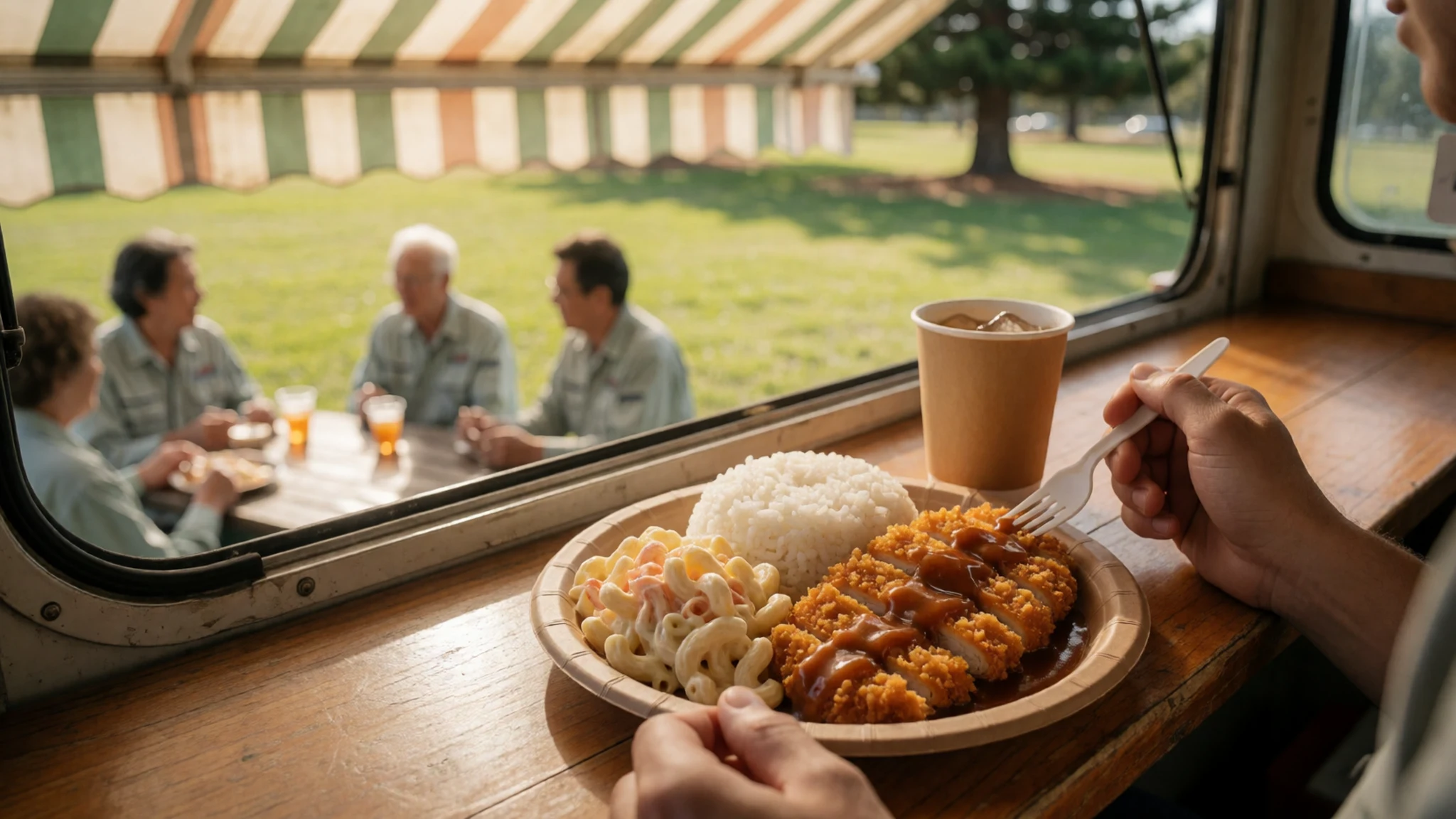
- Poke — Small grocery counters and eateries in Lānaʻi City
Cubed raw fish, usually tuna, dressed with soy, sesame oil, onion and seaweed. Local versions vary from simple sea-salt styles to spicier ones, and it is best eaten fresh, soon after it is made.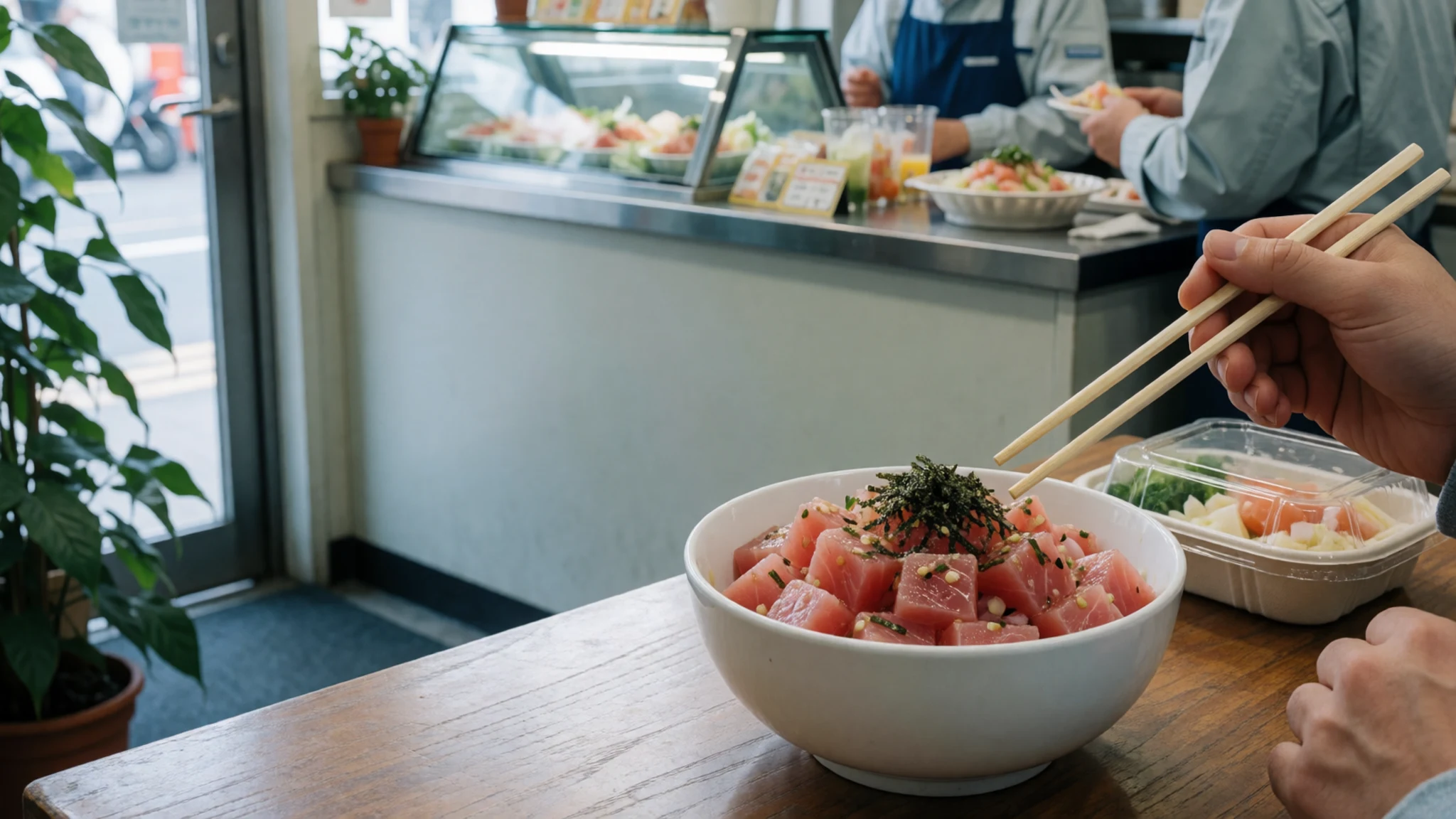
- Saimin — Local diners and noodle counters in Lānaʻi City
A comforting bowl of soft wheat noodles in a light fish-based broth, topped with slices of fish cake, egg, spring onion and sometimes pork. It reflects the Chinese, Japanese and Filipino noodle traditions of the plantation camps. - Shave ice — Kiosks and snack stands near the park and the main street
Finely shaved ice soaked in fruit syrups, often with a scoop of ice cream or sweet beans underneath. It is the usual cure for a hot afternoon and a favourite with children. - Fresh island fish — Resort dining rooms and sit-down restaurants, in town and on the south coast
Local catches such as mahi-mahi or ono, grilled or pan-seared and served with rice or salad. Menus change with what boats bring in, so ask what is fresh that day.
Plan it
Best time. May–June and September–October usually bring warm, settled weather with fewer visitors than the busy April and December peaks. Winter can be windier and wetter, and the dry plateau can be very hot and dusty in summer, so mornings are best for outdoor trips.
How long. 2–3
Getting there. Fly to Lānaʻi Airport on a short inter-island hop from Honolulu or Maui, or take the passenger ferry from Maui if it is running; check current schedules before booking. From the airport, Lānaʻi City is a short drive, and most visitors then rent a four-wheel-drive vehicle or join a guided tour for the dirt-road sights.
Budget. high
Tips
- Book rooms and vehicles months ahead, especially for April and December, as accommodation is limited
- Hire a four-wheel-drive vehicle or a guided tour for Keahiakawelo and Shipwreck Beach; ordinary cars are not suited to the tracks
- Bring water, sun protection and cash or cards for small shops, as services outside Lānaʻi City are scarce
- Start outdoor trips early to avoid heat and strong afternoon wind
- Check the official tourism site, gohawaii.com/lanai, for current visitor information
Etiquette
- Stay on marked paths at heiau and do not move stones
- Look but do not touch marine life, and use reef-friendly sun cream
- Respect private land and closed gates, as most of the island is privately owned
Nearby
Sources
- Wikidata Q187063 (CC0)
- Wikipedia: Lānaʻi (rev 1381762253) (CC BY-SA 4.0)
- Wikivoyage: Lanai (rev 5408161) (CC BY-SA 4.0)
- 1878 Government Land Office Map of Lanai (Geographicus) (Public domain)
- Shipwreck – Shipwreck Beach (Halibut Thyme) (Public domain)
- Lanai city houses (Halibut Thyme) (Public domain)
- Garden of the Gods2 (Halibut Thyme) (Public domain)
- Mountains of Lānaʻi (Halibut Thyme) (Public domain)
- Asclepias curassavica, Lanai (Forest & Kim Starr) (CC BY 3.0)
- Walls of Halulu Heiau (Joel Bradshaw) (Public domain)
- Stars from Dole Park, Lanai (Steevven1) (CC BY-SA 4.0)


