Lake Michigan
Lake Michigan, United States
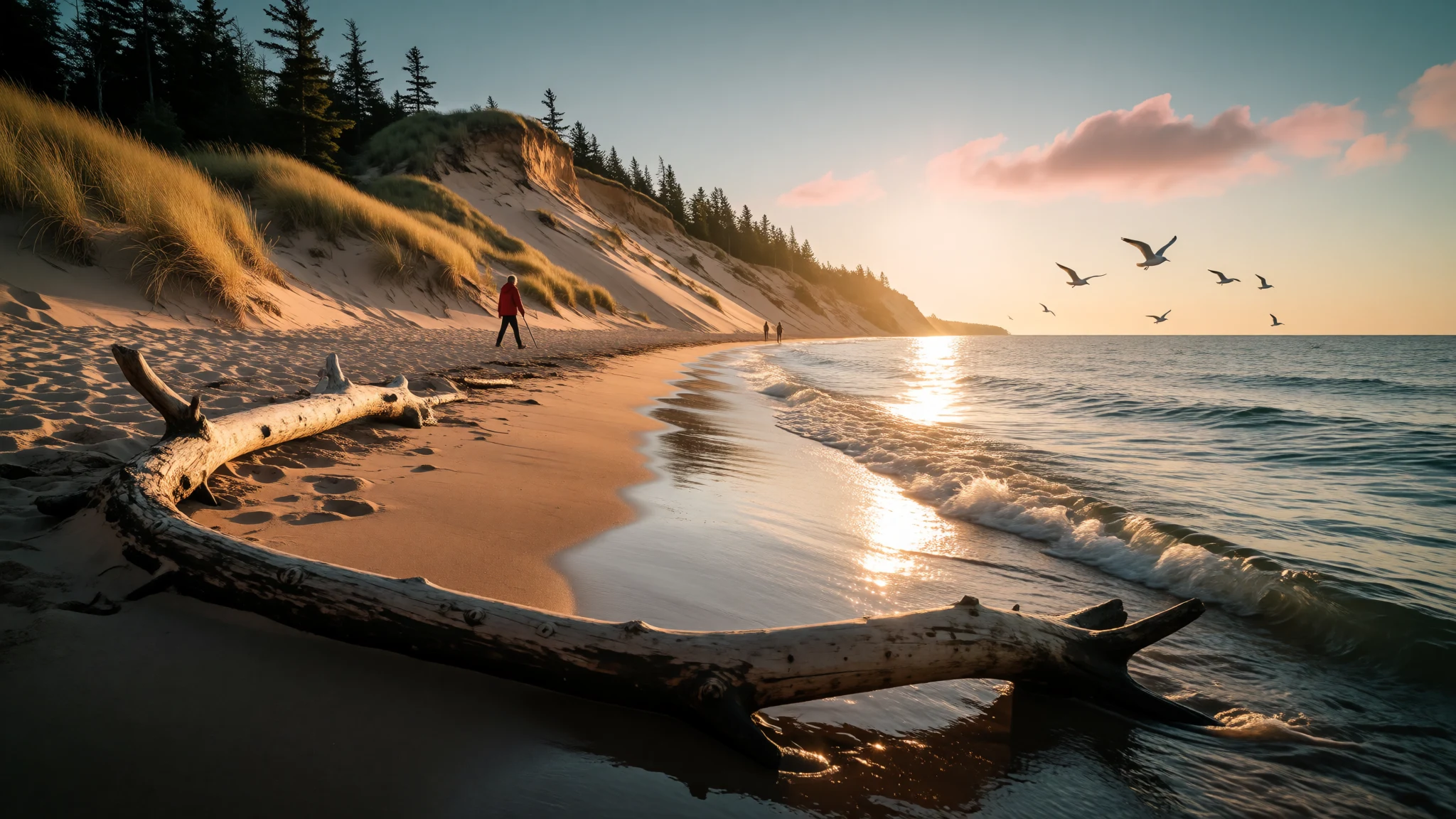
Lake Michigan is a freshwater inland sea of dunes, harbour towns and big-city beaches, rewarding in summer and again in autumn colour.
The place
Lake Michigan lies across the north-central United States, with Wisconsin, Illinois, Indiana and Michigan sharing its shores. It is the only one of the five Great Lakes that sits entirely inside the country; the other four are shared with Canada. Its surface stands 176 m above sea level, and at the northern tip it connects with Lake Huron through the Straits of Mackinac, so the two lakes share a single water level and geographers often count them as one. By volume it comes second among the Great Lakes, after Superior.
The shore changes character as it curves. The southern end is urban and industrial: Chicago, Gary and Milwaukee are working ports with beaches and skylines right on the water. Further north the coast gives way to dunes, orchards, small harbour towns and long bays, among them Green Bay in the north-west and Grand Traverse and Little Traverse in the north-east. In Michigan, most people live in the Lower Peninsula, mainly toward the south, while the Upper Peninsula across the water is largely rural.
The name is believed to come from the Ojibwe word mishigami, meaning 'great water', and the description holds up on the beach. The far shore is out of sight, waves roll in with real weight, and some people surf them. The water is fresh rather than salt, but it stays cold enough in summer that most swimmers keep their dips short.
Its story
Lake Michigan was lived on and travelled for a very long time before any European map named it. The Hopewell are among the best-studied early peoples of the region. After their culture faded, Late Woodland communities took over, and their descendants were the nations French newcomers met in the seventeenth century: Ojibwe, Menominee, Odawa, Potawatomi, Ho-Chunk, Miami, Sauk, Meskwaki and others.
Jean Nicolet, a French explorer, is the person usually credited with first reaching the lake, though historians are unsure of the exact year. Early maps do not agree on what to call it. Some show Lake Illinois, after the Illinois Confederation, alongside the name Michigan that eventually won out.
The fur trade reshaped the lake's peoples. Wars led by the Iroquois over access to European markets, fought in the middle of the seventeenth century, sent neighbours to the west fleeing, and Iroquois groups in turn sought safety west and north of the lake.
Everything around the Straits of Mackinac follows from geography. The narrows were a natural crossing and trading route for Native travellers long before forts and missions arrived. Today two small towns face each other across them. Mackinaw City, on the south side, has a reconstructed French fort, Fort Michilimackinac, founded in the early eighteenth century. St Ignace, on the north side, grew around a French Catholic mission set up earlier still. Visiting both gives a sense of how much of the lake's story passed through one narrow channel.
What to see
- Indiana Dunes National Lakeshore — Southern shore, Indiana
Indiana Dunes National Lakeshore protects a stretch of sandy shore at the lake's southern bend, within reach of Chicago. Expect broad beaches, wooded dune ridges and marsh trails, with swimming in summer. It is easy to reach by car, so July weekends fill up; weekdays and shoulder months are calmer.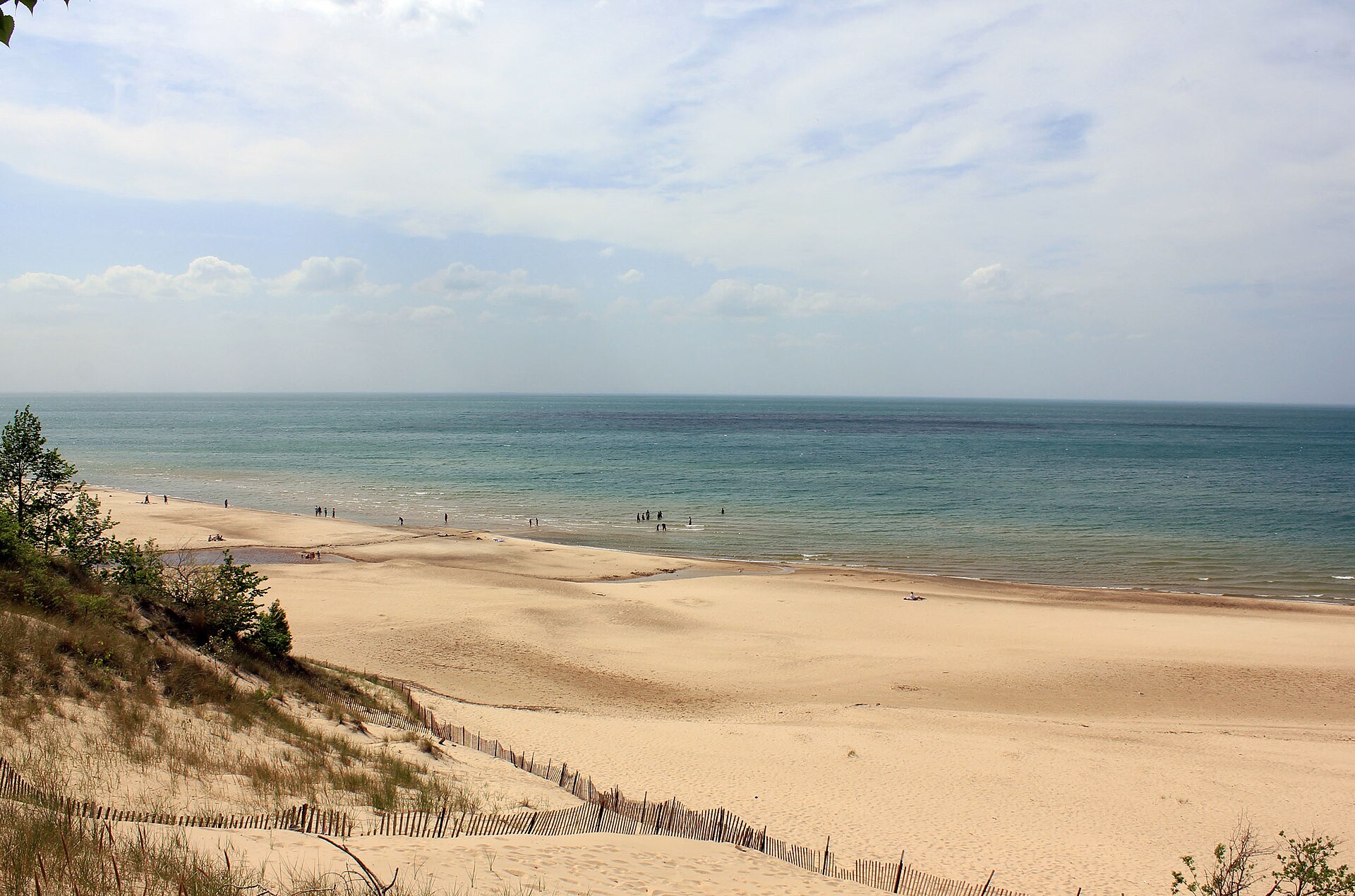
- Sleeping Bear Dunes — Lower Peninsula, Michigan
Sleeping Bear Dunes, on the north-western edge of Michigan's Lower Peninsula, rise as huge sand bluffs straight from the lake. Trails cross open sand and forest, and the views from the tops run far across the water. Sand is slow going and the climb back up is harder than the descent, so carry water and allow extra time. - Straits of Mackinac and Mackinac Island — Northern tip of the lake, Michigan
The Straits of Mackinac join Lake Michigan to Lake Huron and divide Michigan's two peninsulas. Mackinaw City and St Ignace face each other across the water, with historic French sites on both sides. Mackinac Island, just offshore, is a popular summer excursion by ferry; check the operators' sites for sailing times.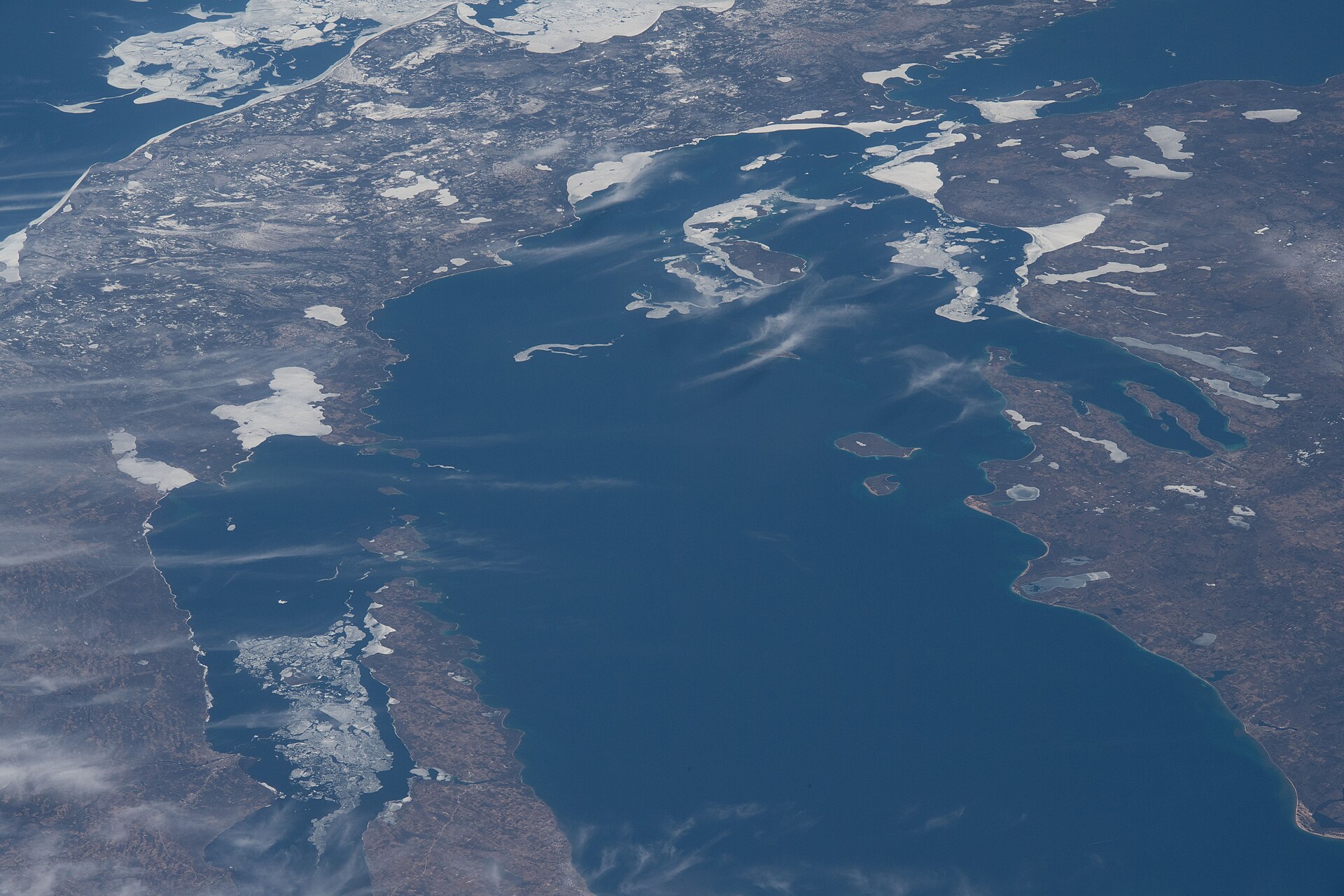
- Grand Traverse Bay — North-east shore, Michigan
Grand Traverse Bay is a long arm of Lake Michigan on the north-east side, with Traverse City at its head. Orchards, vineyards and small beach towns line the shore, and the water is calm enough for sailing and paddling. Autumn colour tours through the surrounding country are popular with locals.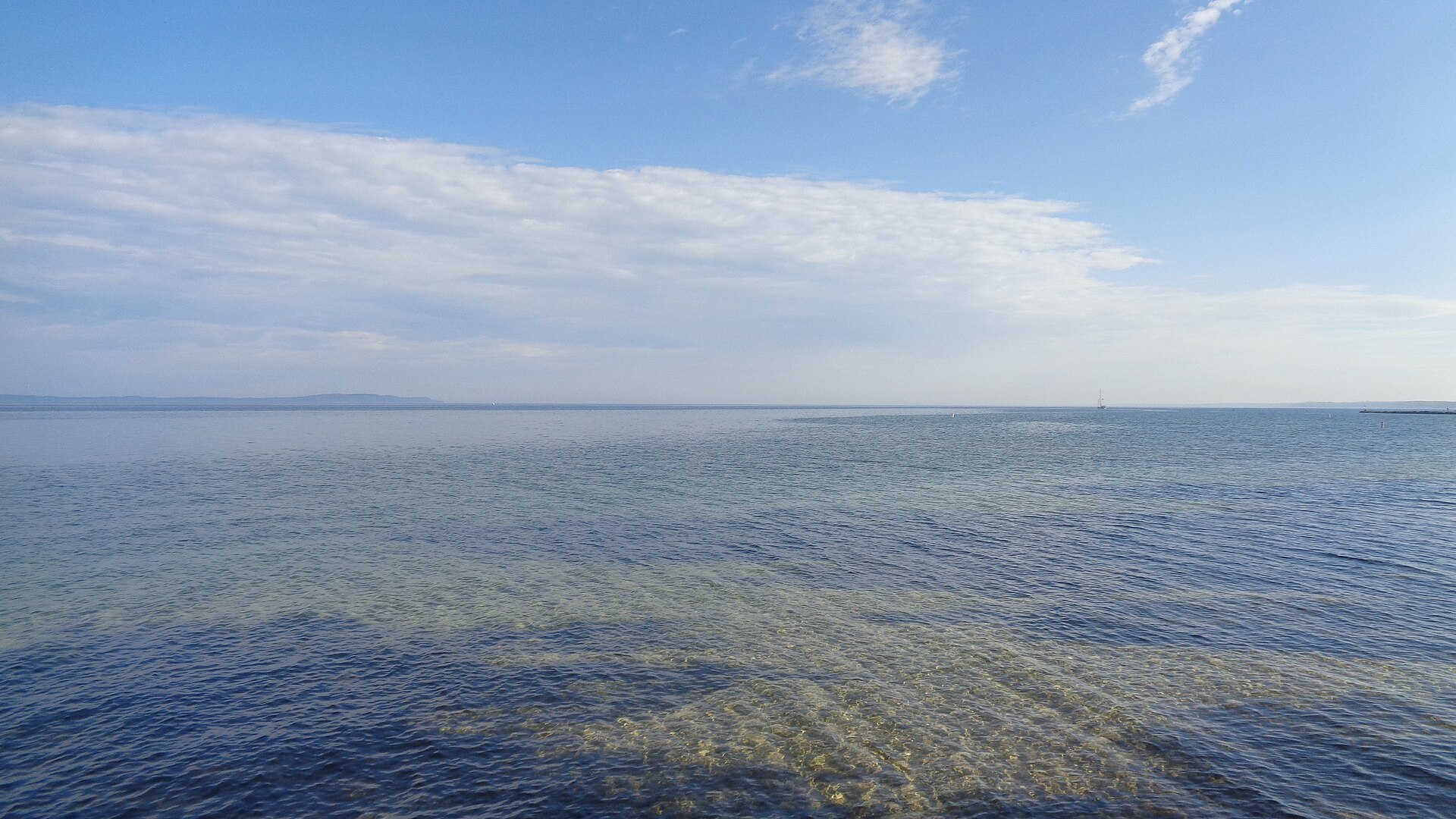
- Chicago lakefront — Southern shore, Illinois
Chicago's lakefront turns Lake Michigan into a city amenity, with beaches such as Oak Street Beach set directly beneath the skyline. Walkers and cyclists share the shore path, and towers rise behind the sand. It is the easiest place on the lake to combine a swim with an afternoon in the city's museums.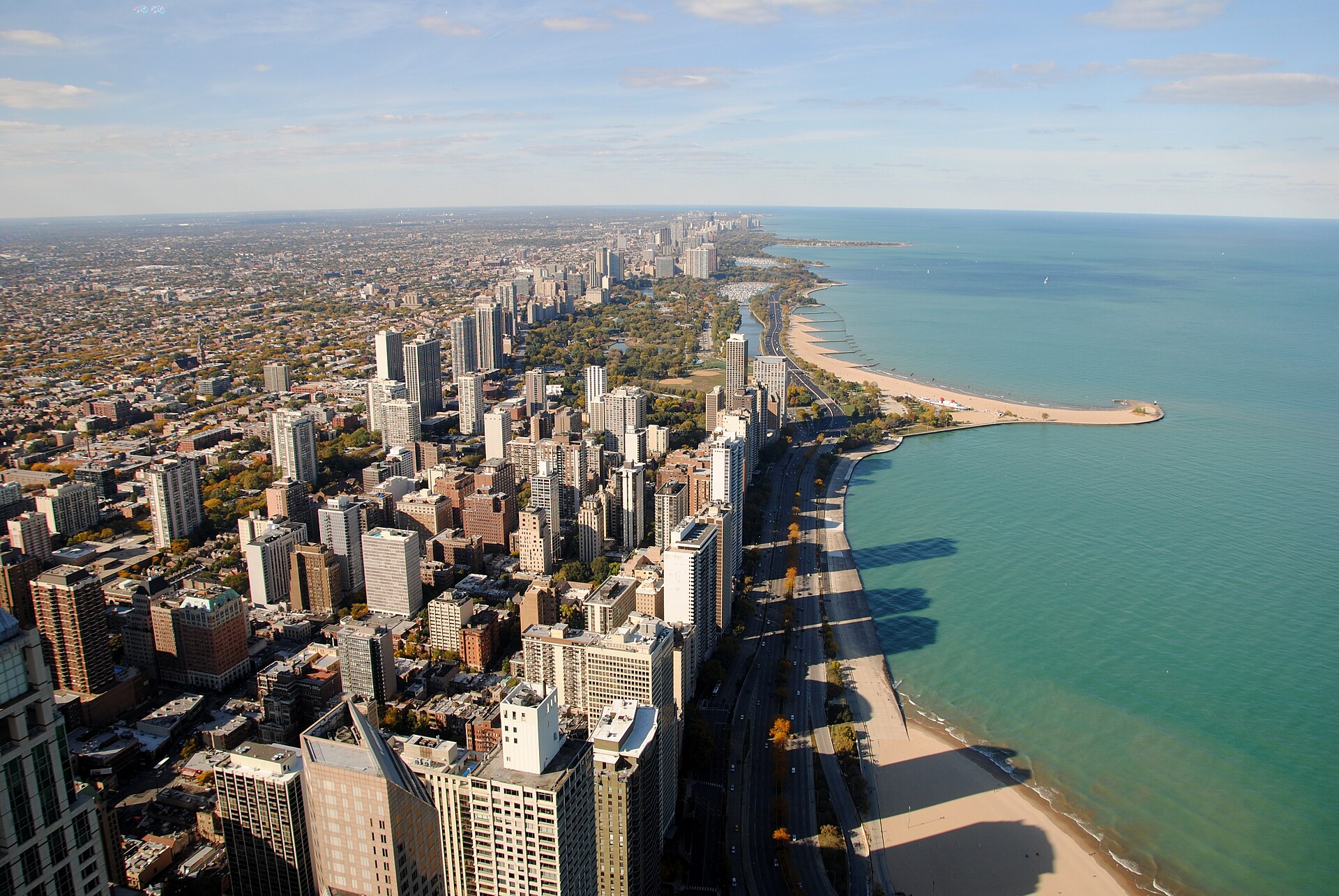
- Milwaukee lakefront — Western shore, Wisconsin
Milwaukee sits on Lake Michigan's western shore, with its downtown skyline facing the water. The lakefront suits a slow afternoon of walking, with harbour views and a cooler breeze in summer. It is a less hurried base than Chicago for exploring the Wisconsin side of the lake.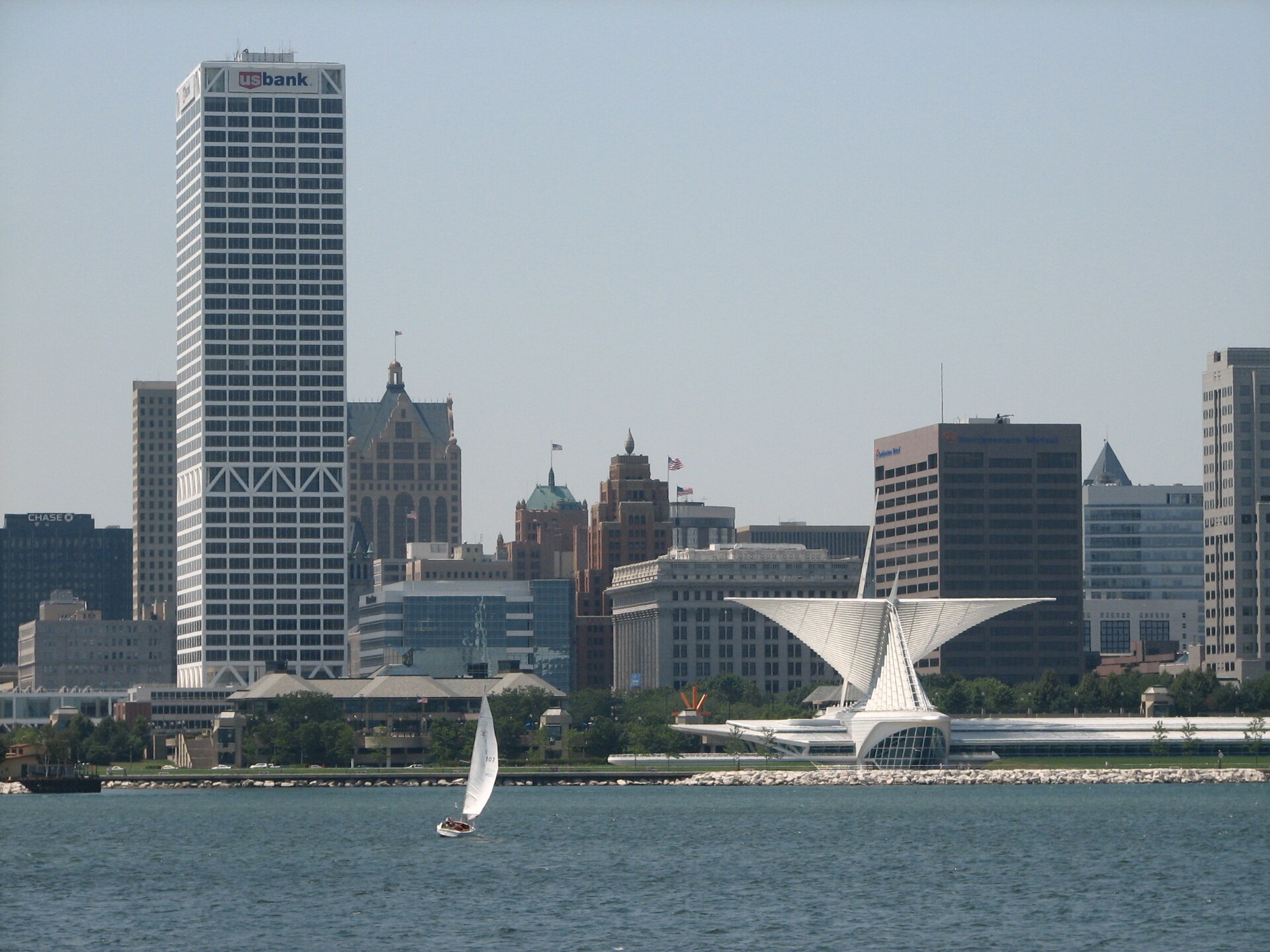
Culture
Lake Michigan's culture is shaped by water, seasons and the many peoples who have settled its shores. The Ojibwe word mishigami gave the lake its modern name, and Native nations including the Potawatomi, Odawa, Menominee and Ho-Chunk remain part of the region today. Some of their history is told at museums and heritage sites near the lake.
Newer layers arrived with trade and mining. Cornish miners brought the pasty to the Upper Peninsula, where it is now an everyday lunch, and the French left their mark in place names around the Straits of Mackinac, such as Michilimackinac. Port cities like Chicago and Milwaukee grew around shipping and industry, and their waterfronts still carry that working past.
Summer life centres on the shore: beaches, sailing, fishing, small-town festivals and 'up north' weekends at cabins and cottages. In autumn, people drive north for colour tours of the turning leaves. Winter replaces water with snow and ice, and outdoor life moves to the trails.
Local manners are friendly and unfussy. A nod or a word to strangers on a trail is normal, queues are respected, and tipping is expected in restaurants and bars. Beach rules vary by town, and flags or signs show when swimming is unsafe, so follow them.
On the dunes, keep to the marked paths and boardwalks, because the fenced grass is what holds the sand in place.
What to wear
Lake Michigan has no single national dress, but the Native nations of the region keep traditions of their own. Regalia worn at powwows and ceremonies by Potawatomi, Ojibwe, Odawa, Menominee and others often includes beadwork, ribbon appliqué and woven or hide pieces, with designs that differ between families and communities. These are worn for ceremony rather than daily life, and are best seen at public powwows where visitors are welcome.
Everyday dress is practical and casual. Jeans, fleece, flannel shirts, sports-team caps and sturdy boots are common in small towns and on the northern shore, while Chicago and Milwaukee dress much like any large city, with smart-casual in the evenings. Weather drives most choices, since wind off the water cools quickly even in summer.
A visitor should pack layers. In summer bring swimwear, a sun hat, sandals for the beach and a light windproof jacket for evenings and ferry crossings. Shoes with a decent grip suit the dunes, which are tiring in flip-flops, and closed shoes protect feet from hot sand. In autumn add a fleece and a rain shell. Winter needs insulated boots, gloves, a hat and thermal layers. No dress codes apply at beaches or parks, but cover up in restaurants and shops away from the shore.
What to eat
- Pasty — Bakeries and cafés in the Upper Peninsula and around the Straits of Mackinac
A crimped pastry of beef, potato and onion, sometimes with rutabaga, brought by Cornish miners from south-west England. It is sturdy, portable and filling, which suited miners and suits cold-weather walkers. Some Upper Peninsula locals consider rutabaga essential. - Maple syrup and maple candy — Roadside farm stands and sugar shops in northern Michigan
Maple syrup has been made in Michigan for as long as Native peoples have lived there, and it turns up as candy too. It makes an easy edible souvenir; look for small producers' bottles rather than supermarket ones. - Smoked whitefish — Roadside smokehouses and fish markets along the northern shore
Freshwater fish from the Great Lakes, smoked and eaten flaked on crackers or in a spread. It tastes mild and slightly sweet, and the smokehouses are usually informal, with a counter and a few picnic tables. - Cherries — Orchards and farm markets around Traverse City
The Traverse City area is known for its cherry orchards. Fresh fruit appears at farm stands in summer, while dried cherries, jam and pie are sold in local shops through the year. - Cheese curds — Taverns and pubs in Milwaukee and elsewhere in Wisconsin
Fresh cheese curds, squeaky when very new, are eaten plain or fried in batter as a bar snack across Wisconsin. Order them with a local beer in a neighbourhood tavern.
Plan it
Best time. June to September for beach weather, though the water stays cool even in midsummer; early to mid October for autumn colour in northern Michigan. Winter is cold and snowy, suited to snow and ice sports rather than the beach.
How long. 3–5
Getting there. Fly into Chicago O'Hare or Milwaukee for the southern shore, or Traverse City's Cherry Capital Airport (TVC) for the northern Lower Peninsula; Detroit Metro (DTW) is the main gateway for many international arrivals, followed by a long drive. Outside Chicago and Milwaukee the last leg is by road, and a hire car is the practical way to follow the shore.
Budget. mid
Tips
- Book summer cabins, campsites and Mackinac Island ferries early, as July and August weekends fill up
- Distances along the shore are long, so plan driving days rather than trying to see every town
- Start dune climbs early, wear grippy shoes and carry water
- Check beach flags and local signs before swimming, as the lake can be rough and cold
- Cards are widely accepted, but carry a little cash for farm stands and roadside smokehouses
Etiquette
- Stay on marked paths and boardwalks across the dunes
- Take litter home or use the bins provided at beaches
- Tip in restaurants and bars, as is usual in the United States
Nearby
Sources
- Wikidata Q1169 (CC0)
- Wikipedia: Lake Michigan (rev 1385032488) (CC BY-SA 4.0)
- Wikivoyage: Michigan (rev 5261615) (CC BY-SA 4.0)
- Lake Michigan in true color, NASA Johnson Space Center, ISS Expedition 60 (Public domain)
- The Straits of Mackinac, Green Bay, and Grand Traverse Bay, NASA (Public domain)
- Grand Traverse Bay from Elk Rapids, Notorious4life (CC0 1.0)
- Indiana Dunes National Lakeshore, Yinan Chen (Public Domain)
- View of Lake Michigan from Wisconsin, Malgosha (CC0 1.0)
- Milwaukee skyline, Miwdke (CC BY 2.5)
- Chicago-Silhouette (Lake Michigan), Roland Arhelger (CC BY-SA 4.0)
- Oak Street Beach, Chicago, Leandro Neumann Ciuffo (CC BY 2.5)


