Lake Champlain
Lake Champlain, United States
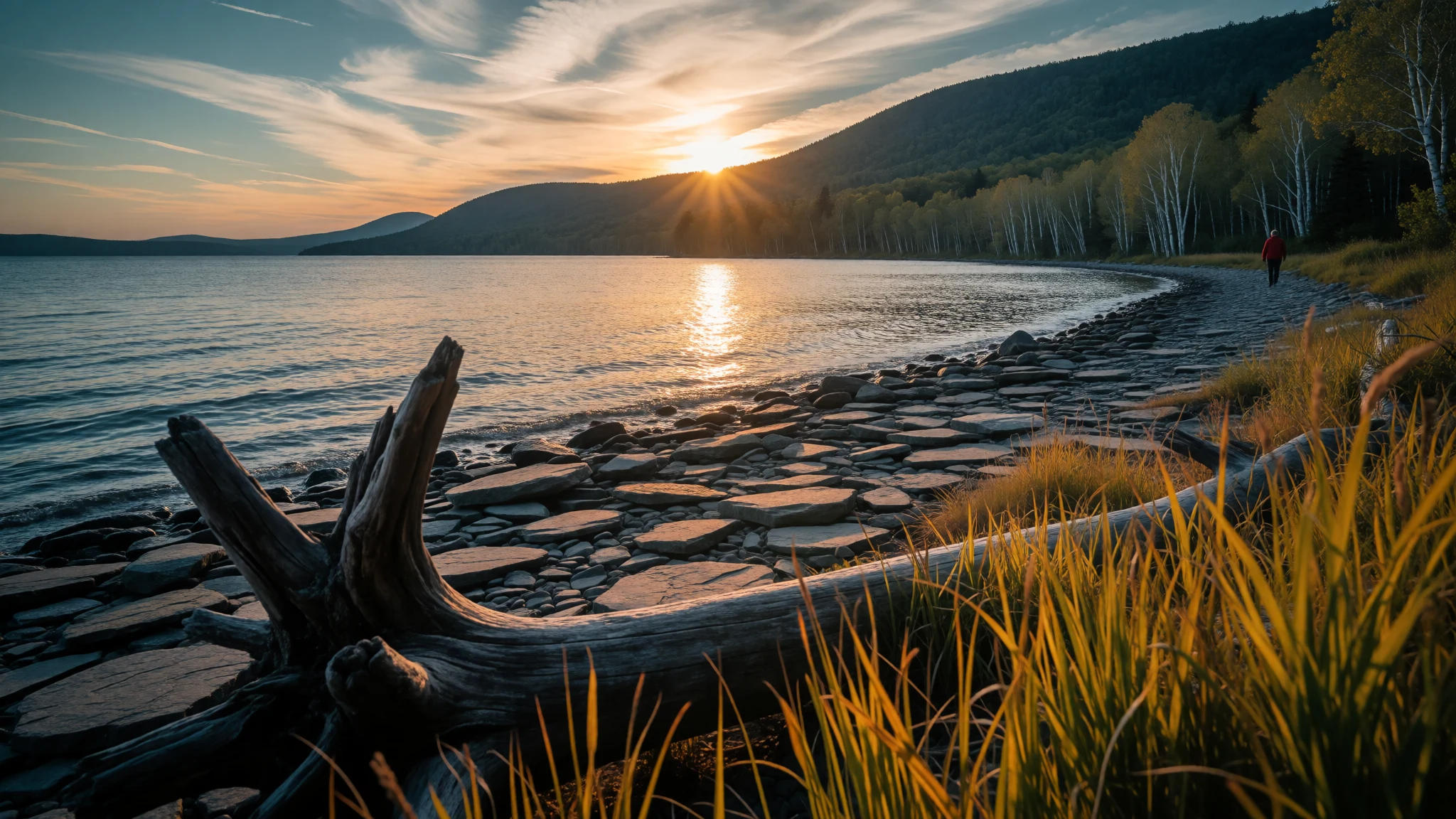
Lake Champlain offers calm, island-dotted water between mountain ranges, with forts, farm stands and ferry crossings spanning two countries.
The place
Lake Champlain is a long, narrow freshwater lake lying mostly between New York and Vermont, with its northern tip reaching across the border into Quebec. It stretches about 172 km from end to end, and its surface sits only about 30 m above sea level, so the shoreline is gentle and the real relief stands back from the water: the Adirondacks to the west, and on the Vermont side a line of hills in which Camel's Hump is easy to pick out. Burlington in Vermont and Plattsburgh in New York are the biggest settlements on its shores. Between them lie farms, orchards, small harbours and many islands; Grand Isle, North Hero and Isle La Motte, all in Vermont, are the largest. Much of the New York shore falls inside Adirondack Park, and state parks such as Button Bay, North Hero and Cumberland Bay keep stretches of coast open for swimming, picnics and paddling. Water routes tie the lake to its neighbours: the Richelieu River leads north to the St Lawrence, and the Champlain Canal leads south to the Hudson, which is why some people call it the Sixth Great Lake. The valley it fills is the northern end of the Great Appalachian Valley, a long trough of low land that runs south as far as Alabama. Local life leans on the water. Ferries work as ordinary transport, cruise boats run in the warm months, and Champ, the lake's supposed monster, turns up on souvenirs and local signage.
Its story
Lake Champlain has been a border and a road for as long as anyone has recorded its use. It lies where Abenaki and Mohawk territories meet, and each nation named it from its own point of view. The Abenaki name, Pitawbagok, means the middle lake or the lake in between. The Mohawk name, Kaniatarakwà:ronte, describes a lake with a bulge in it, and another Mohawk name calls it the door of the country, since it served as an eastern gateway into Iroquois Confederacy lands. The name on modern maps comes from Samuel de Champlain, the French explorer who met the lake in 1609. New France then granted land along its shores to settlers and built forts to protect the waterways. In colonial times the lake was the easy route between the Saint Lawrence and Hudson valleys: travellers found boats in summer and sledges on the ice in winter far less miserable than the unpaved, mud-bound roads. That made the shores a corridor for soldiers as well as traders, through the colonial wars and the American Revolution, and the forts at Chambly and Ticonderoga still mark that history. Burlington, Port Henry and Plattsburgh were busy commercial and military harbours in later colonial and early republic years. Today they mostly handle small craft, ferries and cruise boats, and the lake's old role as a frontier has settled into something calmer: a shared stretch of water with two US states and a Canadian province along its edge.
What to see
- Charlotte ferry crossing — Charlotte, Vermont
A short ferry hop from Charlotte in Vermont across to the New York shore gives the quickest feel for the lake's width, with hills rising on both sides. The crossing works as ordinary transport as well as a sightseeing trip. Check the operator's official site for current sailings before planning a day around it.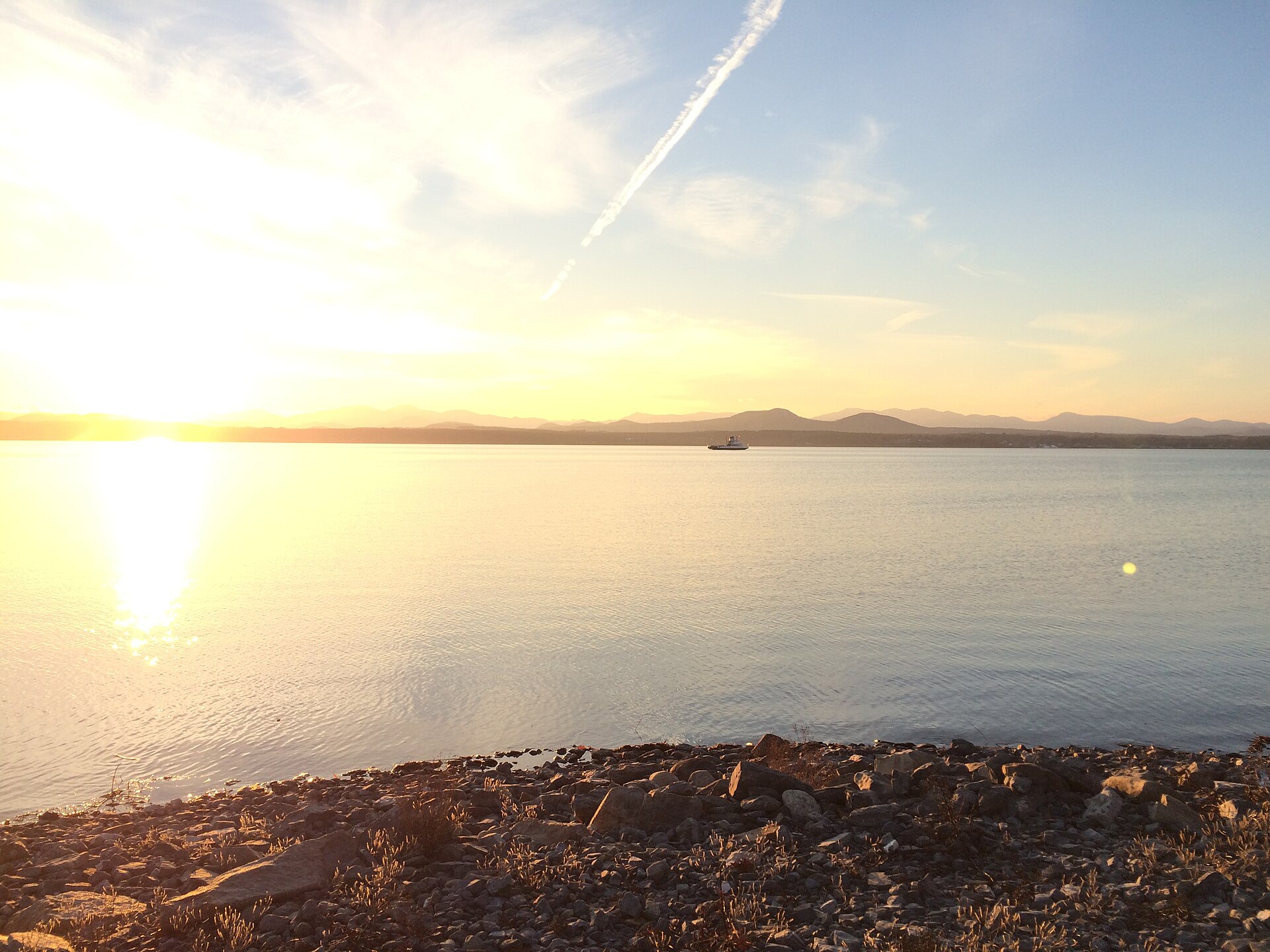
- Burlington waterfront — Burlington, Vermont
Burlington is one of the two largest settlements on the lake and the natural base for walking, cycling and boat trips. The waterfront looks across the water towards the Adirondacks, and sunset there draws locals as well as visitors. Cruise boats and small craft use the harbour in the warm months. - Fort Ticonderoga — Ticonderoga, New York
Fort Ticonderoga stands on the lake's southern reach in New York and ties together the French, British and American stories of the shore. It is a good place to understand why this narrow stretch of water was worth fighting over. Check the official site for opening arrangements and events before visiting. - Shelburne Museum — Shelburne, Vermont
Shelburne Museum gathers historic buildings on a single site south of Burlington, among them Dutton House and the Stagecoach Inn. It suits a slow afternoon, especially if the weather turns, and gives a sense of how rural life around the lake looked in earlier centuries. Check the museum's website for current details.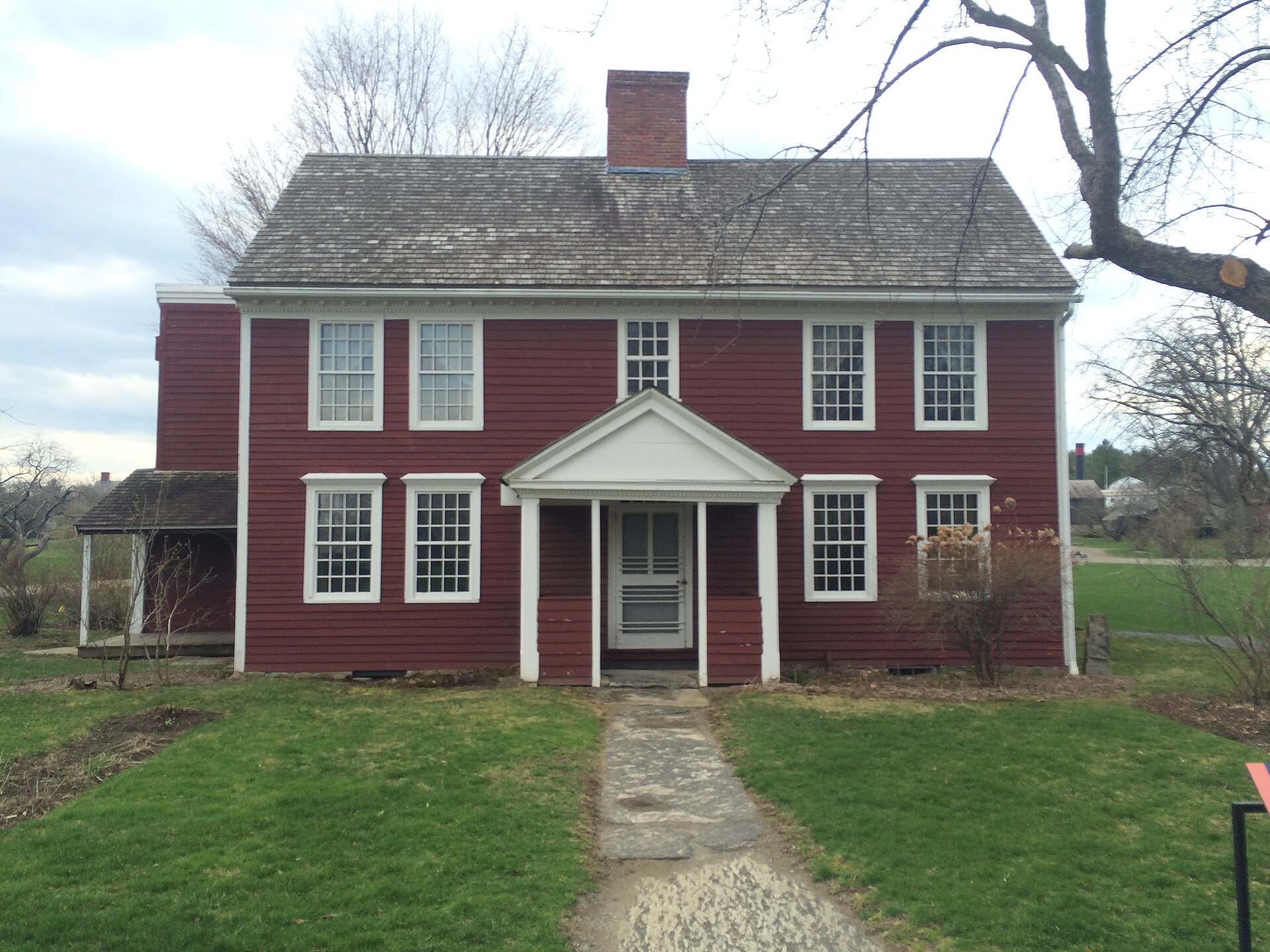
- The islands of Grand Isle County — Grand Isle County, Vermont
Grand Isle, North Hero and Isle La Motte are the largest of the lake's many islands, all in Vermont, and can be reached by road. Cycling or driving between farms, orchards and quiet shores makes an easy day. North Hero State Park offers a place for picnics and swimming. - Fort Chambly — Chambly, Quebec
Fort Chambly sits on the Richelieu River in Quebec, close to where the lake drains north towards the St Lawrence. It is a French fort built to guard against the British, and it makes a pleasant day trip from Montreal, with farmland and river views on the drive.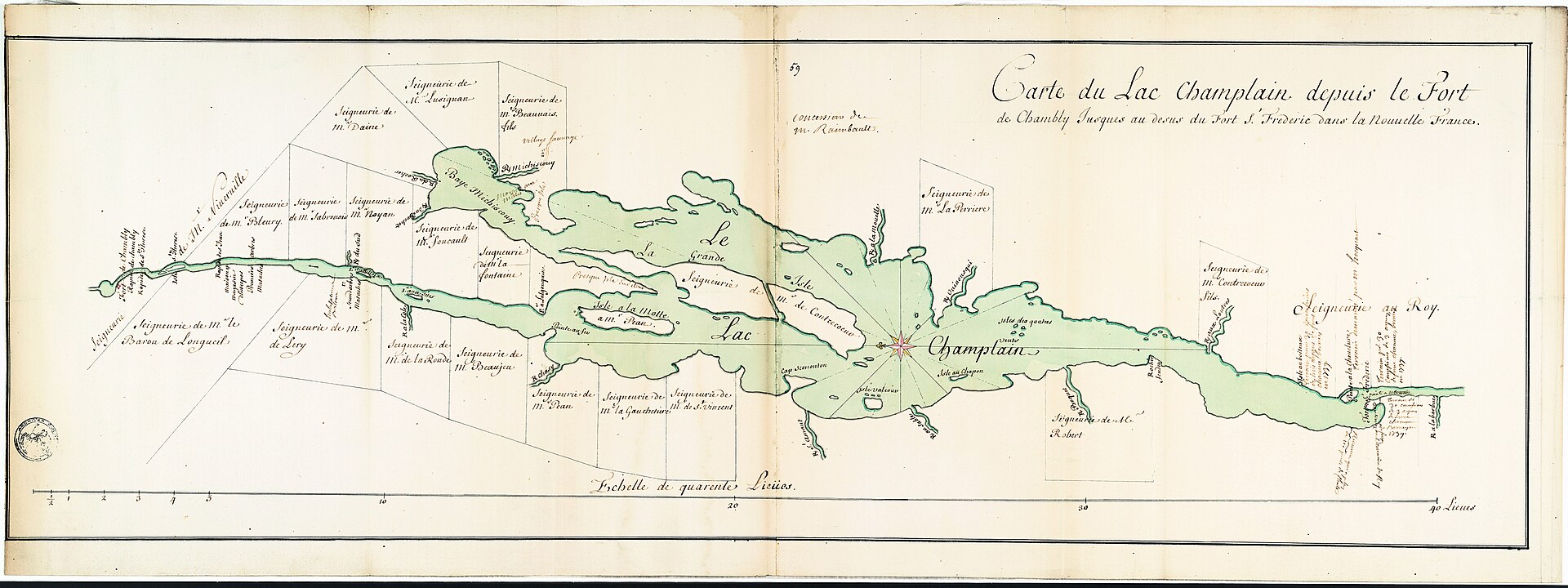
Culture
Lake Champlain's culture is a blend of three layers: Indigenous, French and Anglo-American. The Abenaki and Mohawk names for the lake are still in use, and both nations regard these shores as homeland rather than history, so it is worth reading local interpretation boards before assuming the story is only about forts and explorers. On the Quebec side, French is the everyday language, farmland is cut into long thin strips running back from the river, and the sugar-shack tradition still marks the end of winter. On the Vermont and New York sides the feel is small-town: farm stands, white-clapboard villages, town greens, lakeside summer cottages and a strong habit of boating. Champ, the lake monster, belongs to all three, a friendly local legend that gets far more outings than any proven sighting. Care for the water is part of daily life too, because boats moving between lakes can carry invasive species, and many launches ask visitors to clean their craft. At the border, expect passport checks; crossings are usually quicker midweek than on Sunday evenings, when queues build. Before launching a kayak, paddleboard or boat, clean, drain and dry it along with any fishing gear, and carry all litter off the shore with you.
What to wear
Lake Champlain has no single regional costume, so the clothing story follows the peoples who have lived around it. Abenaki and Mohawk dress traditionally draws on deerskin, wool cloth, ribbon work and beadwork, and ribbon shirts and ribbon skirts are worn at ceremonies, gatherings and powwows rather than every day. On the Quebec side, the ceinture fléchée, a woven wool sash with an arrow pattern, belongs to the French-Canadian tradition and appears at winter festivals. Everyday dress around the lake is practical: flannel shirts, fleece, waterproof jackets, jeans, hiking boots and sandals, with sun hats and caps on the boats. Locals dress up very little, even for dinner at a lakeside restaurant. Visitors should pack layers whatever the month, since lake breezes cool the evenings even after a warm day, and a light waterproof is useful in any season. Wear sturdy shoes for trails and rocky shorelines, add water shoes for stony beaches, and bring sun protection and insect repellent for summer. Winter calls for insulated boots, hats and gloves. No special dress code applies at churches or museums beyond ordinary tidy clothes.
What to eat
- Tourtière — Sugar shacks and village bakeries on the Quebec side
A pork and beef pie from the French-Canadian table, traditionally eaten on special occasions such as Christmas Eve. Look for it at a sugar shack in the Quebec farmland, at village bakeries and at local markets in the Richelieu valley. - Yellow split pea soup — Sugar shacks and village eateries in Quebec
A thick, plain soup of yellow split peas that suits a cool day on the water. Sugar shacks serve it as part of a traditional meal, and small eateries in the villages of the Quebec side may offer it too. - Ham and pancakes with maple syrup — A cabane à sucre in the farmland north of the border
Maple is the lake country's signature flavour, strongest in March and April. Sugar shacks, called cabanes à sucre, serve ham glazed with syrup alongside pancakes, and many also show how the sap is collected and boiled down. - Pouding chômeur — Sugar shacks and family-run Quebec eateries
A light, sweet cake baked in a syrup sauce; the name translates roughly as pudding for the unemployed. Expect it near the end of a sugar-shack meal, often alongside maple sugar pie. - Tire sur neige — Sugar shacks in late winter
Hot maple syrup poured onto clean snow, where it chills into taffy and is rolled onto a stick. It is a late-winter treat, so plan a visit in March or April if you want to try it.
Plan it
Best time. July and August for swimming, boat trips and long evenings; September and October for autumn colour and quieter shores; March and April for maple season on the Quebec side. Winters are cold, so expect ice and snow rather than beach weather.
How long. 3–4
Getting there. Burlington International Airport serves the Vermont shore, and Montreal's airport suits the northern end. From either, a car is the easiest way round the lake. Ferries cross between Vermont and New York, so check the operators' official sites for current crossings, and enter Quebec by road heading north from either state.
Budget. mid
Tips
- Carry a passport if you plan to cross into Quebec; the border is busiest on Sunday evenings, so cross midweek if you can.
- Hire or bring a car, as public transport round the shore is thin.
- Book summer lodging, and sugar-shack tables in March and April, well ahead for peak weekends.
- Check the ferry operators' websites for current sailings and fares before building a day around a crossing.
- Pack layers, since evenings on the water are cool even in midsummer.
Etiquette
- Clean, drain and dry boats, paddleboards and fishing gear before moving between waters.
- Take all litter away from beaches and state park shorelines.
- Ask before photographing people, and treat Abenaki and Mohawk heritage sites with respect.
Nearby
Sources
- Wikidata Q68467 (CC0)
- Wikipedia: Lake Champlain (rev 1386290468) (CC BY-SA 4.0)
- Wikivoyage: Montérégie (rev 5411451) (CC BY-SA 4.0)
- Lake Champlain by Sentinel-2, Copernicus Sentinel-2, ESA (CC BY-SA 3.0 igo)
- Lake Champlain from Rattlesnake Mountain, Annacecchini (CC BY-SA 4.0)
- Carte du Lac Champlain, Atlas Moreau de Saint-Méry (Public domain)
- Charlotte Ferry, Lake Champlain, Hbbrown18 (CC BY-SA 4.0)
- Camel's Hump, Champlain Valley, Hbbrown18 (CC BY-SA 4.0)
- Charlotte, Vermont, Hbbrown18 (CC BY-SA 4.0)
- Dutton House, Shelburne Museum, Hbbrown18 (CC BY-SA 4.0)
- Stagecoach Inn, Shelburne Museum, Hbbrown18 (CC BY-SA 4.0)


