Lake Abbe
Lake Abbe, Djibouti
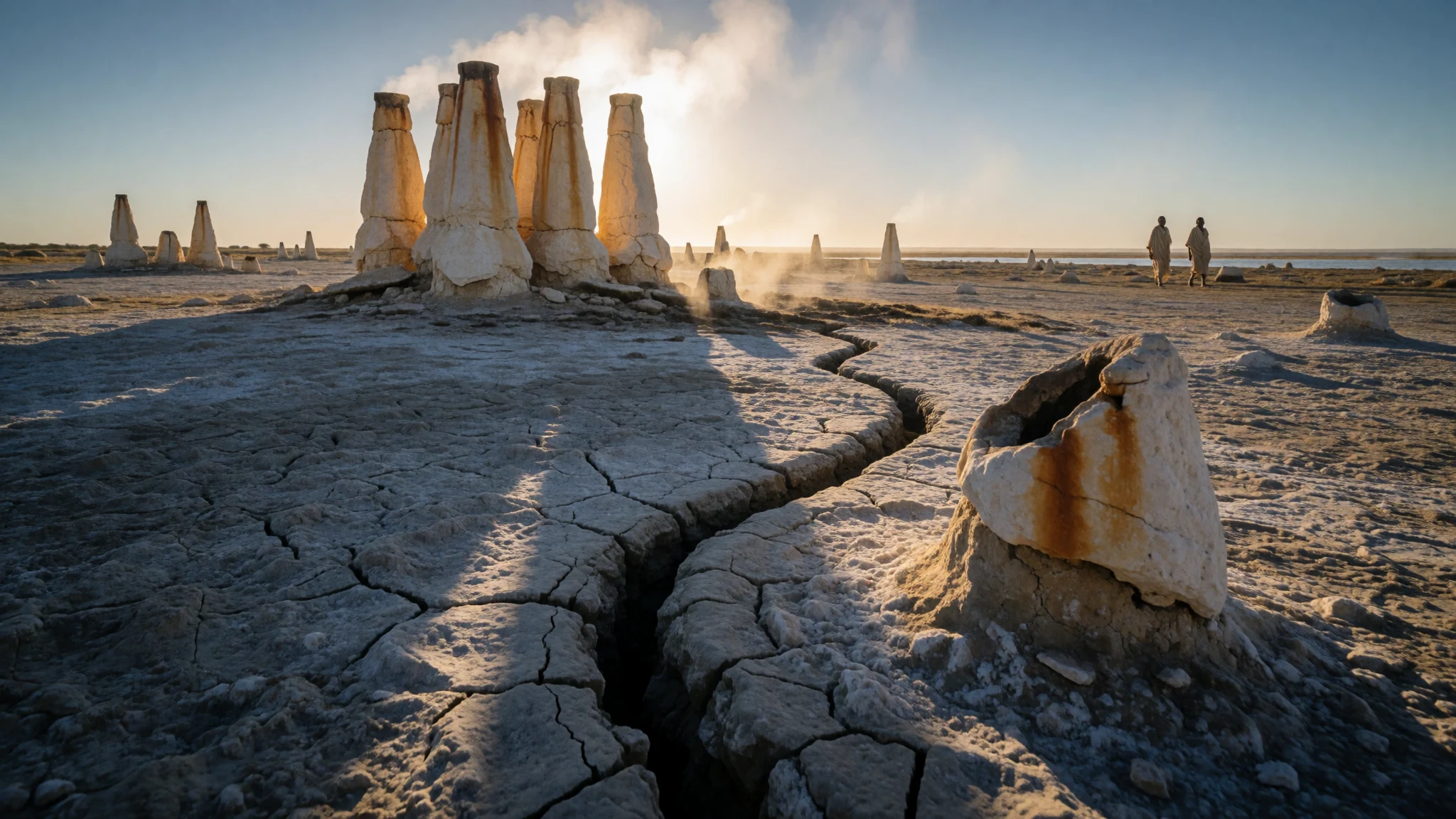
Lake Abbe is a remote salt lake on the Djibouti–Ethiopia border, where steaming rock chimneys, flamingos and pale desert plains meet at dawn.
The place
Lake Abbe (also called Lake Abhe Bad) lies on the border between Djibouti and Ethiopia, at an elevation of 243 m, in a flat, sun-bleached basin that feels far from anywhere. It is a salt lake and the final stop for the Awash River, which crosses the Afar Triangle and has no outlet to the sea. Abbe is the last of a chain of six linked lakes. Whatever the river delivers simply evaporates, leaving crusts of salt, pale mud flats and shallow patches of water that shift from year to year. The landscape is odd even by desert standards: grey plains, steam leaking from cracks in the ground, and tall rock chimneys standing in the open like abandoned sculptures. Wildlife gathers wherever there is water, and flamingos are the best-known residents. Heat is the defining fact of the place. Skies are clear nearly all year, the air is dry and rain is scarce. Shade is rare, so the light turns hard and flat by midday, then softens into pink and gold at dawn and dusk. Afar herders live around the lake and move their animals to wherever grazing and water can be found. There are no towns on the shore and the tracks are rough, which is why Abbe stays quiet. Most visitors come on an organised trip from Djibouti City and sleep in simple camps nearby.
Its story
The story of Lake Abbe is mostly geological, and it is still being written. The basin sits in the Afar Triangle, a low, hot corner of the Horn of Africa where the earth's crust is slowly pulling apart. Heat from below keeps the ground restless: steam escapes through vents, and hot water has long seeped up through the lakebed. The Awash River carries water down from the Ethiopian highlands into this hollow, but with no outlet the water can leave only by evaporating. Over long spans of time that has laid down salt and minerals, and where hot springs rise through the sediment, the minerals have hardened into tall chimneys. Some still breathe out steam, especially in the cool of early morning. The lake's size is not fixed. When the rains are good, water spreads across the flats and draws birds in; in dry spells it shrinks back, leaving cracked white ground and stranded reeds. Rainfall in the highlands changes what arrives, so a visit one year can look quite different from the next. People have adapted to that uncertainty. The Afar have herded goats and camels around these shores for generations, reading the land for water and pasture. For outsiders, Abbe became known through travellers and photographers who found its chimneys unlike anything else in the region. It now sits at the edge of the usual picture of Djibouti, a country better known for its port and coast.
What to see
- The limestone chimneys at dawn — Western shore, Djibouti side
The rock chimneys are the reason most people make the journey. They stand in clusters on the plain, and in the cool first hour some release thin plumes of steam. Arrive before sunrise, when the light is gentle and the ground is comfortable to walk on.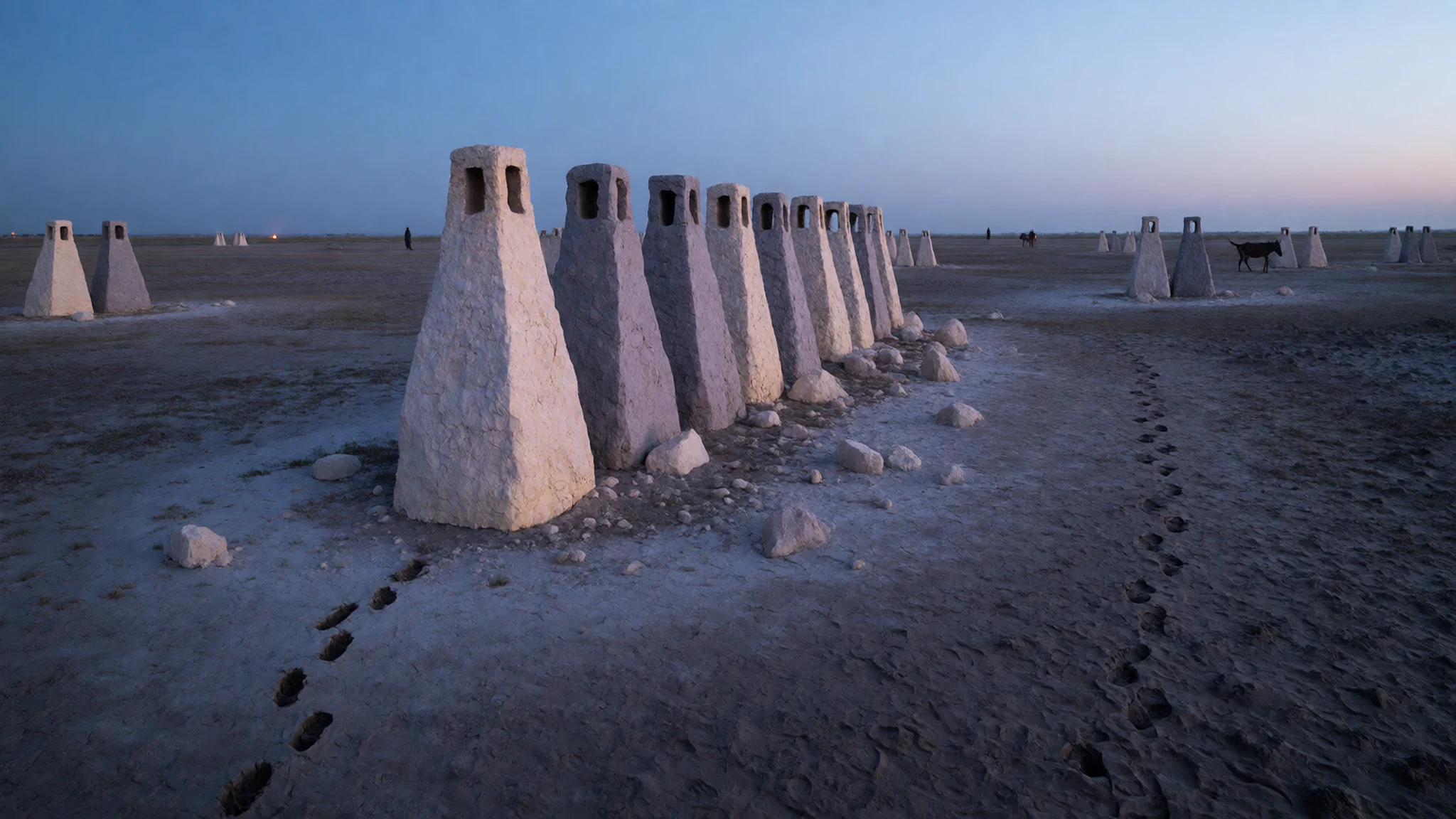
- Flamingo shallows — Shallow margins of the lake
Where water remains, flocks of flamingos feed in the shallows, a pink band against grey mud and pale sky. They are easily disturbed, so a pair of binoculars and a patient distance work better than walking closer. Numbers vary with the season and the water.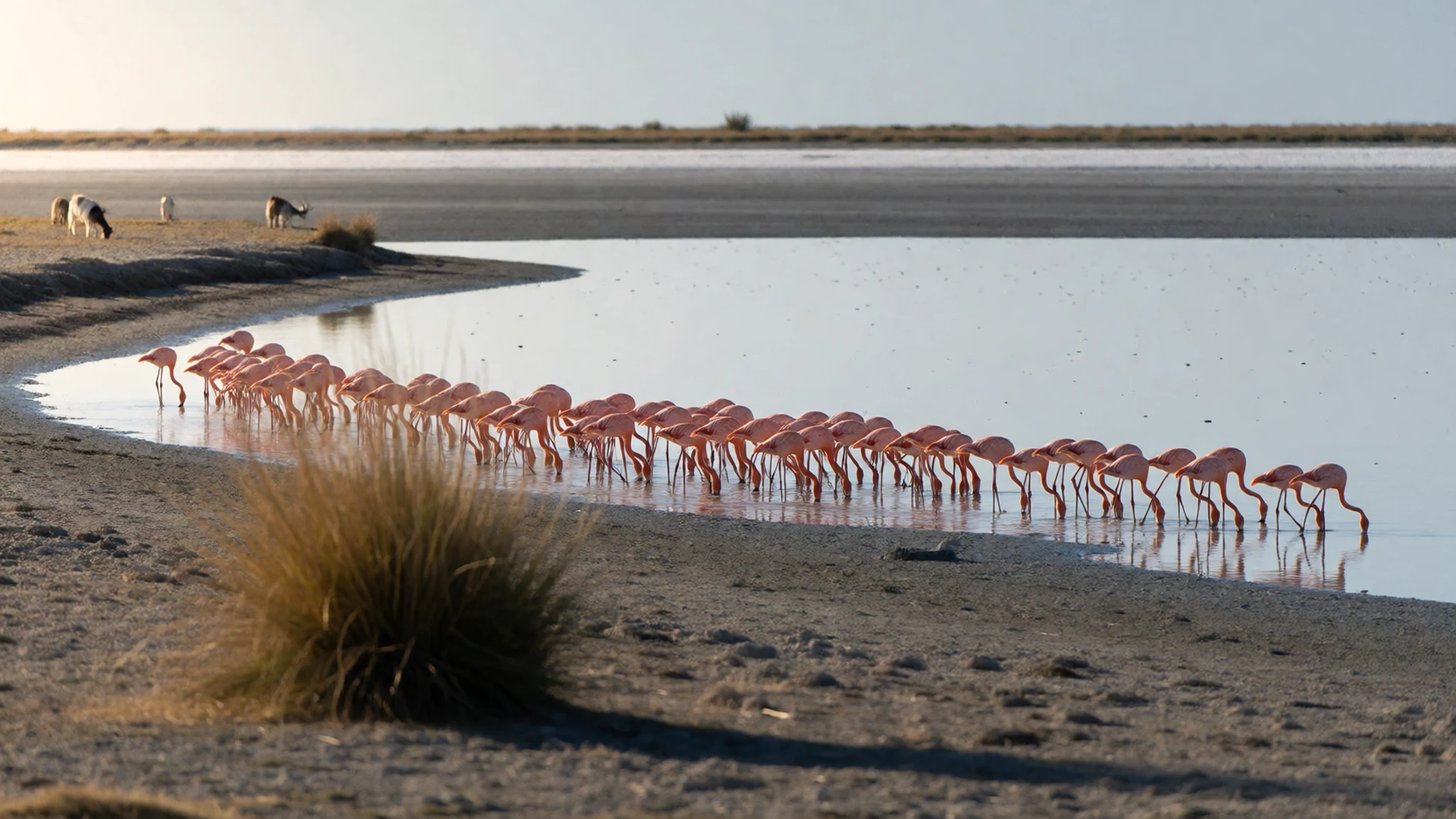
- The dry lakebed and salt flats — Exposed basin floor
In the parched parts of the basin the surface turns to white crust and cracked mud, stretching to a hazy horizon. It is stark, silent and very bright, so sunglasses matter. The ground can be sharp underfoot, and it is worth staying with your guide.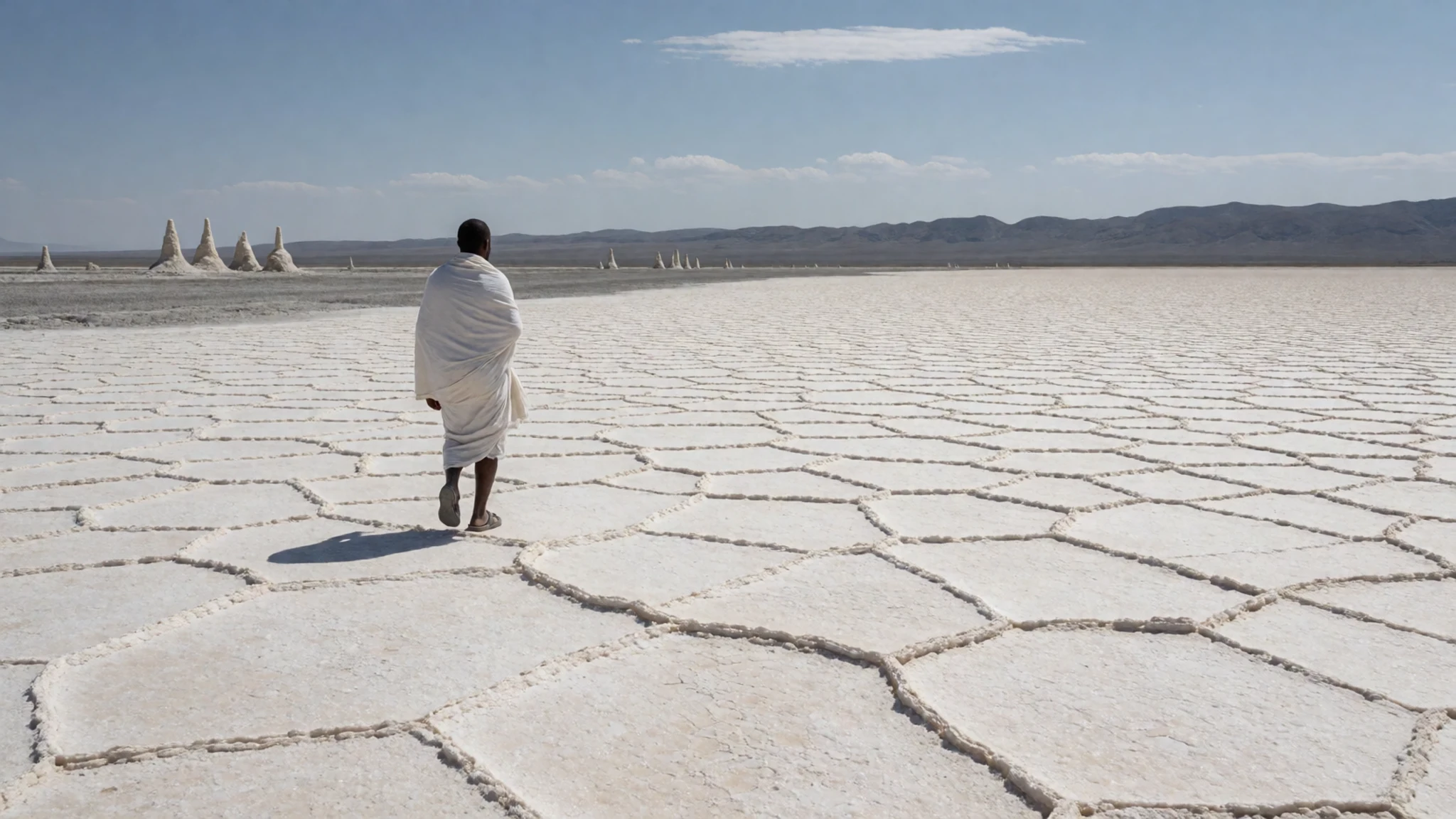
- The marshy fringe — Wetter shoreline
Along the wetter edge, reeds, standing water and soft mud change the mood completely from the dry flats nearby. This is where birds and grazing animals tend to cluster. Photographers like the contrast between green-brown marsh and the bare plain behind it.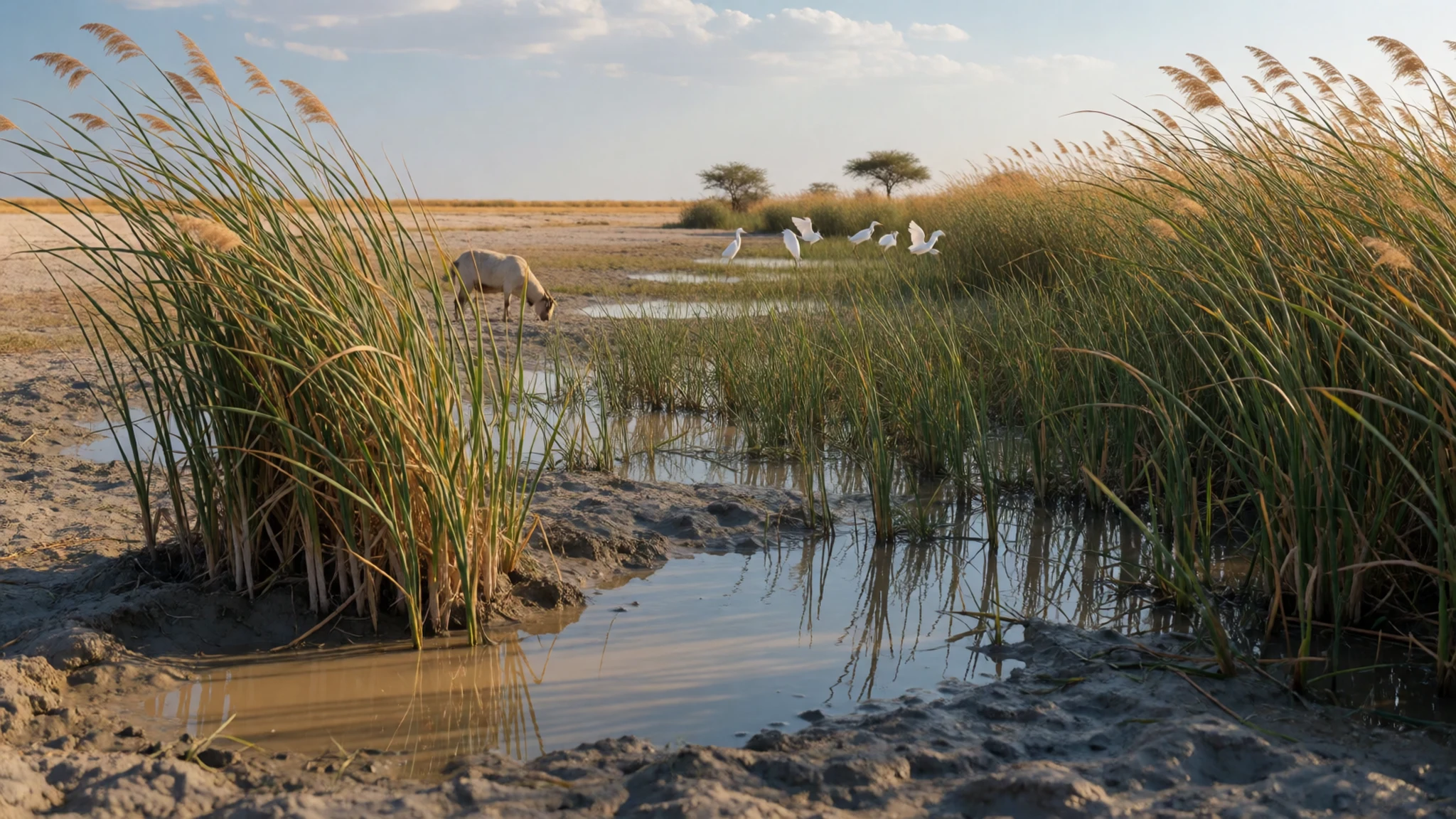
- Sunrise over the shore — Eastern shore viewpoints
Even without the chimneys, the shoreline at first light is worth the early start. Colours move from grey to pink to gold within minutes, and the water holds the reflection. Camps nearby make it easy to be in position before the sun clears the horizon.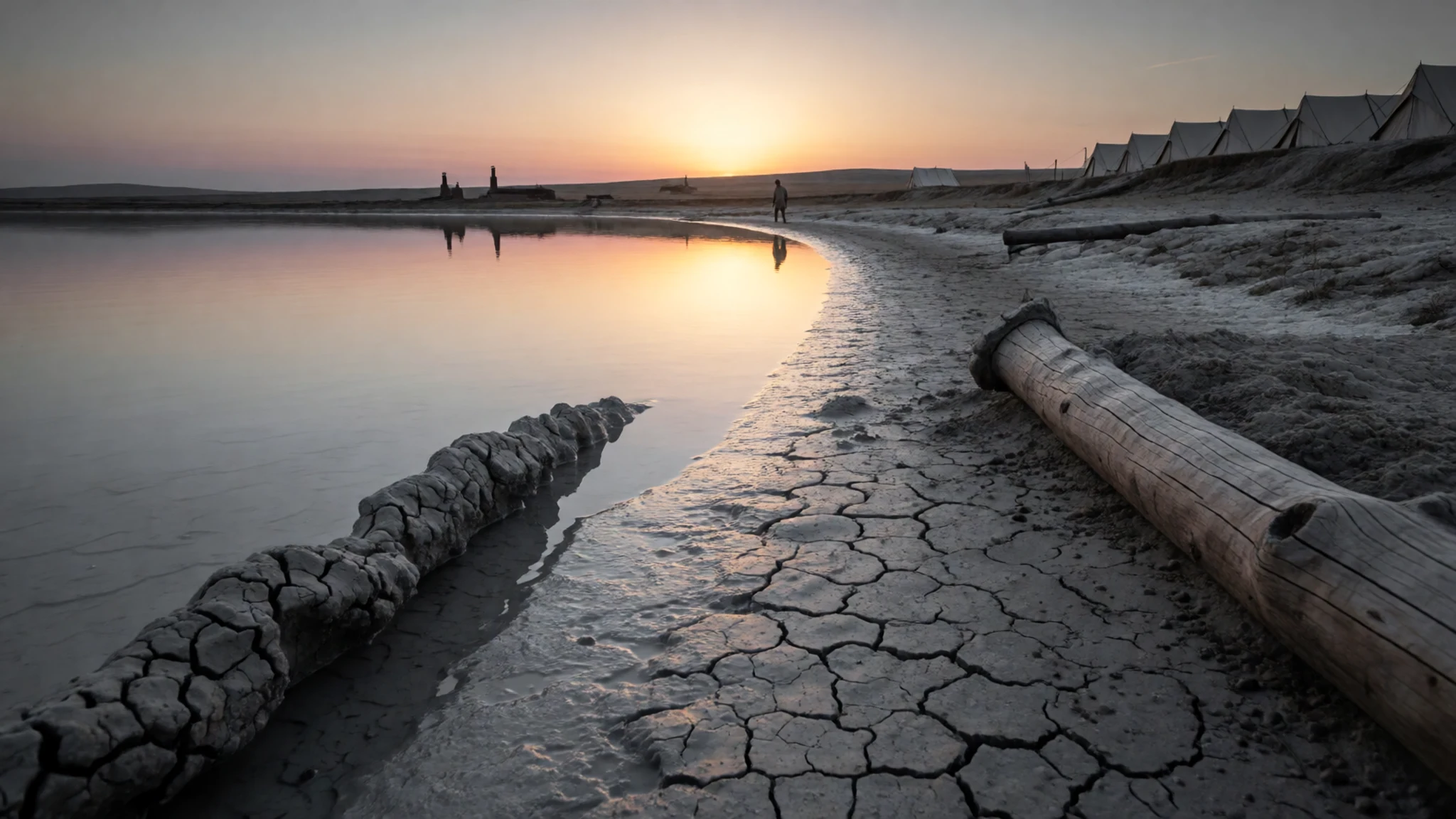
Culture
Lake Abbe belongs to the Afar, a pastoral people whose life revolves around livestock, water and long knowledge of difficult country. Goats, sheep and camels are wealth as well as food, and herds move across the lake's edges according to rain and grazing. The region is largely Muslim, and daily rhythms follow prayer times, the heat of the day and the cool of morning and evening. Hospitality matters in a landscape where water is precious: a visitor who arrives with a local guide is usually received with tea and courtesy, and a little patience with slow greetings goes a long way. Afar and Somali languages are widely heard in Djibouti, with French and Arabic used in towns and in official life, so a few French or Arabic greetings are appreciated. Camps near the lake are simple, and meals are often shared from a common dish. Livestock and water points are not tourist attractions; they are people's livelihoods, and a respectful distance is part of travelling here. Alcohol is not widely available outside the capital, and loud behaviour in the quiet of dawn is out of place. Always ask permission through your guide before photographing herders, women or children, and never photograph people who decline, however striking the scene.
What to wear
Traditional Afar dress is shaped by heat and by life on the move. Men have long worn a wrapped cotton cloth around the waist, often with a belt that holds a curved knife, and women wear bright wrapped cotton cloths with a head covering and strings of beads and metal jewellery. Light, loosely woven cotton is the standard because it breathes and dries fast. Today, many people around Abbe combine these wraps with plain shirts, trousers, sandals or plastic shoes, while in Djibouti City lightweight modern clothes are common, with many women covering their hair. For visitors, the priorities are sun, dust and rough ground. Wear long, loose, pale cotton or linen with sleeves, and cover shoulders and knees out of respect for local norms. A wide-brimmed hat, sunglasses and a scarf for dust and sun are more useful than any fashion choice. Closed, sturdy shoes are important, because the salt crust and broken rock can cut thin soles. Bring a light layer for the cool before sunrise, and keep swimwear for the coast rather than the lakeshore. Neutral colours photograph well against the grey plains and blend in respectfully near herding families.
What to eat
- Skoudehkaris — Camp meals and eateries in Djibouti City
A spiced rice dish cooked with lamb or goat, flavoured with cumin, cardamom and cloves, often served with a squeeze of lime. It is the everyday national comfort meal and appears on many camp menus.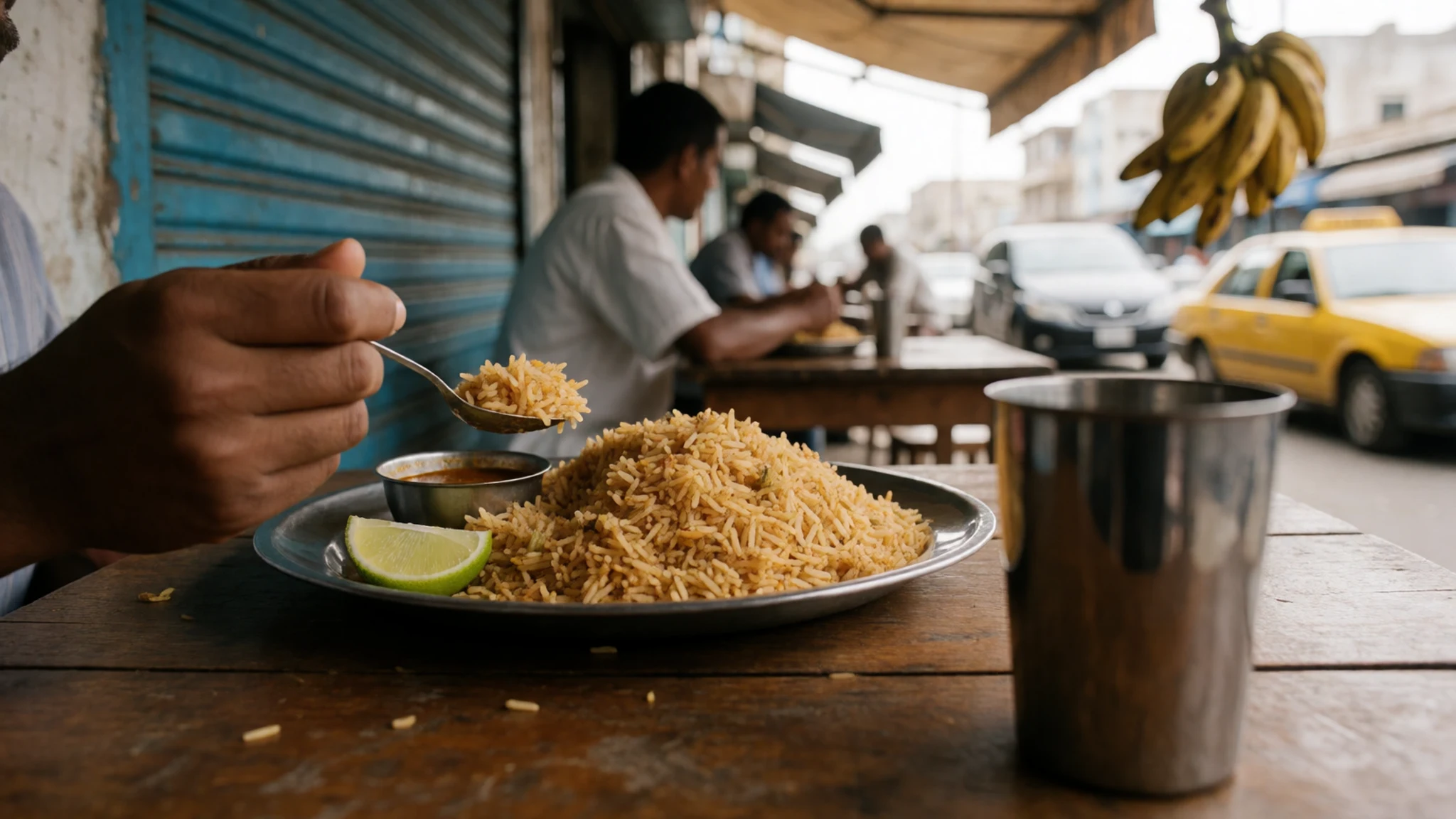
- Fah-fah — Local eateries in Djibouti City and roadside stops on the way inland
A thick, peppery soup of boiled goat or beef, eaten with bread or on its own. It is hearty, warming and strongly seasoned, often made for sharing around a table after a long day.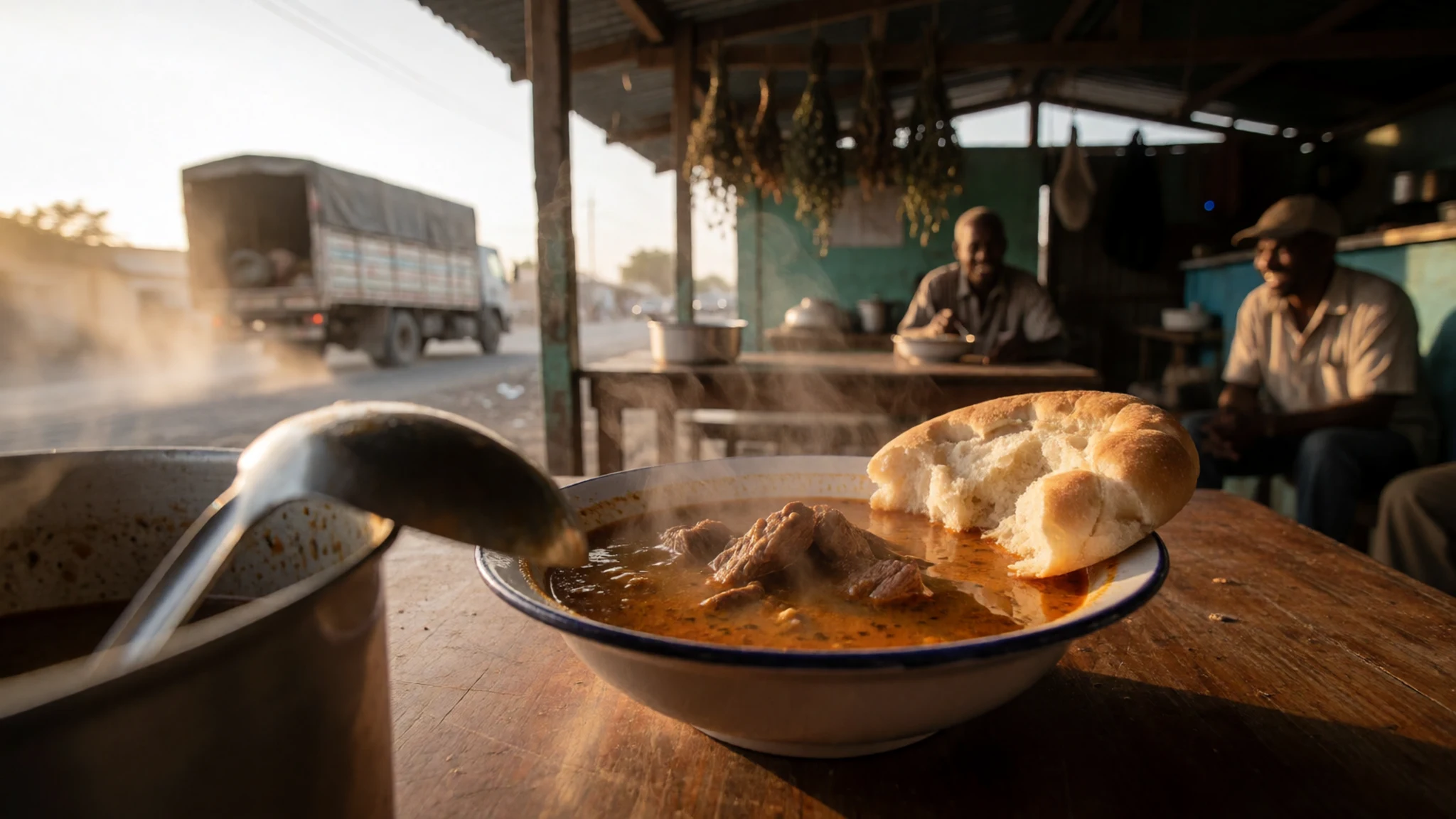
- Lahoh — Breakfast stalls and bakeries in Djibouti City
A soft, spongy flatbread cooked on one side only, eaten at breakfast with honey, butter or a savoury sauce. It travels well and is a good start before an early morning at the lake. - Grilled Red Sea fish — Seafront eateries in Djibouti City
Whole fish marinated in spices and grilled over charcoal, served with rice or bread and lime. It belongs to the coast rather than the lake, so it makes sense as a meal before or after the trip inland. - Spiced sweet tea — Camps, roadside tea stalls and family homes
Black tea brewed strong with sugar and often cardamom or ginger, offered as a gesture of welcome. Accepting a glass is polite, and it is a gentle way to spend time with guides and hosts.
Plan it
Best time. November to February, when days are hot but bearable and dawn is pleasantly cool. Skies are clear and rain is scarce all year, and the summer months are punishing, so they are best avoided.
How long. 2–3
Getting there. Fly into Djibouti–Ambouli International Airport, then travel inland by road, usually via Dikhil, with a driver and a sturdy off-road vehicle. The last stretch is a rough track across the plain, so most visitors book through an operator in Djibouti City.
Budget. mid
Tips
- Check current government travel advice before booking, as the lake lies on a border region
- Travel with a local guide and driver rather than attempting the tracks alone
- Carry more drinking water than you expect to need, and use sun protection all day
- Be at the chimneys before sunrise for cooler air and better light
- Bring cash for camps, guides and small purchases, as cards are unlikely to work near the lake
Etiquette
- Ask through your guide before photographing herders, women or children
- Keep a respectful distance from livestock, water points and flamingo flocks
- Dress modestly, covering shoulders and knees, outside your camp
Nearby
Sources
- Wikidata Q306194 (CC0)
- Wikipedia, Lake Abbe (rev 1366075541) (CC BY-SA 4.0)
- Wikivoyage, Lake Abbe (CC BY-SA 4.0)
- Physical location map of Djibouti — Carport (CC BY 3.0)
- Shores of lake Abbe — Jbcombes (CC BY-SA 1.0)
- Sonnenaufgang — Rolf Cosar (CC BY 3.0)
- Partie asséchée du Lac Abbe — Cjulien21 (CC BY 3.0)
- Partie marécageuse du Lac Abbe — Cjulien21 (CC BY 3.0)
- Flamants roses du Lac Abbe — Cjulien21 (CC BY 3.0)
- Shores of lake Abbe — Jbcombes (CC BY-SA 1.0)
- Chimneys of lake abbe at dawn — jbcombes (CC BY-SA 2.5)


Wildlife
- Greater flamingo (animal)
The greater flamingo is the biggest of all the flamingos, a great pink bird that is easy to remember. Around Lake Abbe, flamingos gather wherever there is water, so look for them where pools and shallows remain. Ask your guide when they are best seen, since timing is never certain. Keep a good distance, speak softly and move slowly so the flock stays calm. Let your guide lead the way, and never feed them; wild birds should find their own food.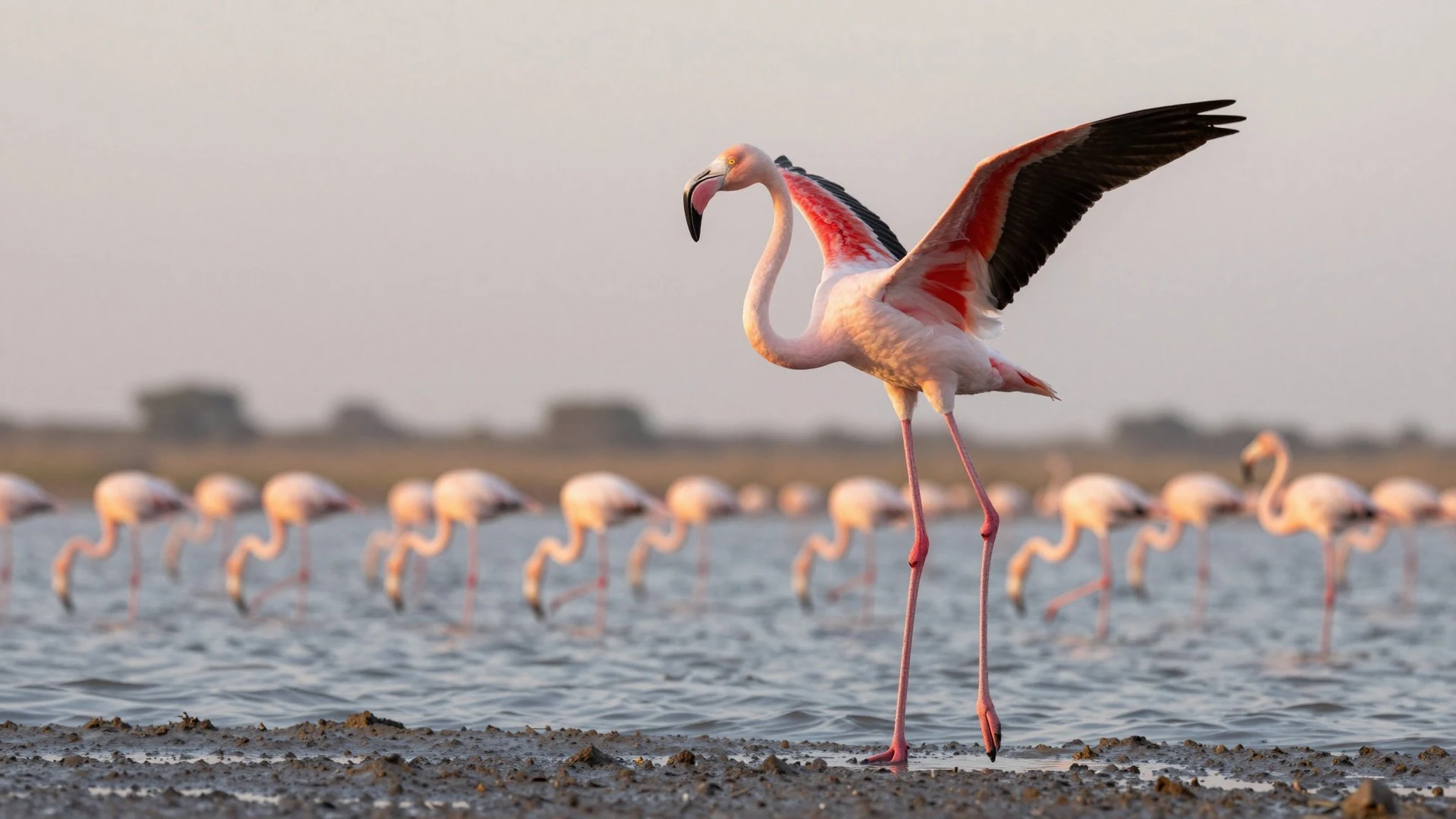
- Lesser flamingo (bird)
The lesser flamingo is a pink wading bird whose home is Africa south of the Sahara and western India. At Lake Abbe, flocks of flamingos feed in whatever shallows remain, a pink stripe across the muddy grey. Birds seen farther north are only occasional wanderers, so ask your guide which flamingos you are watching. Stay well back, keep your voice low and your movements slow, follow your guide, and never offer food.