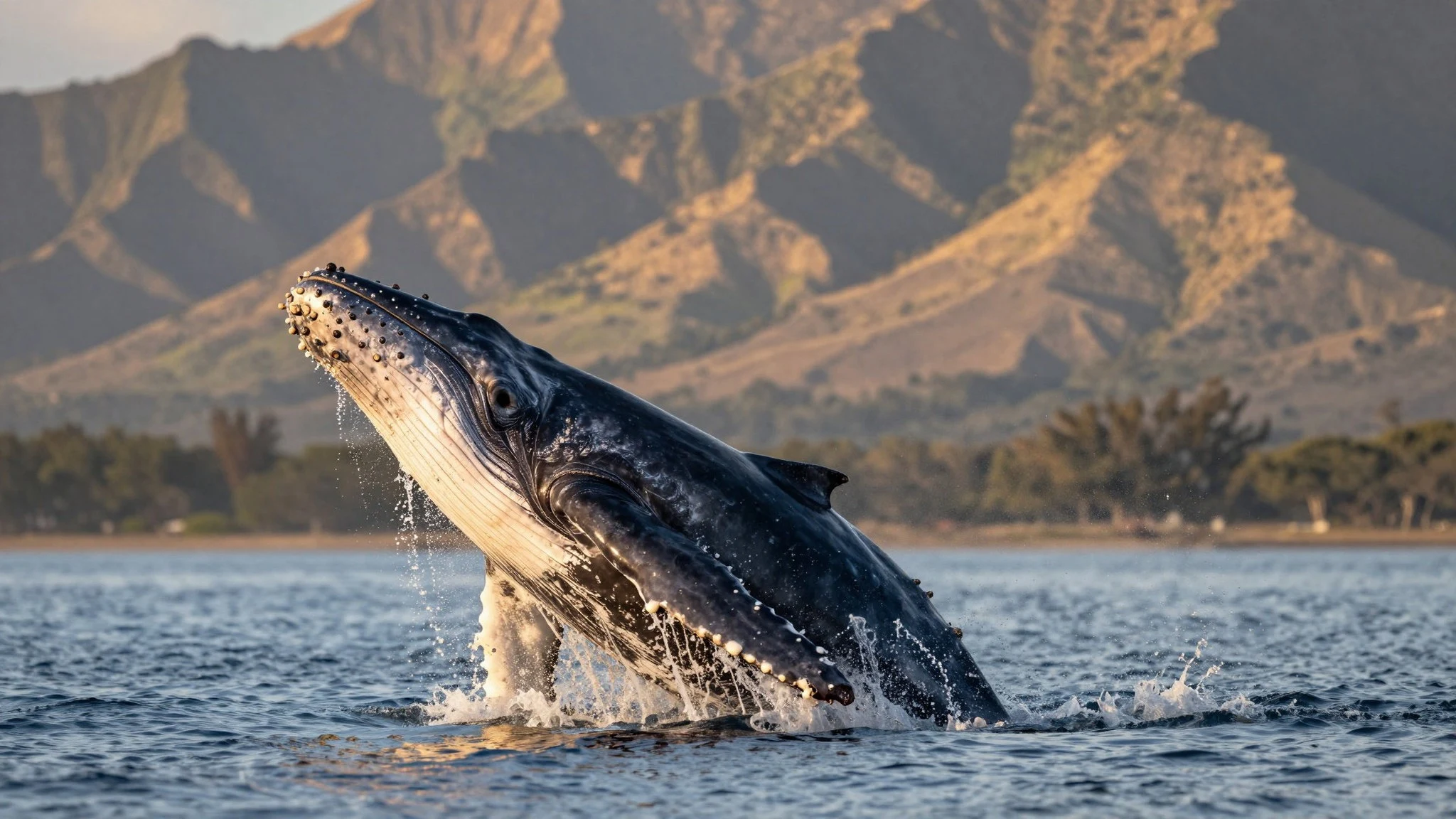
Lahaina
Lahaina, United States
Lahaina, on Maui's dry west coast, is a former Hawaiian royal capital and whaling port now recovering from the 2023 fire.
The place
Lahaina sits on the north-west coast of Maui, stretched along Route 30 between a tunnel at its southern end and the resort strips of Kāʻanapali and Kapalua to the north. The census area recorded 12,702 residents, a count that predates the 2023 wildfires. Those fires destroyed about 80% of the town and killed 102 people, so any honest description has to begin with that loss. The old waterfront, once the core of a historic district, was heavily damaged, and the town is best understood now as a community rebuilding homes and livelihoods rather than a finished attraction.
The setting explains a good deal. Lahaina lies about 1 m above sea level, pressed against the water, in the rain shadow of the West Maui Mountains (Mauna Kahālāwai). Moisture falls on the peaks while the shoreline stays dry, giving a hot semi-arid climate: warm all year, fairly wet winters, dry summers. Rainfall climbs moving north. Kāʻanapali gets roughly double the town's rainfall and a steadier breeze, while Kapalua and Napili receive nearly four times as much.
Beaches in the town itself are modest, which is why most visitors base themselves in Kāʻanapali, a short drive away, and treat Lahaina as a harbour town to visit rather than a resort. With recovery still under way, local wishes about access, parking and photography carry real weight. Visitors are advised to check current guidance from Maui County and the official visitor authority before planning a trip, and to spend money with local businesses that are open.
Its story
Lahaina has carried more than one name. The older Hawaiian name, Lele, is linked to breadfruit groves and to a verb meaning to jump or fly, and one writer read it as land jutting out from the sea. The present name is usually explained as two words joined: lā, the sun, and hainā, merciless. A story set down in the early twentieth century has a bald chief from Kauaula Valley, going about hatless, cursing the scorching sun, and the place taking its name from his complaint.
Spelling and pronunciation have wandered as well. When American Protestant missionaries began fitting Hawaiian into the Latin alphabet in the 1820s, they had to decide how to mark vowels, and the town has been written with and without its macrons ever since. Both Lahaina and Lāhainā count as correct in modern Hawaiian, and an old guide puts the stress on the last syllable, which rhymes roughly with 'high'.
The town's later history survives in its buildings: a fort dating from 1831, with reconstructed walls and original cannons, a courthouse and prison along the shore, and a banyan planted in 1873 that grew into the shaded middle of town. Sugar left its own marks, notably a mill smokestack and a locomotive. Much of this historic district was badly damaged in 2023, which gives the older records, photographs and Hawaiian names extra weight for the people who are rebuilding.
What to see
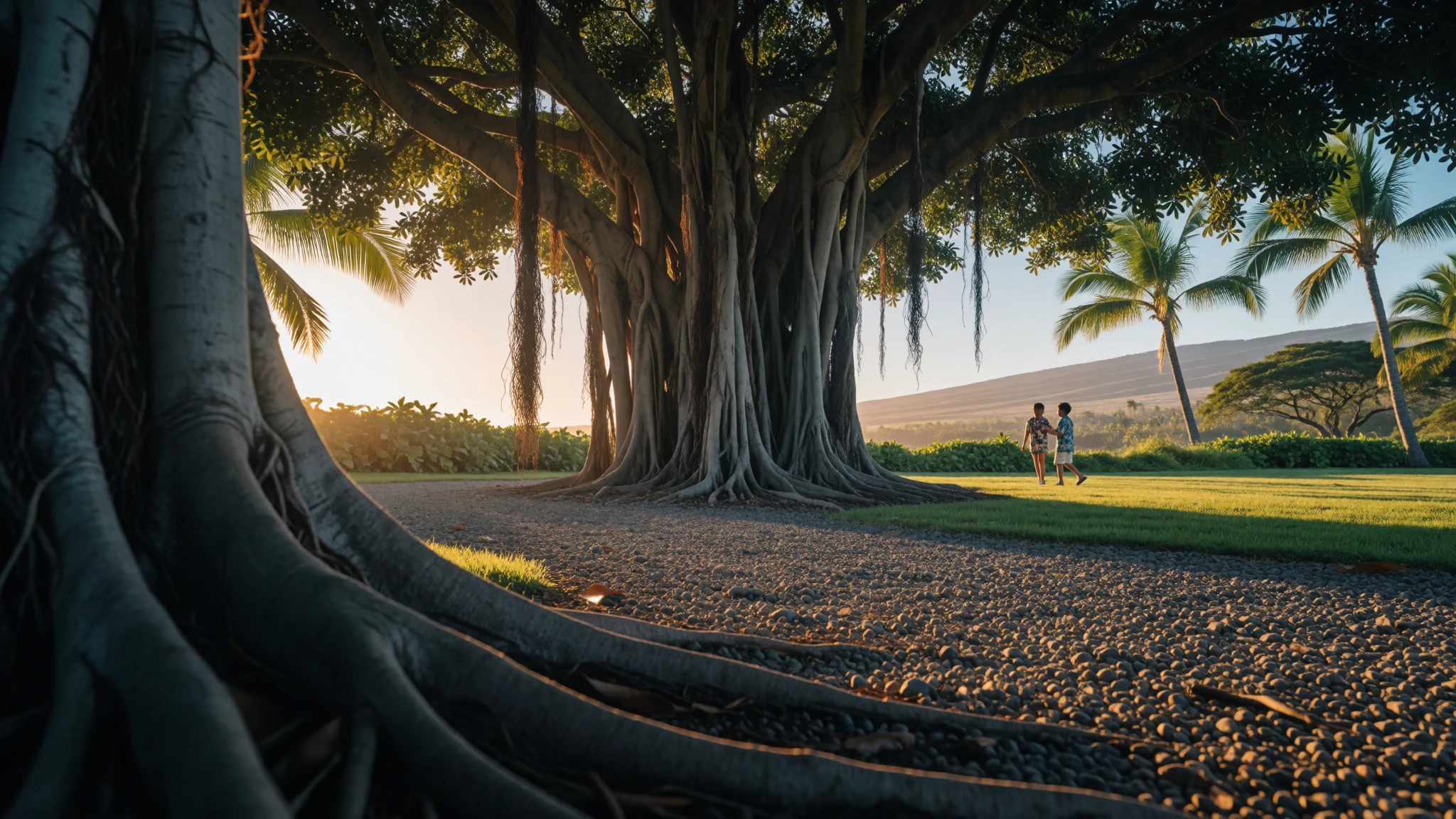
- Banyan Tree Park — Central Lahaina, near the harbour
Lahaina's banyan was planted in 1873 and spread until its many trunks and canopy filled a whole town block, making it the natural meeting point of the old town. It gives welcome shade in a hot, dry place. After the 2023 fire, access and the tree's condition depend on current local guidance, so check before going.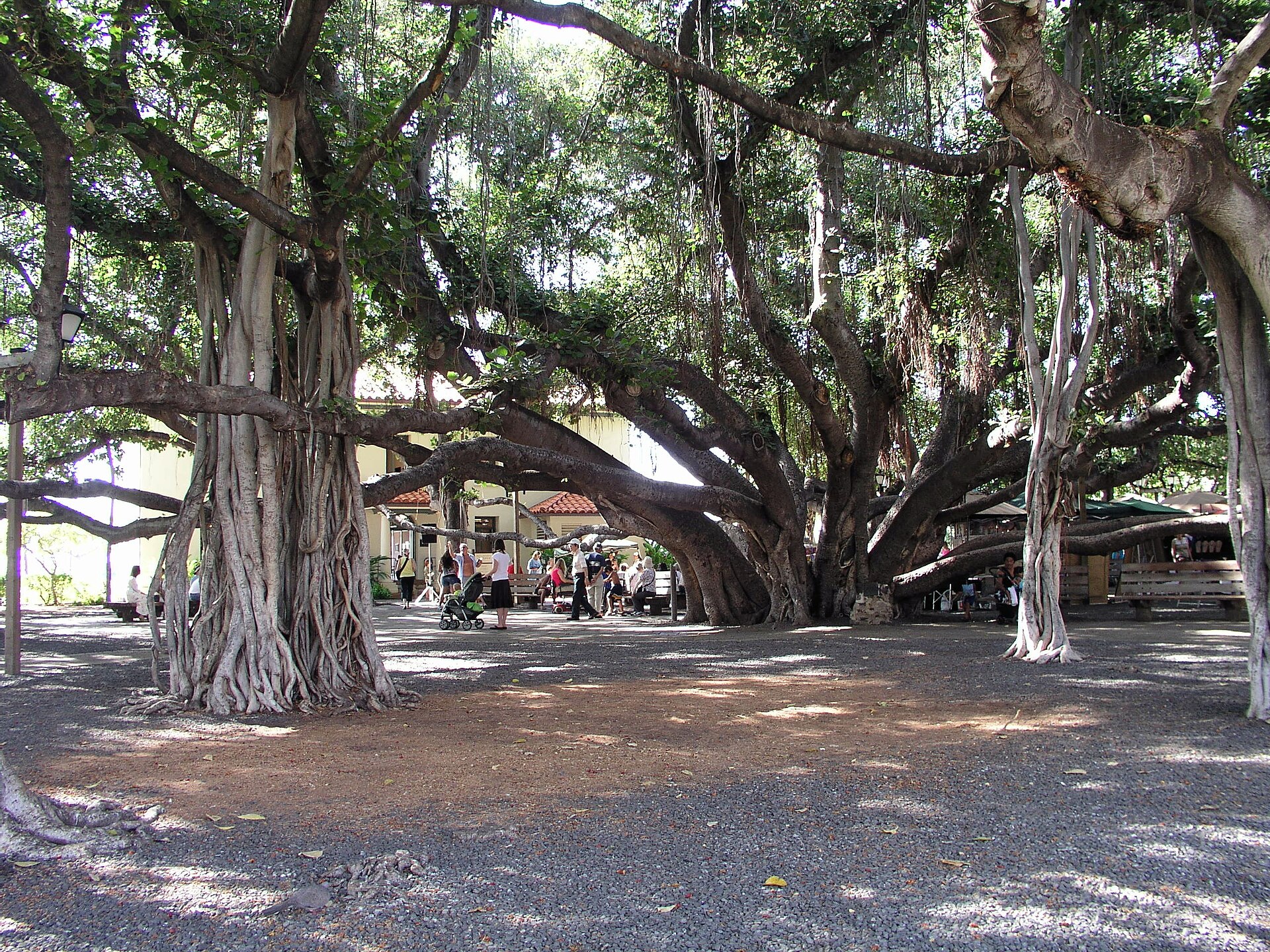
- Front Street and the waterfront — Lahaina waterfront
Front Street runs along the Lahaina shoreline and was the town's main promenade, lined with shops, restaurants, the courthouse, the old prison and a museum. The waterfront was badly affected in 2023, so what a visitor finds depends on the stage of rebuilding. Approach it as a neighbourhood people are returning to, and check official updates first.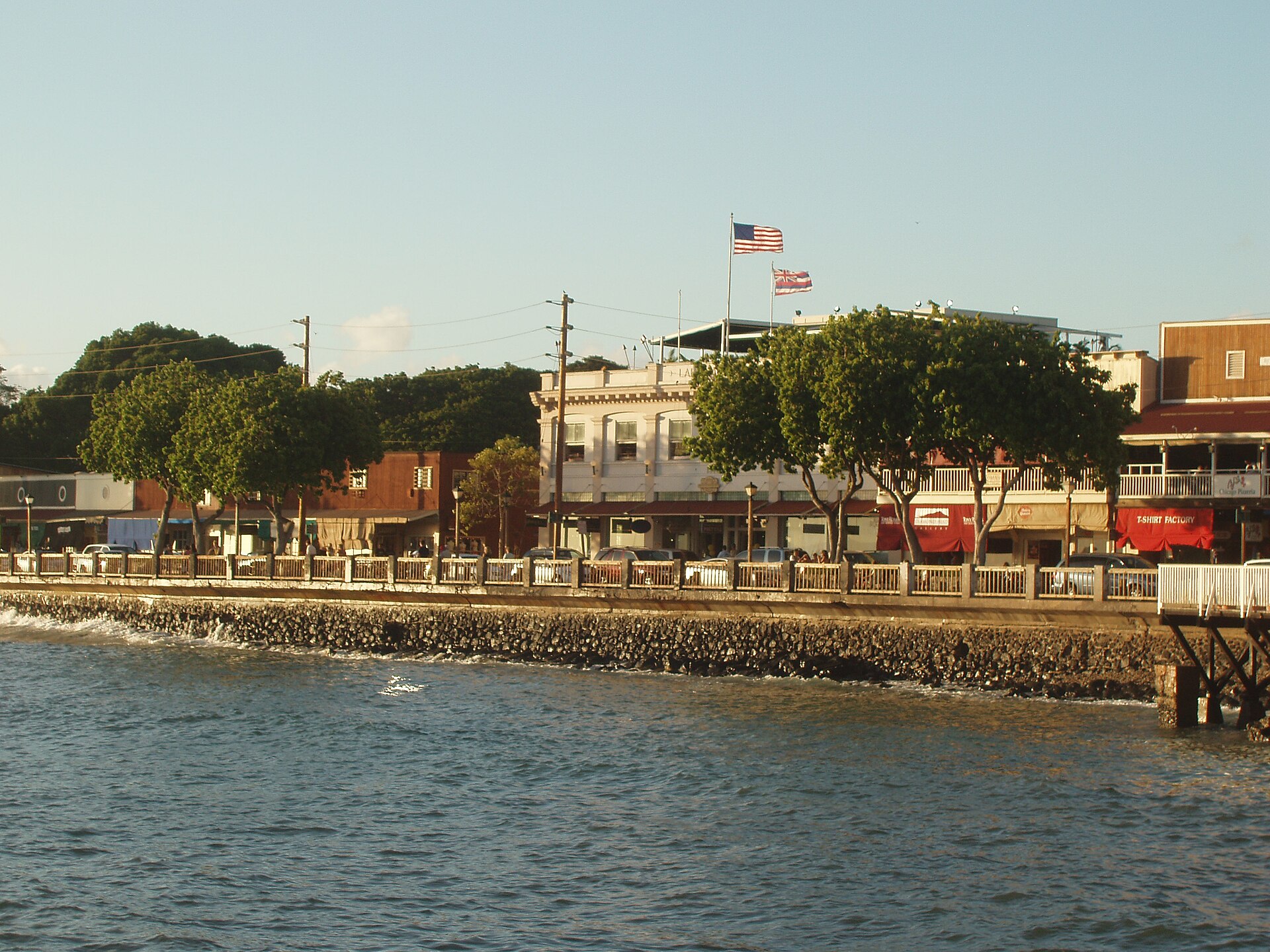
- Pioneer Mill smokestack and locomotive — Lahaina town
Lahaina's sugar past is recalled by a smokestack and a locomotive from the Pioneer Mill company, laid out as an outdoor exhibit. Sugar plantations shaped the landscape and workforce of West Maui for generations, and the exhibit gives that industrial story a physical form. Check whether it is open to visitors before making a special trip. - Whale-watching cruise — Lahaina harbour
Boats from the Lahaina harbour run whale-watching trips, along with fishing outings, dinner cruises and crossings to the island of Lanai. Humpbacks are the whales most often seen, with several other species reported now and then. Compare operators carefully: offers that look too cheap usually are, and a good operator explains how it keeps its distance from the animals. - Sea kayaking from the shore — Lahaina shoreline
Paddling a sea kayak off Lahaina is a quiet way to see the coast, with the West Maui Mountains behind and, in season, whales offshore. A kayak outfitter has operated near the waterfront, and mornings tend to be calmer before the breeze builds. Ask about conditions, and check which operators are running at present.
Culture
Lahaina's culture is Hawaiian at its root, with missionary, whaling and plantation chapters laid over it. The town was once a seat of Hawaiian rule, and its historic district held a fort, a courthouse, a prison, the Baldwin House and the Pioneer Inn near the harbour, all kept as a record of the nineteenth century. Whale-watching was a favourite pastime, and the humpback is the species most often seen, with other kinds reported now and then.
Hawaiian language is part of daily life here, from place names to greetings such as aloha and mahalo (thank you). Pronouncing names with care, including the glottal stop (ʻokina) and the long vowels (kahakō), is a small courtesy that locals notice. Since 2023 the town's identity has been bound up with recovery. Many residents lost homes and workplaces, and families, community groups and cultural organisations are shaping how Lahaina's story is told and what is rebuilt, so visitors are guests in a place where grief and pride sit side by side.
Stay out of fenced or closed burn areas in Lahaina, keep cameras and drones away from damaged homes, and ask before photographing residents.
What to wear
Lahaina's traditional Hawaiian dress was made from kapa, a bark cloth beaten from the inner bark of the wauke (paper mulberry) plant and printed with natural dyes. Men wore a malo (loincloth) and women a pāʻū (wrapped skirt), while chiefs added feather capes and cloaks, and lei of flowers, leaves and shells marked occasions and affection. Missionaries introduced the holokū, a long, loose gown, from which came the muʻumuʻu, and printed cottons that later fed into the aloha shirt. These garments appear now at hula performances, school ceremonies, weddings and Kamehameha Day celebrations.
Day to day, people in Lahaina dress for the heat: aloha shirts or cotton tees, shorts, sundresses, rubber sandals, caps and sunglasses, with a light layer for breezy evenings. The aloha shirt works for offices and parties alike.
Visitors should pack light cotton or linen, a wide-brimmed hat and reef-safe sunscreen, plus sandals that grip wet rock and water shoes for rocky entries. Cover up over swimwear when walking through town, dress modestly near memorials and churches, and keep a thin jacket for boat trips, where wind and spray cool things quickly. Closed shoes help on dry, dusty ground.
What to eat
- Plate lunch — Local lunch counters and beachside shacks on West Maui
Lahaina's everyday meal is the plate lunch: rice, macaroni salad and a main such as chicken katsu, teriyaki beef or kalua pork, served in a takeaway box. It reflects the plantation-era mix of Hawaiian, Japanese, Filipino, Chinese and Portuguese cooking, and it is filling. - Poke — Fish counters in supermarkets and harbour-side seafood shops
Poke is cubed raw fish, usually ahi (yellowfin tuna), dressed with soy sauce, sesame oil, onion and seaweed. It is eaten by the scoop, with rice or on its own, as a quick lunch near the water. Ask what was caught that day. - Kalua pork — Luau evenings and local lunch counters
Kalua pork is pig traditionally cooked whole in an underground oven (imu), giving smoky, shredded meat. Around Lahaina it appears at luau evenings and on plate lunches. Luau are ticketed events, so check what is running and book ahead. - ʻUlu (breadfruit) — Farmers' markets and community stalls on West Maui
ʻUlu, or breadfruit, is the food Lahaina's old name was tied to. Starchy and mild, it is roasted, mashed or fried into chips, and tastes somewhere between potato and fresh bread. Growers' stalls and some local menus bring it back. - Shave ice — Roadside stands and small shops in town
Shave ice is finely shaved ice drenched in fruit syrups, often over ice cream or sweet red bean, and the cool answer to Lahaina's dry heat. The texture is snow-soft rather than crunchy like a slush.
Plan it
Best time. April–May and September–October, when the weather is warm and dry and crowds are thinner between school-holiday peaks. Summers are dry, winters are fairly wet, and whale-watching boats run in the cooler months.
How long. 2–3
Getting there. Fly to Kahului Airport (OGG) on Maui, rent a car and drive Route 30 (the Honoapiilani Highway) along the coast to Lahaina; allow about 40 minutes, longer if traffic builds. Cruise ships sometimes anchor offshore and tender passengers in. Check current road and access notices before driving.
Budget. high
Tips
- Check current Maui County and official visitor-authority updates on access, road conditions and what is open before you go.
- Stay in Kāʻanapali or elsewhere on the coast and visit Lahaina as a day trip; beaches in the town itself are modest.
- Book whale-watching and kayaking with established operators, and be wary of offers that look too cheap.
- Carry water, a hat and reef-safe sunscreen; the town is hot and dry with little shade.
- Start early: mornings are cooler and quieter, and the coast road can congest later in the day.
Etiquette
- Do not enter fenced or closed areas, and do not photograph damaged homes or residents without permission
- Keep a respectful distance from whales and other marine life, and follow your boat crew's instructions
- Spend with local businesses that are open, and treat residents as hosts rather than as part of the scenery
Nearby
Sources
- Wikidata Q1012971 (CC0)
- Wikipedia: Lahaina, Hawaii (rev 1379456227) (CC BY-SA 4.0)
- Wikivoyage: Lahaina (rev 5408019) (CC BY-SA 4.0)
- Photo: Lāhainā oceanfront (en:User:Calbear22) (Public domain)
- Photo: Carved wooden relief on base of Kamehameha I statue replica (Hiart) (CC0 1.0)
- Photo: Lahaina, Maui, T.H. - Formerly the Capital - NARA - 296063 (Public domain)
- Photo: Banyan tree, Lahaina, Hawaii (Melikamp) (CC BY 3.0)
- Photo: Lahaina (Alistair Cunningham) (CC BY 3.0)
- Photo: Maui, Hawaiʻi (Tony Webster) (CC BY 2.5)
- Photo: Lahaina, Maui (Ted) (CC BY-SA 2.0)
- Photo: Lahaina Aquatic Center (Nicolekslusser) (CC BY-SA 4.0)


Wildlife
- Humpback whale (animal)
The humpback is a huge baleen whale whose males sing and which leaps like a giant acrobat of the sea. Look for its very long flippers and the bumps on its head; adults can reach about seventeen metres. Humpbacks are the whales most often seen, though other species turn up now and then. Watch with a guide if you can, keep a respectful distance, stay quiet so you can enjoy its breaches, and never feed it.