L'Anse aux Meadows
L'Anse aux Meadows, Canada
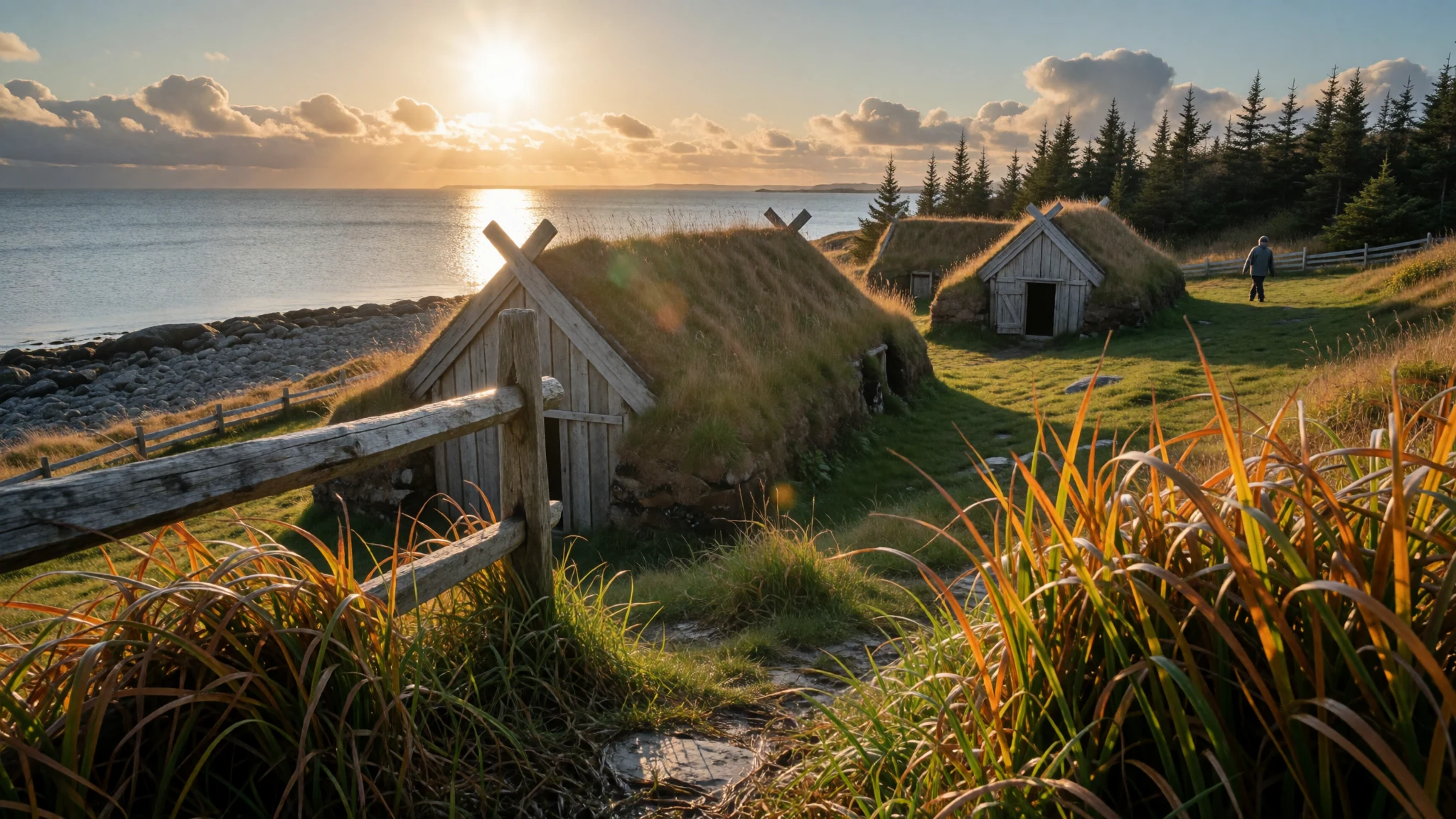
L'Anse aux Meadows is the only undisputed Norse foothold in North America, a quiet, windy headland where sod walls mark a thousand-year-old meeting of continents.
The place
L'Anse aux Meadows sits on the northernmost tip of the island of Newfoundland, in the Canadian province of Newfoundland and Labrador, close to the town of St. Anthony. It is a flat, open, treeless coast of grass, bog and cold grey sea, and the weather is part of the experience: wind, fog and sudden sun can all arrive within an hour.
The site was first excavated in the 1960s and holds the remains of a Norse settlement about a thousand years old. Carbon dating puts activity between 990 and about 1050 CE, with a mean date of 1014. Eight buildings have been identified, made of sod laid over a wood frame, and more than 800 Norse objects have been recovered, including bronze, bone and stone items and traces of iron working. It counts as the only undisputed evidence of Europeans crossing the ocean to the Americas before Columbus, outside Greenland.
What you see today is modest by design. The original buildings survive as low grassy outlines in the turf, so the experience is one of imagination rather than monument. Nearby, reconstructed sod buildings give a sense of scale and smoke-darkened interiors, and costumed interpreters usually work in them in the summer season. The protected area covers 8,000 hectares of land and sea, and the site is inscribed by UNESCO.
This is a long way from anywhere. The nearest town is St. Anthony, and most visitors arrive by a long drive north through Gros Morne country. Allow the journey to be part of the trip.
Its story
The story of L'Anse aux Meadows at the northern tip of Newfoundland starts well before the Norse. Evidence shows five Indigenous groups used the site, the earliest roughly 6,000 years ago. The Dorset people were the most prominent, living here about 300 years before the Norse. None of these groups overlapped with the Norse stay, and a later group, the Little Passage tradition, appears after them.
The Norse settlement dates to around the year 1000. Carbon dating gives a range from 990 to about 1050 CE, matching the style of the artefacts and buildings. A later study of tree rings, using a spike in atmospheric carbon recorded in the year 993, fixed one date of Norse activity at 1021, an unusually exact answer for something so old.
How long they stayed is debated. The anthropologist John Steinberg has suggested the place may have been occupied, at least on and off, for perhaps 20 years. The evidence points to a base camp rather than a farming colony, a place for repairs, iron work and launching exploration to regions further south.
The site may connect to the Saga of the Greenlanders and the Saga of Erik the Red, which feature Leif Erikson and were written down in the 13th century. The sagas are literature, not surveys, so scholars are careful about matching them to this particular spot. What the ground shows is solid enough: Europeans were here, working iron and building in turf, centuries before anyone else came.
What to see
- The original Norse site — L'Anse aux Meadows National Historic Site
The low, grassed outlines of the eight original buildings lie in the turf beside the water. The largest is the one most photographed. Boardwalks keep feet off the fragile ground. Go slowly and read the panels first; the remains make far more sense once you know what you are looking at.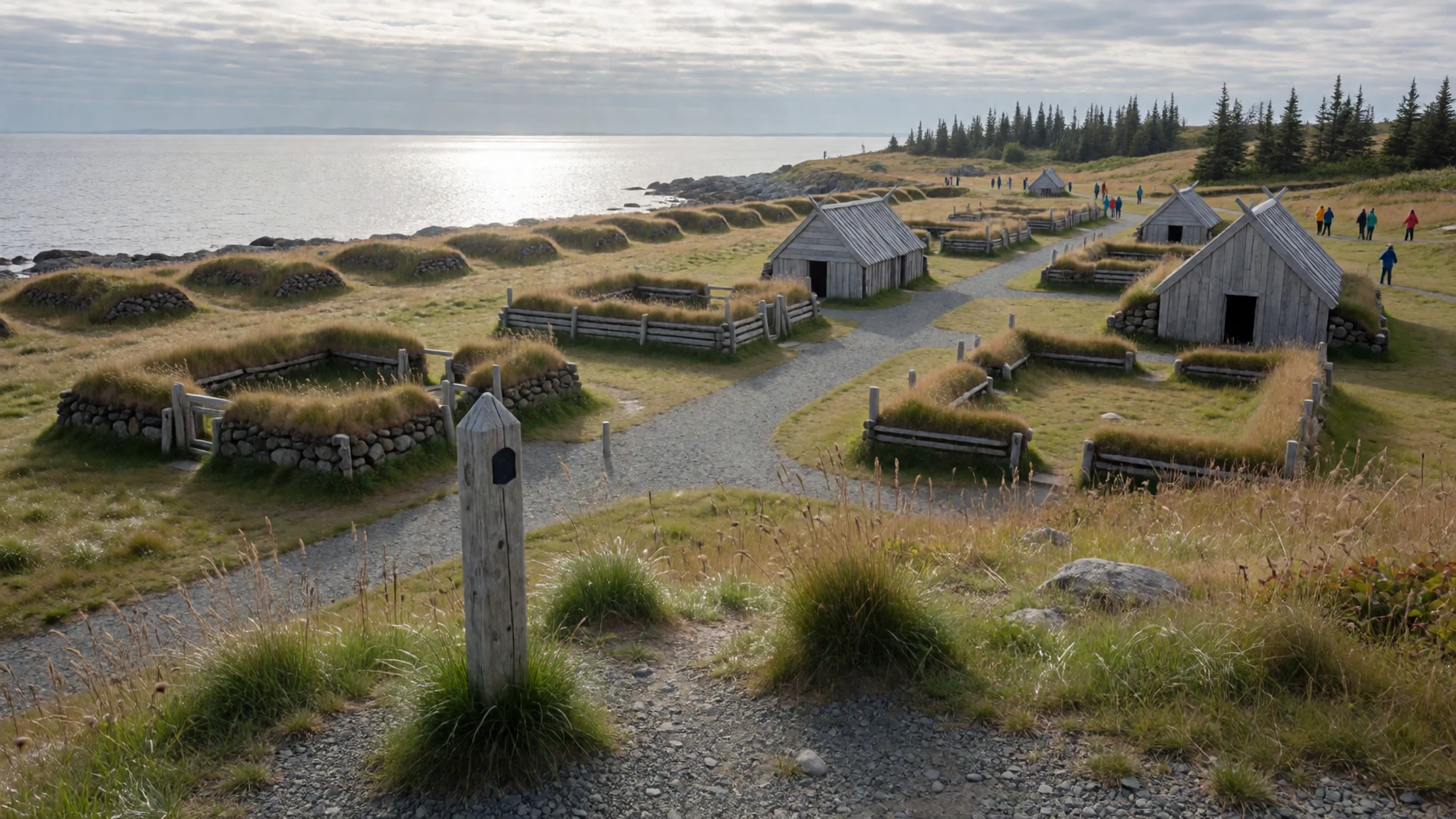
- Reconstructed Norse buildings — Beside the excavation, National Historic Site
Close to the excavation, sod-and-timber halls have been rebuilt using the archaeology as a guide. Inside, it is dim, smoky and low, which explains a lot about daily life. Interpreters in period clothing often demonstrate crafts in season, and they are happy to answer awkward questions.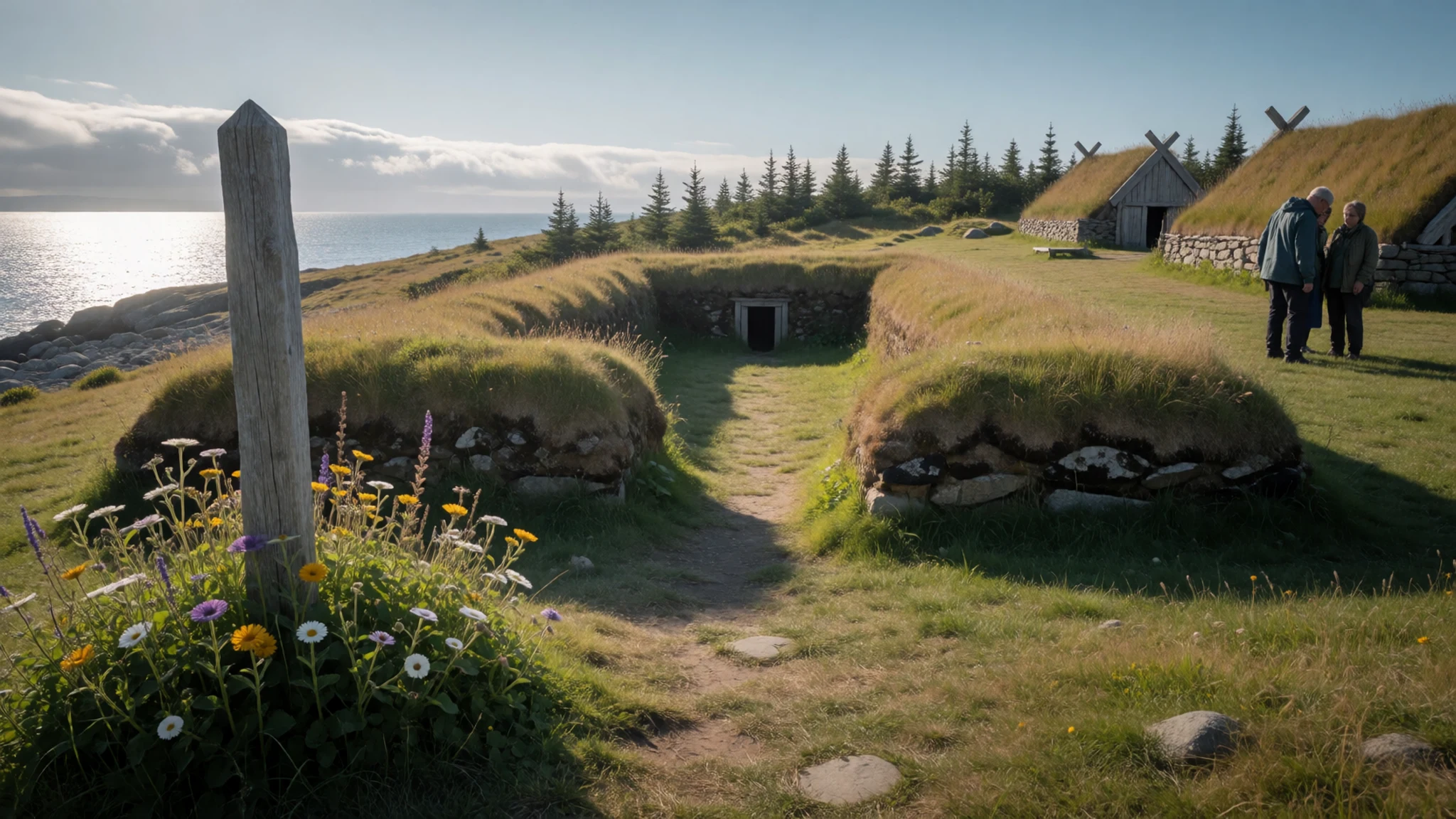
- Norse silhouette sculptures — Hillside above the site
Metal cut-outs of Norse figures stand on the rise above the site, outlined against the sky. They are good for photographs and for getting your bearings, since from here you see the headland, the bay and the reason the Norse chose this sheltered spot.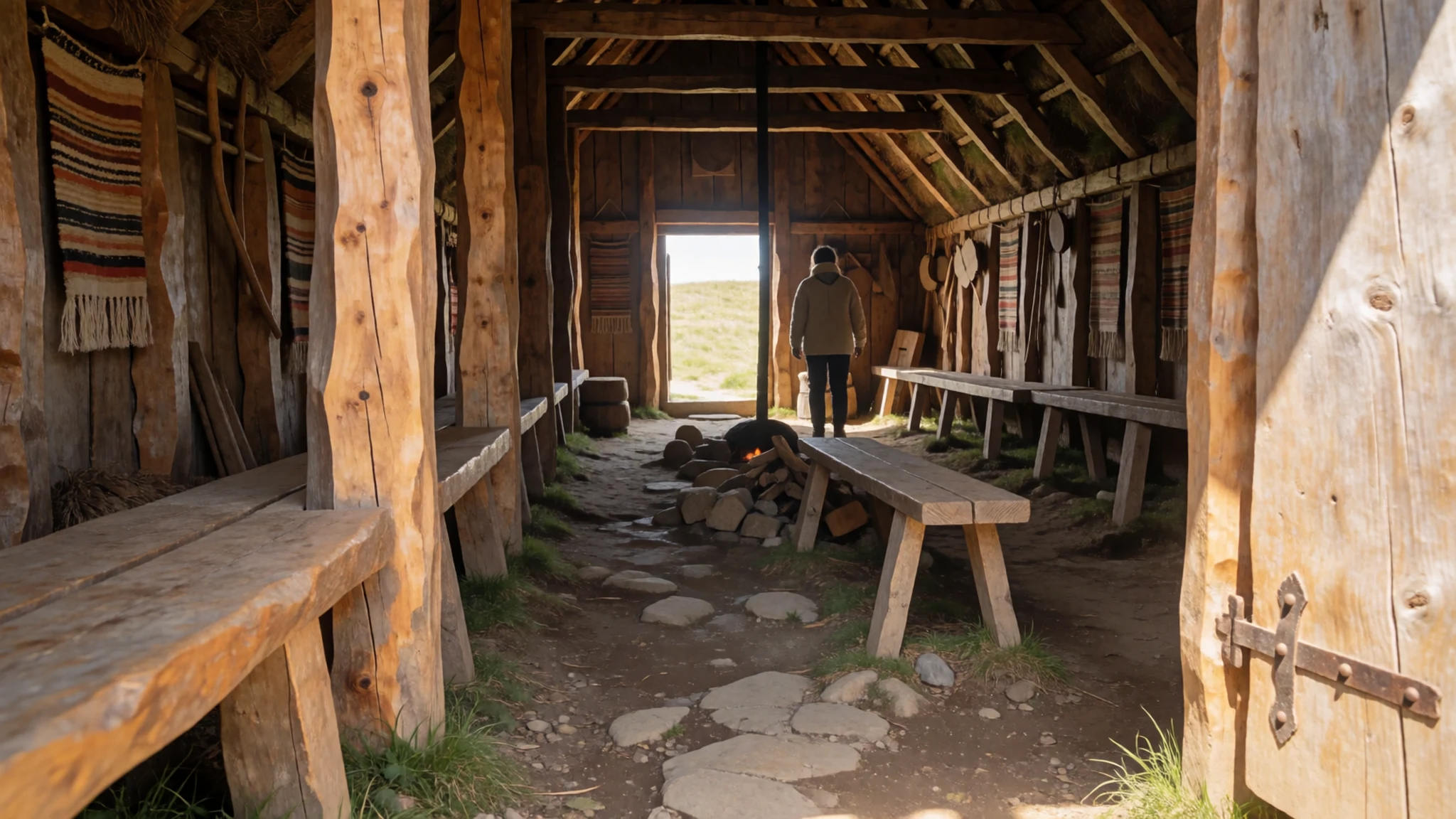
- Cow Head Lighthouse — Near L'Anse aux Meadows
A walk of about ten minutes, with some steps, reaches a renovated lighthouse. Visitors can climb into the old lantern room for a view over the Gulf of St. Lawrence. It is a pleasant, breezy way to spend an hour away from the main site.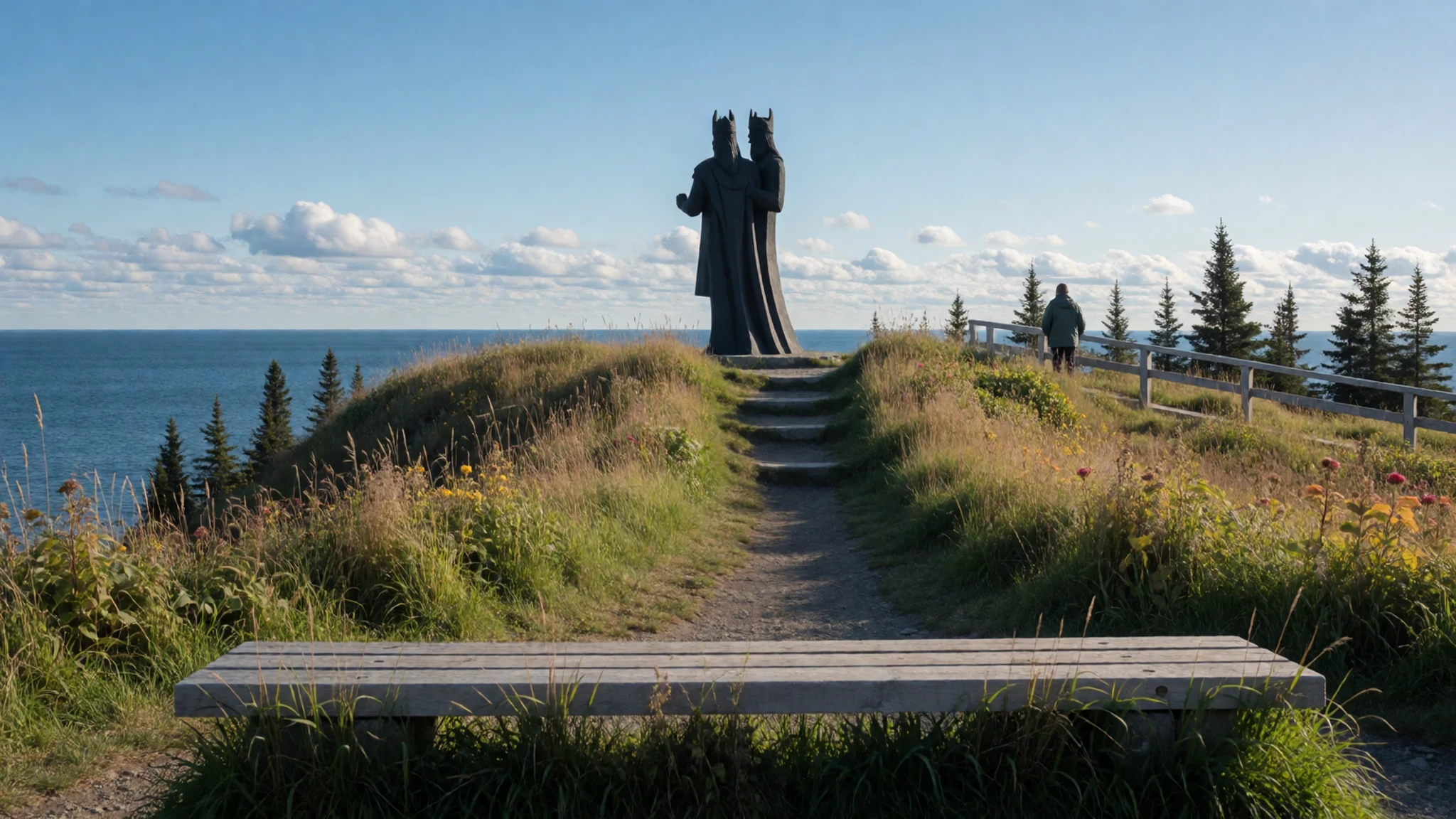
- Grenfell House Museum — St. Anthony
A stately home in St. Anthony, once the residence of Sir Wilfred Grenfell, who founded medical services in western Newfoundland and Labrador. It suits a rainy afternoon and adds a more recent chapter of northern history to the Norse story.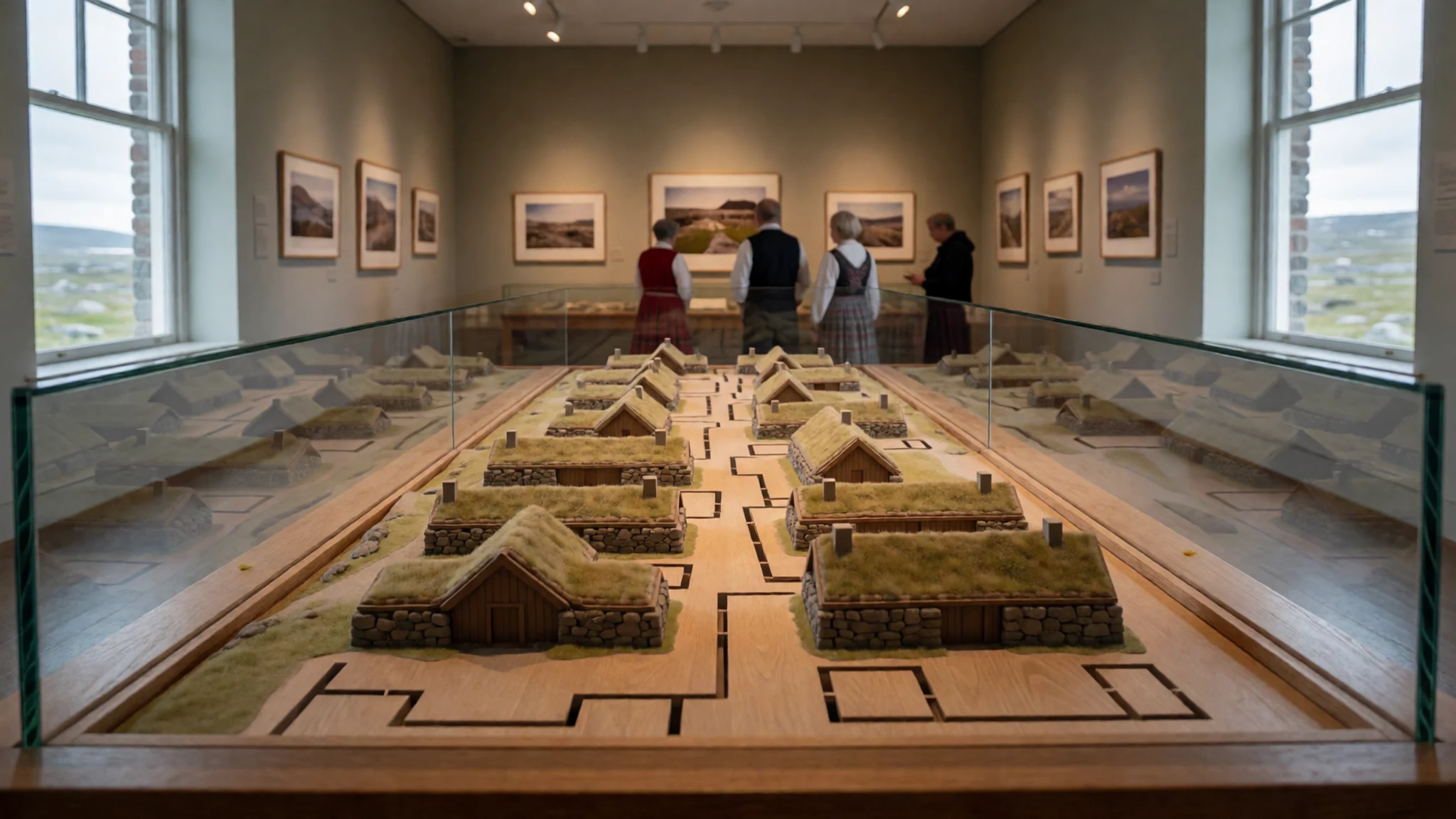
- The Viking Trail drive — Highway from Deer Lake to St. Anthony
The scenic road runs from Deer Lake through Gros Morne National Park up to the northern tip at St. Anthony. Treat it as the main sight in itself: coastal views, small fishing communities and plenty of places to stop. Fuel up when you can, as distances are long.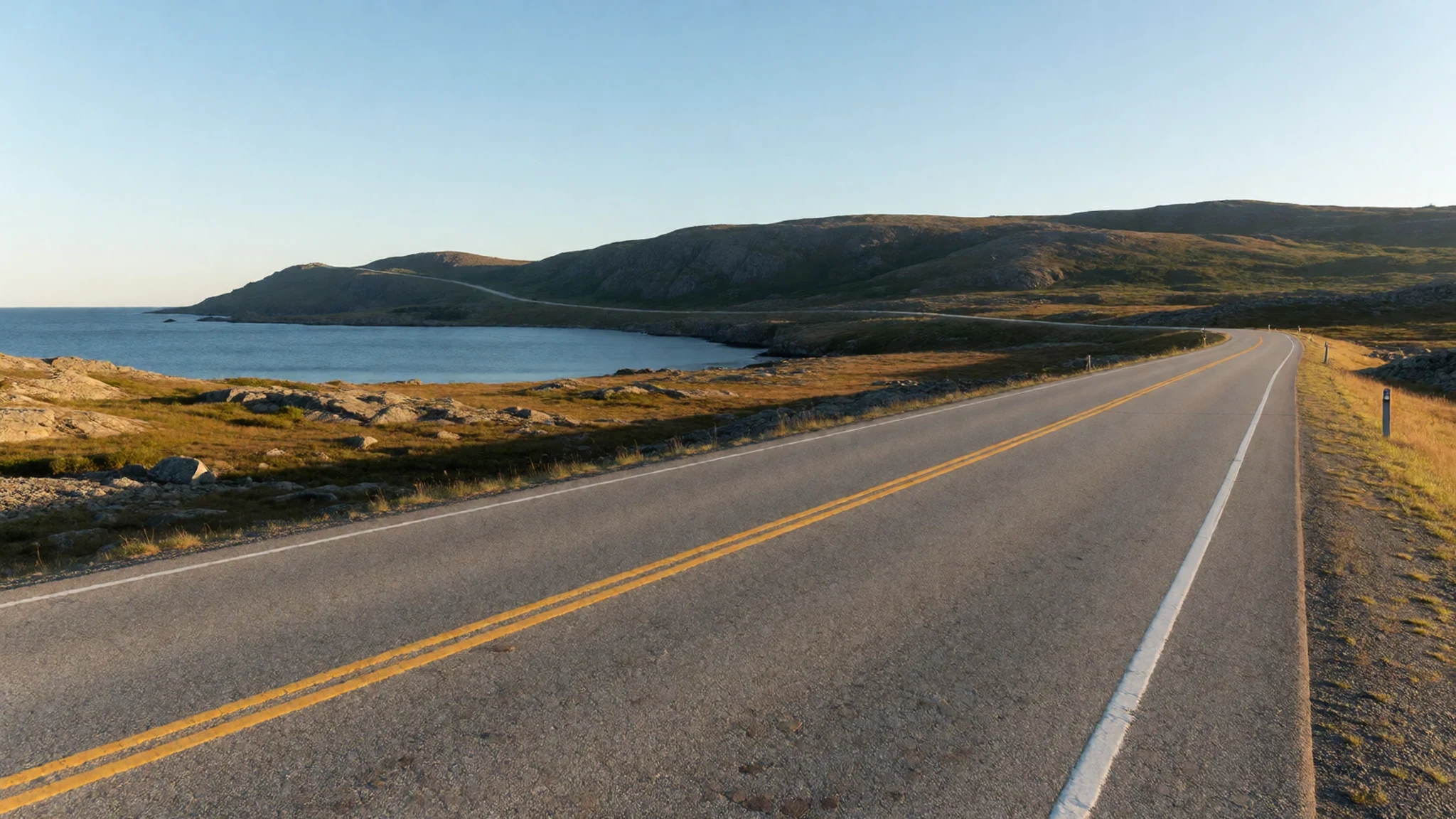
Culture
Culture at L'Anse aux Meadows is layered. The Norse are the headline, but the site also records Indigenous presence going back thousands of years, and the surrounding communities are Newfoundland fishing villages with their own strong identity. Locals speak a distinctive English, tell stories readily, and are generous with directions, weather forecasts and opinions about both.
The Norse story is told here with care. Archaeologists are open about what is known and what is not: the buildings, the iron working and the dates are solid, while links to the sagas remain a matter of interpretation. Interpreters in reconstructed halls in season will happily discuss the difference.
Life in this part of Newfoundland has long depended on the sea, and fish, weather and boats remain common topics. Live music and storytelling feature in local bars and community events, especially in summer. Distances are long and services are few, so people are used to helping each other out; a friendly word goes a long way.
The site itself is protected ground, with fragile turf covering the original remains, so staying on the boardwalks and paths and never climbing on the sod walls, original or reconstructed, is the one rule to follow here.
What to wear
L'Anse aux Meadows has no single traditional costume, but two dress traditions meet here. The Norse of a thousand years ago would have worn wool and linen, with leather shoes and belts and pinned cloaks. Interpreters in the reconstructed buildings wear versions of this, made from wool and plain-woven cloth in earth colours, and it is worth a look at the stitching and fastenings.
Local people today dress for weather, not for show. Expect waterproof jackets, fleeces, wool jumpers, sturdy boots and caps or knitted hats, even in summer. Fishing communities favour practical work clothes, and nobody will remark on mud-spattered boots.
A visitor should plan for wind and changeable conditions above all. Pack layers: a base layer, a warm mid-layer and a proper waterproof shell, plus a hat and light gloves even in midsummer, since the headland is exposed and the sea breeze can be cold. Wear closed, grippy, waterproof shoes or walking boots, as the paths and boardwalks are damp and the turf is boggy. In summer, add sunscreen and insect repellent, as midges and mosquitoes are common near the bog. No special dress rules apply at the site, and there are no modesty requirements beyond the usual.
What to eat
- Fresh local seafood — Restaurants in St. Anthony and nearby villages
Cod, shrimp, mussels and crab turn up on menus along the northern peninsula, depending on the season and catch. Ask what came in that day. A plain plate of fish with potatoes is a classic local meal.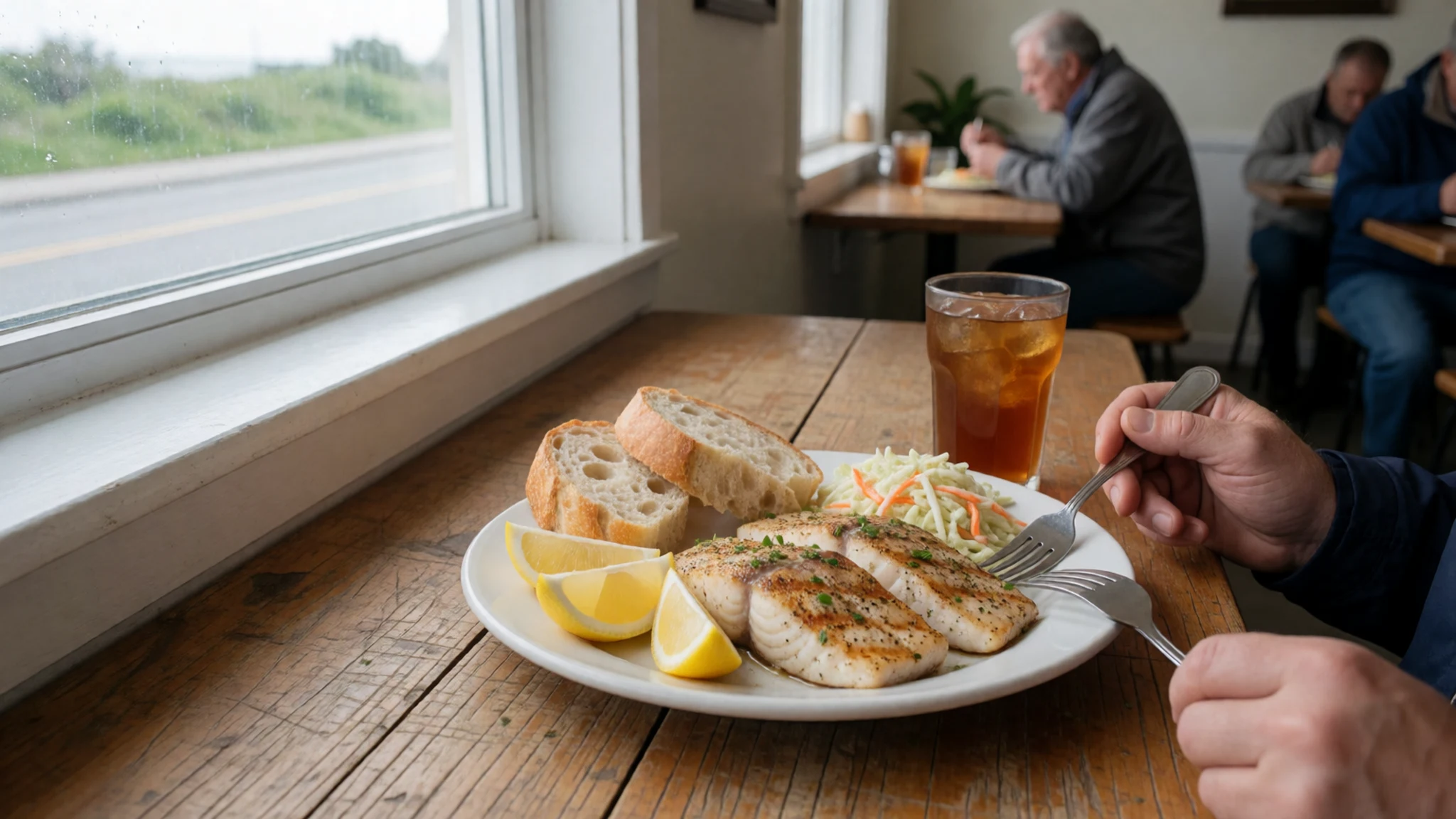
- Fish and chips and fried take-away — Local lounges and take-away counters near L'Anse aux Meadows
Simple fried fish, chips and sandwiches are the everyday fast food of the region, often eaten after a day outside. Portions tend to be generous, which suits the cold and wind.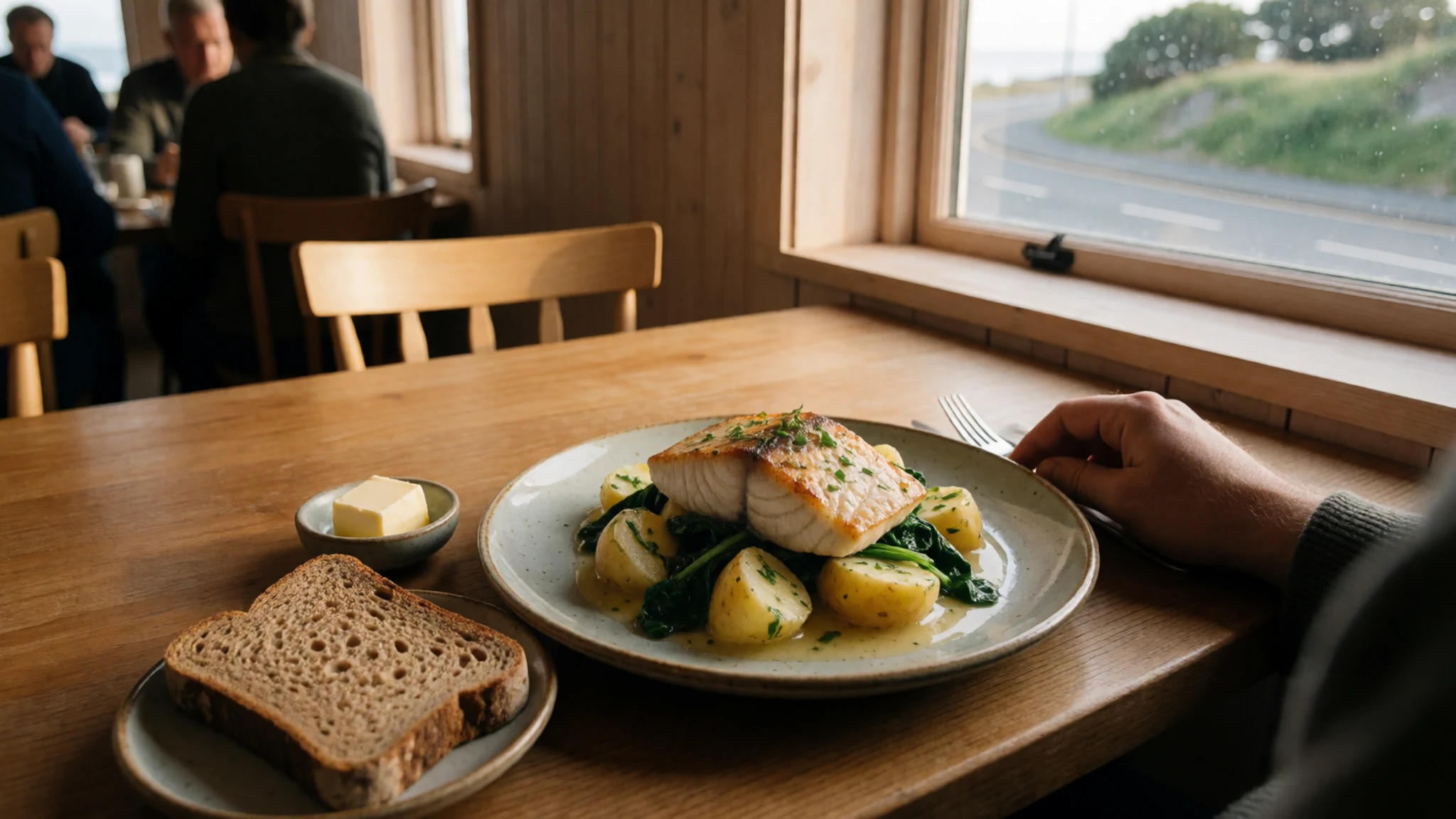
- Local gourmet plates — Restaurants close to the National Historic Site
One restaurant near the site focuses on fresh, healthy, local ingredients and prides itself on never serving a french fry. It is a good choice for a slower, more considered dinner after the site.
- Pork and chicken dishes — Family restaurants along the Viking Trail
Alongside seafood, many eateries serve pork and chicken mains with vegetables, a reliable option for anyone who does not eat fish and wants something hearty.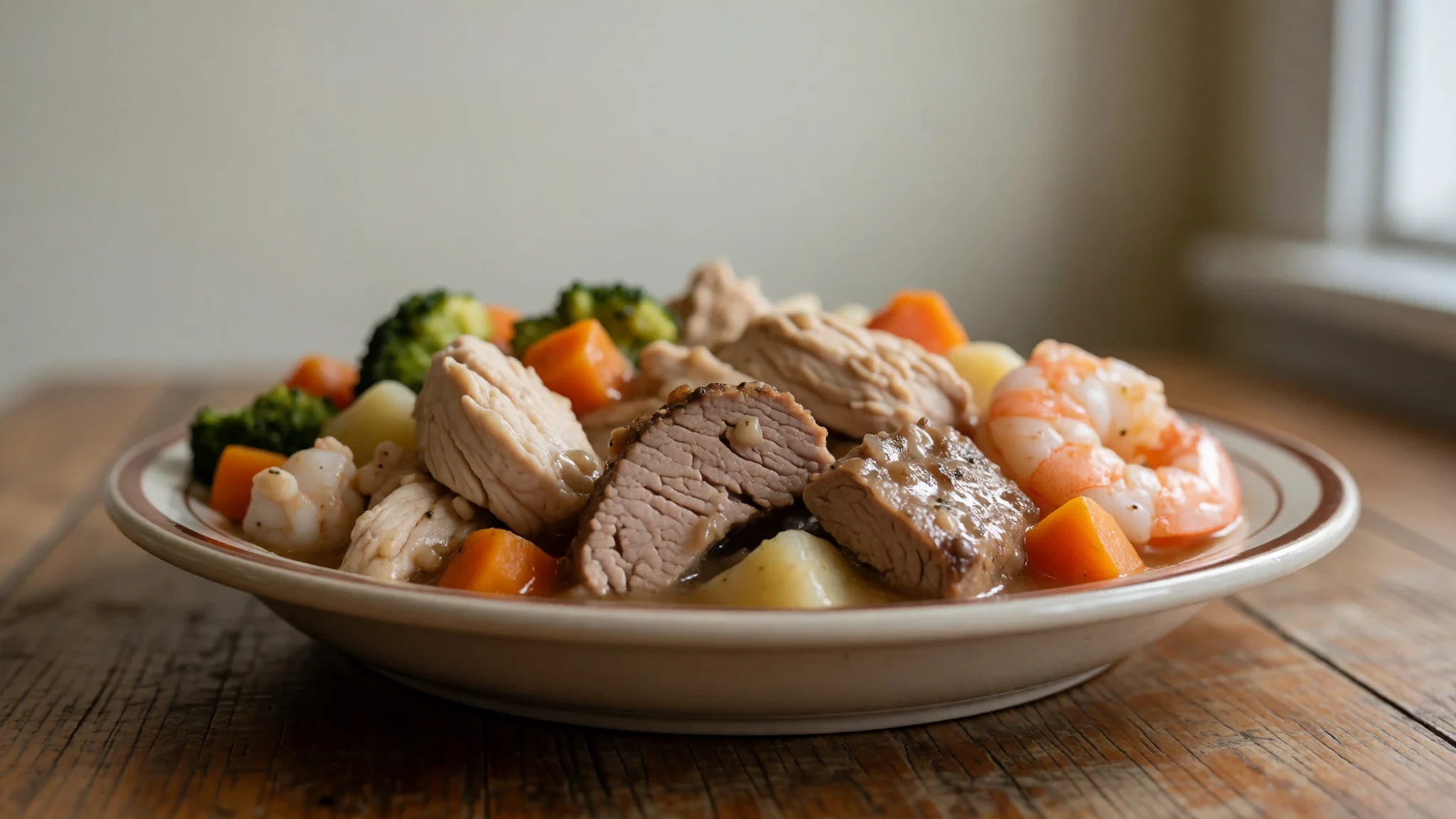
- Partridgeberry and bakeapple sweets — Cafés, bakeries and craft shops in local villages
Wild berries such as partridgeberries and bakeapples (cloudberries) appear in jams, pies and desserts across Newfoundland. Ask for a berry dessert or buy a jar from a local shop; availability varies by season.
Plan it
Best time. June to September. The site and its services are mainly a summer operation, with long days and the mildest weather. Even then, expect wind, fog and cool evenings. Check the official site for the exact season, as the winter is cold and facilities are limited.
How long. 2
Getting there. Fly to Deer Lake or to the small airport at St. Anthony, then drive. From the Trans-Canada Highway, leave at Deer Lake and follow the road north through Gros Morne National Park to the tip of the peninsula. A ferry links Newfoundland with Labrador across the Strait of Belle Isle; check the operator for times.
Budget. mid
Tips
- Hire a car; public transport is very limited
- Book accommodation early for July and August, as rooms are few
- Fill the fuel tank whenever you pass a station
- Bring layers and waterproofs whatever the forecast says
- Carry insect repellent for bog and shoreline walks
Etiquette
- Stay on boardwalks and paths to protect the original remains
- Do not climb on sod walls, original or reconstructed
- Ask before photographing interpreters or local people up close
Nearby
Sources
- Wikidata Q189113 (CC0)
- Wikipedia: L'Anse aux Meadows (rev 1382280534) (CC BY-SA 4.0)
- Wikivoyage: L'Anse aux Meadows (rev 5403159) (CC BY-SA 4.0)
- Photo: Authentic Viking recreation, Dylan Kereluk (CC BY 2.5)
- Photo: L'Anse Aux Meadows model, Torbenbrinker (CC BY 3.0)
- Photo: Largest original building, Clinton Pierce (CC BY 3.0)
- Photo: Inside long house, D. Gordon E. Robertson (CC BY 3.0)
- Photo: Norse silhouette sculpture 01, Gordon Leggett (CC BY-SA 4.0)
- Photo: Norse silhouette sculpture 02, Gordon Leggett (CC BY-SA 4.0)
- Photo: Norse silhouette sculpture 03, Gordon Leggett (CC BY-SA 4.0)
- Photo: Norse silhouette sculpture 04, Gordon Leggett (CC BY-SA 4.0)


