Koh Si Chang
Koh Si Chang, Thailand
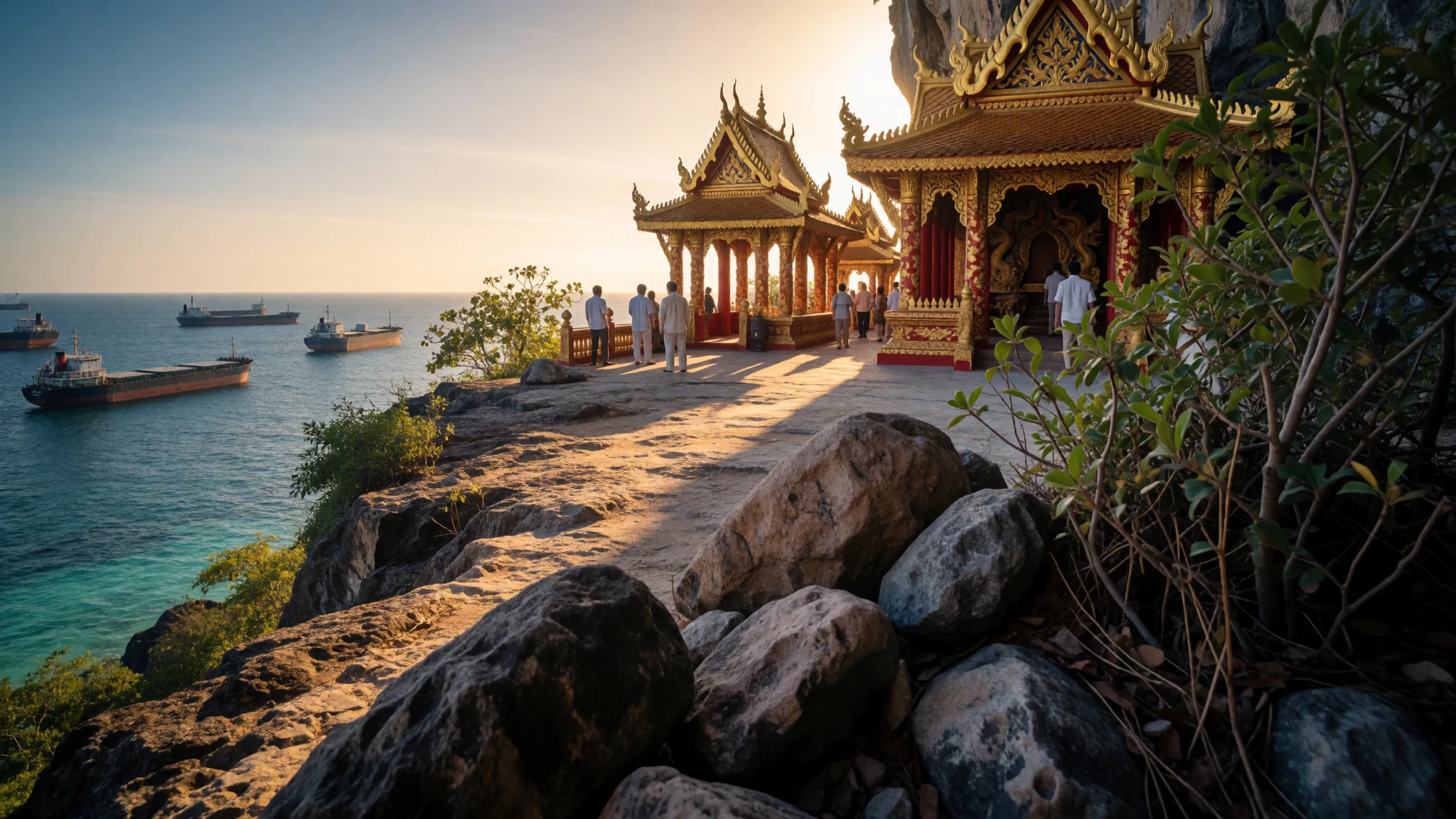
Koh Si Chang is a quiet limestone island near Bangkok, with hillside temples, royal ruins, sea views and slow weekend days.
The place
Koh Si Chang (Ko Sichang) is a small island in the Gulf of Thailand with a population of about 5,000, close enough to Bangkok to work as a short escape from the capital. Its position beside the shipping lanes defines the outlook: big cargo vessels wait at anchor offshore while their loads are moved onto smaller lighters that head up the Chao Phraya river towards the city. Ashore the pace is slow. Motorbike taxis and bench-seat pick-up trucks link a fishing-town waterfront, hillside temples and the ruins of a royal retreat. The land is hilly and limestone, so the island's appeal lies in cliffs, caves and lookouts more than in sand. Taam Pang is the one proper beach, fine for a swim and a snack, though the island does not compete with Ko Samet and other islands further east and south when the aim is beach time. Most visitors are Thai, often friends and families from Bangkok on a weekend, and the atmosphere is closer to a working seaside town than a resort. Away from the busier streets the lighting is poor, so evenings are dark and quiet, and a torch is a sensible thing to carry. Rubbish can wash up on the beach with the incoming tide. As a place to slow down for a day or two, with temples, views, old palace grounds and simple seafood, it suits travellers who value atmosphere over polish.
Its story
Koh Si Chang's best-known chapter is a royal one. In the nineteenth century King Chulalongkorn had a summer retreat built here, a sea-breeze escape from the heat and bustle of Bangkok. It did not last as a royal home. In 1893 the French occupied the island during a dispute with Thailand over who would control Laos, and the residence was abandoned. What survives is a scatter of old buildings, gardens, a pier and small beaches, all open to wandering at an easy pace. The island's later story is quieter and tied to the water. Its sheltered position beside the shipping lanes made it a natural anchorage, and that role continues today, with cargo ships parked offshore while lighters carry goods up the river to Bangkok. A second layer of history sits on the hills. A multi-level Chinese temple clings to a cliff, and a larger temple holds a giant golden Buddha that can be seen from the ferry. Caves and shrines are worked into the limestone, and a lookout over a small lake called Buddha's Footprint carries a shrine and a bell. Between the brief royal interlude, the port-side trade and the devotion on the hilltops, Koh Si Chang has settled into being a modest fishing town that Bangkok residents treat as a weekend retreat.
What to see
- Summer Palace ruins and gardens — Western side of the island
The remains of King Chulalongkorn's seaside retreat sit among lawns, old buildings, a pier and small beaches. It is an easy place to spend an hour or two, wandering without a fixed route. The mood is of a royal holiday that ended abruptly, now left to the sea breeze.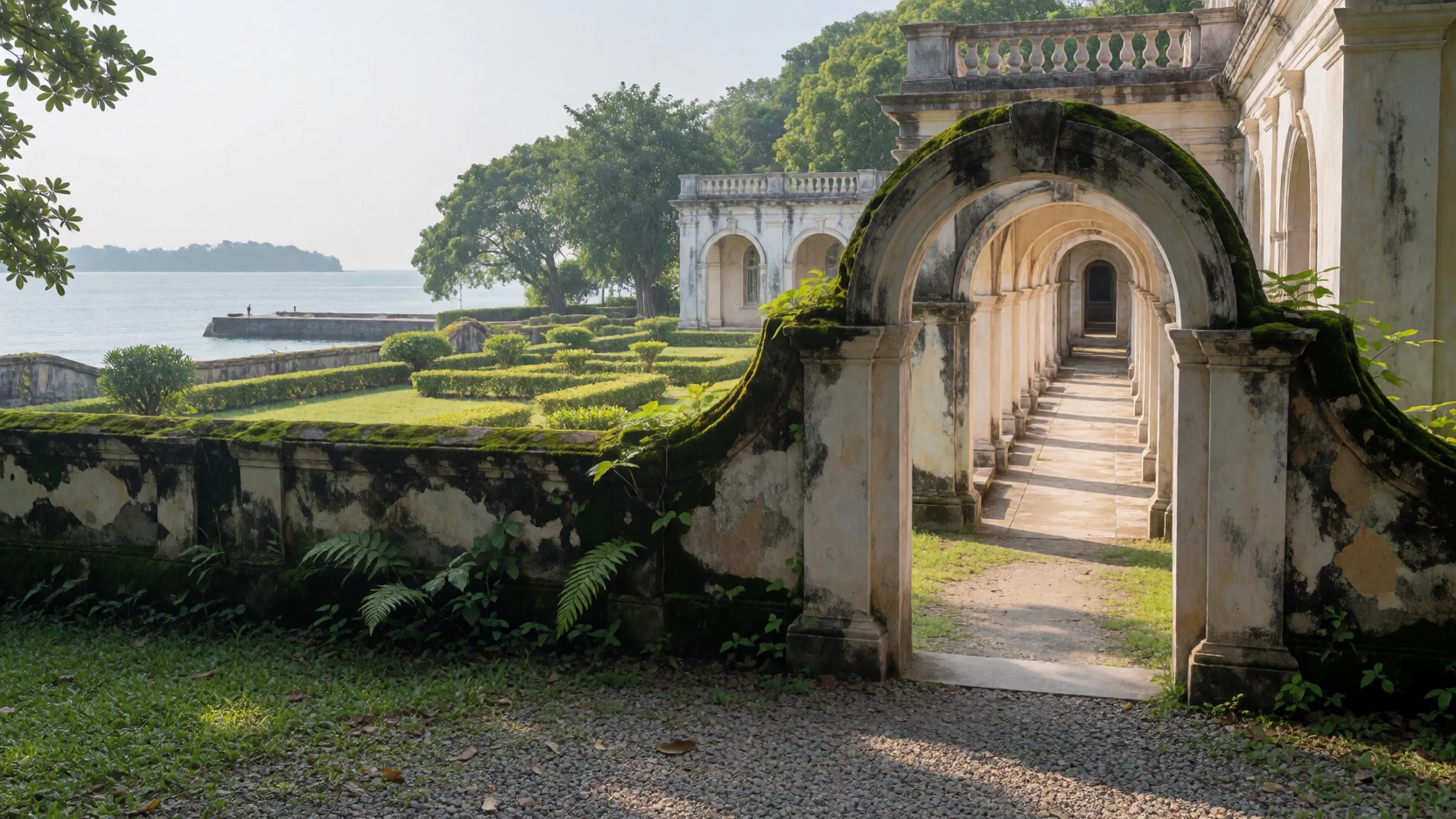
- San Jao Phaw Khao Yai — Cliffside on the island's coast
A multi-level Chinese temple perched high on a cliff, with a long view back towards the mainland. It has many rooms and a number of caves to explore, so allow time to climb slowly and look around. Remember to dress modestly and leave footwear where others have.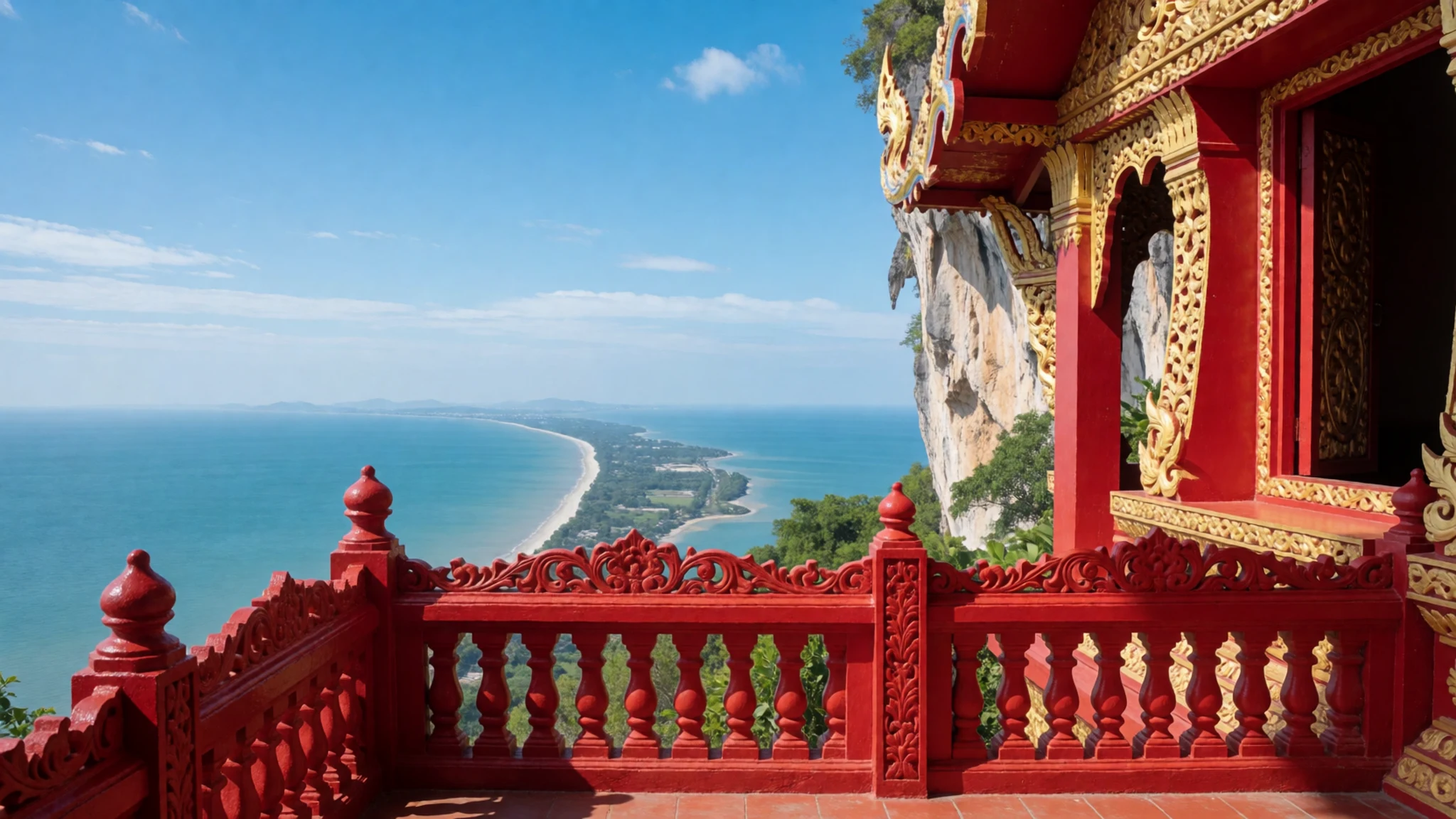
- Wat Tham Yai Prik — Hill above the main settlement
A large hillside temple whose giant golden Buddha can be spotted from the ferry. Further up are many other Buddha statues, caves and buildings to explore, plus a wide outlook over the water. It is a quieter, more devotional stop than the palace, so keep voices low.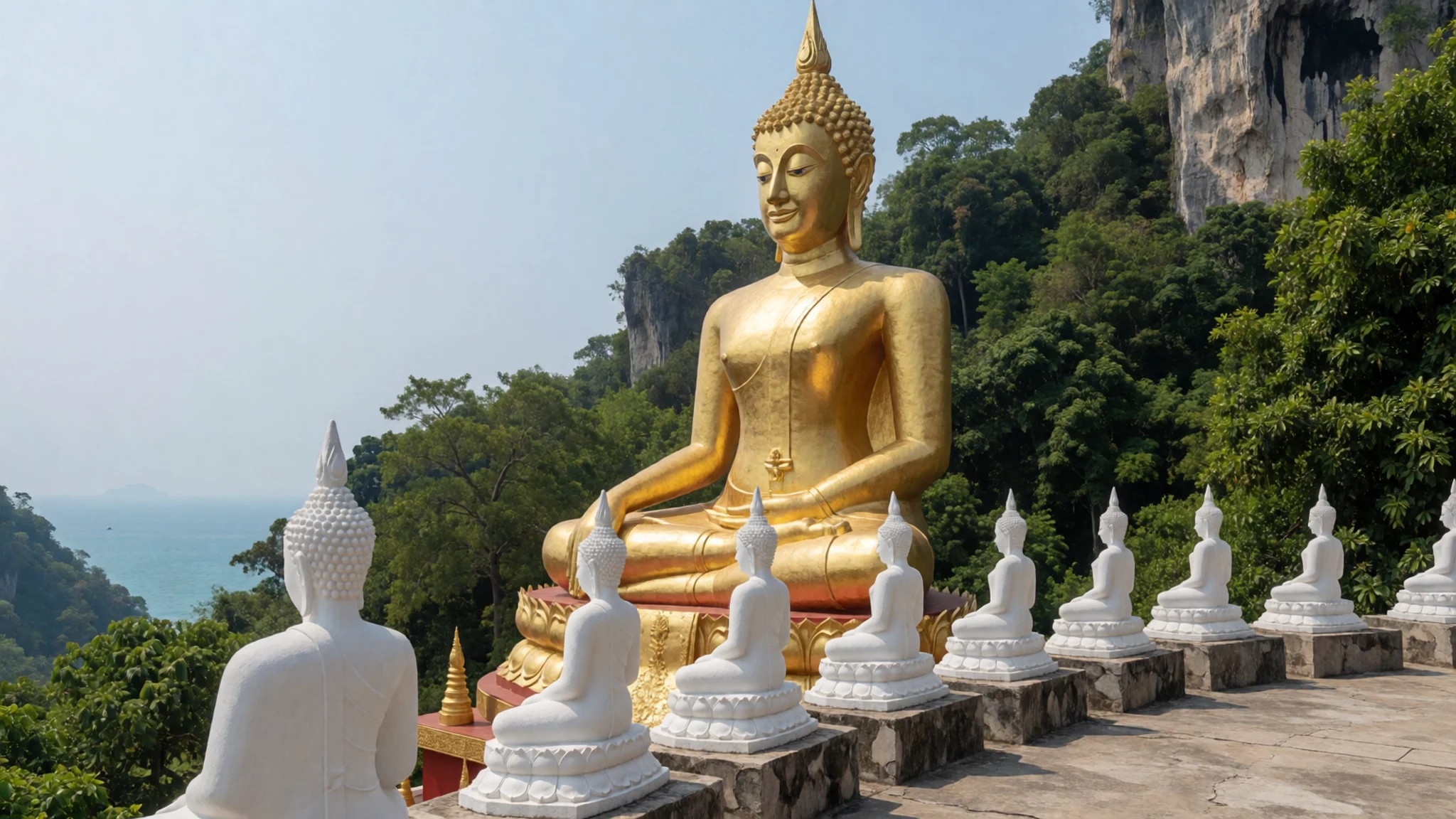
- Buddha's Footprint and Lookout — Ridge near the main road
A lookout reached from the main road, or on foot from the neighbouring Chinese temple. It gives a wide view over the island and the small lake known as Buddha's Footprint. A shrine and a bell stand at the top, so it works as both a viewpoint and a place of quiet pause.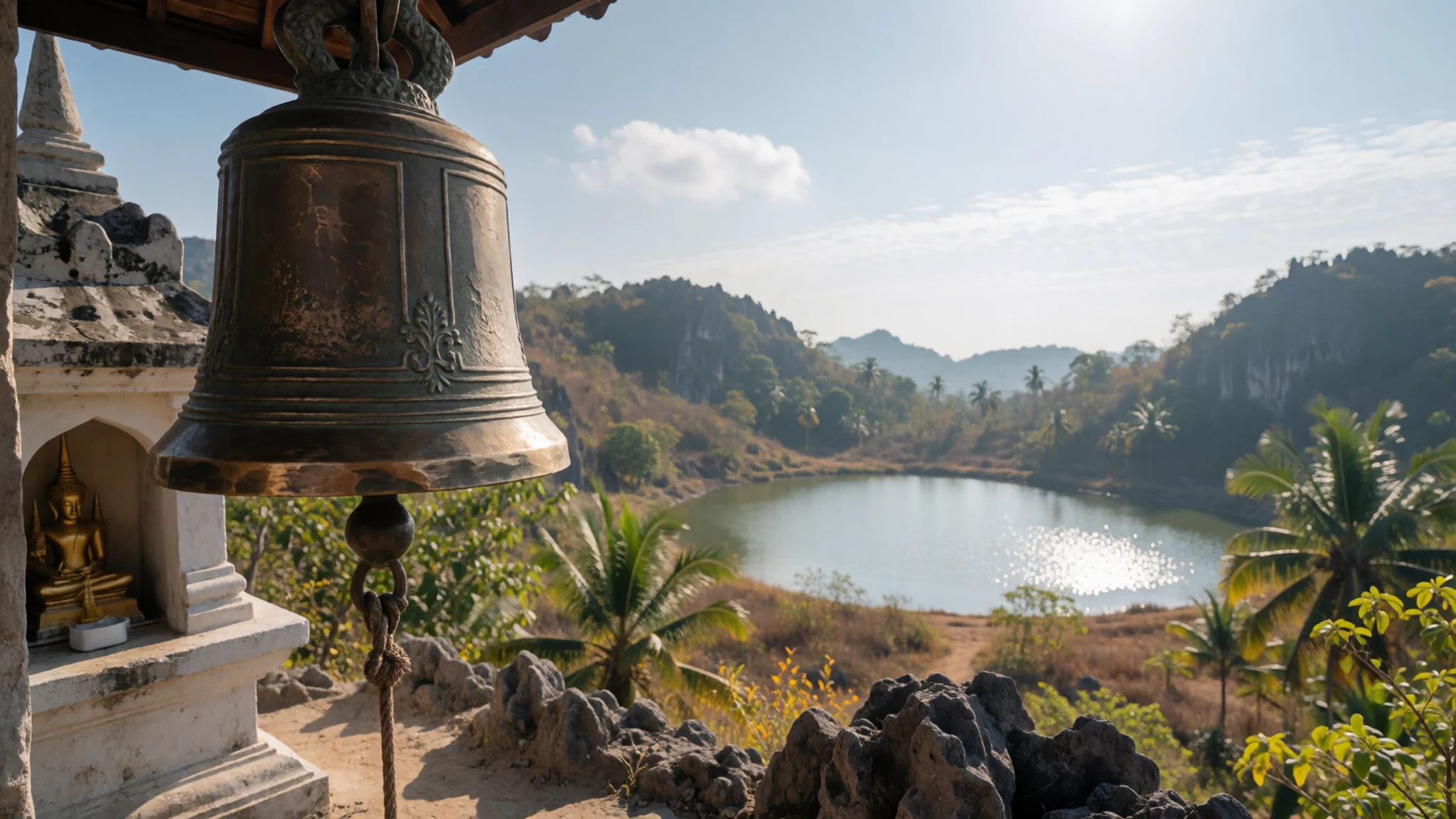
- Taam Pang Beach — Beach side of the island
The island's one real beach, and the place for a swim and a snack from a beachside cafe. It is not a postcard stretch of sand, and rubbish can drift in when the tide comes up. Go for an easy afternoon, not for a long beach holiday.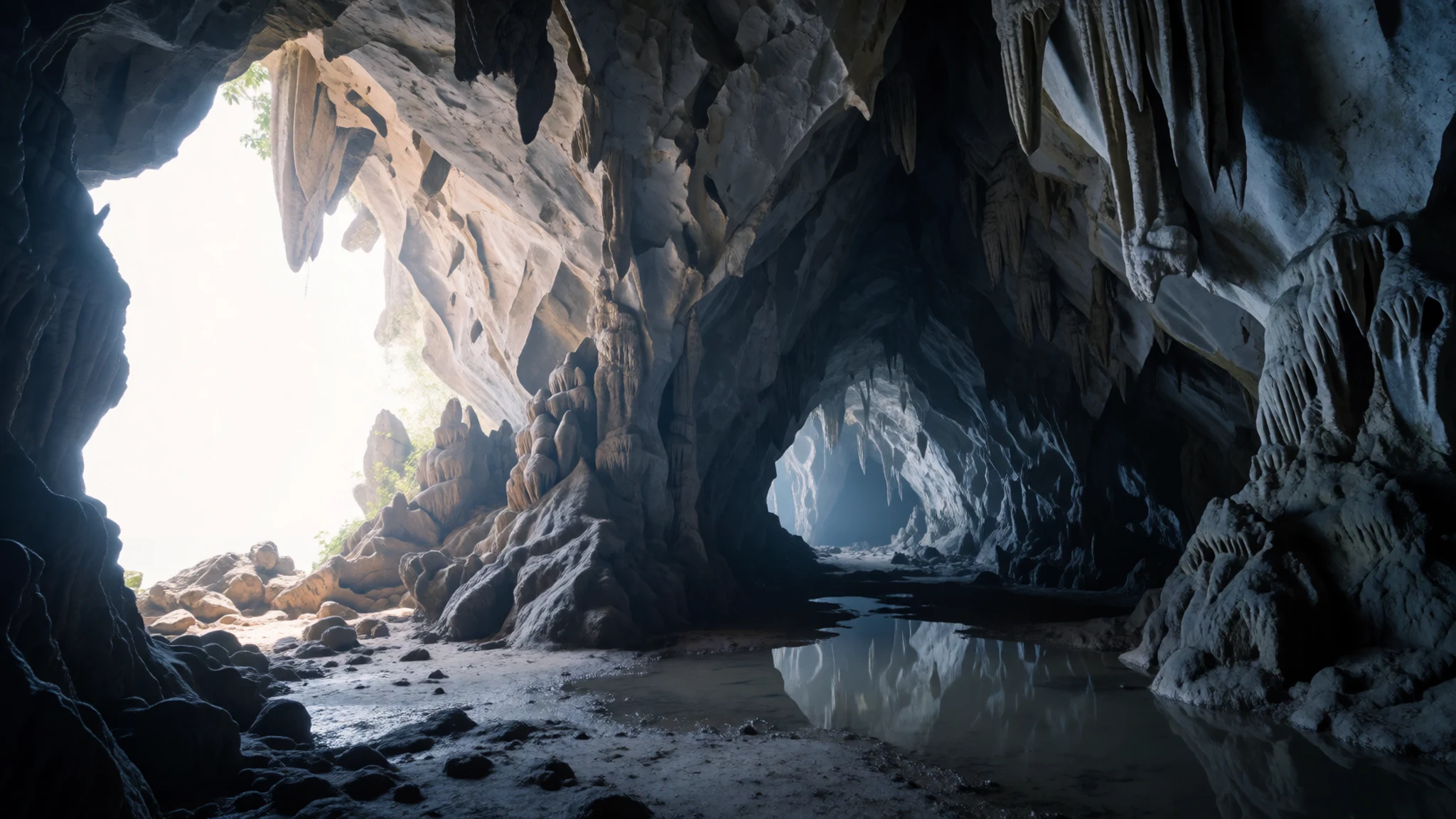
Culture
Koh Si Chang is a Buddhist island with a strong Chinese-Thai shrine tradition, and religion is visible in the landscape rather than tucked away. Temples sit on hilltops and cliffs, caves hold altars and Buddha images, and a lookout over the small lake called Buddha's Footprint carries a shrine and a bell. Visitors who arrive for the views are walking through working places of worship, and local people come to make offerings, light incense and sit quietly. The Chinese temple perched on the cliff, with its many rooms and caves, reflects the long mixing of Thai and Chinese practice along this coast. Daily life otherwise runs to the rhythm of the sea: fishing boats, ferries, and the cargo ships anchored offshore. Most day visitors are Thai, so the island has a relaxed weekend feel, with families out for seafood and a ride around the island. The king's old summer retreat adds a royal memory, though it is now a place for walking and picnics. Behaviour that would pass unnoticed on a resort beach can look careless here, so a little attention to dress and manners goes a long way, especially around holy spots and caves with altars. Before entering any temple or shrine, leave your footwear outside, wear something that covers the shoulders and knees, and keep your voice low.
What to wear
On Koh Si Chang, traditional Thai dress is mostly kept for ceremonies, festivals and school or civic occasions. Women may wear a wrapped silk or cotton skirt called a pha sin with a fitted blouse, or the formal chut thai, while men wear a wrapped lower garment or tailored cotton jacket on formal days. Silk and fine cotton are the usual cloths. Chinese-Thai families may also dress up for shrine festivals. Day to day, people on the island wear what suits heat, boats and motorbikes: light cotton shirts, T-shirts, shorts, sarongs, fisherman's trousers and rubber sandals. Fishermen and boat crews favour long sleeves and wide hats against the sun. Visitors should pack for hot, humid weather but carry a cover-up for sacred sites. Choose breathable cotton or linen, a hat, sunglasses and high-factor sun cream. At temples, shrines and caves with altars, wear a top that covers the shoulders and shorts or a skirt that reach the knee, and carry a light scarf or sarong for quick cover. Footwear matters more than fashion: slip-on sandals make it easy to remove shoes at doorways, but trainers or sturdy sandals with grip are better for steps, cliffs, uneven palace paths and cave floors. Swimwear belongs on the beach, with a shirt or sarong over it elsewhere.
What to eat
- Fresh grilled seafood — Waterfront eateries near the piers
Fish, squid and prawns cooked over charcoal and served with spicy dipping sauces are the island's natural order. Look for simple eateries around the waterfront and ferry piers, where the catch is displayed and cooked to order.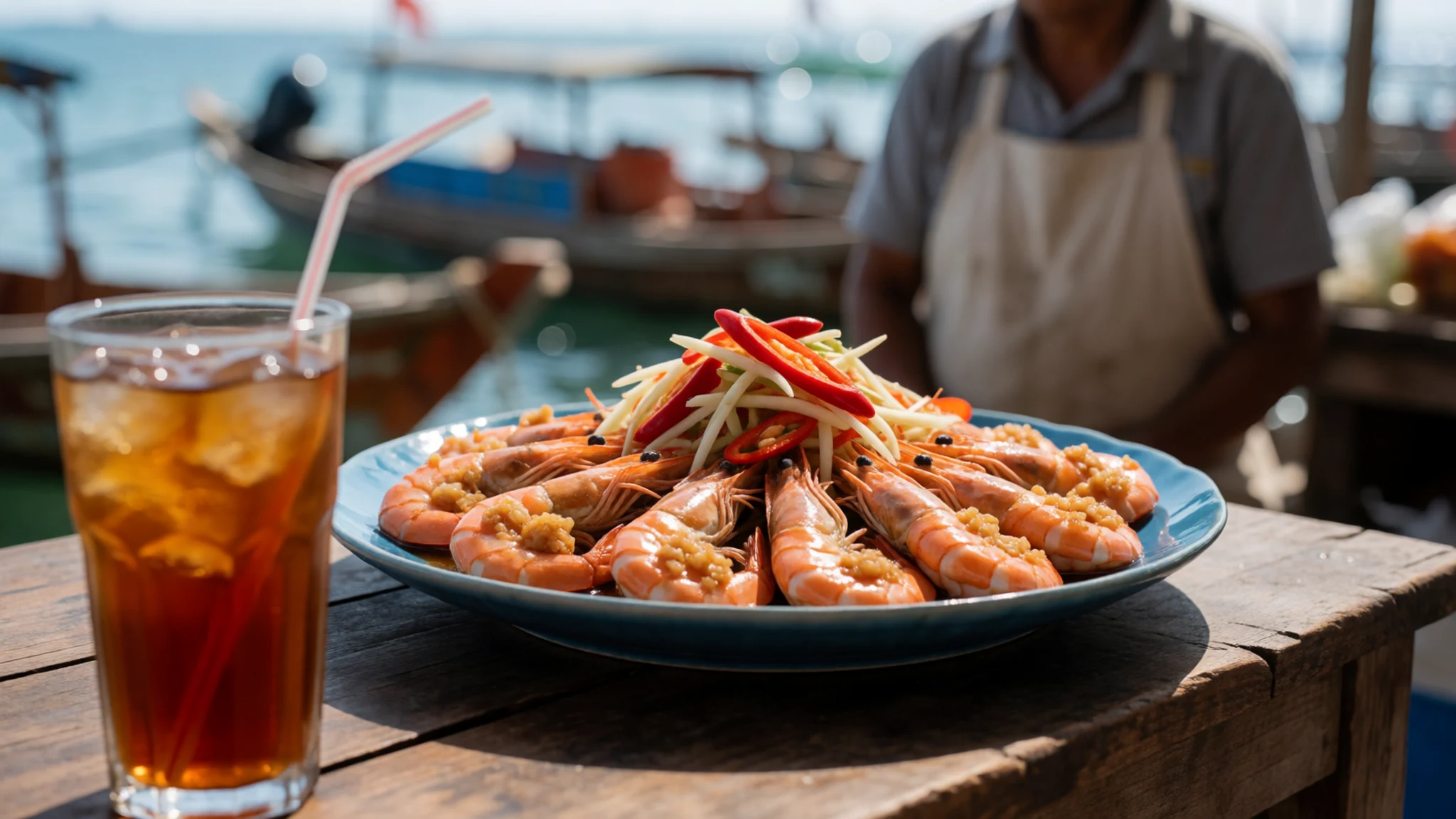
- Stir-fried seafood with garlic and pepper — Family restaurants in the main settlement
A quick wok dish that lets the sweetness of the shellfish or fish come through, usually served with steamed rice. It is easy to find at family-run restaurants in the main settlement and is a safe order for first-timers.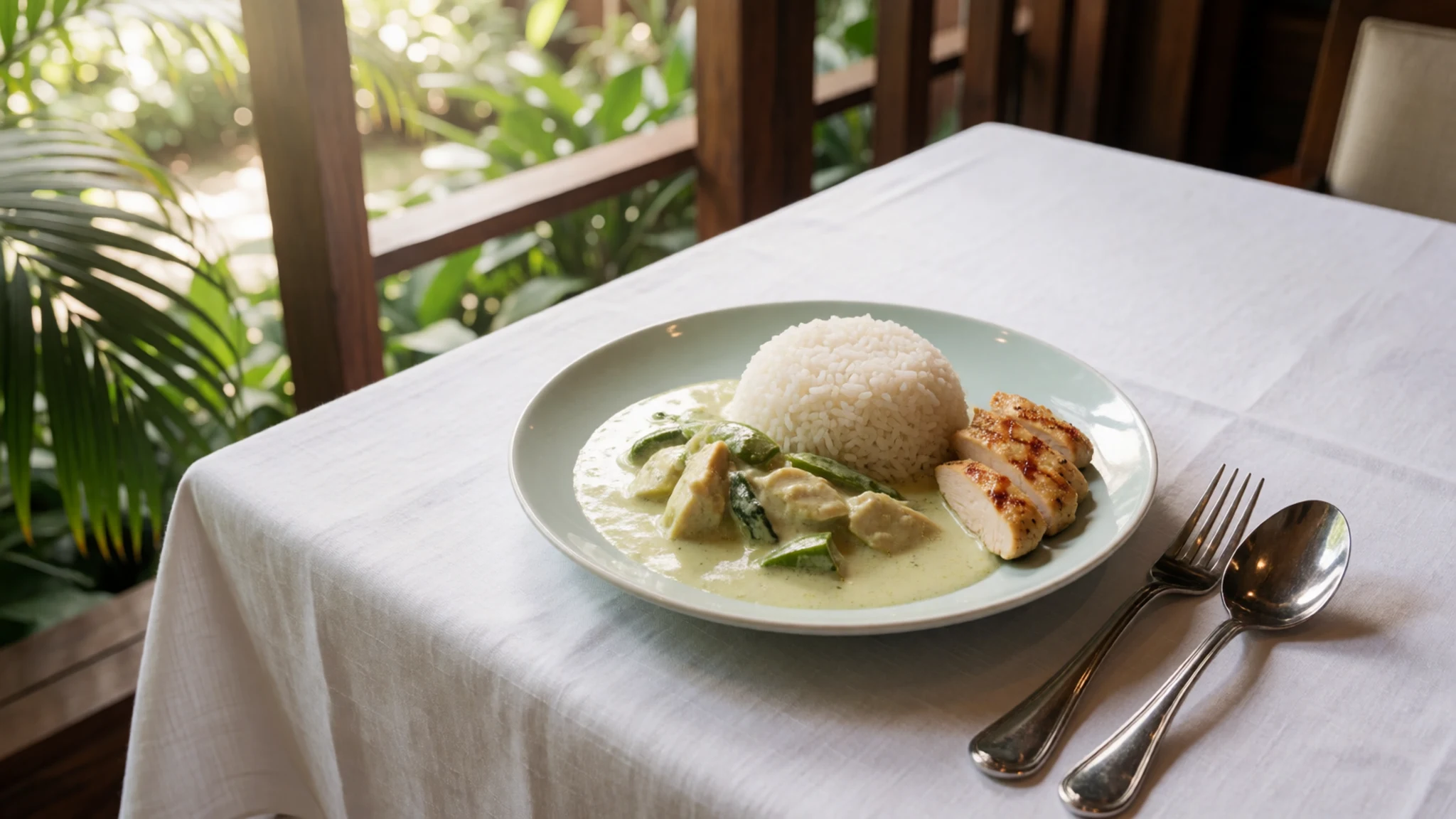
- Thai curries and rice — Resort restaurants and local eateries
Reasonably priced Thai plates, with red, green or sour curries ladled over rice, suit a lunch after temple climbing. Resort restaurants and simple local eateries both serve them, usually with fish or chicken. - Papaya salad and sides — Casual eateries and roadside stalls
Shredded green papaya pounded with chilli, lime and fish sauce is a standard companion to grilled fish. Ask for it milder if heat is a concern, and expect it alongside sticky rice at casual tables. - Beach snacks and cafe drinks — The cafe and snack stalls at Taam Pang Beach
Taam Pang has a well-liked beach cafe, plus snack sellers offering fruit, grilled bites and cold drinks. It is a pleasant, low-cost way to refuel between a swim and the walk back, and a good place for iced coffee or coconut water. - Western and Thai mixed plates — Small restaurants near the main tourist streets
A few restaurants run menus that cover both Thai dishes and familiar Western plates such as burgers, pasta or breakfast, handy for travellers wanting a break from chilli. Seating is often open-air with a sea view.
Plan it
Best time. November to February is the usual choice, as the weather is generally cooler and drier. March to May turns hot and humid, and the rainy months bring showers and rougher seas, so check forecasts before booking ferries. Weekends are busier with Bangkok visitors, so weekdays are calmer.
How long. 2–3
Getting there. Fly into one of Bangkok's airports, then take a government bus from the Northern Bus Terminal (Mo Chit) or the Eastern Bus Terminal (Ekamai) to Si Racha. From there a tuk-tuk runs to the pier on Ko Loy, where regular ferries cross to the island, less often in low season.
Budget. low
Tips
- Check the ferry timetable on the day, as sailings are less frequent in low season
- Ask a local motorbike taxi driver which pier your return ferry uses, as it may differ from your arrival pier
- Carry a torch for evenings, as street lighting is poor away from the busy areas
- Bring cash for small eateries, taxis and temple donations
- Visit hilltop temples and the palace in the morning to avoid the strongest heat
Etiquette
- Leave footwear outside shrines and temples, and keep shoulders and knees covered inside
- Keep swimwear to the beach and cover up once you move away from the sand
- Speak quietly in caves and temples, where people may be praying
Nearby
Sources
- Wikidata Q2751138 (CC0)
- Wikipedia: Ko Sichang (CC BY-SA 4.0)
- Wikivoyage: Ko Sichang (rev 5407456) (CC BY-SA 4.0)
- Ko Sichang Island, Xufanc, via Wikimedia Commons (Public domain)
