Koh Samet
Koh Samet, Thailand
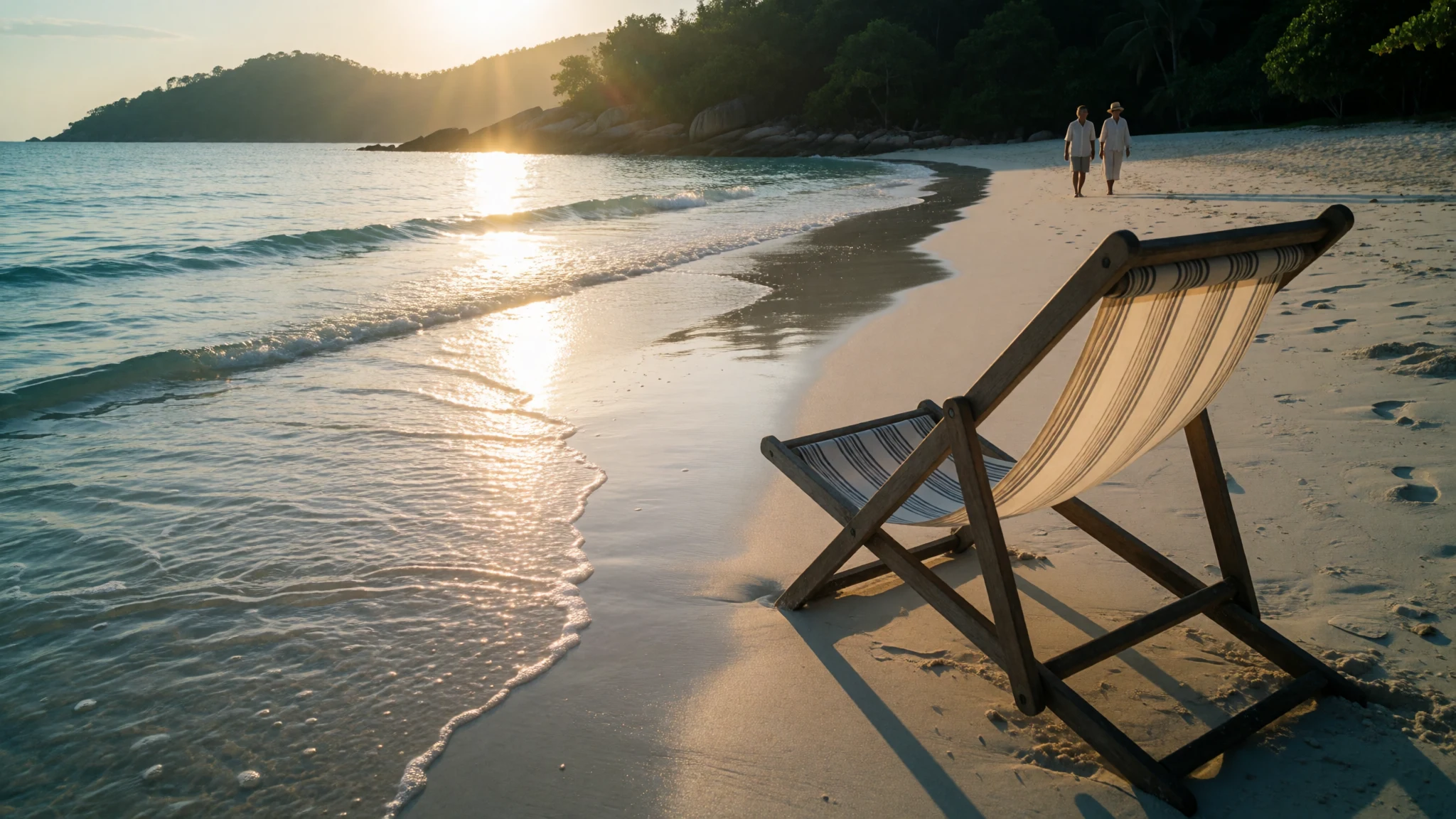
Koh Samet is a forested island of white-sand bays a short boat ride from the Thai mainland, easy for a weekend or a longer stay.
The place
Koh Samet is a small, T-shaped island in the Gulf of Thailand, lying off the coast of Rayong Province on the country's eastern seaboard, about 220 km south-east of Bangkok. It runs roughly seven kilometres from top to bottom, and the crossing from the mainland is short enough that it works as a weekend escape for people from the capital. The name comes from the cajeput tree, called samet in Thai, which grows thickly on the forested hills. That forest gives the island a greener, less manicured feel than many beach resorts. A low, wooded spine runs down the middle, and tracks and a few paved stretches link the bays along the east coast, where most of the accommodation clusters. The western side is quieter. Nearly all of the island, apart from the port settlement of Na Dan, belongs to Khao Laem Ya–Mu Ko Samet National Park, so a visit comes with a park entry fee and limits on what can be built. Tourism drives the local economy, and the mix is easy to read: Thai families and friends at weekends, backpackers and foreign holidaymakers through the year, and a long line of bungalows, bars and beach restaurants facing the sunrise. Weekdays outside holidays are calmer. Saturdays and public holidays bring crowds and fuller boats. Na Dan is where the ferries and speedboats arrive, and from there pick-up trucks fitted with benches carry passengers along the island's main road to the beaches.
Its story
Koh Samet has a literary past that surprises many visitors. The poet Sunthorn Phu, who lived from 1786 to 1855, set part of his long verse tale Phra Aphai Mani on these shores, which means Thai readers knew the island through poetry long before they knew it as a holiday spot. The people who settled here generally did so without formal title to the land. An official inquiry later found that many islanders descended from families who had lived near the old eastern frontier and left after the Franco-Siamese War of 1893, joined by others looking for refuge or a fresh start. Outsiders began arriving in the early 1970s, mostly backpackers happy with simple huts, and they lived alongside the islanders. Bangkok residents had admired the place for decades, but overnight stays were restricted until 1981. In that year the Royal Forest Department declared the island and its surroundings, together with the Khao Laem Ya headland on the mainland, a national park. Resorts kept spreading regardless. Because land rights were unclear, disputes dragged on between long-time residents, developers, the Treasury Department and the park authorities. In the 2010s the authorities took firmer action against illegal building inside the park, stopping work on an unauthorised pier and demolishing parts of several resorts. That tension between a protected landscape, a living community and a tourist economy still shapes the island today, and it explains why the bays look so different from one another.
What to see
- Hat Sai Kaew — Northeast coast, near Na Dan
Hat Sai Kaew is the island's best-known beach, a long ribbon of pale sand close to the pier. It is also the busiest, and restaurant deckchairs take up much of the width, so the sand can feel crowded. Come early on a weekday for space and softer light.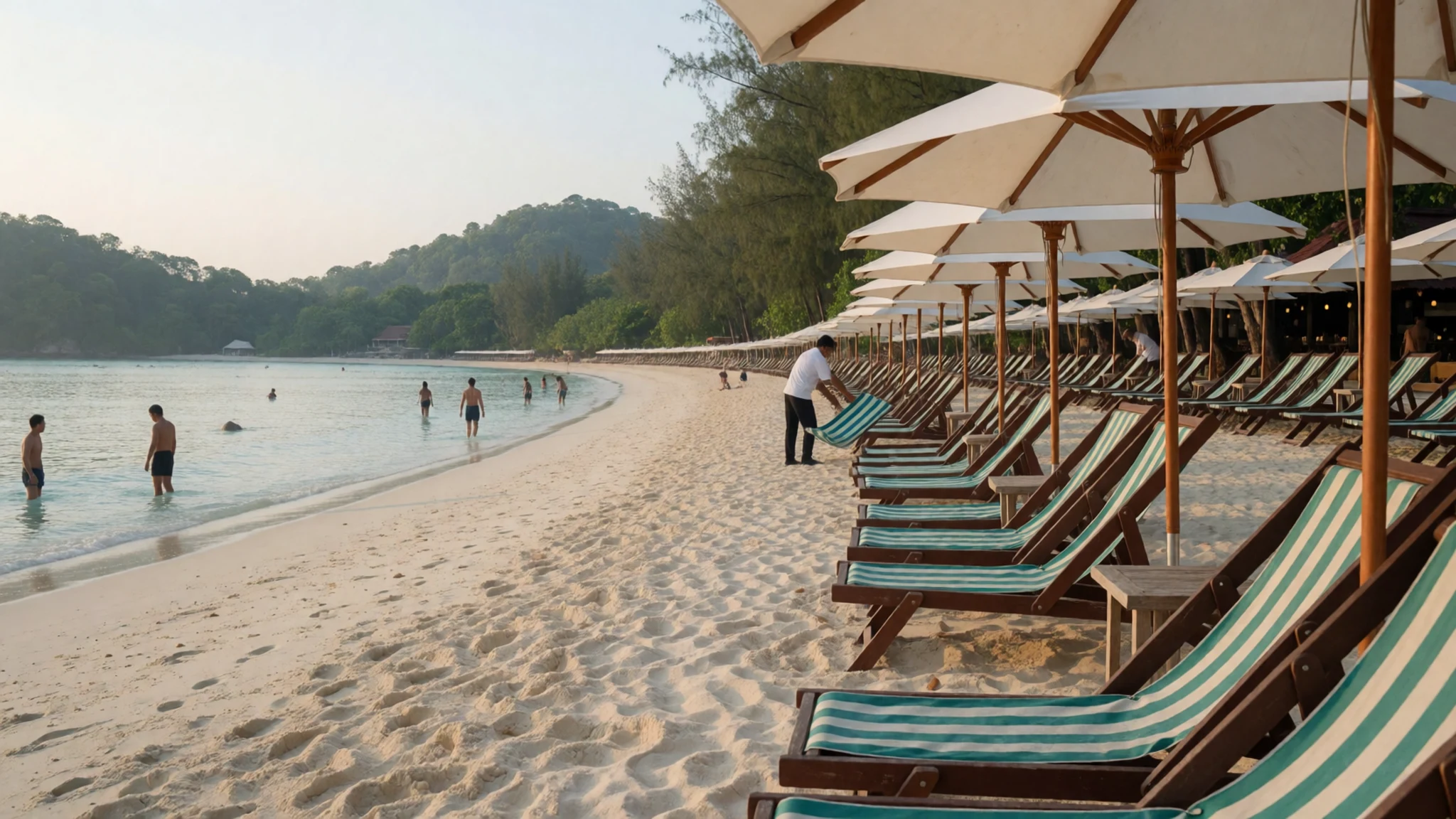
- Ao Hin Khok — Next bay south of Hat Sai Kaew
Ao Hin Khok is separated from Hat Sai Kaew by a small rocky point topped with a mermaid statue, a nod to the Phra Aphai Mani story. The beach is smaller and easier to walk end to end, with simple places to eat and stay close behind the sand.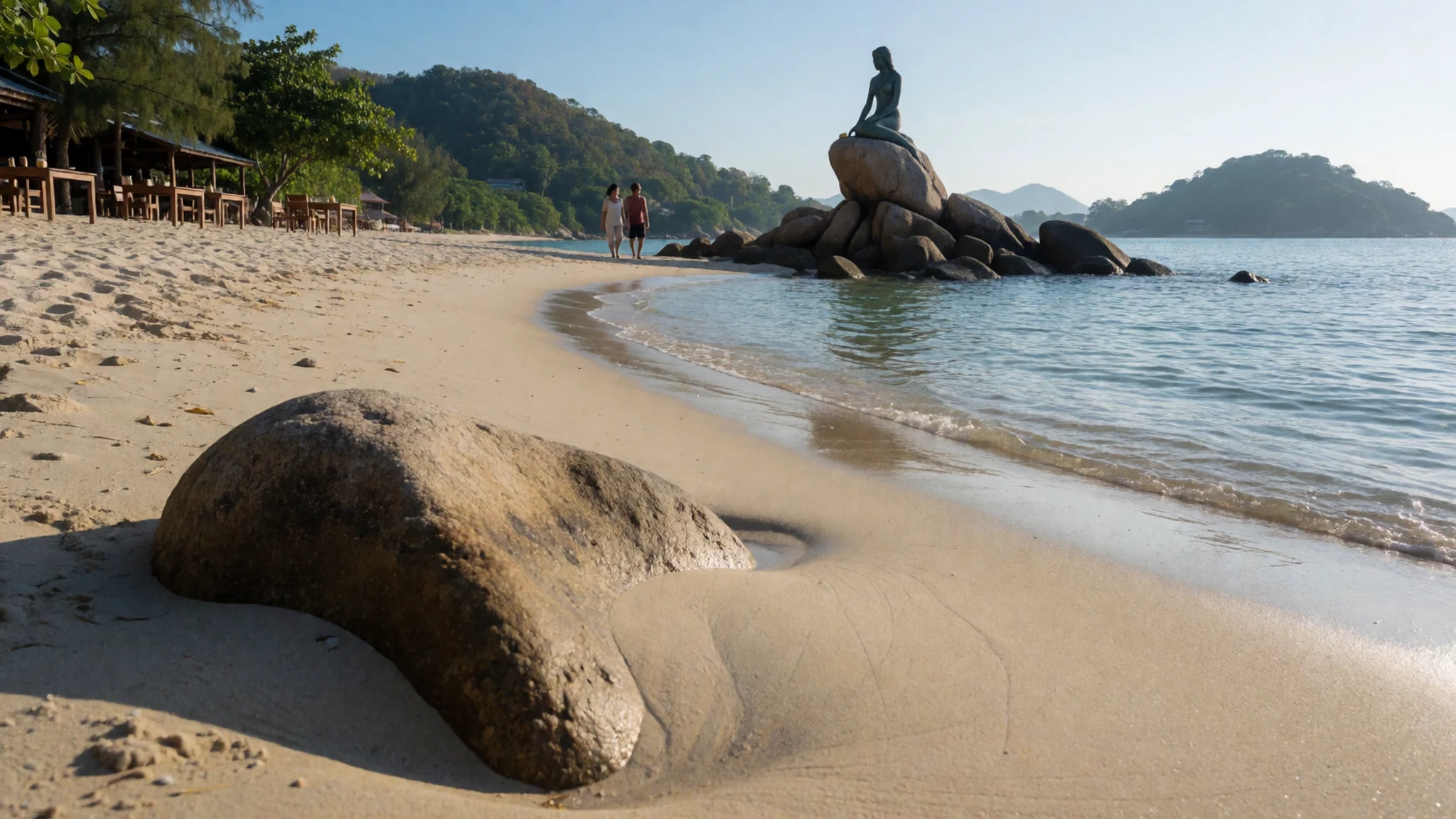
- Ao Phai — East coast, two bays south of Hat Sai Kaew
Ao Phai has the same soft white sand as its neighbours and a handful of pleasant restaurants after dark. It is also where the late-night party crowd gathers, around a large concrete bar. Choose it for a lively evening; those wanting early sleep should stay elsewhere.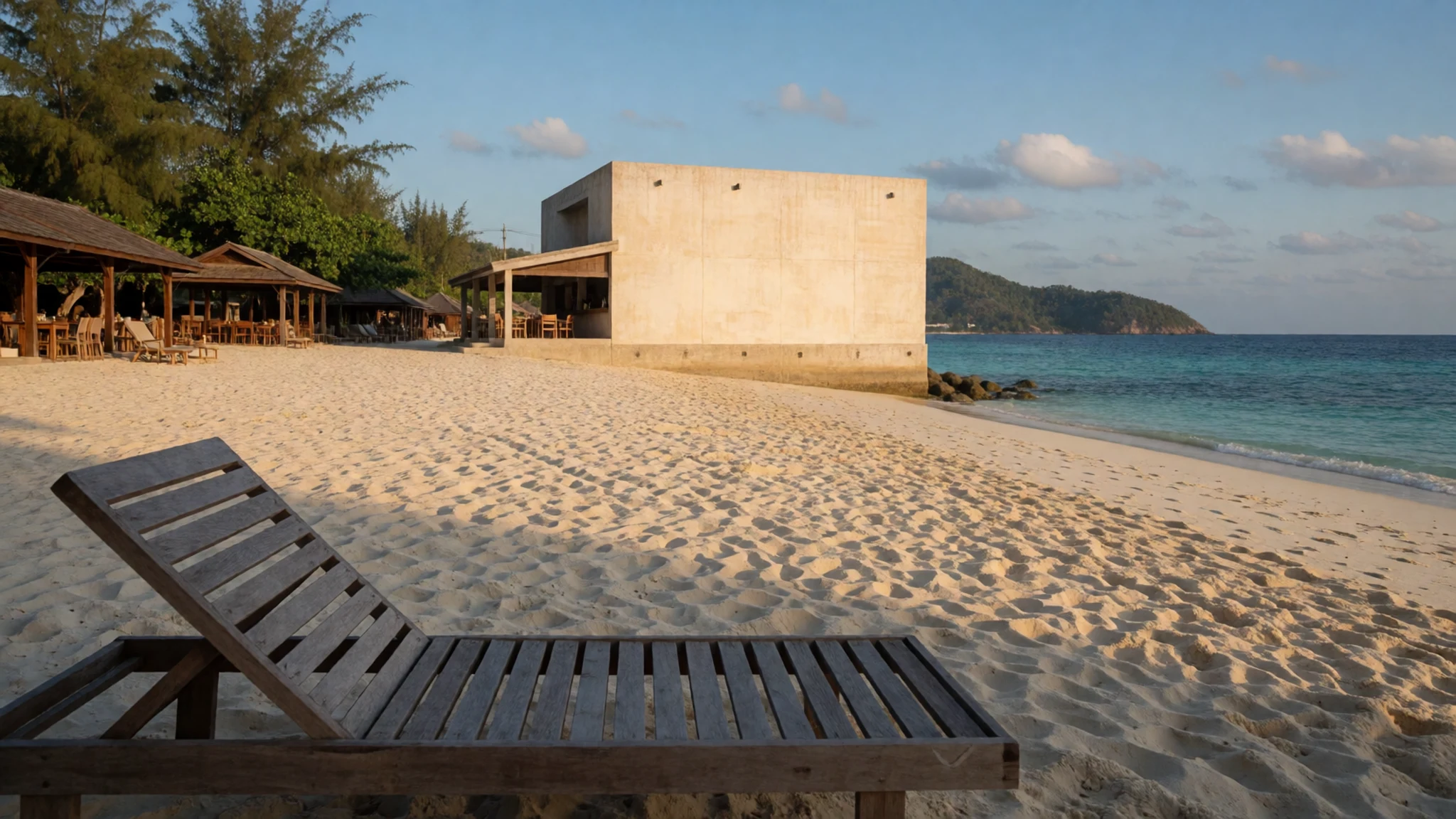
- Ao Put Sa — Southeast coast
Ao Put Sa suits people who have had enough of crowded sand and nightlife. A small pontoon sits offshore, and snorkelling around it is modest but pleasant, best at low tide when the water is clearer. Bring your own mask if you plan to swim regularly.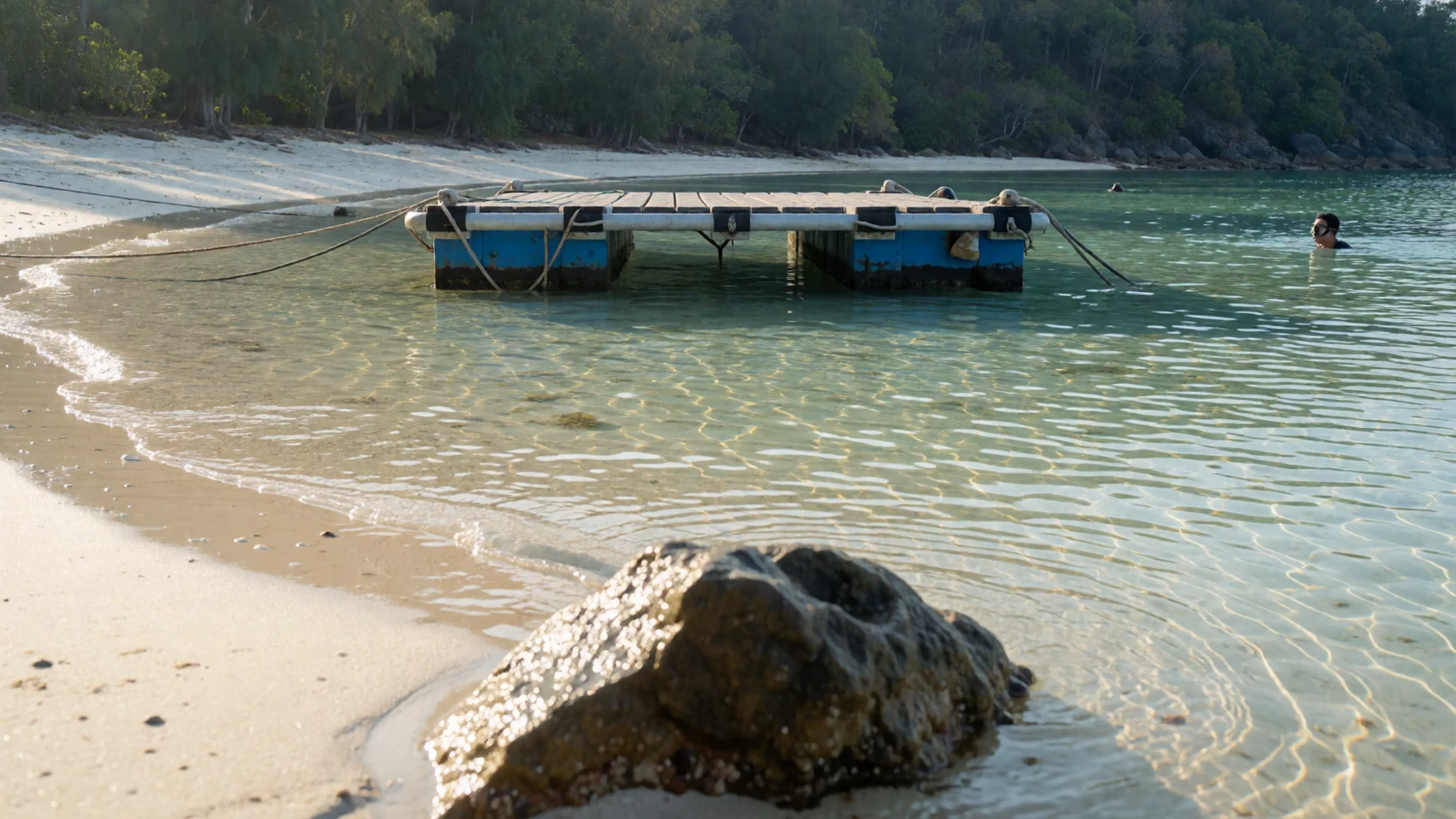
- Ao Nuan — South of Ao Put Sa
Ao Nuan is a small, calm bay for travellers who want quiet. Accommodation is limited to handmade bungalows with real character, and there are few places to eat, so expect simple evenings, sea sounds and an early night. Book ahead in busy periods because there is little capacity.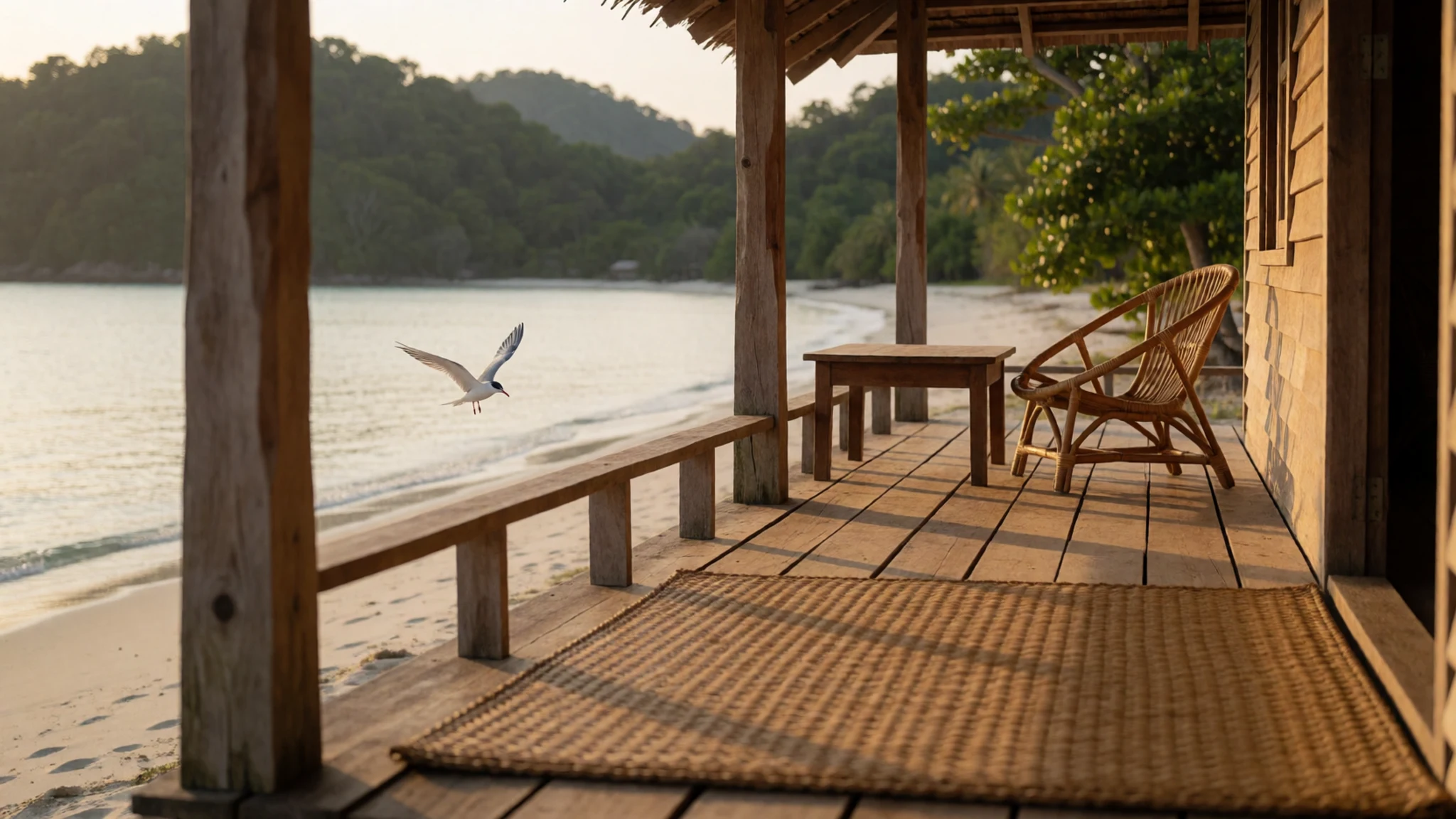
- Ao Chor — Far south of the east coast
Ao Chor is less developed than the northern bays and attracts people who like a slower, older-fashioned island mood. Facilities are thinner, the crowds smaller and the pace easy. It suits walkers and anyone happy to trade nightlife for a quiet stretch of sand.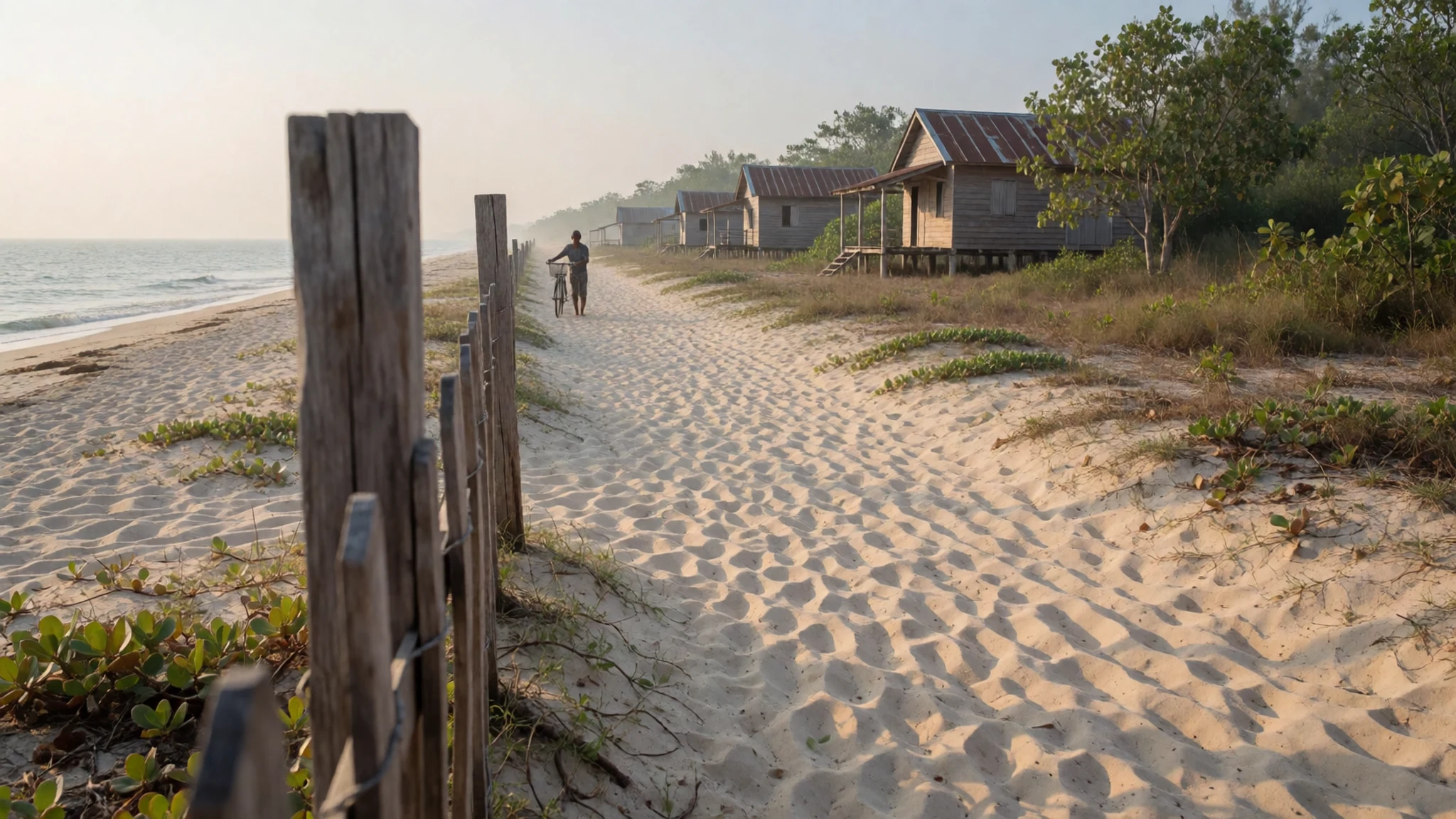
Culture
Koh Samet's culture is a blend of Thai coastal habits and a tourism economy that has grown up around a protected forest. Many islanders trace their families back to border communities and to settlers who arrived looking for a fresh start, and a good number still work in small bungalow businesses, boats, markets and kitchens. Buddhism shapes daily life as it does across Thailand, so small spirit houses appear near homes and businesses, with offerings of flowers, incense and drinks left for the guardian spirits of the land. Respect for elders, a calm manner and avoiding open displays of anger count for a lot, and a smile and a slight bow with palms together, the wai, is a polite way to greet or thank someone. The head is considered the highest part of the body and the feet the lowest, so pointing feet at people or touching someone's head causes offence. Because nearly all the island is a national park, local life also revolves around the forest and sea: rubbish, noise and building work are sensitive subjects, and residents are wary of change that threatens the landscape. Nights on the east coast can be loud, but villages and the quieter bays keep a gentler rhythm. Cover your shoulders and knees when you leave the beach for the village, and take your shoes off before entering any home, shrine or small temple.
What to wear
Koh Samet's traditional dress follows the wider Thai pattern. Women historically wore the pha sin, a wrapped tube skirt in cotton or silk, while men wore the pha nung, a length of cloth passed between the legs and tucked at the waist, and the checked cotton pha khao ma, still used by fishing and farming communities as a belt, headcloth or towel. Formal dress, the chut thai, uses Thai silk and is mainly worn for weddings, ceremonies and national occasions, not on the island's beaches. What people actually wear now is plain and practical. Islanders and workers choose shorts, T-shirts, loose cotton trousers and flip-flops, with a hat or cap against the sun. Visitors come in swimwear and sarongs, and the Thai weekend crowd often swims in T-shirts and shorts. For a visit, think hot, humid and sandy. Pack light cotton or linen, a wide-brimmed hat, sunglasses and plenty of sun protection, ideally reef-friendly. Sandals suit the beaches, but shoes with some grip help on rocky headlands and sandy forest tracks. Carry a light long-sleeved top for evening mosquitoes and for boat spray. Swimwear belongs on the beach, so bring a shirt or wrap for the village, restaurants and any temple stop. A thin scarf is useful if a visit to a shrine or monastery on the mainland is planned.
What to eat
- Grilled fresh seafood — Beachfront restaurants on the east-coast bays, especially in the evening
Fish, prawns and squid are laid out on ice and cooked over charcoal. Staff weigh your choice and grill it simply, often served with a spicy lime and garlic dip. The tables sit practically on the sand, which is half the appeal.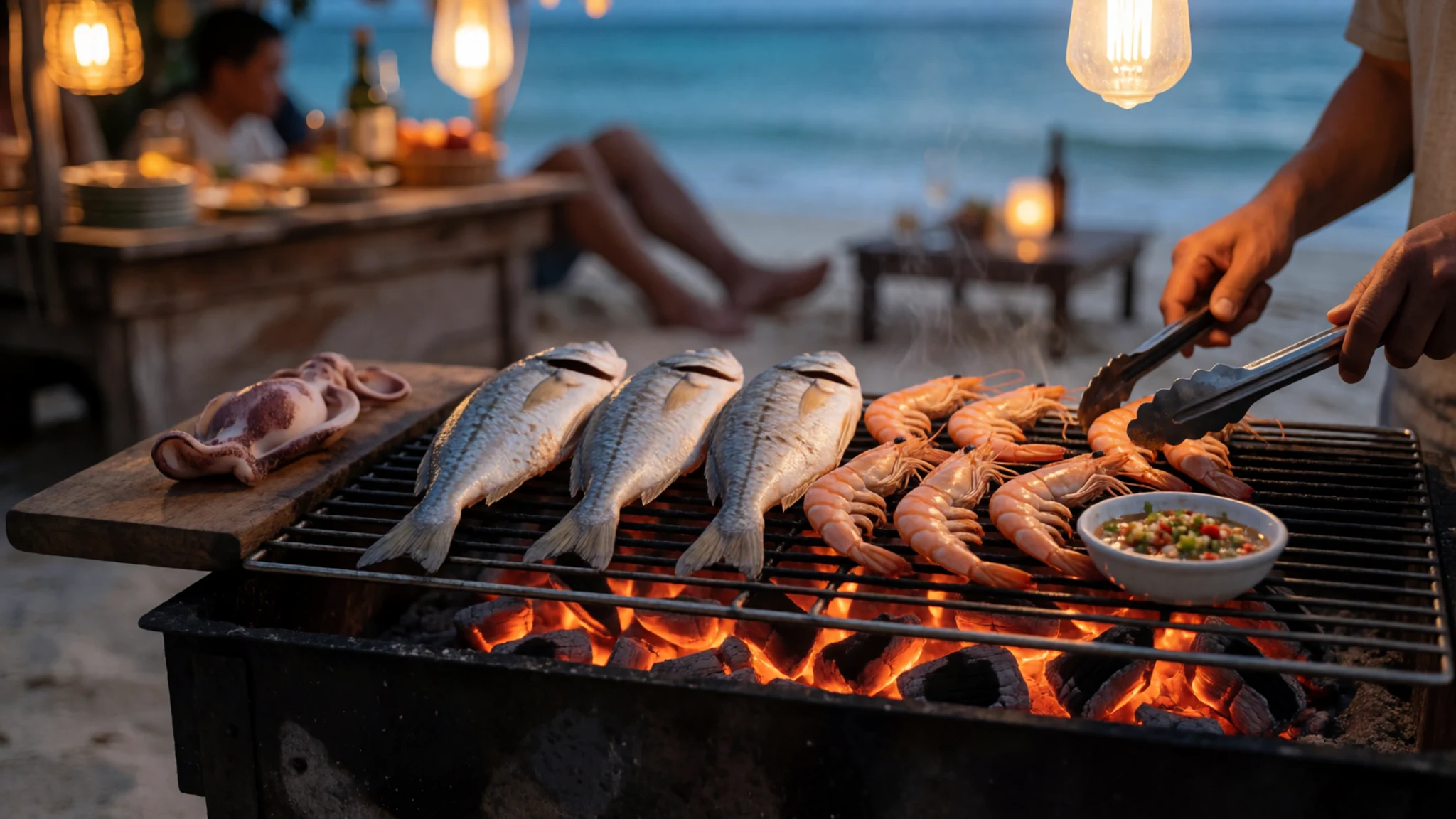
- Pad kra phrao — Small family eateries near Na Dan and the village roads
A fast stir-fry of minced pork, chicken or seafood with holy basil, chilli and garlic, usually served over rice with a fried egg. It is a staple Thai lunch, and the island's local kitchens tend to make it with welcome heat.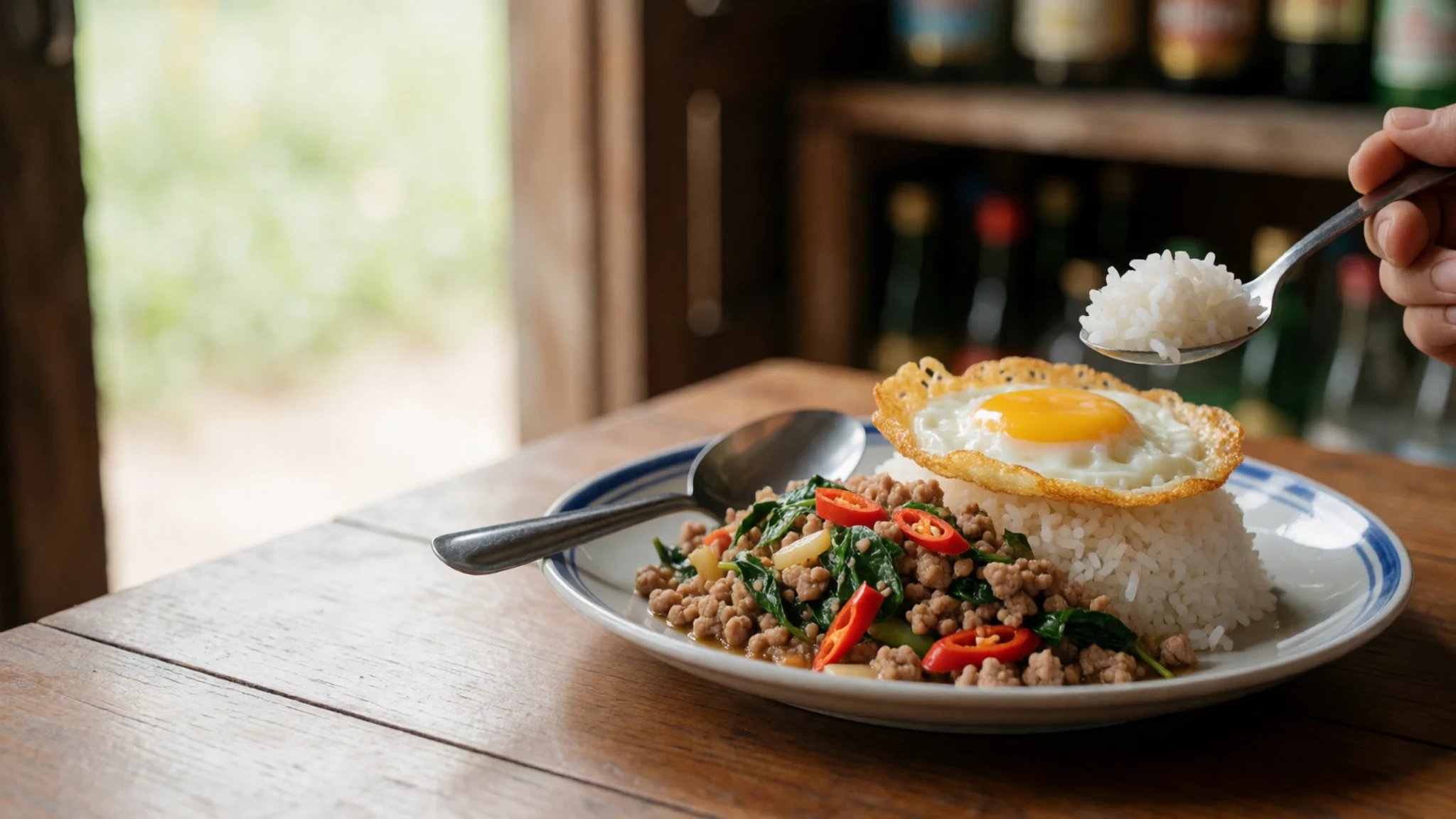
- Som tam — Market stalls and simple restaurants across the island
Green papaya salad pounded in a mortar with lime, chilli, dried shrimp and peanuts. It is sharp, crunchy and cooling in the heat. Ask for it milder if you are not used to Thai chilli, and pair it with sticky rice. - Barbecue hotplates — Bar-restaurants on the busier beaches
Chicken, beef or pork arrives sizzling on a metal plate, often with a mushroom or pepper sauce. It is a crowd-pleaser with a Thai-western flavour, aimed at beachgoers who want a filling, easy dinner after a long day in the sun. - Fresh fruit and coconut — Roadside carts and beach vendors, especially in the morning
Pineapple, watermelon, mango and green coconuts are sold cut and chilled from carts and vendors on the sand. It is the simplest way to cool down. Mango with sticky rice appears in season at many dessert stalls.
Plan it
Best time. November to February is the usual choice, as the weather is generally drier and less oppressive on the Gulf coast. March to May brings strong heat and humidity, and the wetter months of the monsoon season mean more cloud, rougher seas and fewer services. Weekends and Thai public holidays are the busiest at any time of year.
How long. 2–3
Getting there. Fly into Bangkok's Suvarnabhumi Airport, or into U-Tapao airport on the eastern seaboard, then travel by bus, minibus or taxi to the Ban Phe pier near Rayong, a road journey of about 220 km from Bangkok. From Ban Phe, ferries and speedboats cross to Na Dan, the island's main pier, and pick-up trucks carry passengers to the beaches.
Budget. mid
Tips
- Arrive on the island early in the day to have the widest choice of accommodation, since most places cluster on the east-coast beaches.
- Avoid Saturdays and public holidays if crowds worry you; weekdays are noticeably calmer.
- A national park entry fee applies, so keep your ticket and check current charges with the park's official channels, as fees change.
- Carry cash, as small bungalows, stalls and pick-up trucks often do not take cards, and cash machines are limited.
- Check the last boat times back to Ban Phe, and carry water, sun protection and insect repellent.
Etiquette
- Dress modestly away from the beach, covering shoulders and knees in villages and at shrines.
- Take your rubbish with you, and do not remove shells, coral or plants from the national park.
- Do not touch anyone's head or point your feet at people or at Buddha images.
Nearby
Sources
- Wikidata Q1073840 (CC0)
- Wikipedia: Ko Samet (rev 1371275278) (CC BY-SA 4.0)
- Wikivoyage: Ko Samet (rev 5407455) (CC BY-SA 4.0)
- Photo: Ao Phai in Koh Samet, Thailand (Bjørn Erik Pedersen) (CC BY-SA 1.0)
- Photo: A beach on sunny day, Koh Samet (Headshop5) (CC0 1.0)
- Photo: Ko Samet from Space (NASA WorldWind) (Public domain)
- Photo: Viewpoint on Koh Samet (Headshop5) (CC0 1.0)
- Photo: Town square in Koh Samed (Headshop5) (CC0 1.0)
- Photo: A beach on cloudy day, Koh Samet (Headshop5) (CC0 1.0)
- Photo: Beach shore at night, Ko Samet (Alex Kovacheva) (CC BY-SA 4.0)
- Photo: Boats in Nadan Pier (Headshop5) (CC0 1.0)


