Koh Kradan
Koh Kradan, Thailand
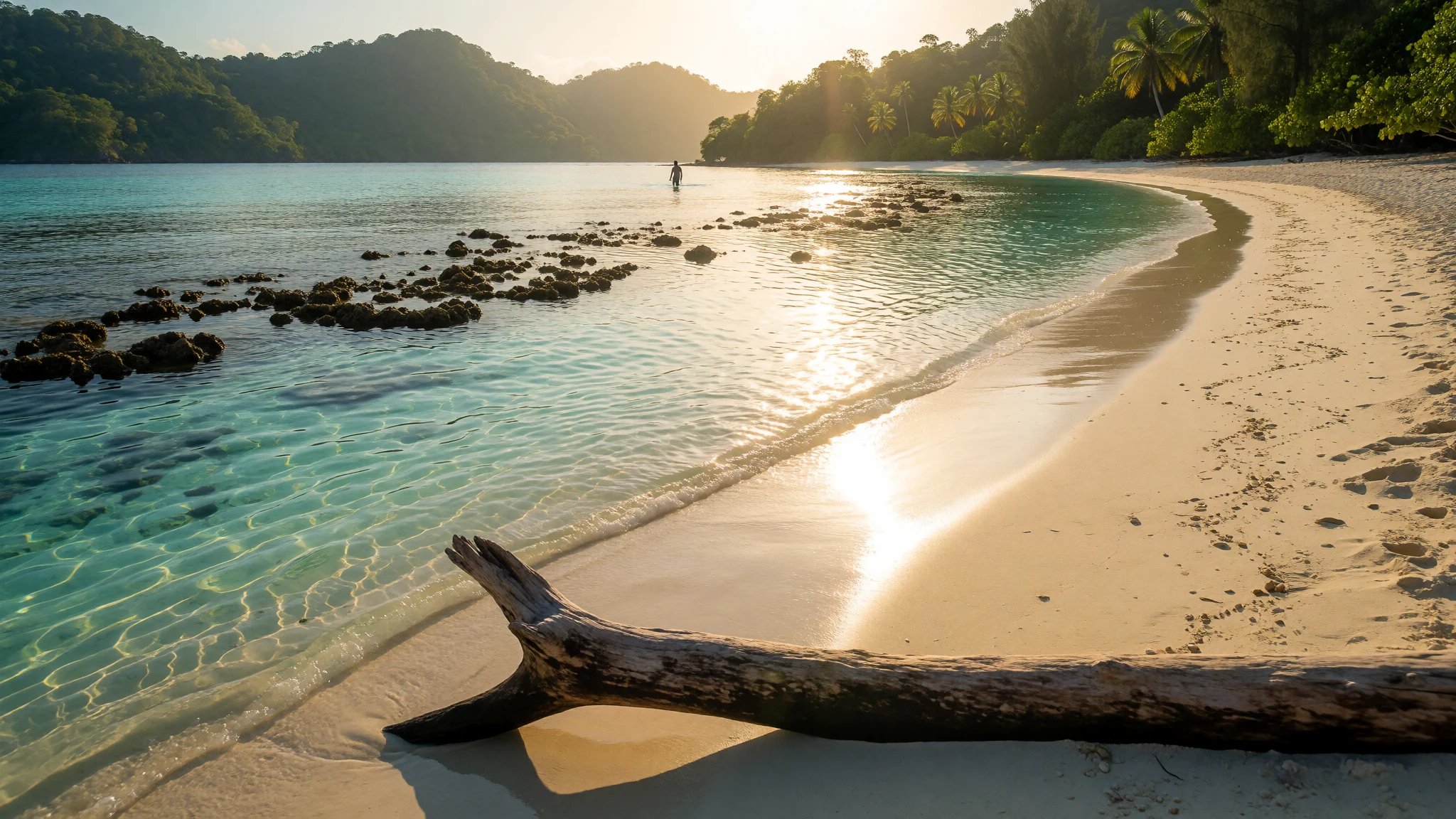
Koh Kradan is a small, quiet Andaman island of clear shallows and reef, where slow days of swimming and walking matter more than sightseeing.
The place
Koh Kradan is a small island off the Andaman coast of Trang province in southern Thailand, roughly 10 km from the mainland and about 2.4 square kilometres in area. The Thai name is written เกาะกระดาน, and English spellings vary: Ko Kradan, Koh Kadan and Ko Kadan all turn up. The name points to the island's long, narrow outline. Most of the land lies inside Hat Chao Mai National Park, which keeps building to a minimum, while the remainder is privately owned and is where the resorts and bungalows sit. The east coast faces the mainland and holds the best-known beach, with pale sand, shallow clear water and a fringing coral reef close enough to reach from the shore when the sea is calm. The west side is more exposed and quieter. Wikidata places Kradan within the Koh Libong group, and neighbouring islands such as Koh Muk and Koh Ngai make it easy to treat the stay as part of a loose island loop. Facilities are modest by island standards: limited electricity in places, patchy phone signal, a handful of places to eat and sleep, and no nightlife to speak of. Footpaths through the trees link the two coasts. The island suits people who are content to swim, read and wander, and it disappoints anyone expecting shops, bars or a busy beach scene.
Its story
Koh Kradan has a short written history, and most of what shapes it today is recent. For generations the waters of Trang province belonged to fishing families, many of them Thai Muslim, who worked the seagrass flats and mangrove edges between the mainland and islands such as Koh Libong. Kradan itself is not known as a major village site; its narrow shape and limited land made it more an anchorage and landmark than a settlement. Tourism arrived slowly and unevenly, carried by word of mouth among divers and backpackers who valued the clear shallows and the reef close to shore. The island's second name, Paradise Beach, comes from that reputation. The bigger turning point was protection. Most of the island sits within Hat Chao Mai National Park, which limits construction and keeps the forest and shoreline largely intact, while the privately owned remainder carries the accommodation. That split explains the island's calm character. Conservation here is a live question rather than a finished story. Coral on this coast has been hit by warm-water episodes, storms and boat damage, and the seagrass beds near Koh Libong, which support dugongs, depend on clean water and careful fishing. Visitors are part of that equation, for better or worse. Older accounts of untouched reef deserve caution, and recent conditions are worth checking before planning a stay around snorkelling.
What to see
- The east-coast beach — East coast
Koh Kradan's main beach faces the mainland and has pale sand and shallow, clear water that stays gentle on calm days. It is the place for long swims, slow walks and sitting in the shade of trees. Mornings are quietest, and low tide exposes more sand but less depth for swimming.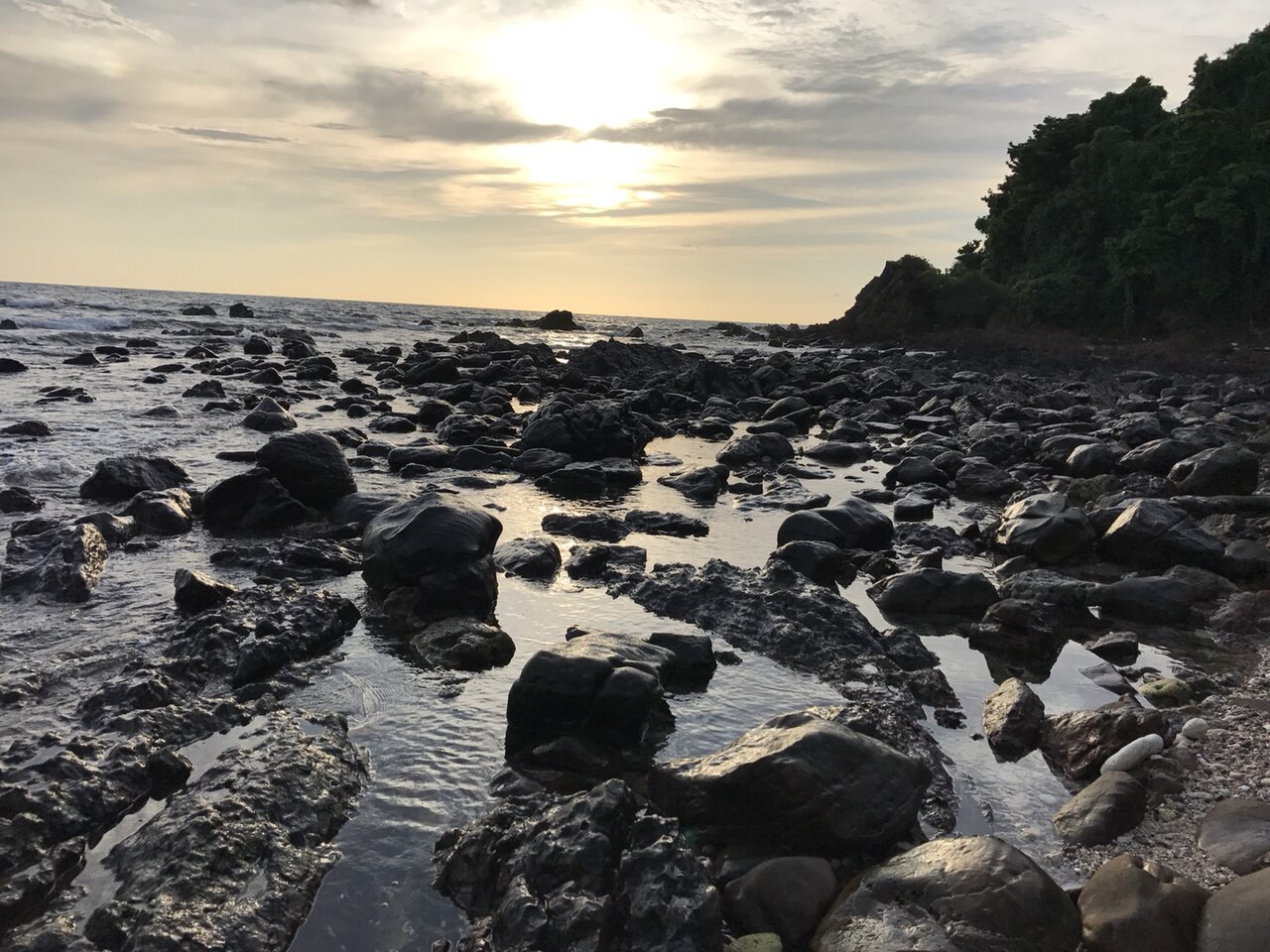
- Reef snorkelling off the shore — East coast reef
A fringing coral reef lies close to the east beach, and on calm days snorkellers can reach it from the sand. Fish are easy to see, but coral condition varies after storms and warm spells. Bring a rash vest, keep fins off the reef, and ask staff about currents before going far.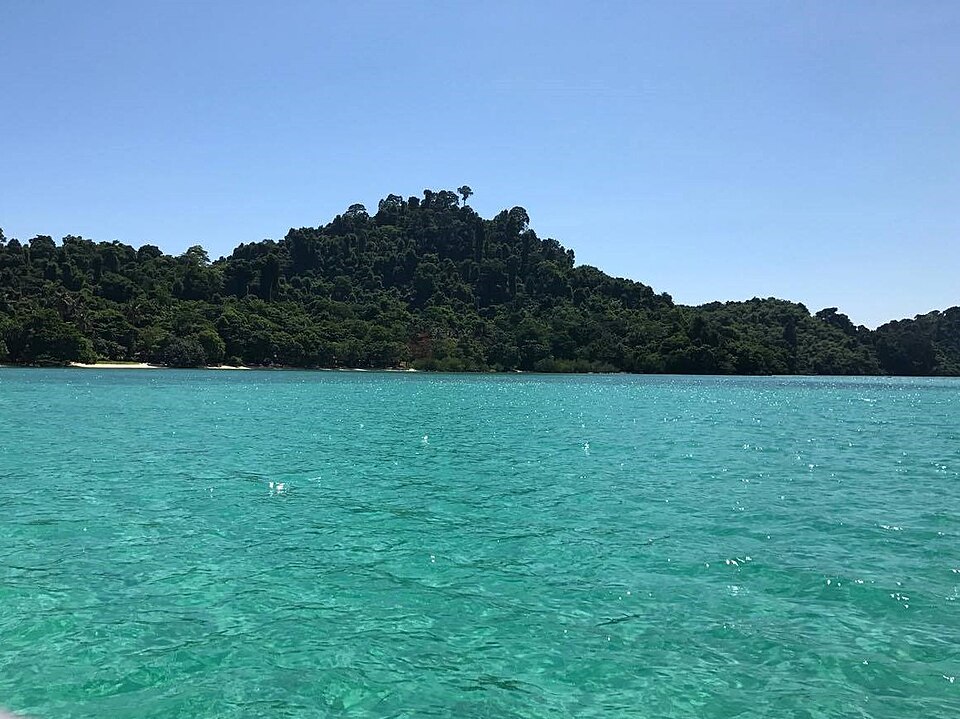
- The forest path to the west side — Across the island
Narrow footpaths cross the island through trees, linking the busier east coast with the quieter west. The walk is short but humid, so go early or late. The west beaches are more exposed, with rougher water and fewer people, and make a good place for watching the evening light.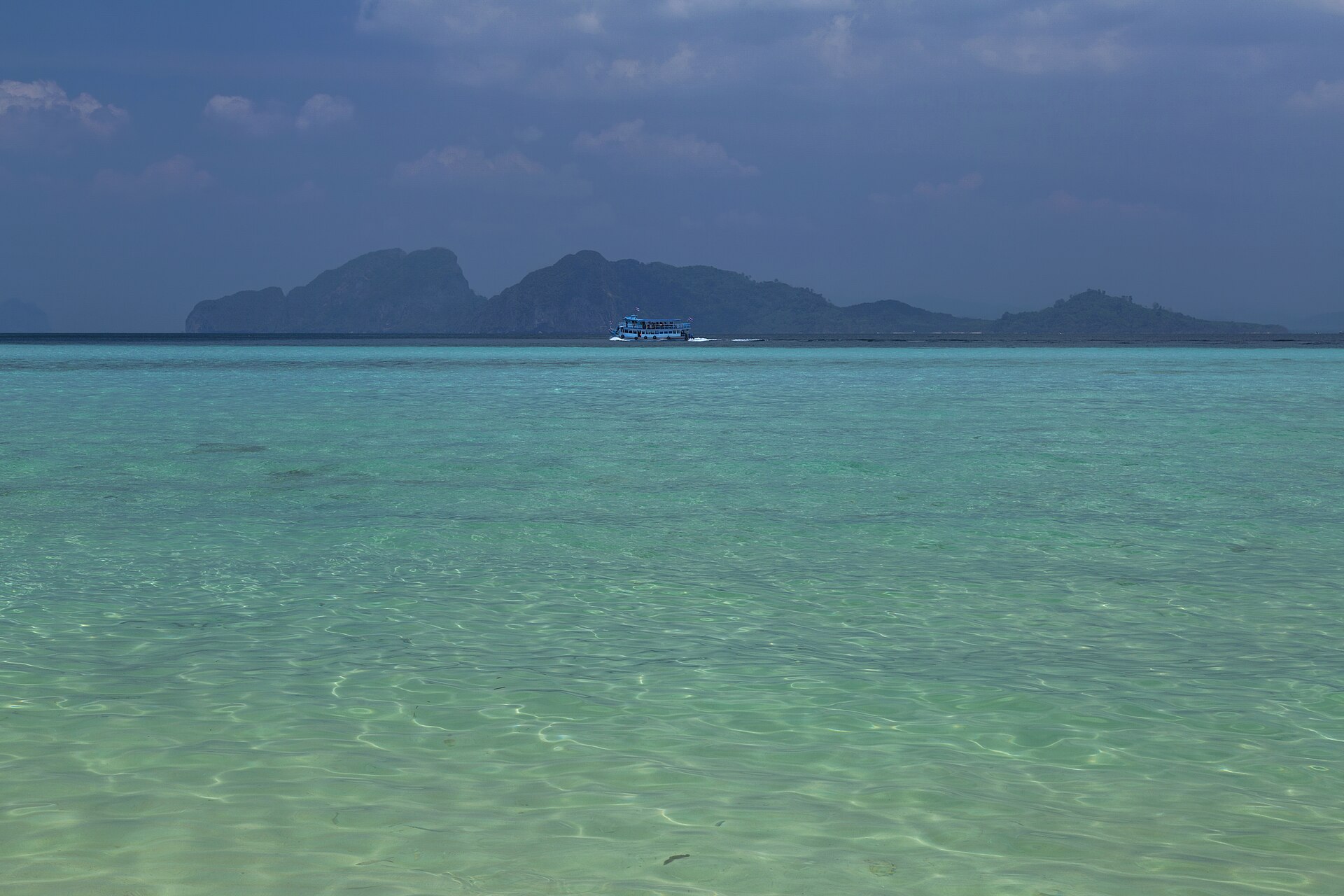
- Hat Chao Mai National Park shoreline — Park land around the island
Most of Koh Kradan belongs to Hat Chao Mai National Park, and its undeveloped edges are the best reminder of what the whole coast once looked like. Forest runs down to rocks and sand. Look for birds, hermit crabs and tide pools, and leave everything where it is.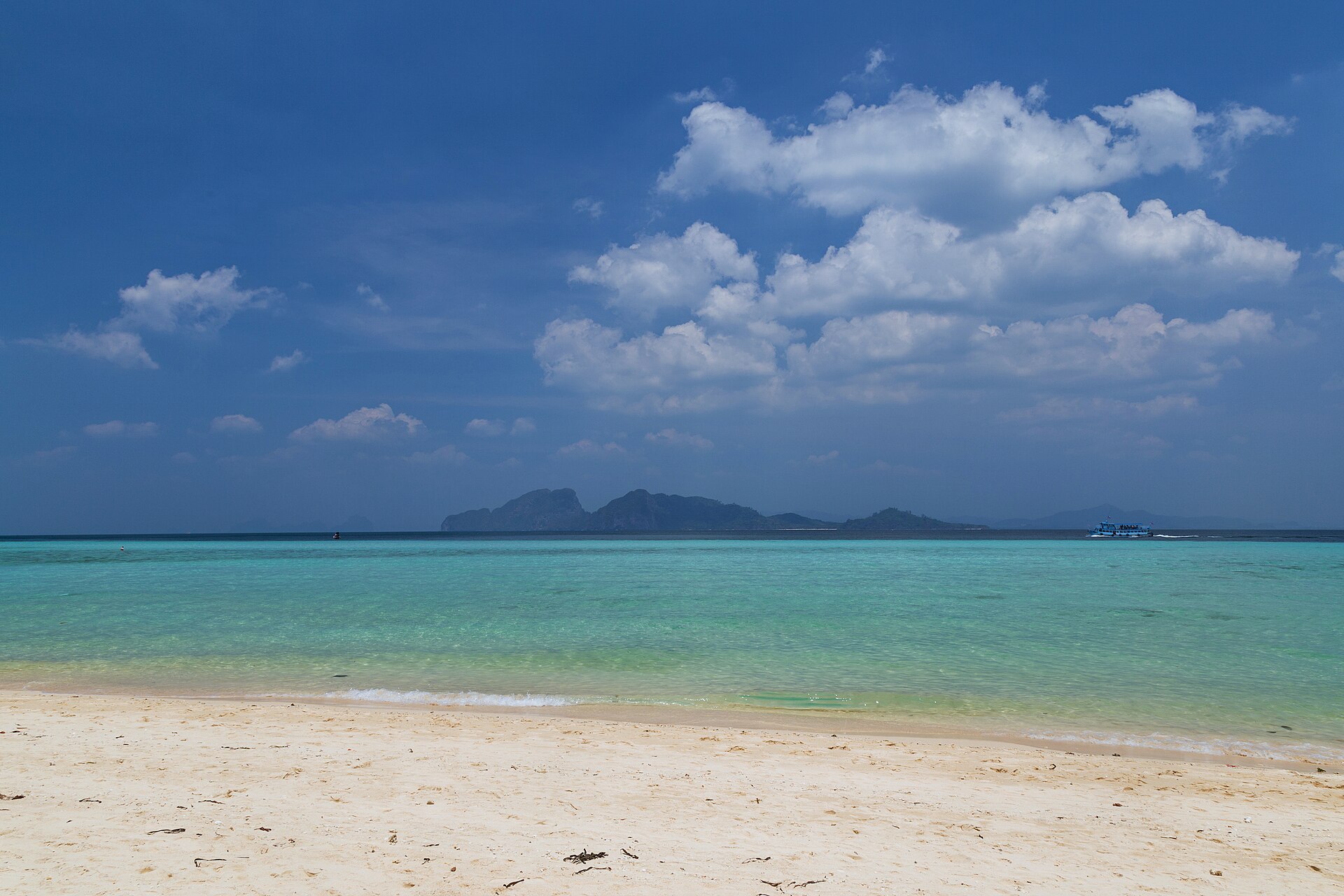
- Boat day to Koh Muk and Koh Libong — Neighbouring islands
Longtail and speedboat trips from Koh Kradan reach nearby islands, including Koh Muk, known for a sea cave that opens onto a hidden lagoon, and Koh Libong, a larger island with fishing villages and seagrass beds. Resorts organise these days, and sea conditions decide whether they run.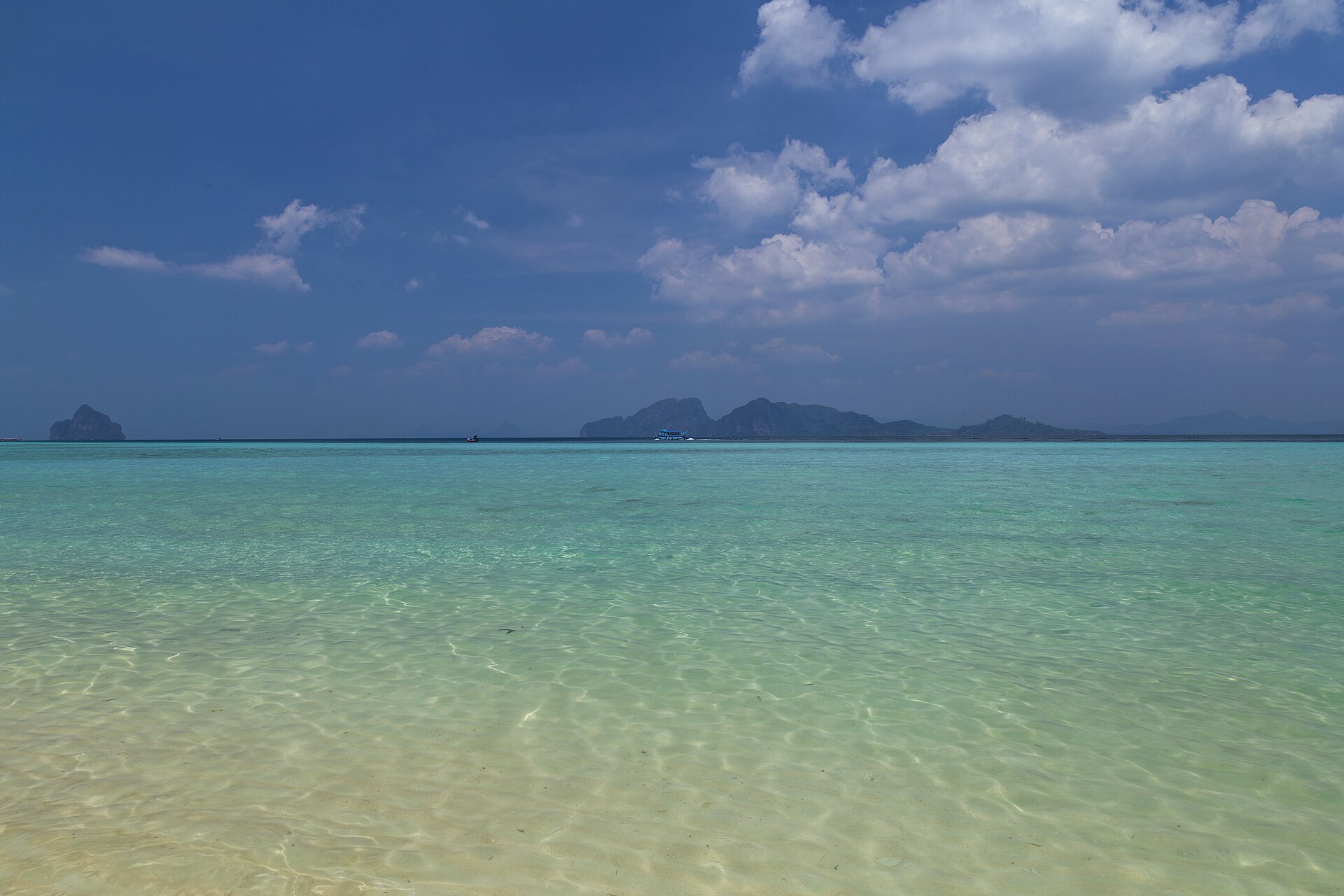
Culture
Koh Kradan sits in a part of southern Thailand where Buddhist and Muslim communities live side by side, and the island's feel is shaped as much by the Trang mainland as by its resorts. Most staff come from the province and nearby islands, and daily life follows boats, tides and weather. Thai manners apply here as elsewhere: a smile and a calm voice go a long way, anger and raised voices are seen as poor form, and the head is treated as the most respected part of the body, so touching another person's head is avoided. Feet are regarded as low, so they are not pointed at people or at Buddha images. The monarchy is protected by law and is not a subject for jokes. Because most of the island is national park, a conservation habit runs through island life too: rangers and resort staff routinely ask guests to keep off the coral and carry rubbish away. Thai and southern Thai dialect are the everyday languages, with English at the resorts. In Muslim fishing villages on neighbouring islands, Friday midday is a time for prayer and quieter streets, and alcohol can be hard to find. A few words, such as sawatdee for hello and khop khun for thank you, are appreciated. Do not stand on, touch or collect coral or shells, and cover shoulders and knees when visiting mainland villages, mosques or temples.
What to wear
Koh Kradan has no costume of its own, so traditional dress here means the clothing of southern Thailand. In Thai Muslim communities along the Trang coast, women have long worn a sarong-style skirt in batik-printed cotton with a loose blouse and a headscarf, and men wear checked cotton sarongs at home and for prayer, often with a small cap. Light cotton and batik suit the heat and humidity, and such clothes appear mostly at festivals, on Fridays and in village life rather than on the beach. Day to day, island staff wear shorts, T-shirts, polo shirts in resort colours and flip-flops, while boat crews choose whatever dries fast and shades the arms. Fishing families favour long sleeves and wide-brimmed hats against the sun. Visitors are comfortable in swimwear on the beach and in light, quick-drying clothes around the resorts. A sarong or light wrap is useful for the shade, for covering up on a boat, and for modest dress on the mainland, where shoulders and knees should be covered at temples and mosques. Pack a long-sleeved rash vest, reef-safe sunscreen, a hat and sunglasses. Water shoes help on coral rubble and rocky edges, and a dry bag protects phones and cameras during boat transfers. In the wet season, add a light rain jacket.
What to eat
- Grilled fresh fish and prawns — Resort restaurants on the island
Koh Kradan's resort kitchens lean on the day's catch, usually grilled over charcoal with lime, garlic and chilli dipping sauces and served with rice. Choices depend on what boats brought in, so ask what is fresh instead of choosing from a fixed menu. - Gaeng som (southern sour curry) — Island resort restaurants and eateries in Trang town
A thin, fiery, sour curry of turmeric-yellow broth, usually made with fish and vegetables, and typical of southern Thai cooking. It is eaten with rice to soften the heat. Island kitchens often keep it milder for visitors unless asked for the local strength. - Trang roast pork (mu yang) — Roast pork stalls and shops in Trang town
Trang town is known for its crisp-skinned roast pork, sold in slices with a sweet, savoury glaze and eaten with rice or as a snack. It is a mainland treat, easy to buy before boarding a boat to the islands. - Roti with curry — Morning stalls on the mainland coast and in Muslim villages on nearby islands
Flaky, griddled roti served with a bowl of mild curry for dipping is a staple of Thai Muslim cooking across the south. It makes an easy breakfast before a boat day, and a plain or sweet version is usually available. - Khanom jeen with southern curries — Morning markets in Trang and fishing villages on the mainland
Soft rice noodles are laid out with a choice of fish-based curries, fresh herbs and pickled vegetables, and eaten together in a bowl. It is a favoured southern breakfast, and the toppings vary from village to village.
Plan it
Best time. November to April is the drier part of the year on the Andaman coast, with calmer seas and clearer water for snorkelling. From May to October the wet southwest monsoon brings rough seas and frequent rain, and some island businesses close or run fewer boats, so check before booking.
How long. 2–3
Getting there. Fly to Trang airport, or take the train or a bus to Trang town, then travel to a mainland pier such as Pak Meng, Hat Yao or Kuan Tung Ku and take a longtail or speedboat to Koh Kradan. Crossing times and operators change with the season, so confirm with your accommodation.
Budget. mid
Tips
- Book accommodation ahead in the dry season, as the island has few places to stay
- Carry enough cash, since card machines and cash points are scarce on the island
- Bring reef-safe sunscreen, insect repellent and a refillable water bottle
- Check sea conditions and the return boat time the day before leaving
- Pack in dry bags, as boat transfers can be wet
Etiquette
- Do not touch, stand on or collect coral, shells or marine life
- Take all rubbish back to the mainland or dispose of it as staff direct
- Cover shoulders and knees in mainland villages, temples and mosques
Nearby
Sources
- Wikidata Q13024412 (CC0)
- Wikipedia: Ko Kradan (rev 1332199054) (CC BY-SA 4.0)
- Wikivoyage: Ko Kradan (CC BY-SA 4.0)
- Tournasol7, Wyspa Ko Kradan w Tajlandii w prowincji Trang (CC BY-SA 4.0)
- Ravitpong, Koh Kradan (CC BY-SA 4.0)
- Ravitpong, Koh kradan beach (CC BY-SA 4.0)
- Marcin Konsek, Ko Kradan (01) (CC BY-SA 4.0)
- Marcin Konsek, Ko Kradan (03) (CC BY-SA 4.0)
- Marcin Konsek, Ko Kradan (04) (CC BY-SA 4.0)
- Marcin Konsek, Ko Kradan (05) (CC BY-SA 4.0)
- Marcin Konsek, Ko Kradan (06) (CC BY-SA 4.0)


