Khao Phanom Bencha
Khao Phanom Bencha, Thailand
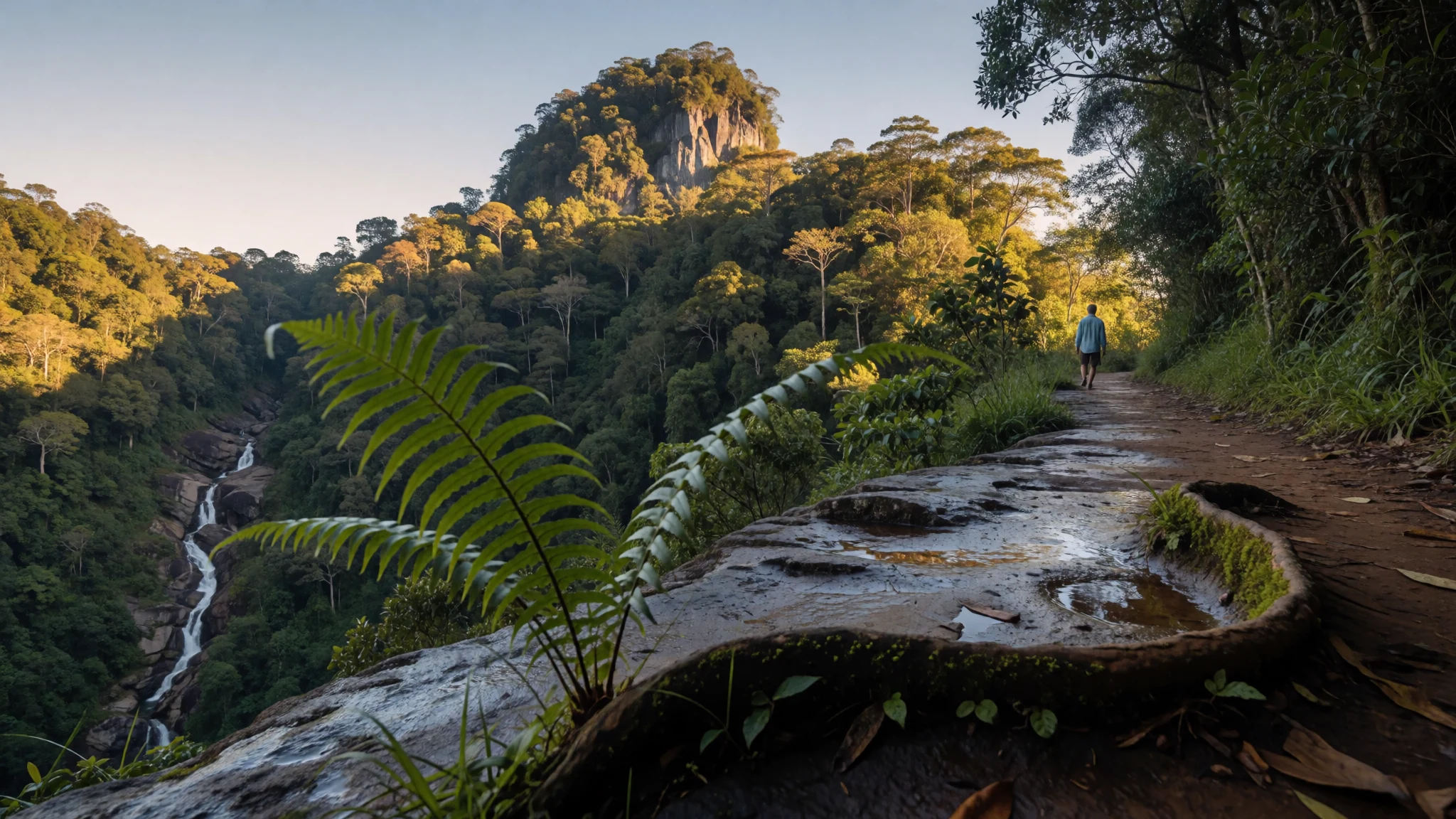
Khao Phanom Bencha is a patch of Krabi rainforest with waterfalls, dragonflies and cool shade, a short drive from the beaches.
The place
Khao Phanom Bencha National Park lies in Krabi Province in southern Thailand, about 20 kilometres north of Krabi town. It spreads across parts of three districts: Krabi, Khao Phanom and Ao Luek. The park takes its name from the mountain of Khao Phanom Bencha, whose summit reaches 1,397 metres and which belongs to a range running roughly north to south.
The protected area is about 50 square kilometres, small by national park standards but dense with life. What it guards is virgin rainforest, the kind with buttressed trunks, hanging roots, mossy rocks and a canopy that closes out most of the sky. Streams run off the slopes and drop over rock steps as waterfalls, which is what most day visitors come to see.
The feel here is quite different from the Krabi coast. Down at the shore it is limestone cliffs, boats and sunburn. Up in the park the air under the trees is cooler and damp, the sound is water and insects, and the light is green. Photographs from the park show dragonflies resting on twigs, fungi on rotting wood and layered cascades in pools of brown-tinged water.
It is a place for a half day or a full day rather than a long stay, and it pairs easily with a beach base. Because it is a rainforest, expect humidity, slippery rock and the occasional downpour whatever the month. The park was established in 1981, and the mountain behind it still holds wildlife that is rare elsewhere.
Its story
Khao Phanom Bencha National Park was established in 1981, at a time when much of southern Thailand's lowland forest was being cleared for rubber and oil palm. Setting aside the mountain meant keeping its upper slopes as forest rather than plantation, and that decision is why anything is left to visit today.
The name belongs to the mountain first. Khao simply means hill or mountain in Thai, and the park was named after the peak rather than the other way round. The Thai name appears on signs as อุทยานแห่งชาติเขาพนมเบญจา, which helps when you are asking a songthaew driver for directions.
Protection matters here because rainforest on a steep range does two jobs at once. It shelters animals and plants that cannot live in farmland, and it holds the soil and slows the rain so that streams run clean and steady through the year. The waterfalls that visitors enjoy are a visible sign of that work.
Today the park sits in a landscape shaped by tourism. Krabi's beaches, islands and cliffs draw most of the region's visitors, and the park is the quieter side trip, used by people who want some shade and a swim in a forest pool. That balance is delicate. Rangers want people to enjoy the falls without trampling banks, leaving rubbish or feeding animals.
The story of Khao Phanom Bencha is therefore a modest one: a mountain forest kept intact on the edge of a busy tourist coast, a few decades on, still green and still wet.
What to see
- Huay Toh Waterfall — Khao Phanom Bencha National Park
Huay Toh is the waterfall most often photographed in Khao Phanom Bencha National Park. Water runs over a series of rock ledges into pools beneath the trees. Go early, when the shade is cool and the rocks are quieter. Wear shoes with grip, because wet stone is the main hazard here.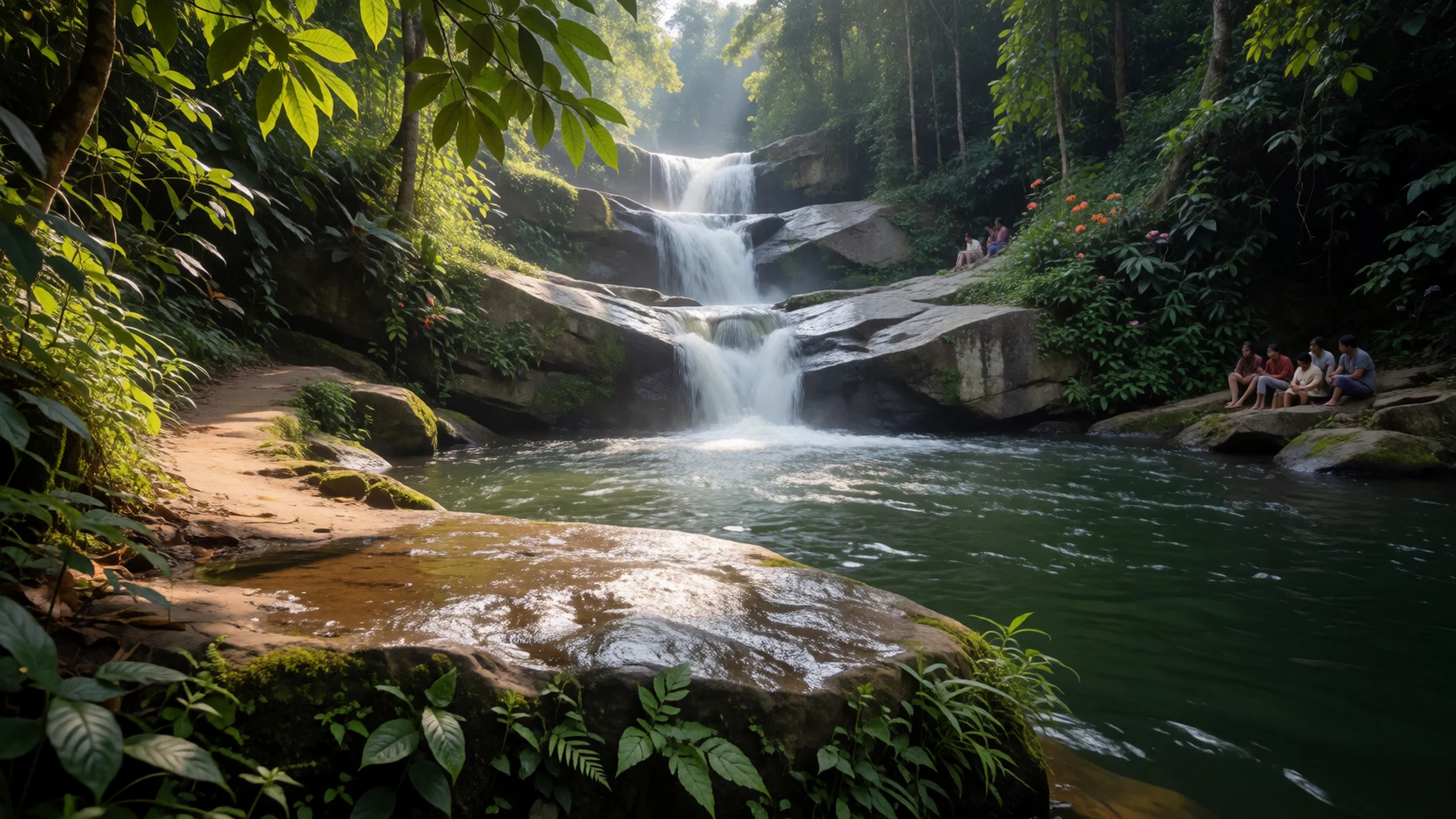
- The three-tier cascades — Khao Phanom Bencha National Park
One of the park's falls comes down in several stages, so you can walk up beside it and see the water change character at each level. Lower pools suit a paddle; higher ones are narrower and steeper. Take your time on the path, as roots and mud make the going slower than it looks.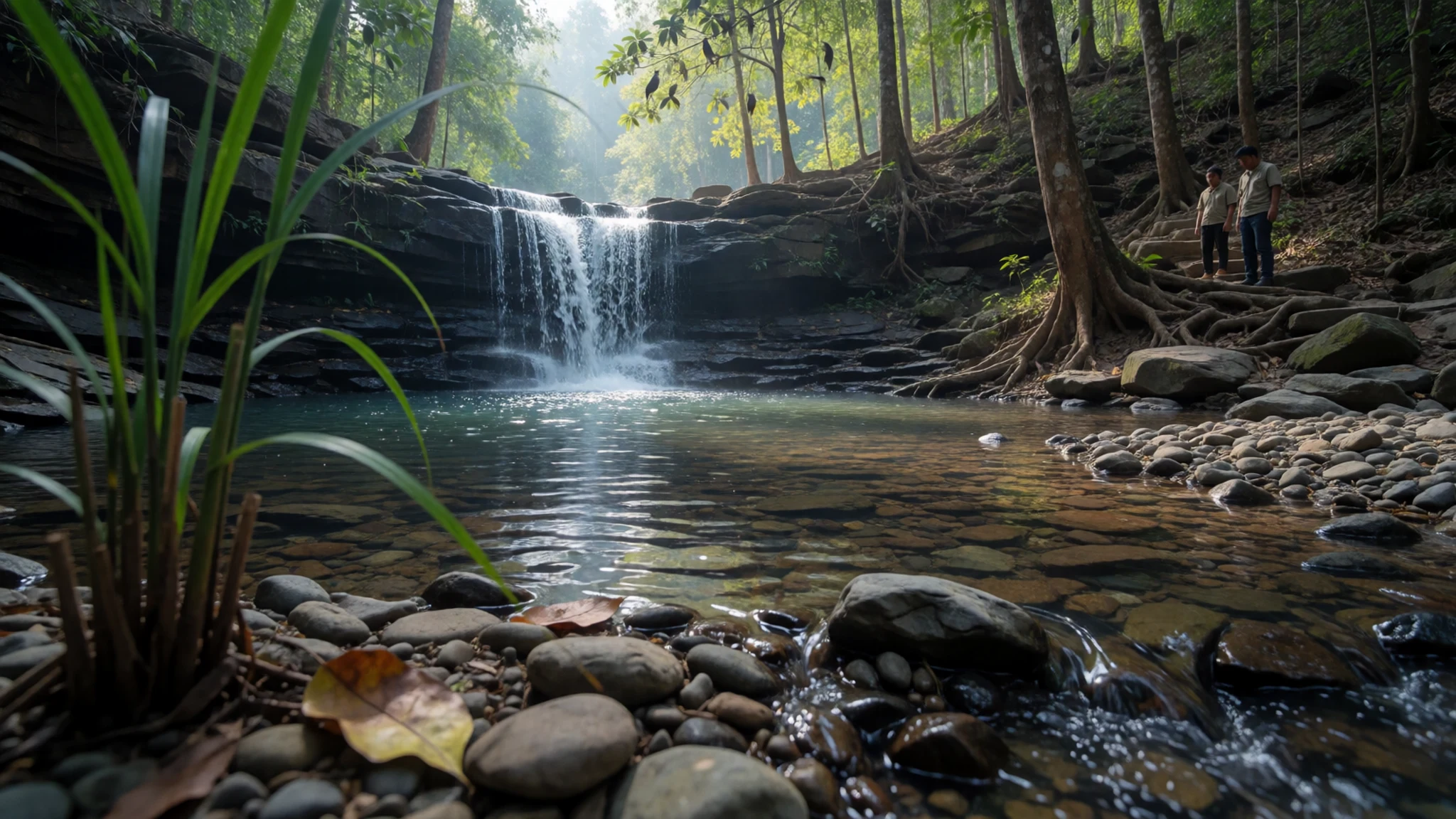
- Dragonflies by the streams — Stream banks in the park
Where sunlight reaches the streams, dragonflies perch on twigs and stones and dart out over the water. They reward slow walking and a bit of patience. Stand still near a sunny gap and let them settle. A phone camera will do, though a zoom lens helps with the shyer ones.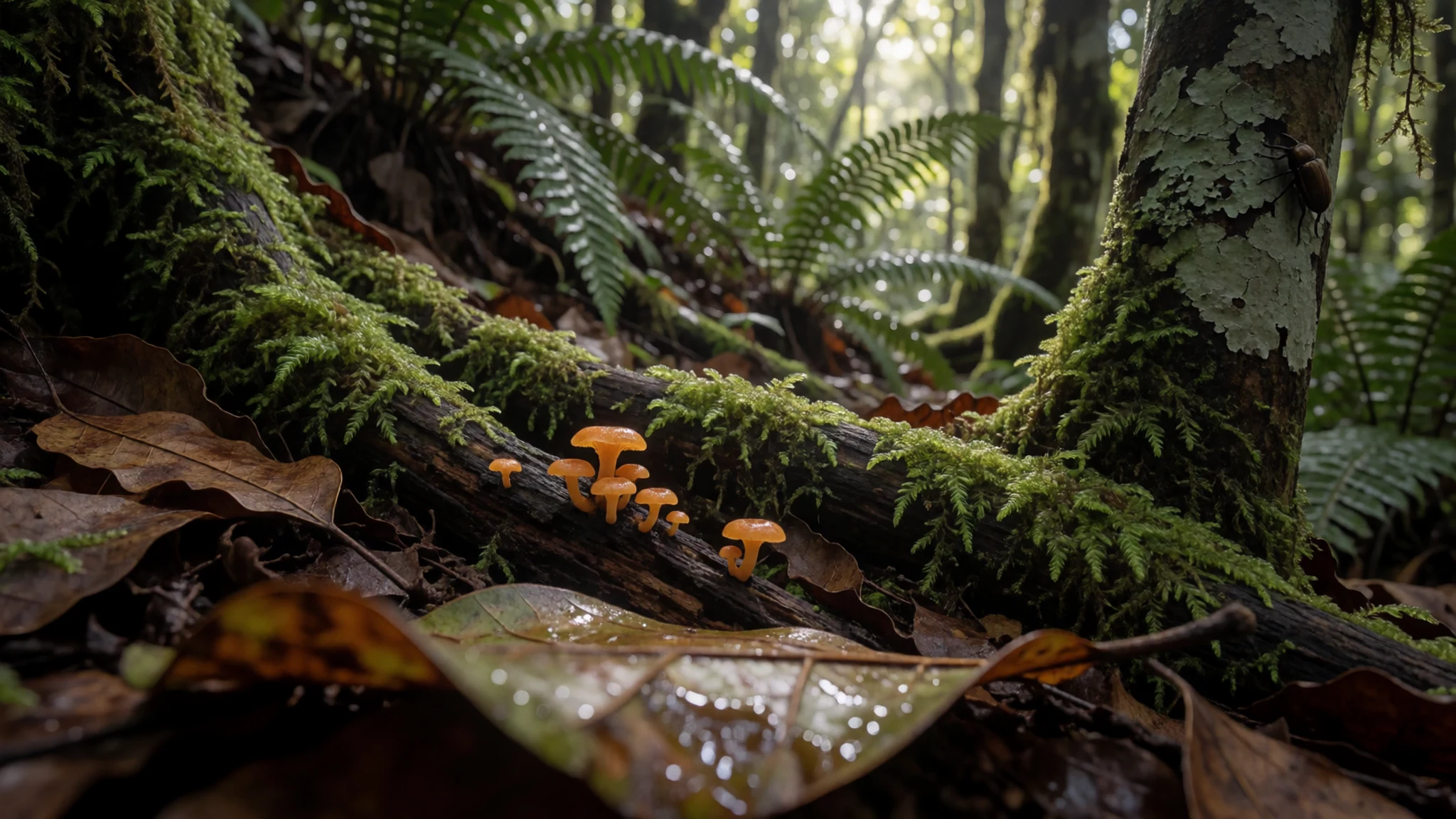
- Fungi and the forest floor — Forest trails
Rainforest means rot, and rot means fungi. After rain, look at fallen logs and damp leaf litter for caps in odd colours and shapes. Photographs from the park show some striking ones. Look, photograph and leave them where they grow; some are poisonous and all are part of the forest's recycling.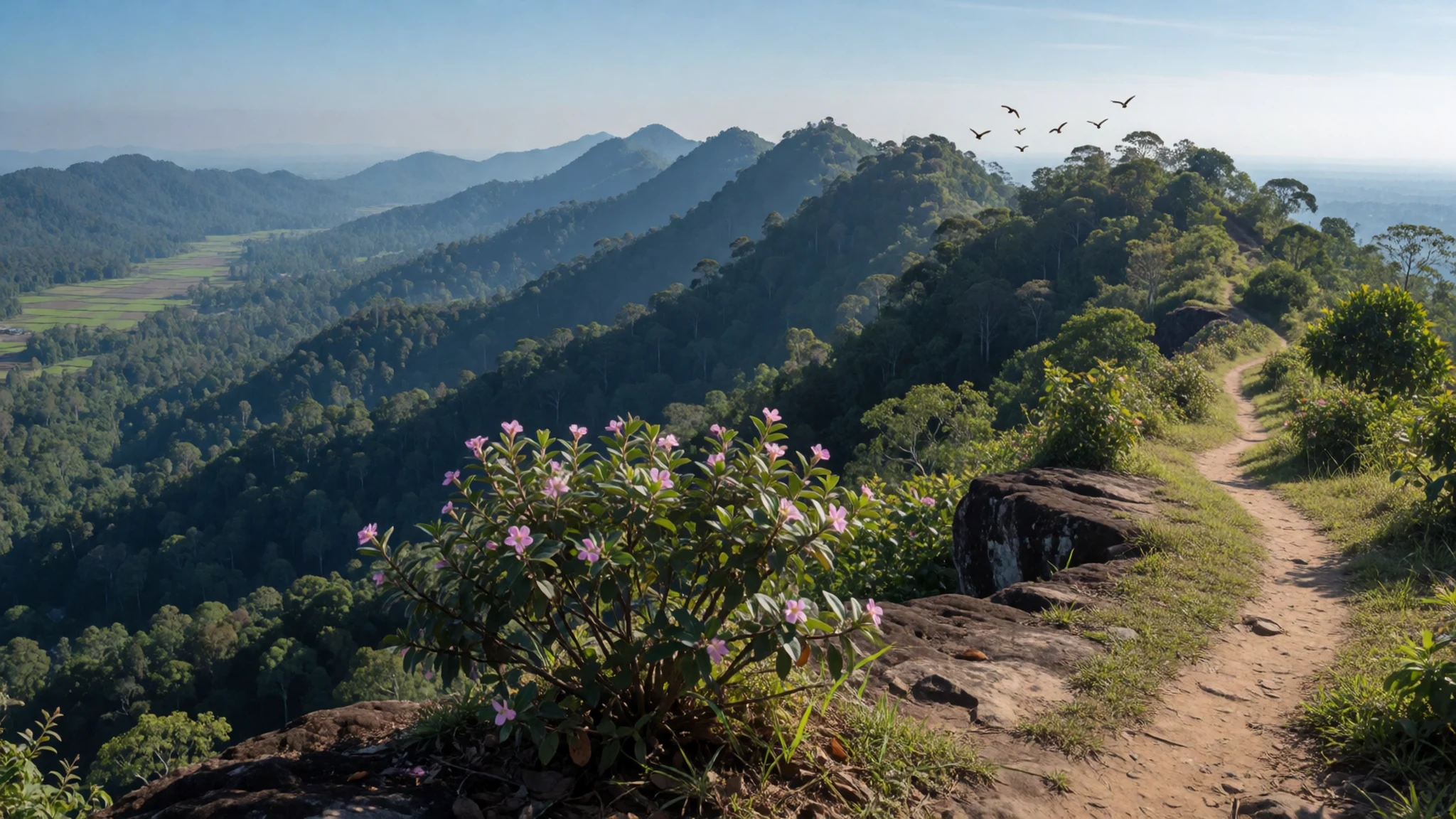
- Forest wildlife, seen or heard — Forest trails
The park protects rare wildlife, but most of it is shy and hard to see. You are more likely to hear birds and insects than to spot a large animal. Walk quietly, keep to paths and look at the undergrowth, where small creatures turn up in photographs from the park.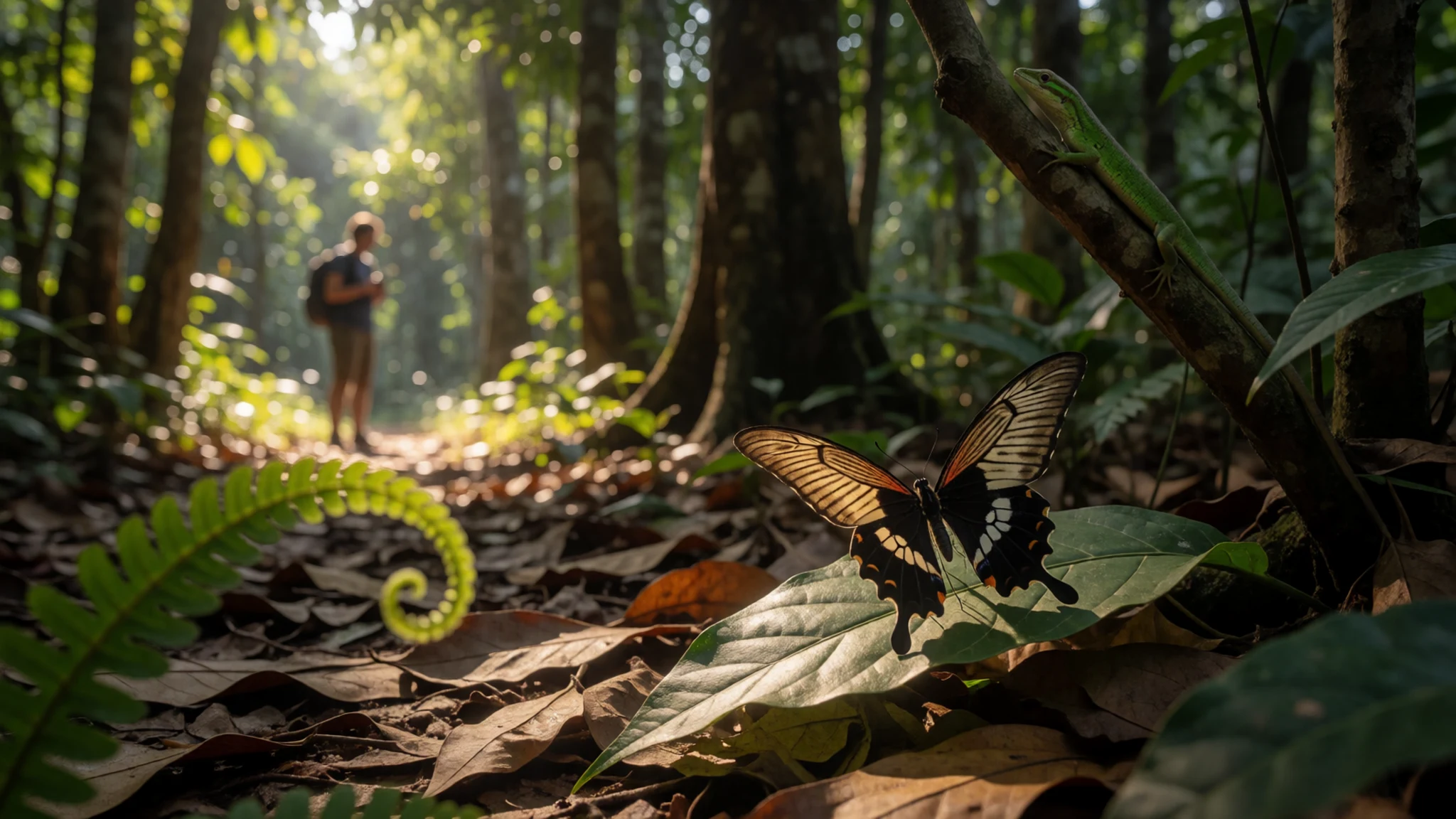
Culture
Khao Phanom Bencha National Park sits in a part of Thailand where the usual national habits of courtesy apply, even on a forest path. Thais are generally friendly and polite, and tend to avoid open criticism or confrontation, a habit tied to the idea of saving face. A smile may mean goodwill rather than agreement, so if something matters, such as the price of a ride or what time a driver will return, say it plainly and calmly and check that it has been understood.
Idioms and euphemisms can be misunderstood, so short, clear sentences work best. Raising your voice almost never helps. Patience and good humour usually do.
The park itself is a government-protected area, managed by rangers who care about the forest. Their rules are simple: stay on marked routes, take your rubbish out, do not pick plants or disturb animals. In practice the culture of a Thai national park is a shared one. Families picnic by the pools, groups of friends swim and chat, and people generally keep the mood relaxed rather than loud.
Southern Thailand has a large Muslim population as well as Buddhist communities, so you may meet different local customs in the villages around the park. Modest dress and a polite greeting go a long way.
In the park, keep to the marked paths, carry out every piece of rubbish and keep your voice low so the wildlife stays near.
What to wear
Khao Phanom Bencha National Park is not a place with a particular costume, but the wider region has clothing traditions worth knowing. Traditional Thai dress includes the pha sin, a wrapped skirt of woven cotton or silk, and the chut thai, a formal outfit worn at weddings, ceremonies and festivals. Textiles range from plain cotton to patterned silk, and in the south you will often see batik-style cloth with printed or waxed designs, especially among Muslim communities. These are worn for celebrations and official occasions rather than daily life.
What people wear now is practical. In towns around Krabi, most people wear light shirts, T-shirts, trousers or knee-length skirts, with sandals or trainers. Rangers wear uniforms. Families heading to the waterfalls wear quick-dry clothing and swimwear, often with a T-shirt over it. In villages, dress is more covered than on the beaches.
For a visitor, the climate decides everything. Wear light, quick-drying clothes, since humidity means cotton stays damp. A long-sleeved top and long trousers help against insects and scratchy undergrowth, while a swimsuit and small towel suit the pools. Footwear matters most: choose trainers or sandals with proper grip, because wet rock is slippery. Bring a light rain jacket or poncho, a hat and insect repellent. Beachwear is fine at the pools, but cover up on the way to and from the park and in nearby villages, where shoulders and knees are best covered.
What to eat
- Pad Thai (ผัดไทย) — Street stalls and evening markets in Krabi town
Stir-fried rice noodles with egg, tofu, peanuts and lime, a staple of street stalls across Thailand. It is cheap, quick and a safe first order for newcomers. In Krabi, look for stalls in the town's evening markets before or after a day at the park.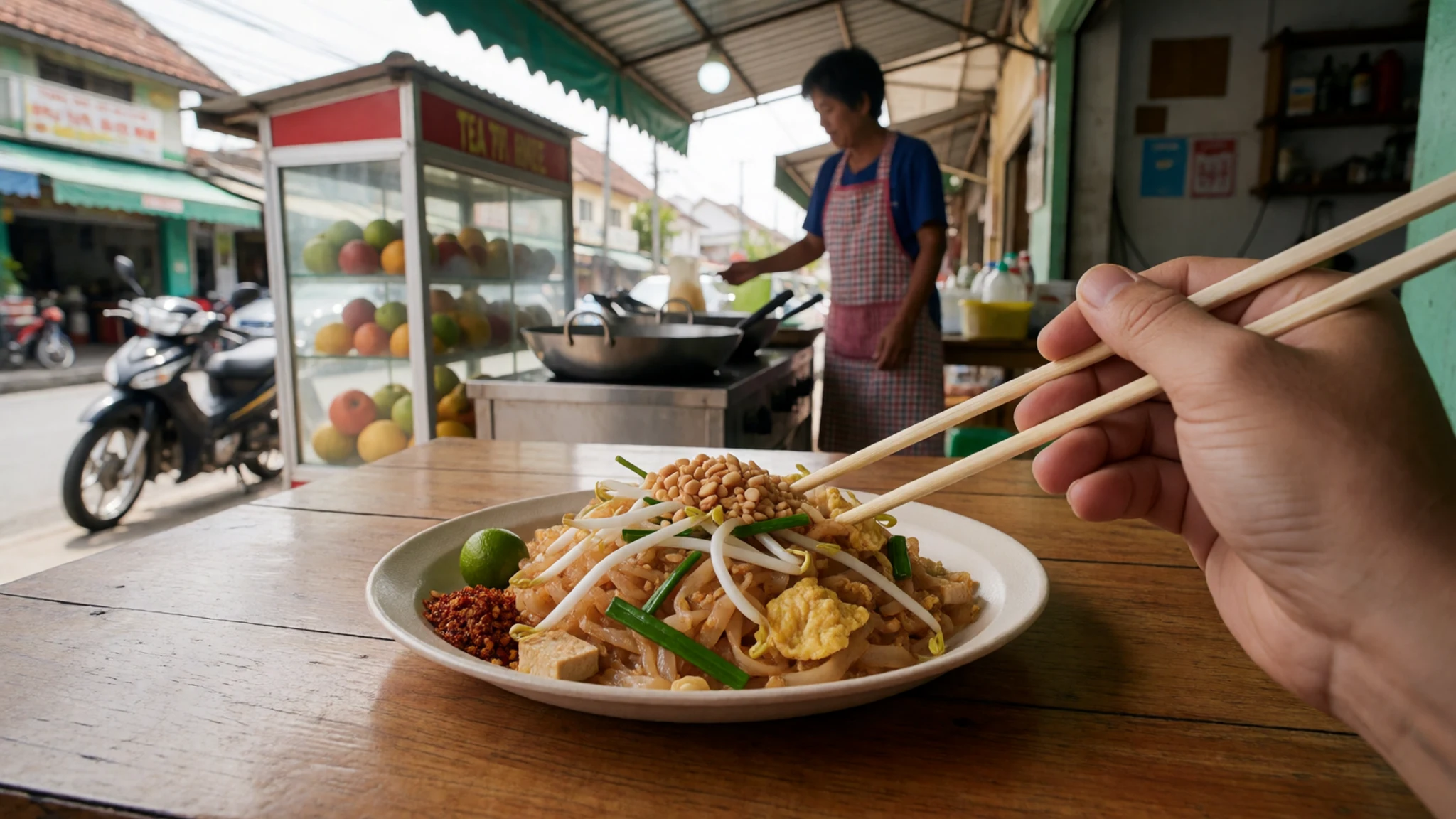
- Curries with rice — Rice-and-curry shops near Krabi town
Southern Thai curries tend to be hot, rich and made with fresh herbs, served over rice in simple eateries. Point at what looks good in the display trays. Ask for milder if you are unsure, because spice levels here can surprise even seasoned curry eaters.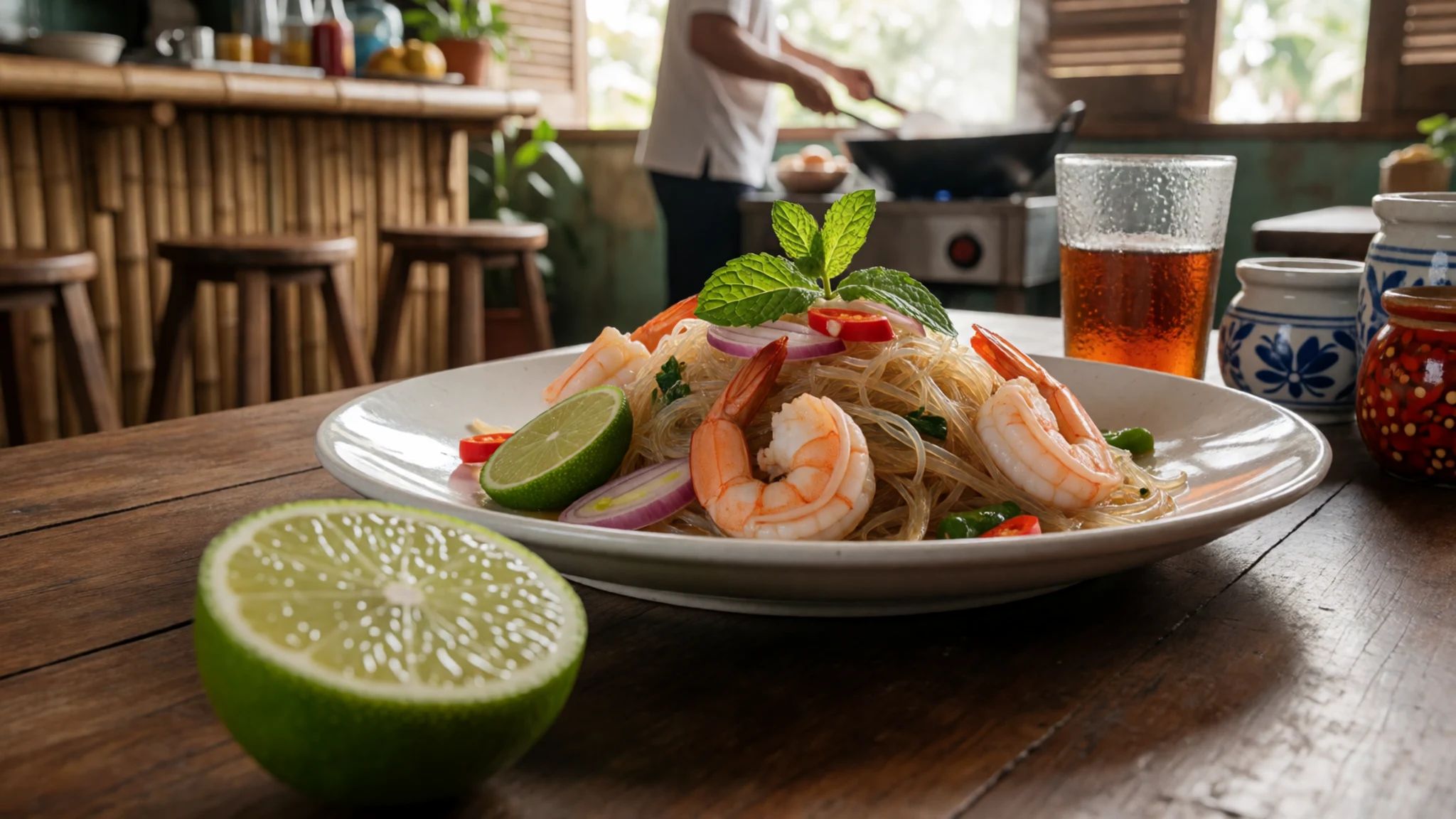
- Fresh fish — Seafood eateries along the Krabi waterfront
Close to the coast, fish is grilled, steamed or fried with chilli, garlic and lime. Pick from the day's display and have it cooked to order. It makes a good dinner after a hot day in the forest, usually shared among a table. - Stir-fried dishes — Small roadside eateries on the way to the park
Fast, hot wok dishes with basil, garlic, chilli or vegetables, served over rice with a fried egg if you ask. They are the everyday lunch of working Thailand and easy to find near any bus stop or park entrance. - Fruit shakes — Market stalls and cafes in Krabi town
Blended fruit with ice, sold from carts and cafes across the country. After a humid walk, a cold shake of mango, watermelon or pineapple is worth more than any sports drink. Ask for less sugar if you prefer.
Plan it
Best time. November to March is generally the drier, more comfortable stretch for southern Thailand, with fewer downpours and more reliable trails. The rainy months make the forest lusher and the falls fuller but also bring slippery paths and leeches, so go with care.
How long. 1
Getting there. Fly to Krabi International Airport, or into Bangkok and connect south. From Krabi town the park is about 20 kilometres north; the last leg is by taxi, hired car, motorbike or a pre-arranged tour. Ask your accommodation about transport.
Budget. low
Tips
- Go early in the morning for cooler air and quieter pools
- Wear shoes with good grip for wet rock
- Bring water, insect repellent and a rain layer
- Carry some cash for entry and snacks, and check the official park pages for current fees and opening times
- Download an offline map, as phone signal can be weak under the trees
Etiquette
- Keep to marked paths and take all rubbish with you
- Do not feed or disturb wildlife, or pick plants and fungi
- Keep noise low, and cover up when passing through villages
Nearby
Sources
- Wikidata Q5193022 (CC0)
- Wikipedia: Khao Phanom Bencha National Park (rev 1362779829) (CC BY-SA 4.0)
- Wikivoyage: Thailand (rev 5399396) (CC BY-SA 4.0)
- Photo: Three Waterfalls, Caitriana Nicholson (CC BY-SA 2.0)
- Photo: Huay Toh Waterfall, Thajsko (CC BY 3.0)
- Photo: Beastie, Caitriana Nicholson (CC BY-SA 2.0)
- Photo: Dragonfly, Caitriana Nicholson (CC BY-SA 2.0)
- Photo: Dragonfly, Caitriana Nicholson (CC BY-SA 2.0)
- Photo: Fungi, Caitriana Nicholson (CC BY-SA 2.0)
- Photo: Fungi, Caitriana Nicholson (CC BY-SA 2.0)
- Photo: Huay Toh Waterfall, Thajsko (CC BY 3.0)


