Keuka Lake
Keuka Lake, United States
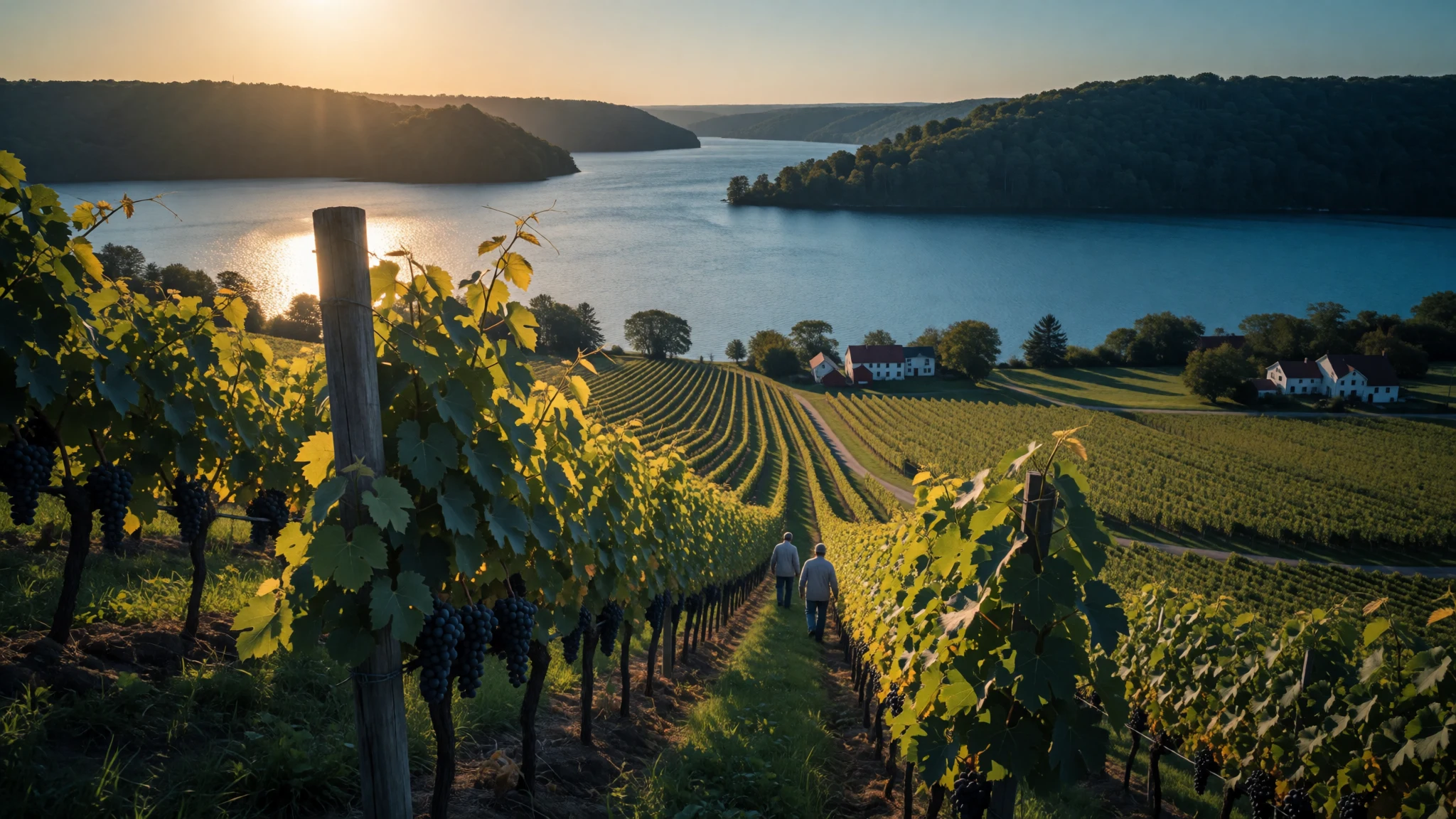
Keuka Lake is a Y-shaped Finger Lake of quiet water, steep vineyards and small villages, good for a slow few days.
The place
Keuka Lake is a Finger Lake in central New York State, split between Steuben and Yates counties, and its outline is what sets it apart. Most of the region's lakes are long, straight slots; Keuka forks into a Y, and that bend gave early settlers the name Crooked Lake. The present name comes from the Seneca language and is usually glossed as 'canoe landing' or 'lake with an elbow'. The water runs about 32 km from end to end but stays narrow throughout, so the opposite shore is always in view. Its shoreline is about 97 km, the surface sits 218 m above sea level, and the deepest point is about 57 m. At the northeastern tip, a short outlet stream leaves through Penn Yan and heads for Seneca Lake at Dresden. The land around is gentle farm country and steep vineyard slopes, with small villages rather than resorts: Hammondsport at the southern end, Penn Yan at the northern. Much of the shore is lined with private cottages, so public access points matter, and there are fewer of them than the scenery suggests. This is not a place with one big sight. The pleasure is the slow loop of lakeside roads, a boat or kayak in summer, and a tasting room in the afternoon. Rochester, the nearest large city, is the usual starting point for visitors, and the surrounding country is known as the western Finger Lakes.
Its story
Keuka Lake's recorded history begins with the Seneca, part of the Iroquois confederacy, who lived along its shores long before European settlement and knew it as a canoe landing. In 1779, during the American Revolutionary War, the Sullivan Expedition defeated British forces and their Iroquois allies in the region. Soldiers returning east spoke warmly of the soil and scenery, and settlers followed to grow wheat and build grist mills on the outlet. In 1788 a preacher known as the Public Universal Friend founded the township of Jerusalem nearby with a small band of followers. The outlet's drop in height towards Seneca Lake made it good mill country, and by 1790 the community had grown to a few hundred people. Mills multiplied along the stream, and Penn Yan grew up around them. In 1829 the state approved a canal linking Keuka to Seneca Lake, and it opened in 1833, tying the lake into the wider Erie Canal network. Steamboats shuttled between Penn Yan and Hammondsport, often serving the wine trade, until a railway reached Hammondsport in 1872 and took over the freight. Vineyards spread across the hillsides from the middle of the nineteenth century, and the lake became an early centre of New York wine. At the start of the twentieth century, the aviation pioneer Glenn Curtiss tested some of the first flying boats on its surface.
What to see
- Hammondsport — Southern end of the lake
Hammondsport sits at the southern tip of Keuka Lake and is a convenient base for a short stay. A small square, a harbour full of boats and several wine shops are all within walking distance. The village is also tied to Glenn Curtiss, whose flying boats were tested on this water; a local museum covers his work, so check its official site for opening times.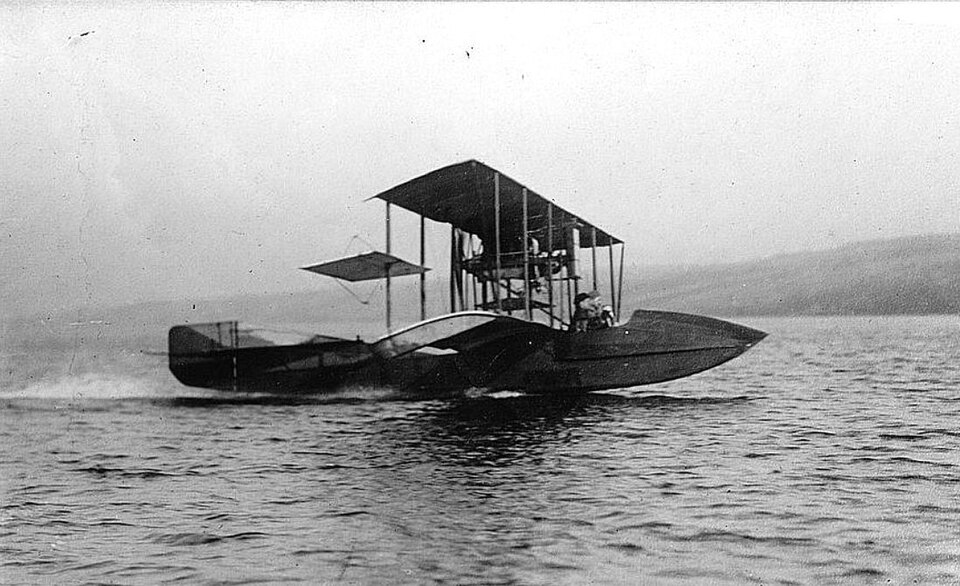
- Penn Yan and the Outlet — Northern end of the lake
Penn Yan, at the northern end, is the lake's working town, with a main street, a marina and shops that serve local farms. The Keuka Lake Outlet runs through it, and the old mill sites along the stream show how the settlement grew before tourism. A stroll beside the water makes an easy, quiet hour.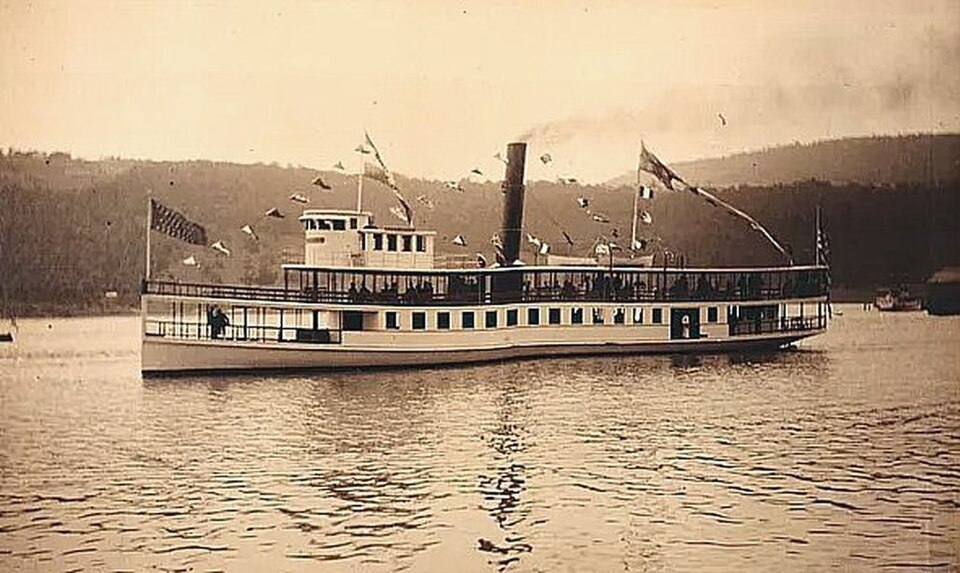
- Bluff Point and the fork — Middle of the lake, between the two arms
Bluff Point is the wooded headland that divides Keuka Lake into its two arms. Roads on either side climb through vineyards, and from the higher stretches the Y-shape becomes clear, with blue water on both flanks. It is a good place to understand why early settlers called the lake crooked.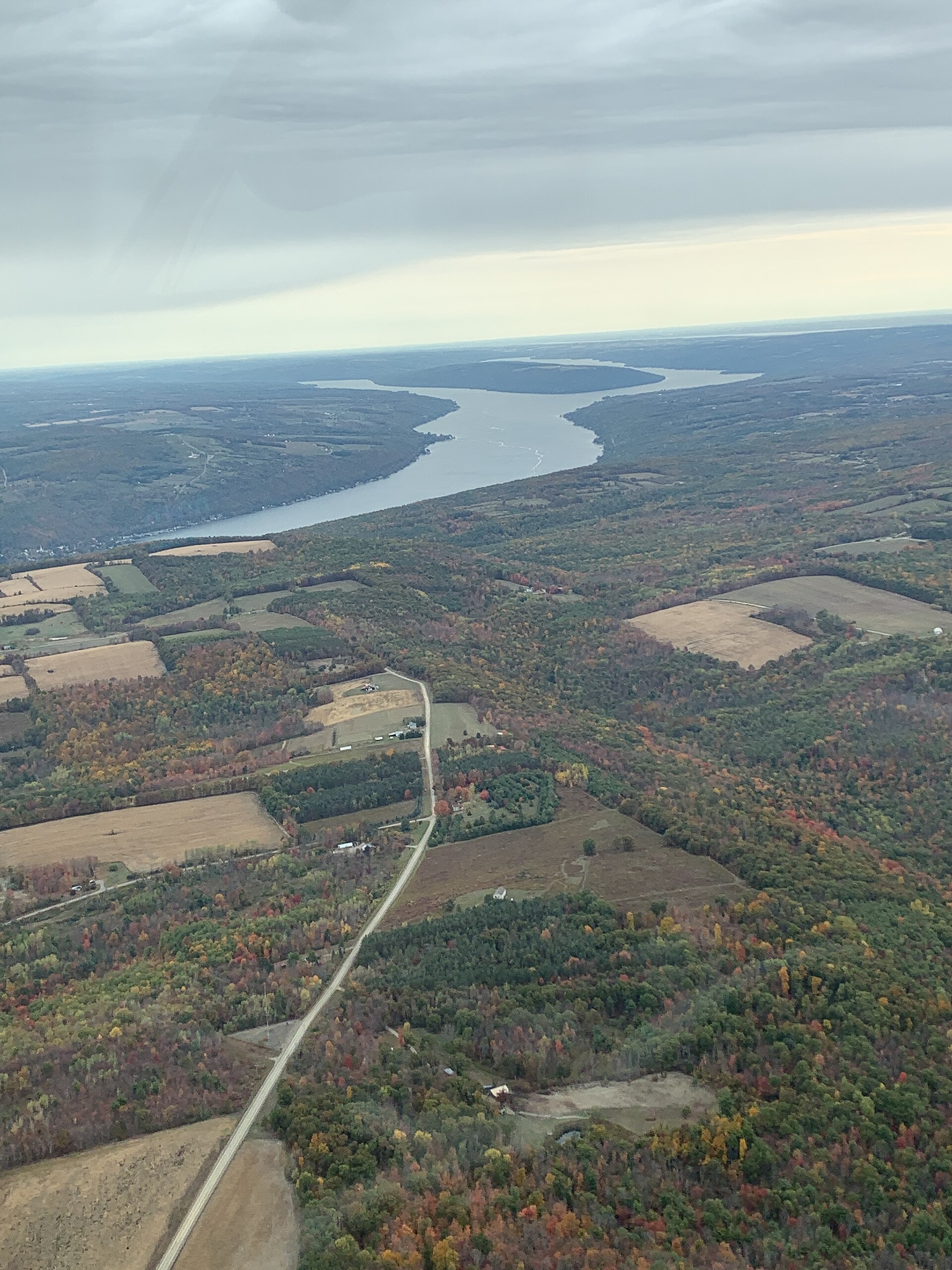
- Branchport and the western arm — Head of the western arm
Branchport lies at the head of the western arm, which is quieter than the main basin. Farms and small cottages rim the water, and calm mornings suit kayaking when the surface is flat. Public launches are limited, so check a local map before setting out, and keep clear of private docks.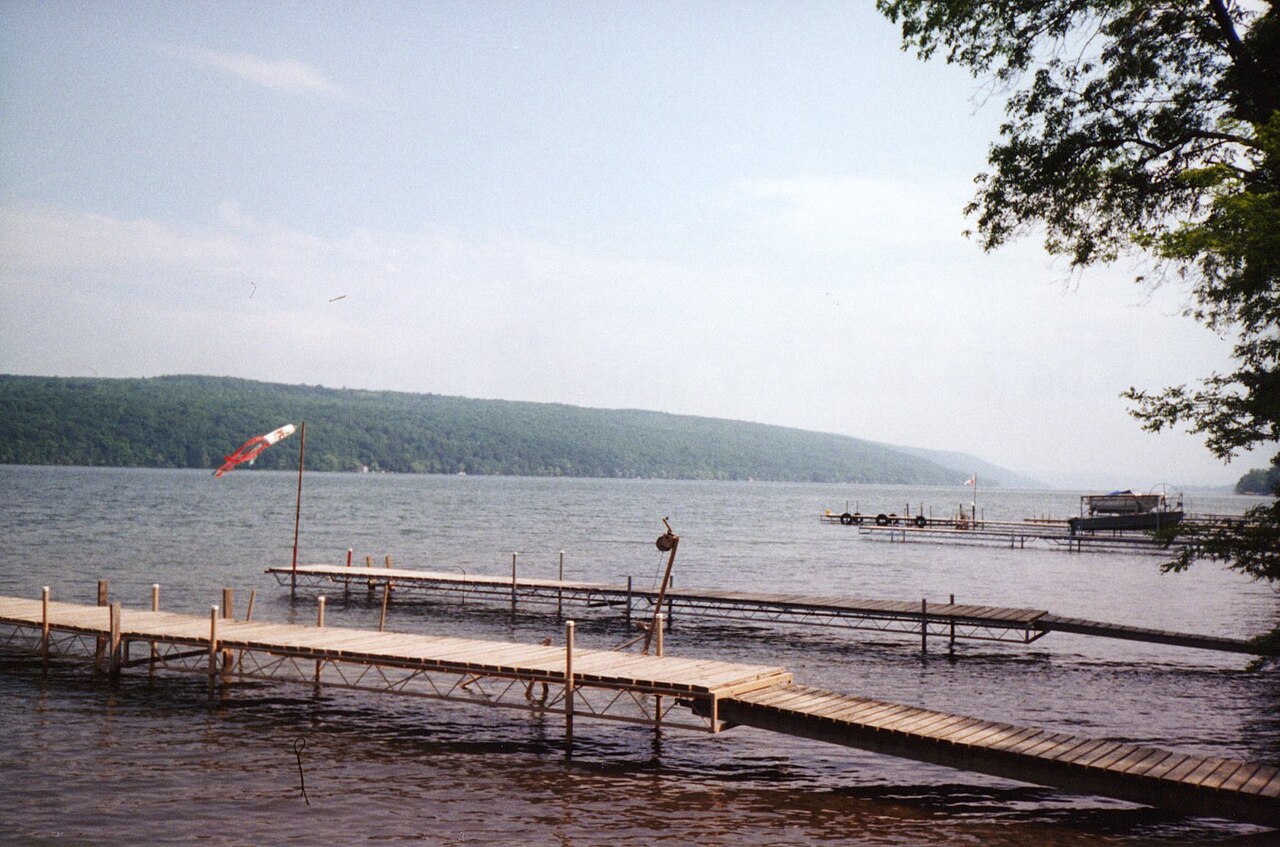
- Lakeside wine roads — Shore roads on both sides of the lake
The roads along the western and eastern shores link family-run wineries, many with tasting rooms that look down on the lake. Riesling is among the grapes grown on these slopes. A relaxed day covers a few stops; opening hours vary by season, so check each winery's own website before driving out.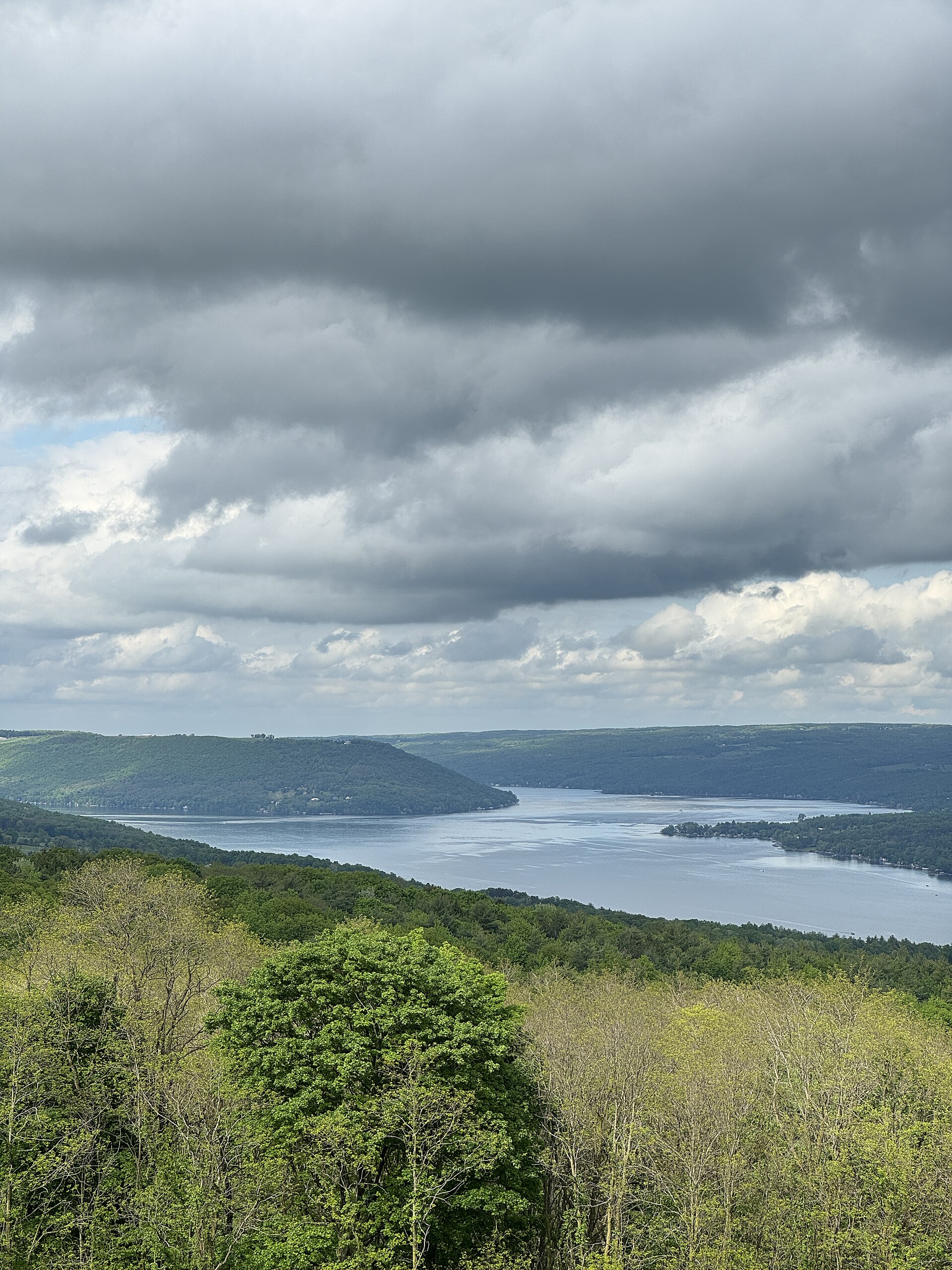
Culture
Keuka Lake's culture is rural, agricultural and quietly proud of its wine. The Seneca, whose word for the lake survives as its name, remain part of the region's identity, and their history is told in local museums and on interpretive signs. Later settlers brought grain farming and then grapes, and many of the wineries today are family-run. Summer life revolves around the water: cottages, pontoon boats, fish fries, village fairs and evenings on the dock. Around Penn Yan, Mennonite and Amish families farm and run roadside stands, and horse-drawn buggies share the lanes with cars. Wine culture here is conversational. Staff in tasting rooms usually pour, explain the vintage and talk about the season, and there is no pressure to buy, though a bottle is a courteous thank-you at a small producer. Tipping is expected in restaurants, and a small tip for a tasting-room host is welcome too. The pace is slow, evenings are quiet, and many small businesses keep shorter hours outside the summer and early-autumn season. Visitors who treat the lake as a working landscape rather than a theme park tend to have the best time. Slow down for horse-drawn buggies on country roads, and ask before photographing Amish or Mennonite people.
What to wear
Keuka Lake has no single regional costume, so dress here splits into heritage clothing, everyday wear and visitor practicality. The Seneca have traditional clothing that includes ribbon shirts and ribbon skirts, made of cotton and trimmed with bands of satin ribbon, along with beadwork on moccasins and bags. These are worn mainly at ceremonies, gatherings and community events rather than daily, and they are not costumes for visitors to imitate. The Amish and Mennonite families near Penn Yan wear plain dress, mostly in cotton and wool: women in solid-coloured dresses with caps or bonnets, men in dark trousers, suspenders and straw or black hats. Most other locals dress for weather and work: jeans, flannel or fleece, rain jackets, boots on the farm, and boat shoes or sandals in summer. Winery visits are casual. Visitors should pack layers, because summer days are warm, evenings by the water are cool, and autumn and winter turn properly cold, so bring a waterproof and a warm hat from late autumn. Wear closed, grippy shoes for vineyard paths and boat decks, and bring a sun hat and sunscreen for time on the water. Swimwear belongs on the beach or a private dock, and a shirt or cover-up is expected in villages, shops and tasting rooms.
What to eat
- Riesling and other Finger Lakes wines — Tasting rooms along the shore roads
Cool-climate whites are the lake's calling card, and Riesling is the usual starting point, alongside other grapes that tolerate cold winters. A tasting flight is the standard way in. Expect crisp, bright bottles, dry to off-dry, that go well with fish and cheese. - Grape pie — Bakeries and farm stands in early autumn
A seasonal pie of local grapes, often Concord, with the skins and pulp cooked down with sugar into a sharp, jammy filling. It appears around the Finger Lakes in early autumn, when the grapes are picked, and sells out quickly at popular stands. - Cheese and charcuterie boards — Winery cafés and tasting rooms
Local cheeses, cured meats, bread and pickles are served on a board at many winery cafés. They make an easy lunch between tastings, and they soften the effect of several glasses. Ask which items come from nearby producers. - Sweet corn, peaches and berries — Roadside stands on the farm lanes around Penn Yan
In summer, farm tables and barns sell sweet corn, stone fruit and berries, followed by apples as autumn arrives. Many stands run on an honesty box, so carry small notes. The fruit is usually picked that morning. - Apple cider doughnuts — Orchards and farm markets in autumn
Warm, cinnamon-sugar doughnuts made with pressed apple cider are an autumn habit in this part of New York. They are best eaten fresh from the fryer, often with a cup of cider, while looking over an orchard.
Plan it
Best time. June to September for warm water, boating and long evenings; late September and October for autumn colour and the grape harvest. Winters are cold and snowy, and many tasting rooms and boat services cut back their hours then.
How long. 2–3
Getting there. Greater Rochester International Airport has scheduled flights and is the nearest practical airport; Penn Yan Airport takes private and chartered aircraft only. From Rochester, drive south through the western Finger Lakes to Penn Yan or Hammondsport. The Southern Tier Expressway passes just south of the lake. Public transport is thin, so a car is almost essential.
Budget. mid
Tips
- Book rooms well ahead for summer weekends and for October, when colour and harvest bring the crowds
- Nominate a driver before the first tasting, or book a driver or tour for the wine roads
- Carry a card for wineries and restaurants, and small cash for farm stands and honesty boxes
- Check each winery's official website for hours, because many close early or on weekdays outside the main season
Etiquette
- Slow down for horse-drawn buggies and give them plenty of room
- Ask before photographing local people, especially Amish and Mennonite families
- Stay off private docks and shoreline, and use public access points for the water
Nearby
Sources
- Wikidata Q1335725 (CC0)
- Wikipedia: Keuka Lake (rev 1386702205) (CC BY-SA 4.0)
- Wikivoyage: Keuka Lake (rev 5172762) (CC BY-SA 4.0)
- Photo: Lake Keuka from north-western shore of Branchport arm, H.G. Judd (CC BY 3.0)
- Photo: Keuka Lake Fork, May 2024, Acurarri (CC BY-SA 4.0)
- Photo: Relief location map of the USA, Uwe Dedering (CC BY 3.0)
- Photo: Aerial view of Keuka Lake, J. Passepartout (CC BY-SA 4.0)
- Photo: View of Keuka Lake, Theghostofmojo (CC BY 4.0)
- Photo: Steamboat Mary Bell on Lake Keuka (Public domain)
- Photo: Curtiss flying boat on Lake Keuka (Public domain)
- Photo: Keuka Lake topographical map, U.S. Geological Survey (Public domain)


