Kanchanaburi
Kanchanaburi, Thailand
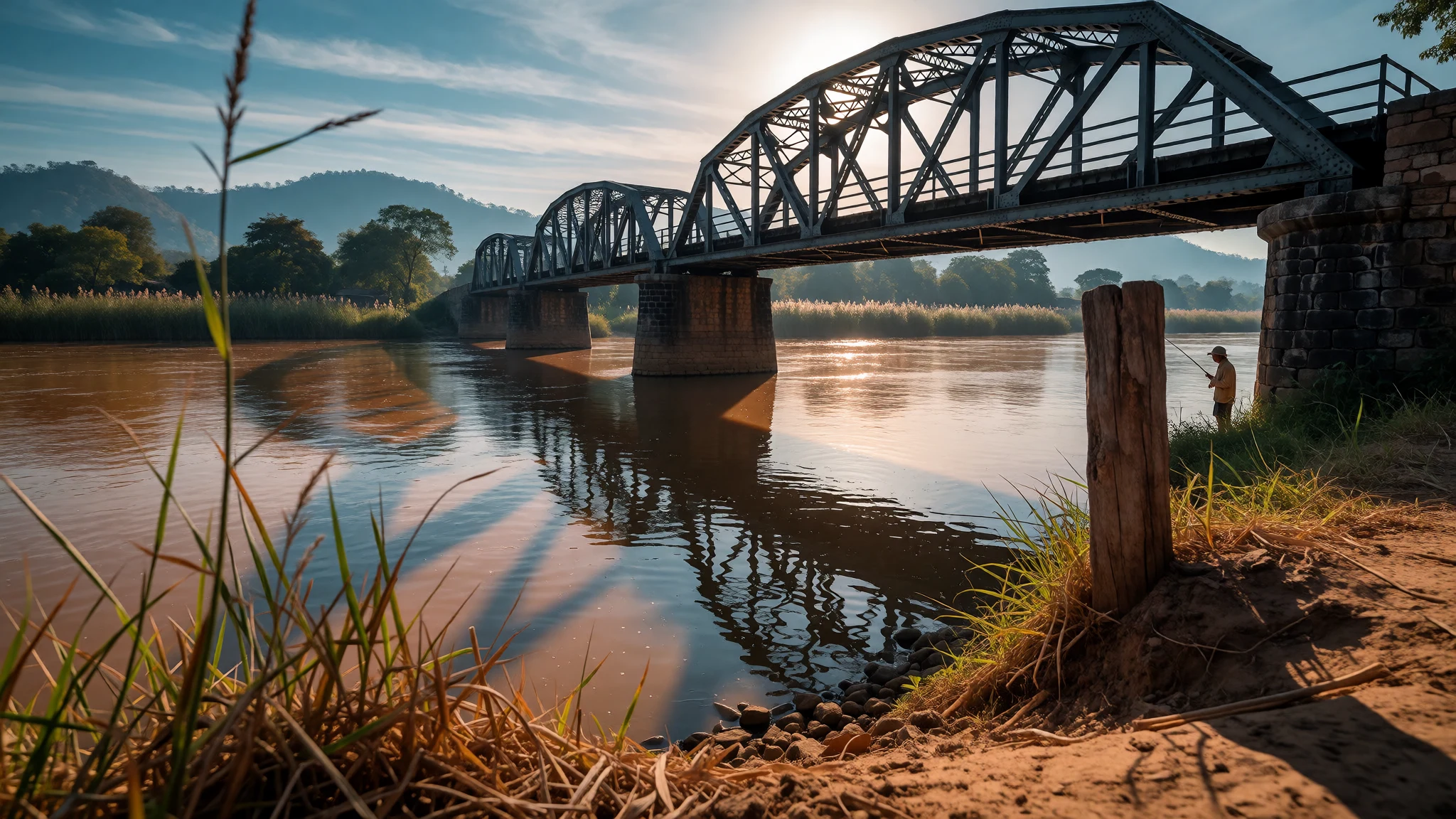
Kanchanaburi pairs a sombre wartime railway story with river life, forested hills and waterfalls, all within reach of Bangkok.
The place
Kanchanaburi is a province in western Thailand, and also the name of its main town, which stands where the Kwae Yai and Kwae Noi rivers meet to form the Mae Klong. Most of the province is not town at all. Forested hills, limestone ridges and river valleys run west towards the Myanmar border, and woodland covers roughly three-fifths of the land. Bangkok is 129 km away, close enough that many visitors come for a single day, though a night or two suits the place better. The town is low-rise and unhurried, with floating guesthouses along the water, a strip of cafés and bars facing the river, and a grid of shops and markets behind. Heat is the main practical fact. It is warm most of the year, steamy in the rains, and midday walks on exposed railway embankments are draining. Crowds gather around the famous bridge and the train that crosses it, especially at weekends and on Thai public holidays, and the waterfalls and national parks fill up on the same days. Further out, roads climb towards Sangkhlaburi and the long wooden Mon Bridge near Khao Laem National Park, where Mon, Karen and Thai communities live side by side. Getting around is easy by Thai standards, with buses, minivans and a slow railway, but distances are larger than they look on a map, so a loose plan and an early start both help.
Its story
Kanchanaburi has a long past that most foreigners only meet in its last chapter. Archaeological finds date human activity here to around the 4th century, with signs of trade with neighbouring regions. The Khmer left a mark too, though little is recorded about it; Prasat Muang Sing, a Khmer-era temple site beside the Kwae Noi, is the clearest trace. Records are thin before the reign of King Rama I, but historians suspect the province mattered strategically in the Ayutthaya period, because it lay on the route Burmese armies took towards the Thai heartland. In 1982, human and elephant bones and swords turned up in Phanom Thuan district, and some people have speculated that this could be the site of King Naresuan's famous clash with the Burmese crown prince, although the usual location is across the border in Suphanburi province. The history that draws most visitors is far more recent. During the Second World War, Japanese forces built a railway between Thailand and Burma, using Allied prisoners of war and large numbers of Asian labourers under brutal conditions. Many thousands died. The steel bridge at Kanchanaburi town became world-famous through fiction and film, and the story is now told through museums, cemeteries and preserved stretches of track. The bridge's curved spans are the originals, while the straight-sided ones were fitted later after wartime bomb damage.
What to see
- Bridge over the River Kwai — Kanchanaburi town, north of the centre
The steel bridge at the edge of Kanchanaburi town is the reason most people come. Its curved spans are original, and a walkway lets visitors cross on foot between passing trains. It is busiest at midday and at weekends, so early morning or late afternoon is calmer and cooler.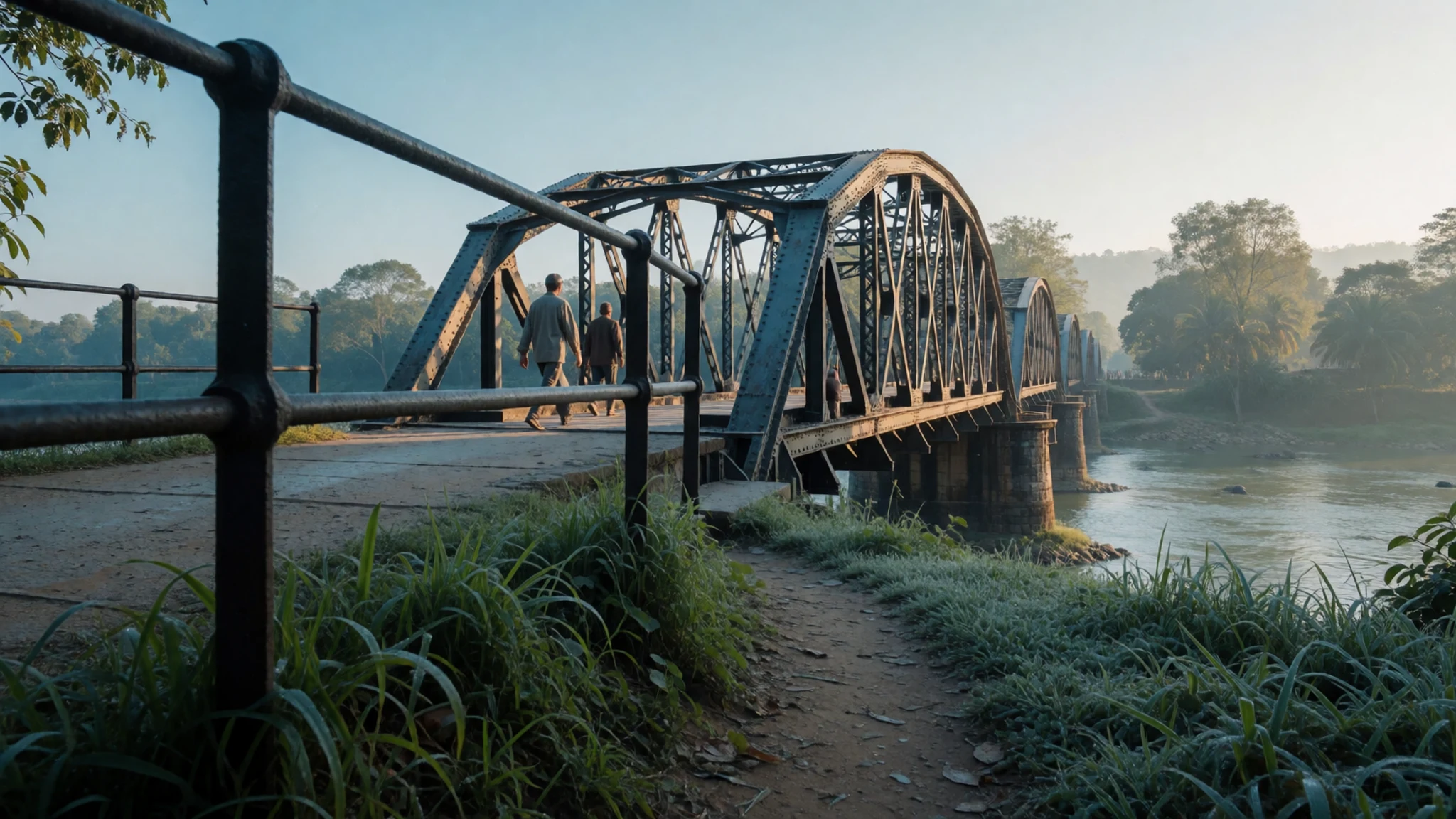
- Kanchanaburi War Cemetery — Kanchanaburi town centre
Neat rows of flat headstones for Allied prisoners who died building the railway lie in a quiet, shaded garden in the middle of town. Names, ages and short inscriptions make the human cost concrete. Dress modestly, speak softly, and allow time for a slow walk.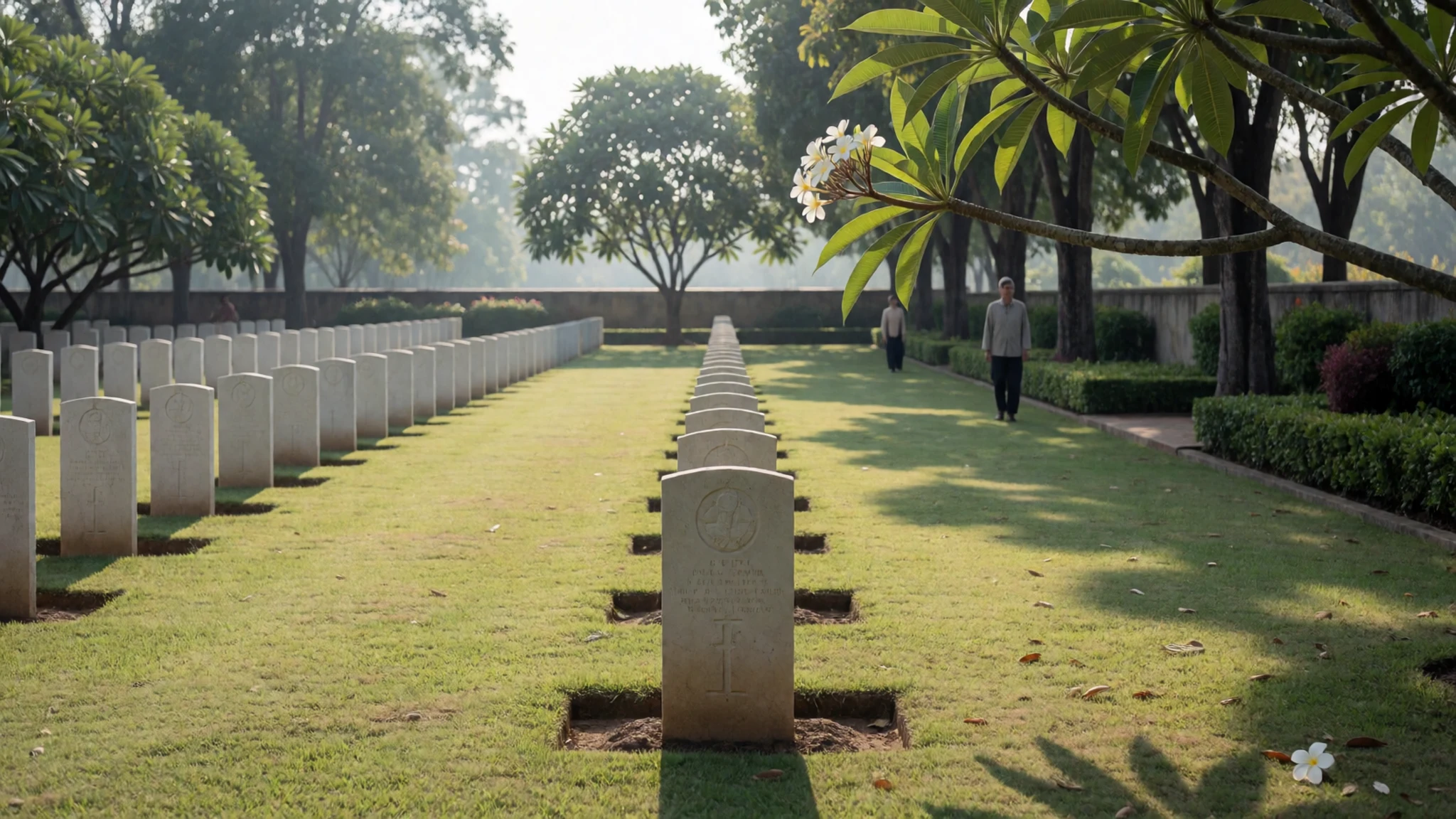
- The Death Railway at the Kwae Noi viaduct — Along the Kwae Noi valley, west of town
Beyond town, the surviving line hugs a cliff above the Kwae Noi on a timber viaduct. Riding the slow train along it is the easiest way to feel the terrain the labourers faced. Seats sell out at busy times, so ask locally about the day's service.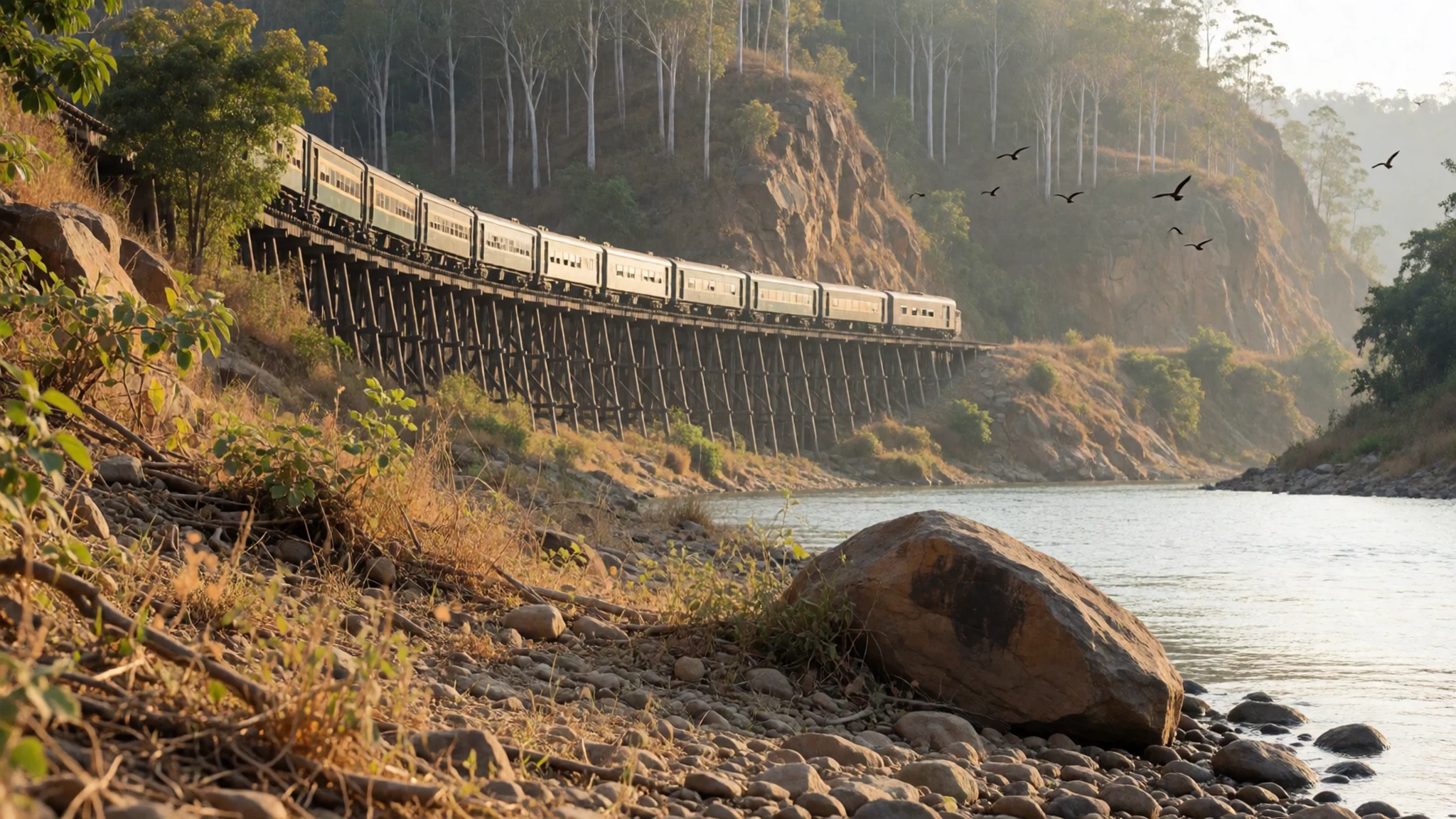
- Prasat Muang Sing — Kwae Noi riverbank, southwest of town
This Khmer-era sanctuary stands on grassy ground by the river, with laterite walls and a central tower in worn stone. It is far quieter than the bridge and gives a sense that the region's history stretches well before the railway. Bring a hat, as shade is limited.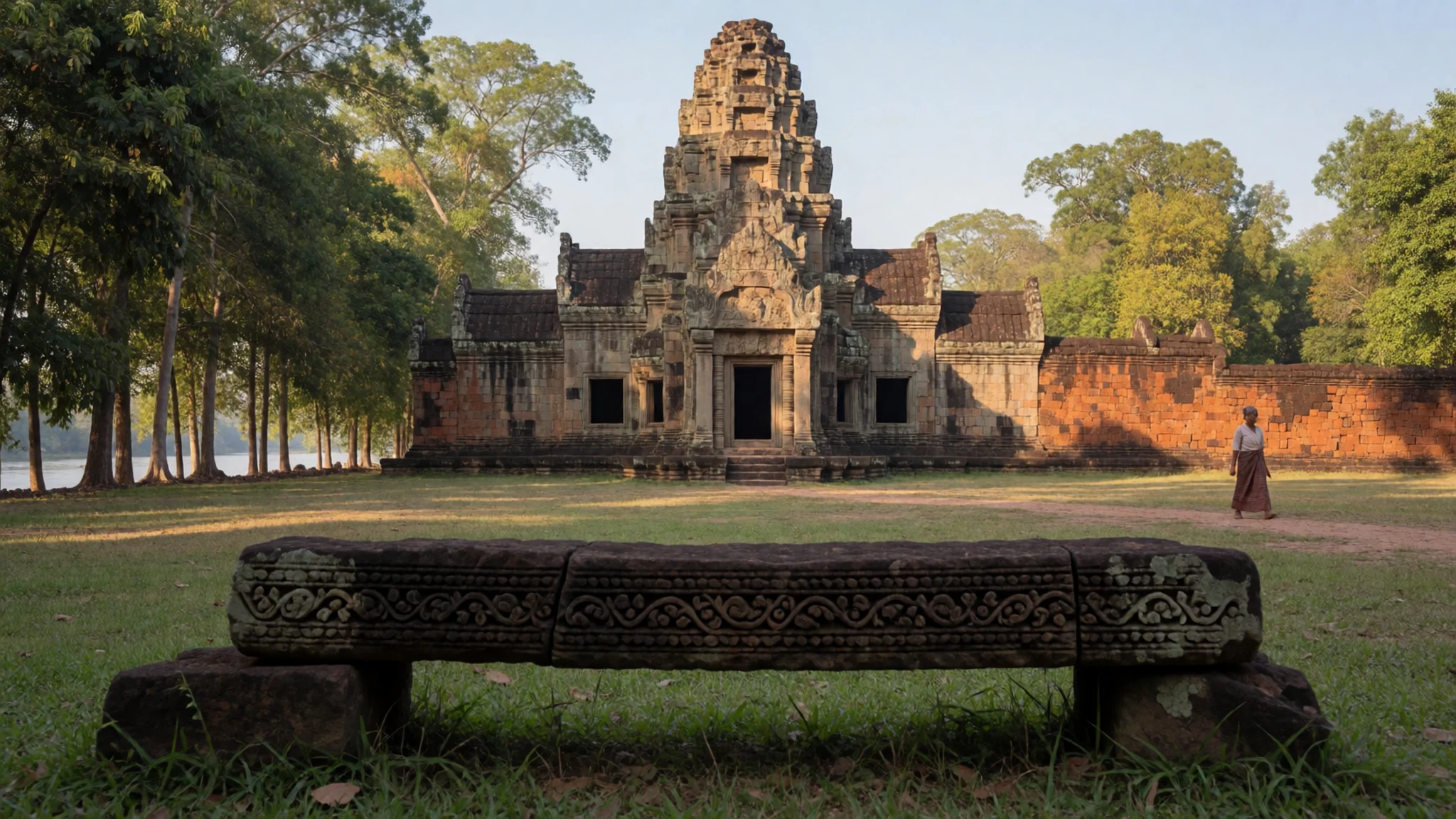
- Mon Bridge at Sangkhlaburi — Sangkhlaburi, Khao Laem National Park
Near Khao Laem National Park, this long wooden footbridge crosses a reservoir to a Mon community. Dawn brings monks on alms rounds and mist on the water. It is a long journey from Kanchanaburi town, so most people stay overnight in Sangkhlaburi.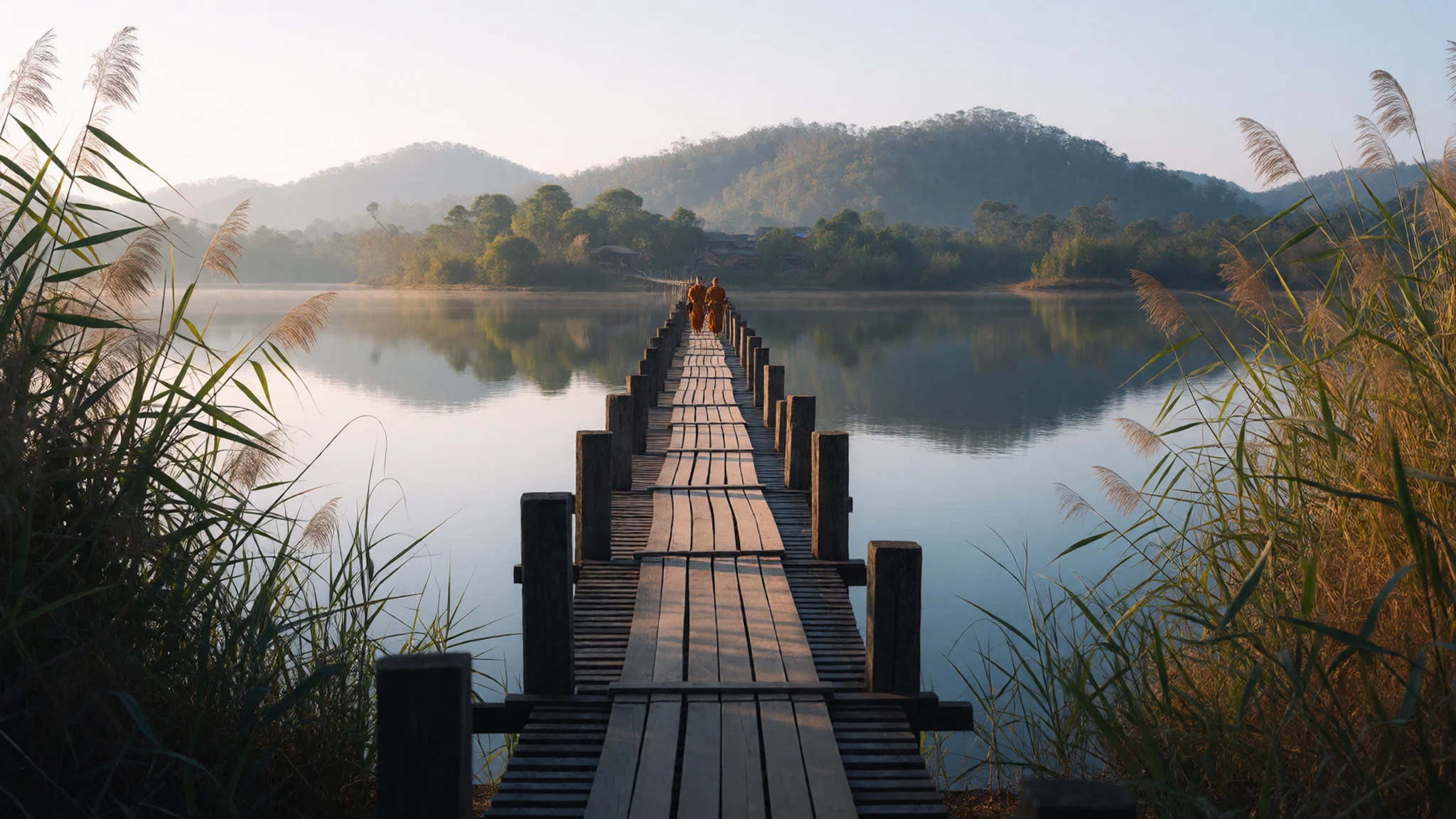
Culture
Kanchanaburi shares the manners of Thailand as a whole: friendly, polite and indirect. Thais generally avoid open criticism or blunt refusals, because keeping the mood smooth and saving face matters. A smile or a nod does not always mean agreement or understanding, so it helps to ask simple questions twice in different ways and to stay calm if something goes wrong. Raised voices and visible anger tend to backfire. Most people here are Buddhist, and temples, spirit houses and roadside shrines are part of ordinary life, with monks collecting alms at dawn in town and village. Kanchanaburi also carries a particular weight because of the wartime railway. For many foreign visitors, especially from Britain, Australia and the Netherlands, the cemeteries and museums are a place of remembrance, and local staff are used to visitors who arrive quiet and moved. At the same time, the bridge is also a working local landmark and a weekend outing for Thai families, so cheerful crowds and souvenir stalls sit alongside the history. Around the province you will also meet Mon, Karen and other communities with their own languages, festivals and customs, especially towards Sangkhlaburi. Asking before photographing people, and treating their villages as homes rather than attractions, is appreciated everywhere. At the war cemeteries and memorials, keep your voice low, dress modestly, and do not sit on or lean against the graves or take posed, smiling photos beside them.
What to wear
Traditional Thai dress in the Kanchanaburi area follows the national pattern, with regional variations. Women's formal wear is the chut thai, a wrapped silk skirt called a pha sin with a fitted blouse, often with a shoulder cloth for ceremonies, weddings and temple festivals. Men wear a wrapped lower garment, the chong kraben, with a high-collared jacket on formal occasions. Everyday rural clothing historically meant plain cotton, including the indigo-dyed mo hom shirt and the checked pha khao ma cloth, which doubles as a sash, towel and sun shield. Mon and Karen communities in the hills near Sangkhlaburi have their own woven cotton tunics, sarongs and shawls, usually seen at festivals and in craft shops. Today, most people in town wear what suits the heat: T-shirts, light trousers, cotton dresses and sandals, with school and office uniforms common on weekdays. Neat dress is valued, especially at government offices, and swimwear stays by the river or waterfall. A visitor should pack light, breathable fabrics in loose cuts, plus a hat, sunglasses and a rain layer for the wetter months. Shoulders and knees should be covered at temples and cemeteries, so carry a light scarf or sarong. Sturdy sandals or trainers help on uneven railway sleepers and wet rocks at waterfalls, and flip-flops are easy to slip off at temple doors and guesthouses.
What to eat
- Grilled river fish — Riverside restaurants in Kanchanaburi town
Freshwater fish grilled whole over charcoal, often coated in salt and served with a sharp chilli and lime dip. Riverside eateries and floating restaurants along the Kwae Noi are the natural place for it, especially at sunset.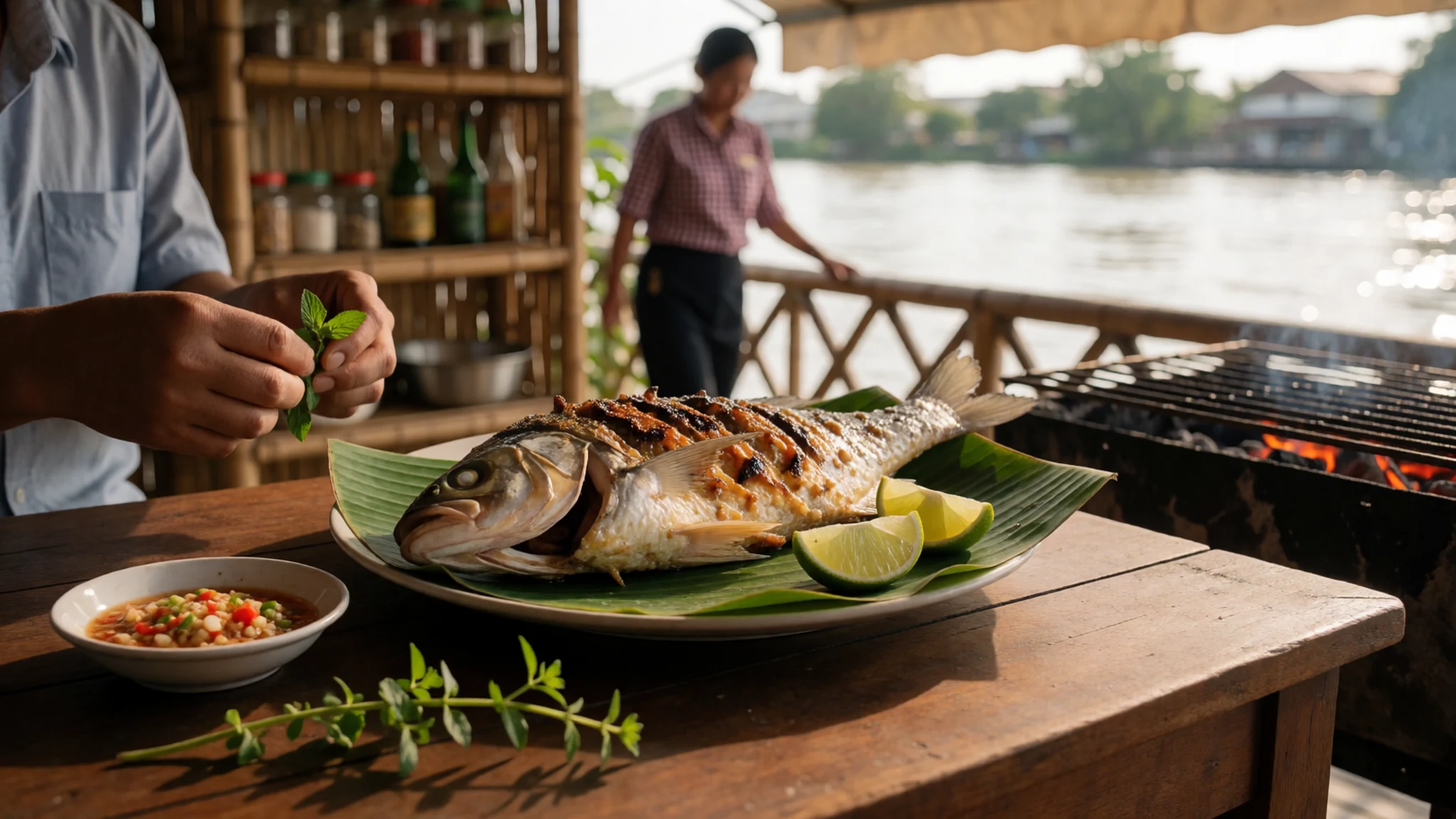
- Boat noodles (kuaytiew ruea) — Noodle shops near the river and the town markets
Small bowls of rich, dark broth with rice noodles, herbs and meat, traditionally sold from boats. The portions are small, so people order several. Look for simple noodle shops near the river and the town's markets.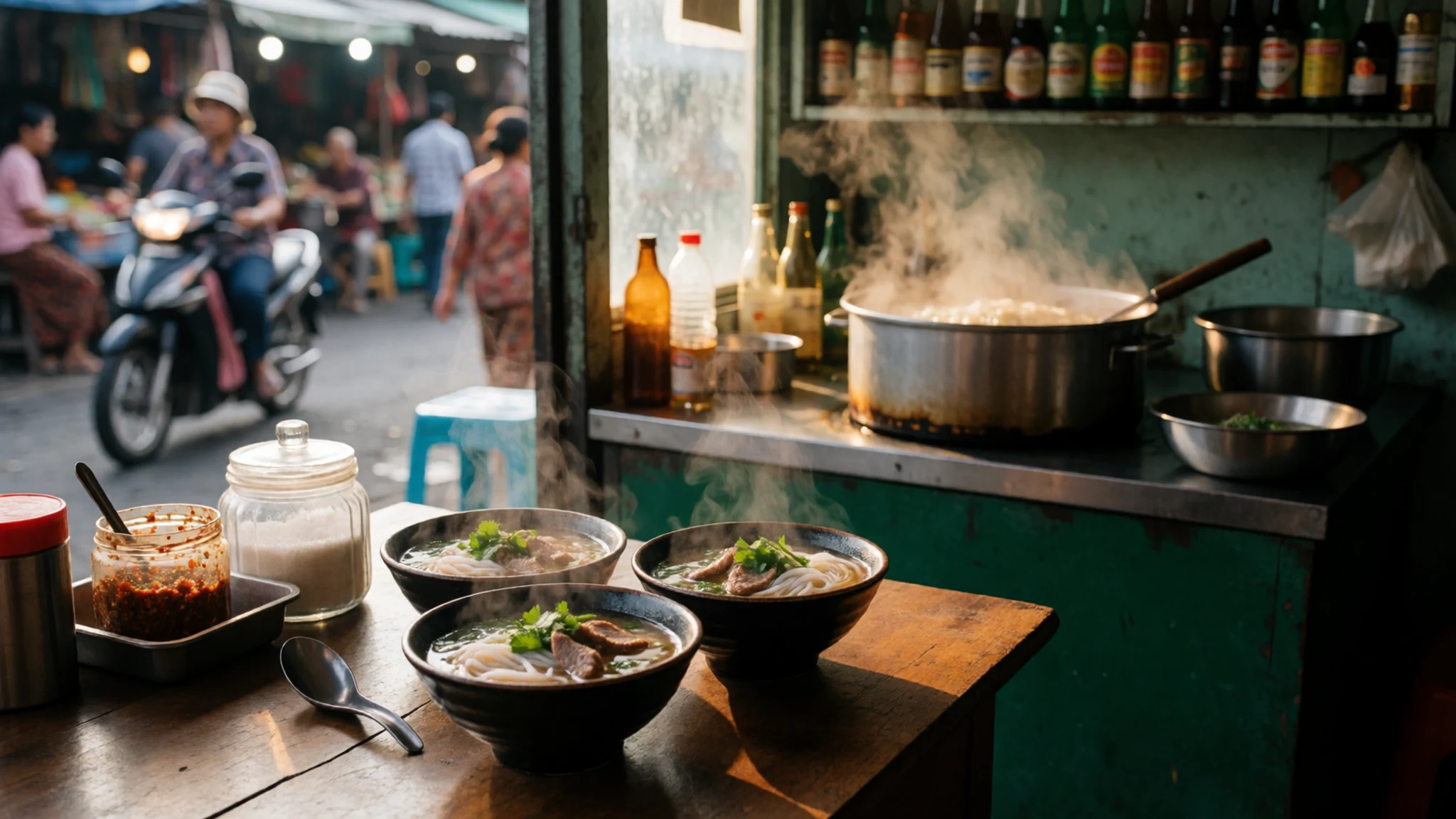
- Pad kra pao — Night market and street stalls in the town centre
A fast stir-fry of minced pork or chicken with holy basil and plenty of chilli, usually served over rice with a fried egg. It is an everyday Thai staple, easy to find and quick to cook to order. - Green curry (kaeng khiao wan) — Local rice-and-curry shops and family restaurants
A sweet-hot coconut curry coloured with green chillies, with aubergine and chicken or fish, eaten with rice. Standard on most menus, and often best at small family places away from the busiest tourist strip. - Fruit shakes and mango with sticky rice — Market stalls and roadside carts, seasonal for mango
Blended fruit shakes cool the heat of the day, and in mango season, stalls sell ripe slices with sweet coconut sticky rice. Both are simple, filling snacks that suit the climate.
Plan it
Best time. November–February is the cooler, drier stretch and the most comfortable for walking the railway and visiting waterfalls. March–May is very hot, and the rains from roughly June to October bring humidity, though they also make the waterfalls fuller and the hills greener.
How long. 2–3
Getting there. Fly into Bangkok (Suvarnabhumi or Don Mueang), then take a bus or minivan west to Kanchanaburi town, or a slow train from Thonburi station in Bangkok. For Sangkhlaburi, allow a long onward road journey from town.
Budget. low
Tips
- Visit the bridge and the train viaduct early or late, when it is cooler and quieter, and avoid weekends and holidays if possible
- Carry water, sun protection and insect repellent, especially for waterfalls and national parks
- Keep cash for markets, small eateries and park entry, though cards work in larger places
- Check train and tour times locally or with the official provincial site, http://www.kanchanaburi.go.th/
- Foreign visitors to Thailand must complete the Digital Arrival Card online, so check the official Thai immigration site before you travel
Etiquette
- Dress modestly and keep your voice low at war cemeteries, memorials and temples
- Take off your shoes before entering temple halls and many homes
- Ask before photographing people, monks or village residents
Nearby
Sources
- Wikidata Q275740 (CC0)
- Wikipedia: Kanchanaburi province (rev 1381573634) (CC BY-SA 4.0)
- Wikivoyage: Thailand (rev 5399396) (CC BY-SA 4.0)
- Photo: Bridge over River Kwai (User:Mjanich) (CC BY 3.0)
- Photo: Mon Bridge (Athichitra) (CC BY-SA 4.0)
- Photo: Srinagarindra Dam (JellyfishBrain) (CC BY-SA 4.0)
- Photo: Kanchanaburi avenue (PA) (CC BY-SA 4.0)
- Photo: Prasat Mueang Singh (Ddalbiez) (CC BY-SA 1.0)
- Photo: Kanchanaburi cemetery (Rdsmith4) (CC BY-SA 2.5)
- Photo: Death Railway, River Khwae (MichaelJanich) (CC BY 3.0)
- Photo: Bridge over the Kwae (Nawit science) (CC BY-SA 4.0)


