Kakabeka Falls
Kakabeka Falls, Canada
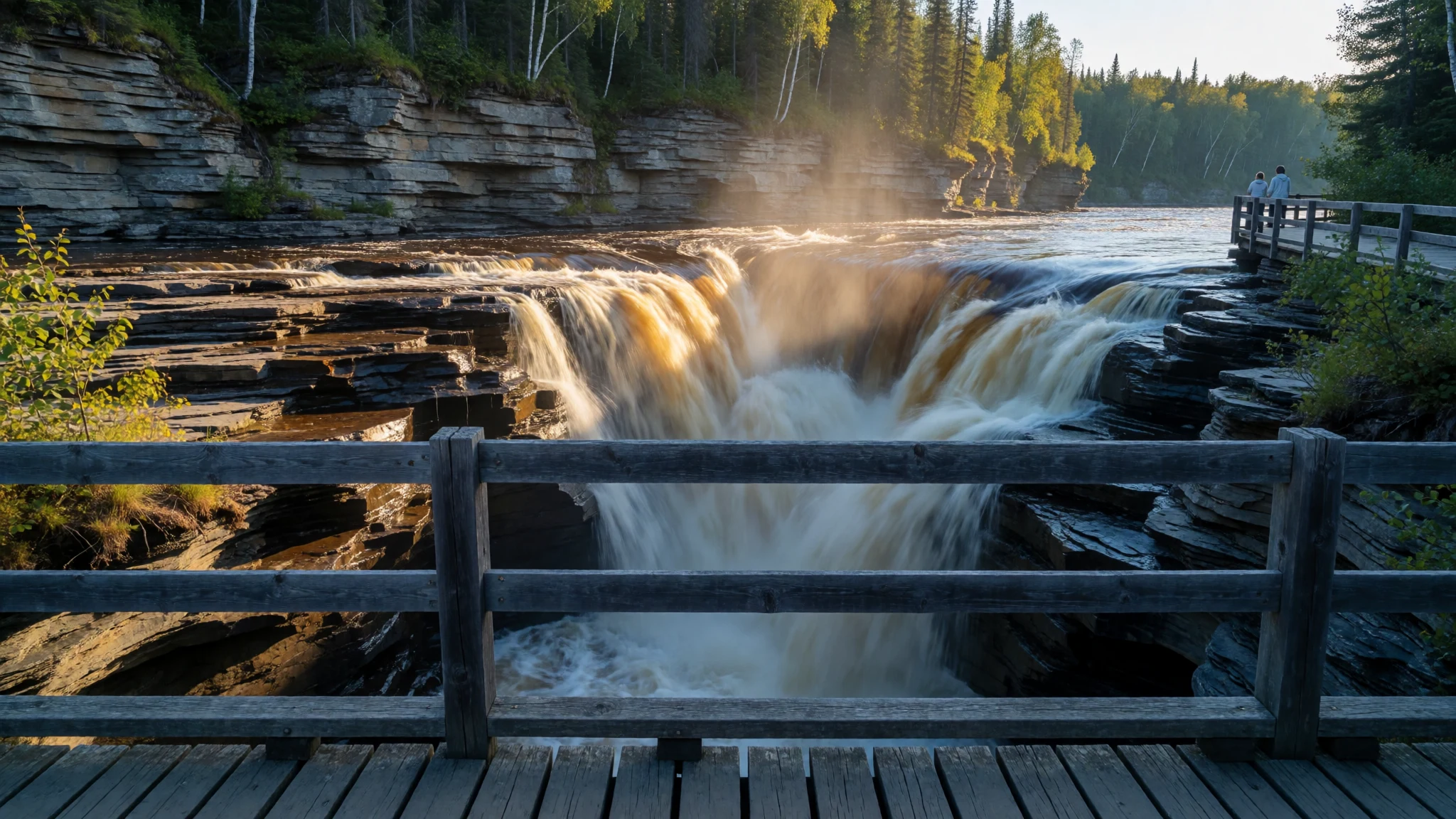
Kakabeka Falls is an easy, free-flowing roadside waterfall in northern Ontario, with a wide drop, railed viewpoints and the ancient rock of the Canadian Shield.
The place
Kakabeka Falls sits on the Kaministiquia River beside the village of Kakabeka Falls, in the municipality of Oliver Paipoonge, about 30 km west of Thunder Bay in north-western Ontario. At this spot the river drops 40 m over a rocky lip into a narrow gorge, and the roar and spray carry well back along the paths. The drop is the whole attraction, and it has earned the nickname "the Niagara of the North". The comparison is generous to neither side: this is a quieter, more wooded setting, with a provincial park around it rather than a city. The country here is the edge of the Canadian Shield, very old hard rock, and the gorge below the falls shows how that rock has been cut. The cliffs are mostly shale, which is soft and flaky, so the walls keep wearing away and the gorge floor is closed to walkers. Everything worth seeing can be reached on foot from the car park, along boardwalks and railed platforms with views from the rim, from the sides and from upstream. That makes it a gentle stop for families, older travellers and anyone breaking a long drive across northern Ontario. Most people spend an hour or two, though a relaxed morning with a picnic and the river paths is better value. Ontario Parks manages the site, so check the official website at http://www.ontarioparks.com/park/kakabekafalls for seasons, permits and closures before setting out.
Its story
Kakabeka Falls begins its story long before any map. The rock beneath the river belongs to the Precambrian Shield, and some of the shale layers around the gorge hold fossils about 1.6 billion years old. The gorge itself is much younger. It was cut by meltwater as the ice sheets withdrew after the Last Glacial Maximum, when huge volumes of water forced a channel through the weaker layers. The river still works at it, and the shale still crumbles, which is why the gorge remains a changing place rather than a finished one. The name comes from the Ojibwe word gakaabikaa, meaning a waterfall over a cliff, a plain description by people who knew the river well. Before Europeans arrived, this part of northern and western Ontario was home to Algonquian-speaking peoples, among them the Ojibwe, Cree and Algonquin. French explorers and missionaries later pushed into the Great Lakes region, and the waterways around Thunder Bay became routes for the fur trade. The falls stood on one of those river routes, a barrier that travellers had to walk around, carrying canoes and goods. That history of portaging is part of why the area was settled and visited. Today the same rim is lined with railings and viewing platforms, and the main historical risk is erosion rather than conflict. The fragile rock and its rare plants are now the reason for the protection.
What to see
- Boardwalks and main viewing platforms — Kakabeka Falls Provincial Park
Kakabeka Falls is best met first from the paved paths and railed platforms near the car park, which lead to several viewpoints along the gorge rim. The walk is short and mostly level, with the roar building as the platforms approach. Spray cools the air in summer and can ice the boards in winter, so footwear matters.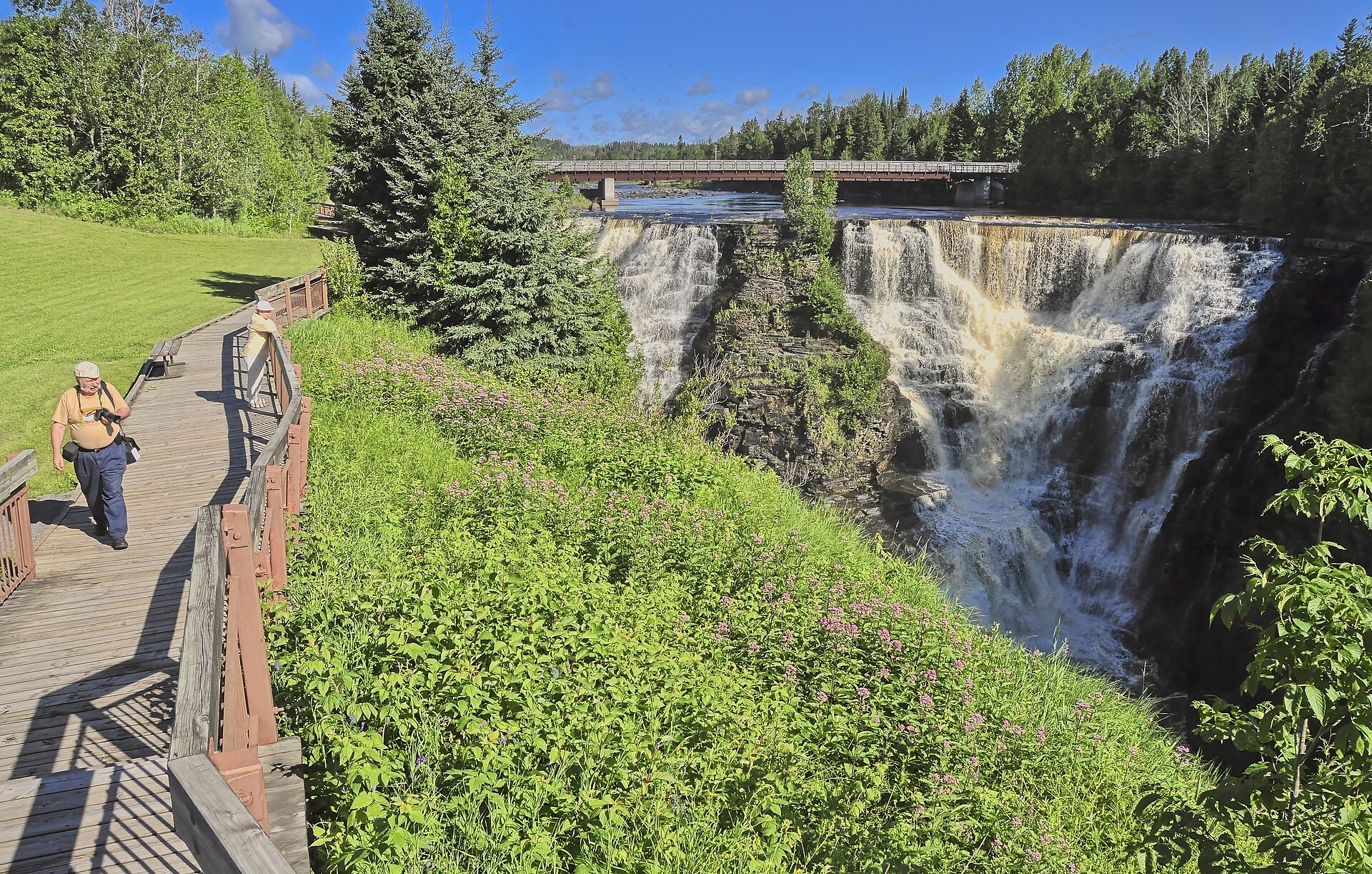
- The view from above the falls — River rim, upstream of the drop
The upstream side of Kakabeka Falls shows the Kaministiquia River gathering itself before the drop: calm brown water, then a sudden edge and nothing beyond but mist. This angle shows how much water is funnelled into one narrow cut, and it explains why the rim is fenced so carefully.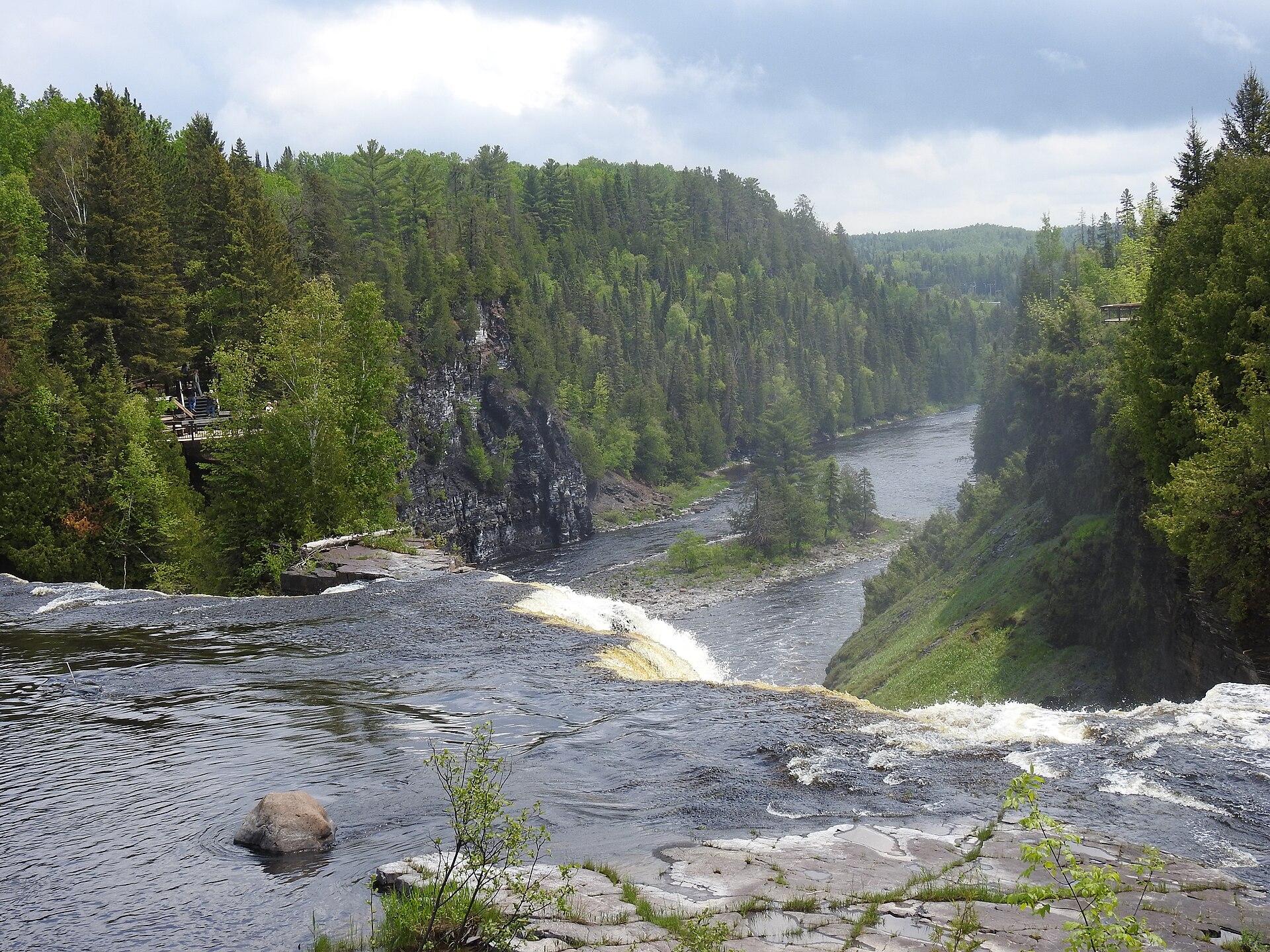
- The side view — Gorge rim platforms
A side-on position at Kakabeka Falls reveals what front views flatten: the ragged ledge of the lip, the curtain of water bending around it, and the dark layered gorge walls falling away below. Photographs often work best when the sun is low, though the light depends on the viewpoint and the season.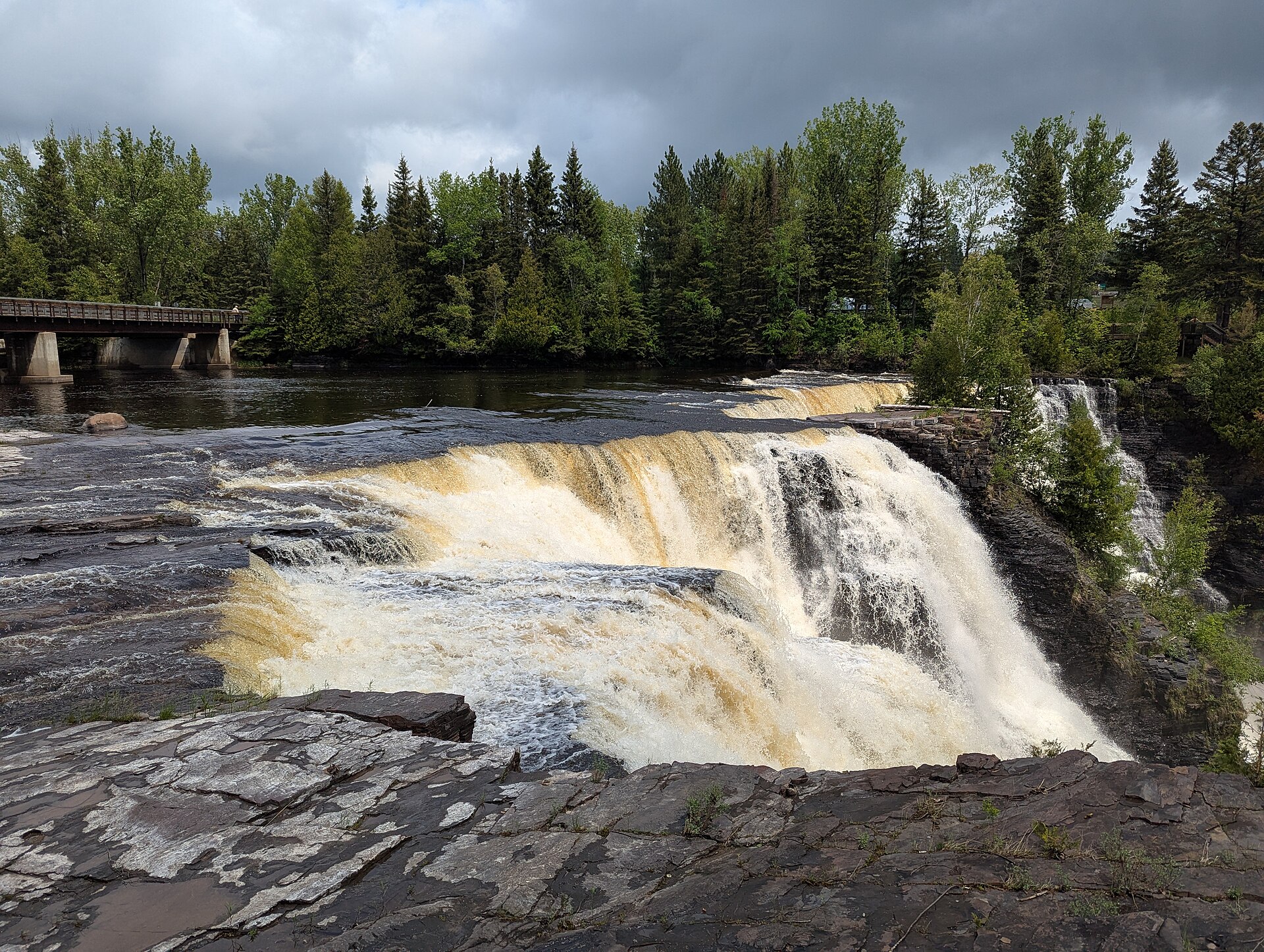
- The falls in winter — Kakabeka Falls Provincial Park
Kakabeka Falls in deep winter looks very different, with ice building along the lip and spray freezing onto rock and rails. February photographs show a pale, muted gorge rather than a roaring one. Winter visits need serious cold-weather clothing, short daylight and care on slippery paths, but crowds are thin and the scene is quiet.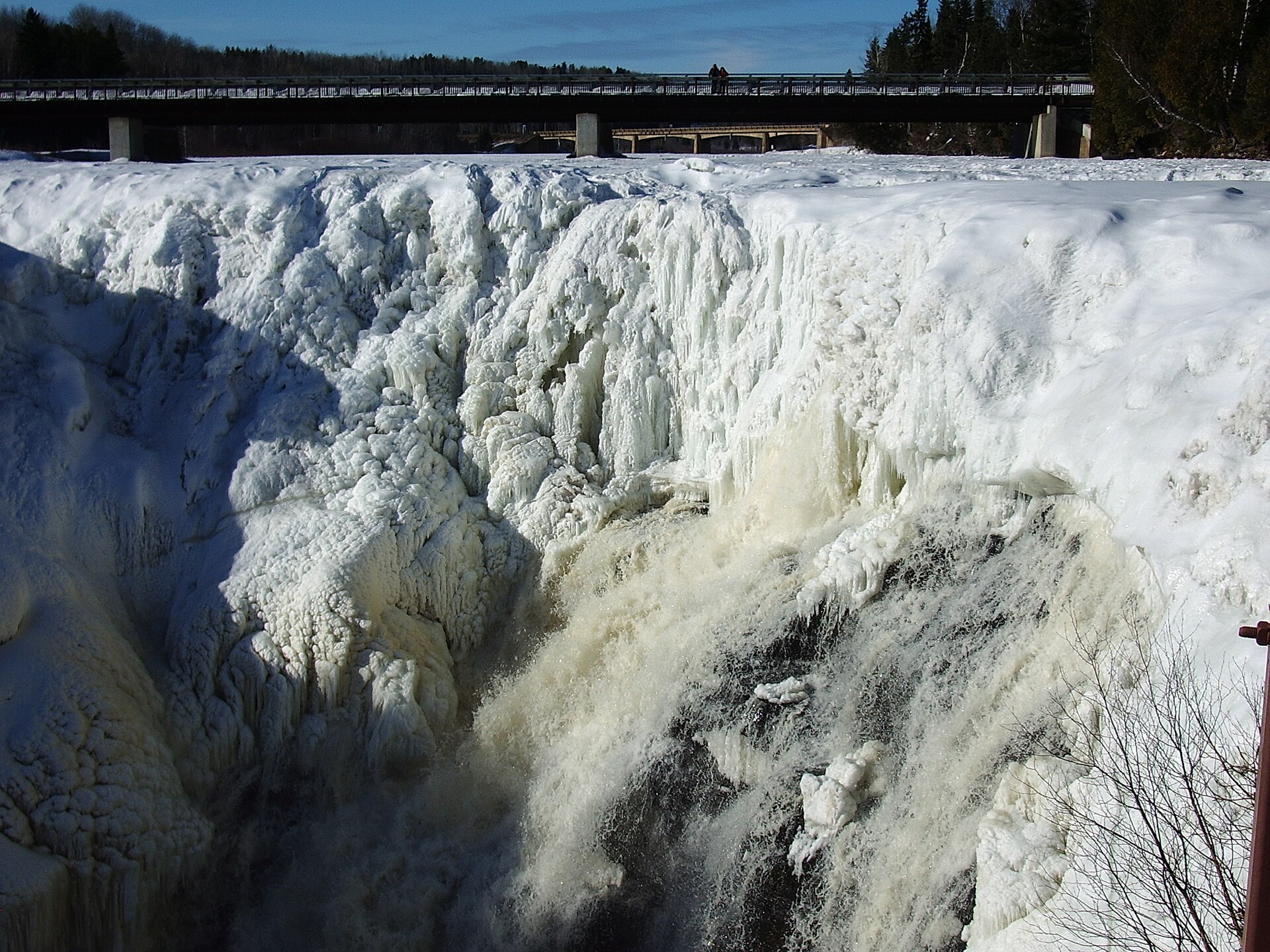
- Old Fort William, Thunder Bay — Thunder Bay
Old Fort William in Thunder Bay is a historical fort with costumed reenactments, a sensible companion to Kakabeka Falls for a second half-day and a way of seeing the fur-trade history behind this corner of Ontario. Check its official site for seasons, since living-history programmes often run in summer.
Culture
Kakabeka Falls carries an Ojibwe name, gakaabikaa, and the land around it has long belonged to Algonquian-speaking peoples, among them the Ojibwe, Cree and Algonquin. First Nations languages are still spoken across Ontario, though fewer people speak them each generation, so seeing the name written in English is a small reminder of the older layer beneath the map. Thunder Bay, the nearest city, has a mix of communities built up through fur-trade, railway and immigration history, which shows in its churches, bakeries and community halls. The falls themselves are an everyday outing for local families, who come for picnics, school trips and a walk after Sunday lunch. Canadians generally queue patiently, keep voices moderate at viewpoints and expect shared paths to be shared politely. Drinking in public is discouraged by law across Ontario outside licensed patios and similar venues, and the legal drinking age is 19, so a picnic is best kept to food, tea and coffee. Northern Ontario is outdoor country, and people tend to be relaxed about weather, mud and mosquitoes, but serious about safety near water and cliffs. The gorge rock is fragile and holds sensitive plants and very old fossils, which is why the protection rules are firm. Visitors should keep to the marked paths and railed platforms, leave rocks, plants and fossils exactly where they are, and take every scrap of litter away with them.
What to wear
Kakabeka Falls lies in Ojibwe country, where traditional dress draws on hide, wool, cotton and glass beads. Moccasins, often decorated with floral beadwork, are the best-known item, alongside ribbon shirts and ribbon skirts, which are made from bright cotton with bands of ribbon sewn on. The jingle dress, a dress hung with rows of small metal cones that chime as the wearer dances, comes from Ojibwe communities and is seen at powwows and ceremonies rather than in daily life. In everyday northern Ontario, people wear what the weather demands: fleece, waterproof shells, jeans, sturdy boots, knitted hats and thick gloves in winter, and caps, light layers and insect repellent in summer. Checked flannel shirts and work wear are common and no one will look twice at them. Visitors should dress for a damp, changeable outdoor site rather than for any formal occasion. A waterproof jacket is wise because the spray from the falls wets the nearest platforms, and shoes with a good grip help on boardwalks and rock, especially in spring and winter when ice lingers. Long trousers and long sleeves help against mosquitoes and blackflies in early summer. In winter, add thermal layers, insulated boots, a face covering and warm mittens, since wind off the open gorge makes the cold feel sharper. There are no religious sites with dress codes at the falls, though modest, practical clothing suits any local gathering.
What to eat
- Lake Superior whitefish — Fish-and-chip shops and lakeside eateries in Thunder Bay
Whitefish from the cold waters of Lake Superior is a northern Ontario staple, usually pan-fried or baked and served with potatoes and lemon. Look for it at fish-and-chip shops and lakeside restaurants in Thunder Bay, and ask which fish is local that day. - Walleye (pickerel) — Roadside diners and family restaurants near Thunder Bay
Walleye, sometimes called pickerel locally, is a mild freshwater fish found in many northern lakes. It is often served battered or lightly pan-fried with tartare sauce. It appears on menus at roadside diners and family restaurants along the highway to Thunder Bay. - Persian pastry — Bakeries in Thunder Bay
The Persian is a local Thunder Bay pastry, a flat sweet roll topped with pink icing, and it is found in the city rather than elsewhere in Canada. It is simple and very sweet, and works well with strong coffee after a morning at the falls. - Finnish pannukakku and pulla — Finnish bakeries and community halls in Thunder Bay
Thunder Bay has a long-established Finnish community, and its legacy shows in baking. Pannukakku is a baked oven pancake, and pulla is a cardamom-scented sweet bread. Both suit a cold-weather breakfast and appear at Finnish bakeries and community events. - Bannock and wild blueberries — Powwow food stalls and summer farmers' markets
Bannock is a simple fried or baked bread with a long place in First Nations cooking across Canada, often eaten with jam or stew. Wild blueberries ripen in northern woods in summer and appear in pies, jams and muffins at seasonal stalls.
Plan it
Best time. June to early October for easy walking, with summer warm and green and September–October bringing autumn colour in the surrounding woods. Spring can bring fuller flows and lingering ice, while winter is cold and dramatic but short on daylight.
How long. 1
Getting there. Fly to Thunder Bay International Airport, then drive about 30 km west to Kakabeka Falls; a hire car is the most practical last leg. The site is beside the village of Kakabeka Falls.
Budget. low
Tips
- Check the official Ontario Parks website for seasonal opening, permits and closures before travelling
- Arrive early on summer weekends to find parking and enjoy quieter platforms
- Carry insect repellent in early summer and a waterproof layer for the spray
- Wear shoes with grip for wet or icy boards
- Bring water and snacks, as the village is small and facilities vary by season
Etiquette
- Stay on the marked paths and behind the railings at every viewpoint
- Do not enter the gorge below the falls, and leave plants, rocks and fossils untouched
- Take all litter home and keep voices low near other visitors
Nearby
Sources
- Wikidata Q123058 (CC0)
- Wikipedia: Kakabeka Falls (rev 1371972971) (CC BY-SA 4.0)
- Wikivoyage: Ontario (rev 5320235) (CC BY-SA 4.0)
- Photo: Kakabeka Falls (Ontario), Quintin Soloviev (CC BY 4.0)
- Photo: Canada Ontario relief location map, Carport (CC BY 3.0)
- Photo: Kakabeka Falls, February 2005, Axel Pettersson (CC BY-SA 4.0)
- Photo: Bench, Tony Webster (CC BY 2.5)
- Photo: Kakabeka Falls 2010 Boardwalks, Mykola Swarnyk (CC BY-SA 4.0)
- Photo: Kakabeka Falls Side View, Hirgax (CC BY-SA 4.0)
- Photo: Kakabeka Falls Top View Alternate, Hirgax (CC BY-SA 4.0)
- Photo: Kakabeka Falls Top View, Hirgax (CC BY-SA 4.0)


