Joggins Fossil Cliffs
Joggins Fossil Cliffs, Canada
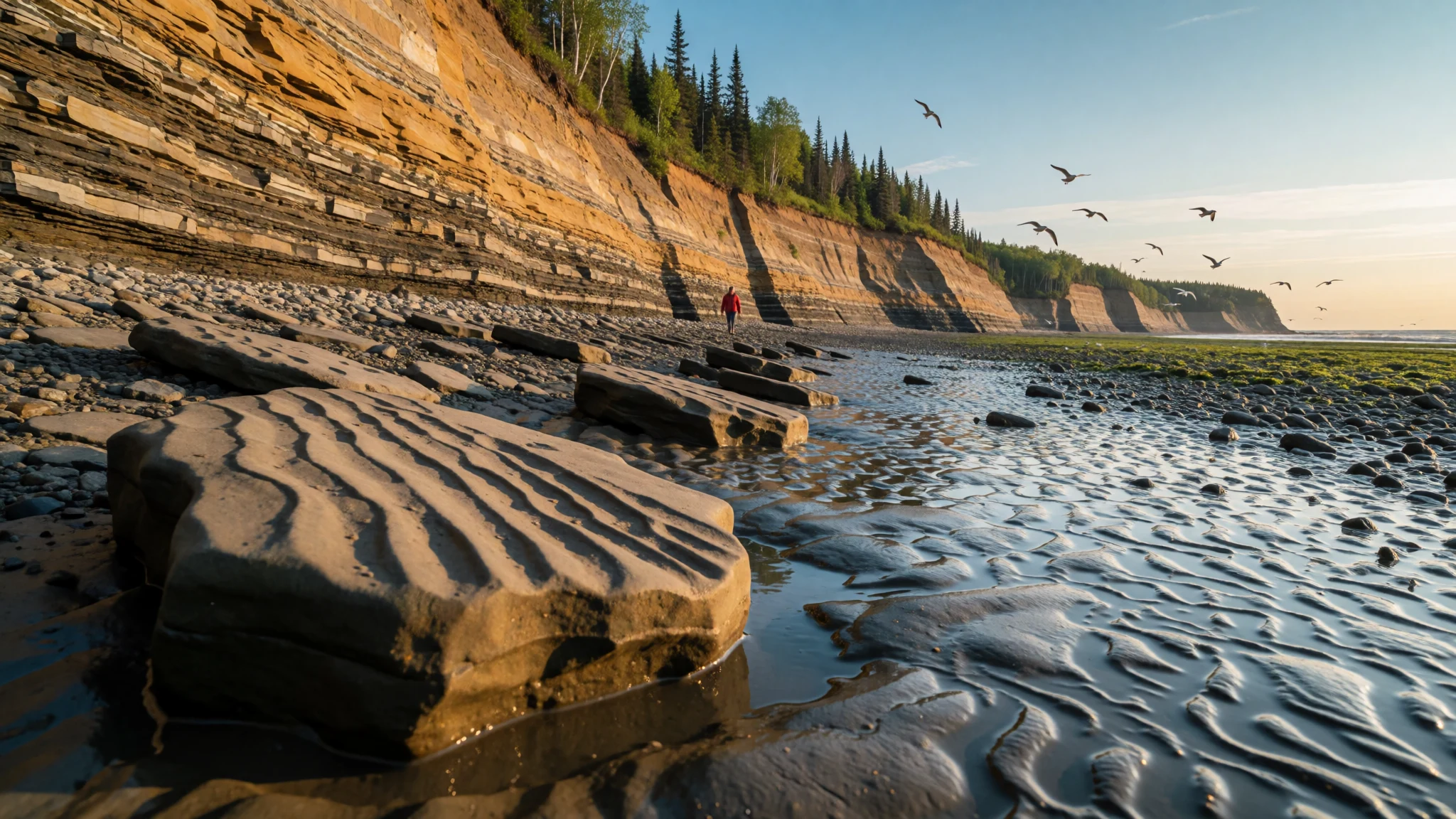
Joggins Fossil Cliffs in Nova Scotia expose a Carboniferous coal-age forest in tide-washed rock, with new fossils revealed as the sea erodes the cliffs.
The place
Joggins Fossil Cliffs line the Cumberland Basin shore in western Cumberland County, Nova Scotia, on an arm of the Bay of Fundy. The protected stretch covers 15 km of coast and joined the World Heritage List in 2008. Behind it lies the village of Joggins, a small rural community with no resort feel at all, which suits the site. What matters here is the rock. The cliffs expose bands of sandstone, shale and coal laid down in the Carboniferous, when this region was a low, wet, forested plain. The sea keeps cutting the cliff back, so storms and tides regularly uncover new material on the foreshore. It is a place for walking rather than for viewpoints. Fallen blocks, ripple-marked sandstone, fossil bark, plant impressions and the remains of old mine workings all lie within a short stretch of beach, and a guide helps to make sense of what the eye would otherwise pass over. Conditions shape every visit. Nova Scotia has warm summers, cold winters and a lot of coastal fog, and the tide decides when the shore can be walked at all, so the day is planned around tide tables rather than the clock. Joggins is a good distance from Halifax, so most visits are a deliberate detour rather than a casual stop, and facilities are modest. For opening times and guided walks, check the official site, https://jogginsfossilcliffs.net/.
Its story
Joggins Fossil Cliffs carry two stories, one written in rock and one in coal. The Mi'kmaq called the place Chegoggins, meaning the place of the large fish weir, and French and English settlers bent that name into Joggins. The coal seams that show along the Cumberland Basin shore were noticed early: Acadian settlers were digging them by 1686, and the British garrison at Annapolis Royal took coal from the shore in 1715. Major Henry Cope set up the first commercial mine in 1731, but it was destroyed in 1732, and other early ventures also faded quickly. Industrial mining arrived with the General Mining Association, which held the rights to the coalfields and began work at Joggins in 1847. The Intercolonial Railway, and then the Joggins Railway, opened in 1887 to link the pits with the main line at Maccan, gave the coal a route to market. The workforce was mixed, and some miners were as young as 12. Traces of that era still emerge from the eroding cliffs, including timber pit props that tree-ring dating places mostly in the 1860s and 1870s. Beneath the industrial layer lies the older record. The same coal-bearing rocks that drew the miners hold the remains of a Carboniferous forest, and geologists of the nineteenth century made the shore known to science. Today the cliffs are valued far more for their fossils than for their coal.
What to see
- The foreshore walk — Beach below the cliffs, Joggins
Walking the foreshore at low tide is the main event at Joggins. The cliffs rise as banded sandstone, shale and coal, and the beach below is strewn with fallen blocks that hold plant stems, bark and trace fossils. A guided walk is the best way in. Watch the incoming tide and stay clear of the cliff base.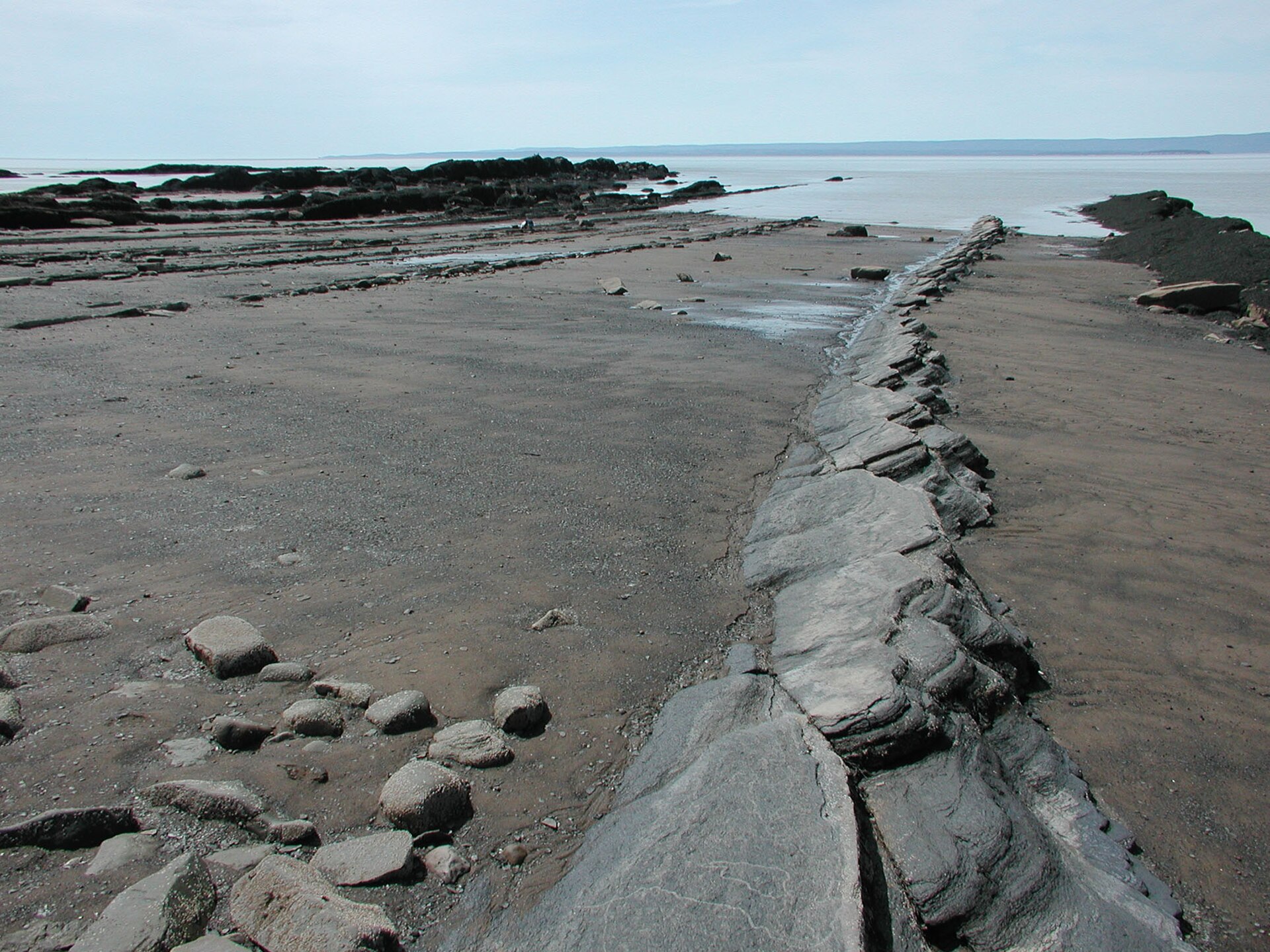
- Joggins Fossil Centre — Above the shore, Joggins
The Joggins Fossil Centre, just above the shore, is the practical starting point, with displays on the coal-age forest, the mining past and the cliff geology, plus guided walks onto the beach. Opening times and tour availability change with season and tide, so check the official site, jogginsfossilcliffs.net, before driving out.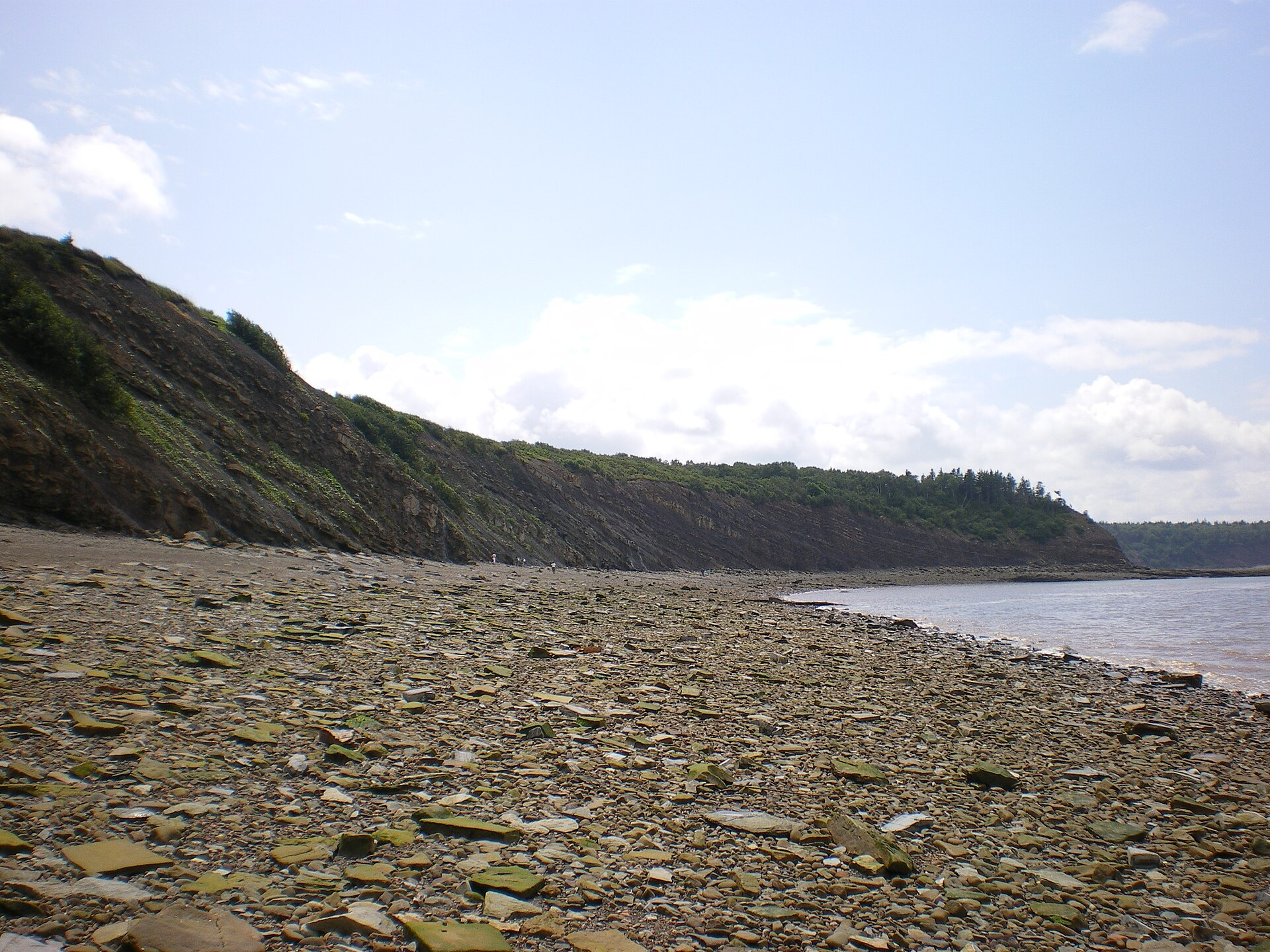
- Fossil bark and leaves — Broken rock faces along the shore
Close up, the fossils are small and subtle. Scaly bark patterns from giant club-moss trees and the imprints of fern-like leaves show on broken rock faces, and a coin held beside them is the usual scale. Damp rock darkens the surface and sharpens the detail, so a wet morning can suit a fossil search.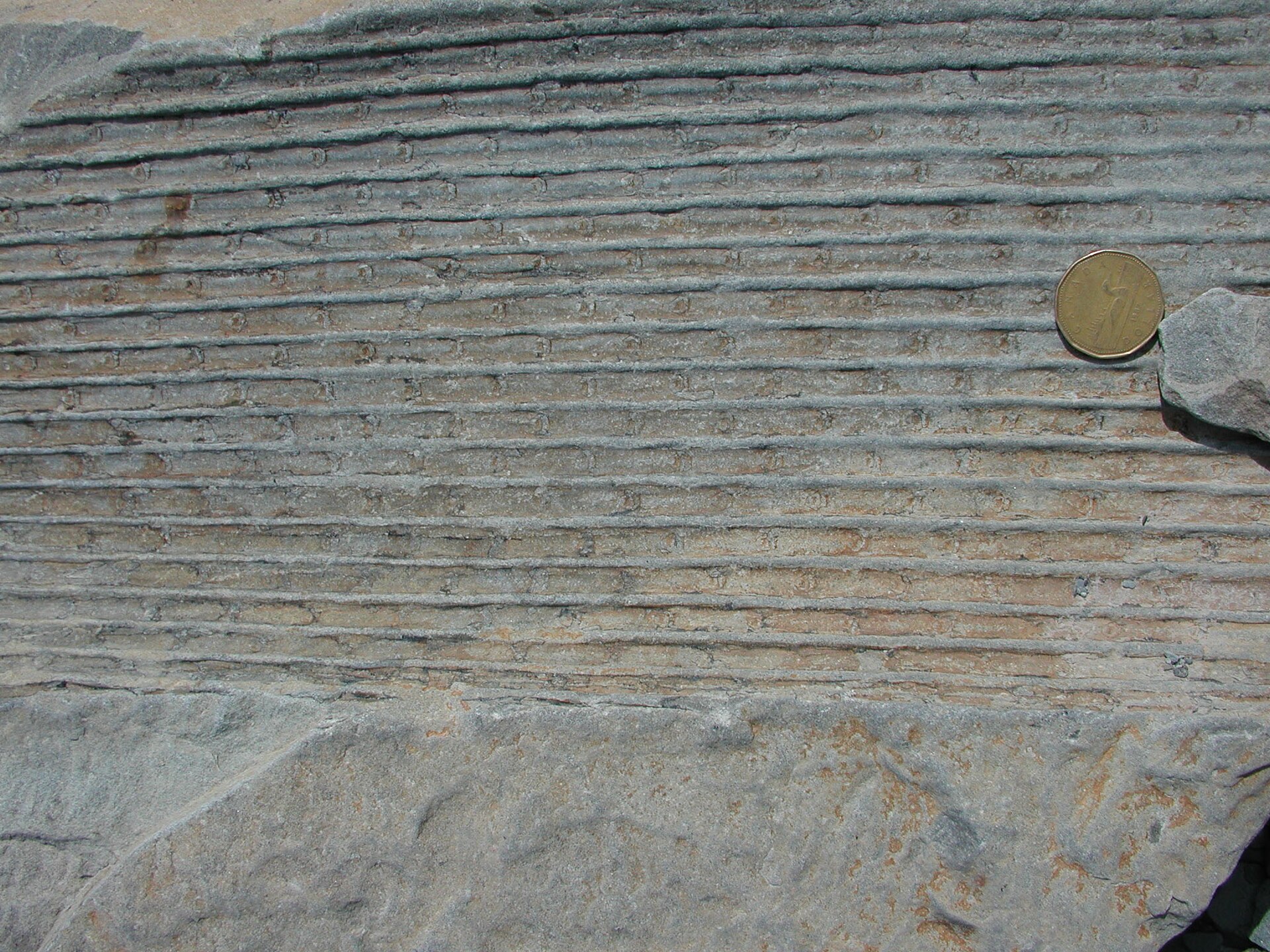
- Ancient ripple marks — Sandstone bedding surfaces on the shore
Preserved ripple marks on sandstone surfaces record shallow water moving over sand long before the cliffs existed. Some beds show the ripples in three dimensions, like a frozen riverbed, and low raking light in the morning or evening makes them easier to read. They reward a slow look rather than a quick photograph.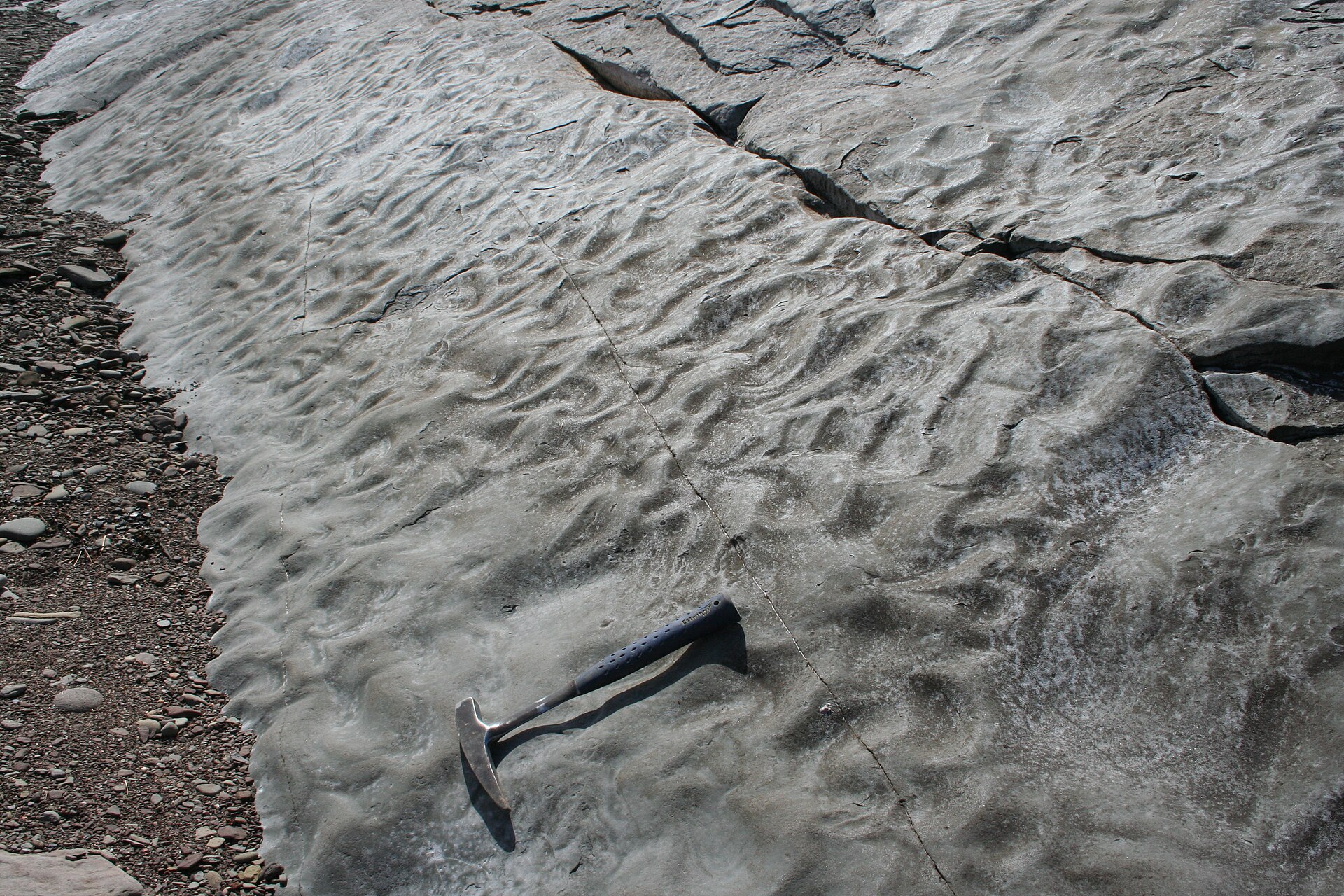
- Old coal workings in the cliff — Eroding cliff face, Joggins
Old coal workings are eroding out of the cliff face, with collapsed tunnels and timber pit props still visible in places. Orange-stained water seeping from some of them is acid drainage from the coal seams, a reminder of the mining era. Look from a distance, as the ground and runoff are unsafe to explore.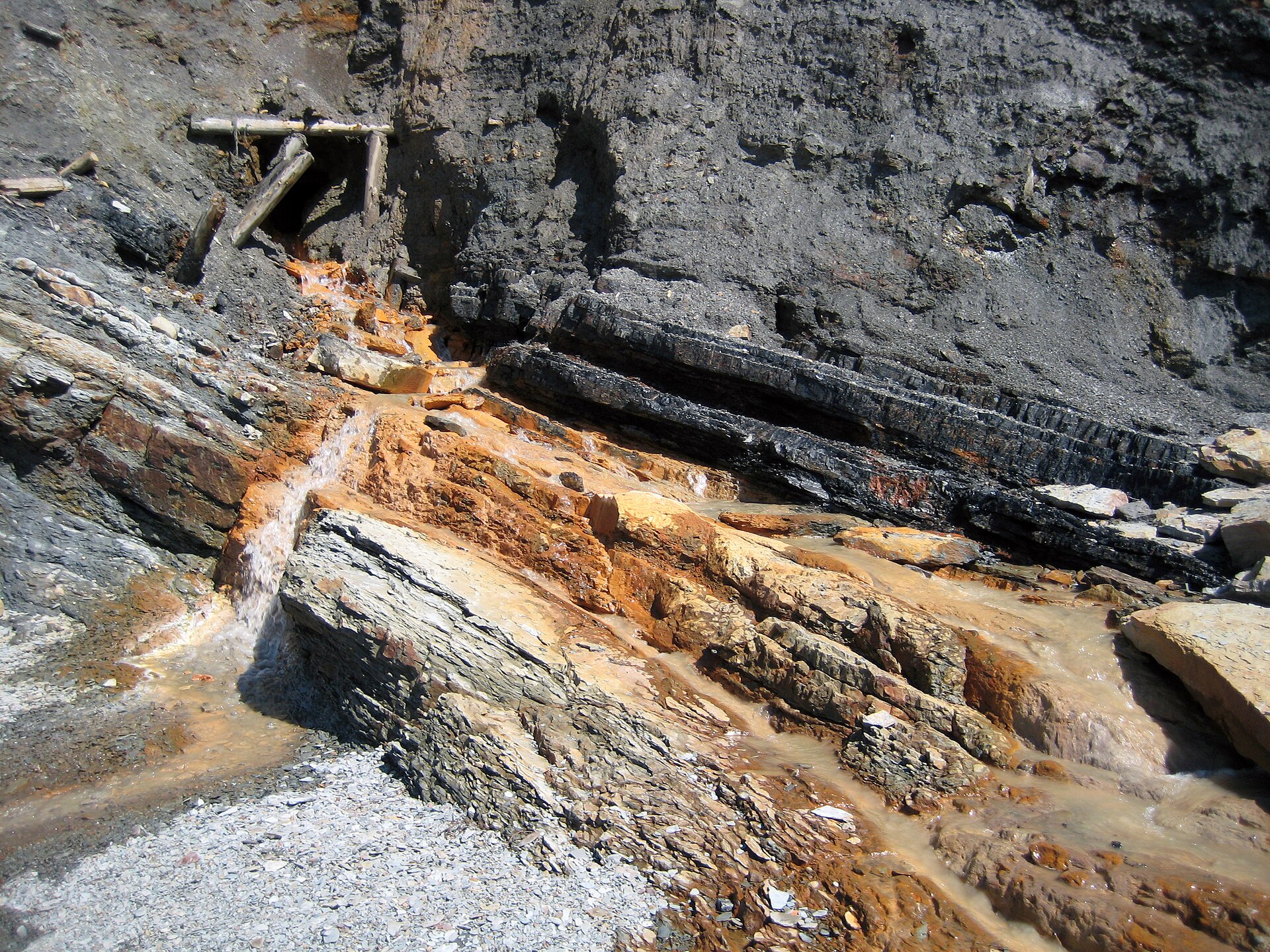
Culture
Joggins Fossil Cliffs sit in a corner of Nova Scotia where several cultures have layered over one another. The Mi'kmaq name for the place, Chegoggins, is still the root of the modern one, and Mi'kmaw heritage runs through the province. Acadian French families were farming and fishing in the region long before British rule, and many were expelled in the mid-eighteenth century. Acadian identity remains strong in parts of the province, and the expulsion is remembered in Longfellow's poem Evangeline. Scottish descendants, Black Nova Scotians and others add to a population that is varied for its size. At Joggins itself, the strongest local culture is that of a mining village. Families here worked the seams for generations, and the history behind the displays is often personal to the people who tell it. The surrounding community is quiet and rural, with a pace of life that favours conversation over spectacle. Coal and fossils are both part of the village's identity, so the shore is as much a working community's backyard as a protected heritage site. Local guides are the best source of tide warnings, safe routes and stories about the cliffs, and listening to them is part of the visit. Leave every fossil where it lies and ask the guides at the Joggins Fossil Centre before taking anything off the shore.
What to wear
Joggins Fossil Cliffs have no single local costume, so Nova Scotian dress is the useful reference. Traditional Mi'kmaw regalia uses ribbon appliqué and beadwork on cloth or hide, and is worn at powwows, ceremonies and cultural gatherings rather than day to day. Scottish-descended families wear tartan, usually in wool, for festivals, dances and weddings. Everyday clothing around Joggins is practical, rural and led by the weather: jeans, fleeces, waterproof jackets, work boots and caps, with wellington boots common near the shore. Nobody dresses up in the village. For a visit, the terrain decides. The foreshore is wet, uneven rock, shingle and seaweed, so sturdy shoes or boots with good grip matter far more than style, and sandals are a poor choice. Layers suit a coast where fog and wind can turn a warm day cool, and a waterproof shell is worth carrying in any season. In the colder months, add insulation, a hat and gloves. A sun hat and sun protection are sensible in summer because the beach offers little shade. No modesty rules apply, since this is an outdoor site and not a place of worship. Clothes that can get muddy or salty are the right choice.
What to eat
- Blueberry grunt — Home-style eateries and community suppers across Nova Scotia
Blueberries stewed or baked under a soft dumpling topping and served warm as a pudding. It is a Nova Scotian comfort dish, sweet and a little sticky, and best in late summer when wild berries are in season. - Dulse — Small shops and roadside stands along the coast
Red seaweed gathered at very low tides and dried, then eaten as a chewy, salty snack straight from the bag. The flavour is strongly of the sea, so it is worth trying a small amount first. - Garlic fingers — Pizza shops and takeaways across the province
Pizza dough baked with garlic butter, parsley and melted cheese, sometimes with bacon bits, and cut into strips. It is usually ordered as a side to pizza and dipped in donair or marinara sauce. - Deep-fried pepperoni — Pubs and bars
Slices of pepperoni fried until crisp at the edges and served as a bar snack, often with honey mustard for dipping. It is salty, rich and best shared over a drink rather than eaten as a meal. - Wild berries — Farm stands and roadside stalls in summer
Wild strawberries, blueberries, raspberries and, near the coast, cranberries grow in fields and along roadsides in season. They turn up fresh at stalls, in jams and in desserts. Pick only where picking is clearly allowed.
Plan it
Best time. June to September, when summers are warm and the shore is easiest to walk. The coast is often foggy and winters are cold, so this is mainly a warm-season trip, and tide times matter in every month.
How long. 1
Getting there. Fly to Robert L. Stanfield International Airport (YHZ) near Halifax, the main airport for mainland Nova Scotia. Hire a car and take Highway 104, part of the Trans-Canada Highway, towards Amherst, then local roads to Joggins on the Cumberland Basin shore.
Budget. mid
Tips
- Check tide times before planning the day, as the beach can only be walked safely around low tide
- Check the official site, https://jogginsfossilcliffs.net/, for guided walk times and booking
- Wear sturdy shoes with grip and carry a waterproof layer, as fog and wind can change quickly
- Bring water and snacks, as facilities near the shore are modest
- Allow extra driving time, as Joggins is well away from Halifax
Etiquette
- Leave fossils where they lie and ask the guides before taking anything from the shore
- Stay away from the base of the cliffs, where rockfalls can happen
- Keep clear of old mine openings and the water seeping from them
Nearby
Sources
- Wikidata Q1439433 (CC0)
- Wikipedia: Joggins Fossil Cliffs (rev 1379132187) (CC BY-SA 4.0)
- Wikivoyage: Nova Scotia (rev 5106662) (CC BY-SA 4.0)
- Photo 01-joggins-fossil-cliffs.jpg — Staka (CC BY-SA 4.0)
- Photo 02-joggins-fossil-cliffs.jpg — Cornellier (CC BY-SA 4.0)
- Photo 03-joggins-cliffs-nova-scotia.jpg — Jesse Allen (NASA) (Public domain)
- Photo 04-joggins-bark.jpg — Cornellier (CC BY-SA 4.0)
- Photo 05-joggins-plant.jpg — Cornellier (CC BY-SA 4.0)
- Photo 06-joggins-beach.jpg — Cornellier (CC BY-SA 4.0)
- Photo 07-3d-ancient-ripples.jpg — Michael C. Rygel (CC BY 3.0)
- Photo 08-amd-joggins.jpg — Michael C. Rygel (CC BY 3.0)


