Jekyll Island
Jekyll Island, United States
Jekyll Island is a state-owned Georgia barrier island of bike paths, driftwood beaches, sea turtles and the winter club of America's Gilded Age financiers.
The place
Jekyll Island is a barrier island in Glynn County, on the Georgia coast of the United States, counted among the Sea Islands and the Golden Isles. It belongs to the State of Georgia and is run by its own self-governing body rather than by a private developer, which is why it feels closer to a protected park with a small town tucked inside than to a typical resort strip. About 866 people live here. Roads and bike paths thread through live oaks and salt marsh, with beaches on the Atlantic side and quiet tidal creeks on the western edge facing the mainland. On the western side, the historic district is a collection of structures dating from the late 1800s to the early 1900s, when the island served as a winter getaway for rich families, and guided tours run through it. Walking the sand and sandbars is the main pastime, with cycling a close second, and a water park called Summer Waves draws families in the warm months. A few older structures are built of tabby, a coastal material made from crushed oyster shells. Only one road, a causeway from Brunswick, links the island to the mainland, so arrival is simple and the pace stays slow. Summers are hot and humid, weekends and school holidays fill the beaches, and the island is flat enough that most cyclists, young or old, can get about without effort.
Its story
Jekyll Island's recorded past begins with the Guale and the Mocama, two native peoples whose territories met near here. Families used the island seasonally, spearing fish in the creeks, foraging for nuts and berries, steeping roasted holly leaves as tea, and growing squash, beans, maize, sunflowers and tobacco. Historians still argue over whether the village of Guadalquini stood here or on neighbouring St Simons Island. Both peoples were drawn into the Spanish mission system, but raids by French pirates and by native allies of the English in Carolina emptied the coast late in the seventeenth century, and the survivors resettled in what is now Florida.
European names came and went. Spanish explorers landed in 1510 and called the island Isla de Ballenas, Whale Island. In 1562 the French captain Jean Ribault claimed it for France as Ille de la Somme, then surrendered to the Spanish and was executed. Under British rule plantations were laid out, and a few tabby ruins survive from that time.
The best-known chapter came when wealthy families turned the island into a private winter club in the late nineteenth century. Early in the twentieth century, bankers including Paul Warburg and members of the Morgan circle met here in secret to draft banking legislation that later influenced the Federal Reserve Act. The Second World War brought an evacuation order from the US government. In 1947 the State of Georgia bought all the property, citing security and preservation, and the island has stayed in public hands since.
What to see
- Driftwood Beach — Northern end of the island
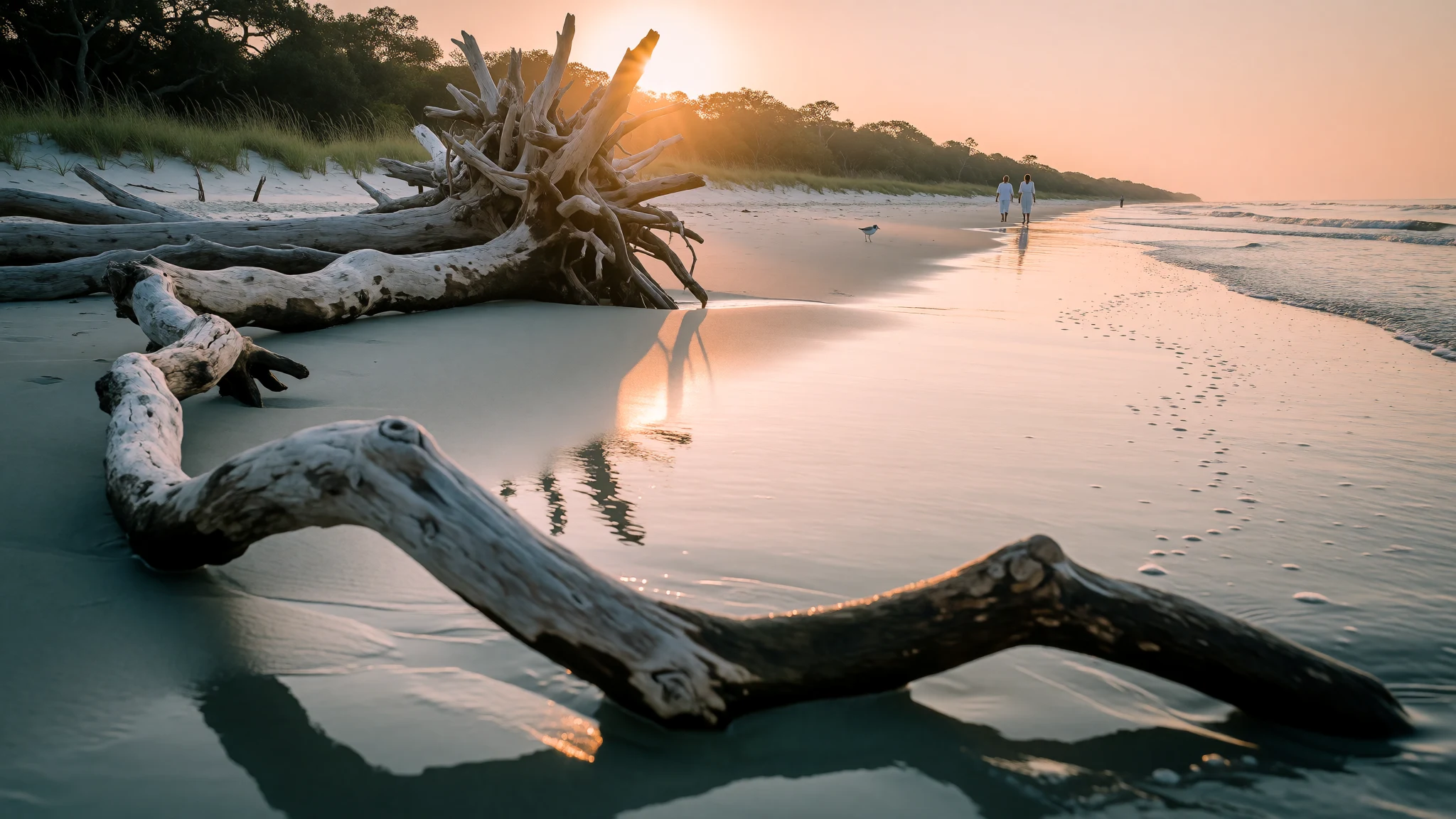
Driftwood Beach lies at the northern end of Jekyll Island, where storms and tides have left bleached, twisted tree trunks stacked along the sand. It is a favourite for photographs, especially at low tide and around sunrise, and it can get busy at golden hour. The trunks are fragile habitat, so look and photograph rather than climb.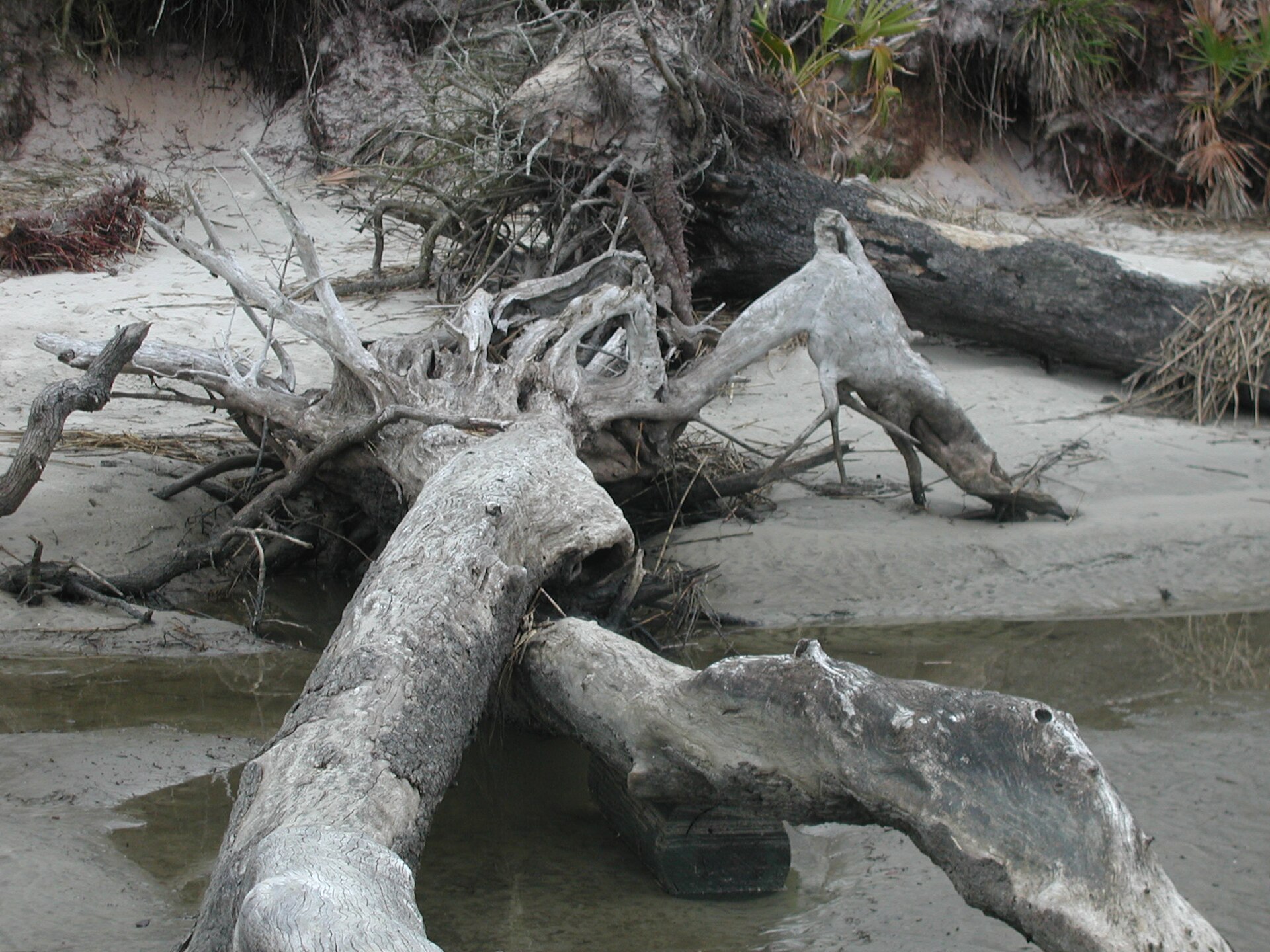
- Georgia Sea Turtle Centre — Near the historic district
The Georgia Sea Turtle Centre combines education with a working hospital for injured turtles. Visitors can see patients being treated and learn what threatens turtles along this coast, from boat strikes to litter. It suits a wet or very hot afternoon, and children tend to stay interested. Check the official site for opening times and ticket details. - Jekyll Island Club Resort — West side, historic district
The Jekyll Island Club Resort is the old clubhouse of the winter club, still taking guests and listed on the US National Register of Historic Places. Families such as the Vanderbilts, Rockefellers and Morgans stayed here. Walking the shaded grounds and verandas is an easy, unhurried hour, and the building is also where the banking meeting took place.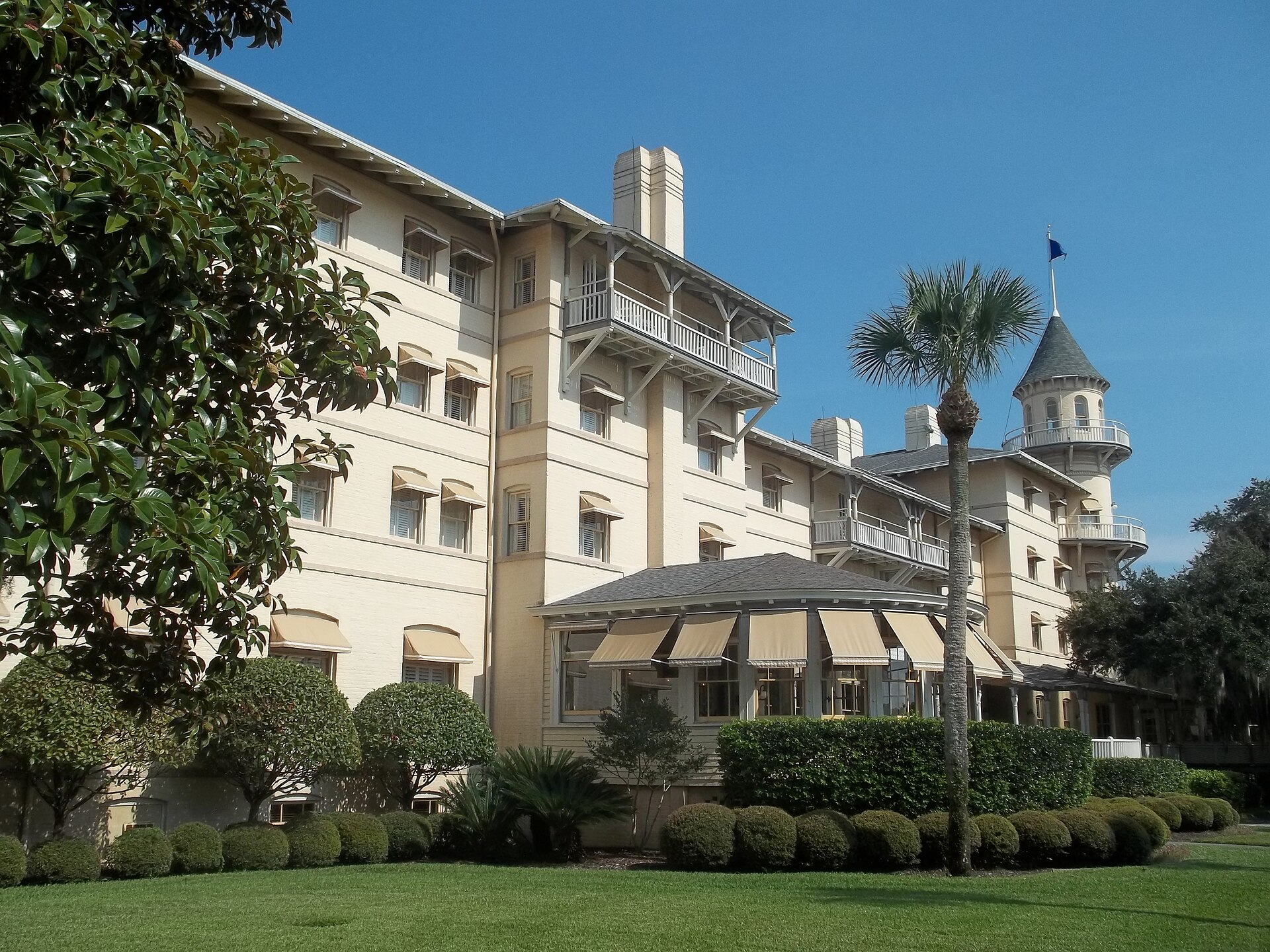
- Jekyll Island Historic District — West side of the island
The Historic District holds dozens of buildings on the island's western side, including the former cottages of club families and the old support buildings. Guided tours explain who lived where and how the club worked. Allow a half day, and hire a bicycle, since the sights are spread out among oaks and lawns.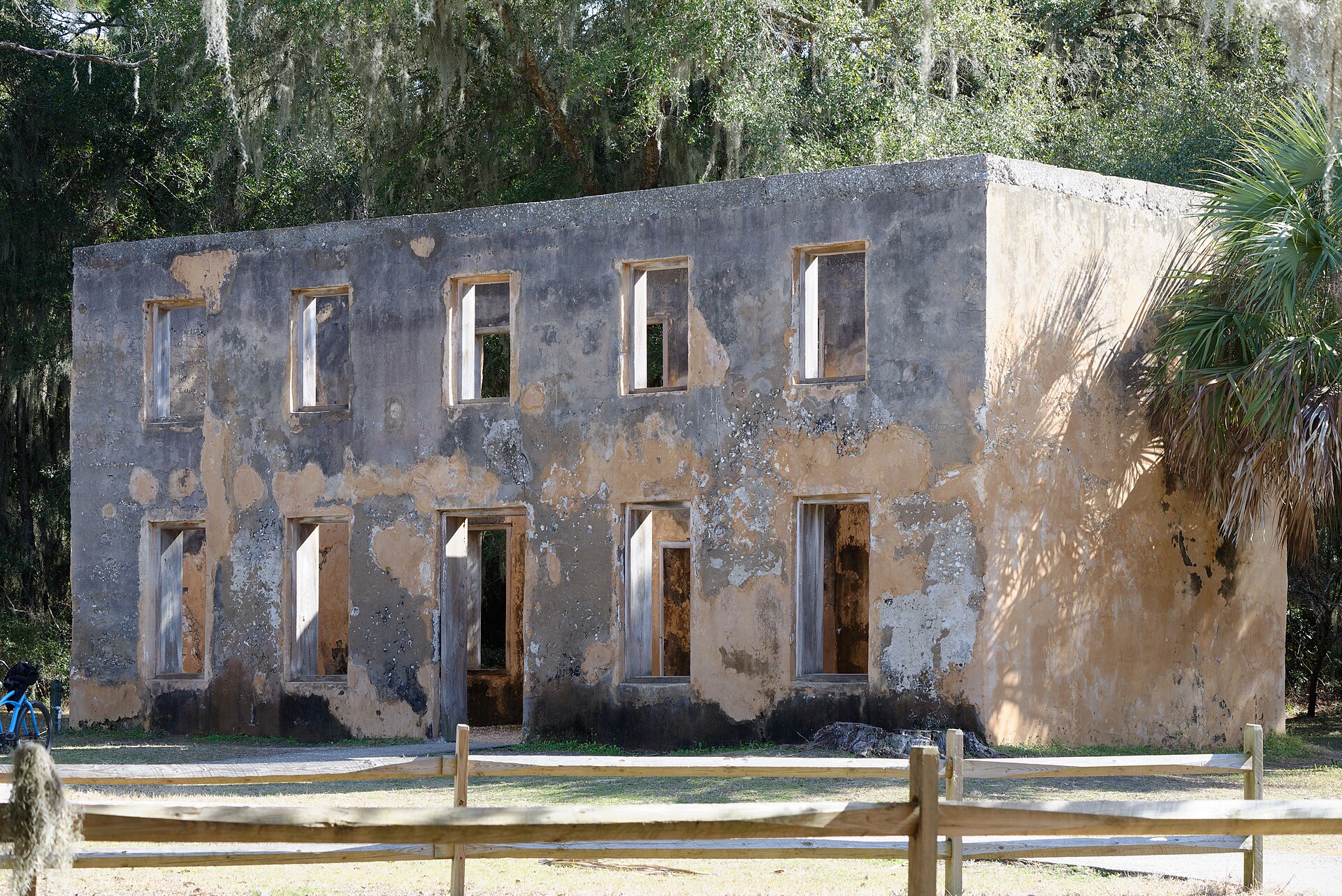
- Mosaic, Jekyll Island Museum — Central island, near the historic district
Mosaic is the island's museum, with interactive exhibits that cover the native peoples, the plantations, the club years and the state's purchase. Work by local artists is shown alongside. It makes a good first stop for orientation, or a cool refuge on a hot afternoon. Check the official site for opening times. - St. Andrews Beach — Southern end of the island
St. Andrews Beach sits at the southern tip, where tidal flats and dunes make it a calmer stretch than the main beaches. Birdwatchers come for shorebirds, and dolphins are sometimes seen offshore. Bring binoculars, shade and water, as there is little cover, and watch the tide before walking far along the sand.
Culture
Jekyll Island has a quiet, outdoorsy culture shaped by its status as a public island rather than a commercial resort. Cycling, fishing from the pier, birdwatching, long beach walks and guided history tours fill most days, and evenings tend to be early and unhurried. The island is part of the American South's coastal Georgia, so service is friendly, conversation is easy, and strangers on bike paths often say hello.
History is layered and openly discussed. The native Guale and Mocama peoples, Spanish and French explorers, British plantation owners and the wealthy club families each left traces, and the museum and tours try to tell these stories together rather than leaning only on the glamorous club era. Locals take pride in conservation: turtle nesting, dune protection and marsh preservation shape how the island is managed, and many residents volunteer with turtle patrols and clean-ups.
Family holidays dominate the calendar. Summer weekends bring crowds to the beaches and water park, while winter is much calmer, with cool days, empty sands and a more local feel. Roads are built with wildlife and cyclists in mind, and lighting is restricted at night to protect nesting animals, so the island is darker than most seaside towns. Visitors who respect that rhythm, with early starts, slow cycling and low-key evenings, tend to enjoy it most. Keep your distance from turtles, nests and nesting birds, leave driftwood and dune plants where they are, and use only the dim, shielded lights the island's rules allow after dark.
What to wear
Jekyll Island has no single traditional costume of its own. The Guale and Mocama peoples left few detailed records of clothing, and the island's best-documented dress belongs to the winter-club era, when families wore formal tailoring, long skirts and hats even for walks and carriage rides. That heritage appears today mostly in museum displays and costume details on historic tours, not in daily life.
What people wear now is relaxed coastal clothing. Shorts, cotton T-shirts, sun hats, sandals and swimwear are normal by day, and residents dress down further in summer. In the evening, a collared shirt or simple dress is enough at nearly every restaurant, including the more upscale ones, although a few ask for smarter casual wear. Cyclists often add padded shorts, caps and water bottles, and anglers wear wide-brimmed hats and long sleeves against the glare.
Visitors should plan around heat, humidity, sun and insects. From late spring to early autumn, light cotton or linen, a hat, sunglasses and high-factor sun cream matter more than style, and a light rain jacket is useful for sudden showers. Insect repellent helps near the marsh at dusk. Winter and early spring evenings can be cool by the water, so a light jumper or jacket is sensible. Wear sandals for the sand, but closed shoes for cycling and for walking among the driftwood, where splinters and sharp shells are common. No religious dress rules apply on the island.
What to eat
- Shrimp and grits — Seafood restaurants beside the Jekyll River and creek
Shrimp and grits is the classic Georgia coastal plate: local shrimp over creamy stone-ground maize grits, often with a spicy sauce or bacon. Look for it at seafood restaurants along the quiet tidal creeks on the island's western side, where the shrimp are usually sourced from nearby boats. - Fried or steamed oysters — Relaxed waterside restaurants near the marina
Oysters turn up fried, baked or served on ice, and the shells connect to the island's old tabby buildings. They are best in the cooler months. Try them at relaxed waterside restaurants near the marina, where the bar usually serves local beer alongside. - Catch of the day — Beachfront and village restaurants with outdoor decks
Many kitchens grill or blacken whatever has come in from the Atlantic that day, served with rice, slaw or seasonal vegetables. Ask what is freshest, and expect portions to be generous. A beachfront restaurant with a deck is a good place to eat it as the light fades. - Tex-Mex plates — Large restaurants near the beach village, with covered outdoor areas
Large Tex-Mex restaurants with covered outdoor seating are popular with families after a day on the sand, serving tacos, fajitas and nachos. It is easy, filling, shareable food, and handy with children or a big group on bikes. - Steak with an ocean view — Beachfront steakhouses on the island's eastern side
Steakhouses on the beach side serve American cuts, sides and cocktails, with a view over the dunes and sea. They suit a celebration dinner, and are worth booking ahead in summer and on holiday weekends. Check the restaurant's own site for menus and opening hours.
Plan it
Best time. March–May and October–November, when days are mild enough for cycling and long beach walks. Summer is hot, humid and crowded, with sudden storms. Winter is quiet and cool, good for walking and birdwatching but poor for swimming.
How long. 2–3
Getting there. No scheduled flights land on the island, only a small airport for private aircraft and aerial tours. The nearest major airports are Savannah to the north and Jacksonville in Florida to the south, each a drive of under two hours along the interstate. The only road on is the Downing Musgrove Causeway from Brunswick, where a daily entry fee applies; check the official site, http://www.jekyllisland.com/, for current charges and annual passes.
Budget. mid
Tips
- Hire or bring a bicycle: the island is flat and the paths link most sights.
- Book accommodation and popular restaurants early for summer weekends and school holidays.
- Go to Driftwood Beach around sunrise for soft light and fewer people.
- Carry water, sun cream and insect repellent, especially near the marsh at dusk.
- Use reflectors and lights if cycling at night, as roads are dark and cars are hard to see.
Etiquette
- Keep well away from turtles, nests and nesting birds, and never disturb them.
- Leave driftwood, shells and dune plants where they are.
- Use a bicycle light and reflectors after dark, and follow the island's lighting rules.
Nearby
Sources
- Wikidata Q1573938 (CC0)
- Wikipedia: Jekyll Island (rev 1382479393) (CC BY-SA 4.0)
- Wikivoyage: Jekyll Island (rev 5405751) (CC BY-SA 4.0)
- Photo: Beach and Boardwalk on Jekyll Island (normanack) (CC BY 2.5)
- Photo: Jekyll Island, Georgia, US, original entrance (Jud McCranie) (Public domain)
- Photo: Relief location map of the USA (Uwe Dedering) (CC BY 3.0)
- Illustration: Map of Jekyll Island, A Field Guide to Jekyll Island (Carol Johnson) (Public domain)
- Photo: Horton House, Jekyll Island (Jud McCranie) (CC BY-SA 4.0)
- Photo: Fishing pier, Jekyll Island (Jud McCranie) (CC BY-SA 4.0)
- Photo: Jekyll Island Club clubhouse (Ebyabe) (CC BY-SA 2.5)
- Photo: Driftwood Beach (Rob Holland) (CC BY 2.5)


Wildlife
- Loggerhead sea turtle (animal)
The loggerhead is a sea-going reptile with a reddish-brown shell and yellow-to-brown skin, rather like a living boulder that paddles. Fully grown adults are heavier than most people. Jekyll Island is a place where sea turtles can be seen, and its driftwood beaches make a lovely setting for the hope. To watch well, keep a generous distance, speak softly, and consider joining a local guide who knows how to look without disturbing them. Never touch or feed a turtle; simply enjoy the sight.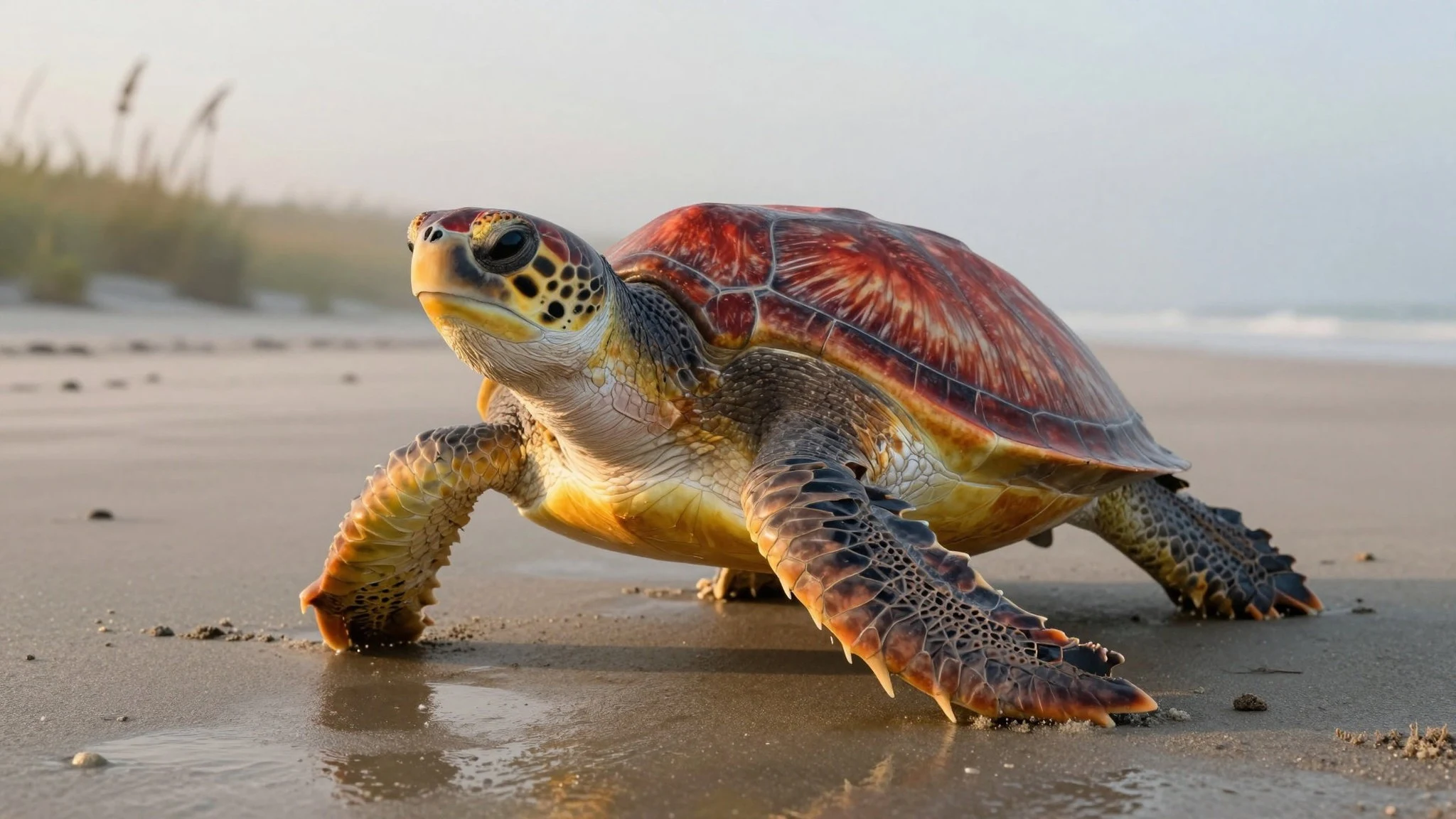
- Bottlenose dolphin (animal)
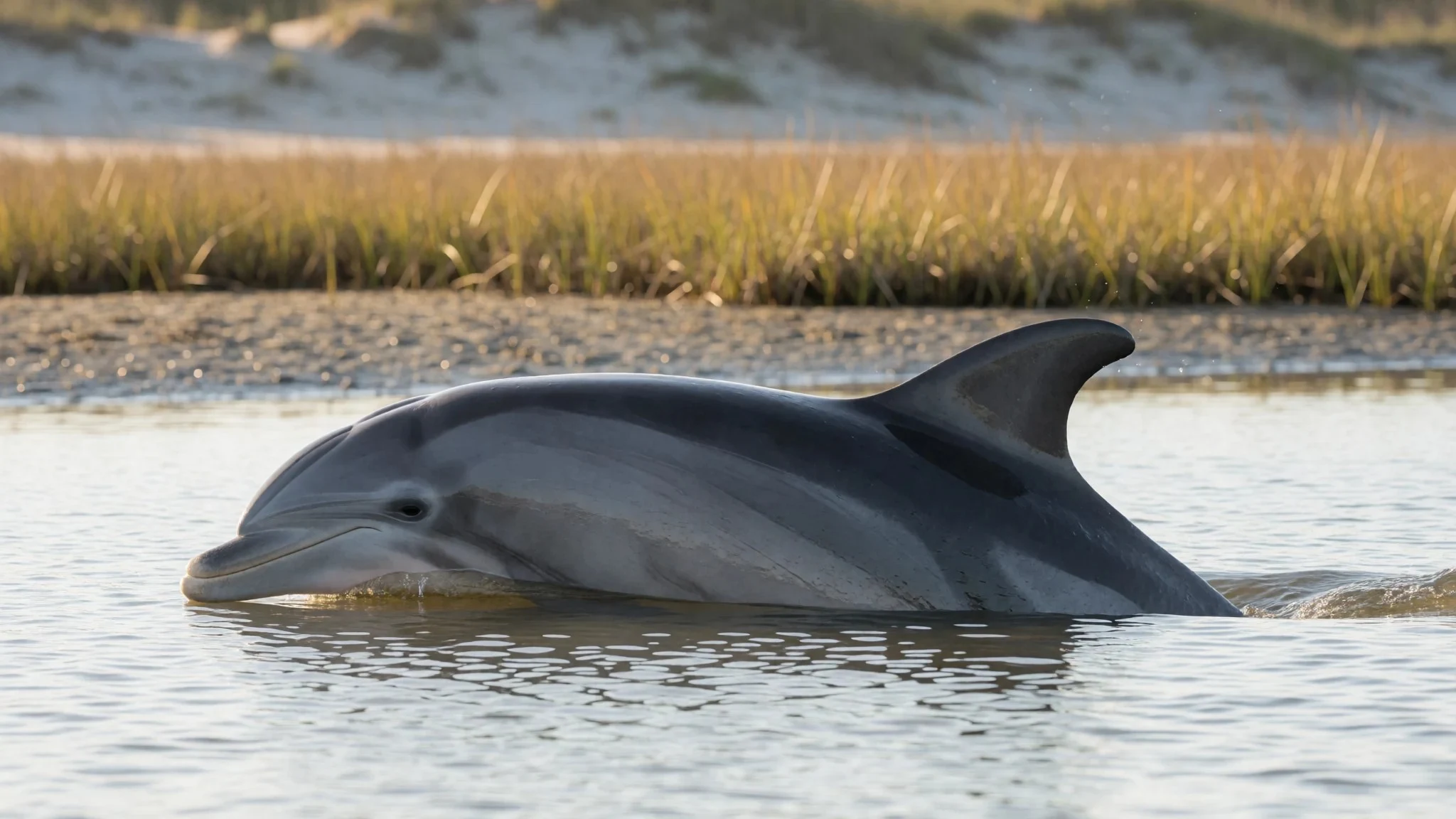
The common bottlenose dolphin, also called the Atlantic bottlenose dolphin, is the classic dolphin most of us picture when we hear the word. Off Jekyll Island they are sometimes spotted offshore, so a sighting is a happy bonus rather than a promise. Scan the water patiently from the shore, stay quiet, and let them come and go on their own terms. A local guide can help you look well. Never feed them, and keep a respectful distance.