Indiana Dunes
Indiana Dunes, United States
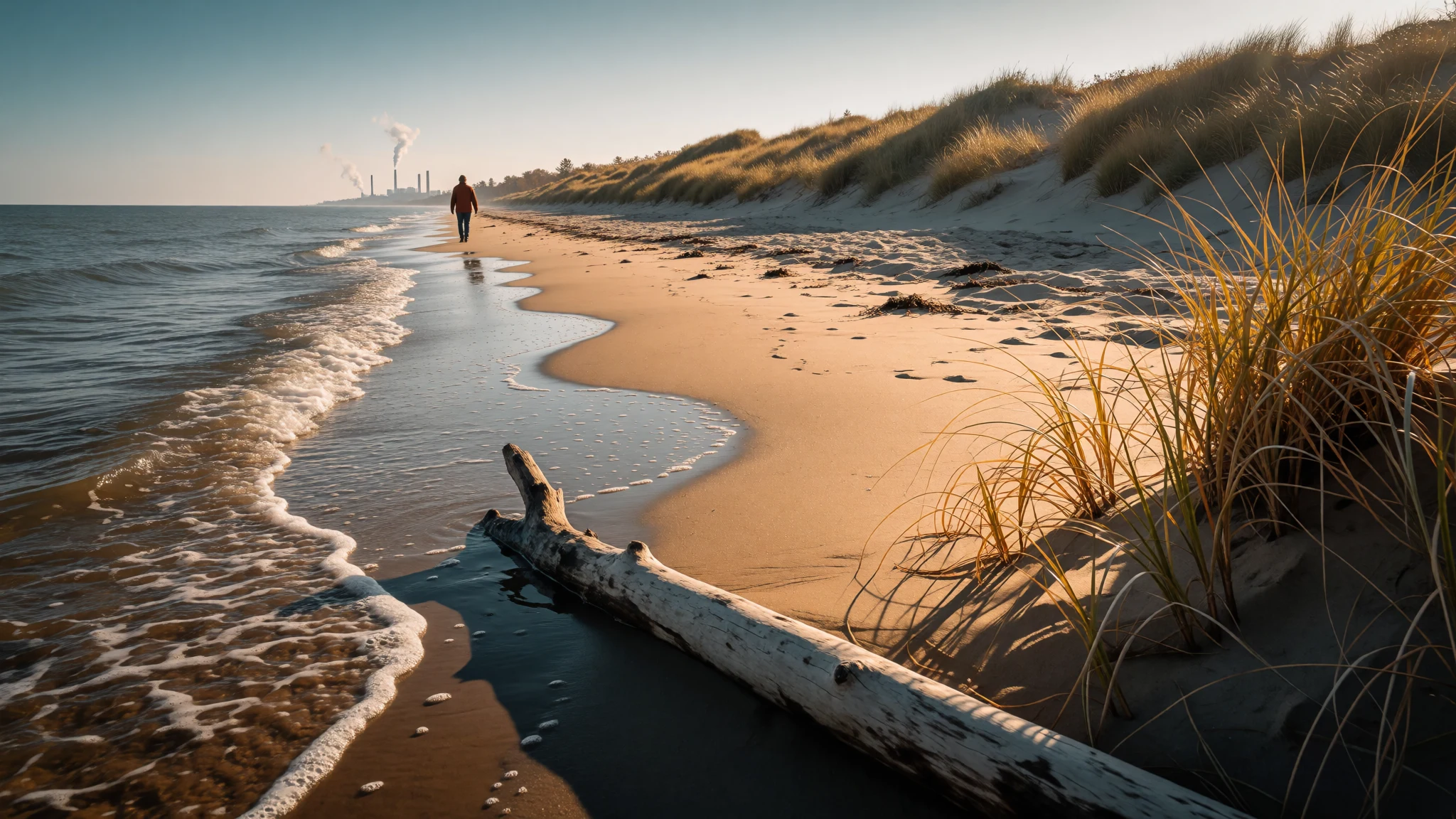
Indiana Dunes puts wooded sand ridges, wide lake beaches and quiet wetland within reach of Chicago, with steel works on the skyline.
The place
Indiana Dunes National Park sits on the southern curve of Lake Michigan in northwest Indiana, a strip of beach, dune ridge, wetland, prairie and woodland squeezed between towns and heavy industry. It became a national park in 2019, after decades as a national lakeshore run by the National Park Service. The shape is awkward on a map. The protected land comes in pieces, a state park is folded into the middle, and a steel works and a port separate the eastern shore from the western. That mix is part of the character. From some beaches the view is open water and sand; from others, chimneys and ore ships belong to the horizon. Inland, the scenery changes fast. Wooded dunes give way to marsh, creeks wander north to the lake, and a peat bog and a heron nesting site lie in outlying parcels. The climate is humid continental, with hot summers and properly cold winters, and the lake shapes the weather: breezy on the shore, sometimes foggy, and capable of piling ice into ridges in midwinter. Chicago is close by train, so the park works as a day out from the city as well as a stay of a few days. There are no services inside the park itself. Food, fuel and beds are in the towns along its edge, near the main road junctions.
Its story
Indiana Dunes has been a crossing place for a very long time. The earliest evidence points to seasonal hunting camps rather than year-round villages, with a few groups of burial mounds left by people linked to the Hopewell world. From the 1500s, European trade and rivalries pushed whole communities westward, and the dunes became a waypoint between east and west that villages from far around still used as hunting ground. In the nineteenth century native villages reappeared, soon followed by settlers. Joseph Bailly, a trader who had worked around Niles in Michigan, is the earliest settler on record; he made his home beside the Calumet River. Other communities followed, among them Chesterton, Porter, Tremont and the Town of the Pines. Later the shoreline was drawn into the industrial growth around Chicago and Gary, which explains why steel and sand sit so close together here. People who loved the dunes argued for their protection, Congress created a national lakeshore, and in 2019 it was raised to national park status. The lake basin itself was shaped by glaciers, and the dunes are one of the things that settled along its edge afterwards. The result is a place where natural history, trade routes and factory chimneys all left marks within a few kilometres of one another.
What to see
- Century of Progress Homes — Beverly Shores
Five houses stand here that were first shown at Chicago's 1933 world's fair, in its exhibition of homes of the future. They were later moved to the lakeshore and now form a small architectural oddity among the trees. Look from the outside, and check the official site for any open days.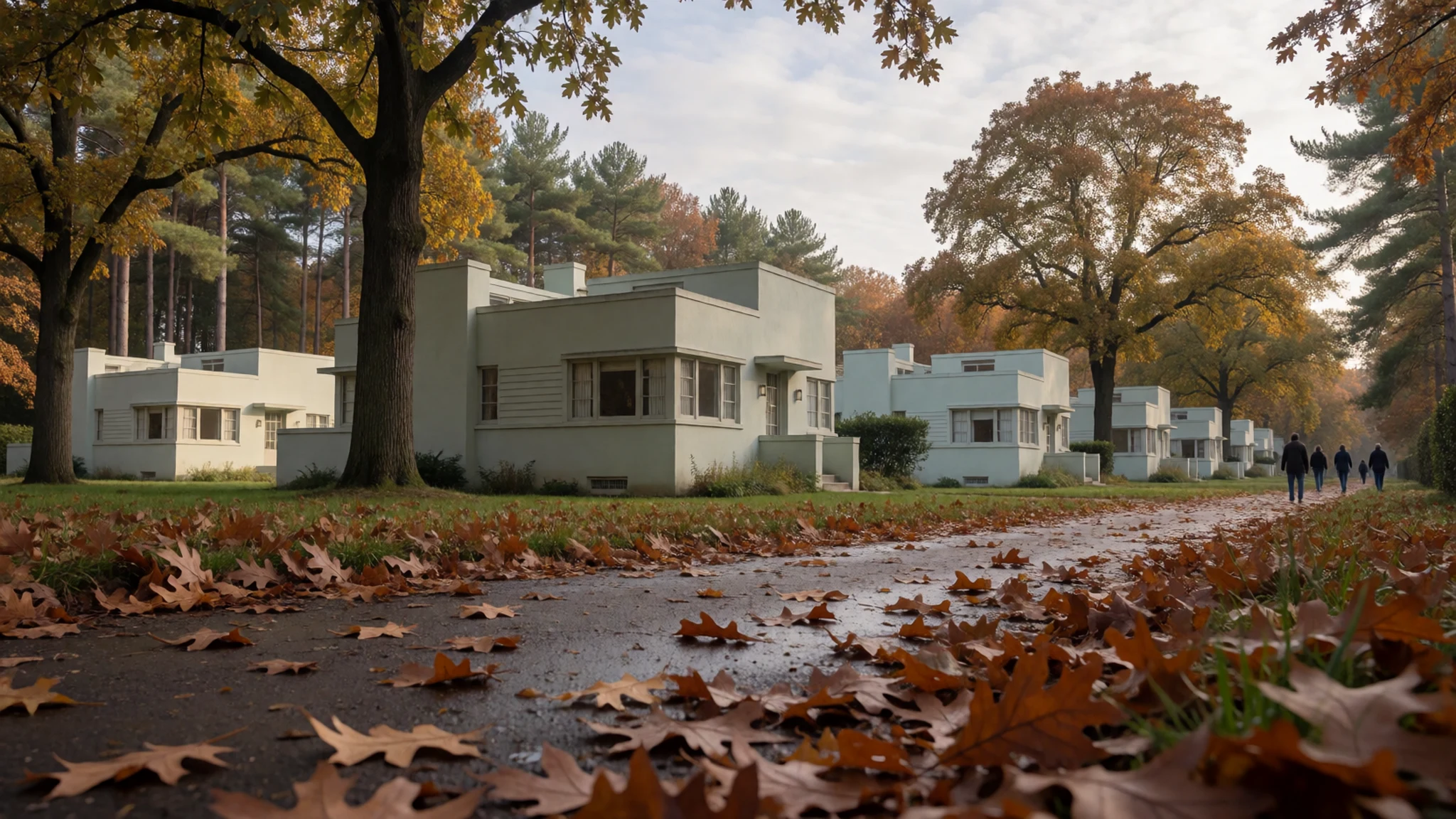
- West Beach — Western section, near Gary
West Beach is the main swimming and picnic spot on the western side, beyond the port and its steel mills. It sits beside Long Lake, with short trails through dune woodland, so a day here can mix sand, water and shade. Expect the most facilities and the most people on summer weekends.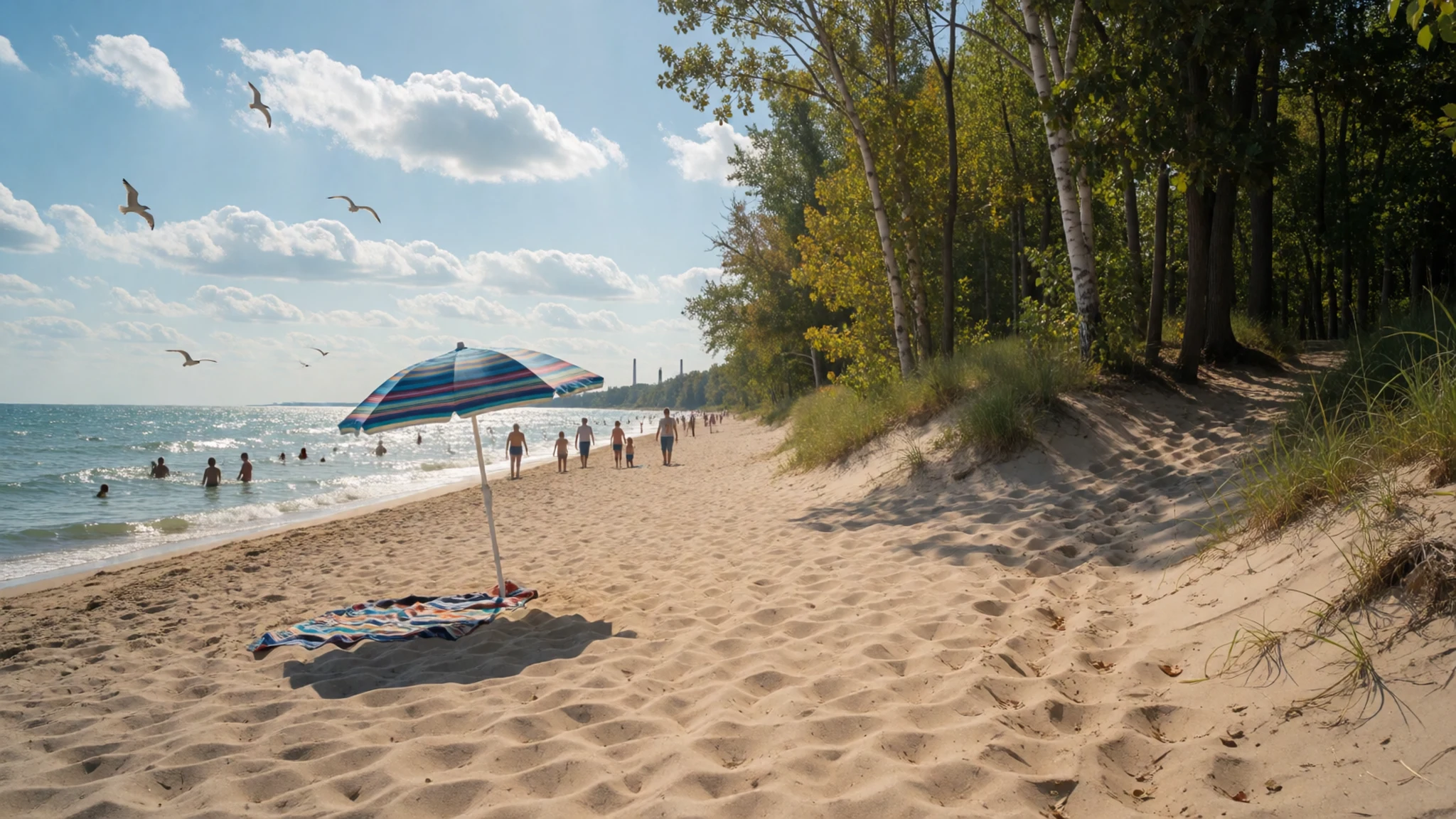
- Kemil, Dunbar and Lake View beaches — Central shoreline
These neighbouring beaches sit close together, and Kemil is wheelchair-accessible. Along with Lake View, they are among the stretches where industry is least visible, so the view is mostly water and sky. Good choices for a quieter swim or a long, unhurried walk along the shoreline.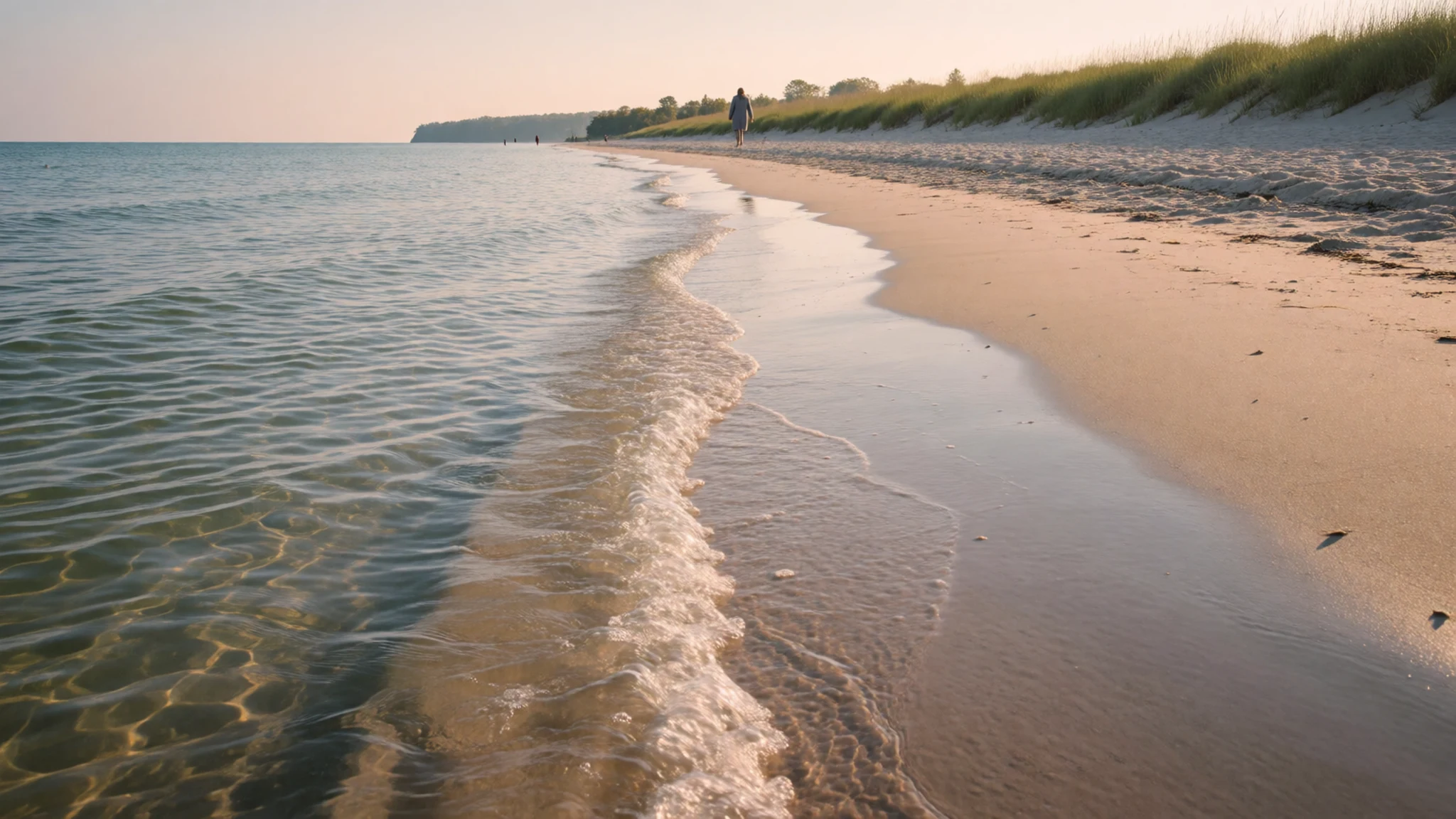
- Dune climbs in Indiana Dunes State Park — Indiana Dunes State Park
The state park, wedged into the national park's shoreline, has steep sandy climbs with wide views over Lake Michigan. On a clear day the Chicago skyline appears across the water. Keen walkers can link three named dunes, Mount Tom, Mount Holden and Mount Jackson, in one tiring loop.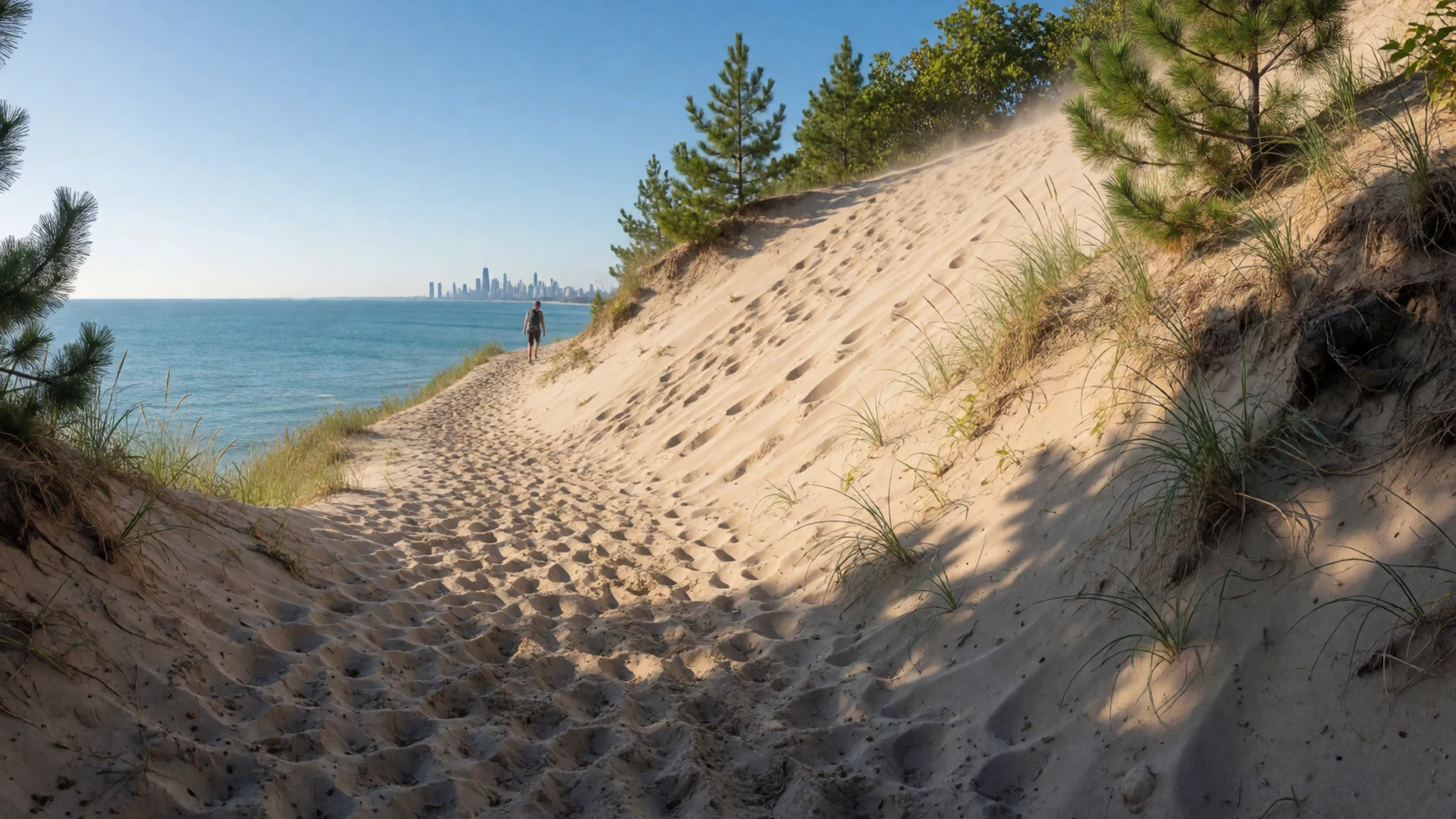
- Central Beach and Mount Baldy — Eastern section, near Michigan City
Central Beach is popular despite being awkward to reach, and Mount Baldy lies further on, with a reputation as the most remote corner of the shoreline. It suits visitors who want a longer walk and fewer neighbours on the sand. Bring water and sun protection.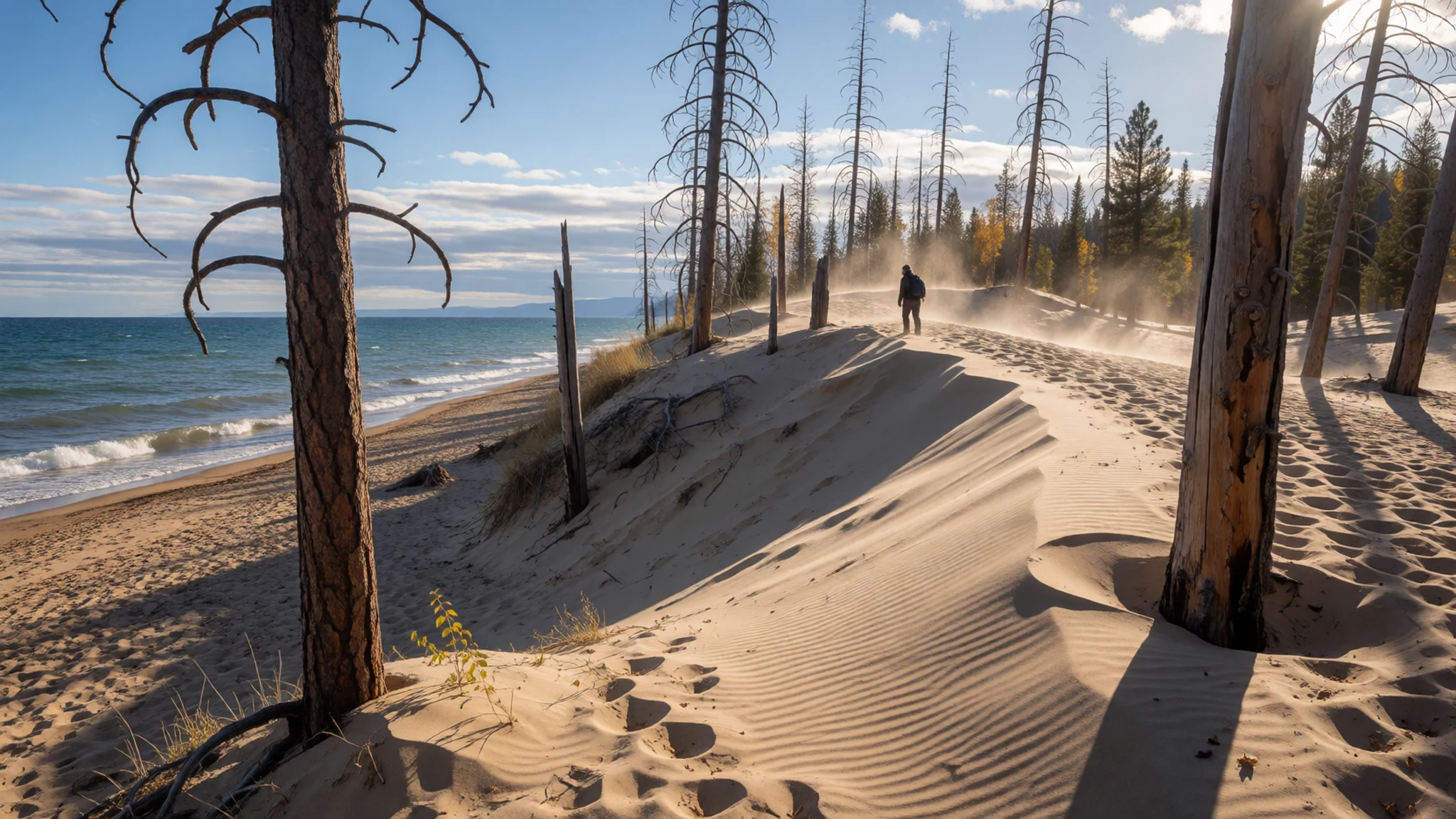
Culture
Indiana Dunes has a culture shaped by its position between a great lake and a great city. On summer weekends the beaches fill with families from Chicago and the Indiana towns around it, with coolers, folding chairs, volleyball nets and children building in the sand. The landscape is also industrial, and locals are used to the sight of steel plants and cargo ships next to a protected shoreline; many people live and work in those same communities. Conservation has a long and active history here, since the dunes were saved by people who argued that sand, wetland and prairie were worth keeping beside the factories. Rangers run talks and walks on the plants, birds and shifting sand, and local people volunteer in the park. Lake Michigan itself commands respect. Swimmers pay attention to flags, wind direction and warnings about rip currents, which can appear suddenly on days with a strong north wind. In winter, ice can pile along the shore in ridges that look solid but may hide air pockets, and walking on it is dangerous. Alcohol is permitted across the park except inside National Park Service buildings, but glass is not allowed on the beach. Stay on marked trails and boardwalks, because the dune grass holds the sand in place and a single shortcut can start an erosion scar that lasts for years.
What to wear
Indiana Dunes has no single traditional costume or textile of its own. The region was home to Native American peoples whose clothing and regalia belong to their own nations and ceremonies, and the park does not present a dress tradition; visitors interested in these should look to the tribal communities and museums that speak for them. What people wear now is practical and relaxed. Beach days mean swimwear, shorts, sun hats and sandals, with towels and picnic gear in tow. Walkers and birdwatchers favour trainers or light boots, quick-dry trousers and a windproof layer, while locals in cooler months wear fleeces, wool hats and waterproof jackets. Visitors should dress for the lake rather than for any dress code, as there are no religious or modesty norms to meet. In summer, bring a hat, sunscreen and a swimsuit, and shoes for the walk, because dune sand gets very hot and a long climb is tiring in flip-flops. Shorts are fine on the beach, but long sleeves and trousers help in woodland and marsh, where insects can be a nuisance. Spring and autumn are changeable, so layers work best. In winter, bring a proper coat, gloves, a hat and sturdy waterproof boots, since the wind off the lake is sharp.
What to eat
- Lake perch fish fry — Family restaurants in Michigan City, Chesterton and Porter
A Great Lakes classic: fried fillets with chips and coleslaw. Look for it on the menu at family restaurants and neighbourhood taverns in the lakeside towns, especially on Fridays. Ask what the fish is, as some places use other white fish.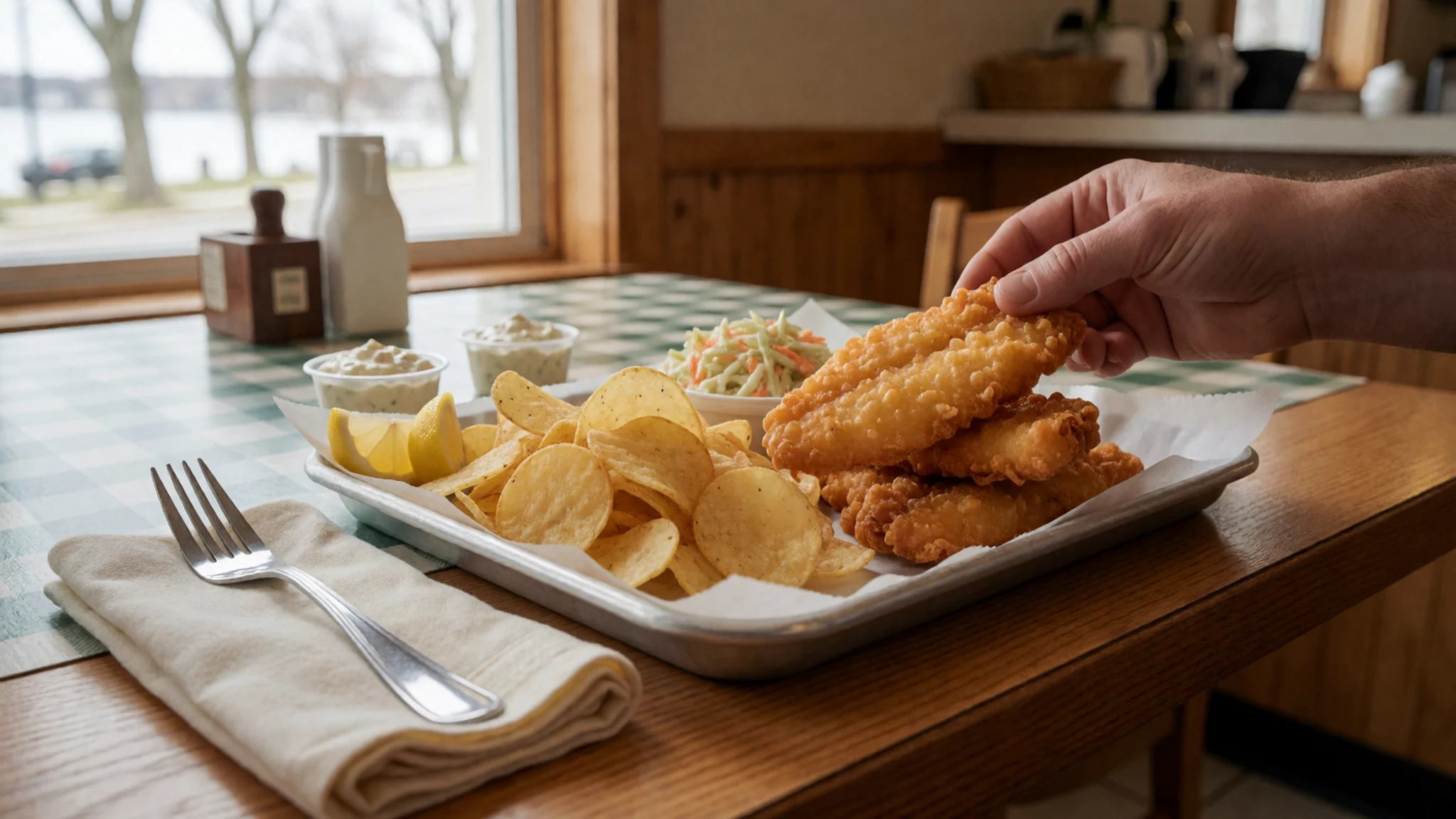
- Chicago-style deep-dish pizza — Pizzerias in Chicago, near the South Shore Line stations
A tall, buttery crust filled with cheese, toppings and chunky tomato sauce, eaten with a knife and fork. It is a Chicago speciality rather than a local one, but many visitors have it before or after the train ride to the dunes.
- Chicago-style hot dog — Hot dog stands and casual eateries around the region
A beef frankfurter in a poppy-seed bun with mustard, onions, relish, pickle, tomato and peppers, usually without ketchup. It is easy to eat on the move and suits a beach day. - Sweet corn and farm-stand fruit — Roadside farm stands and local markets inland of the dunes
In late summer, farm stands in the countryside around the park sell sweet corn, tomatoes, peaches and berries. Buy them for a picnic, since the park itself has no food services. - Diner breakfast — Diners and family restaurants near the main road junctions
Eggs, bacon, hash browns, pancakes and strong coffee make a sensible start before a long dune walk. Most towns near the park have a diner or family restaurant open early.
Plan it
Best time. June to September for swimming, long days and open beaches, though summer is hot and humid and weekends are busy. October is cooler and quieter for walking. Winter brings cold winds and shelf ice, which is dramatic to see from the shore but dangerous to walk on.
How long. 2–3
Getting there. Chicago is the nearest large city and airport. The South Shore Line runs trains from Chicago to Michigan City and on to South Bend, with stops near the park, and the last leg is a short walk, ride or taxi. By car, interstates from Chicago, Indianapolis, Detroit and Cleveland reach the area, and two main US highways run through the park.
Budget. low
Tips
- Bring food, water and sun protection, because there are no services inside the park; restaurants are in the nearby towns.
- Go early on summer weekends to find space on the beach and avoid the heat on the dunes.
- Check the official site (https://nps.gov/indu) for beach, trail and parking conditions before you travel.
- Heed rip current warnings, especially on days with a strong north wind, and do not swim alone.
- Do not walk on shelf ice in winter; it can hide air pockets and rescue is very difficult.
Etiquette
- Stay on marked trails and boardwalks to protect the dune grass.
- Leave glass at home, as it is not allowed on the beach.
- Take all rubbish with you or use the bins provided.
Nearby
Sources
- Wikidata Q6023179 (CC0)
- Wikipedia: Indiana Dunes National Park (rev 1372936645) (CC BY-SA 4.0)
- Wikivoyage: Indiana Dunes National Park (rev 5372564) (CC BY-SA 4.0)
- Photo: Indiana Dunes National Lakeshore, Michigan City (Diego Delso) (CC BY 3.0)
- Photo: Western section of the national lakeshore (Public domain)
- Photo: Map of the east portion of Indiana Dunes National Lakeshore (Public domain)
- Photo: Stephen T. Mather visit to the Indiana Dunes in 1916 (Public domain)
- Photo: Continental Glaciers filling the Great Lakes Basins (Public domain)
- Photo: Nature Shot, Dunes Ecosystem (Oydman) (CC BY 3.0)
- Photo: Florida Tropical House in Beverly Shores (Dima Sergiyenko) (CC BY-SA 4.0)
- Photo: Trail Map of the Miller Woods Trail System (Public domain)


Wildlife
- Great blue heron (animal)
Remember the great blue heron as the large wading bird that fishes in the shallows. It likes the edges of lakes and wetlands, and Indiana Dunes has plenty of marsh and creeks that wander towards the lake. Its nesting site lies in an outlying parcel rather than along the main dunes, so a guide can help you find it. Watch from far enough away that it stays relaxed, speak softly, and never offer it food.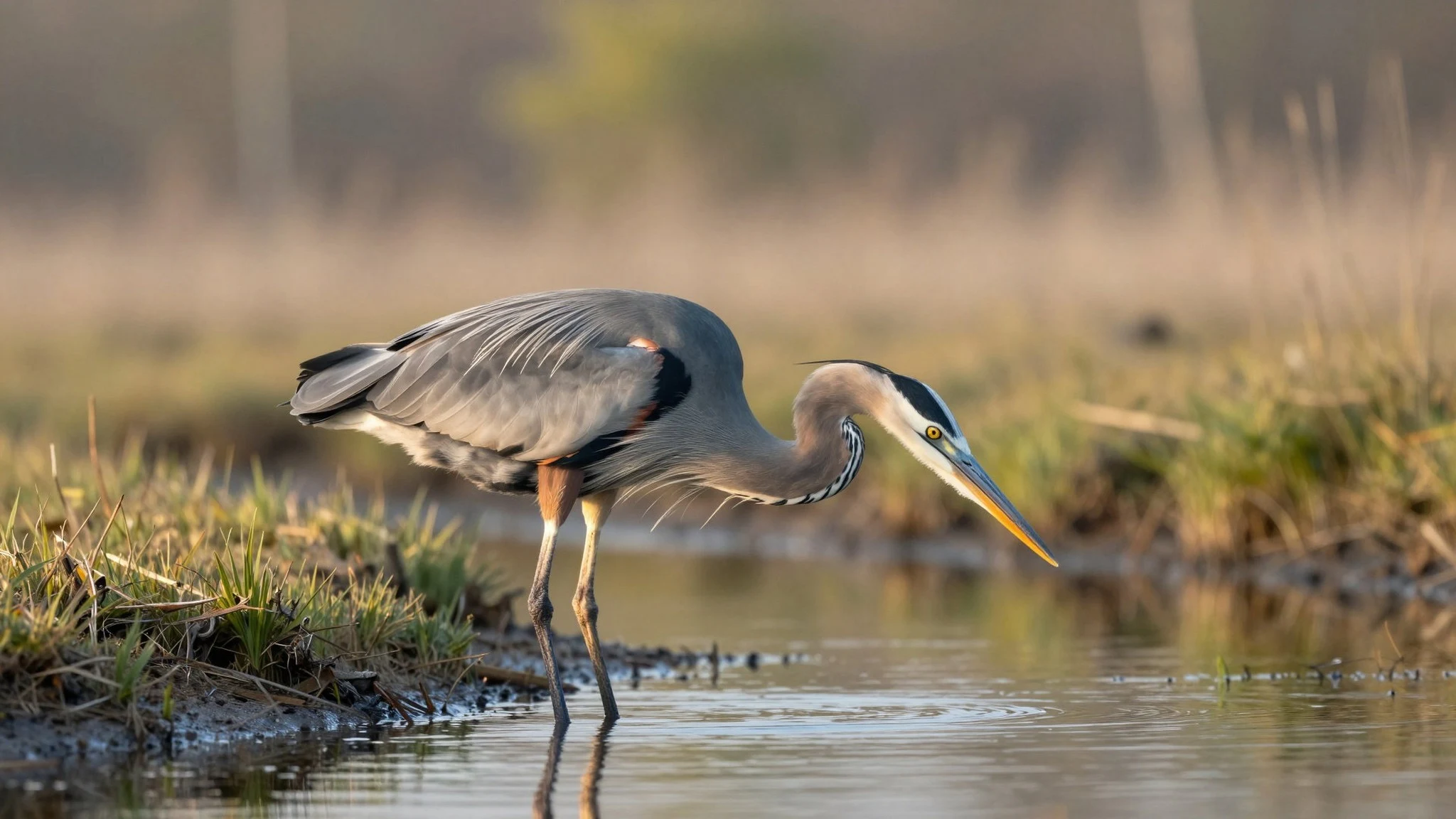
- Great blue heron (bird)
Remember the great blue heron as the large wading bird that fishes in the shallows. It likes the edges of lakes and wetlands, and Indiana Dunes has plenty of marsh and creeks that wander towards the lake. Its nesting site lies in an outlying parcel rather than along the main dunes, so a guide can help you find it. Watch from far enough away that it stays relaxed, speak softly, and never offer it food.