Hudson Bay
Hudson Bay, Canada
Hudson Bay is a vast, shallow Arctic-edge sea where polar bears, belugas and fur-trade history can be met from a few small, remote shore towns.
The place
Hudson Bay is a shallow inland sea of salt water in northern Canada, covering about 1.2 million square kilometres yet averaging only about 100 m deep. Politically the whole of it belongs to Nunavut, although Manitoba, Ontario and Quebec all have shoreline on its southern and eastern sides. Its southern tip narrows into James Bay, and two outlets connect it to wider oceans: the Hudson Strait towards the Labrador Sea and the Atlantic, and the Foxe Channel towards the Arctic Ocean. The bay works as a giant collecting bowl. Rivers from a drainage basin of about 3.9 million square kilometres, reaching from Alberta across the prairies and into a few northern US states, finish their journeys here. The coast is low and flat, a mix of tundra, marsh, stunted spruce in the south and bare, scraped rock, with very few roads and even fewer towns. Ice is the calendar: it forms in autumn, locks the water through winter and breaks up in early summer, and everything living here follows that rhythm. Polar bears gather on shore waiting for the freeze, belugas crowd into river mouths in summer, and the marshes fill with migrating birds. A visit means picking one stretch of this long coast rather than seeing the bay as a whole. Churchill, in Manitoba, is the usual choice because it is reached by plane and rail rather than road, and its tours are set up for wildlife. Expect high costs, weather delays and a great deal of sky.
Its story
Hudson Bay entered European maps through the search for a northern shortcut to Asia. Henry Hudson, an Englishman sailing a ship called Discovery, pushed into the bay in 1610 and charted part of its eastern shore. Ice trapped his ship, and the crew spent the winter ashore near the southern end, around James Bay. When the ice loosened in 1611, Hudson wanted to carry on exploring; the crew mutinied instead and set him adrift in a small boat with a few others. What became of them is not known. Hudson did not find an empty land. Cree, Inuit and other peoples had lived along these shores and rivers for a very long time, hunting seals, whales, caribou and geese, and they became the trading partners on whom everything later depended. Other expeditions followed, among them Sir Thomas Button's in 1612, still hunting for a passage. Trade soon replaced exploration. In 1668 the ship Nonsuch reached the bay and came home with beaver pelts, and that success led to the Hudson's Bay Company, which still trades under the name. The English Crown gave it a monopoly over the whole watershed, a territory called Rupert's Land. Forts and posts rose at river mouths, and the fur economy drew Indigenous trappers, European employees and later missionaries into a system that reshaped the coast. The abandoned mission on the tundra near Arviat is one small reminder of that missionary era.
What to see
- Churchill in polar bear season — Churchill, Manitoba
Churchill, on the Manitoba shore, is where many visitors come to watch polar bears gather as the bay freezes in autumn. Viewing is mostly from tall tundra vehicles run by local operators, not on foot, and the town takes bear safety seriously. Book well ahead with established operators and check current conditions with them.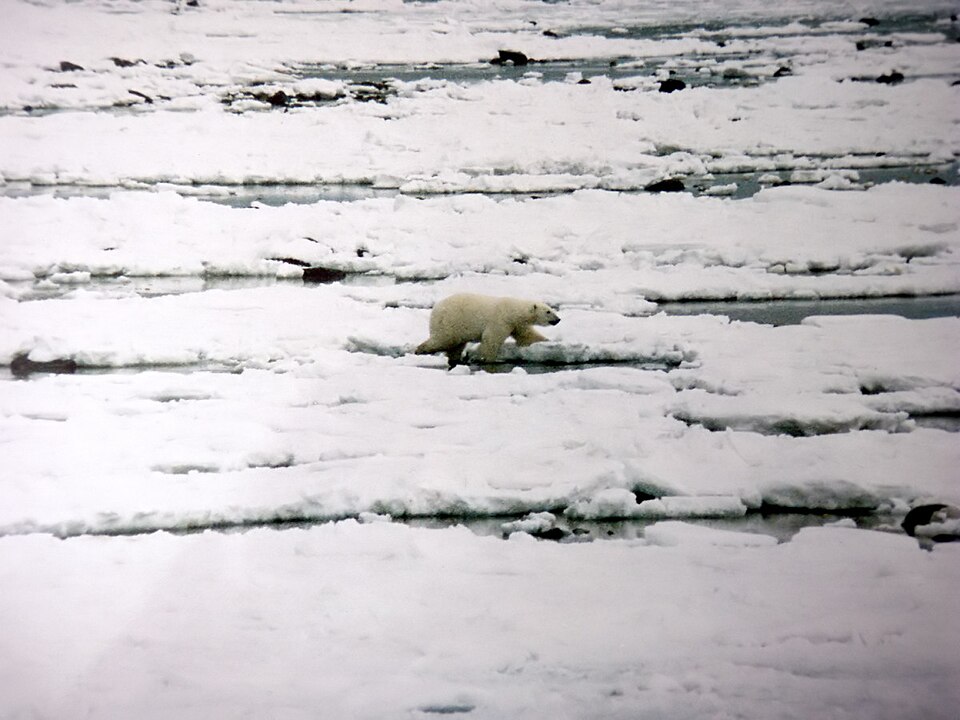
- Belugas on the Churchill River — Churchill River estuary, Manitoba
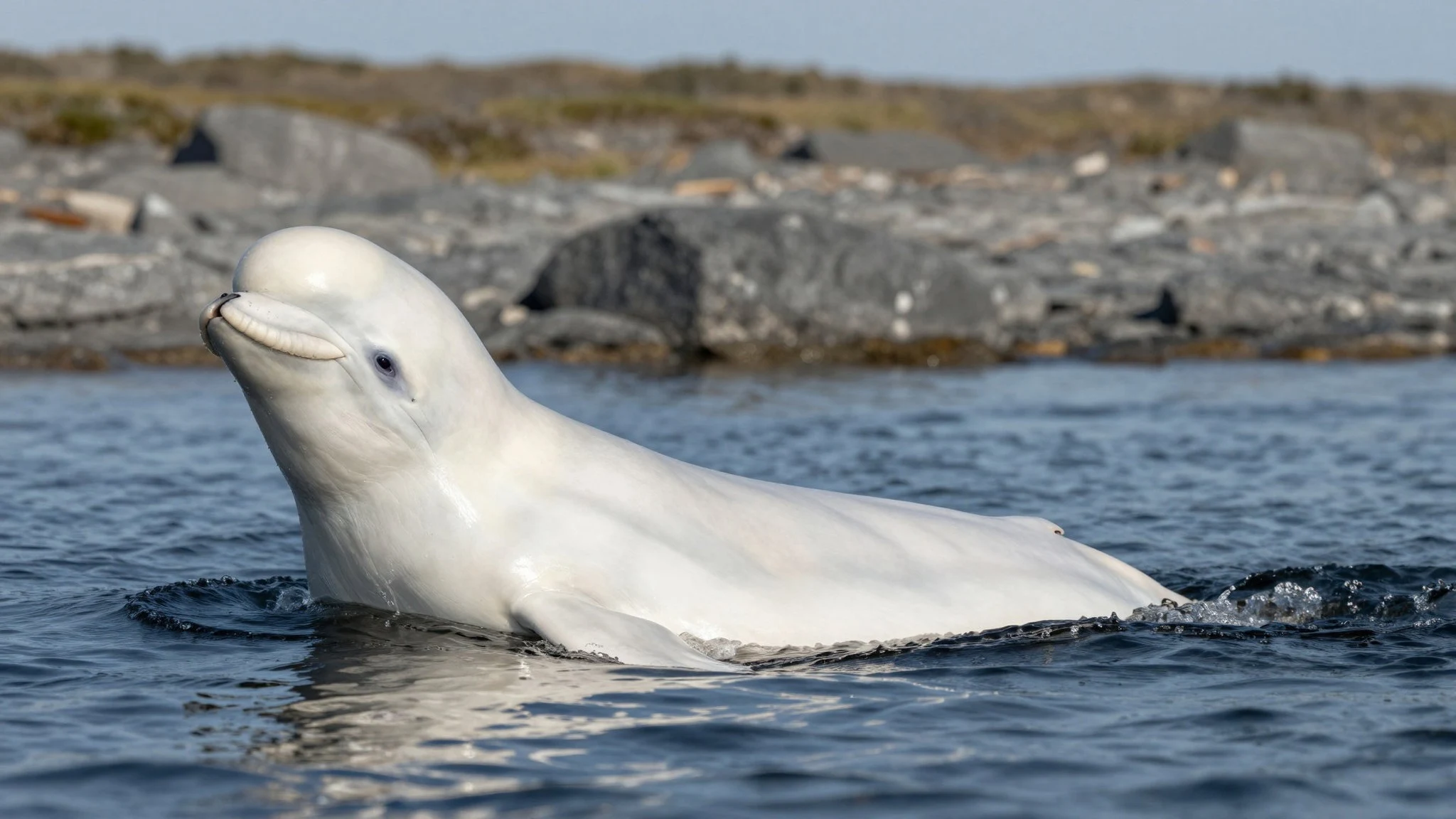
In summer, belugas move into the Churchill River estuary near Churchill, and boat and kayak trips from the town take visitors out among them. The water is cold, the whales are pale and often curious, and tides and wind decide departures. Keep a spare day, and check each operator's season directly. - Prince of Wales Fort — Churchill, Manitoba
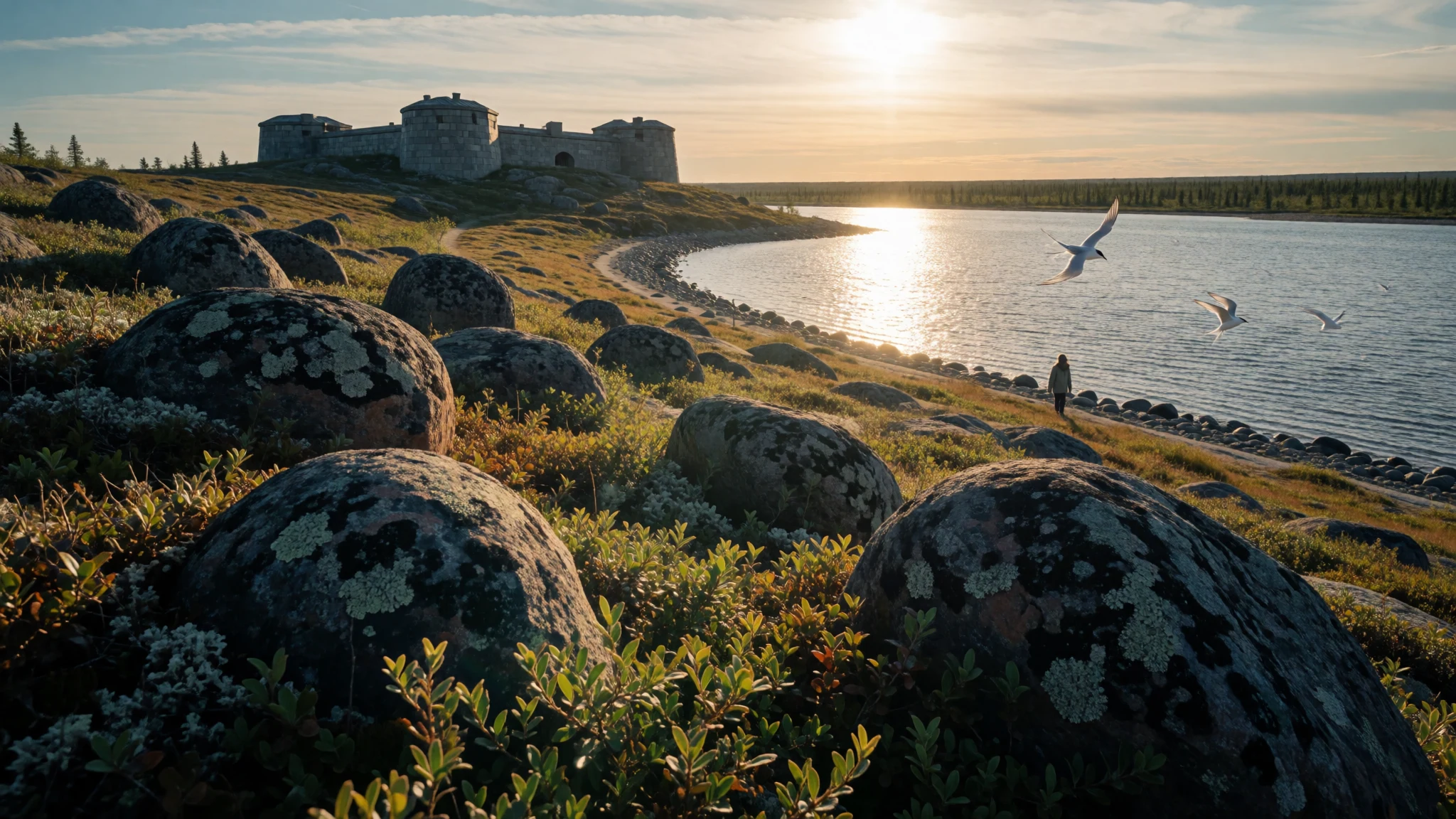
Across the river mouth from Churchill stands Prince of Wales Fort, a stone fortress the Hudson's Bay Company built to protect its northern trade. Parks Canada looks after it as a historic site. Reaching it normally involves a boat or an organised tour, so check the official Parks Canada site for current access. - Arviat — Western shore, Nunavut
Arviat, on the western shore in Nunavut, is an Inuit community where the human side of the bay is easiest to meet. No road connects it to the rest of Canada, services are basic, and visitors are few. The surrounding tundra has old mission remains and good summer birdwatching. Ask locally about guides; this is a home, not an attraction.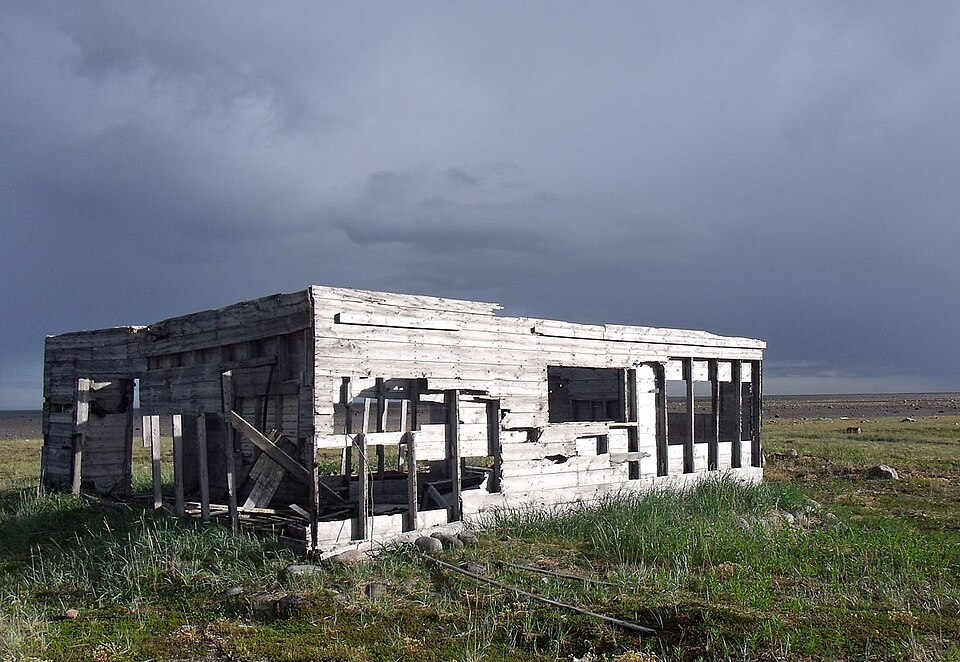
- James Bay and Moosonee — James Bay coast, Ontario
The southern arm of the bay can be approached from Ontario at Moosonee, linked to the south by a railway, with boats onward to Moose Factory, an old fur-trade post on an island. The country is flat marsh and river, rich in geese in spring and autumn. Check rail and boat arrangements before planning.
Culture
Hudson Bay's shores hold Inuit communities on the Nunavut side and Cree, Dene and Métis communities further south, so the culture a visitor meets depends on where on the coast they land. Inuktitut is widely spoken in Nunavut, Cree in parts of the south, and English or French in tourist towns such as Churchill. Hunting, fishing and gathering, often called country food, remain important for nutrition and identity, and wildlife is part of daily life rather than scenery. Carving, printmaking, beadwork and sewing are living crafts, and buying directly from artists or community co-operatives puts the money where it belongs. The long fur-trade history survives in place names, in the Hudson's Bay Company's stores and in families whose roots are both Indigenous and European. Churchill itself is a small frontier-style town of tour offices, gift shops and a museum, shaped by bears, rail and port as much as by tourism. Weather matters culturally too: people plan around wind, ice and light, and visitors fit into that rhythm rather than the reverse. Remote communities have often carried the weight of outside attention, so the polite approach is to ask, listen and assume little. Ask permission before photographing anyone or their home, and do not walk out of town on foot without local advice, because of polar bears.
What to wear
Traditional dress around Hudson Bay was built for survival. Inuit clothing used caribou and sealskin, sewn with sinew into parkas, trousers and mittens; the amauti, a woman's parka, has a pouch for carrying a baby, and sealskin kamiit boots stay warm and waterproof. Cree and Métis dress used tanned hide, moccasins and beadwork, and wool arrived through trade: striped Hudson's Bay point blankets and the woven Métis sash, the ceinture fléchée, are both familiar. These garments appear today at festivals, ceremonies and gatherings, and some people wear them daily with pride. Everyday clothing now is practical northern wear: insulated parkas, snow boots, wool hats and thick mitts in winter, fleece and waterproofs in summer, often with a handmade touch such as beaded earrings or sealskin trim. Visitors should dress in layers: a thermal base, a fleece or wool middle layer and a windproof outer shell. For autumn bear season add insulated waterproof boots, a warm hat, a scarf and mittens over gloves. In summer bring a light waterproof jacket, a sun hat and a head net or repellent for midges and mosquitoes. There is no religious dress code to worry about in most places, but modest, practical clothes suit small communities. Good boots matter more than style, since the ground is wet and uneven or frozen hard, depending on the season.
What to eat
- Arctic char — Northern community cafés, co-op shops and feasts
Arctic char is a cold-water fish with pink flesh, eaten fresh, dried, smoked or frozen and sliced raw in Inuit homes. Look for it at community feasts, in northern cafés and co-operative shops, and on some Churchill restaurant menus in season. - Bannock — Cafés, craft fairs and community events
Bannock is a plain bread, fried in a pan or baked on a stick or tray, eaten warm with jam or butter, or alongside stew and fish. It turns up at craft fairs, community gatherings and everyday cafés across the north. - Caribou — Family tables and community feasts
Caribou meat, roasted, stewed or dried, is a staple of Inuit and Cree cooking. It is rarely sold on restaurant menus; it is mostly shared in homes and at feasts. If invited to share it, accept graciously rather than asking to buy. - Wild goose — Moose Factory and Moosonee community events
Goose is a seasonal Cree food on the James Bay coast, roasted or smoked after the spring and autumn hunts. Families plan their year around the geese. Visitors may meet it at community events in Moose Factory and Moosonee. - Tundra berries — Local craft sales and community stalls
Blueberries and crowberries ripen on the tundra in late summer and are picked by families, eaten fresh, cooked into jam or folded into bannock. Jars sometimes appear at local craft sales. Pick only with local guidance, and never near bears.
Plan it
Best time. Late June to August for belugas, open water and long daylight, though mosquitoes and midges are bad; October and November for polar bears gathering on shore before the freeze, in cold, short days; February and March for aurora and deep winter cold.
How long. 3–5
Getting there. Fly to Winnipeg, then on to Churchill, which has no road link to the rest of Canada; a railway also serves the town, so check its current service. Other shore communities such as Arviat and Moosonee have their own flights or rail links, so confirm routes with airlines before planning.
Budget. high
Tips
- Book bear-season and beluga tours many months ahead; places are limited
- Leave a spare day in the itinerary, as wind, fog and snow regularly delay flights and boats
- Pack layers, spare gloves and any medication, because shops are small and stock is limited
- Carry some cash as well as cards in small communities, and expect high prices for food and fuel
- Bring head nets and repellent for summer; insects can be fierce
Etiquette
- Ask before photographing people, homes or hunting gear
- Follow guides and local bear rules at all times; never walk out of town alone
- Buy crafts directly from artists or co-operatives, and do not ask to buy country food
Nearby
Sources
- Wikidata Q3040 (CC0)
- Wikipedia: Hudson Bay (rev 1386463156) (CC BY-SA 4.0)
- Wikivoyage: Ontario (rev 5320235) (CC BY-SA 4.0)
- Hudson Bay 2008-07-21 by Aqua (NASA) (Public domain)
- Operational Navigation Chart D-14, 5th edition (Defense Mapping Agency Aerospace Center) (Public domain)
- Ursus maritimus walks over ice (Brocken Inaglory) (CC BY 3.0)
- Photo by Chunkyfungus123 (CC BY-SA 4.0)
- A collection of Indians and Eskimo of Hudson's Bay (Bert Chesterfield) (Public domain)
- A granite pluton with a soapstone inclusion (Mike Beauregard) (CC BY 2.5)
- Abandoned mission near Arviat (Mike Beauregard) (CC BY 2.5)
- Ancient rocks mix (Mike Beauregard) (CC BY 2.5)


Wildlife
- Polar bear (animal)
The polar bear is the biggest bear on Earth, a white-furred giant with black skin underneath and paws like great paddles. Around Hudson Bay, bears gather along the shore and wait for the sea to turn to ice. Watch with a trained local guide, keep a generous distance, and stay calm and quiet so you never disturb it. Use binoculars or a long lens rather than creeping closer, and never feed a bear, however patient or hungry it looks.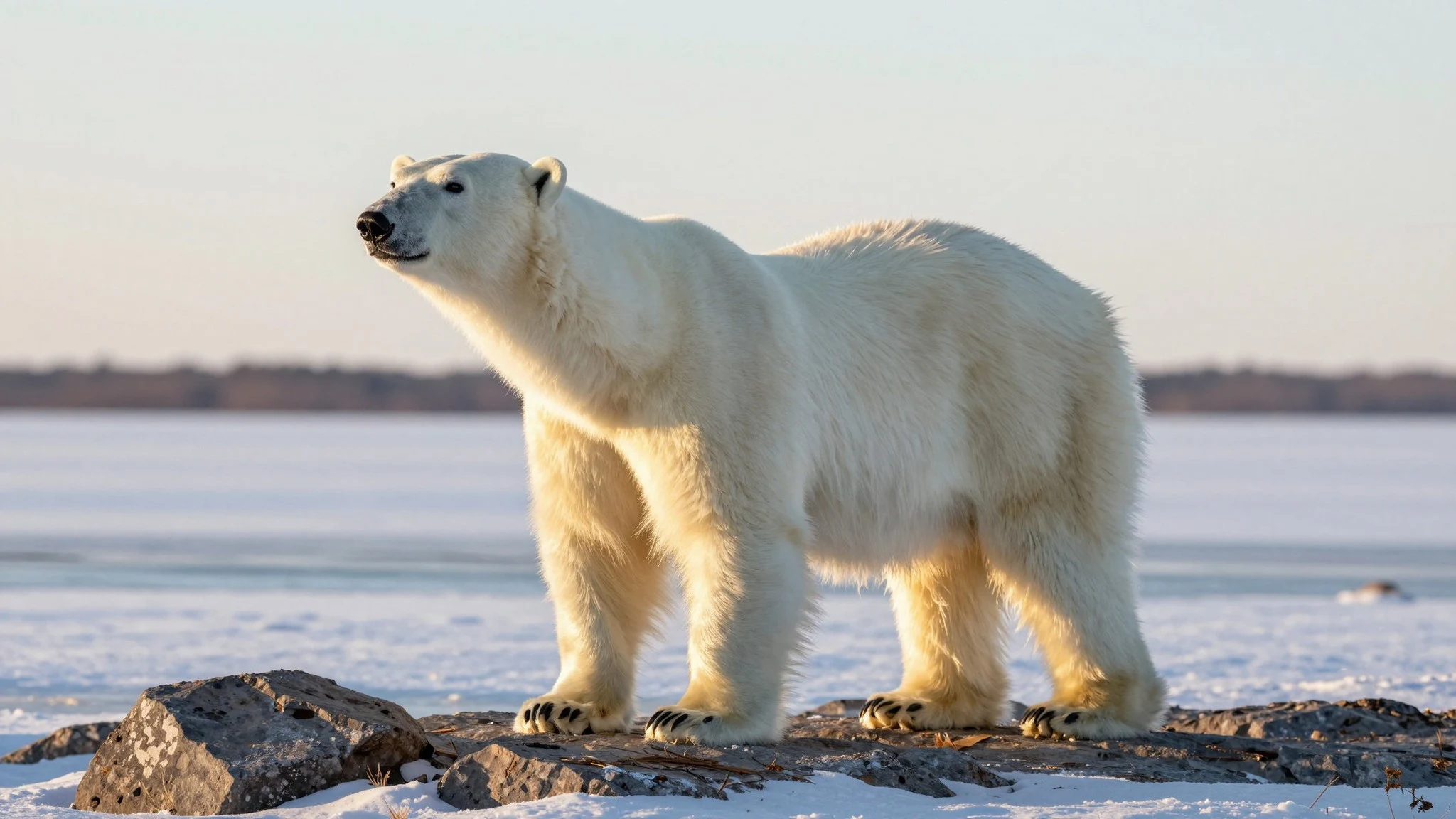
- Beluga (animal)
The beluga is a white Arctic whale that sings in such high, bright calls that people nickname it the sea canary. In summer, belugas crowd into the river mouths around Hudson Bay, so that is the season to look for them. Go with a local guide, keep a respectful distance from the water's edge or boat, and stay quiet so you can listen for those calls. Never feed the whales or chase them; let them come and go as they please.