Hot Springs National Park
Hot Springs National Park, United States
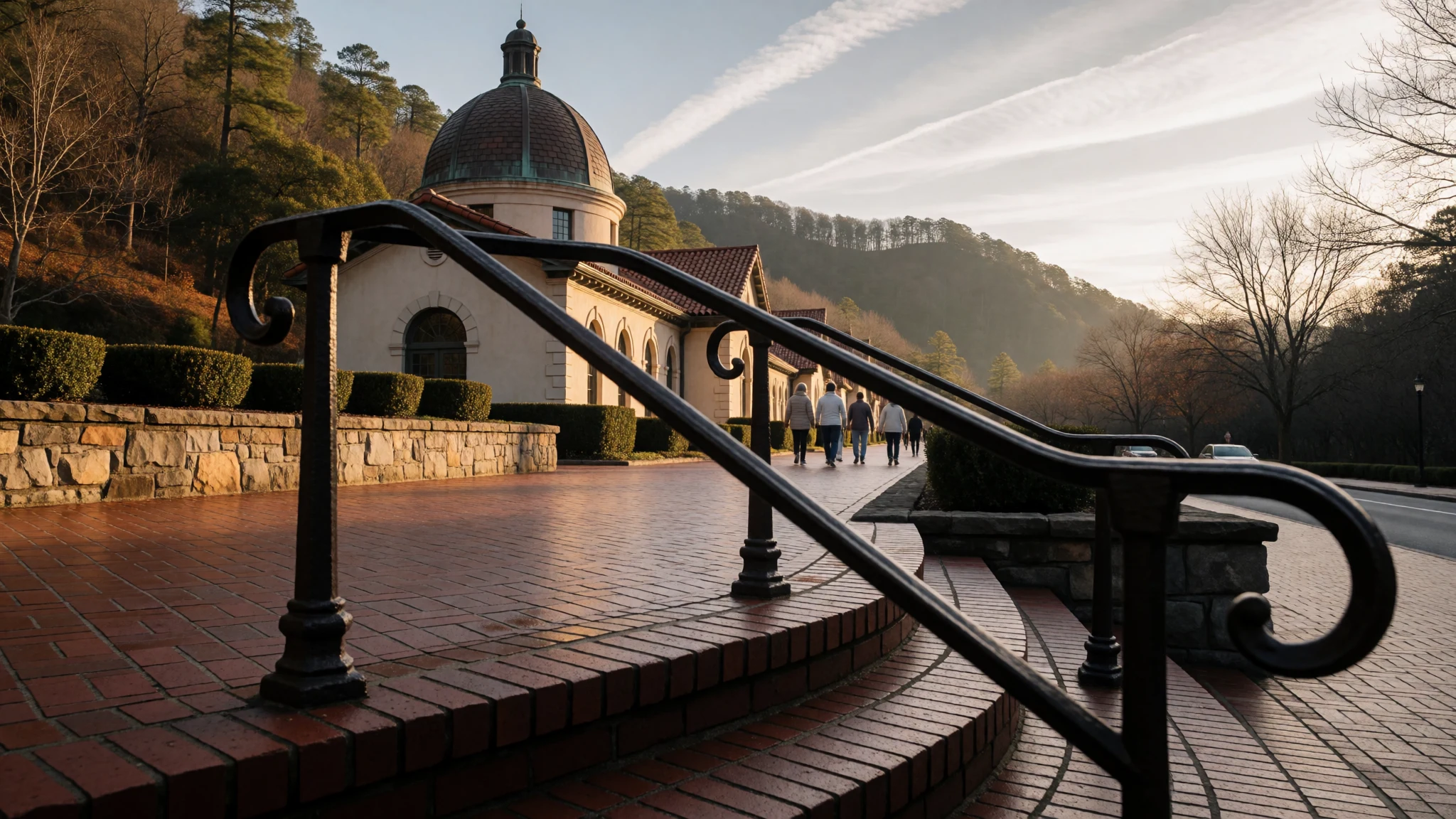
Hot Springs National Park lets a visitor soak in hot water in historic bathhouses, then walk into forested mountains from the same town street.
The place
Hot Springs National Park sits in central Arkansas, in Garland County, and unusually for a national park it starts in the middle of a town. The park includes part of downtown Hot Springs, so a visitor can step off a city pavement and onto a wooded trail within a few minutes. The water rises on the western slope of Hot Springs Mountain, part of the Ouachita range, and comes out naturally hot. It is not left wild, though. The springs have been captured and managed so that clean hot water reaches the bathhouses and public taps, and the surrounding hills are looked after to protect the underground system that feeds them. Part of the mountain forest is old growth, recognised by the Old-Growth Forest Network, which gives the ridge walks a surprisingly mature, quiet feel. The climate is humid subtropical, so summers are green, heavy and sticky, while winters are mild enough for walking in a jacket. The park is compact, and its pleasures are about rhythm rather than distance: a soak in the morning, a climb up the mountain, a slow lunch on the main street, an evening stroll past the old bathhouses. The atmosphere is calm and slightly old-fashioned, closer to a small European spa town than to the big wilderness parks of the American West. Rain and heat are the main things that change the plan, and the bathhouses make a good shelter from both.
Its story
Hot Springs National Park began as a piece of land protected for its water. In 1832 the United States Congress set aside the springs as a reservation, to be kept for recreation, which was decades before the idea of a national park existed. The site became a national park in 1921. Long before that, the hot water was the subject of legend among several Native American peoples, and generations of people believed it could heal. After federal protection, the town grew into a spa resort, with bathhouses lining the foot of the mountain. The grandest were built in the early twentieth century, and the Army and Navy Hospital treated patients there. The town's reputation grew in other directions too. Baseball teams came for spring training, racing fans came to Oaklawn Park, and gamblers came for tables that were illegal but tolerated. During Prohibition the town was known for speakeasies, and gangsters such as Al Capone were said to visit. A later president, Bill Clinton, grew up here. Over time, fashions in medicine changed and many bathhouses closed, but the buildings survived, and Bathhouse Row is now a protected historic landmark. Today the story is told inside the former Fordyce Bathhouse, now the visitor centre, where the tiled bath halls and staff corridors show how a visit to take the waters used to work. The result is a park whose main historic monument is a street of buildings, and whose history is as much about leisure and mischief as about landscape.
What to see
- Hot Springs National Park Visitor Centre — Central Avenue, downtown Hot Springs
The visitor centre occupies the former Fordyce Bathhouse, finished in 1915 and treated as the grandest on the street in its day. It works as a self-guided museum, with mosaic floors, marble and old treatment rooms. Go here first for maps, ranger advice and trail conditions.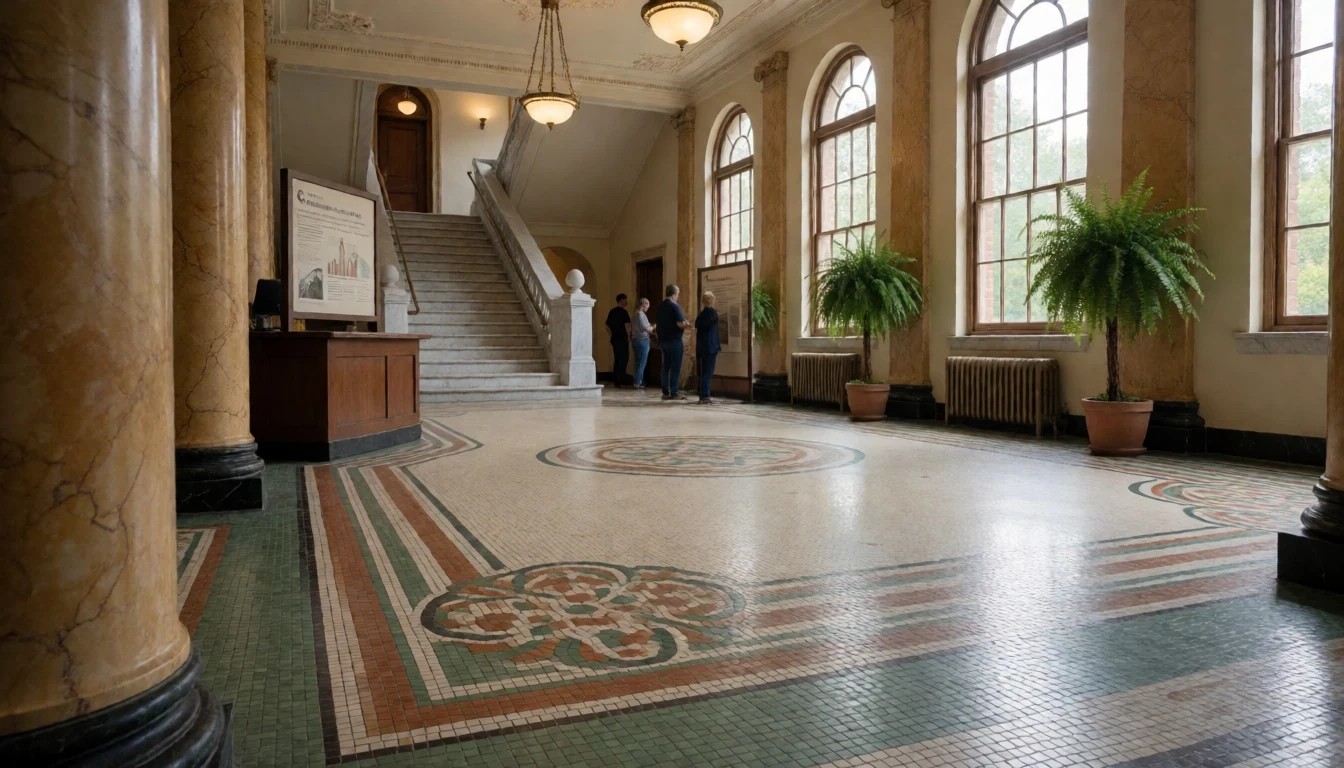
- Bathhouse Row — Central Avenue, downtown Hot Springs
Bathhouse Row is a line of eight early twentieth-century bathhouses facing Central Avenue, listed on the National Register of Historic Places. Some still operate for soaking, and others have been given new uses. Walk the length of it slowly, looking at the different façade styles, tile work and ironwork.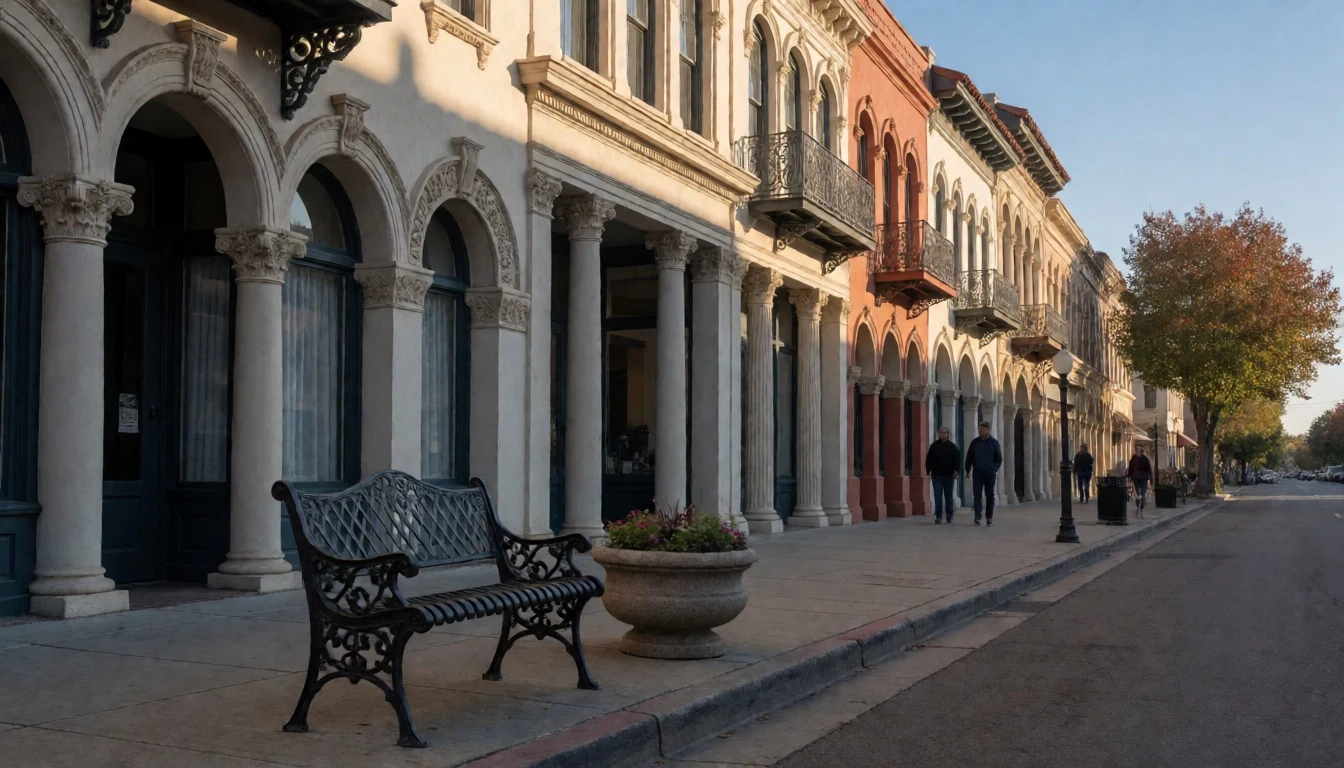
- The Grand Promenade — Behind Bathhouse Row
The Grand Promenade is a landscaped brick walkway running behind Bathhouse Row. It is the easiest place for a short, level stroll, with glimpses of the springs and old landscape features beside the hillside. Entrances are behind the visitor centre and from Fountain Street. It suits wet weather and slow walkers.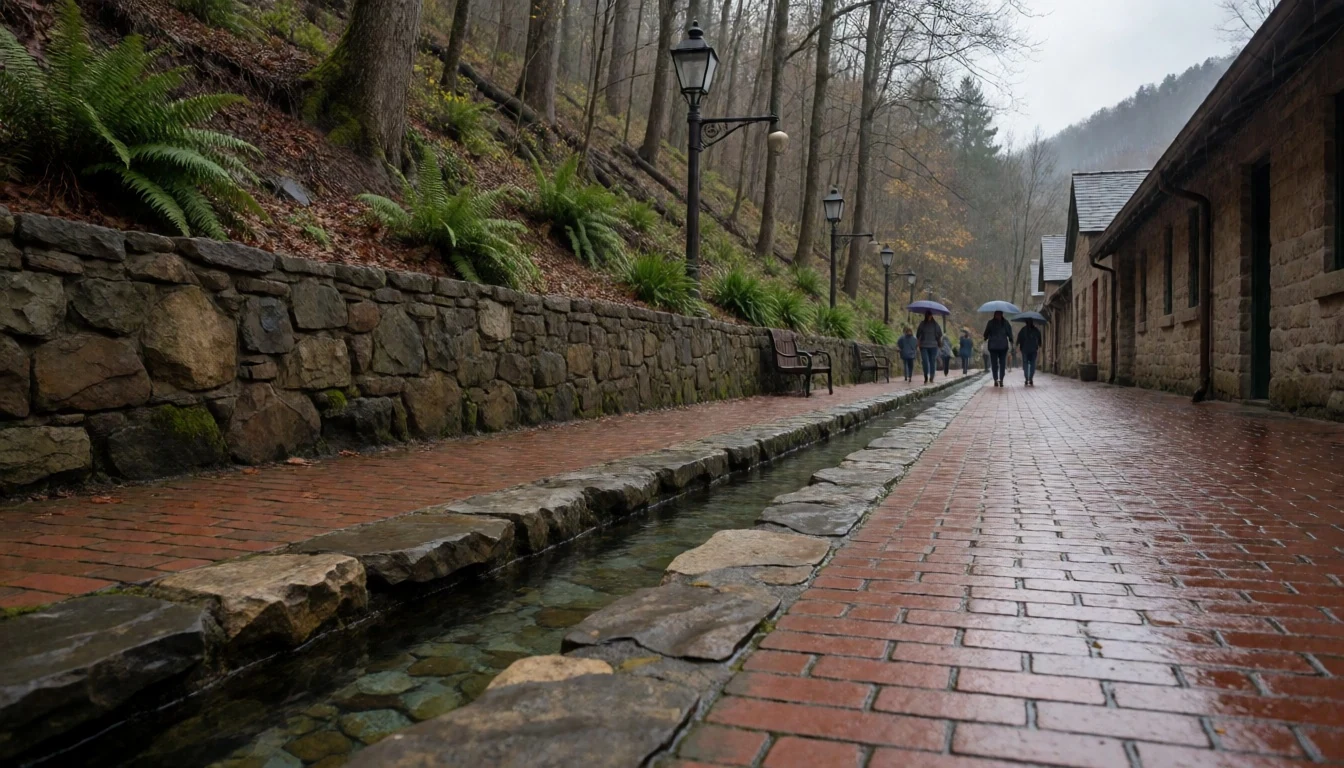
- Hot Springs Mountain Tower — Hot Springs Mountain, north of downtown
This observation tower stands on Hot Springs Mountain, above the town, and gives a wider view of the Ouachita hills and the park's forest. It is a good orientation stop on a clear day. Opening times and ticket details change, so check the official park website before going.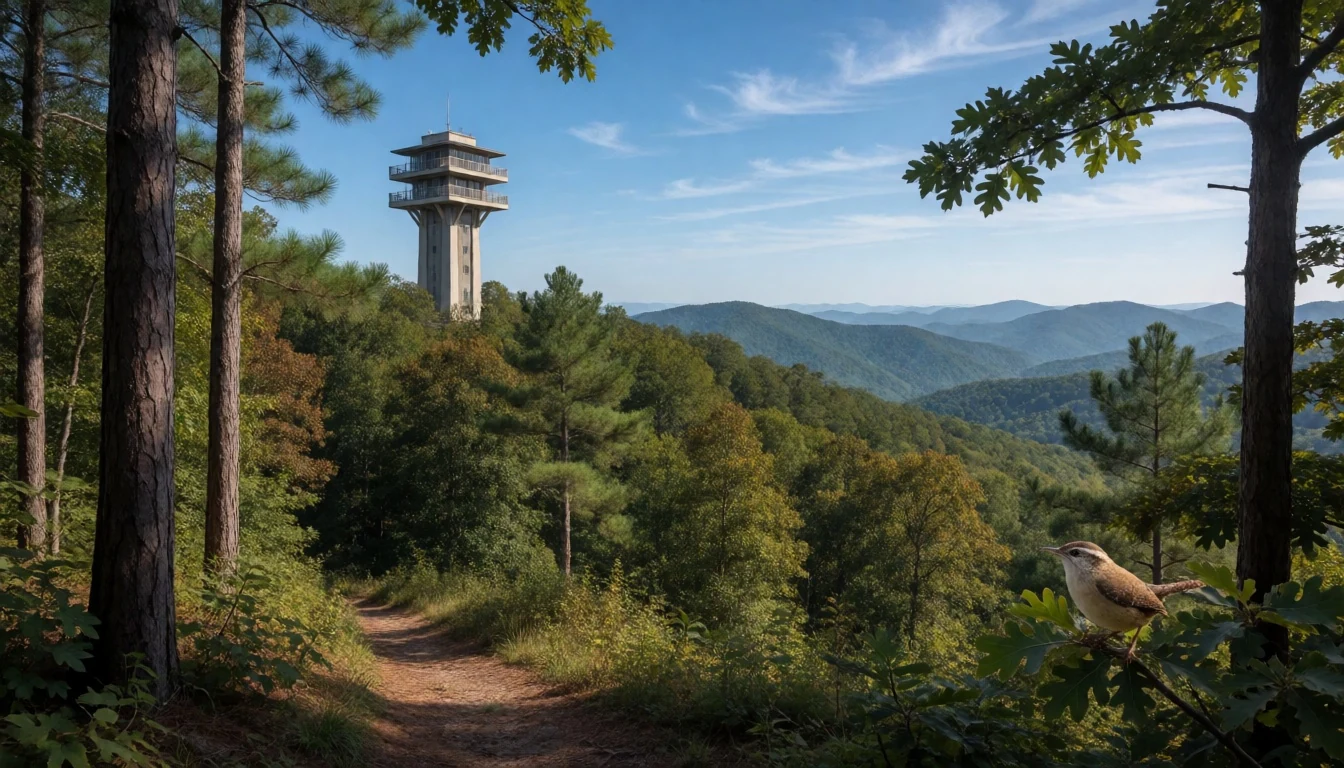
- Garvan Woodland Gardens — South of downtown, on the lake side
Garvan Woodland Gardens is a landscaped woodland garden a short drive south of the town centre, outside the national park itself. It is a gentle half-day option when the mountain trails are too wet or hot, with plants and wildlife of the region. Check its own website for hours and entry.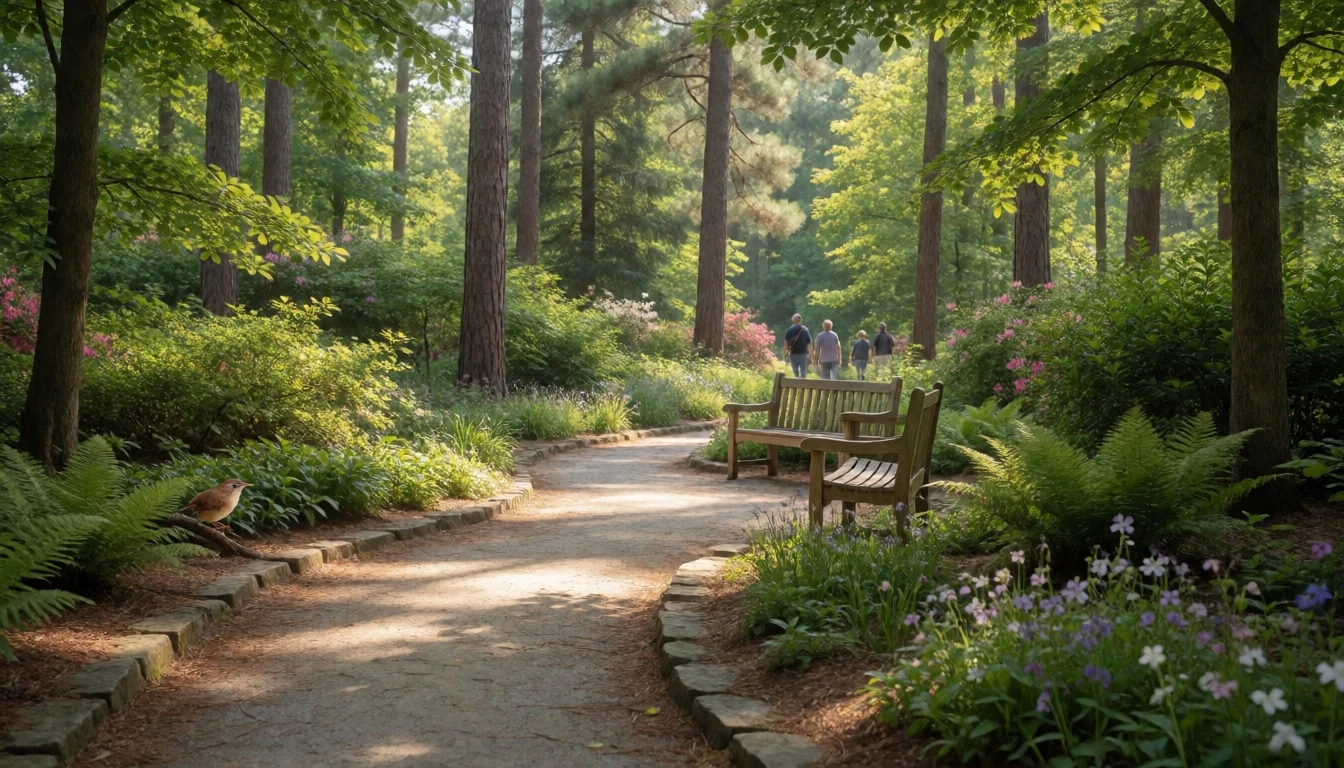
Culture
Hot Springs National Park carries a culture built around taking the waters, and that habit still shapes how the town behaves. Bathing here was once a prescribed treatment, with attendants, hot rooms, massage and rest periods, and the grand bathhouses were designed as places for slow recovery. Some still offer a soak or spa treatment, while others have become a museum, a brewery or other uses, so the history is visible but lived in. A second strand of local culture is the town's livelier past, with baseball spring training, horse racing at Oaklawn Park and illegal gambling during the Prohibition years. Locals tell these stories with some relish, and the old bars and downtown buildings play along. A third is the quiet outdoor culture of Arkansas, where families hike the ridges, fish the nearby lakes and drive in for the weekend. Rangers run talks and walks, and the park is treated as shared civic space rather than a remote reserve. Service is friendly and unhurried, in the usual manner of the American South. Conversation with strangers is normal, and a polite greeting on a trail or in a queue is expected. In the visitor centre and in any working bathhouse, keep your voice low and follow staff instructions about towels and changing areas, because other guests have come to rest.
What to wear
Hot Springs National Park has no single costume tied to it, and it would be wrong to invent one. The region's Native peoples have their own textile and dress traditions, which are best learned from tribal museums and cultural centres rather than from the town. In the bathhouse era, visitors dressed for the treatment, in robes, towels and bathing clothes supplied by the house, and the polished interiors on display in the visitor centre hint at that. Today, people in Hot Springs dress casually: shorts, t-shirts and cotton shirts in summer, jeans and fleece in winter, with caps, trainers and trail sandals everywhere. Sports-team colours are common on weekends. Nothing needs to be formal, though some spa visits and dinners downtown are a little smarter. A visitor should plan for the climate first. Summers are hot and humid, so light, breathable clothes, a hat and sun protection work best, while winters are mild and need only a warm layer and a light rain jacket. Bring a swimsuit if you plan to soak, and a robe or flip-flops if the bathhouse does not supply them. For the mountain trails, wear closed shoes with a good grip, since the paths can be rocky and slippery after rain. No special modesty rules apply in town or on trails.
What to eat
- Fried catfish with hushpuppies — Casual family restaurants in and around Hot Springs
Fried catfish in a cornmeal crust, served with hushpuppies, small fried balls of cornmeal batter, is a staple of the American South. Order it at a casual family restaurant or fish place in town, usually with coleslaw and tartare sauce.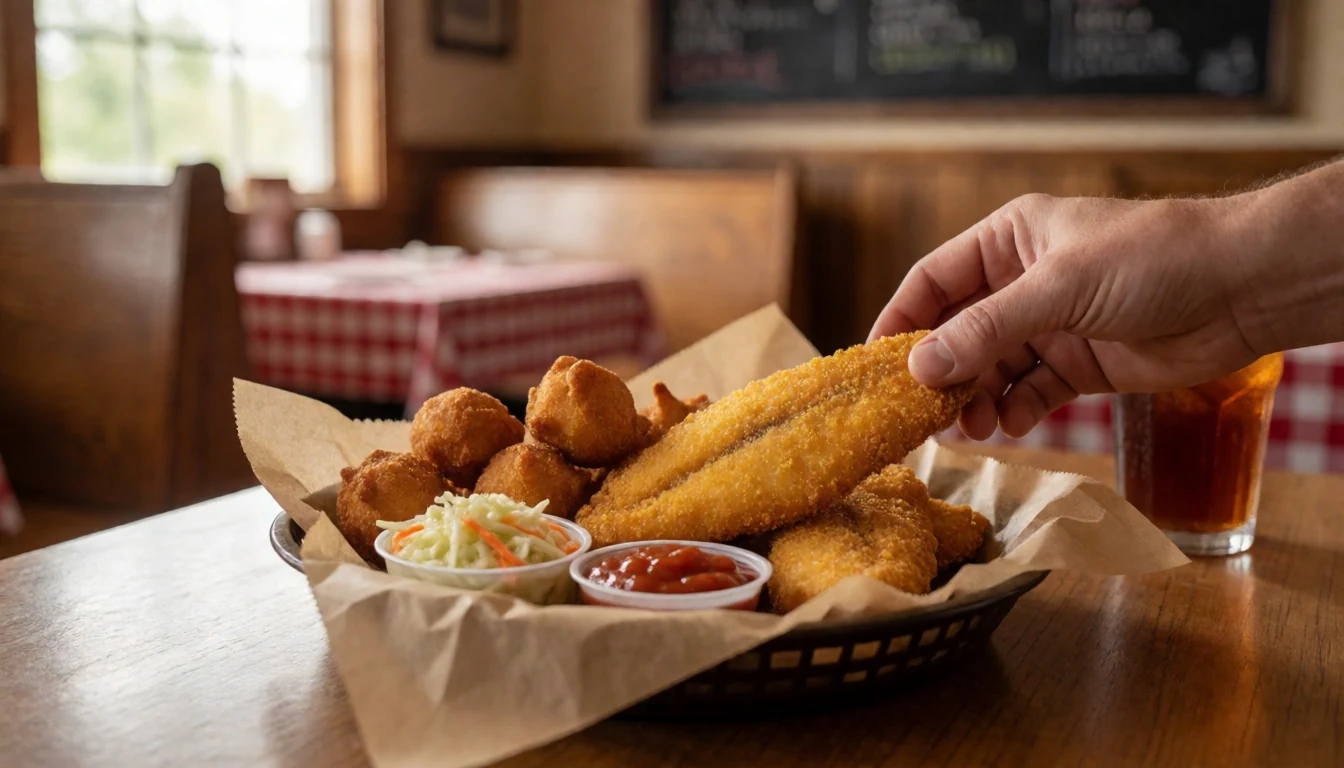
- Smoked barbecue and pulled pork — Barbecue restaurants along the main roads
Slow-smoked pork, either sliced or pulled and piled into a bun, is a regional favourite. It usually arrives with beans, slaw and a tangy sauce. Look for a barbecue joint with a smoker out the back or smoke in the air.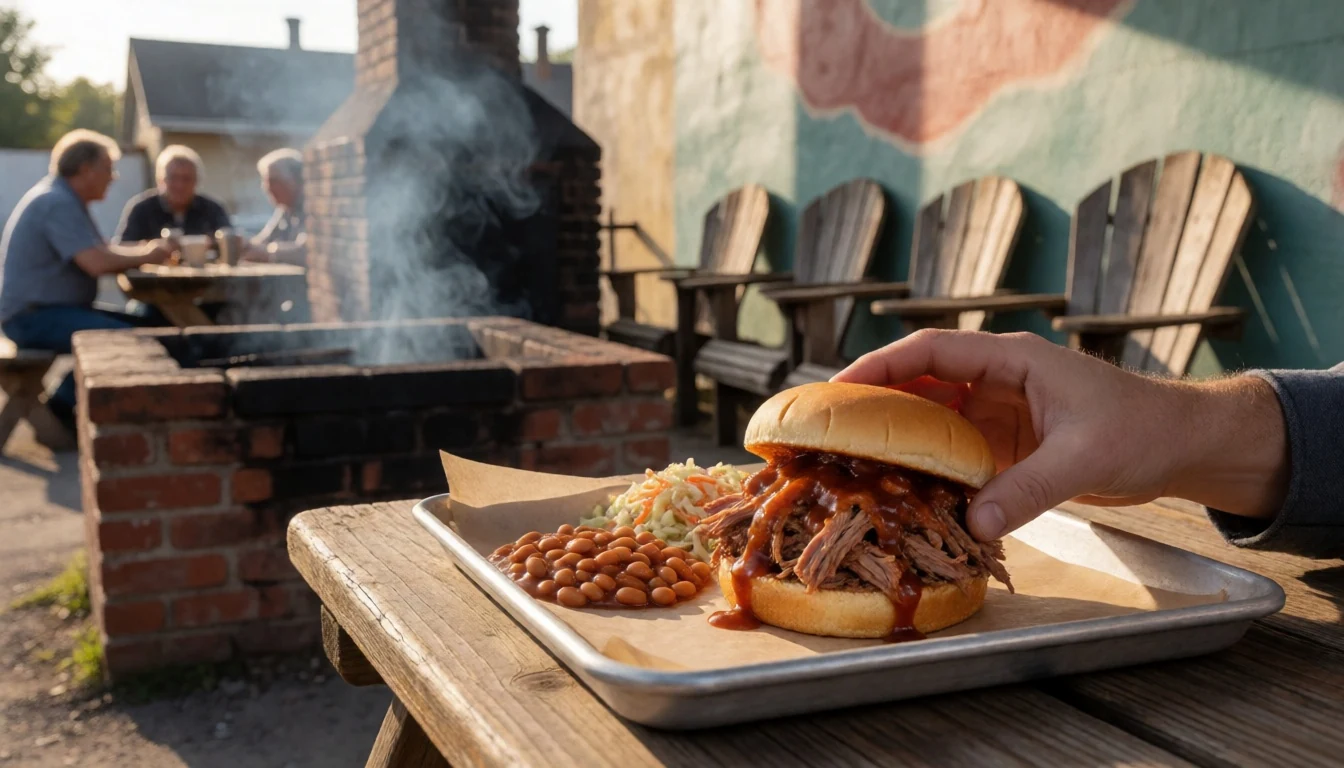
- Biscuits and gravy — Breakfast cafes and diners in the historic downtown
A soft, flaky biscuit, split and covered with peppery sausage gravy, is a hearty breakfast to take before a mountain walk. Many downtown cafes and diners serve it alongside eggs and coffee, and it is filling enough to last until mid-afternoon. - Fried pickles — Bars and pubs on and near Central Avenue
Sliced dill pickles, coated in batter and fried until crisp, are served with a creamy dipping sauce as a bar snack across the South. They are salty and sharp, and go well with a local beer in one of the old downtown buildings. - Pecan pie — Diners, bakeries and dessert counters downtown
A sweet, sticky pie of toasted pecans in a syrupy filling, usually served in thin slices with coffee or ice cream. It is a standard dessert on southern menus, and is worth saving room for after a heavy main course. - Latin-inspired plates — Restaurants on and around Central Avenue
Alongside southern cooking, the town has restaurants offering Latin American dishes with modern touches, some with outdoor seating on a warm evening. They make a lighter option when fried food has begun to feel like too much.
Plan it
Best time. March to May and October to November, when the humid subtropical climate is mild and walking is comfortable. Summer is hot and sticky, and a long soak in warm water is less appealing then. Winter is cool but gentle, and quieter.
How long. 1–2
Getting there. Fly to Little Rock National Airport, where shuttle services and rental cars are available, or to the small Hot Springs Memorial Field. Amtrak's Texas Eagle serves Little Rock, with shuttles on to Hot Springs. By road, the visitor centre is downtown on Central Avenue, and signs for the national park are posted on the main approaches.
Budget. mid
Tips
- Check the official park website, nps.gov/hosp, for bathhouse opening times, tower access and trail closures before you travel
- Handle spring water with care, as it can reach 62 °C, and people with heart or respiratory conditions should get written consent from a physician before bathing
- Carry water and walk early in summer, when the heat and humidity build by midday
- Park once and walk, as the bathhouses, promenade and many restaurants are close together downtown
- Book popular spa treatments ahead at weekends and holidays, when the town fills up
Etiquette
- Keep your voice low in historic bathhouse interiors and follow staff directions on towels and changing areas
- Stay on marked trails and do not remove plants, rocks or wildlife from the park
- Do not climb on or around the springs and fenced hot water features
Nearby
Sources
- Wikidata Q1143416 (CC0)
- Wikipedia: Hot Springs National Park (rev 1385815487) (CC BY-SA 4.0)
- Wikivoyage: Hot Springs National Park (rev 5404230) (CC BY-SA 4.0)
- Photo: Pool of hot spring water in Hot Springs National Park (Brandonrush) (CC BY 3.0)
- Photo: Relief location map of the USA (Uwe Dedering) (CC BY 3.0)
- Photo: Hot Springs Creek, Arkansas (George William Featherstonhaugh) (Public domain)
- Photo: Hot Springs National Park, Arkansas (Redditaddict69) (CC BY-SA 4.0)
- Photo: Hot Springs, Arkansas, from Tower of Eastman Hotel (Public domain)
- Photo: Big Iron Bath-house (Public domain)
- Photo: Lamar Bathhouse (Chris Light) (CC BY-SA 4.0)
- Photo: Ozark Bathhouse (Chris Light) (CC BY-SA 4.0)


