Hearst Castle
Hearst Castle, United States
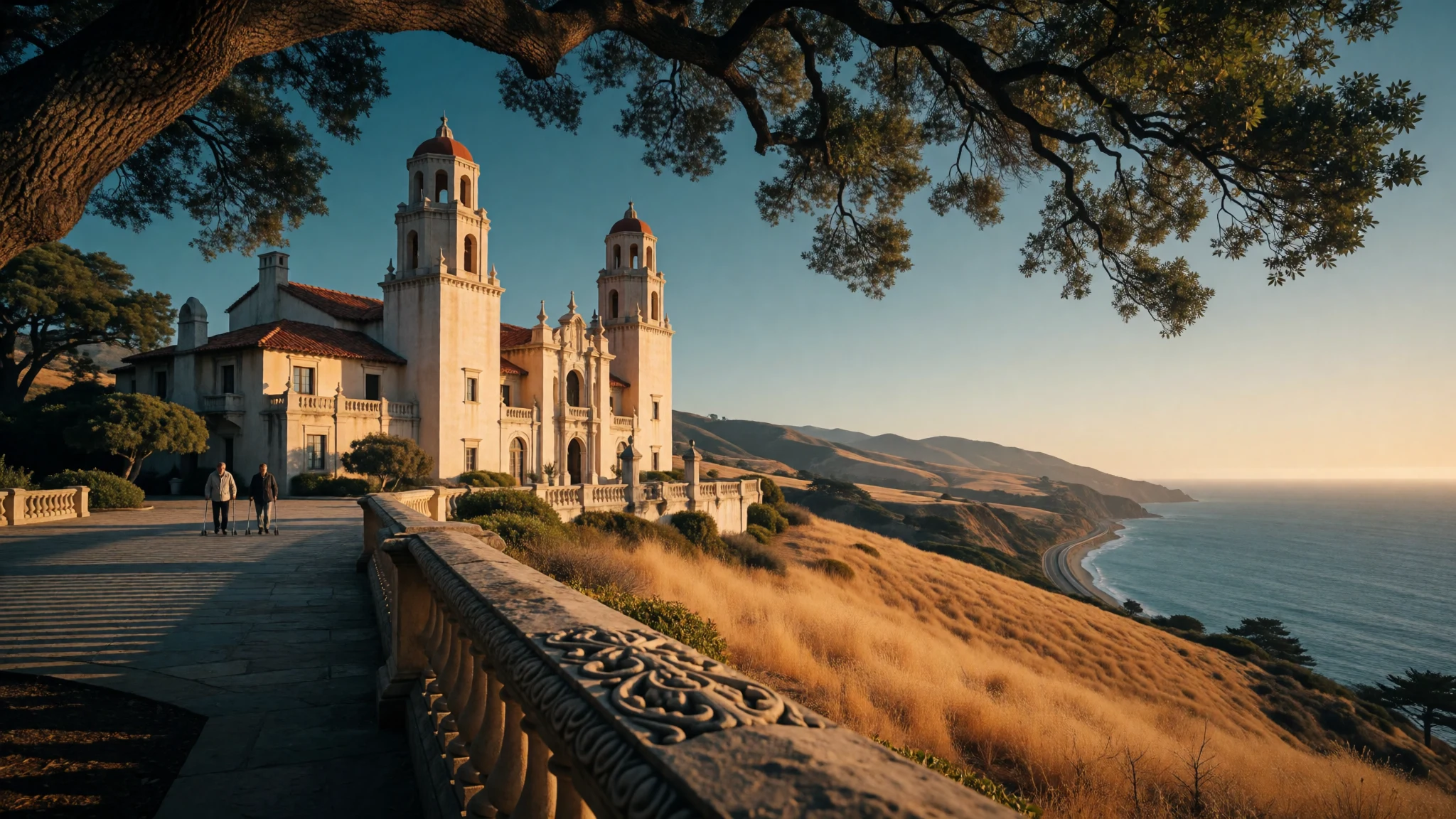
Hearst Castle is a hilltop palace on California's Central Coast, built by a newspaper tycoon and his architect, and open today as a museum.
The place
Hearst Castle stands on a hill above San Simeon, on the Central Coast of California, about halfway between Los Angeles and San Francisco. Its formal name, La Cuesta Encantada, means 'The Enchanted Hill' in Spanish, and the setting earns it: pale towers and terraces rise from dry golden slopes, with the Pacific spread out far below and Highway 1 curling along the shore. Visitors park at the base and ride a shuttle up the hill, so the first glimpse of the house comes slowly, framed by oak, grass and sky. The estate was begun in 1919 as a private retreat and grew into a Mediterranean-revival fantasy. A main house, Casa Grande, sits at the centre, with smaller guesthouses, pools, gardens and terraces arranged around it. Spanish and Italian ideas run through the architecture, and the rooms hold European furniture, tapestries and carved ceilings that the owner collected. It was built for entertaining as much as for living, and the scale is the whole point. Today it is a California State Park and museum, recognised as a National Historic Landmark and a California Historical Landmark. Entry is by guided tour, so check the official site, hearstcastle.org, for what is on offer. The coast around it adds a second reason to come: elephant seals on the beaches to the north, tide pools and pebbled sand at Cambria to the south, and a lightly populated shoreline in between. Weather on the hill can differ from the coast below, with morning fog and wind common and afternoons often bright. A half day is the minimum; with the shuttle, the tour and the drive, a full day passes easily.
Its story
The land beneath Hearst Castle was home to Salinan and Chumash people long before Europeans arrived. Spanish missions reached this stretch of California in the late eighteenth century, and Mission San Miguel, inland to the east, became one of the larger ones before it declined and its priests departed. Mexican governors then divided the mission territory into ranch grants, among them Piedra Blanca and San Simeon. When California passed to the United States after the war with Mexico, the gold rush drew in settlers, including a young miner named George Hearst. He made his fortune in mining, entered politics as a senator, and bought a San Francisco newspaper. All the while he put money into land, purchasing the Piedra Blanca ranch and then adding neighbouring estates until he held a huge tract of coast. His son, William Randolph Hearst, grew up camping on the hill that would one day carry the castle. Following his mother Phoebe's death in 1919, he commissioned architect Julia Morgan to design a more comfortable retreat at the top. It was a modest brief that grew enormously. Morgan and Hearst worked closely for many years, building went on almost without pause until the war, and it resumed afterwards, ending when Hearst left the hill for the last time. Initially, the build was meant to be a residence for Hearst, his spouse Millicent, and their sons. Within a few years the marriage had effectively ended, and the hill became the home of Hearst and the actress Marion Davies.
What to see
- Casa Grande — Hearst Castle, San Simeon
The main house is the centrepiece of Hearst Castle, its twin towers visible from Highway 1 far below. Tours lead through the grand rooms, where ceilings, tapestries and furniture show how Hearst and Julia Morgan blended collecting with building. Book a tour ahead through the official site, because the interior is seen only on guided visits.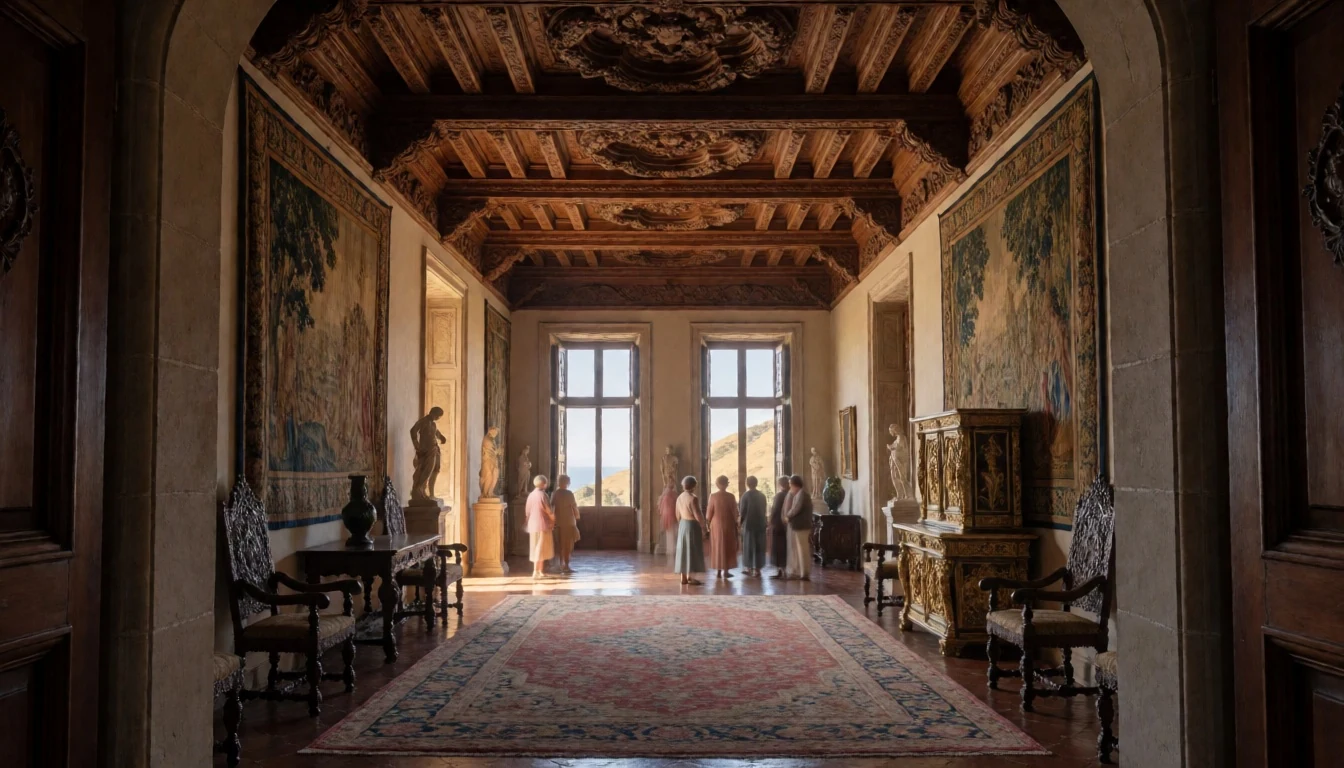
- Guesthouses and gardens — Hearst Castle grounds
Smaller guesthouses stand around the main building, each with its own courtyard, patio and planting. They are easier to take in at a slow pace than the big house, and the gardens open onto views across the hills and out toward the ocean. Terraces and tiled walks make good places to pause between tour stops.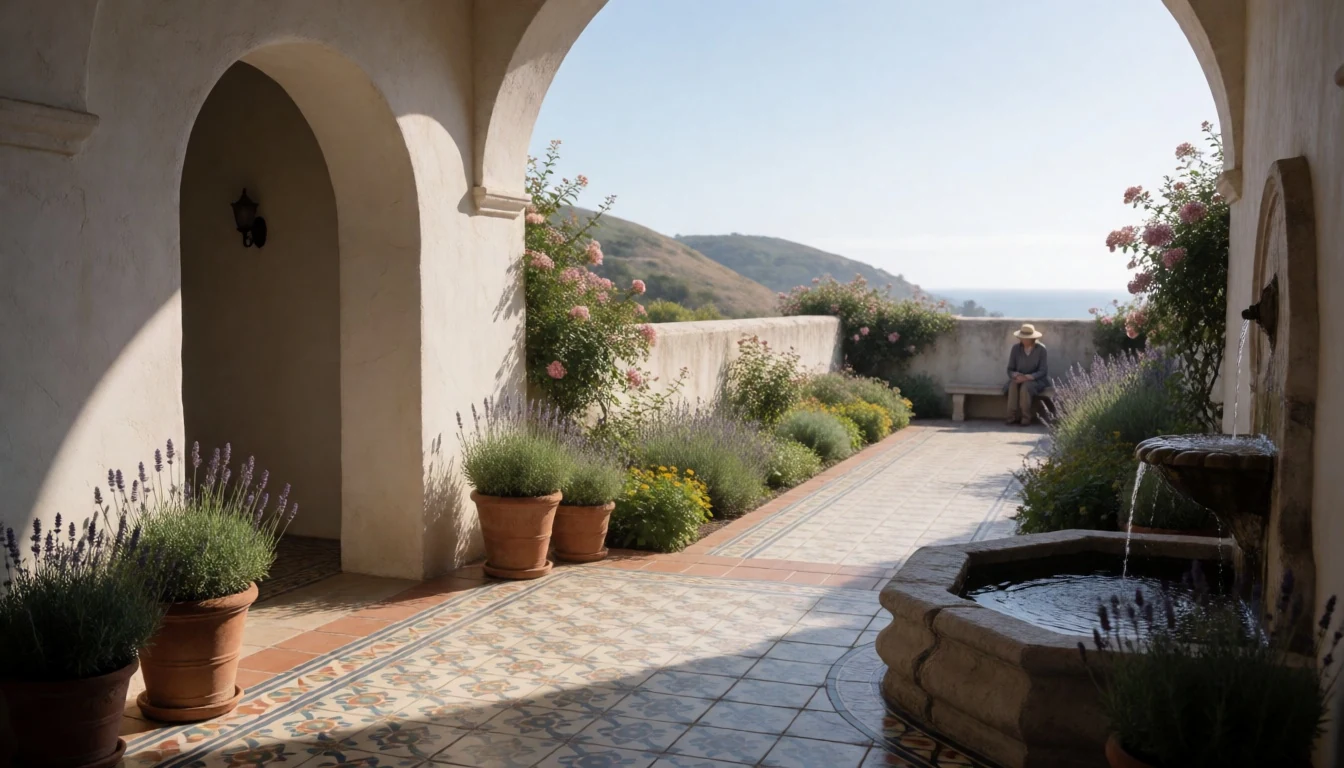
- Elephant seals at Piedras Blancas — Piedras Blancas, north of San Simeon
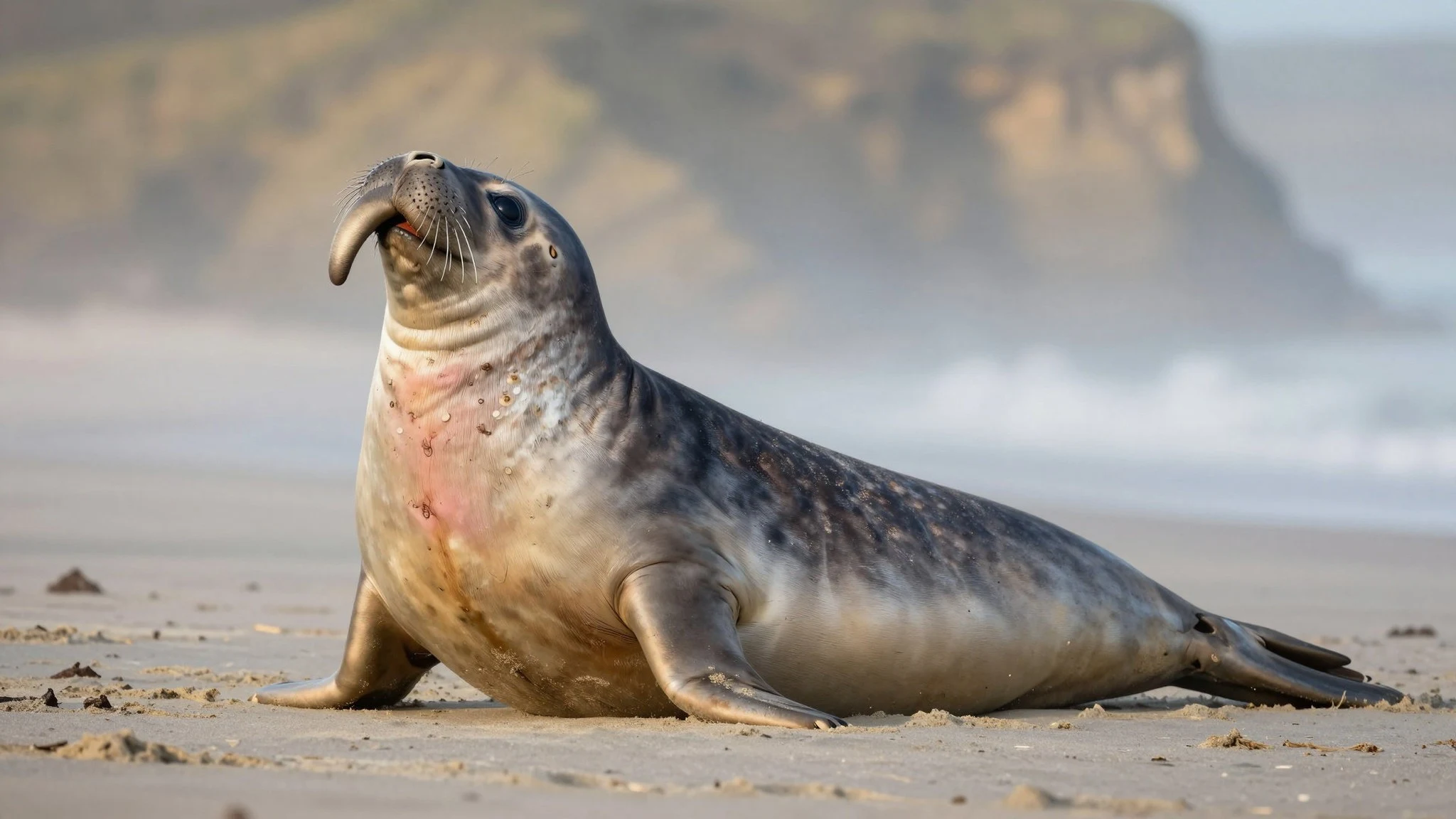
A short drive north of the castle, a beach at Piedras Blancas has become a haul-out for elephant seals. The colony began as a small group and has grown to many thousands, with pups born on the sand. Watch from the roadside viewing area, keep well back, and expect noise, smell and heaps of dozing bodies.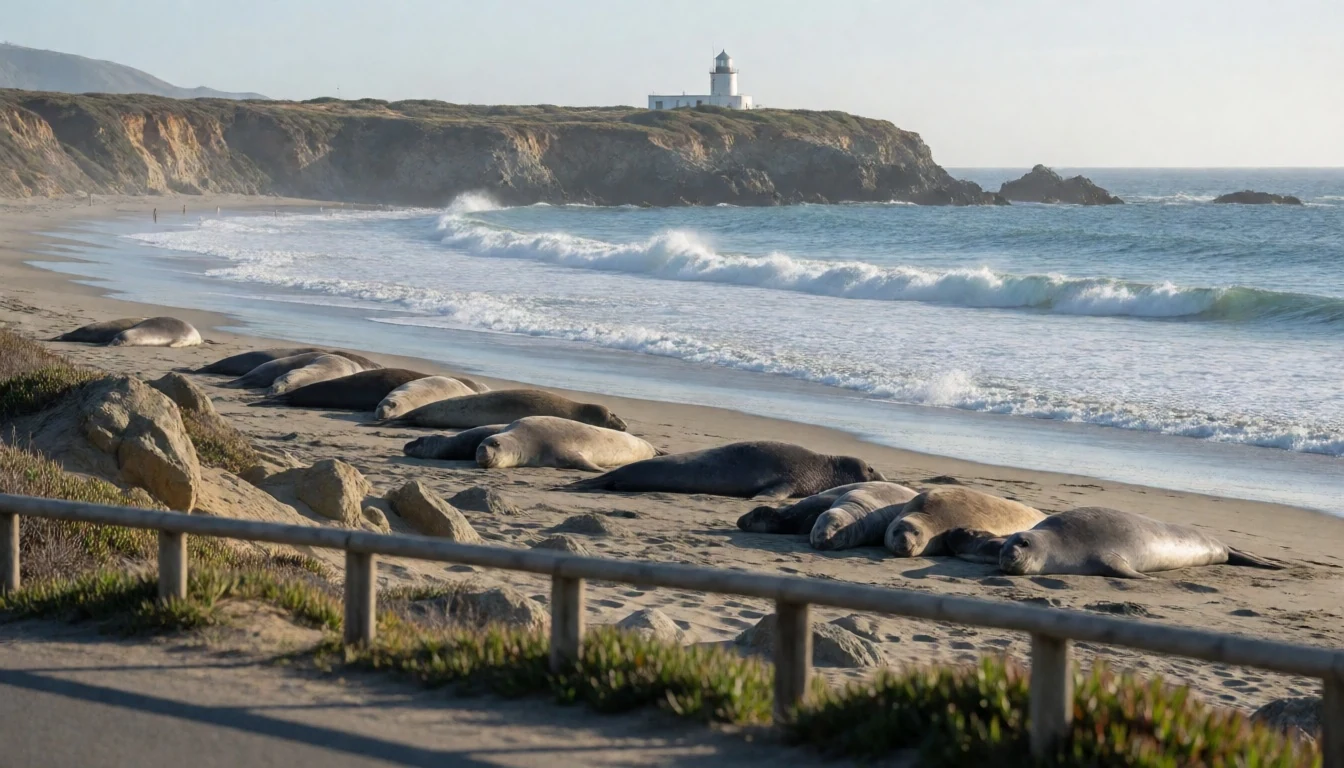
- Coastal Discovery Centre — San Simeon
The Coastal Discovery Centre in San Simeon is a quiet, low-key stop that suits the start or end of a castle day. It is a gentle way to get a feel for the local coast and its nature before heading on. Opening times change with the season, so check before building a plan around it.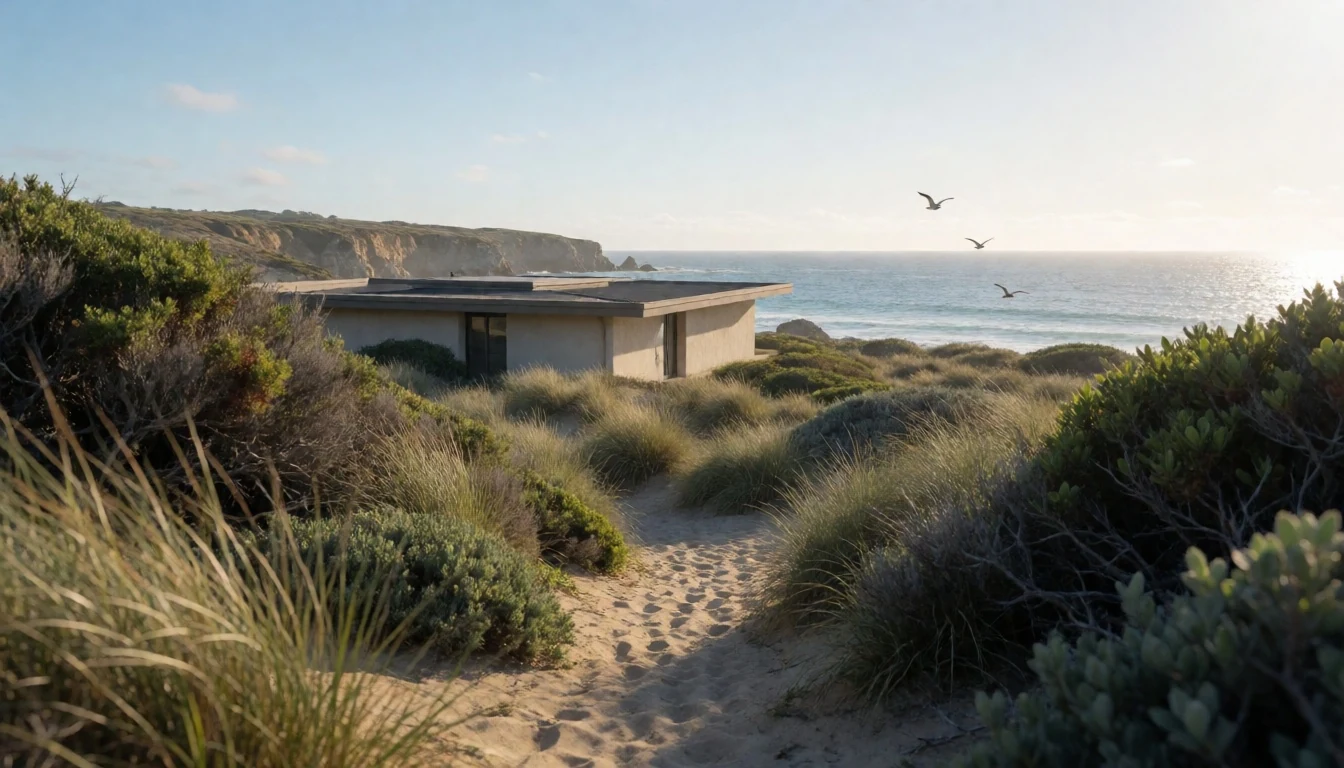
- Moonstone Beach, Cambria — Cambria
A short drive south, Moonstone Beach at Cambria is a pebbled shore known for its tide pools and for the semi-precious stones that gave it its name. It makes a pleasant late-afternoon walk after a day at the castle, with inns and eateries in the town just behind.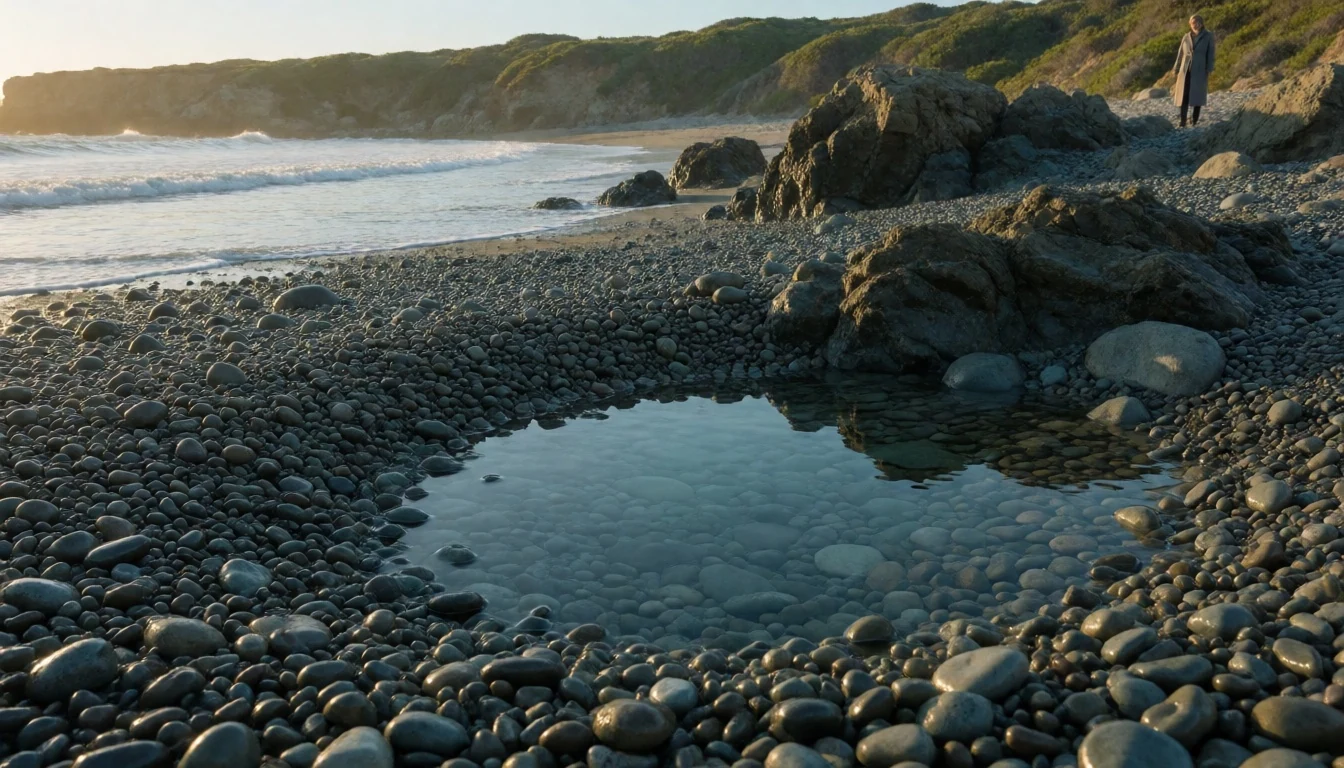
Culture
Hearst Castle is a window into a particular slice of American life: the age of the newspaper tycoon, when a single publisher could shape public opinion and spend freely on a private world. William Randolph Hearst filled the estate with European art and architecture, and the house became a gathering place for film people and public figures, with the actress Marion Davies as its hostess. Julia Morgan, who designed it, was an architectural pioneer in a profession then dominated by men, and her long working partnership with Hearst is central to the castle's story. Today the culture of the place is that of a public museum: guided tours led by state park staff, a visitor centre with exhibits, shuttle buses, and a steady flow of school groups and travellers from around the world. Local feeling is mixed, as it often is with monuments to great wealth. The castle brings visitors and jobs to a quiet coast, and it also invites questions about how fortunes were made and what came before them. The Salinan and Chumash peoples were here first, and the missions and ranches that followed are layered over their history. Along the highway the everyday culture is outdoorsy and unhurried: surfers, kayakers, wine tasters and wildlife watchers, all sharing the same road. Stay with your guide and on the marked routes, and do not touch furniture or use flash indoors, because the rooms hold fragile antiques.
What to wear
California has no single national costume, and the Hearst Castle coast reflects layers of dress. The first people here, the Salinan and Chumash, made clothing and baskets from plant fibres, hides and furs, and their descendants still wear ceremonial regalia on special occasions. The Spanish and Mexican ranch era left the vaquero look: leather boots, broad-brimmed hats and sturdy chaps, still seen at rodeos and country fairs. In Hearst's own time, the castle was known for formal evening dress at dinner and for themed costume parties, when guests dressed up for fun. Today the local style is relaxed coastal casual: jeans, fleeces, hoodies, trainers and sunglasses, with surf brands and outdoor gear everywhere. Smarter outfits appear in the wine towns inland, but nobody expects formality. Visitors should dress in layers, because the hill and the coast can be cool, foggy and windy in the morning, then warm and bright by afternoon. A light waterproof or windproof jacket is useful all year, and a sun hat and sunscreen help in the clear months. Comfortable closed shoes with a good grip are the sensible choice, since the tour involves stairs, stone paths and a fair amount of standing. There is no religious dress code at the castle, but modest, practical clothes are best for a long day of walking indoors and out.
What to eat
- Tri-tip barbecue — Roadside barbecues and local grills along the Central Coast
Tri-tip, a cut of beef grilled over oak, is the signature of the Central Coast. It is usually served sliced with beans, salsa and bread. Look for it at roadside barbecues, local grills and community cook-outs in the towns along Highway 1 and inland.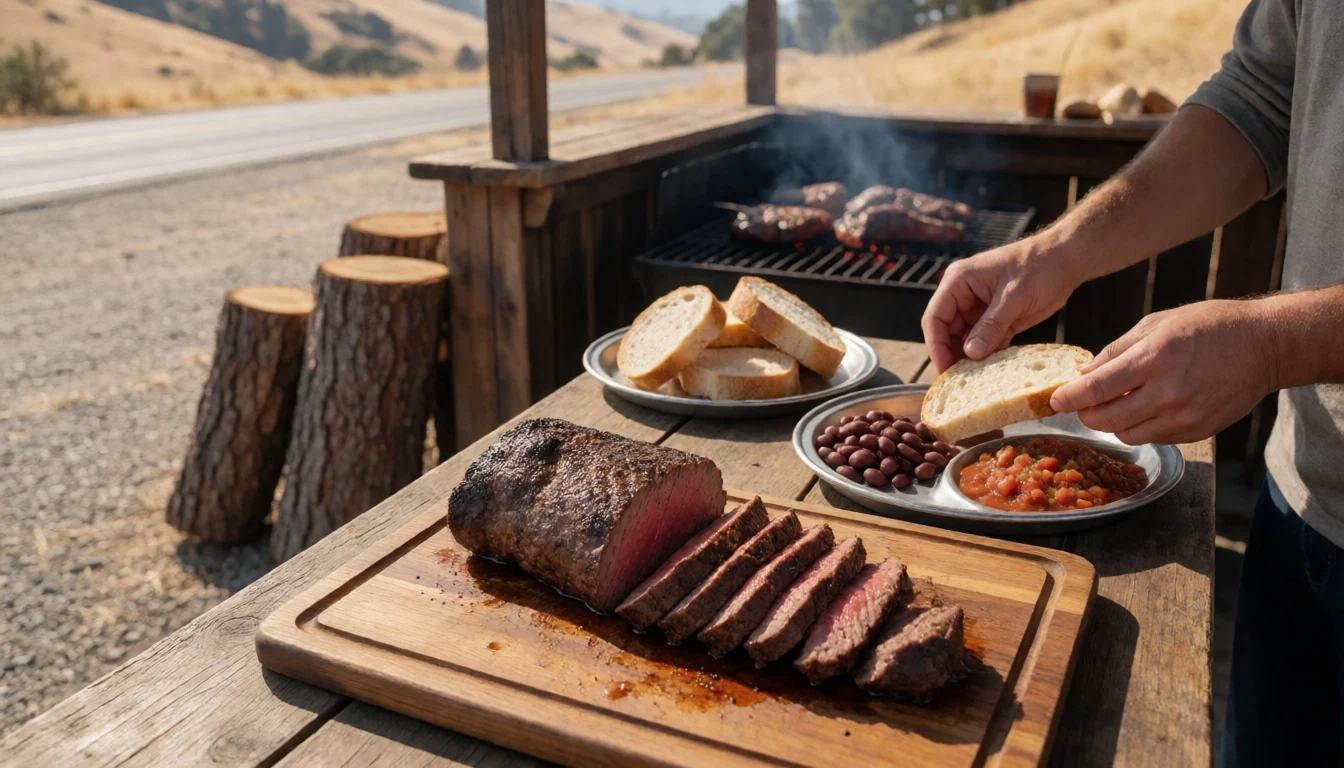
- Fresh coastal seafood — Seafront eateries in Cambria, Morro Bay and San Simeon
Fish tacos, clam chowder and grilled catch of the day suit the cool seaside air. Menus follow what the local boats land, so ask what is freshest. Eateries with ocean views cluster near the water at the coastal villages.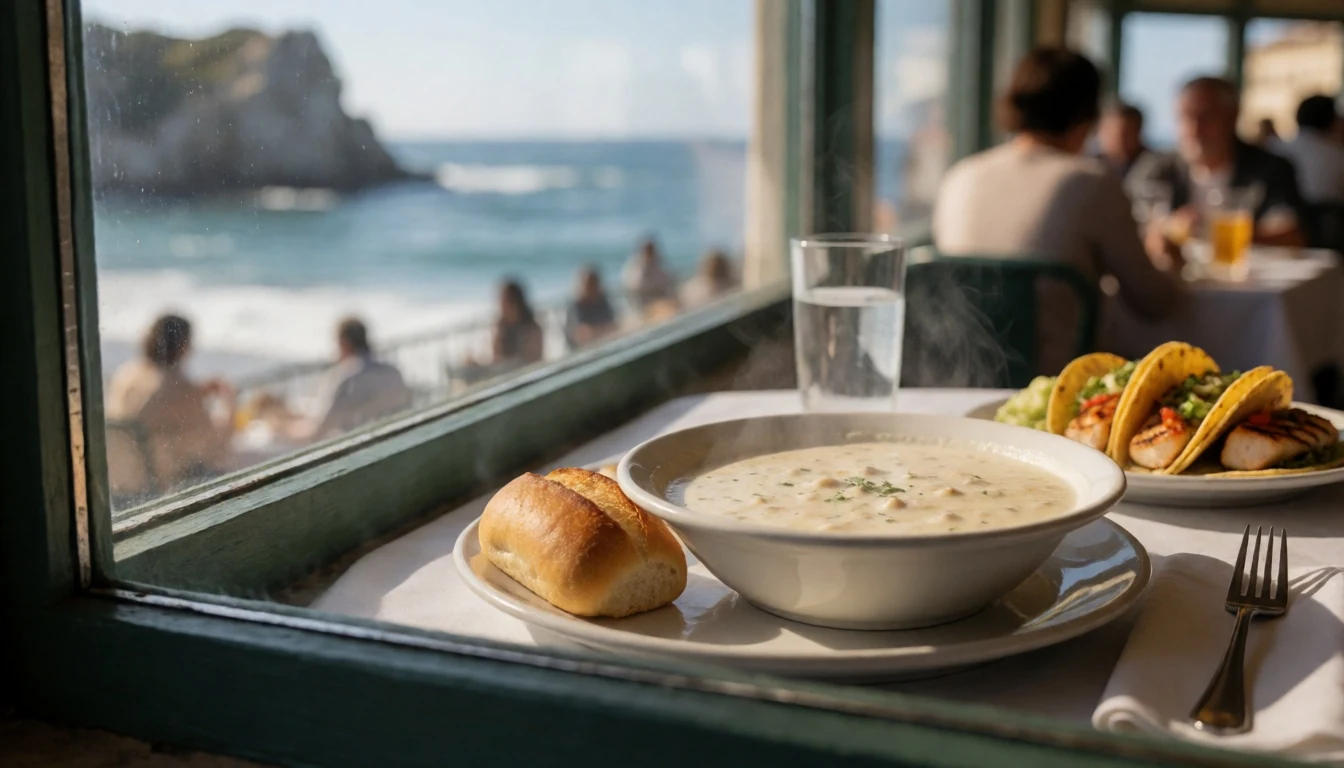
- Olallieberry pie — Cambria bakeries and cafés
Olallieberries are a sweet-tart blackberry relative grown around Cambria, baked into pies, jams and cobblers. A slice with coffee is a classic pause on a coastal drive. Local bakeries and cafés usually have it in the early summer months. - Local wine tasting — A general store in San Simeon, and tasting rooms in the nearby hills
The hills behind the coast grow wine grapes, and tasting is part of the local day out. Reds from nearby Paso Robles are popular, as are cooler-climate whites. There is also a general store in San Simeon that offers food and wine tasting. - Farmers' market produce — Weekly farmers' markets in Cambria, Morro Bay and San Luis Obispo
Central Coast farms supply strawberries, avocados, citrus, artichokes and greens, sold at weekly farmers' markets. They are a cheap, informal way to put together a picnic before a day at the beach or castle.
Plan it
Best time. April–May and September–October are usually the most comfortable, with clear skies, mild temperatures and fewer summer crowds; summer mornings are often foggy and cool, and winter can bring rain and rough seas.
How long. 1–2
Getting there. San Luis Obispo has the nearest airport and Amtrak station. From there, drive north on Highway 1 through Cambria, or take the regional bus from Morro Bay, which stops at the visitor centre. Driving from Los Angeles or San Francisco takes most of a day, so many visitors break the trip on the coast.
Budget. mid
Tips
- Book castle tours in advance through hearstcastle.org, especially at weekends and in summer
- Bring layers: fog and wind on the hill can feel cold even when the day turns warm
- Fill the tank and eat before long coastal stretches, as services thin out between towns
- Allow time for the shuttle, the tour and parking, so the visit does not feel rushed
- Drive Highway 1 in daylight and expect patchy mobile signal in places
Etiquette
- Stay with your tour guide and keep to the marked routes
- Do not touch furniture, walls or artworks, and avoid flash photography indoors
- Keep well back from the elephant seals and never approach the animals
Nearby
Sources
- Wikidata Q378143 (CC0)
- Wikipedia: Hearst Castle (rev 1380763689) (CC BY-SA 4.0)
- Wikivoyage: San Simeon (rev 5409585) (CC BY-SA 4.0)
- Photo: Hearst Castle Casa Grande, King of Hearts (CC BY 3.0)
- Photo: Campanille at Mission San Miguel, JPRoy2101 (CC BY 3.0)
- Photo: William Randolph Hearst, Harris & Ewing (Public domain)
- Photo: Marion Davies, Bain News Service (Public domain)
- Photo: Hearst Castle at night, Dani Lavi 0007 (CC BY-SA 4.0)
- Photo: Hearst Castle panorama, Fietsbel / Durova (CC BY 3.0)
- Photo: Ronda, Santa María de la Encarnación la Mayor, Andrzej Otrębski (CC BY 3.0)
- Photo: Courtyard patio and garden at a Hearst Castle guesthouse, Jim G (CC BY 2.5)


Wildlife
- Elephant seal (animal)
Picture a seal so huge, with a nose so big, that it was named after an elephant. That is the northern elephant seal, one of two kinds of elephant seal. You will not find it at the castle itself: head a short drive north to the beach at Piedras Blancas, which these seals have made a place to haul out onto land. Males are far larger than females, and one successful male may mate with up to 50 females in a single season.