Hāna
Hāna, United States
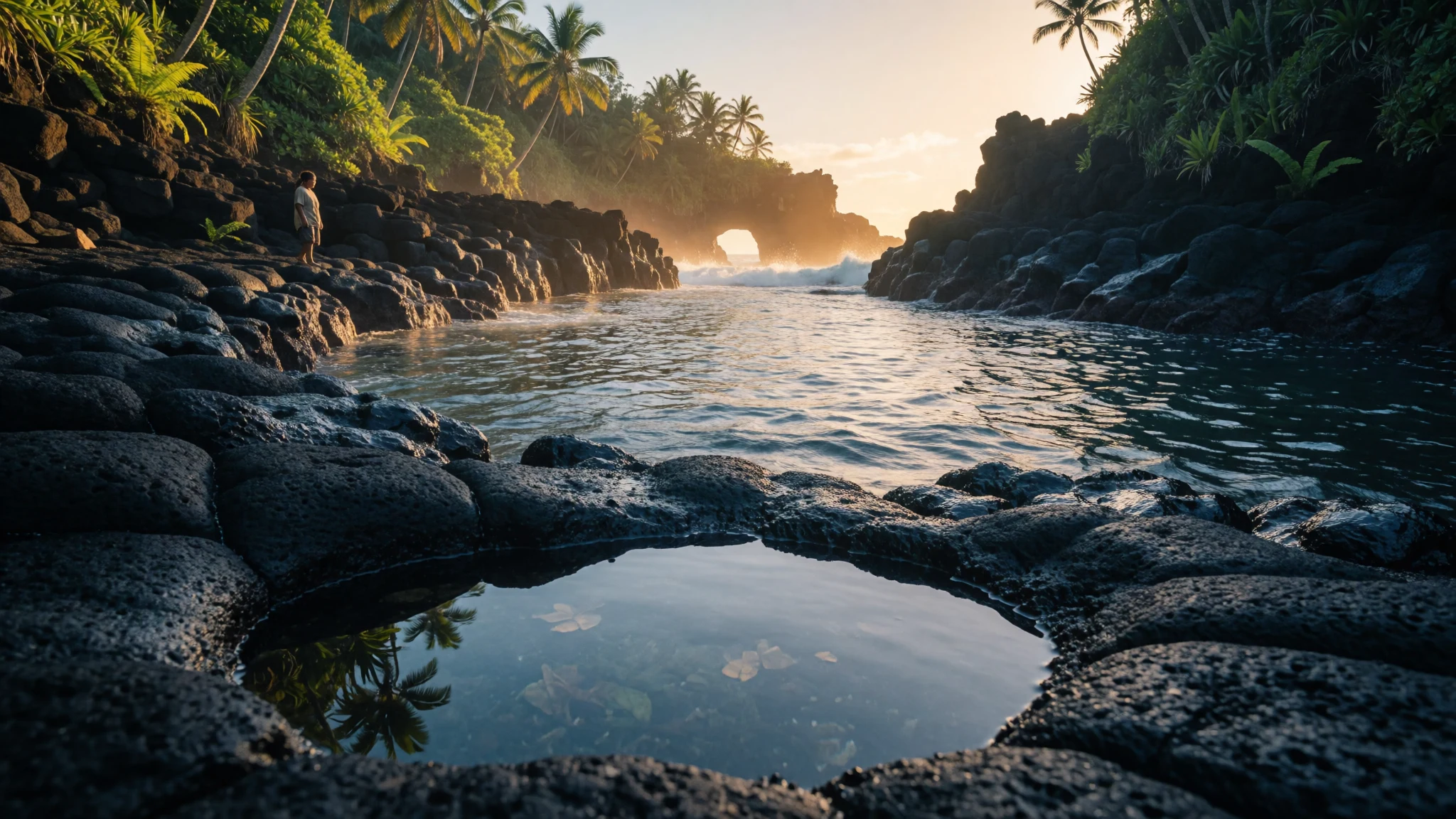
Hāna is a small, rain-fed village at Maui's far eastern end, reached by a slow coastal road through rainforest.
The place
Hāna sits at the eastern end of Maui, on the flank of the Haleakalā volcano, at an elevation of 39 m. The last census counted 1,526 residents, and the feel is of a village rather than a resort town: a school, a bay, a general store, a scattering of lodgings and a great deal of green. Most of Maui's holiday infrastructure lies on the island's drier western and southern sides. Hāna faces the other way, into the easterly trade winds, which arrive heavy with moisture from the sea. The result is rainforest, waterfalls, ferns and flowering trees, and a climate that is hot and wet through the year. Showers can pass over at any hour, so sun and rain in the same afternoon is normal. Getting here is half the point. The Hana Highway follows Maui's northern shore through the forest, with tight bends, narrow bridges and slow traffic, and it takes far longer than the map distance suggests. Hāna also has a small airport with scheduled flights to Kahului, the Big Island and Oʻahu, though most visitors drive. Beyond the village the road continues south-west past the ʻOheʻo Gulch pools, then turns rough and crosses drier, emptier country with almost no services. Staying overnight changes the experience: the day-trippers leave in the afternoon, the road quietens and the village returns to its own pace. Lodging is limited, and small guesthouses and motels are the norm, with one large resort as the exception.
Its story
The story of Hāna begins with Polynesian voyagers, who reached the Hawaiian islands many centuries before Europeans and found this wet, fertile coast well suited to growing food and fishing. The stone temple platforms (heiau) in the district are reminders of that long Hawaiian chapter, which shaped the land long before any plantation did. The modern economy came with sugar. A planter named George Wilfong started a cane plantation here in 1849, and more followed until sugar dominated the district's land and work. Labourers arrived from several countries to work the fields, which is one reason Hawaiian, Asian, Portuguese and other influences sit side by side in local life today. Road access came late. Before the Hana Highway was finished in 1926, the district was linked to the rest of Maui mainly by sea and rough tracks. The first road surface was gravel, and it gave Hāna its first link for vehicles. Sugar ended in 1946, when the last plantation closed. Many workers moved to the west side of Maui in search of jobs, and the village emptied; its population had once been far larger than the 1,526 counted at the last census. That same year a small inn opened which would grow into the village's resort, and it began steering the economy towards visitors. Hāna has been balancing farming, family life and tourism ever since.
What to see
- Waiʻanapanapa State Park — Several miles north-west of Hāna, off the highway
Waiʻanapanapa State Park lies north-west of Hāna along the highway. Its black sand beach fills a deep cove, with dark rock, surf and thick vegetation all around. The sand is volcanic and coarse, the water can be rough, and swimming needs caution. Walk the coastal paths for lava cliffs and sea views, and arrive early before the car park fills.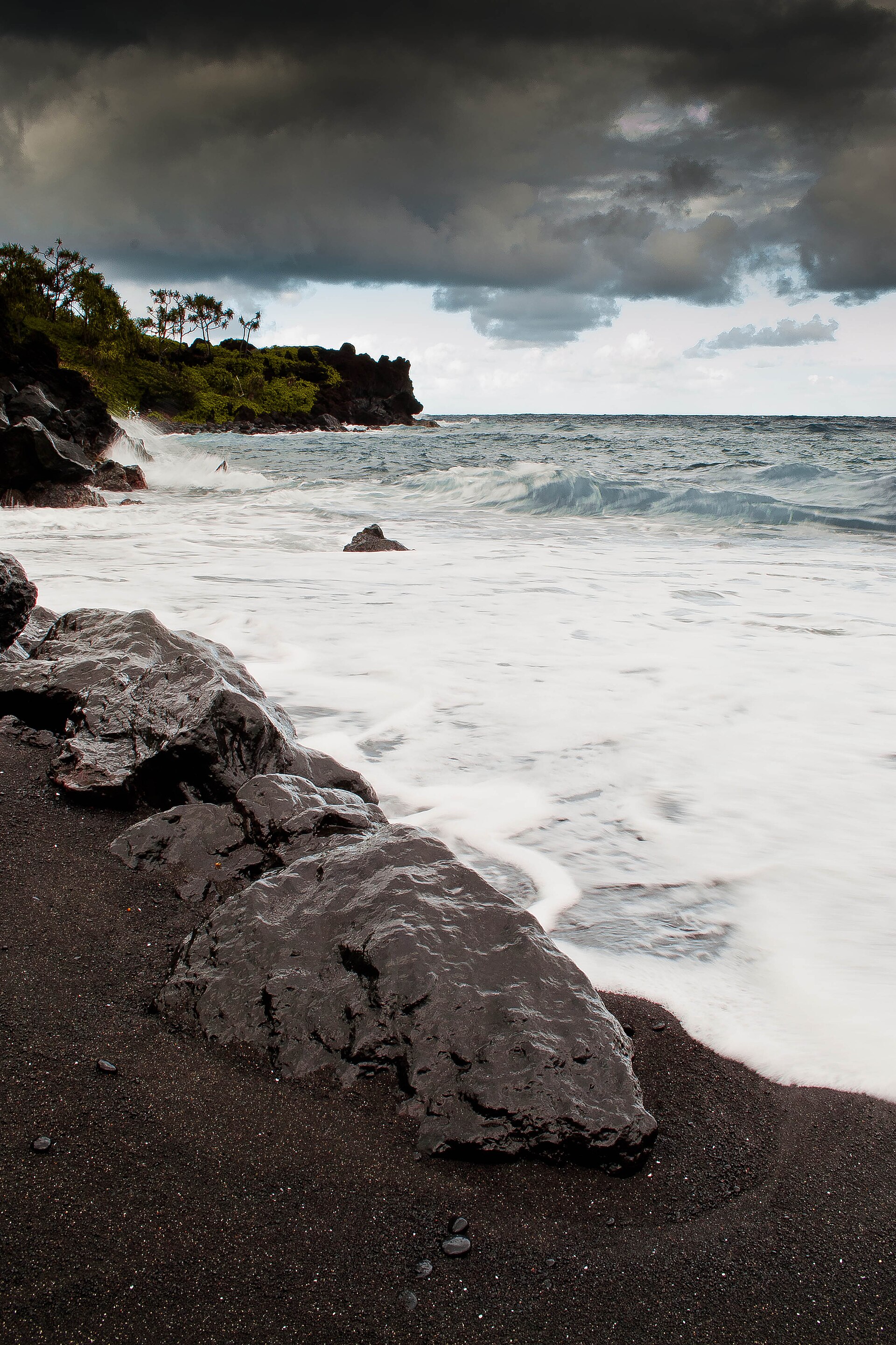
- ʻOheʻo Gulch — South-west of Hāna, a detached section of Haleakalā National Park
ʻOheʻo Gulch is a detached section of Haleakalā National Park, reached by the paved highway south-west of Hāna. Streams step down through rainforest in a series of pools and falls. Access to the water and trails depends on weather and flash-flood conditions, which change quickly, so check the National Park Service's current notices before planning a swim. - Hana Beach Park — On the bay at the edge of the village
Hana Beach Park sits on the bay at the edge of the village, a short walk or drive from the shops. It is a local gathering place rather than a spectacle, where residents typically picnic, fish and let children play in the shallows. It makes an easy, low-key stop for a rest after the long drive in.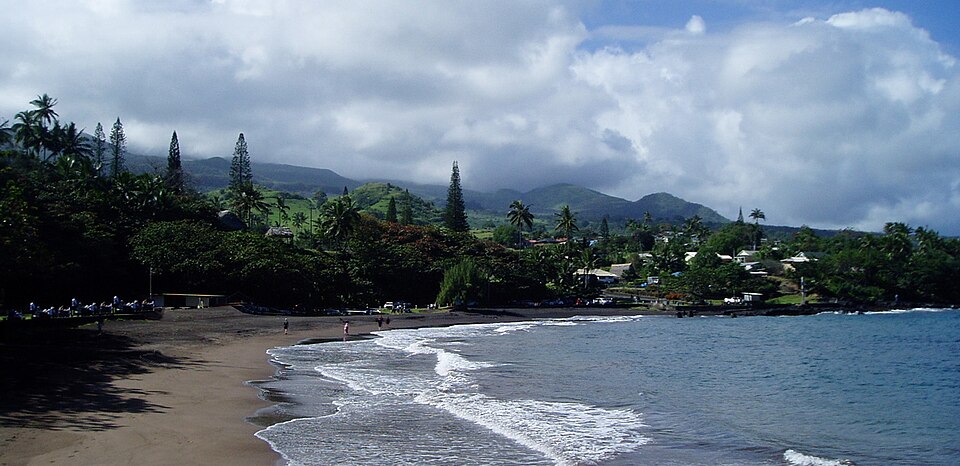
- Hale o Piʻilani Heiau — Honomaele area, near Hāna
Hale o Piʻilani is a heiau, a Hawaiian temple platform, in the Honomaele area near Hāna. Its stone terraces show that this coast was lived in and farmed long before the sugar plantations or the highway. Treat it as a sacred site: look from the edges, stay off the walls and check current access locally before going.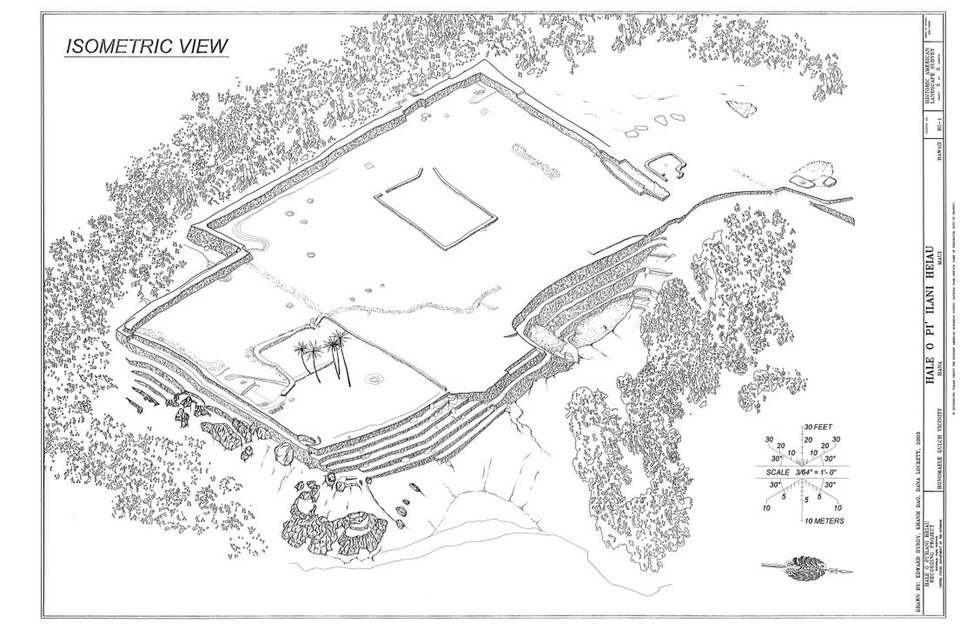
- Hasegawa General Store — Hāna village
Hasegawa General Store is the village's everyday shop, stocking the basics for residents and for travellers who have driven a long way without services. Go in for water, snacks and a look at the shelves. It is a practical stop more than a sight, but it shows how self-reliant this remote community has to be.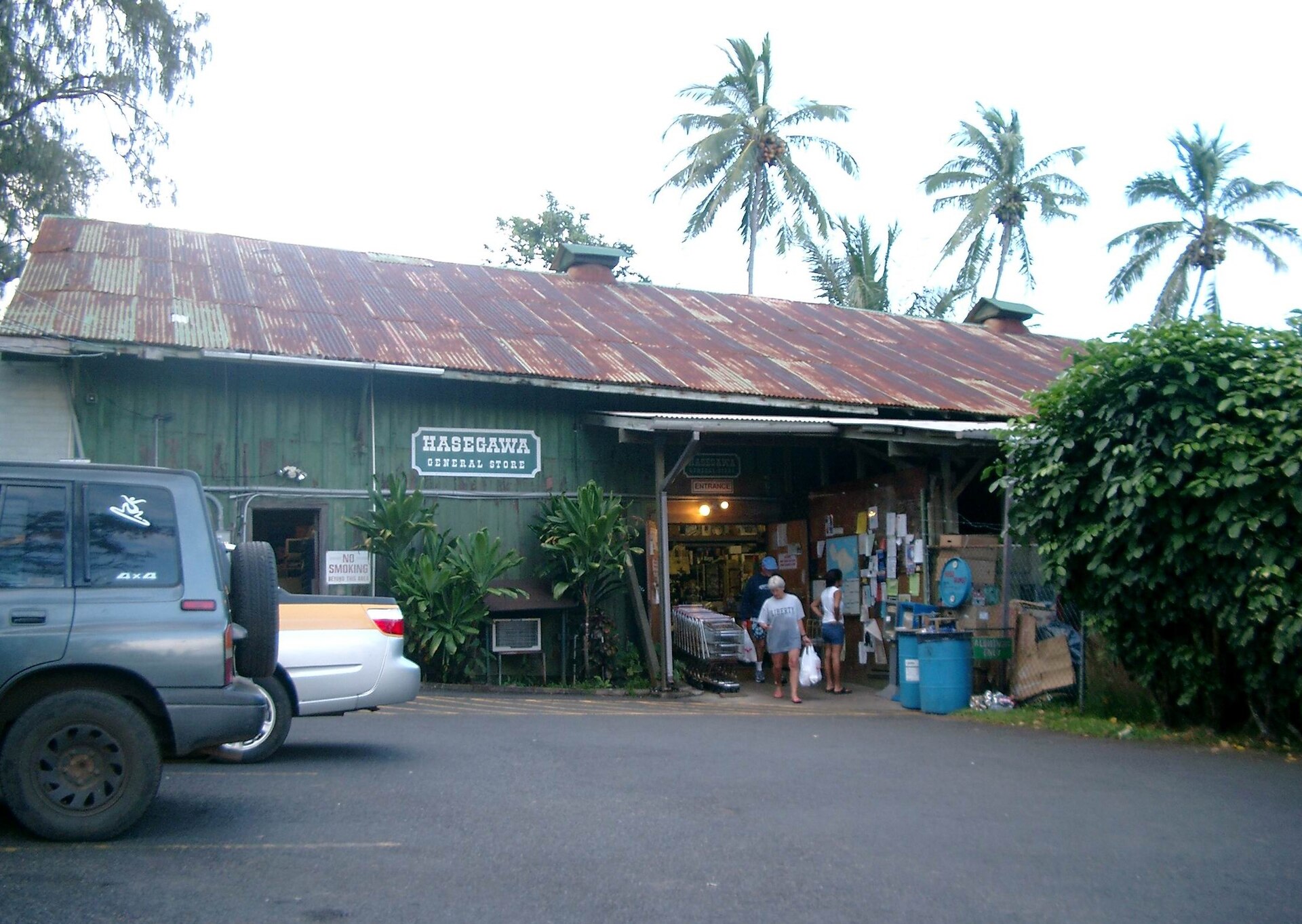
Culture
Hāna's culture rests on Native Hawaiian traditions, which are very much alive here, layered with the heritage of plantation families who came from Asia, Portugal and elsewhere. The Hawaiian language is part of daily life in place names, greetings and signs, and a few words used well are noticed and appreciated. Aloha covers hello, goodbye and affection, mahalo means thank you, and ʻāina is the land, which many families feel a duty to look after. Hāna's rural character means that family, church, fishing, farming and taro growing still shape the week more than tourism does. Heiau and burial grounds are sacred to Hawaiian families rather than backdrops for photographs, and some stretches of shoreline and valley are private land. Residents use the same narrow highway as visitors for work and school, so patience on the road matters as much as any rule at a monument. Many locals have mixed feelings about the crowds the road now draws, and they tend to welcome visitors who buy locally, stay overnight and leave no trace. Take nothing from the land, including stones, sand and lava rock, stay off heiau walls, and stop only where parking is clearly allowed.
What to wear
Hāna's traditional Hawaiian dress used materials from the land: kapa, a bark cloth beaten from the paper mulberry plant, and wrap garments such as the malo for men. Lei of flowers, leaves, seeds or shells are still made for graduations, weddings, hula performances and farewells. The long, loose holoku and the muumuu came in during the nineteenth century and remain festive wear for many women. Day to day, people in Hāna dress for heat and rain: shorts, T-shirts, cotton or rayon aloha shirts, rubber sandals that locals call slippers, and a light rain jacket close at hand. Work clothes are practical, since this is a farming and fishing community, and smart clothes appear mainly at church and family occasions. A visitor needs quick-drying layers, a waterproof jacket and a hat, because a shower can follow bright sun within minutes. Shoes with proper grip matter on wet rocks, muddy trails and slippery lava, and sandals suit only the beach and village. Swimwear is for the water, so put a shirt and shorts or a wrap on for the shop, the village and any heiau or other sacred place. Reef-safe sun protection and an insect repellent are sensible additions to the bag.
What to eat
- Huli huli chicken — Roadside stands and food trucks along the highway and in the village
Huli huli chicken is grilled on a rotating spit and brushed with a sweet, savoury marinade, and huli means turn. Roadside cooks sell it hot from drum grills, often with rice. It is an easy lunch with a sea view, best eaten soon after it comes off the fire. - Plate lunch — Local eateries and food trucks in the village
The plate lunch is the Hawaiian everyday meal: two scoops of rice, macaroni salad and a main such as chicken, pork or fish. It reflects the island's mixed heritage and is filling after a hike or a long drive. Ask what is freshly made that day. - Banana bread — Roadside stalls and bakeries along the Hana Highway
Banana bread is the classic snack on the Hana Highway, baked in loaves and sold from small stalls and shopfronts. Moist and sweet, it travels well and breaks up a drive nicely. Buying it from a local maker, not a chain, keeps the money in the community. - Fresh tropical fruit — Fruit stands beside the road and small farm stalls
Fruit stands along the road sell what is in season, often including bananas, papayas, mangoes and coconuts. The wet climate suits fruit trees well. Many stalls run on an honour box, so carry small notes and coins, and take only what you pay for. - Poke — Store counters and fish counters on Maui
Poke is cubed raw fish, usually tuna, dressed with soy sauce, sesame oil, onion and seaweed, and sold by weight from deli counters. It is a cheap, fresh lunch for a picnic by the bay. If you are unsure about raw fish, ask how and when it was prepared.
Plan it
Best time. May, June, September and October are sensible choices, since the shoulder seasons tend to be quieter on the road. Hāna is hot and wet all year, so no month is reliably dry; expect showers whenever you go, and check the forecast for the waterfall areas, which can flood quickly.
How long. 2
Getting there. Fly into Kahului on Maui, then drive the Hana Highway south-east to the village; budget about three hours for the drive, longer with stops. Hana Airport has scheduled flights from Kahului, the Big Island and Oʻahu. Beyond Hāna the road turns rough, so check your rental terms first.
Budget. mid
Tips
- Start the drive early in the morning to avoid the heaviest traffic and give the stops room.
- Fill the fuel tank and carry water and snacks, as services are few beyond the village.
- Book lodging well ahead, since Hāna has limited rooms; the official site is https://hanamaui.com/.
- Download maps before leaving, because phone signal is patchy on the coast.
- Check National Park Service notices for ʻOheʻo Gulch before relying on any swim.
Etiquette
- Pull over safely to let local traffic pass on the narrow highway.
- Treat heiau and burial sites as sacred, and stay off walls and platforms.
- Respect signs for private land and do not leave the road or paths to take photographs.
Nearby
Sources
- Wikidata Q1652717 (CC0)
- Wikipedia: Hāna, Hawaii (rev 1377792455) (CC BY-SA 4.0)
- Wikivoyage: Hana (rev 5403658) (CC BY-SA 4.0)
- Photo: Hana, Maui, 2006 (cropped), KanoaWithington (CC BY 3.0)
- Photo: Hale o Piʻilani Heiau, Edward Byrdy, Khanh Dao, Dana Lockett (Public domain)
- Photo: Hana Beach Park, Travisthurston (CC BY 3.0)
- Photo: Hasegawa General Store, Lechhansl (CC BY 3.0)
- Photo: Hana Maui Coast, 1920, Charles William Bartlett (Public domain)
- Photo: Hana Lava tube garden, dronepicr (CC BY 2.5)
- Photo: Beautiful Blue Water, nick hoke (CC BY 3.0)
- Photo: Black Sand Beaches outside of Hana, Maui, JC Essentials (CC BY 2.5)


