Haines
Haines, United States
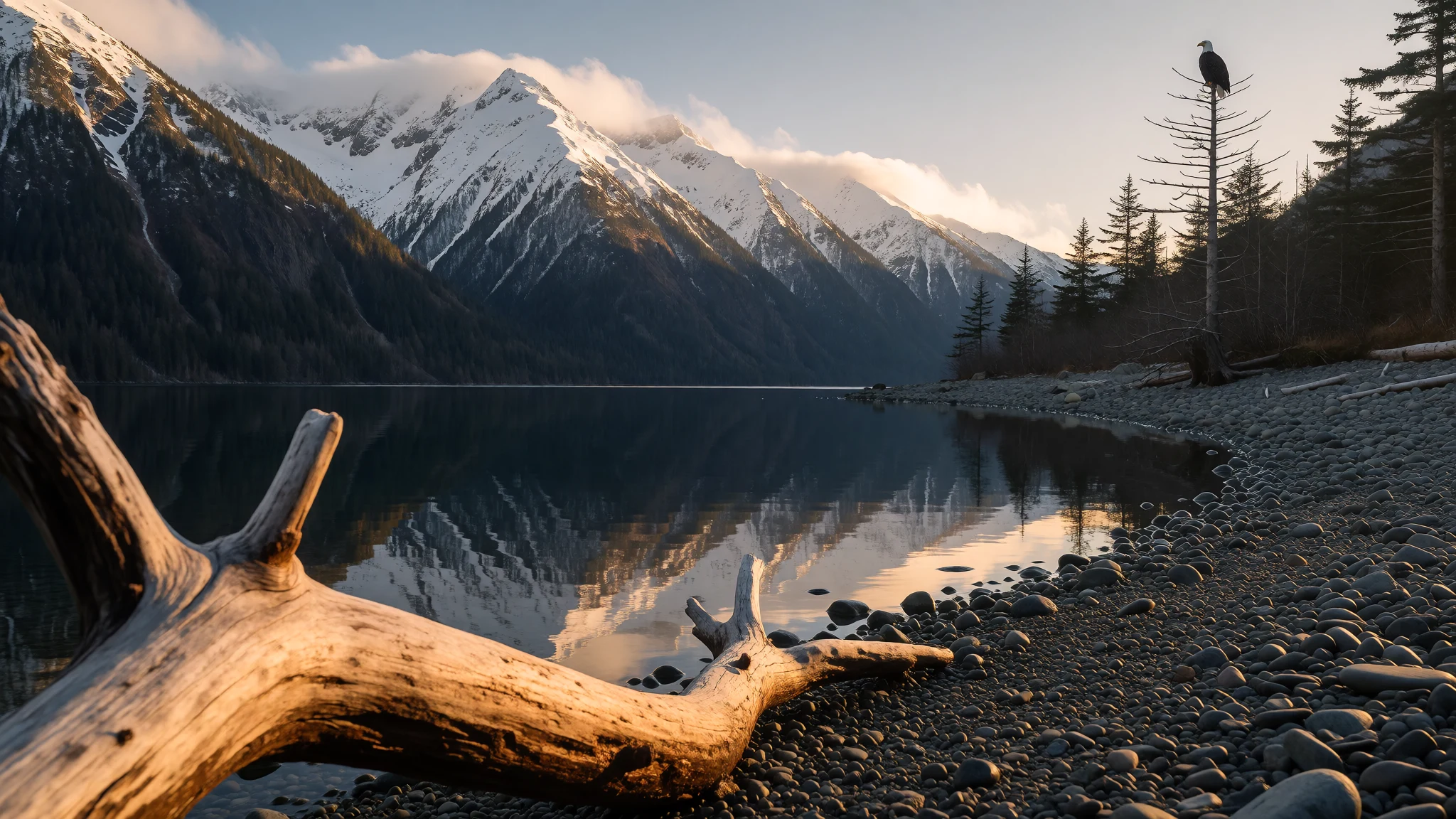
Haines is a small Tlingit-rooted Alaskan town between inlets and mountains, with eagles, a former army fort and a slow, unhurried pace.
The place
Haines sits on the Chilkat Peninsula in the northern Alaska Panhandle, a town of about 1,657 people at 11 metres above sea level. Its centre occupies the Deshu Isthmus, a narrow neck of land with Portage Cove and the Chilkoot Inlet to the east and the mouth of the Chilkat River to the west. Water, forest and steep mountains close in from every direction, so the town feels smaller than the map suggests. Glacier Bay National Park and Preserve lies nearby, reached mostly by boat or small plane rather than by road. Haines is also the headquarters of the Chilkoot Indian Association, a federally recognised Tlingit tribe, so Tlingit presence is part of daily life rather than a museum subject. For a Southeast Alaska community of its size, Haines is unusually well connected. The Haines Highway runs north-west to the Canadian border and on to Haines Junction in the Yukon, the only road link to the rest of the continent, while ferries and a small airport supply the other ways in. The climate is humid continental with a dry spell in summer: warm days in July and August, but noticeably wetter than neighbouring Skagway, so rain gear belongs in every bag. Winter is quiet and many eateries close. Summer brings occasional cruise calls, far fewer than at Alaska's busier ports, and only one ship docks at a time, so the pace stays slow. Mornings suit the waterfront best, when fog lies on the inlet and the peaks emerge gradually.
Its story
Haines began as Deishú, a Tlingit name meaning "end of the trail". The Chilkoot band used a route from the Chilkat River outlet across the isthmus, carrying their canoes overland to avoid a long paddle around the peninsula. It was a trade link with the interior, and the place name records that crossing. In 1879 George Dickinson, an agent for a trading company, became the first European to settle there. Two years later the Chilkat asked the missionary Sheldon Jackson to send teachers, and a mission and school were built on land the Chilkat gave to the church. The naturalist John Muir was among those sent to the region. In 1884 the mission took the name Haines, honouring Francina Haines, who chaired the committee that raised its funds. Haines is the only Southeast Alaska town named after a woman. The border between Canada and the United States was then vague and disputed, with American claims from the 1867 purchase of Alaska overlapping British ones along the coast. The Klondike Gold Rush of 1896–1899 reshaped everything. Haines became a supply centre for the Dalton Trail, a route towards the Yukon, and gold was found at Porcupine in 1899. The army post that followed, in 1902, left buildings still standing. Wikidata gives 1910 as the town's founding year, though its roots clearly reach much further back.
What to see
- Fort William H. Seward — South end of town, on the old mission grounds
Alaska's first US army post, begun in 1902 during the gold-rush years, was built on the former mission grounds. Some of its buildings are still in use around a parade ground near the water. It is an easy, flat wander, and a good first stop for getting your bearings.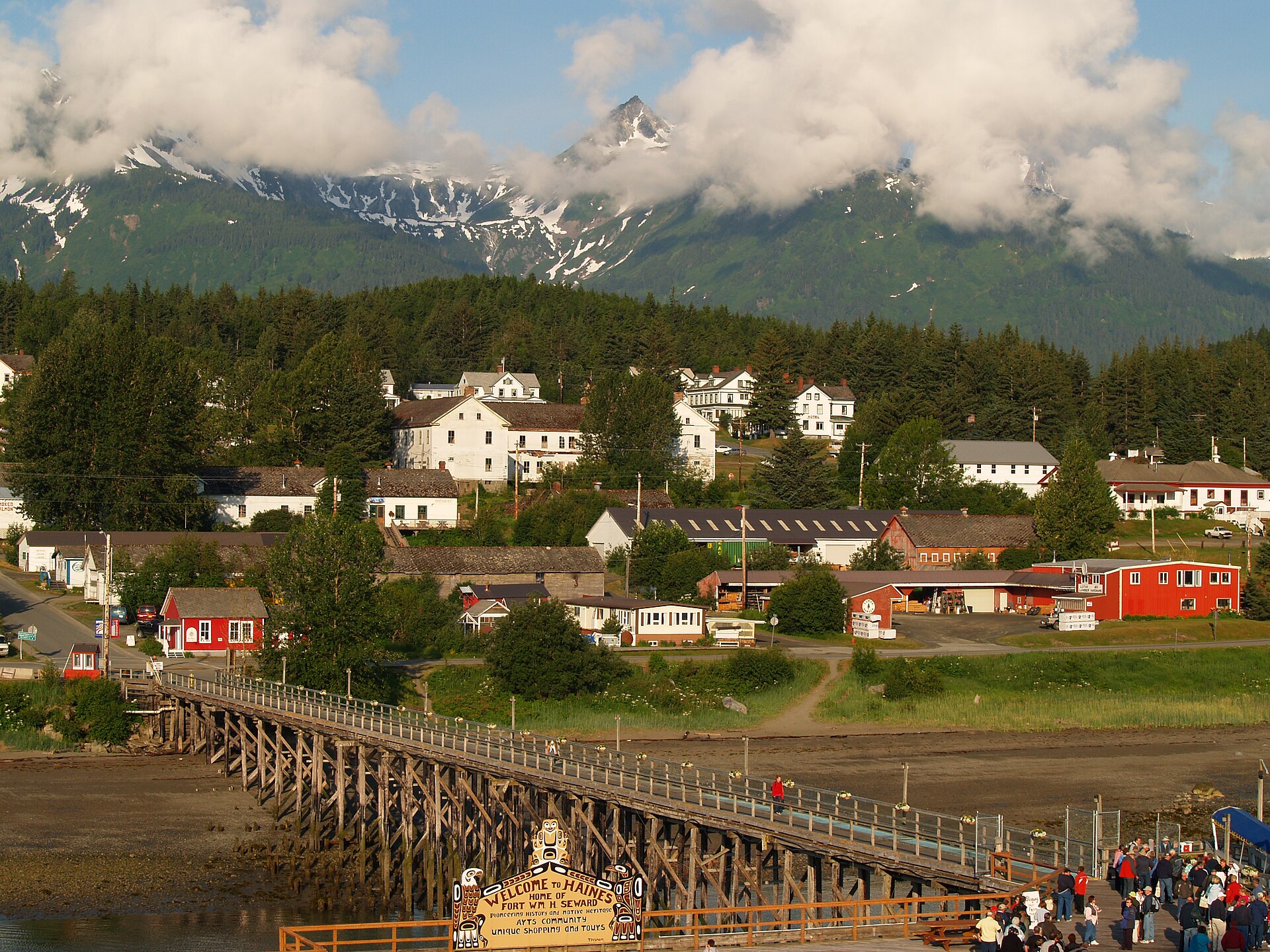
- American Bald Eagle Foundation — Downtown
A natural history museum with dioramas of local wildlife, plus a live raptor centre where birds are presented at close range. It makes sense on a wet day and gives useful background before heading out to watch eagles in the field.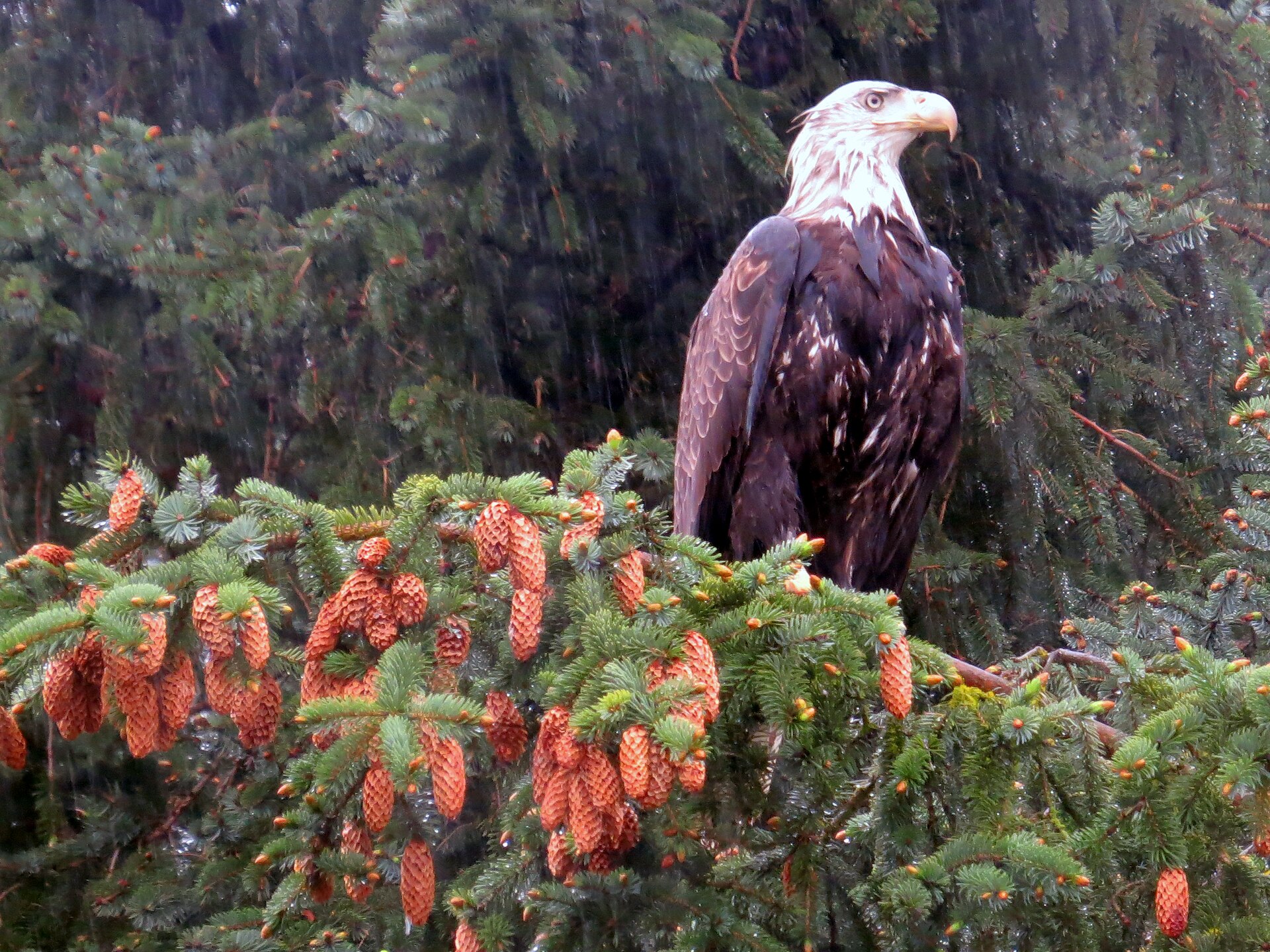
- Sheldon Museum & Cultural Center — Waterfront, near the small boat harbour
A small museum covering Tlingit art and culture alongside the mission, army and industrial history of Haines. Displays include the lens from Eldred Rock Lighthouse and work by local artists. Allow an hour or so; the Tlingit material is the main reason to go. - Battery Point Trail — Edge of town, along Portage Cove
A short, mostly wooded path follows the shoreline to a quiet beach and also gives access to Mt. Riley. It suits a relaxed half-day, with tide pools, water views and few people outside the cruise days. Wear waterproof footwear. - Eagle Council Grounds and the Bald Eagle Festival — Along the Haines Highway, outside town
In mid-November, eagles gather in large numbers along the Chilkat River stretch of the Haines Highway, and a five-day festival marks the peak. Cold and short daylight are the price of admission. Bring warm layers and binoculars, and pull off the road safely to watch.
Culture
Haines is a place where Tlingit and settler histories sit side by side. The Chilkoot and Chilkat Tlingit are the original people of this stretch of coast, and the Chilkoot Indian Association is based in the town. Clan art, carving and weaving are visible in museums, public spaces and local galleries, and the Sheldon Museum is the most accessible place to learn how the two histories overlap. The mission era and the gold-rush army post are remembered too, in preserved buildings at Fort Seward. Everyday life follows the seasons. In summer, the community is busy with visitors, fishing and outdoor work, and restaurants stay open late. In winter the town is quiet, and some eateries close for months, which locals take in their stride. Wildlife is part of the culture as well: eagles feed along the river each autumn, and the November festival draws both residents and birdwatchers. The Chilkat River valley is both a working landscape and a protected habitat, so respect for animals and for the land is a shared expectation. Social manners are small-town: people greet each other, drivers give way readily, and conversations start easily in cafés and at the harbour. Ask before photographing Tlingit people, regalia or ceremonial objects, and keep well back from eagles and bears rather than crowding them for a better shot.
What to wear
Traditional Tlingit dress in the Haines area is closely tied to ceremony. The Chilkat blanket, named after the Chilkat Tlingit, is woven from mountain goat wool and cedar bark in bold, flowing formline designs, and is worn by dancers and clan leaders at gatherings. Button blankets are made from dark wool with red appliqué crests and shell buttons, and are also worn at ceremonial events and celebrations. These are heirloom pieces rather than daily clothing. Day to day, Haines dresses for weather and work. Waterproof jackets, rubber boots, fleece, wool hats and sturdy trousers are standard, and clothing is practical rather than fashionable. Local fishing, fieldwork and outdoor jobs shape what people choose, and a clean pair of jeans and a warm jumper pass almost everywhere, including restaurants. Visitors should dress in layers. A good waterproof shell matters more than anything else, because rain arrives often even in summer, and mornings and evenings stay cool. Wear waterproof walking shoes or boots with grip for trails and wet shorelines, and pack a warm hat and gloves for spring, autumn and winter. Insect repellent helps on woodland paths in summer. No special dress is required for museums or cultural centres, but modest, tidy clothing is a courteous choice if you are invited to a Tlingit community event.
What to eat
- Raspberry twist doughnut — A bakery-café on the main road through town
A morning treat from the town's bakery-café on the main road, eaten with coffee before a day out. The same place turns to Thai food in the evening, which is a small surprise for a town this size. - Roadhouse burger — A roadhouse eatery near the centre of town
A filling burger and chips from a casual roadhouse is the straightforward local option after a day outdoors. Portions are generous, the mood is relaxed, and it is popular with residents as well as visitors. - Fresh Alaskan seafood — Waterfront and main-street restaurants, open mostly in summer
In summer, several restaurants serve locally caught fish and shellfish, often simply grilled or fried. Availability follows the season and the catch, so ask what came in recently instead of expecting a fixed menu. - Wood-fired pizza — Seasonal restaurants in the centre of town
A summer favourite, baked in a wood-fired oven in a few of the town's restaurants. It sits alongside Mexican and seafood options, giving visitors more variety than a small Alaskan town might suggest. - Haines-brewed beer by the growler — The micro-brewery tasting room in town
The local micro-brewery fills growlers fresh, which makes a practical take-away for a picnic or a rented cabin. A shuttle bus serves it on cruise days, but check opening arrangements locally before making a special trip.
Plan it
Best time. June to September for warm days, open restaurants and easy access to trails, though rain is common even then. Mid-November suits eagle watching and the festival, but daylight is short, it is cold, and many eateries are closed in winter.
How long. 2–4
Getting there. Fly with Alaska Airlines to Juneau, then take a small plane or charter to Haines Airport, on the Haines Highway a few kilometres west of town. Alternatively, take the Alaska Marine Highway ferry on the Lynn Canal route (Juneau–Haines–Skagway), whose terminal lies north of town, or a fast passenger ferry from the Small Boat Harbour. By road, the Haines Highway links to Haines Junction in the Yukon and the Alaska Highway.
Budget. mid
Tips
- Book ferries, flights and flightseeing well ahead in summer; sailings and seats fill quickly
- Pack a proper waterproof shell and boots; rain is frequent and the town is wetter than Skagway
- In winter, check which eateries are open before arriving, as some close for the season
- Carry a card as well as some cash for small shops and market stalls
- Allow time for the Eagle Council Grounds in November, with warm layers and binoculars
Etiquette
- Ask before photographing Tlingit people, regalia or ceremonial objects
- Keep a safe distance from eagles, bears and other wildlife, and never feed them
- Pull off the highway fully when stopping to watch birds, to avoid blocking traffic
Nearby
Sources
- Wikidata Q79546 (CC0)
- Wikipedia: Haines, Alaska (rev 1384992387) (CC BY-SA 4.0)
- Wikivoyage: Haines (rev 5435713) (CC BY-SA 4.0)
- LCGS Russ, Haines viewed from Mt. Ripinski (CC BY 3.0)
- Colin Lea, Haines, Alaska (CC BY 2.5)
- Diego Delso, Forest near Davidson Glacier (CC BY-SA 4.0)
- Giskard mb, Main Street with snow (Public domain)
- LCGS Russ, Haines winter postcard (CC BY 3.0)
- Jwgetchell, Haines Alaska: Bald Eagle (CC BY-SA 4.0)
- Diego Delso, Commercial ferry port (CC BY-SA 4.0)
- Gordon Leggett, Wide view of Haines (CC BY 4.0)


Wildlife
- Bald eagle (animal)
Picture a huge bird of prey that fishes and hunts near open water and nests in old, tall trees: that is the bald eagle. At Haines, the Eagle Council Grounds on the Chilkat River stretch of the Haines Highway fill with birds in mid-November, and a five-day Bald Eagle Festival marks the peak. Watch quietly from a respectful distance, and never push closer to improve a photo.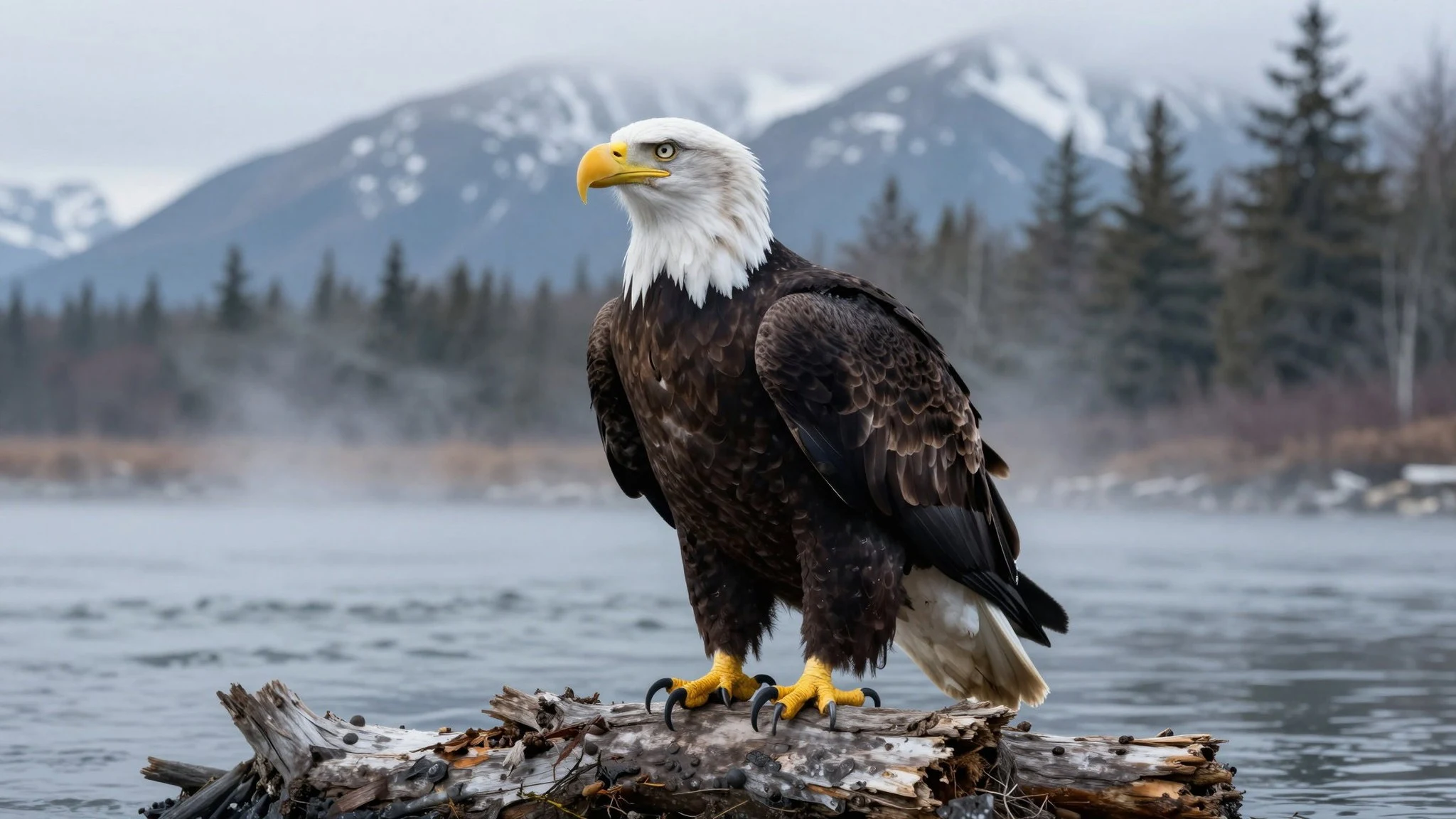
- Brown bear (animal)
The brown bear is a giant bear, nearly as big as a polar bear, with a muscly hump on its shoulders that helps it dig. Its coat can be creamy, reddish or dark brown, and the males are heavier-built than the females. Its paws can reach 21 cm across and 36 cm long. Please stay well back and never crowd a bear for a closer picture; let it go about its business.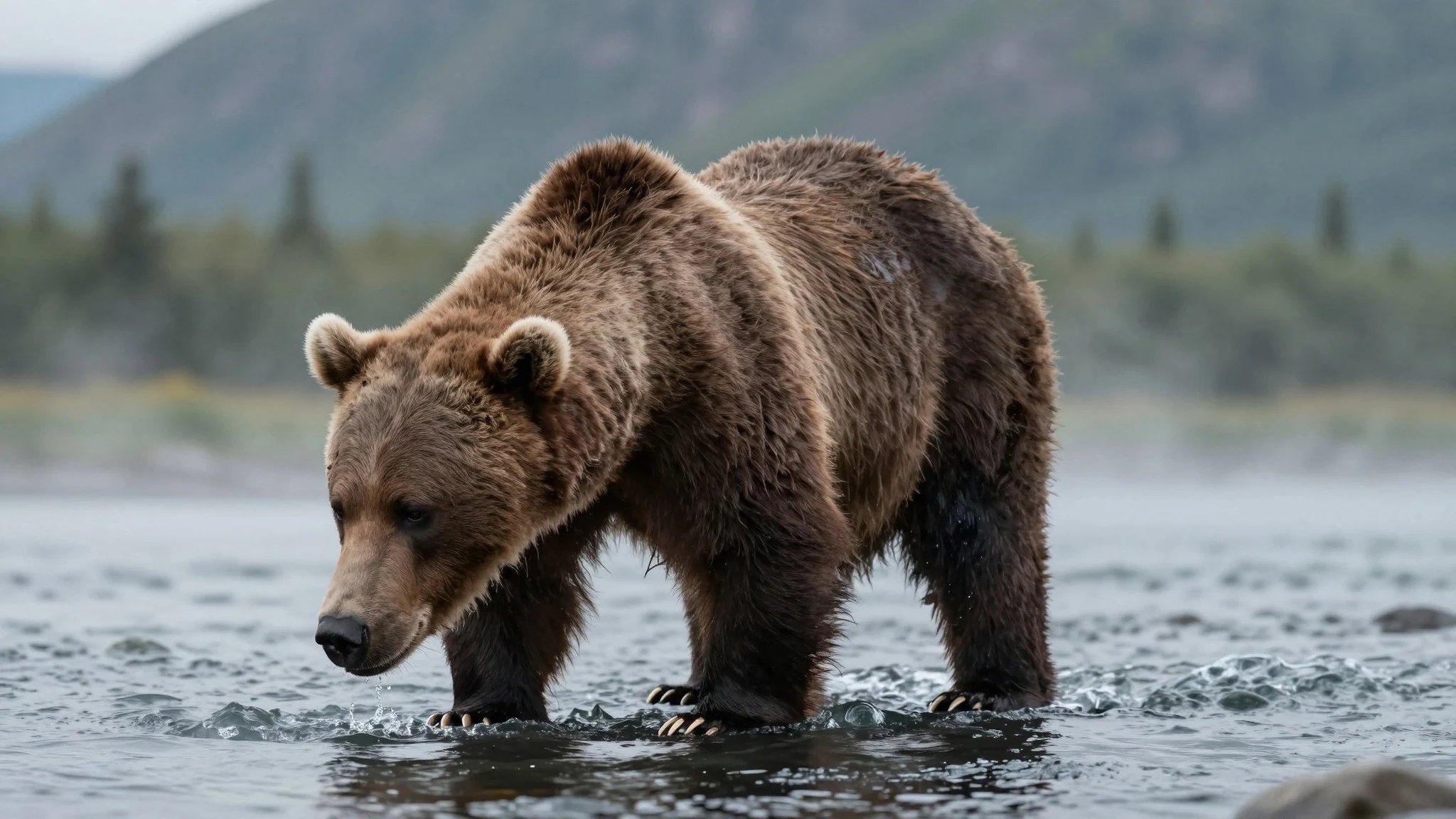
- Bald eagle (bird)
Picture a huge bird of prey that fishes and hunts near open water and nests in old, tall trees: that is the bald eagle. At Haines, the Eagle Council Grounds on the Chilkat River stretch of the Haines Highway fill with birds in mid-November, and a five-day Bald Eagle Festival marks the peak. Watch quietly from a respectful distance, and never push closer to improve a photo.