Great Bear Rainforest
Great Bear Rainforest, Canada
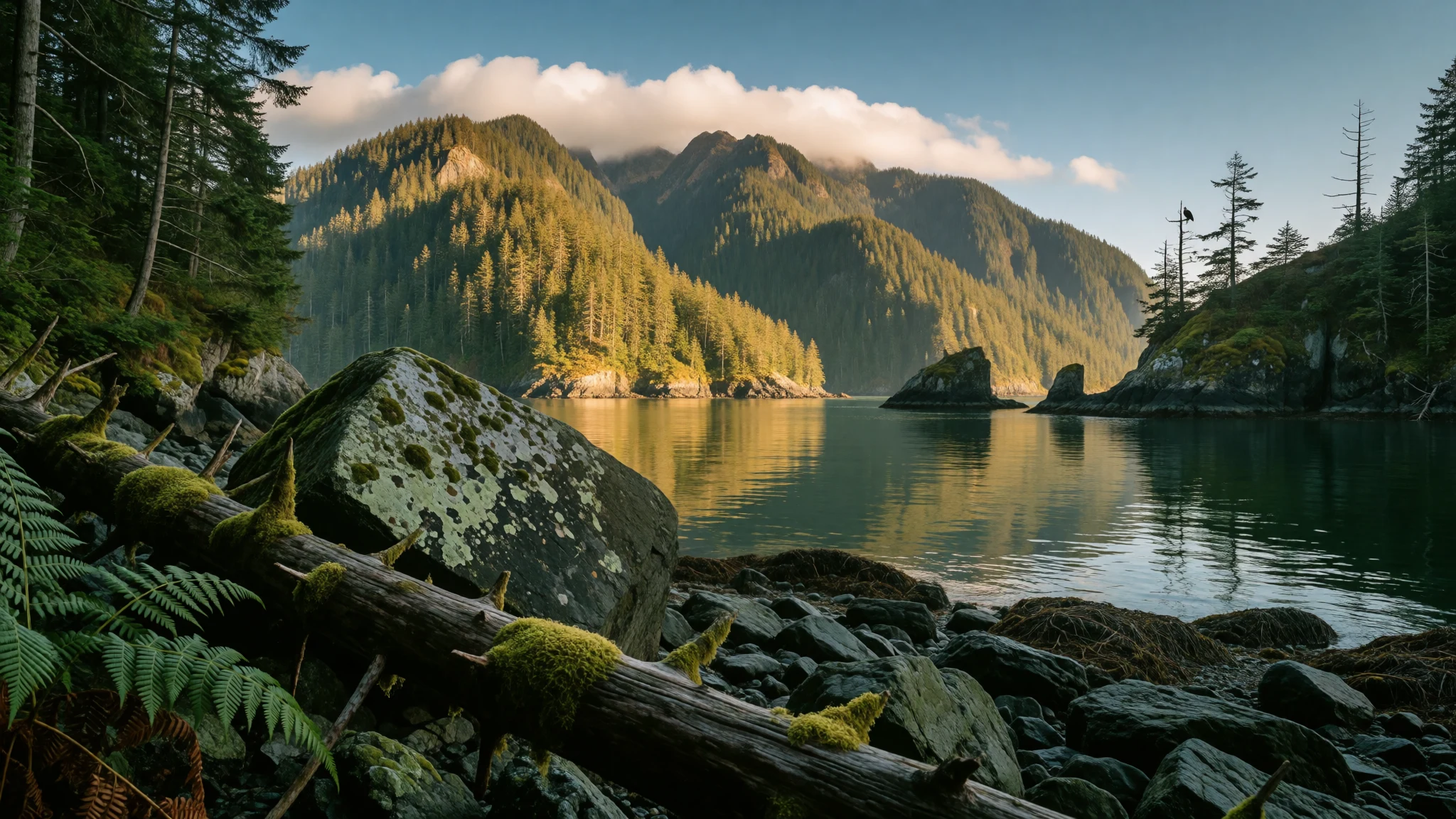
Great Bear Rainforest is a roadless fjord coast of cedar, spruce, salmon rivers and bears, best met slowly by boat.
The place
Great Bear Rainforest covers about 6.4 million hectares of British Columbia's Pacific coast, a ragged edge of fjords, islands, river mouths and steep mountains wrapped in dark conifers. It begins around the Discovery Islands in the south and runs north to the Alaska border, reaching up Portland Canal towards the town of Stewart. Vancouver Island and Haida Gwaii lie outside it, but the other offshore islands along that stretch are inside. It forms part of the wider Pacific temperate rainforest ecoregion.
There is almost no road network here. Small communities are reached by boat, ferry, floatplane or light aircraft, and most visitors travel on a lodge, a small expedition ship or a chartered sailing boat. That remoteness is the appeal, and also the cost: trips are planned well ahead, weather decides what is possible on a given day, and rain, mist and low cloud are normal in every month.
Since the 2006 land-use decision, the region has been divided into zones. Some are protected areas, known as conservancies. Others allow tourism, mining and biodiversity work, while commercial logging and commercial hydro-electric schemes are barred. Ecosystem-based management rules apply elsewhere. For a visitor, this means the shoreline looks very different from many other parts of the coast: mossy old trees, estuaries full of birds, and salmon streams that bears patrol in season. It is quiet, damp, and rewarding for people who like watching and waiting.
Its story
Great Bear Rainforest owes its protection to a campaign that began on the water. Until the 1980s, conservationists knew little about the unlogged valleys of the British Columbia mainland coast, although Indigenous nations had lived among them for generations. In 1990 Peter McAllister, a veteran of Sierra Club campaigns, chartered a three-masted ship and sailed north from Victoria with a crew of friends. That summer voyage was the first of several. Its purpose was to back coastal First Nations who were contesting timber companies' control of their homelands, to keep the remaining intact watersheds standing, and to make the wider world notice what the forest held, both ecologically and culturally.
The group became the Raincoast Conservation Society and carried the effort largely alone until 1996, when other environmental organisations, fresh from the struggle over Clayoquot Sound on Vancouver Island, turned their attention north. The ships kept sailing, and their guests included journalists, filmmakers, photographers, scientists and conservationists from several countries. The pictures and reports they brought home did much of the persuading.
Policy followed slowly. A land-use decision in 2006 created protected areas and other management zones. In February 2016 the provincial government announced a further agreement that put most of the remaining old forest permanently off limits to industrial logging. Later that year the forest was admitted to the Queen's Commonwealth Canopy. The name "Great Bear" is now shorthand for a negotiated outcome, reached between First Nations, government, industry and campaigners.
What to see
- Kitlope River and Heritage Conservancy — Kitlope Heritage Conservancy, central coast
The Kitlope valley shows the rainforest as an intact watershed, with tall conifers lining the river and mountains standing behind. It is a protected conservancy and remote enough that access normally means a boat or aircraft arranged through a local operator. Go for quiet, scale and the sound of moving water.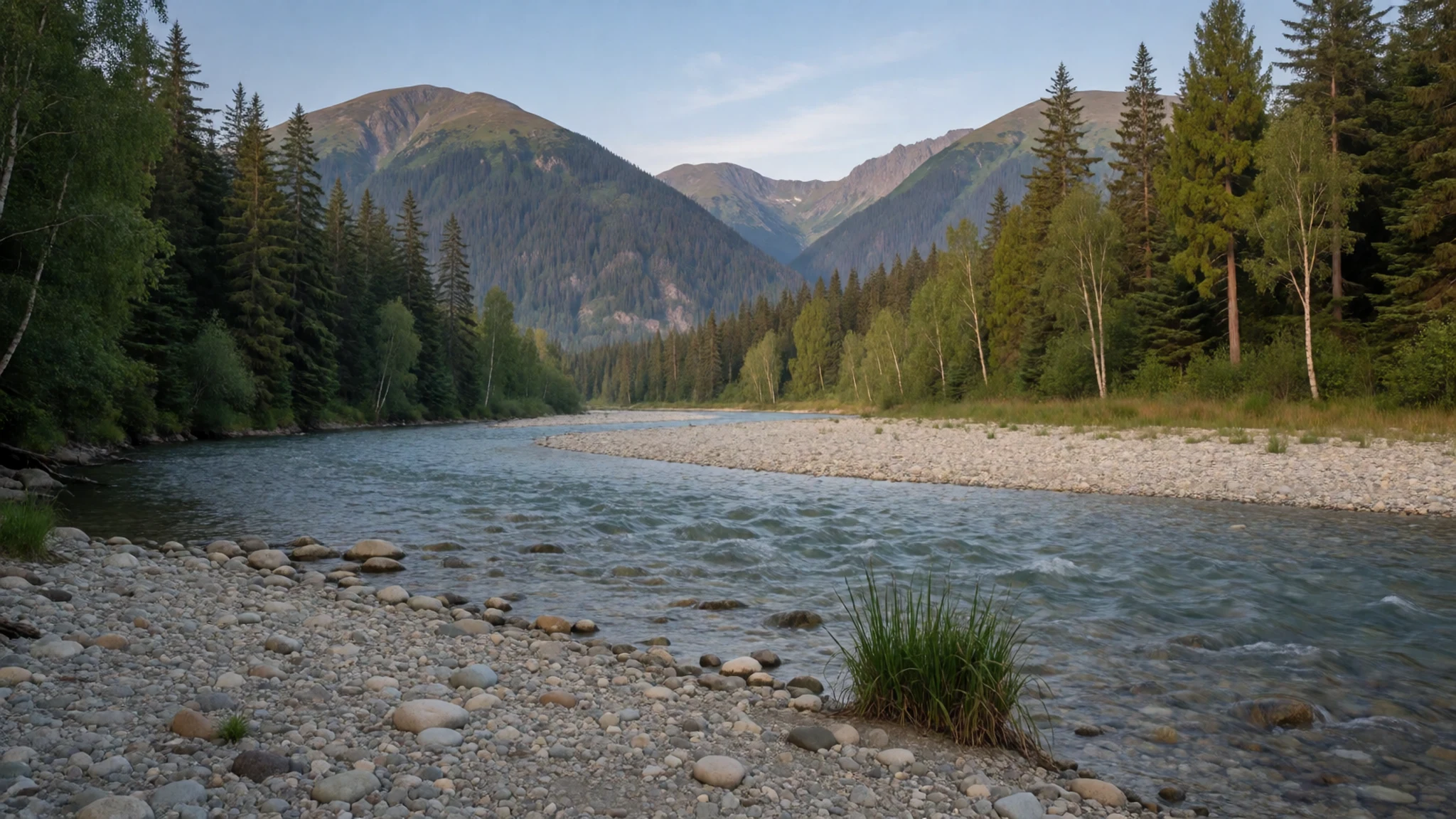
- Grenville Channel — Inside Passage, north coast
This long, narrow passage on the Inside Passage is walled by steep, forested flanks of the Coast Mountains. Ferries and small ships use it, and the sheltered water often stays calm. Watch for waterfalls after rain, eagles on snags, and whales or dolphins when the light is flat and the surface is still.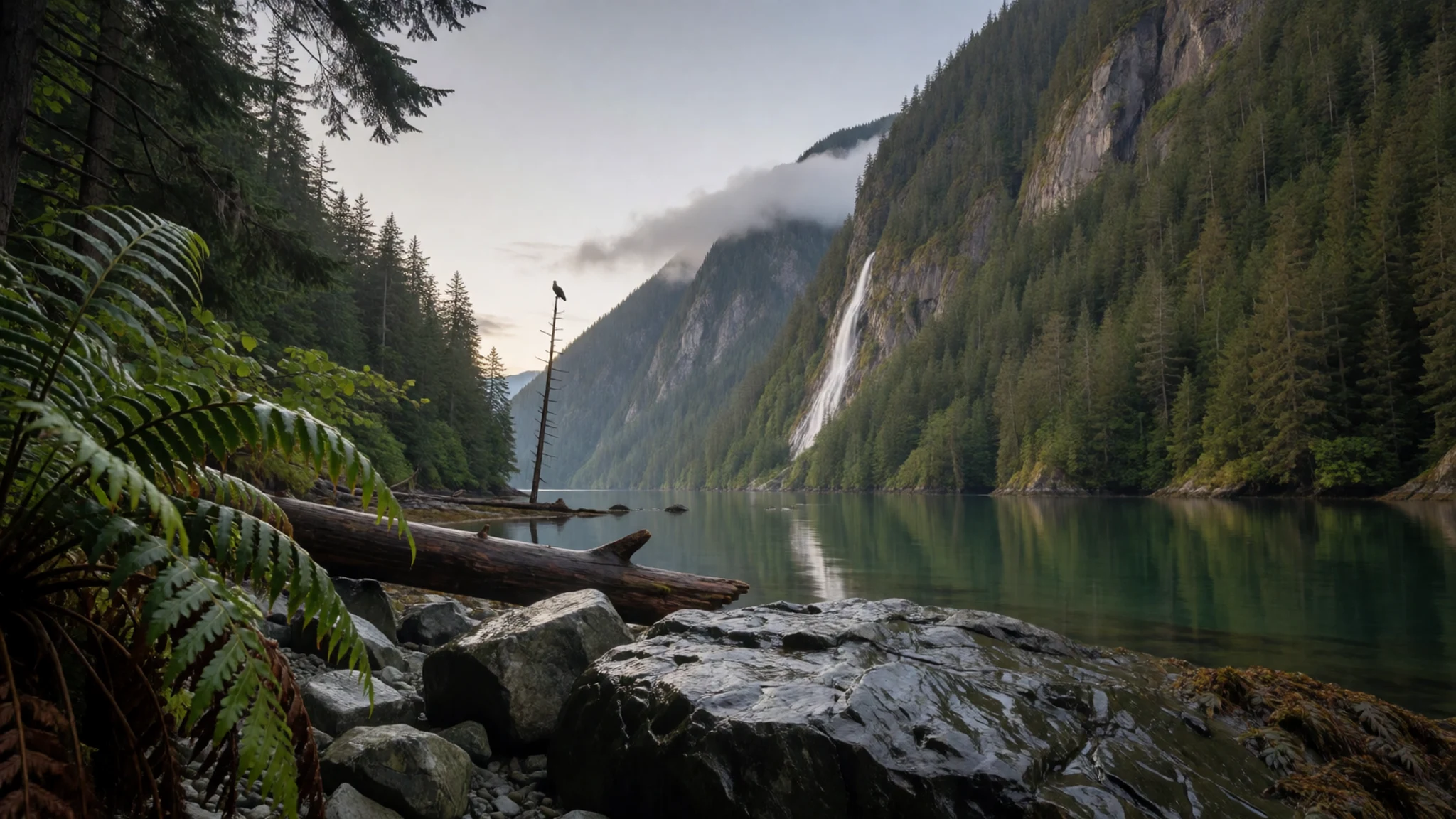
- Pooley Island — Central coast channels
Pooley Island is a good picture of the coast's typical layering: dense forest climbing from the shoreline, bare tops, and cloud that comes and goes. Small boats thread the surrounding channels. Visitors usually see it from the water, so a steady boat, binoculars and patience matter more than a fixed itinerary.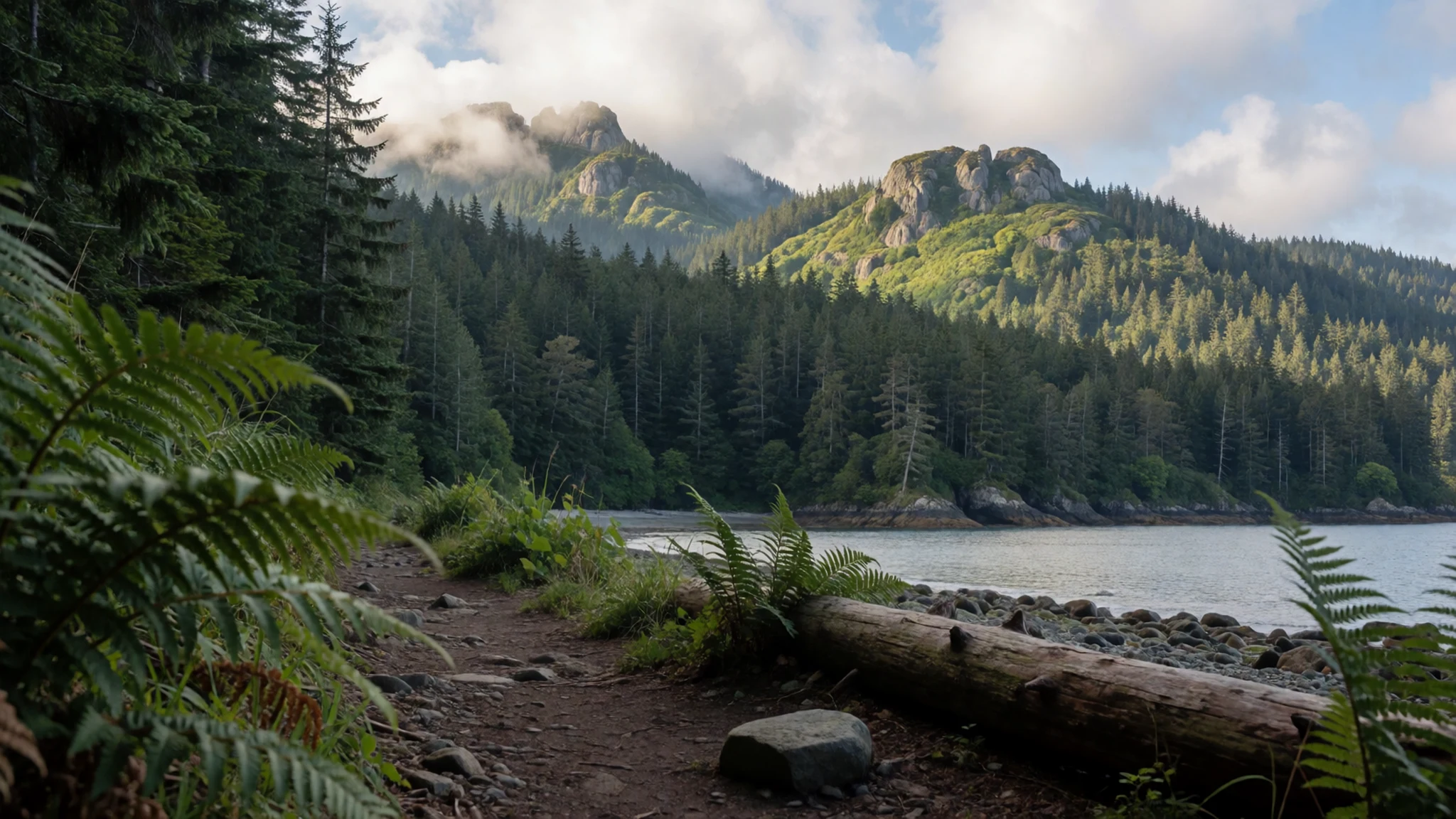
- Kaien Island and Prince Rupert — Prince Rupert, north coast
Kaien Island holds Prince Rupert, the usual northern gateway for ferries and coastal trips. Short paths here pass bracken, ferns and wildflowers such as bigleaf avens, which makes it a useful place to get a feel for the forest before heading into remoter water. Museums and harbour walks fill a wet afternoon.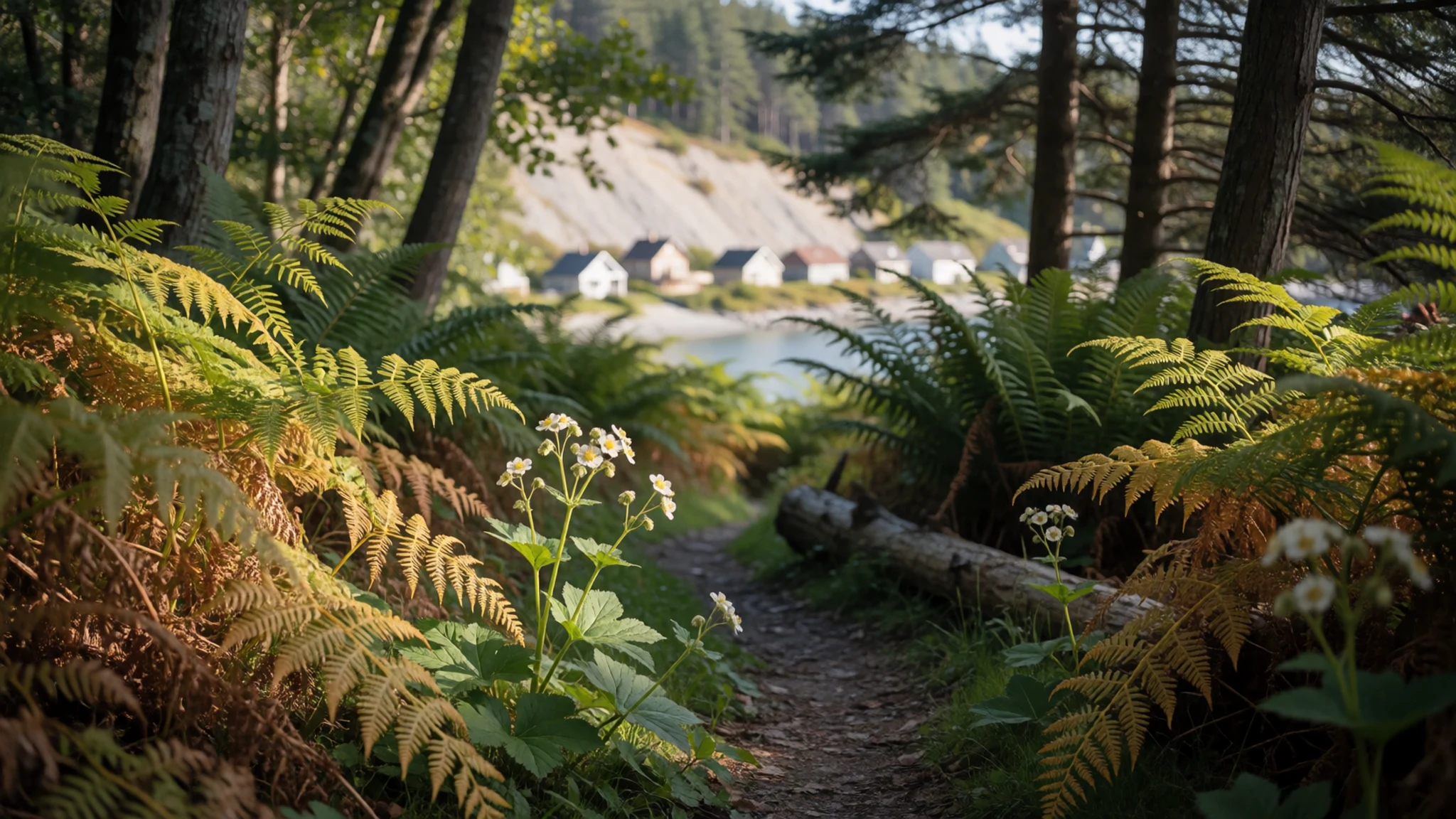
- Portland Canal and Stewart — Northern boundary, near Stewart
Portland Canal marks the northern end of the rainforest, a long fjord along the Alaska boundary. Stewart sits at its head, and the road there gives one of the few overland ways to see the region's edge. Expect steep slopes, glaciers on the heights, and weather that changes quickly.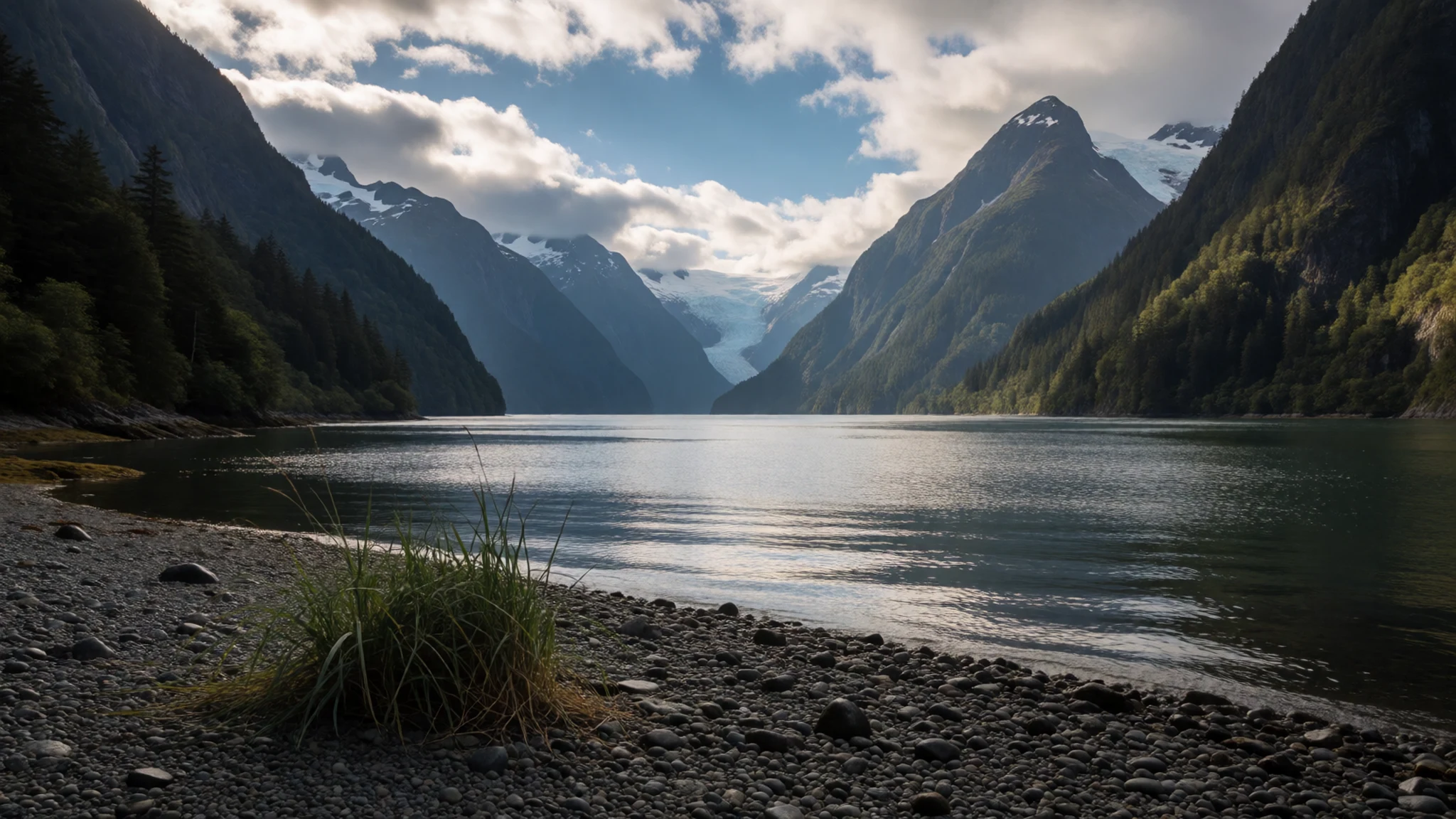
Culture
Great Bear Rainforest is the homeland of several First Nations, among them the Heiltsuk, Kitasoo/Xai'xais, Nuxalk, Wuikinuxv, Gitga'at and Haisla. Their relationship with this coast runs through language, law, food and art, and long predates the conservation campaigns that put the region on maps. Cedar is central: it supplies the wood for houses, canoes and carved poles, and the bark for clothing, mats and baskets. Salmon, harvested each year from the rivers, is both a staple and a thread through ceremony and story.
The forest is also home to the Kermode, or spirit bear, a white-coated form of the black bear that carries particular significance for local communities. Many nations now run their own guiding and stewardship programmes, and Indigenous guardians watch over the land and water. Visiting with these operators is the clearest way to learn about places and practices from the people who hold the knowledge.
History here includes hard chapters of lost territory, restricted ceremonies and logging that cut through traditional lands. The agreements of recent decades came from long negotiation, and many people in the region are proud of them while still pressing for more. Visitors who listen, ask questions and accept that some stories, places and songs belong to families rather than to tourists will be met with warmth. Ask permission before photographing people, ceremonial objects or village sites, and follow your Indigenous guide's instructions about where to walk and what not to touch.
What to wear
Dress in Great Bear Rainforest is shaped by the First Nations of the coast and by constant rain. Traditional clothing was made from shredded cedar bark, which was beaten soft and woven into capes, skirts and conical hats that shed water. Mountain goat wool and cedar bark were woven into Chilkat and Ravenstail robes, with bold crest designs. Later, button blankets, made of dark wool trade cloth with appliquéd crests and shell buttons, became ceremonial regalia. These are worn at feasts, dances and community gatherings, not as casual wear, and each design belongs to a family.
Day to day, people wear what works on the water: waterproof jackets, rubber boots, wool or fleece layers, and caps or beanies. Fishing and guiding work is practical, and communities are informal. Regalia appears on special occasions and sits alongside modern clothes.
Visitors should pack for wet and cool weather even in summer. A proper waterproof jacket and trousers, a warm mid-layer, wool socks and quick-drying base layers matter more than anything fashionable. Rubber boots are often supplied by lodges and boats, so check before buying; otherwise bring sturdy waterproof footwear with a good grip for slippery shores and boat decks. Add a hat, gloves, insect repellent and a dry bag for cameras. If invited to a ceremony or feast, dress neatly and modestly, covering shoulders and knees, and take cues from your hosts.
What to eat
- Wild salmon cooked over alder — Lodge dining rooms, community feasts and harbour towns
Salmon is the food of this coast, often split and cooked on cedar stakes beside an alder fire, or smoked and kept for winter. Look for it at lodge dinners, in community feasts when invited, and at harbour-side stalls in coastal towns.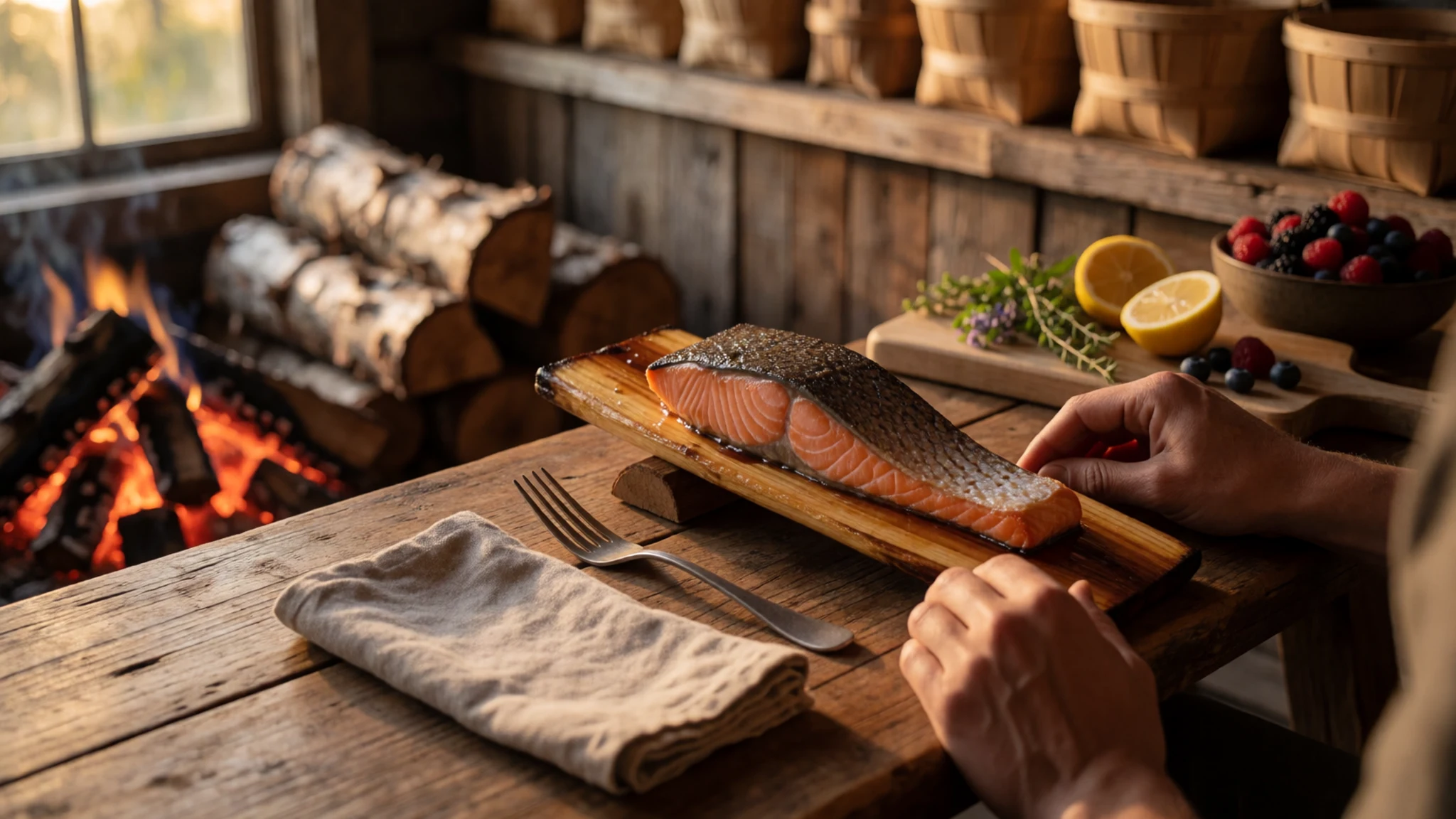
- Spot prawns — Boat galleys and dockside seafood counters
These sweet, firm prawns are caught in traps along the coast in season and cooked simply, often just steamed or grilled with butter. Boat galleys and small seafood counters near the docks are the best places to find them fresh.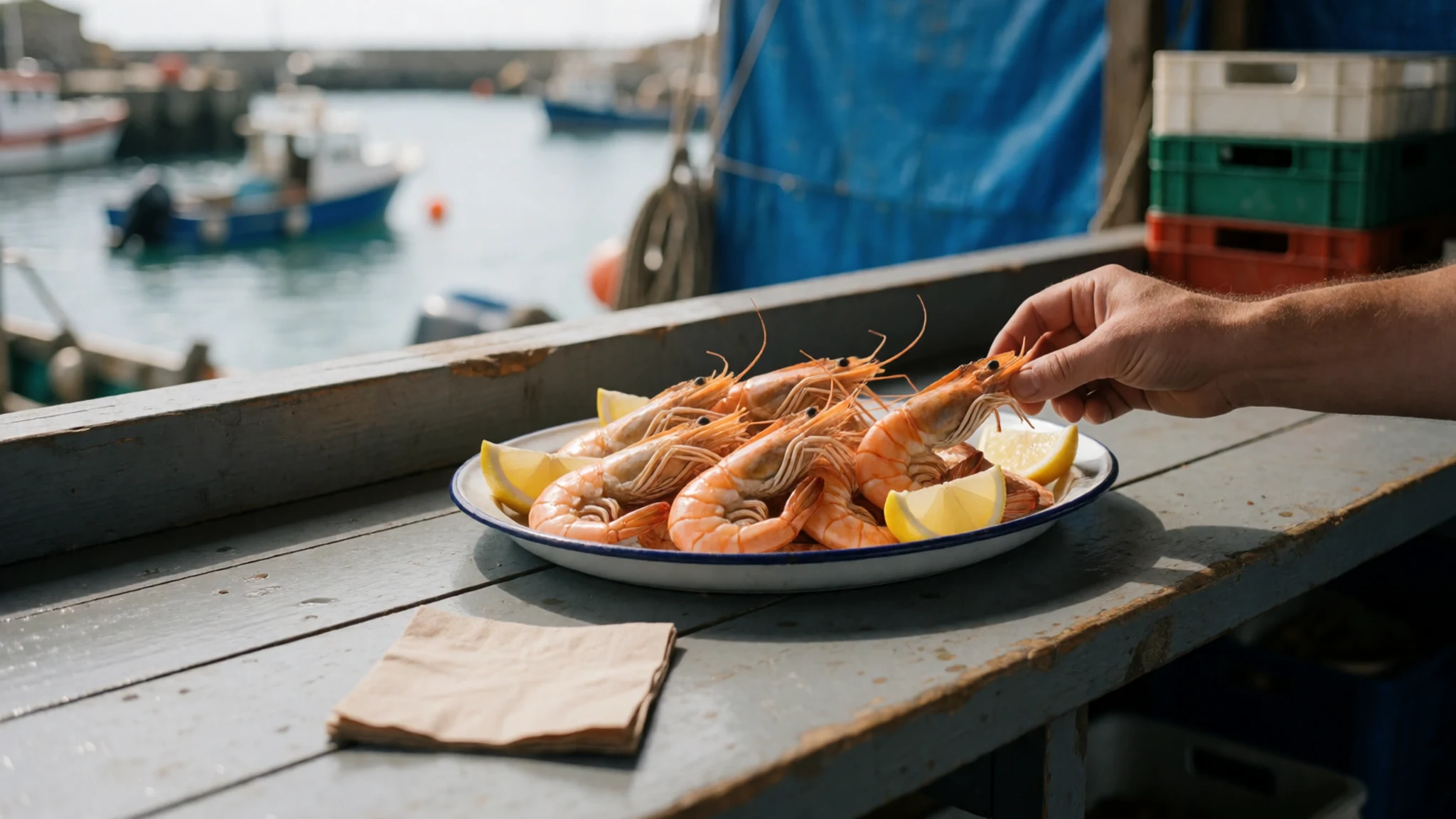
- Halibut — Fishing lodges and ferry-port eateries
Halibut is a deep-water flatfish with thick white flesh, served baked, pan-fried or in fish and chips. Fishing lodges often cook the day's catch, and ferry-port eateries in Prince Rupert and Port Hardy usually carry it. - Dried seaweed — Community-run stalls and cultural centres
Seaweed is gathered and dried by coastal families, then eaten as a salty, crisp snack or crumbled into soups. It is rarely sold in shops, so ask local guides about community products and buy only from the people who harvest it. - Nanaimo bar — Bakeries and coffee shops in Nanaimo and Vancouver
This no-bake chocolate, custard and coconut slab comes from Nanaimo on Vancouver Island, a common stop on the way north. Bakeries and coffee shops there and in Vancouver sell it by the square, and it travels well in a day bag.
Plan it
Best time. May–June for long days, active shorelines and fewer insects, and September–October when salmon run and bears fish along the streams. July and August are warmest but still damp. Winter brings storms and short days, and many lodges close.
How long. 5–7
Getting there. Fly into Vancouver International Airport (YVR), then continue by small aircraft or ferry to coastal bases such as Bella Bella, Bella Coola or Prince Rupert. Many visitors join a boat or lodge trip that includes the final leg; check the operator or the ferry company's official site for current routes.
Budget. high
Tips
- Book lodges and small-ship trips many months ahead, as places are limited
- Allow spare days in the schedule, because fog and wind can ground floatplanes and delay boats
- Carry some cash for small communities, where card machines and mobile signal can be unreliable
- Pack waterproofs, binoculars and a dry bag, and bring any regular medicines with you
- Travel with an Indigenous-owned or Indigenous-guided operator when you can
Etiquette
- Keep a safe distance from bears and other wildlife, and follow your guide's instructions
- Ask before photographing people, ceremonial items or village sites
- Take rubbish out with you and keep to marked paths and shorelines
Nearby
Sources
- Wikidata Q2920600 (CC0)
- Wikipedia: Great Bear Rainforest (rev 1384513068) (CC BY-SA 4.0)
- Wikivoyage: British Columbia (rev 5400129) (CC BY-SA 4.0)
- Sam Beebe, Forests along the shores of the Kitlope River (CC BY 2.5)
- Living Oceans Society, The Pacific North Coast Integrated Management Area (PNCIMA) (Public domain)
- Roy Luck, Flanks of Grenville Channel, Inside Passage (CC BY 2.5)
- Extemporalist, Bigleaf Avens growing by the path to Miller Bay, Kaien Island (CC0 1.0)
- Extemporalist, Bracken Ferns on Kaien Island, British Columbia, Canada (CC0 1.0)
- RupertRay, cedar cabin in the Great Bear Rainforest (CC BY-SA 4.0)
- Laurie MacBride, Clouds over Pooley Island (CC BY-SA 4.0)
- Jack Borno, Day 2 (CC BY 3.0)


Wildlife
- Kermode (spirit) bear (animal)
The black bear is North America's smallest and most widespread bear, and in Great Bear Rainforest some are ghostly white: the Kermode, also called the spirit bear, a pale-furred kind that holds deep meaning for local communities. Black bears live mostly among the trees, though hunger can lead them out. Ask a local guide when and where to look. Keep a respectful distance, stay quiet, and never feed a bear, since easy food draws them towards people.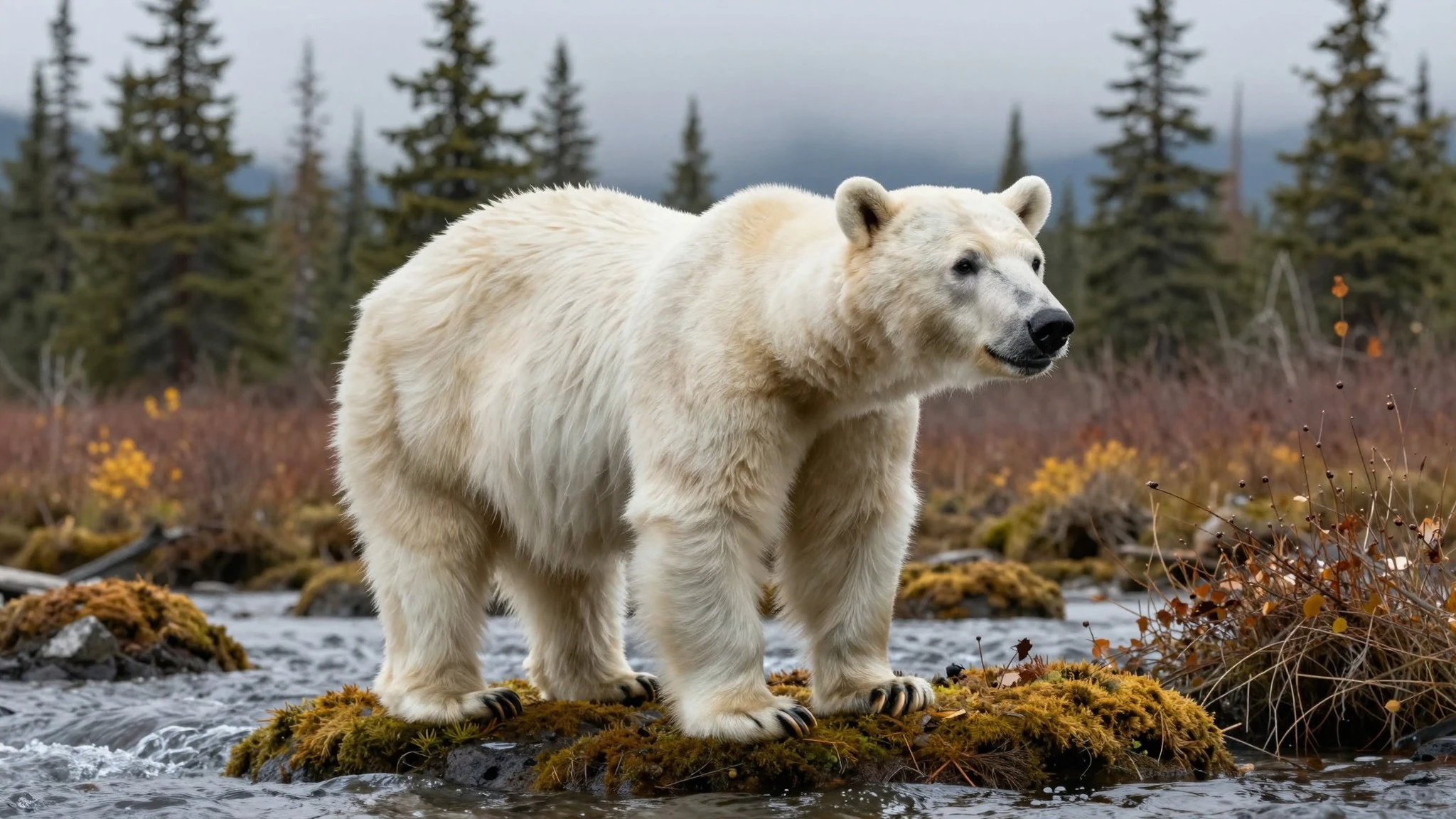
- Bald eagle (animal)
Think of the bald eagle as a bird of prey that fishes the coast from above, a sea eagle with sharp eyes. In Great Bear Rainforest you may spot one perched on a snag, and quiet, flat-lit moments are good for watching. It stays near big water where food is plentiful and old trees offer nesting places. Watch from far off, speak softly, go with a guide, and never offer food.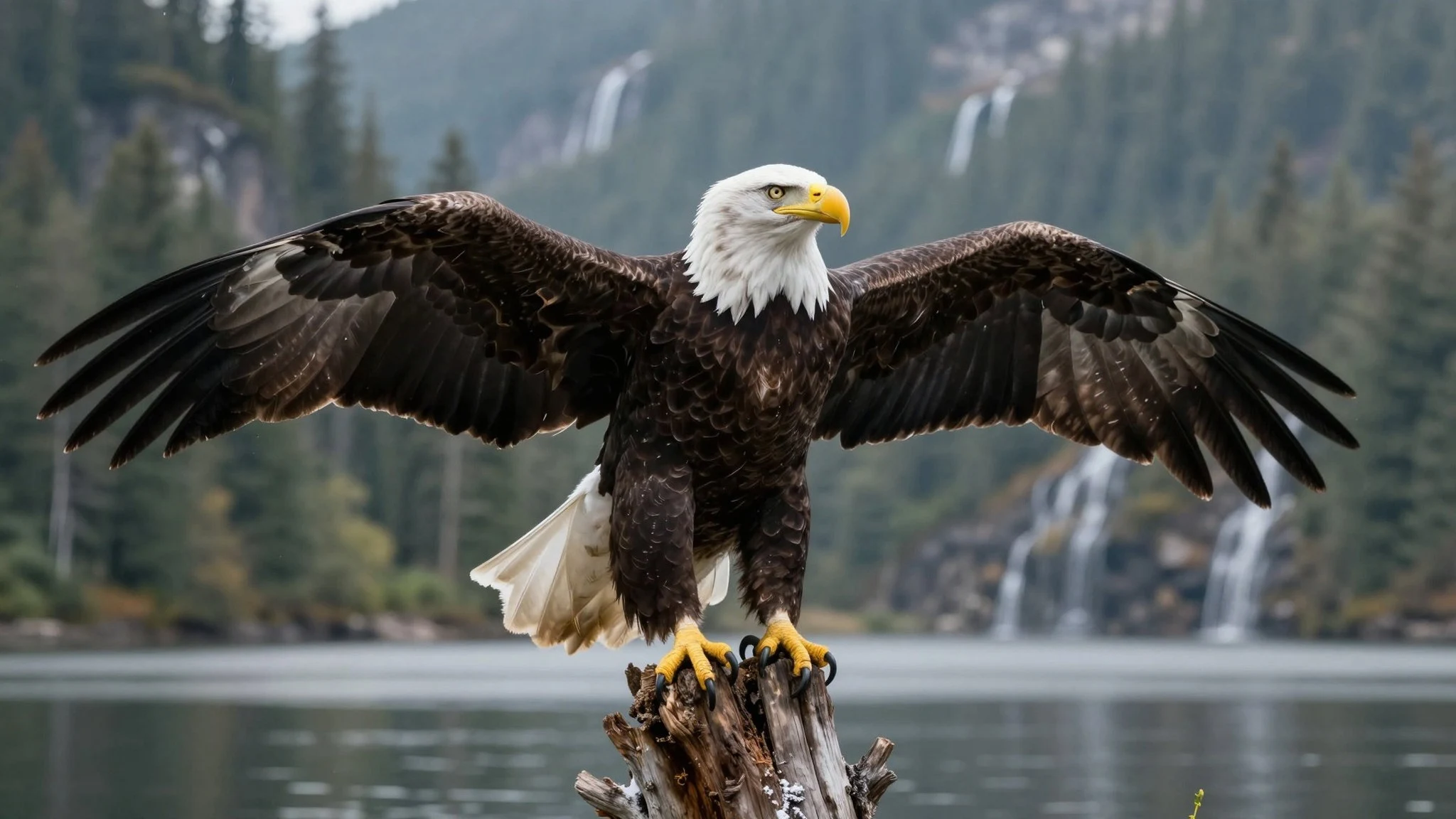
- Bald eagle (bird)
Think of the bald eagle as a bird of prey that fishes the coast from above, a sea eagle with sharp eyes. In Great Bear Rainforest you may spot one perched on a snag, and quiet, flat-lit moments are good for watching. It stays near big water where food is plentiful and old trees offer nesting places. Watch from far off, speak softly, go with a guide, and never offer food.