Grand-Popo
Grand-Popo, Benin
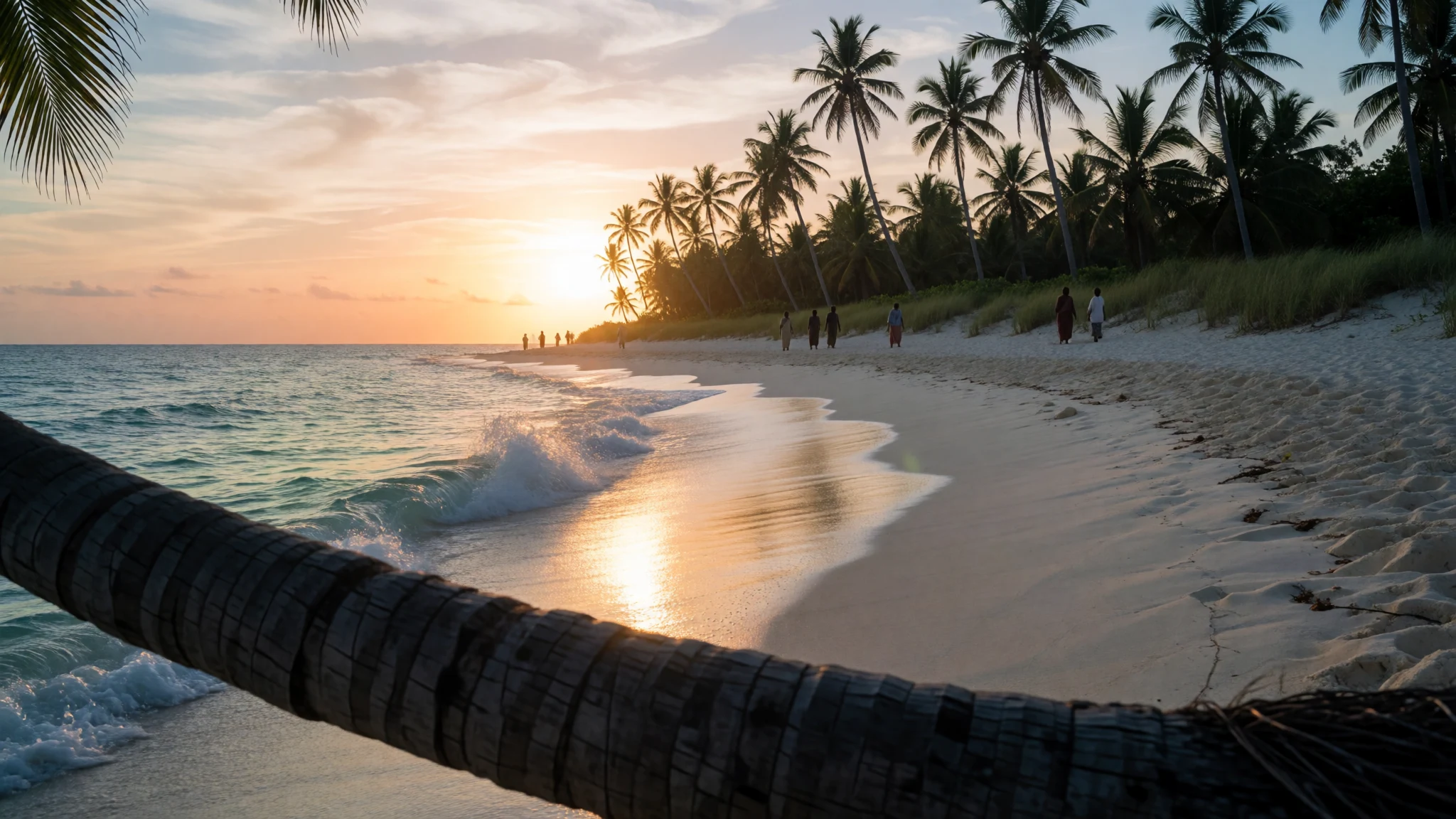
Grand-Popo is a quiet fishing town on Benin's coast, where Vodoun, lagoon and surf sit close together and nobody is in a hurry.
The place
Grand-Popo sits on a narrow strip of land in the Mono Department of south-western Benin, with the Atlantic on one side and a lagoon fed by the Mono River on the other. About 57,600 people live in the commune, and the ground is only about 2 metres above sea level. That explains much of what the place looks like: sand, coconut palms, water on both sides and a very flat horizon. The name is a European exonym. The older town and kingdom was Hulagan, or Great Hula, which the Hula people regarded as their ancestral home. Fishing is the main livelihood and it is visible everywhere. Crews haul seine nets up the beach to a work song, pirogues cross the lagoon, and the wetlands behind the town supply salt and prawns. The beach is long and handsome, but the current is strong and swimming is at the swimmer's own risk. The town is also a centre of Vodoun, practised in the open, and it hosts Villa Karo, a Finnish-African cultural centre that gives a small town an unexpectedly lively arts calendar. The feel is of a working market town rather than a resort. There is one main crossroads, motorbike taxis, simple guesthouses along the highway and the sand, and beach bars where the day slows after the heat peaks. Cotonou and Lomé are the usual gateways, so Grand-Popo suits a calm few days after the bigger, noisier cities of the Gulf of Guinea coast.
Its story
Grand-Popo's history is tied to a coast that European ships were using for trade long before the town took its present form. It stood on a spit of land with the sea on one side and a river channel on the other, which made the anchorage calmer than much of the open shore. That position made it a useful trading post in the slave economy, with the Gbekon quarter, beside the central market and facing the beach, as its commercial heart. Fon-speaking rulers and commanders based at Djanglanmey controlled much of the supply of captives, and the town linked inland Africa with European buyers until Western powers outlawed the trade. Slavery in the region was older than the Europeans and was practised between African states for war and for political advantage, but the Atlantic trade changed its scale. Little of that period survives. Single-storey houses of fired brick with timber floors once lined the shore, along with early Catholic and Protestant missions and the first school. Erosion became severe in the second half of the twentieth century and has taken most of them, leaving abandoned remnants close to the waves. Memory has moved elsewhere: into oral tradition, such as that of the Azé of Kankèkpa-Djanglanmey, and into books, poems and songs, some of them rapped. Today the story is easier to hear in conversation, in Vodoun ceremony and in the old Hula name than to find in standing buildings.
What to see
- The beach and the seine nets — Beach front, south of the town centre
Grand-Popo's long palm-backed beach is the town's main stage. Crews haul seine nets in from the surf, with one person setting the rhythm of a work song and the rest pulling together. Watch from the sand rather than the water, because the current is strong and swimming here is at your own risk.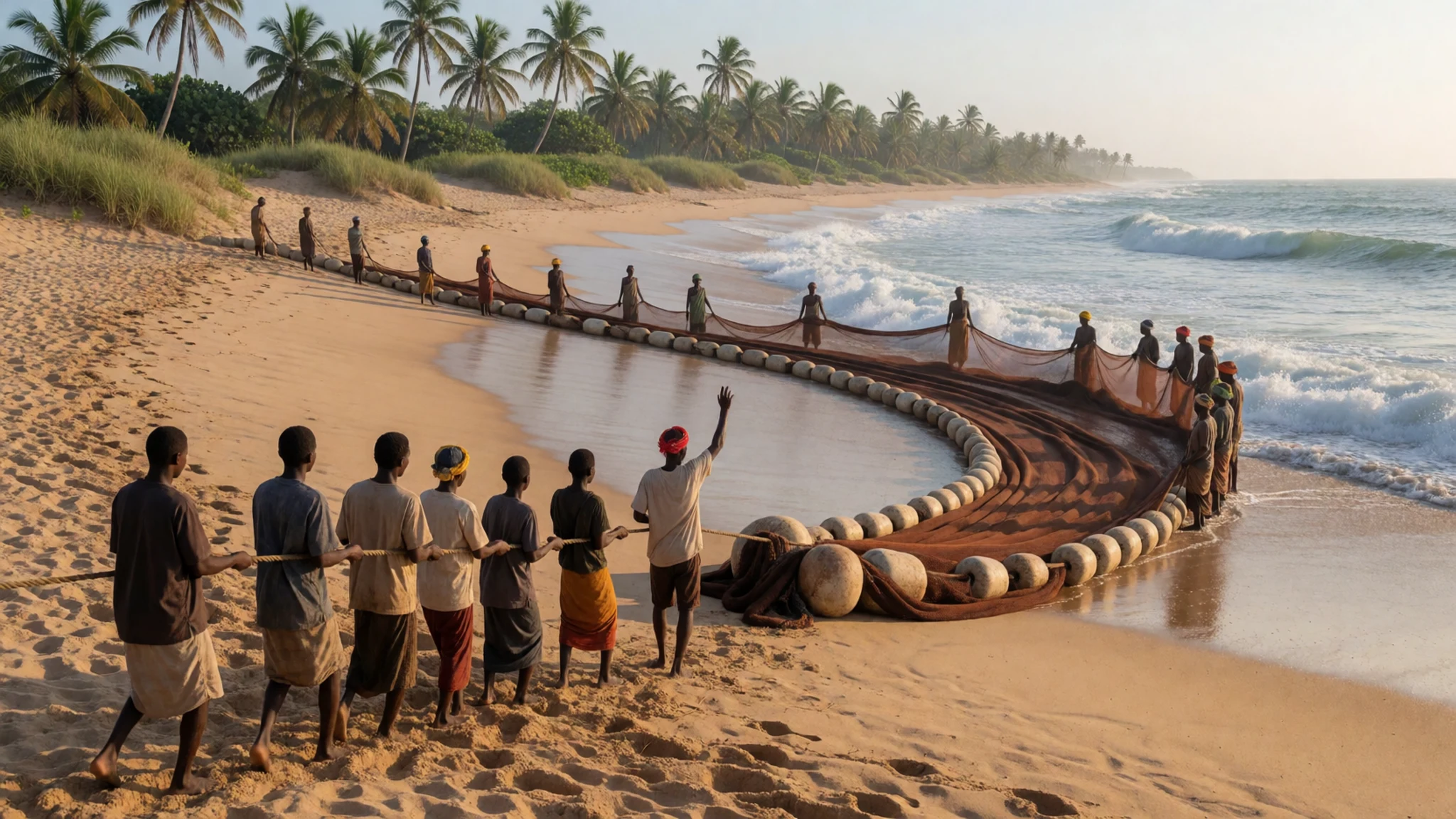
- Lagoon and mangroves — Mono lagoon, north of the highway
Behind the beach, the lagoon and its mangroves make a very different landscape: still water, narrow channels and boats steered by hand. A paddled or motor boat trip shows how families cross, fish and gather prawns. Early morning is cooler and the light is softer for photographs.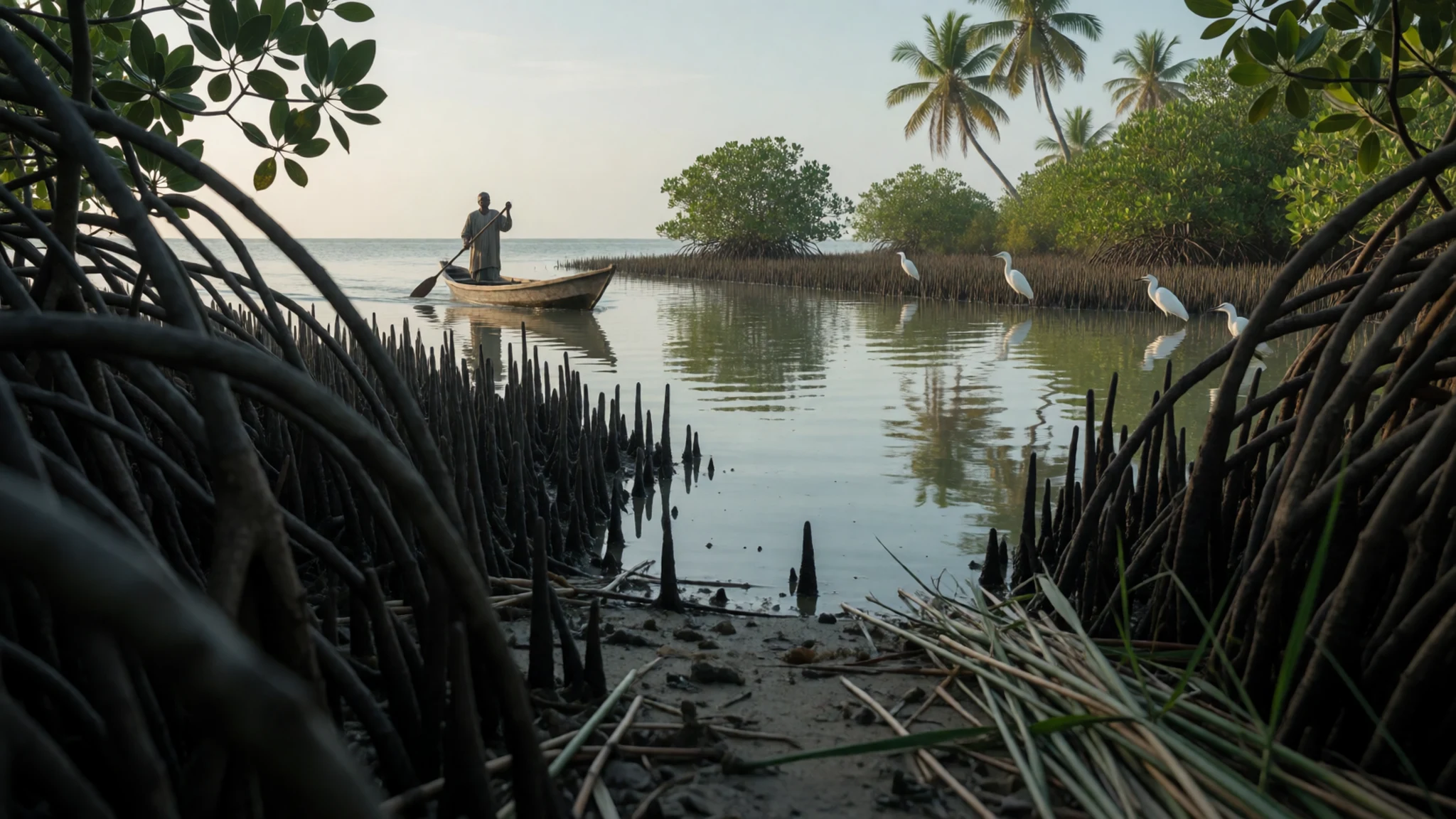
- Bouche du Roy — Mono river mouth, west of town
Bouche du Roy is where the Mono River reaches the Atlantic. The meeting of fresh and salt water makes a shifting patchwork of sandbars, birds and fishing canoes. It is best reached with a local boatman, and conditions at the river mouth change with the tide and the season.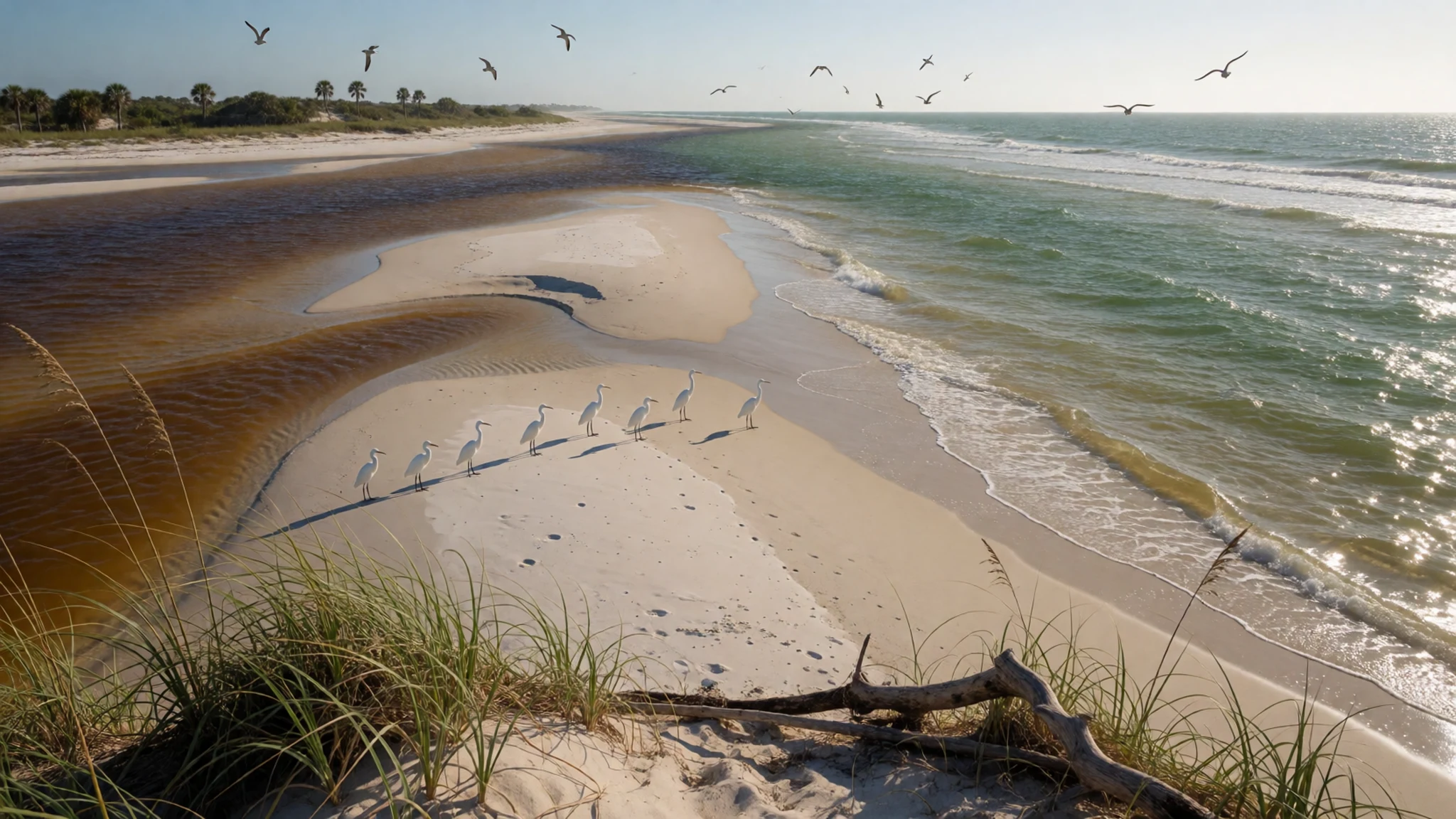
- L'île du sel — Lagoon wetlands near Grand-Popo
On the salt island, families make salt in the traditional way, by evaporating brine from the surrounding wetlands. It is slow, hot, physical work, and a visit explains how the lagoon supports more than fish. Go with a guide, who can arrange a boat and introductions.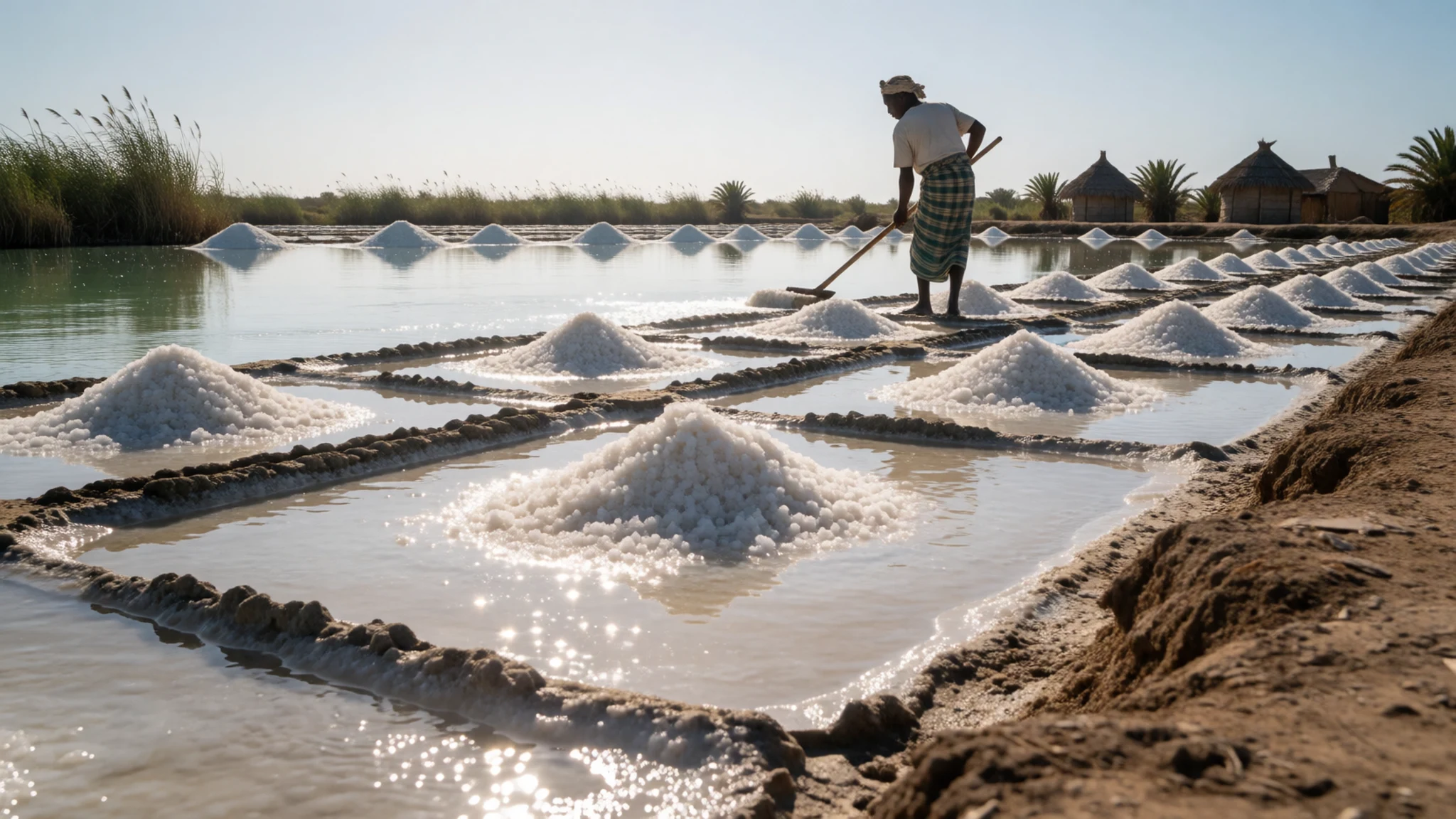
- Vodoun ceremonies and the 10 January festival — Beach and town squares
Vodoun is part of everyday life in Grand-Popo, and each 10 January the beach hosts public celebrations with adepts, drums and crowds. Ceremonies are religious events, not performances. Go with a local guide, ask before watching or photographing, and follow their lead on where to stand.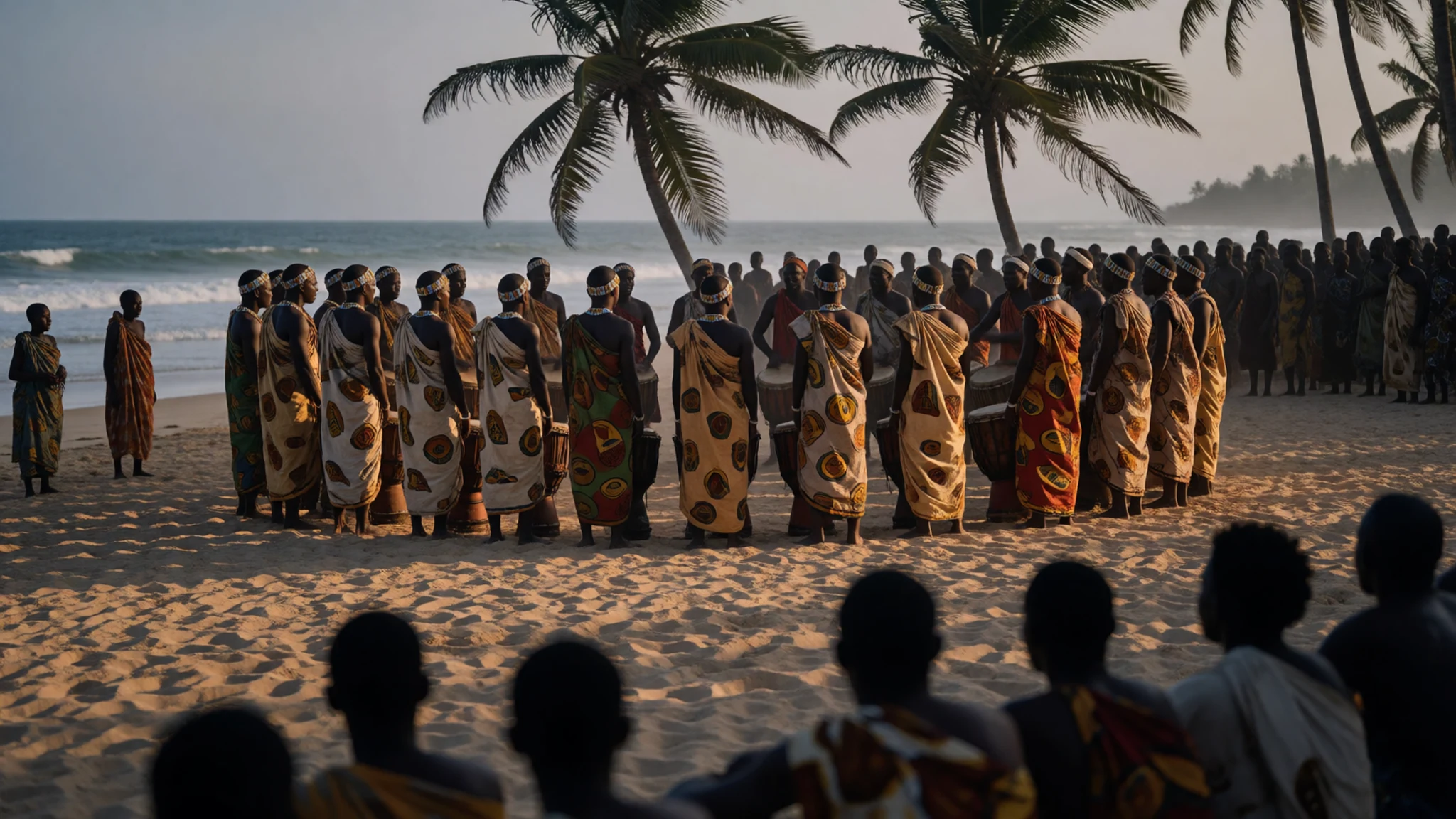
- Villa Karo and the turtle station — Beach road, near the main crossroads
Villa Karo is a Finnish-African cultural centre on the beach, with exhibitions, residencies and events, and it is the best place to meet people involved in the local arts. Nearby, a turtle protection station works to keep nesting sites safe. Check locally for opening and visiting arrangements.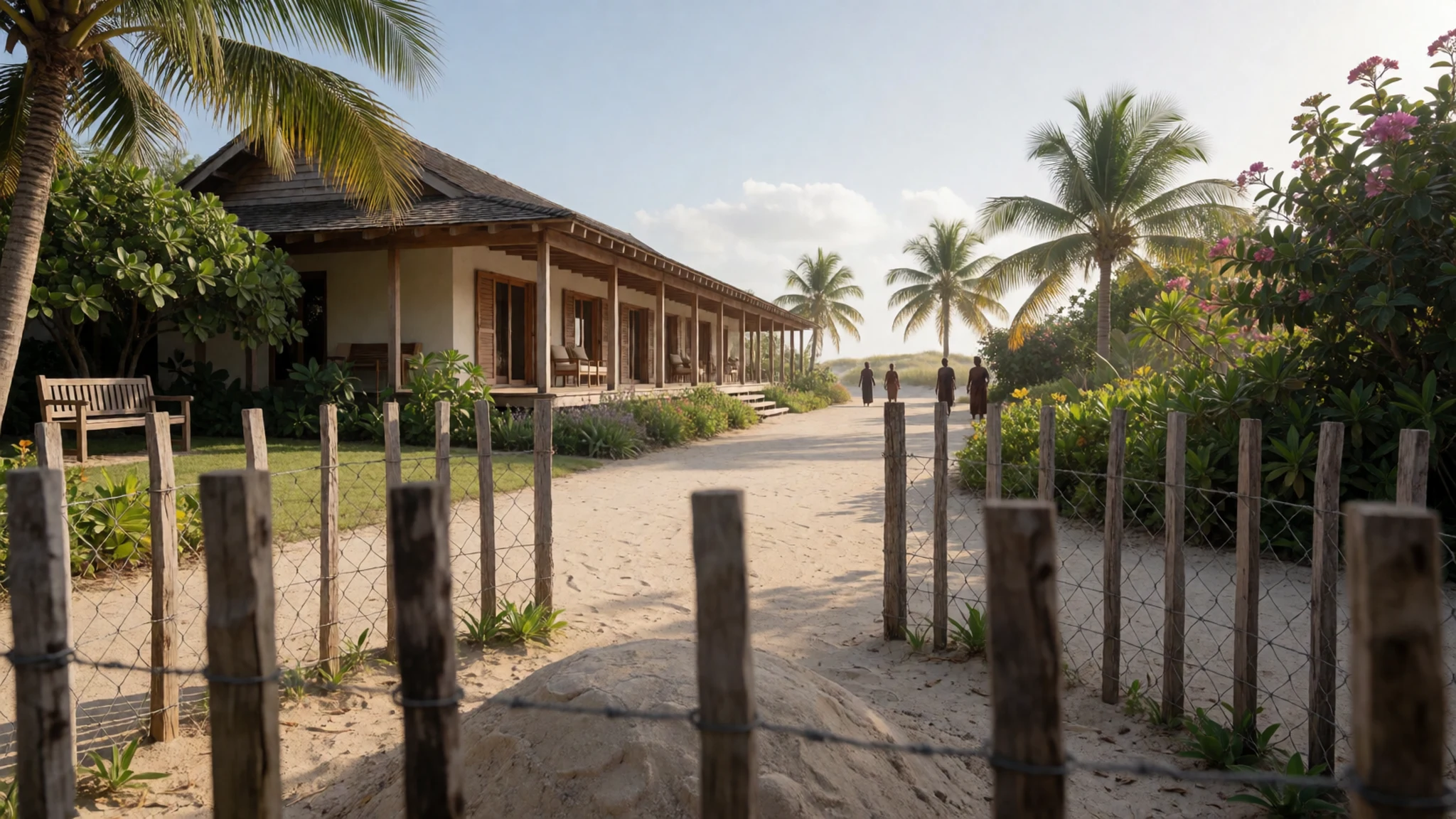
Culture
Grand-Popo's culture is shaped by the Hula heritage of the old Hulagan kingdom, a fishing economy and Vodoun, which is a living religion here and not a museum subject. Shrines, sacred groves, ceremonies and the clothes of initiates are part of ordinary life, and the national celebration on 10 January turns the beach into a gathering of adepts, drummers, officials and spectators. Fishing has its own culture too. Beach seining is a communal task in which a leader sets a song and a beat, and the crew pulls together. Work songs, storytelling, poetry and rap carry local history, partly because so much of the old coastal town has been lost to erosion. French is the official language, alongside local languages such as Xwla and Fon, and a greeting in French or a few words in the local tongue goes a long way. Evenings are social, with beer, music and conversation at small bars along the highway and the shore. Villa Karo adds an international arts thread, with visiting artists and local performers sharing the same space. Religion and daily life are not separated here, so expect the sacred and the ordinary to sit side by side in the same street. Always ask permission before photographing a person, a shrine or a ceremony, and accept a refusal with a smile.
What to wear
Grand-Popo's traditional dress follows the wider southern Benin pattern of wrapped and tailored cloth. Women wear a pagne, a length of printed cotton wrapped as a skirt, often with a matching fitted top, headtie or shawl, and men wear loose tunics and trousers or a draped robe cut from the same kind of fabric. Dutch-style wax prints are widely used, along with hand-woven strip cloth for ceremonies. Dress is at its most elaborate at weddings, funerals, church services and festivals. Vodoun initiates may wear white or other colours specific to their order, with beads, cowries and other objects that carry meaning, and those items should be treated with respect. In daily life, people wear a mix of tailored outfits made from market cloth, football shirts, jeans and flip-flops, with fishing crews in shorts and worn work clothes at the water's edge. Visitors should dress for heat, humidity and sun in light, breathable cotton or linen, with a hat and sunscreen. Cover shoulders and knees away from the beach, particularly in the town, near shrines and at ceremonies, and avoid swimwear beyond the sand. Sandals suit the beach and the sandy lanes, while closed shoes help on muddy lagoon paths and in the wet season. A light rain jacket is useful in the rainy months, and a scarf helps against sun and dust.
What to eat
- Fish, rice and sauce — Street vendors and small local eateries near the main crossroads
Grilled or fried fish with rice and a spiced tomato or pepper sauce is the standard plate of the coast. The fish is usually caught nearby and the sauce can be fiery, so ask for it mild if needed.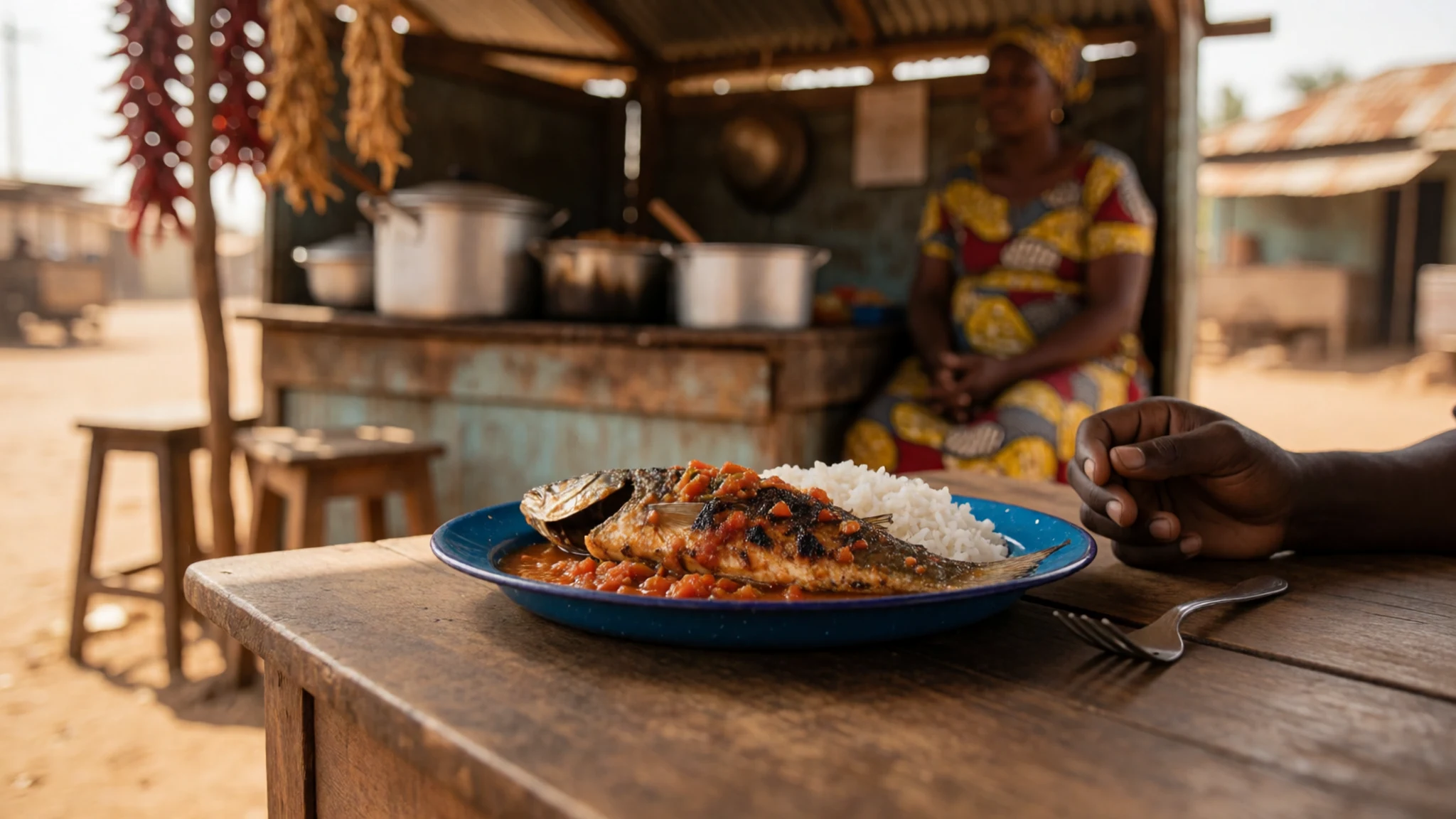
- Pâte with sauce — Local eateries and street stalls in town
Pâte is a smooth, firm paste of white cornmeal, eaten by hand with a sauce of fish, meat or vegetables. Tear off a small piece, shape it into a scoop and dip. It is filling, plain and satisfying.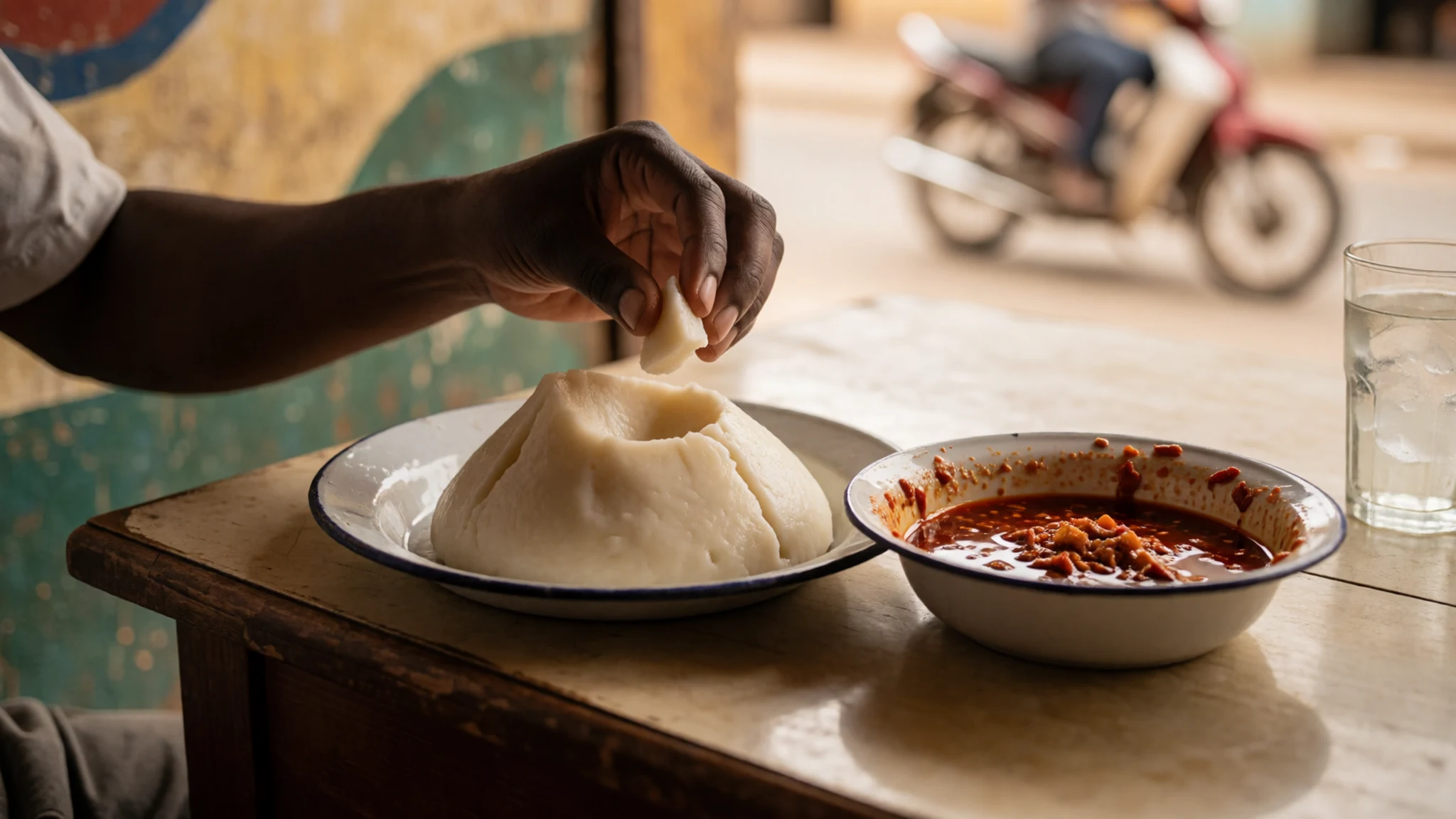
- Pounded yam (fufu) with sauce — Small family-run eateries along the main road
Pounded yam is pounded to a stretchy, dense dough and served with a sauce, most often of goat or fish. It takes effort to prepare, so it is often cooked to order and worth waiting for. - Akasa — Local eateries and market-side stalls
Akasa is a soft fermented maize preparation, served alongside rice, fish or meat and a sauce. It has a mild, slightly sour taste that works well against hot pepper. - Beans, boiled eggs and street plates — Street vendors around the crossroads and the market
Street vendors often serve rice, beans, a spiced sauce, fish and hard-boiled eggs on one plate. It is cheap, quick and varied, and best eaten where the food is freshly cooked and the queue is busy. - Prawns from the lagoon — Beach bars and guesthouse restaurants
Prawns are caught traditionally in the lagoon waters and appear on menus grilled, fried or in sauce. They are best when ordered at a place that can tell you where they were caught that day.
Plan it
Best time. November to February is the most comfortable stretch, typically drier and a little less humid, and it includes the 10 January Vodoun celebrations. The main rains arrive in the middle of the year and make roads and lagoon paths muddy, and the sea can be rough at any time.
How long. 2–3
Getting there. Fly into Cotonou in Benin or Lomé in Togo, then continue by road. Shared taxis leave from Cotonou's Grand Marché, and the driver can drop you anywhere along the route; get off at the main crossroads and take a zemidjan (motorbike taxi) to your guesthouse. Places on the highway can be reached directly by taxi.
Budget. low
Tips
- Agree the taxi fare before setting off, and pay extra if you want the whole car rather than a shared seat
- Carry cash in small notes, as many eateries, boatmen and guesthouses do not take cards
- Do not swim in the sea; the current is strong, so paddle with care and stay close to the shore
- Drink bottled or filtered water and use sun protection and insect repellent, especially near the lagoon
- Book a local guide for boat trips and Vodoun events, and check with your guesthouse for current arrangements
Etiquette
- Ask before photographing people, shrines or ceremonies, and accept a refusal politely
- Greet people before asking questions, and dress modestly away from the beach
- Follow your guide's lead at Vodoun sites and do not touch ritual objects
Nearby
Sources
- Wikidata Q1542478 (CC0)
- Wikipedia: Grand-Popo (rev 1378935870) (CC BY-SA 4.0)
- Wikivoyage: Grand-Popo (rev 5342534) (CC BY-SA 4.0)
- Photo: Vue de profil d'un ancien pont à Grand-Popo (Adoscam) (CC BY-SA 4.0)
- Photo: Across the lagoon (Kulttuurinavigaattori) (CC BY-SA 4.0)
- Photo: Adepte du vodoun cocoussi, 10 January 2020 (Adoscam) (CC BY-SA 4.0)
- Photo: Vodoun cocoussi adept on the beach (Adoscam) (CC BY-SA 4.0)
- Photo: At the Turtle Station, Grand-Popo, Dec 2017 (Kulttuurinavigaattori) (CC BY-SA 4.0)
- Photo: Audience in Vodoun Festival, Jan 2018 (Kulttuurinavigaattori) (CC BY-SA 4.0)
- Photo: Beach seiners in Grand-Popo 3 (Kulttuurinavigaattori) (CC BY-SA 4.0)
- Photo: Beach seiners in Grand-Popo 4 (Kulttuurinavigaattori) (CC BY-SA 4.0)


