Ganvié
Ganvié, Benin
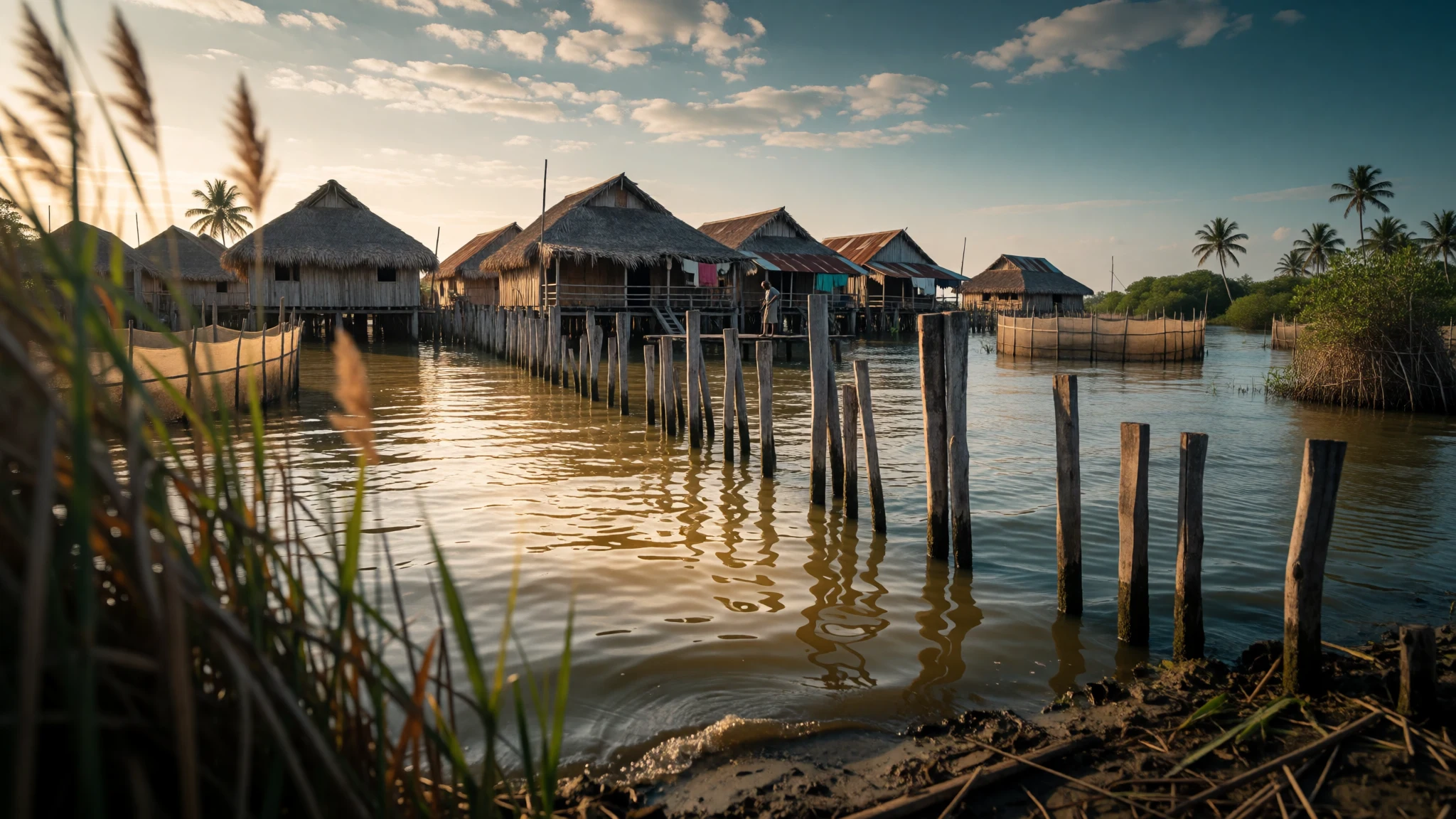
Ganvié is a whole town built on stilts in Lake Nokoué, where every errand, school run and market trip happens by wooden boat.
The place
Ganvié sits in Lake Nokoué in southern Benin, a short boat ride from the northern edge of Cotonou's urban sprawl. It is a settlement of houses raised on wooden stilts, with hardly a patch of dry ground anywhere in it. The lanes are channels, front doors open onto water, and the everyday vehicle is a narrow wooden pirogue, poled, paddled or sometimes fitted with a small motor. Children learn to handle one very young. Shops, churches and schools stand on stilts too, so buying bread or visiting a neighbour means getting into a boat. The lake is shallow and slightly murky, brown-green in colour, and its surface is dotted with brush fences and netted enclosures used for fishing. Fishing and fish farming are the main work today, with visitors forming a second income. The nickname is the Venice of Africa, though the resemblance is loose: there are no palaces here, only planks, thatch, tin roofs and a great deal of sky. Mornings are calm and the water is glassy; by midday the sun is fierce and the glare off the lake is tiring. The village is often described as probably the largest lake village in Africa, and it feels like a town rather than a hamlet, with its own routines, its own local leadership under a traditional monarchy, and busy water traffic on market days. It is a living community, not a museum, and that is worth remembering on every visit.
Its story
Ganvié began as a refuge. According to the account usually given, the Tofinu people settled on Lake Nokoué in the sixteenth or seventeenth century to escape Fon warriors, who raided communities to take captives and sell them to European slave traders. Shallow water and scattered islands gave the Tofinu a place that raiders found hard to approach, and over time a temporary shelter became a permanent home. The villagers are often called the water men, a name that fits a people whose whole way of life was shaped by the lake. Houses went up on posts driven into the lakebed, and fishing replaced the farming that had once been the base of the economy. That adaptation is the core of Ganvié's story: a community that turned fear of capture into a settled way of living on water, and kept it going for centuries. Today the village is much better known for its appearance than for its history, and guides tend to compress the past into a few sentences. The painful origin is worth holding on to, because it explains why the village exists at all and why it matters to the people who live there. Visitors sometimes treat the stilts as a curiosity, but the real subject is endurance, and the lake is both the protector and the livelihood.
What to see
- A pirogue ride across Lake Nokoué — Abomey-Calavi launch point
The boat journey is the first thing worth doing, because it shows the scale of the lake and the way the village slowly rises out of the water. The crossing from the launch point takes roughly 35 minutes. Go early, when the surface is calm and the light is soft.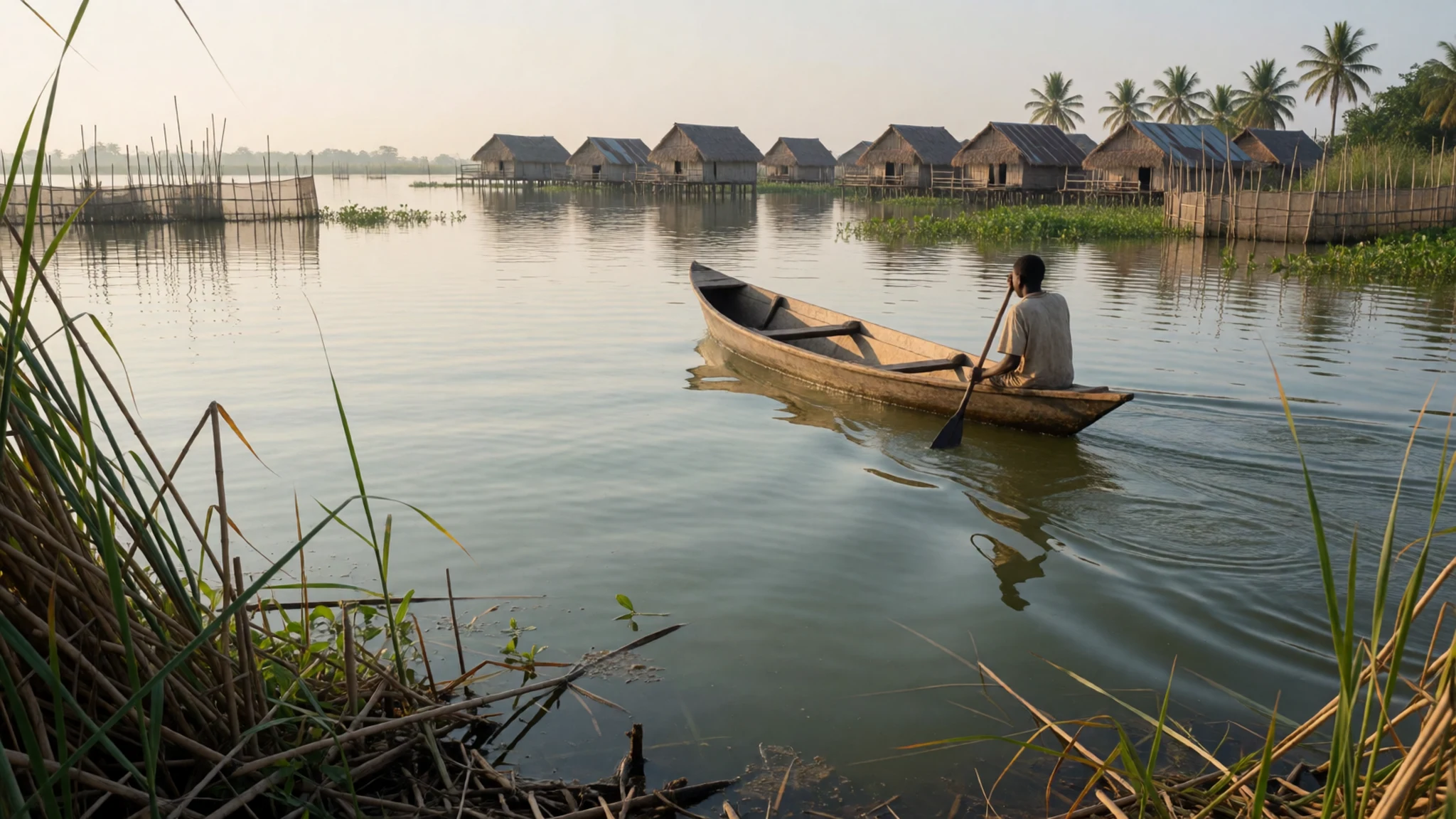
- The stilt-house lanes — Central village channels
Once inside the village, the boat glides between rows of timber houses with thatch or tin roofs, washing lines strung across balconies and canoes tied at every door. It is the clearest picture of daily life here. Slow movement and a quiet guide give the best views without intruding on households.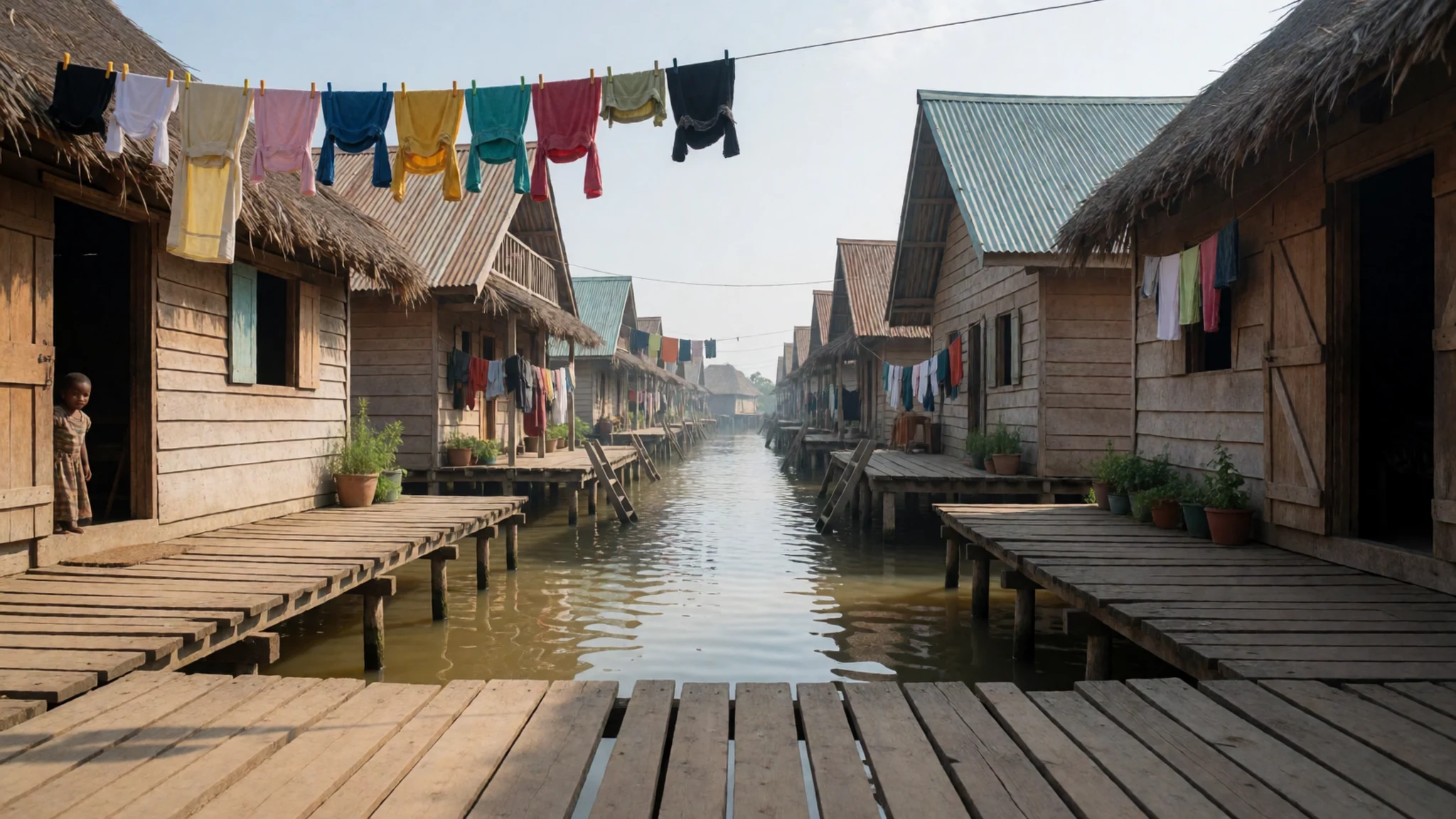
- Trading by boat — Open water between the main lanes
Commerce in Ganvié happens between boats and doorways, with women often selling goods from canoes loaded with produce, fish and household items. Watching a few minutes of this gives more sense of the economy than any guided commentary. Buy something small if offered, and ask before pointing a camera.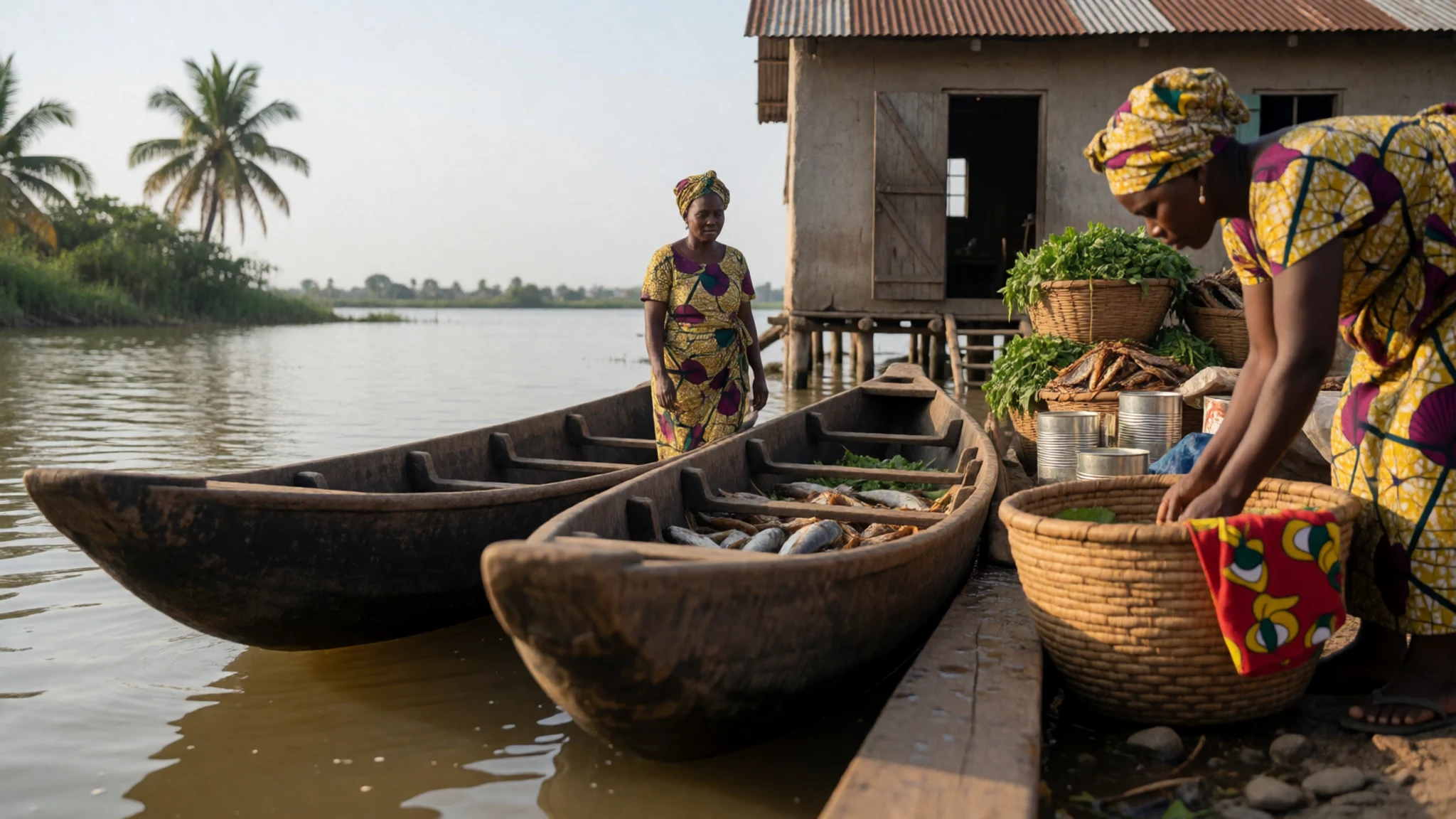
- Fish enclosures on the lake — Open lake around the village
Beyond the houses, the lake is marked out with brush fences and nets where fish are caught and raised. These structures are the working heart of the village, and they explain the stillness of the water in places. A guide can explain how the enclosures are tended and harvested through the year.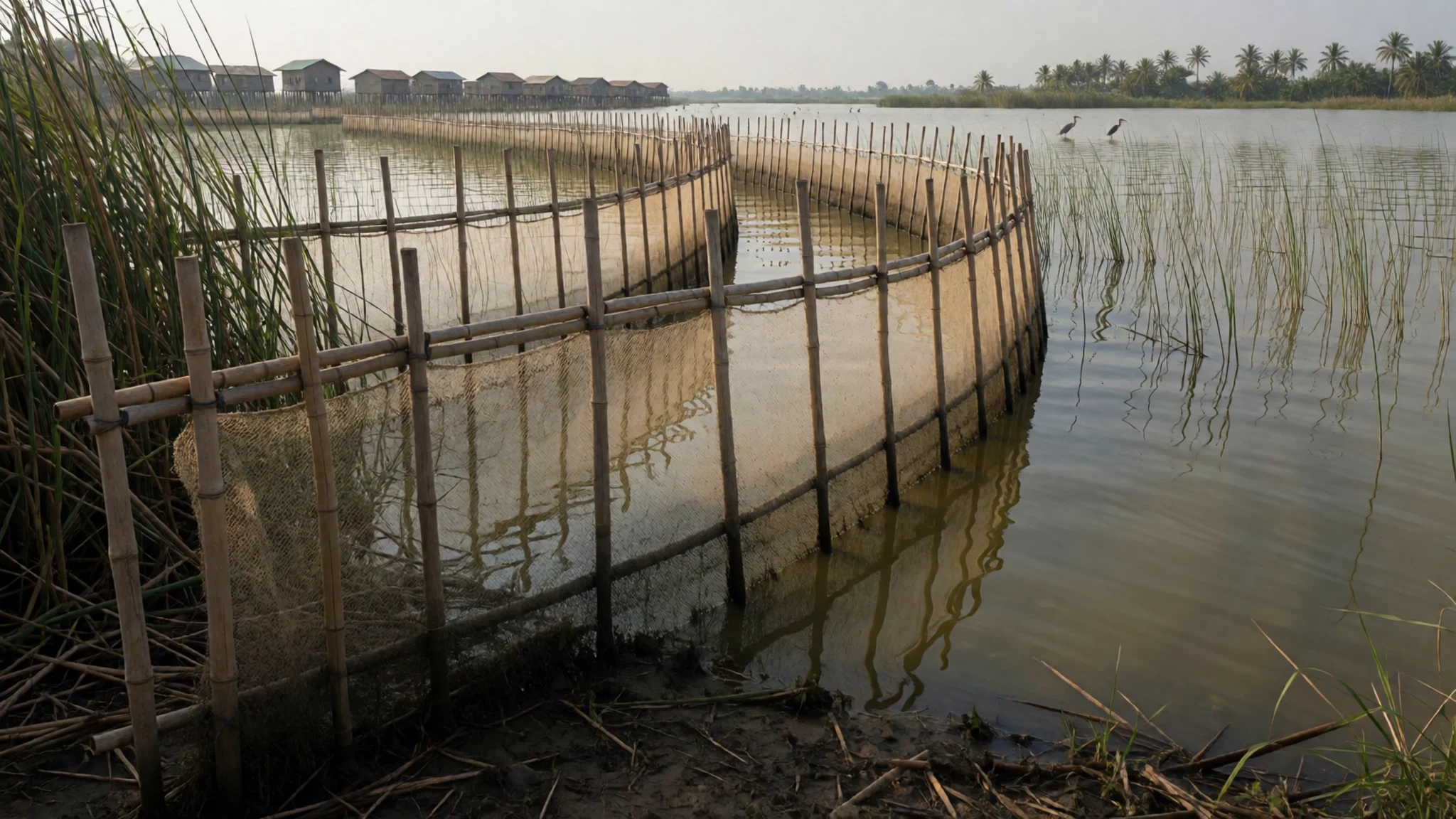
- Churches, schools and shared buildings — Village centre
Public buildings stand on stilts like everything else, and seeing a school or church rising from the lake makes the scale of the community clear. These are working places, so look from the boat and keep voices low. The contrast with mainland Cotonou, a short trip away, is striking.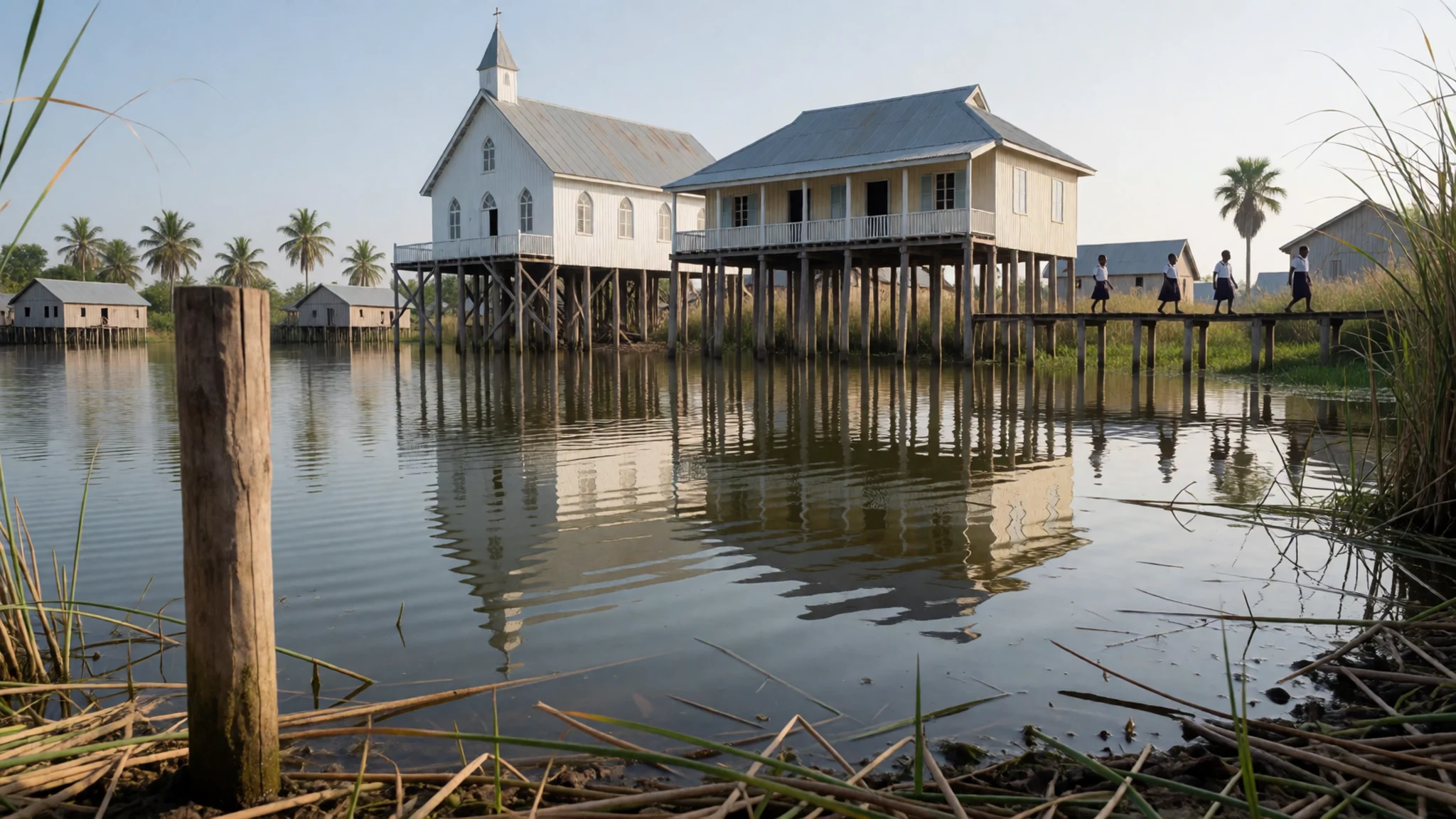
Culture
Ganvié is a Tofinu community, and its culture is tied closely to the lake: how people fish, build, trade and move are all shaped by water. Daily life runs on boats, so greetings, bargaining and gossip often happen between canoes rather than on streets. The village has a traditional monarchy alongside Benin's national government, and local leadership still matters in how things are organised. Religion in southern Benin is varied, with Christianity, Islam and the traditional Vodun practices all present in the wider region, and visitors may notice churches and shrines in or near the village. Women play a large part in trade, often selling fish and produce from small boats, while fishing and net work are commonly men's tasks. French is the official language of Benin, and guides generally speak it, with local languages used among residents. Because the village earns income from visitors, it is used to tourism, but not everyone wants to be photographed or watched, and the community's privacy deserves respect. Guides are the best route to understanding what is acceptable, and agreeing the route and any stops before setting off avoids awkwardness. Funerals, ceremonies and religious gatherings are not entertainment. Ask your guide before you photograph anyone, especially women trading and children, and respect a refusal without argument.
What to wear
Dress in Ganvié follows the pattern of southern Benin rather than a single costume. Traditional clothing across the region centres on cotton cloth, especially bright wax-print fabric, which is wrapped as a pagne or sewn into a fitted top and skirt or a loose robe. Men may wear a long shirt or boubou in the same cloth for festivals, weddings and church. Because specific Tofinu ceremonial garments are not covered in the sources used here, it is best not to assume a particular local costume. Everyday dress on the lake is practical. Fishermen and boat handlers wear shorts or trousers and light shirts, often with a cap or cloth against the sun, and many people work barefoot or in rubber sandals. Women trading from boats commonly wear wrapped cloth or a simple dress, with a headscarf for shade. Visitors should dress for heat, glare and water. Light, long-sleeved cotton or linen shirts and trousers protect against sun and the occasional splash, and a wide-brimmed hat and sunglasses make a real difference at midday. Wear sandals with a grip or trainers that can get wet, since boarding a boat from a wet landing is slippery. Keep clothing modest in the village, with shoulders and knees covered, as a courtesy to a community that is not used to beachwear. A waterproof bag protects phones and cameras.
What to eat
- Grilled tilapia — Lakeside eating spots and stalls around Abomey-Calavi
Freshwater fish cooked over charcoal is the obvious meal around Lake Nokoué, usually served whole with raw onion, tomato and a pepper sauce. Expect bones and eat with your fingers. It is much better at a busy stall where the fish has just come off the grill.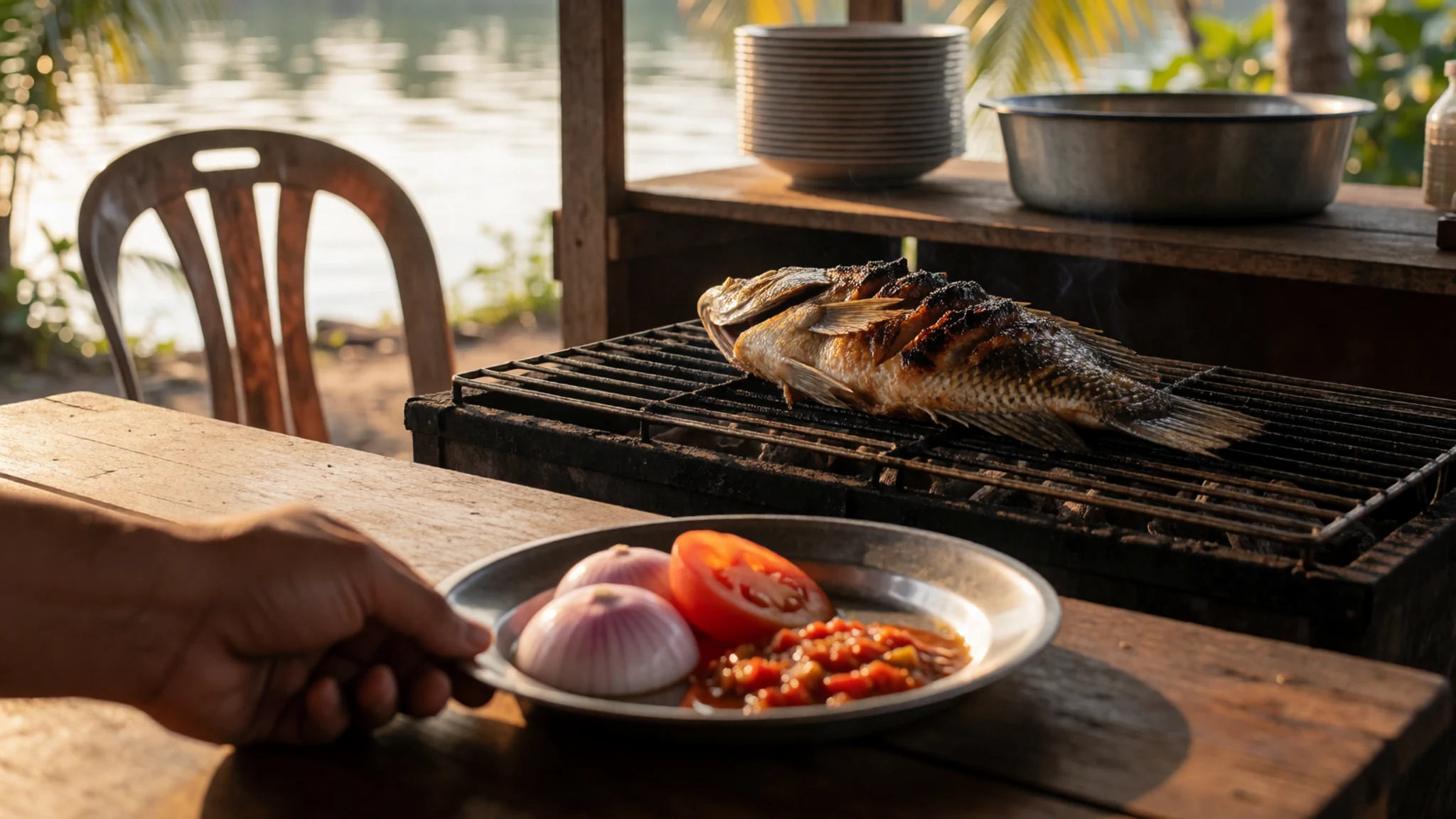
- Smoked fish in sauce — Local eateries and market food stalls in Cotonou
Smoked fish is a staple in southern Benin, often simmered in a tomato and palm-oil sauce that deepens the flavour. It is hearty and quite salty, and usually comes with a starch. Ask about the heat before ordering, as pepper levels vary a lot.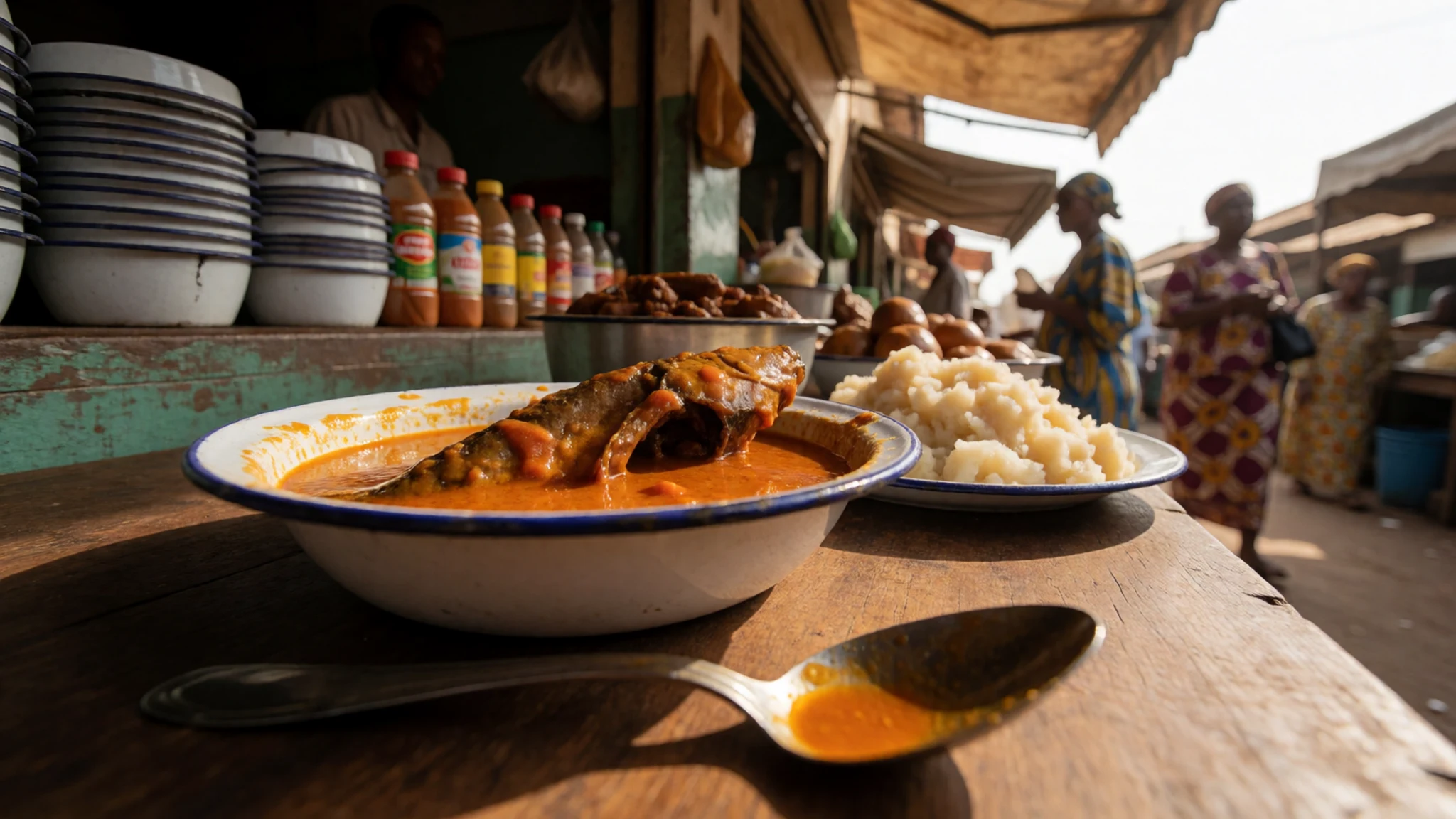
- Pâte with sauce — Small family-run eateries and market canteens
Pâte is a thick paste of maize or similar flour, shaped into a mound and eaten by hand with a sauce, commonly okra, peanut or tomato-based. It is filling and plain by design, a vehicle for the sauce. Wash hands first, and eat only with the right hand. - Aloko — Street corners and roadside stalls in Cotonou and Abomey-Calavi
Aloko is ripe plantain cut and fried until caramelised at the edges, often sold with a chilli and onion relish. It is a street snack rather than a meal, sweet and salty at once, and tastes best hot from the pan, bought in small paper cones. - Bean fritters — Morning street stalls and market edges
Fried bean cakes are a common breakfast and snack across coastal West Africa, crisp outside and soft inside, often eaten with a porridge or bread. They are cheap and quick, a good way to try local cooking without committing to a full sit-down meal.
Plan it
Best time. November to March is the drier stretch, with steadier skies for the boat and less chance of rain interrupting the trip; February and March can be hot and humid. April to July is the main rainy season, with a shorter wet spell around September and October, when the lake can be choppier and the light flatter.
How long. 1
Getting there. Fly into Cotonou's international airport, then go by road to Abomey-Calavi, where boats to the village launch. The crossing takes roughly 35 minutes, and tours usually last two to three hours. Ganvié works well as a day trip from Cotonou, though staying in the village is possible.
Budget. low
Tips
- Go in the morning, when the lake is calmer and the heat is lower
- Agree the boat price and route before boarding, and check current rates with the operator or your accommodation
- Carry cash in CFA francs for tips, snacks and small purchases, as cards are rarely taken
- Bring sun protection, a hat and plenty of drinking water, as there is little shade on the lake
- Use a dry bag or waterproof pouch for phones and cameras
Etiquette
- Ask before photographing people, and respect a refusal
- Keep voices low near homes, schools and places of worship
- Hire a local guide or boat handler rather than bargaining aggressively, since tourism is part of the village economy
Nearby
Sources
- Wikidata Q1493703 (CC0)
- Wikipedia: Ganvie (rev 1377352965) (CC BY-SA 4.0)
- Wikivoyage: Ganvie (rev 4770000) (CC BY-SA 4.0)
- Photo 01-ganvie2.jpg, Manu25 at French Wikipedia (CC BY-SA 2.5)
- Photo 02-ganvi-fishing-village-on-stilts-in-benin, jbdodane (CC BY 2.5)
- Photo 03-ganvie1.jpg, Manu25 at French Wikipedia (CC BY-SA 2.5)
- Photo 04-bateau-ganvie.jpg, Manu25 (CC BY 3.0)
- Photo 05-love-street.jpg, Kume Akpubi (CC BY-SA 4.0)
- Photo 06-20170319-2017-a630398, Dan Sloan (CC BY-SA 2.0)
- Photo 07-20170319-2017-a630407, Dan Sloan (CC BY-SA 2.0)
- Photo 08-20170319-2017-a630415, Dan Sloan (CC BY-SA 2.0)


