Ouidah
Ouidah, Benin
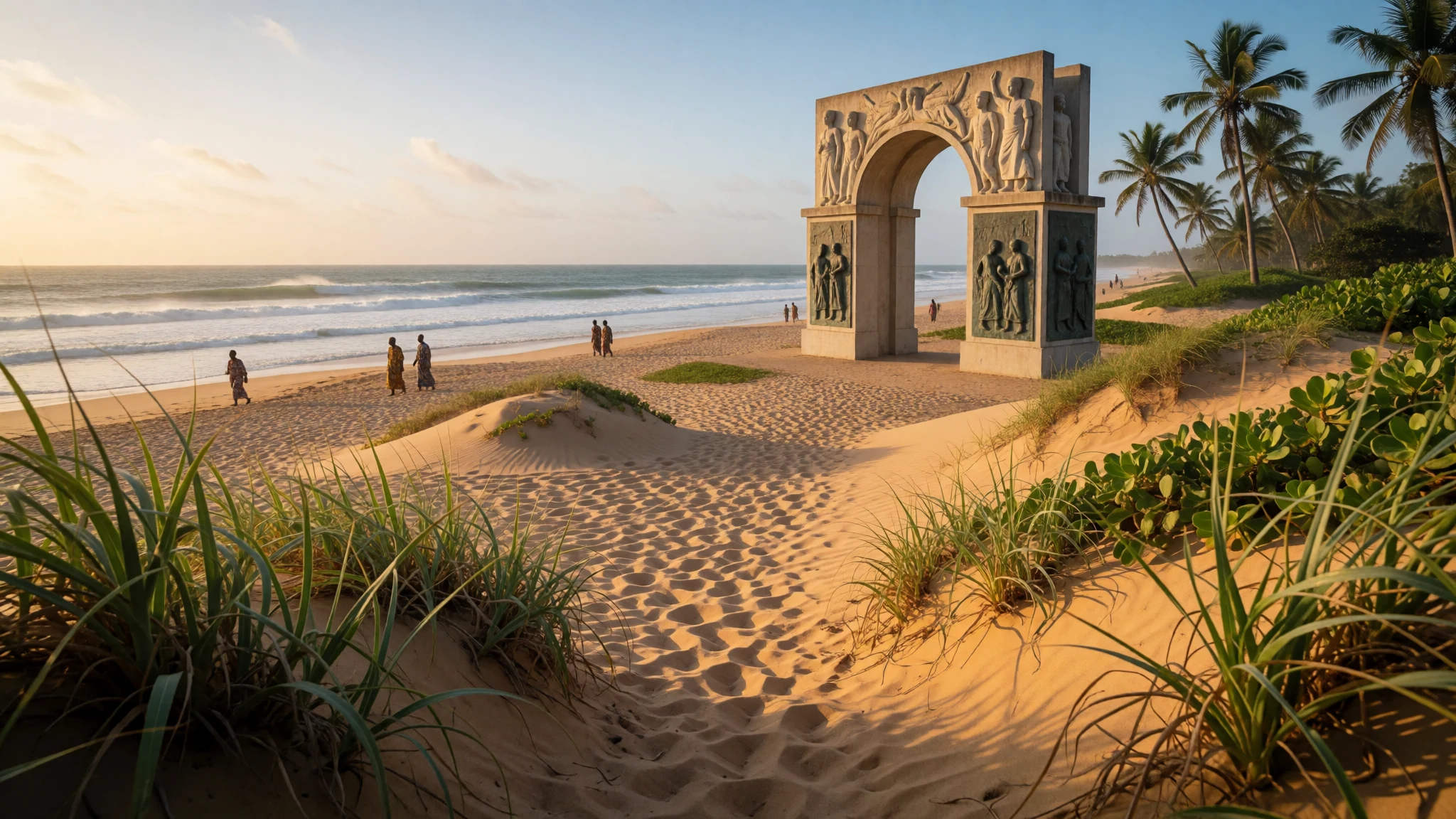
Ouidah is a compact coastal city where history, faith and beach life overlap—especially around the museums and the Door of No Return.
The place
Ouidah (also called Whydah, in older maps and Portuguese writing) sits on the coast of Benin, and its whole atmosphere feels shaped by the sea. The town was once a major port for the Kingdom of Whydah, and that trading role still echoes through the monuments and museums you can visit today. Even if the story is heavy, the place itself is lived-in: busy streets, small eateries, music floating in bursts, and the feeling of heat that arrives early and stays with you.
The city’s heritage is easiest to grasp by starting with the memorial route. The Door of No Return is a stark point on the coastline story—then, a short drive or walk brings you to the fort-linked sites and the museums that explain how the port worked. From there, Ouidah widens into religious and cultural space. There are museums, historic buildings and locations associated with vodun practice, and the famous voodoo festival is the clearest “when” to plan around.
Practically, Ouidah is best tackled slowly. Distances are manageable, but the pace matters because the sun is relentless and roads can be patchy. A half-day can feel like a full day when you factor in waiting for guides, sharing taxis, and the simple rhythm of stopping for water and fruit. Expect crowds on big festival days, but most ordinary days feel lively rather than packed.
The bottom line: Ouidah is not a sightseeing checklist city. It’s a place to understand, reflect, and then let the coast and community bring you back to the present.
Its story
Ouidah’s story starts before Europeans arrived in numbers. Local tradition credits Kpassa with founding the town, and the settlement’s older name, Glēxwé, is often given the meaning “Farmhouse”. By the time European companies were building footholds along the coast, this place was already a node—connected to a wider kingdom and to routes that reached into the interior.
In the mid-1600s, the Royal African Company constructed a fort at Ouidah (often described as Whydah), and that fort-building fits the pattern of European powers trying to control trade in one place rather than chase it everywhere. As the Kingdom of Whydah expanded influence inland, the port’s role became darker: wars and captures fed a system that sold people to European and Arab slave traders.
The kingdom’s decline comes through in the record as a political shift as much as a military one. In 1727, forces connected with King Agaja of Dahomey captured Whydah. Contemporary reporting described devastation and burning, and accounts from the period underline how quickly trade infrastructure could be destroyed.
The 19th century adds another grim layer. Whydah is noted as sending the last recorded slave shipment to the United States, while transatlantic slavery was already prohibited by law. Later, France captured the town in 1894, and the city gradually declined as the slave trade was outlawed.
Today, Ouidah’s major sites—fort-linked spaces, museums and coastal memorials—carry those chapters in a way that is both historical and deeply human. The city doesn’t let you forget; it also doesn’t erase ordinary life happening alongside the past.
What to see
- Door of No Return — coastline area
Door of No Return is a memorial marking the slave trade story at Ouidah’s coast. It’s the most direct, visual stop for understanding why people remember this shoreline, and it works best with slow walking and time to absorb the setting.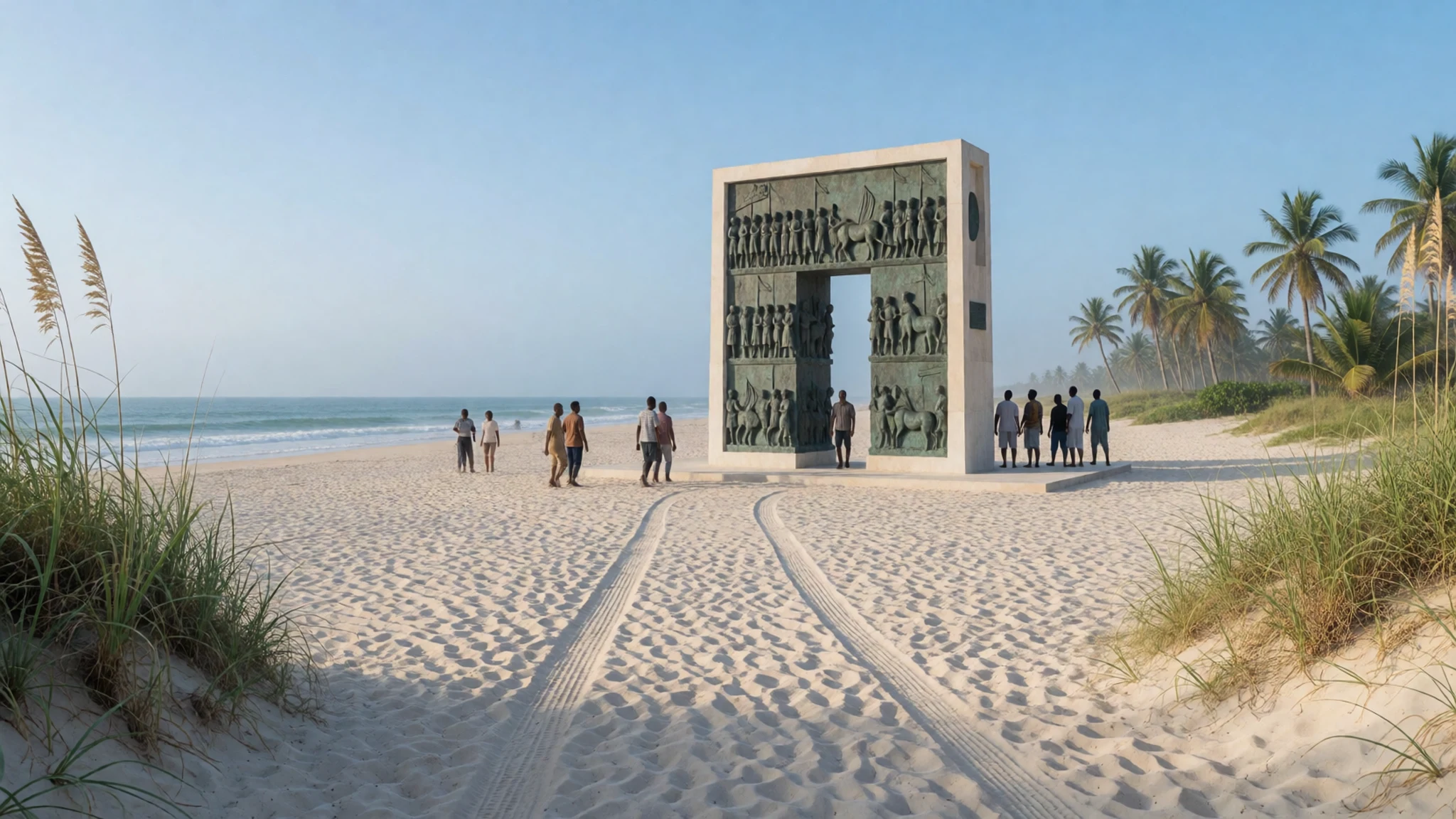
- Fort of São João Baptista de Ajudá (and Ouidah Museum of History) — Fort area
The Portuguese fort is tied to the Atlantic trade era and later reoccupation. Visiting both the fort and the Ouidah Museum of History helps connect architecture to the archaeology, history and arts that explain what happened here and how the port functioned over time.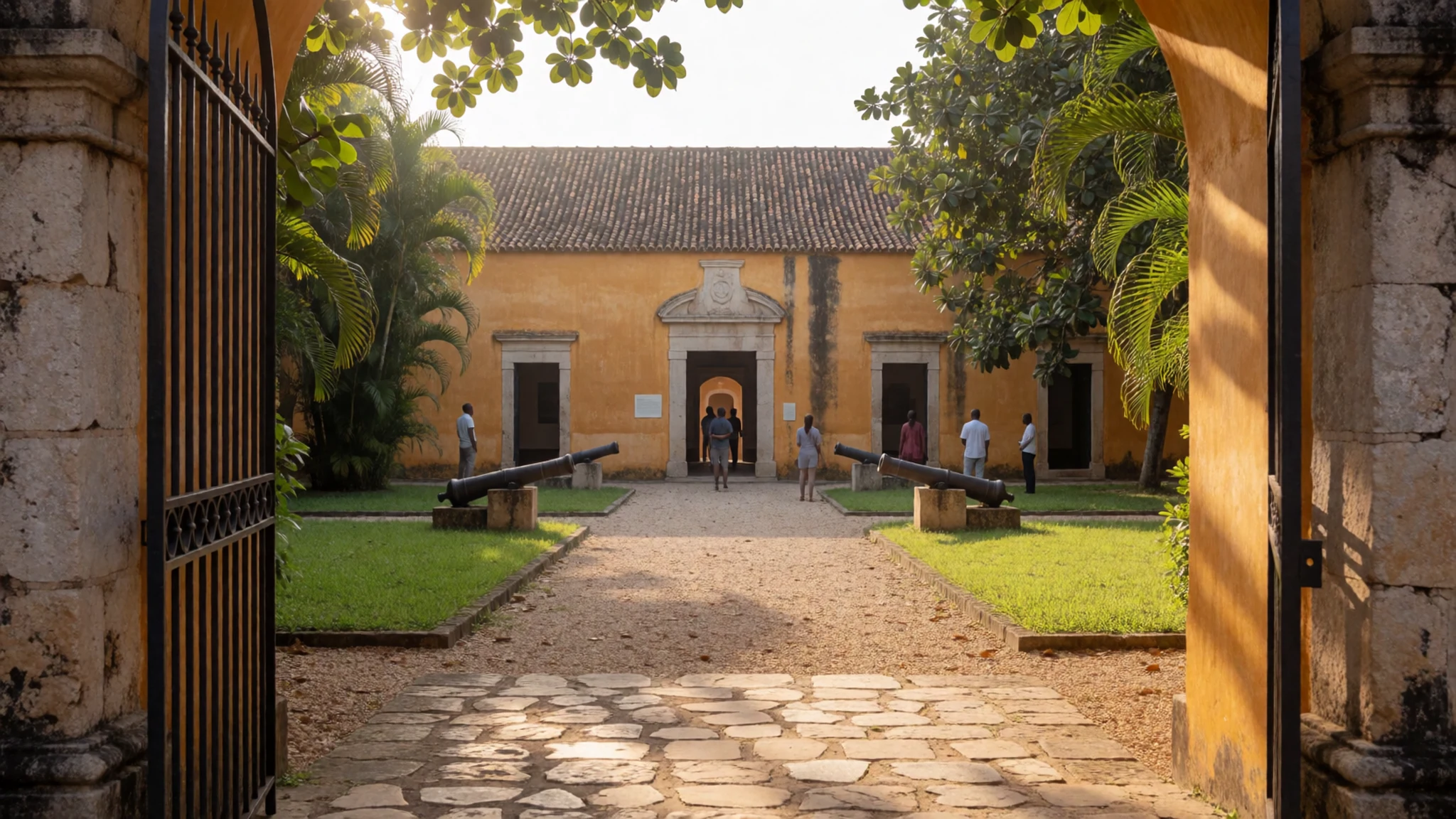
- Basilica of the Immaculate Conception — town centre
The Basilica of the Immaculate Conception gives Ouidah a different texture: a religious landmark within the city’s broader mix of traditions. It’s a useful break from the historical route, and an easy landmark for orienting yourself around the centre.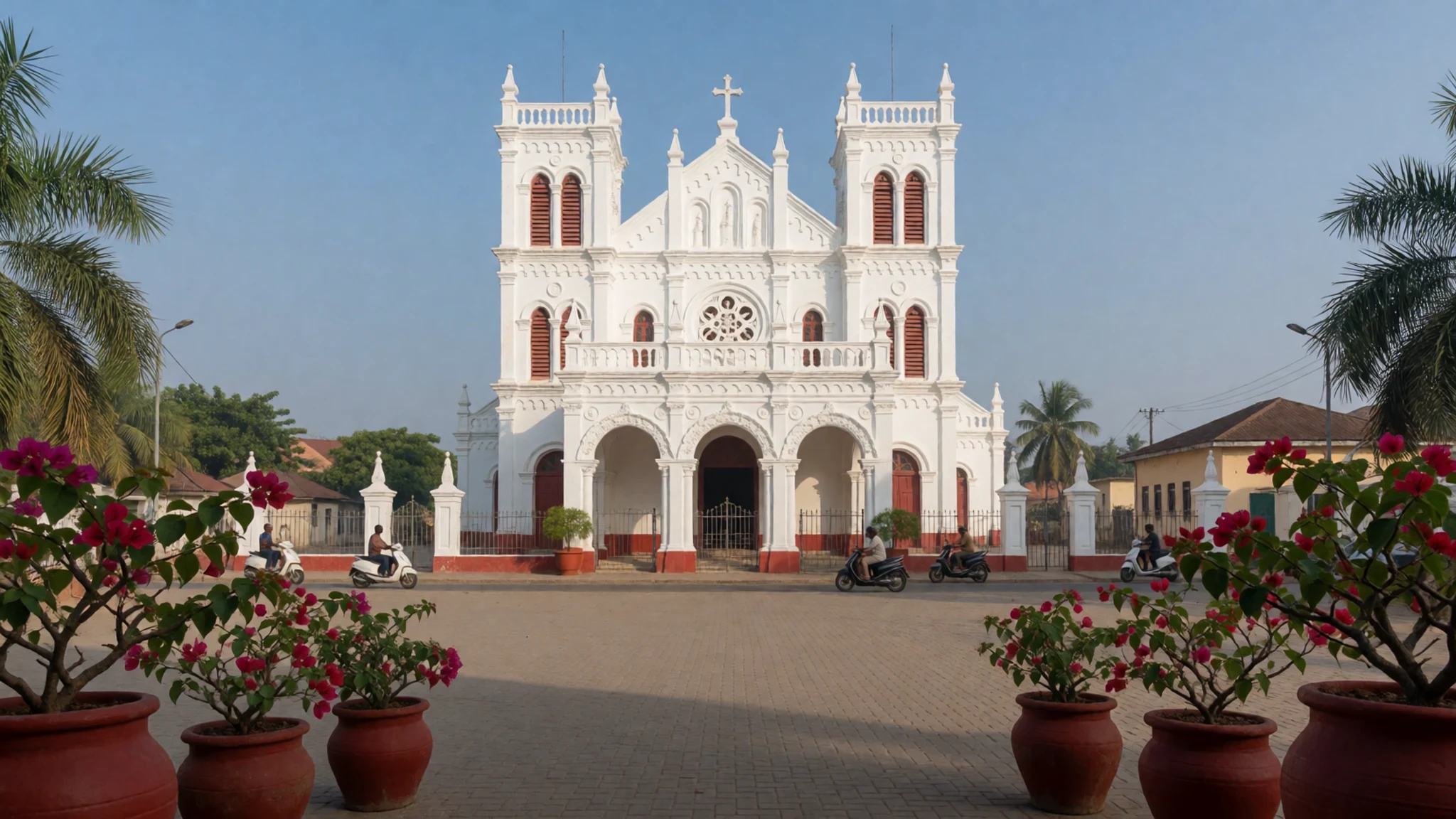
- Zinsou Foundation Museum — near the basilica area
The Zinsou Foundation Museum is a culture stop that rounds out the history-focused itinerary. Expect a calmer pace than the coastal memorial, and plan time for galleries and objects that help show Ouidah beyond the port story.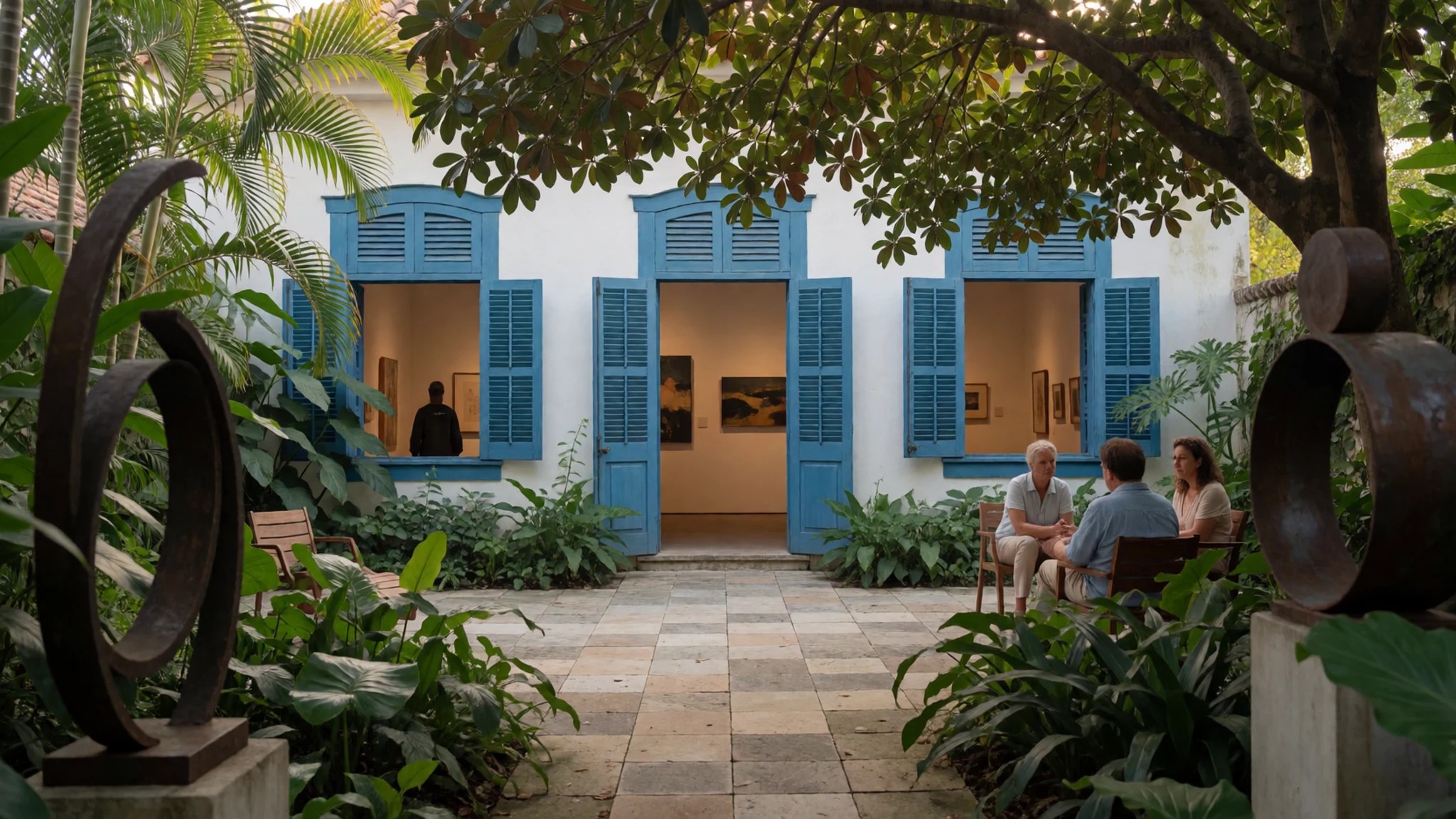
- Temple des Serpents (Voodoo Festival area context) — Ouidah religious sites area
Temple des Serpents is linked to vodun practice and is often discussed in the same breath as Ouidah’s major festival. If timing lines up, it adds context to what people mean by ritual and community performance in this part of Benin.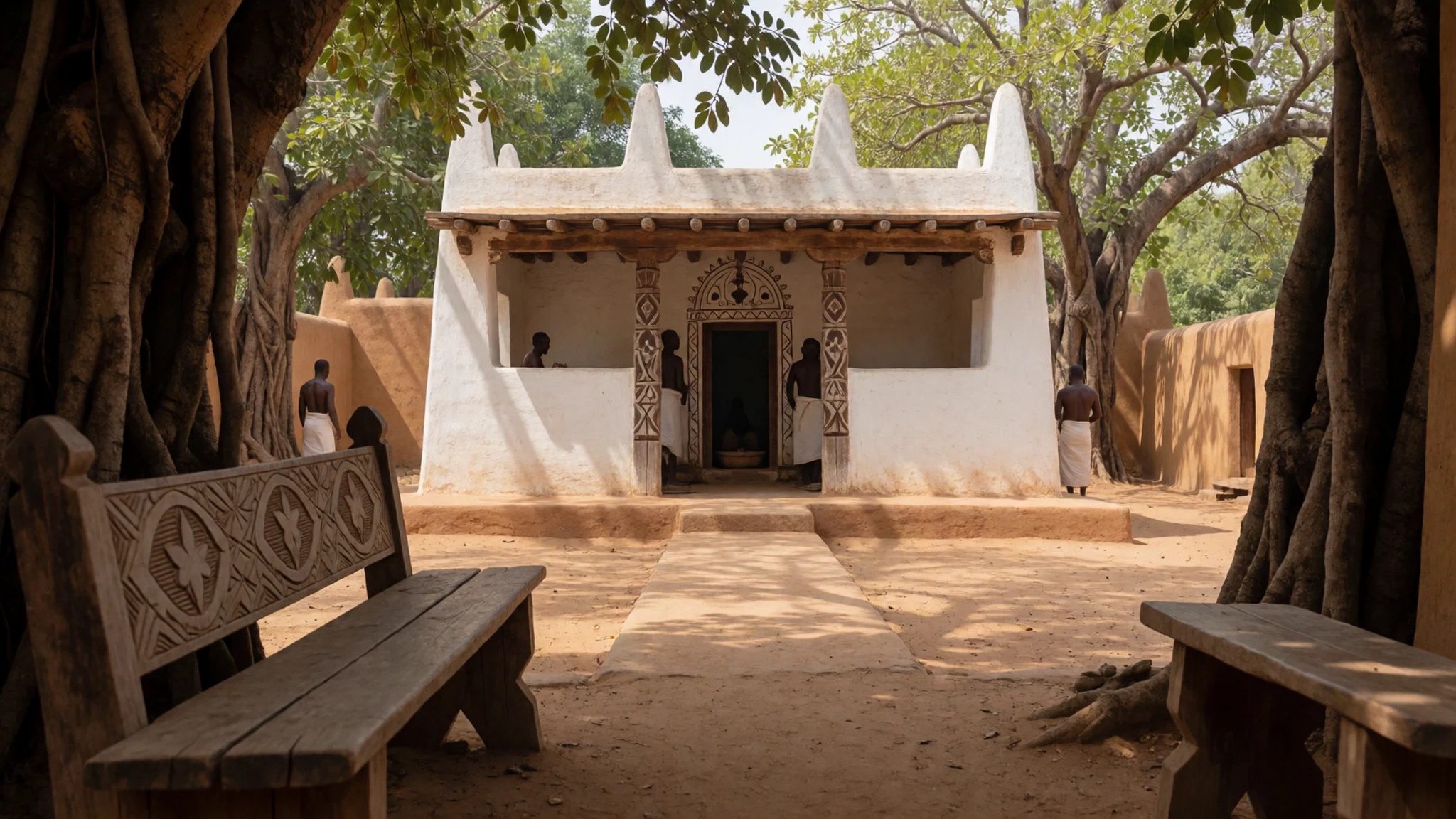
Culture
Ouidah is known for vodun traditions that aren’t “museum-only”. The city’s most visible moment is the annual Voodoo Festival in January, when thousands gather to dance, enter trances and stage dramatic performances. If you’re visiting then, the atmosphere can be intense—loud music, bodies moving, and flashes of theatrical spectacle—but it’s also a community event with meaning to participants.
Away from festival days, you’ll still feel how religious practice is woven into everyday routes: people moving between sites, family conversations outside buildings, and the sense that sacred places are part of the city’s geography. That makes respectful behaviour more important here than in purely historical stops.
What to expect in practice is a mix of observation and interaction. Some visitors are happy to chat; others want you to stay at a distance. Photography can be a sensitive topic, particularly around ceremonies or where people are preparing for ritual.
If crowds build, keep your timing flexible and don’t rush through the spiritual areas—heat and standing still can make the day feel longer. For an easier visit, choose one main “heavier” stop in the morning and let the rest of the day be more conversational and slower.
Visitor etiquette: dress modestly and ask before photographing ceremonies or people, especially during the festival.
What to wear
In Ouidah, dress depends on where you are: religious sites call for more modest clothing, while the coast and city streets suit lighter fabric. Traditional dress in the area often includes wrapper-style garments and tailored pieces worn during ceremonies and community events, with bright colours that stand out in the sun. Textiles are commonly associated with local patterns and dyes, and festival seasons are when more formal, decorative outfits appear.
What you’ll see day-to-day is a blend: many people wear everyday shirts, T-shirts and lightweight trousers or skirts suited to warm weather, plus sandals or practical shoes. Visitors usually do better in breathable clothes—cotton or similar—because afternoons can feel oppressively hot, and walking between stops means you’ll want comfort.
For visiting museums and historic sites, aim for light layers that cover shoulders and knees if you’re heading toward religious locations. For sacred areas, avoid very short outfits and plan for closed-toe footwear if the ground is uneven. If you’re attending the voodoo festival around 10 January, bring something comfortable for standing and moving, but keep it respectful—loose, modest, and not too revealing—so you don’t feel out of place.
What to eat
- Atcheke — near the basilica area
Atcheke is an Ivorian speciality you can spot around Ouidah—often as a hearty, flavourful dish in places that also serve grilled items and familiar snacks. Look for it at casual eateries near popular landmarks like the basilica area.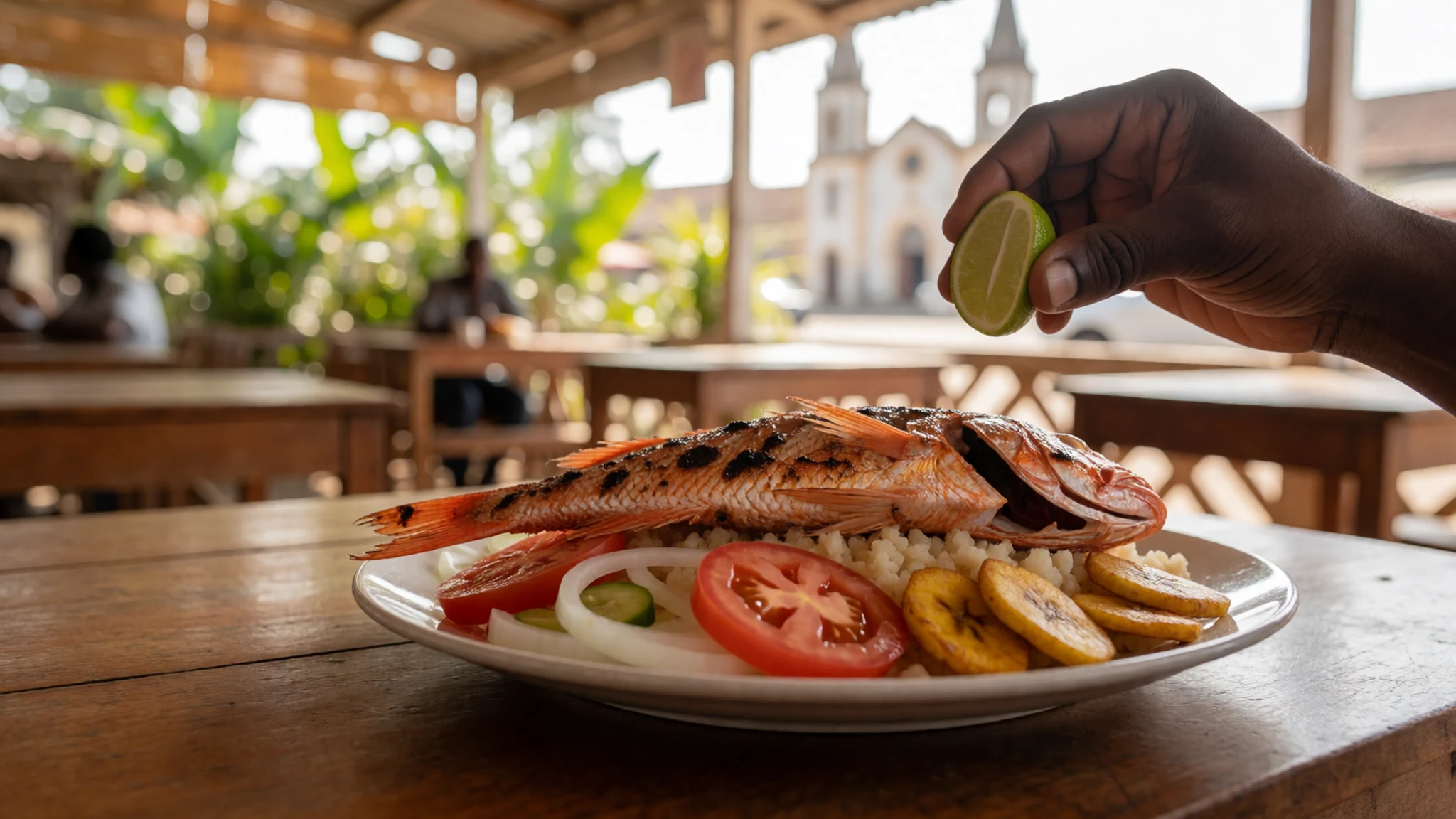
- Schwarma — around the basilica area eateries
Schwarma shows up in Ouidah as a street-friendly option alongside burgers and ice cream. It’s the kind of easy meal to choose when you want something quick but still filling after a museum visit.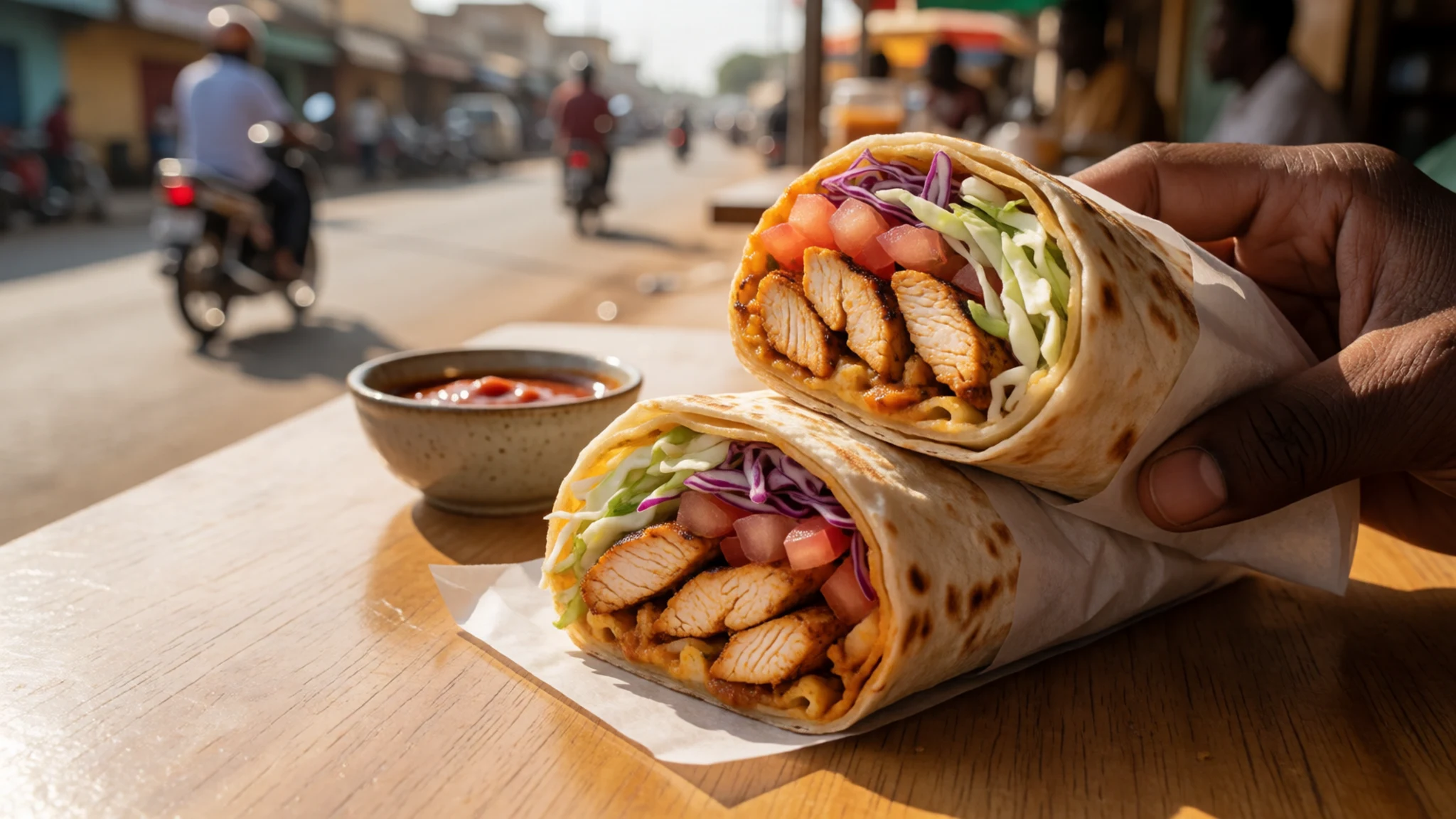
- Roasted turkey (with rice and pâte) — Gbena (regular Friday-night style eateries)
Some local spots serve roasted turkey with African staples like rice and pâte, giving you a proper sit-down meal rather than just snacks. It’s a good option when you want something substantial in the evening. - Fish with side dishes — Côté Pêche area (fish eatery)
Ouidah is a strong place for fish meals. At fish-focused spots, ordering can be flexible—ask what’s fresh, and expect side dishes such as fries, legumes and rice. Going with others makes it easier to share. - Chicken (grilled or roasted) — casual eateries around the centre
Chicken is widely available in Ouidah, usually grilled or roasted and served with staples like rice and pâte depending on the place. It’s a dependable choice when you want something familiar after a day in the sun.
Plan it
Best time. December–February are the coolest and driest months, with the most comfortable temperatures. The wettest period runs from April through October (especially May–June, with heavy rain), and the hottest months are March through May, with the warmest days in May. January can be busy for the Voodoo Festival.
How long. 3–4
Getting there. From Porto-Novo, follow RNIE1 south and west to Cotonou, then continue west past Cotonou for 45 minutes to reach Ouidah.
Budget. mid
Tips
- Start with the Door of No Return early so the light and heat are easier to manage
- Plan one fort-and-museum block, since Fort of São João Baptista de Ajudá and the museum are linked
- If visiting in January, expect far more crowds around festival dates
- Bring cash for small purchases around busy areas and markets
- Carry water and take breaks between sites—walking in coastal sun adds up
Etiquette
- Keep modest clothing for church and ritual spaces
- Ask before taking photos of people during ceremonies or festival moments
- Follow instructions around sacred sites and respect barriers and restricted areas
Nearby
Sources
- Wikidata Q850031 (CC0)
- Wikipedia (rev 1371134186) (CC BY-SA 4.0)
- Wikivoyage (rev 5385853) (CC BY-SA 4.0)
- Photo photos/01-africa-endeavor-is-empowering-african-partner-nations-to-enh.jpg (CC BY 4.0)
- Photo photos/02-door-of-no-return.jpg (CC BY 2.5)
- Photo photos/03-street-of-whidah-in-1892.jpg (Public domain)
- Photo photos/04-fort-of-s-o-jo-o-baptista-de-ajud-1890.jpg (Public domain)
- Photo photos/05-temple-des-serpents-whydah.jpg (Public domain)
- Photo photos/06-basilique-ouidah-1910.jpg (Public domain)
- Photo photos/07-084-compagnie-des-indes-traite-des-noirs.jpg (CC BY-SA 4.0)
- Photo photos/08-100-couronnement-du-roi-de-juidah.jpg (Public domain)


