Dassa-Zoumé
Dassa-Zoumé, Benin
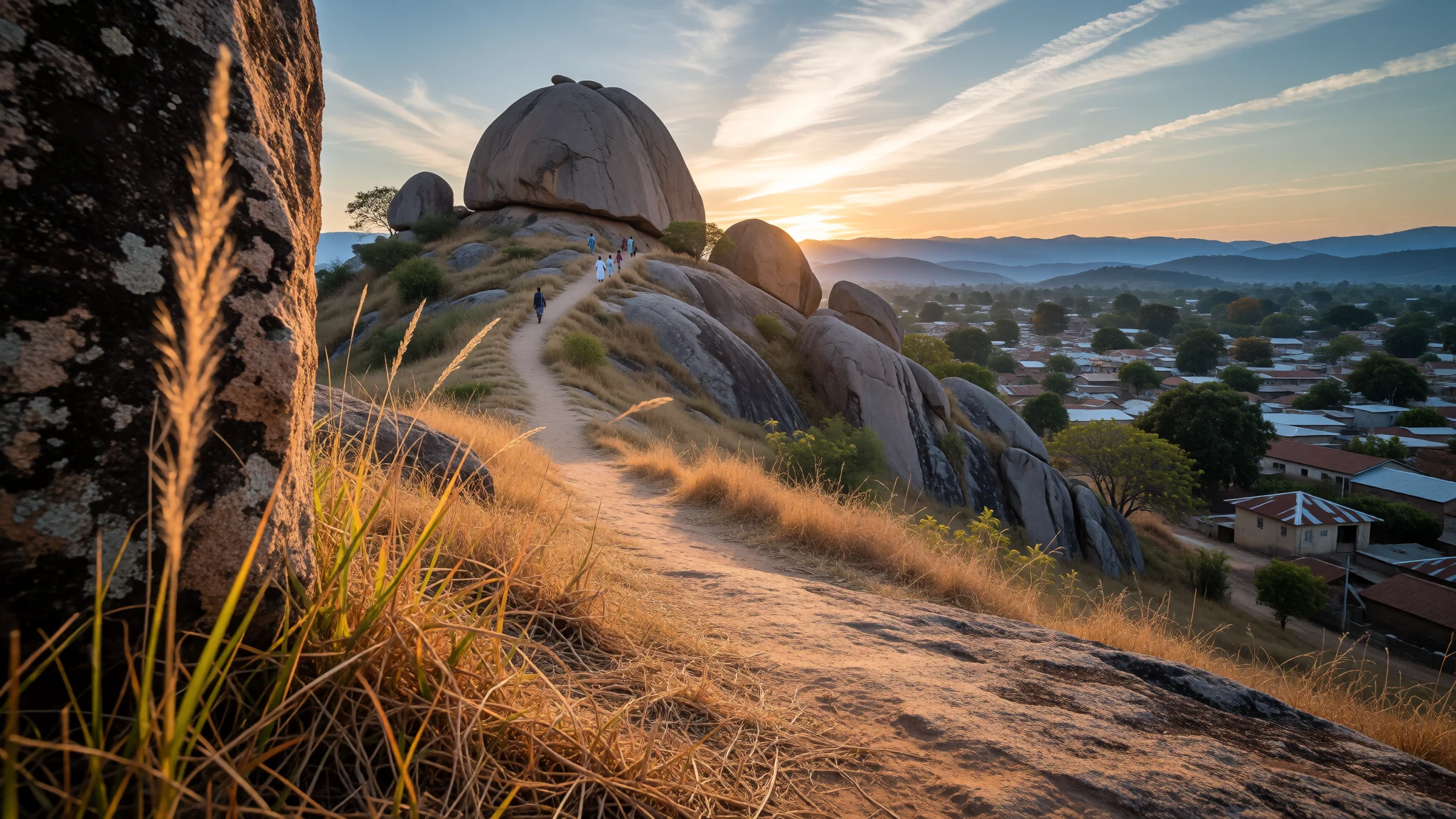
Dassa-Zoumé gathers granite hills, forest shrines to the Orisa and a Marian pilgrimage grotto into one town in central Benin.
The place
Dassa-Zoumé, shortened to Dassa and known to its Idaasha people as Igbó Ìdàáshà, sits in central Benin at about 222 metres above sea level. It is the capital of Collines Department, and the name suits it: rounded granite hills, some small and some large, rise between the houses and cover much of the town. About 112,118 people live in the commune. Dassa lies on the main north–south highway and on the railway linking Cotonou on the coast with Parakou in the north, so it works as a natural halt on the long journey between the two. The country around it is a patchwork of forest, farmland and bare rock, with kapok and banana trees in the lower ground. The mood is calmer than Cotonou: a working provincial capital where markets, church bells and the call to prayer share the day. Religion shapes the town more than any single monument does. Pilgrims travel to a grotto linked with the Virgin Mary, while many of the surrounding hills and forest patches hold shrines to the Orisa, the Yoruba deities. A mosque with a tall minaret stands just outside town on the road towards Parakou, and a Yoruba monarchy continues alongside the modern administration. Visiting is mostly a matter of walking, looking and asking permission rather than ticking off sights, and facilities are modest, so plans are best kept flexible.
Its story
Dassa-Zoumé begins its recorded story with the Idaasha, a people who moved from the Egba branch of the western Yoruba, in what is now Nigeria, and settled among the hills. Accounts place the founders' arrival around the 12th century, and the facts for the town give a founding date of about 1200. The hills mattered: granite domes and forest cover offered shelter, water and ground that was easy to defend, and they later became homes for shrines. The kingdom of Dassa took shape around 1600, with a ruling line that survives today as a Yoruba monarchy within modern Benin. In 1889 the kingdom came under a French protectorate, part of the colonial process that eventually produced the territory called Dahomey. That name stayed until 1960, when the country became Benin. Later Dassa grew as a stop on the road and rail corridor running from the coast to the north, which brought traders, administrators and missionaries. Catholic devotion at the grotto of Notre-Dame d'Arigbo, and a basilica built around it, added a Christian pilgrimage to a landscape already crowded with Orisa shrines. Islam arrived too, and the mosque on the Parakou road is one recent sign of it. The town today is layered: older Yoruba-rooted tradition, colonial-era institutions and several living faiths sit within a few kilometres of one another.
What to see
- Coline des Princes viewpoint — Dassa-Zoumé town
The Coline des Princes gives a wide view over Dassa-Zoumé: tin and tile roofs, trees and the humped granite hills beyond. Go early or late, when the light is softer and the rock is cooler underfoot. Ask locally about the route up, since paths can be unmarked and the final stretch is steep.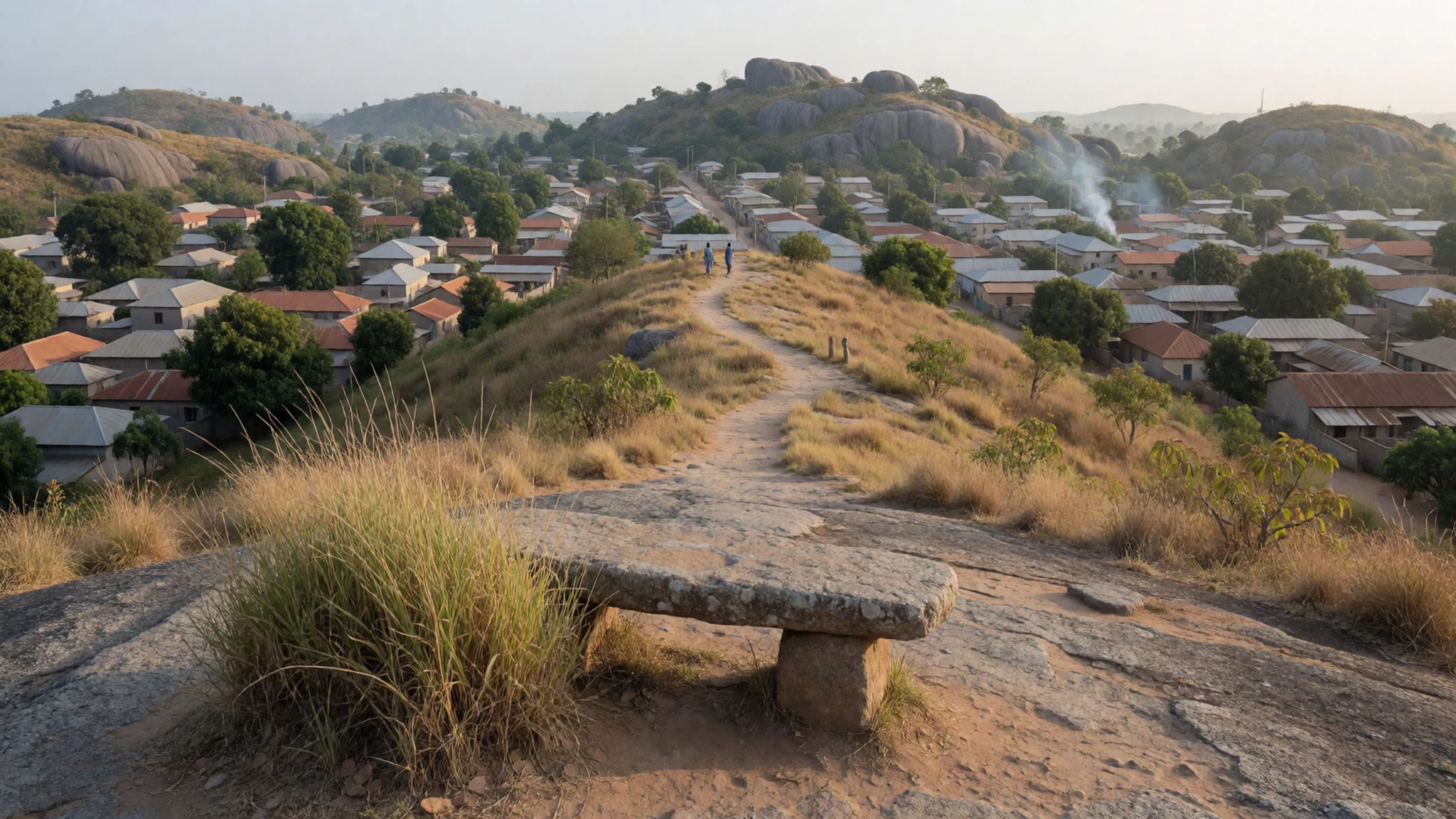
- Grotte Notre-Dame d'Arigbo and basilica — Dassa-Zoumé
Dassa-Zoumé's best-known pilgrimage site is the Grotte Notre-Dame d'Arigbo, where the Virgin Mary is said to have appeared. A basilica with several shrines now stands around it. Pilgrims come with real devotion, so visit quietly, dress modestly and check whether a service is under way before wandering in.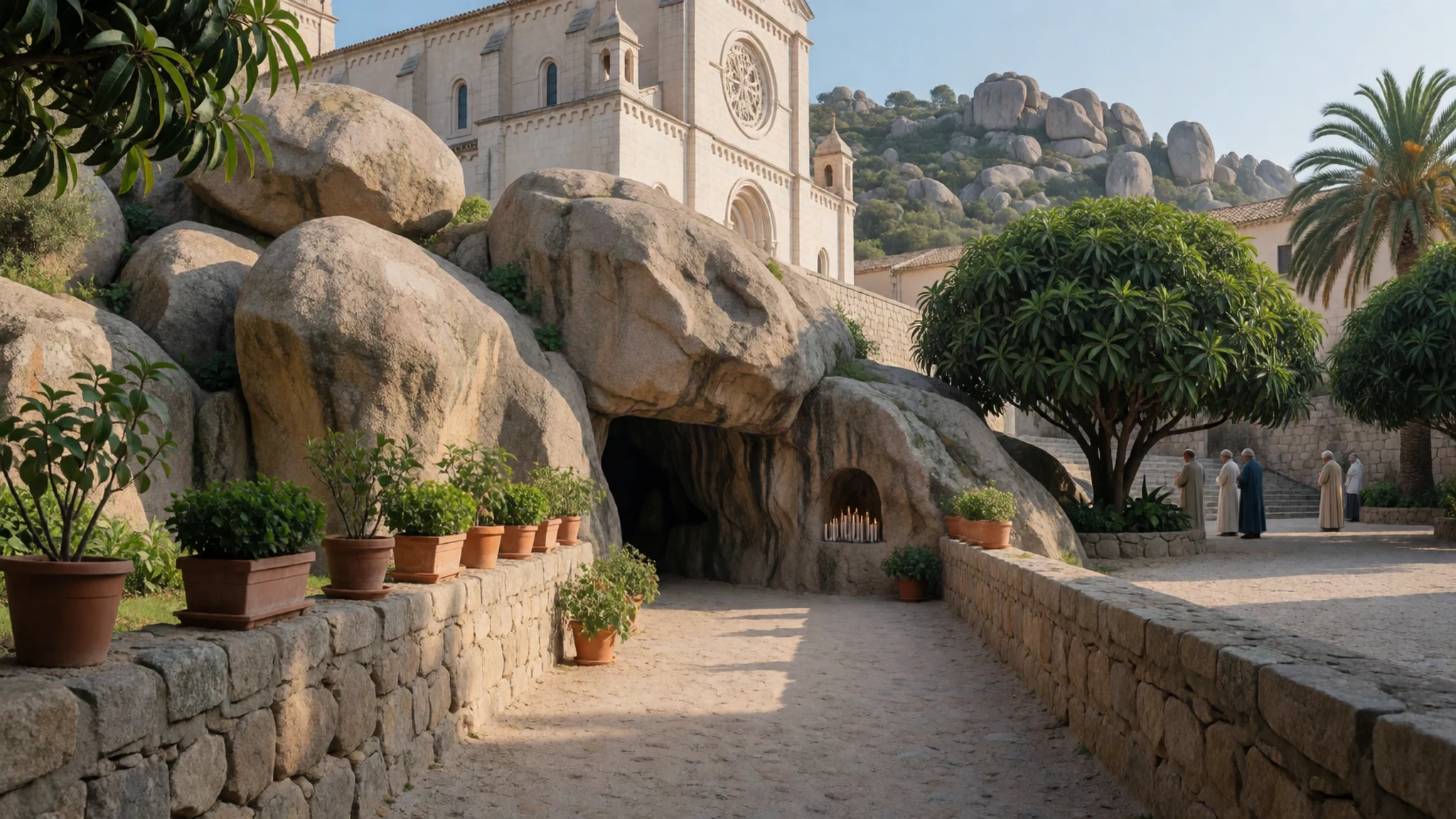
- The granite hills — Throughout Dassa-Zoumé
The hills are the signature of Dassa-Zoumé: domes and boulder piles of every size, some wedged between houses. Scrambling on the lower ones is possible, but granite turns slippery after rain and hot by midday. Wear shoes with grip, carry water, and take a local guide who knows which hills are sacred or private.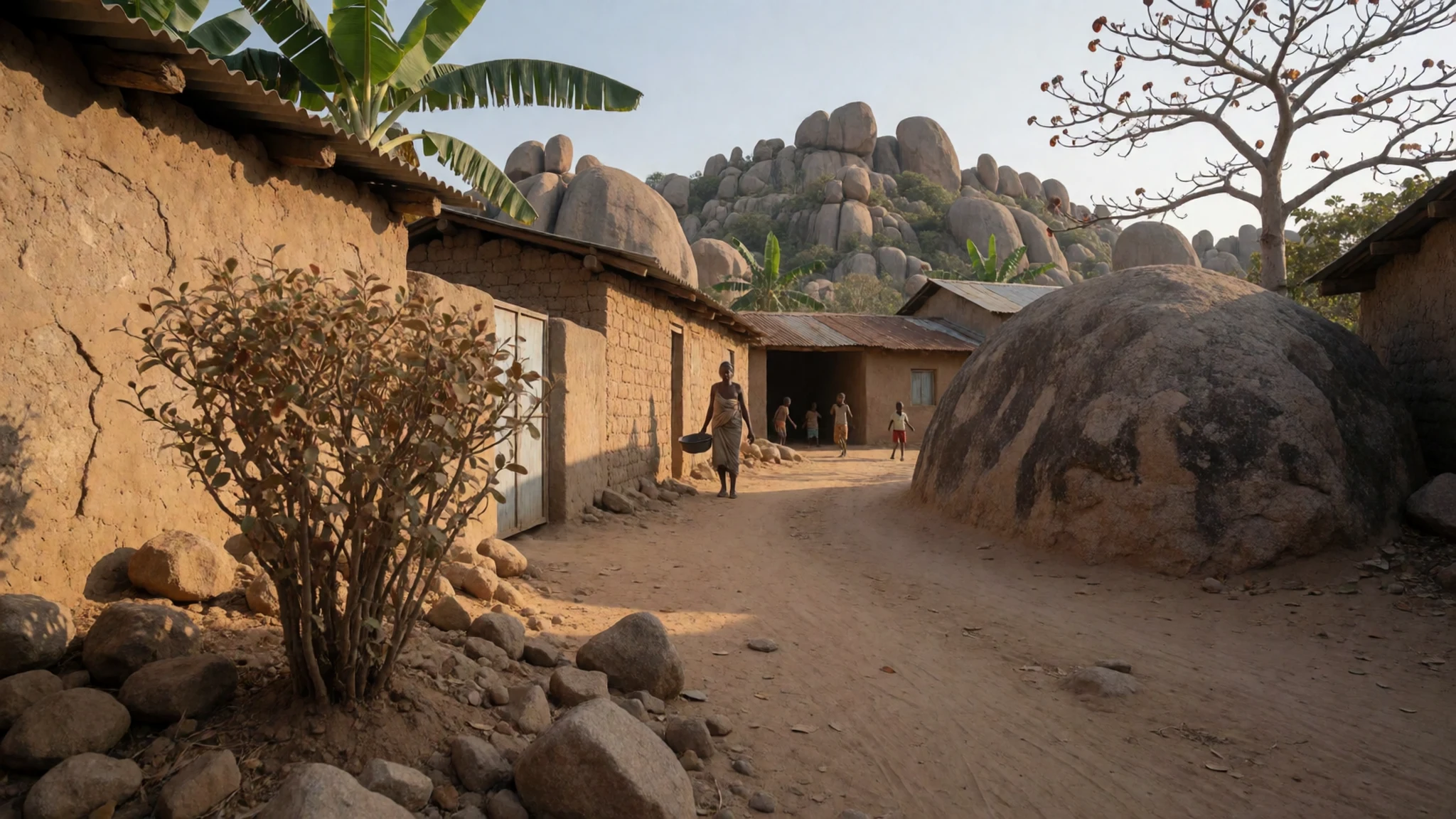
- Orisa forest and hill shrines — Forests and hills around Dassa-Zoumé
Many forests and hills around Dassa-Zoumé hold shrines to the Orisa, the Yoruba deities. Some are active places of worship rather than attractions, so access depends on the keepers. Go with a local guide, ask before stepping onto shrine ground, and accept a refusal gracefully; offerings and ceremonies are not performances.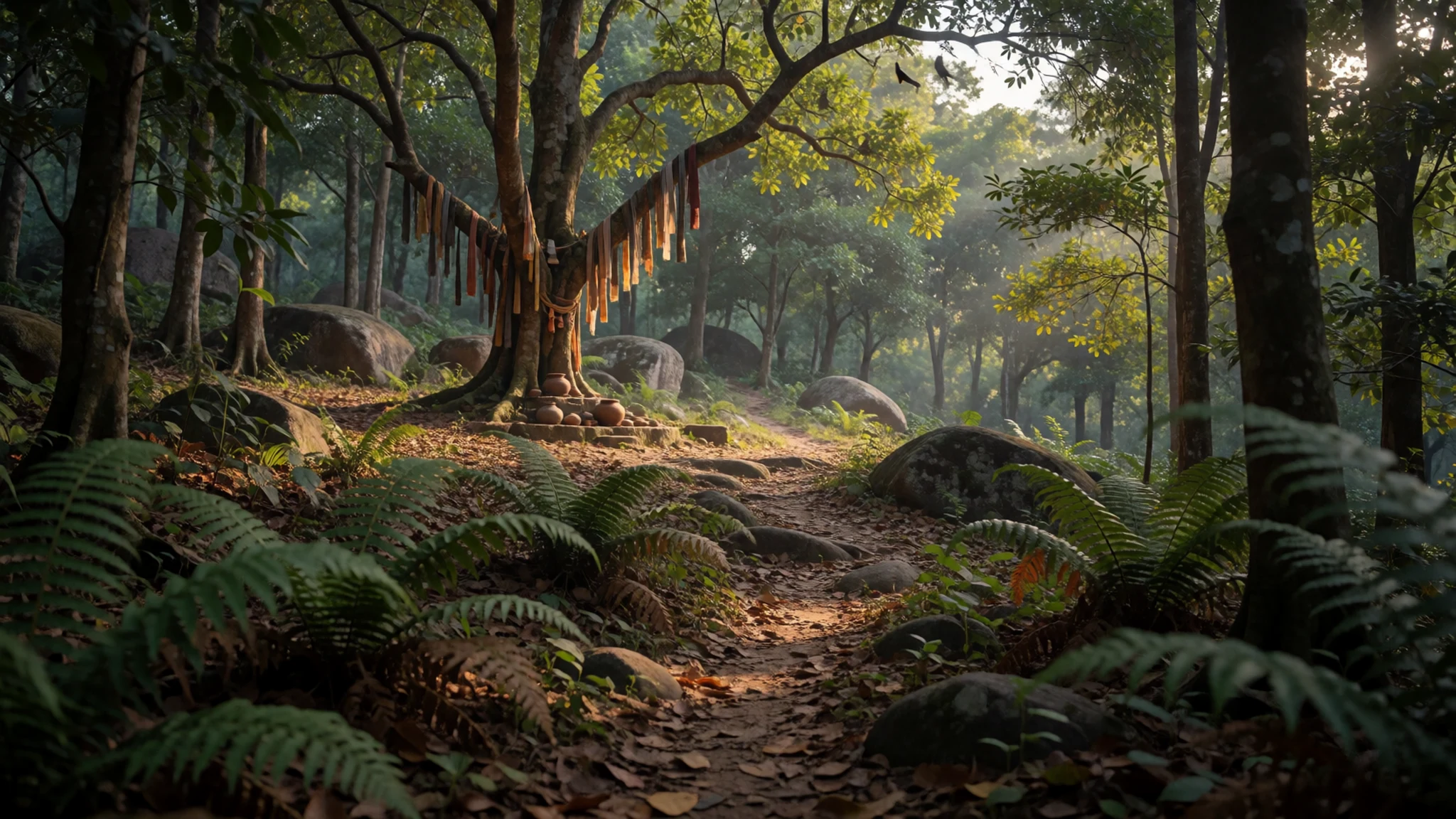
- Kamaté hills and Glazoué — Near Glazoué, north of Dassa-Zoumé
A short drive from Dassa-Zoumé, the Kamaté hills near Glazoué give another angle on the town, with its roofs spread across the plain below. It suits a half-day with a local driver, and it is worth asking in town which paths are in use and whether anyone expects a courtesy visit first.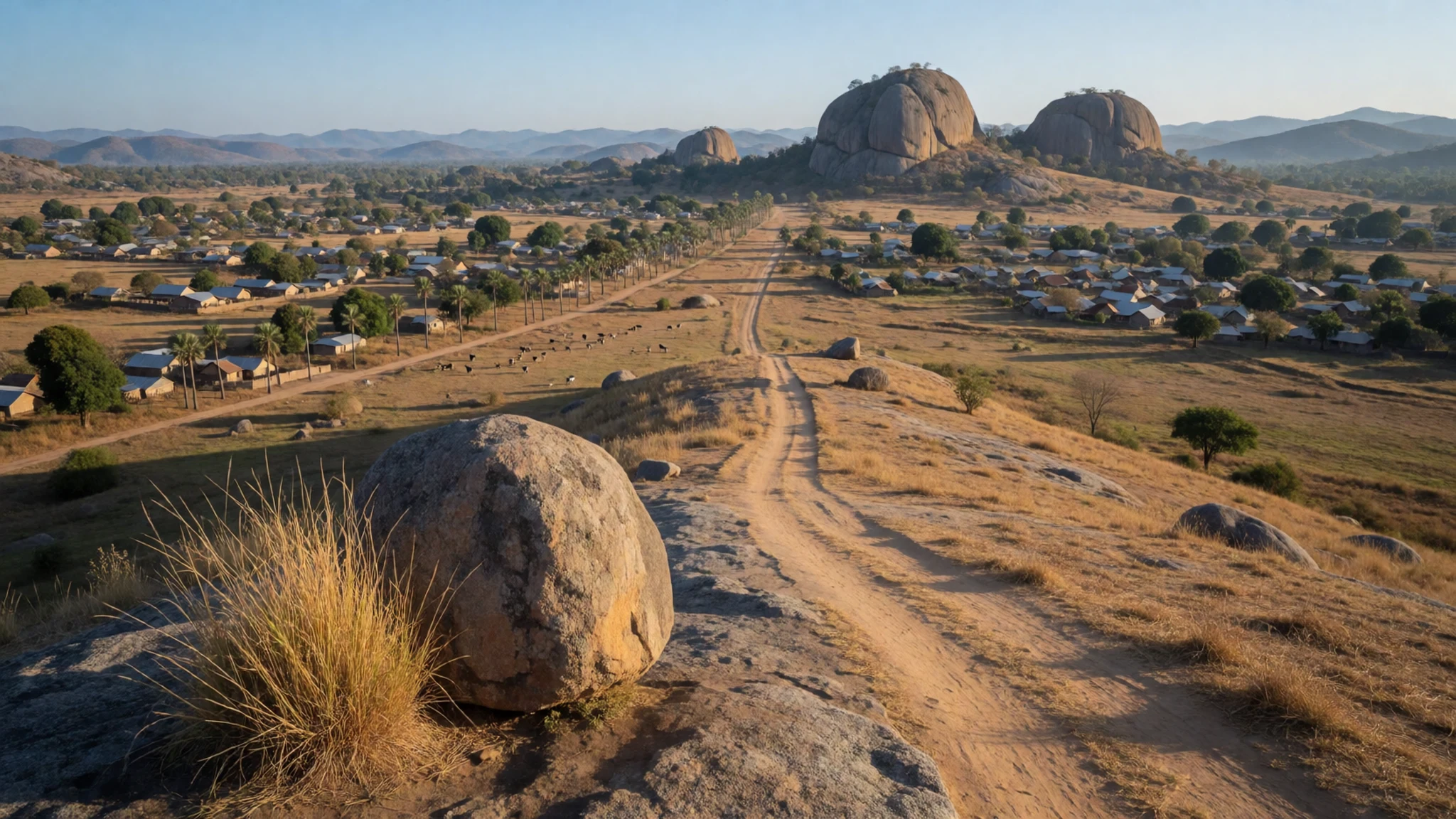
- Central mosque on the Parakou road — Edge of Dassa-Zoumé, road towards Parakou
Just outside Dassa-Zoumé on the road towards Parakou, the Ahmadiyya community's central mosque is easy to spot by its tall minaret. It is an active place of worship, built in recent years, and a reminder that the town's faith life reaches beyond shrines and the basilica. Ask before entering or photographing.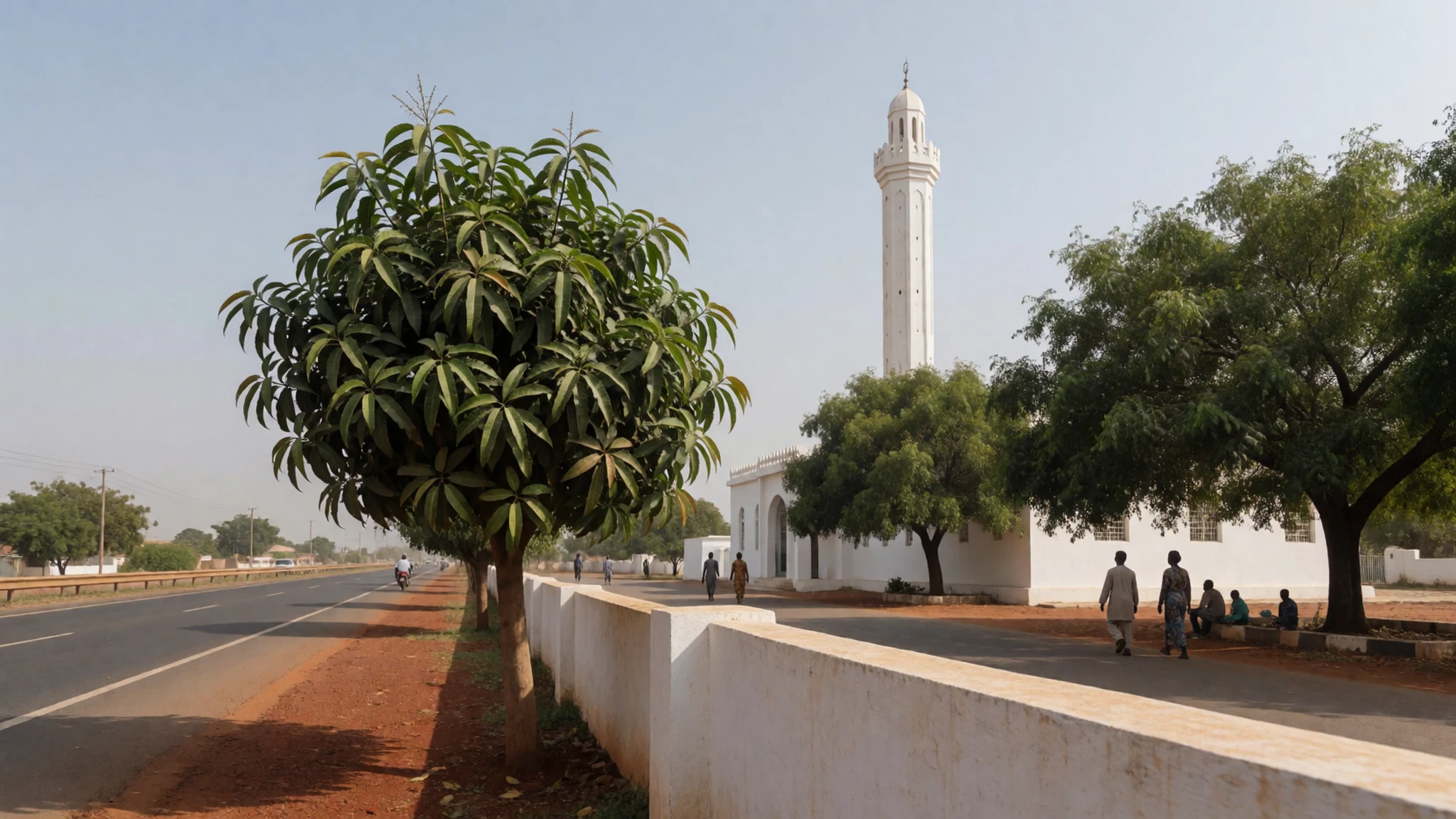
Culture
Dassa-Zoumé is the home of the Idaasha, a Yoruba-related people whose ancestors came from the Egba country in present-day Nigeria, and the town's culture still carries that inheritance. The most visible layer is religious plurality. Orisa worship survives in forest and hilltop shrines, Catholic pilgrims gather at the grotto of Notre-Dame d'Arigbo, and Muslim communities worship at mosques in and around town, including a large Ahmadiyya mosque on the Parakou road. These are not separate worlds; families often include members of more than one faith, and festivals and funerals can draw people of every background. The Yoruba monarchy adds a formal layer of custom, with a ruling line that still has a role in local ceremony and dispute settlement. Language is a mix: French in offices and schools, Yoruba-related speech among the Idaasha, and other Beninese languages heard in the market. Greetings matter, and a visitor who takes time over them will find doors open more easily. Music, drumming and masquerade belong to ceremonies rather than to a tourist schedule, so they appear when the calendar and the community decide. Hospitality tends to be warm but unhurried, and requests to see shrines or meet elders are usually best made through a trusted local contact. Ask permission before photographing people, shrines or ceremonies, and respect a refusal without argument.
What to wear
In Dassa-Zoumé, traditional dress follows Yoruba-related custom. Women wear a buba (loose blouse) with an iro (wrapped skirt) and a gele, a folded head tie, while men wear the buba with trousers or the flowing agbada for formal occasions. Aso oke, a hand-woven strip cloth, and factory wax-print cotton are the usual textiles, chosen for weddings, funerals, chieftaincy events and festivals. Matching cloth is often bought by a family or group so that everyone appears together. Day to day, most people wear practical modern clothes: shirts, trousers, skirts and sandals, with tailor-made outfits in bright prints for Sundays, Fridays and special occasions. Tailors are everywhere and turn cloth into a fitted garment quickly. Visitors should dress for heat, sun and rock. Light cotton or linen with long sleeves and long trousers or skirts covers the skin against sun and scratchy scrub, and also fits local modesty norms. Shoulders and knees should be covered at the basilica, mosques and shrines, and a scarf is handy for covering the head if asked. Good trainers or walking shoes with grip matter more than anything else, since the hills are granite and dusty paths can be slippery. A hat and sunglasses help at midday. Avoid military-style or camouflage clothing.
What to eat
- Kuli-kuli — Roadside stalls and the town market
Kuli-kuli is a crunchy groundnut snack, pressed and fried into hard sticks or rings. It is sold in small bags at stalls and by hawkers on the highway, and it keeps well, which makes it a handy snack for hill walks.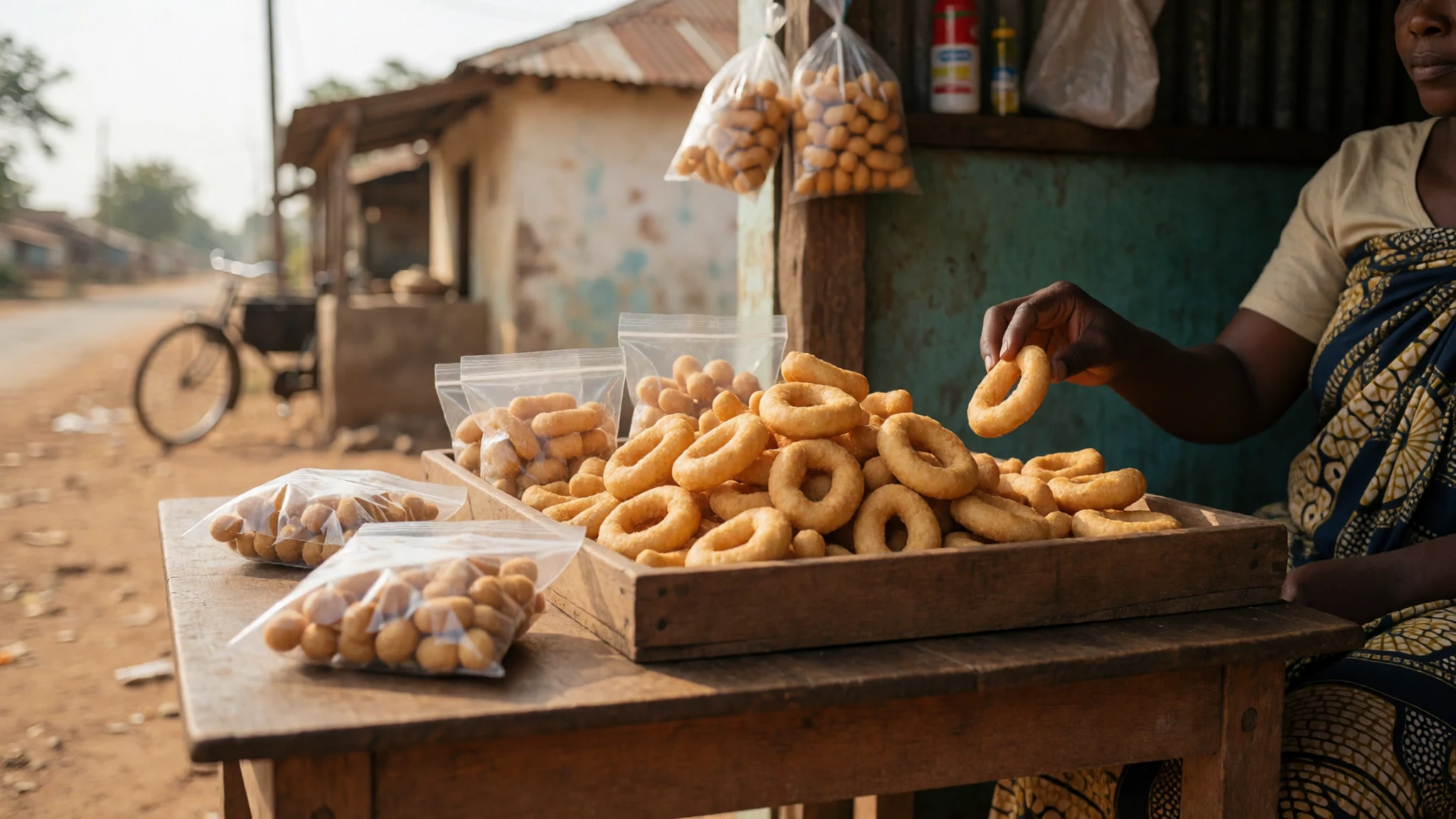
- Boulettes de poulet with sauce rouge — Small eateries and street stalls in the town centre
Chicken meatballs are served in a red sauce, usually tomato-based and peppery, often with rice or a starchy side. Order it where the pot is hot and busy. It is a filling lunch after climbing around the hills.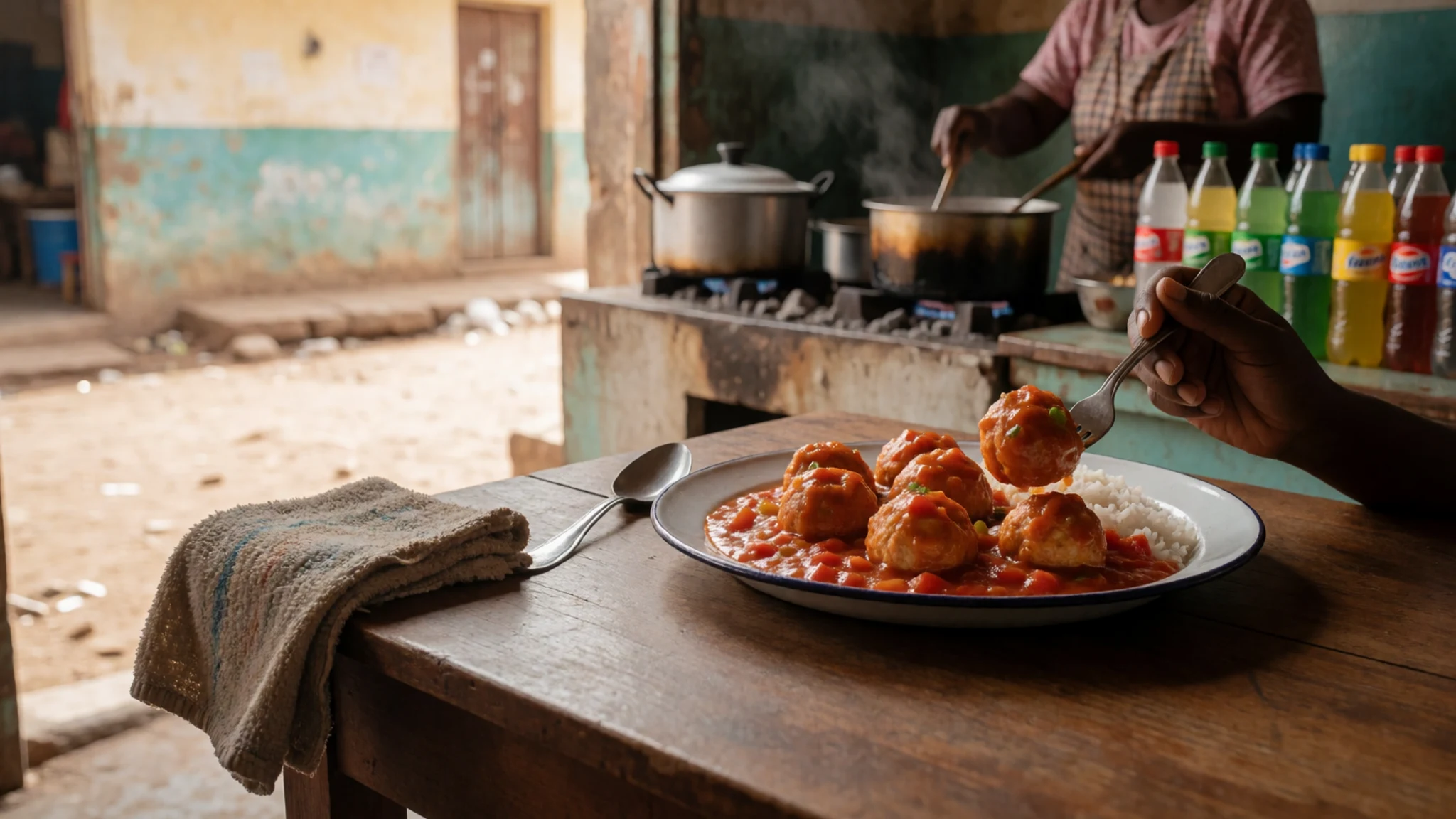
- Riz et haricots — Market stalls and roadside eateries
Rice with beans is the everyday plate sold by street vendors across Benin, often with a spoonful of pepper sauce or fried fish. It is cheap, filling and easy to find. Choose a vendor whose food is steaming and covered. - Grilled chicken or goat — Evening roadside grills and local buvettes
Grilled chicken and goat are sold by street vendors and at local drinking spots, called buvettes. The meat is cooked over charcoal and eaten with pepper and onion. Pick a busy grill, and eat it straight from the fire. - Vin de palme and sodabi — Local buvettes and village bars
Palm wine, tapped from the sap of the palm tree, is mild and slightly fizzy when fresh. Sodabi, a distilled palm spirit, is far stronger. Both are served in buvettes. Take sodabi in small sips and never before a hill walk.
Plan it
Best time. November to February, the drier months, when the hills are easier to climb and paths are firmer, though harmattan haze can blur distant views. The rainy season turns tracks muddy and rock slippery, and the heat is heaviest just before it starts.
How long. 2–3
Getting there. Fly into Cotonou, the main international airport, then continue north by road along the main highway or by train on the Cotonou–Parakou line; Dassa-Zoumé is on both. Within town, hire a local driver or guide for the hills and shrines. Check current train and road conditions locally.
Budget. low
Tips
- Carry proof of yellow fever vaccination, which is required on arrival at the airport
- Check the official government site for visa rules and the e-visa before booking
- Travel with a trusted local or a hired guide, especially for shrines and hill paths
- Start hill walks early, bring water and wear shoes with grip
- Carry small amounts of cash; card use is limited outside the main cities
Etiquette
- Ask before photographing people, shrines or ceremonies
- Cover shoulders and knees at the basilica, mosques and shrines
- Greet people properly before asking questions or favours
Nearby
Sources
- Wikidata Q2609335 (CC0)
- Wikipedia: Dassa-Zoumé (rev 1380847760) (CC BY-SA 4.0)
- Wikivoyage: Benin (rev 5394483) (CC BY-SA 4.0)
- Vue de la ville de Dassa Zoumè depuis les collines de Kamaté à Glazoué — Padonou Dotou (CC BY-SA 4.0)
- Viewpoint of Dassa-Zoumé from the Coline des Princes (April 2025) — Ch1pabeck (CC BY-SA 4.0)
- Acentos de Gu em Dassá. Benin — Toluaye (Public domain)
- Alysicarpus ovalifolius — NMNH (CC0 1.0)
- A hill (Chaos granitique, Dassa) — Richedor LALEYE (CC BY-SA 4.0)
- Collines de Dassa — Rachad sanoussi (CC BY-SA 4.0)
- Crotalaria leprieurii — NMNH (CC0 1.0)
- Des kapokiers et des bananiers — Gadmer Frédéric (CC BY-SA 4.0)


