Galena
Galena, United States
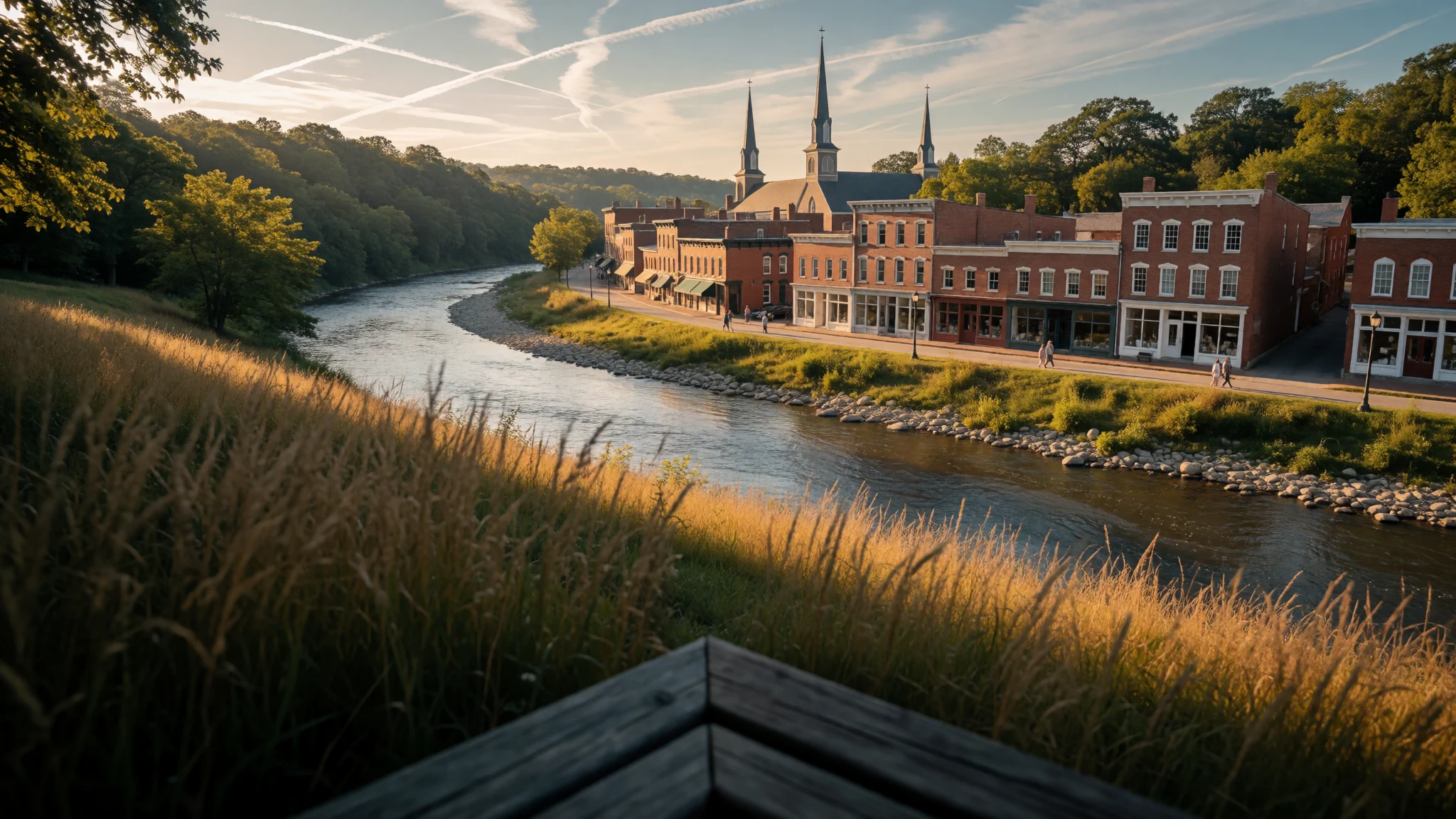
Galena is a small Illinois river town of lead-rush brick streets, Ulysses S. Grant's house and Driftless hills, easy to reach from Chicago by road.
The place
Galena sits in the hills of north-western Illinois on the Galena River, a tributary that runs on into the Mississippi. It is the county seat of Jo Daviess County, with a population of 3,308 and an elevation of 193 m. Small as that is, the town draws well over a million visitors a year, many of them Chicagoans who keep second homes in the area. The draw is a compact historic core: a protected district of brick storefronts and steep residential streets climbing away from the water, much of it built when lead money was flowing. The landscape matters as much as the buildings. Galena lies in the Driftless Area, a part of the Midwest that the recent ice ages never covered, so instead of flat farmland the ground is folded into ridges and valleys. The town is named after galena, the lead sulphide ore that brought miners here long before it became a weekend destination. Walking is easy, because the centre is only a few streets long, though the hills are real and the climbs up to the old houses are steep. Almost everyone arrives by car, parking is free, and there is no train or intercity bus. Weekdays are gentle; weekends and autumn colour bring crowds, with Main Street busy and popular tables booked ahead. Galena works best as a two- or three-day stop: some history, a few good meals and a drive through the countryside.
Its story
Galena takes its name from lead sulphide, the ore that shaped the town long before its first street was laid out. The Meskwaki, Ho-Chunk, Sauk and Menominee worked these deposits over many centuries, and across the wider region the ore turned up in burial rituals and, in later periods, as body paint. French explorers noted lead in the upper Mississippi valley in 1658, and a French map of 1703 marked this corner of Illinois as mines de plumb. Trappers dug some ore in the 1690s, but conflict with the Sioux held back mining on a large scale until Julien Dubuque opened his mines across the river in 1788. The French called the settlement La Pointe, which American settlers shortened to The Point after the Louisiana Purchase of 1803. Official records of the time used Fever River, a name taken from wild beans growing along the water, though it seems never to have caught on. The town dates its founding to 1826, and the rush that followed was fast: by 1828 the population was estimated at around 10,000, a figure that put Galena in the same bracket as Chicago at that moment. The river carried steamboats loaded with ore and supplies, and the wealth went into the brick mansions and commercial buildings that still define the centre. Later, Ulysses S. Grant lived here, as did eight other generals of the Civil War, which explains much of the heritage the town trades on today.
What to see
- The Belvedere — South of the centre
The Belvedere is a mansion in Galena dating from 1857, and it is one of the grander house museums in town. It is visited on a guided tour, which keeps the pace unhurried. Check the seasonal arrangements before travelling, as tours run in the warmer part of the year rather than all twelve months. - Dowling House — Near the north end of Main Street
Dowling House is a small stone building dating from 1832 and now a historic house museum. It gives a sense of Galena in the lead-mining years, when the town was a rough, fast-growing river settlement rather than a heritage destination. It is close to the north end of Main Street.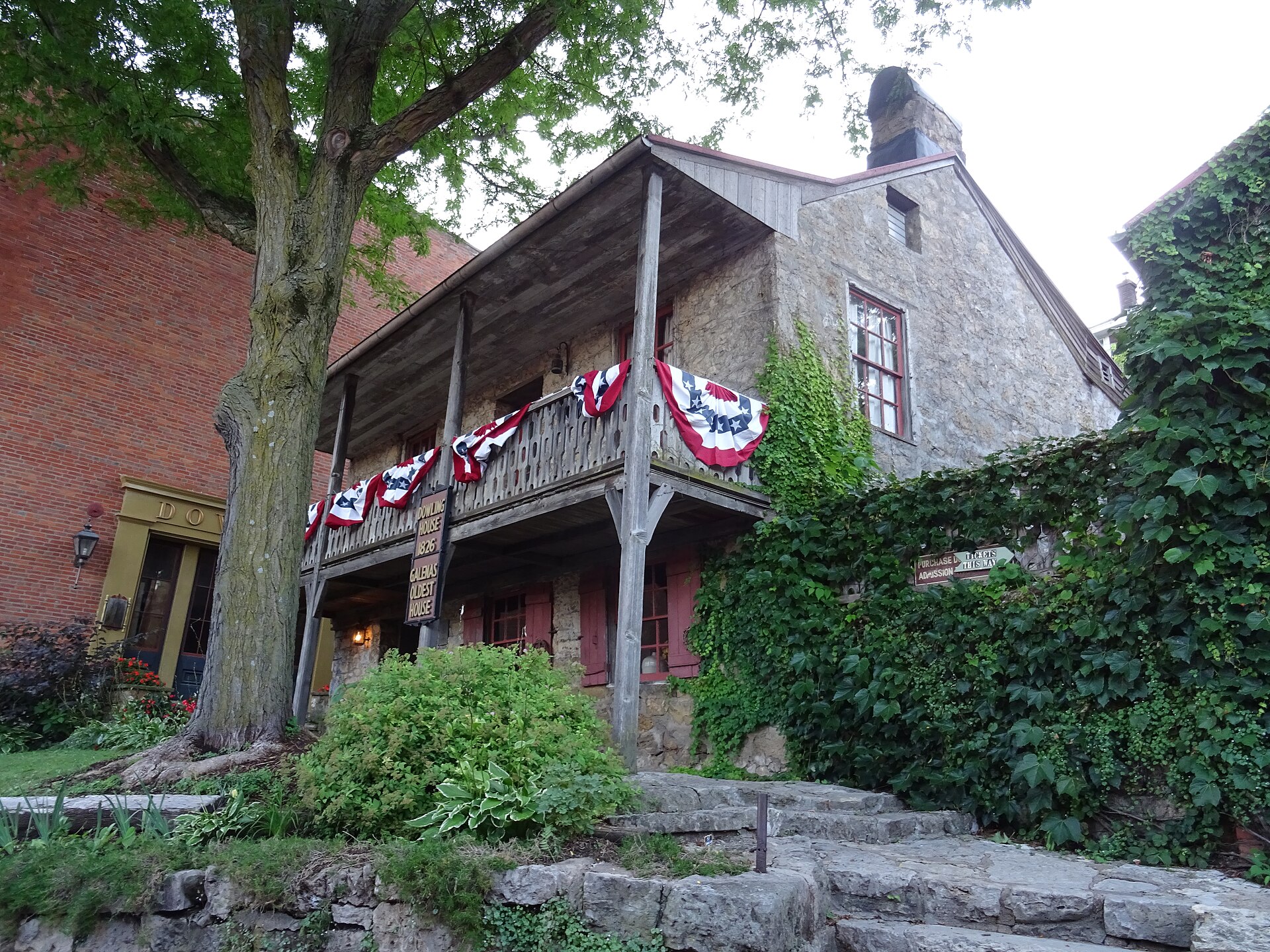
- Galena/Jo Daviess County Museum — Central Galena
This museum occupies an Italianate mansion built in the nineteenth century. Inside are displays on local farming, trinkets from Galena's boom years and Civil War memorabilia. It is a good first stop for putting the town's lead, river and military story in order before walking the streets. - Ulysses S. Grant's Home — Hillside above the river
The house where Grant lived is run by the State of Illinois and has been furnished with many original pieces, so the rooms read as a lived-in family home rather than a staged set. Guides explain how the town welcomed him home after the war. Check the official site for opening arrangements. - Grant Park — East bank of the Galena River
Grant Park lies on the east side of the Galena River and gives a wide view back over the town and its church spires against the surrounding hills. It is a quiet place to sit between museums, and a useful spot for working out how the steep streets connect.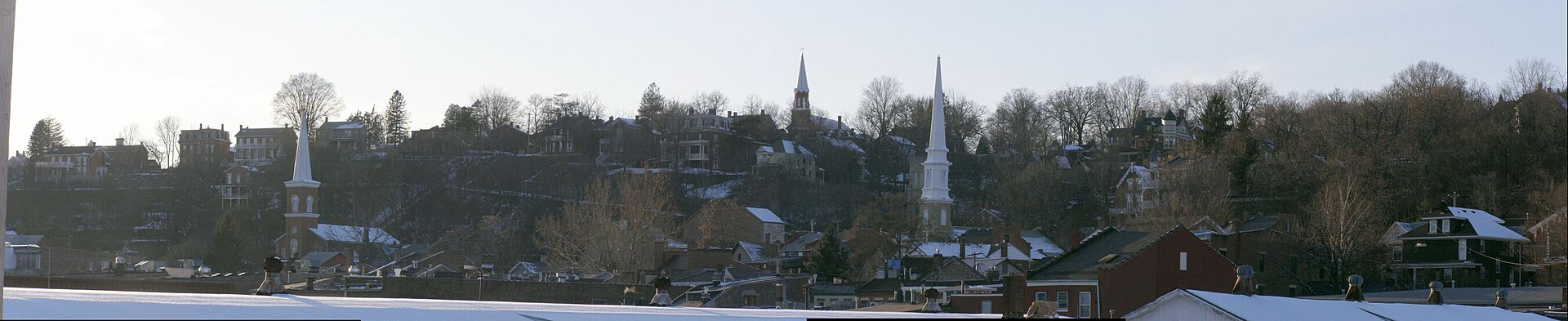
- Chicago Athenaeum Museum of Architecture and Design — West of Main Street
Housed in a former brewery building, this museum shows contemporary design, photography, sculpture and craft such as weaving. It is a change of tone from the town's many period houses, and a reasonable choice for a wet afternoon when walking the hills is less appealing.
Culture
Galena has a lively local arts life for a town of its size, centred on the Galena Art Center and the Galena Arts and Recreation Center. Turner Hall, a nineteenth-century building on Bench Street, has been restored and now hosts concerts and weddings. The State of Illinois owns several historic sites here, including the Old Market House, the Grant Home and the E.B. Washburn Home, while the county historical society runs a museum and the Old Blacksmith Shop. Heritage is the town's main business, and the residents are used to guests asking about Grant, lead mining and the steamboat years. The calendar is busy, with dozens of events a year; the best known is the Halloween Parade, which draws thousands of spectators onto the streets. Many visitors are weekenders from Chicago, so Saturdays feel different from midweek days, when shops and museums are quieter and conversation comes more easily. Underneath the tourism there is a working county seat, with courts, schools and neighbourhoods where people live year-round, and the older residents tend to take pride in the preserved buildings. The Driftless landscape around the town also shapes local life, with farms, back roads and river views beyond the historic district. Visitors should not touch the furnishings in the historic houses and should ask the guide before taking photographs inside.
What to wear
Galena has no single local costume, so the traditional-dress story belongs to the region's Native nations, including the Ho-Chunk and Meskwaki. Their regalia, often decorated with ribbonwork and beadwork, is worn at powwows and ceremonies rather than on the street, and it should be treated as ceremonial clothing, not a costume. Settler-era dress in the lead-rush years was plain wool and cotton, and the grander mansions hint at a more formal Victorian taste. Today people wear what suits a small Midwestern town: jeans, fleeces, flannel shirts, sturdy shoes and, in summer, shorts and light cotton. Weekenders from Chicago add a smarter touch for dinner, but nobody dresses up much. The exception is the Halloween Parade, when costume is the whole point. A visitor should dress for the weather and the hills. Winters are cold, so bring a proper coat, hat, gloves and boots with grip; summers are warm and often humid, so light cotton and a rain layer are useful; spring and autumn call for layers. Comfortable walking shoes matter most, because the streets are steep and the older pavements are uneven. There are no dress rules at the museums or churches beyond ordinary modesty, though a quiet manner is appreciated in the historic houses.
What to eat
- Wood-fired style pizza — Italian restaurants on and around Main Street
Pizza is the easy first meal in Galena, and the Italian places along the historic centre do it alongside pasta and a varied wine list. Look for cosy, older buildings on and around Main Street; Cannova's is one such place. - Pasta with a glass of wine — Dining rooms in restored historic buildings, such as Fried Green Tomatoes
Some of the more upscale restaurants in town lean Italian in their cooking and occupy old buildings, where parts of the dining space may involve stairs. Book ahead for weekend evenings, as Galena fills up with visitors from Chicago. - Sushi — North end of the historic Main Street, at Little Tokyo
Fresh fish is not what most people expect in a hill town far from any coast, yet the Japanese sushi restaurant at the north end of Main Street is a local favourite. It suits a lighter meal after a day of climbing between houses. - Brewpub beer flight — Goerdts' Brewhaus, just off Main Street
Galena's only brewery is a German-themed brewpub making about a dozen beers, and a tasting flight lets you sample several in one sitting. It pairs well with a long, slow lunch, and the setting is relaxed and sociable. - Irish pub supper — Frank O'Dowd's Irish Pub, south-east of the centre
An Irish-style pub with an interior designed in Ireland offers hearty food and live entertainment in the evenings. It sits slightly outside the busiest part of the centre, so it is quieter than the Main Street restaurants.
Plan it
Best time. May–June and September–October. Spring is green and the crowds are lighter, while autumn brings colour in the hills, though it is also the busiest season. Summers are warm and humid and winters are cold, so check the forecast before packing.
How long. 2–3
Getting there. Most visitors drive: from Chicago take I-90 west to Rockford, then follow US 20 west to Galena. The nearest airport is Dubuque Regional (DBQ) in Iowa, with flights from Chicago O'Hare; from there you need a taxi or hire car for the last leg. There is no intercity train or bus.
Budget. mid
Tips
- Book weekend and October stays well in advance, as the town fills quickly
- Visit museums and the Main Street shops on weekdays or early in the day for quieter streets
- Parking is free, so leave the car and walk the historic centre
- Wear sturdy shoes, as the streets are steep and some pavements are uneven
- Check the official city website, http://www.cityofgalena.org/, for current events and opening arrangements
Etiquette
- Do not touch furnishings or objects in the historic houses, and ask before photographing inside
- Keep to the pavements and give way to residents on the steep, narrow streets
- Book restaurants ahead at busy times rather than turning up in a large group
Nearby
Sources
- Wikidata Q577903 (CC0)
- Wikipedia: Galena, Illinois (rev 1385510063) (CC BY-SA 4.0)
- Wikivoyage: Galena (Illinois) (rev 5431789) (CC BY-SA 4.0)
- Galena, Illinois — RB Photo (CC BY 2.5)
- Relief location map of the USA — Uwe Dedering (CC BY 3.0)
- Galena mineral specimen — Robert M. Lavinsky (CC BY 3.0)
- Dowling House — Julien.scavini (CC BY-SA 4.0)
- USGS map of Galena mines — Harry Foster Bain (Public domain)
- Floodgates, downtown Galena — IvoShandor (CC BY 3.0)
- Old High School, Galena — Djngsf (CC BY-SA 4.0)
- Panoramic view of Galena — Chris Light (CC BY 3.0)


