Finger Lakes
Finger Lakes, United States
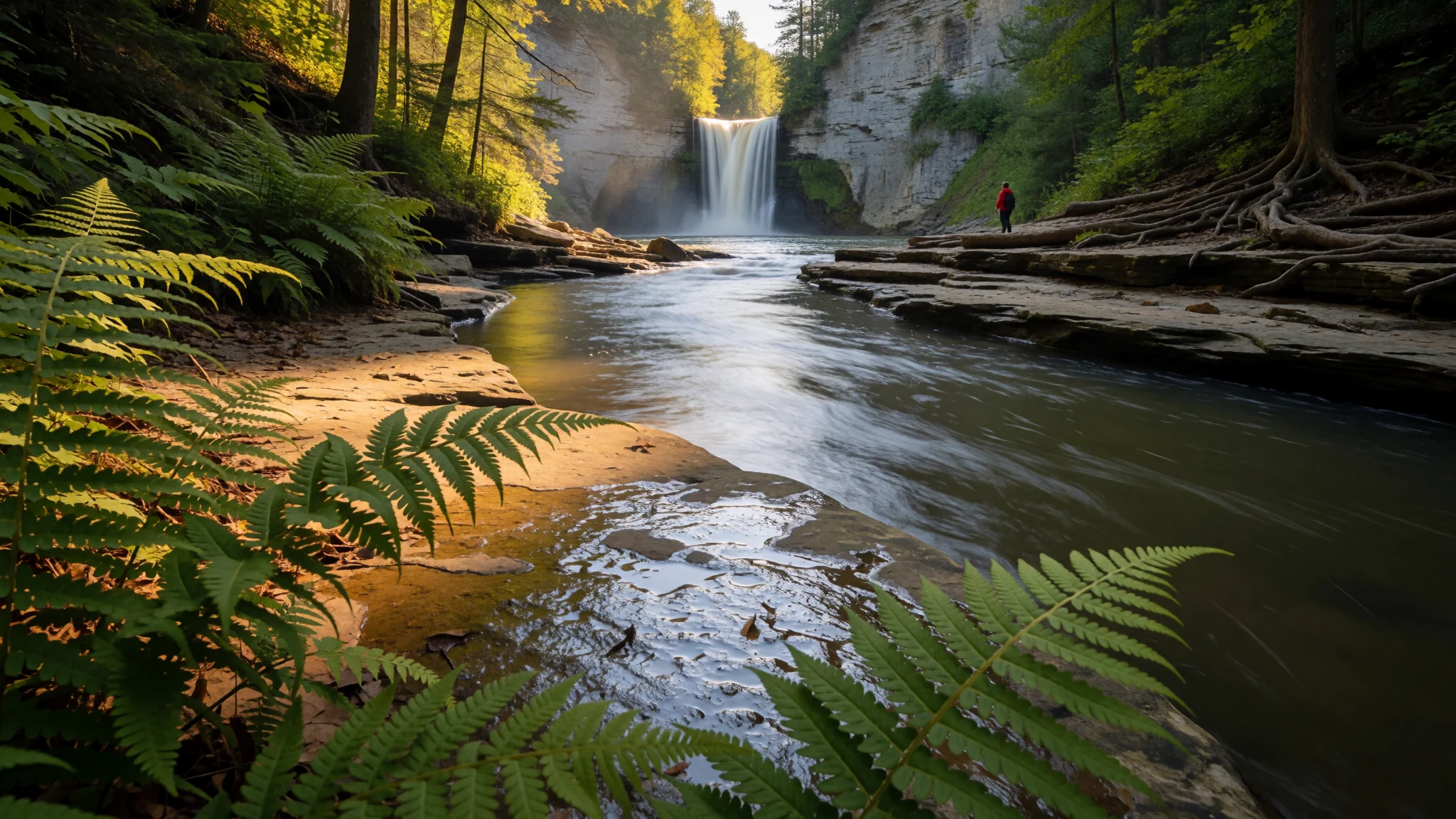
The Finger Lakes are eleven long glacial lakes in upstate New York, ringed by gorges, waterfalls, vineyards and small, unhurried towns.
The place
The Finger Lakes are a set of eleven long, thin lakes in central and western New York State, laid out roughly north to south like the marks of a raking hand. The name suits them. Each lake fills a deep glacial valley, narrow enough that the far shore is always in sight but stretching a long way down its length. Seneca and Cayuga are the two big ones, and both are so deep that their beds lie below sea level. Between the water the land rolls up into farm fields and vineyards, with steep wooded gorges cut into the ridges where streams tumble towards the lakes. The region sits where the edge of the Allegheny Plateau meets the flatter lowlands leading to Lake Ontario, so the country is hillier in the south and gentler in the north. Towns are small and spaced out: Ithaca at the southern tip of Cayuga Lake, Watkins Glen at the southern end of Seneca, Geneva at its northern end, and Skaneateles with its tidy lakeside centre. Rochester and Syracuse are the larger cities on the edges and act as gateways. Summer brings sailing, swimming, festivals and wine tasting. Autumn brings the apple harvest and colour on the hills. Winter can bring heavy snow, which slows the roads. Distances look short on a map, but the lakes are long, so moving between them usually means driving around an end or taking a ridge road. The region rewards a slow loop far more than a checklist.
Its story
The Finger Lakes have a human history that begins long before any European arrived. The region is central to the homeland of the Haudenosaunee, the confederacy often called the Iroquois, and the two largest lakes carry the names of the Seneca and Cayuga nations. The Tuscarora settled here later, while the Onondaga and Oneida lived towards the eastern edge, close to the lakes that bear their names. Towns stood on or near the shores: a Seneca settlement where Geneseo now stands, a Cayuga town at present-day Aurora, and others near Geneva and Watkins Glen. Other peoples came to live under Haudenosaunee protection, among them the Tutelo, whose village near present-day Ithaca was destroyed by the Sullivan Expedition. For nearly two centuries after first contact, the Haudenosaunee kept European colonisation out of the lakes country, largely by negotiating skilfully between rival French and British powers. One Iroquois legend credits the lakes to the pressing of Manitou's hand, as the god moved a piece of paradise down to earth. The geological account is different but just as dramatic. During the last Ice Age, glaciers deepened existing river valleys that ran south. Banks of rubble left behind at both ends then blocked the valleys, so the water could no longer drain away and they filled. Some places hold older puzzles still. The Bluff Point Stoneworks, near Keuka Lake, are stone structures whose age and builders have never been established.
What to see
- Watkins Glen State Park — Watkins Glen, south end of Seneca Lake
Watkins Glen State Park, at the southern end of Seneca Lake, is a well-known gorge walk. A stream drops through a narrow, rock-walled ravine, with waterfalls beside the path and stone steps along the way. It gets busy in summer, so weekday mornings are calmer. Check the state parks website for trail openings.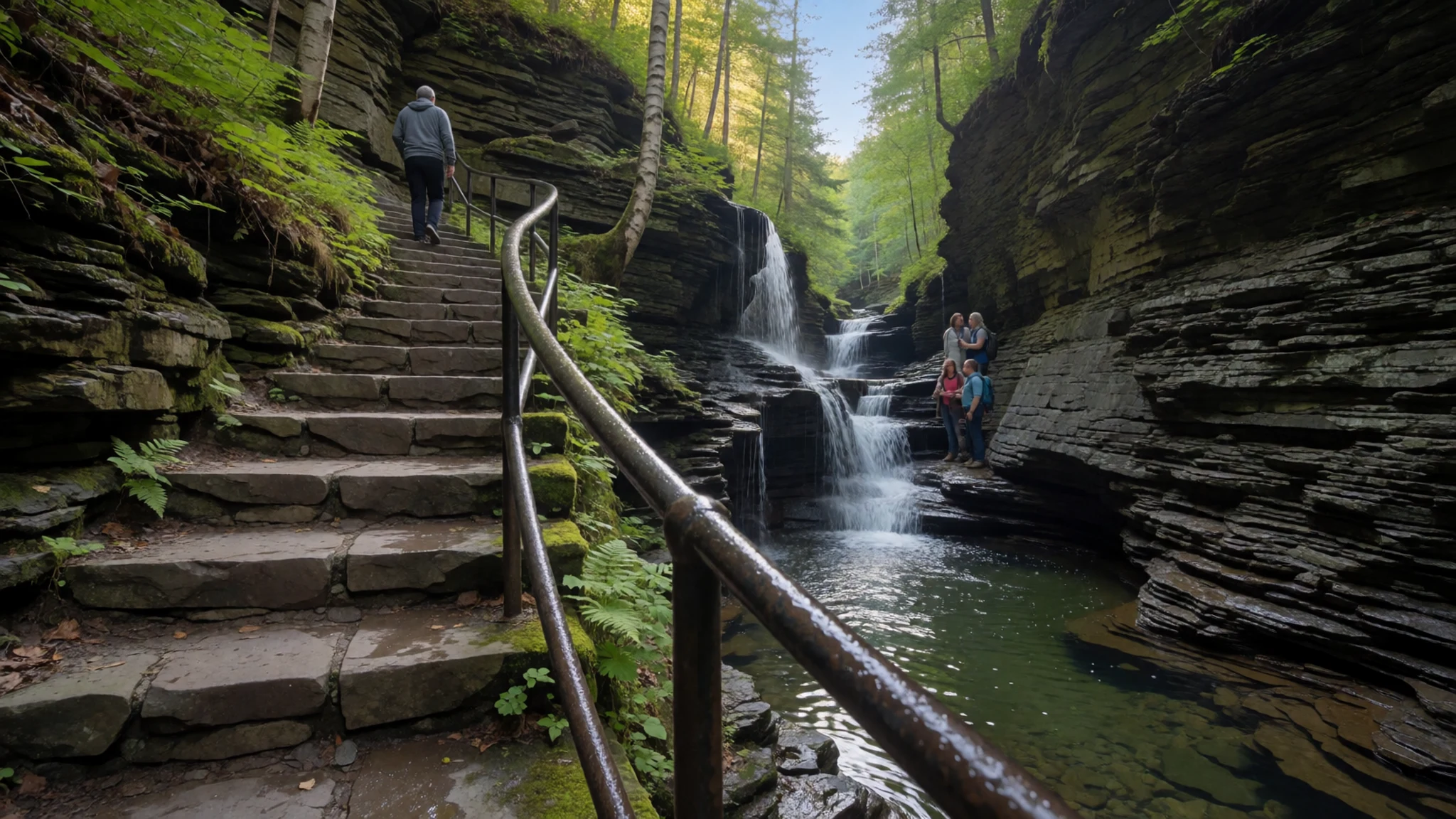
- Taughannock Falls State Park — West shore of Cayuga Lake, north of Ithaca
Taughannock Falls State Park lies on the western shore of Cayuga Lake, north of Ithaca. A stream drops over a cliff into a deep gorge, and a viewing area is reached on a fairly easy walk. It works as a half-day stop, with picnic spots nearby and the lake close at hand.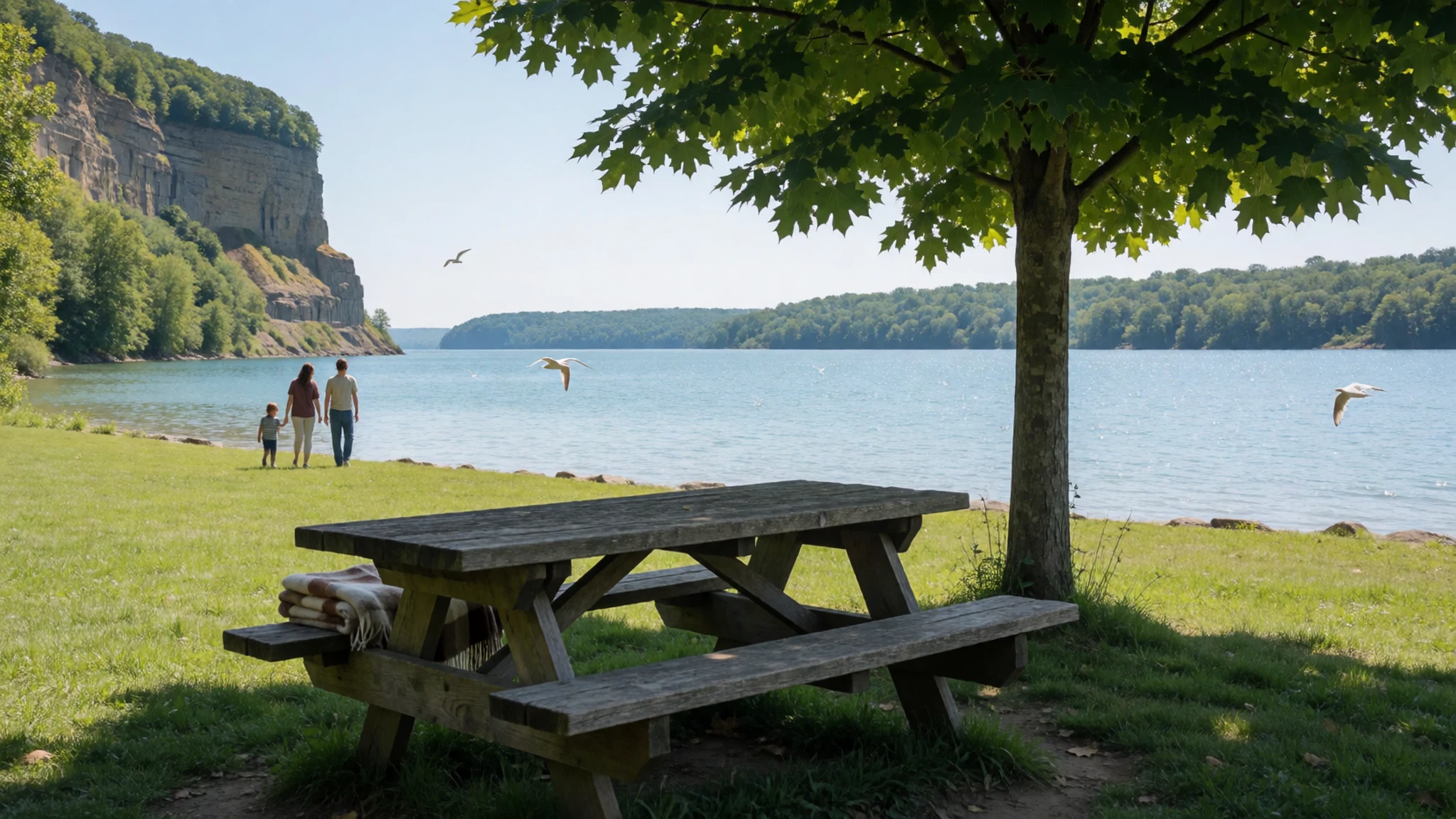
- Geneva and Seneca Lake — Geneva, north end of Seneca Lake
Geneva sits at the northern end of Seneca Lake, the largest of the lakes by area. A lakeside walk, older streets and a cluster of wineries along either shore make it a practical base. The water is deep and often looks a dark blue-grey, especially on overcast days.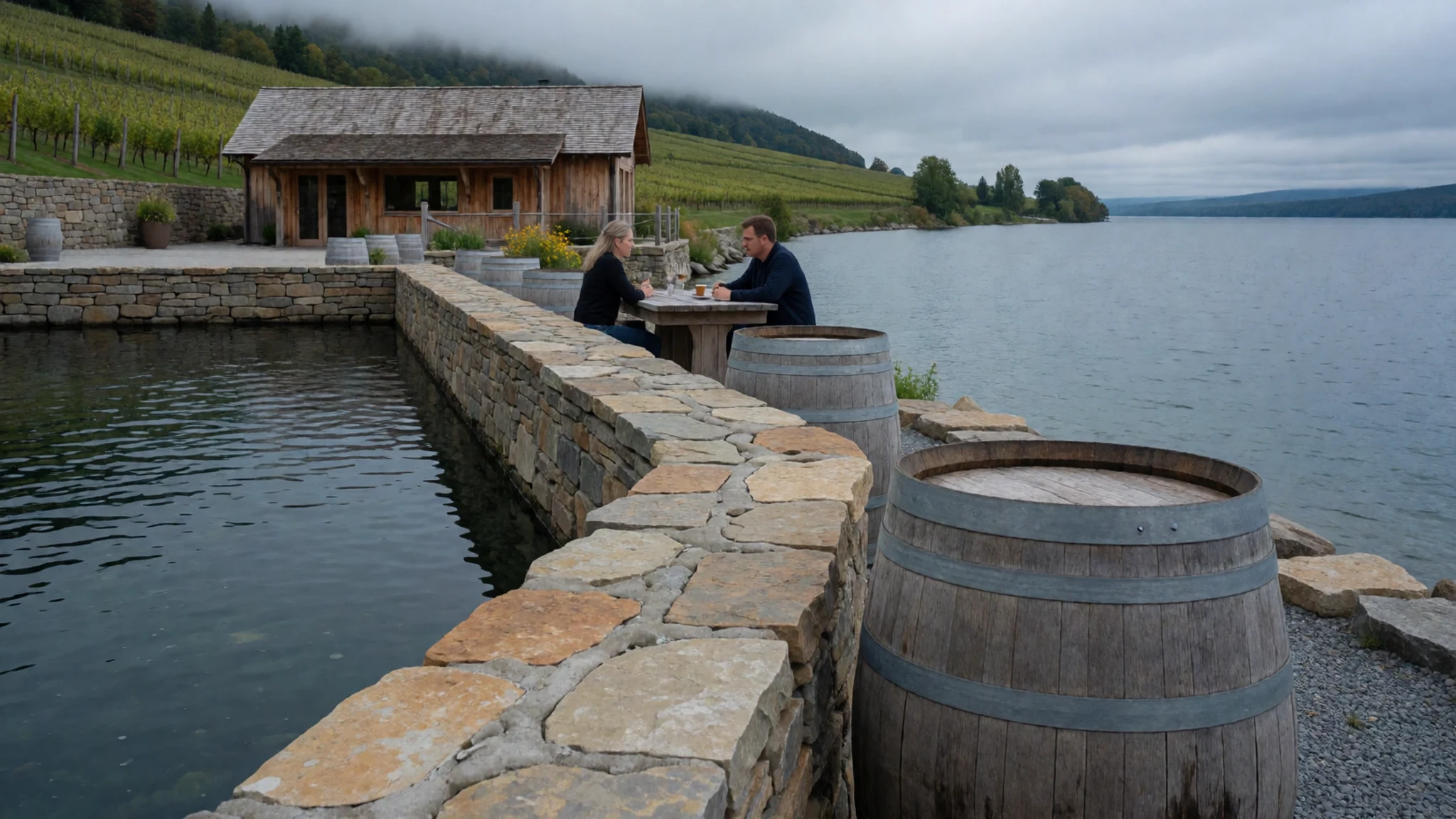
- Skaneateles — Skaneateles, northern end of Skaneateles Lake
Skaneateles is a small village on the northern end of its lake, with a compact centre of shops and cafés running down to the shore. The local historical society, based in the Creamery, covers the area's past. The village also hosts a wooden boat show, a chamber music festival and a Dickens-themed Christmas.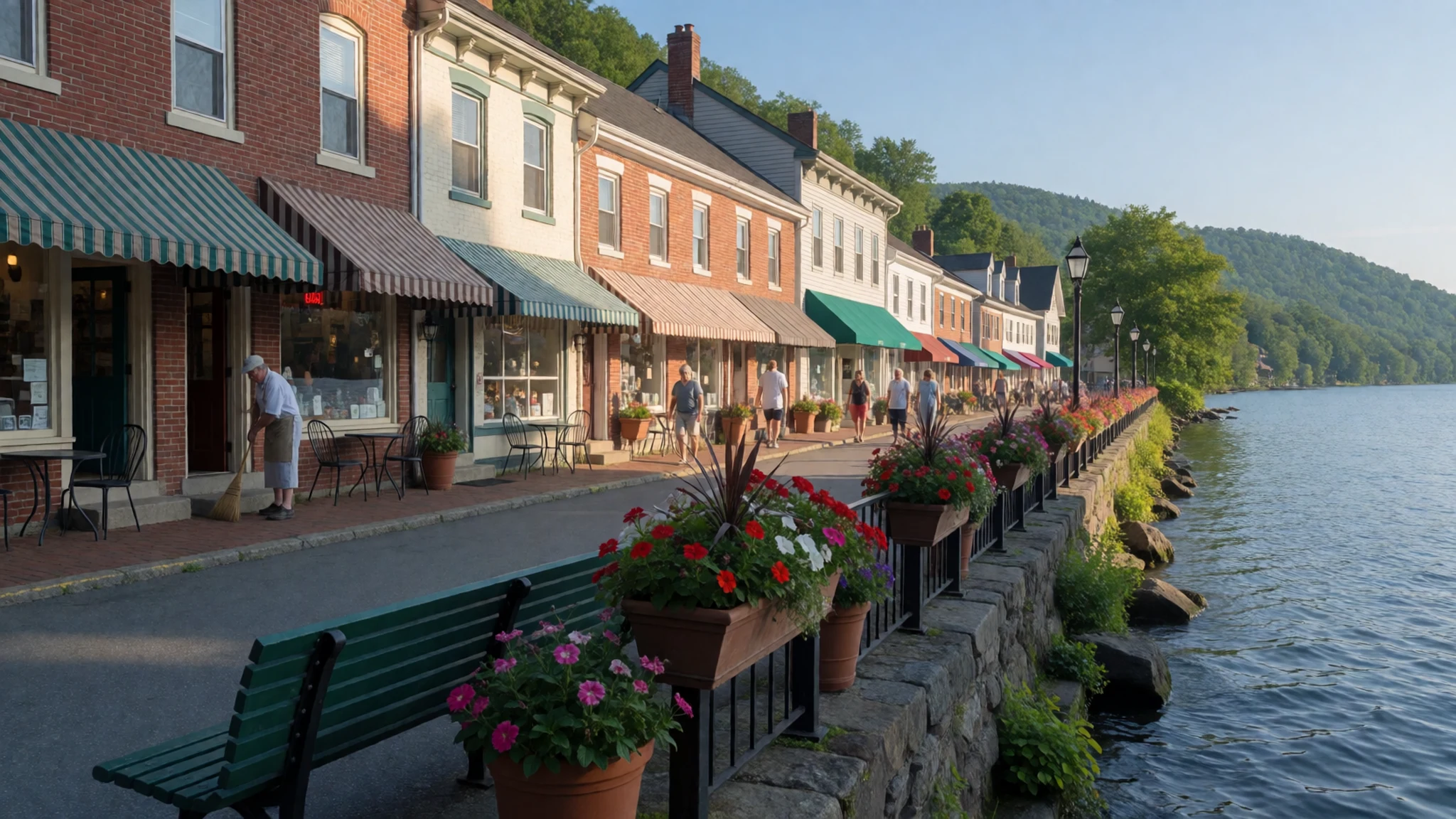
- Ithaca and Cayuga Lake — Ithaca, south end of Cayuga Lake
Ithaca, at the southern tip of Cayuga Lake, is a university town and home to Cornell. Students, bookshops, markets and nearby gorges give it a livelier feel than the quieter lake villages. The view over the lake from the Johnson Museum of Art, on the Cornell campus, is worth the climb.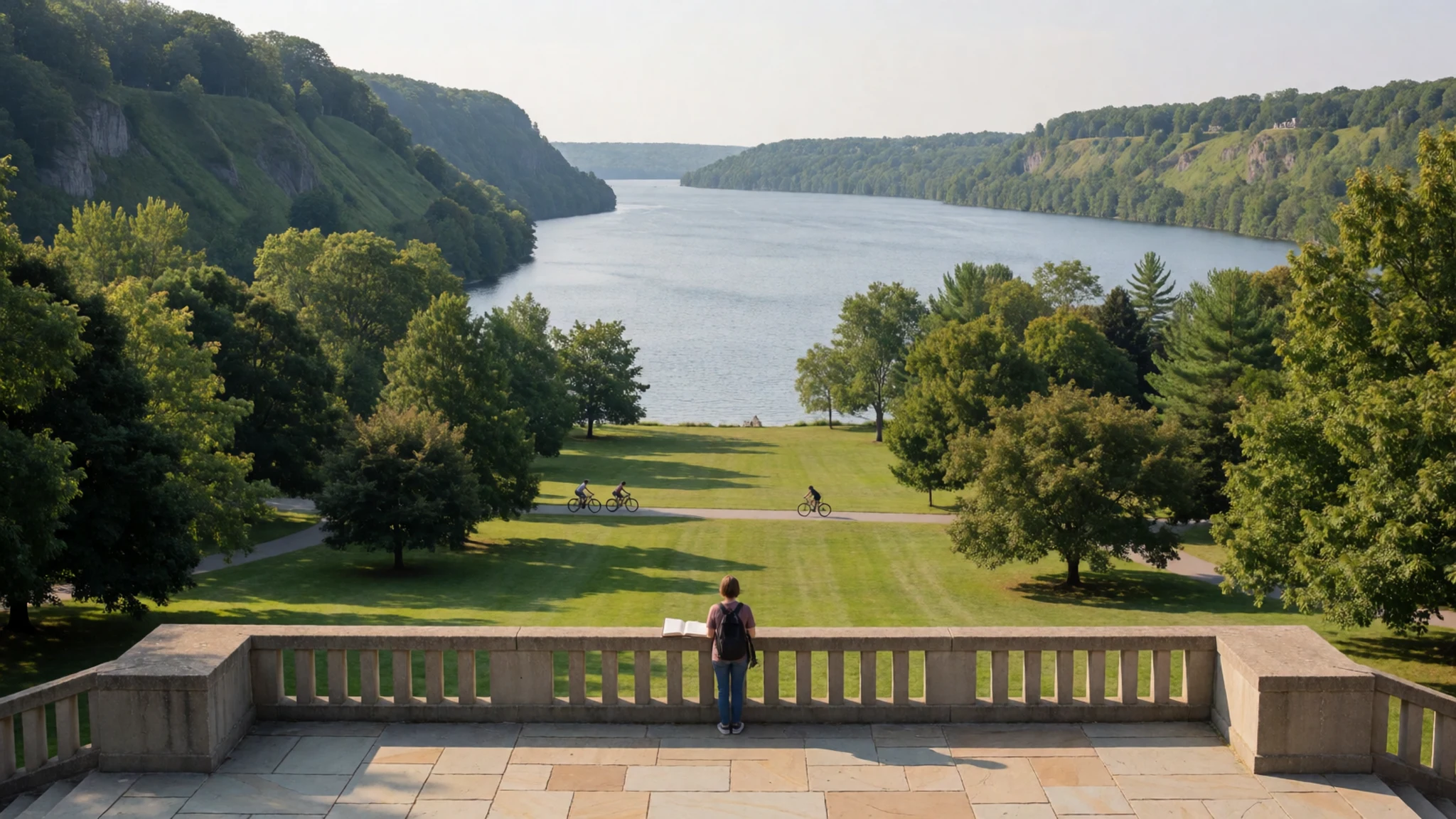
- Seneca Falls — Seneca Falls, between Cayuga and Seneca lakes
Seneca Falls, between the northern ends of Cayuga and Seneca lakes, is home to the National Women's Hall of Fame. It makes a good wet-weather stop and fits easily into a drive along the lake roads. Check the official site for current opening arrangements before making the trip.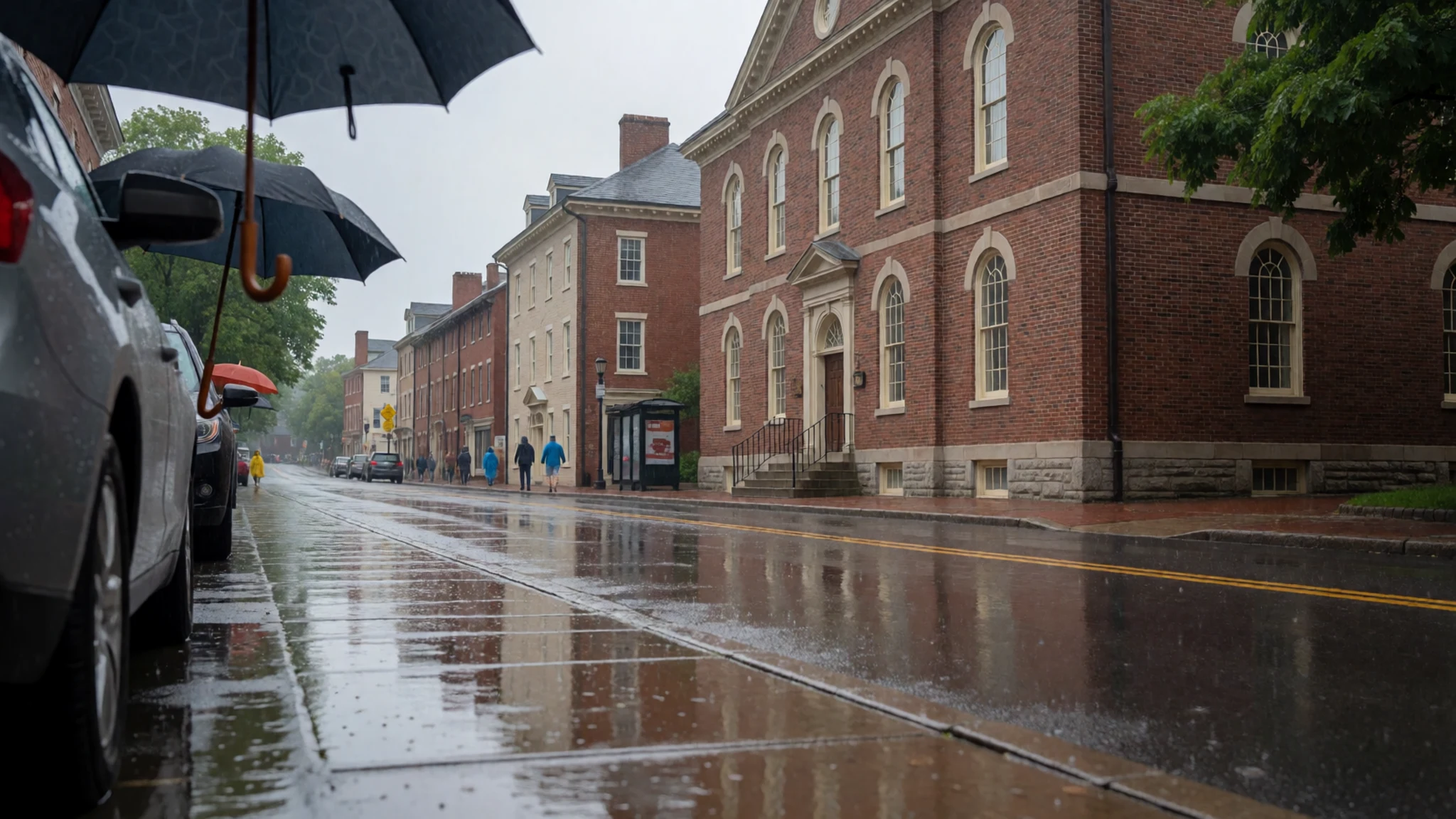
Culture
The Finger Lakes carry several layers of culture. The oldest is Haudenosaunee, whose nations gave the two largest lakes their names and whose heritage remains part of the region's identity through museums, historic sites and living communities. Later German and English settlers shaped the farming and the food, and small-town life still revolves around farm stands, church suppers and county fairs. Wine is now a large part of the region's image, with tasting rooms on the slopes above the lakes, alongside cider and craft beer. Ithaca's university brings bookshops, live music and local-food markets, even to smaller places. Summer festivals add music, dance and the arts, among them the Finger Lakes GrassRoots Festival of Music and Dance. Craftspeople are part of the picture too: the Rochester Folk Art Guild, a few miles from Canandaigua Lake, runs workshops in ceramics, woodworking, sewing and weaving. Seneca Falls, with its National Women's Hall of Fame, is a nod to the region's role in women's history. Visitors tend to notice a relaxed rural friendliness, but also quiet. Villages empty early in the evening, and many small museums and farm stands keep reduced hours outside summer and harvest. Check opening arrangements before driving out to anything small. At wineries and tasting rooms, nominate a driver or book a tour, because the lake roads are long, dark at night and patrolled for drink-driving.
What to wear
Finger Lakes fashion begins with the Haudenosaunee, whose nations gave the region its heritage. Traditional dress was historically made from deerskin, later joined by cloth, ribbon and beadwork. Ribbon shirts and ribbon skirts, trimmed with bands of bright colour, and the feathered gustoweh cap are worn at ceremonies, dances and community gatherings rather than every day. They belong to living communities and are not costume. Everyday clothing across the region today is practical and casual: jeans, flannel shirts, fleece, rain jackets and sturdy boots, with university sweatshirts common around Ithaca. Wineries and lakeside restaurants are relaxed, and smart-casual is plenty even in Geneva or Rochester, where fine dining is found. A visitor should dress for weather and terrain rather than occasion. In summer, bring light cotton, a sun hat and swimwear for the beaches, plus a layer for cooler evenings by the water. Gorge paths are wet and include stone steps, so shoes with a good grip matter more than looks, and open sandals are a poor choice. Spring and autumn call for a waterproof jacket. Winter needs a proper coat, hat, gloves and boots, since heavy snowfalls are possible. There are no religious dress codes for visitors at the main sights, but swimwear is for the beach, not for shops and restaurants.
What to eat
- Apples and fresh cider — Orchards and farm stands, especially in Wayne County, in autumn
Apples are the Finger Lakes' signature crop, especially in Wayne County. Many farms offer U-Pick days in autumn, and others sell fruit, cider and baked goods straight from the farm stand. Harvest season is busy, so go early for the best choice.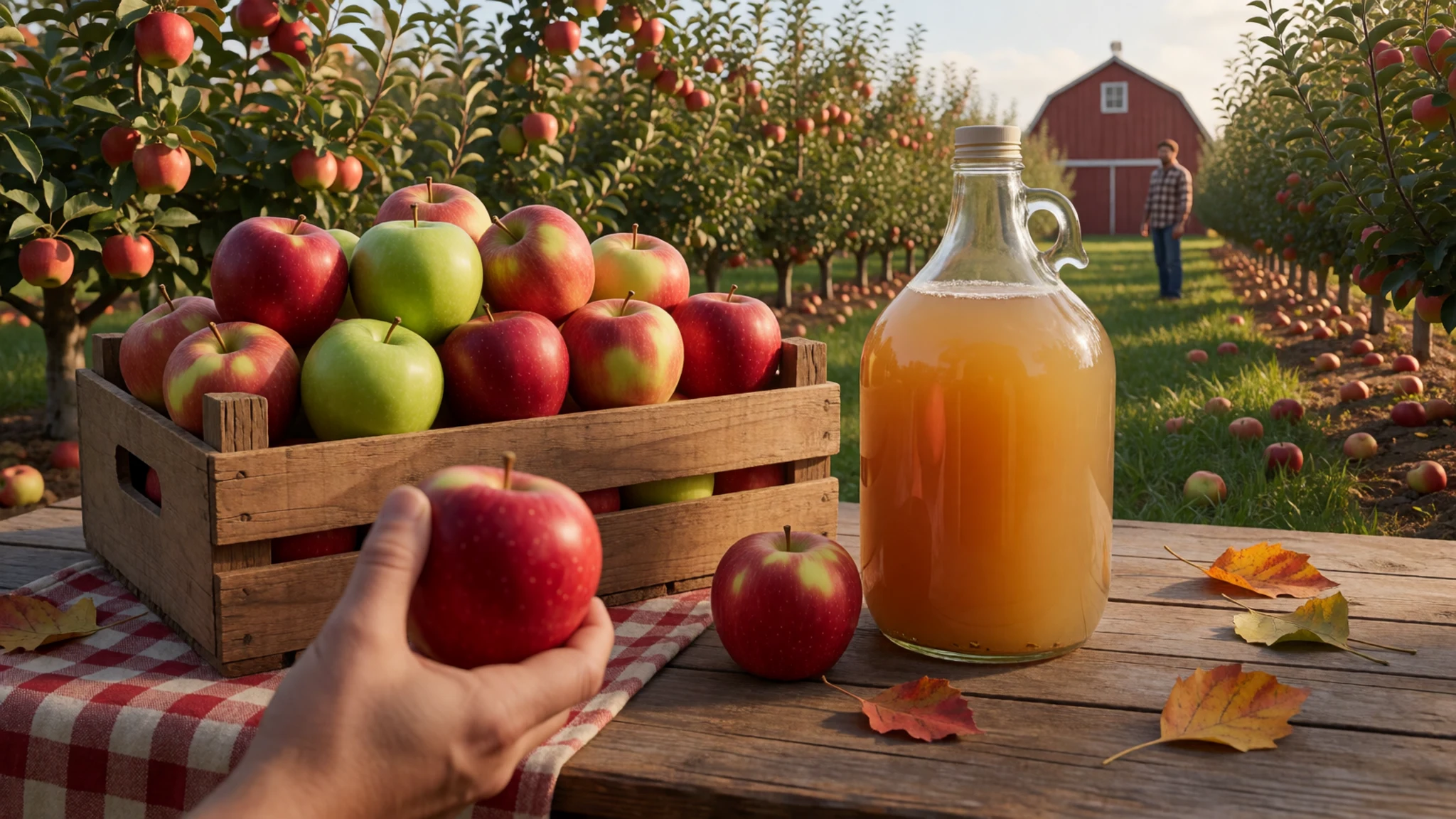
- Sweet corn — Farm stands and farm markets in late summer
Sweet corn, called maize in many other places, is a summer staple here. It is eaten fresh from the cob, usually boiled or grilled and buttered. The best is sold the day it is picked, so look for roadside stands.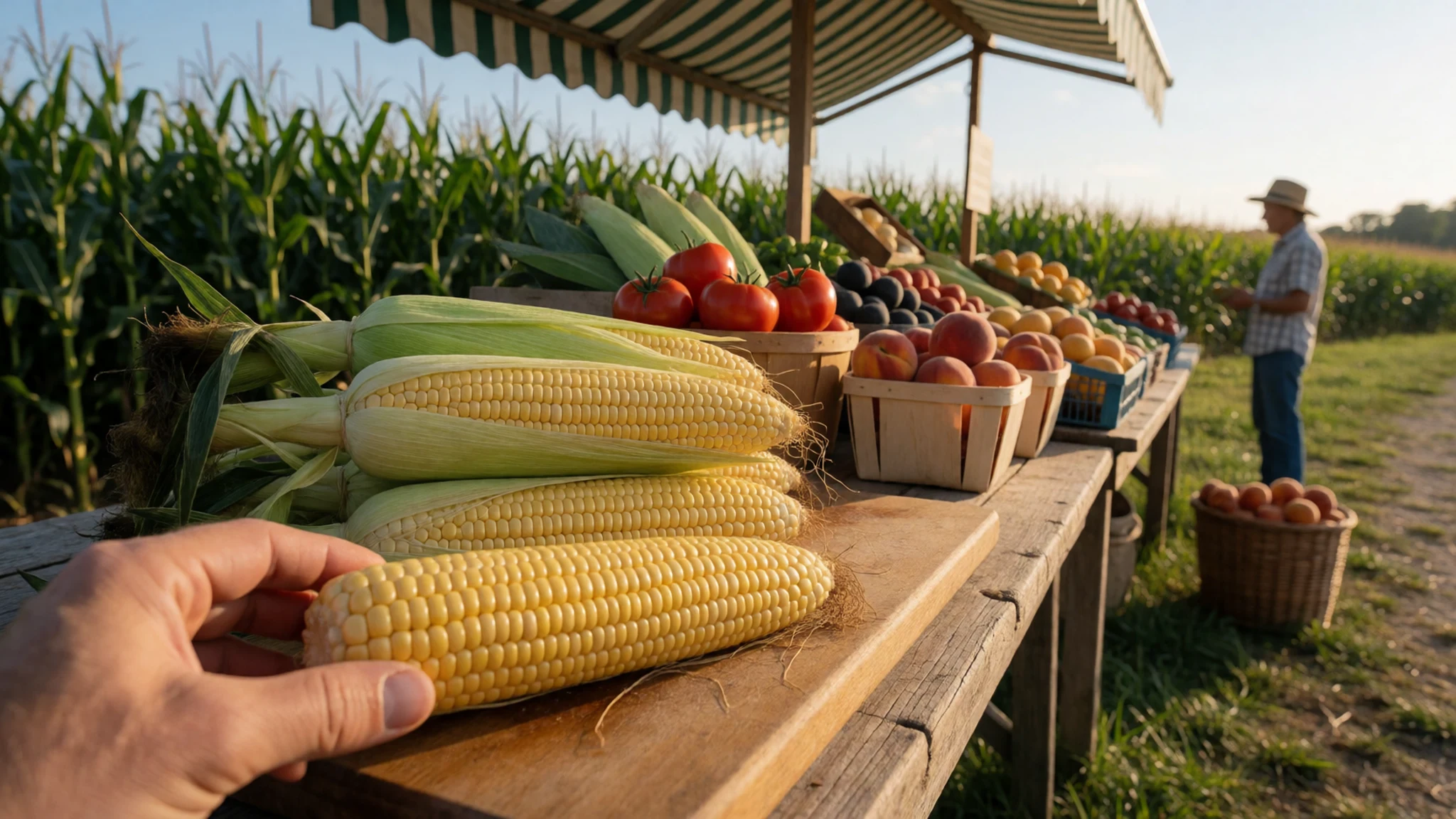
- Maple syrup — Farm markets and farm shops across the region
Maple syrup is a common local product, sold in jars and tins, and used on pancakes and in baking. Farm markets are the best place to buy it, and many sugar-making farms also sell maple sweets and cream. - Finger Lakes wine — Tasting rooms along the Seneca, Cayuga and Keuka shores
Wine is made on the slopes above several of the lakes, with cool-climate whites such as Riesling among the well-known styles. Tasting rooms pour small samples, and many have views over the water. Cider and craft beer are also widely available. - Hearty meat-and-grain plates — Village pubs, diners and family restaurants in the small towns
Local cooking reflects German and English settlers, so expect substantial plates of roast or grilled meat with potatoes, breads and grains. It is plain, filling food, often made with produce from nearby farms. Fine dining is concentrated in Rochester and Geneva.
Plan it
Best time. June to early October. Summer is warm enough for lake days, boat trips and festivals, while September and October bring the apple harvest and autumn colour on the hills. Winter can bring heavy snowfall, which slows the roads and shuts some attractions.
How long. 3–4
Getting there. Fly into Rochester, which has the region's only full international airport, or into nearby Syracuse; most flights connect through large American hubs rather than arriving direct from abroad. Ithaca has a small airport, but its customs facilities are used only for charter flights. Buses and trains also reach Syracuse and Rochester. For the last leg, hire a car: the New York State Thruway runs just north of the lakes, and the region is a few hours from New York City by road or bus.
Budget. mid
Tips
- Hire a car, since public transport between the lakes is limited and distances are longer than they look on a map
- Visit gorge parks early on weekday mornings in summer, when paths are quieter and less slippery
- Book lodging early for autumn weekends and for dates around summer festivals
- Check state park and attraction websites for trail closures and seasonal opening before driving out
- Carry a card, but keep some cash for farm stands and small markets
Etiquette
- Name a designated driver or book a winery tour before any tasting day
- Stay on marked gorge paths and obey signs on swimming and fences
- Ask before photographing people at Haudenosaunee community events or ceremonies
Nearby
Sources
- Wikidata Q1416994 (CC0)
- Wikipedia: Finger Lakes (rev 1386625581) (CC BY-SA 4.0)
- Wikivoyage: Finger Lakes (rev 5301372) (CC BY-SA 4.0)
- Photo: New York's Finger Lakes (NASA) (Public domain)
- Photo: Seneca Lake, Geneva (RochesterNY) (Public domain)
- Photo: Bluff Point (Peter2212) (Public domain)
- Photo: Granger Homestead (VisitFingerLakes) (CC BY 3.0)
- Photo: Canadice Lake in the Finger Lakes (VisitFingerLakes) (CC BY 3.0)
- Photo: Finger Lakes Hemlock Lake (VisitFingerLakes) (CC BY 3.0)
- Photo: Sunrise overlooking a vineyard in the Finger Lakes (Visit Finger Lakes) (CC BY 2.5)
- Photo: Ithaca, NY 02 (LBM1948) (CC BY-SA 4.0)


