Fallingwater
Fallingwater, United States
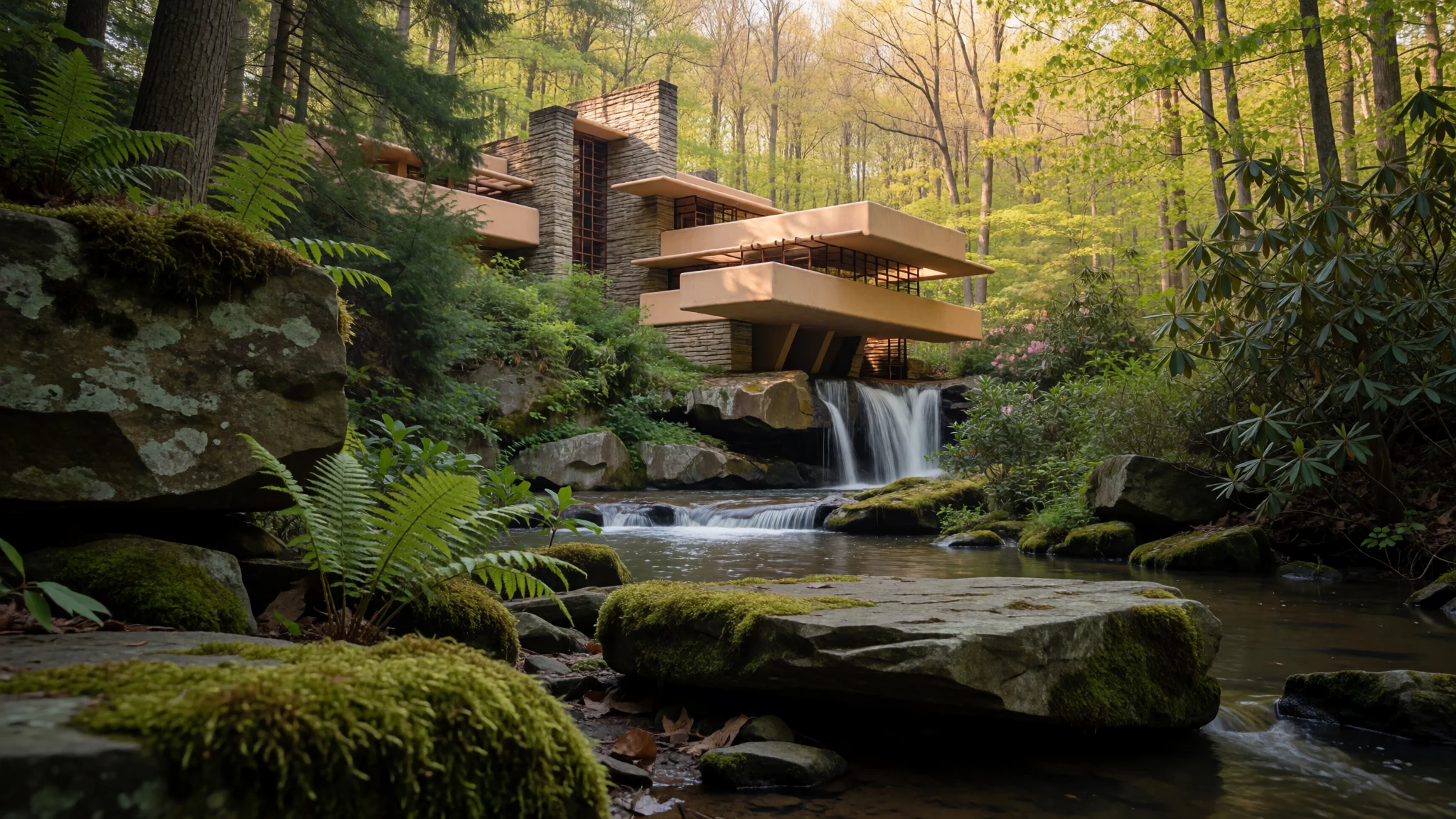
Fallingwater is a house built over a waterfall in the Pennsylvania woods, and it shows how architecture can grow out of a place.
The place
Fallingwater stands in the Laurel Highlands of south-western Pennsylvania, a forested ridge country of hills, streams and small towns southeast of Pittsburgh. It began as a weekend retreat and is now a museum. The house sits directly over a small waterfall on Bear Run rather than facing it from a distance. That choice is the whole idea: the house is built over the falls, and the sound of the water carries through the rooms.
Frank Lloyd Wright designed it for the Kaufmann family, who owned a Pittsburgh department store. Stone quarried nearby forms the chimney and the vertical masses, while reinforced concrete carries the broad horizontal terraces that reach out into the air. Steel and large panes of glass complete the structure, so the interior feels open to the trees. Three floors hold the living room, kitchen, four bedrooms (one used as a study) and outdoor terraces at several levels.
The Western Pennsylvania Conservancy looks after the house and the woodland around it, and the grounds are as much a part of the visit as the building. Paths wind through rhododendron and hardwood forest, and the clearest views of the house come from below, looking up at the stacked terraces over the stream. It is a quiet, rural spot with no town at its door, so a visit is planned around a tour slot rather than dropped into a day of wandering. Crowds build in summer and again in autumn, when the leaves turn, and timed tickets matter.
Its story
Fallingwater began as a modest idea. Edgar Kaufmann Sr. had set up a summer camp at Bear Run for his store's employees by 1916, but when the staff lost interest the family bought the land in July 1933 and made it their own country place. In 1934 they asked Wright to design a house there.
Everyone expected a house that looked at the falls. Wright put it over them. Construction ran into trouble: concrete cracked and the terraces began to sag, faults that would trouble the building for decades. The records give 1936 as the founding year, and the Kaufmanns began using the house in 1937. Wright then designed a guest wing, finished in 1939.
Edgar Kaufmann Jr. went on using the house after his parents died. In 1963 the Western Pennsylvania Conservancy took over the property, and public tours began in July 1964. A visitor centre followed in 1979, so that arrivals, tickets and car parking could be handled away from the house itself. Sagging terraces and poor drainage later called for a serious repair campaign, and the structure had to be stabilised so the cantilevers would not droop further.
That history of repair is now part of the story. A house made as an act of daring is also a house that needs constant care, and the museum treats conservation as work done in plain view.
What to see
- The guided house tour — Fallingwater house, Stewart Township
The main way in is a guided walk through the rooms, where stone floors, built-in furniture and low ceilings frame glimpses of the stream. Tours are timed and can sell out, so reserve through the official site before travelling. Guides explain the structural troubles along with the design, which makes the whole building easier to understand.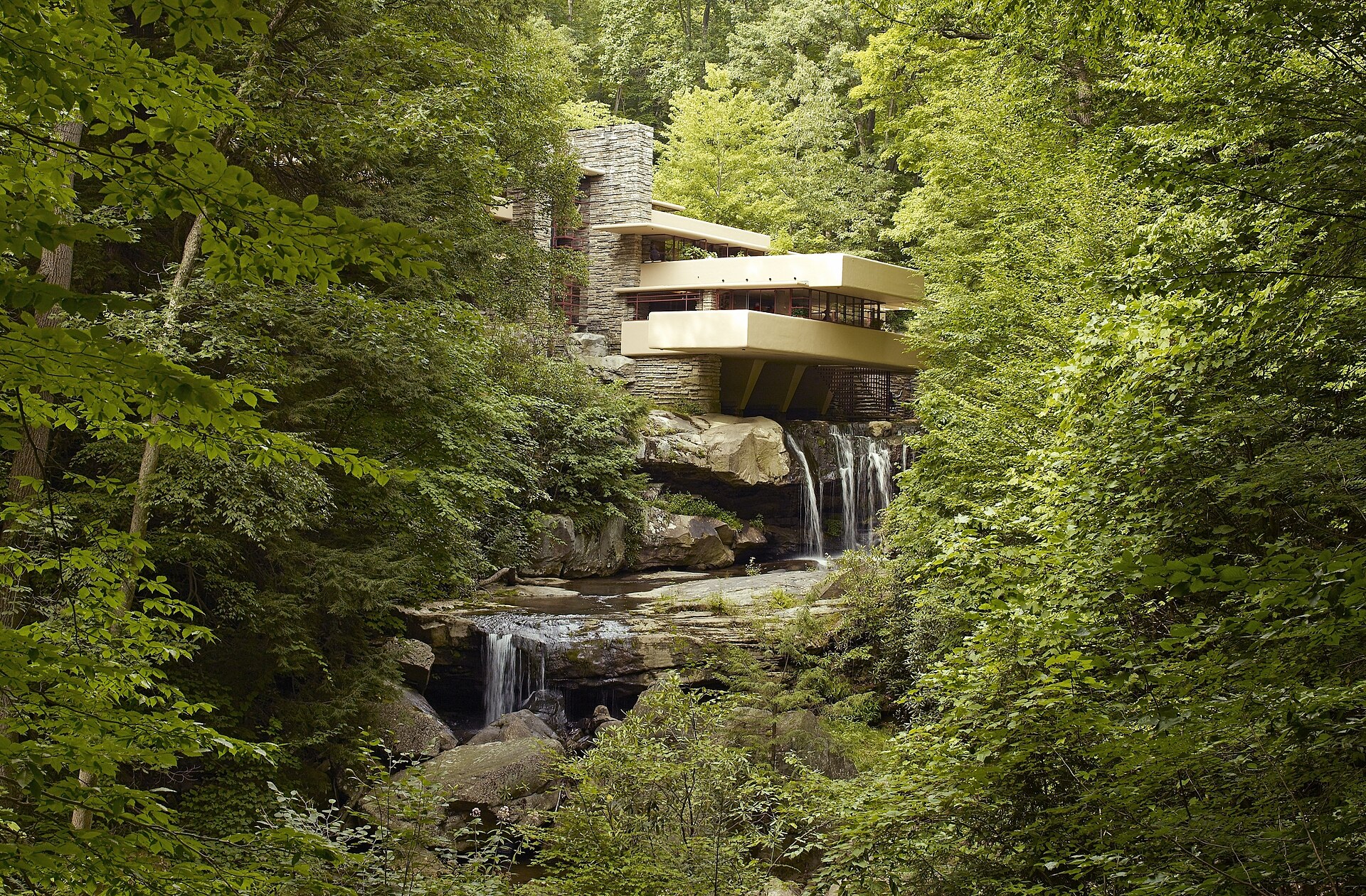
- The cantilevered terraces — Lower viewpoint on the path below the house
The terraces that project over the stream are anchored back into the stone chimney mass, with nothing holding up the far edge. From the lower viewpoint on the path they stack like trays above the water. The view explains why engineers once worried about sagging, and it is the classic photograph of the house.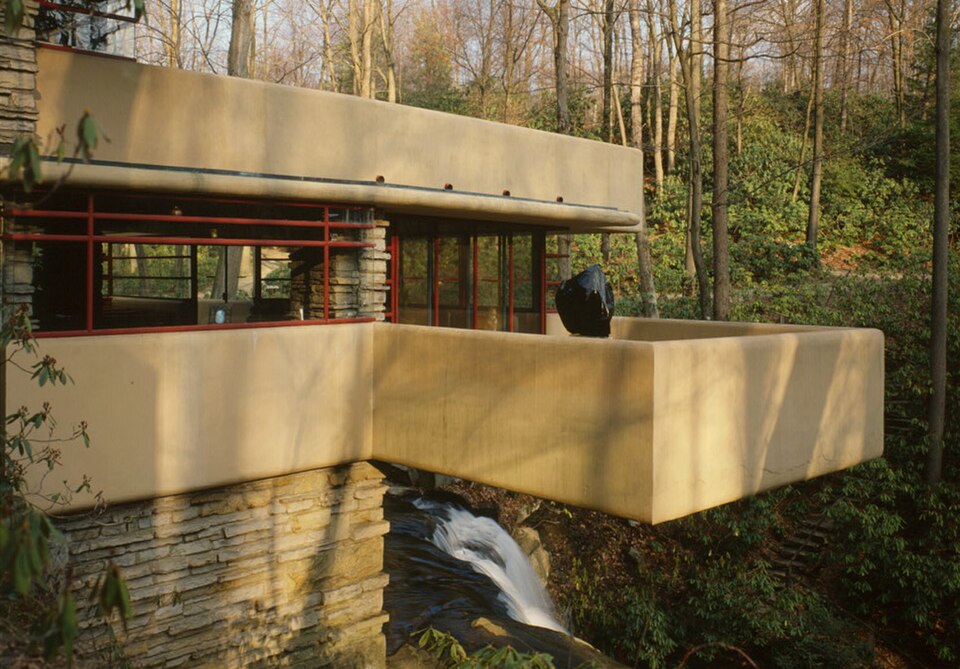
- The living room — First floor of the house
The living room is built around a rough stone hearth, with a stairway that drops from the room toward the water below. Corner windows meet without a post, and much of the furniture is original to the family. Interior photography rules differ from those outdoors, so ask the guide before taking out a camera.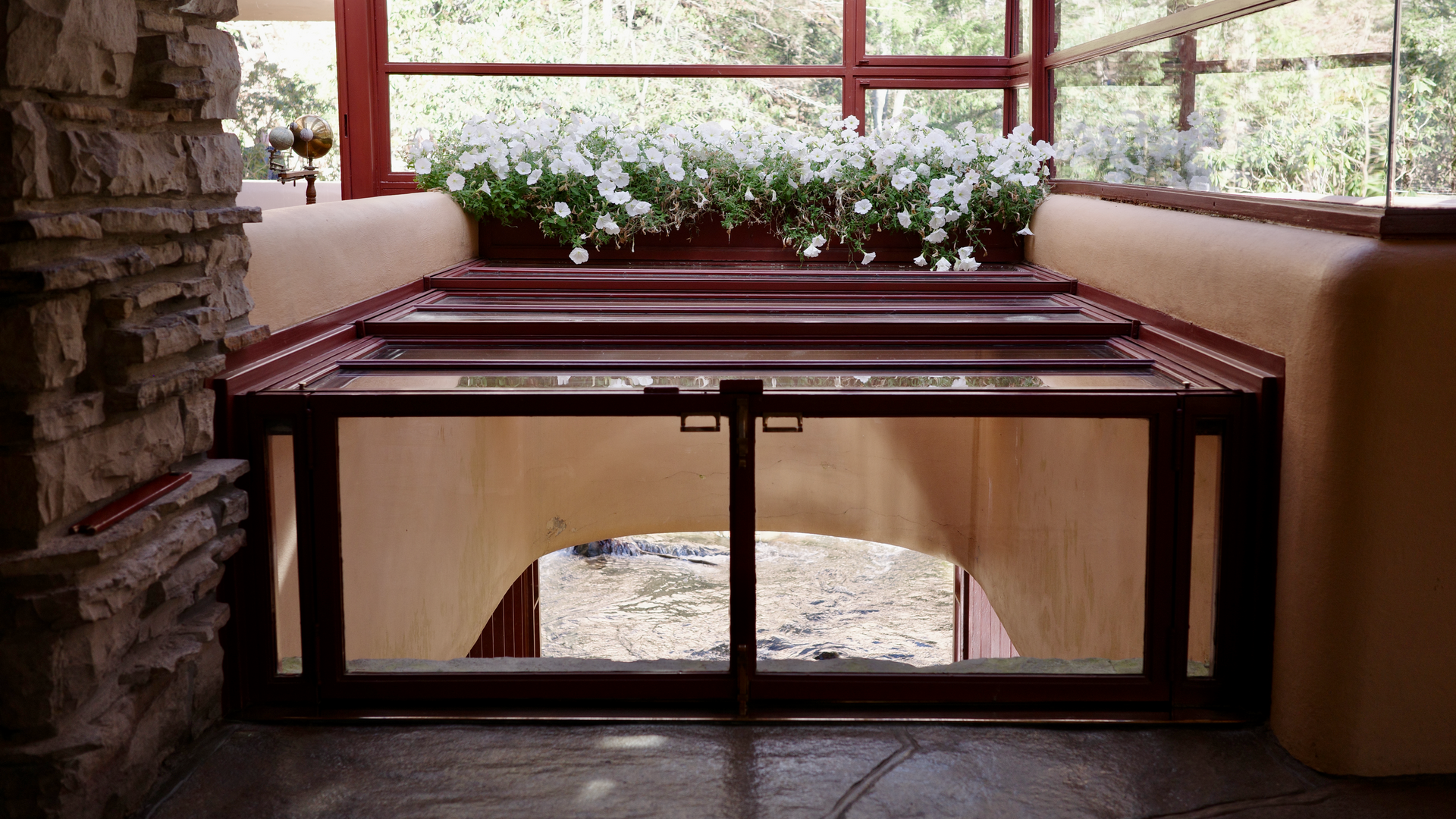
- Bear Run and the woodland paths — Grounds around the house
Trails around the house run through hardwood forest and rhododendron beside Bear Run. They show the setting Wright worked with, and they are a pleasant place to wait for a tour slot. Paths can be damp and slippery after rain, so footwear with some grip is sensible.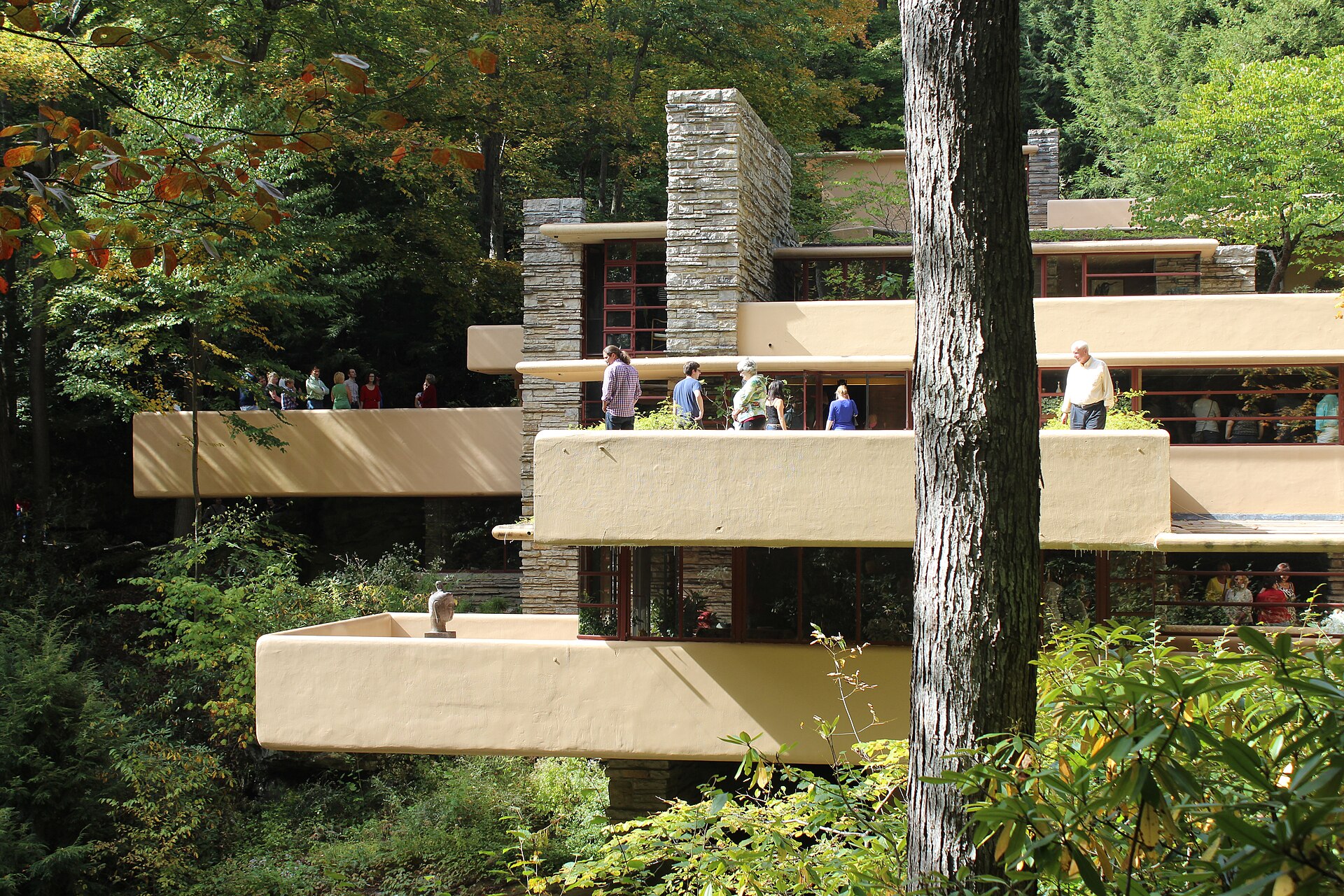
- The approach from the visitor centre — Entrance drive and visitor centre
The walk in is a short stroll along a curving drive through trees, and the house shows itself only gradually. Wright's habit of hiding the main view until the last moment is clear here. Allow time on arrival, since check-in and the walk both take longer than expected.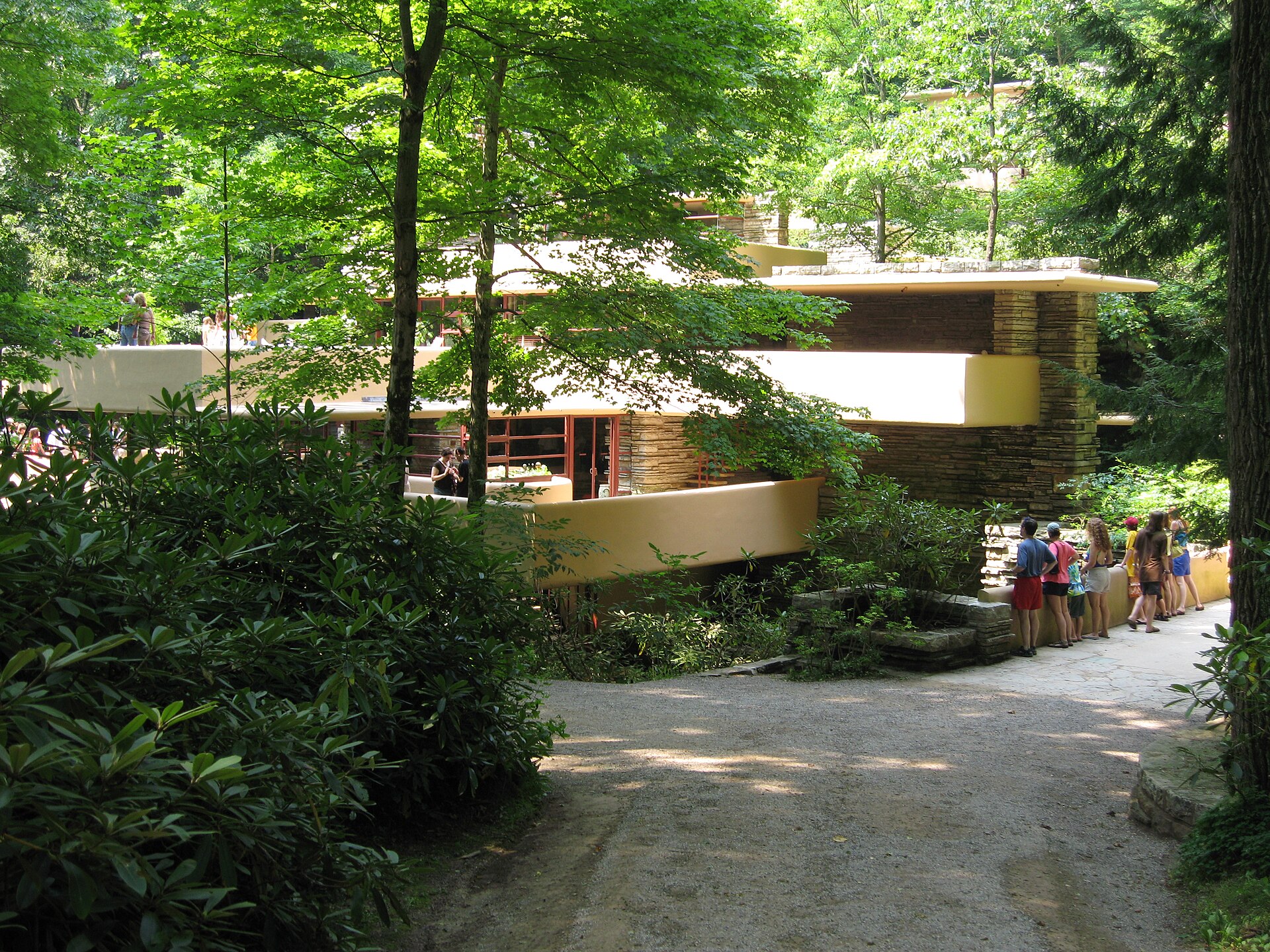
Culture
Fallingwater belongs to a particular American idea: that a home should grow out of its landscape instead of being set down on top of it. Wright called this approach organic architecture, and the house is a showpiece of it. It was made for a wealthy Pittsburgh family, from an era when industrial and retail fortunes paid for country escapes from a smoky city.
The Laurel Highlands around it are quieter and more rural than Pittsburgh, which is liberal in its politics and culture. Outside the big cities, attitudes vary widely between individuals, and many rural areas lean conservative. Visitors will mostly meet plain-spoken, friendly small-town hospitality, along with a local love of the outdoors: hunting and fishing seasons, whitewater rafting and hiking on the nearby rivers and ridges.
Today the house is run as a museum by a conservation charity, and a visit has a respectful, slightly hushed tone. Guides talk about the building both as a work of art and as an engineering problem, and questions are welcome. Local people tend to treat the house with affection rather than awe, as a neighbour that happens to be famous.
Stay with your guide throughout the tour, do not touch the walls, furniture or stonework, and check the official site for the current photography rules inside the house.
What to wear
Fallingwater sits in a part of the United States with no single national costume, so the traditional picture is regional. In parts of Pennsylvania, Amish and Mennonite communities still wear plain dress: dark wool and cotton, bonnets and caps for women, broad-brimmed hats for men, worn every day rather than for festivals. Older rural working clothes, such as denim, flannel and wool, grew out of farming, forestry and hunting.
What people wear now around the Laurel Highlands is casual and practical: jeans, fleeces, trainers or walking boots, and waterproof jackets with outdoor-brand logos. Pittsburgh is a little smarter in the evenings but rarely formal. Nobody dresses up for the house, and staff are used to visitors arriving from hiking and rafting.
For a visit, dress for the woods and the weather. Comfortable shoes with grip suit the stone steps, damp paths and uneven ground; avoid heels and smooth soles. Layers work best, since spring and autumn mornings can be cool and the house interior is not always warm. Carry a light rain jacket, sun protection and insect repellent in summer, and warm layers in colder months. There is no religious dress code, though large bags, tripods and umbrellas may be restricted indoors, so check the official site before travelling.
What to eat
- Primanti-style sandwich — Sandwich shops and bars in Pittsburgh
A Pittsburgh sandwich of hot meat, chips and vinegar coleslaw piled between slices of Italian bread. It is a hearty, messy lunch, and a good reward after a morning on foot. Look for it in sandwich shops and bars in Pittsburgh rather than near the house. - Hoagie — Corner delis and sandwich counters across Pennsylvania
A long bread roll filled with cold cuts, cheese, vegetables and dressing, called a hero or submarine sandwich elsewhere in the United States. It travels well, which makes it a practical picnic for the Laurel Highlands trails. - Cheesesteak — Sandwich shops and take-aways, strongest in Philadelphia
Chopped steak and melted cheese in a soft roll, with onions if wanted. It belongs to Philadelphia, on the other side of the state, but sandwich shops across Pennsylvania serve versions. Treat it as a comfort meal rather than a regional speciality here. - Shoofly pie and whoopie pie — Farm stands, bakeries and country markets
Two Pennsylvania Dutch sweets: shoofly pie is a molasses pie with a crumb topping, and whoopie pie is two soft cakes sandwiched with cream. Both are baked fresh by farm families and sold in small quantities, so they are worth hunting down. - Birch beer — Diners, roadside stands and village shops
A soft drink flavoured like root beer but sharper and more minty, long popular in Pennsylvania. It is sold in cans and bottles, and often on tap at old-fashioned diners and ice-cream stands. Try it cold on a warm afternoon after the tour.
Plan it
Best time. June and September. Spring brings fresh leaf and a lively stream, and autumn brings colour in the woods. Summer is green but busy and humid, and winter is cold, with visiting patterns that may change, so check the official site.
How long. 1–2
Getting there. Pittsburgh International Airport is the usual gateway, and a car is by far the easiest way to finish the trip, driving southeast through the Laurel Highlands to the visitor centre. Public transport is thin, so check the official site for any organised options.
Budget. mid
Tips
- Book a timed tour through fallingwater.org well before travelling, especially for weekends, summer and autumn colour
- Arrive early to park, check in and walk the grounds before the tour slot
- Bring layers, water and shoes with grip, as paths can be damp and the weather changes quickly
- Keep a second day or night nearby if you also want to hike or raft in the surrounding hills
Etiquette
- Stay with your guide and do not touch the walls, furniture or stonework
- Ask about the photography rules before using a camera inside the house
- Keep to the marked paths in the woodland, which the conservancy protects
Nearby
Sources
- Wikidata Q463179 (CC0)
- Wikipedia: Fallingwater (rev 1384488775) (CC BY-SA 4.0)
- Wikivoyage: Pennsylvania (rev 5385984) (CC BY-SA 4.0)
- Photo 01-fallingwater-2007.jpg, Carol M. Highsmith (Public domain)
- Photo 02-fallingwater3.jpg, lachrimae72 (CC0 1.0)
- Photo 03-usa-edcp-relief-location-map.png, Uwe Dedering (CC BY 3.0)
- Photo 04-falling-water-panoramio-1.jpg, R london (CC BY 3.0)
- Photo 05-fallingwater-ob-vac-pokoj-6.png, Sakul9 (CC BY-SA 4.0)
- Photo 06-fallingwatercantilever570320cv.jpg, Jack E Boucher, HABS (Public domain)
- Photo 07-fallingwater-20200718-2.jpg, fuzheado (CC BY-SA 2.0)
- Photo 08-fallingwaterpathway.jpg, Surfsupusa (Public domain)


