Door County
Door County, United States
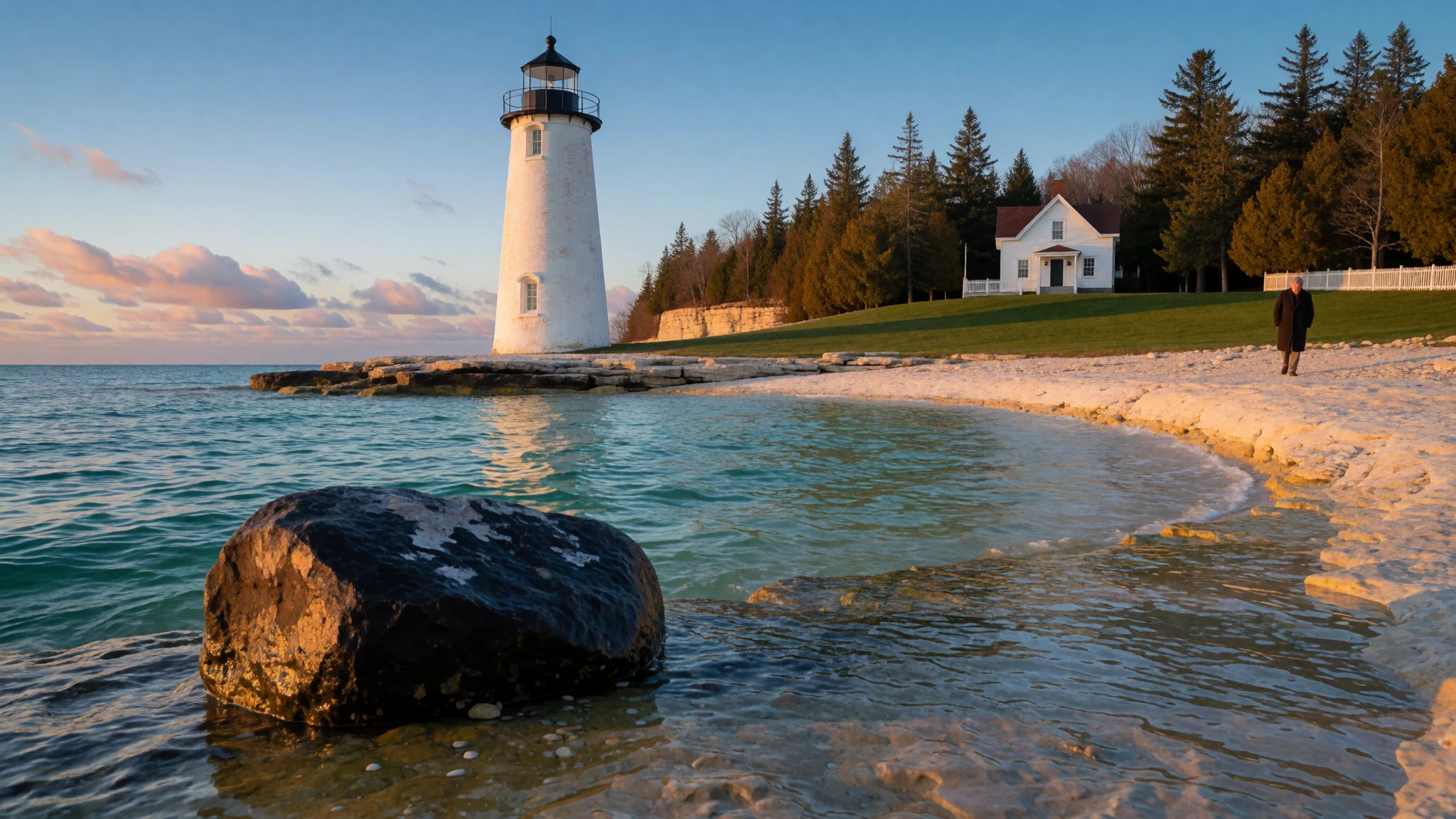
Door County is a long, wooded Lake Michigan peninsula of lighthouses, limestone coves, orchards and old harbour villages, built for slow summer and autumn days.
The place
Door County fills most of the Door Peninsula, the thumb of land that divides Green Bay from Lake Michigan in the far east of Wisconsin. About 30,066 people live there, a modest number for a county that draws holidaymakers in large numbers, mostly from Chicago, Milwaukee, Madison and the Minneapolis–Saint Paul area. Sturgeon Bay is the county seat and the main working town. The villages further north, such as Fish Creek and Ephraim, are where most of the visiting happens. The county's total area is about 6,100 km², but roughly four-fifths of that is water, which explains why the place feels defined by its edges: some 480 km of shoreline, with coves, bluffs, small harbours and offshore islands. The nickname 'Cape Cod of the Midwest' is often used for the mix of galleries, lighthouses, summer cottages and fruit farms, though the setting is its own, with limestone shores, cedar and hemlock woods, and orchards running down towards the water. Tourism carries much of the local economy, so summer weekends and the autumn colour season bring heavy traffic and full lodgings, while winter is quiet and many seasonal businesses close. Six state parks, several wildlife areas and a scatter of free natural areas leave plenty of room to escape the crowds for anyone willing to walk a little way from the car.
Its story
Door County takes its name from Porte des Morts, French for 'Death's Door', the dangerous passage between the tip of the peninsula and Washington Island. The name comes from older tales that early French explorers heard, about a failed raid by the Ho-Chunk on the Potawatomi who held the island. The writer Hjalmar Holand later retold the story in a much embroidered form, so how much of it is history is hard to say. What is certain is that the strait's shoals and currents have wrecked ships, and the name stuck to that reputation. The earliest written mention of the legend is by the French traveller Emmanuel Crespel, who called the peninsula Cap à la Mort in 1728. Settlement followed in the nineteenth century, as mariners, fishermen, loggers and farmers arrived. Increase Claflin is recorded as the first white settler. The county was split off from Brown County in 1851 and fully organised in 1861. Moravians founded Ephraim in 1853 under Nils Otto Tank, who had fallen out with the religious colony near Green Bay over land ownership. A year later, a community of African-American worshippers was described at West Harbour on Washington Island, and the island also gained the county's first postal service that same year. Indigenous nations, French travellers, Moravian settlers and lake sailors all left marks that still show in place names and church steeples.
What to see
- Cana Island Lighthouse — Northern Lake Michigan shore
Cana Island Lighthouse stands on the Lake Michigan side of the peninsula and gives a wide view over open water. Reaching the top means climbing 97 steps, so it suits anyone comfortable with a narrow spiral. Check the official county site for opening and access arrangements before driving up, as these change with the season.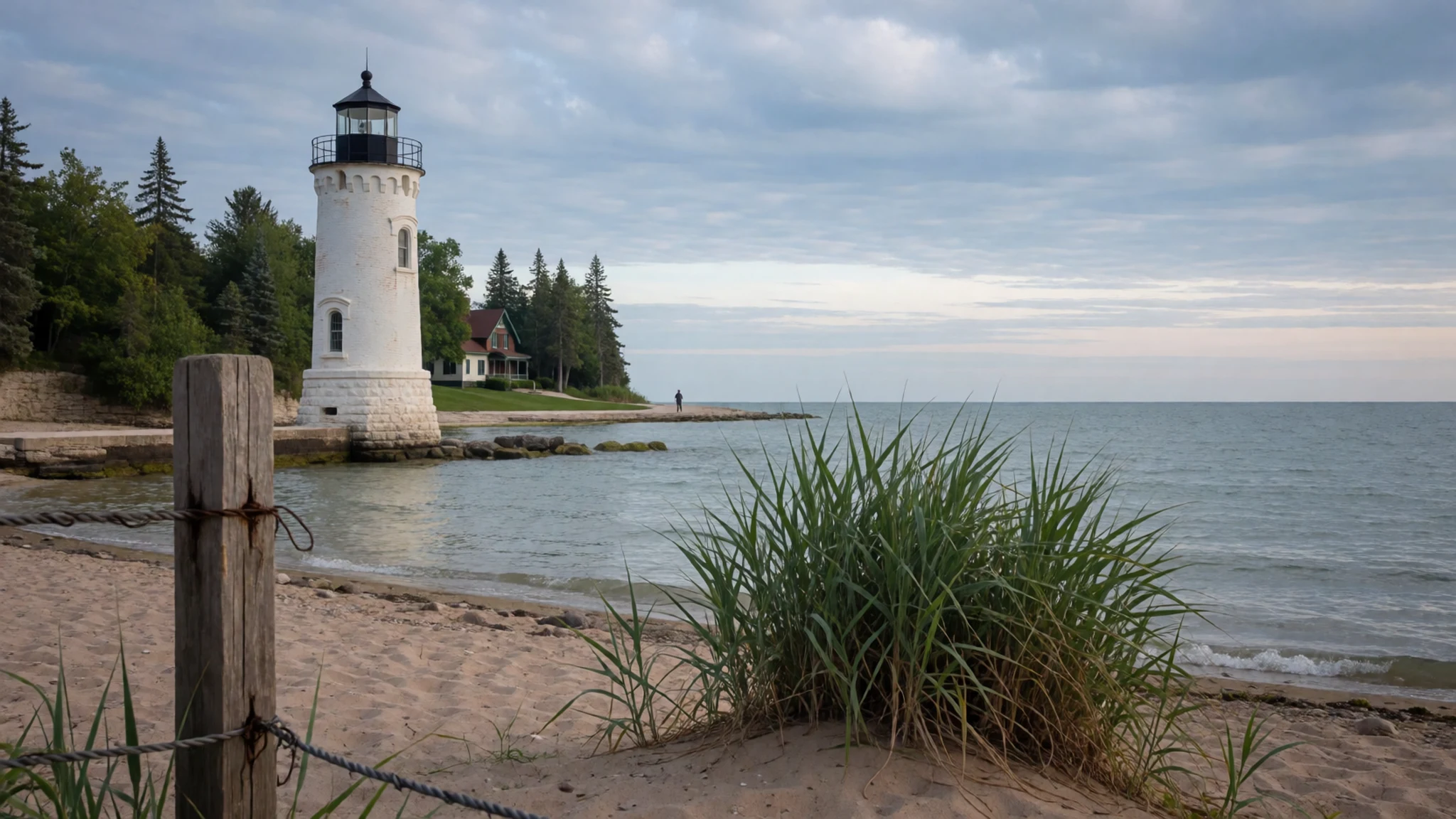
- Cave Point County Park — Near Jacksonport
Cave Point County Park is a small park near Jacksonport, wrapped by the much larger Whitefish Dunes State Park. Its draw is the rocky Lake Michigan shore, where waves have cut cave-like coves into the limestone. Rough weather makes the water dramatic, but also makes the slick rock edges worth keeping well clear of.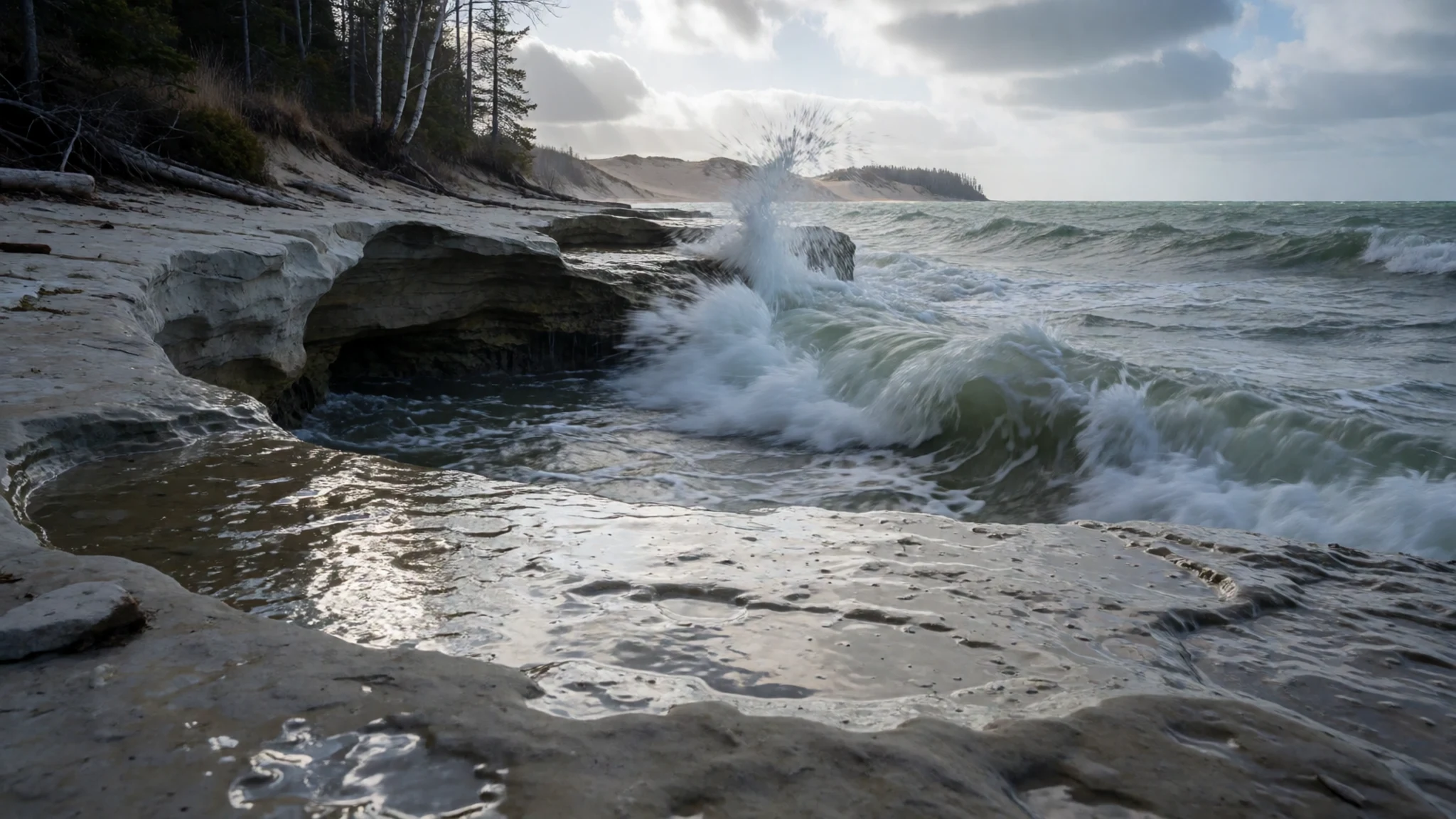
- Peninsula State Park — Near Fish Creek
Peninsula State Park juts into Green Bay near Fish Creek and is the third largest state park in Wisconsin. Woodland trails, shoreline paths and campsites fill it, and the Hemlock Trail passes a small pioneer cemetery. It is a good place to spend a full day on foot or by bicycle.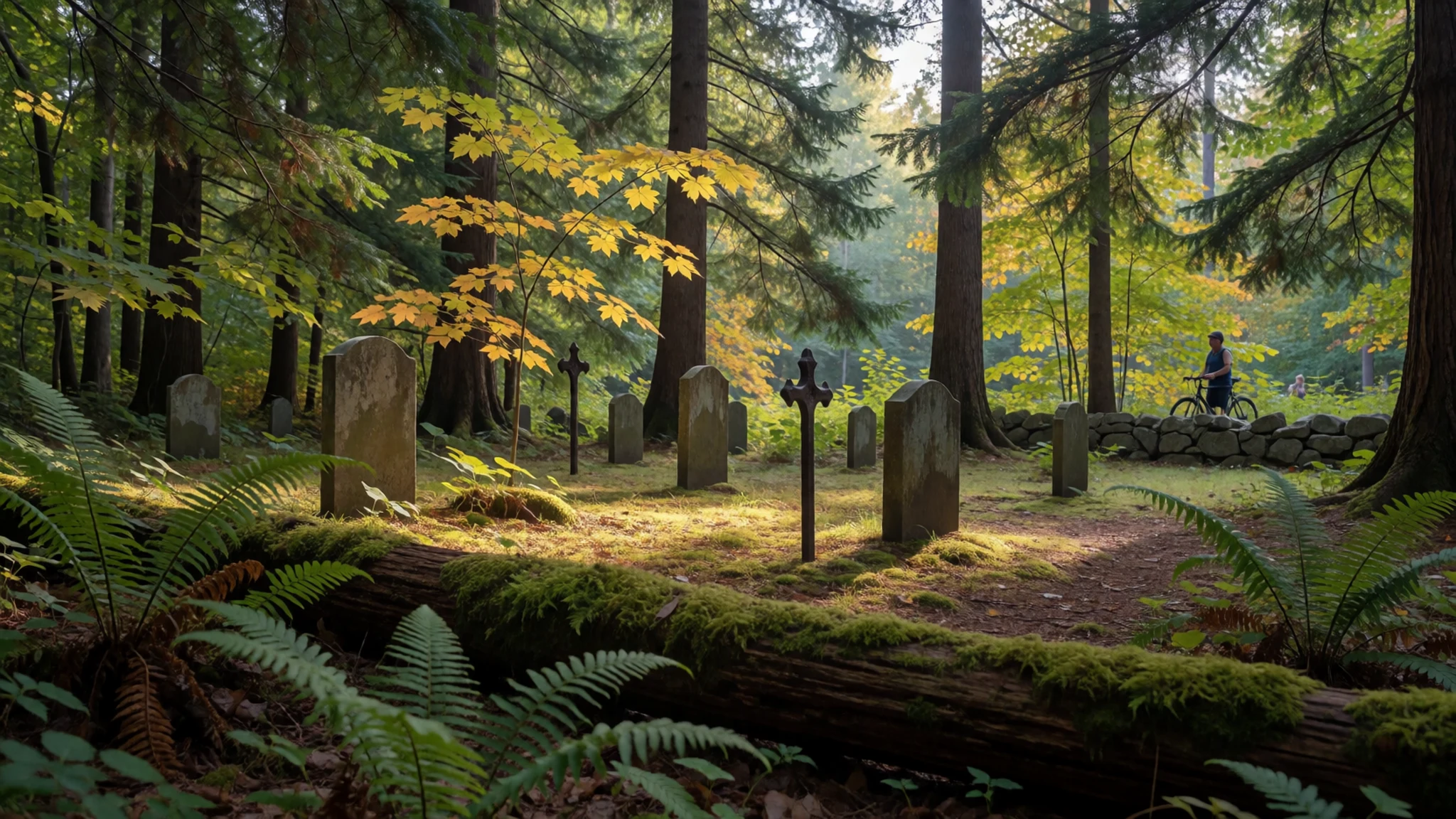
- Potawatomi State Park — North-west of Sturgeon Bay
Potawatomi State Park protects stretches of the Sturgeon Bay shoreline just north-west of the town of Sturgeon Bay. It is calmer and less crowded than the parks further up the peninsula, which makes it a sensible first or last stop for walking, picnics and watching the light change over the bay.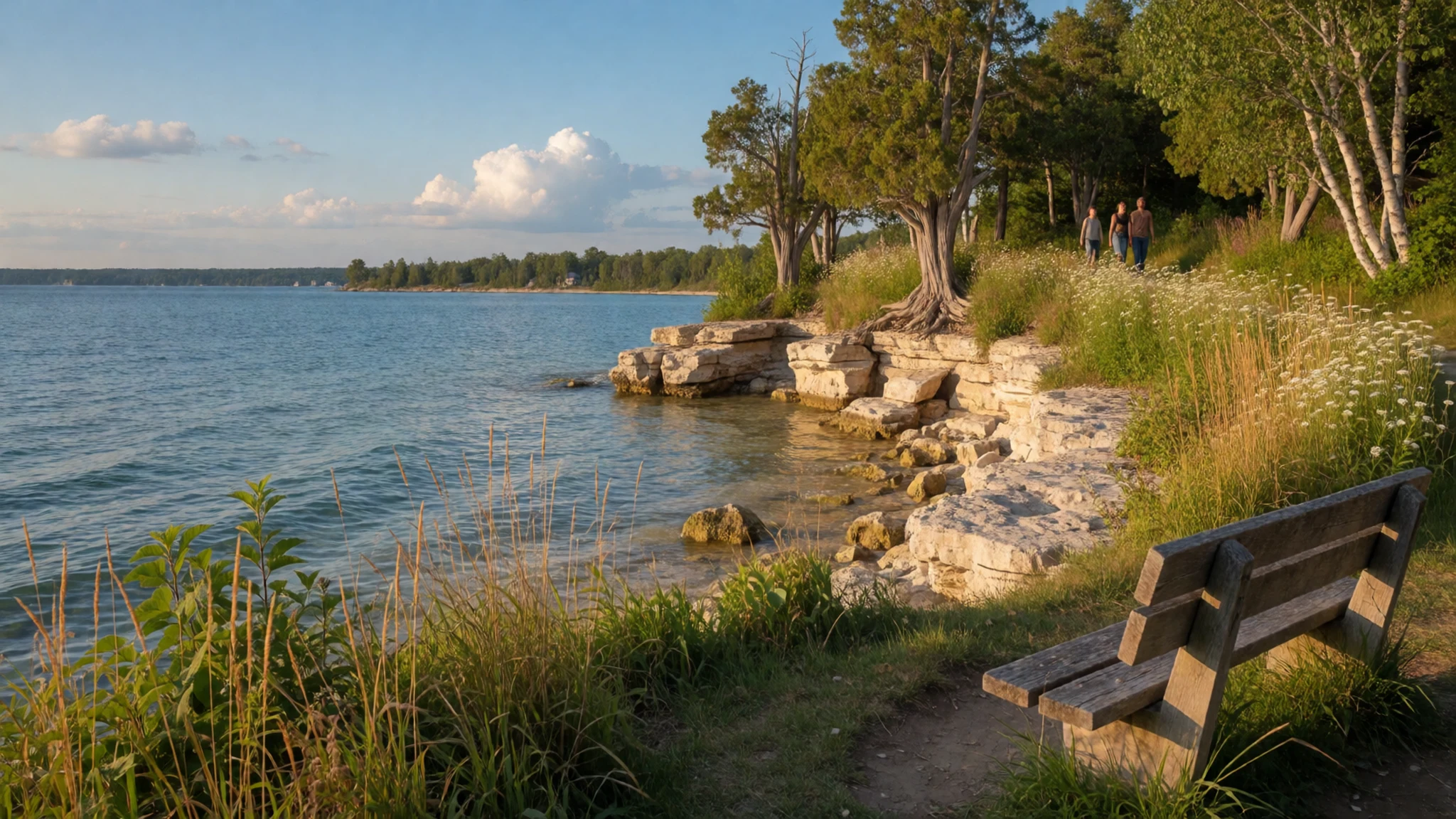
- Edgewood Orchard Galleries — Central peninsula
Edgewood Orchard Galleries shows work by more than 150 artists in a converted barn, with an outdoor sculpture garden around it. It is a gentle rainy-day option, and a reminder that the peninsula's art scene grew alongside its farms and summer visitors rather than apart from them.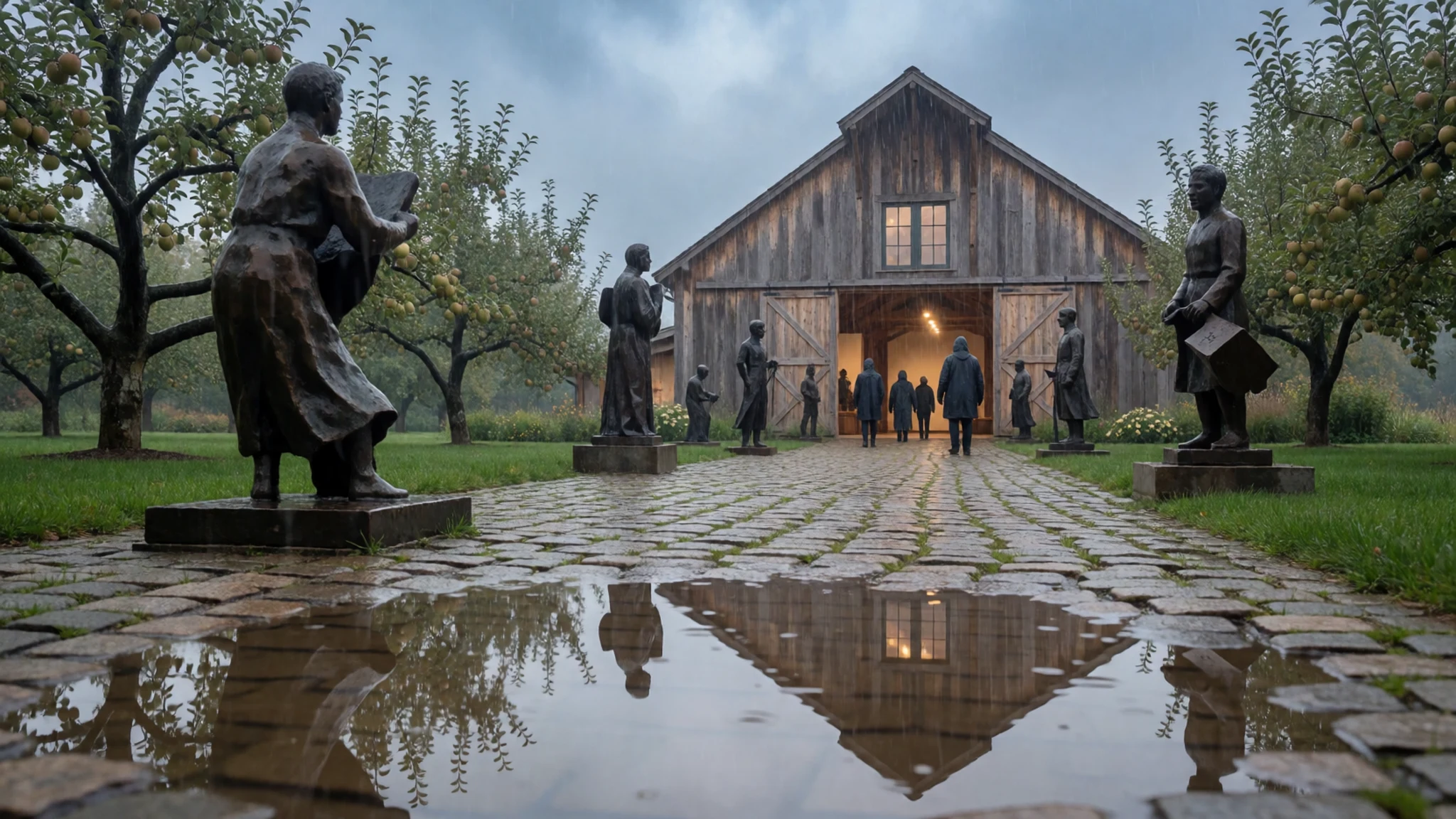
Culture
Door County is a place shaped by seasonal people. Most visitors and summer residents come from Chicago, Madison, Milwaukee and the Minneapolis–Saint Paul area, and Illinois residents form the largest group. That gives the villages a holiday rhythm: galleries, small theatres, ice-cream shops and boat trips fill from early summer, then thin out after the autumn colour weeks. Year-round residents run the farms, boatyards and shops, and many families have deep local roots going back to the Moravian, Scandinavian and other settlers who built the first villages. Outdoor life is central to the culture. Six state parks, four state wildlife and fishery areas and a number of natural areas are open to the public, and the county has 26 lakes, ponds or marshes beyond the two big bodies of water. Walking, cycling, paddling, fishing and sailing are everyday activities rather than special occasions. Evenings are usually relaxed, with outdoor theatre, wine tastings and fish dinners the common entertainments. The pace is slow, and the courtesy is the small-town kind: people greet each other on trails and in shops, and a friendly hello is normal. Shorelines and wetlands also hold nesting birds and fragile dune plants, so conservation is taken seriously. Stay on marked paths in the parks and natural areas, keep well back from wet limestone edges and dune grass, and take your litter with you.
What to wear
Door County has no single traditional costume. Its settler communities, including Moravian, Scandinavian and other European families, brought their own festival clothing, such as embroidered blouses, woollen waistcoats and knitted jumpers, but these appear mainly at heritage events and church celebrations rather than daily life. Wool and linen were practical fabrics for lake sailors, fishermen and farmers, and that sturdy, layered style still echoes in local shops. What people wear now is relaxed and weather-led: jeans or shorts, cotton shirts, fleece, light waterproof jackets and well-worn trainers or boots. Fleece and quilted jackets turn up even in summer because evenings by the water can cool quickly. For dinner, smart-casual is the most anyone expects. Visitors should dress in layers whatever the month, since lake breezes change the temperature fast. Comfortable walking shoes with grip are best for park trails and the slippery limestone at the shore, and sandals or water shoes help on pebbly beaches. Bring a hat, sunglasses and sunscreen for summer boat trips, plus insect repellent for woodland walks. In winter, add insulated boots, gloves and a warm hat, as snowy roads and cold winds off the lake are normal. No special modesty rules apply, though a cover-up is wise when visiting churches.
What to eat
- Swedish pancakes with lingonberries — Family-run Swedish restaurants in Ephraim and Fish Creek
Swedish-style pancakes are thin, eggy and served with lingonberry sauce, a nod to the county's Scandinavian settlers. They are a classic breakfast order, often with waffles and fruit alongside, and queues form on summer weekend mornings.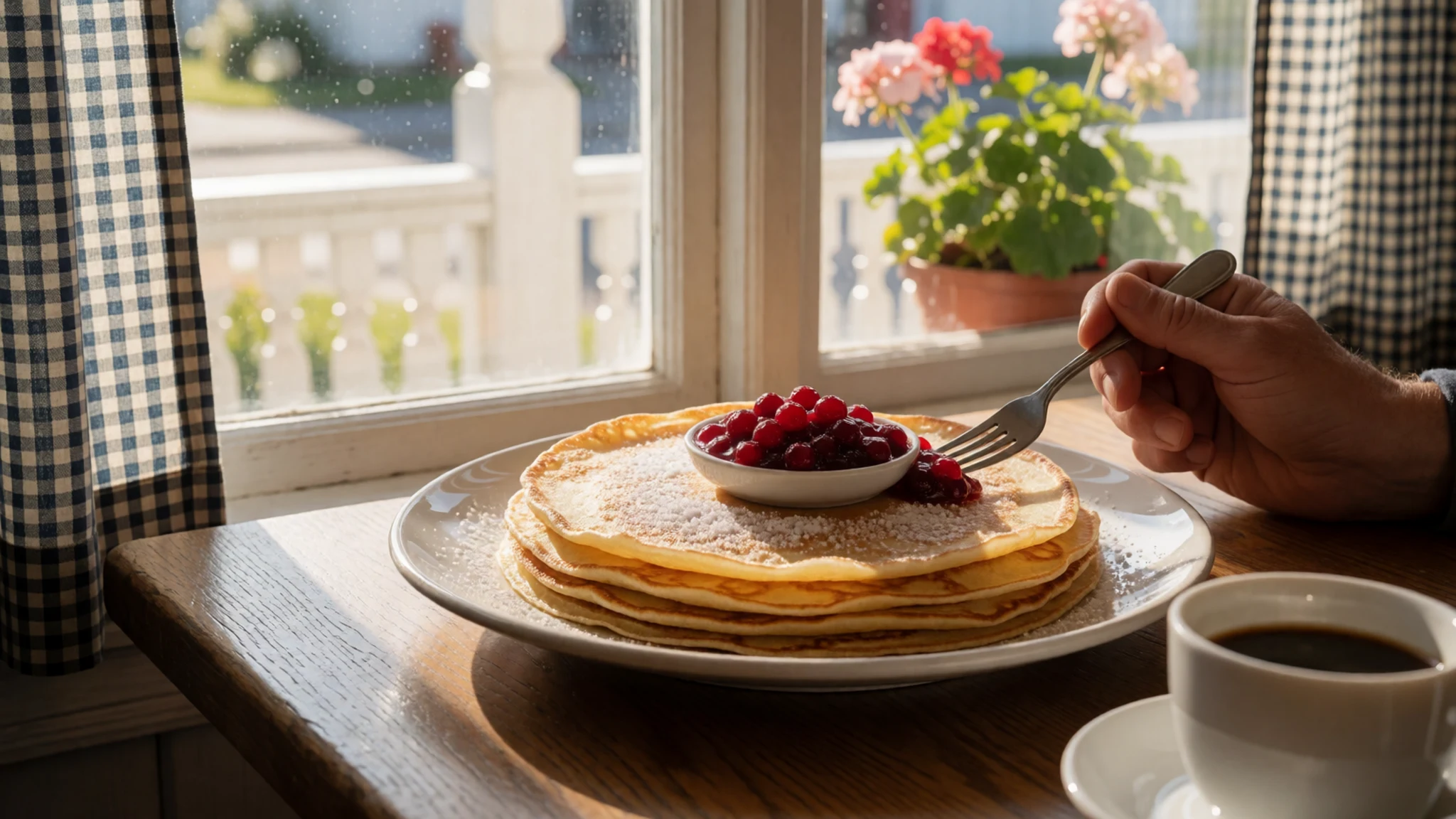
- Fudge and local sweets — Confectionery shops in the lakeside villages, including Ephraim
Fudge is a traditional holiday treat here, made in batches and sold in slabs or small boxes with other candies. It travels well, so many visitors buy it as a gift on the way home.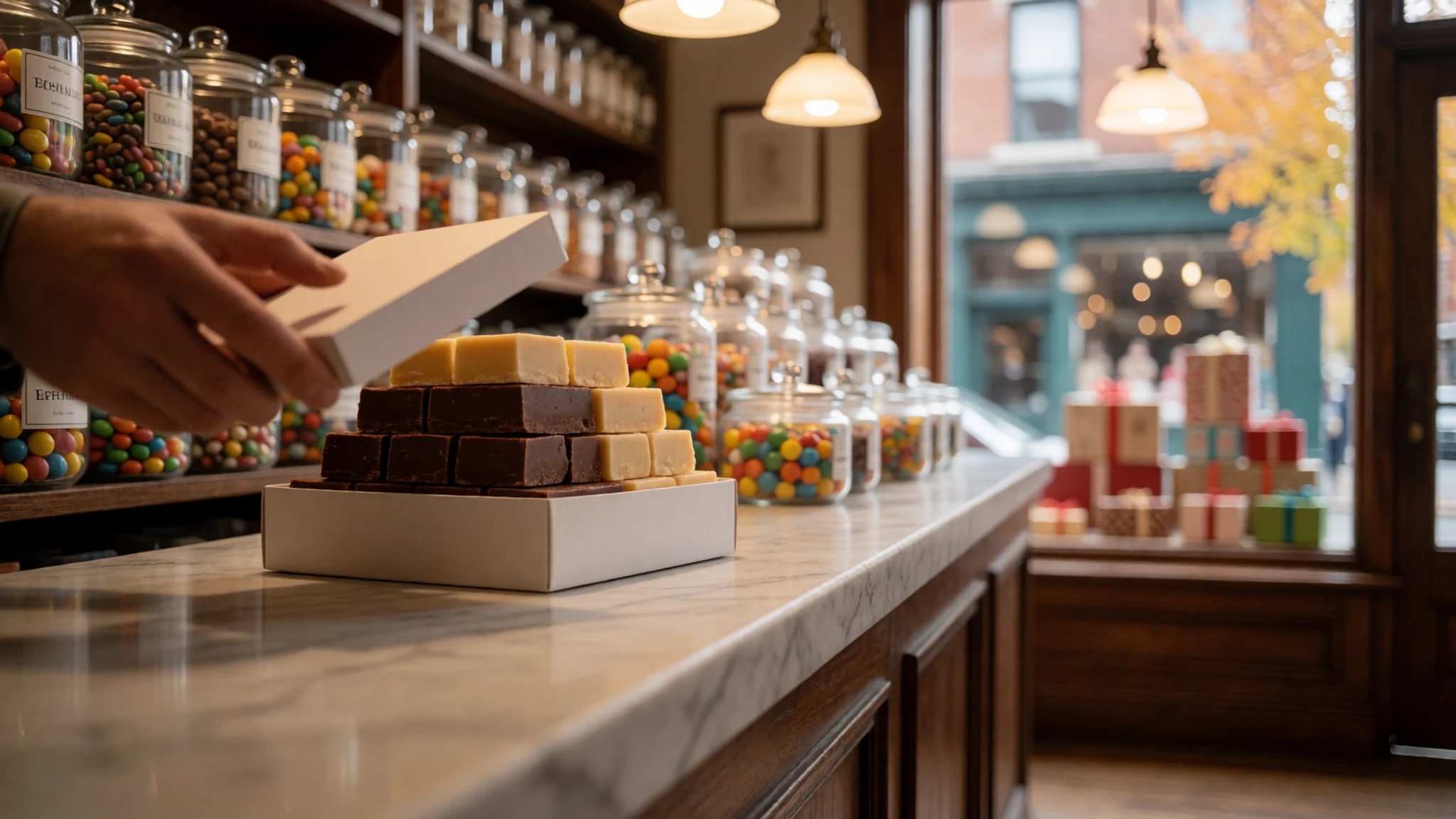
- Lake-side diner food and soda fountain treats — Village diners and soda fountains on the main roads
Old-fashioned diners serve burgers, malts and ice-cream sodas in a 1950s style that suits the area's long family-holiday tradition. It is simple, filling food, good after a day of walking or cycling. - Local wine and fruit wines — Wineries and tasting rooms south of Sturgeon Bay and along the peninsula
The peninsula's orchards and vineyards produce wines, including fruit wines made from local harvests. Many wineries offer tours and tastings between May and October, and their shops are useful stops if the weather turns. - Craft beer — Brewpubs in Sturgeon Bay and the larger villages
Small breweries and brewpubs pour pale ales, lagers and seasonal beers, usually alongside hearty pub-style dishes. They are relaxed places to end a day of paddling or hiking, and menus often change with the seasons.
Plan it
Best time. June to October. Summer is warm and busy with every attraction open, September brings quieter days, and October is for autumn colour. Winters are cold and snowy, and many seasonal businesses close, though quiet park walks are still possible.
How long. 3–4
Getting there. Fly to Green Bay-Austin Straubel International Airport (GRB), about a 45-minute drive from Sturgeon Bay, then drive north up the peninsula. There is no direct bus to Door County, but buses and Amtrak Thruway services reach Green Bay from Milwaukee, Madison and Minneapolis. A car is essential once there.
Budget. mid
Tips
- Book lodging well ahead for summer weekends and the October colour season
- Check the official county site (https://www.co.door.wi.gov/) and park pages for seasonal opening and access, especially for lighthouses and tastings
- Start park walks early to beat both the crowds and the day's traffic
- Carry water and layers, since lake winds can change the weather quickly
- Keep a day free for rain, when galleries and wineries are good fallbacks
Etiquette
- Stay on marked trails and off dune grass and fragile shoreline plants
- Keep well back from wet limestone edges and waves at Lake Michigan viewpoints
- Greet people politely and keep noise down in quiet villages in the evening
Nearby
Sources
- Wikidata Q490550 (CC0)
- Wikipedia: Door County, Wisconsin (rev 1380072929) (CC BY-SA 4.0)
- Wikivoyage: Door County (rev 5268571) (CC BY-SA 4.0)
- Photo: Door County courthouse entrance (Royalbroil) (CC BY 3.0)
- Photo: Fish Creek, Wisconsin (DNerenhausen) (CC0 1.0)
- Photo: The Pioneer Cemetery at Peninsula State Park (Markheffron2) (CC BY 3.0)
- Photo: Excursion party on Sailor Boy (Public domain)
- Photo: Cedar Glen, Peninsula State Park (Public domain)
- Photo: Door County Age Distribution, 1930–1960 (Public domain)
- Photo: Stella Maris Catholic Parish (Dasparag) (CC BY-SA 4.0)
- Photo: Winter road, Shivering Sands (Tony Webster) (CC BY-SA 2.0)


