Dawson City
Dawson City, Canada
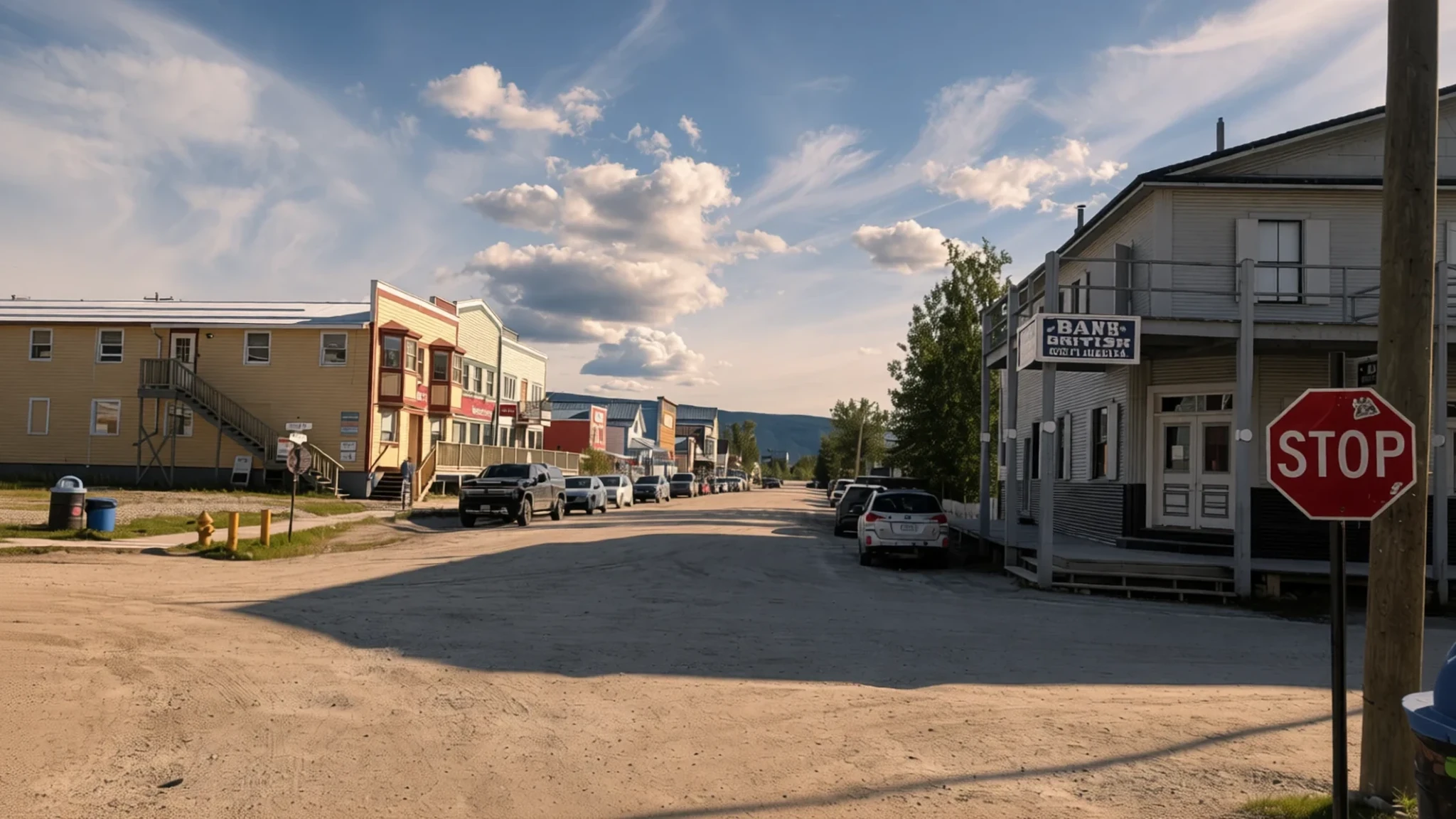
Dawson City is a Klondike river town of wooden false-fronts, gold-rush memory and long summer light at the Yukon's northern edge.
The place
Dawson City sits in the Yukon where the Klondike River meets the Yukon River, a compact grid of wooden buildings on permafrost where the Klondike Highway ends, though the Dempster runs on north a short way east. The streets are wide and often unpaved, lined with false-front shops that still read as a gold-rush town rather than a rebuilt theme park. In summer the light barely leaves; in winter the town draws in on itself, dark for much of the day, with woodsmoke, ice fog and long gaps between passing vehicles.
The rivers define the place more than any square. The Yukon is the old highway — sternwheelers once tied up along the waterfront — and the Klondike is the creek system that pulled stampeders over the mountains. Across the river and on the bench above town, the land belongs to a much older geography: the traditional territory of the Tr'ondëk Hwëch'in, whose fish camps and seasonal trails were here long before a mining camp took the name Dawson City. That layer is easy to miss if the eye stays on the saloon façades.
Daily life is practical. Groceries, fuel and building materials come a long way. Many houses sit on blocks or gravel pads because the frozen ground shifts. The art school and a small cultural centre keep studios open through the bright months, and about fifteen hundred people live here year-round, Yukon's second town after Whitehorse. In July the waterfront is lively and the main street full of tour buses. The town can still be walked end to end before lunch, and beyond the last buildings the boreal hills take over.
Its story
Dawson City began as a mining camp and became the capital of a gold rush that emptied harbours and filled mountain passes. Word of coarse gold on a Klondike tributary travelled south by ship and newspaper, and people sold what they had to chase it. Most never mined. They packed outfits over the coastal passes, built boats, and came down the Yukon River to a mudflat where the Klondike joins it. There a town of tents turned into sawn lumber, dance halls, outfitters and claim offices, and took the name Dawson City.
The boom did not last in that form. Easily worked ground was staked, the easy gold was taken, and many stampeders left poorer or only slightly richer. Industrial dredges later worked the creek valleys, stacking gravel tailings that still snake across the flats, while the town shrank to a place that served miners, river traffic and a territorial administration. Roads, when they finally arrived, tied Dawson City to Whitehorse and, in summer, to Alaska, replacing the river as the way in.
What remained was the wooden streetscape and a habit of telling the rush as a local story. Robert Service lived in a cabin in town, and Jack London's cabin from a winter on Henderson Creek was moved in beside downtown later; both still stand, with a printed memory of the saloons and the cold. The Tr'ondëk Hwëch'in were pushed to the edge of their fish camp at the river mouth, then negotiated a land claim and self-government, and museums now set that name beside the gold-rush plaques. Dawson City holds both histories in the same bend of the river: a short, loud stampede, and a much longer life on the land.
What to see
- Front Street — downtown waterfront
Dawson City's Front Street is a run of wooden false-front buildings on a wide unpaved road above the Yukon River. Boardwalks keep boots out of the mud, and the old saloon façades now mix cafés, shops and inns. In midsummer the street stays busy late; out of season it can be almost empty, and the river shows through.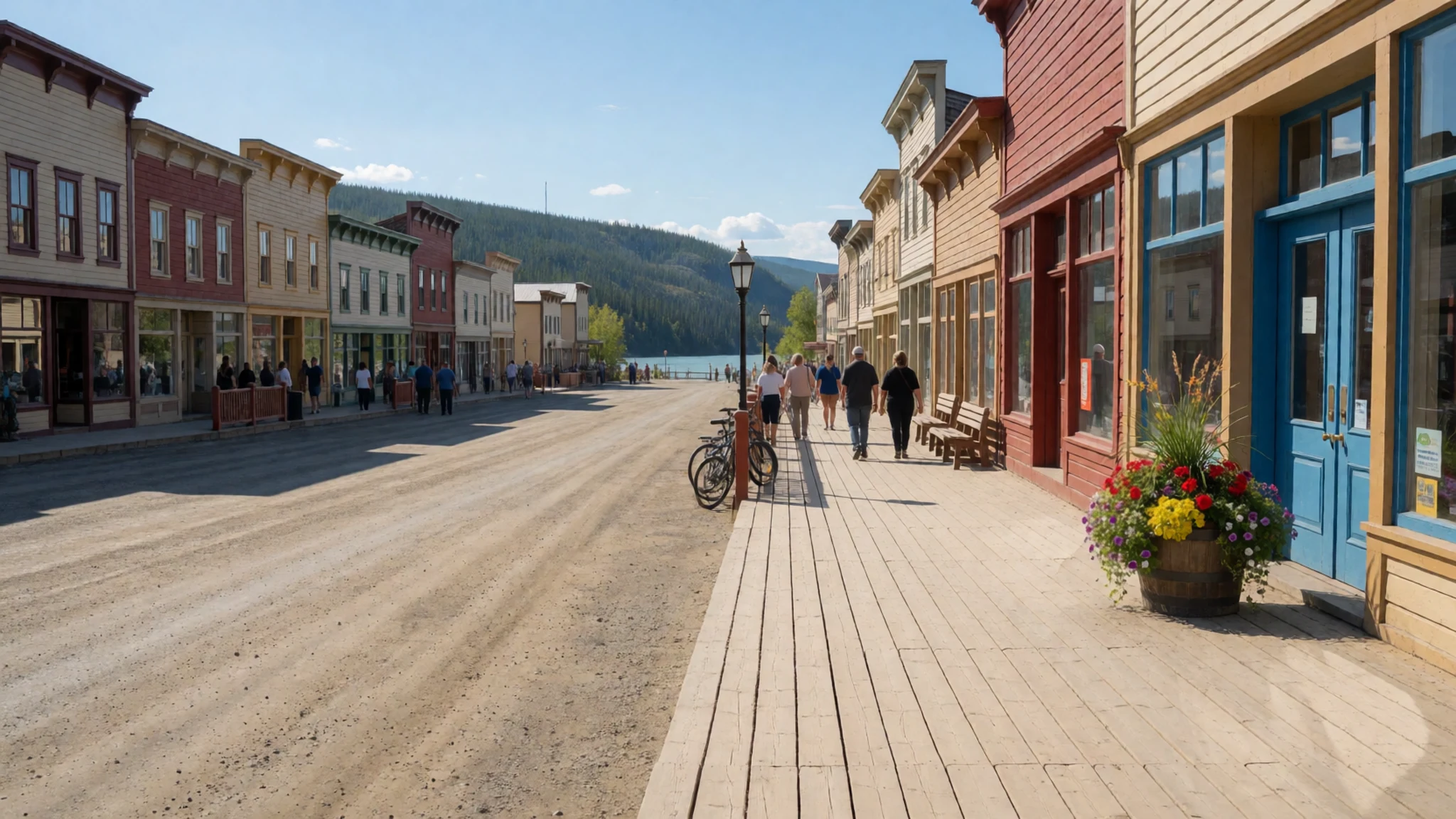
- Dänojà Zho Cultural Centre — waterfront
Dänojà Zho Cultural Centre, on the Dawson City waterfront, is the Tr'ondëk Hwëch'in house for a history much older than the rush. Exhibits and staff tell of the fish camp at the river mouth, the Hän language and the land claim, in the nation's own voice. Visitors do better to start there, before the saloon museums, and to treat it as a place to listen.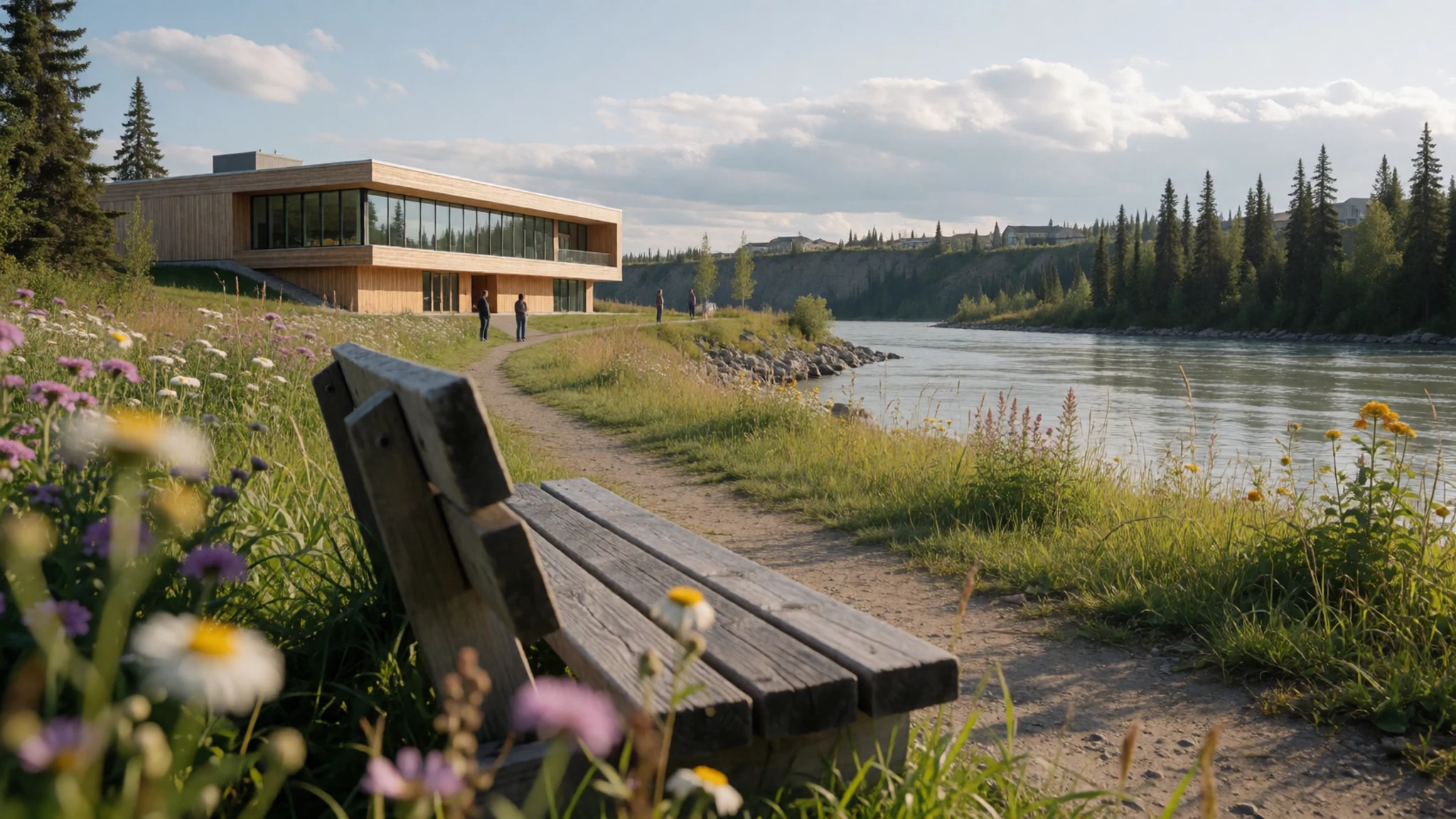
- Jack London cabin and Robert Service cabin — in town
The Jack London cabin and the Robert Service cabin sit in Dawson City as small, specific relics. London's restored cabin recalls the winter he spent trying to make a living in the country. Service's cabin is the cottage where he wrote verses that taught the outside world its version of the Klondike. Both are modest wood buildings on quiet lots, and they reward an unhurried look.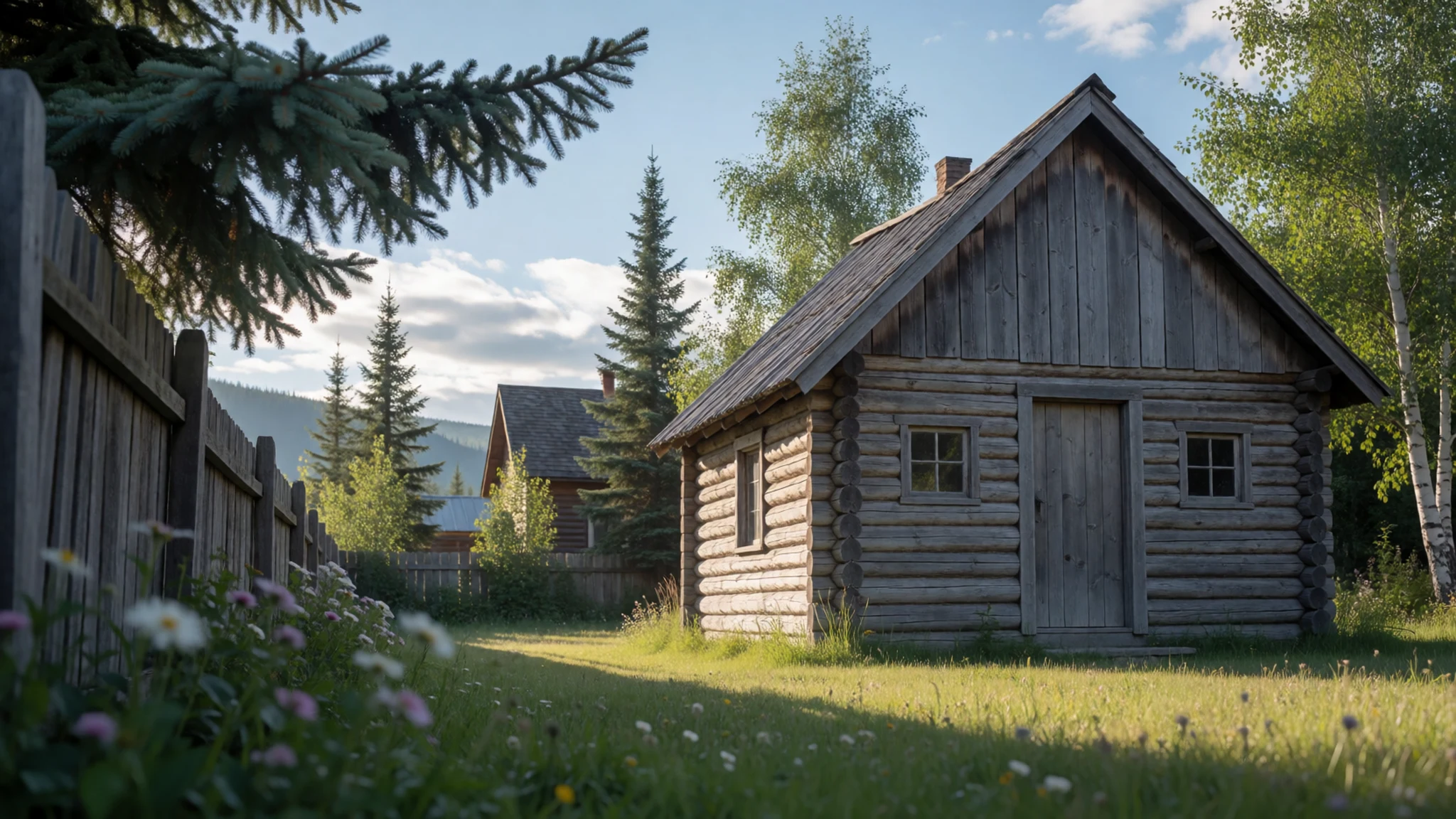
- Gold dredge — the creek flats
A preserved gold dredge stands on the creek flats outside Dawson City, among tailing piles left after the hand-staking years. It is a floating gravel plant of buckets, trommel and stacker, rust and rivets, built to chew paydirt around the clock. Walking it shows the scale of later mining in a way the saloon street cannot. Tours run in season, and the official site is the place to confirm them.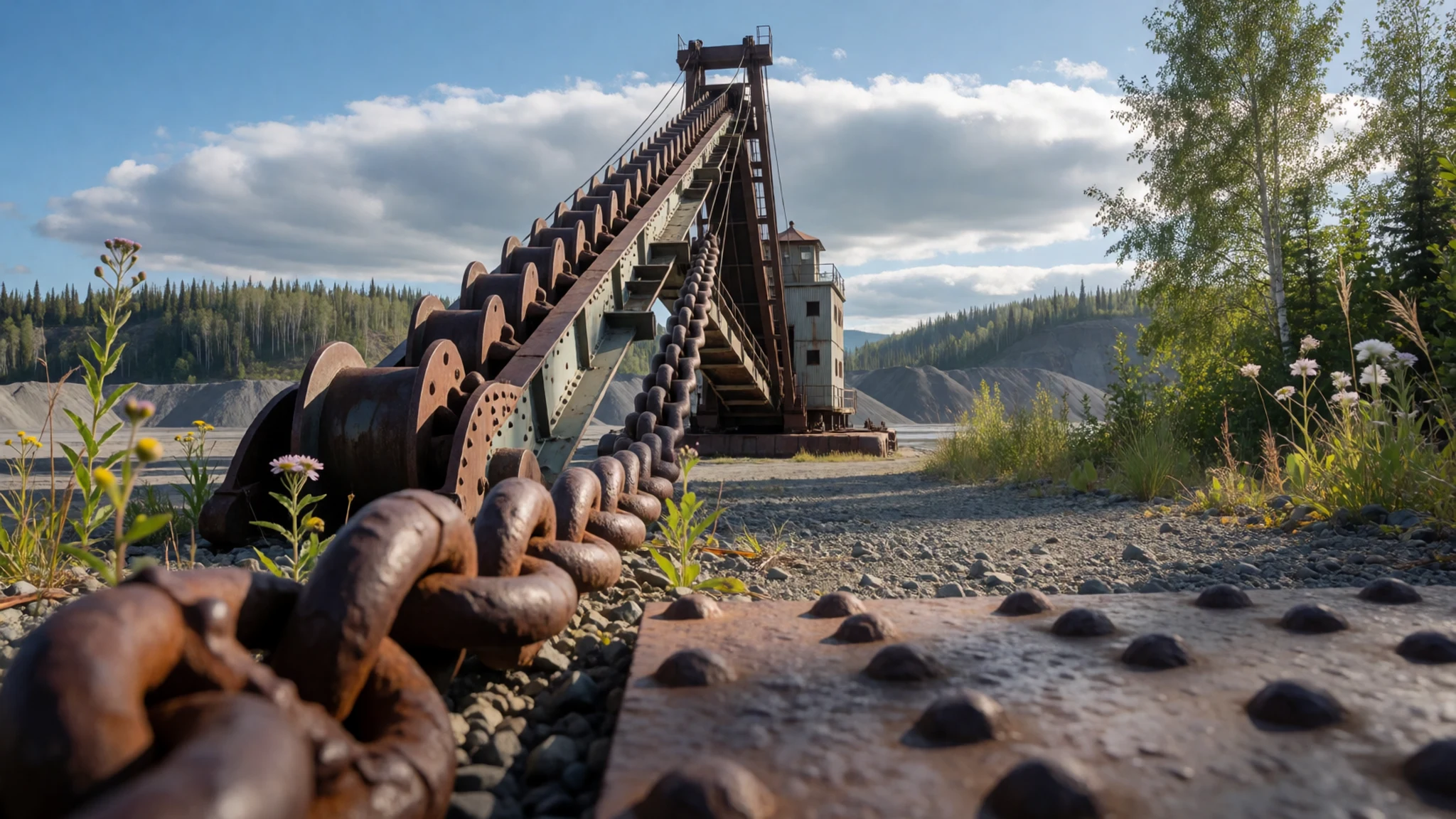
- School of Visual Arts and Klondike Institute of Art and Culture — in town
The School of Visual Arts and the Klondike Institute of Art and Culture give Dawson City a working art scene beyond gold-rush re-enactment. Students and residents use the bright months to paint, film and make things, and galleries show that work to whoever is in town. The buildings are plain, and the reason to go is the work and the people who stayed.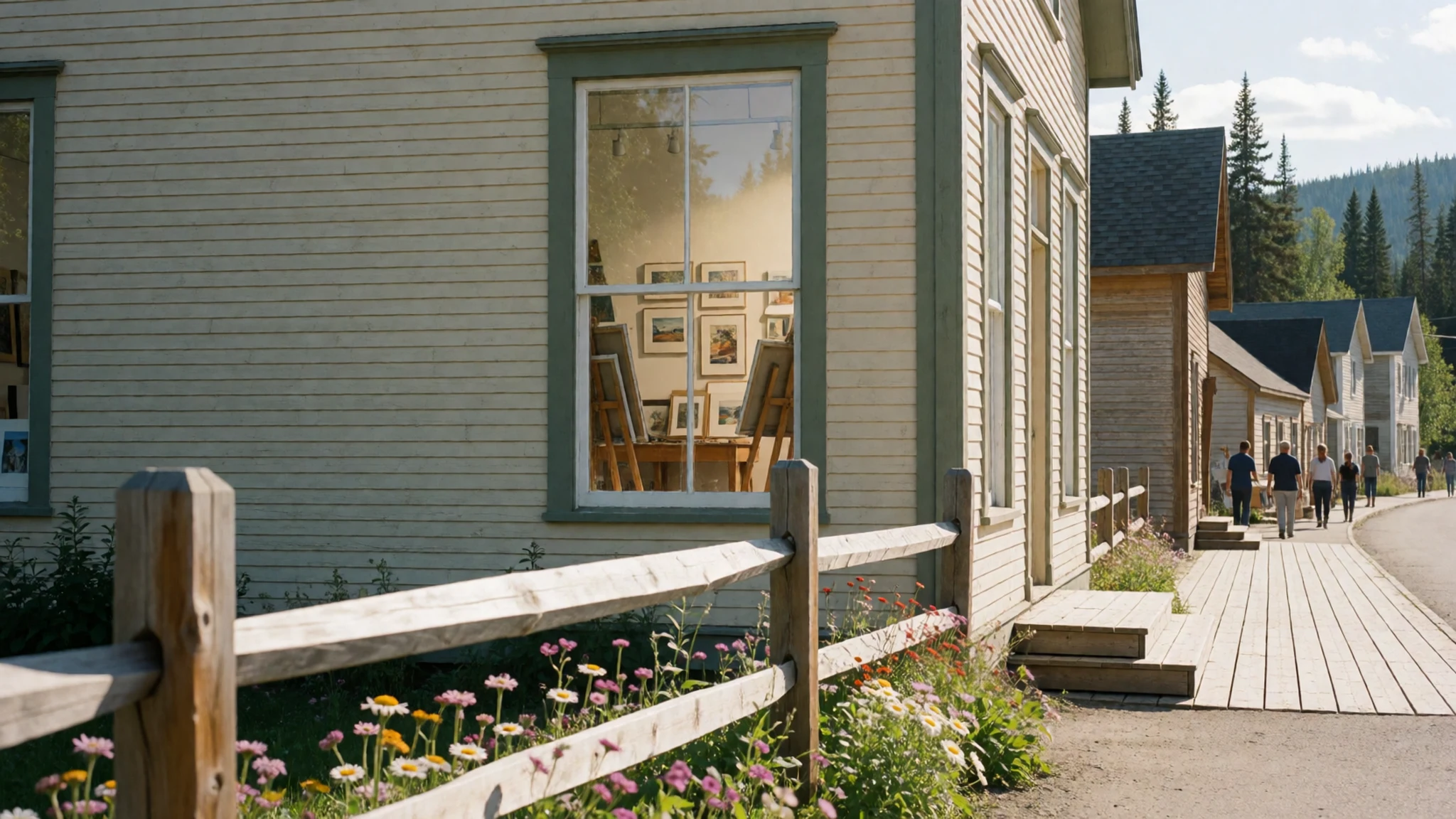
Culture
Dawson City keeps two public cultures in plain sight. One is the gold-rush repertoire: can-can shows, a gambling hall, false-front saloons and the stampeder story told on walking tours and in the museum. It is theatrical on purpose, a town that knows why strangers came and is willing to perform that past. The other is Tr'ondëk Hwëch'in culture — the Hän language, fish-camp knowledge, beadwork and moosehide, and a political life of modern self-government rather than a display in a case. Through the bright months the calendar leans on music, visual art and the art school; studios open their doors and the streets fill with people who came for the light as well as the plaques. In the dark months culture is quieter: community suppers, hockey, the radio, and the ordinary care of a small town that has to get along. Neighbours share tools and rides because the next services are far away. The place is not a costume waiting for a camera. Ask before you photograph people, and follow Tr'ondëk Hwëch'in guidance at cultural sites.
What to wear
Dawson City's Indigenous clothing tradition belongs to the Tr'ondëk Hwëch'in: moosehide and caribou hide sewn with sinew, moccasins, fur for deep cold, and beadwork that became part of regalia after trade goods arrived. Hide clothing is still made and worn for ceremony and community gatherings, not as a street costume. The gold-rush wardrobe the town performs — wool, sturdy boots, long skirts and showy dance-hall dresses — is theatre and festival dress, tied to the stampede story. Dance-hall costume stays on stage and at festivals. Day to day, residents wear what the mud and the weather demand: work jackets, flannel, rubber boots, knit hats, and in winter heavy parkas and mitts that actually stop the wind. A visitor should dress the same way. Summers call for layers, a warm hat for late evening, waterproof footwear with a grip on wet boardwalks, and protection from mosquitoes. Thin-soled shoes slip on gravel and wet timber. In winter, only a proper northern parka, insulated boots and serious mitts make walking around Dawson City sensible.
What to eat
- Sourdough pancakes — Front Street cafés and breakfast eateries
Sourdough pancakes are the Klondike breakfast Dawson City still serves: a tangy starter and a stack with something sweet. Front Street cafés and other breakfast eateries offer them in the morning, hearty enough for a cold start, and residents eat them as readily as visitors.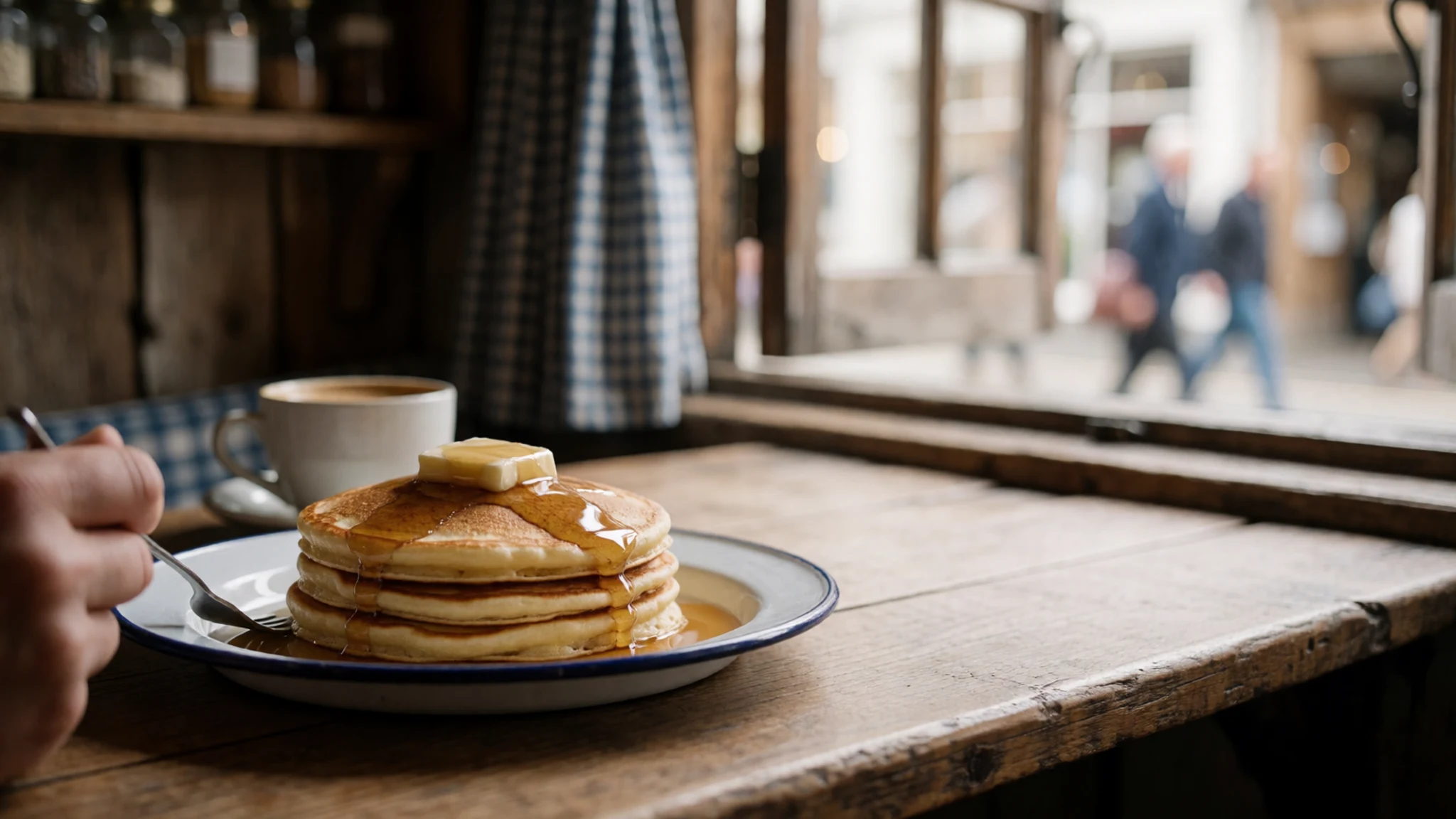
- Bannock — community events and eateries
Bannock is a simple flour bread, fried or baked, from northern Indigenous and camp cooking. Dawson City serves it at community events and sometimes as an eatery special. It is dense, good with jam or stew, and as much home food as café food.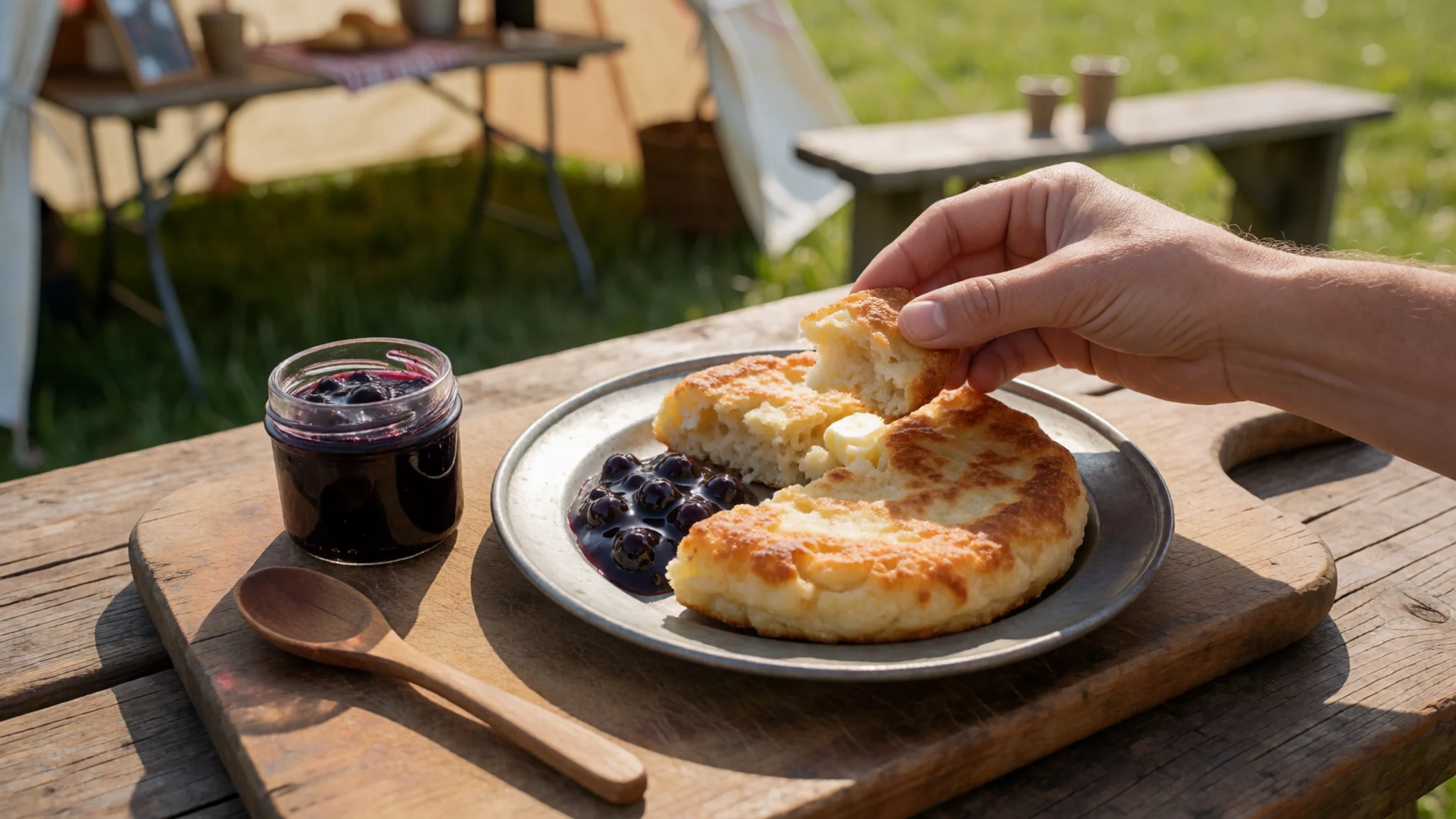
- Yukon salmon — cafés, summer stalls and restaurants
Yukon salmon, smoked or grilled, puts the river on the menu. Dawson City kitchens serve it when season and supply allow: smoked fish at cafés and summer stalls, a fillet in restaurants. What is local that week matters more than assuming every fish came off the waterfront. - Bison stew or game burger — restaurant specials
Bison stew or a game burger is the substantial plate Dawson City does well in cool weather. It appears as a restaurant special, not at one fixed stall. Moose is more often home food than a menu promise, so the board beats any rumour. - Lowbush cranberry and blueberry pie — bakeries and cafés
Lowbush cranberry and blueberry turn up in pies and jam across Dawson City in late summer. Bakeries and cafés do a homely version: thick filling, plain crust, coffee alongside. The crop is short, so later the counter may be using jam put up earlier.
Plan it
Best time. Dawson City is easier to visit from late spring through early autumn, when the road from Alaska is typically open, tours run and daylight stretches late into the evening. Midsummer is bright and busy, with mosquitoes early in the season and cooler nights by August. Winter suits travellers who want darkness, quiet and real cold; many seasonal businesses close, and the highway link to Alaska shuts.
How long. 2–3
Getting there. Dawson City is reached by regional flights into Dawson City Airport, usually connecting through Whitehorse, or by road. The Klondike Highway runs north from Whitehorse; in summer the Top of the World Highway links Alaska. The last leg is a long rural drive with few services, so a full tank and a spare plan for weather matter.
Budget. high
Tips
- Book a room before midsummer; Dawson City is small and fills for festivals and long weekends.
- Carry some cash, because card payments fail when the network drops.
- Treat mosquitoes as part of early summer, with repellent and covered skin.
- See the dredge and the cabins early on days when tour groups are in town.
- In winter, travel only in a vehicle ready for severe cold, with fuel to spare.
Etiquette
- Ask before photographing people, and follow directions at Tr'ondëk Hwëch'in sites.
- Stay off active mining claims and fenced dredge ground.
- If you join the Sourtoe ritual, follow the house rules and do not turn another person's turn into a joke.
Nearby
Sources
- Wikidata (CC0)
- Wikipedia (CC BY-SA 4.0)
- Wikivoyage (CC BY-SA 4.0)