Colonial Williamsburg
Colonial Williamsburg, United States
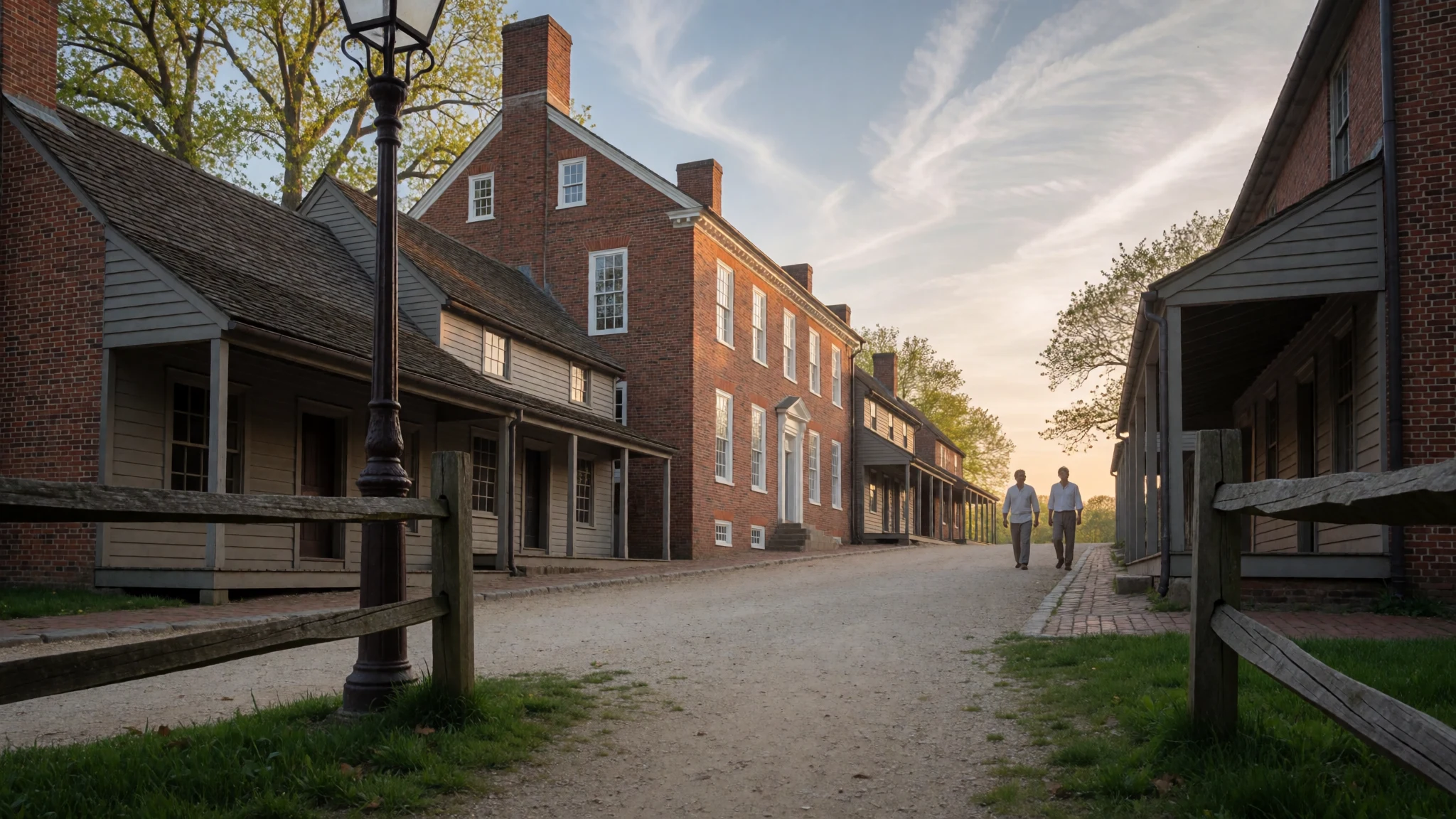
Colonial Williamsburg lets visitors wander an 18th-century capital where costumed tradespeople still hammer iron, mould bricks and bind books.
The place
Colonial Williamsburg is a living-history museum run by a private foundation, set inside the historic district of Williamsburg, Virginia. Its historic area covers 301 acres (122 ha) and holds several hundred buildings, some restored and some rebuilt, that stand for the town when it was the capital of the Colony of Virginia. Three main streets and the lanes linking them follow the 18th-century layout, though the district also contains older and newer structures, Colonial Revival additions and modern reconstructions. Staff in period clothing work as tradespeople, and some speak in the manner of the time, so a walk past a workshop can turn into a conversation. The district forms one corner of Virginia's Historic Triangle, alongside Jamestown and Yorktown and linked to them by the Colonial Parkway. Strolling the streets costs nothing, but entering the trade shops, larger houses and most exhibits needs an admission ticket, bought online or at the visitor centre; the official site, colonialwilliamsburg.org, lists current options, including combined tickets. After buying, visitors walk to the historic area or take the shuttle bus. The district is open every day of the year. It rewards slow wandering rather than box-ticking: many visitors spend the first hour just getting their bearings, then drift towards whichever workshop has smoke or the sound of hammering coming from it. Summers are hot and humid and school holidays bring families, so spring and autumn are the kinder seasons.
Its story
Colonial Williamsburg's story begins with a series of fires. Virginia's government met at Jamestown from 1607, but the statehouse there was burned during Bacon's Rebellion, and talk of finding a new capital began. The Crown stalled until the College of William & Mary was founded at Middle Plantation in 1693 and a second fire hit the statehouse in 1698. In 1699 Middle Plantation took the name Williamsburg, honouring William III, and became the colony's capital.
Governor Francis Nicholson supervised the new town's layout, and Theodorick Bland surveyed a grid that worked around the brick College Building and the ageing Bruton Parish Church. Traces suggest an earlier scheme had arranged the streets as a W over an M, for William and Mary, but the grid largely erased it. The main street honoured the Duke of Gloucester, Queen Anne's eldest son, while the streets on either side took the governor's own names: Nicholson to the north and Francis to the south.
For 81 years of the 18th century the town was where Virginia governed itself, educated its young men and kept its cultural life. The modern town's revival began in the late 1920s, when W. A. R. Goodwin, preservation societies, civic bodies and John D. Rockefeller Jr. and Abby Aldrich Rockefeller championed restoring it. The site sets out to honor the Founding Fathers and the nation's formative years, a lens you should keep in mind when engaging with its historical narratives today.
What to see
- The Governor's Palace — Palace Green
The Governor's Palace, the residence of the Crown's representative in Virginia, closes the vista at the end of a broad green off Duke of Gloucester Street. Like much of the district it is a restored or rebuilt structure rather than untouched original fabric. The formal gardens behind the house are worth reserving time for, especially on a hot afternoon when shade matters.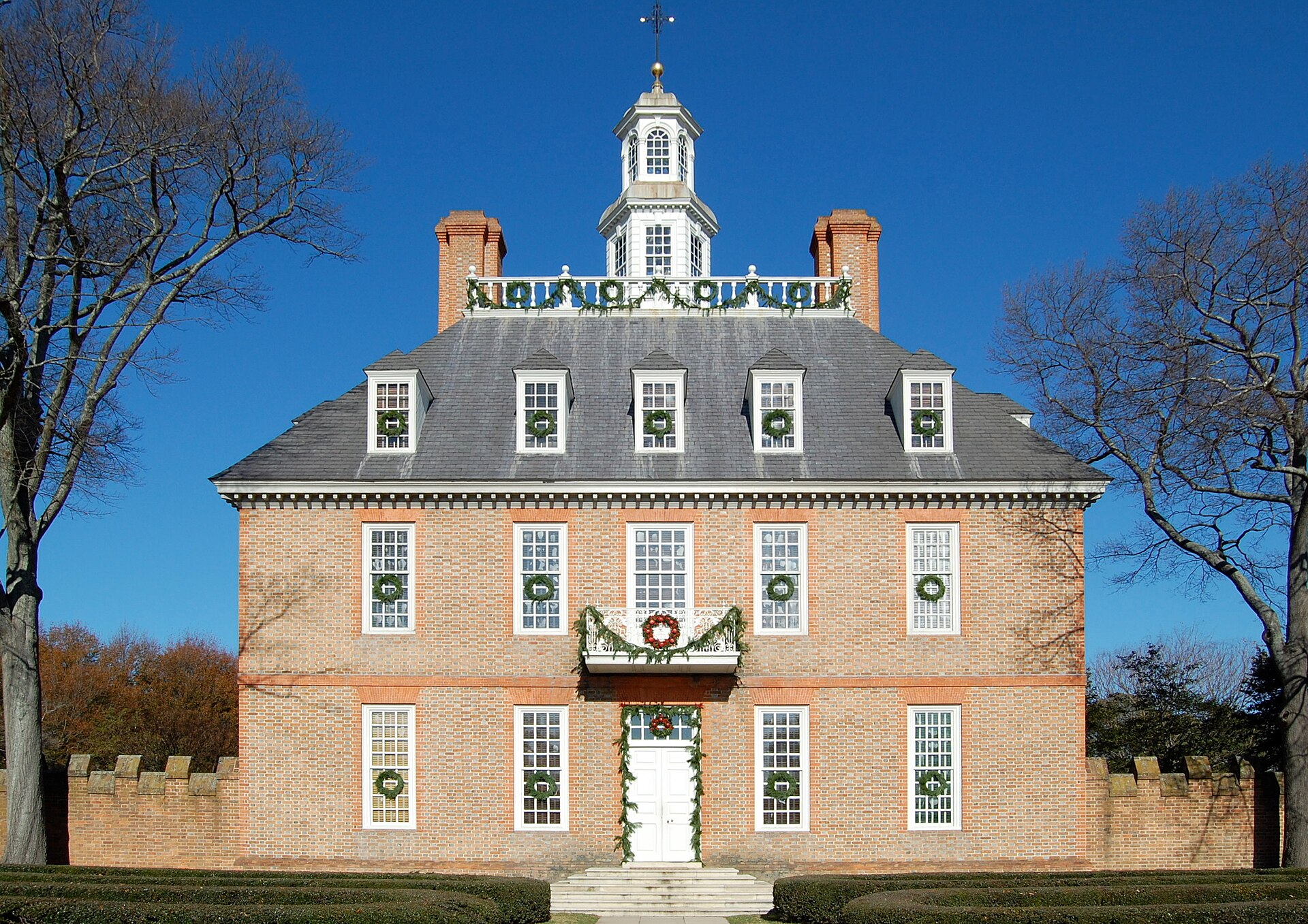
- The Capitol — Duke of Gloucester Street
The Capitol is a reconstruction of the building where the House of Burgesses, the elected assembly of the Colony of Virginia, once met. It stands at one end of Duke of Gloucester Street and looks handsome lit after dark, when the street is quieter. Inside, the interpretation covers how colonial lawmaking worked; check the official site for programme times.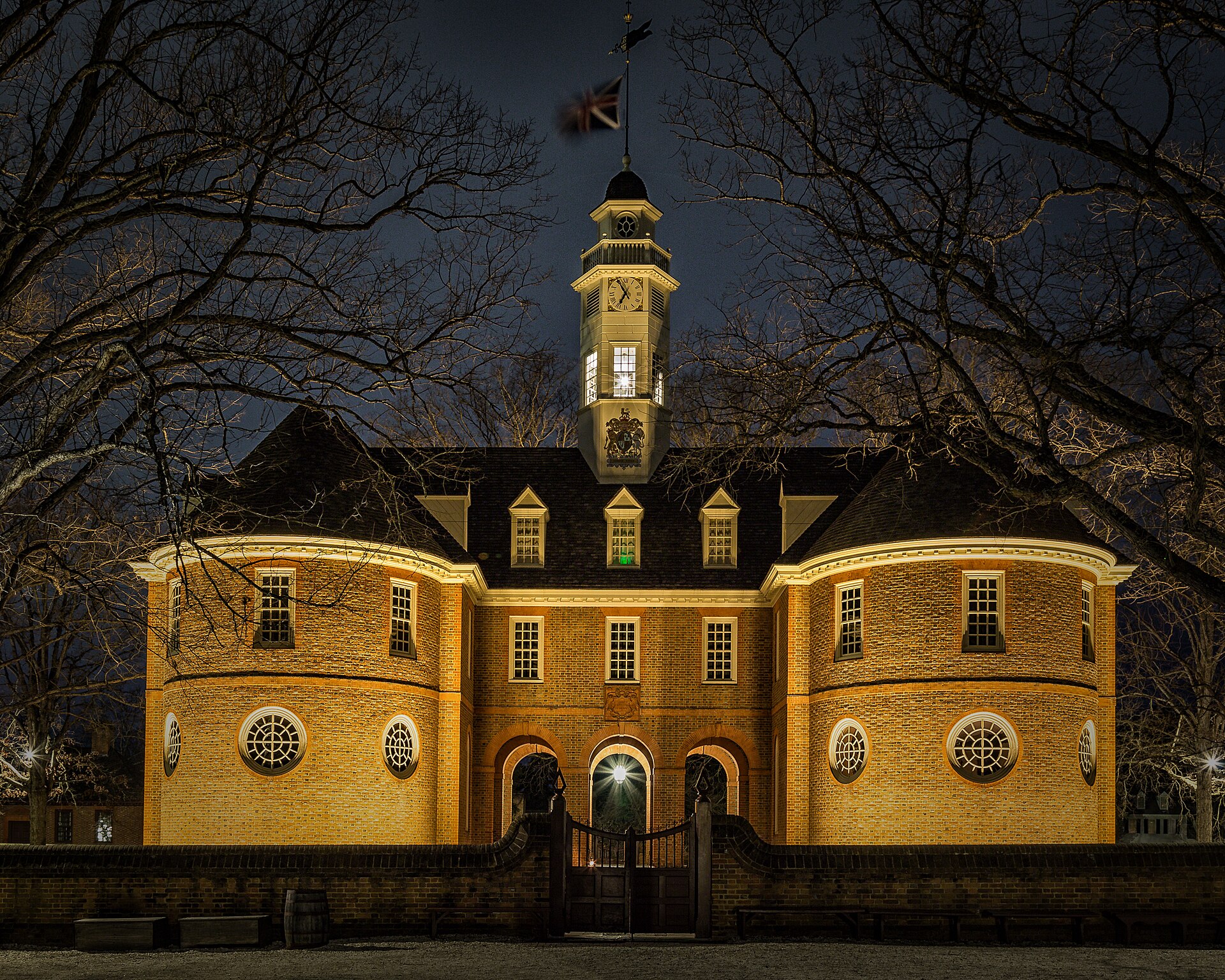
- Anderson's Blacksmith Shop & Public Armoury — Historic area
Anderson's Blacksmith Shop & Public Armoury is the place to watch smiths at a working forge, hammering iron into tools and hardware as colonial smiths did. The heat and the ringing of metal make it an atmospheric stop, and it suits children who tire of looking at furniture. Standing near the doorway gives a view without crowding the work. - Apothecary — Historic area
The Apothecary shows how colonial medicine worked, when one tradesman both prescribed and prepared remedies. Jars, mortars and herbs set the scene, and the interpreters explain treatments that now seem alarming. It is a short, absorbing stop, and a reminder that everyday life in the 18th century was precarious even for the comfortable. - Brickmaker — Historic area
The Brickmaker's yard explains where the district's warm red walls came from. Clay is moulded and dried through the summer, then fired in large kilns in autumn. Visitors may be invited to take off their shoes and stamp water into the clay, so wear footwear that comes off easily and expect muddy feet. - Bindery — Historic area
The Bindery shows how loose printed sheets became books, folded and stitched by hand and then given covers. It is slow, exact work, and seeing a binder get a volume to open flat explains why books were costly. The cabinetmaker's shop is a short walk away, so the two trades pair well.
Culture
Colonial Williamsburg treats history as something to be performed as well as displayed. Interpreters dress as tradespeople and townsfolk of the colonial period, and some adopt period speech, so a simple question at a workshop door can open into a short lesson in character. The trades on show are demanding: a cabinetmaker's training took many years, and bricks are still moulded and fired through the seasons. The district also carries the imprint of the 1920s restoration, shaped by preservation societies and wealthy backers who wanted to honour the nation's early patriots. That patriotic framing is part of the place's own history, and the strongest visits pair the tidy streets with a willingness to ask what is being left out. Evenings change the mood: taverns serve meals in period style, and the lit streets are quieter once day visitors leave. The surrounding Historic Triangle, with Jamestown and Yorktown, adds depth for anyone who wants to follow the colonial story further. Williamsburg is also a working town with a college at its heart, so locals and students share the streets with the interpreters. Treat interpreters' period speech with good humour, wait until a demonstration finishes before asking questions, and ask before taking close-up photographs of staff at work.
What to wear
Colonial Williamsburg's traditional dress is the clothing of 18th-century Virginia, and it appears daily on the interpreters. Men wear linen shirts, waistcoats, knee breeches and wool coats; women wear linen shifts under gowns of wool, cotton or silk, with caps, aprons and neckerchiefs. Fabrics signalled status, so plain wool and linen marked working people and silk marked the wealthy, while smiths and other tradespeople add leather aprons at the forge and bench. Away from the costumed world, what people actually wear now is ordinary American holiday clothing: shorts, T-shirts, trainers and sun hats in summer, light jackets in spring and autumn. A visitor should dress for walking and weather. Summers are hot and humid, so breathable cotton or linen, a hat and a water bottle help; spring and autumn call for a light layer, and winter for a proper coat. Footwear matters most. The district is large, and surfaces include brick, gravel and sandy paths, so broken-in, comfortable shoes beat fashionable ones. The brickmaker may invite visitors to take shoes off, so socks that can get muddy are practical. The taverns are casual, and nowhere in the district demands special modesty beyond ordinary respect.
What to eat
- Pit barbecue — Chowning's Tavern, in the historic area
Pit barbecue, smoked pork cooked slowly over wood, is a Southern staple and is served in the daytime at Chowning's Tavern. Expect it with simple sides in a casual room, and book or arrive early on busy summer days. - Chesapeake-style seafood — Christiana Campbell's Tavern, a seafood restaurant in the historic area
Chesapeake-style seafood, the kind Virginia's rivers and bay supply, is the speciality at Christiana Campbell's Tavern, said to have been a favourite of George Washington on his visits. Oysters, crab and fish are the usual choices; ask staff what is in season. - Chophouse roasts and chops — King's Arms Tavern, in the historic area
Roast meats and grilled chops, served in the manner of an 18th-century chophouse, are the draw at King's Arms Tavern, a dinner place where dress is casual. Reservations are sensible for evenings; check the official site for how to book. - Coffeehouse light fare — Shields Tavern, in the historic area
Light fare and hot drinks in the style of an 18th-century coffeehouse suit a mid-afternoon pause at Shields Tavern. It is a lighter option than the heavier tavern dinners and works well between a morning of workshops and an afternoon of walking.
Plan it
Best time. April–May and October–November, when walking all day is comfortable; July and August are hot, humid and busy with families, and winter is cold, though the district stays open every day of the year.
How long. 1–2
Getting there. Norfolk and Richmond have the nearest large airports, with a smaller one at Newport News, and Williamsburg has an Amtrak station; the town is easy to reach by road. Once you have a ticket, walk or take the shuttle bus from the visitor centre to the historic area.
Budget. mid
Tips
- Walking the streets is free, but most trade shops and buildings need a ticket; buy online or at the visitor centre and check colonialwilliamsburg.org for current options and programme times
- Start early: workshops are quieter in the morning and summer afternoons are hot
- Carry water and sun protection, as shade is patchy on the main streets
- Book tavern dinners ahead in busy seasons
- Wear comfortable shoes for brick, gravel and sandy paths
Etiquette
- Ask before photographing costumed staff up close
- Do not touch tools, furniture or displays unless an interpreter invites you to
- Let a demonstration finish before asking questions
Nearby
Sources
- Wikidata Q841700 (CC0)
- Wikipedia: Colonial Williamsburg (rev 1386246270) (CC BY-SA 4.0)
- Wikivoyage: Colonial Williamsburg (rev 5400357) (CC BY-SA 4.0)
- Photo: Colonial Williamsburg, Humberto Moreno (CC BY 2.5)
- Photo: Governor's Palace Gardens, User:Bmrbarre (Public domain)
- Photo: Horsedrawn Carriage, Dwatsonfam (CC BY-SA 4.0)
- Photo: Colonial Williamsburg at Night, Mobilus In Mobili (CC BY-SA 2.0)
- Photo: Governor's Palace Main Building, Fletcher6 (CC BY 3.0)
- Photo: Williamsburg, Virginia, 1782, unknown author (Public domain)
- Photo: Colonial Williamsburg 2007 Courthouse, AlbertHerring (CC BY 3.0)
- Photo: Bodleian Plate, Cornell University Library (Public domain)


