Chincoteague Island
Chincoteague Island, United States
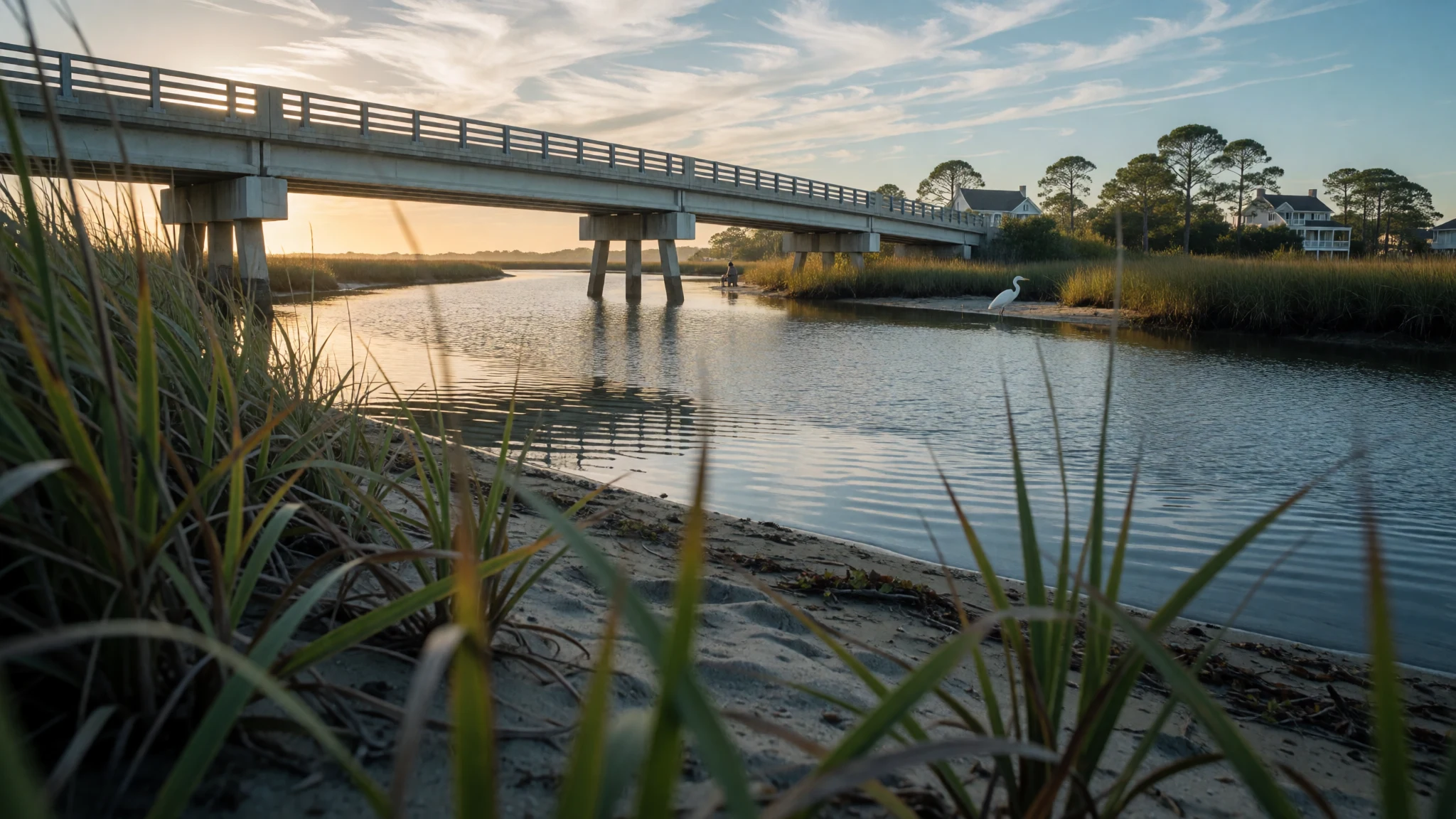
Chincoteague Island is a quiet Virginia fishing town on the water, where wild ponies, marshland birds and fresh oysters are all within a short drive.
The place
Chincoteague Island is a low, flat island off the Eastern Shore of Virginia, in Accomack County. A single town covers the whole island and a large stretch of the surrounding water, and most of that town's area is water rather than land. That explains the feel of the place: boats moored behind houses, tidal creeks, causeways and a very wide sky. The island sits barely above sea level, so tides and weather set the shape of the day.
The island matters mainly as the gateway to Assateague Island, just across a narrow channel. Assateague holds a national wildlife refuge, a popular ocean beach and the Virginia herd of Chincoteague ponies. Most visitors stay in the town, in its small motels, guesthouses and campsites, and eat at its seafood eateries, then cross to Assateague by day for sand, birds and ponies.
The climate is humid subtropical, with hot, sticky summers and mild to cool winters. Summer brings the crowds, the biting insects and slow traffic on the approach road. Spring and autumn are calmer, with migrating birds, workable temperatures and easier parking. This is a family resort rather than a party coast: evenings end early, shops are modest and nobody is in a hurry. Many first-time visitors arrive with a pony in mind, and plenty leave talking about the marsh light and the oysters instead.
Its story
Chincoteague Island began as a true barrier island, facing the open Atlantic. Barrier islands shift with storms and currents, and the neighbouring Assateague Island crept steadily south until, by the nineteenth century, it lay like a screen between Chincoteague and the ocean. That turned the island's seaward side into sheltered bay and marsh, a safer setting for fishing, farming and oystering, which became the backbone of local life.
English settlement began in the seventeenth century. A land grant went to Daniel Jenifer, the first English landowner, and within a couple of decades families named Bowden, Jester and Tarr were running large farms. The Native American name, Gingoteague, lies behind the modern spelling, though the form Chincoteague entered official United States geographic records only in the mid-twentieth century.
During the Civil War the islanders voted decisively to stay in the Union and rejected slavery. The war touched them lightly, with minor action in the bay at Cockle Creek.
The hardest day in the island's memory came with the Ash Wednesday Storm of 1962. A nor'easter left the whole town underwater and without power for days, and it wrecked almost every structure on Assateague, where building had only just begun.
Fame of a gentler kind came with Marguerite Henry's 1947 children's book Misty of Chincoteague. It turned the island's wild ponies and their annual swim into a story read around the world, and it led to the 1961 film Misty, shot on location.
What to see
- Chincoteague waterfront — Bayside, town centre
The bayside waterfront of Chincoteague Island shows the town's working side: docked boats, a small park, sunrise over flat water and a short strip of shops and eateries. Go early, before day-trippers arrive, to watch boats head out and herons work the shallows. It is an easy, flat stroll for any age.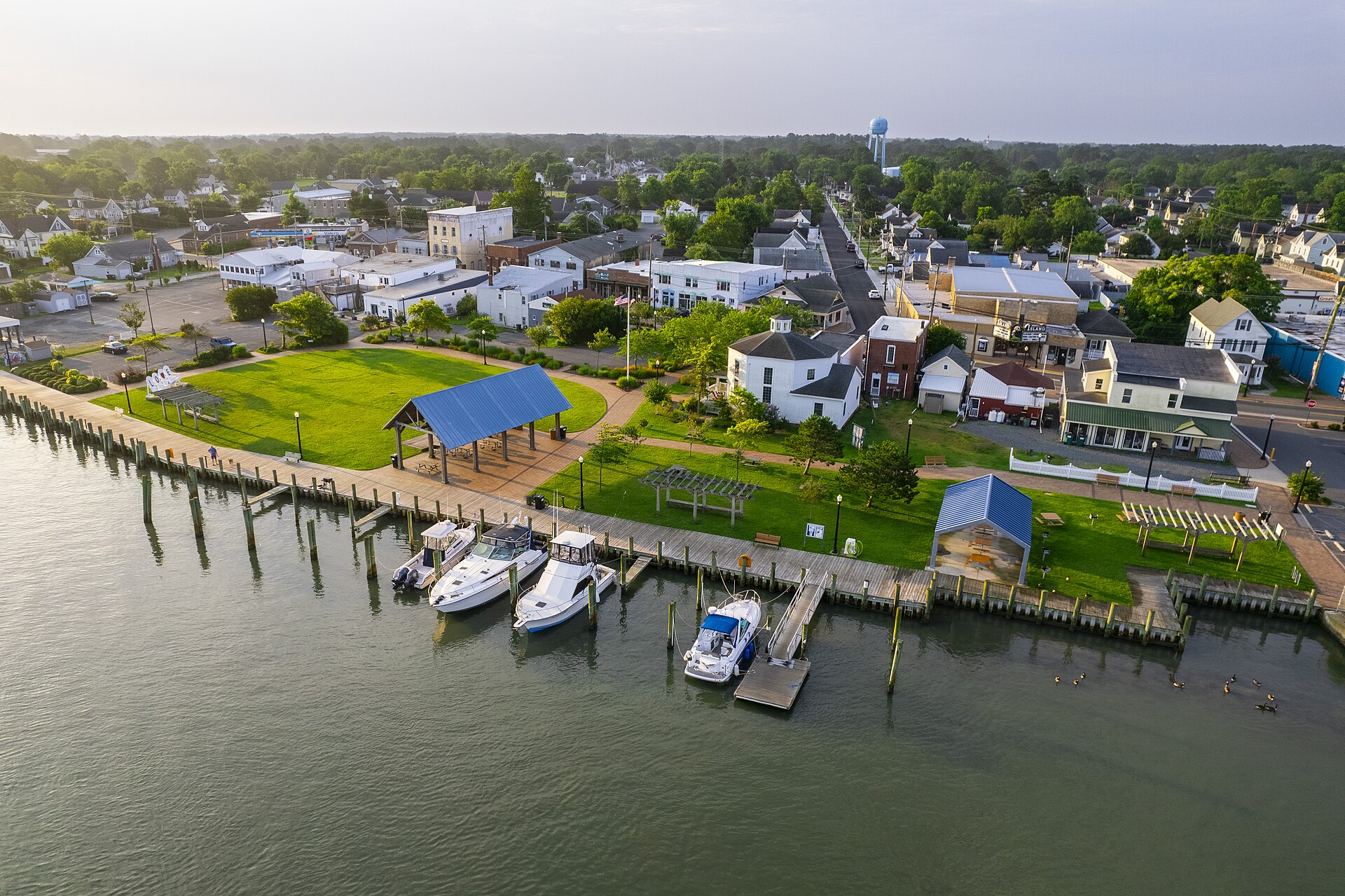
- Misty of Chincoteague statue — Town centre
A statue of Misty, the pony from the children's book, stands in the town and is a favourite stop for families who grew up with the story. It makes a cheerful photograph and a good way to introduce the local legend to children before they cross the channel to meet the real ponies.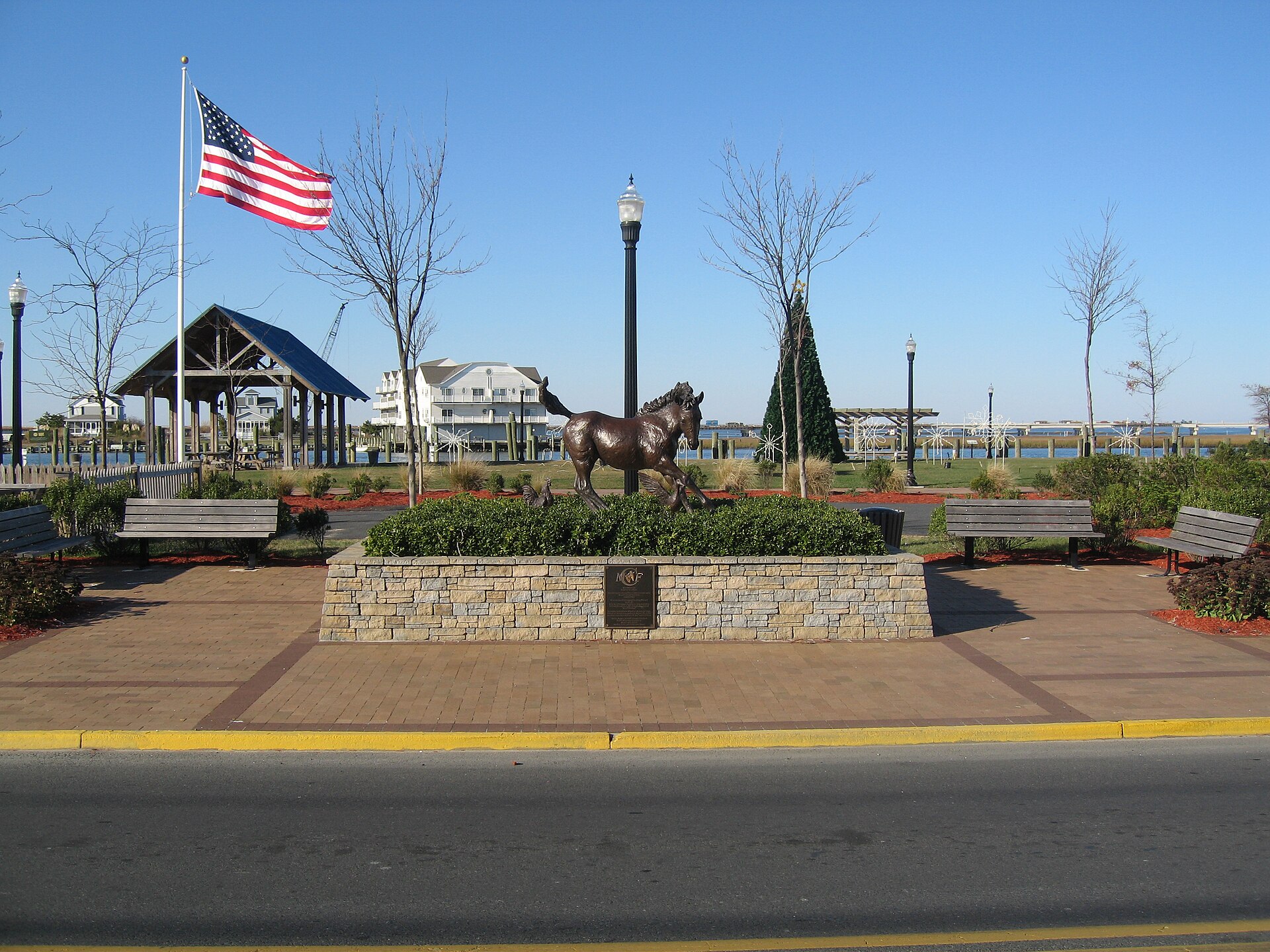
- The Pony Swim channel — Assateague Channel
Each summer the Assateague herd is brought across the channel to Chincoteague in the annual Pony Swim, watched from boats and shorelines by large crowds. Dates and viewing arrangements change, so check the official event pages well ahead. Outside the swim, the channel is still a good place to watch tides and birds.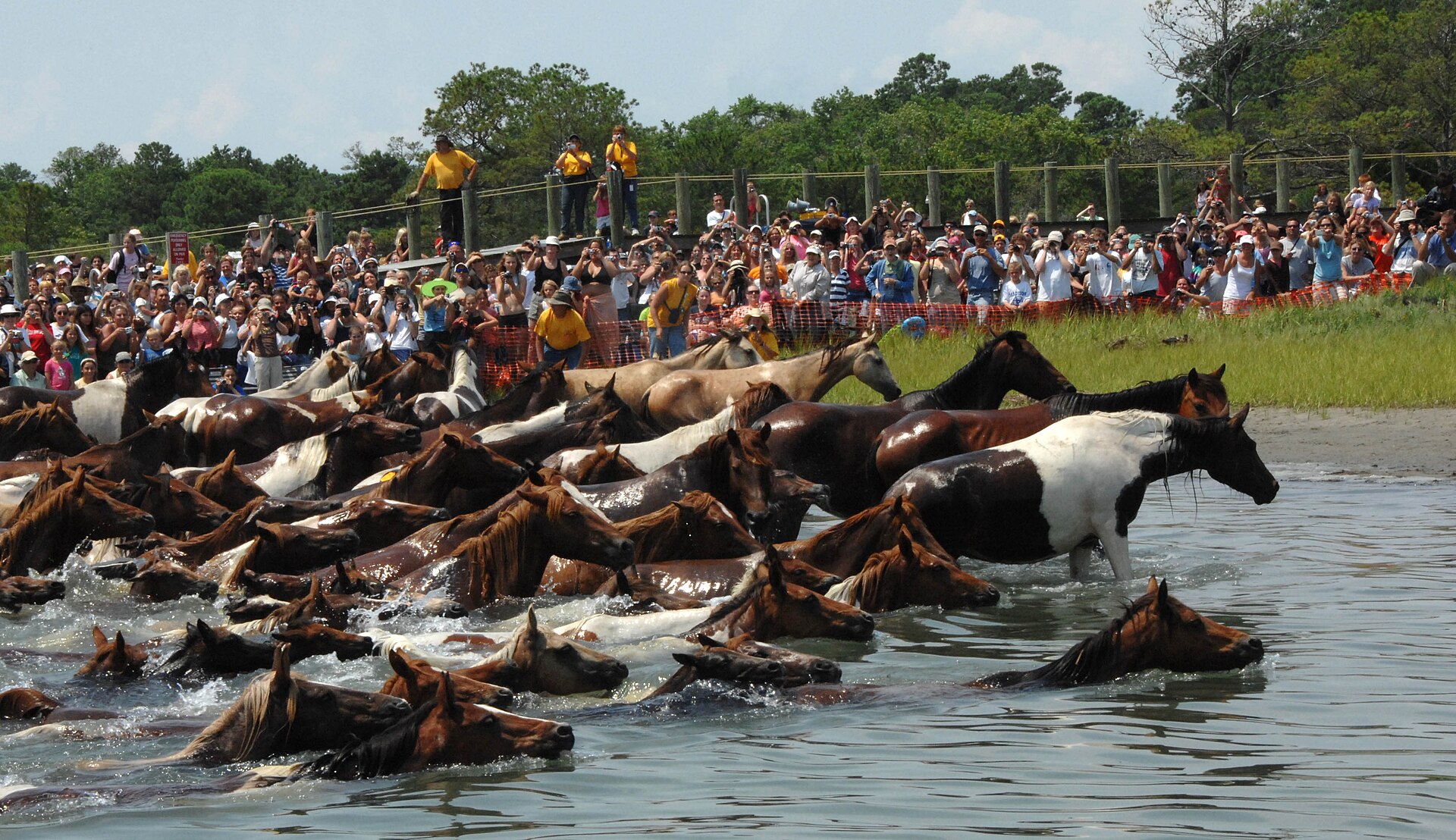
- Chincoteague National Wildlife Refuge — Assateague Island
The refuge covers the marsh, pine woods and dunes of Assateague Island, with walking trails, a lighthouse and a wildlife loop. Ponies graze the marsh and are best seen from the roadside or a trail with binoculars. Migrating birds peak in spring and autumn. Check the refuge's official site for access and seasonal closures. - Assateague beach — Assateague Island, ocean side
The recreational beach on Assateague is the main place for swimming, shell-hunting and long walks, backed by low dunes. Summer weekends bring crowds and biting insects, so the shoulder months suit better. Carry water, shade and sun protection, and swim only where lifeguard cover is posted, since ocean currents can be strong.
Culture
Chincoteague Island is a close-knit fishing and farming community that has become a gentle seaside resort without dropping its working habits. Oystering, crabbing and boat work shaped local life, and the water still sets the rhythm of work and conversation. Visitors tend to notice how many residents know one another, how early the day begins and how proud people are of the island's seafood.
The ponies sit at the centre of local identity. The herd and the annual Pony Swim are woven into island life, helped by Misty of Chincoteague, the book and film that made them familiar to generations of children across the English-speaking world. Shops, murals and seasonal events lean into the story cheerfully, and many families visit for that reason alone.
Storms are part of the island's memory too. The Ash Wednesday Storm still comes up in older residents' stories, and people take tide warnings and evacuation notices seriously. Hospitality is easy and informal: a friendly greeting in shops is normal, and a short chat with a boat owner or a stallholder will usually teach more than a guidebook. Tipping in restaurants and for guided tours is customary in the United States.
On Assateague, keep well back from the wild ponies, never feed or touch them, and give them room on roads and trails.
What to wear
Chincoteague Island has no regional costume in the way many places do; its distinctive dress is working clothing. Watermen have long worn oilskins, rubber boots and waders, canvas and heavy cotton shirts, and caps against sun and spray. For the Pony Swim, the riders who handle the herd are known as saltwater cowboys, and they wear wide-brimmed hats, jeans and sturdy boots, a look borrowed from ranch country but suited to wet marsh.
Day to day, people on the island dress casually and practically: shorts, T-shirts and sandals in the hot, humid summer, then fleeces, jeans and waterproof jackets in the mild to cool winter. Nobody dresses up for dinner, and fishing-company caps and faded boots are as common as anything.
Visitors should plan for sun, wind, water and insects. Light, breathable cotton or quick-dry layers work well in summer, with a wide-brimmed hat, sunglasses and a windproof layer for evenings on the water. Closed shoes with grip suit marshy trails, while sandals or water shoes are better on the beach. Long, light sleeves and trousers help against mosquitoes and biting flies on the marsh paths. There are no modesty rules to worry about beyond covering up in shops and restaurants, though a waterproof jacket is worth packing in any season, since coastal showers arrive quickly.
What to eat
- Oysters — Oyster bars and seafood eateries along the waterfront, and fish markets
Oysters from the surrounding salt waters are the island's best-known product, briny and clean-tasting. They are eaten raw on the half shell, fried or in stews. A seafood market is a good place to see what has come in that day. - Steamed blue crab — Casual crab houses and picnic-table eateries near the water
Blue crabs from the Chesapeake region are steamed with a sharp, peppery seasoning, then cracked open by hand on paper-covered tables. It is slow, messy food meant for sharing. Summer and early autumn are the usual season. - Crab cake — Diners and seafood eateries in the town centre
A good crab cake here is mostly lump crab meat held together lightly, then broiled or fried. It should taste of crab rather than filler. Ask how a kitchen makes theirs; the better ones arrive plain with a wedge of lemon. - Fried seafood platter — Family-run eateries close to the waterfront
A fried platter of flounder, shrimp and clam strips with chips is the classic family dinner. It is generous, crisp and salty, and a fair test of how fresh the kitchen's fish is. Coleslaw and iced tea usually come alongside. - Soft-shell crab — Seafood restaurants and fish markets
In season, from late spring into summer, whole soft-shell crabs are sautéed or fried and eaten shell and all. The flavour is sweet and rich. Menus only list them when they are fresh, so ask what is available that week.
Plan it
Best time. May–June and September–October, when temperatures are workable and crowds are thinner. Summers are hot, humid and busy, with biting insects, and winters are mild to cool and quiet, with some seasonal businesses closed.
How long. 2–3
Getting there. Norfolk International Airport (ORF) is the nearest major airport in eastern Virginia, and Washington Dulles (IAD) and Reagan National (DCA) also serve the region. Chincoteague has no rail service, so the last leg is a drive over the causeway from the mainland; hire a car, as local public transport is thin.
Budget. mid
Tips
- Book accommodation early for summer and for the Pony Swim period, and check the official event pages for dates
- Visit Assateague early in the morning for cooler air, fewer people and better chances of seeing ponies and birds
- Carry insect repellent, sun protection and water; tap water is safe to drink in Virginia
- Bring a card but keep some cash for small stalls and seasonal stands
- Check the refuge's official site for access, closures and weather warnings before crossing to Assateague
Etiquette
- Keep well back from the wild ponies and never feed or touch them
- Stay on marked trails and boardwalks so the dunes and marsh are not trampled
- Tip restaurant staff and guides as is customary in the United States
Nearby
Sources
- Wikidata Q42291464 (CC0)
- Wikipedia: Chincoteague Island (rev 1374270414) (CC BY-SA 4.0)
- Wikivoyage: Virginia (rev 5372253) (CC BY-SA 4.0)
- Photo: West Chincoteague 2021, Mbinebri / Matthew Binebrink (CC BY-SA 4.0)
- Photo: Misty of Chincoteague statue, Leonard J. DeFrancisci (CC BY 3.0)
- Photo: Chincoteague pony swim 2007, United States Coast Guard (Public domain)
- Photo: Naval Auxiliary Station Chincoteague, United States Navy (Public domain)


Wildlife
- Wild pony (animal)
Think of a pony as a horse on tiptoe: a hoofed mammal that walks on a single toe. People tamed horses long ago, yet some tamed kinds now live free and are called feral. On Chincoteague Island, the ponies graze out on the marshes. The best way to see them is from the roadside or along a trail, with binoculars in your hands. Watching from a distance lets the ponies carry on grazing, undisturbed by your visit.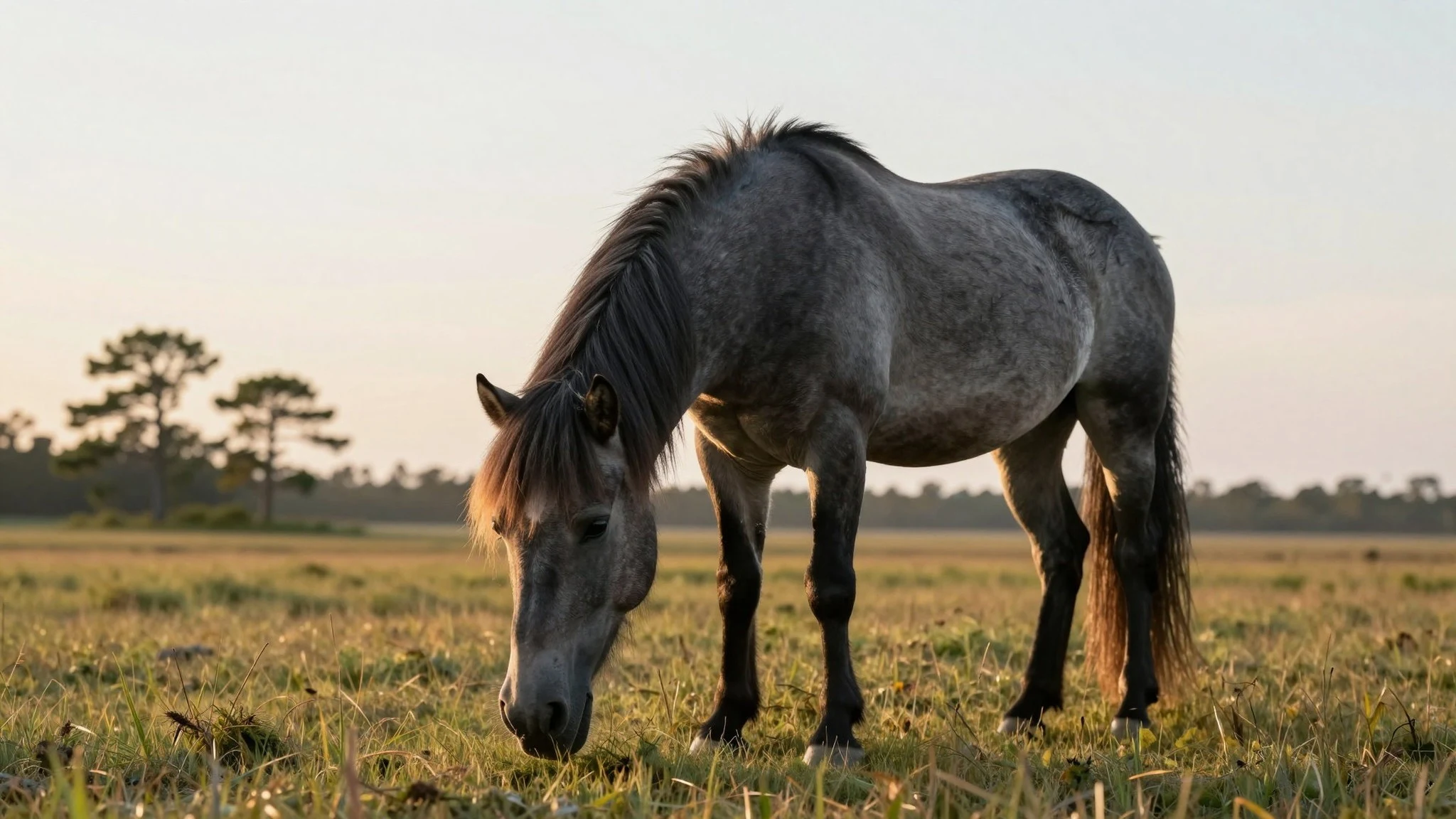
- Heron (animal)
The great blue heron is a big wading bird that stands in shallow water on long legs. Around Chincoteague Island, you can watch herons working the shallows while boats head out from the shore. Go early, before the day visitors arrive, when the water feels calm and the herons have it to themselves. Stand quietly at a comfortable distance, so the birds can carry on undisturbed.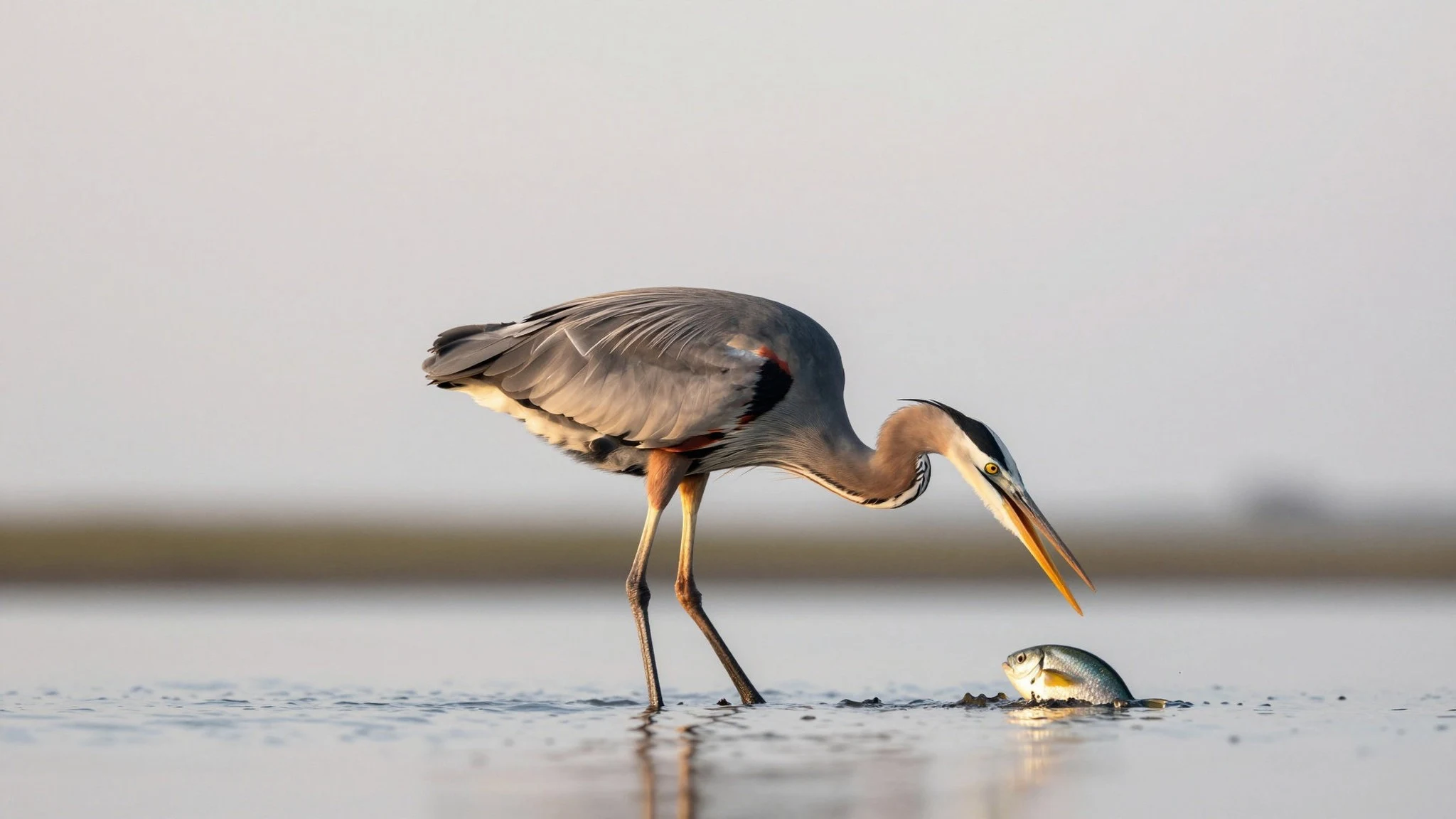
- Great blue heron (bird)
The great blue heron is a big wading bird that stands in shallow water on long legs. Around Chincoteague Island, you can watch herons working the shallows while boats head out from the shore. Go early, before the day visitors arrive, when the water feels calm and the herons have it to themselves. Stand quietly at a comfortable distance, so the birds can carry on undisturbed.