Catskill Mountains
Catskill Mountains, United States
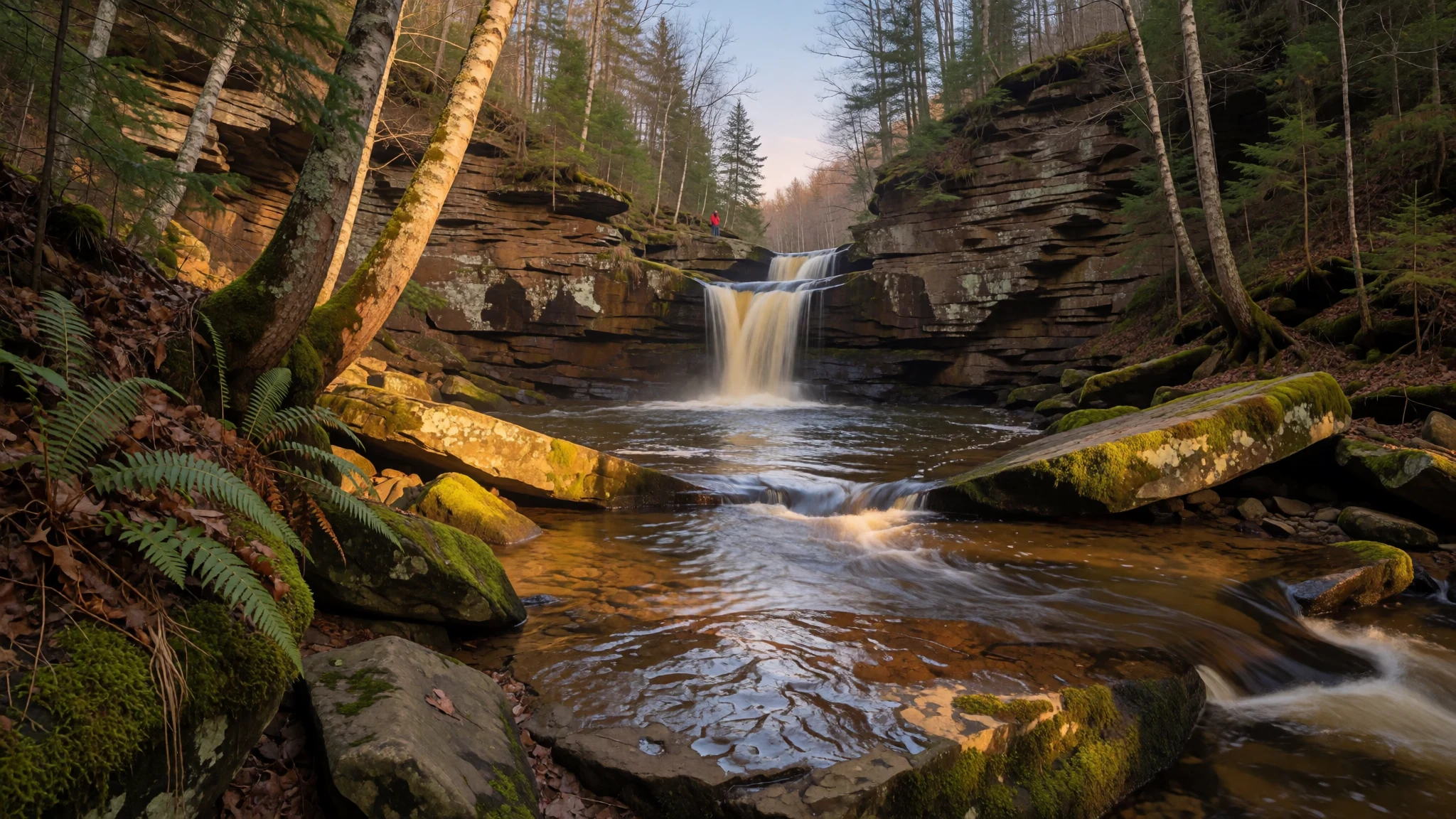
The Catskill Mountains are a forested plateau of waterfalls, trout streams and artist towns, a short drive from New York City but a world apart.
The place
The Catskill Mountains rise in southeastern New York, west of the Hudson River, and feel more remote than their distance from New York City suggests. Geologically they are not a chain of folded peaks but a plateau that was lifted and then carved by streams into steep-sided ridges and narrow cloughs, which is why the skyline reads as a row of rounded summits of similar height. The eastern edge is the dramatic part: the Catskill Escarpment climbs abruptly out of the Hudson Valley and gives long views across the river. The western side is gentler, with lower hills, farmland and quiet rivers, and its boundary fades into the wider plateau. Much of the heart of the range lies inside Catskill Park, a forest preserve where development is tightly limited by state law. Most of the range falls in Greene and Ulster counties, spilling a little into Delaware, Sullivan and Schoharie. Towns set the character: Hunter and Windham are ski villages, Tannersville has a Main Street of cafés and shops, Woodstock and Phoenicia carry an artistic reputation, and Roscoe is known to anglers. Summers are warm and humid, winters are properly cold and snowy, and autumn colour brings the heaviest weekend traffic. There is no practical public transport inside the range, so it is a place best handled by car, with patience on narrow roads and a willingness to leave the main route.
Its story
The Catskill Mountains take their name from early Dutch settlers, who saw them as a blue wall behind the Hudson. In the nineteenth century, painters of the Hudson River School made the range a national symbol, putting cloud-lit ridges and waterfalls on canvas at a time when American artists were hunting for a landscape of their own. Their pictures drew visitors, and visitors needed beds, so grand mountain hotels went up along the escarpment. The Catskill Mountain House was the best known, and its ruins can still be reached on foot from North-South Lake. Later the region became the summer escape of choice for families from New York City. By the middle of the twentieth century, large resorts, many run by and for Jewish families, filled the valleys with dining halls, pools and stages, and young comedians learned their craft there in front of demanding audiences. That circuit has mostly closed, though faded signs and a few old delis remain. Artists, musicians and writers had been settling in the hills since the late nineteenth century, and Woodstock and Phoenicia still lean on that tradition. Meanwhile the trout rivers, ski slopes and protected forest kept outdoor visitors coming. The Catskills today are layered: working farms in the west, weekend-home villages in the east, and a great deal of quiet woodland between them, shaped by painters, hoteliers, comedians and anglers.
What to see
- Kaaterskill Falls — Palenville and Haines Falls
Kaaterskill Falls drops in two stages through a rocky gorge near Palenville and is the Catskills waterfall most often painted and photographed. The viewing trails are short but steep and slippery after rain, so sturdy shoes matter. Go early on a weekday in summer or autumn, as the car park and path fill quickly.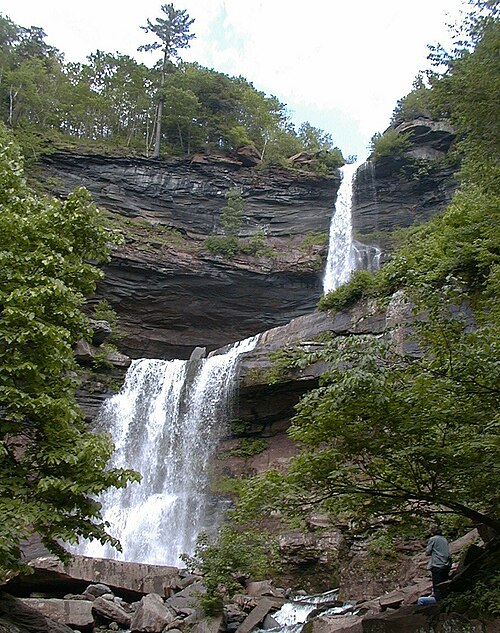
- North-South Lake — Haines Falls, Greene County
North-South Lake, above Haines Falls, is a sensible first stop for anyone new to the range. There is swimming, boating and fishing on the water, a campground, and a web of trails. One of them leads to the ruins of the Catskill Mountain House and the cliff-edge views that made the hotel famous. - Platte Clove — Eastern Catskills, near Elka Park
Platte Clove is a deep, wooded cleft in the escarpment, reached by a steep and winding road that rewards slow driving. Its streams and rock walls feel wilder than the busier falls nearby. Read local signs before setting off on foot, because hiking is discouraged in parts of the clove.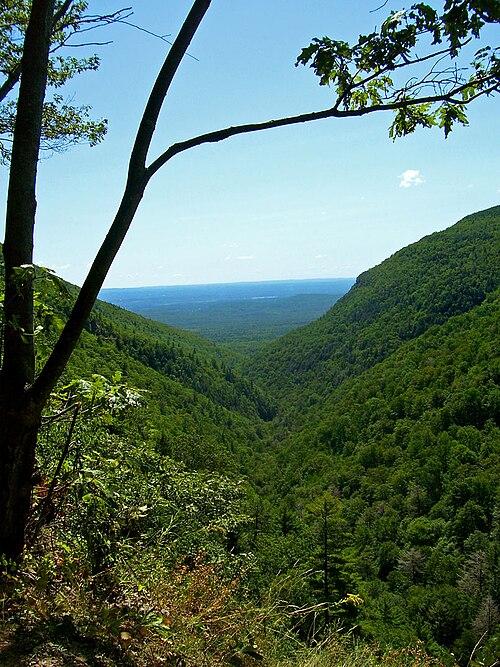
- Balsam Lake Mountain fire tower — Hardenburgh, western Catskills
The fire tower on Balsam Lake Mountain stands in the quieter western Catskills, at the end of a forest walk that is steady rather than severe. Climbing the tower lifts you above the trees for a wide view over ridge after ridge. It is a good choice for avoiding the eastern crowds.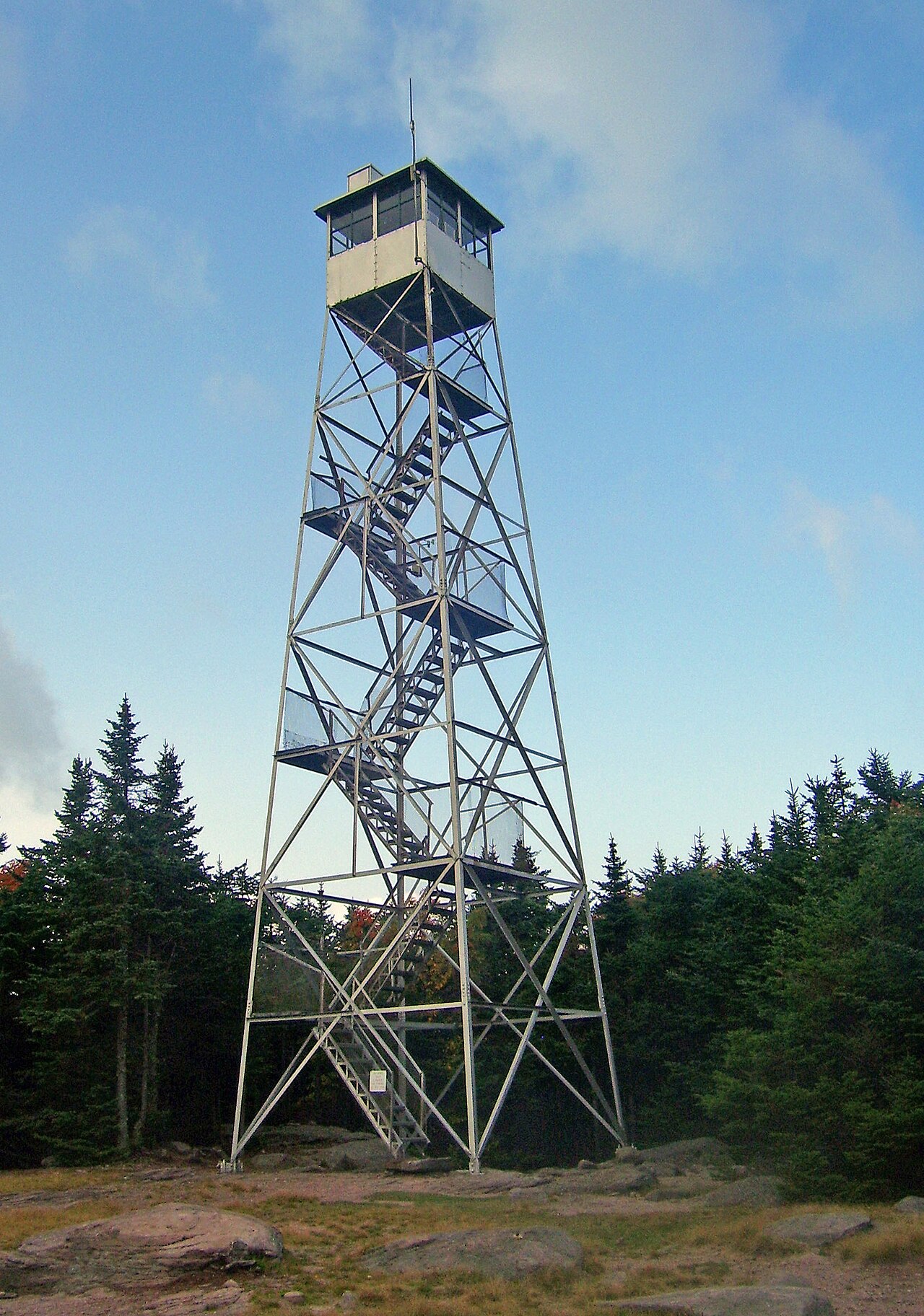
- Opus 40 — Saugerties, east of Woodstock
Opus 40 is a large sculpture garden built from an old bluestone quarry near Saugerties, on the eastern fringe of the mountains. Stone walkways, ramps and terraces are set against open views, and the site is listed on the National Register of Historic Places. Check the official site before visiting, as opening times vary by season. - Esopus Creek at Phoenicia — Phoenicia, Ulster County
Esopus Creek runs through Phoenicia, a small town with a relaxed, arty feel. In summer, visitors float the creek on inflatable tubes when the water is right, and the town's shops and cafés handle the aftermath. Water levels change fast, so ask a local outfitter about conditions first.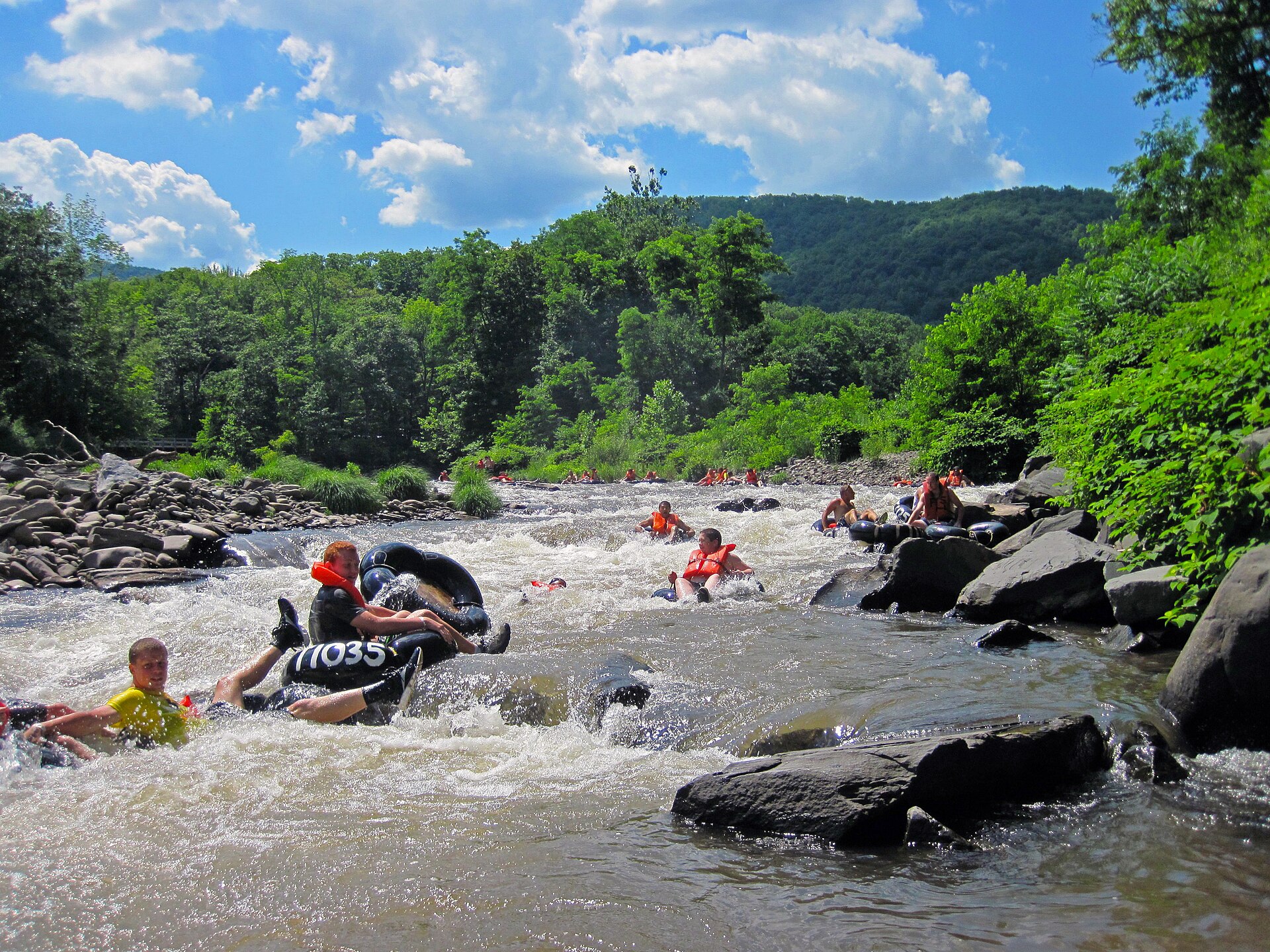
Culture
The Catskill Mountains have two cultures that sit side by side. In the east, tourism and second homes have shaped the villages, and the creative streak runs through Woodstock, Phoenicia and the studios and galleries around them. Music, craft, small theatre and open-air sculpture are part of ordinary weekend life. The Franklin Stage Company, in the western village of Franklin, stages classic and new plays in a restored hall, and its mission includes keeping shows admission-free, though it is wise to confirm dates locally. The old resort era left a different cultural mark. Jewish holiday camps and hotels shaped American stand-up comedy, and deli food, jokes and nostalgia still turn up in the region's identity. Fishing is another tradition, especially along the Willowemoc, the Beaverkill and the reservoir-fed rivers of Sullivan and Delaware counties, where fly-fishing is a serious pursuit rather than a pastime. Farming dominates the west, where villages are small, residents are reserved and restaurants are fewer; a nod and a wave on a country road is about as much conversation as you should expect. Weekends in autumn and winter can strain small communities, so being a considerate guest matters. Park only in signed bays at trailheads, keep off private land and carry all your rubbish out, because the preserve depends on visitors leaving no trace.
What to wear
The Catskill Mountains have no single regional costume. Traditional working clothing here means hard-wearing wool, flannel and canvas, the checked flannel shirt and heavy jacket of farmers, hunters and anglers, with waders and waxed hats for fishing. Hunters add bright orange in the season so they can be seen in the woods. In the old resort era, summer guests dressed up for dinner and dances, but that formality has largely gone. Today people wear what suits the weather: jeans, fleece, boots and a waterproof shell on the trail, and casual linen or cotton in the artsy towns. Woodstock and Phoenicia are relaxed, with a layered, vintage-leaning style, while ski villages fill with technical jackets in winter. Visitors should dress for changeable mountain weather rather than for the plain look of the villages. In summer bring light, quick-drying layers, a hat, insect repellent and a rain jacket, as humid days can end in sudden storms. In autumn and spring add a warm mid-layer, and in winter bring insulated boots, gloves and a proper coat. Footwear matters most: wear boots or trail shoes with real grip for waterfalls and rocky paths, which stay slick long after rain. No religious dress code applies at the sights, though ordinary modesty is expected in village shops and restaurants.
What to eat
- Fresh trout — Restaurants and diners in Roscoe and the Sullivan County river towns
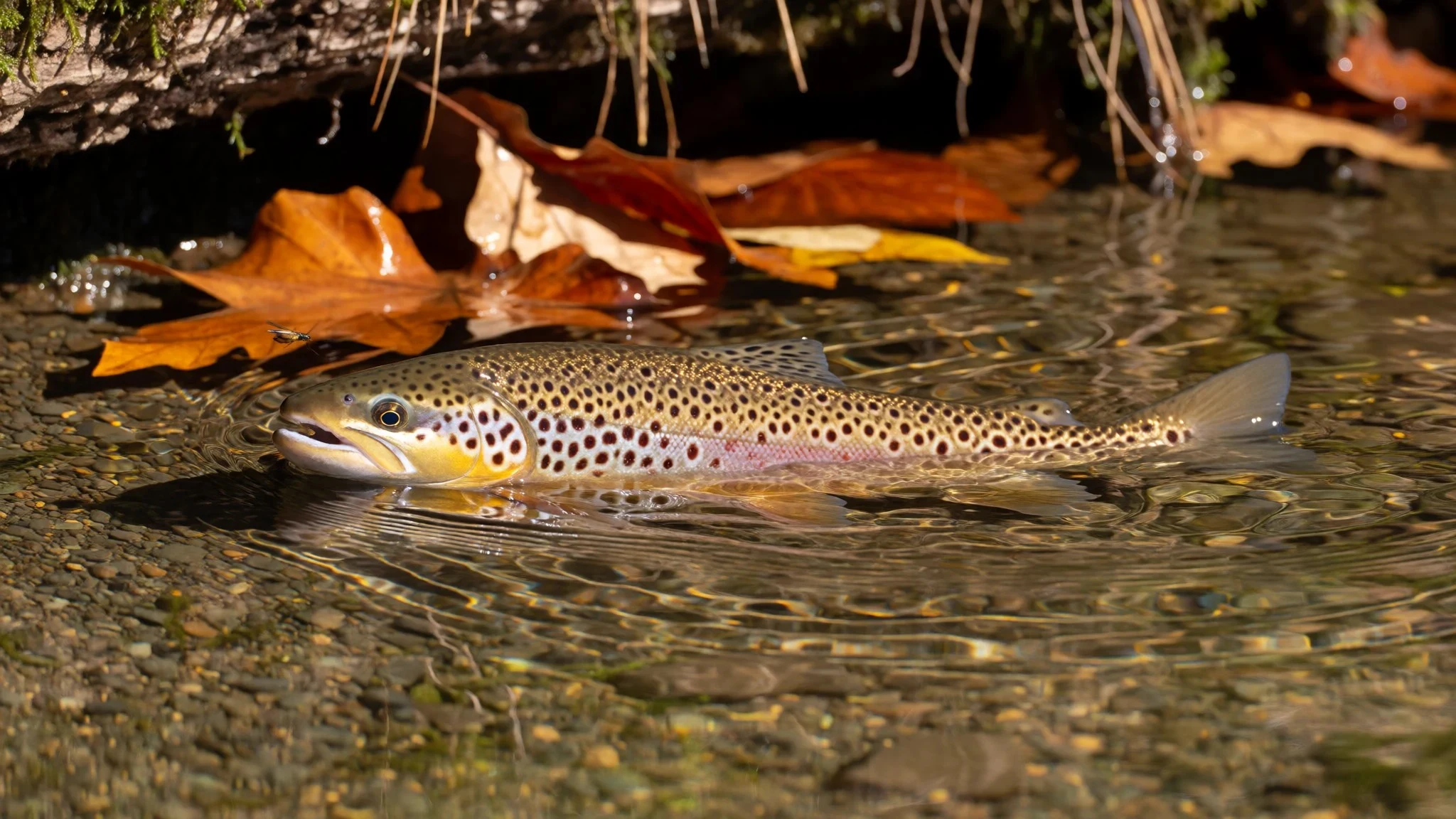
Brown trout from the Beaverkill, Willowemoc and nearby rivers is the region's signature catch. Anglers keep or release their own, while restaurants in fishing towns such as Roscoe often serve trout pan-fried or baked. Spring and autumn, when the water is cool, are the best seasons. - Deli sandwiches and bagels — Delis and bakeries in the main villages of Sullivan and Ulster counties
The Jewish resort era left a lasting taste for pastrami on rye, chopped liver, smoked fish and boiled bagels. Some old-style delis survive, and newer places carry on the tradition with local twists. They suit a hearty lunch before a trail. - Farm-stand produce — Roadside farm stands and farmers' markets across Delaware County
The farmland of the western Catskills supplies sweetcorn, tomatoes, berries and apples in their seasons. Roadside stalls sell them cheaply, often on an honesty-box basis, and are a pleasant alternative when restaurants are scarce. Carry small notes for them. - Cider and apple doughnuts — Orchards and farm shops around the Hudson Valley foothills
Autumn in the Catskills means fresh-pressed apple cider and warm cider doughnuts, sold at orchards and farm shops as the leaves turn. Some orchards also make hard cider. Both are an easy way to spend a rainy foliage afternoon. - Maple syrup — Sugar houses and village general stores in the higher valleys
Late winter is sugaring season, when sap from local maples is boiled down into syrup. Small producers open their sugar houses to visitors in some years, and the syrup features in pancakes, glazes and baking. Look for it at village shops. - Main Street restaurant dining — Main Streets in Hunter, Windham, Woodstock and Tannersville
The eastern villages of Hunter, Windham, Woodstock and Tannersville have a good run of eateries, so an evening stroll along each Main Street offers plenty of choice, from casual pub food to more ambitious cooking using regional produce.
Plan it
Best time. September to October for autumn colour and cooler hiking, and June for green woods and swimming before the humid peak of summer. Winters are cold and snowy, good for skiing around Hunter and Windham. Most of the range has a humid continental climate with warm summers and hard winters.
How long. 2–4
Getting there. There are no major airports in the Catskills themselves. Stewart International Airport near Newburgh suits the southern side, and Albany International Airport suits the northern side, especially Greene County. There is no passenger rail into the range; Amtrak's Empire Service stops at Rhinecliff and Hudson on the Hudson River, where you can pick up bus links or a hire car. A car is the practical last leg.
Budget. mid
Tips
- Visit popular spots such as Kaaterskill Falls early on weekdays, as autumn weekends are crowded
- Book accommodation well ahead for foliage season and ski weekends, since small villages fill up
- Carry water, a map and a rain layer, because phone signal is patchy on trails and in valleys
- Western roads are quiet and restaurants are few, so plan meals and fuel before heading west
- Check conditions with local outfitters before tubing or fishing, as river levels change quickly
Etiquette
- Park only in signed bays at trailheads and keep to marked paths
- Carry out all rubbish and keep off private farmland
- Greet locals politely on quiet roads and in small shops
Nearby
Sources
- Wikidata Q630566 (CC0)
- Wikipedia: Catskill Mountains (rev 1381492478) (CC BY-SA 4.0)
- Wikivoyage: Catskills (rev 5434404) (CC BY-SA 4.0)
- Central Catskills from Twin south summit, Daniel Case (CC BY 3.0)
- Catskills beyond Hudson, Daniel Case (CC BY 3.0)
- Map Novi Belgii Novaeque Angliae (Amsterdam, 1685), Nicolaes Visscher (Public domain)
- Tubers on Esopus Creek 2011, ScubaBear68 (CC BY 2.5)
- Kaaterskill Falls, Mwanner (CC BY 3.0)
- Platte Clove, Daniel Case (CC BY 3.0)
- Balsam Lake Mountain fire tower, Daniel Case (CC BY 3.0)
- Paul Weber, Scene in the Catskills, 1858 (CC0 1.0)


Wildlife
- Brown trout (animal)
The brown trout is a hungry fish that eats other animals, a bit like a tiny river wolf with fins. It first lived in Europe, western Asia and north Africa, but people carried it across the world for anglers to catch, so it is not native to the Catskills. You will find it in the region's trout streams. Watch from the bank, staying low and quiet so your shadow does not spook it. A local guide can help you spot it. Never feed it.