Capilano Suspension Bridge
Capilano Suspension Bridge, Canada
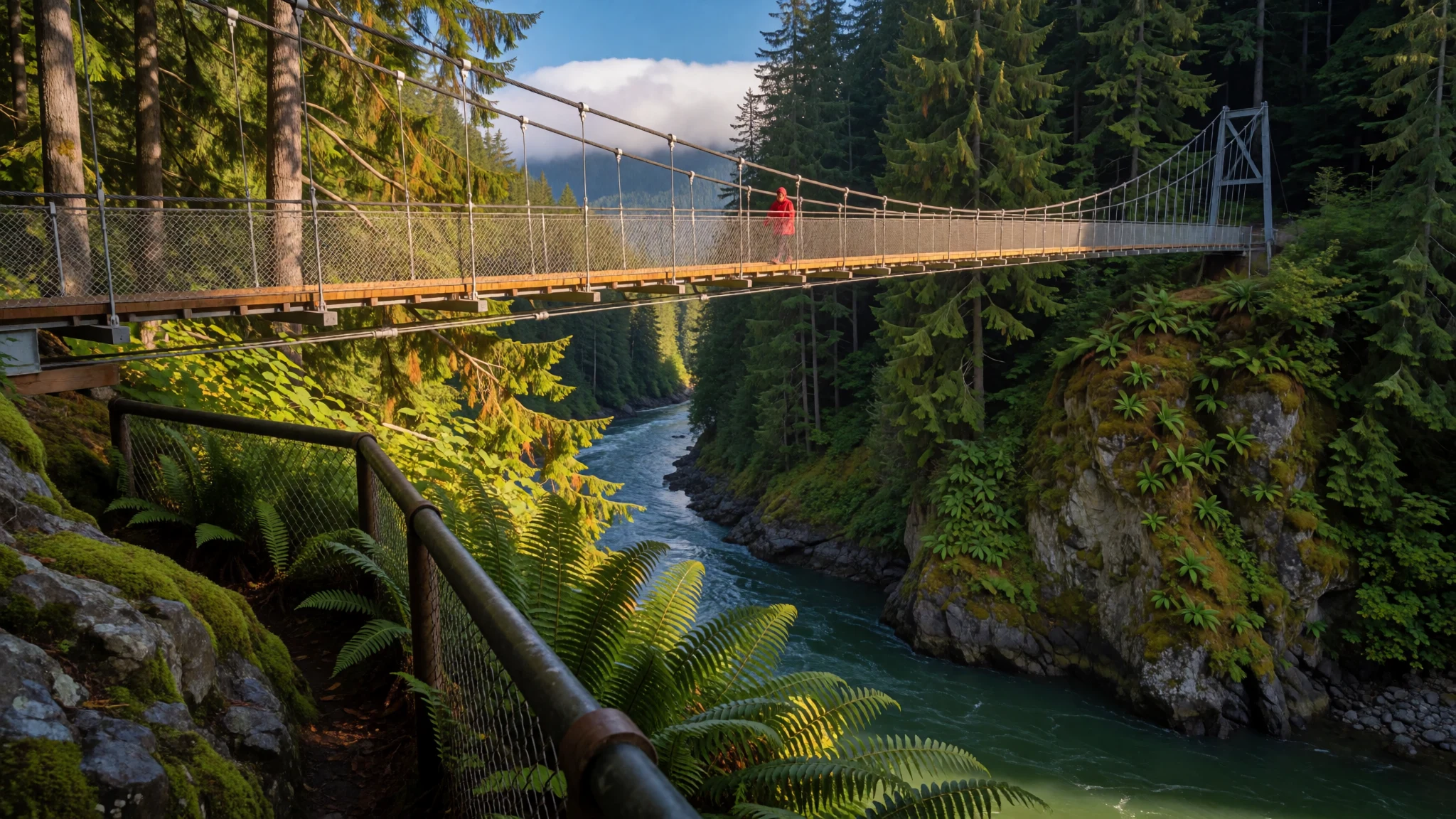
Capilano Suspension Bridge is a swaying plank walkway above a forested river canyon, with treetop paths and totem poles an easy trip from Vancouver.
The place
Capilano Suspension Bridge crosses the Capilano River canyon in the District of North Vancouver, British Columbia, on the far side of the harbour from downtown Vancouver. The bridge is 140 metres long and hangs 70 metres above the water, a plank deck slung between two walls of dark conifer forest. It is not a public right of way but the centrepiece of a private park that charges admission, so a visit is a ticketed outing rather than a casual stroll. About 1.2 million people come each year, and on a summer weekend that is felt: the deck fills, the pace drops to a shuffle, and the bounce of the boards passes from one walker to the next. Beyond the bridge the park holds a stand of tall Douglas fir with raised walkways, a path along the canyon wall, and a group of carved totem poles. The setting is coastal forest, so moss, ferns and drizzle are part of the picture for much of the year. Most visitors need an hour or two, longer if they linger among the trees. The experience is short, a little theatrical and genuinely dizzying for anyone uneasy with heights, but the canyon itself, green and loud with moving water, is worth seeing even for those who keep a hand on the rail. Current tickets and opening times are on the official site, capbridge.com.
Its story
Capilano Suspension Bridge dates from 1889, when George Grant Mackay, the Scottish civil engineer serving as Vancouver’s park commissioner, installed the first crossing over the canyon. That version used hemp rope and a deck of cedar planks, materials suited to a quick build rather than a long life, and a wire cable bridge replaced it in 1903. Ownership then passed through several hands. Edward Mahon bought the bridge in 1910. In 1935 'Mac' MacEachran took over and invited local Indigenous people to raise their totem poles in the grounds, which gave the park the Indigenous theme it still carries. He sold it in 1945 to Henri Aubeneau, and the bridge was completely rebuilt in 1956. Nancy Stibbard bought the park in 1983, and attendance grew under her ownership. The park also began adding attractions. The Treetops Adventures launched in 2004. It features seven bridges that connect mature Douglas firs on the canyon’s western edge, reaching a height of roughly 30 metres above the ground. Cliffwalk followed in 2011. The story is that of a private attraction shaped by a succession of owners and their ideas of what visitors would pay to see. It is also worth remembering that the poles arrived by an owner's invitation, and that the First Nations cultures of British Columbia reach far beyond the boundaries of a single park.
What to see
- The Suspension Bridge — Capilano River canyon, North Vancouver
The main span is 140 metres long and 70 metres above the river, a plank deck hung on wire cables that flexes and bounces underfoot. Crossing takes a few minutes when the deck is quiet and far longer in July. The middle is the place to stop for the view down to the water and along the fir-covered canyon walls.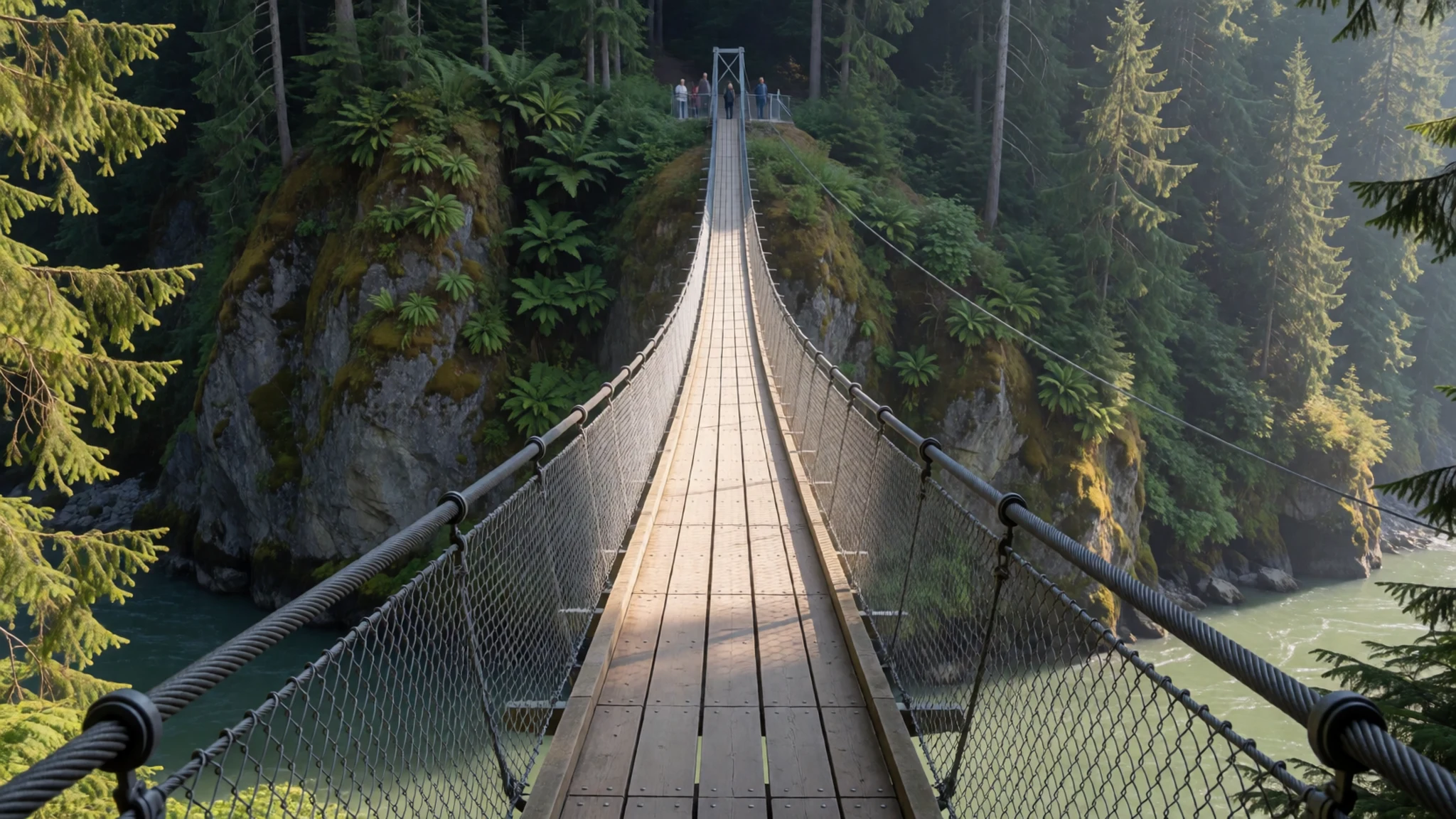
- Treetops Adventure — West side of the canyon
Seven footbridges connect ancient Douglas firs on the canyon's western bank, reaching heights of roughly 30 metres. Where the main bridge looks across a gap, this section puts walkers among trunks and branches, so the forest rather than the drop is the point. It opened in 2004 and is a calmer counterpoint to the main span.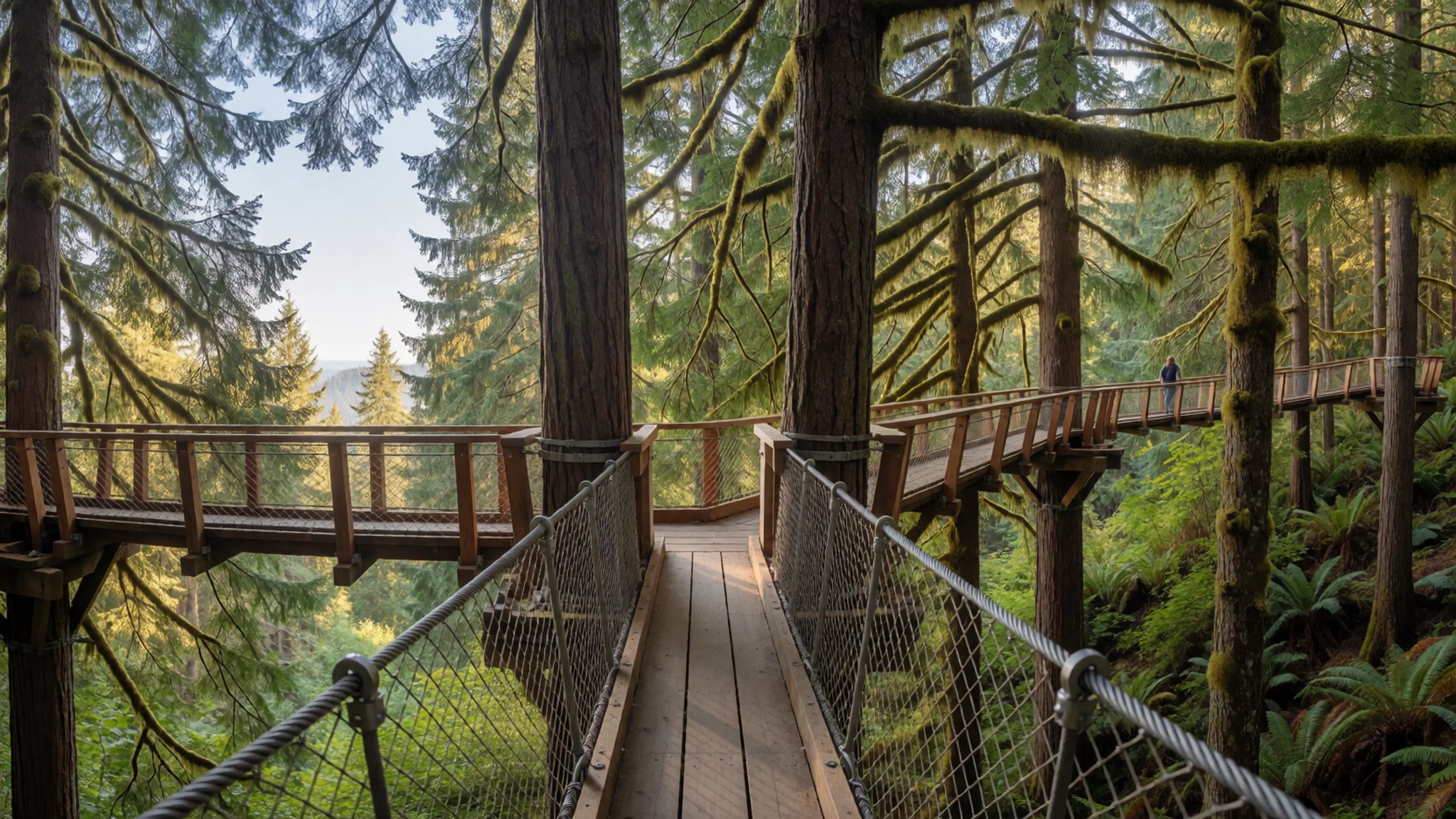
- Cliffwalk — Canyon wall, within the park
Added in 2011, Cliffwalk is a walkway that follows the canyon wall rather than crossing it, keeping walkers close to the rock with the river below. Its character is different from the swaying main bridge, and it rewards a slow look at the stone, the moss and the water. It is easy to hurry past, so allow time for it.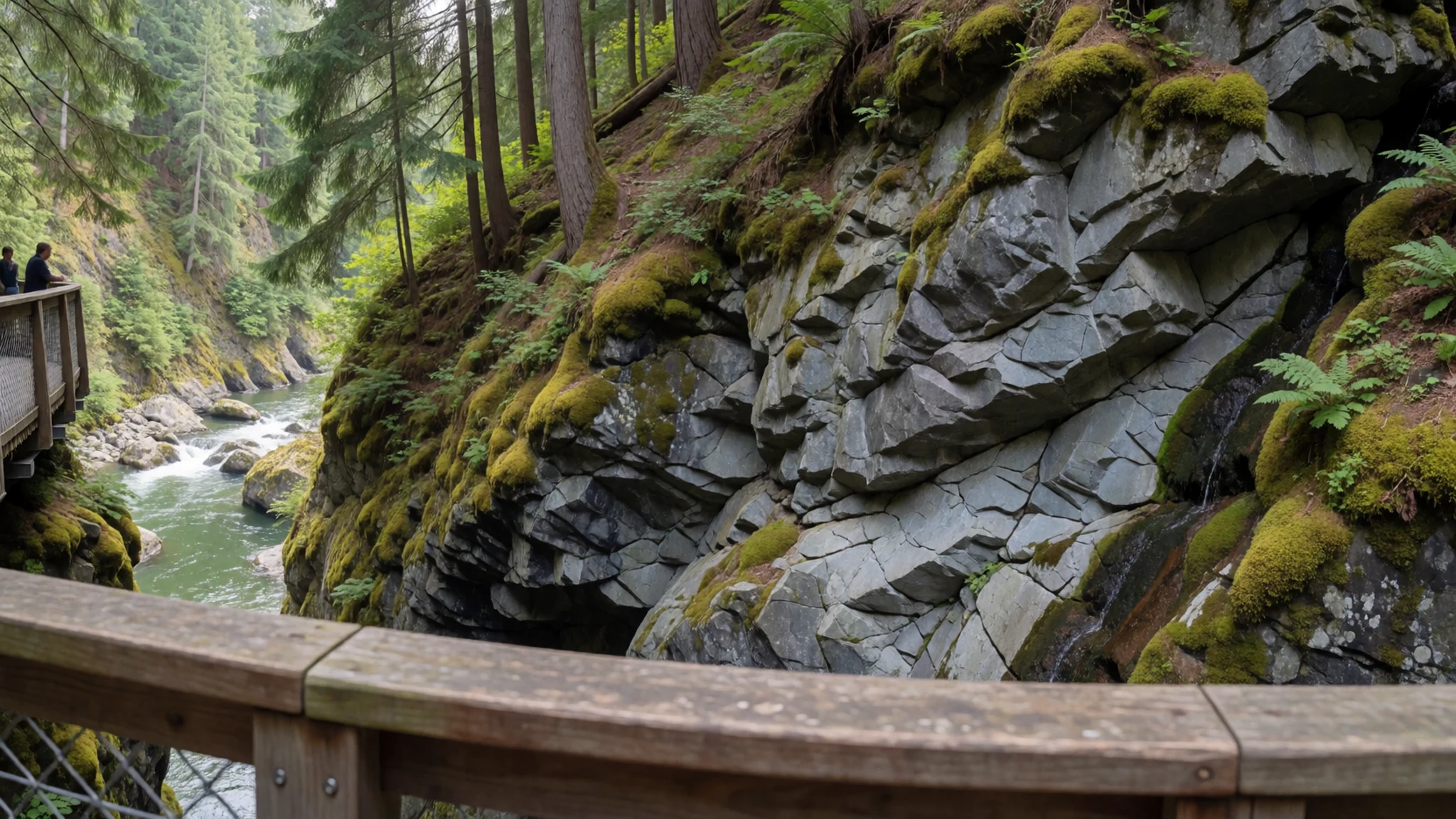
- The totem poles — Park grounds
Totem poles stand among the trees, a tradition that goes back to 1935, when the park's owner invited local Indigenous people to place their poles here. Each pole carries stories belonging to a family or nation, so understanding the carved figures needs a guide or a sign rather than guesswork. Treat the display as living culture, not scenery.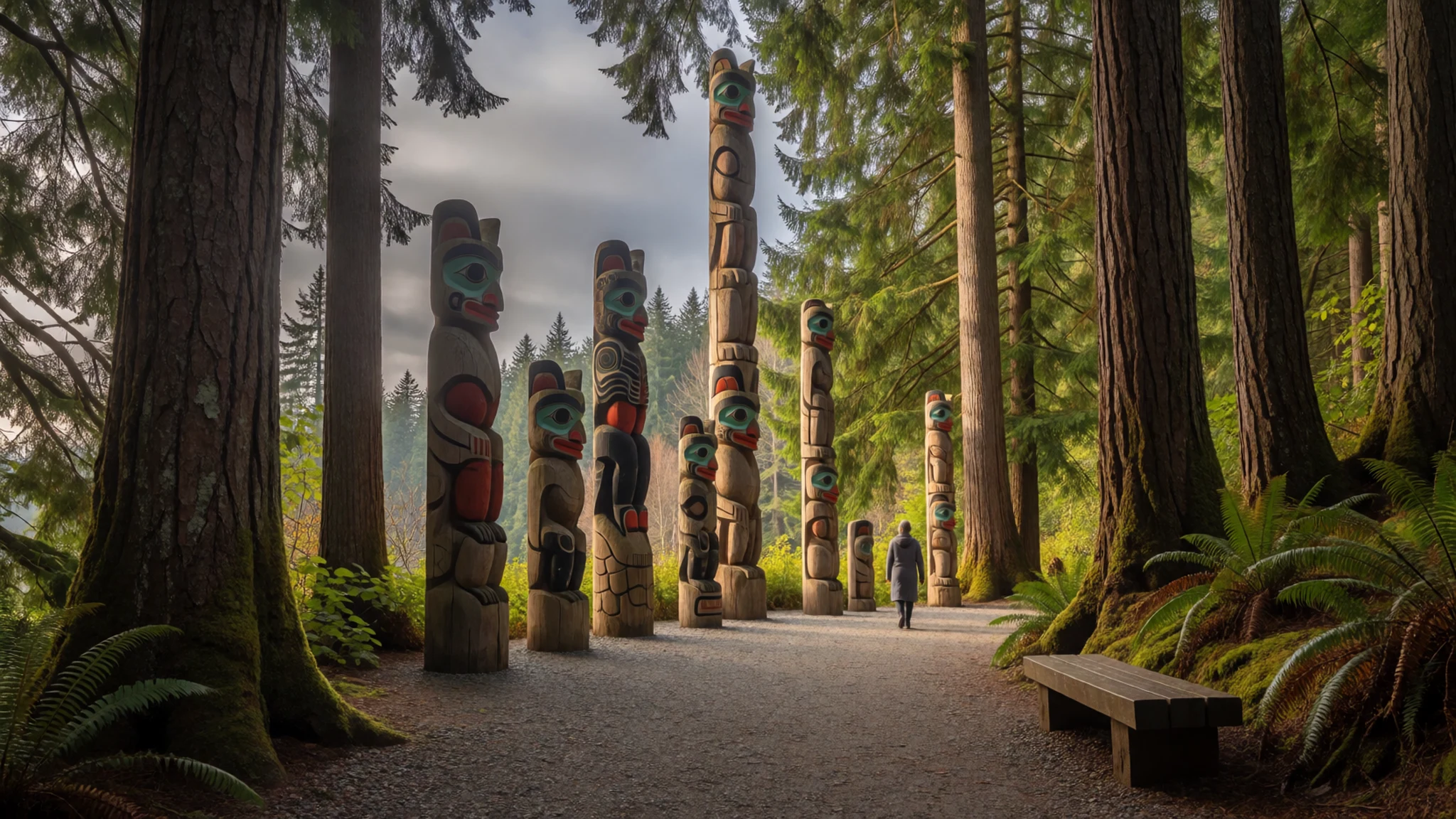
- Stanley Park — Downtown Vancouver
Stanley Park covers a peninsula beside downtown Vancouver and pairs well with the bridge on a second half-day. A seawall path invites a long stroll, and the park holds an aquarium, historical points of interest and more totem poles. Wandering is part of the appeal, though individual attractions inside may charge, so check before going.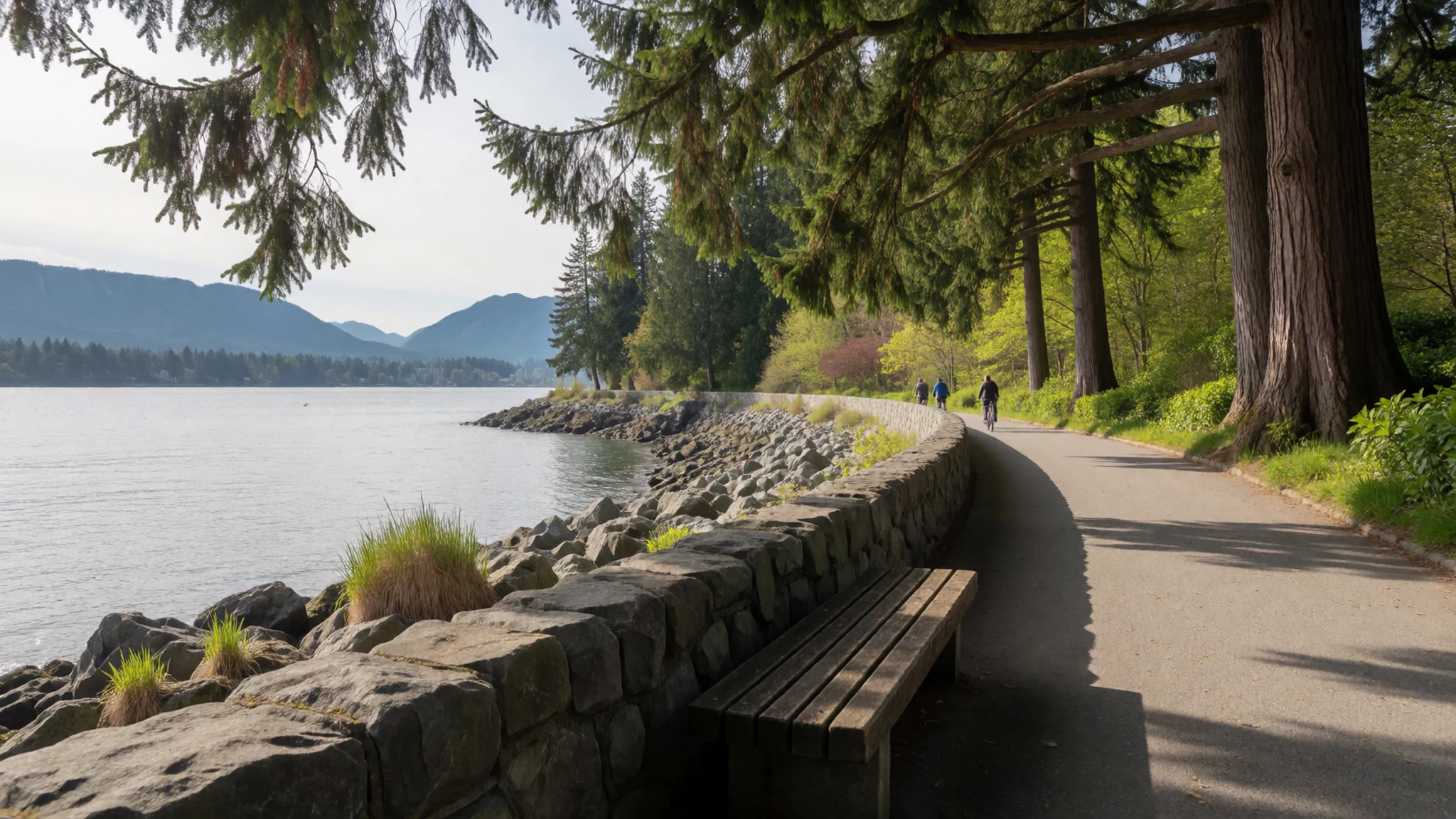
Culture
Capilano Suspension Bridge sits in a province that was home to many Indigenous nations long before Europeans arrived. Before contact, people on the coast and along the big rivers lived in settled communities with complex social ranks, largely because salmon were so plentiful, while inland groups were mobile hunter-gatherers in smaller bands. More than thirty languages from seven language families were spoken here when Europeans began recording them. Today the accepted terms are Indigenous or First Nations, and older labels are best avoided. The park's cultural thread is its totem poles, invited into the grounds in 1935. They are carved works that tell stories belonging to particular families and nations, so they are not decoration, and the park is a commercial setting rather than a place where those cultures are explained in full. The wider province offers more: museums, cultural centres and Indigenous-led tours in and around Vancouver give a fuller picture than any single attraction can. British Columbia is also shaped by later settlement from Europe, Asia and elsewhere in North America, which is why the region's food and neighbourhoods are so varied. Keep to the paths around the totem poles, never climb on or lean against them, and ask before photographing people or any ceremony.
What to wear
Capilano Suspension Bridge lies in coastal Indigenous territory, where traditional clothing was made from natural fibres. Northwest Coast peoples historically wove cedar bark and animal wool into garments and blankets, and ceremonial regalia, such as woven or button blankets, is still worn at gatherings and ceremonies. Patterns and crests belong to families and nations, so regalia is a matter of identity rather than costume, and visitors will rarely see it at the park. Everyday dress in Vancouver is practical and outdoorsy: waterproof shells, fleeces, trail shoes and layers are normal, and smart clothes are rarely needed. For a visit, dress for a wet forest rather than a city. Bring a light rain jacket in any month, and layers, since the canyon is cooler and damper than the streets. Shoes with a good grip matter because planks and paths get slippery. Avoid flip-flops, high heels and loose sandals on a bouncing deck. A cap or sun hat helps in summer, and a bag that closes securely is wiser than anything dangling over the rail. There are no modesty rules to follow, though cover-up layers suit the cooler months.
What to eat
- Wild salmon — Seafood restaurants and public markets in Vancouver
Salmon is the province's signature fish and has fed coastal communities for thousands of years. It appears grilled, smoked or cured on menus across Vancouver. Order it where the menu names the catch and the season, rather than leaving it as an afterthought.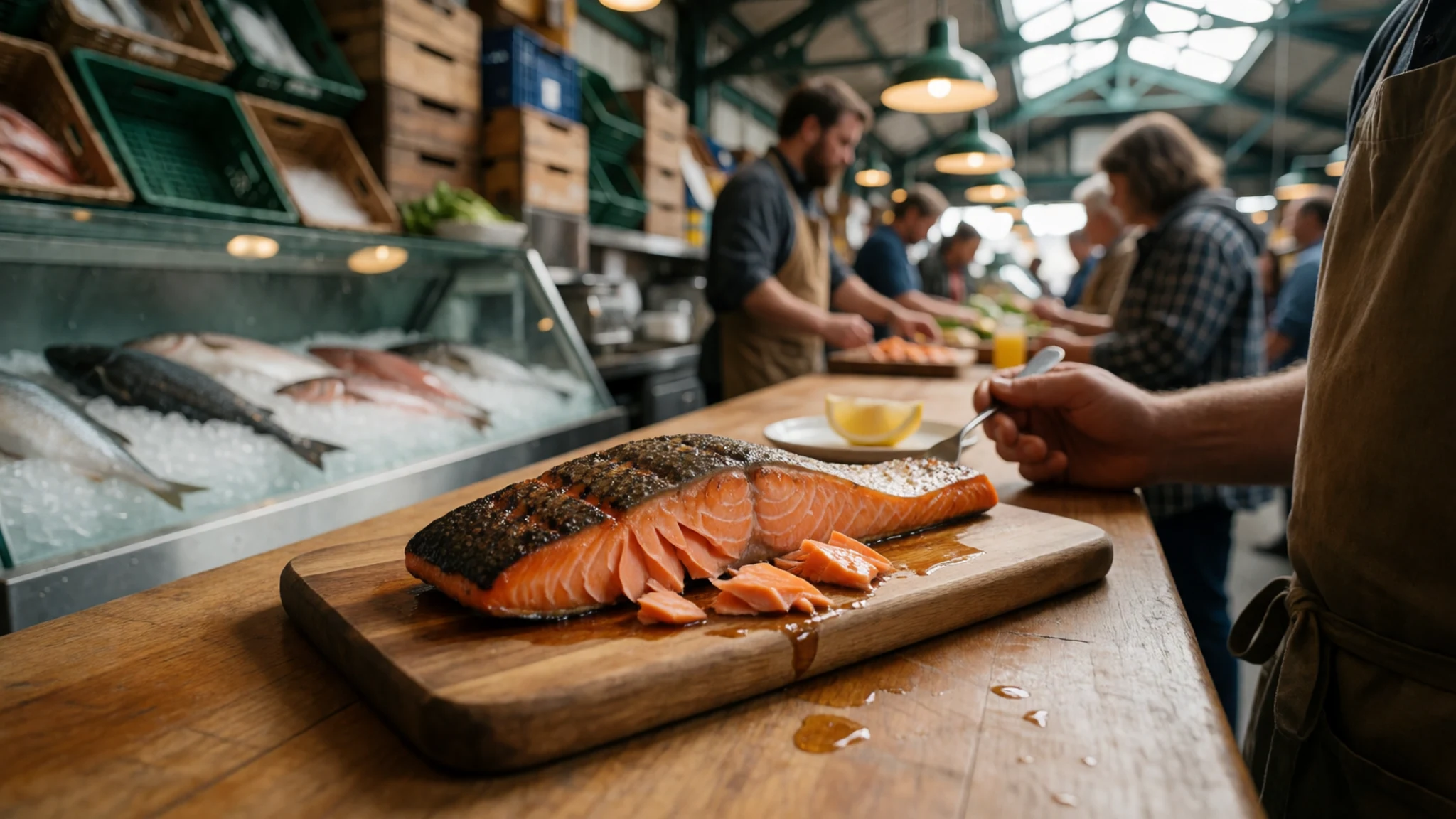
- Geoduck — Seafood restaurants in Vancouver and Richmond
This large, odd-looking clam is another coastal speciality, usually served raw or lightly cooked, often sliced thin. It is an acquired taste and a talking point more than a staple, best tried where the kitchen handles shellfish daily.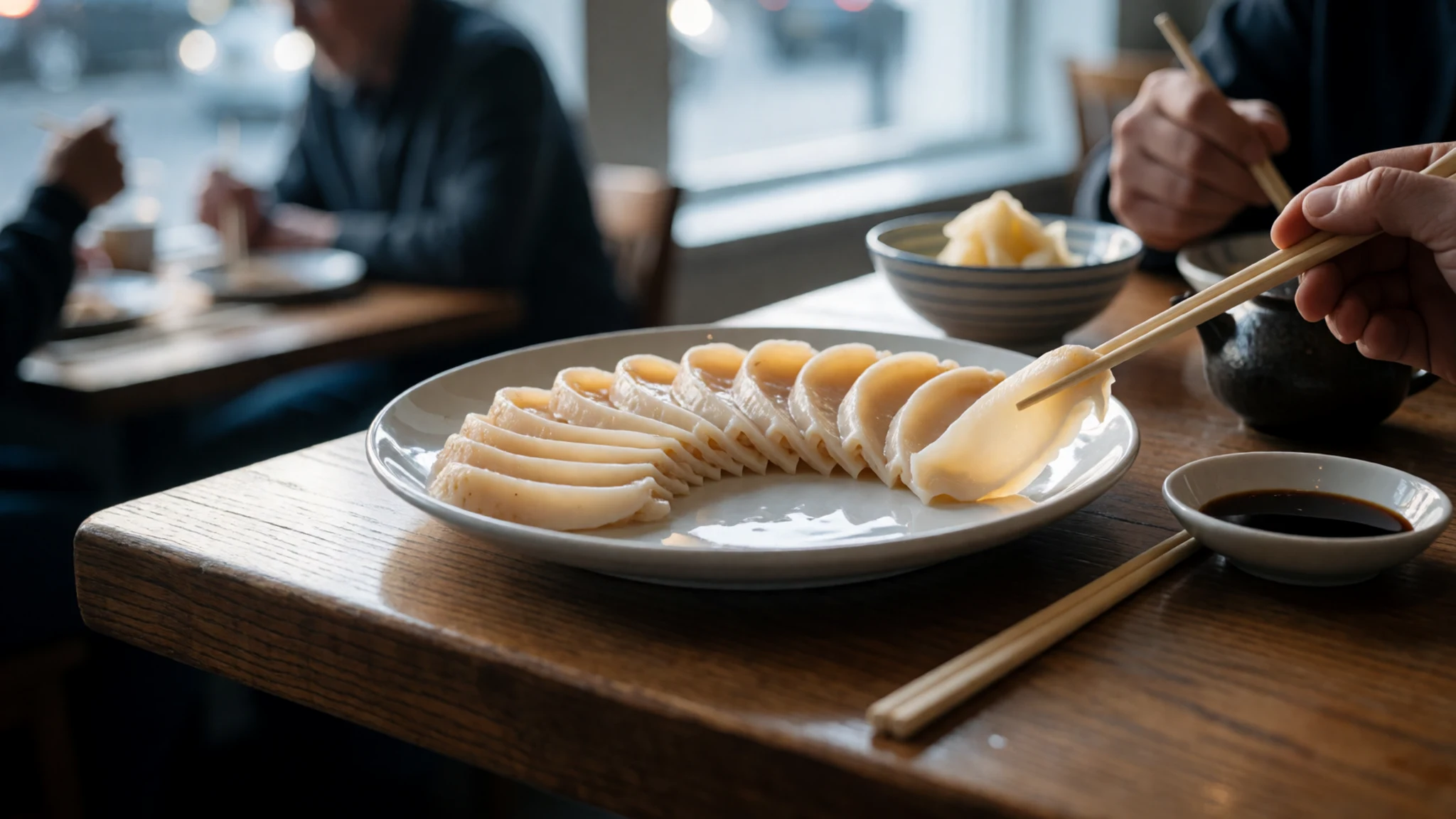
- Nanaimo bar — Cafés and bakeries across British Columbia
A no-bake chocolate and coconut dessert named for Nanaimo on Vancouver Island, layered with custard-style icing. It is very sweet, so share one with tea or coffee. Cafés and bakeries across the province stock it. - Dim sum and regional Chinese dishes — Richmond's East Asian malls and the night market
Richmond, south of Vancouver, is known for East Asian malls full of affordable Chinese restaurants. Dumplings, noodles and steamed dishes are the easy way in. An annual night market runs from April to October. - Sushi and Japanese cooking — Almost any commercial street in Vancouver
Japanese restaurants turn up on almost every commercial block in Vancouver, from quick counters to long sit-down meals. Fresh local fish is the draw, and a plate of sushi after the canyon makes a simple, reliable lunch.
Plan it
Best time. May to September for the longest days and the best chance of dry planks; July and August are busiest. The park sits in coastal forest, so rain is possible in any month and cooler seasons are wetter and greyer. Check the official site for seasonal events.
How long. 1
Getting there. Fly into Vancouver International Airport (YVR), then take a taxi, ride-hail or public transport across the harbour to North Vancouver; the last leg is a short road journey. Drivers from Seattle can head north on Interstate 5, which becomes Highway 99 at the border.
Budget. mid
Tips
- Go early on a summer weekday, when the deck is quietest
- Check the official site, capbridge.com, for current tickets, hours and seasonal events, and book ahead if online booking is offered
- Wear shoes with grip and carry a light rain layer
- Cards are widely accepted in Vancouver, but keep a little cash for small cafés and parking
Etiquette
- Keep moving on the bridge and give people who are nervous some space
- Do not bounce the deck or lean over the rails
- Do not climb on or touch the totem poles
Nearby
Sources
- Wikidata Q862283 (CC0)
- Wikipedia: Capilano Suspension Bridge (rev 1379423736) (CC BY-SA 4.0)
- Wikivoyage: British Columbia (rev 5400129) (CC BY-SA 4.0)
- Photo: Capilano Suspension Bridge, Vancouver (July 2016) 1, Markus Säynevirta (CC BY-SA 4.0)
- Photo: Tourists on the Treetop Walk, Mx. Granger (CC0 1.0)
- Photo: Capilano Suspension Bridge, Vancouver (July 2016) 2, Markus Säynevirta (CC BY-SA 4.0)
- Photo: Capilano Suspension Bridge, Visually Rich (CC BY-SA 4.0)
- Photo: Bridge over Capilano River, unknown author (Public domain)
- Photo: Die Capilano Suspension Bridge, Michael Schneider (CC BY-SA 2.0)
- Photo: Der Capilano River von der Suspension Bridge aus, Michael Schneider (CC BY-SA 2.0)
- Photo: Canyon Lights 2012 @ Capilano Suspension Bridge, GoToVan (CC BY 2.5)


